Last updated on
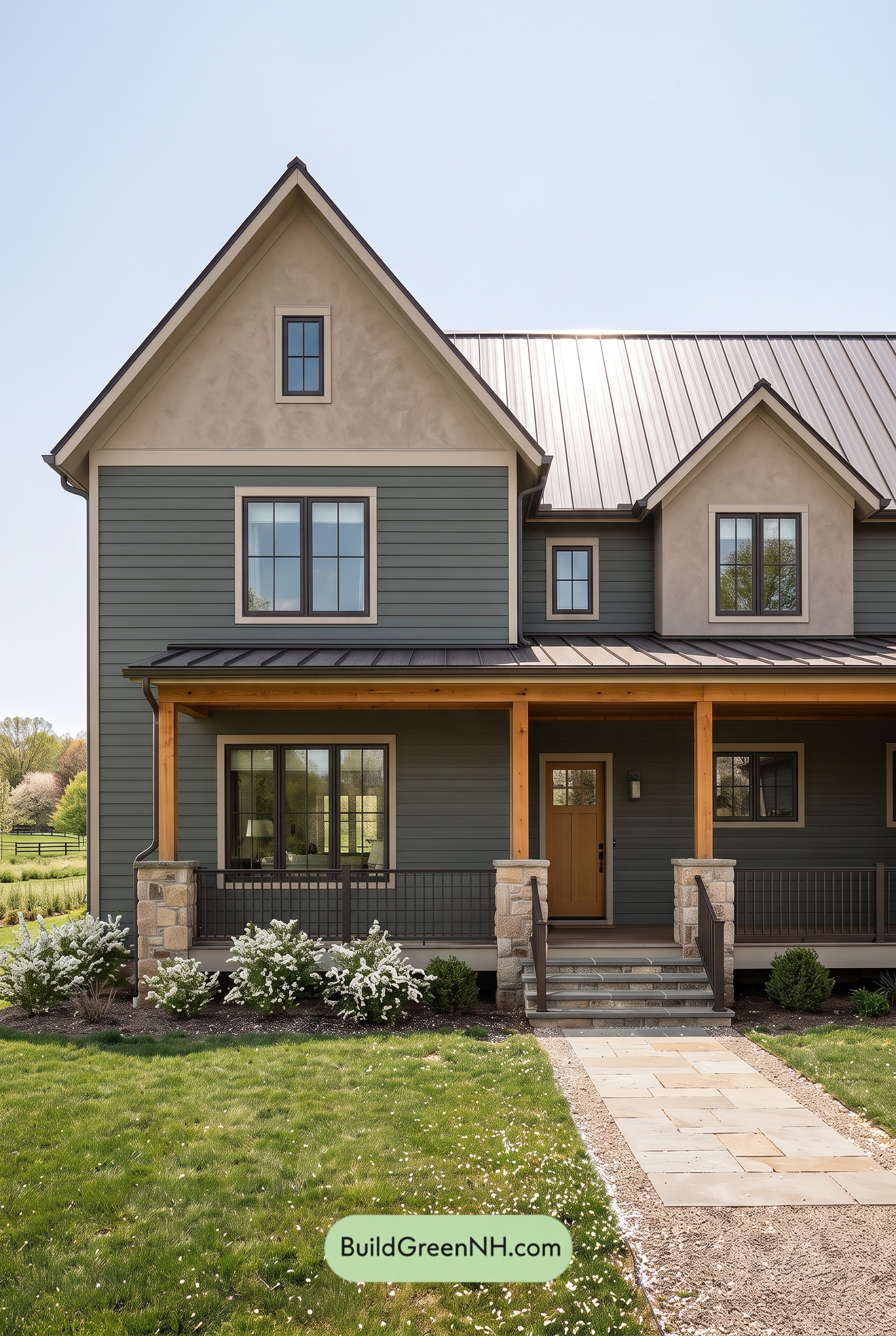

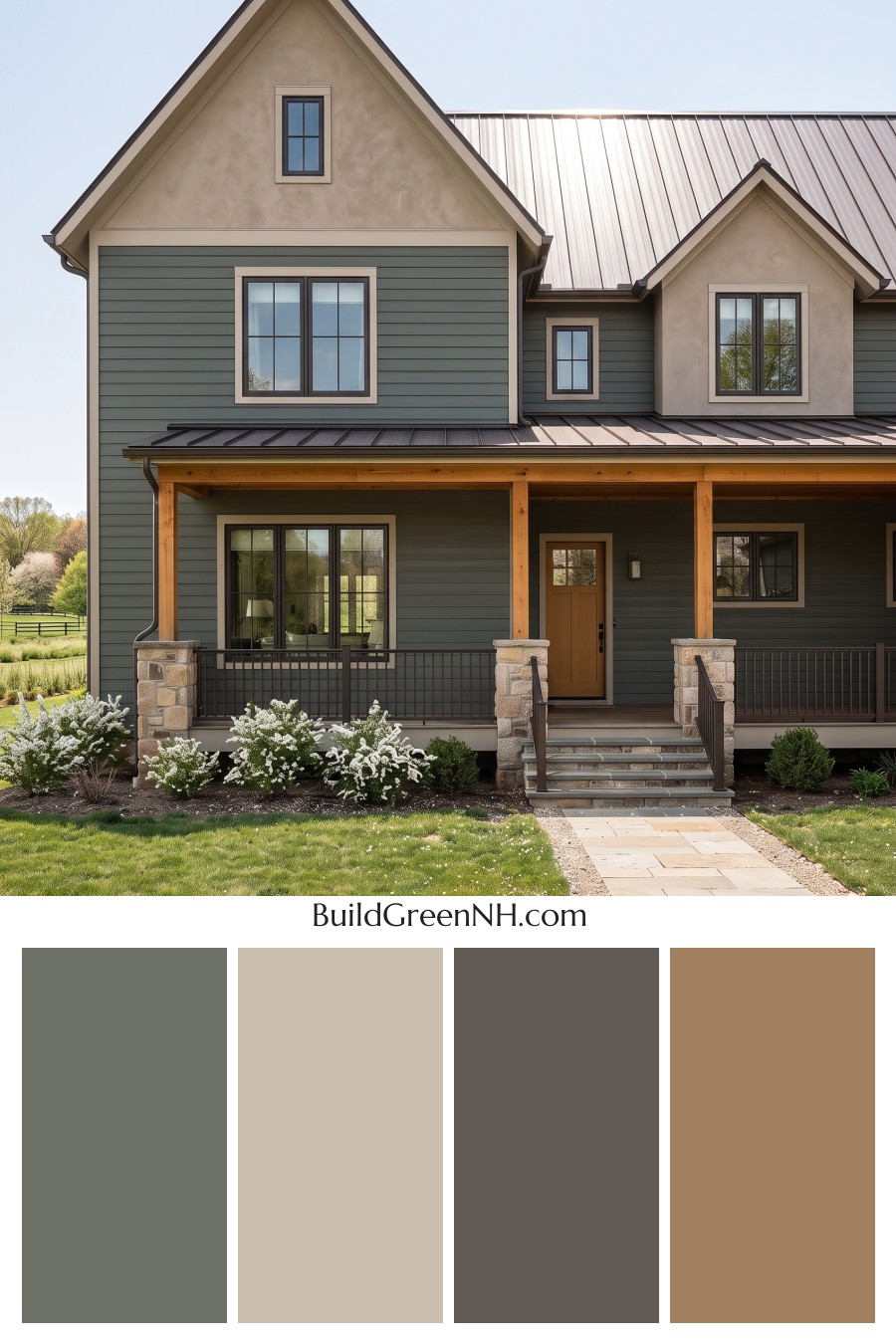
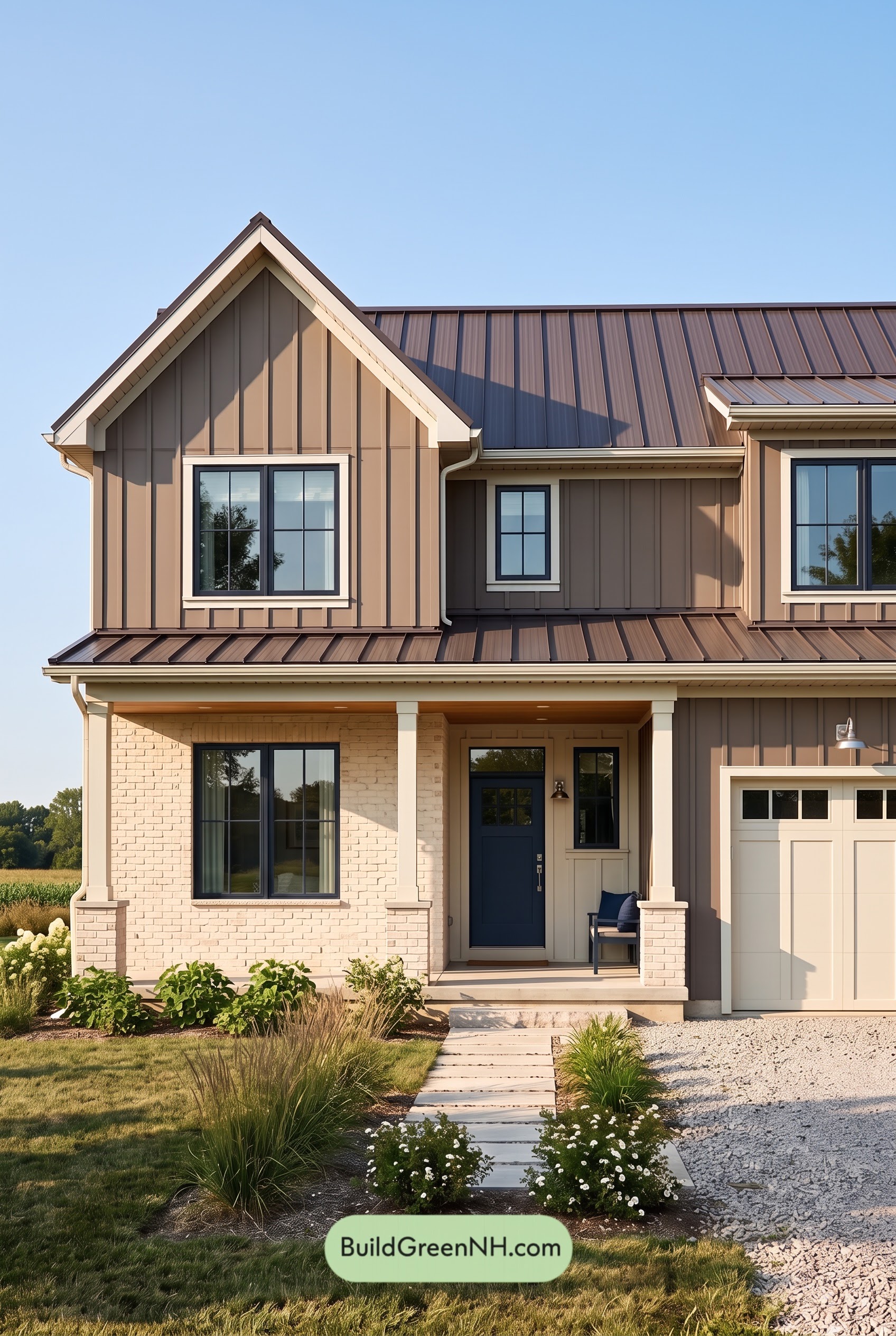
Muted gray siding, warm beige details, and rich brown accents give this home a welcoming balance of natural warmth and beautifully defined architecture.
A Grounded Gray Foundation
The horizontal siding wears a medium gray with a subtle green undertone, giving the broad exterior a calm, earthy presence. It has enough depth to anchor the tall facade without making the house feel heavy. Across the shaded porch, that same gray appears deeper, creating a cozy backdrop for the warmer entry details.
This understated foundation also lets the home’s varied textures stand out. The siding, smooth gable faces, wood grain, and stonework each bring interest without needing a more complicated palette.
Warm Beige That Highlights the Architecture
A soft, warm beige covers the large upper gable and smaller projecting gable, gently brightening the upper facade. Against the gray siding, these lighter areas draw attention to the roof peaks and give the house a pleasing sense of height.
Beige trim repeats around the windows, along the corners, and beneath the roof edges. Rather than introducing a sharp white contrast, it creates a softer outline that feels closely connected to the rest of the exterior. Repeating this shade across different architectural details keeps the composition cohesive.
Brown Accents Make the Porch Inviting
The porch columns and overhead beam introduce a golden shade of brown, bringing warmth to the cooler siding. The front door echoes that warmth in a slightly deeper brown, making the entrance feel inviting without relying on a bold accent color.
Deep brown window frames and railings provide a different kind of contrast. Their slender, dark lines sharpen the windows and define the porch while allowing the lighter trim and warmer wood tones to remain prominent. The balance feels relaxed but intentional.
A Roof and Stonework That Tie It Together
The standing-seam roof reads as a light, warm gray across its sunlit upper surface, with deeper gray-brown tones along the porch roof and edges. These shades connect naturally with both the siding and the darker accents below.
At ground level, the column bases mix pale gray, beige, and muted brown stone. That blend brings the main color families together in one textured feature. The overall mood is quietly rustic with a clean, tailored finish—proof that a restrained exterior palette can still offer plenty of character.
Next, see how this color scheme looks under different lighting simulations throughout the day.
Overcast
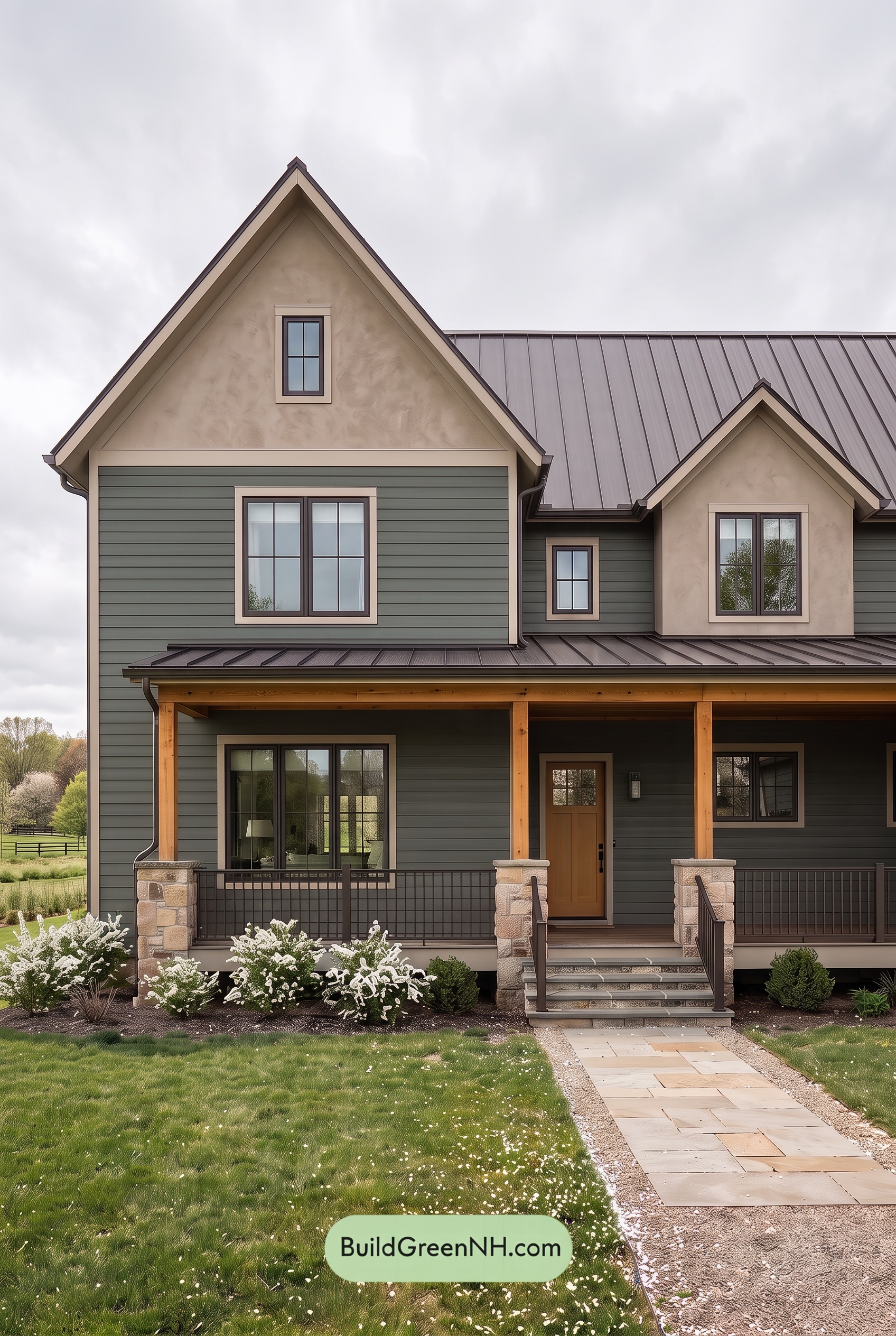
Under overcast light, the gray siding reads a little deeper and cooler than it would in neutral daylight, with its subtle green undertones becoming more noticeable. The light beige gables and trim feel softer and less golden, while the warm browns of the door and columns appear more muted. This gentler saturation gives the exterior a quiet, earthy character.
Cloud-filtered light softens shadow edges beneath the rooflines and across the siding, making transitions between shades feel smoother. The sheltered porch still holds deeper shadows, and the dark brown frames and railings remain crisp accents against the lighter neutrals. Compared with neutral daylight, the overall mood feels calmer and more subdued, without losing its welcoming warmth.
Golden Hour
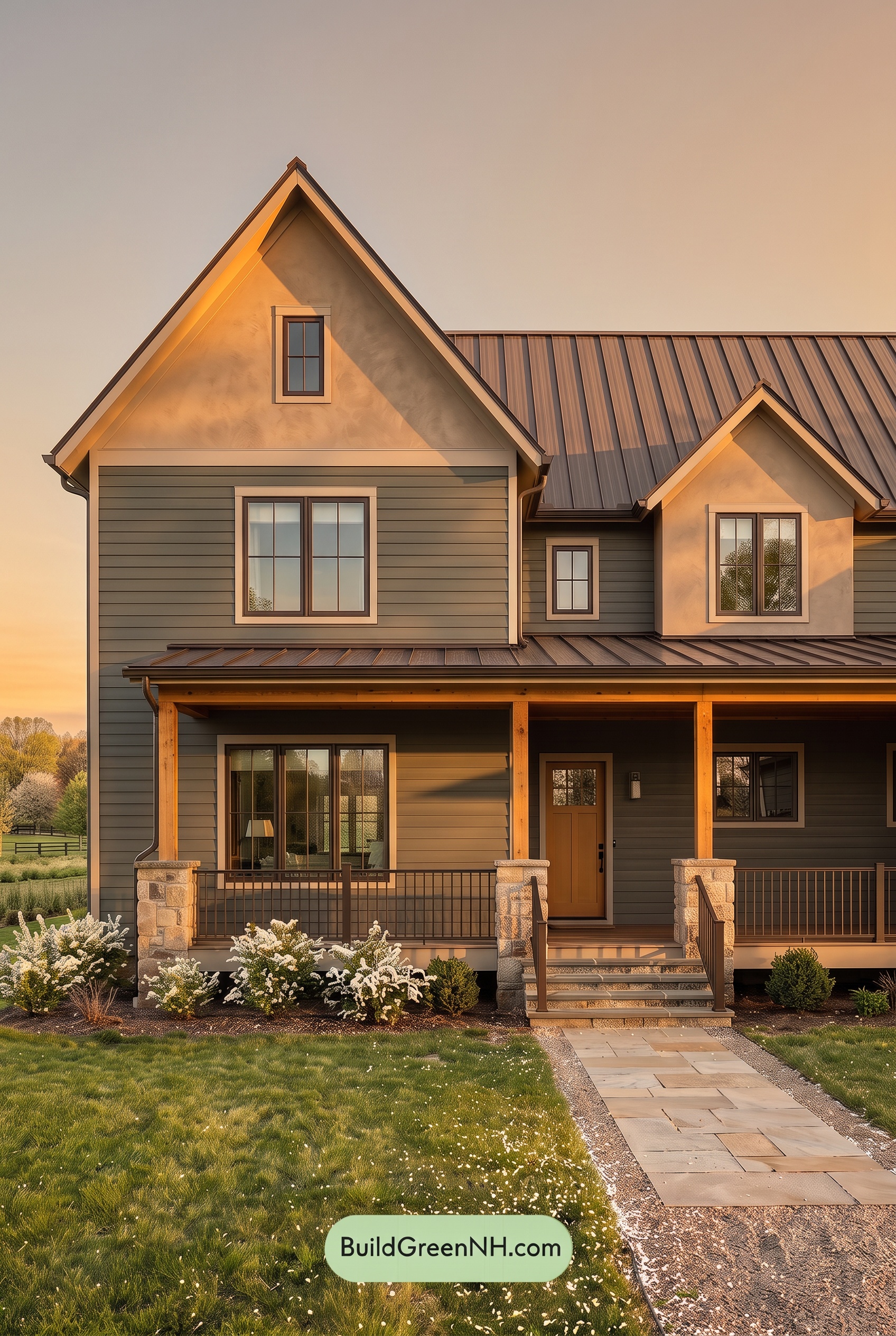
Golden Hour warms the muted gray siding toward brown-gray, while the pale beige shades take on a soft yellow-peach glow. Compared with neutral daylight, these neutrals appear richer and less cool, and the sunlit browns reveal more saturated orange-brown undertones. The shared warmth makes the exterior’s color families feel more closely connected.
Long, angled shadows deepen the grays beneath the eaves and across the porch, while shaded browns appear darker and more subdued. That creates stronger light-to-dark contrast against the glowing pale neutrals, even as the differences between hues soften. The overall mood shifts from crisp and understated in neutral daylight to cozy, mellow, and inviting.
Shade
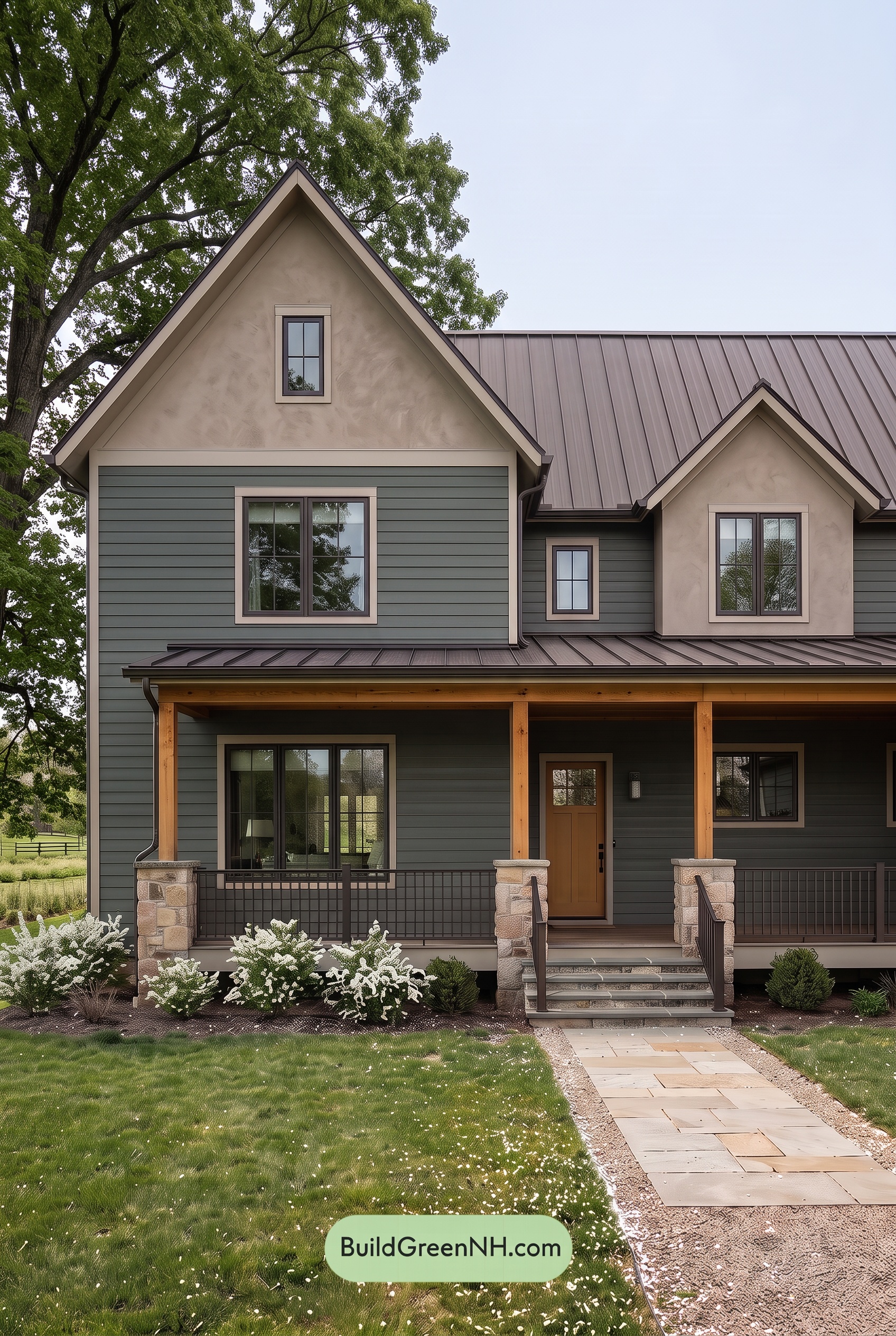
In shade, the gray siding reads deeper and cooler than it would in neutral daylight, with a subtle green undertone becoming more noticeable. Saturation feels restrained, while the pale beige shades lose some of their golden warmth and take on a softer, quieter appearance. The palette feels calm and grounded rather than bright and crisp.
Shadows beneath the porch and eaves draw the darker browns into richer depths, while the warmer brown shades still lend a welcoming glow. Pale beige edges remain distinct against the gray, but transitions across broad surfaces feel gentler. Compared with neutral daylight, this balance of softened warmth and deeper shadows gives the house a more sheltered, intimate mood.
Nighttime
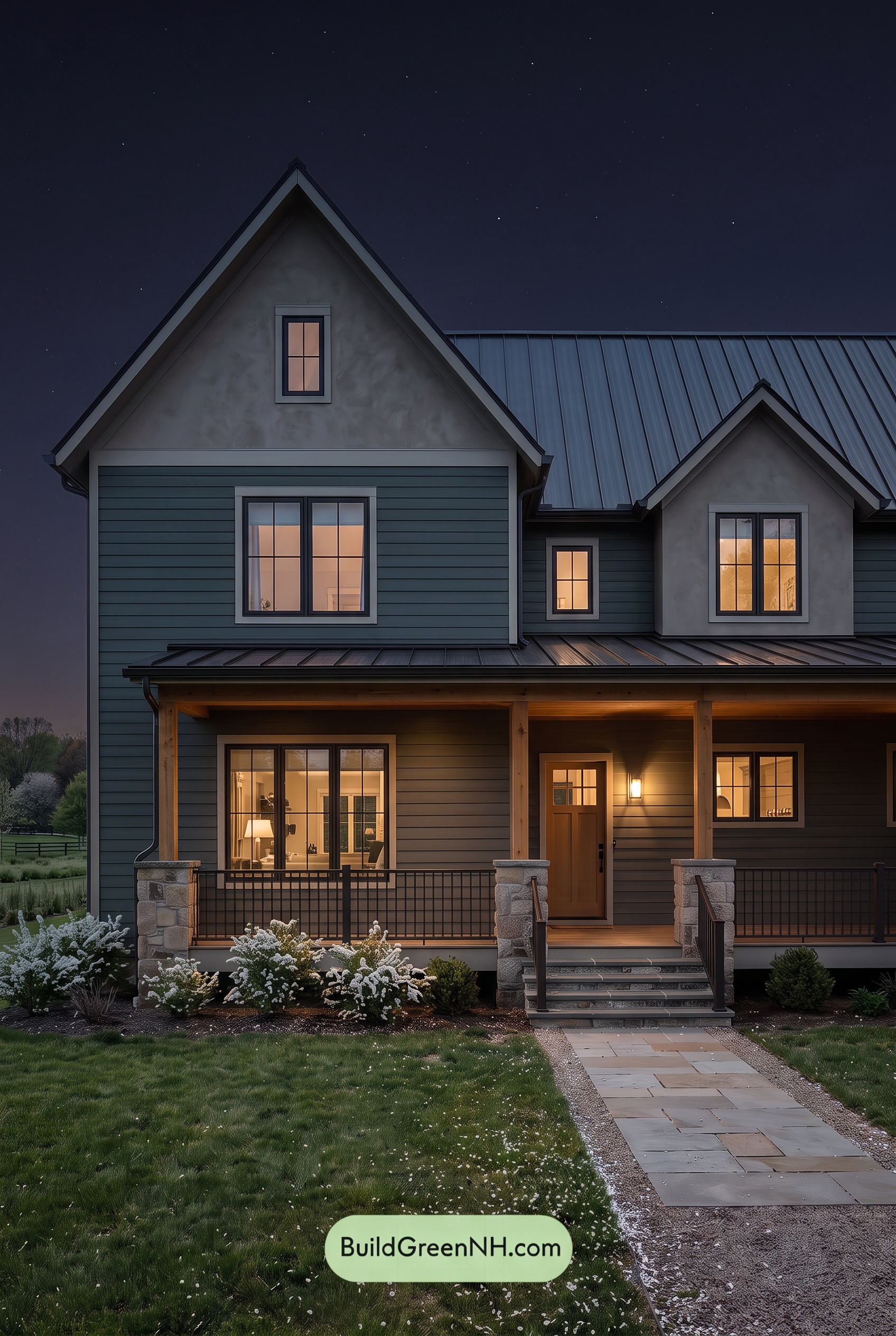
At night, the gray siding deepens and takes on a cool blue cast, looking more subdued than it would in neutral daylight. The pale beige upper walls and trim lose some of their warmth in the dim light, while shadows beneath the gables soften their separation from surrounding shades. The palette feels quieter, with less visible color saturation overall.
Near the porch light, warm illumination brings a golden tint to the neutrals and makes the brown door and columns appear richer. Farther from that glow, the darker browns recede toward nearly black shades. Compared with daylight’s more even color definition, these pools of warmth against cool shadows create stronger local contrast and a cozy, inviting mood.
Pin these for later:
Want More?
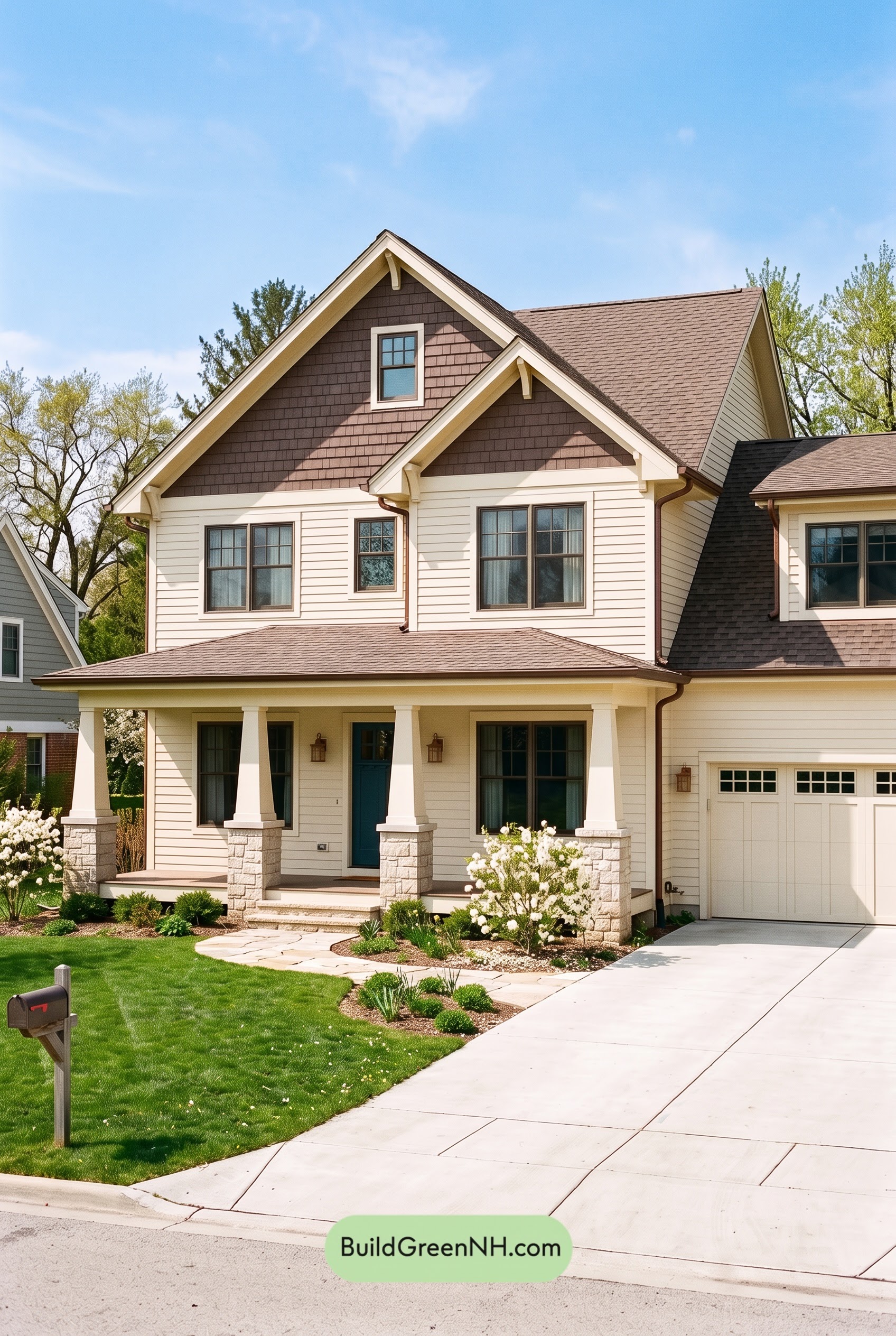 Cream Exterior Paint Color Schemes With a Brown Roof: Cream and Teal Welcome
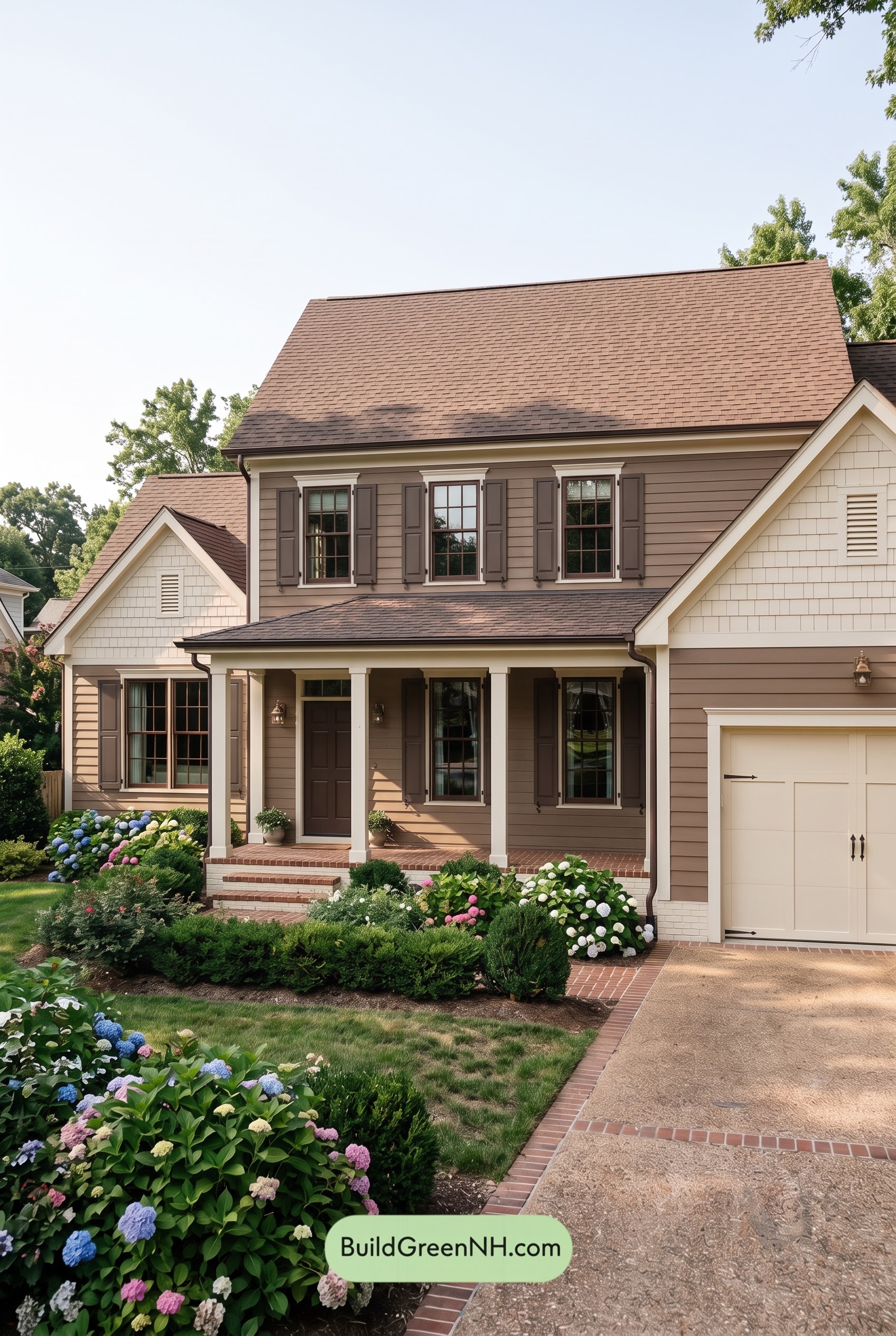 Cream Exterior Paint Color Schemes With a Brown Roof: Cocoa and Burgundy Embrace
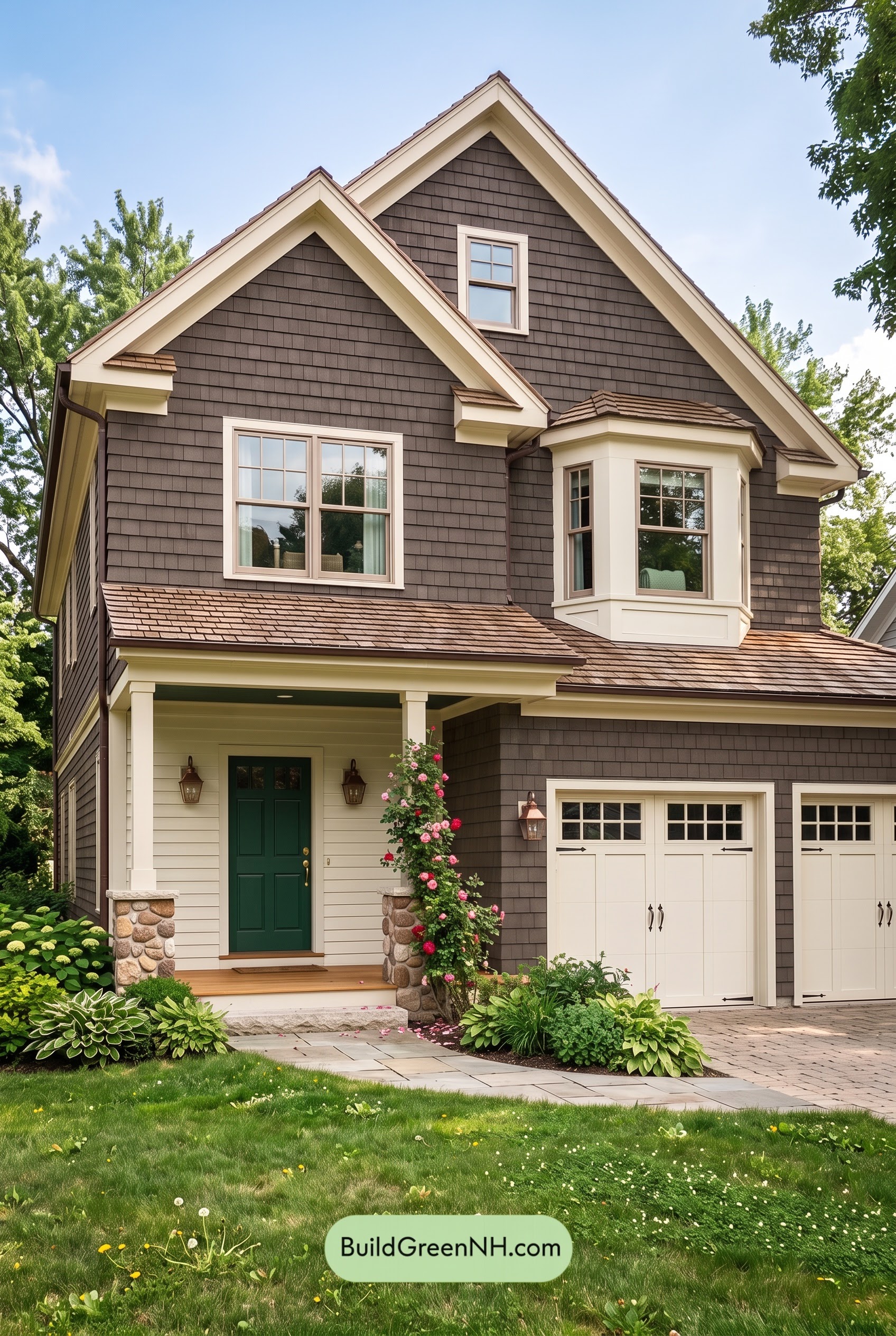 Cream Exterior Paint Color Schemes With a Brown Roof: Cocoa and Green Grace
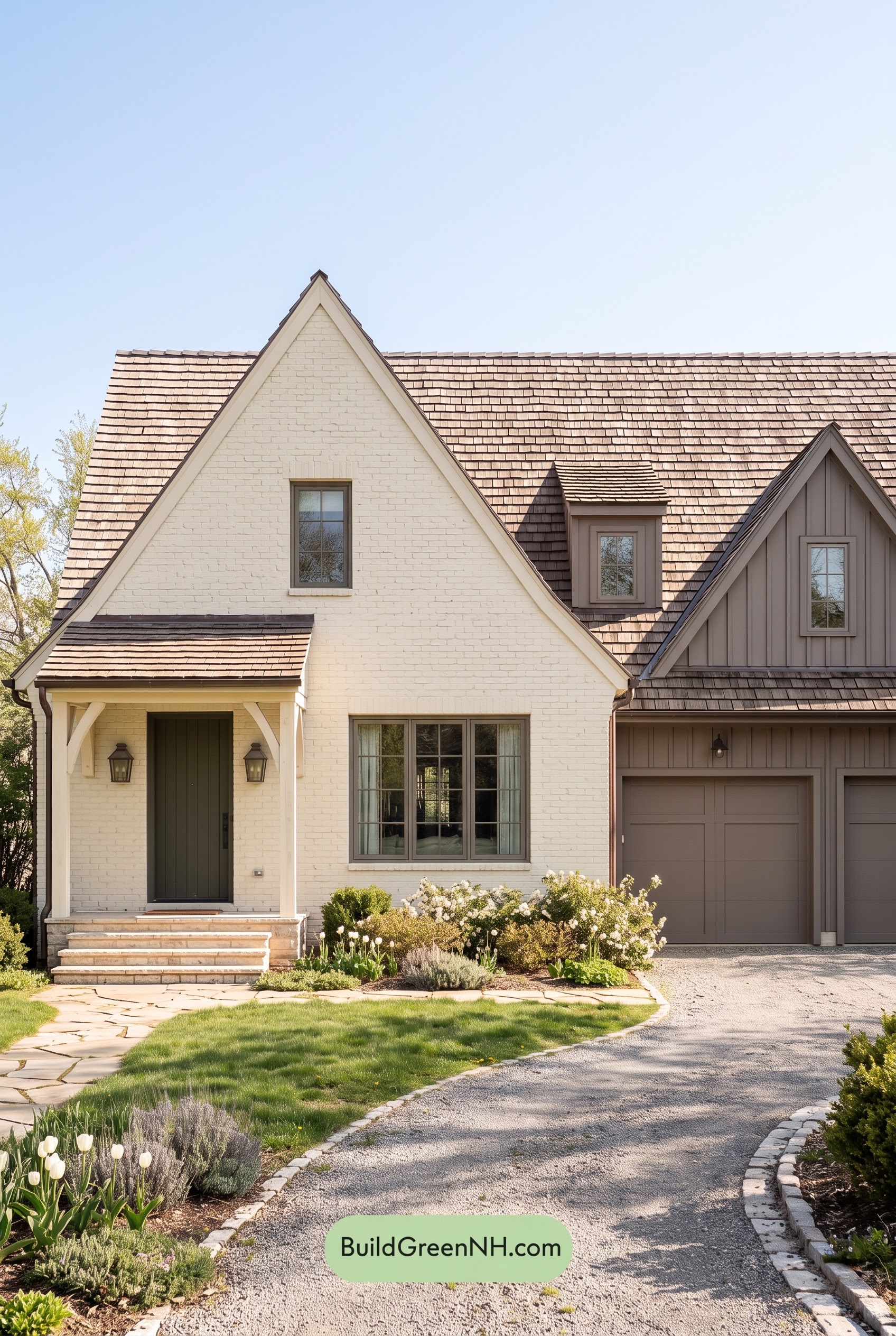 Cream Exterior Paint Color Schemes With a Brown Roof: Cream and Sage Serenity
 Cream Exterior Paint Color Schemes With a Brown Roof: Cocoa and Navy Assurance
Table of Contents