Last updated on
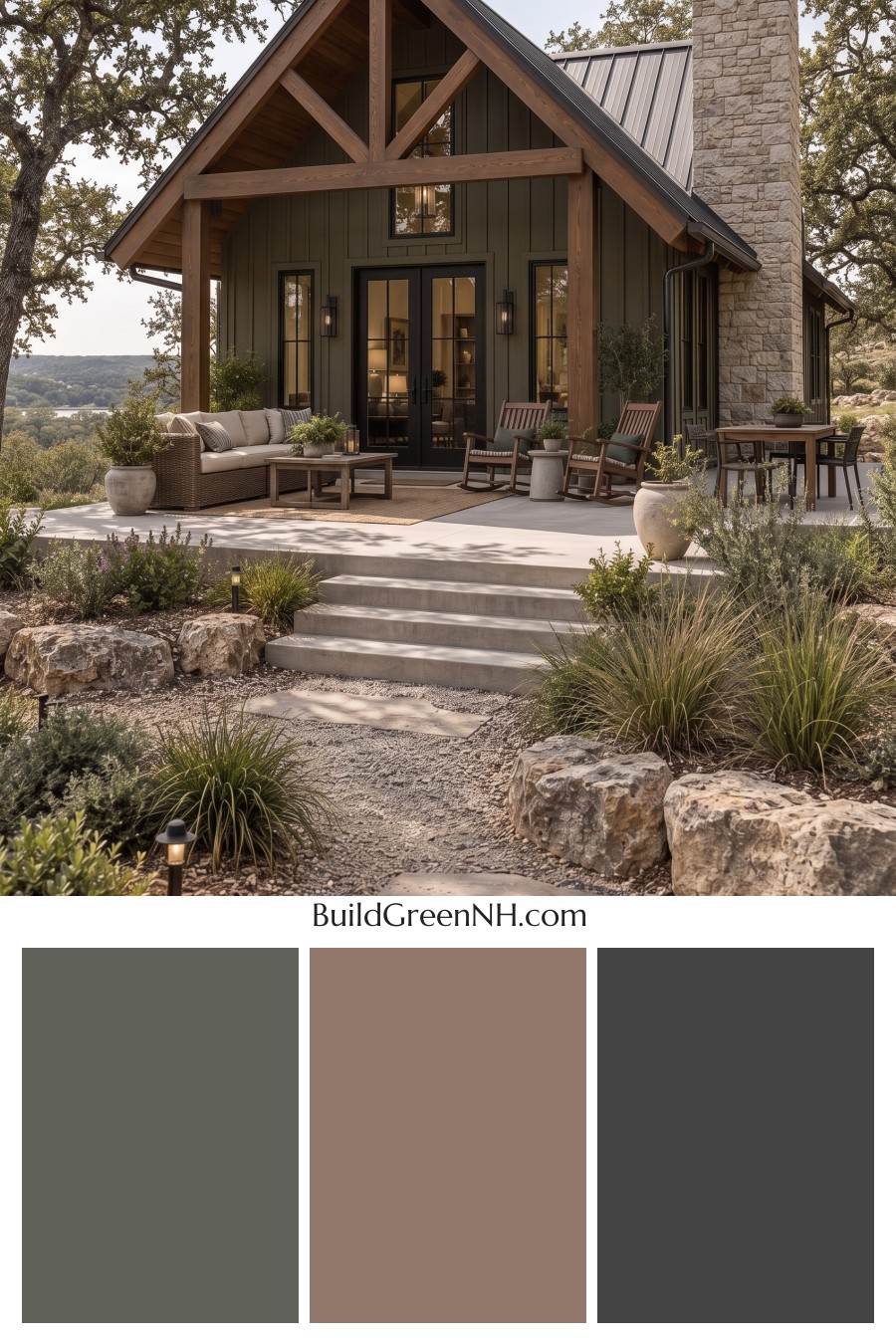

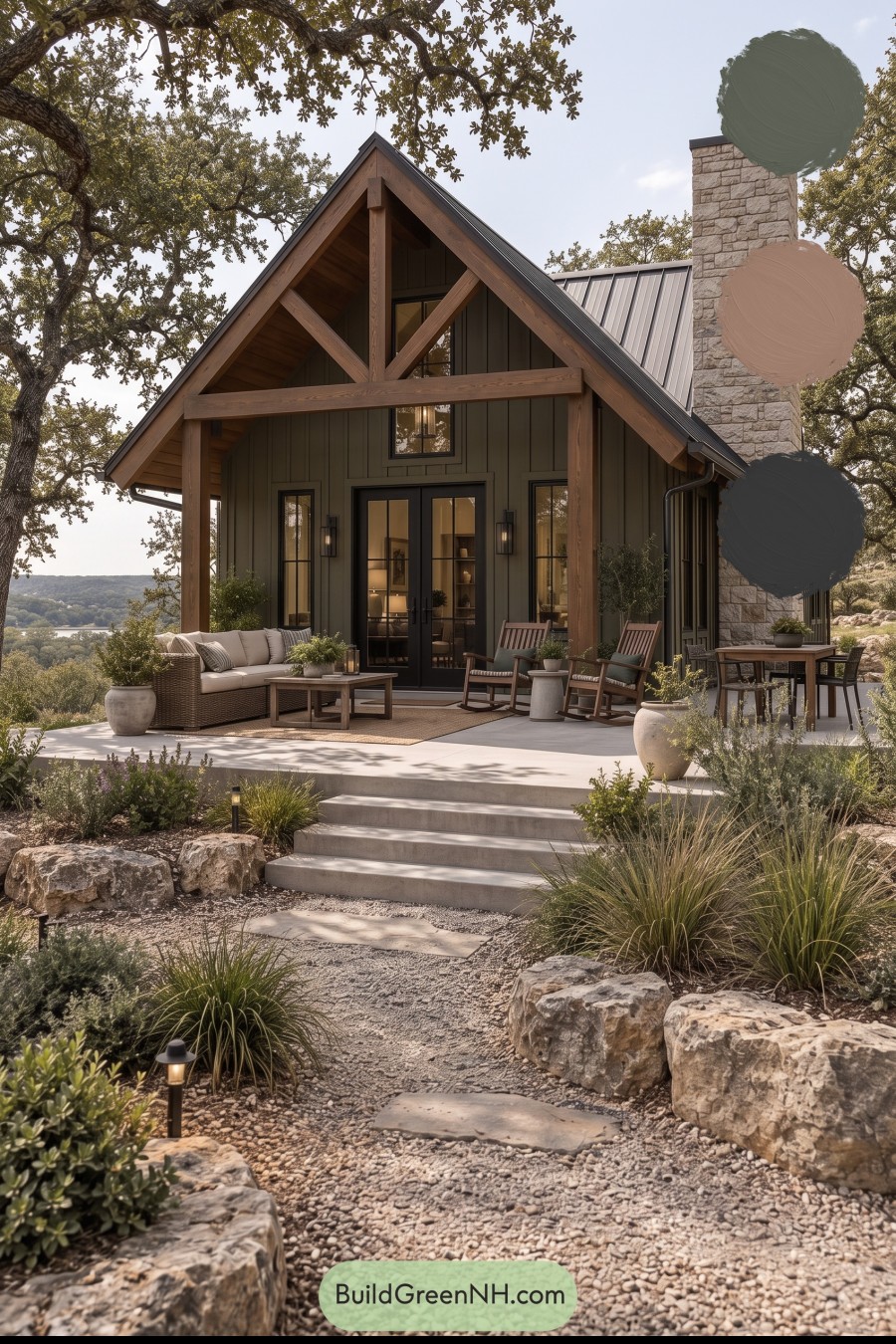
Deep gray siding, warm brown timber, and pale gray stone give this home a striking silhouette without sacrificing its relaxed, welcoming charm.
A Rich Gray Backdrop
The vertical siding wears a deep, earthy shade of gray that settles beautifully into the wooded surroundings. Its subtle warmth keeps the exterior from feeling cold, while the darker tone gives the steep front gable a strong presence. Rather than competing with the landscape, this gray allows the trees, grasses, and textured stone to feel like natural extensions of the house.
The vertical lines add definition without requiring another color. That restraint is part of the appeal: the siding provides a quiet backdrop for the more expressive timber details.
Warm Brown Frames the Architecture
Medium warm brown brings the porch columns, substantial crossbeam, and triangular gable framework into focus. Against the gray walls, these elements feel substantial and inviting. The visible wood grain adds variation within the brown family, giving the facade depth without making the palette busy.
Brown along the gable trim and sheltered roof underside carries that warmth upward. It draws the eye toward the roof peak while visually connecting the overhead structure to the porch below. The result is rustic character with a clean, deliberate outline.
Dark Details Keep Everything Crisp
The glazed front doors and slim window frames use very dark gray to create precise edges against the softer wall color. Keeping these features closely related makes the entrance feel cohesive rather than overly decorated. Generous glass panels prevent the dark doorway from feeling heavy.
Overhead, the metal roof continues the gray palette. Its sloping surfaces appear lighter where they catch the sky, while the roof edges, gutters, and chimney cap read as deeper gray accents. These repeated dark notes tie the upper and lower portions of the exterior together.
Pale Stone Adds Balance
The chimney introduces pale warm gray and soft beige, offering a lighter counterpoint to the siding. Its textured surface bridges the gray walls and brown timber beautifully. Similar light gray tones across the porch and steps keep the base of the house open and airy.
That balance makes the scheme work: deep shades establish definition, warm brown adds comfort, and lighter neutrals provide breathing room. The overall mood is calm, grounded, and quietly polished—a welcoming retreat that feels right at home among the trees.
Next, see how this color scheme looks under different lighting simulations throughout the day.
Overcast
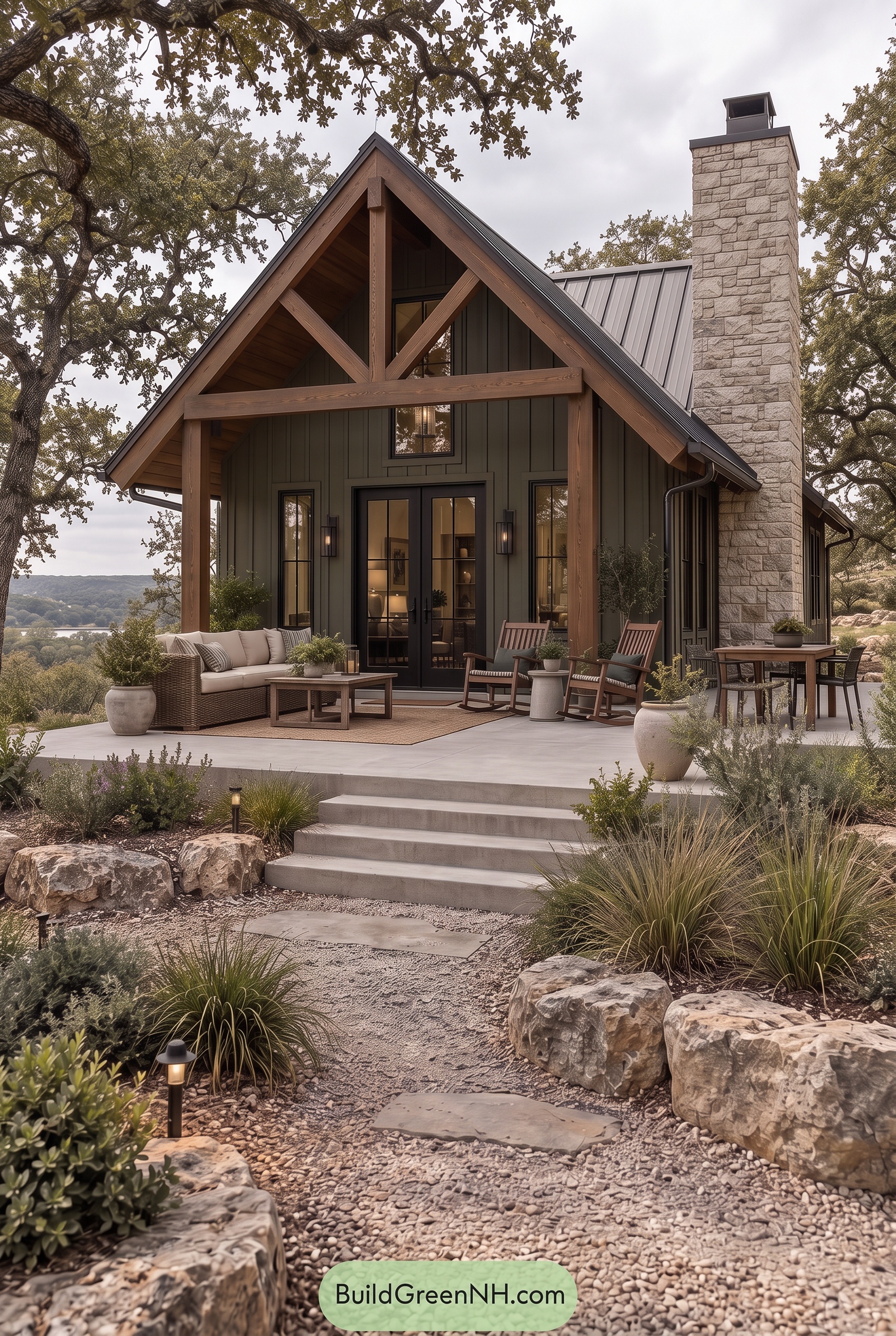
Under overcast skies, the gray siding reads deeper and slightly cooler than it would in neutral daylight, while the brown trim and columns feel softer and less saturated. Their warm undertones remain inviting, but without brighter illumination, they look more subdued against the dark gray backdrop.
Diffused light softens the shadows beneath the steep gable, making the shifts between gray shades more gradual. The darkest gray door and window frames blend more closely with the siding, reducing contrast without losing definition. Compared with neutral daylight, the overall palette feels quieter, moodier, and more cocooning, with the warm browns keeping the exterior from feeling too cool.
Golden Hour
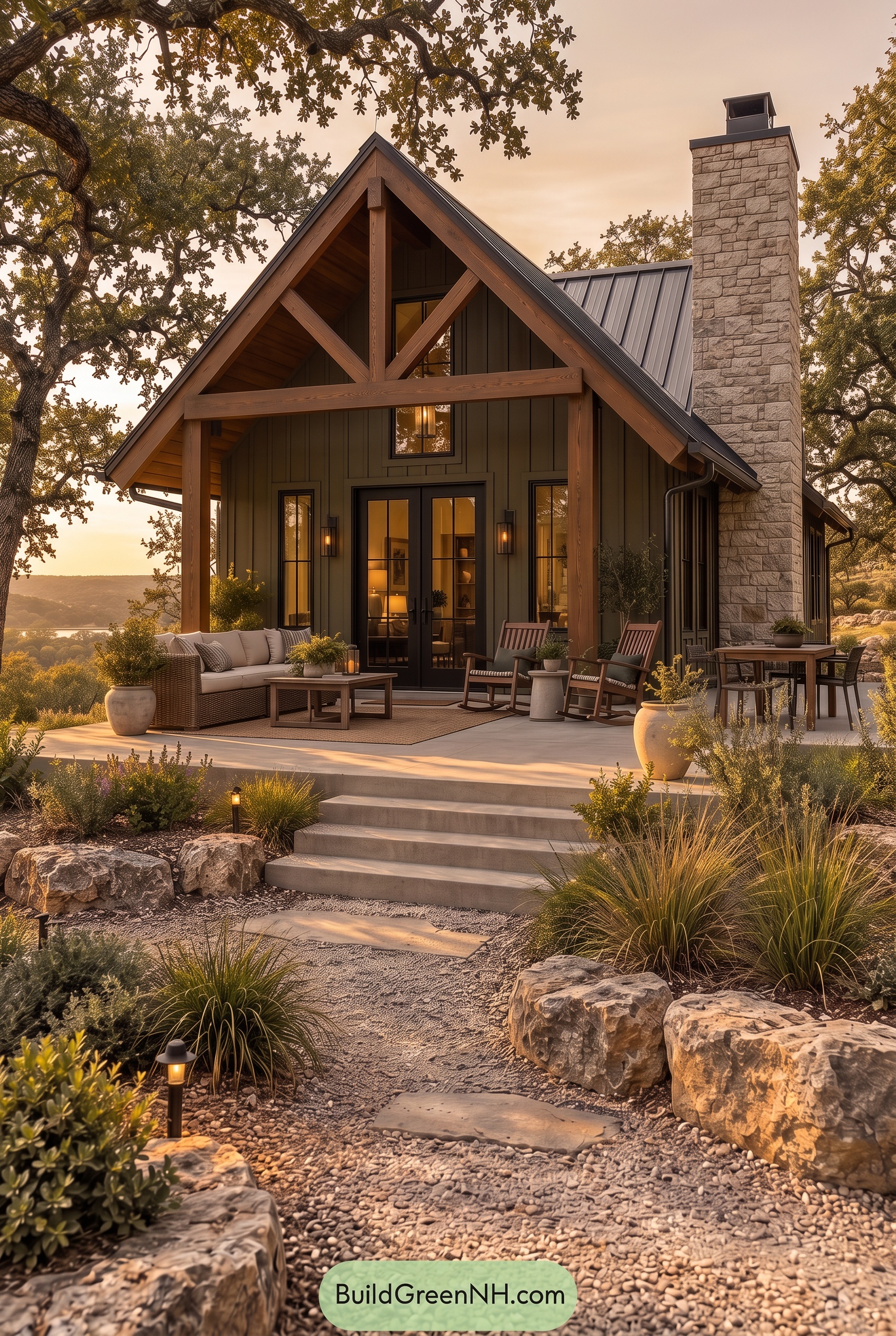
Golden Hour gives the gray siding a soft, warm-brown cast, making it feel earthier than it would in neutral daylight. The brown trim and columns appear richer and more saturated, with reddish undertones becoming more noticeable along sunlit edges. Rather than reading as separate cool and warm elements, these shades settle into a more harmonious palette.
Deep shadows beneath the gable push the grays toward charcoal, while the darker door and window frames become less distinct against the shaded walls. That contrast between glowing browns and shadowed grays adds depth and drama. Compared with the clearer, more balanced appearance of neutral daylight, the overall mood feels intimate, mellow, and welcoming.
Shade
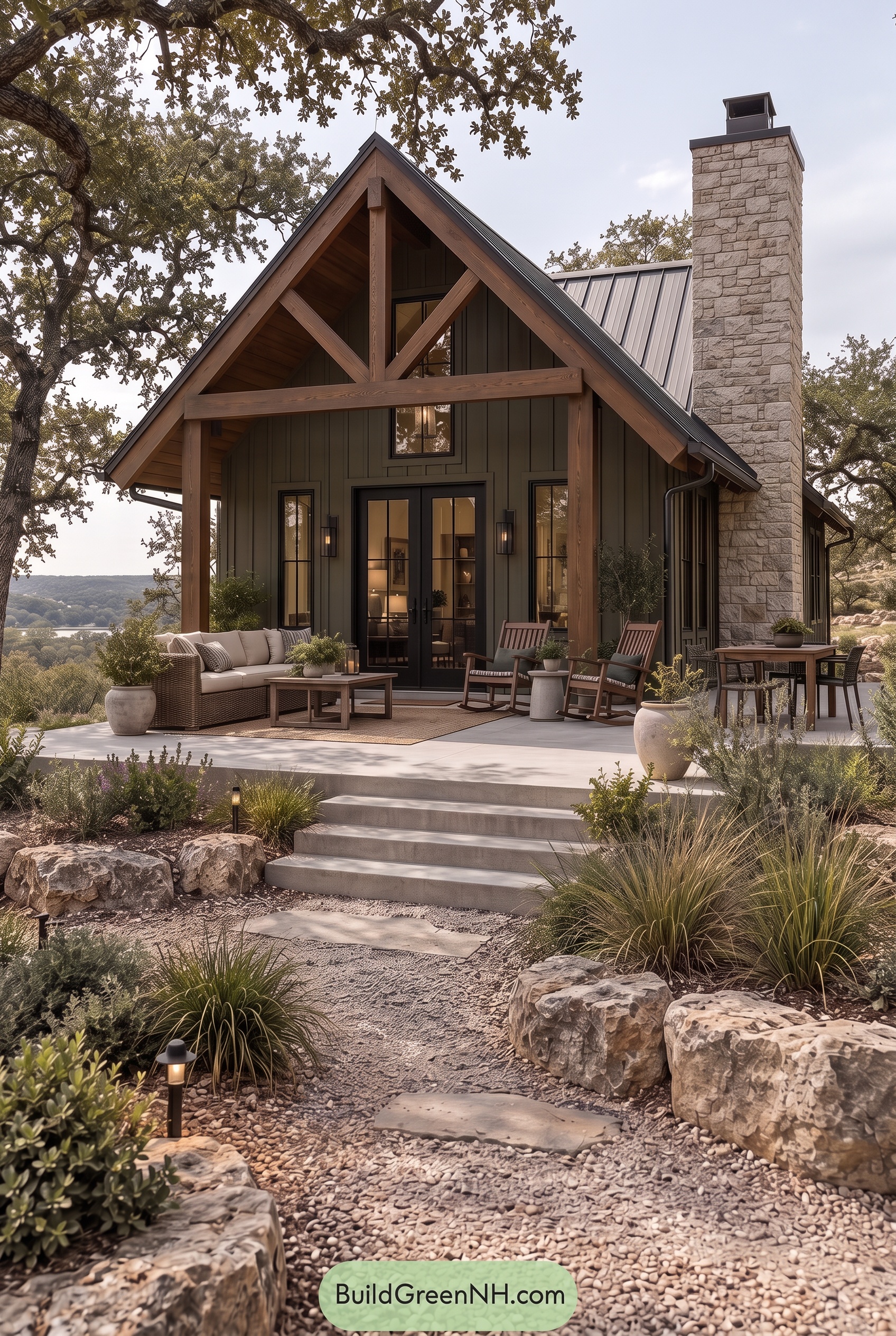
In shade, the gray siding appears deeper and more subdued than it would in neutral daylight, with cooler undertones becoming more noticeable. The brown trim and columns lose some golden warmth, settling into softer, less saturated shades that still bring a welcoming balance to the cooler walls.
Shadows beneath the steep gable deepen the darkest grays around the windows and entry, allowing those details to blend more closely with the siding. With fewer bright highlights, contrast across the facade feels gentler, while the brown framing remains distinct. The overall mood shifts from crisp and open in neutral daylight to quiet, sheltered, and cozy.
Nighttime
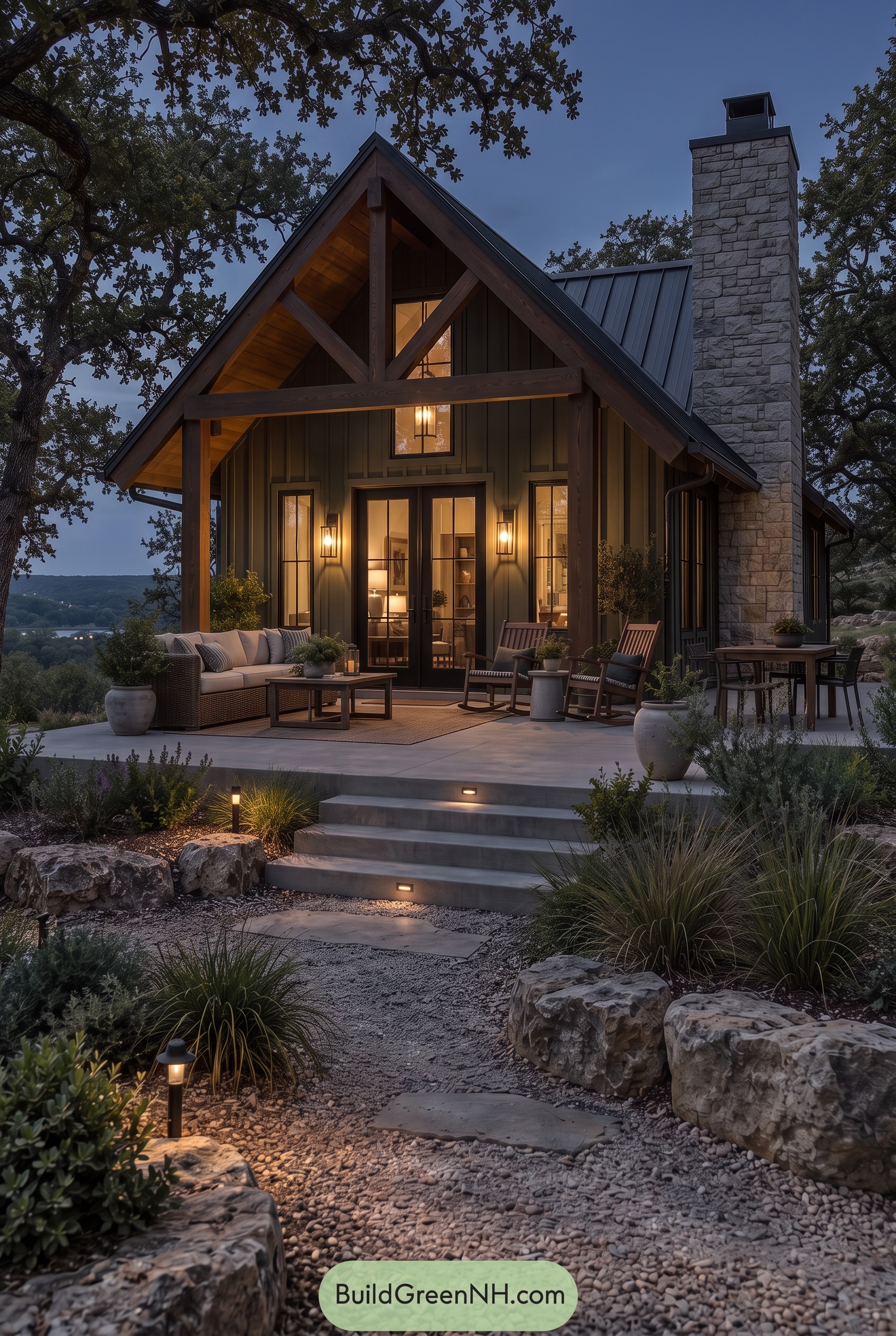
At night, the gray shades deepen and feel more subdued than they would in neutral daylight, taking on a cooler, slightly blue cast away from the lights. Near the entry, warm yellow light lends those same grays a softer, brownish warmth. The brown shades appear richer where illuminated, while their saturation fades into the deep shadows beneath the gable.
Daylight would make the differences between these neutrals easier to distinguish; nighttime lets the darker grays and browns blend together. Meanwhile, glowing highlights against shadowed surfaces create stronger local contrast, giving the house a mood that feels both dramatic and welcoming.
Pin these for later:
Want More?
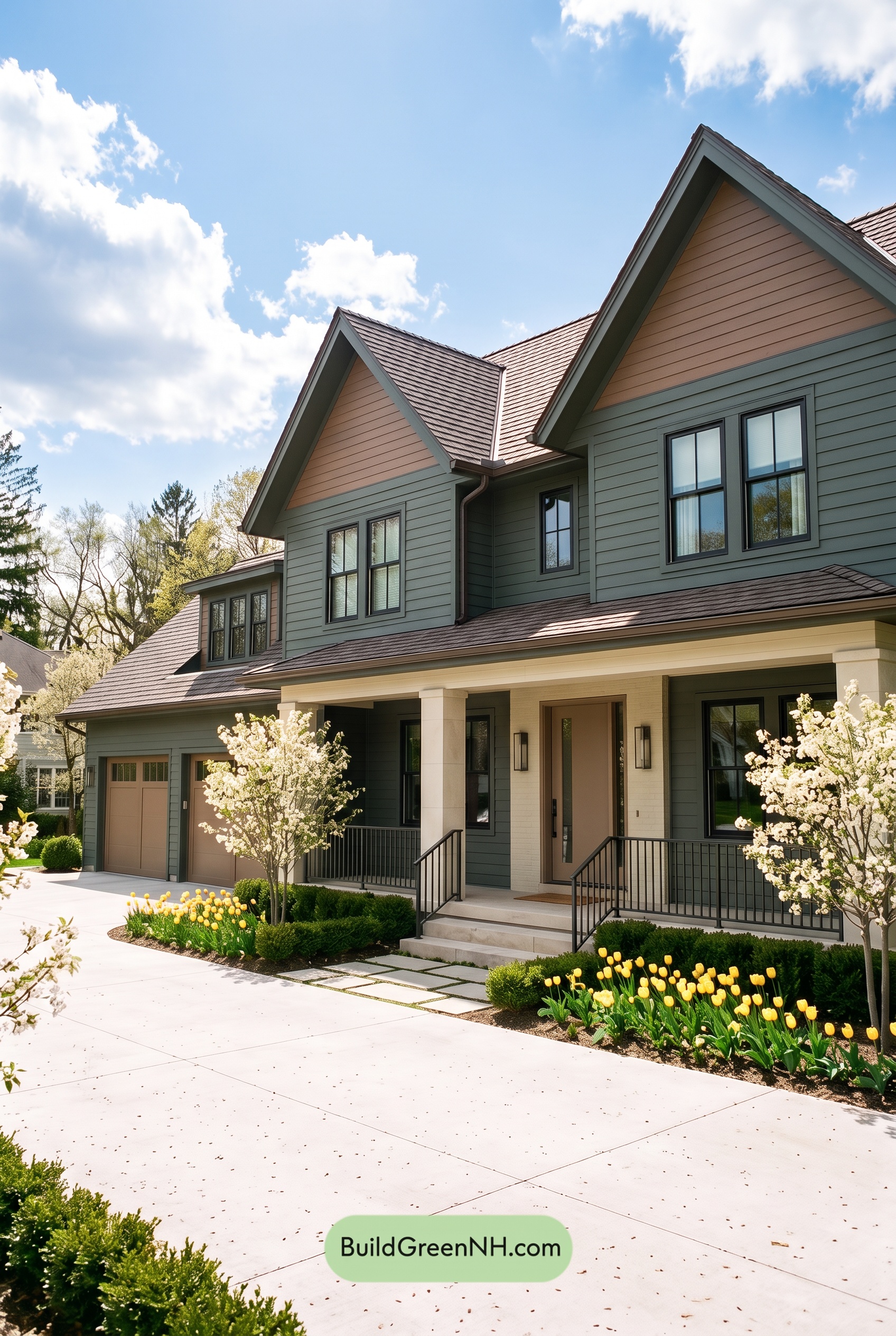 Earthy Green House Exterior Color Scheme: Brown Green Comfort
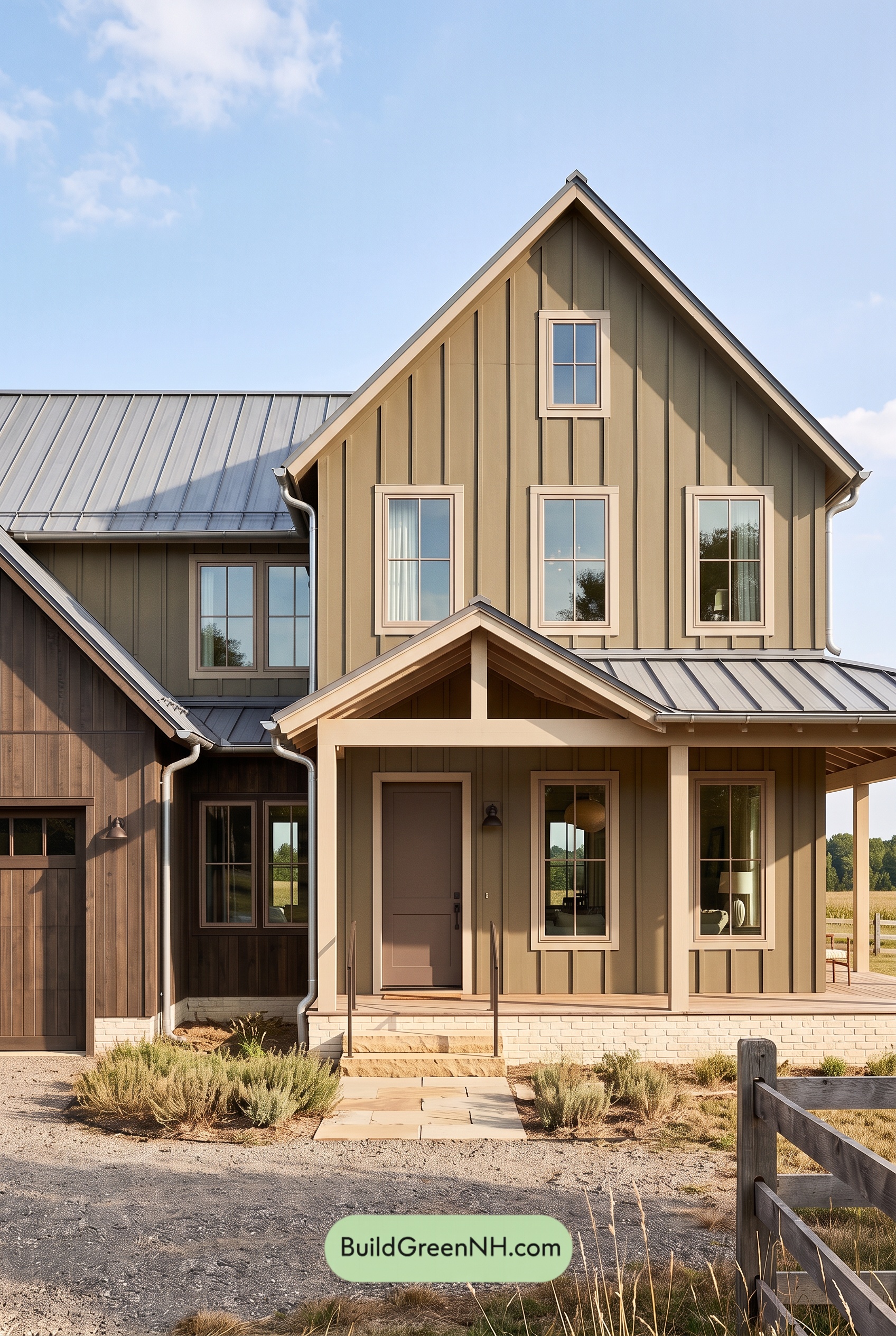 Earthy Green House Exterior Color Scheme: Green and Beige Sanctuary
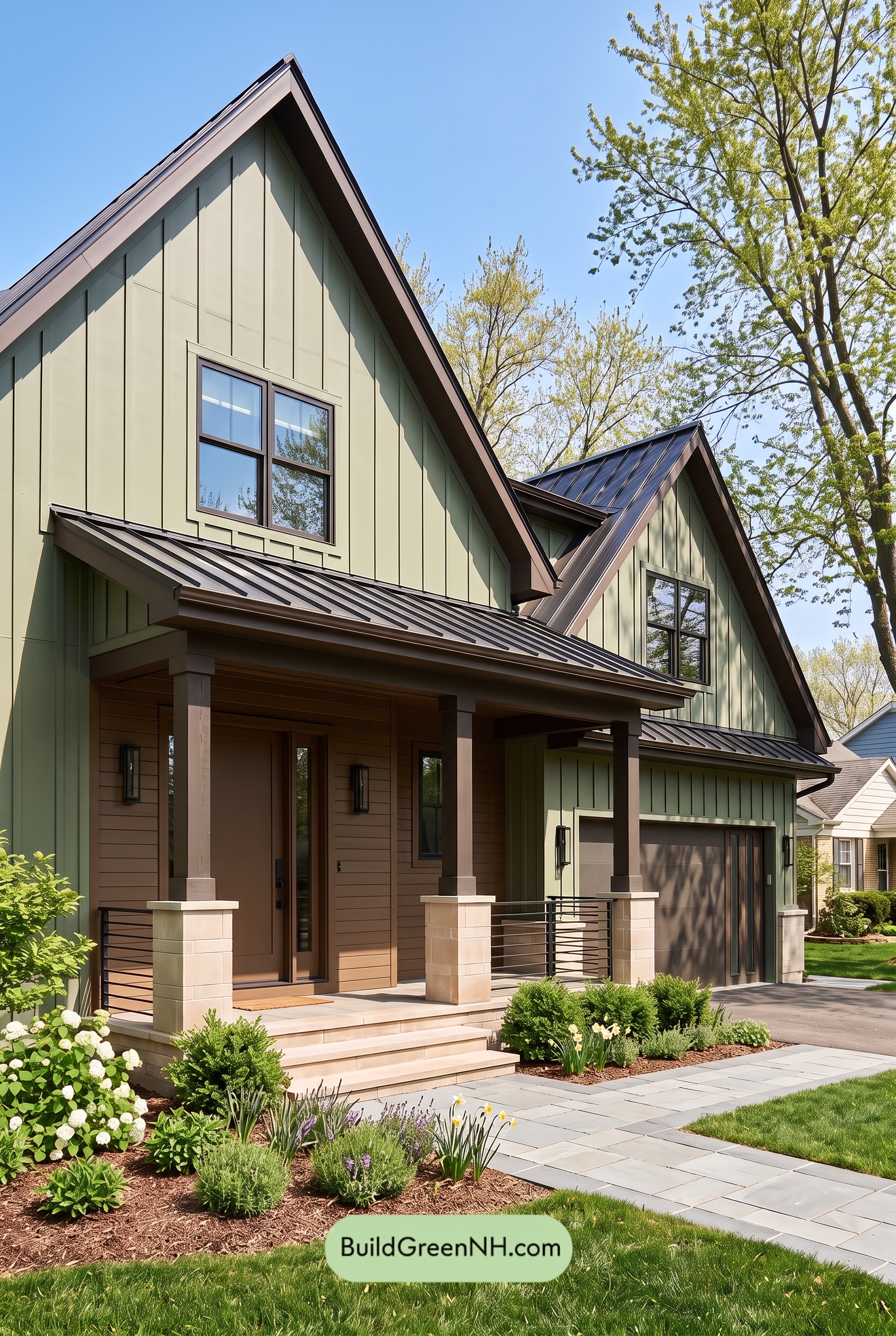 Earthy Green House Exterior Color Scheme: Green Velvet Assurance
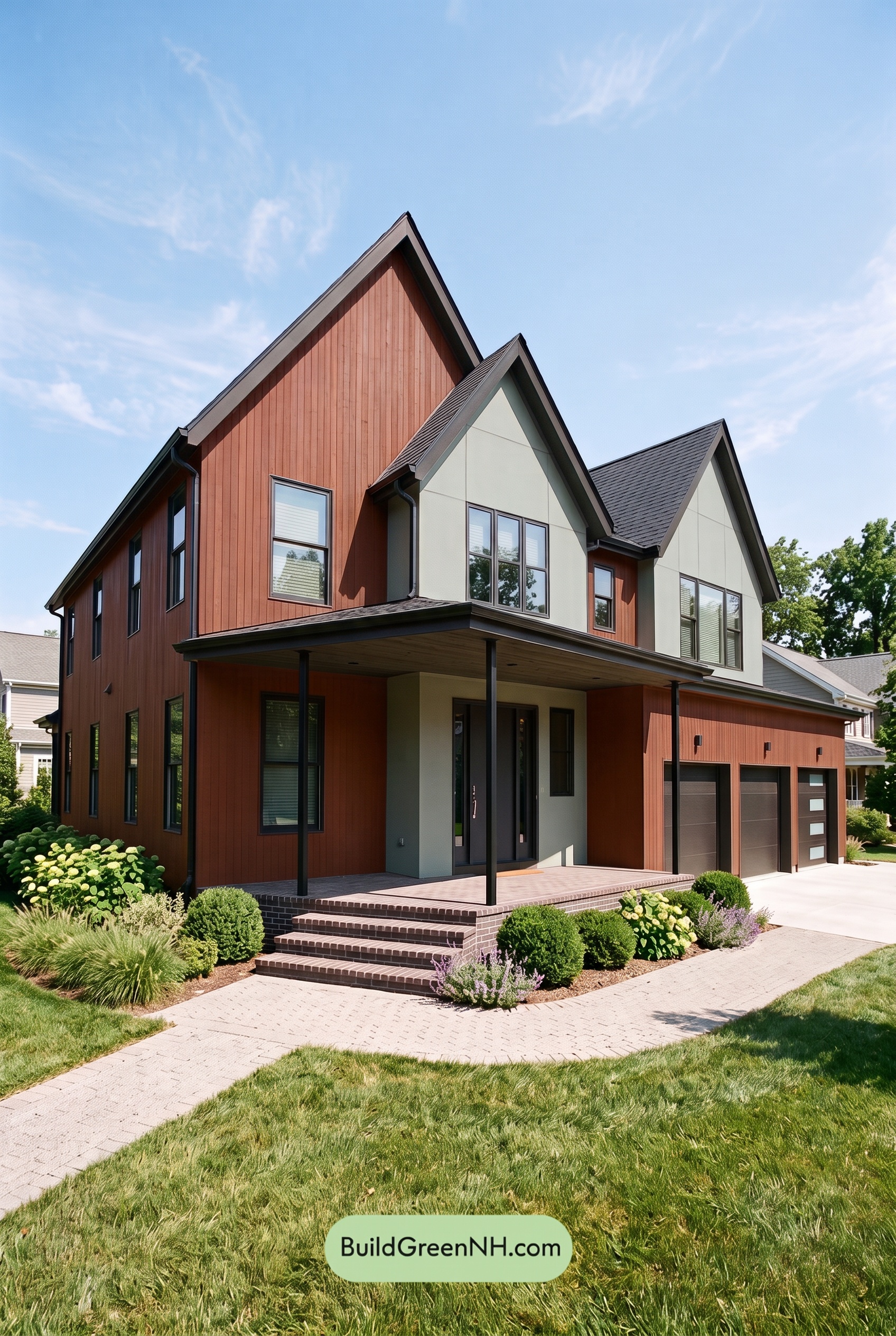 Earthy Green House Exterior Color Scheme: Brown Silken Calm
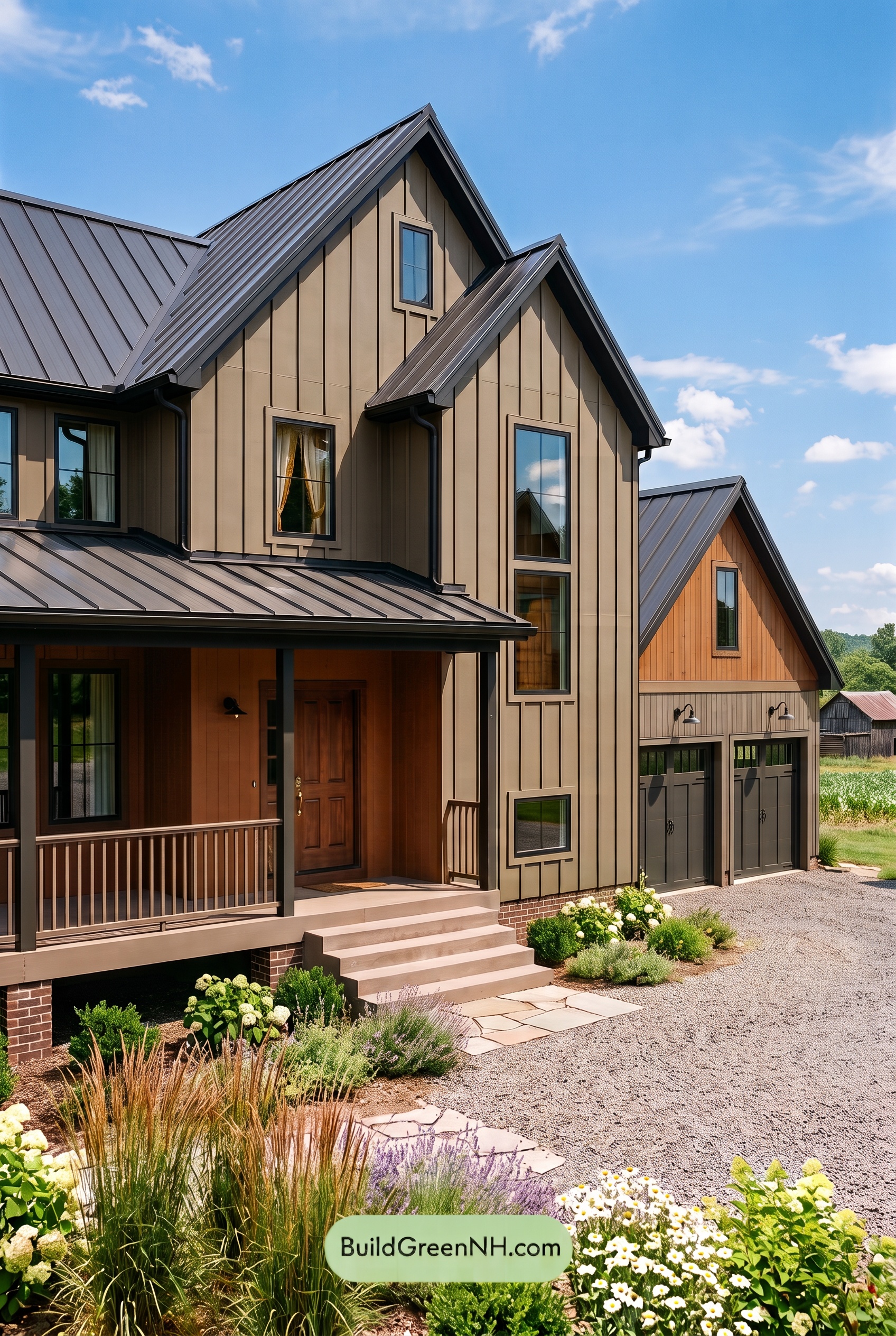 Earthy Green House Exterior Color Scheme: Green Amber Contentment
Table of Contents