Last updated on
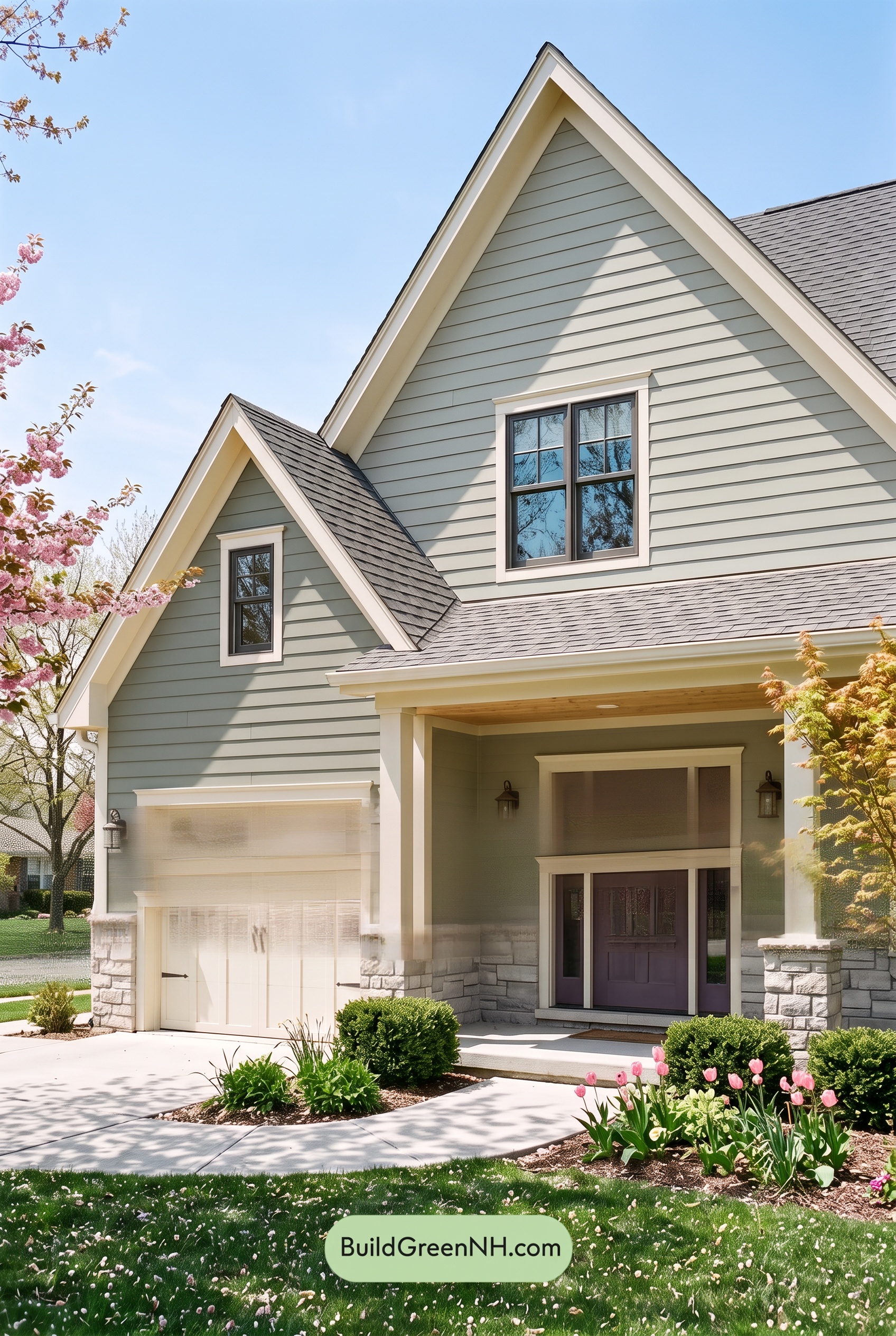

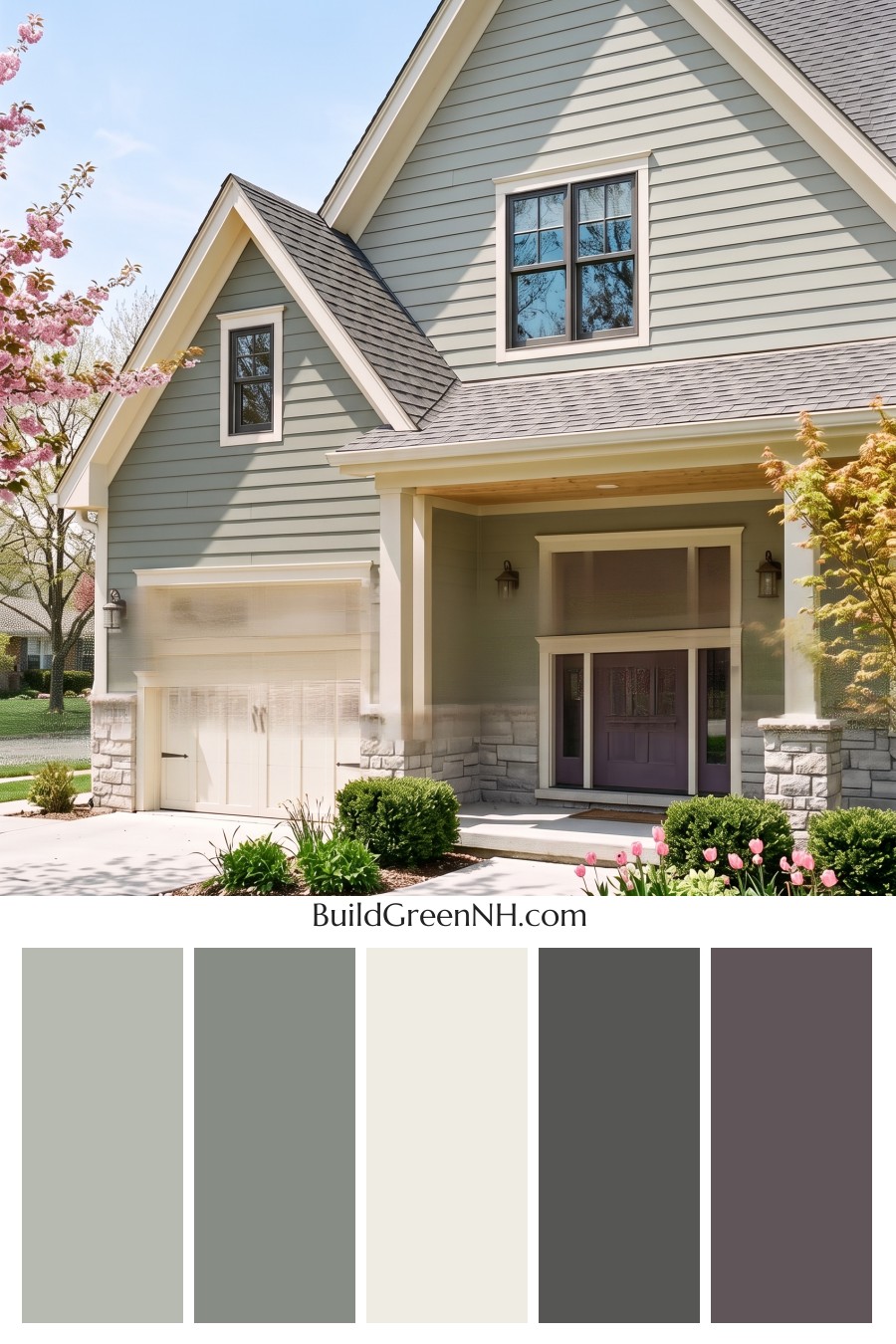
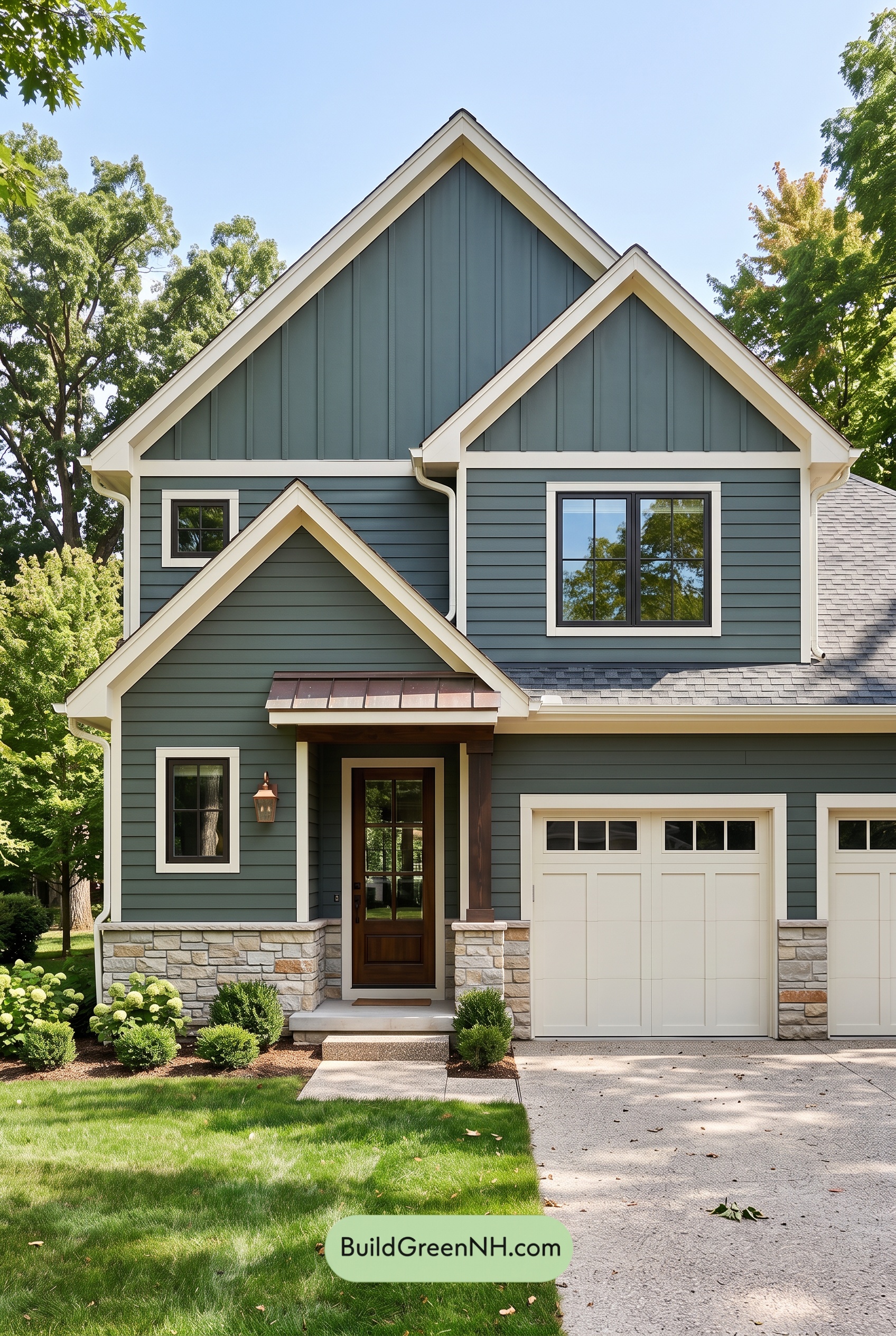
This refined blend of soft gray siding, crisp white trim, and deep charcoal details gives the home a welcoming presence with lasting curb appeal.
A Calm, Layered Exterior Palette
The main siding wears a light, green-leaning gray that feels fresh in daylight while still offering the grounded character of a classic neutral. Its gentle depth complements the home’s tall gables and horizontal lap boards without making the façade feel heavy. A slightly deeper gray is used in recessed areas, adding quiet dimension around the entry and beneath the covered porch.
Bright White Defines the Architecture
Crisp white trim creates a clean outline around the rooflines, windows, garage, and porch structure. Against the soft gray exterior, this bright shade makes every gable peak and window surround feel sharp and intentional. The white columns continue that tailored effect at the front porch, giving the entry a bright, open character.
The white garage door also helps balance the broad front elevation. Rather than competing with the siding, it blends into the trim palette and allows the architectural details above it to remain the focus.
Deep Gray Accents Add Contrast
Deep charcoal gray window frames introduce a handsome contrast that keeps the pale siding from appearing too delicate. This darker shade is repeated in the roof, creating a visual connection from the tallest gable down to the windows below. The result is cohesive, polished, and beautifully proportioned.
At the entry, the front door uses a rich, dark gray that anchors the porch with understated drama. It feels sophisticated rather than severe, especially when framed by the surrounding white trim and supported by the warm shadows of the covered entry.
An Inviting, Timeless Mood
This exterior scheme strikes an appealing balance between airy and grounded. The light gray siding brings softness, the white details add brightness, and the charcoal roof and accents provide definition. Together, these shades create a home that feels traditional in shape yet fresh in presentation—an especially lovely backdrop for lush green landscaping and seasonal blooms.
Next, see how this color scheme looks under different lighting simulations throughout the day.
Overcast
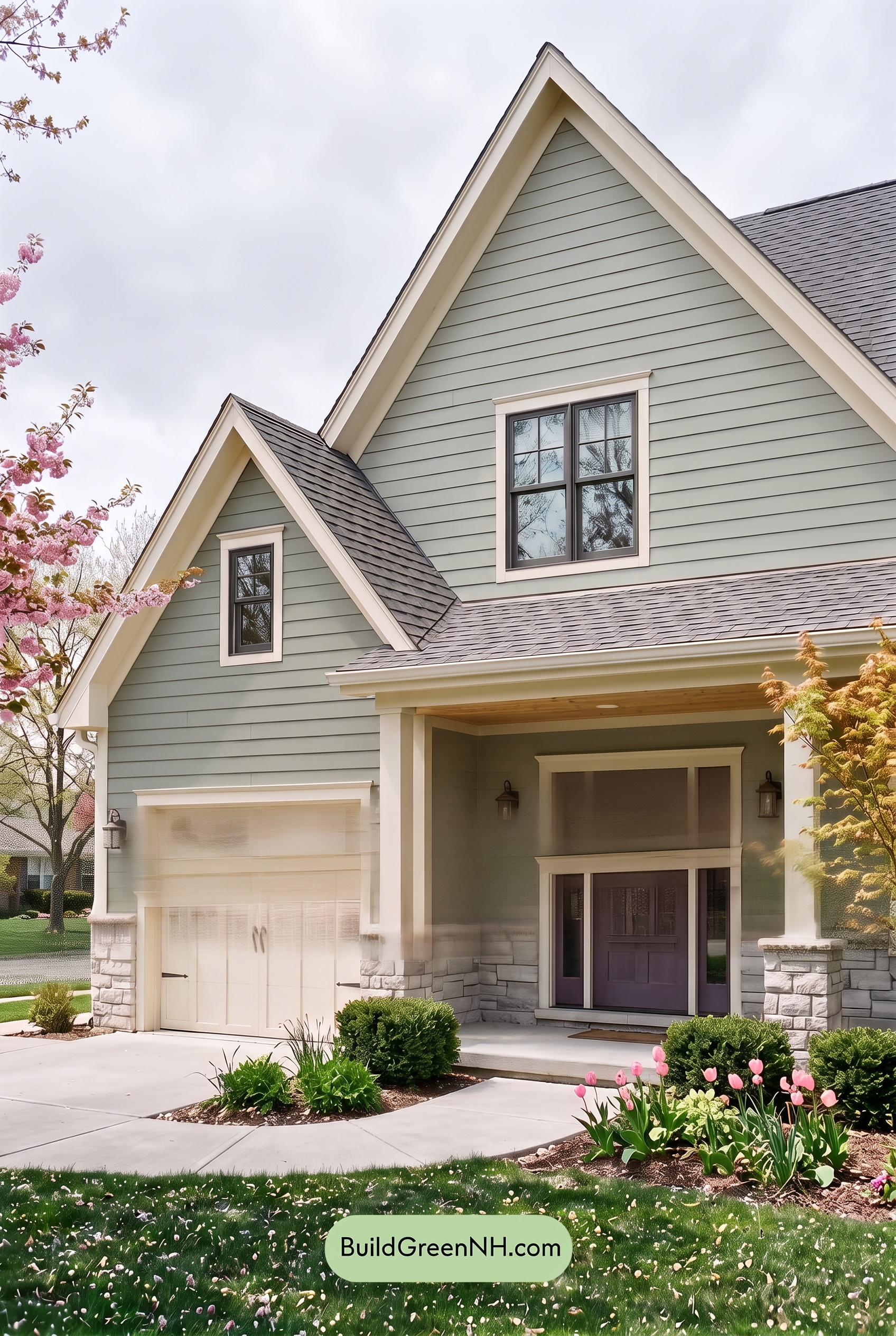
Under overcast skies, the gray siding appears softer and slightly deeper than it does in neutral daylight, with its subtle warmth becoming more restrained. The white trim and columns lose some of their bright crispness, taking on a gentler, quieter presence that keeps the overall palette calm and cohesive.
Because cloud cover diffuses direct sun, shadows along the gables, porch, and window frames become broader and less dramatic. Contrast between the pale trim and darker gray details eases, while the darker gray elements feel more grounded, giving the exterior a polished, serene mood rather than a sharp, sunlit one.
Golden Hour
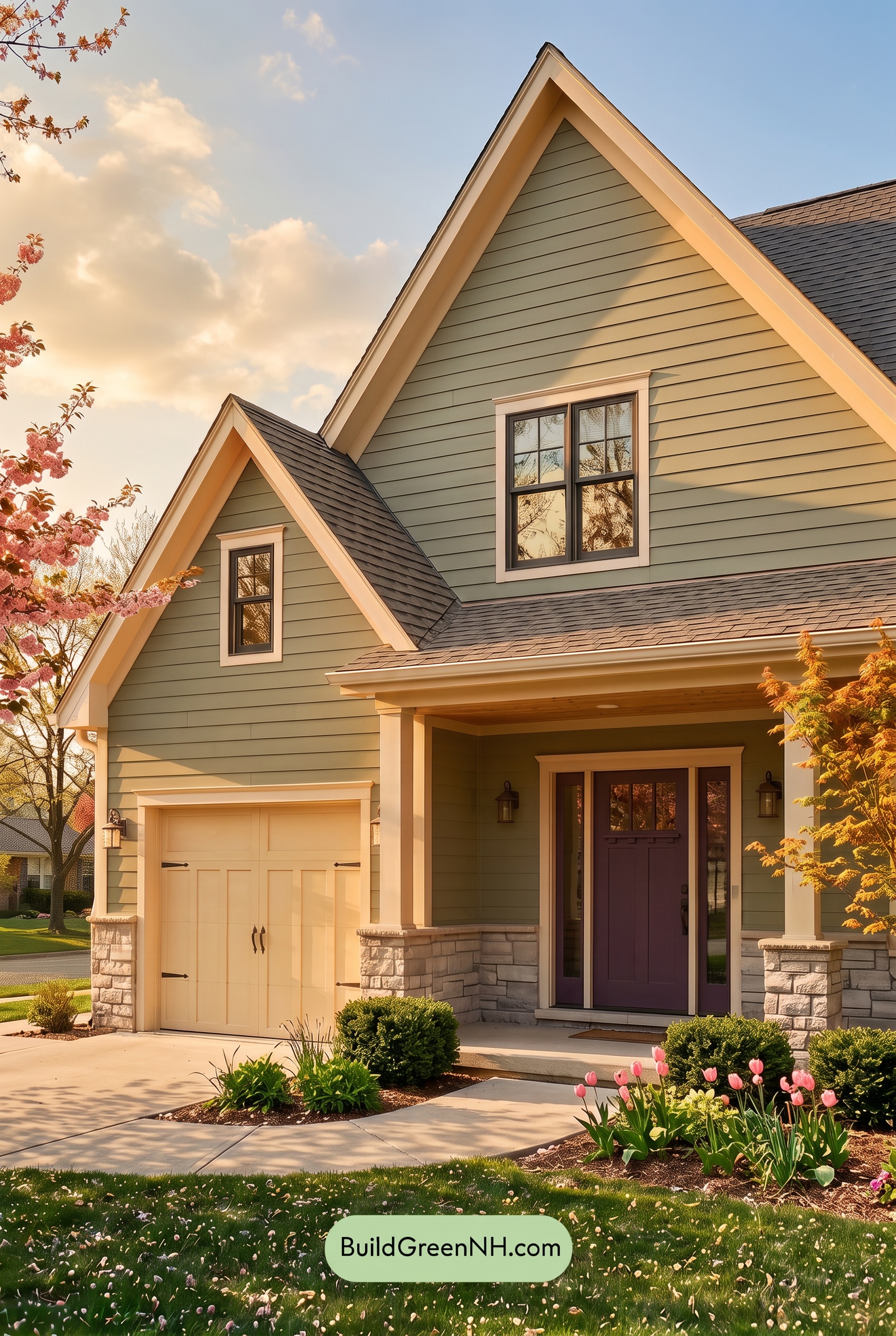
Under neutral daylight, the gray exterior reads clean, balanced, and quietly understated, while the white trim creates a crisp, fresh contrast. At Golden Hour, the low, warm light softens that cool gray character, giving the siding a gentler, more muted warmth and making the light trim appear creamy rather than stark.
Longer shadows deepen the darker gray details around the windows and entry, increasing contrast and adding dimension across the siding. The result is a richer, more inviting mood: sunlit surfaces feel warmer and more saturated, while shaded areas become deeper and more dramatic without losing the home’s calm, layered palette.
Shade
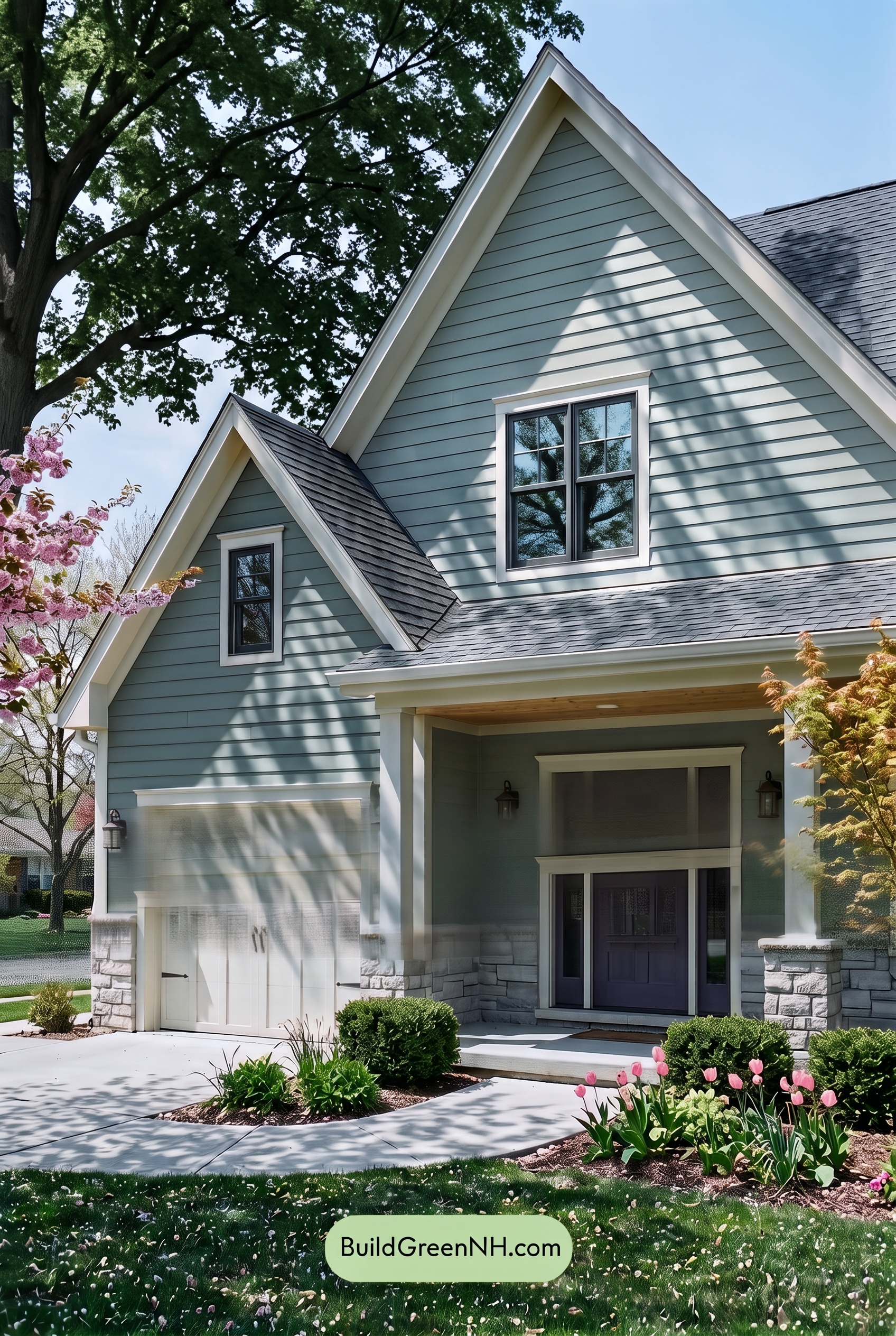
In shade, the soft gray siding appears cooler and slightly more muted than it would in neutral daylight, giving the exterior a calm, refined presence. The darker gray details deepen in the sheltered areas, while the white trim and columns lose a little brightness and read as gentler, softer whites rather than crisp highlights.
Tree-cast shadows create shifting bands of contrast across the façade, emphasizing the horizontal lines and steep roof forms. This lower-saturation, cooler light makes the home feel more layered and tranquil, with the white and gray families working together in a quieter, more welcoming mood.
Nighttime
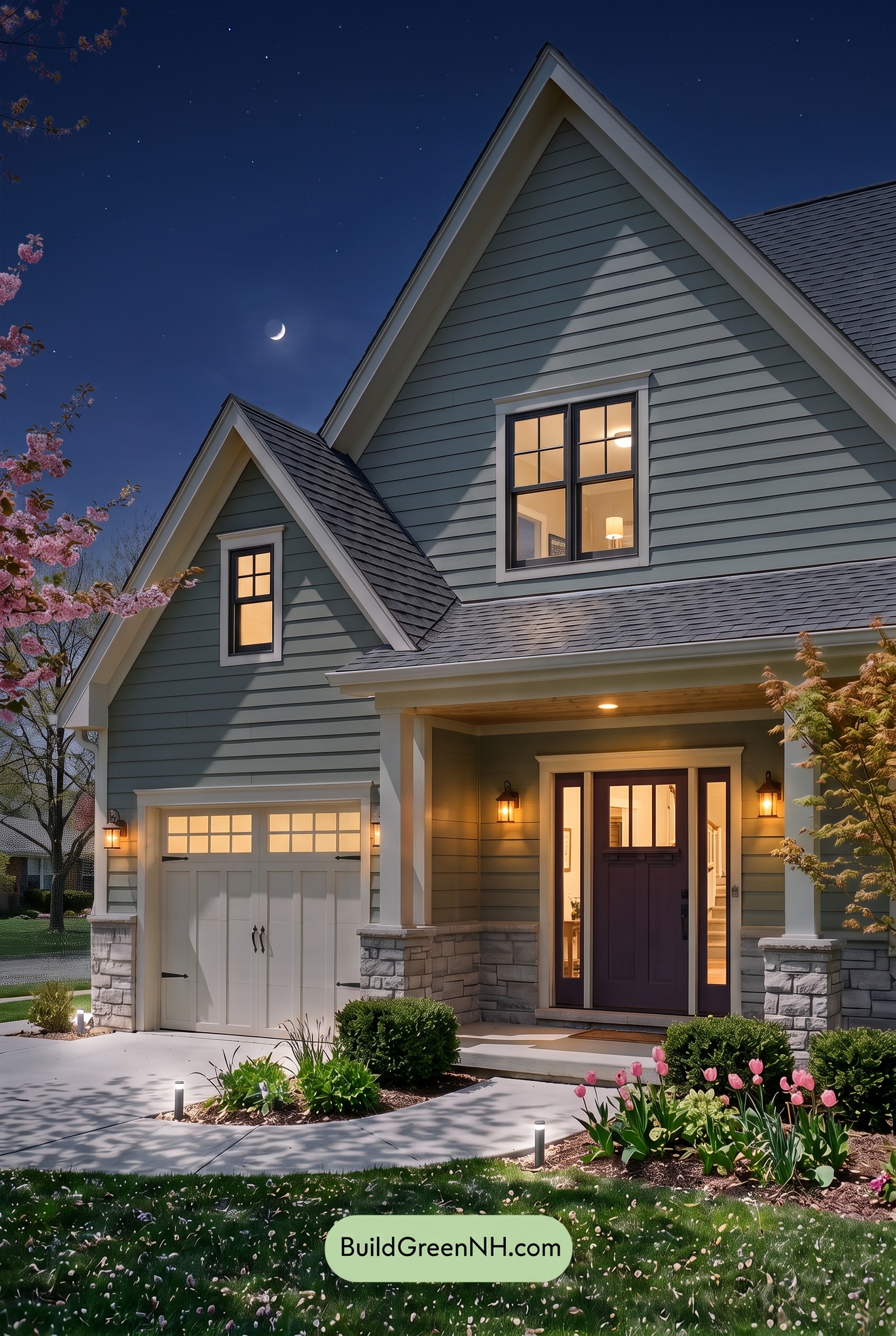
At night, the gray siding takes on a deeper, cooler cast than it shows in neutral daylight, with its saturation appearing more restrained beneath the blue-black sky. The darker gray window frames and front door recede into richer shadow, while the white trim, columns, and garage door hold their brightness and create crisp architectural contrast.
Warm light from the windows and entry softens the cooler exterior shades, bringing a welcoming glow to nearby surfaces and making the facade feel layered rather than flat. Deep shadows sharpen the rooflines and siding texture, shifting the overall mood from clean and balanced in daylight to calm, dramatic, and inviting after dark.
Pin these for later:
Want More?
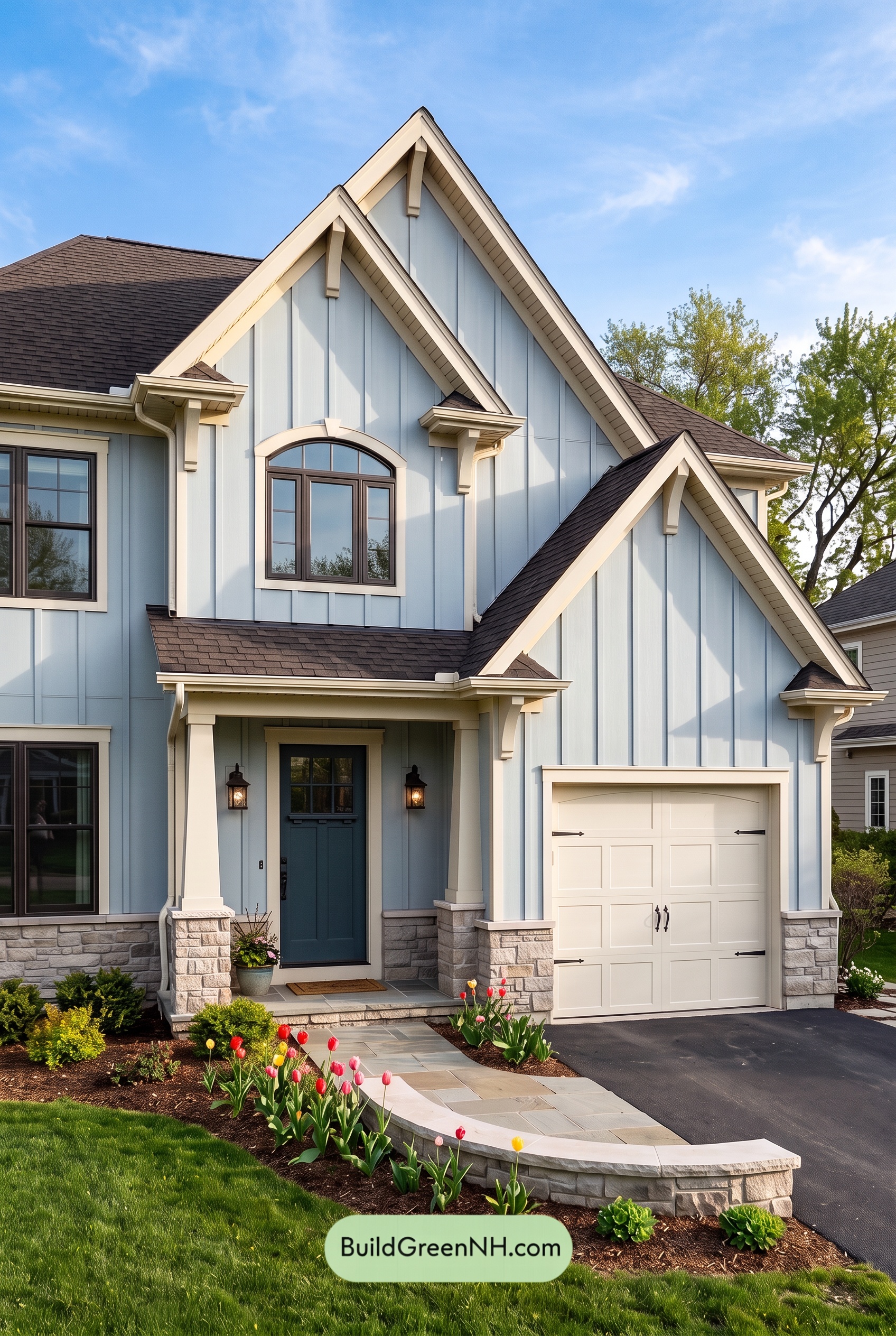 Exterior Color Scheme with Stone Accents: Bluebell Gable Song
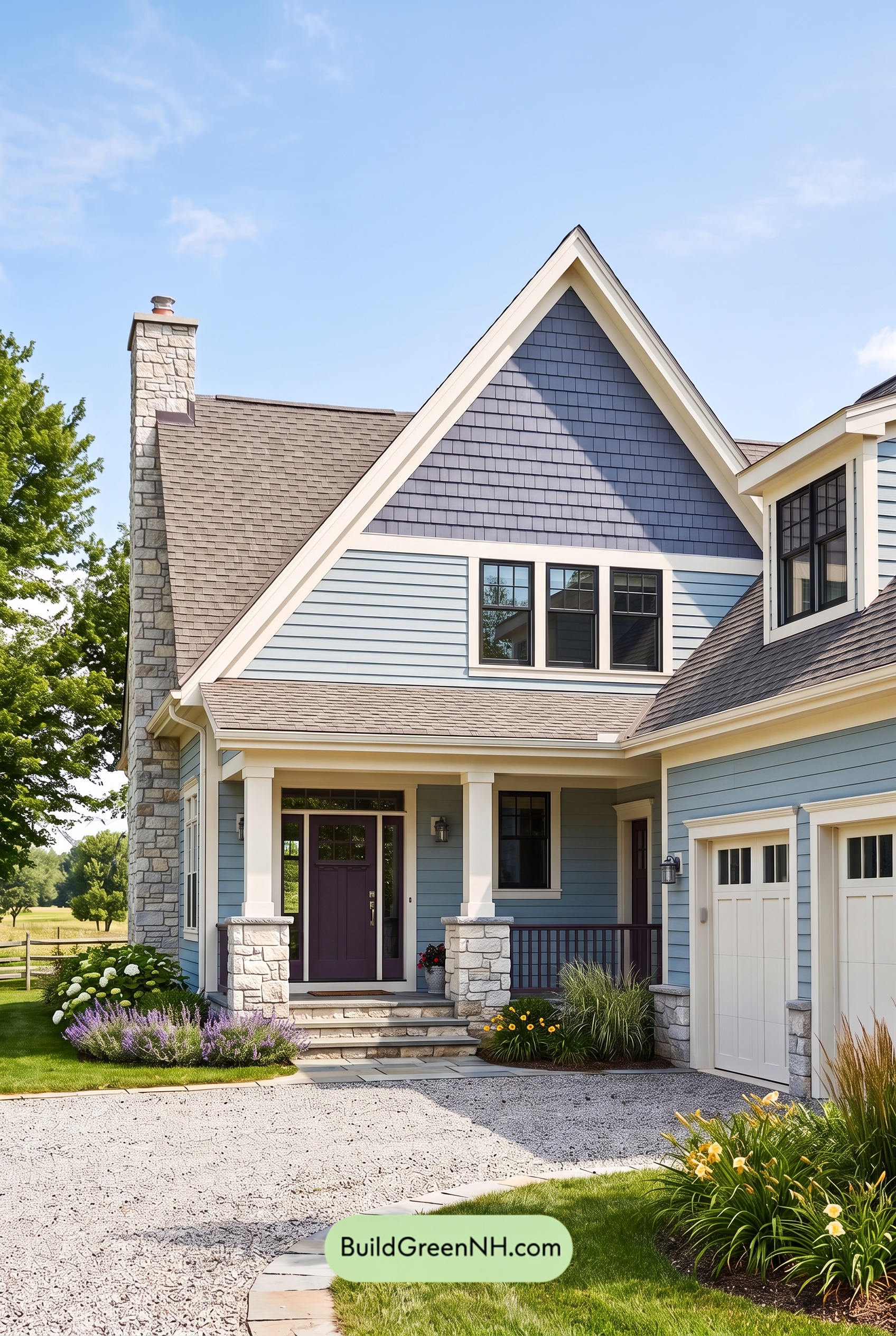 Exterior Color Scheme with Stone Accents: Meadow Bell Welcome
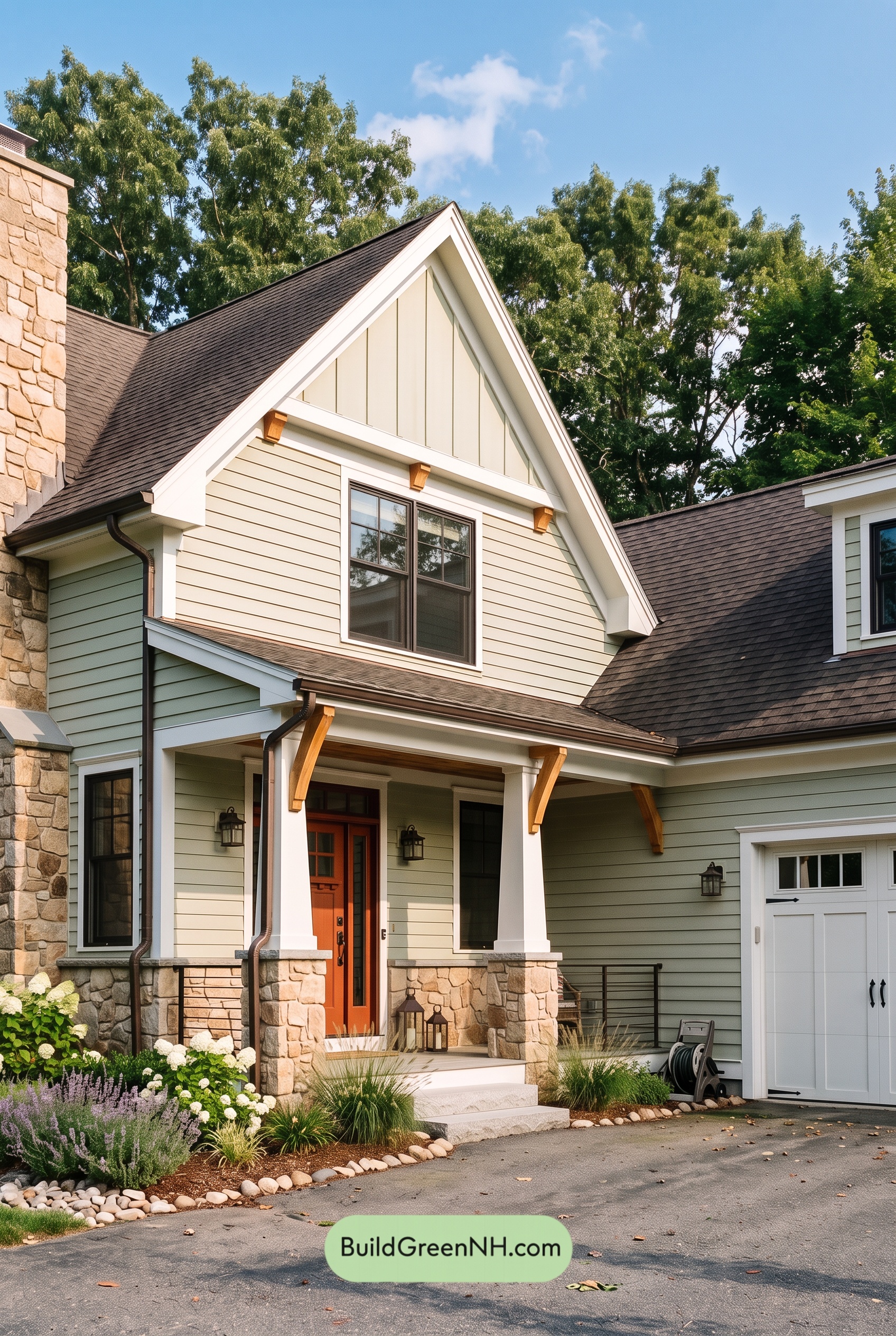 Exterior Color Scheme with Stone Accents: Celadon Ember Gable
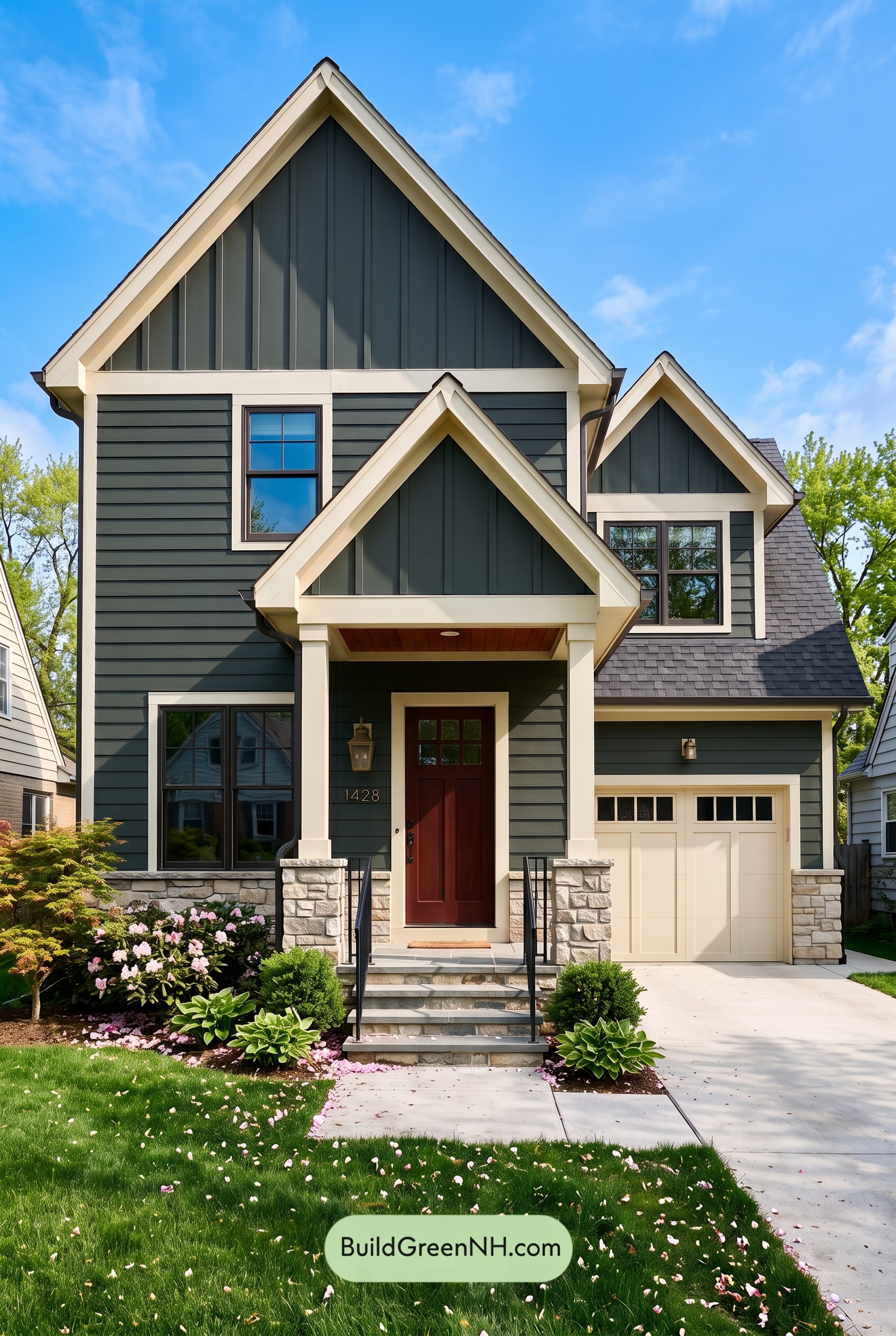 Exterior Color Scheme with Stone Accents: Pine Brass Threshold
 Exterior Color Scheme with Stone Accents: Evergreen Copper Welcome
Table of Contents