Last updated on
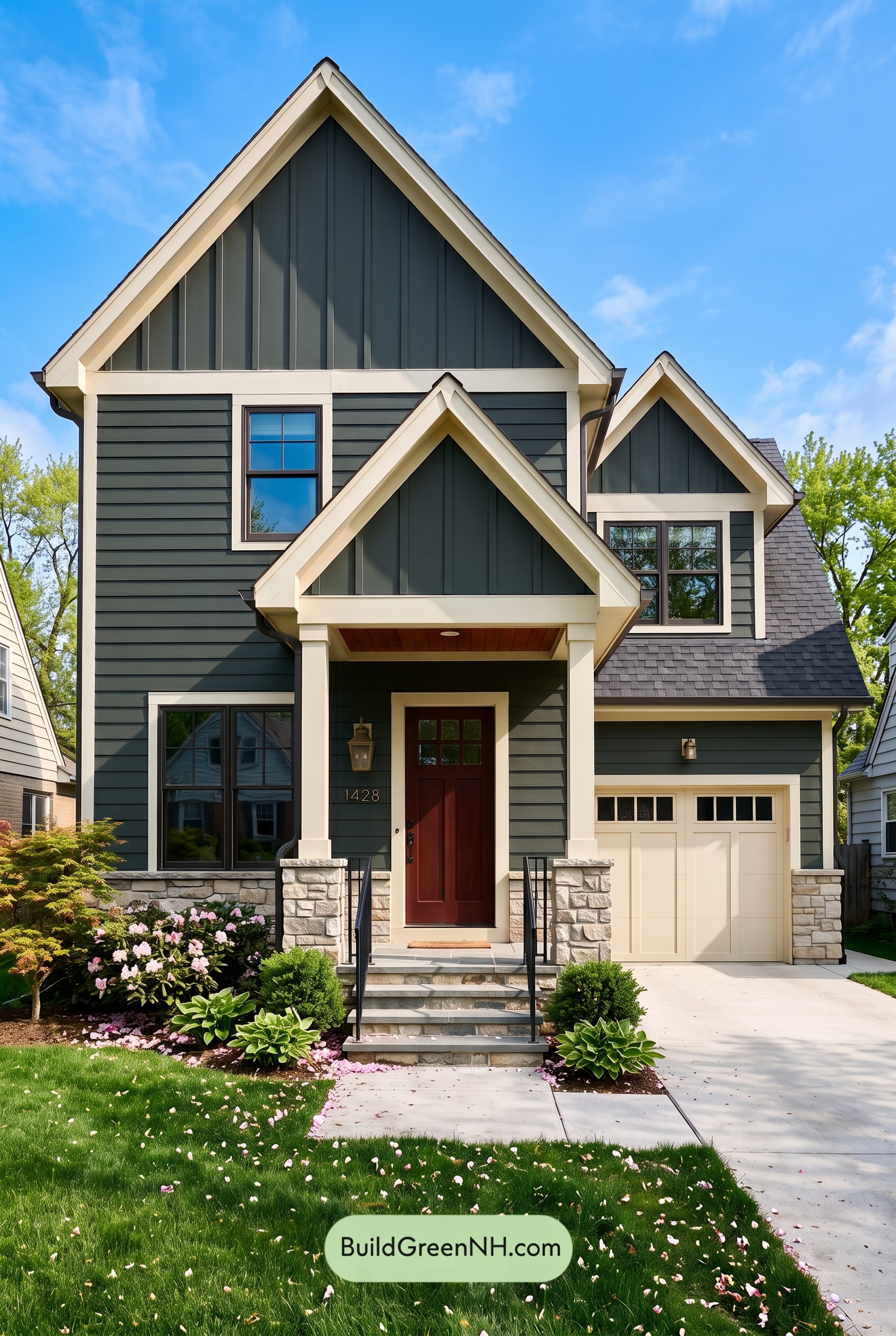

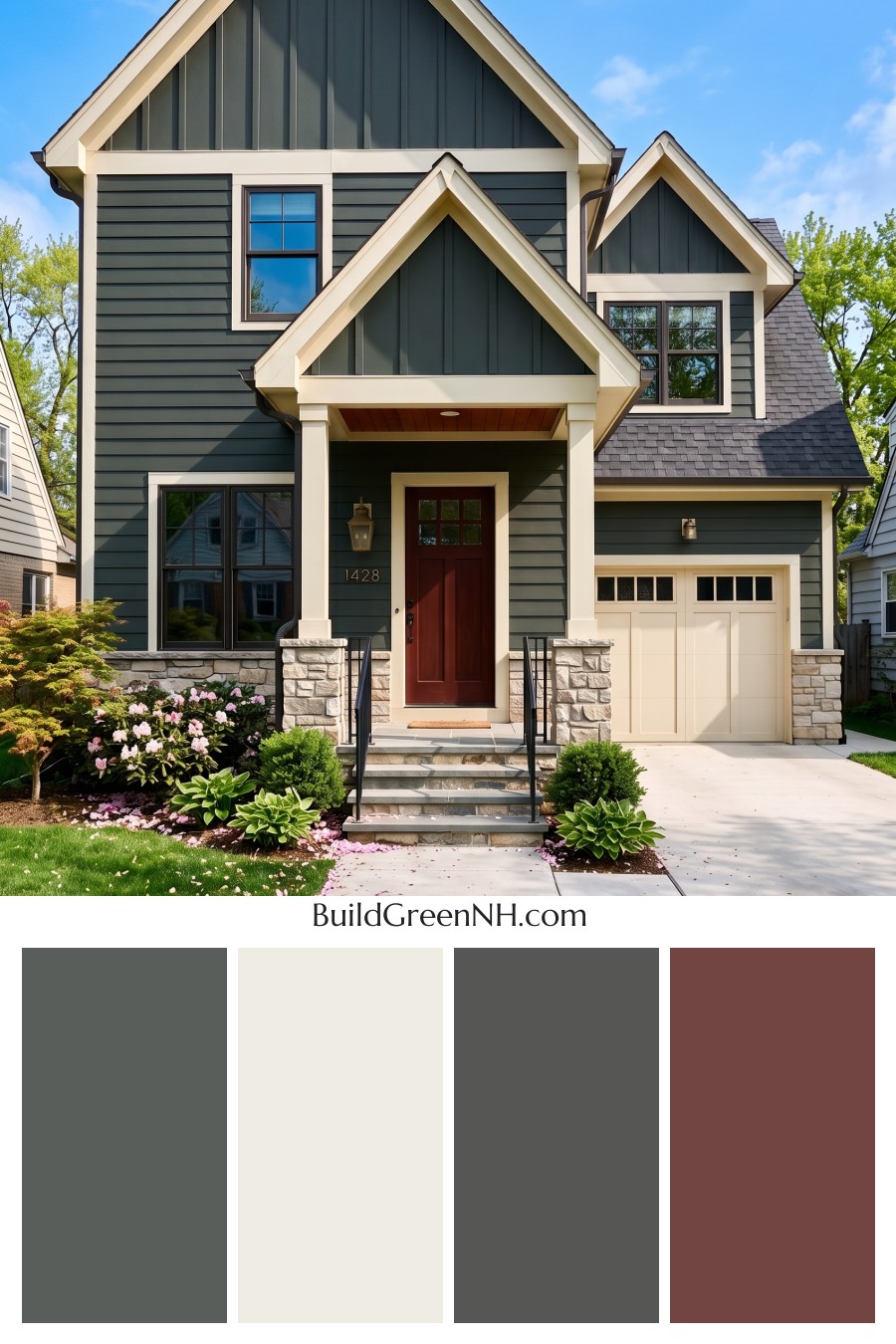
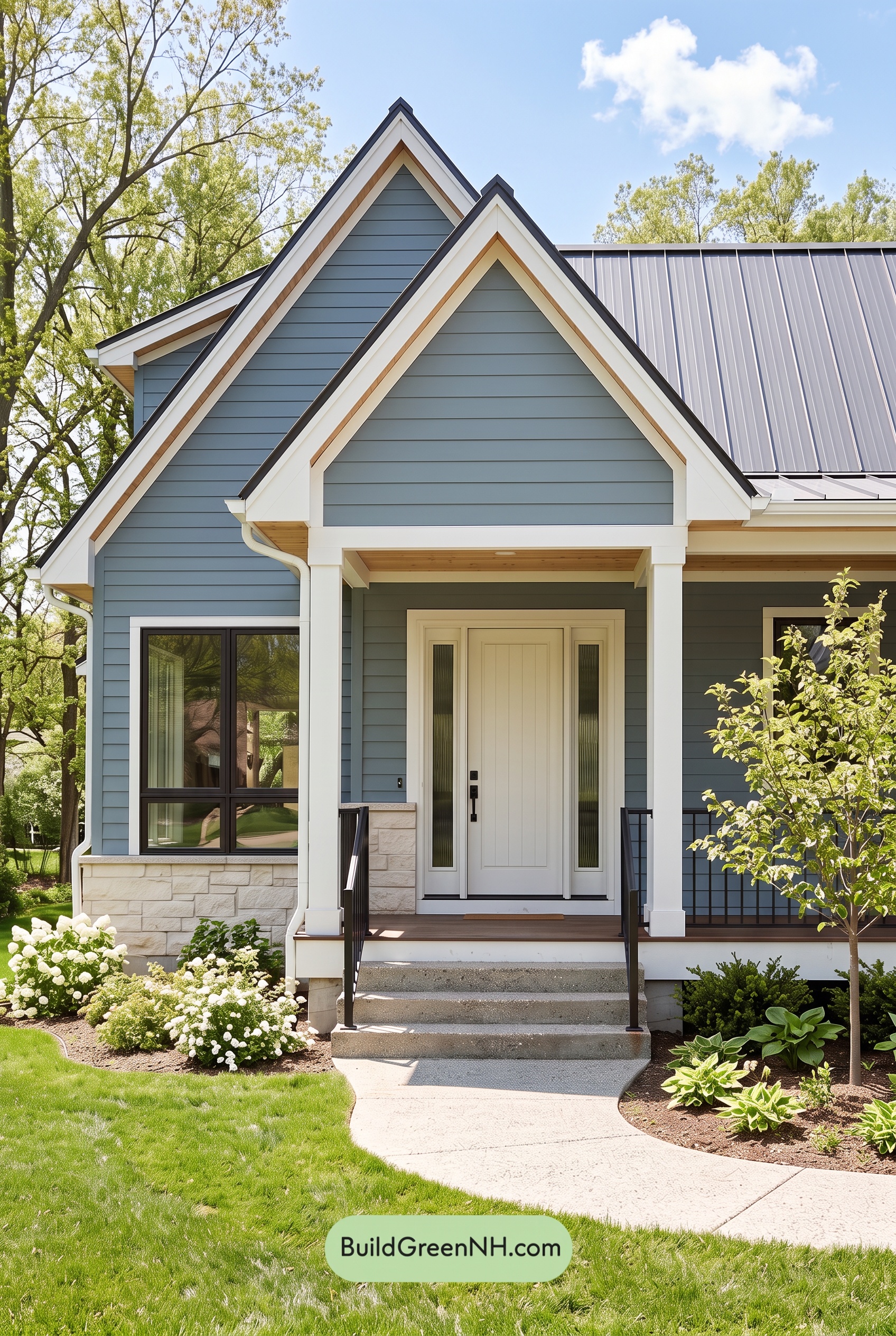
This rich gray-and-white exterior scheme feels timeless and tailored, with a warm door color that gives the facade an instantly welcoming focal point.
A Strong Foundation in Deep Gray
The main siding wears a deep, cool gray shade that gives the house a polished, grounded presence. Its slightly muted character keeps the tall facade from feeling too stark, while the darker tone adds wonderful depth to the horizontal siding and vertical gable details.
That same gray family carries through the window frames and railings, creating a deliberate, cohesive outline across the exterior. The result is crisp without becoming overly high-contrast, allowing the architecture to feel substantial and refined.
Bright White Details Define the Architecture
A soft warm white is used generously on the trim, broad gable boards, porch columns, and garage door. This lighter shade beautifully traces the rooflines and emphasizes each peak, making the layered facade feel bright, balanced, and inviting.
The white elements also bring a clean sense of structure to the exterior. Around the windows, doors, and garage, they create visual breathing room against the deep gray backdrop and give every detail a finished appearance.
A Welcoming Accent at the Entry
The front door introduces a deep reddish-brown shade that brings warmth to the cool gray exterior. It is an especially effective choice because it draws the eye toward the covered entry without competing with the surrounding trim.
Above the doorway, a medium warm brown tone on the porch ceiling continues that welcoming feeling. Together, these warm accents soften the tailored gray-and-white palette and make the entry feel personal and approachable.
Grounded Roof and Natural-Looking Contrast
A dark charcoal gray roof anchors the composition from above and connects naturally with the window frames, railings, and other deeper details. Its quiet, nearly black appearance adds contrast while still staying within the home’s cool, sophisticated color direction.
At the base, light neutral gray and beige-toned stonework lends another layer of texture. These softer natural shades help bridge the transition from the house to the landscape, while the dark gray siding, warm white trim, and rich brown door maintain a beautifully balanced overall mood.
Next, see how this color scheme looks under different lighting simulations throughout the day.
Overcast
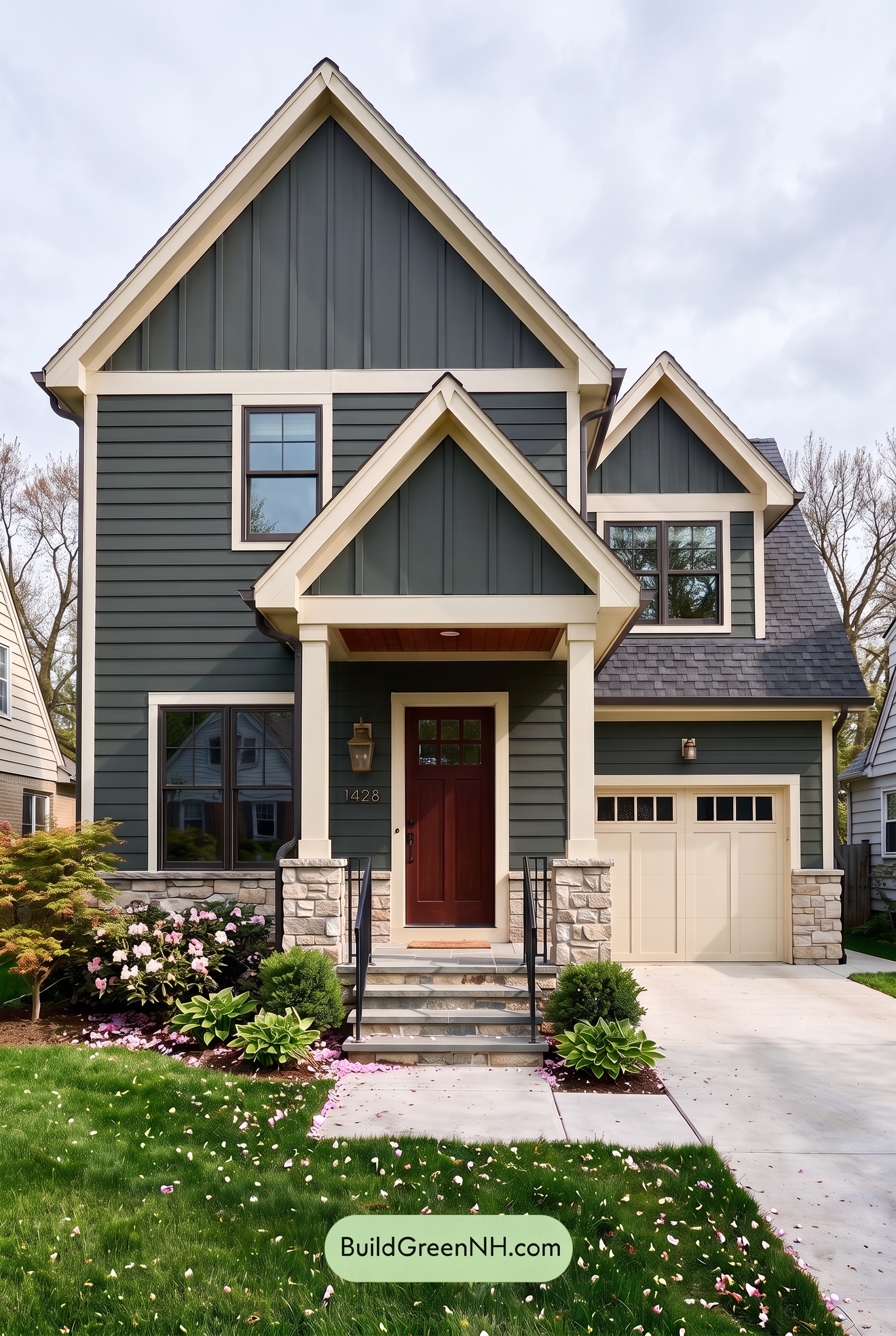
Under overcast skies, the cool gray siding appears deeper and slightly more muted than it does in neutral daylight, with its blue-gray undertones becoming more noticeable. The soft white trim and garage door lose some of their sunny warmth, reading cleaner and calmer against the darker wall color.
Because clouds diffuse the light, sharp shadows around the gables, columns, and railings soften, reducing contrast while preserving the home’s layered details. The rich brown door feels less saturated but more grounded, giving the exterior a quiet, polished mood rather than the brighter, crisper character it has in neutral daylight.
Golden Hour
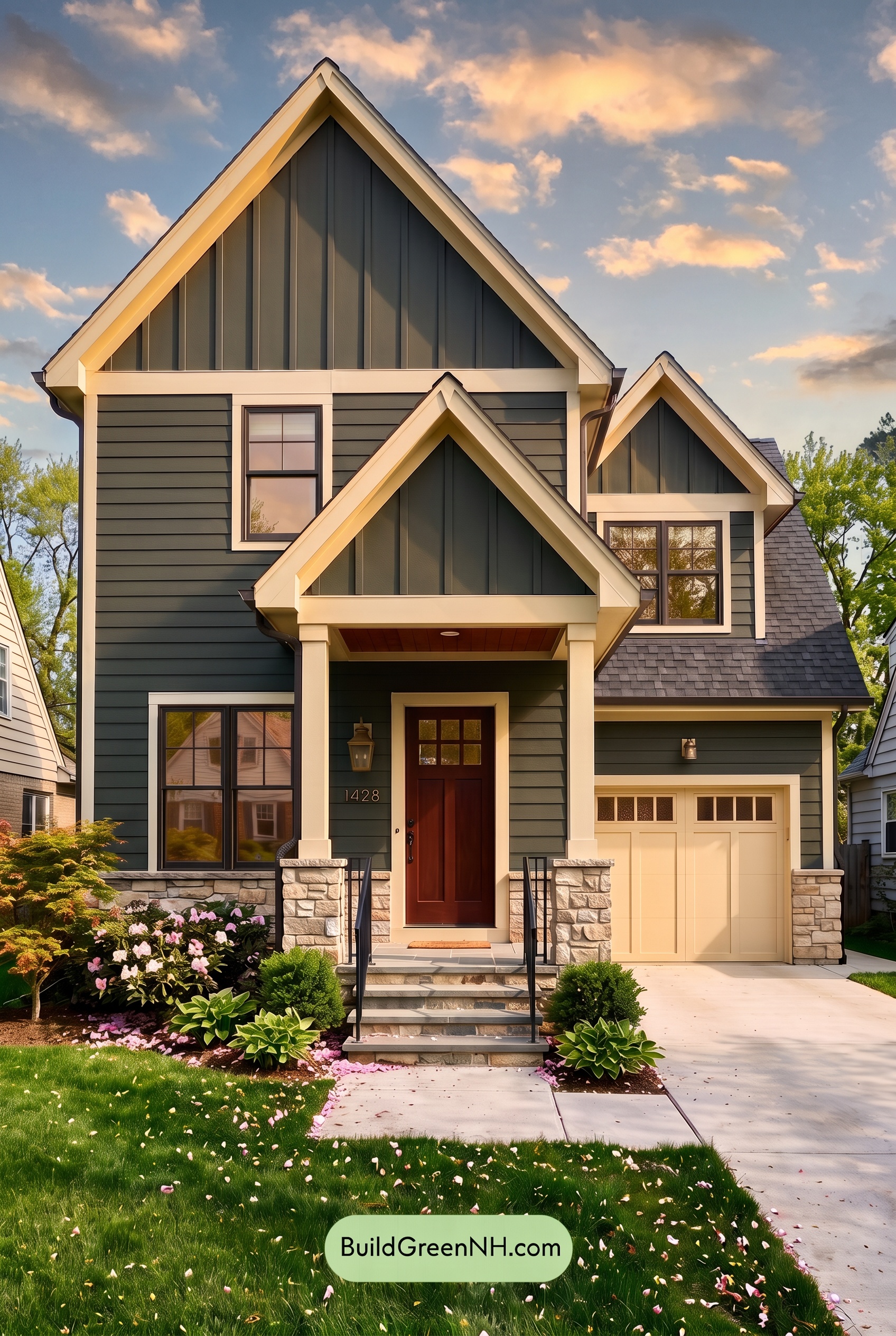
Golden Hour wraps the gray exterior in a softer, warmer cast, making its cool undertones appear deeper and more muted than they do in neutral daylight. The light trim and garage surfaces shift from crisp white to a creamy, sunlit shade, while the brown entry becomes richer and more inviting.
Longer shadows add dimension along the siding, gables, and porch details, sharpening the contrast between illuminated edges and recessed areas. Compared with the cleaner, more even look of midday, the overall palette feels warmer, lower in contrast in the highlights, and more welcoming in mood.
Shade
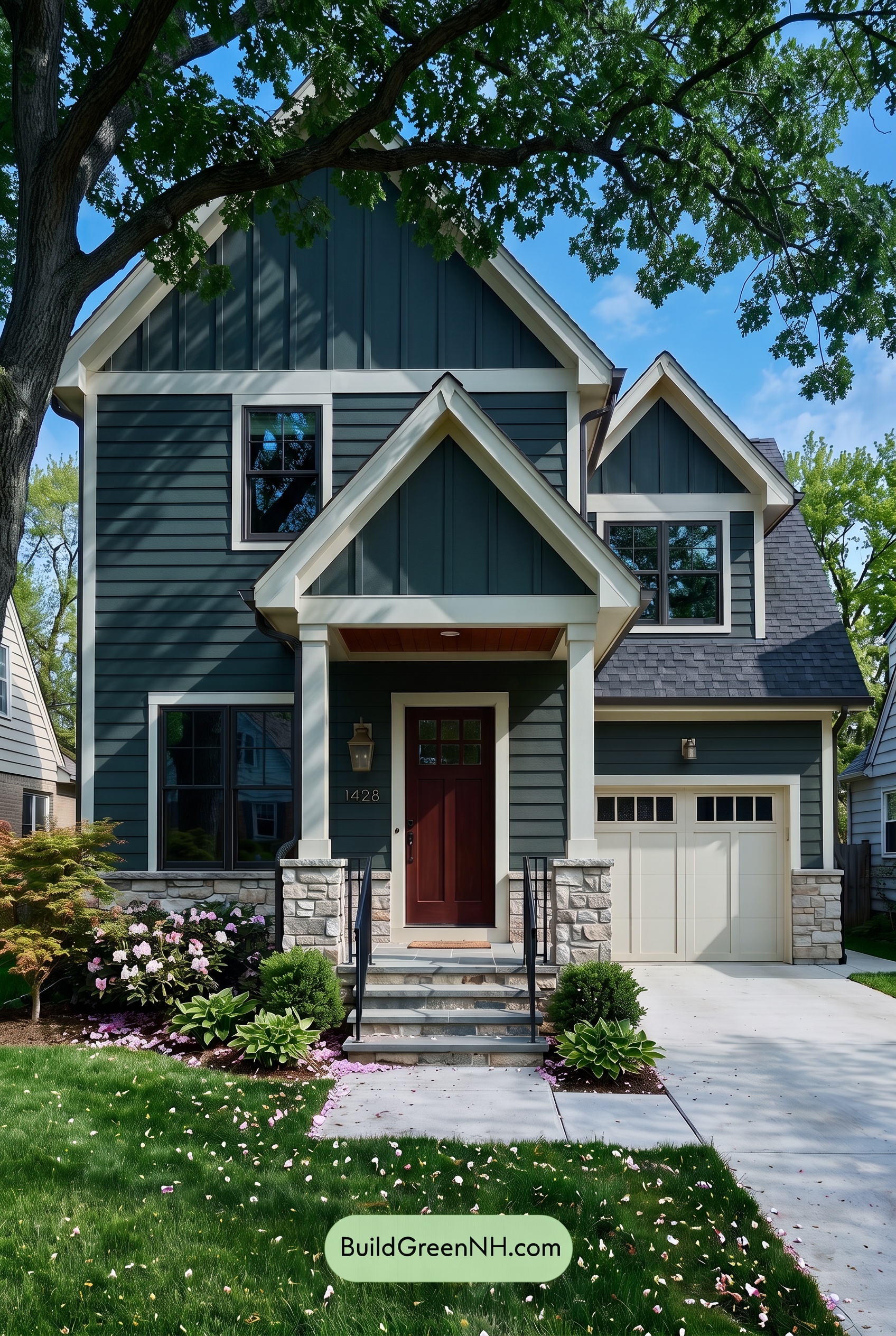
In shade, the deep gray siding takes on a cooler, more muted character than it would in neutral daylight, with its saturation appearing quieter and its darker undertones becoming more pronounced. Dappled shadows from the trees add movement across the façade, making the gray surfaces feel layered and dimensional rather than flat.
The soft white trim and garage door lose some brightness in the filtered light, reading as gentler warm neutrals that frame the darker gray with less glare. Against these softened edges, the rich brown front door feels deeper and more inviting, while the gray window frames and railings recede into the shadows for a calm, sheltered mood.
Nighttime
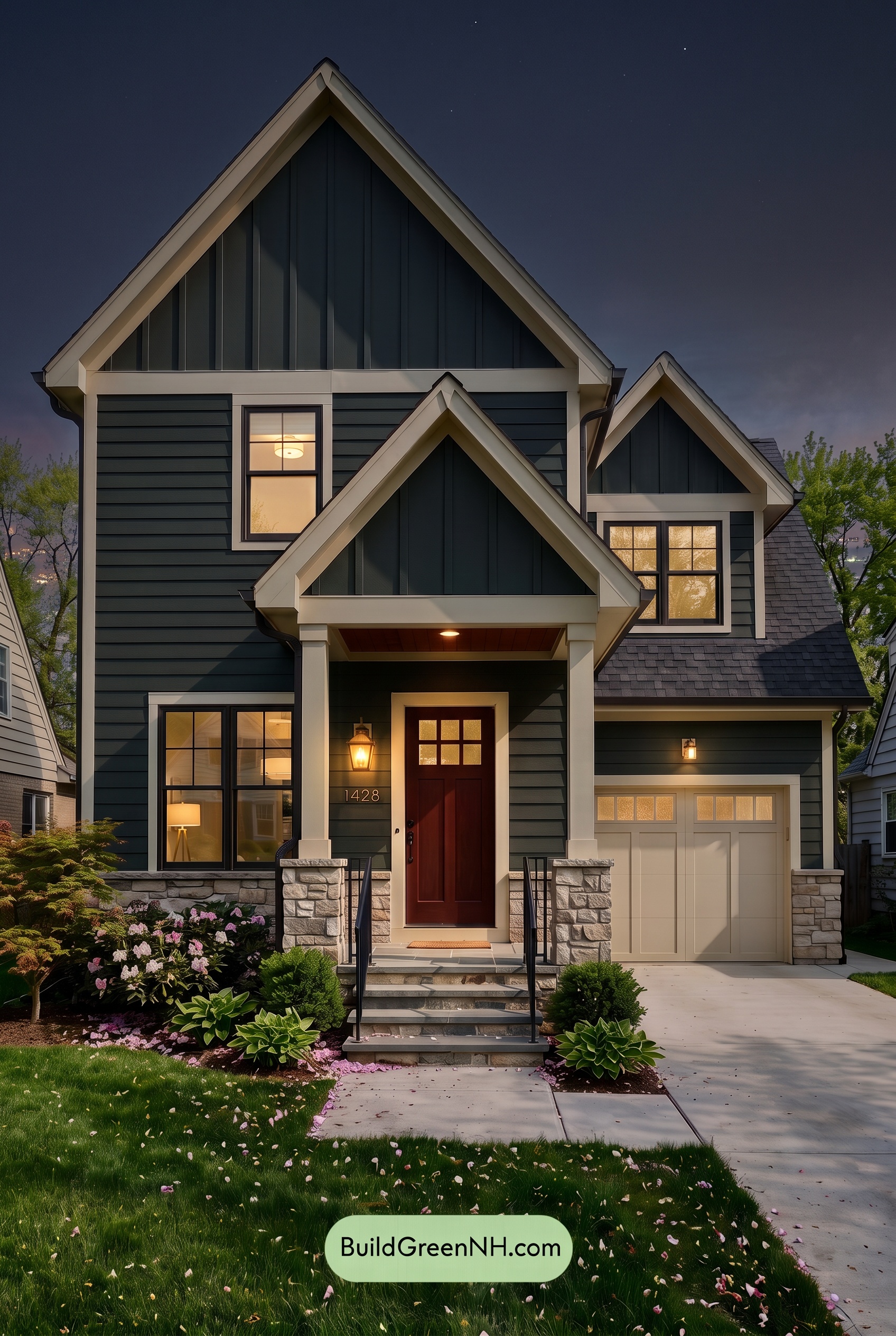
At night, the gray exterior takes on a deeper, more saturated character than it has in neutral daylight, reading almost charcoal in the broad shadowed areas. The white trim, columns, and garage door soften under the warm glow of the exterior fixtures, shifting from crisp daylight contrast to a gentler, creamy highlight that cleanly outlines the rooflines and entry.
The brown front door becomes richer and more inviting beside the warm pools of light, while the darker gray frames and railings recede into the background. This interplay of warm illumination and cool, deepened shadows gives the facade a layered, dramatic mood—welcoming at the entry while calm and quietly sophisticated across the rest of the home.
Pin these for later:
Want More?
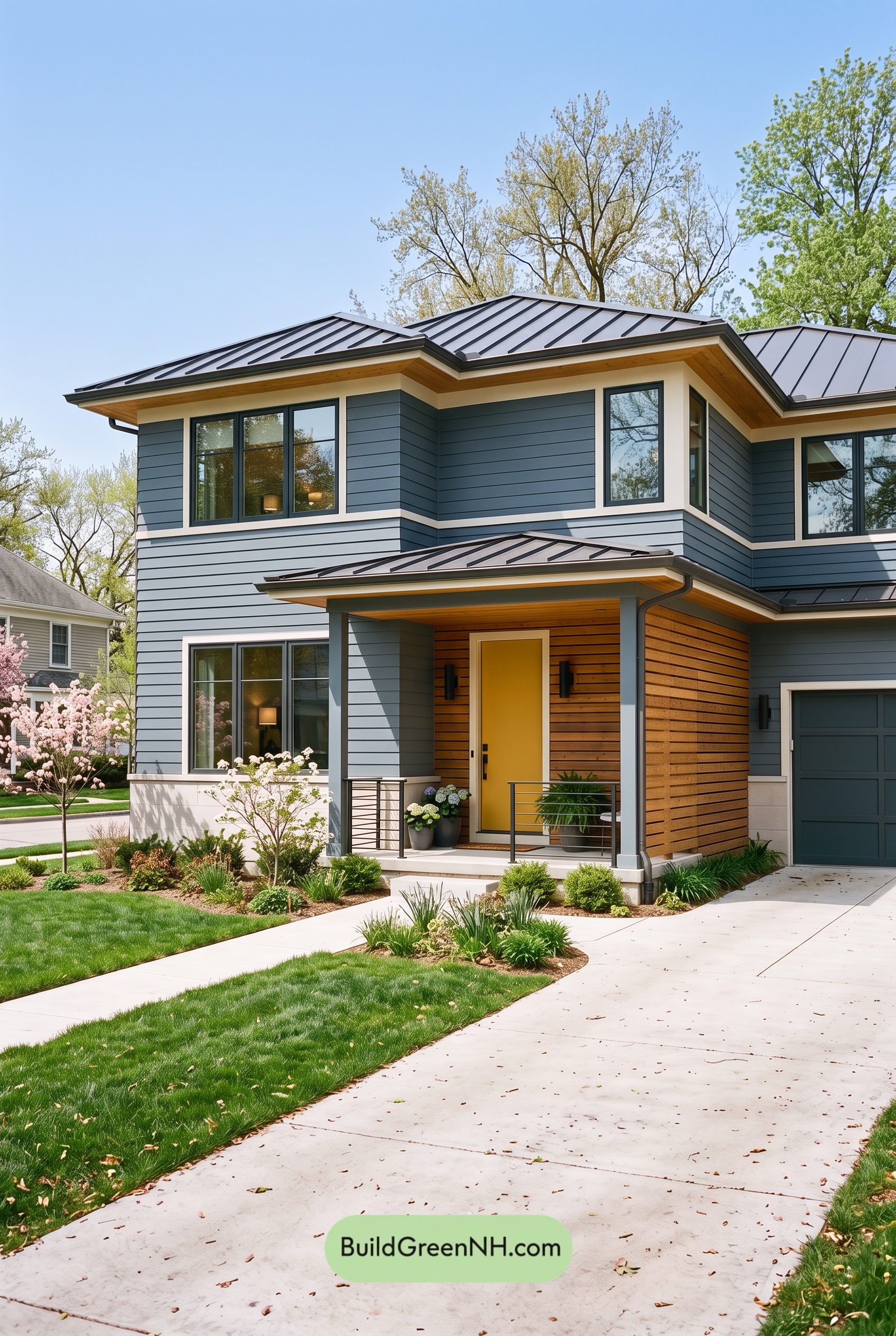 Blue House Front Door Color Scheme: Harbor Saffron
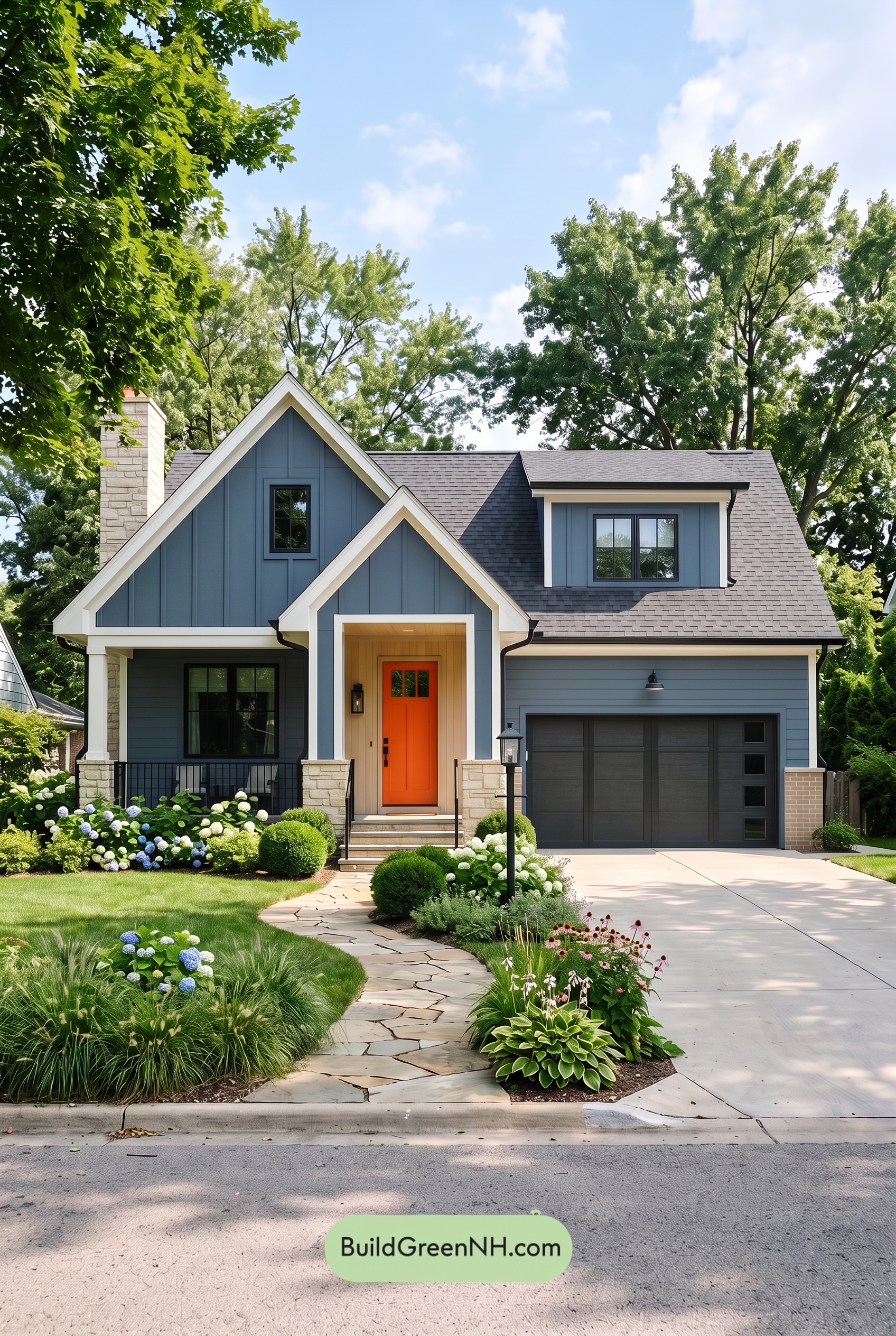 Blue House Front Door Color Scheme: Cobalt Persimmon
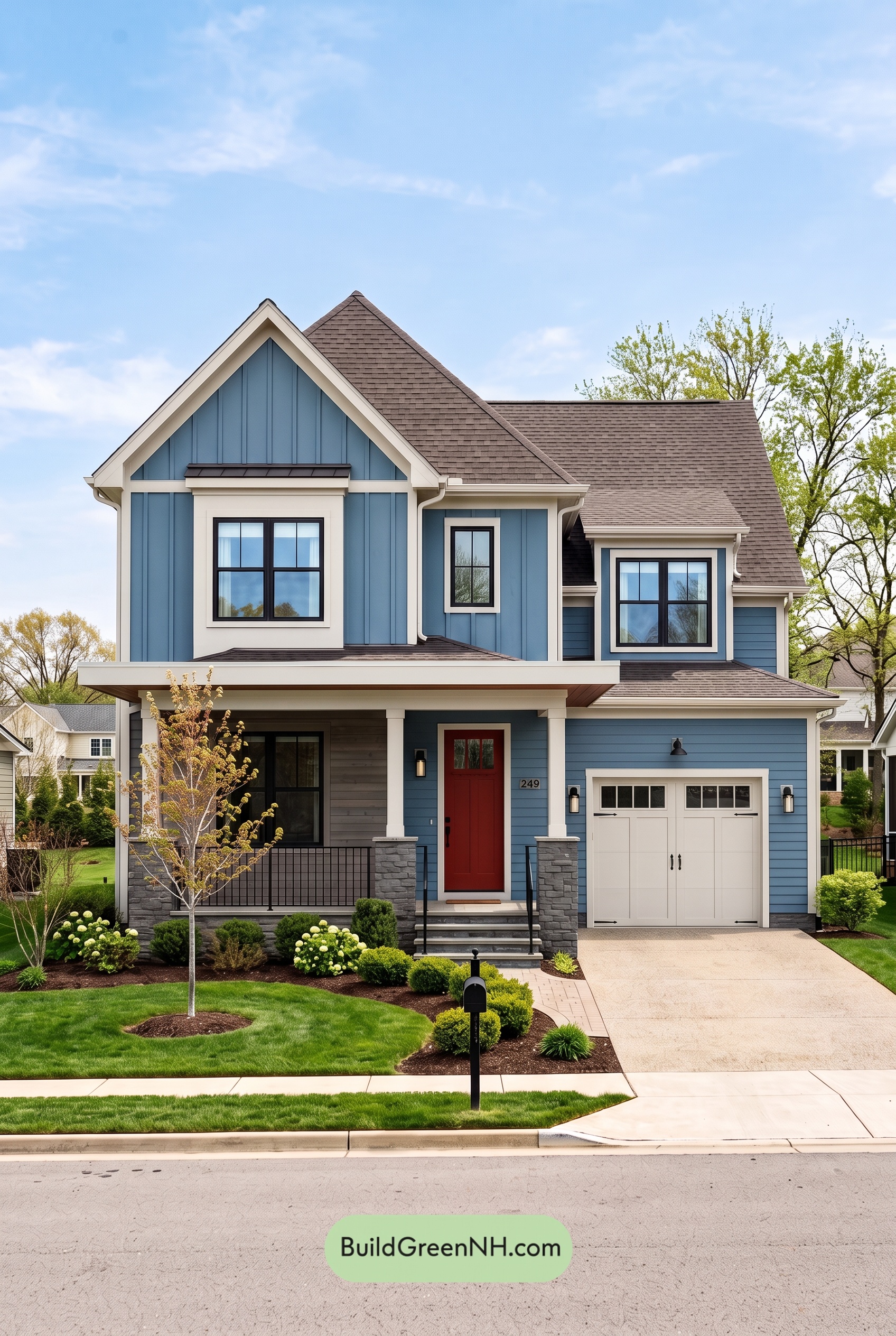 Blue House Front Door Color Scheme: Denim Poppy
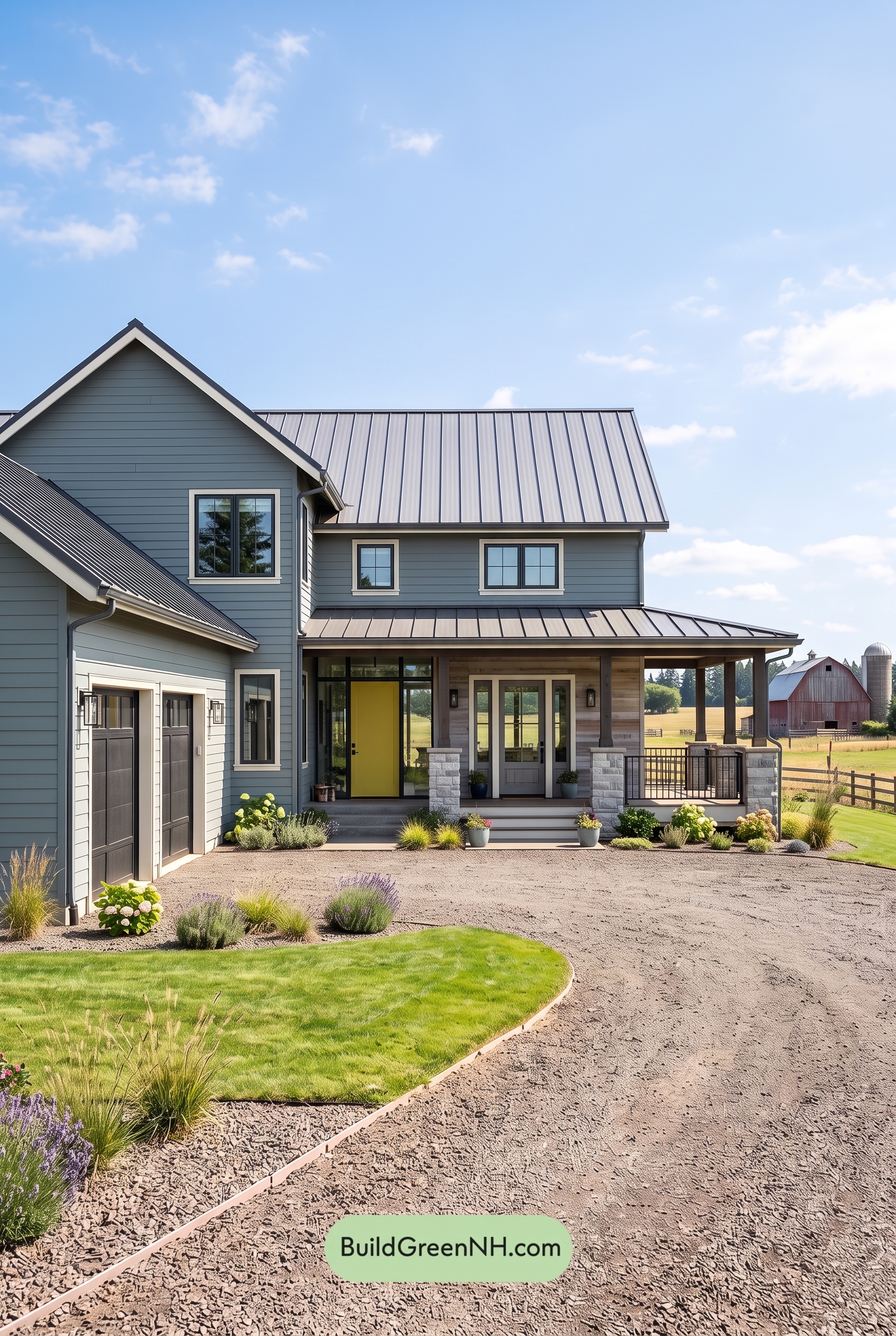 Blue House Front Door Color Scheme: Slate Citron
 Blue House Front Door Color Scheme: Mist Blue Haven
Table of Contents