Last updated on
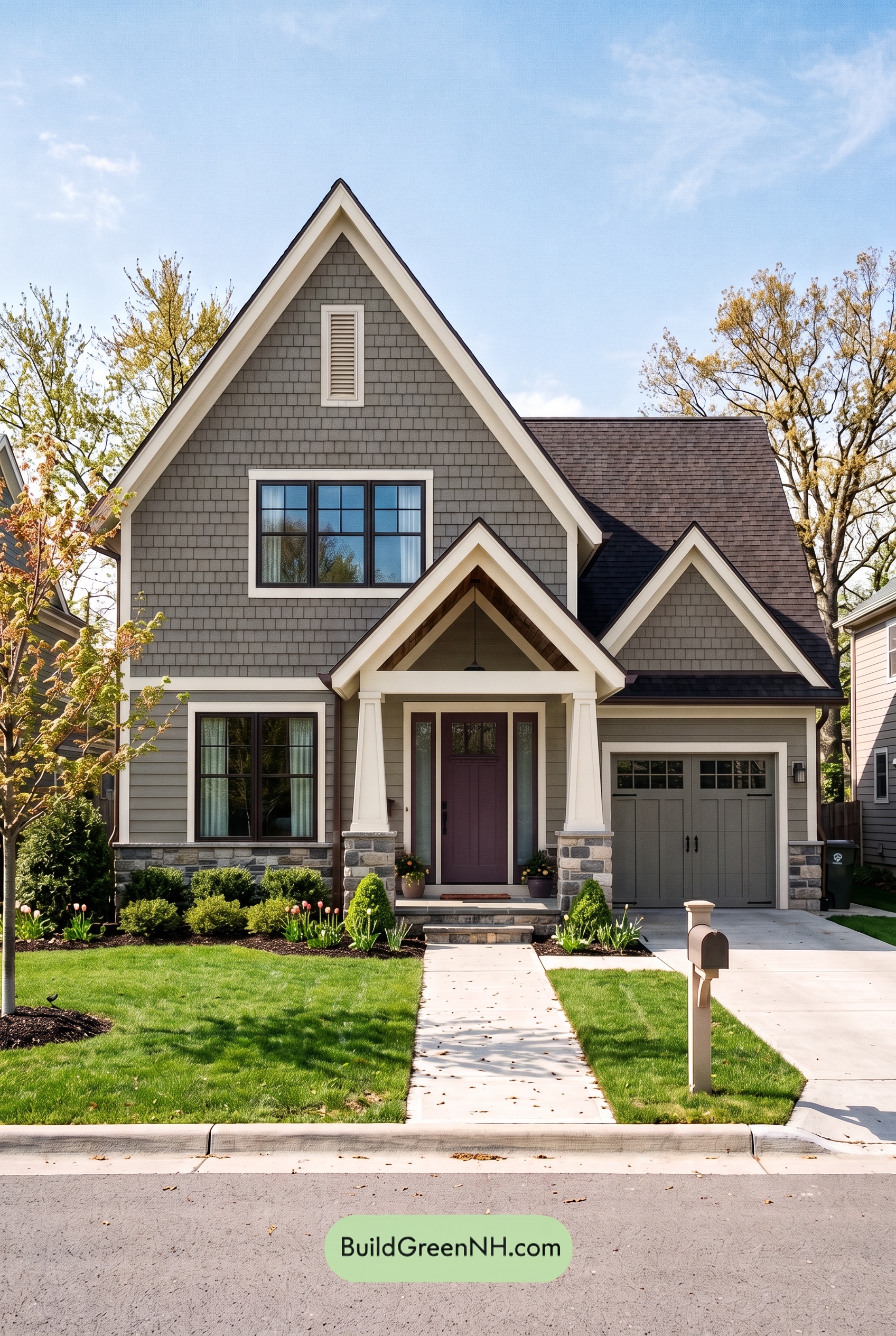

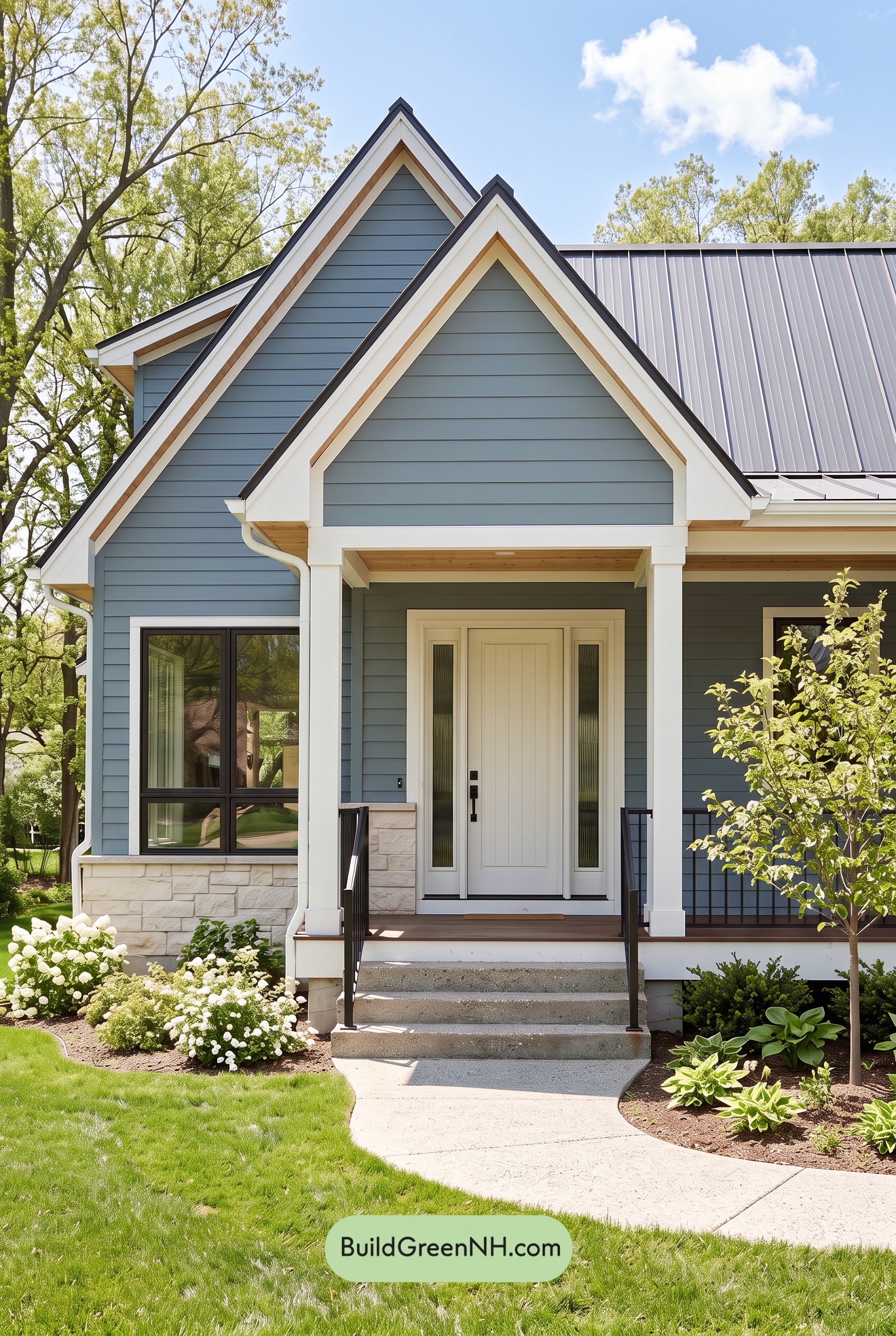
This layered gray-and-white exterior scheme feels timeless yet fresh, giving the home crisp definition, graceful depth, and irresistible curb appeal.
A Refined Gray Foundation
Soft mid-tone gray siding creates the home’s calm, polished foundation. Across the lower walls, the smooth gray finish feels welcoming and grounded, while the upper gables shift into a slightly deeper gray that emphasizes the texture and scale of the shingle-style cladding.
Using related gray shades rather than a single flat tone gives the façade dimension without making it busy. The result is a cohesive look that highlights the home’s tall rooflines, layered gables, and inviting front porch.
Bright Trim That Defines Every Detail
Crisp white trim frames the windows, outlines the garage, and traces the steep gables with impressive clarity. This bright contrast keeps the gray exterior from feeling heavy and gives each architectural line a clean, tailored finish.
The white porch columns continue that sense of brightness at the entry. They stand out beautifully against the surrounding gray siding and darker details, making the covered porch feel like a true focal point.
Dark Accents Add Structure
Deep charcoal-gray window frames introduce a strong, modern edge against the softer gray walls. Their dark tone draws attention to the generous window openings and adds a pleasing sense of structure to the elevation.
The roof follows the same deep charcoal-gray direction, visually anchoring the home from above. Repeating this darker shade at the roof and windows creates an intentional rhythm, especially around the multiple gables.
An Entry With Subtle Drama
The front door brings in a rich, dark gray accent that feels elegant and slightly moody without disrupting the quiet palette. Set between narrow sidelights and framed by bright trim, it offers just enough contrast to make guests naturally look toward the entrance.
The garage door stays within the gray family as well, blending into the overall composition rather than competing with the front door. Its restrained tone allows the porch, columns, and layered rooflines to remain the stars.
Classic, Calm, and Well Balanced
This exterior succeeds because it balances warm-looking gray shades with bright white contrast and dark charcoal-gray definition. The palette feels sophisticated but approachable, traditional in spirit yet clean enough for a more contemporary setting.
With its carefully layered neutrals, the home looks equally beautiful in bright daylight, under soft overcast skies, or as evening shadows settle across the façade.
Next, see how this color scheme looks under different lighting simulations throughout the day.
Overcast
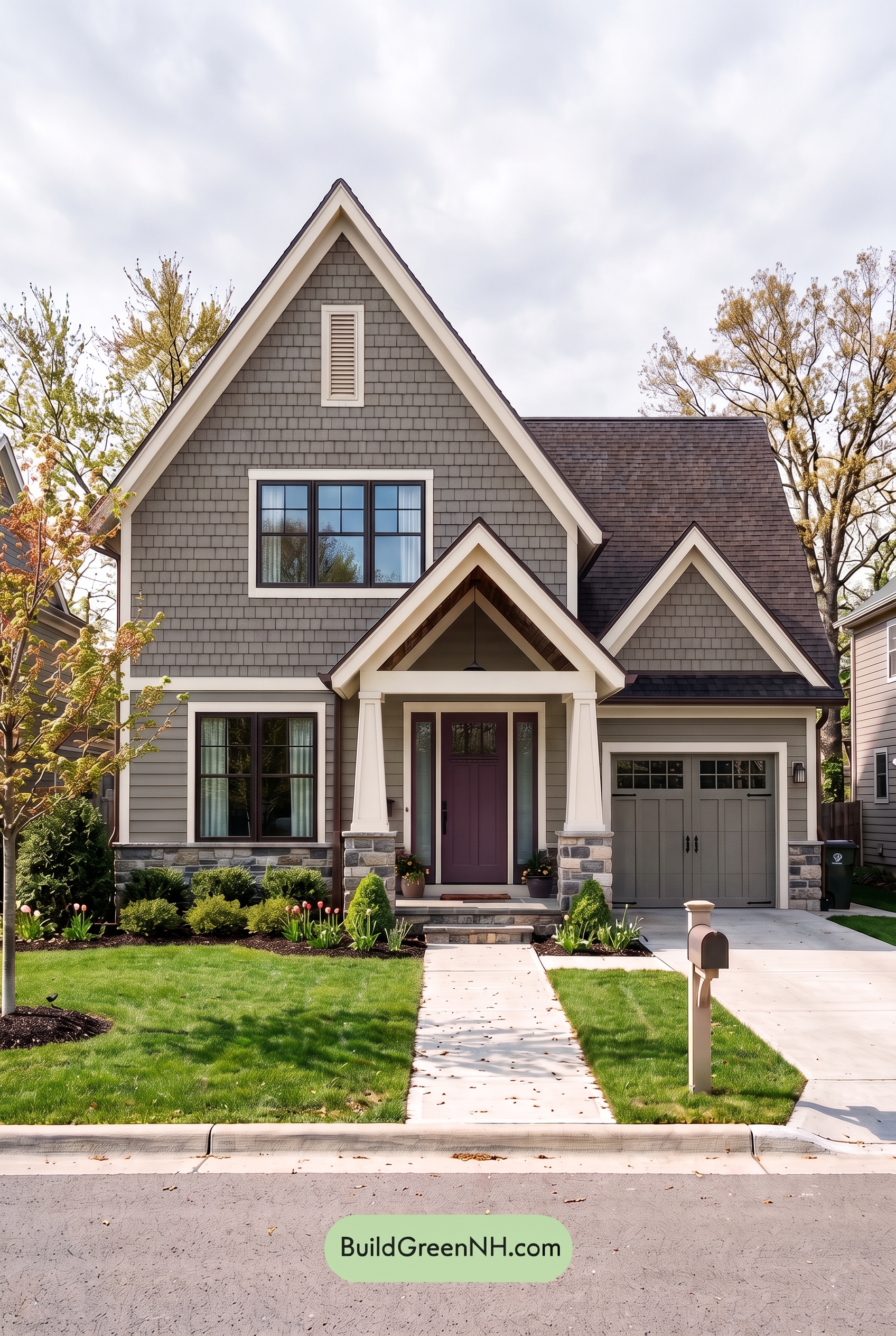
Under overcast skies, the layered gray exterior reads quieter and slightly deeper than it does in neutral daylight. With direct sun removed, the shades lose some brightness and saturation, allowing their subtle coolness to come forward while the darker gray details feel more grounded and refined.
The soft white trim and columns appear less crisp but more velvety, creating a gentler contrast against the gray walls. Shadows become diffused rather than sharply defined, so the façade feels more unified and calm, with a sophisticated, welcoming mood in place of the brighter daylight sparkle.
Golden Hour
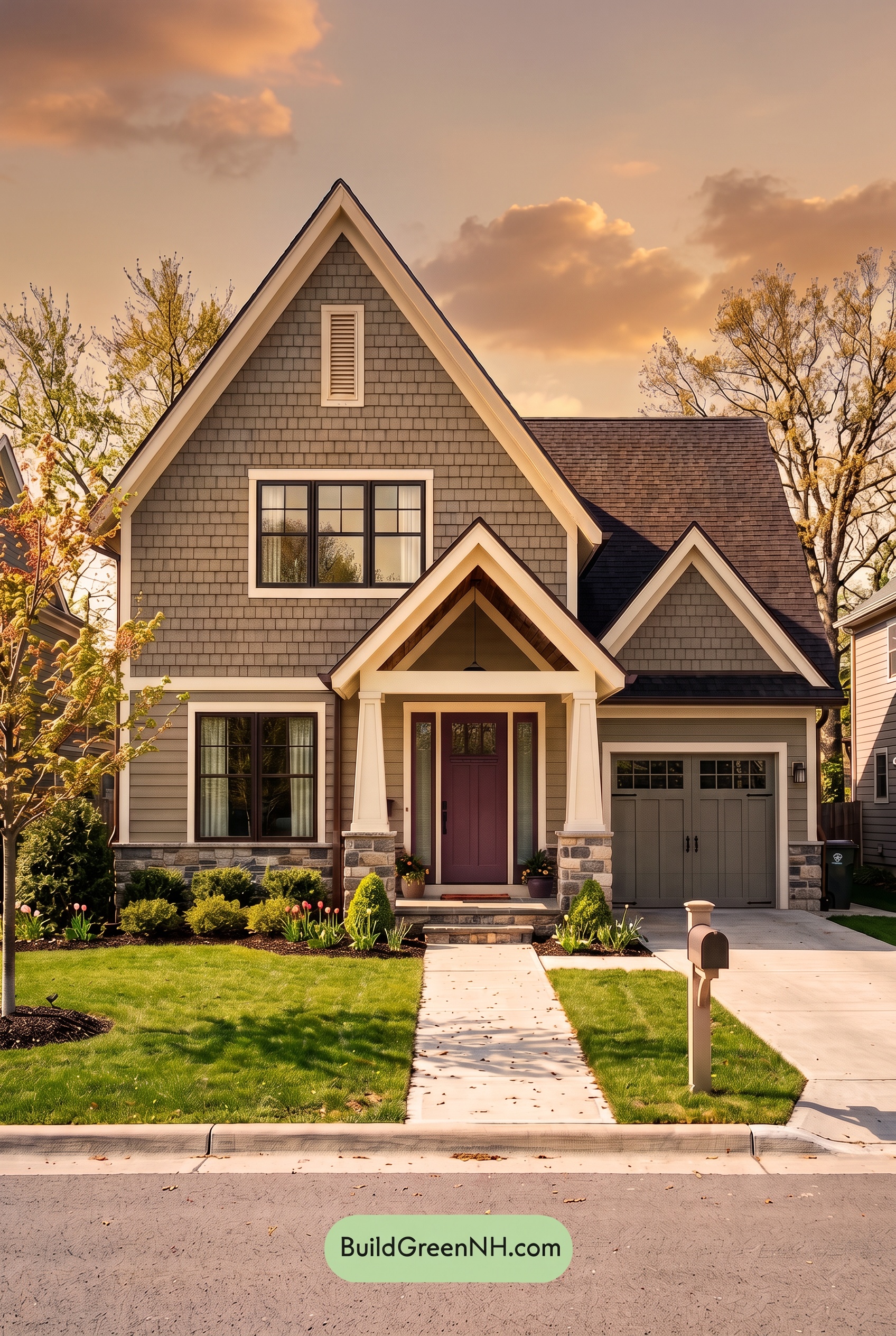
Golden Hour lends the gray exterior a gentle, sun-warmed cast, making its cooler undertones feel softer and more inviting than they do in neutral daylight. The light trim and columns take on a creamy glow, while the deeper gray accents around the windows, entry, and garage appear richer and more saturated.
Longer shadows settle into the siding, rooflines, and porch details, heightening contrast and giving the façade added dimension. Compared with the crisp, balanced look of midday, this warm light creates a calmer, more welcoming mood—where pale shades glow and deeper neutrals feel grounded and dramatic.
Shade
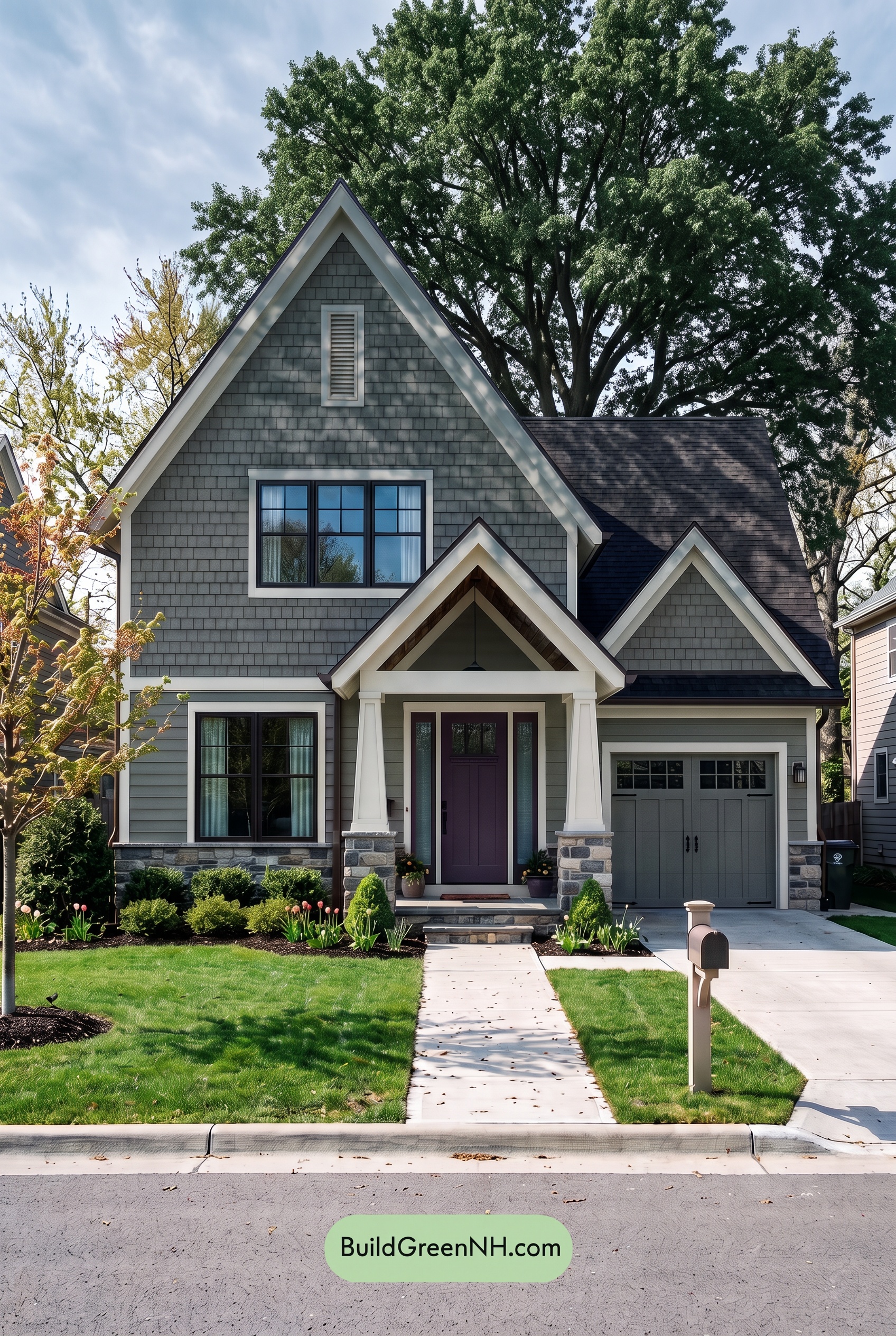
In shade, the layered gray exterior takes on a calmer, more muted character than it shows in neutral daylight. The gray siding appears slightly deeper and less saturated, while the darker gray details settle into the shadows for a more tailored, dimensional look. Subtle coolness becomes more noticeable across the facade, especially where tree cover softens direct light.
The white trim and columns lose a little brightness in the shade, reading as softer and less stark against the grays. This gentler contrast gives the entry a quiet, welcoming mood, while the deepest gray accents gain visual weight and help define the windows, rooflines, and recessed areas.
Nighttime
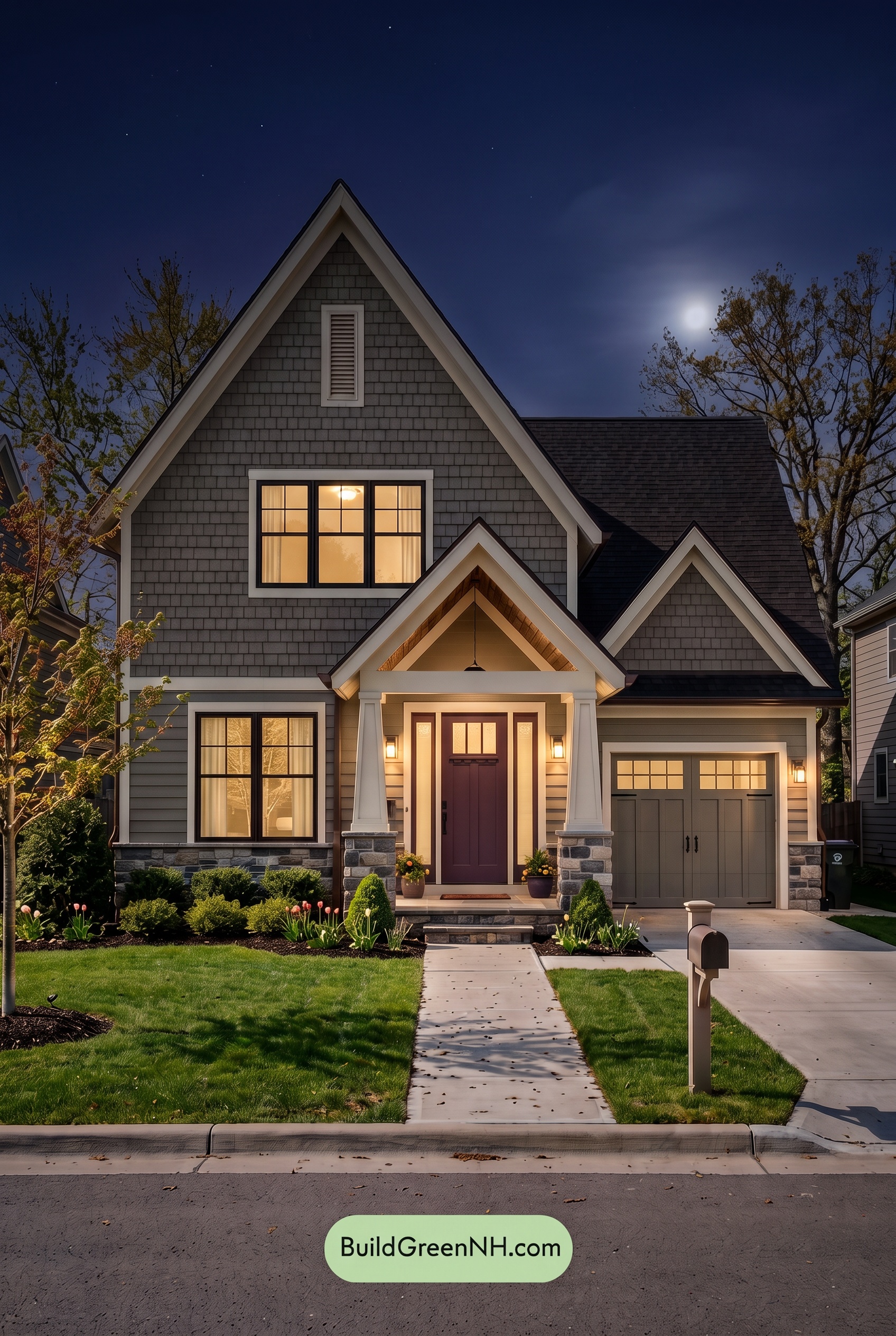
At night, the gray exterior deepens and appears less saturated than it does in neutral daylight, taking on a quieter, more dimensional character across the siding and roofline. Shadows settle into the shingle texture and recessed architectural details, while the darker gray elements become more dramatic and defined.
Warm interior and porch lighting softens the white trim and columns, giving these pale shades a gentle creamy glow. That warm illumination heightens the contrast around windows, entry details, and the front door, creating an inviting mood that feels richer and more intimate than the crisp balance of daylight.
Pin these for later:
Want More?
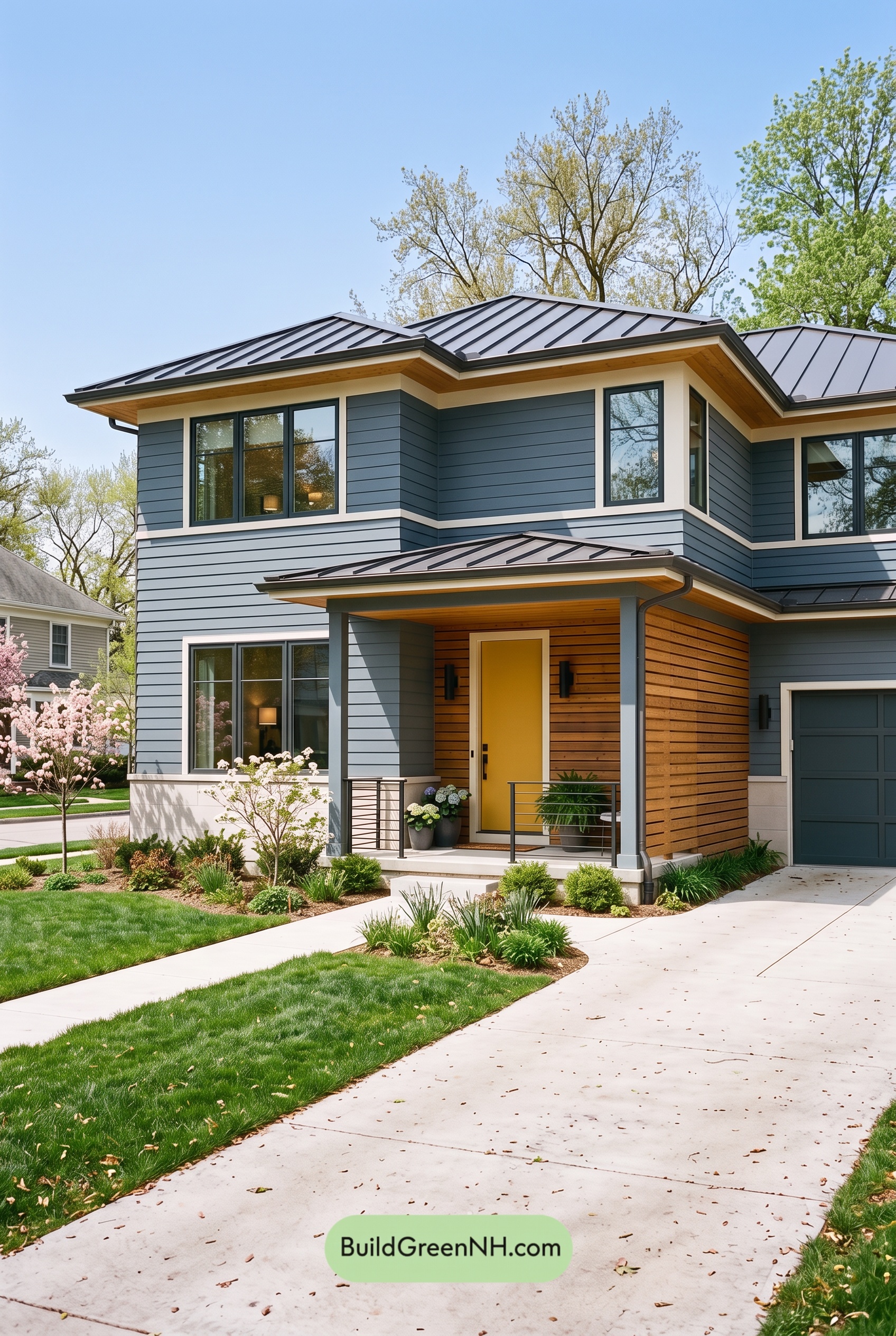 Blue House Front Door Color Scheme: Harbor Saffron
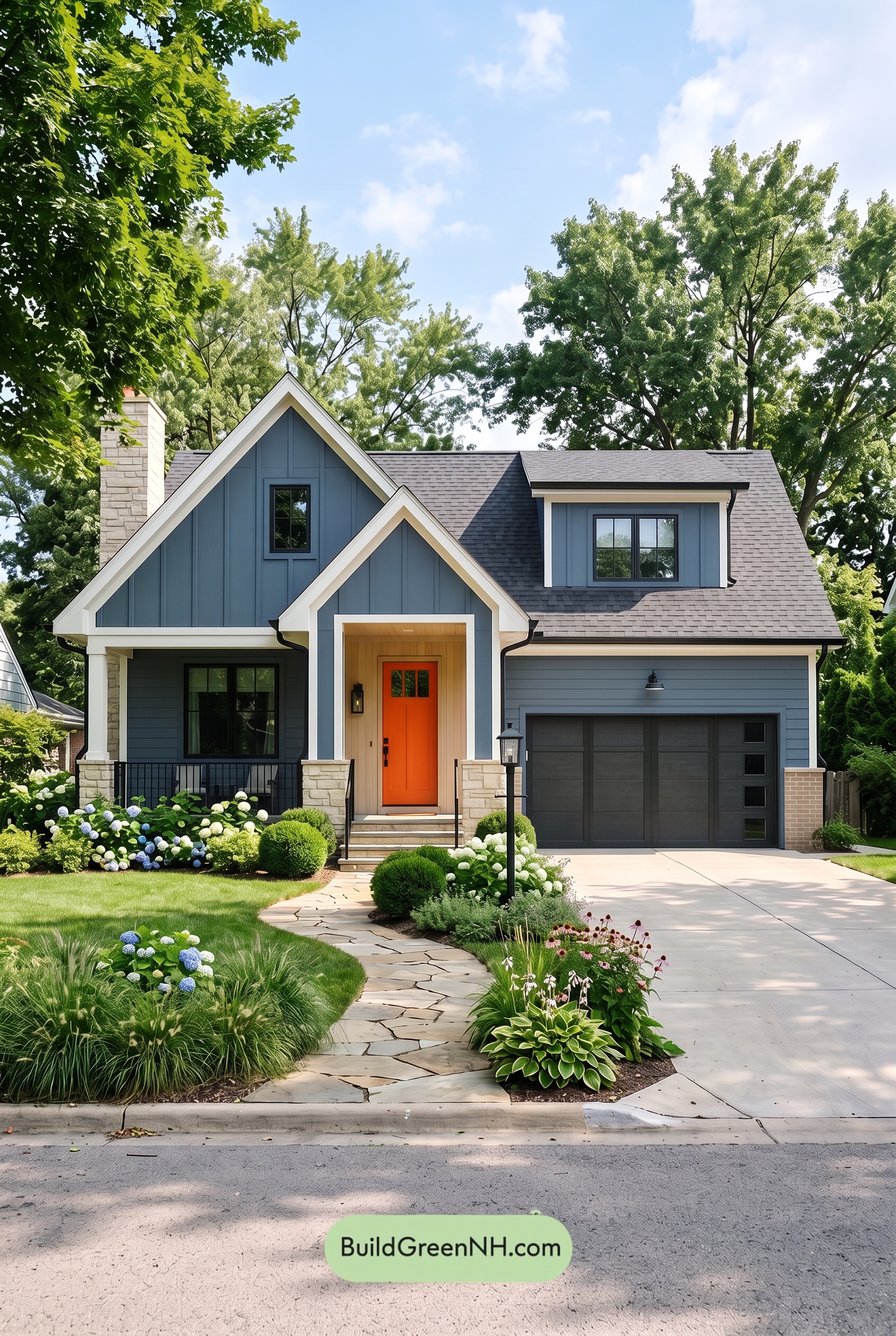 Blue House Front Door Color Scheme: Cobalt Persimmon
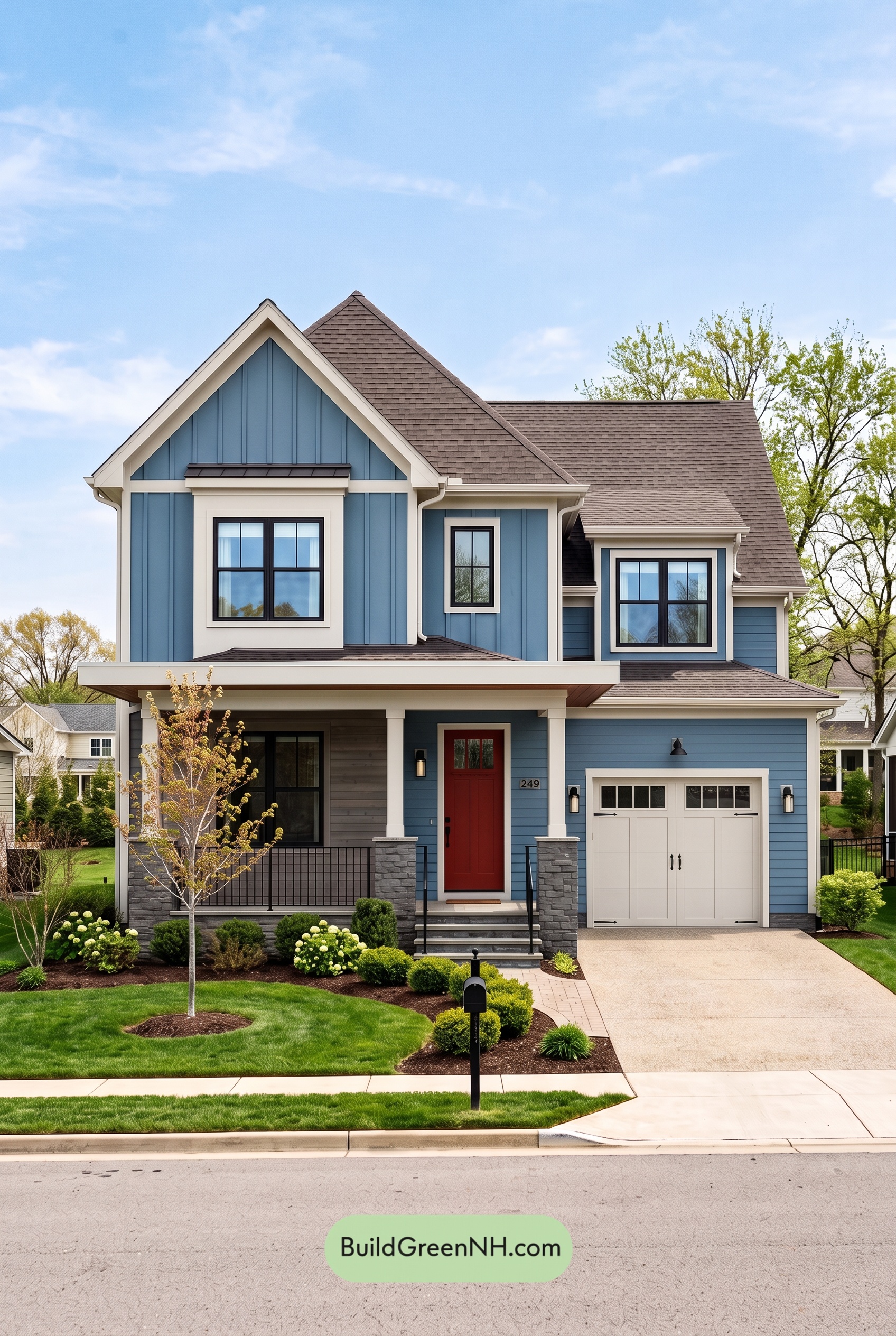 Blue House Front Door Color Scheme: Denim Poppy
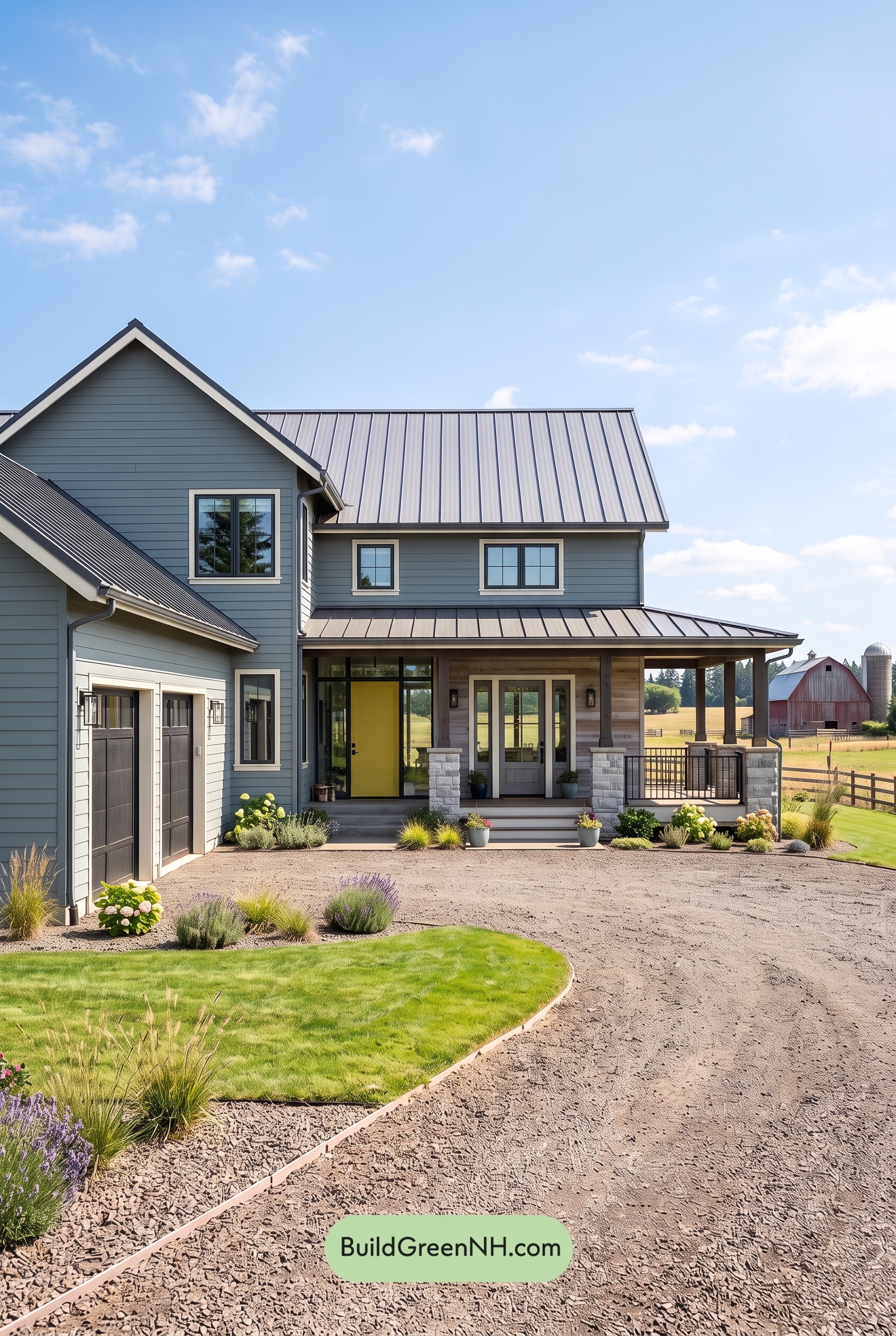 Blue House Front Door Color Scheme: Slate Citron
 Blue House Front Door Color Scheme: Mist Blue Haven
Table of Contents