Last updated on · ⓘ How we make our designs
These English manor house designs are worth seeing for how showing-off chimneys, mullioned windows, and ivy-softened gardens turn stately country estates into homes that still feel welcoming, right down to a front door made for muddy boots.
English manor houses mean more to us than grand facades and long drives. They carry memory, shelter, and a little swagger, the kind that comes from proud gables, tall chimneys, and a front door that knows muddy boots will happen.
We kept pulling from Tudor, Jacobean, Arts and Crafts, Cotswold, and a touch of Gothic and Victorian country house charm too. You will spot it in the red brick and limestone, the slate roofs, the mullioned windows, and those chimneys that are, honestly, showing off.
Pay attention to how the gardens and approaches soften everything. Ivy, orchard walls, bridges, courtyards, tucked entries, even a dovecote and a turret, they keep these houses stately but never too full of themselves.
Ivy Clad Brick Manor
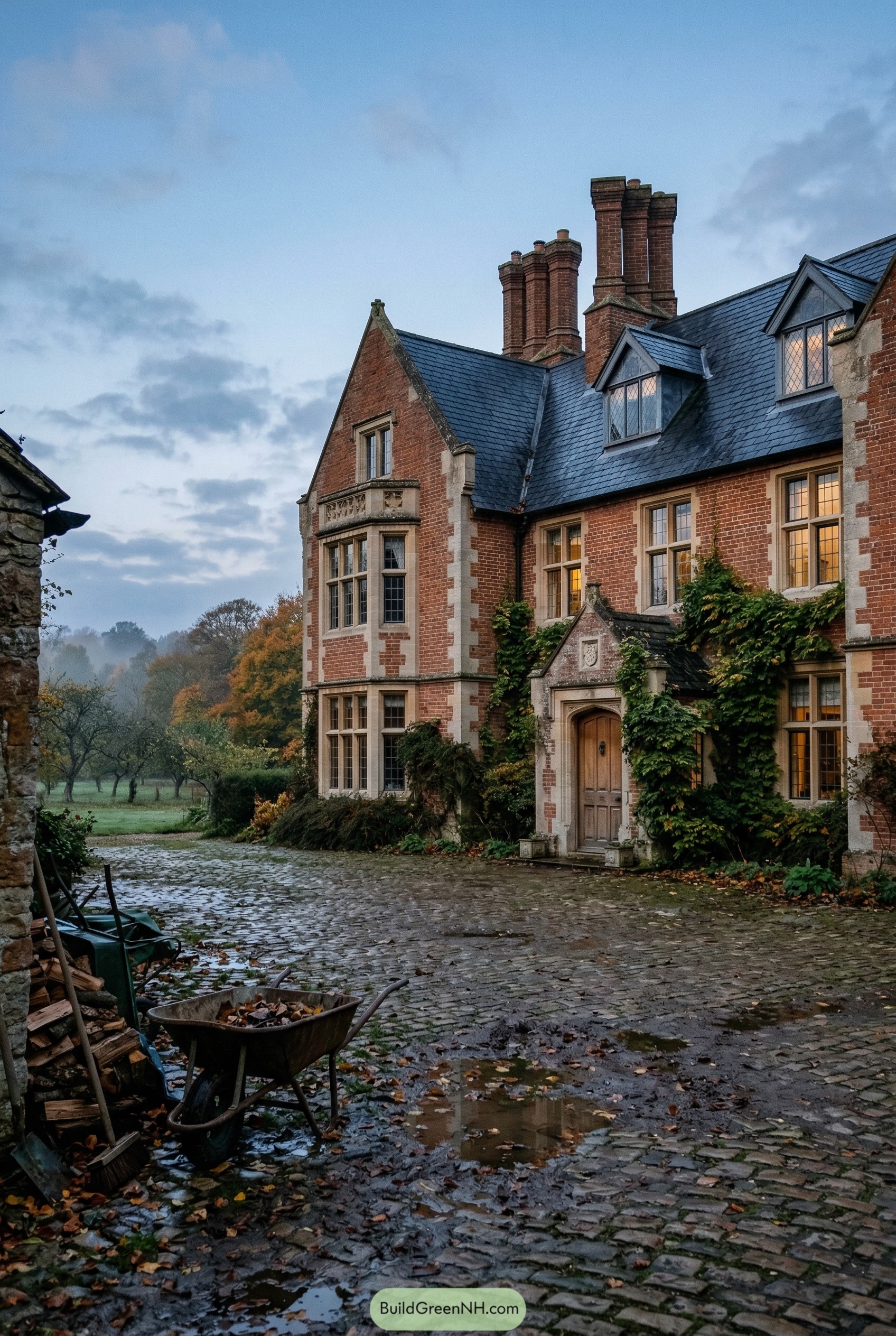



This manor borrows from late Tudor and Arts and Crafts country houses, with warm red brick, pale stone trim, and a steep slate roof that gives the whole place a proper storybook stance. The tall gables and those very proud chimney stacks shape a strong silhouette, which matters because a house like this should feel grounded from a mile away.
We love how the mullioned windows, carved entrance surround, and climbing ivy soften the formal facade so it feels welcoming instead of stiff. The cobbled forecourt adds that worn estate charm too, a bit muddy and a bit glorious, and it makes the craftsmanship feel real rather than polished within an inch of its life.
Saltwind Stone Keep
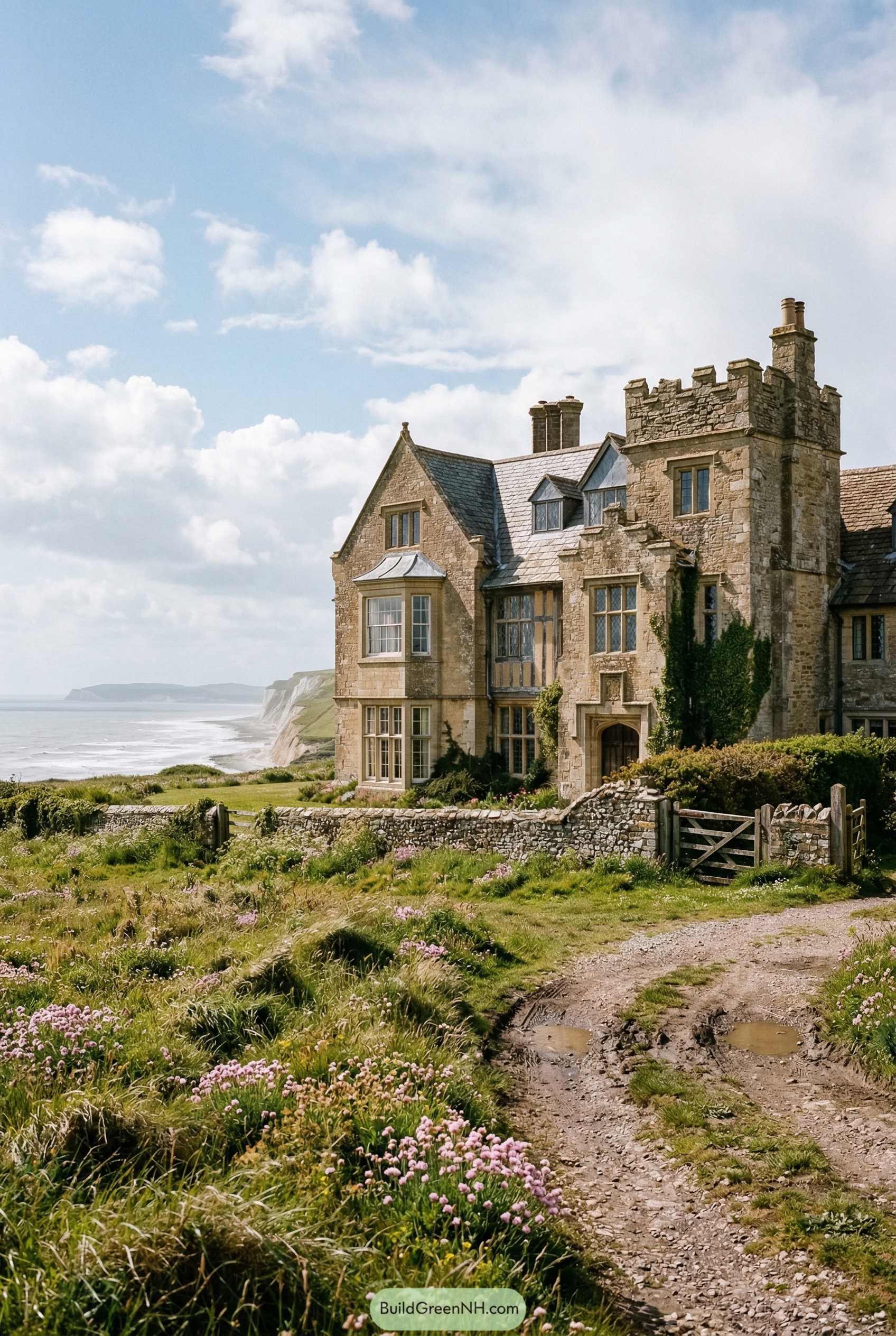

This manor leans into a coastal baronial mood with rough cut stone walls, a crenellated corner tower, and steep gables that give the facade a quietly storybook edge. You can feel the shoreline in it, from the sturdy massing to the slate rooflines, as if the house decided umbrellas were simply not its thing.
We love how the projecting bay, tall mullioned windows, and tucked arched entry break up all that stone so it never feels flat or too proper. Those details matter because they soften the castle-ish attitude, add depth from every angle, and keep the whole place grand without getting a big ego about it.
Chimney Crowned Winter Hall
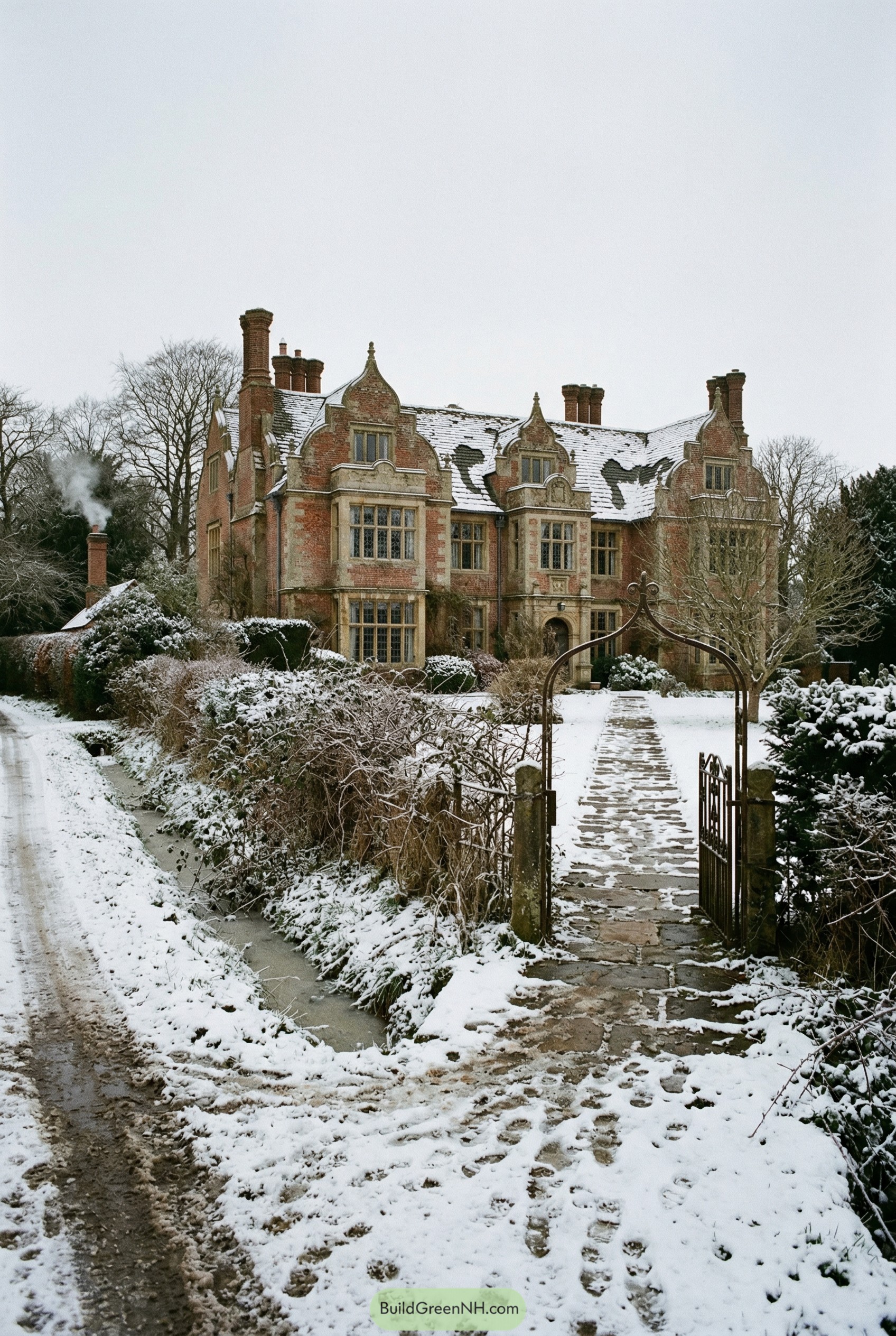

Curved Dutch style gables, stone framed mullioned windows, and those tall chimney stacks give this manor its storybook posture. The red brick body keeps it grounded, while the pale trim sharpens the bays and entry so the whole front feels rich, not fussy.
We pulled from late Jacobean country houses here, then softened it with a winding garden edge and a wrought iron gate that feels almost too polite. Even with snow on the roof, the deep eaves and tucked arched doorway make it feel welcoming, like it already knows where the tea is.
Walled Orchard Country Seat
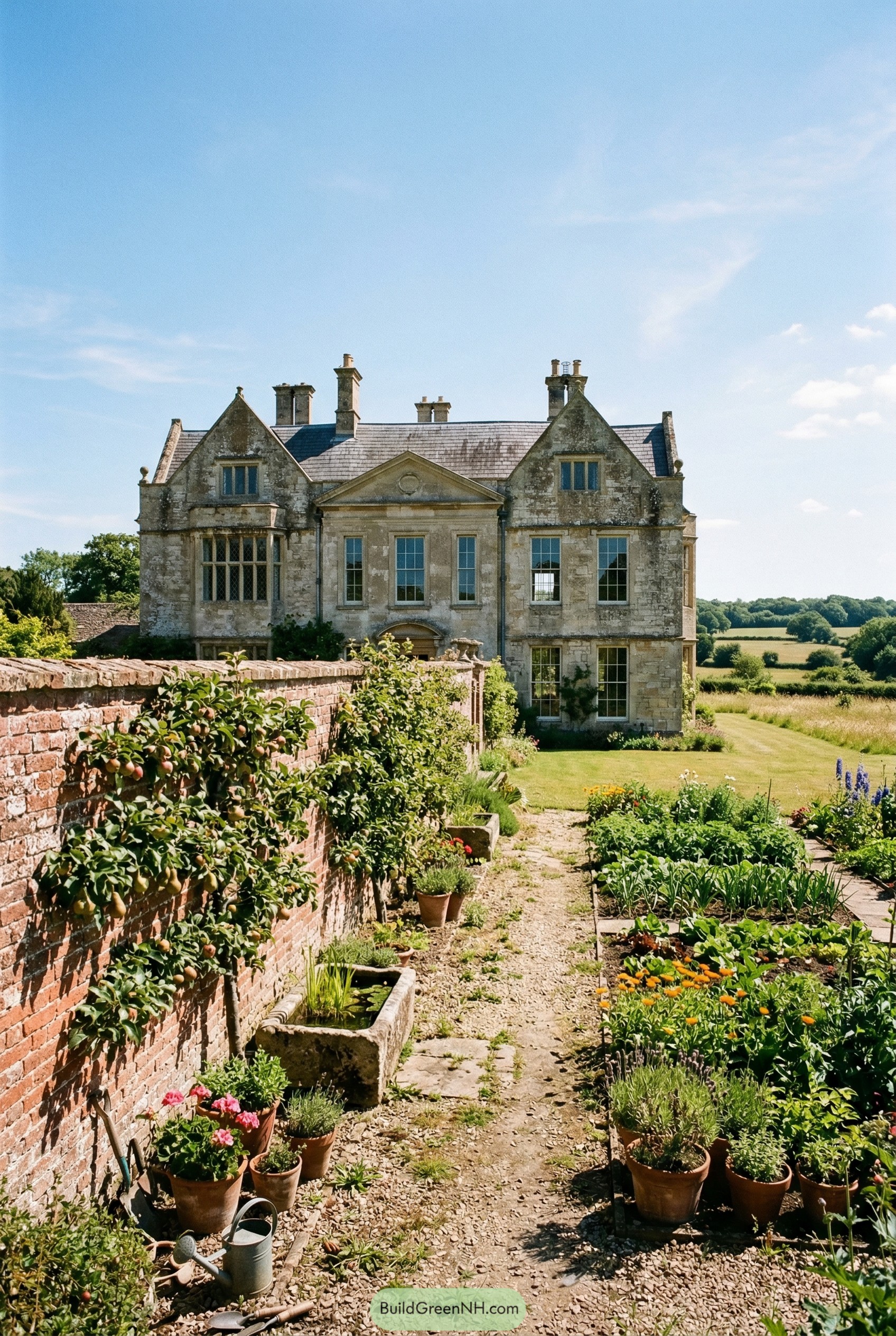

Weathered limestone, sharp front gables, and a tidy central pediment give this manor a lovely in between character, part Tudor memory and part Georgian polish. We were drawn to that balance because it keeps the facade refined without slipping into anything too prim.
The walled kitchen garden is more than a charming extra, it sets up the approach and ties the whole estate to the countryside around it. Espaliered fruit trees, gravel paths, and deep set windows make the design feel quietly grand and very livable, which is nice because old houses can sometimes look like they forgot how to relax.
Stillwater Gabled Grange
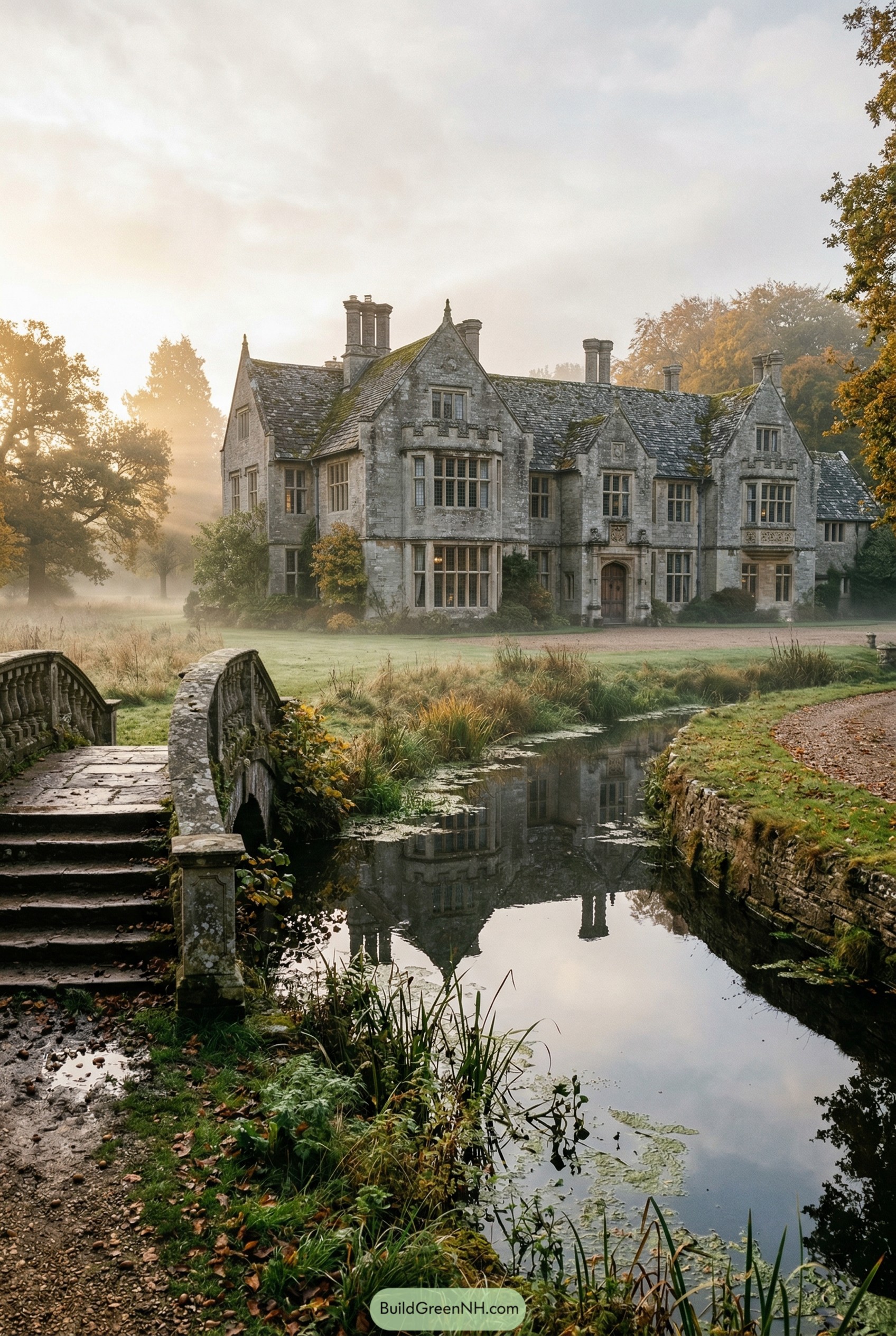

Grey stone, steep gables, and that arched bridge give the whole estate a storybook hush without tipping into costume. We took cues from late Tudor and Jacobean country houses, using mullioned bays, carved parapets, and tall chimneys to make the front feel gathered over time.
The water approach is more than a pretty extra, because it stretches the view and makes arrival feel quietly ceremonial, which is a posh way of saying the house knows how to make an entrance. Mossy slate and weathered stone soften the scale, so even with all that grandeur it still feels warm, settled, and just a little smug about it.
Tracery Bay Tudor Court
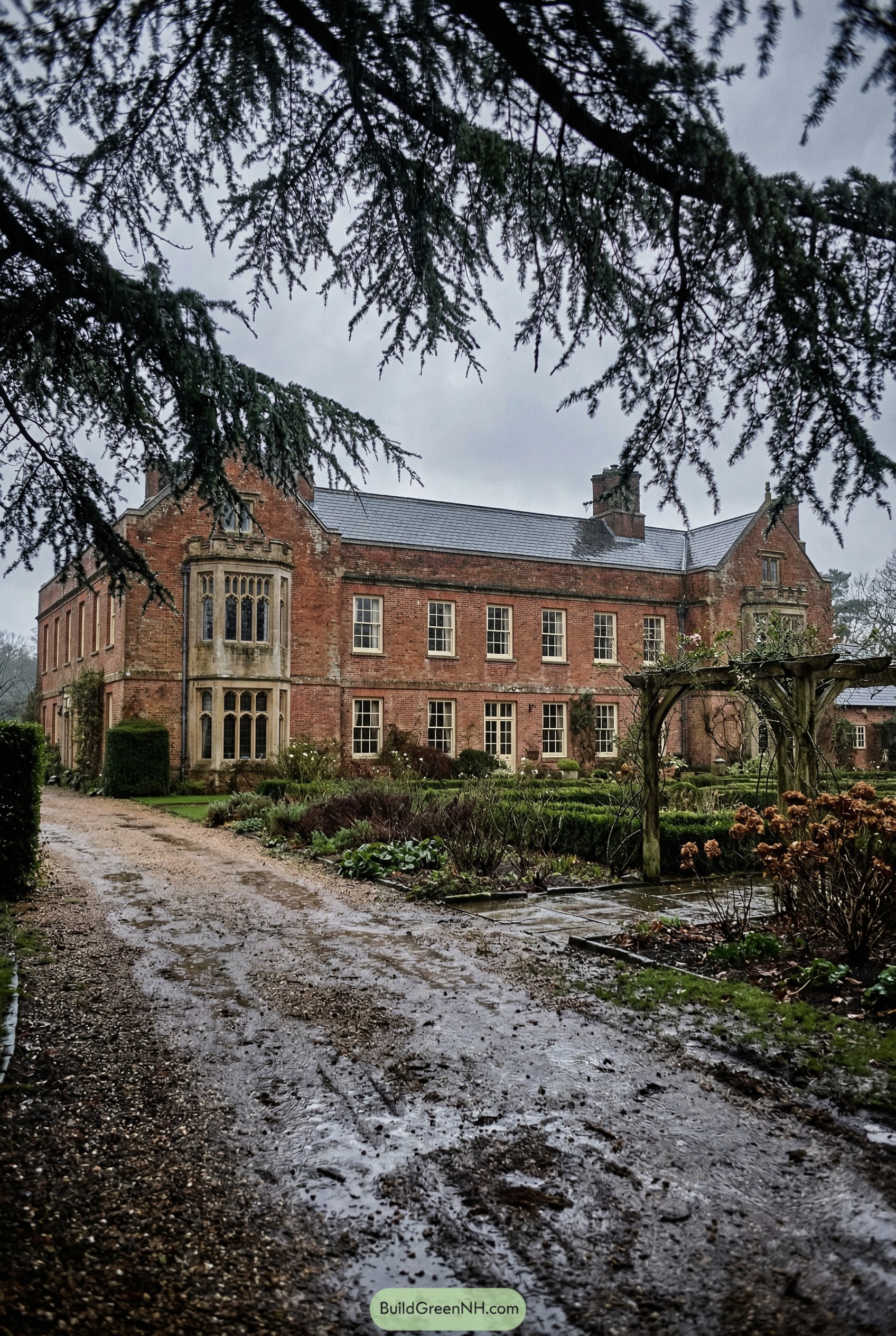

This manor borrows from Tudor and Gothic revival ideas, with steep gables, tall chimneys, and stone bay windows that give the front a bit of old school swagger. The long red brick facade stays neat and composed, while the carved tracery and little battlement touches stop it from feeling too proper.
The clipped garden beds and timber pergola soften the house and pull it into the landscape, which is a big deal for a country estate. Slate roofs, pale stone trim, and rows of sash windows make it feel settled and enduring, like it has seen a few rainy centuries and just carried on.
Primrose Beck Manor
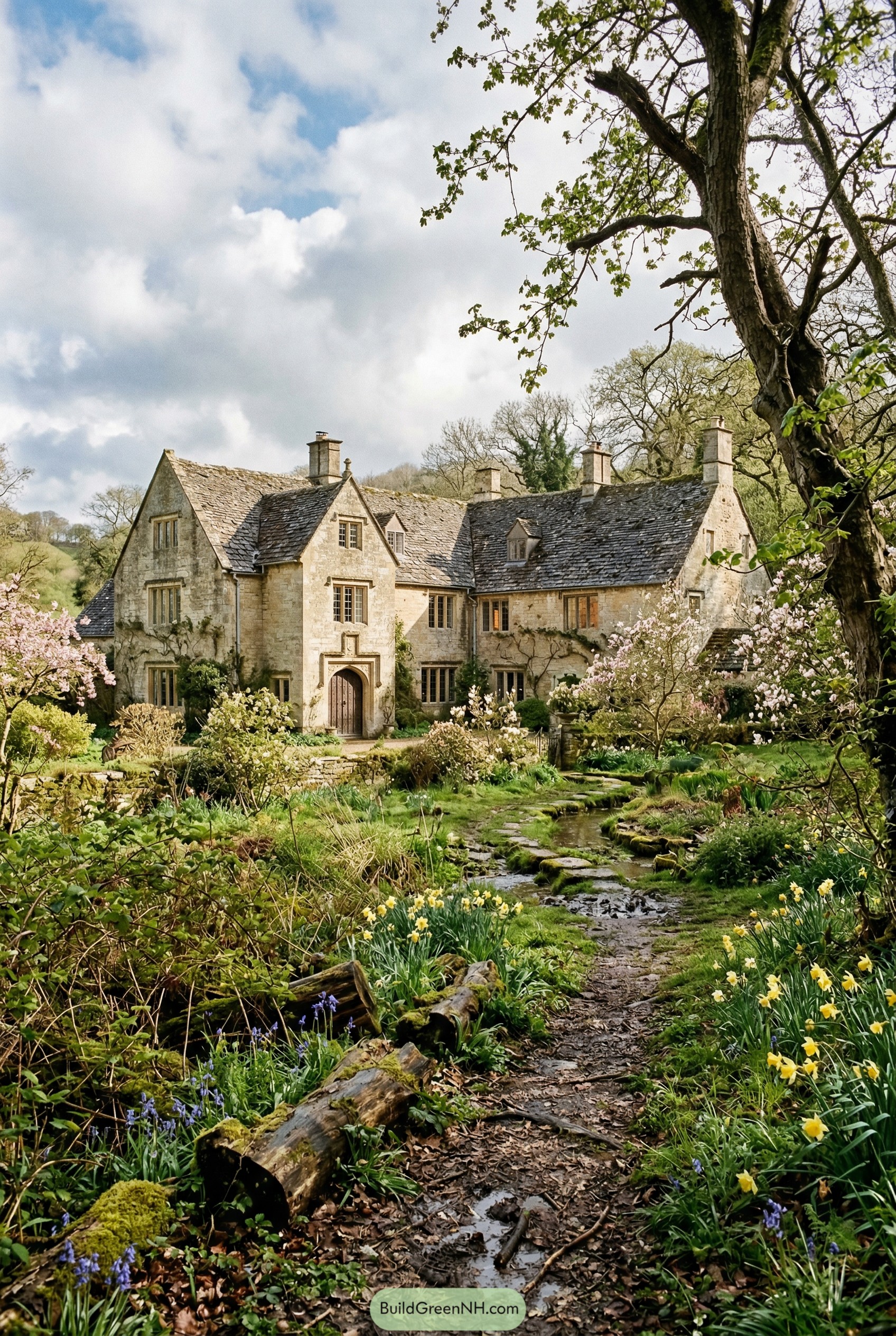

Built in mellow limestone, the house borrows from old Cotswold manors with steep slate roofs, tall chimneys, and neat mullioned windows that look a bit wiser than the rest of us. The arched doorway gives it a proper sense of arrival, while the offset gables stop the frontage from feeling too polished or fussy.
What makes the design especially charming is how the garden feels stitched right into the architecture, with vines tracing the walls and a narrow rill winding up toward the door. That softness matters because it takes the edge off the stonework, so the whole place feels grand yet relaxed, like a manor that would not judge muddy boots.
Dovecote Garden Residence
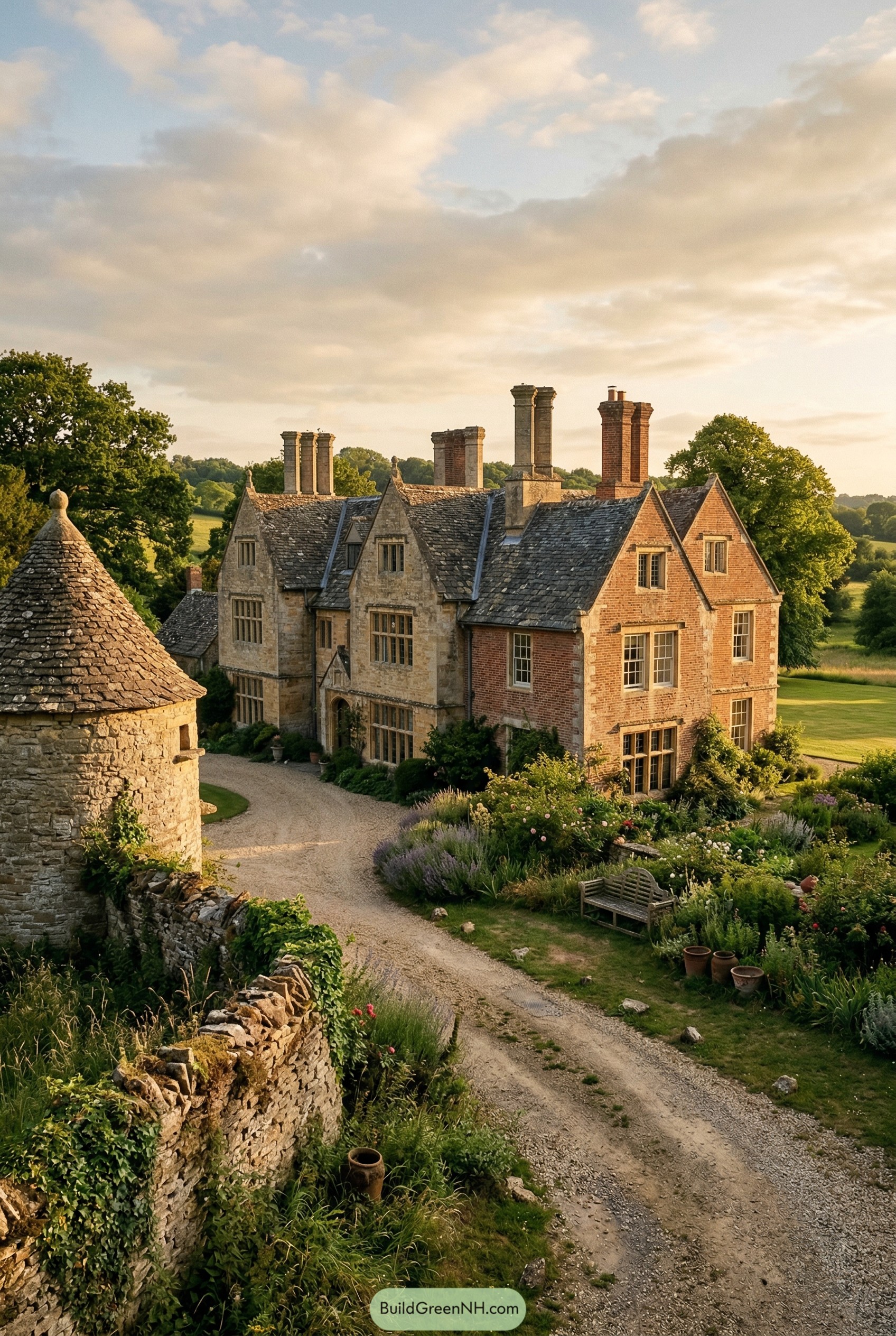

The mix of mellow limestone and red brick gives this manor that pieced together character, like it grew into itself over generations. Steep gables, stone slate roofs, and a small forest of chimneys keep the roofline lively, while the round dovecote by the drive slips in a lovely old estate quirk.
We took cues from Cotswold houses that paired tidy facades with loose cottage planting, so the approach bends through the garden instead of marching straight at the front door. Mullioned windows, low stone walls, and deep borders matter more than you might think, because they soften the scale and stop the whole place from feeling a bit too grand for muddy shoes.
Paddock Lane Limestone House
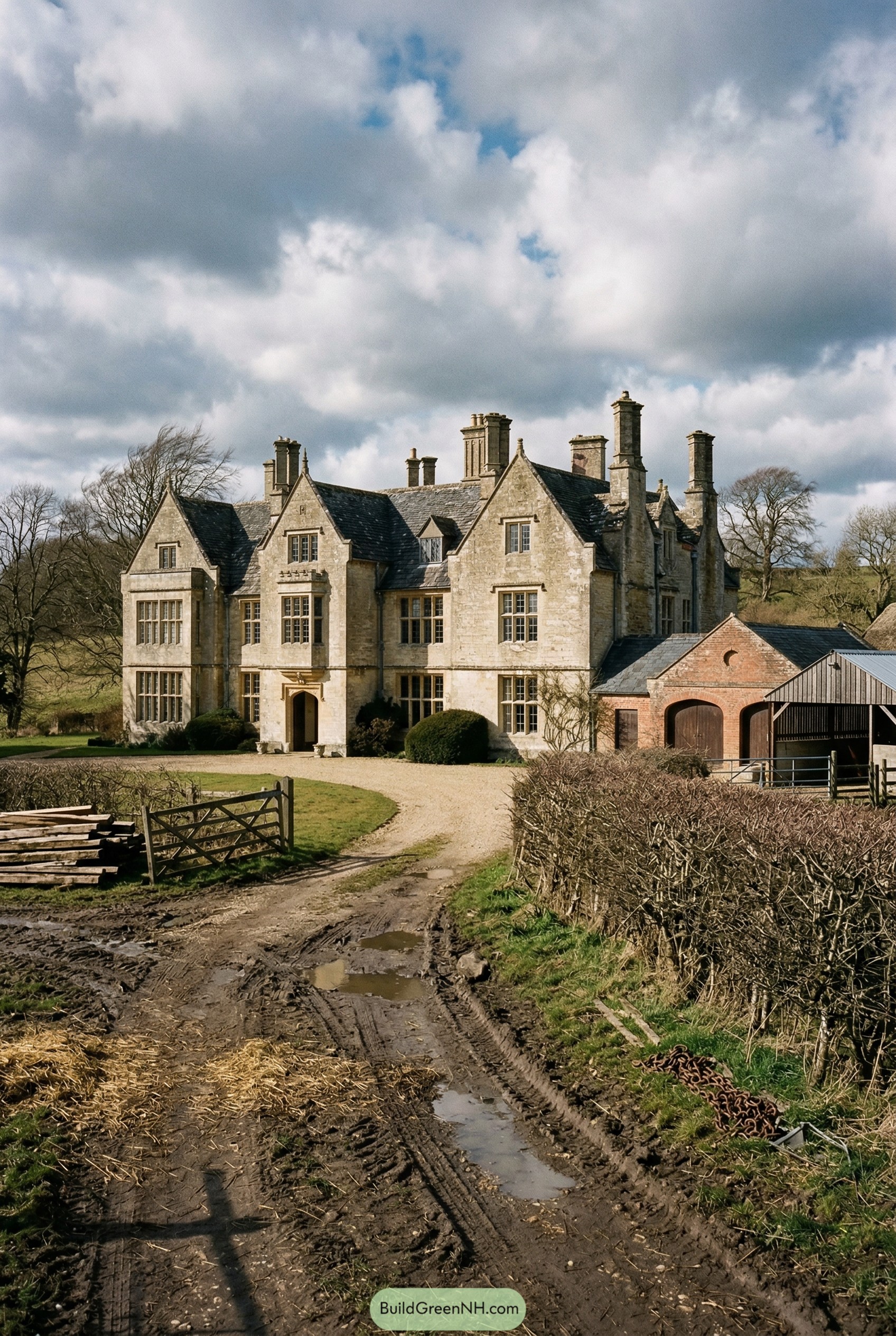

Built in pale limestone with a row of steep front gables, this country house leans into late Tudor character without getting fussy about it. The clustered chimney stacks and mullioned windows give the facade that settled, stately look people chase for years and rarely get right.
We paired the formal stone frontage with a simple arched doorway and a lower brick service wing, which keeps the whole thing grounded and a bit more lived in. That mix matters because a manor like this should look polished from the lane, yet still feel perfectly fine with muddy boots and a dog that ignores the back door.
Snowveil Mullion Lodge
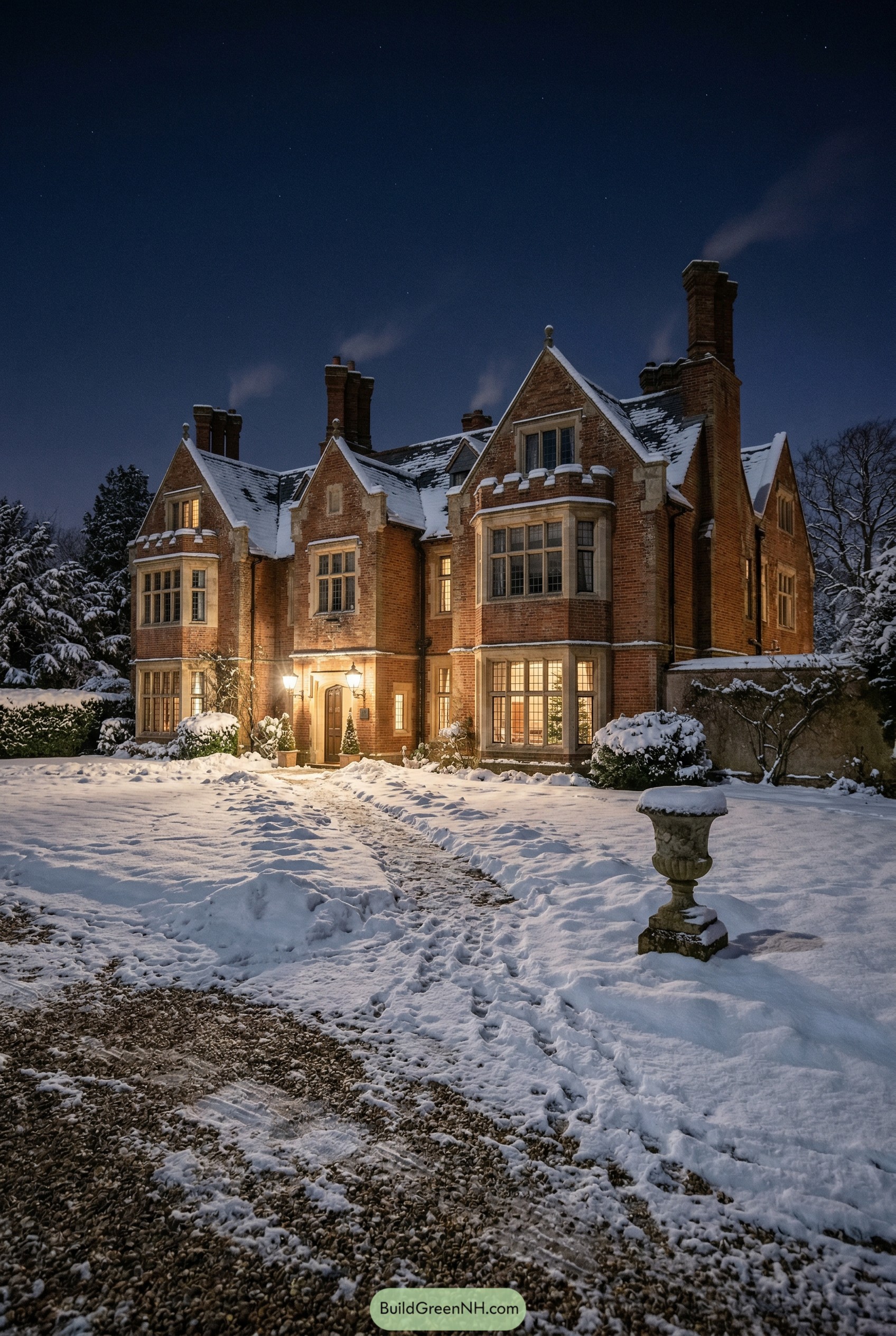

Red brick walls, steep gables, and tall chimney stacks give this country house that late Tudor revival charm people always fall for, and honestly for good reason. We leaned into broad bay windows and pale stone mullions so the frontage feels layered and stately, not flat and sleepy.
The slightly tucked entry keeps the composition welcoming, while the crenellated parapet details add a touch of old estate swagger without going costume mode. Snow on the roof only makes those strong rooflines clearer, and the whole place ends up feeling warm, composed, and a little smug in the best way.
Heatherstone Courtyard Hall
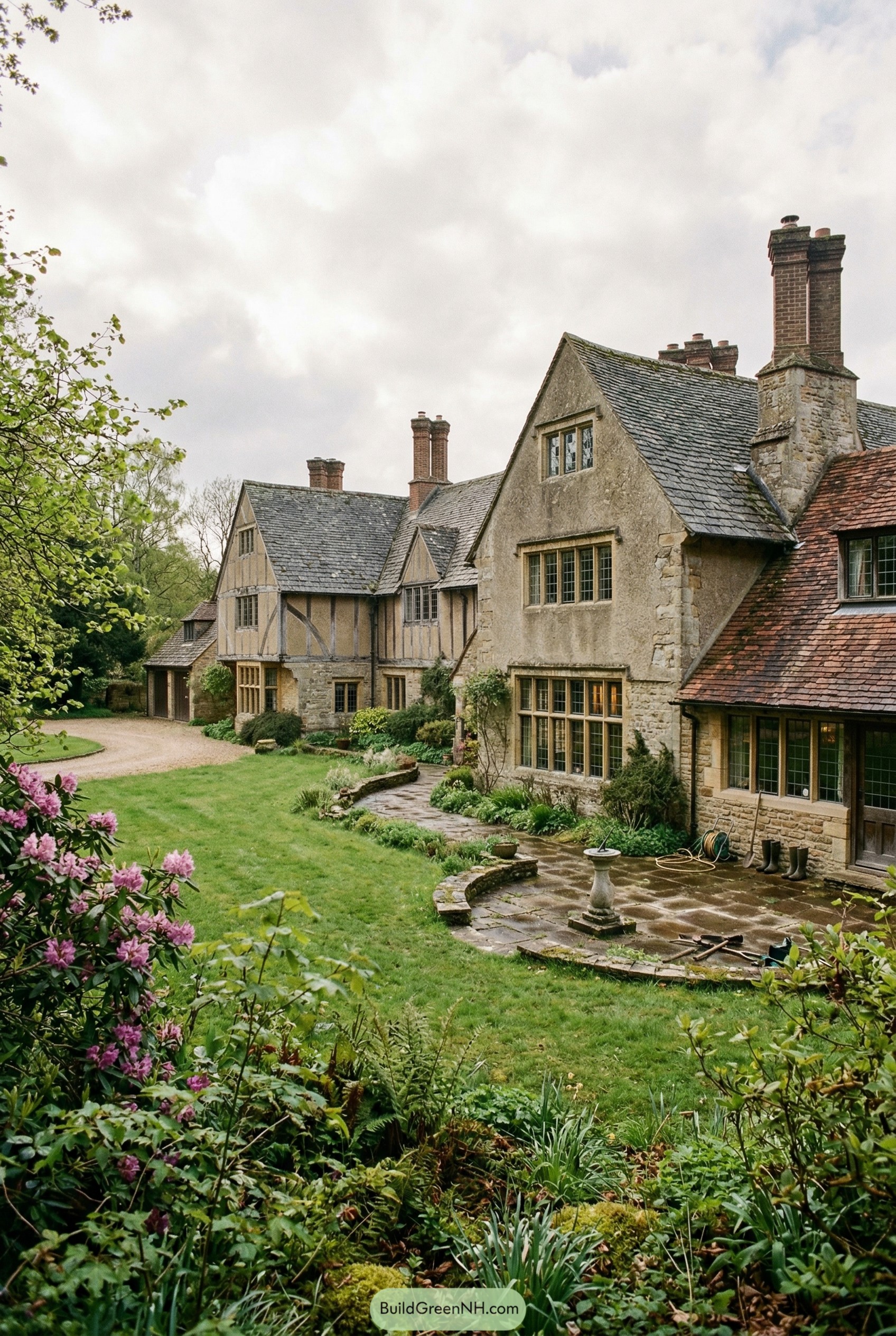

This manor leans into that lovely pieced together look, with steep slate gables, rough stone walls, and a timbered wing that feels as if it arrived a century later and never left. We took inspiration from old Cotswold houses that grew by instinct, and honestly that is why it feels so settled.
The tall chimneys and leaded windows give the frontage a bit of ceremony, while the curved terrace and low garden walls keep it relaxed and easy to approach. It is a big house, sure, but the broken roofline and mixed textures stop it from getting too grand for its own boots.
Windbent Stonebrick House
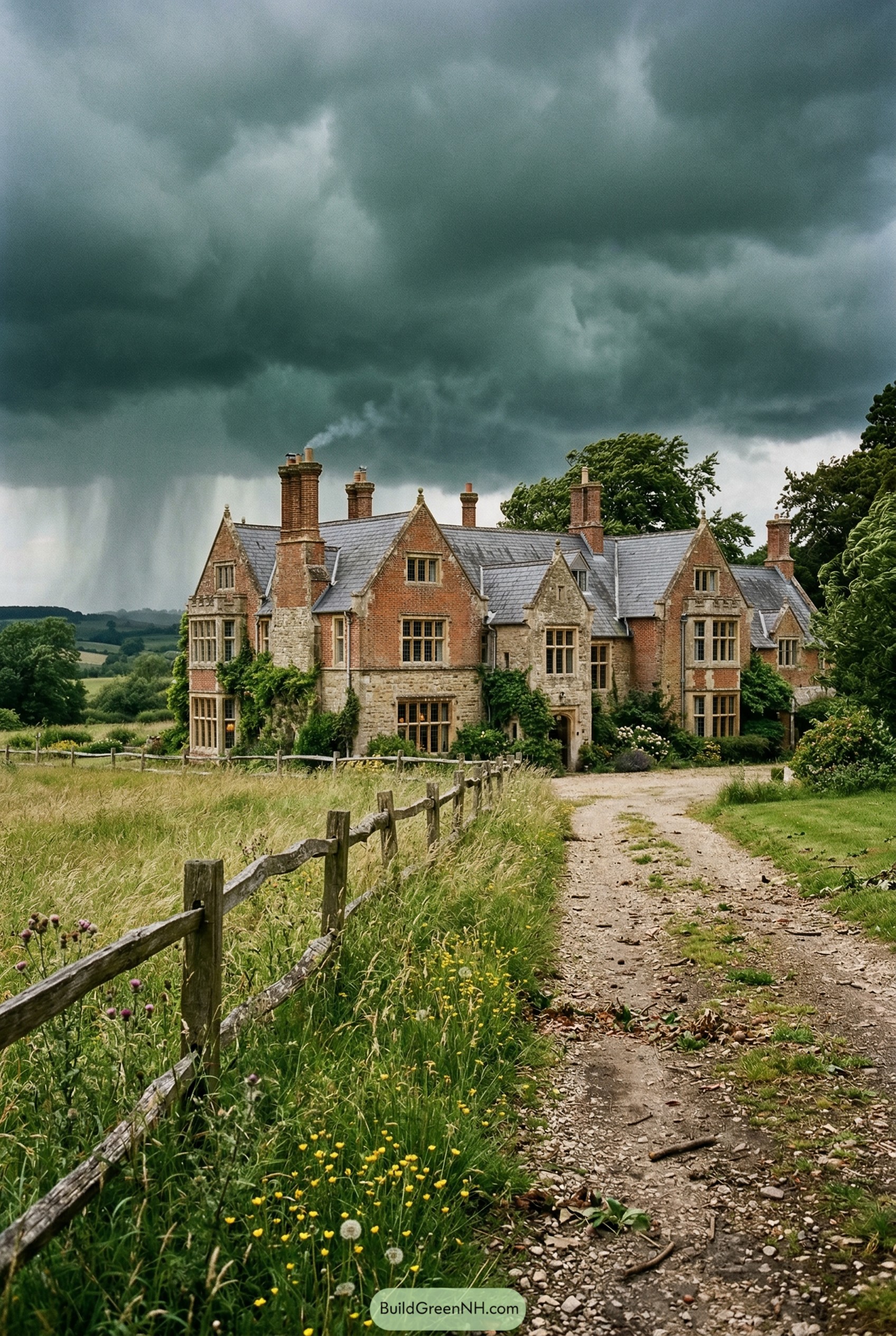

This manor leans into late Tudor and Jacobean cues, with pointed front gables, tall chimney stacks, and that gorgeous mix of red brick and pale stone. It feels like it grew over generations, which is part of the magic, like the house kept getting one more good idea.
Tall mullioned windows and steep slate roofs give the whole composition a stately edge, while the ivy and uneven massing stop it from feeling too polished. The long approach along the rough track is important too, because a house this handsome should make you wait a minute for it.
Tennis Lawn Turret House
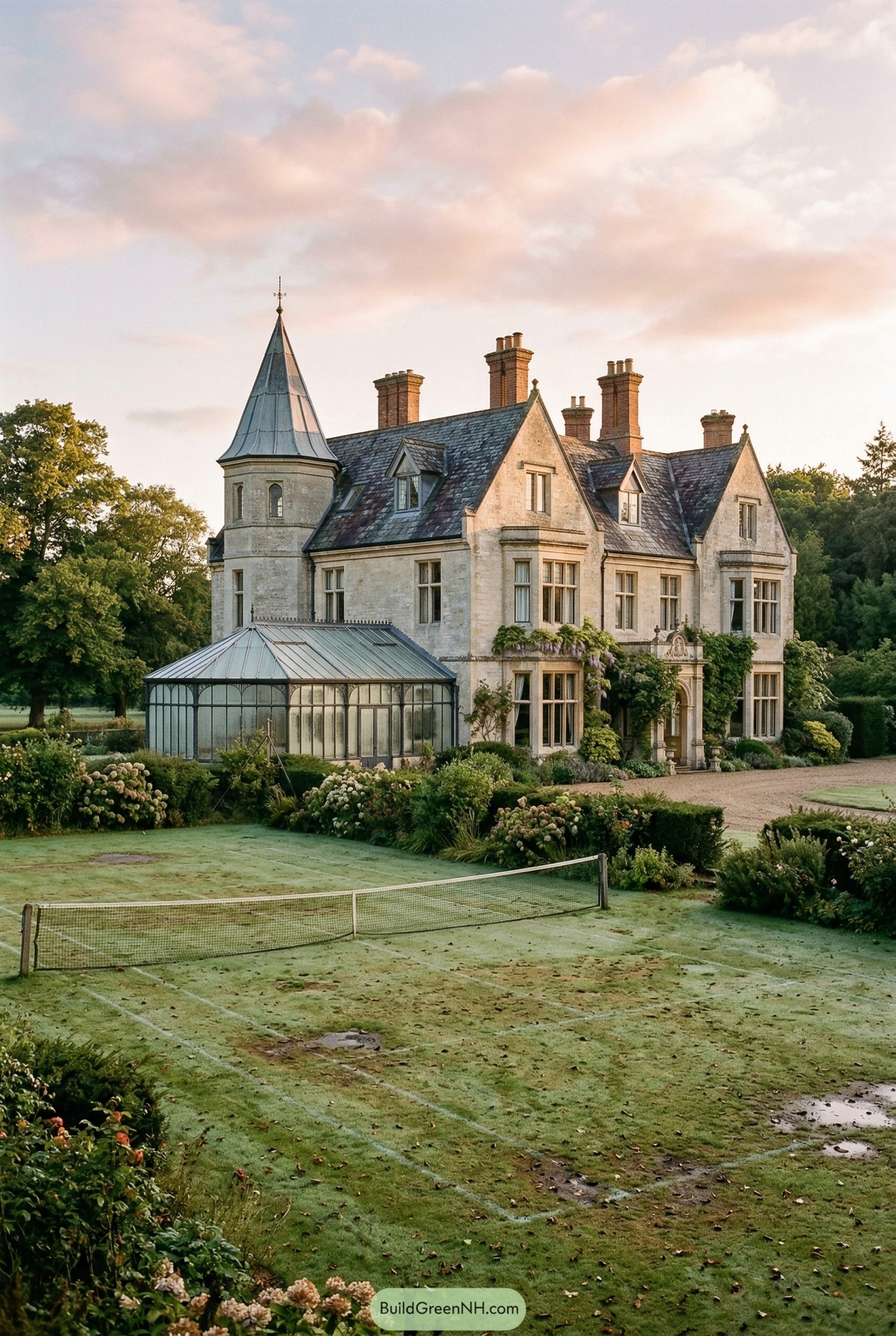

This one leans into late Victorian country house charm, with a little storybook cheek from that tall conical turret. Steep slate gables, a row of brick chimneys, and pale stone walls give it presence without making it feel stiff.
The conservatory is the clever flourish, linking the house to the garden and softening the whole composition. Carved stone at the entry, deep set mullioned windows, and wisteria climbing the facade keep it gracious and a touch romantic, which is never a bad trick for a place this grand.
Mossridge Gable Farmstead
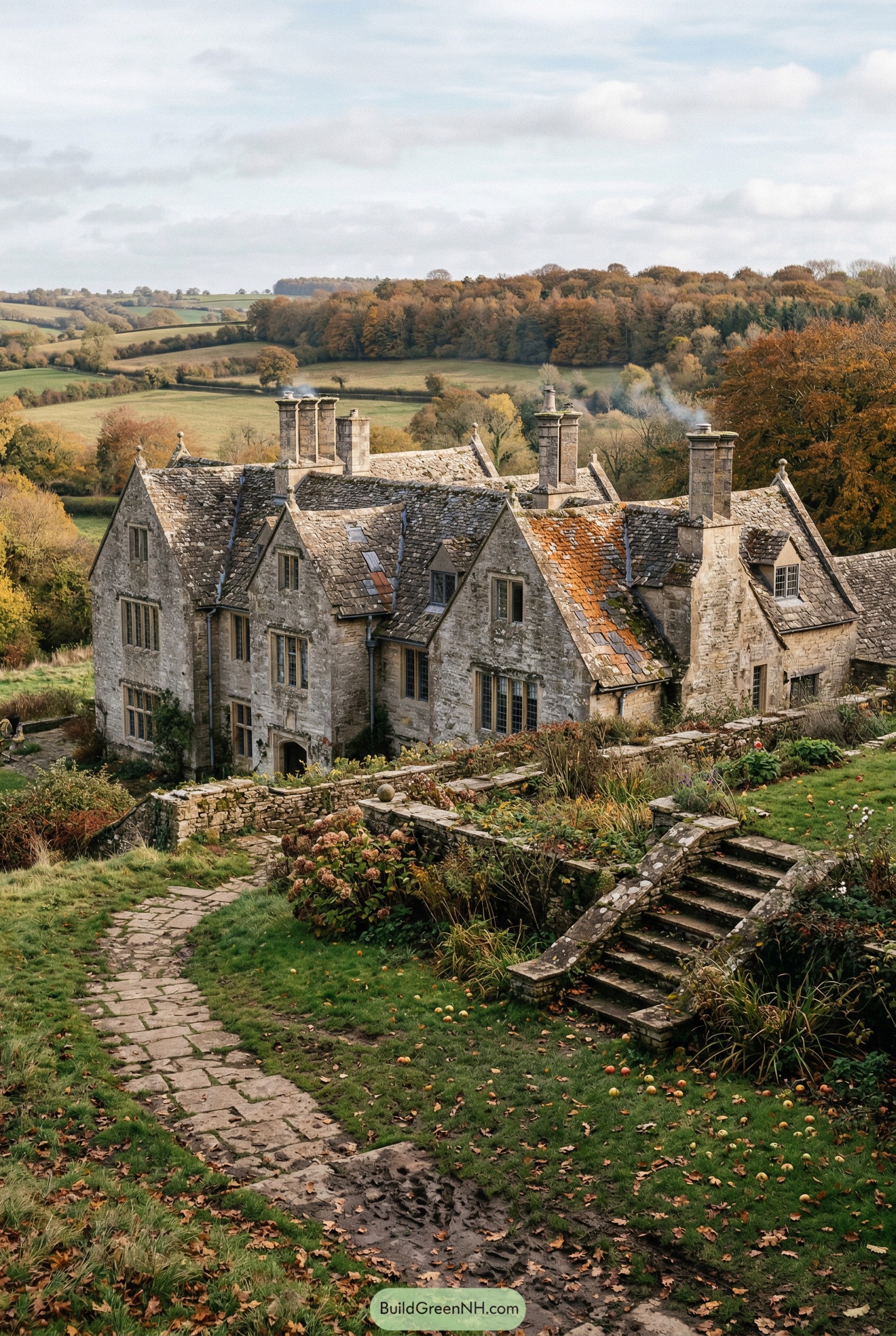

Steep gables, tall chimney stacks, and a patchwork stone roof give this hillside farmstead a wonderfully weathered character that feels settled in all the right ways. We love how the clustered volumes keep it from feeling too polished, like the house grew a bit at a time and knew exactly when to stop.
The terraced garden and sturdy stone steps pull the design into the slope so the whole place sits naturally in the countryside instead of perching on top of it. Mullioned windows, rough limestone walls, and that wonderfully wonky roofline were inspired by old Cotswold estates, and yes, the chimneys are showing off a little.
Emerald Threshold Gables
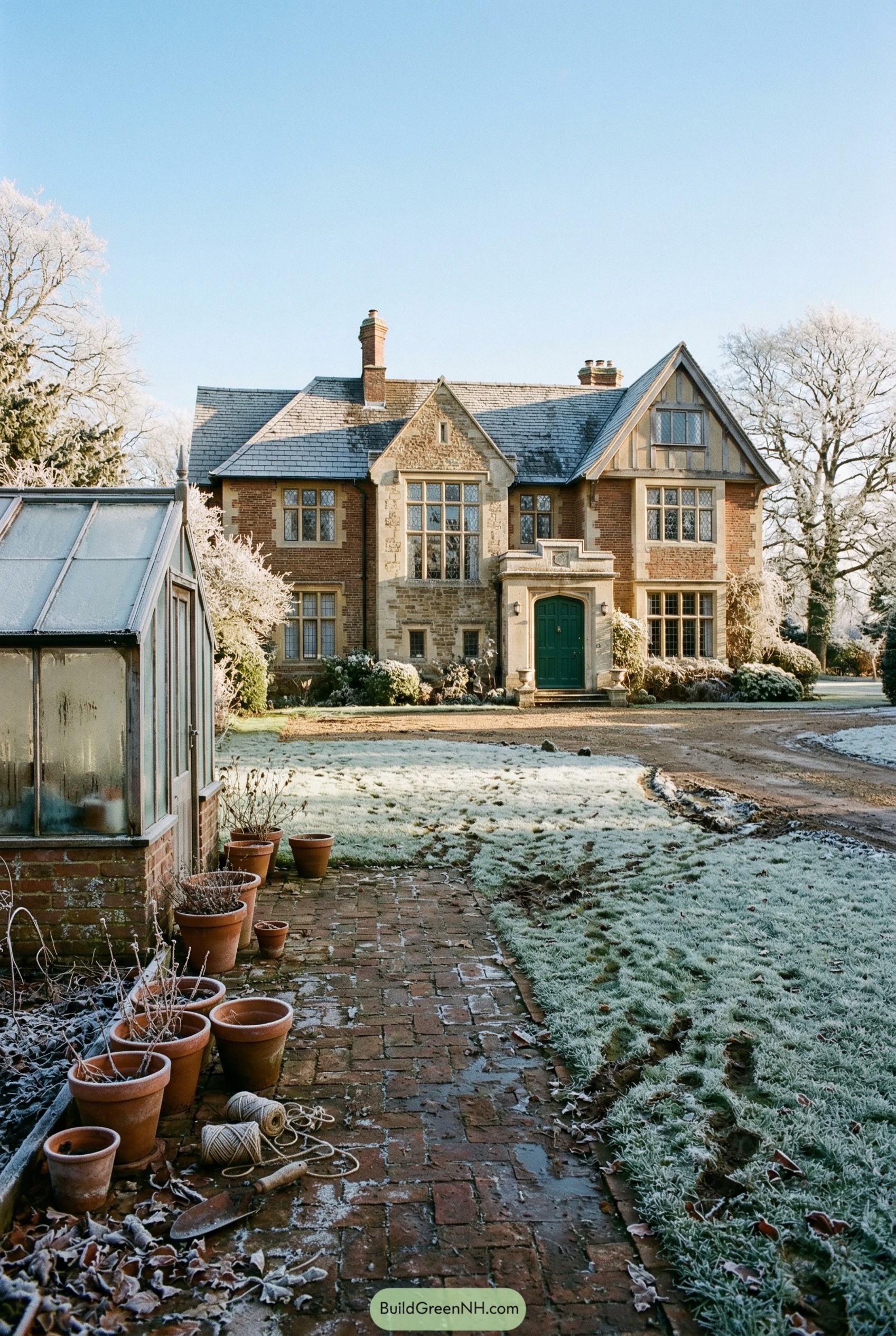

The design borrows from Arts and Crafts country house ideas, with red brick, pale stone dressings, and steep gables that give the facade a crisp, settled look. We love how the deep green door sits inside that sturdy porch, because it gives the front a clear focal point and a bit of cheek too.
Tall leaded windows and the textured central bay make the house feel rooted and quietly grand, while the greenhouse and brick path pull everything back to garden life. It feels polished but not precious, which is nice because a manor like this should look ready for muddy boots and one very opinionated rose bush.
Pin this for later:
Want More?
 20 Cape Cod House Front Elevations to Bring Storybook Magic to Your Street
 20 Stunning Colonial House Front Elevations to Turn Your Home Into a Neighborhood Legend
 20 Stunning Modern Facade Elevation Designs That Turn Everyday Homes Into Living Art
 20 Daring Folded Roof Houses That Turn Rain Into Art
 20 Modern Farmhouse Elevations That Get It Right
Table of Contents