Last updated on
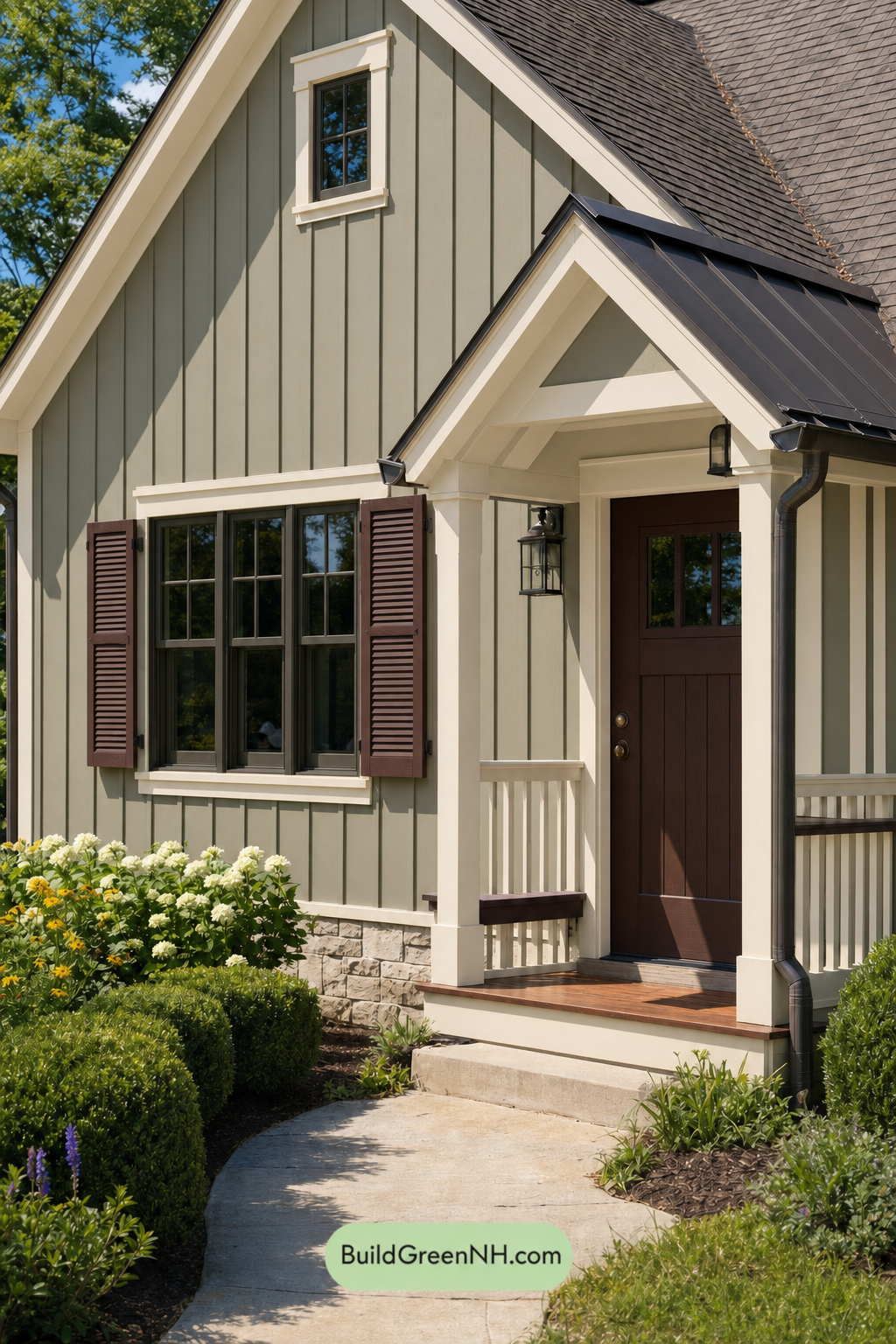

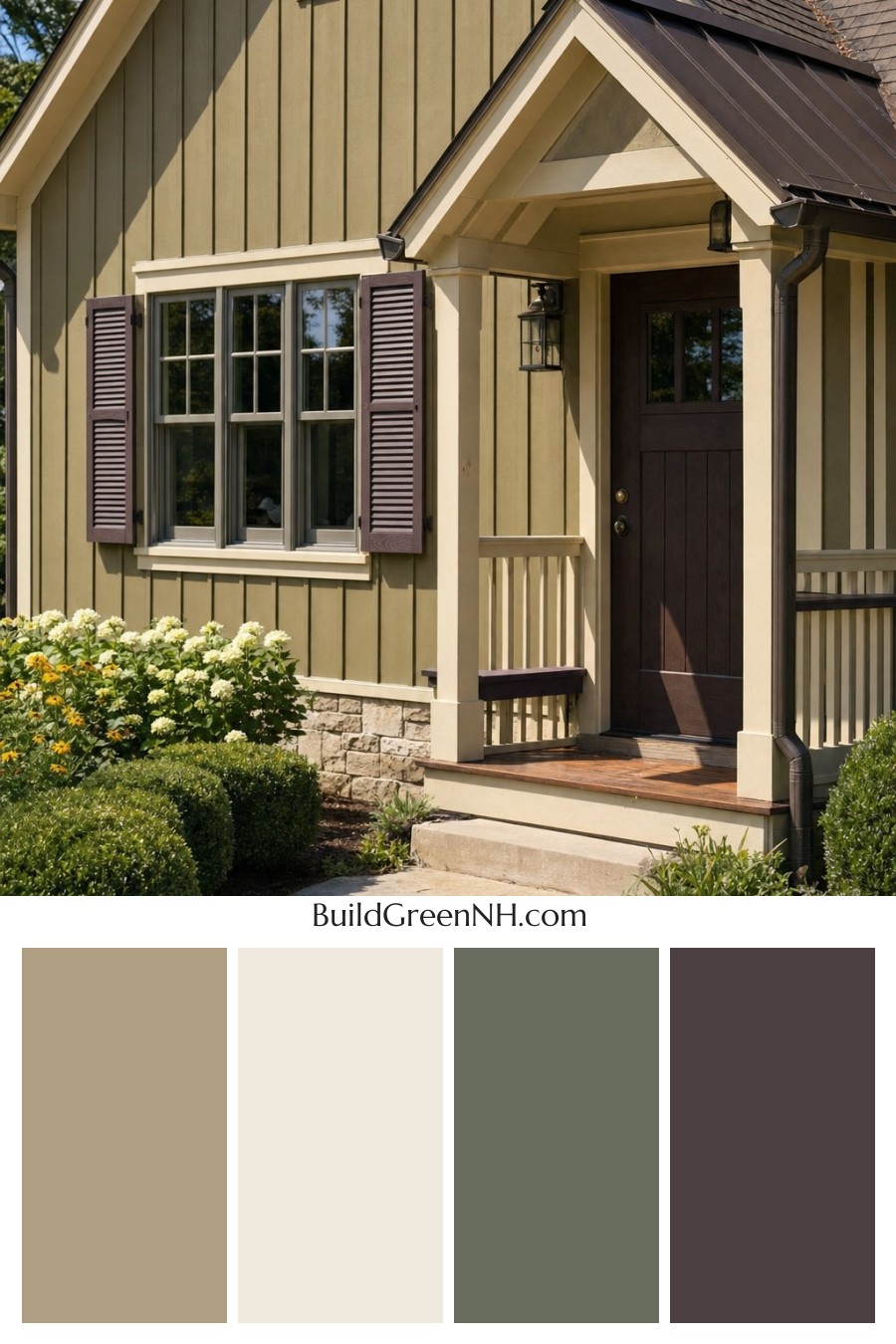
This exterior shines because its muted green siding, creamy beige trim, and rich brown accents create a grounded, welcoming look that feels both classic and fresh.
A Soft Green Foundation
The main siding is wrapped in a calm, muted shade of green that feels right at home with the surrounding landscape. It has an earthy quality that keeps the house from feeling too bright, while still giving the exterior plenty of personality.
On the vertical siding, this green shade adds a gentle rhythm and texture. The color works especially well because it sits between traditional and natural, giving the home a relaxed cottage-inspired character without feeling overly rustic.
Warm Beige Trim for Clean Contrast
The trim, columns, porch railings, and gable details are finished in a warm beige family, and that choice is what makes the whole palette feel crisp. The beige trim outlines the rooflines, windows, porch, and architectural edges with a soft, polished contrast.
Because the beige shade is warm rather than stark, it blends beautifully with the green siding. It brightens the exterior without looking harsh, giving the home a sunny, inviting glow.
Rich Brown Accents Add Depth
The shutters and front door bring in a deep brown family that gives the home its strongest sense of warmth. Against the muted green siding, the brown shutters feel classic and grounded, while the front door creates a handsome focal point at the entry.
This deeper brown shade also ties in nicely with the porch flooring and natural wood tones. It adds just enough contrast to make the entrance feel intentional, cozy, and welcoming.
Green Window Frames Keep the Look Cohesive
The window frames stay within the green family, using a darker, more subdued shade than the siding. This is a smart detail because it keeps the windows visually connected to the main body of the house while still giving them definition.
Paired with the beige trim around them, the windows feel layered and custom. The result is subtle but elegant, with no single element fighting for attention.
A Dark Roof Grounds the Palette
The roof introduces a deep gray-brown shade that anchors the softer exterior colors. Its darker tone gives the house structure and balance, especially above the lighter beige trim and muted green walls.
The darker porch roof and gutters add another refined accent, helping the exterior feel tailored rather than overly soft. Together, these darker details give the palette a confident finish.
Why This Color Scheme Works
This home’s exterior palette works because every color has a clear role. The muted green siding connects the house to the landscape, the warm beige trim sharpens the architecture, and the deep brown accents bring richness and charm.
Overall, the mood is warm, natural, and beautifully balanced. It feels welcoming from the walkway, polished at the porch, and timeless from the street—a color scheme with plenty of curb appeal and an easy, livable elegance.
Next, see how this color scheme looks under different lighting simulations throughout the day.
Overcast
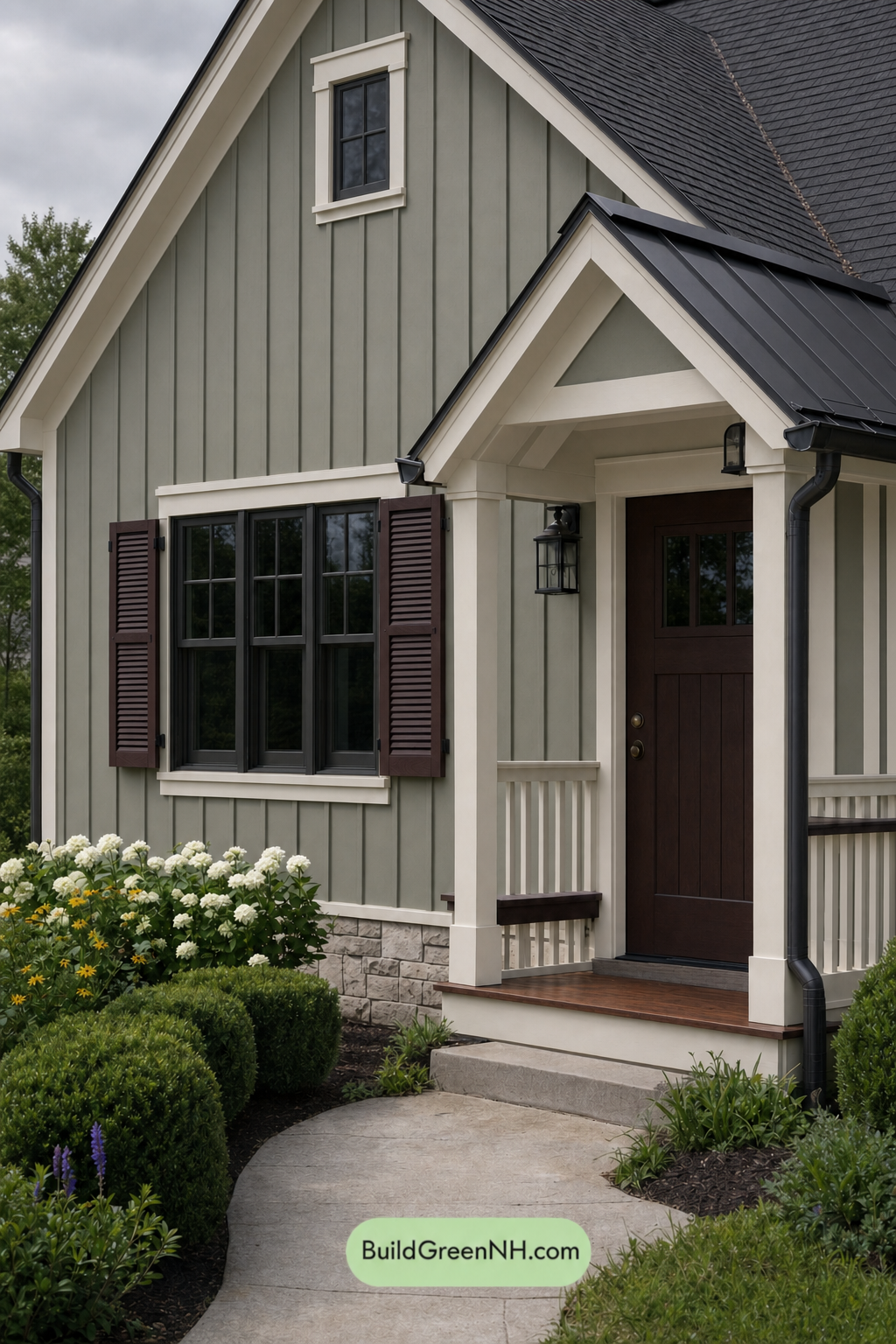
Under overcast light, the green family on the main walls becomes quieter and more muted, picking up a soft gray cast compared to neutral daylight. Its saturation drops slightly, so the vertical siding feels more relaxed and earthy rather than bright or crisp.
The beige trim, columns, and railings lose a bit of warmth, appearing softer and cooler, while the brown shutters and front door deepen into a richer, moodier shade. With fewer sharp shadows, contrast is gentler across the façade, giving the whole exterior a calm, cozy, and subtly dramatic feel.
Golden Hour
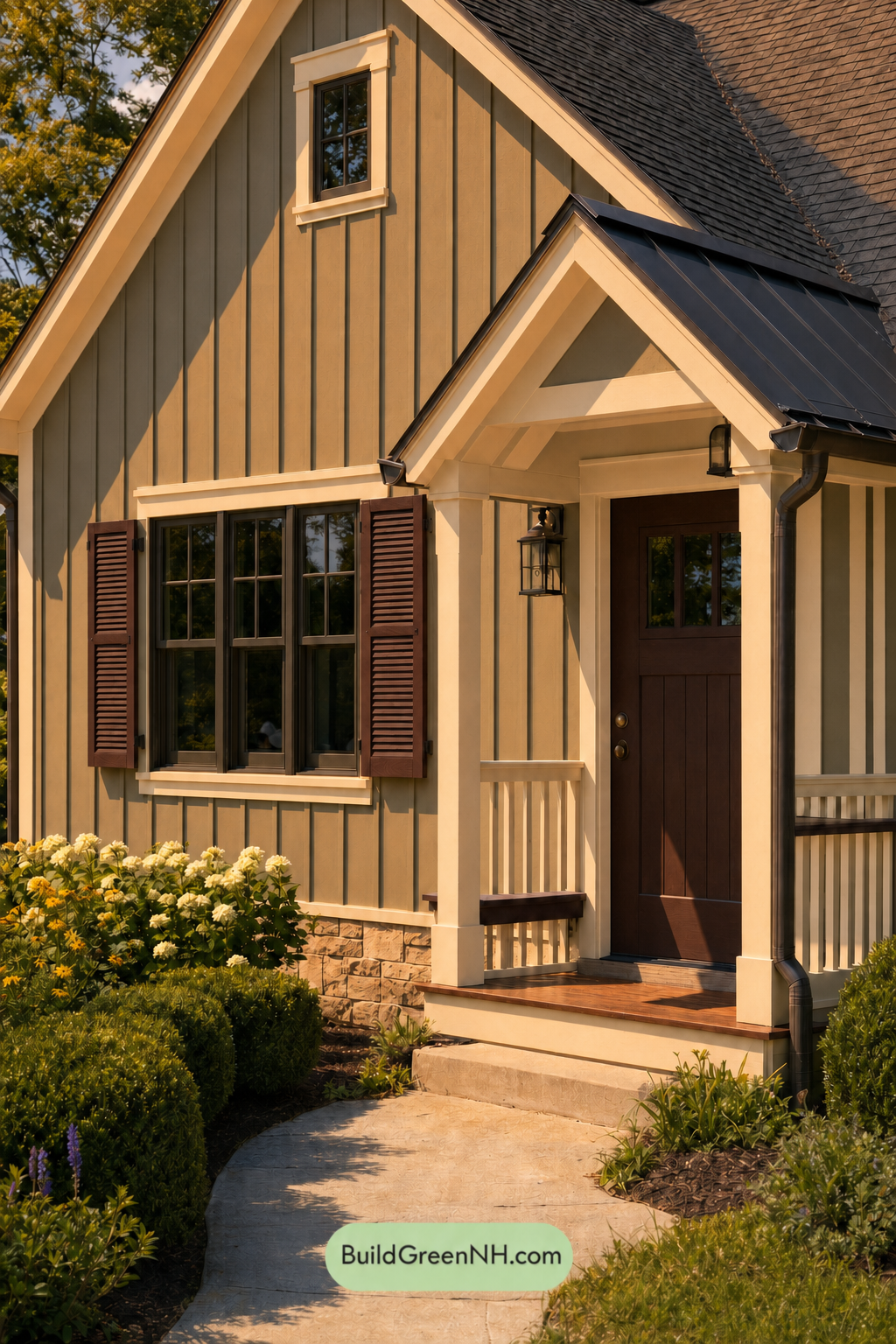
In neutral daylight, the green siding reads more balanced and earthy, but Golden Hour adds a glowing warmth that makes this shade of green feel richer and slightly more saturated. The beige trim, columns, and railings shift softer and creamier, catching the low sun in a way that gives the whole exterior a welcoming, sun-washed look.
The brown shutters and front door gain depth as the warm light pulls out deeper, cozier undertones, while longer shadows sharpen the vertical lines and porch details. Compared to flatter daylight, the contrast feels stronger and more dramatic, creating a relaxed, inviting mood with a gentle evening glow.
Shade
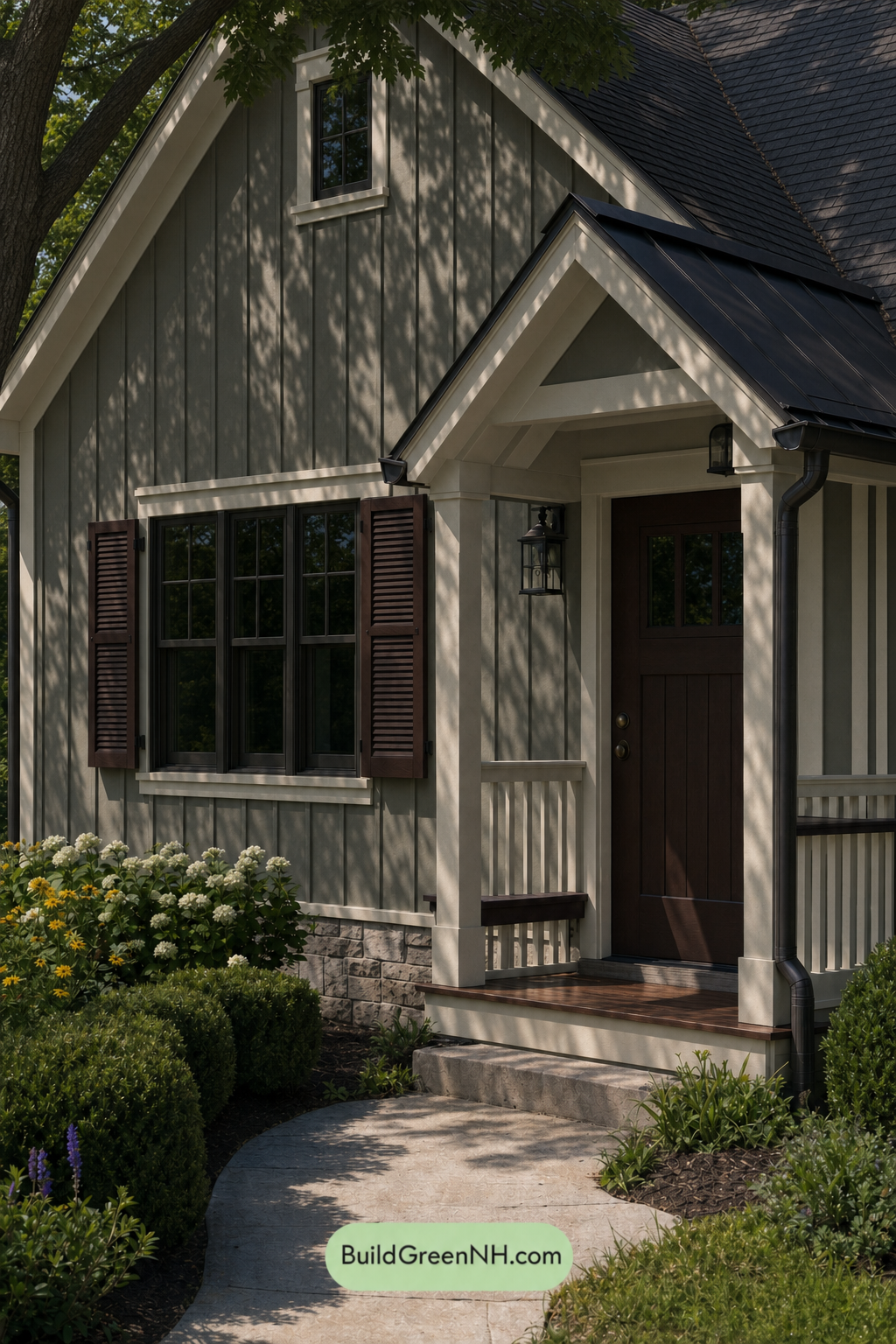
Under shade, the green family on the main walls settles into a deeper, quieter shade, with saturation pulled back compared to neutral daylight. The beige family on the trim, columns, and railings loses some of its sunlit warmth, feeling softer and more muted, while the layered shadows make those lighter elements stand out with gentler contrast.
The brown family on the shutters and front door appears richer and more grounded in shade, taking on a cozy, woodsy mood rather than the warmer clarity it would have in even daylight. Dappled shadows add movement across the facade, cooling the overall palette and giving the house a calm, sheltered feeling.
Nighttime
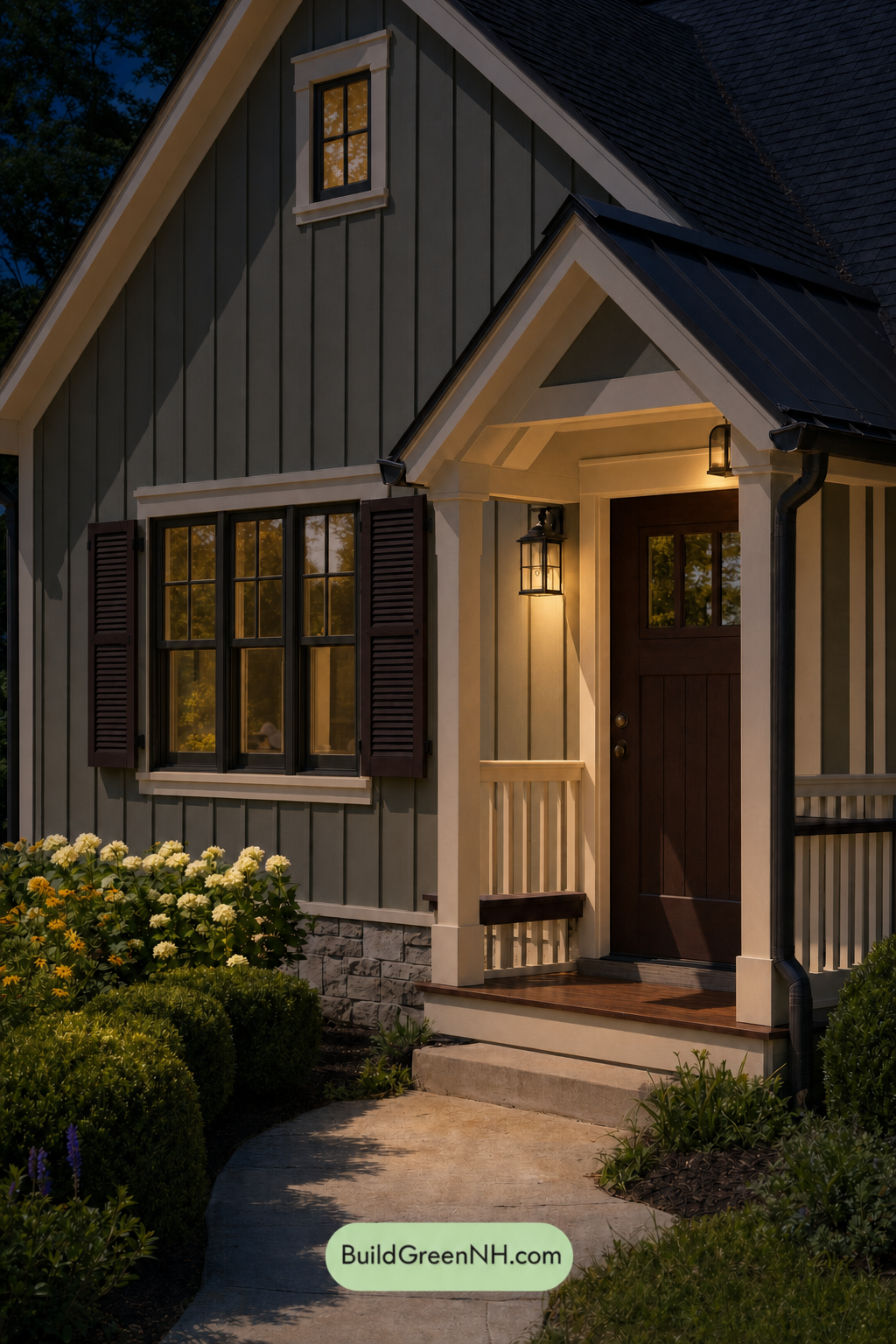
Under nighttime lighting, the green siding deepens into a quieter, more saturated shade than it would in neutral daylight, with shadows making the vertical lines feel stronger and more dramatic. The beige trim, columns, and railings pick up extra warmth from the porch lights, shifting from crisp and neutral to soft, golden, and welcoming.
The brown shutters and front door appear richer and moodier after dark, with the warm glow bringing out depth while the surrounding shadows increase contrast. Overall, the palette feels less airy than in daylight and more intimate, with cozy warmth at the entry and a calm, grounded feel across the exterior.
Pin these for later:
Want More?
 Exterior Color Scheme with Stone Accents: Pine Brass Threshold
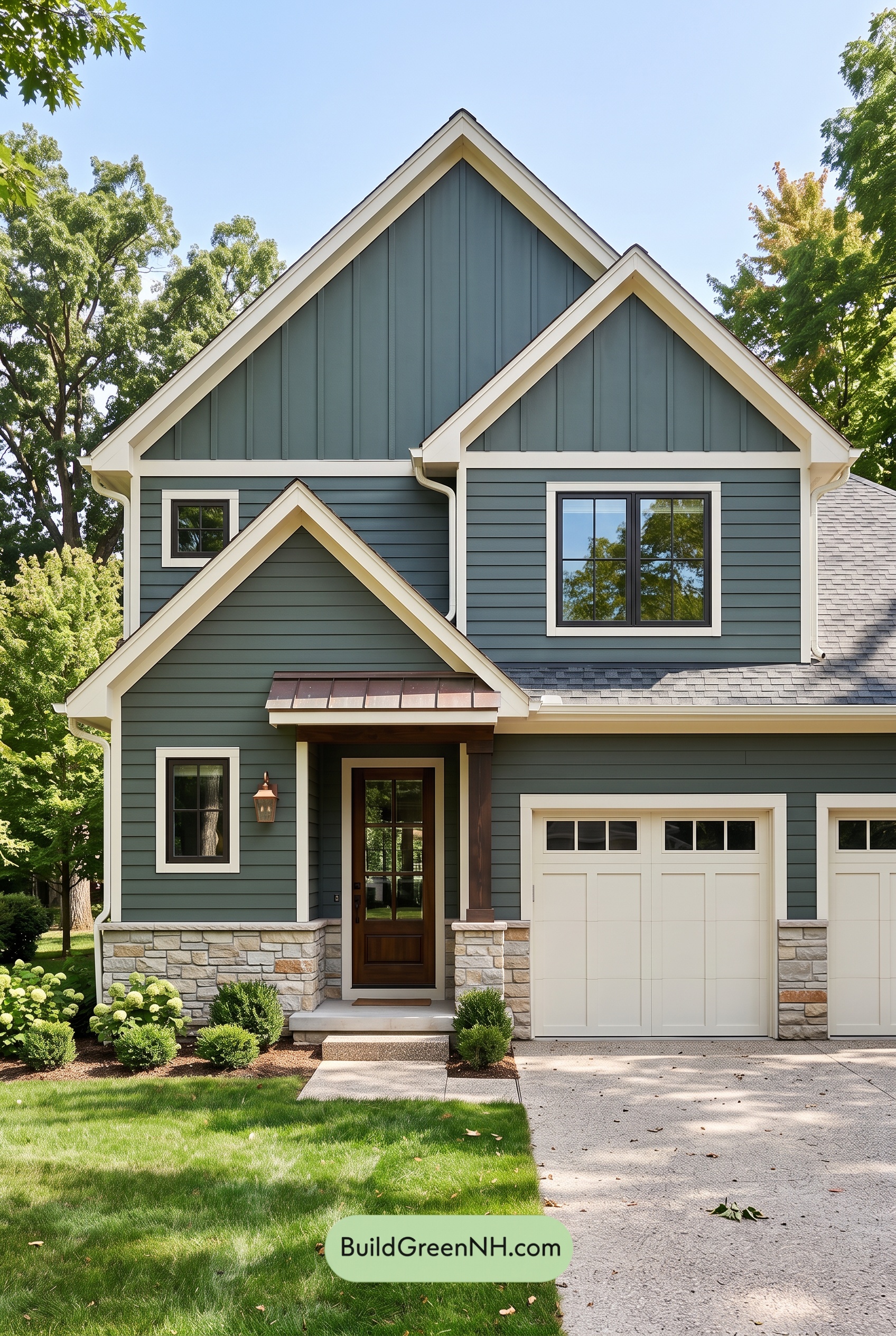 Exterior Color Scheme with Stone Accents: Evergreen Copper Welcome
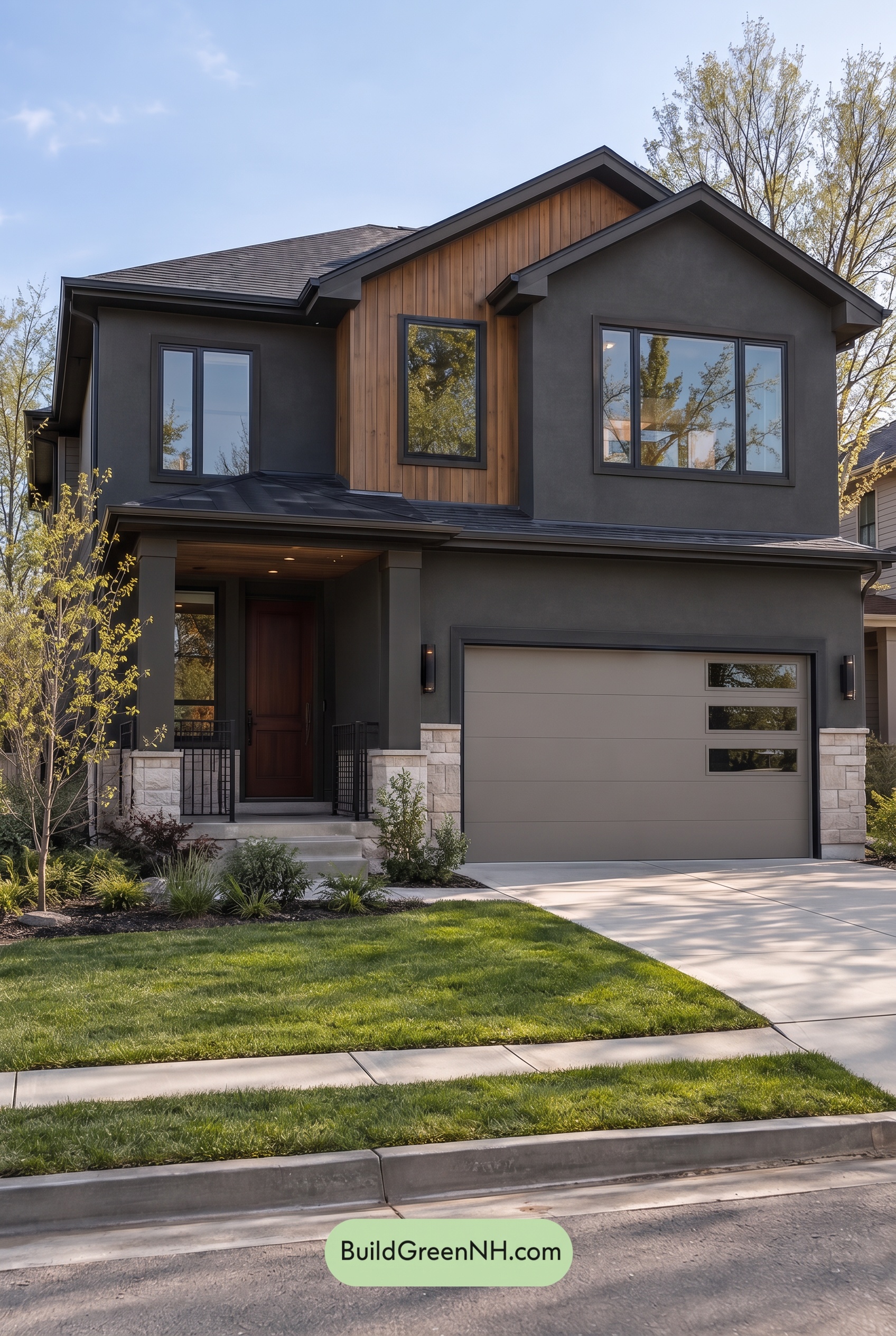 Dark Stucco House Exterior Color Scheme: Cedar Ember Calm
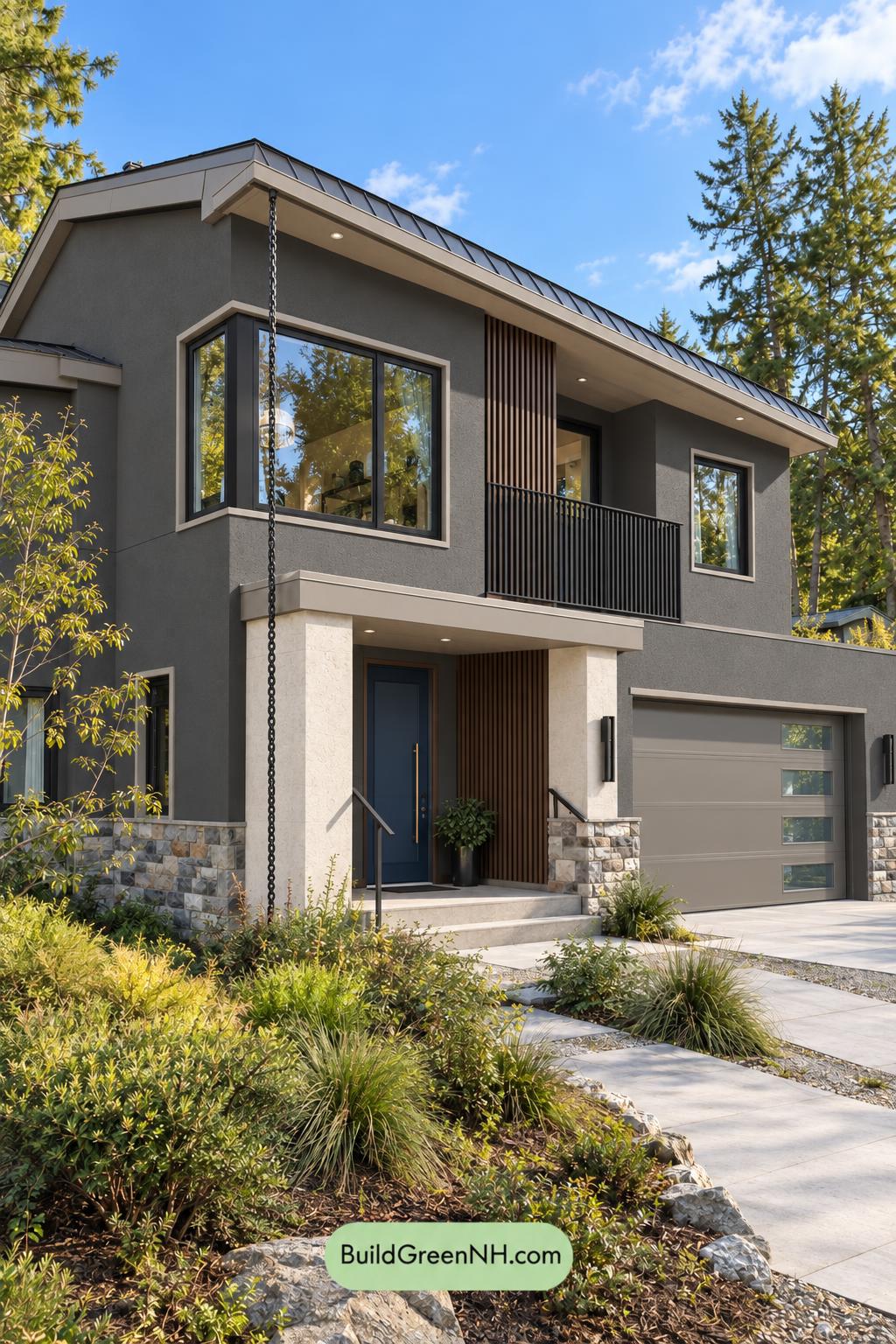 Dark Stucco House Exterior Color Scheme: Silver Pine Shelter
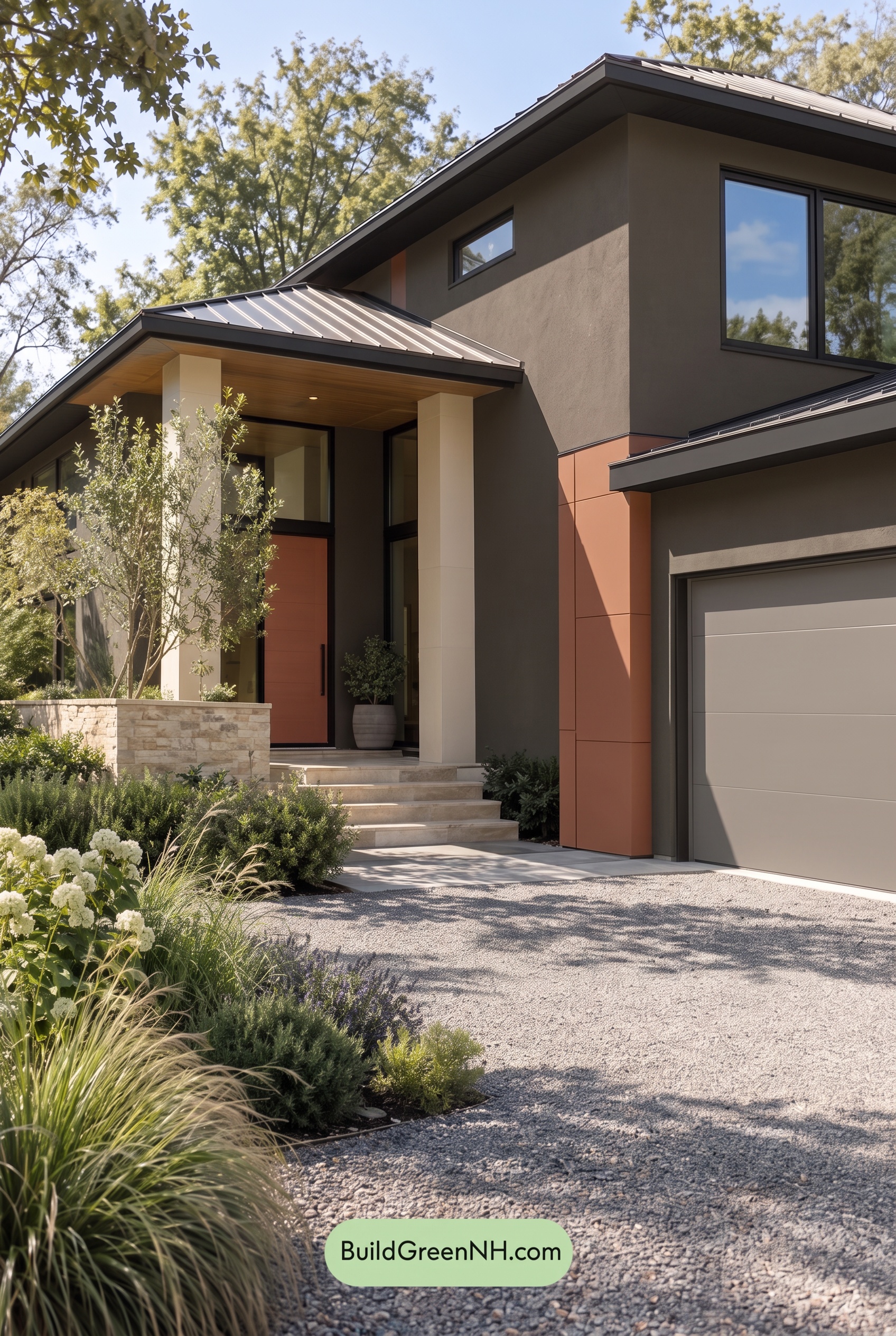 Dark Stucco House Exterior Color Scheme: Copper Orchard House
Table of Contents