Last updated on
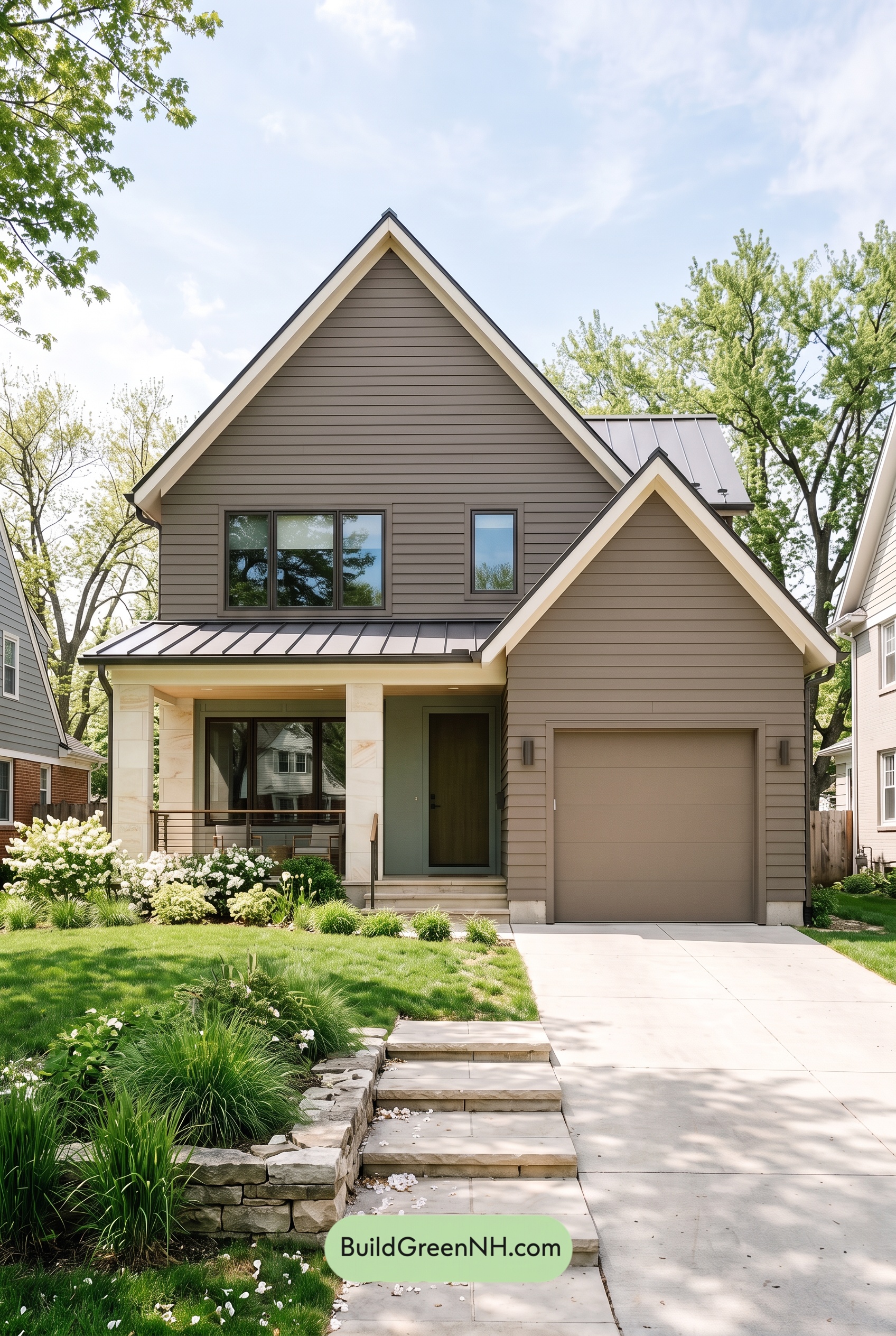

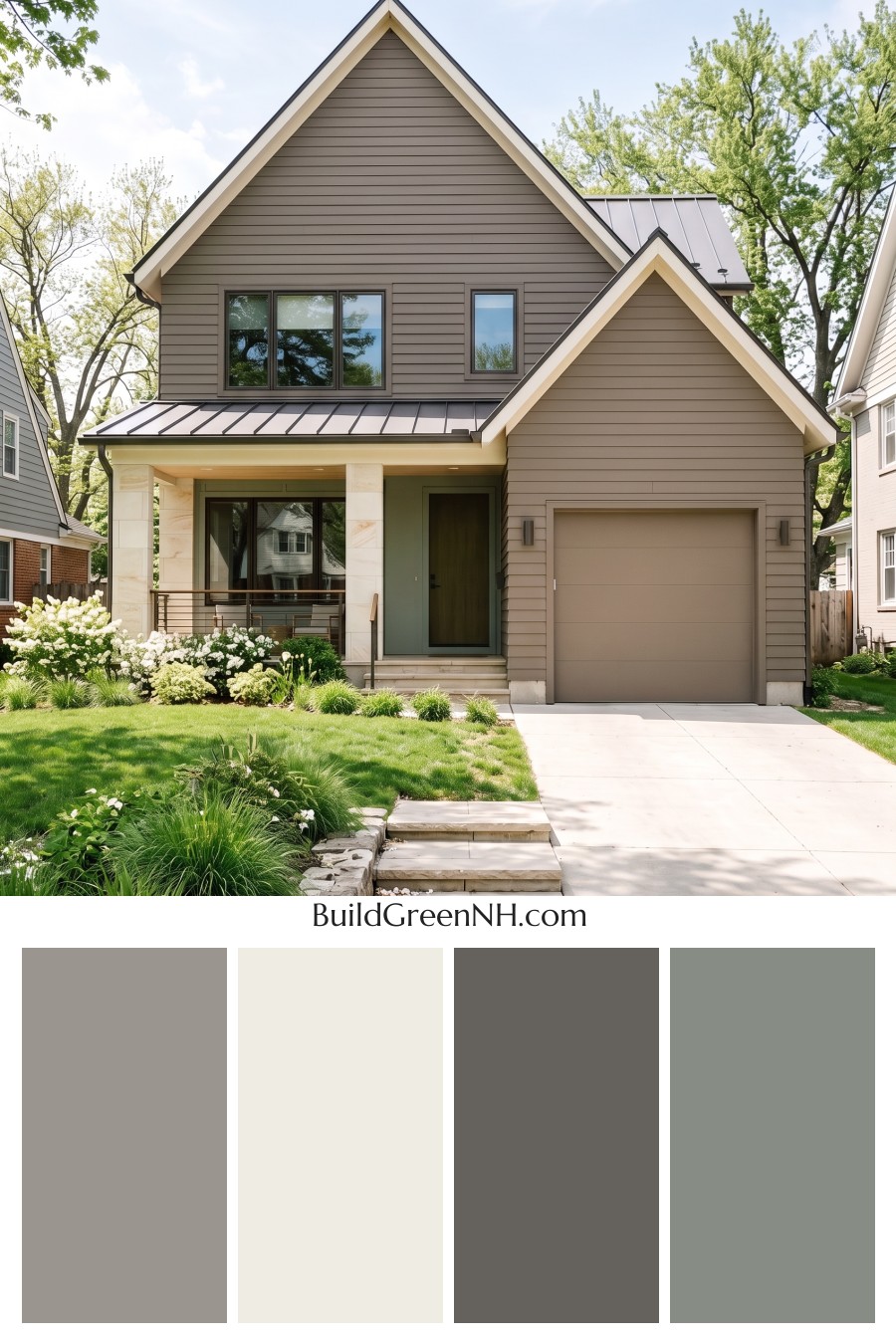
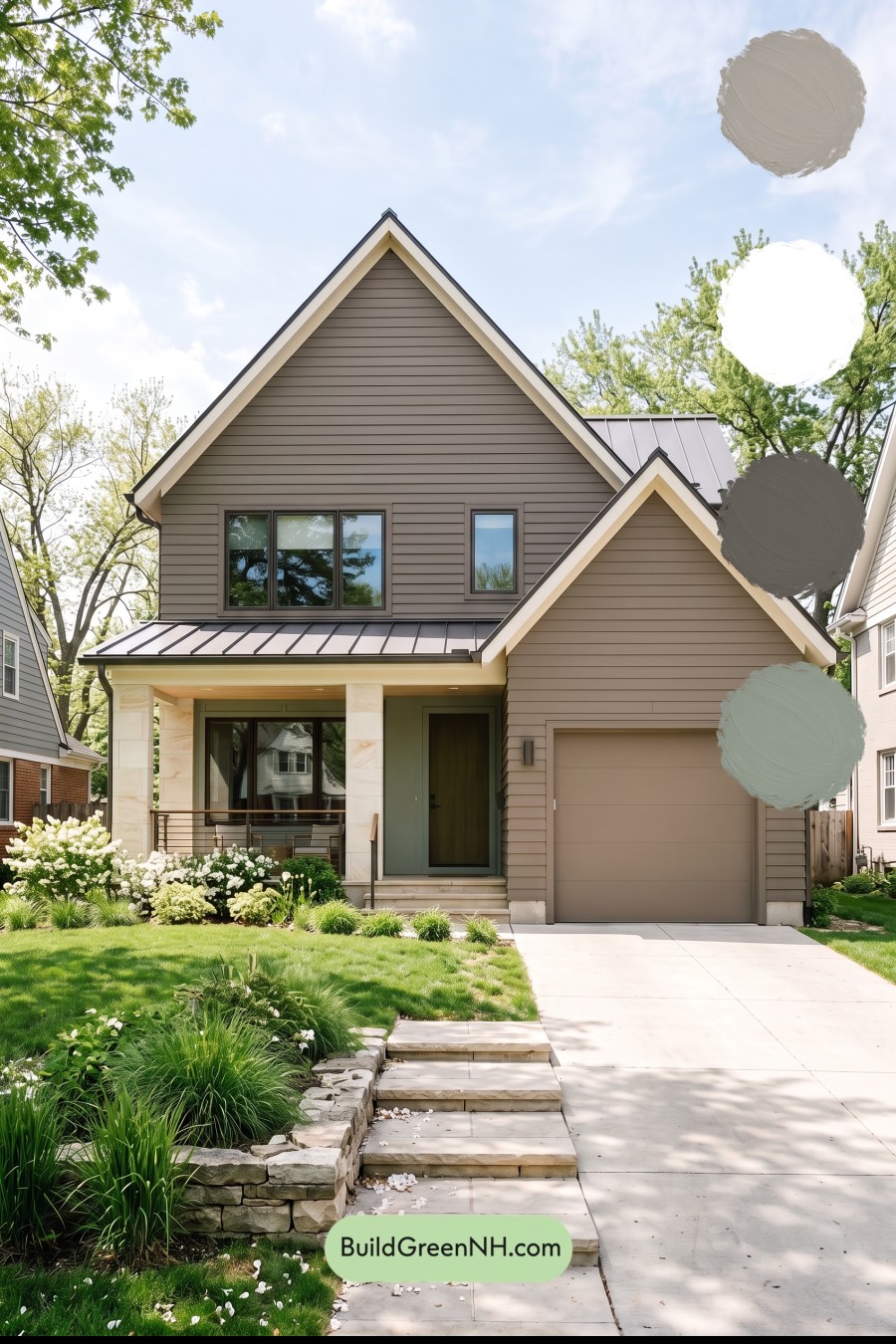
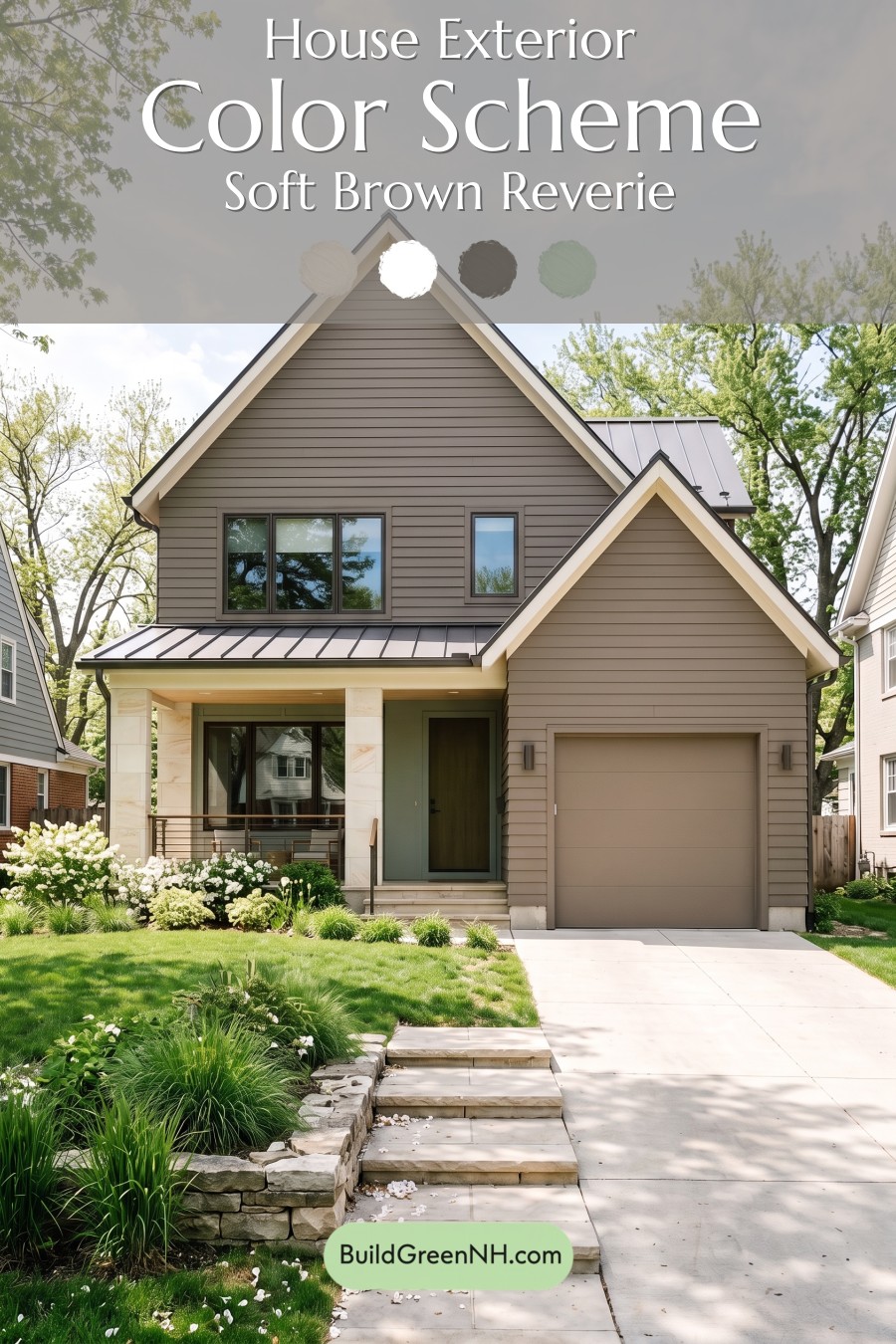
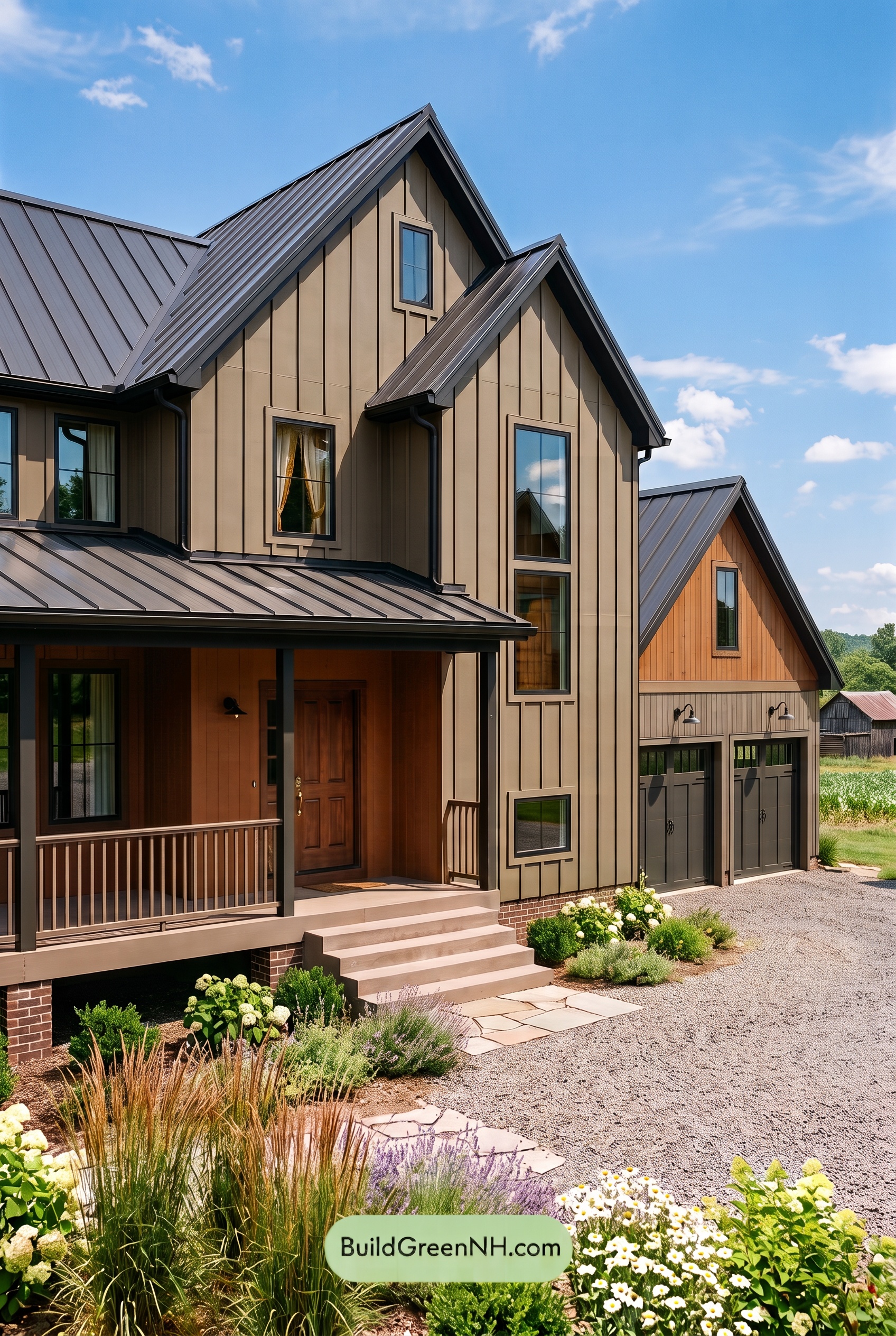
Warm gray siding, creamy white trim, and deeper gray accents give this home a beautifully balanced exterior that feels polished without losing its welcoming charm.
Warm Gray Siding Sets a Calm Foundation
A medium shade of warm gray wraps the horizontal siding, unifying the tall main gable with the smaller garage gable. Subtle taupe undertones keep these broad surfaces from feeling cold, lending the house a softness that suits its leafy surroundings.
Repeating the siding shade across both volumes is especially effective here. Rather than competing for attention, the two gables read as parts of one thoughtful composition. The horizontal boards add texture, while the restrained color lets their clean lines shine.
Creamy White Highlights the Architecture
Creamy white trim traces the steep rooflines, giving each gable a crisp outline against the gray siding. It creates definition without the sharper contrast of a cooler, brighter white.
The porch columns repeat that soft white, carrying the lightness down to the entrance. Together with the pale trim beneath the porch roof, they help the sheltered space feel open and inviting. This repetition also connects the upper architecture to the details at ground level.
Deeper Shades Give the Details Definition
Deep gray window frames add structure to the facade. Their darker edges make the glass stand out while staying closely related to the siding, so the contrast feels deliberate rather than dramatic.
A muted gray accent around the recessed entrance takes on a subtle green undertone in the shade. The deeper gray front door adds depth, while dark gray railings give the porch a fine-lined boundary without visually closing it off.
The garage door follows a quieter approach. Its warm gray shade sits close to the surrounding siding, helping this large surface blend into the facade instead of becoming the main focal point.
A Gray Roof Completes the Palette
The standing-seam roof introduces a cooler medium gray, with deeper gray edging sharpening its silhouette. Its reflective surface adds variation without introducing another strong color.
That balance is what makes the scheme work: warm gray provides softness, creamy white brings clarity, and darker gray supplies definition. Against fresh green planting and soft white flowers, the result feels composed, comfortable, and quietly modern.
Next, see how this color scheme looks under different lighting simulations throughout the day.
Overcast
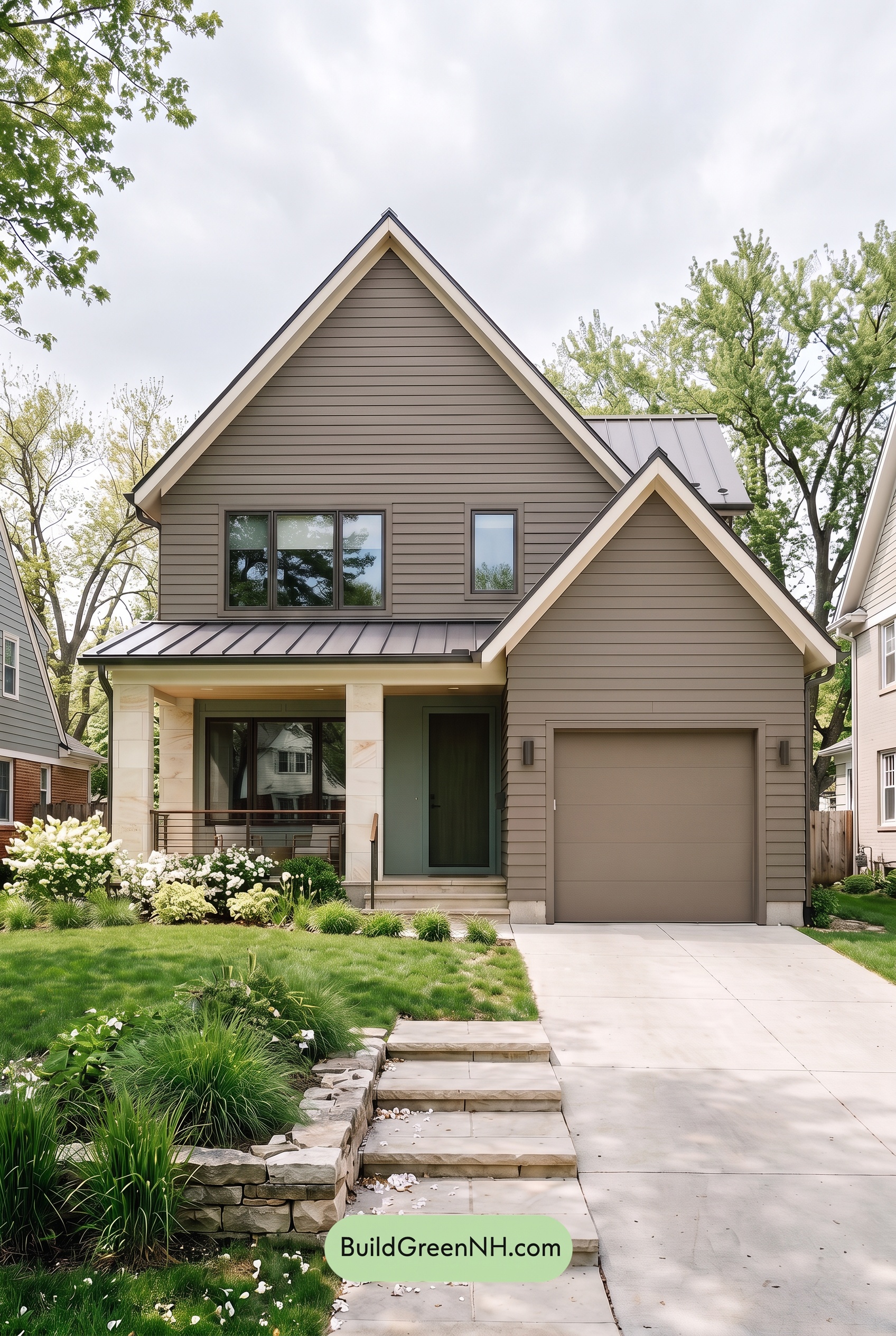
Under overcast skies, the house’s midtone grays appear more muted than in neutral daylight, with their warm undertones gently dialed back. The siding and garage door read as softer, more even expanses of color, while the white trim feels less luminous and slightly cooler. This subdued saturation gives the palette a quiet, understated elegance.
Diffused light softens shadows beneath the gables and across the porch, easing the contrast between bright surfaces and shaded recesses. Deeper gray details still provide definition, but their edges feel less dramatic. Compared with neutral daylight, the overall mood becomes calmer and more enveloping, with subtle shade differences taking center stage.
Golden Hour
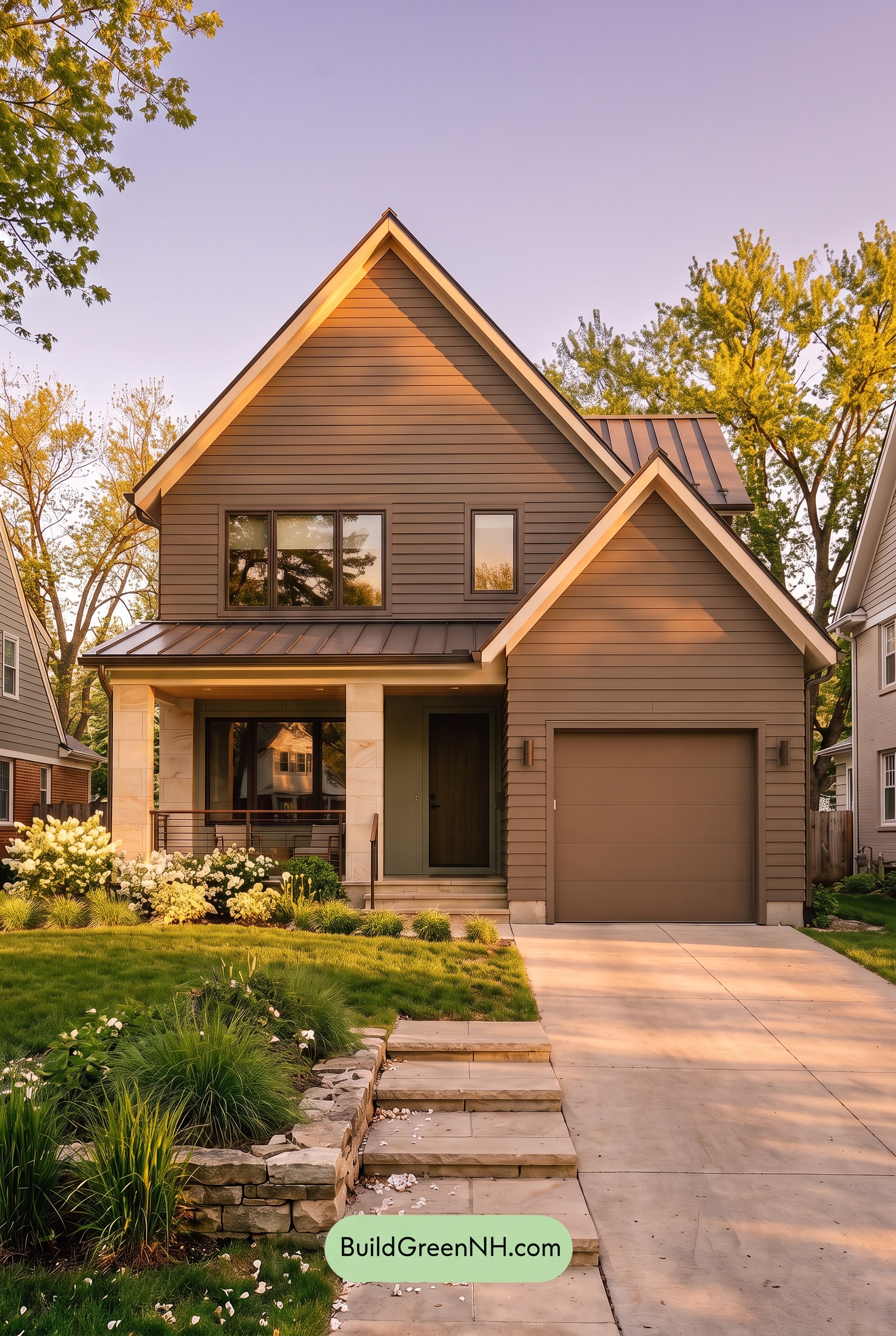
Golden Hour nudges the house’s gray shades toward warmer brown-gray tones, making them feel richer and subtly more saturated than they would in neutral daylight. Sunlit sections of the gables pick up a soft yellow-orange glow, while the whites shift from crisp and clean to creamy and gentle. The palette stays muted, but its warmth becomes much more noticeable.
Long, angled shadows deepen the grays beneath the rooflines and around the recessed entry, strengthening contrast with the glowing edges. Compared with the more even, cooler appearance of neutral daylight, this mix of warm highlights and darker shaded areas gives the exterior greater depth—and a cozy, welcoming mood.
Shade
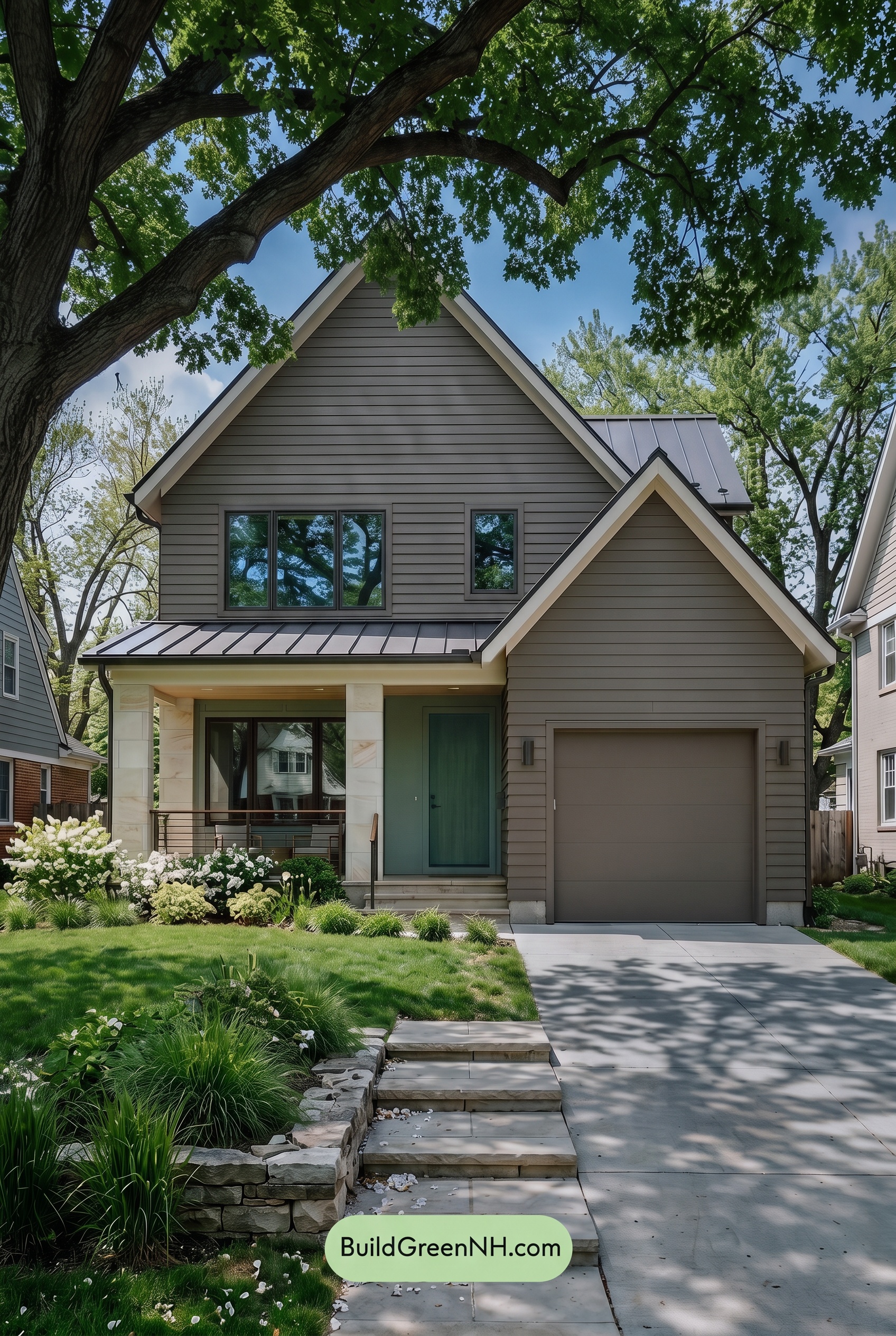
Under the tree canopy, the midtone grays appear deeper and more muted than they would in neutral daylight. Their warmth recedes slightly, allowing subtle cool undertones to emerge, especially around the sheltered entry. The palette stays low in saturation, with the shaded gray shades feeling richer rather than more colorful.
The soft whites lose some brightness but still provide a gentle contrast against the darker grays. Shadows beneath the gables and porch deepen the darkest shades, while the broader shaded surfaces show smoother, quieter transitions. Compared with neutral daylight’s more balanced appearance, the overall mood feels calmer, cooler, and more intimate.
Nighttime
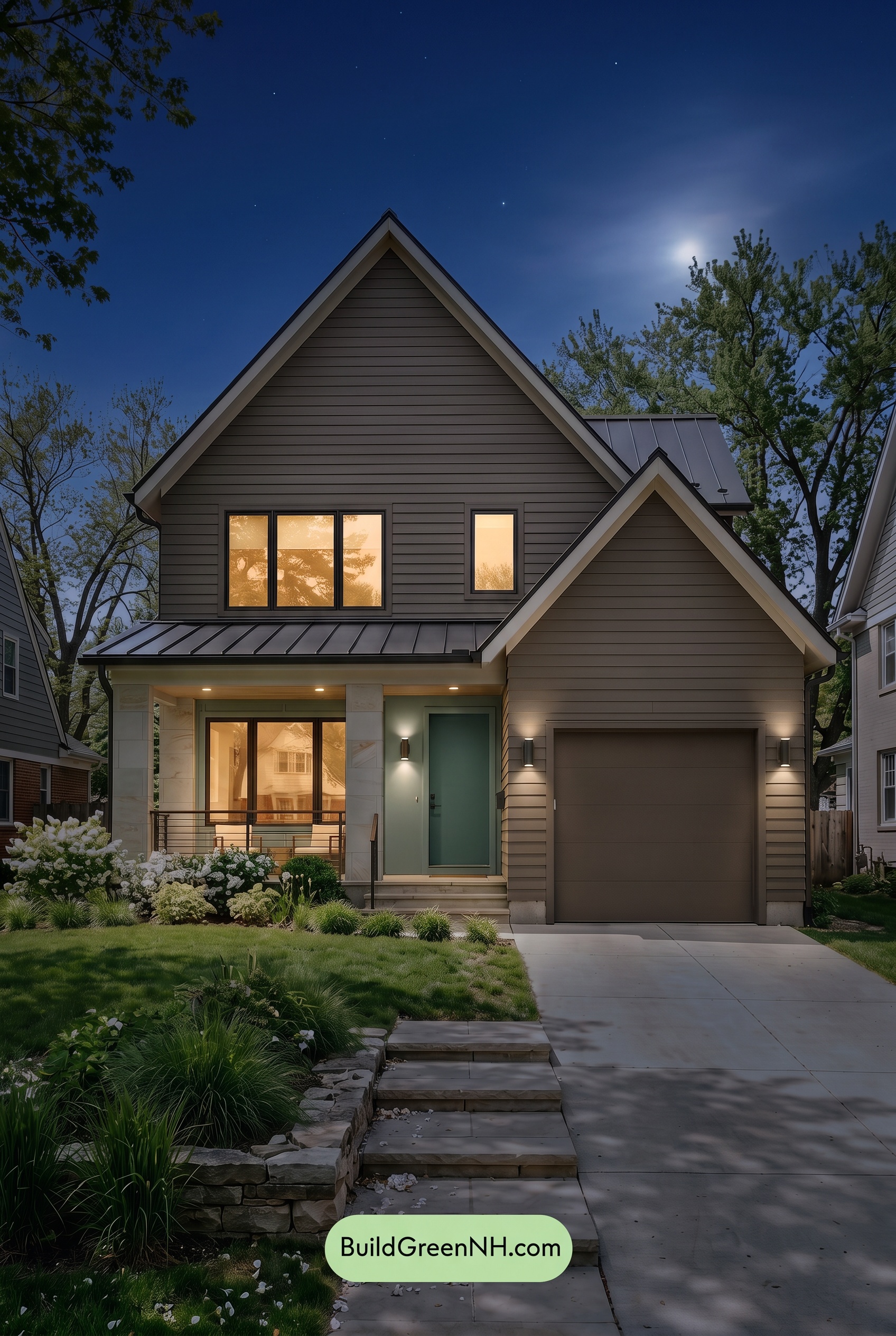
At night, the gray shades deepen and look more muted than they would in neutral daylight. Warm lighting lends the lower walls a soft brown-beige cast, while the upper siding stays cooler and more subdued. Shadows beneath the eaves and between siding courses make the darker shades feel richer without making them appear more saturated.
The white shades soften toward cream near the porch lights, standing out against the deepened grays. Around the garage, pools of warm light create stronger local contrasts, while unlit details recede into shadow. Compared with daylight’s more even color balance, this mix of warm highlights and cool shadows gives the house a cozy, quietly dramatic mood.
Pin these for later:
Want More?
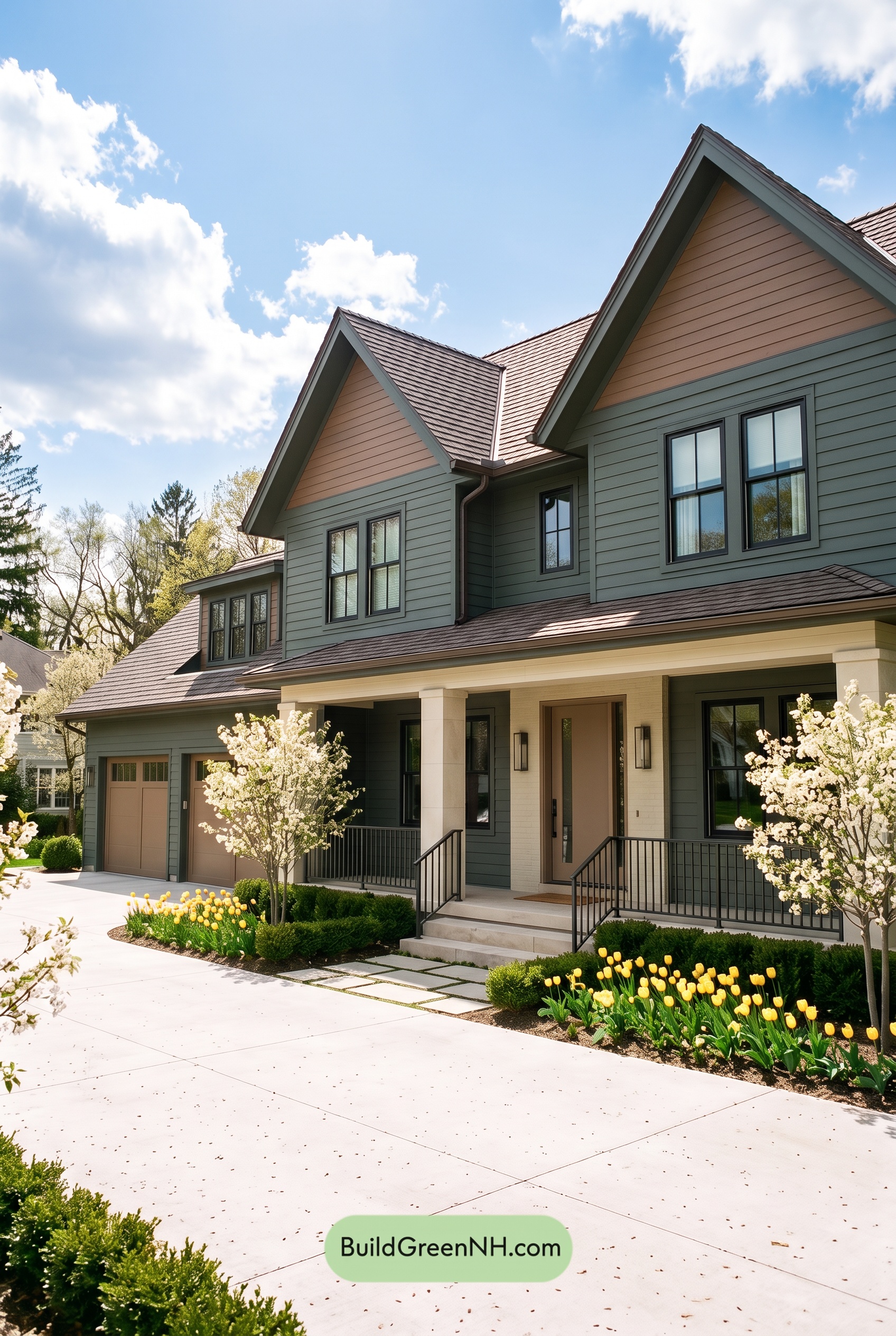 Earthy Green House Exterior Color Scheme: Brown Green Comfort
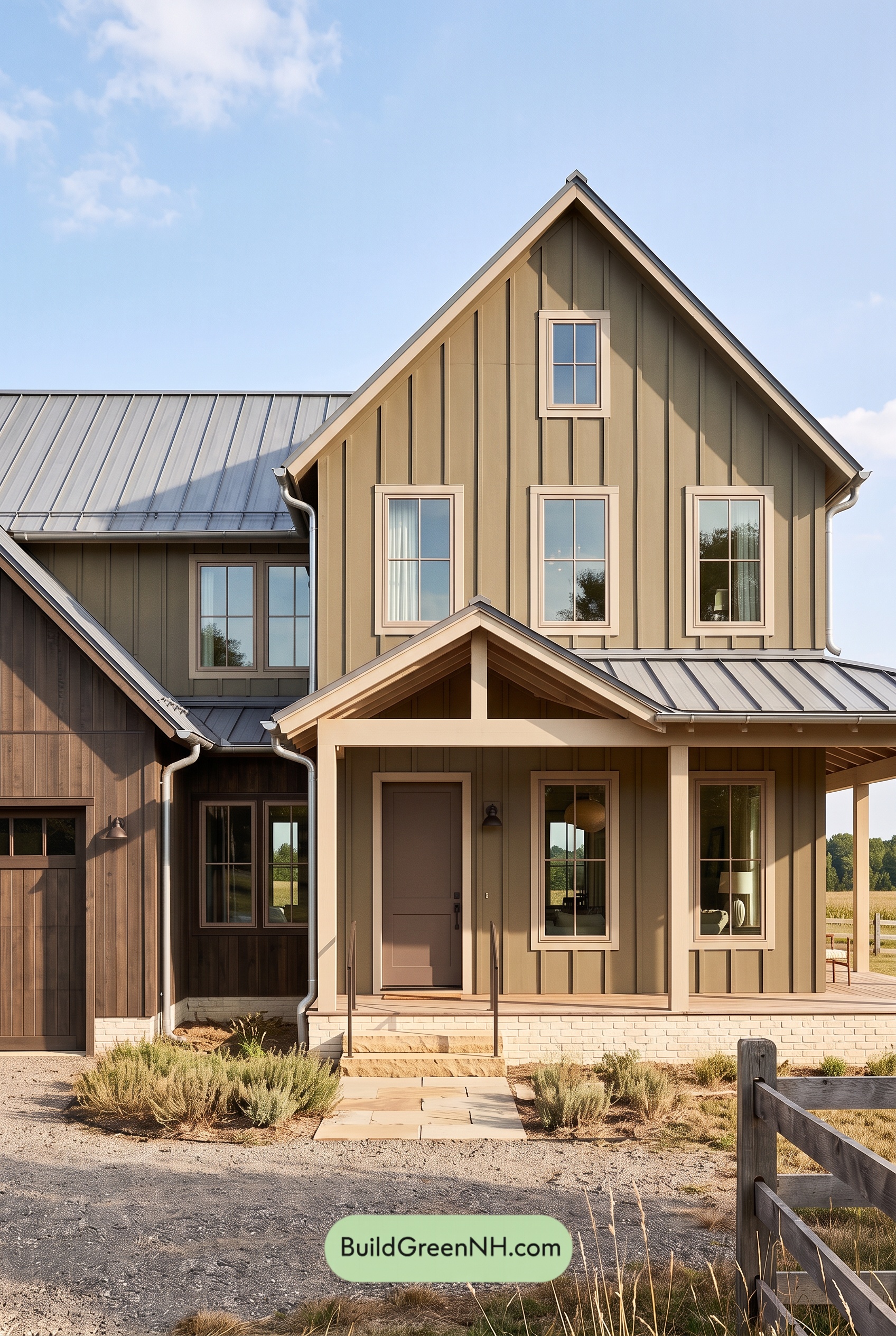 Earthy Green House Exterior Color Scheme: Green and Beige Sanctuary
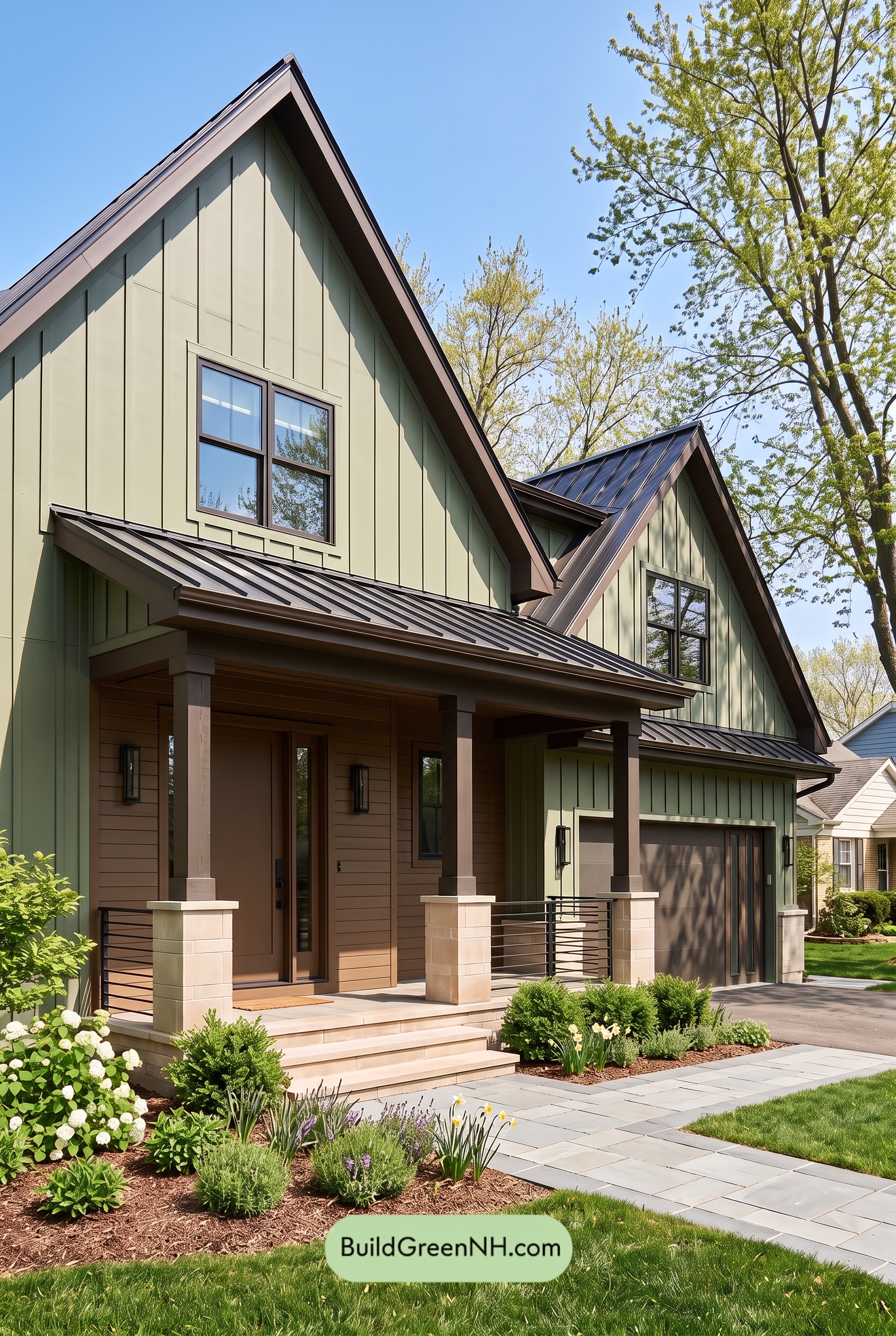 Earthy Green House Exterior Color Scheme: Green Velvet Assurance
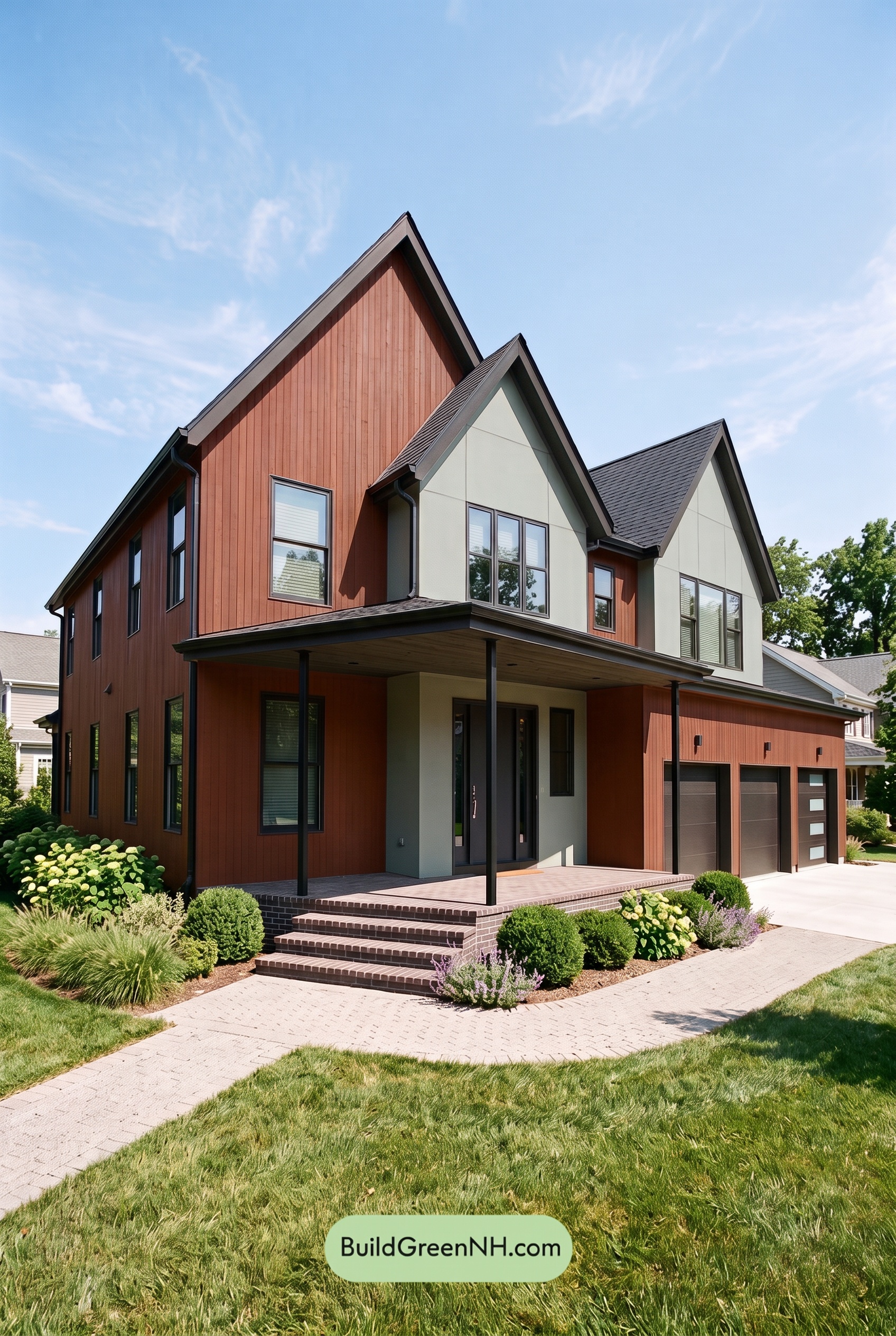 Earthy Green House Exterior Color Scheme: Brown Silken Calm
 Earthy Green House Exterior Color Scheme: Green Amber Contentment
Table of Contents