Last updated on
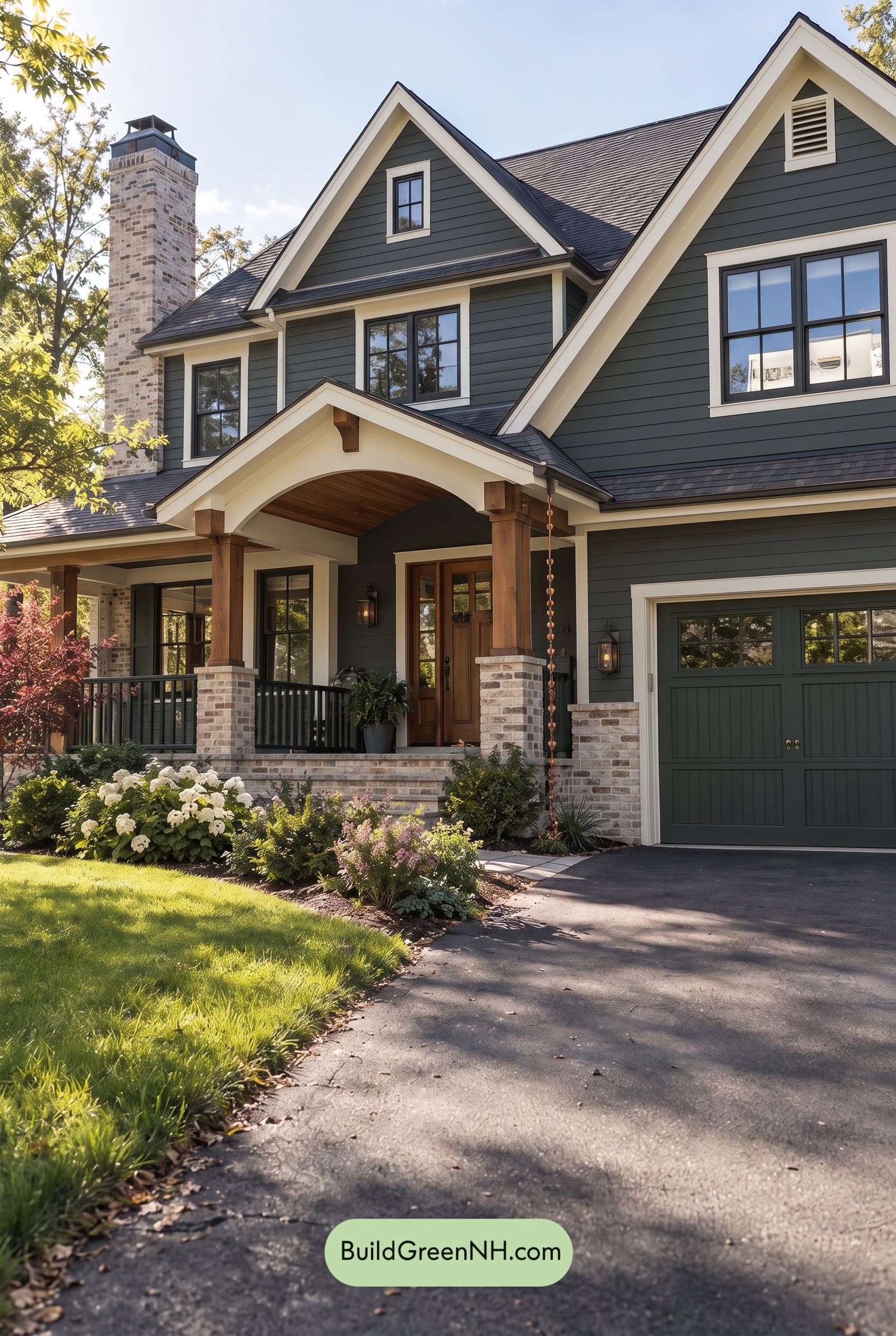

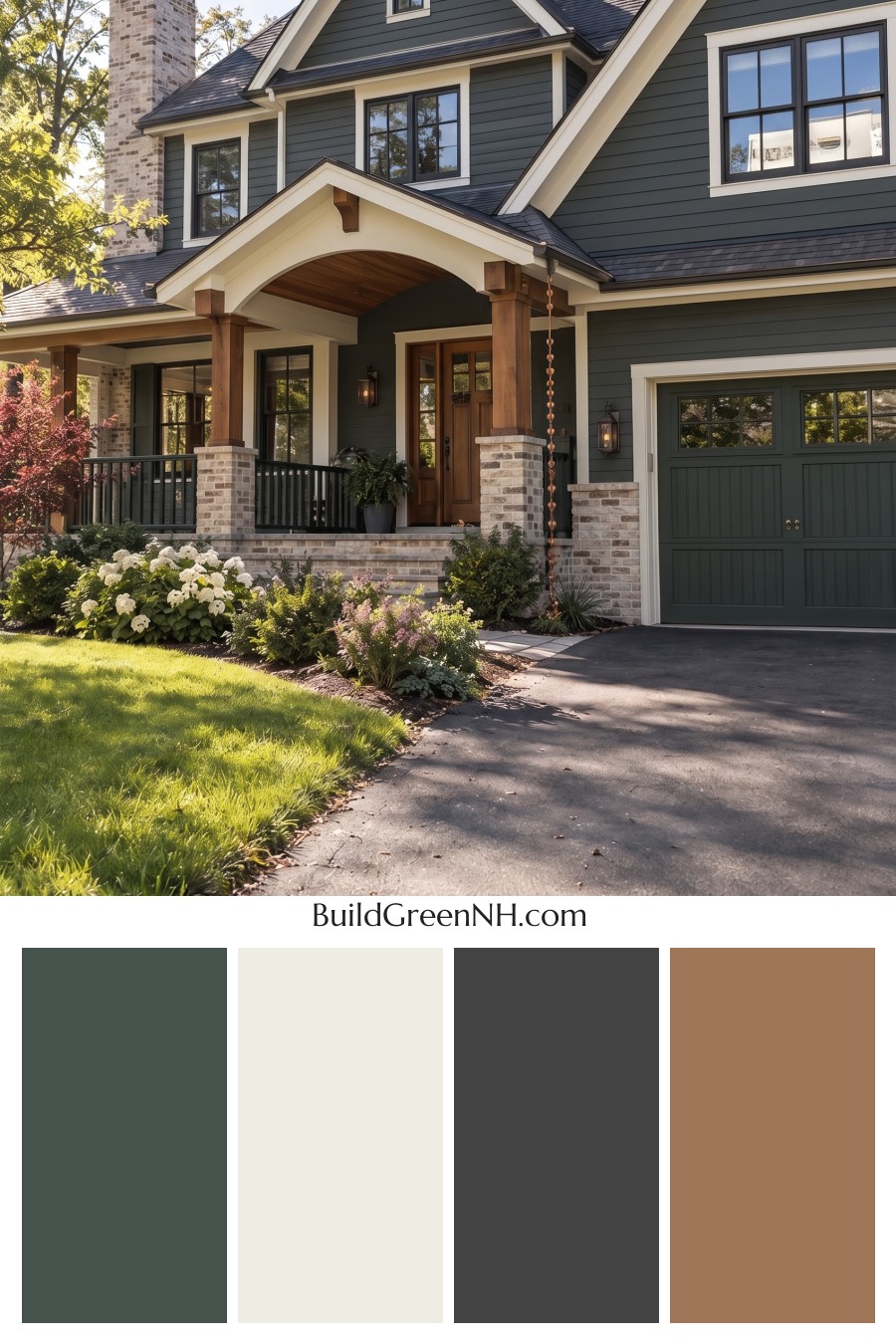
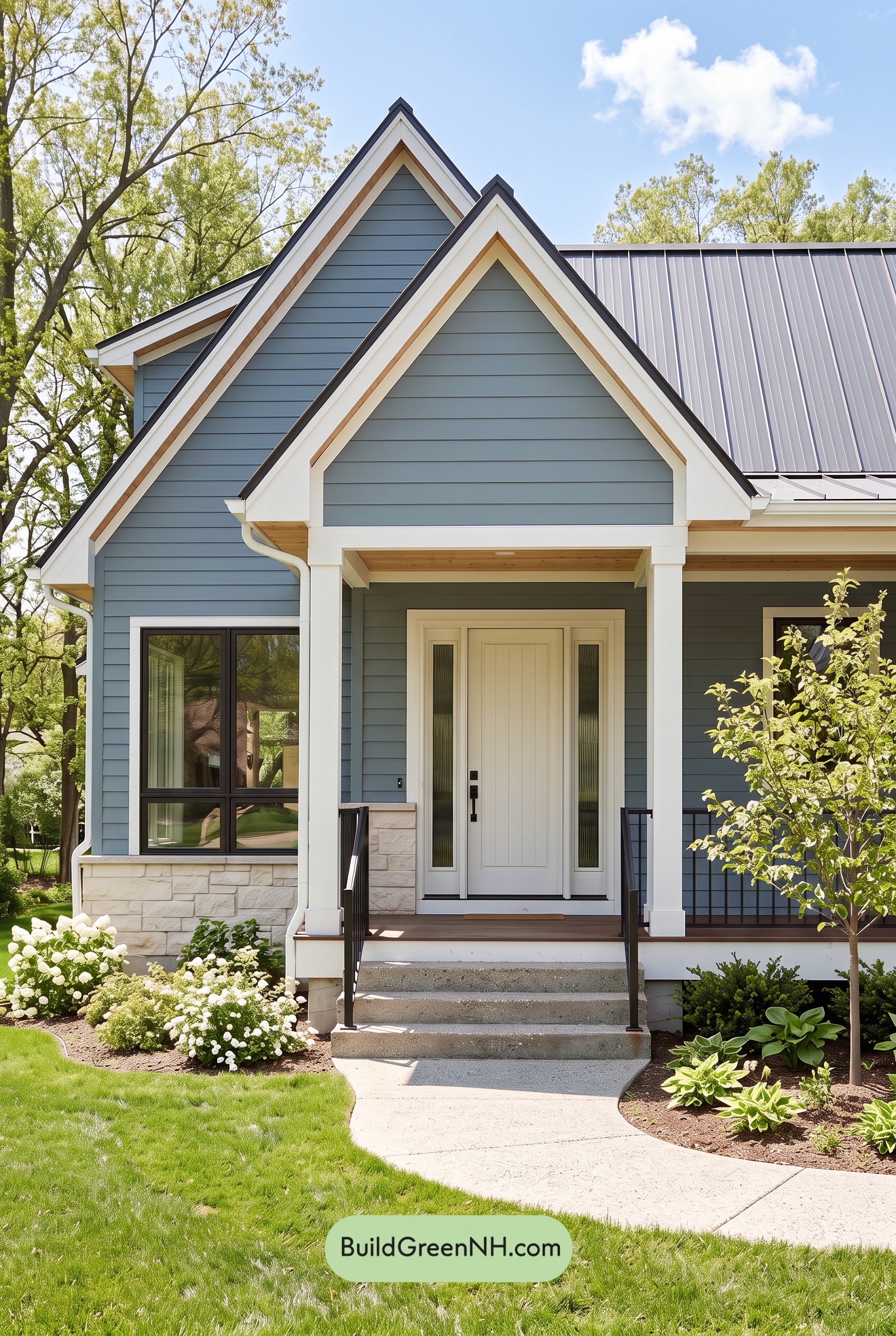
This exterior color scheme feels exceptional because its deep green, warm wood, and crisp light trim create a polished look that is both grounded and welcoming.
A Rich Green Foundation
The main siding wears a deep, muted green that gives the home an immediate sense of permanence. It is a substantial shade, yet its softened character keeps the tall gables and broad façade from feeling too heavy. The garage door repeats this green family, creating a cohesive visual flow across the exterior rather than letting the garage become a separate focal point.
Light Trim That Defines Every Detail
A warm off-white trim frames the rooflines, windows, and porch architecture with beautiful clarity. This light shade brightens the deep green siding and brings attention to the home’s graceful peaks, layered eaves, and welcoming entry. Its slightly creamy quality also helps it connect naturally with the pale beige, taupe, and soft gray variation in the masonry.
By using the light trim generously, the design gives each architectural detail room to shine. The contrast is clean and tailored without feeling stark.
Dark Accents for Structure and Sophistication
Deep charcoal-gray window frames, railings, and roof surfaces add a handsome sense of definition. These dark neutral accents sharpen the exterior’s lines, grounding the lighter trim and lending the house a refined, modern edge. Repeating this near-black gray family at the windows, porch railing, and roof creates an intentional rhythm from top to bottom.
Warm Wood at the Entry
The front door and porch columns introduce a medium-to-deep brown wood tone that makes the entry feel especially inviting. Against the cool, shadowed green siding, this warm brown accent feels rich and personal. It also draws the eye directly toward the front door, turning the covered porch into the heart of the home’s curb appeal.
The contrast between the earthy brown, muted green, and soft off-white is a particularly successful balance: cool shades provide calm, while warm shades bring comfort.
An Elegant, Nature-Inspired Mood
Overall, this palette feels timeless, confident, and closely connected to its landscaped setting. The deep green siding blends beautifully with surrounding foliage, while the warm neutral masonry and wood details add texture and softness. Crisp light trim keeps the composition elevated, and the charcoal-gray accents give it just enough drama.
It is a thoughtful exterior scheme that proves a home can be richly layered without becoming busy—classic in its contrast, warm at the entry, and wonderfully composed from every angle.
Next, see how this color scheme looks under different lighting simulations throughout the day.
Overcast
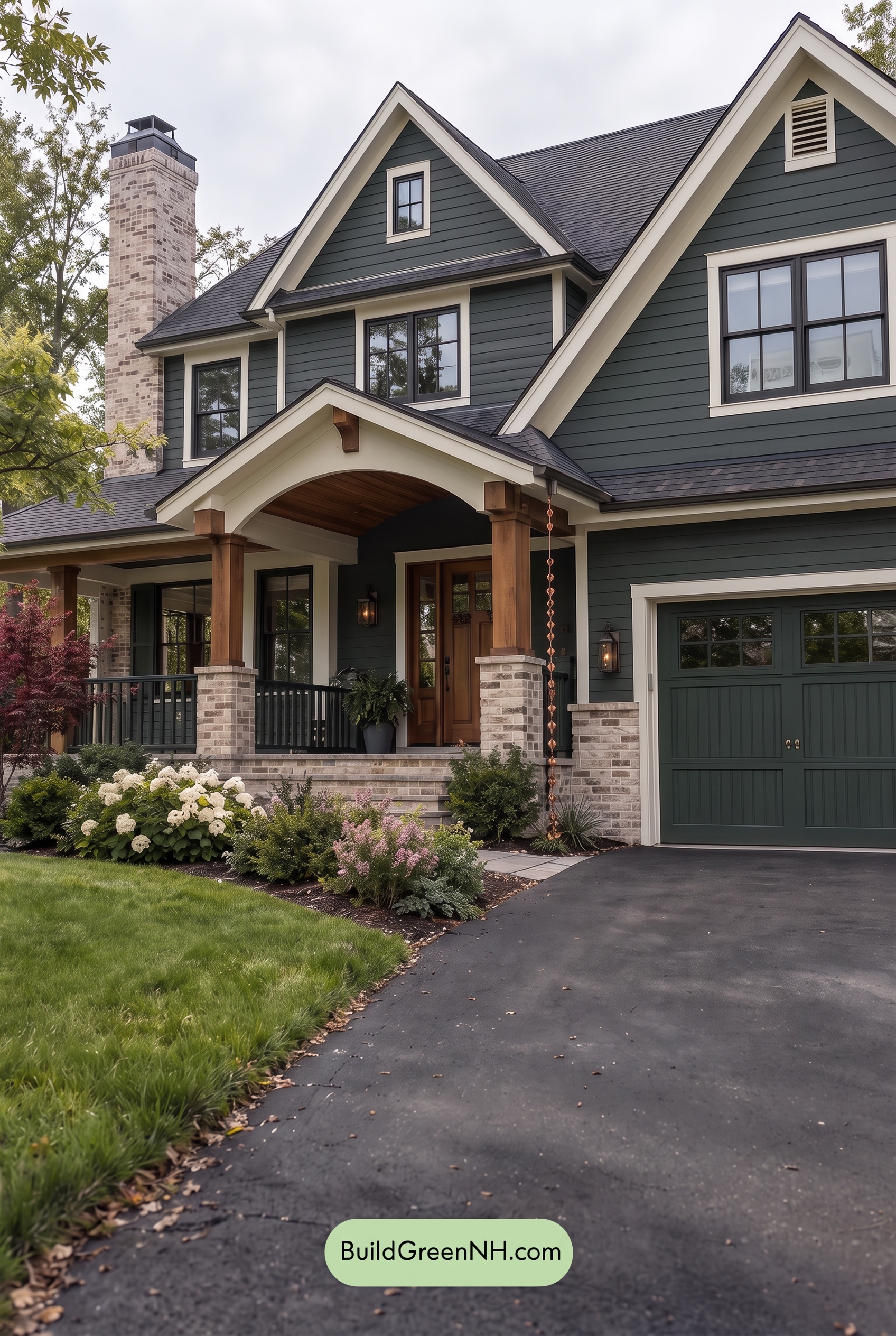
Under overcast skies, the deep green siding and matching green garage door appear slightly softer and less saturated than they do in neutral daylight, with a cooler, more even cast across the façade. Without sharp sunbeams, the white trim reads gentler rather than brilliant, while the gray window frames and railings settle into the architecture with a quieter contrast.
The brown door and columns retain their welcoming warmth, though their golden undertones become more subdued against the cloud-filtered light. Shadows beneath the porch, rooflines, and gables are broader but less dramatic, creating a calm, refined mood that lets the layered green, warm brown, gray, and white palette feel especially cohesive.
Golden Hour
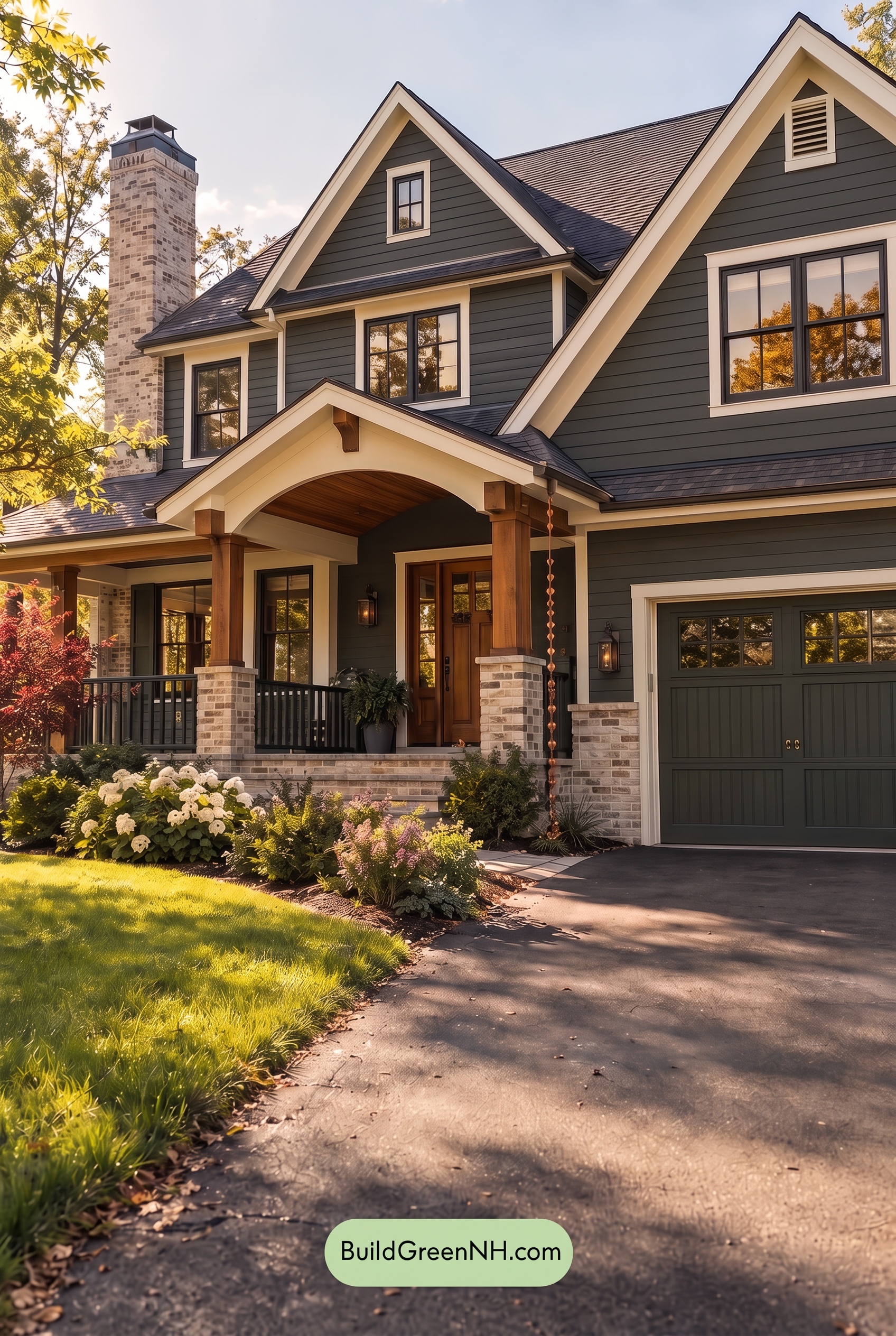
Golden Hour gives the exterior a welcoming, softly dramatic glow. Compared with neutral daylight, the deep green siding takes on a warmer, slightly richer cast, while the green garage door settles into the shadows with added depth. The white trim shifts from crisp and bright to a creamy, sun-kissed neutral, creating a gentler contrast along the rooflines and windows.
The brown door and columns become more saturated and inviting in the low amber light, while the gray window frames and railings appear darker and more defined. Long, layered shadows emphasize the architecture and sharpen the light-to-dark contrast, giving the whole facade a relaxed, warm, evening mood.
Shade
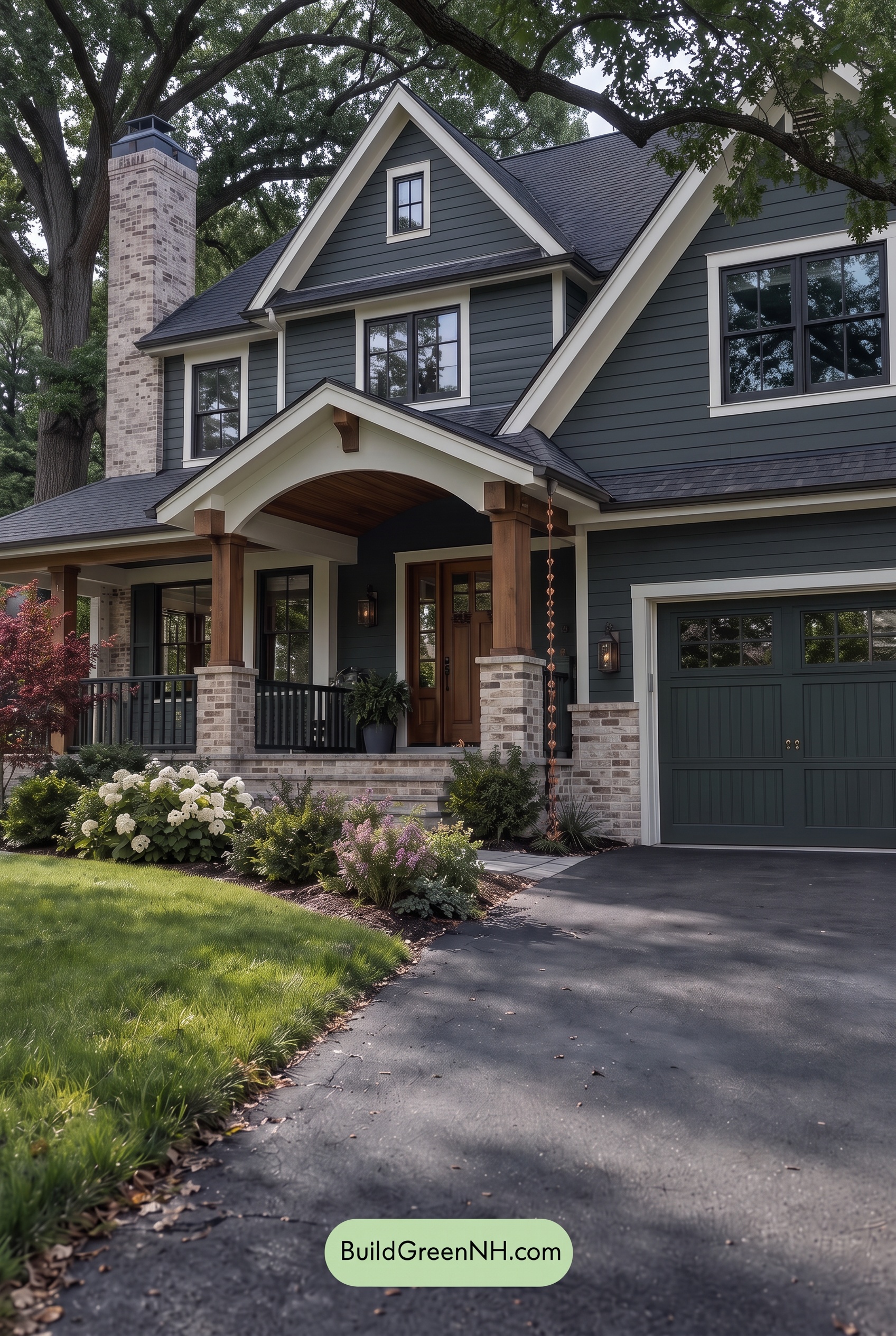
In shade, the deep green siding reads cooler and more subdued than it does in neutral daylight, with its saturation settling into a refined, almost charcoal-leaning green. The green garage door follows suit, while the dark gray window frames and railings recede into the layered shadows, giving the façade a quieter, more tailored contrast.
The soft white trim takes on a gentler, slightly warmer cast beneath the tree cover, outlining the rooflines without appearing stark. Meanwhile, the brown door and columns retain their warmth and become especially inviting against the cooler greens and grays. This shift creates a calm, sheltered mood, with deeper shadows adding dimension to the porch and architectural details.
Nighttime
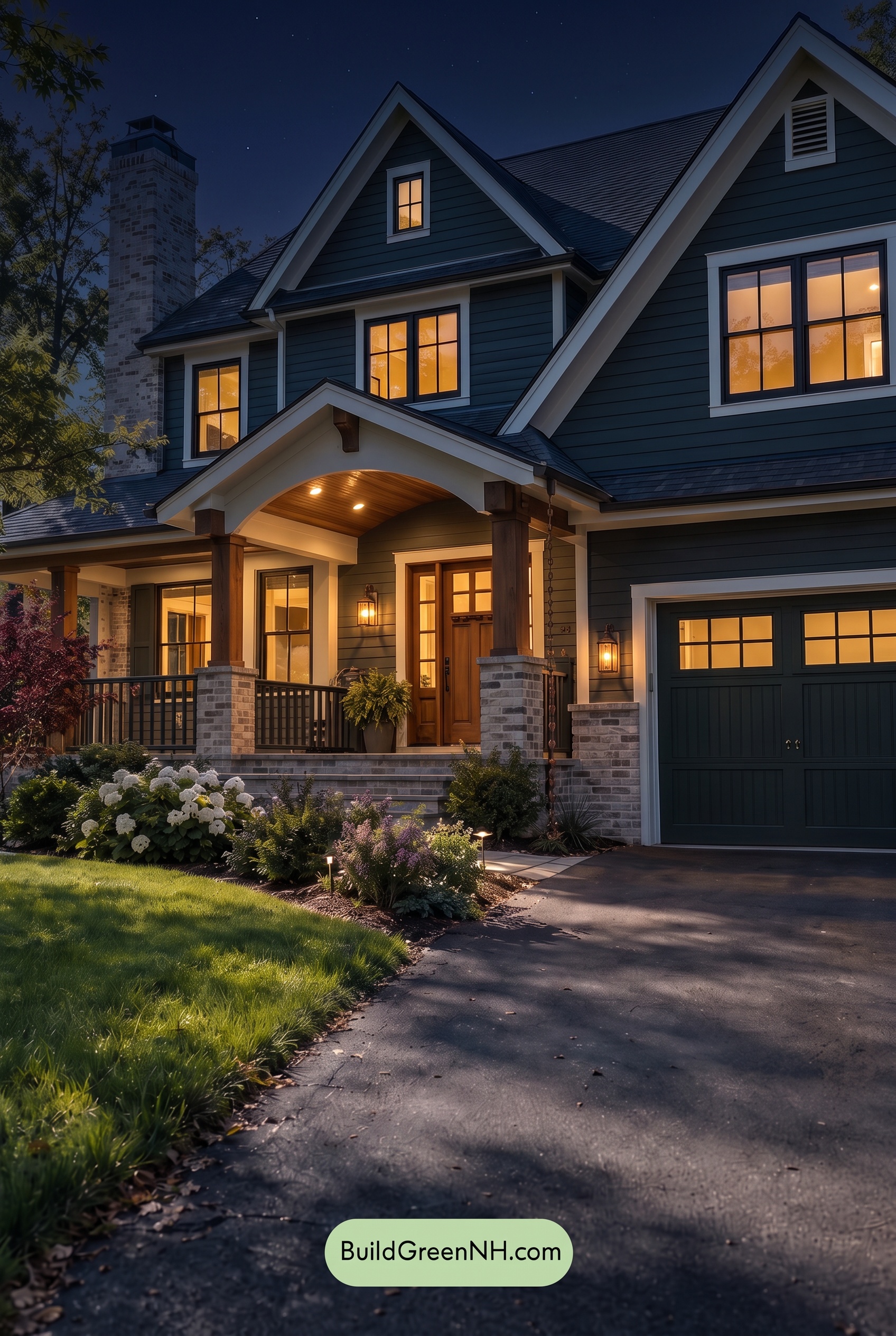
At night, the green siding deepens into a richer, more shadowed shade, with less daylight saturation and a cooler, more dramatic presence. The white trim reads softer and more subdued in the blue-toned darkness, yet it still crisply traces the rooflines and windows for stronger architectural contrast.
Warm lighting around the entry brings the brown door and columns forward, enhancing their inviting warmth against the cooler green and gray elements. Deep shadows simplify the details between lit areas, while the glow from the windows adds a welcoming, layered mood that neutral daylight cannot create.
Pin these for later:
Want More?
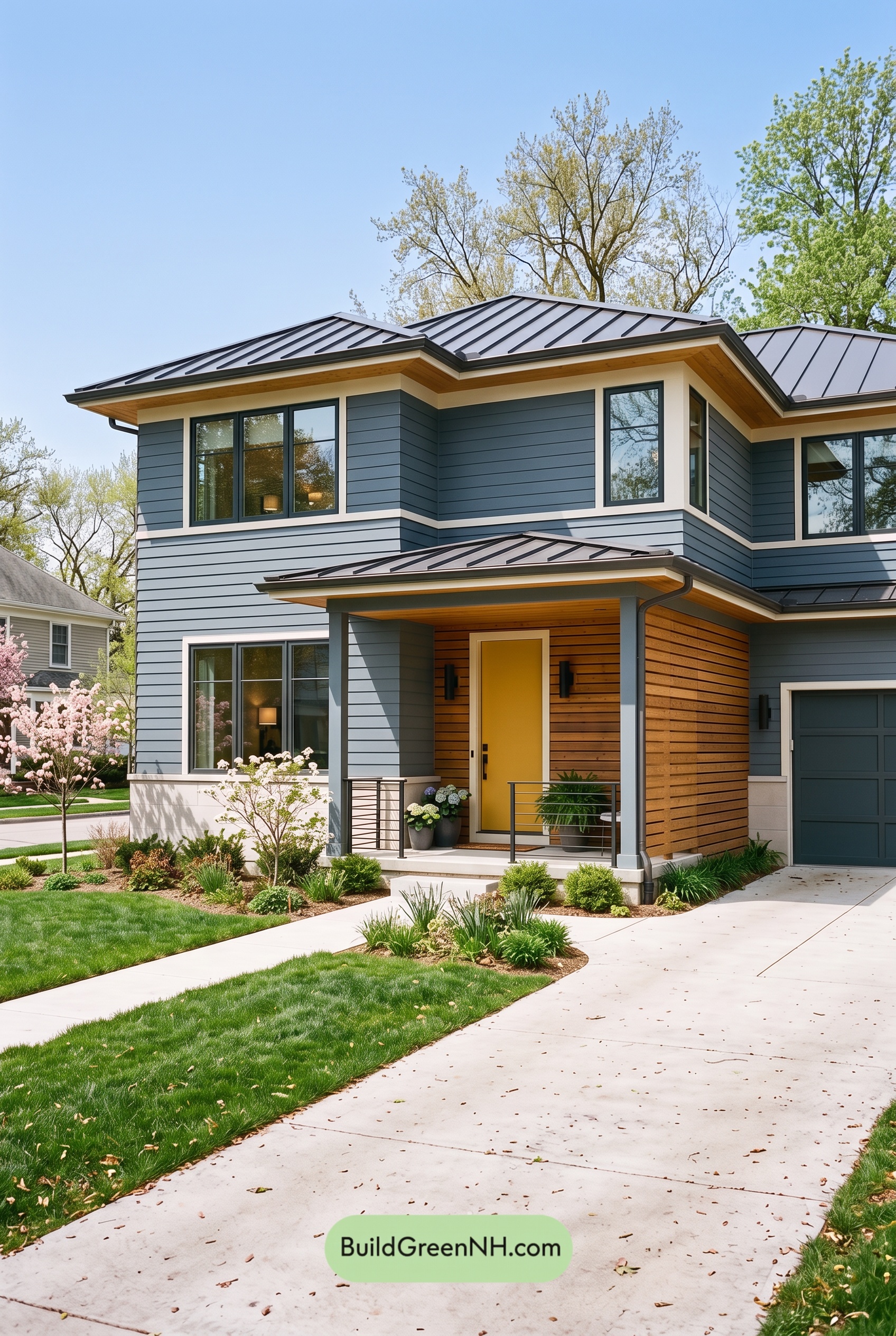 Blue House Front Door Color Scheme: Harbor Saffron
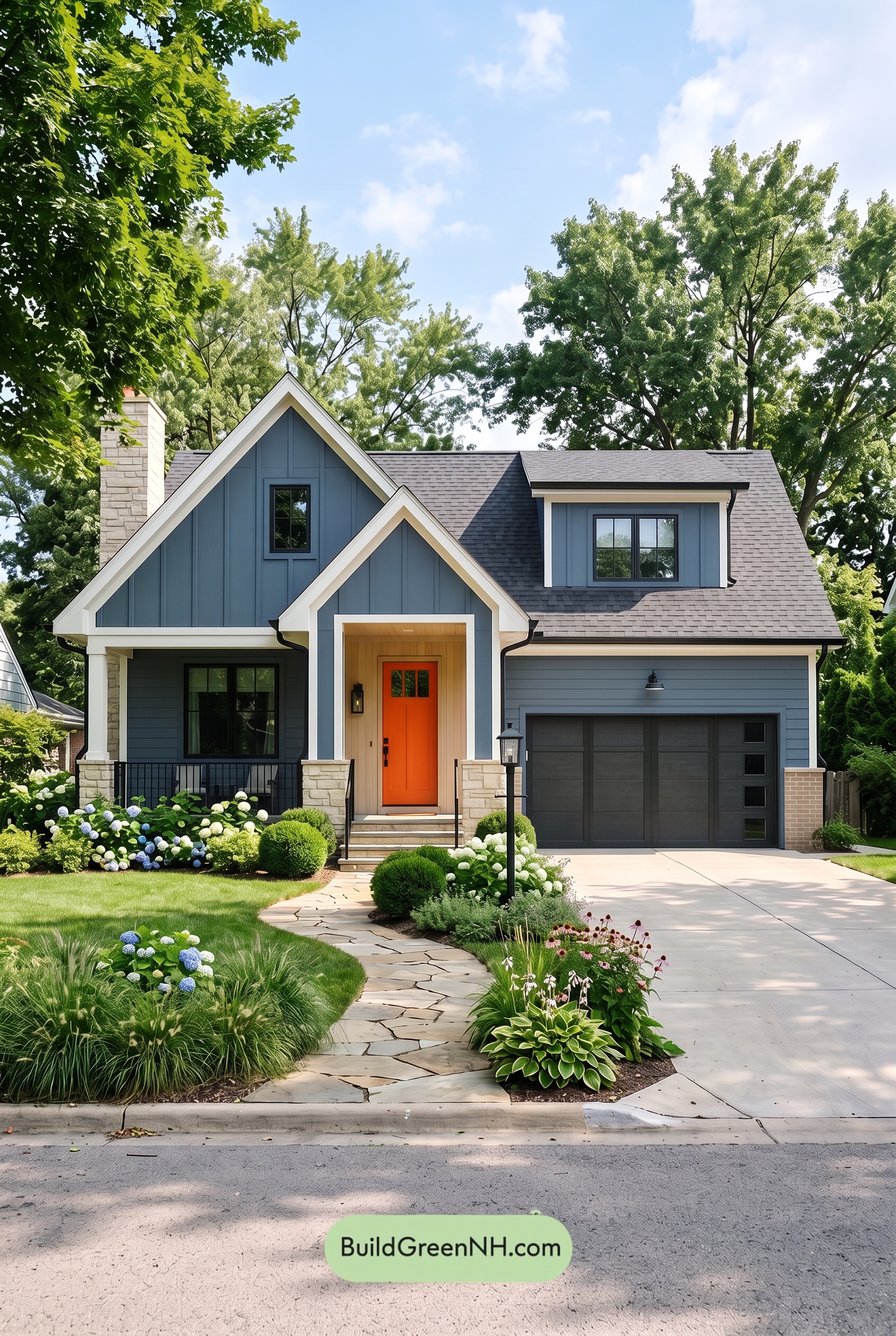 Blue House Front Door Color Scheme: Cobalt Persimmon
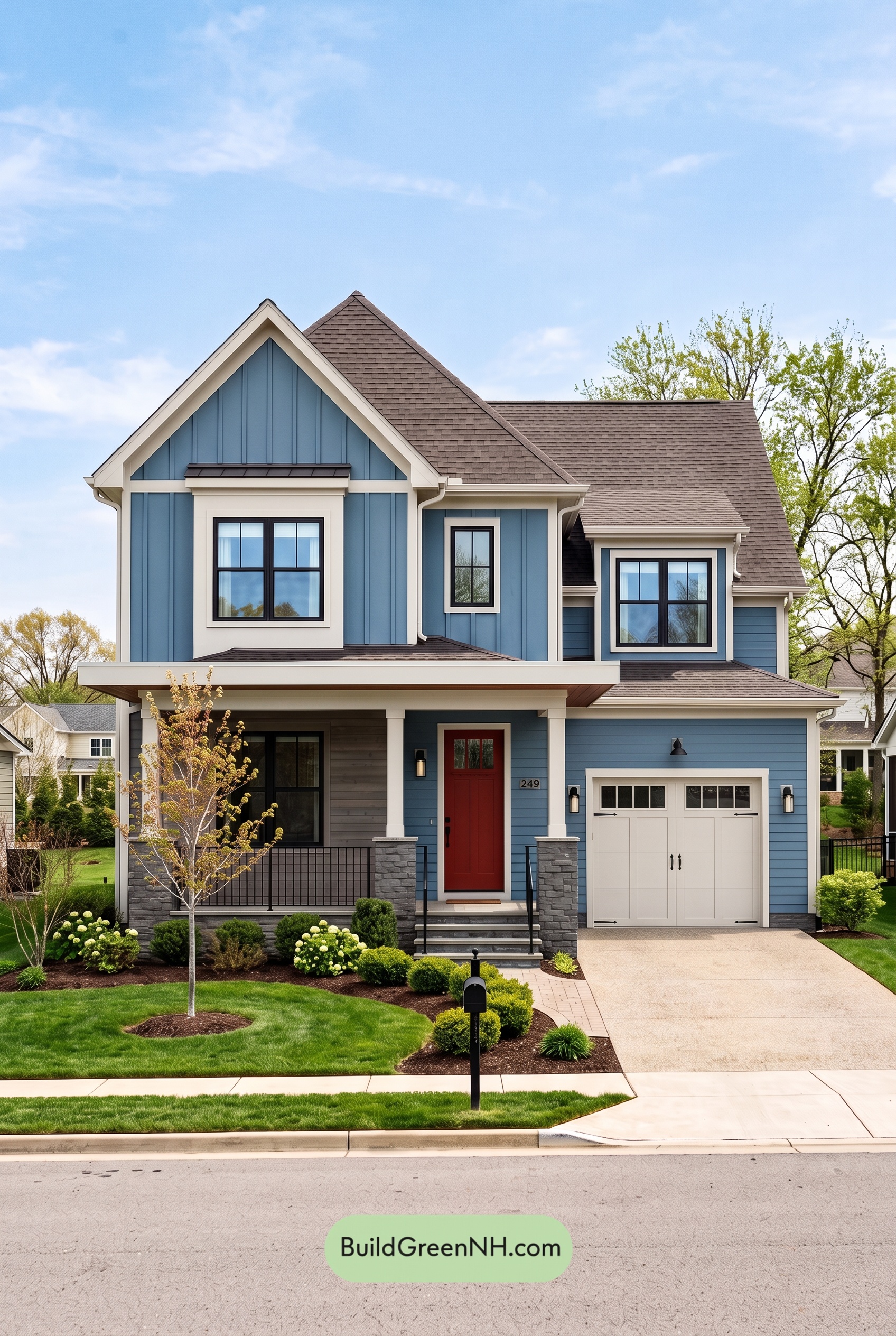 Blue House Front Door Color Scheme: Denim Poppy
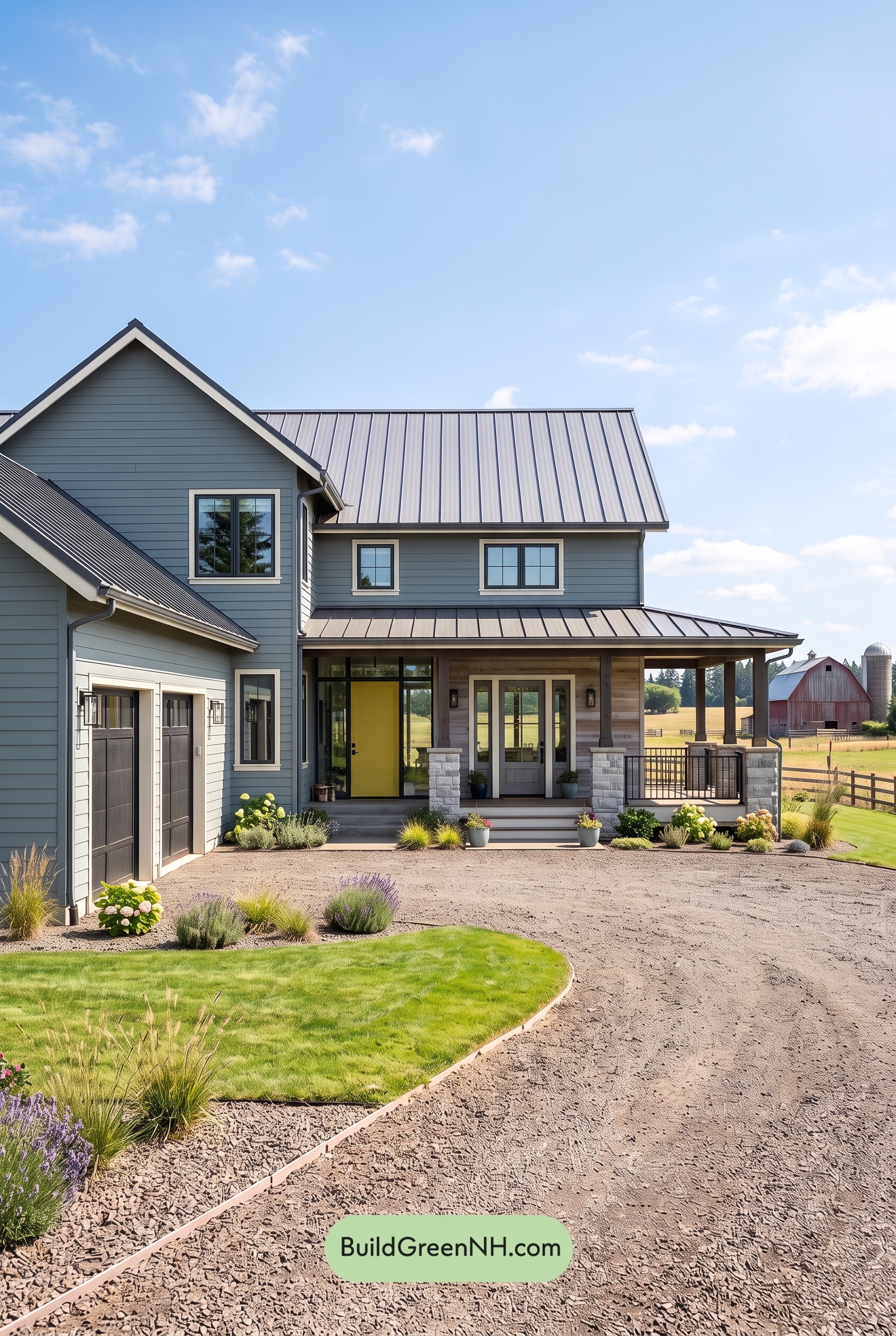 Blue House Front Door Color Scheme: Slate Citron
 Blue House Front Door Color Scheme: Mist Blue Haven
Table of Contents