Last updated on
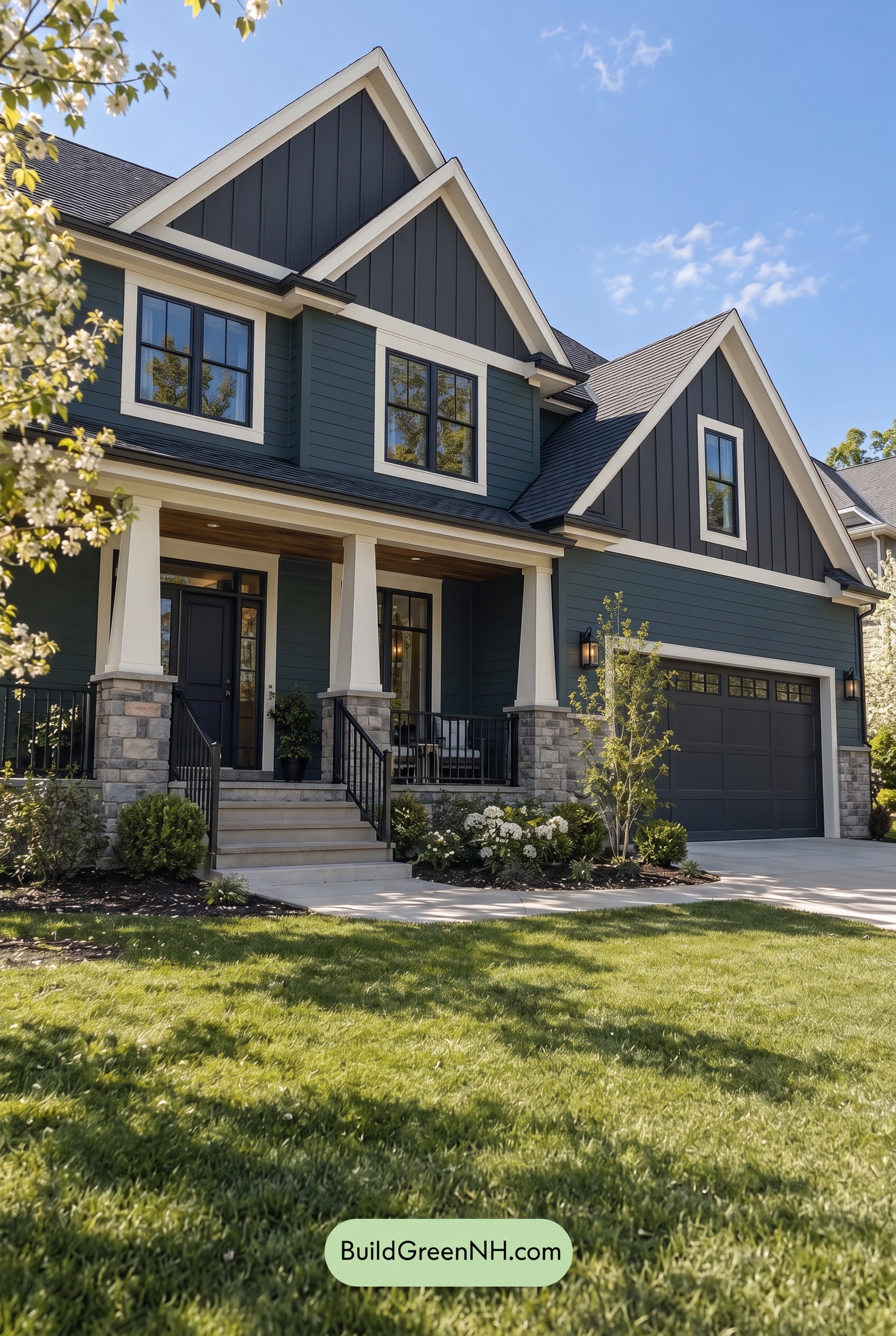

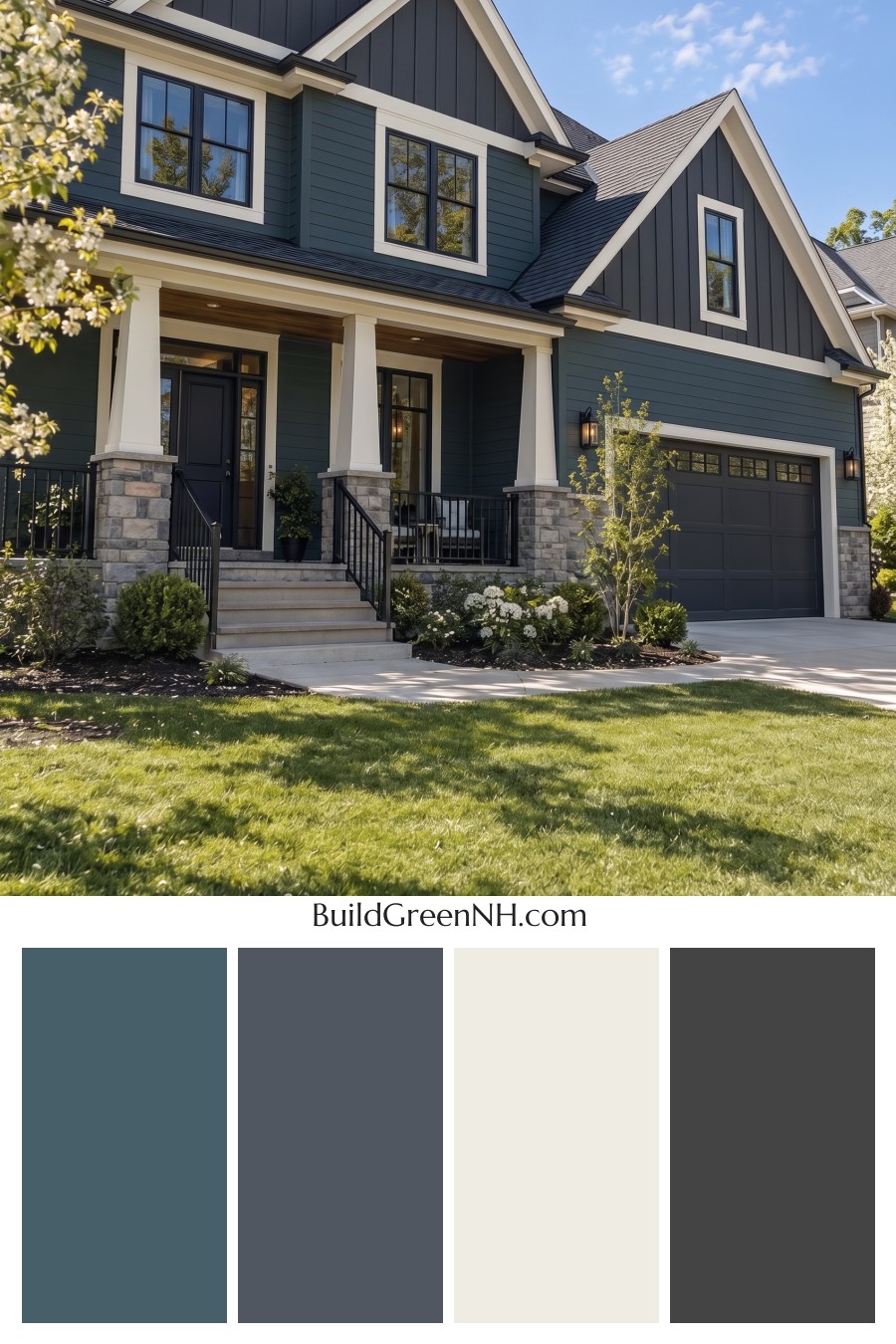
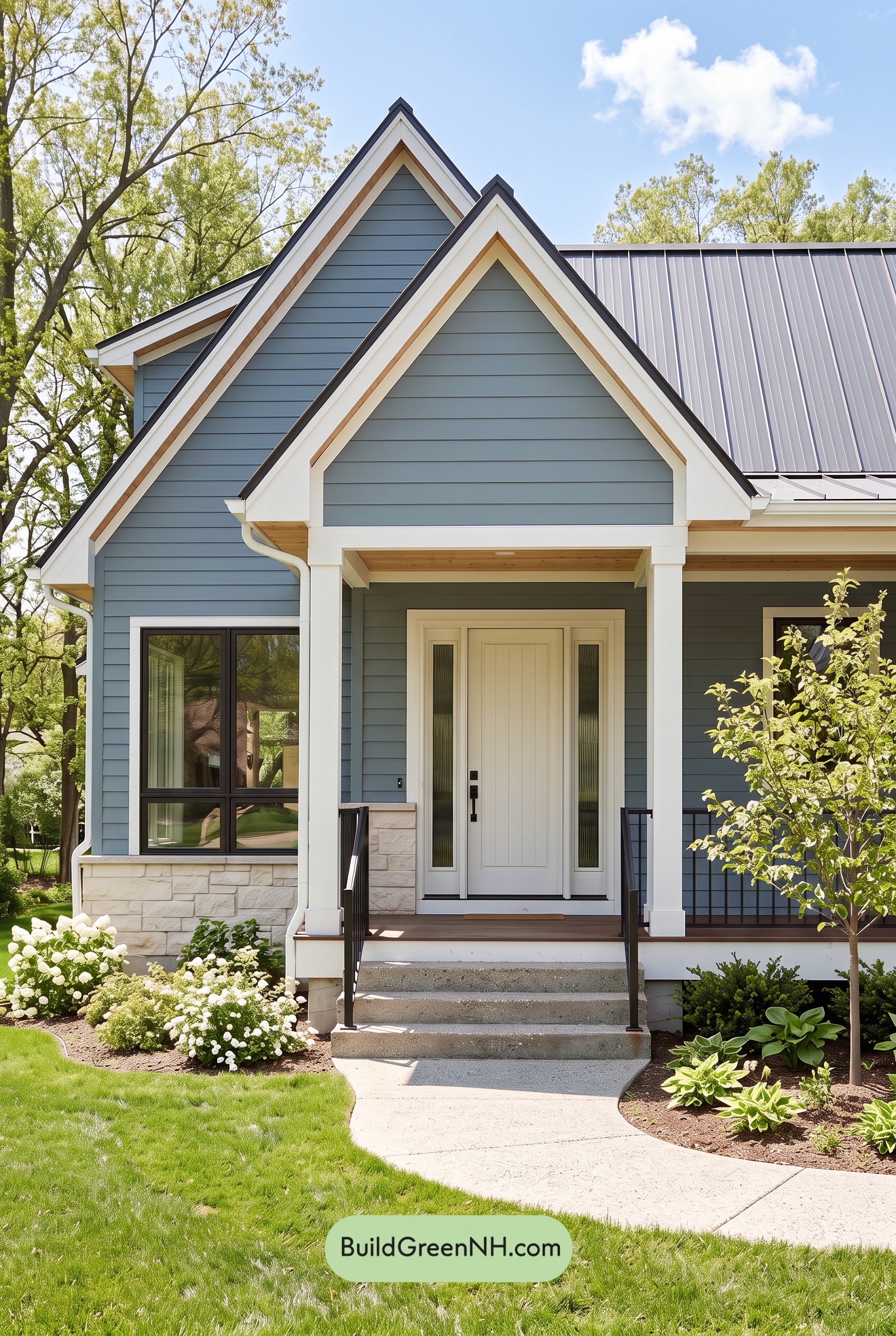
This rich blue-and-gray exterior scheme feels timeless yet bold, giving the home polished contrast and undeniable curb appeal.
A Strong Foundation of Blue
The main siding is finished in a deep, muted blue shade that gives the home its confident character. Its cool undertone feels refined rather than flashy, while the horizontal siding adds a sense of width and texture across the façade. This substantial blue base is especially effective on a large home, grounding the architecture without making it feel heavy.
Dark Gray Gables Create Drama
The upper gables shift to a near-charcoal gray, introducing a dramatic contrast at the roofline. Vertical paneling in this darker shade draws attention to the steep peaks and gives each gable a crisp, tailored look. By placing the deepest shade high on the home, the design highlights its height and layered roof structure in a striking way.
The dark gray roof continues this moody accent family, creating a smooth transition between the gables and the rest of the exterior. Rather than competing with the siding, it frames the home in a clean, cohesive silhouette.
Bright Trim Defines Every Detail
Warm white trim is the bright balancing element throughout the design. It outlines the gables, windows, fascia, and garage opening with sharp definition, making the dark blue and charcoal-gray surfaces feel even more intentional. The contrast is clear and classic, but the slightly softened white keeps the overall look welcoming.
The same light shade carries through the porch columns, where it brings an airy, inviting quality to the entry. Against the deeper siding, these columns feel architectural and substantial rather than merely decorative.
Coordinated Gray Accents
Dark gray window frames, the front door, garage door, and railings pull the scheme together with a consistent accent shade. These elements echo the upper gables and roof while adding depth at eye level. The front door, in particular, creates a composed entry that feels elegant and grounded beneath the light porch surround.
The gray garage door blends neatly into the design instead of becoming an overly prominent feature. Its darker value connects visually with the railings and window frames, keeping the front elevation balanced from one side to the other.
A Modern, Welcoming Mood
This palette achieves a beautiful balance between cool sophistication and everyday warmth. The blue siding brings calm, the charcoal-gray accents provide modern drama, and the light trim adds fresh contrast. Gray-toned stone at the porch bases reinforces the palette with natural texture, making the transition from landscaping to architecture feel especially seamless.
The result is a home that looks equally compelling in bright daylight and softer evening light: polished, inviting, and confidently classic with a contemporary edge.
Next, see how this color scheme looks under different lighting simulations throughout the day.
Overcast
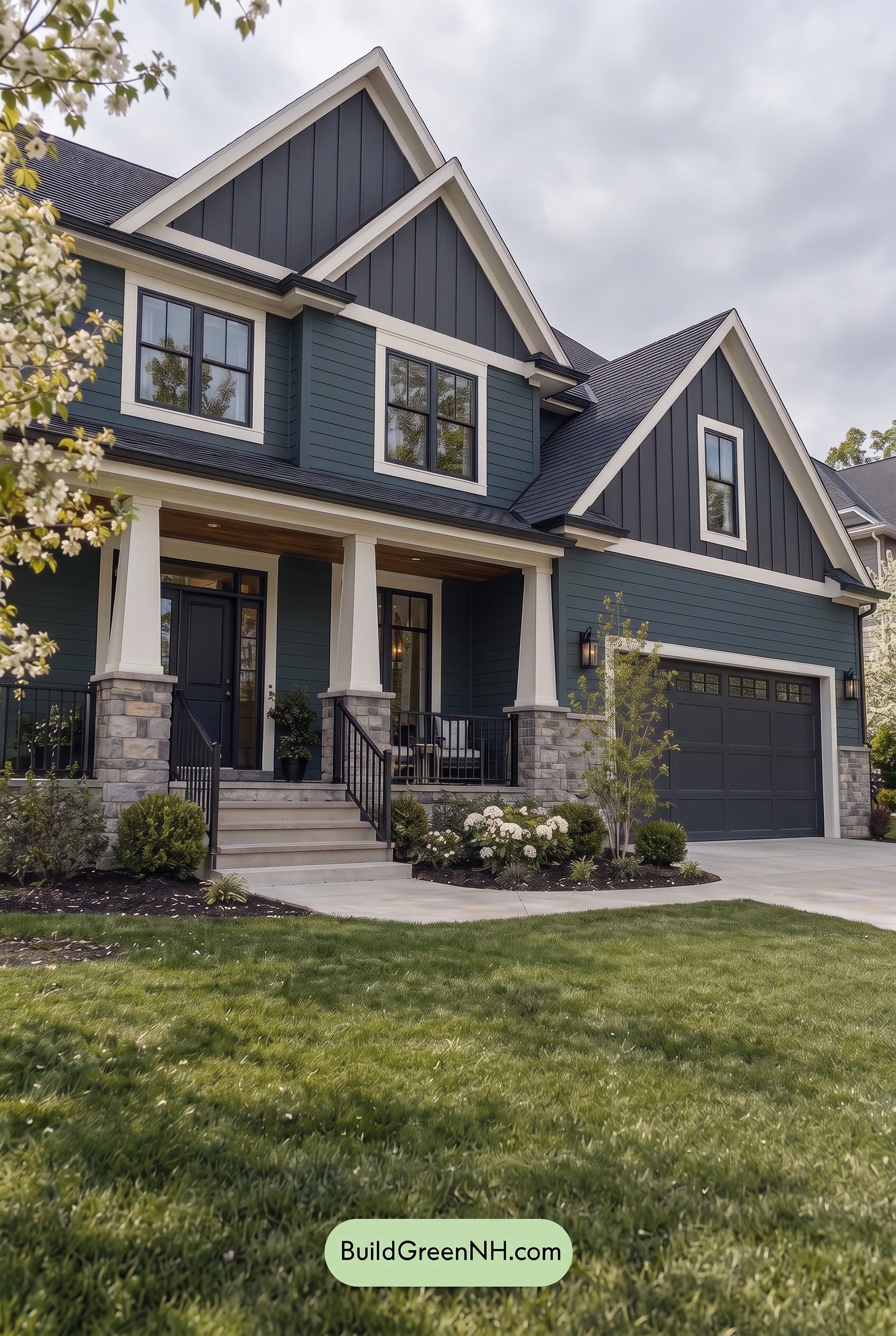
Under overcast skies, the blue siding reads deeper and more subdued than it does in neutral daylight, with its saturation appearing calmer and its cooler character more pronounced. The gray upper sections, window frames, door, and garage door take on a softer, more unified look, while the white trim and columns lose some of their sunlit brightness and feel gentler against the darker shades.
With direct sunlight removed, sharp shadows give way to even, diffuse shading that lets the siding texture and layered rooflines stand out without harsh contrast. The overall palette feels quieter and more refined—less crisp and energetic than in neutral daylight, but richer in depth and comfortably moody.
Golden Hour
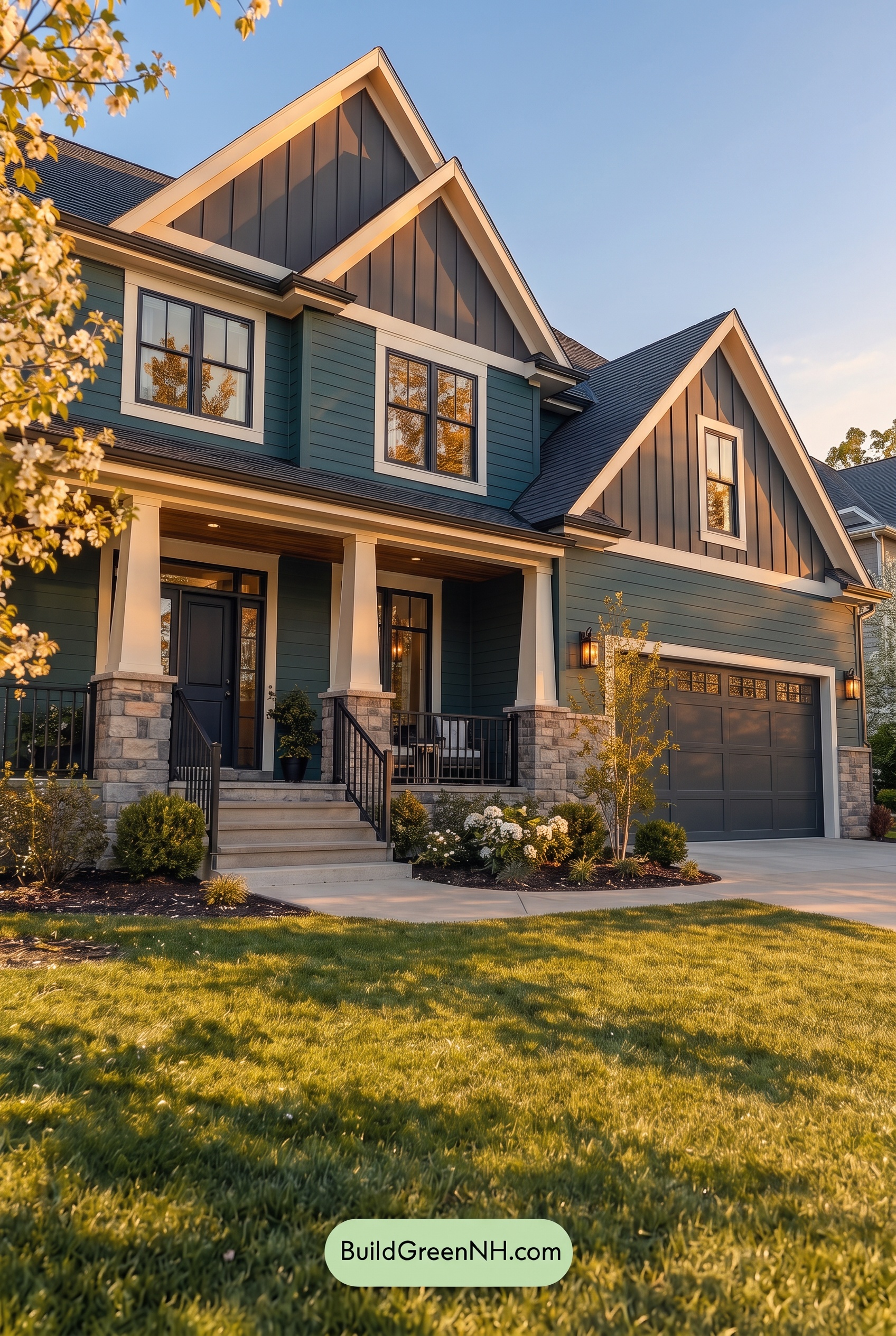
Under Golden Hour, the blue siding takes on a deeper, more softened character, with its coolness balanced by the low amber light. Compared with neutral daylight, the gray upper walls and dark accents appear warmer and richer, while the pale trim and columns shift from crisp bright white toward a gentle, creamy glow.
Longer shadows sharpen the home’s architectural layers, giving the gables, window frames, and railings stronger contrast against the sunlit surfaces. This blend of glowing warm highlights and receding blue-gray shade creates a welcoming, polished mood that feels more intimate than the clean, even look of midday.
Shade
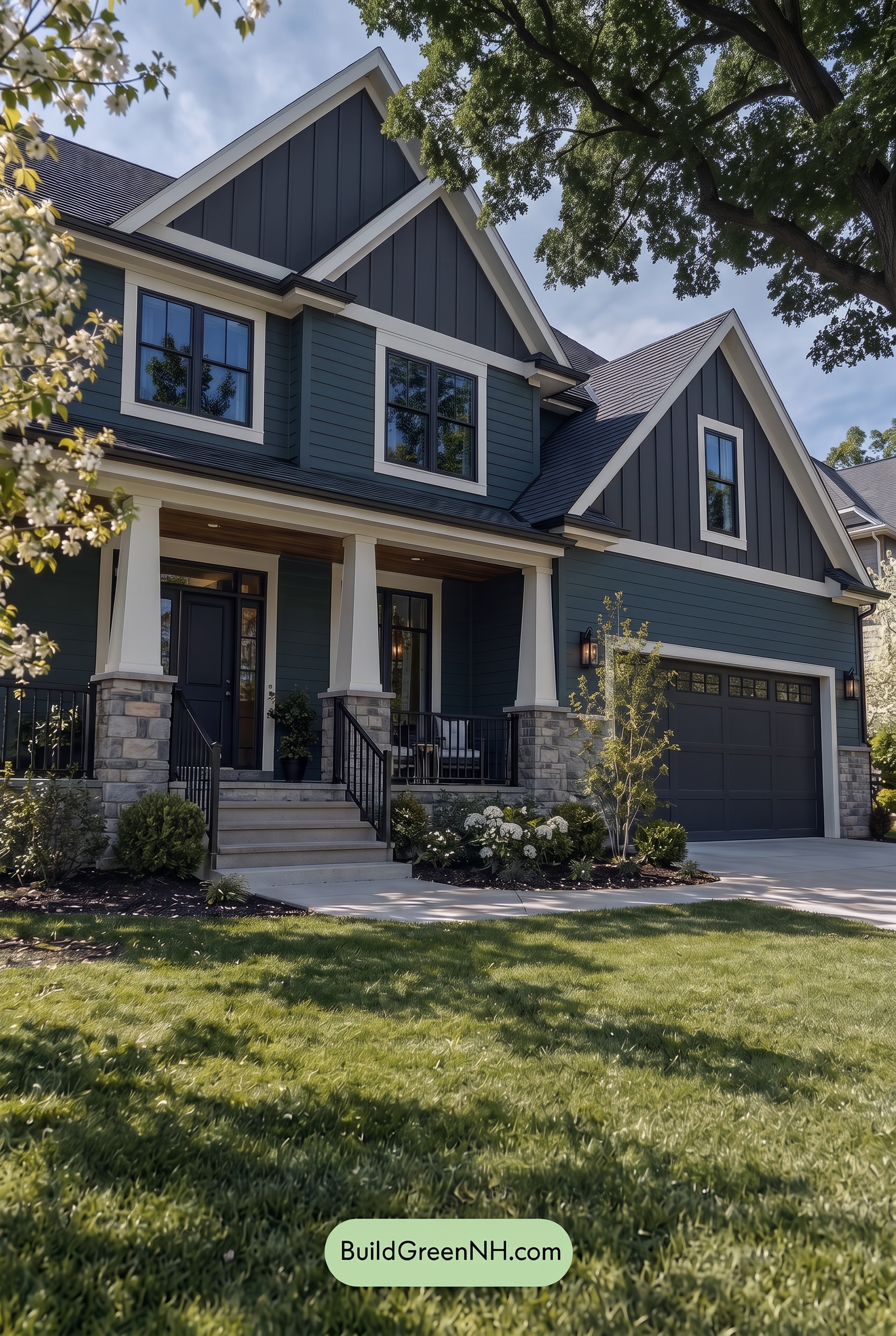
In shade, the blue siding takes on a deeper, more muted character than it shows in neutral daylight, with its saturation feeling more restrained and its cooler undertones more pronounced. The gray upper walls, window frames, and doors also settle into richer charcoal-like shades, allowing the layered siding and vertical details to read with added depth.
The white trim and columns lose a little brightness under the tree canopy, appearing softer and less crisp than they do in open daylight. That gentler contrast, paired with the stronger shadows around the porch and rooflines, gives the exterior a calm, tailored mood—dramatic enough to emphasize the architecture without making the palette feel stark.
Nighttime
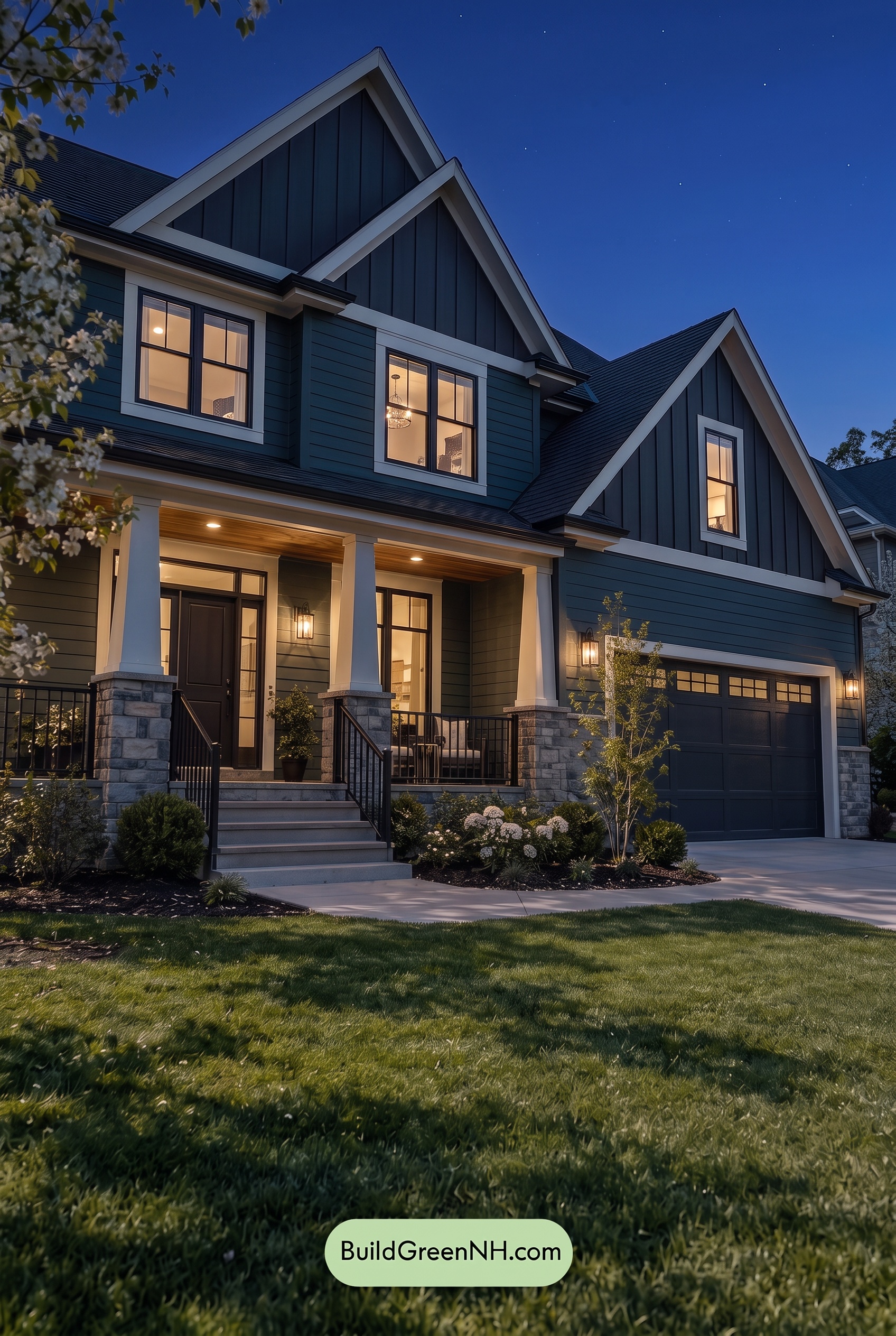
At night, the blue siding deepens into a more dramatic, less saturated shade, while the gray upper walls, doors, and railings settle into rich shadow. Compared with neutral daylight, the cooler exterior tones appear more unified and moody, with recessed details and rooflines gaining depth as contrast concentrates along the gables and window frames.
Warm lighting from the windows and porch softens the crisp white trim and columns, giving them a gentler, creamier presence against the darkened facade. This glow sharpens the light-dark contrast at the entry while creating an inviting balance between the cool blue-gray exterior and the warm, welcoming illumination.
Pin these for later:
Want More?
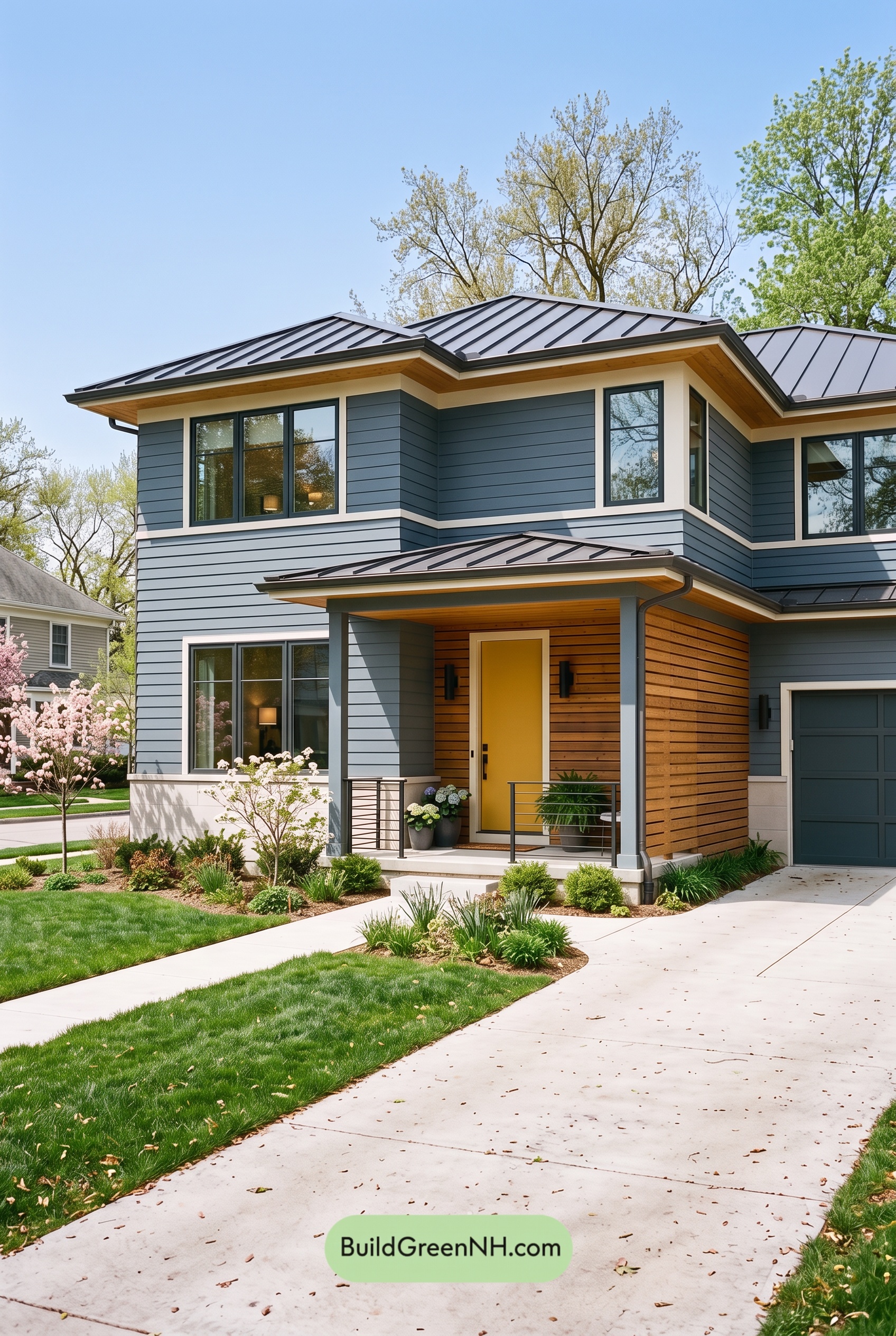 Blue House Front Door Color Scheme: Harbor Saffron
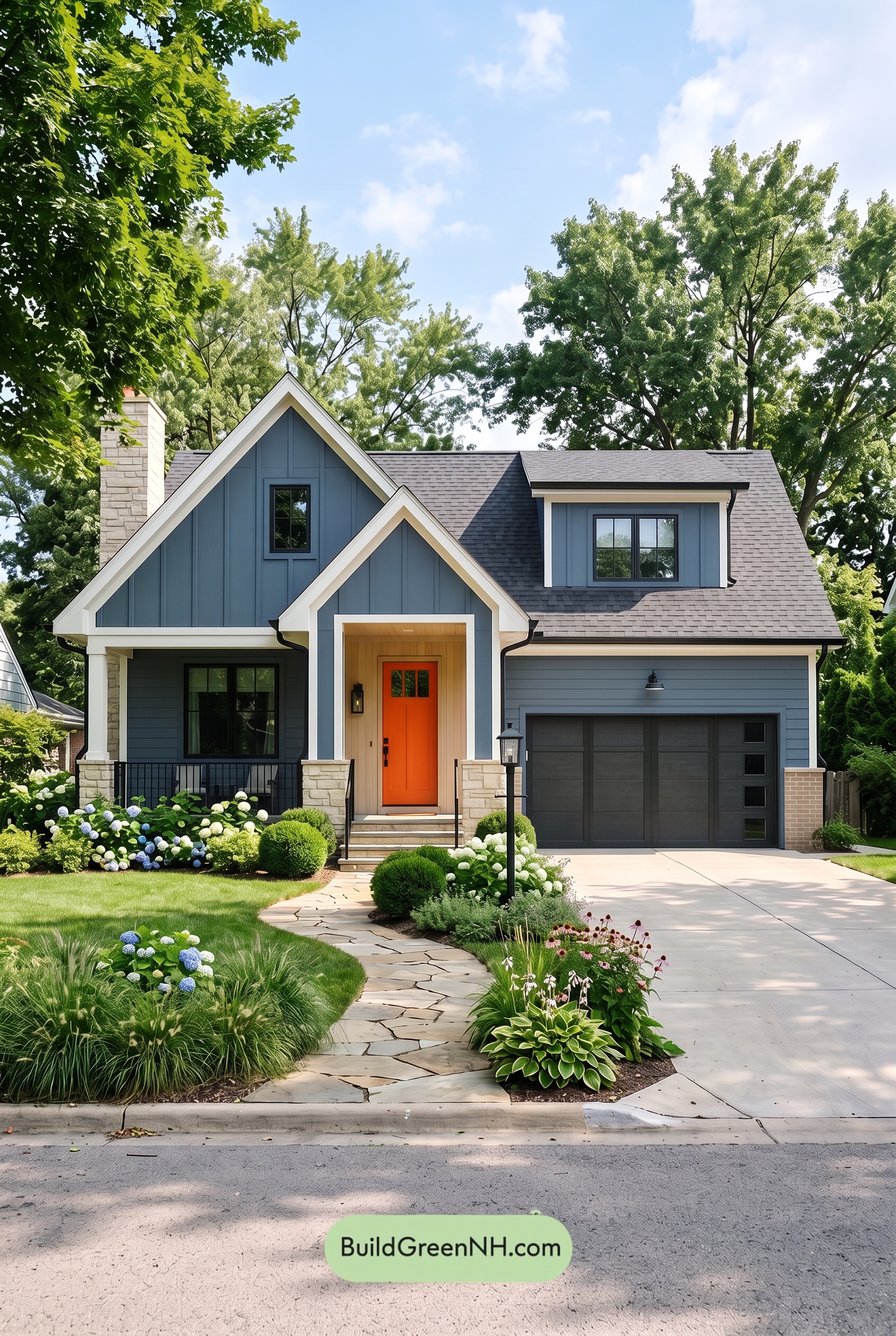 Blue House Front Door Color Scheme: Cobalt Persimmon
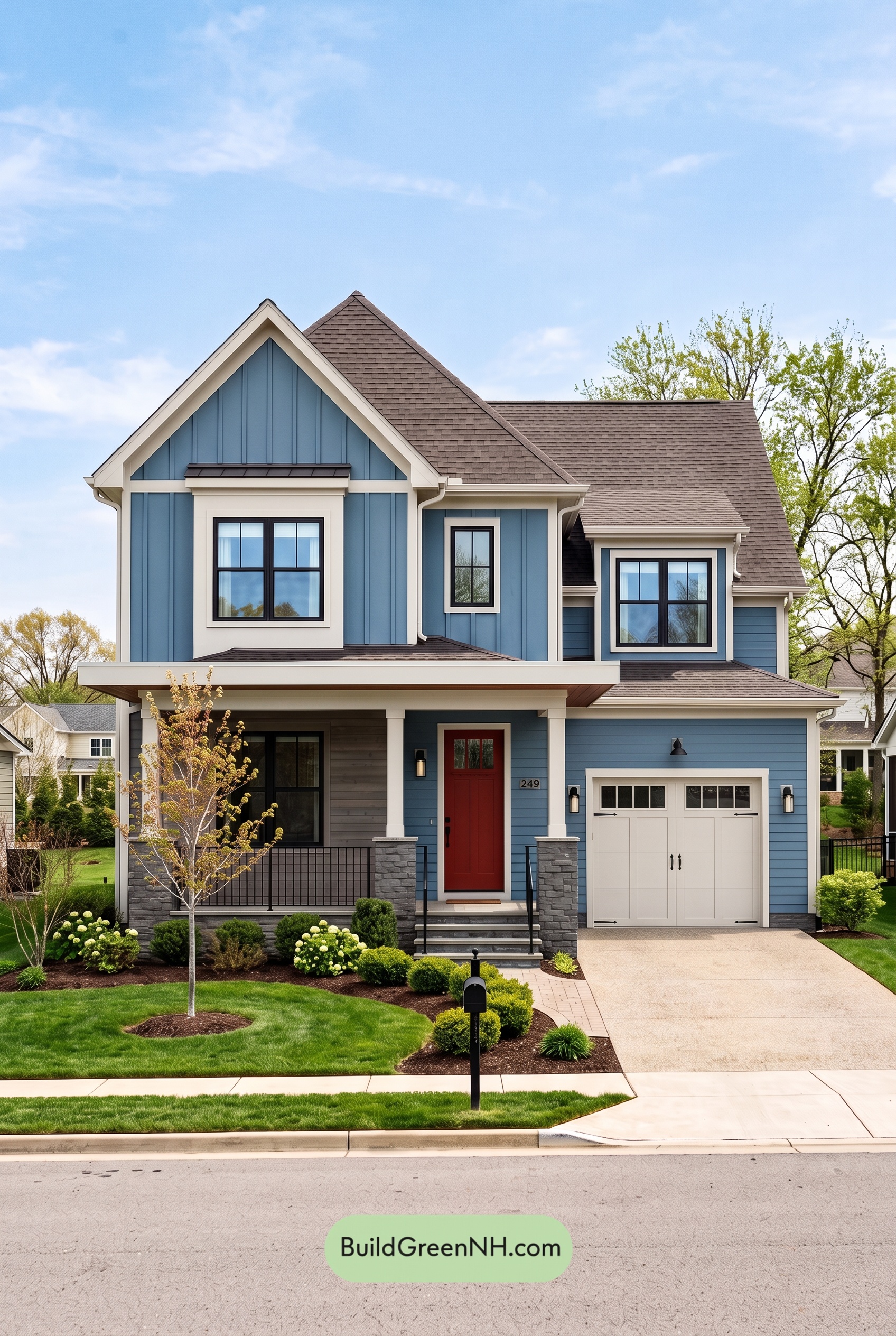 Blue House Front Door Color Scheme: Denim Poppy
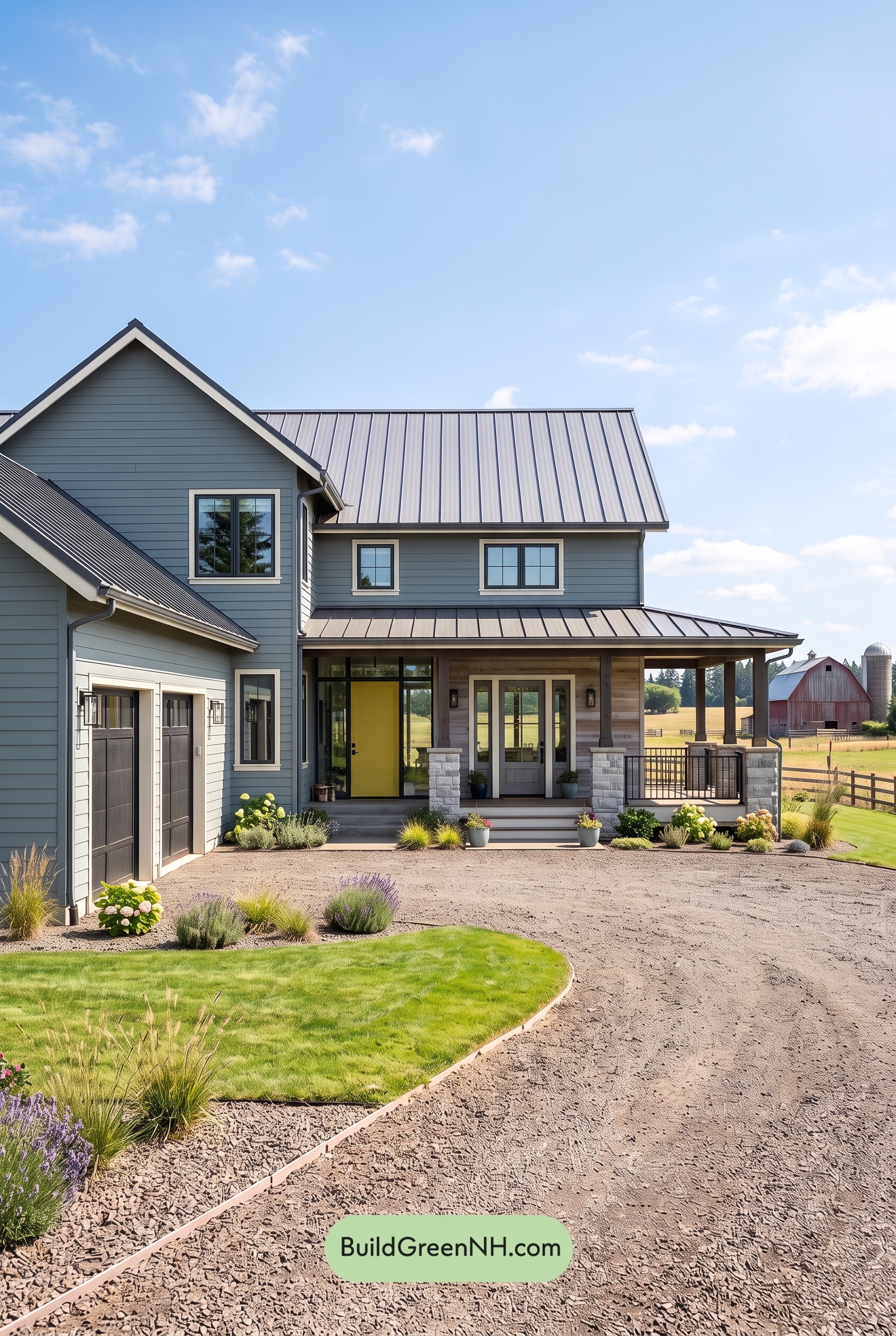 Blue House Front Door Color Scheme: Slate Citron
 Blue House Front Door Color Scheme: Mist Blue Haven
Table of Contents