Last updated on
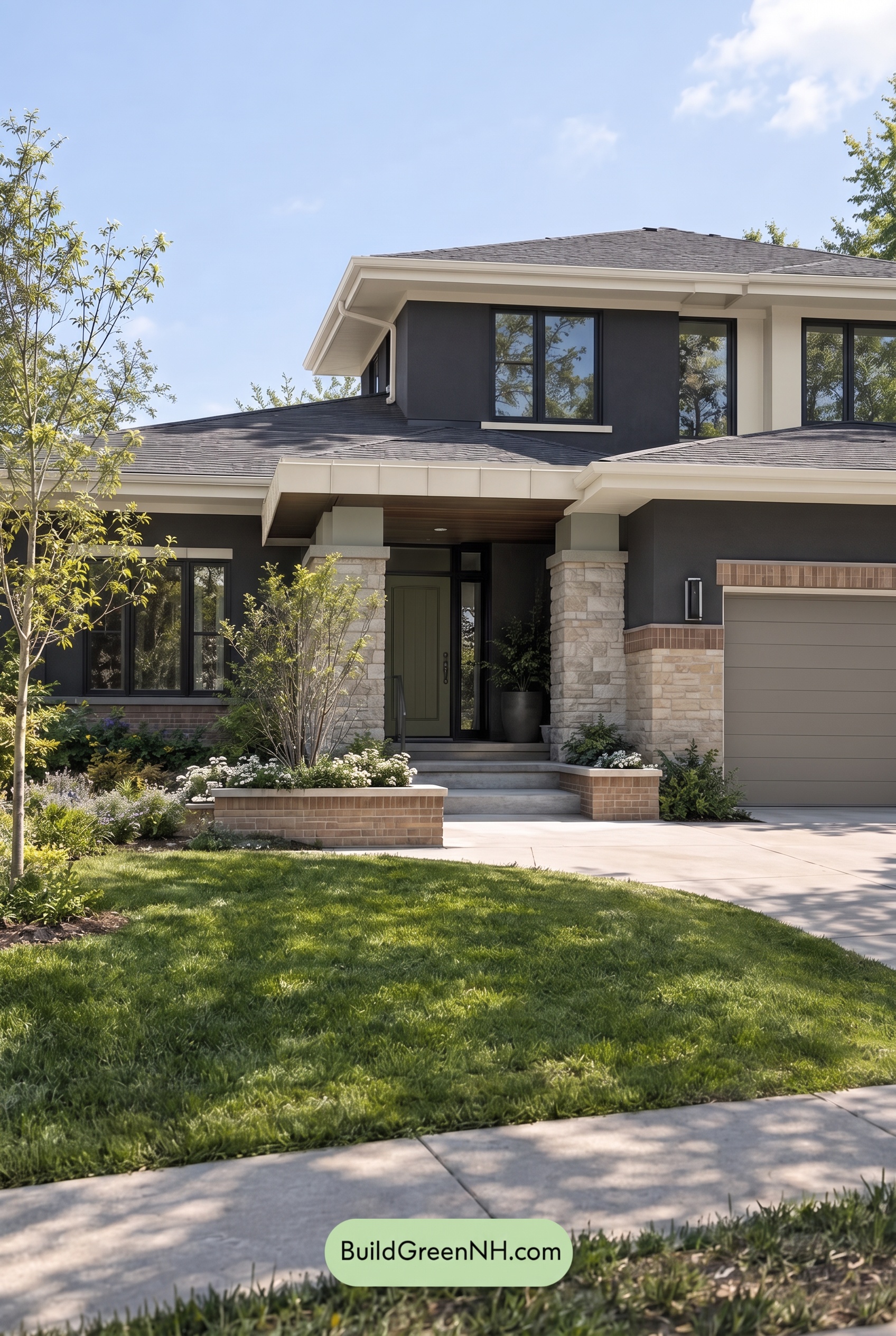

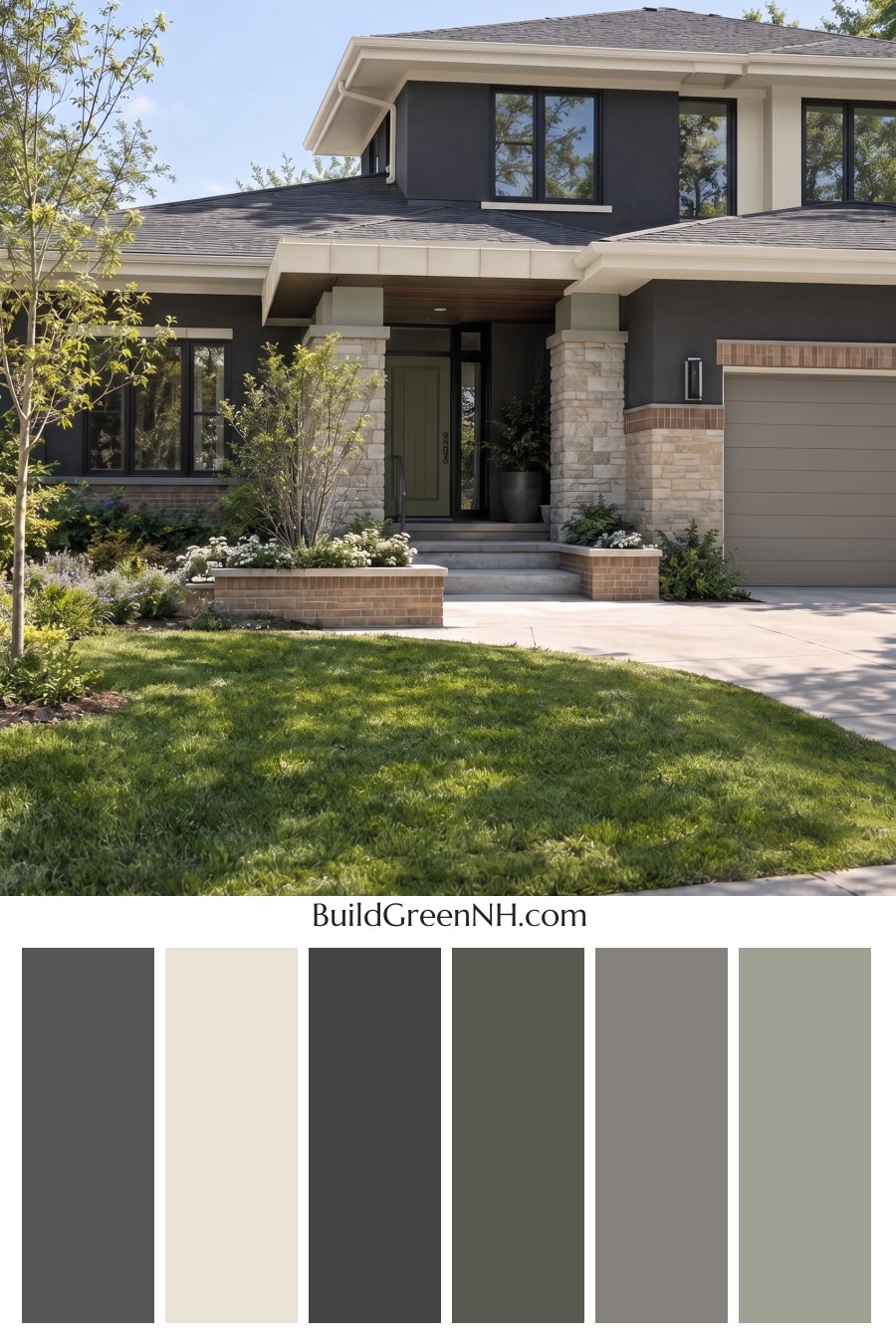
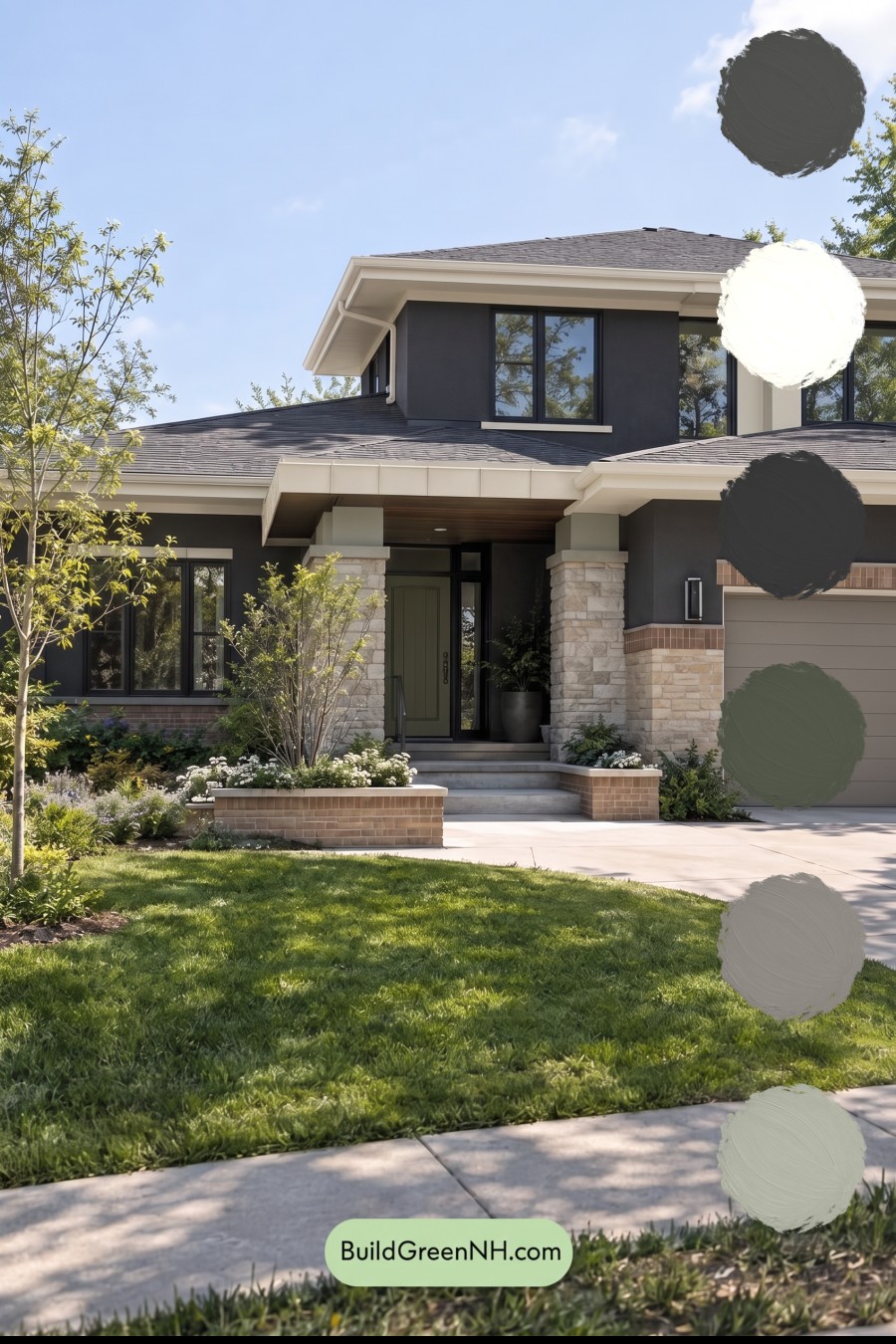
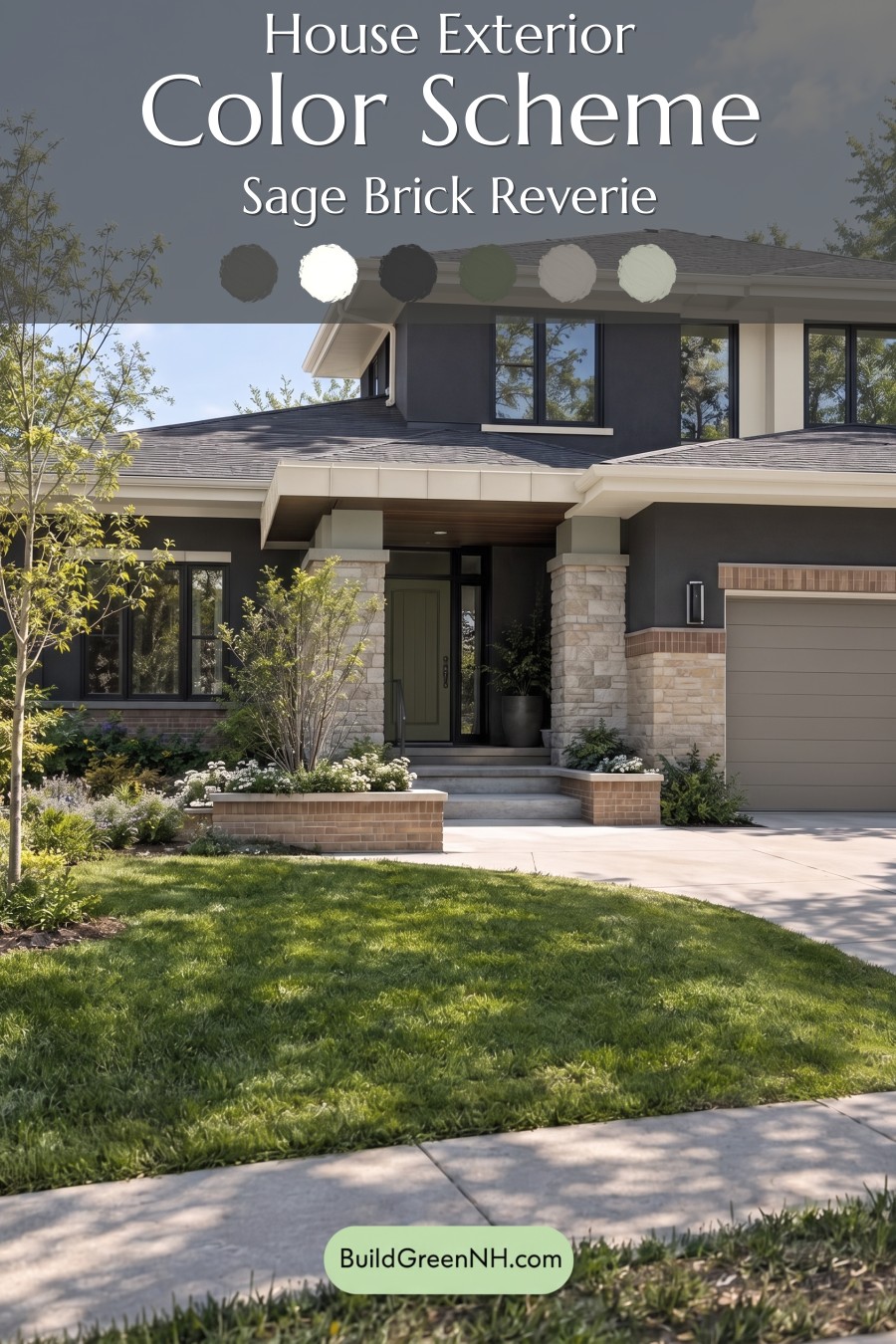
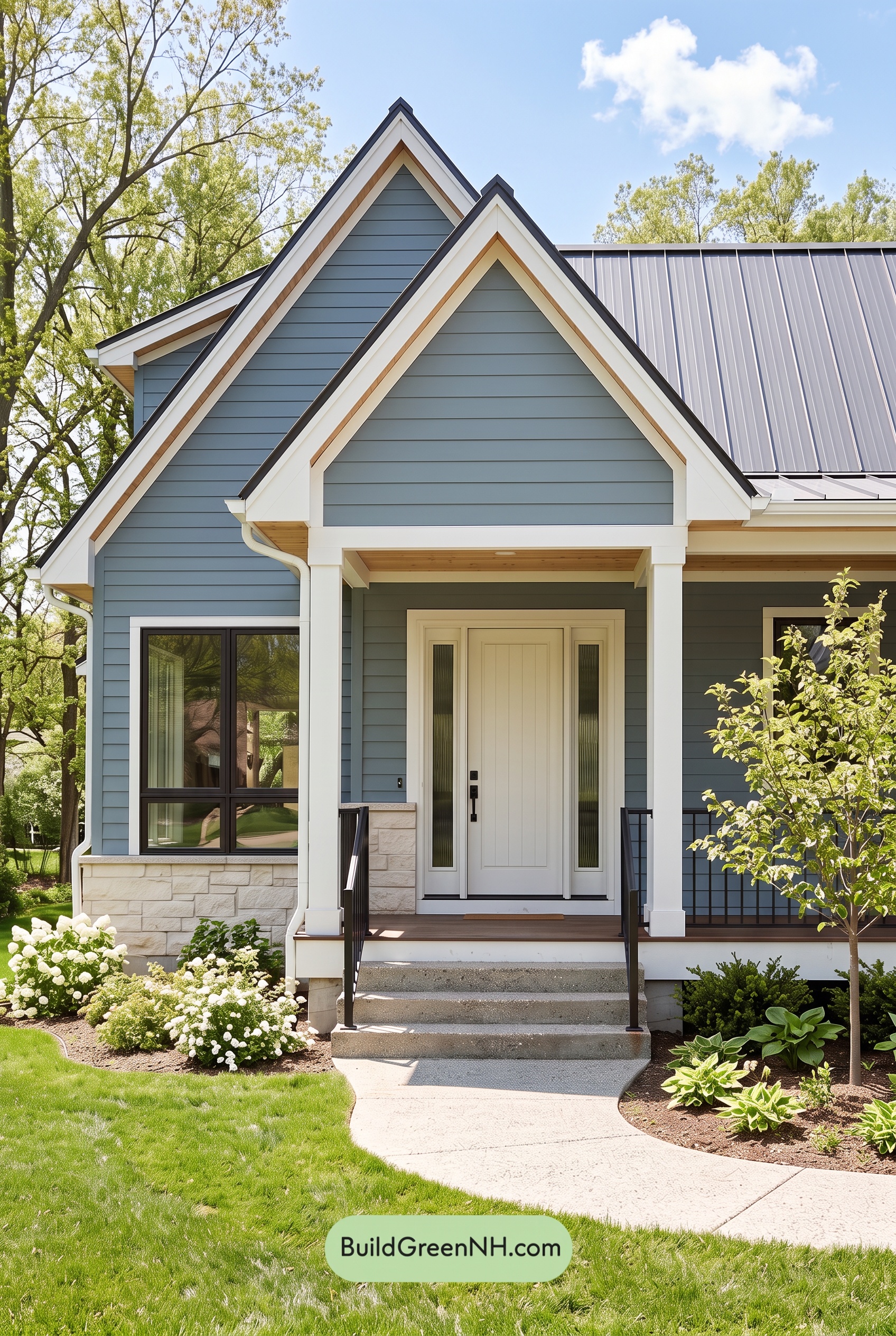
This layered mix of charcoal gray, warm beige, and soft green-gray gives the home a polished modern character that still feels inviting.
A Strong Foundation of Deep Gray
The exterior siding is wrapped in a rich charcoal gray that gives the architecture instant depth and presence. This deep neutral highlights the home’s clean lines, dramatic roof angles, and broad window groupings without making the facade feel overly severe.
A similarly dark gray roof ties the upper and lower sections together, creating a sleek, grounded silhouette. The near-black window frames reinforce that tailored look, adding crisp definition against the larger wall surfaces and making the glass feel especially prominent.
Warm Trim Softens the Contrast
Warm beige trim brightens the rooflines, eaves, and window details with a gentle, welcoming contrast. Rather than competing with the dark siding, this light neutral gives every edge a refined outline and prevents the gray palette from feeling too cool.
The same soft beige influence continues through the garage door and masonry tones, making the transition from painted surfaces to natural materials feel effortless. It is a smart balance: dark enough to feel contemporary, yet warm enough to suit the landscaped setting.
Subtle Accents at the Entry
The front door introduces a muted green-gray shade that quietly distinguishes the entrance from the surrounding charcoal walls. It is an understated color choice, but it adds a calm organic note that connects beautifully with the garden and mature greenery.
Soft gray-green columns support the covered entry while bridging the lighter stone bases and darker siding above. Dark railings, lighting details, and window surrounds provide the final layer of contrast, keeping the entry sharp and intentional.
A Modern, Welcoming Mood
Overall, this scheme feels elevated, composed, and enduring. The deep gray exterior delivers modern drama, the warm beige trim brings softness, and the restrained green-gray accent adds just enough personality. Together, these shades create a home that looks sophisticated in bright daylight, cozy in shadow, and beautifully connected to its natural surroundings.
Next, see how this color scheme looks under different lighting simulations throughout the day.
Overcast
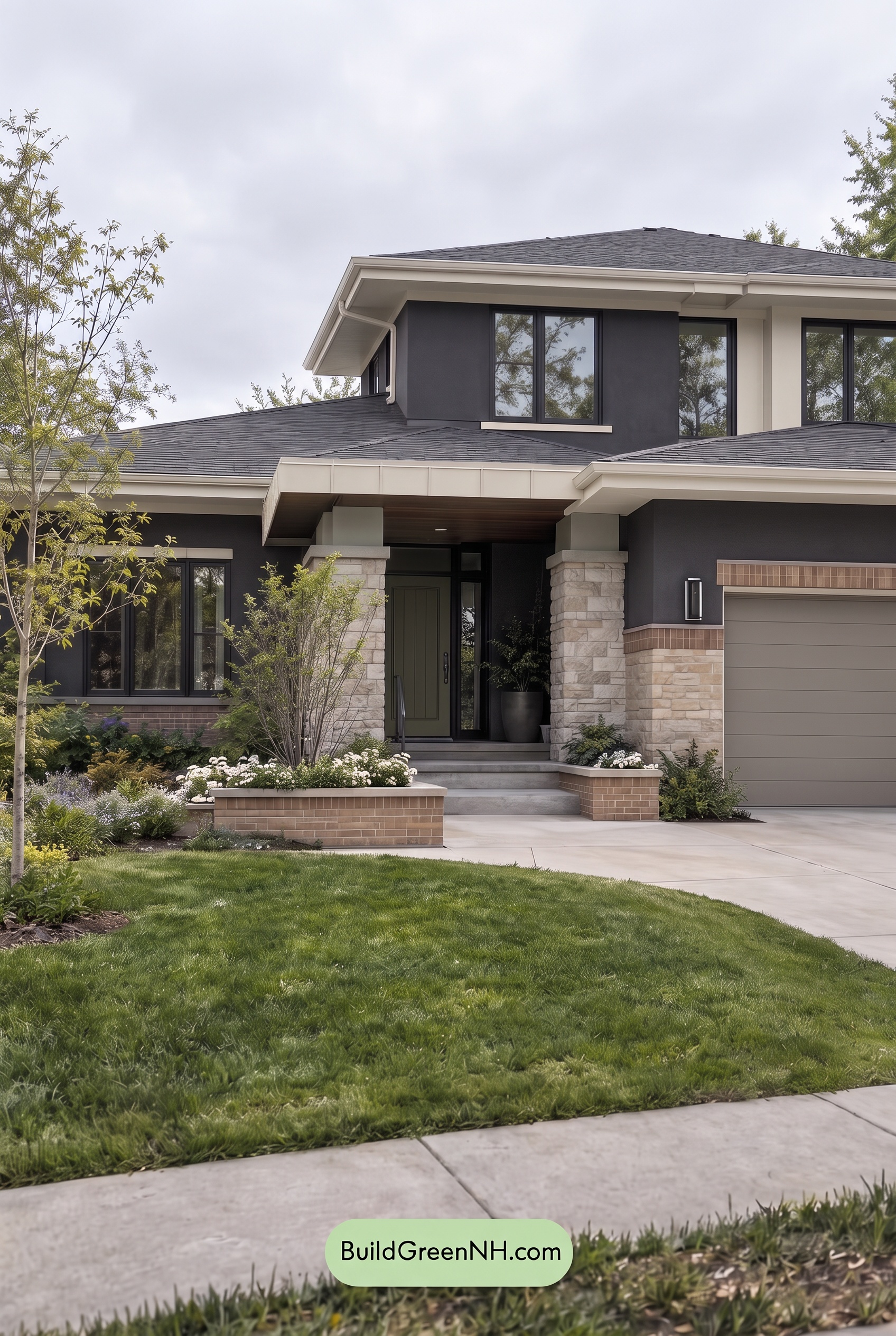
Under overcast skies, the charcoal-gray walls read a little deeper and less saturated than they do in neutral daylight, while their subtle cool undertones become more noticeable. With direct sun removed, the dark frames, garage door, railings, and entry door blend into a smoother range of shadowed gray, reducing sharp contrast but giving the facade a polished, unified presence.
The light beige trim loses some of its sunny warmth and appears softer against the grays, creating a calm, understated edge along the roofline. Diffused light also minimizes hard shadows beneath the eaves and porch, so the home takes on a quieter, more inviting mood with gentler transitions between light and dark.
Golden Hour
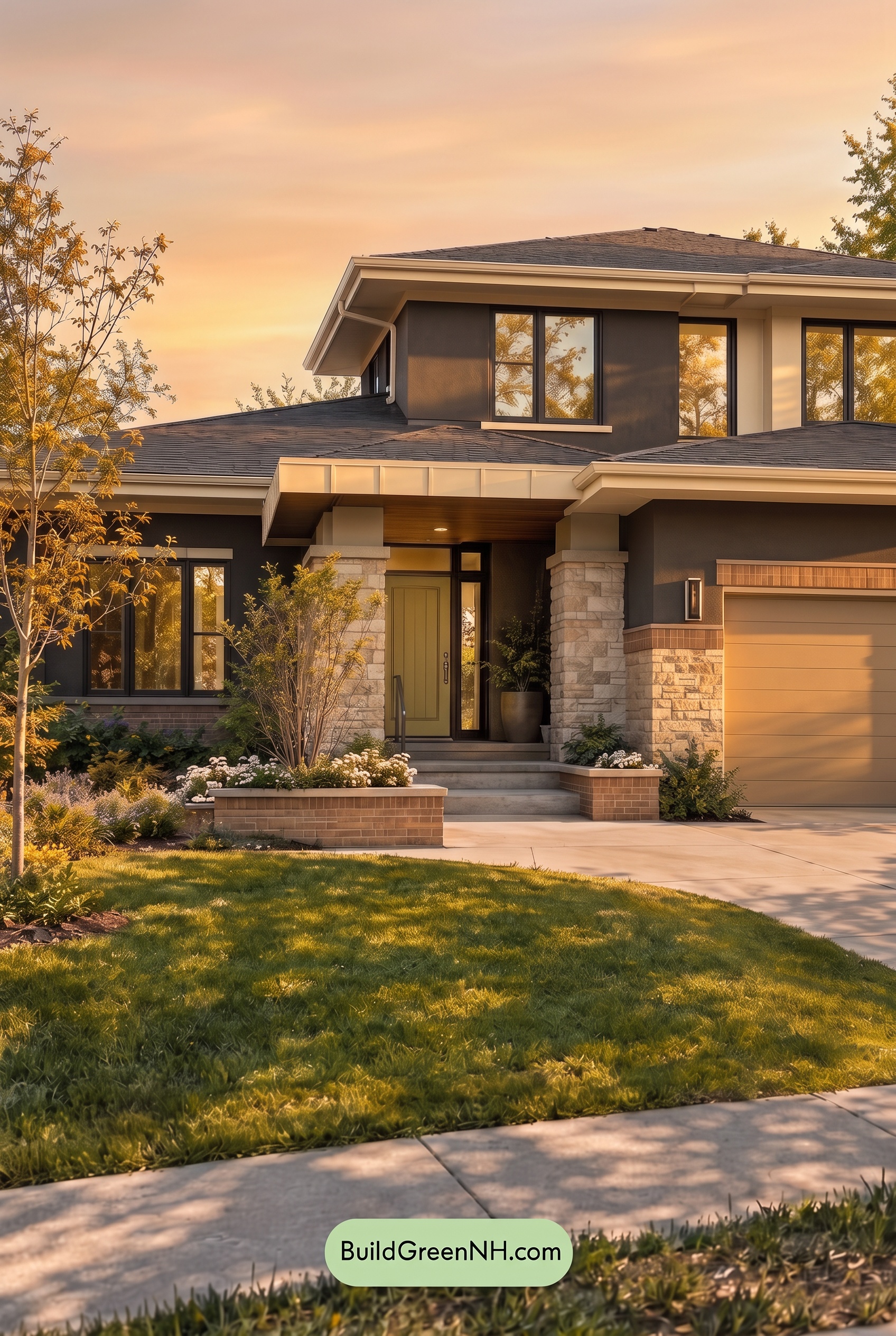
Golden Hour lends the gray exterior a softer, warmer cast than neutral daylight, making the broad wall planes feel richer and slightly more saturated. The beige trim picks up a gentle glow, while the deeper gray window frames, railings, and garage elements hold their depth for crisp, refined contrast.
As the sun drops lower, long shadows intensify around the columns, rooflines, and entry, giving the gray shades a more dramatic range from smoky midtones to near-charcoal recesses. The result is an inviting, relaxed mood: warm highlights soften the architecture while the darker details create elegant definition.
Shade
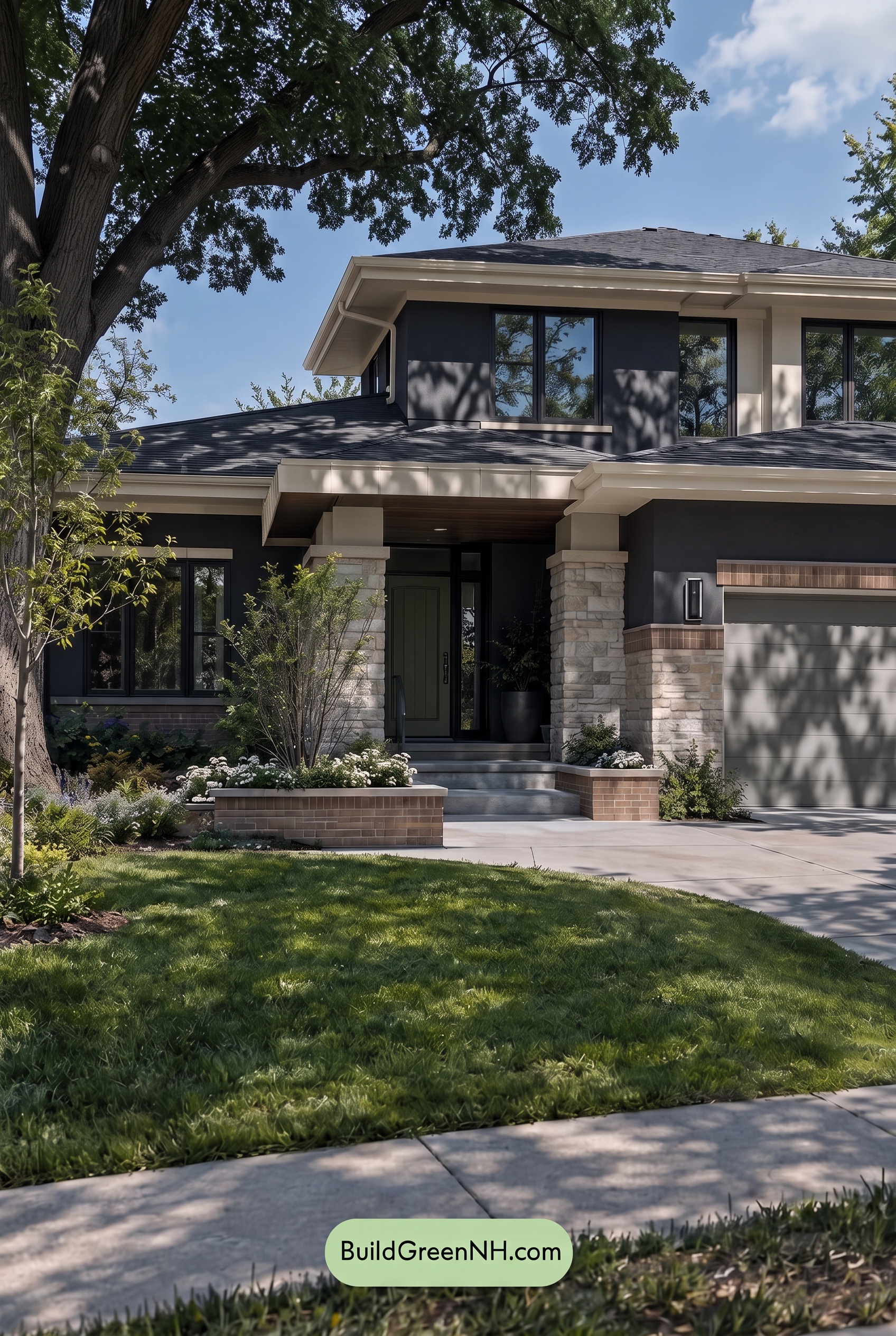
In shade, the gray exterior takes on a deeper, more muted character than it does in neutral daylight. Its saturation recedes, while the darker gray elements around the windows, entry, and garage gain a richer, more layered presence. Leaf-cast shadows create shifting bands of depth that make the facade feel tailored and dimensional.
The beige trim becomes softer and less bright beneath the canopy, lending gentle warmth against the cool gray surroundings. With sunlight filtered away, contrast is more selective rather than stark, giving the home a calm, sheltered mood while the darkest gray details still provide crisp definition.
Nighttime
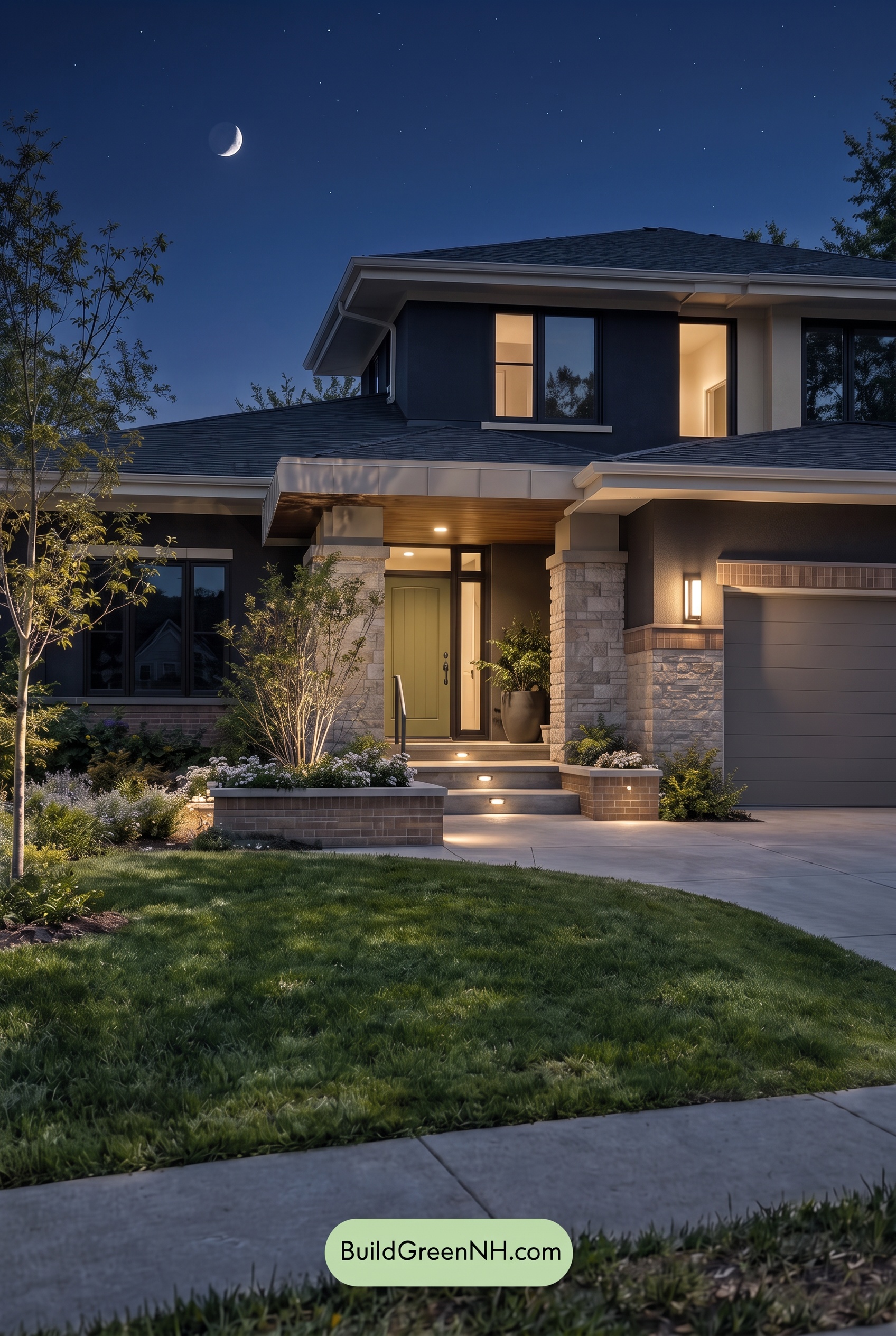
At night, the layered grays appear deeper and slightly cooler than they do in neutral daylight, with their saturation becoming more restrained in the broad shadowed areas. The lighter beige trim takes on a softer warmth under the exterior fixtures, creating a crisp but inviting contrast around rooflines, windows, and the entry.
Warm illumination brings the central entry forward, while darker gray framing, railings, and garage surfaces recede into a tailored silhouette. This stronger play of light and shadow gives the façade a more dramatic, calm mood—polished and welcoming rather than flat and evenly lit.
Pin these for later:
Want More?
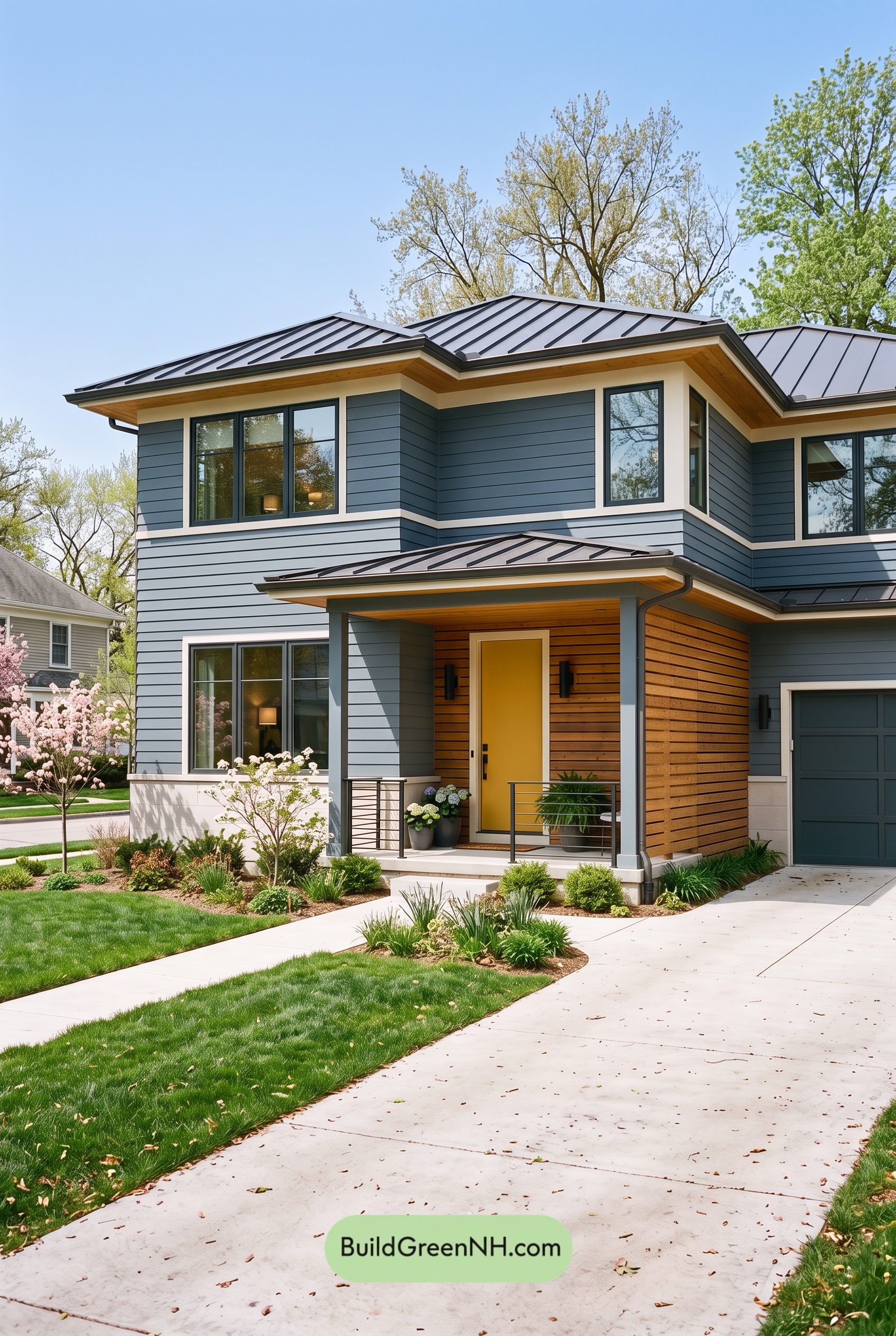 Blue House Front Door Color Scheme: Harbor Saffron
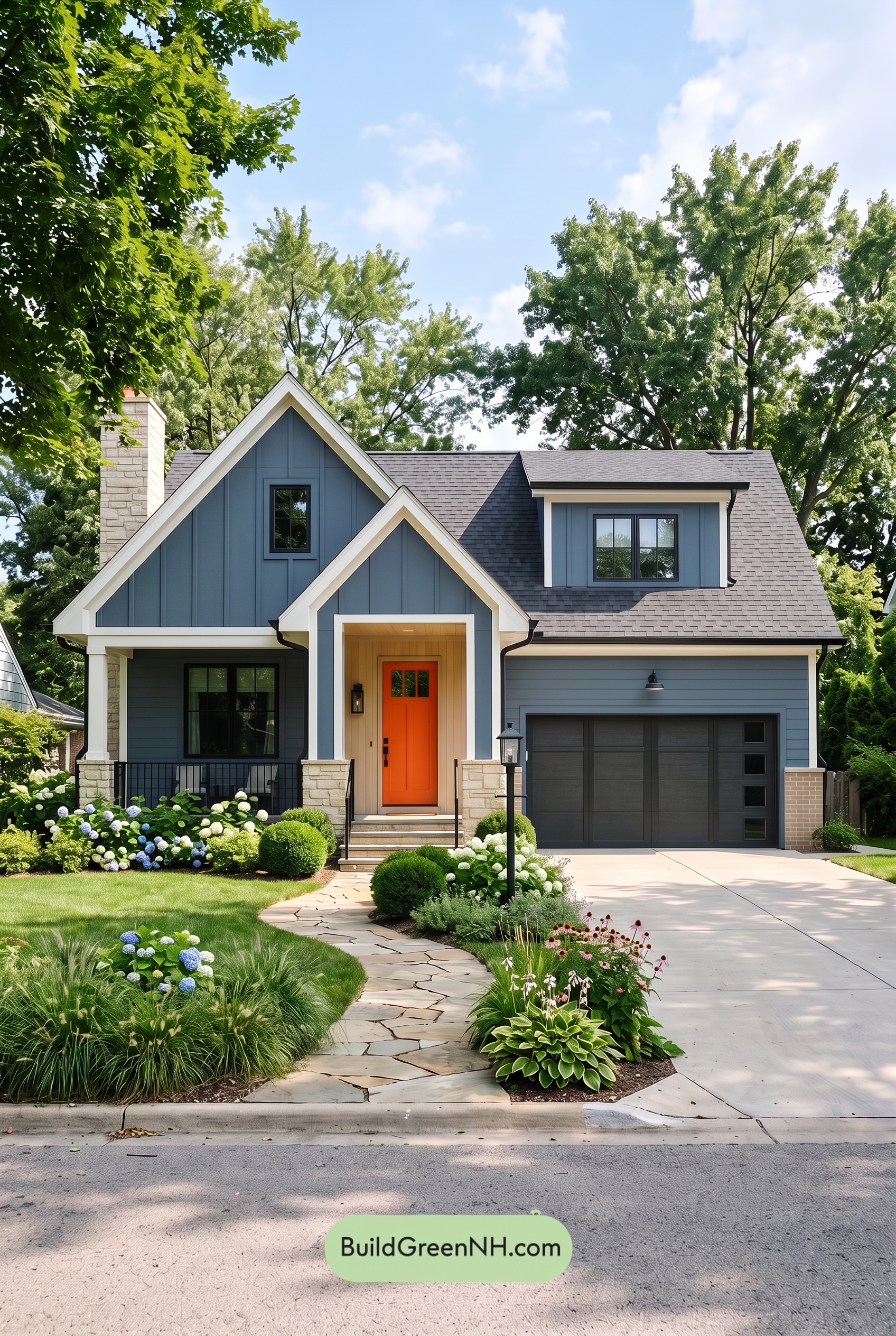 Blue House Front Door Color Scheme: Cobalt Persimmon
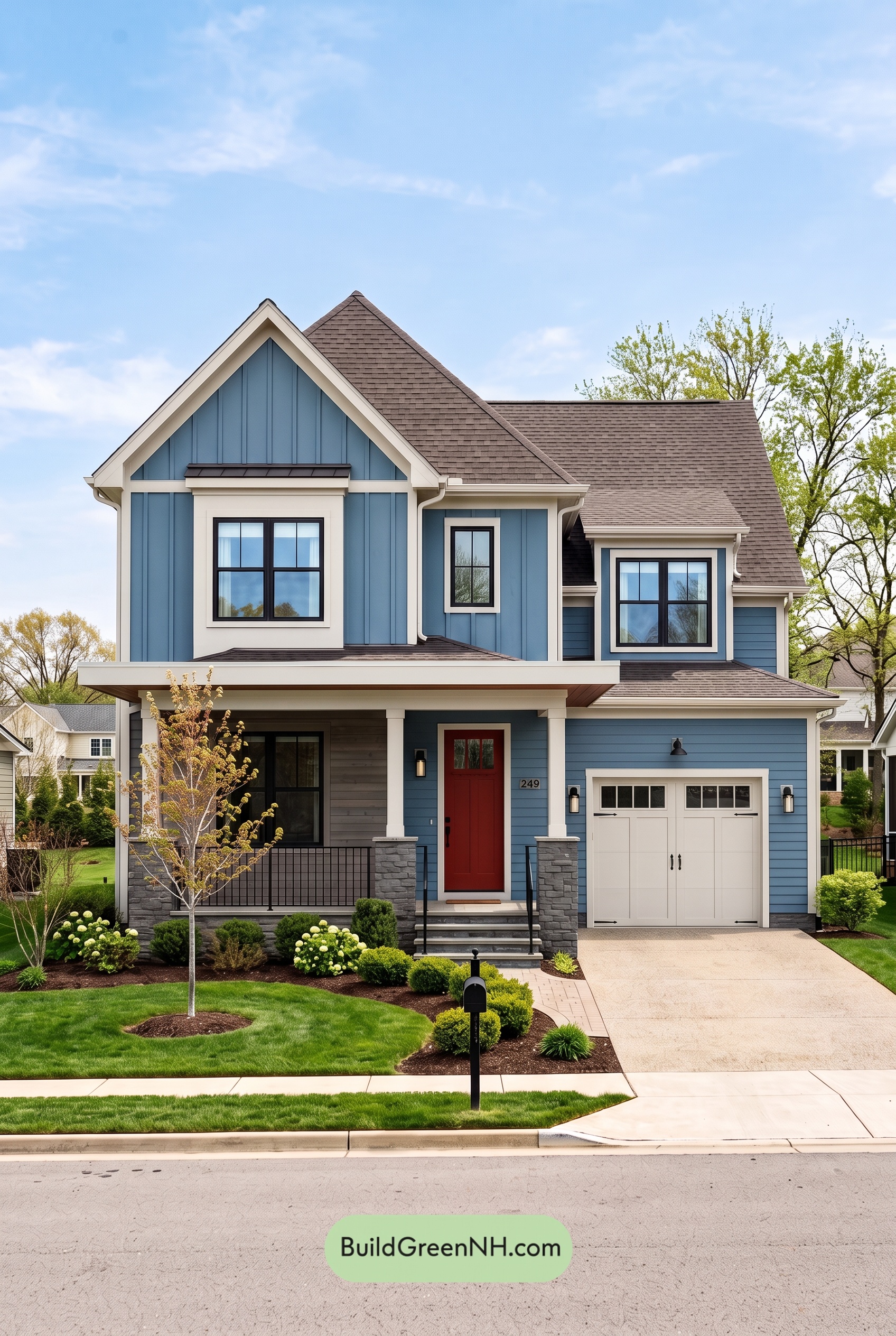 Blue House Front Door Color Scheme: Denim Poppy
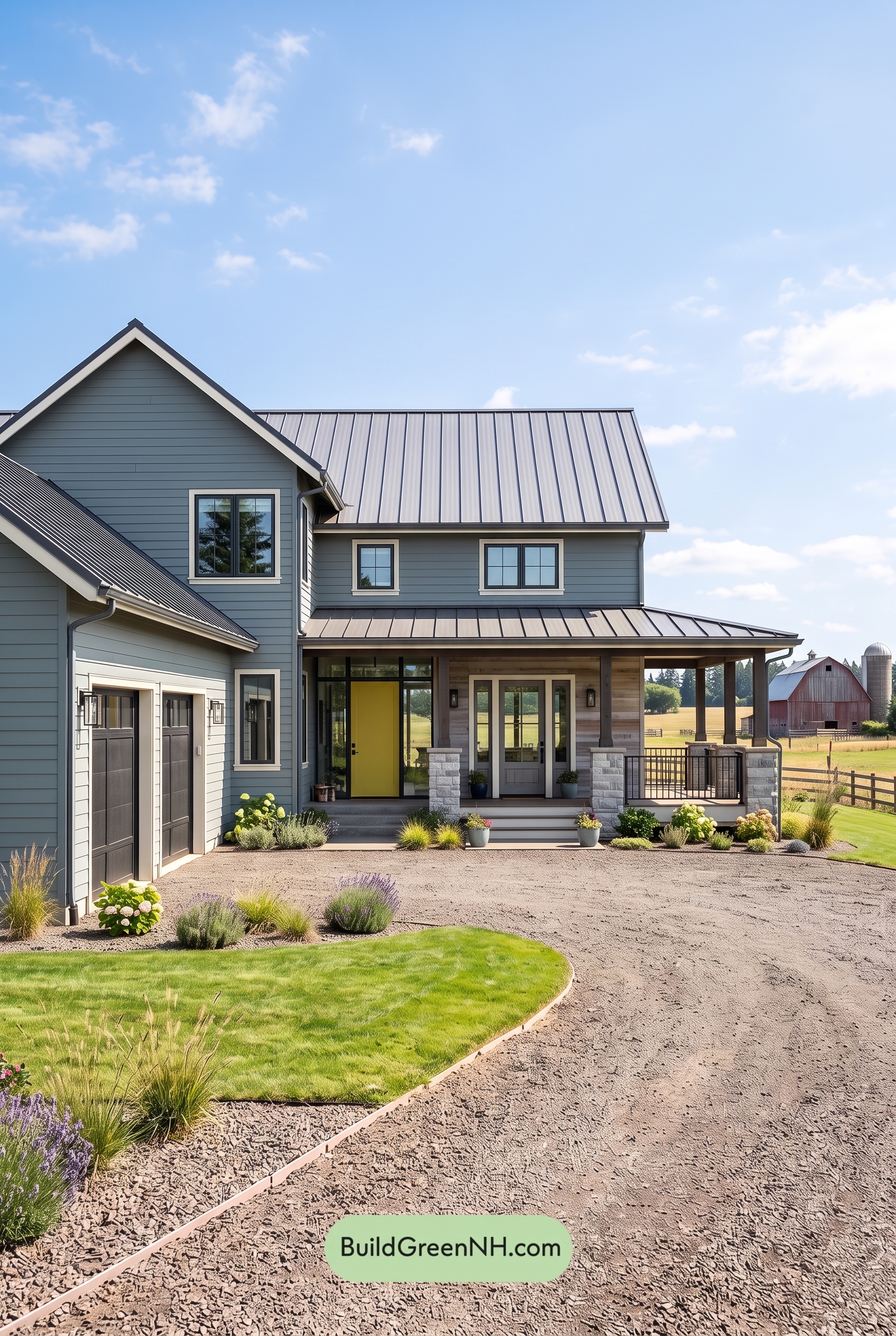 Blue House Front Door Color Scheme: Slate Citron
 Blue House Front Door Color Scheme: Mist Blue Haven
Table of Contents