Last updated on
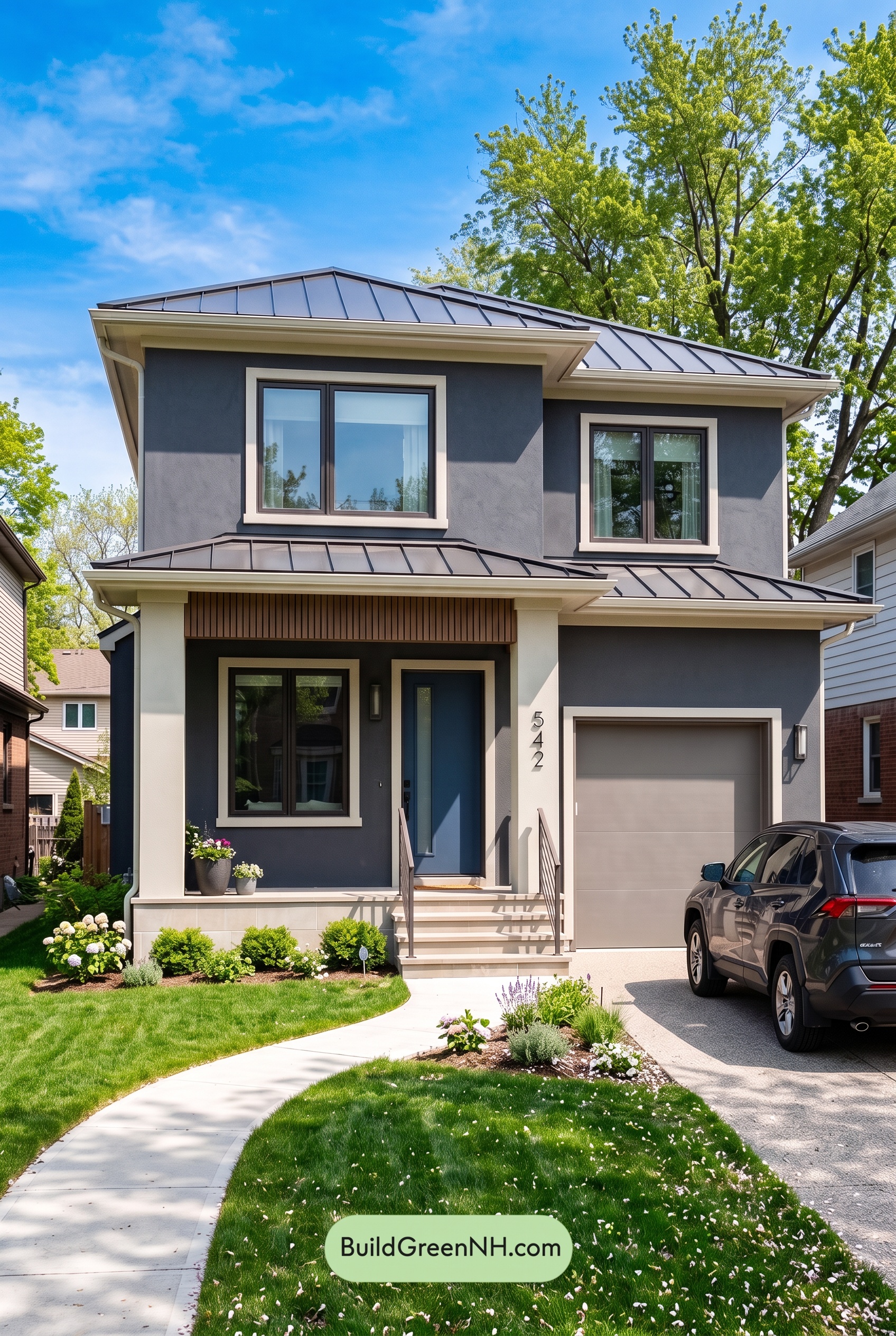

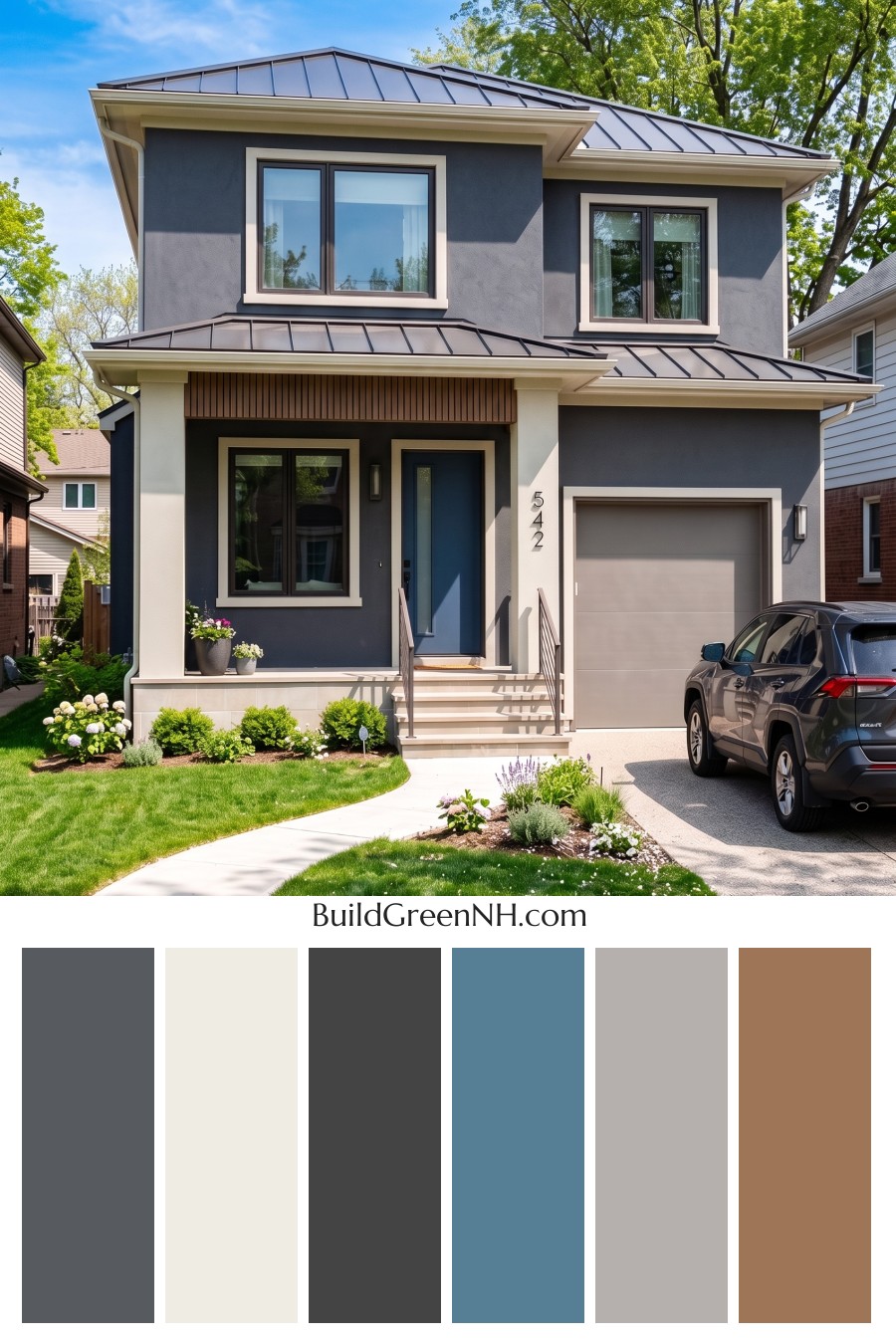
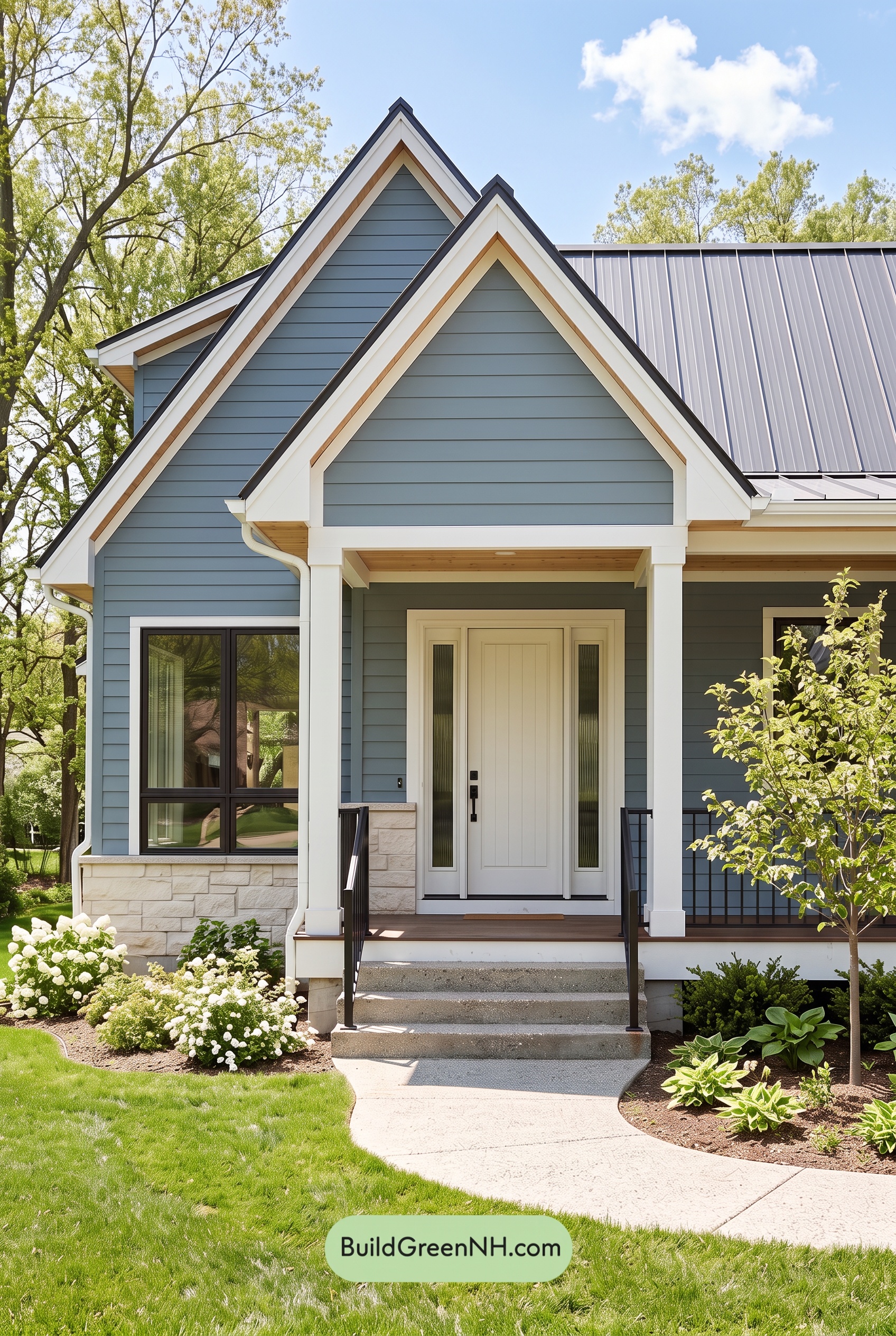
This polished blend of deep gray, crisp white, warm brown, and muted blue gives the home a striking modern presence without sacrificing warmth.
A Strong Gray Foundation
The main exterior walls wear a deep, cool gray that immediately grounds the home and highlights its clean, contemporary lines. This rich neutral has enough depth to feel dramatic, yet it remains refined rather than heavy. It also creates a beautiful backdrop for the landscaping, allowing the surrounding greens and seasonal blooms to feel even more vibrant.
Gray continues through the window frames, garage door, and slender porch railings, creating a layered, coordinated look. Using related gray shades across these functional features keeps the façade cohesive while allowing subtle shifts in tone and texture to add dimension.
Bright White Architectural Definition
Soft white trim provides the perfect contrast around the windows, roofline, porch, and garage opening. These bright edges sharpen the architecture, emphasizing the home’s tall proportions and giving each large window a tailored, intentional appearance.
The white columns make the covered entry feel especially welcoming. Their light finish balances the darker wall color and brings an airy, classic note to an otherwise modern exterior. White details at the eaves and lower porch level further connect the upper and lower sections of the home.
Warm Brown and Blue Accents
A medium warm brown accent panel above the porch introduces natural warmth to the cooler gray-and-white palette. Its vertical texture adds visual interest at the entry, helping this central portion of the house feel distinct and inviting. The brown shade also keeps the scheme from feeling too sleek or monochromatic.
The front door, finished in a muted medium blue, becomes a calm focal point beneath the porch. Blue works beautifully with the cool gray walls, while its subtle depth creates a welcoming transition from the crisp white columns to the darker entry surround. It is an accent that feels confident, not overpowering.
A Roof That Completes the Look
The dark charcoal-gray roof adds a strong finishing layer above the façade. Its deep tone echoes the window frames and railings, visually tying the uppermost architectural details back to the entry. Against the soft white eaves, the roofline feels especially crisp and dimensional.
Overall, this exterior color scheme feels modern, balanced, and warmly composed. Cool gray establishes sophistication, soft white adds clarity, warm brown lends texture, and muted blue supplies personality. Together, these shades create a home that looks polished from the street while still feeling comfortably livable.
Next, see how this color scheme looks under different lighting simulations throughout the day.
Overcast
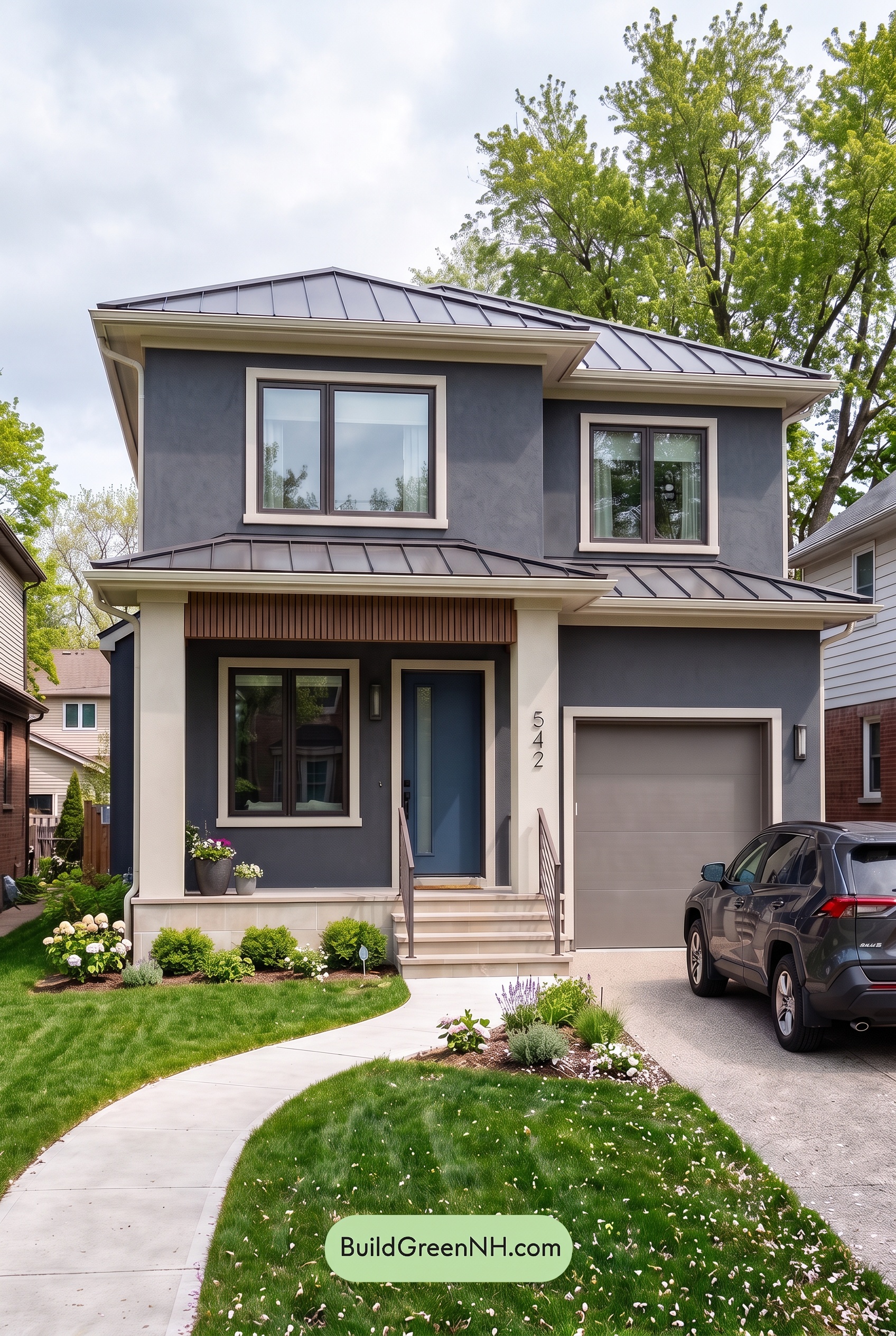
Under overcast skies, the gray exterior reads cooler and slightly deeper than it does in neutral daylight, while its saturation feels more restrained and even across the façade. The soft white trim and columns lose some of their crisp sunlit brightness, taking on a gentler, quieter presence beside the darker window frames and garage door.
With direct shadows softened, the home’s architectural lines rely more on the contrast between light and dark shades than on sharp highlights. The blue front door appears moodier and more grounded, while the brown accent feels less warm and more subdued, giving the overall palette a calm, polished, and inviting character.
Golden Hour
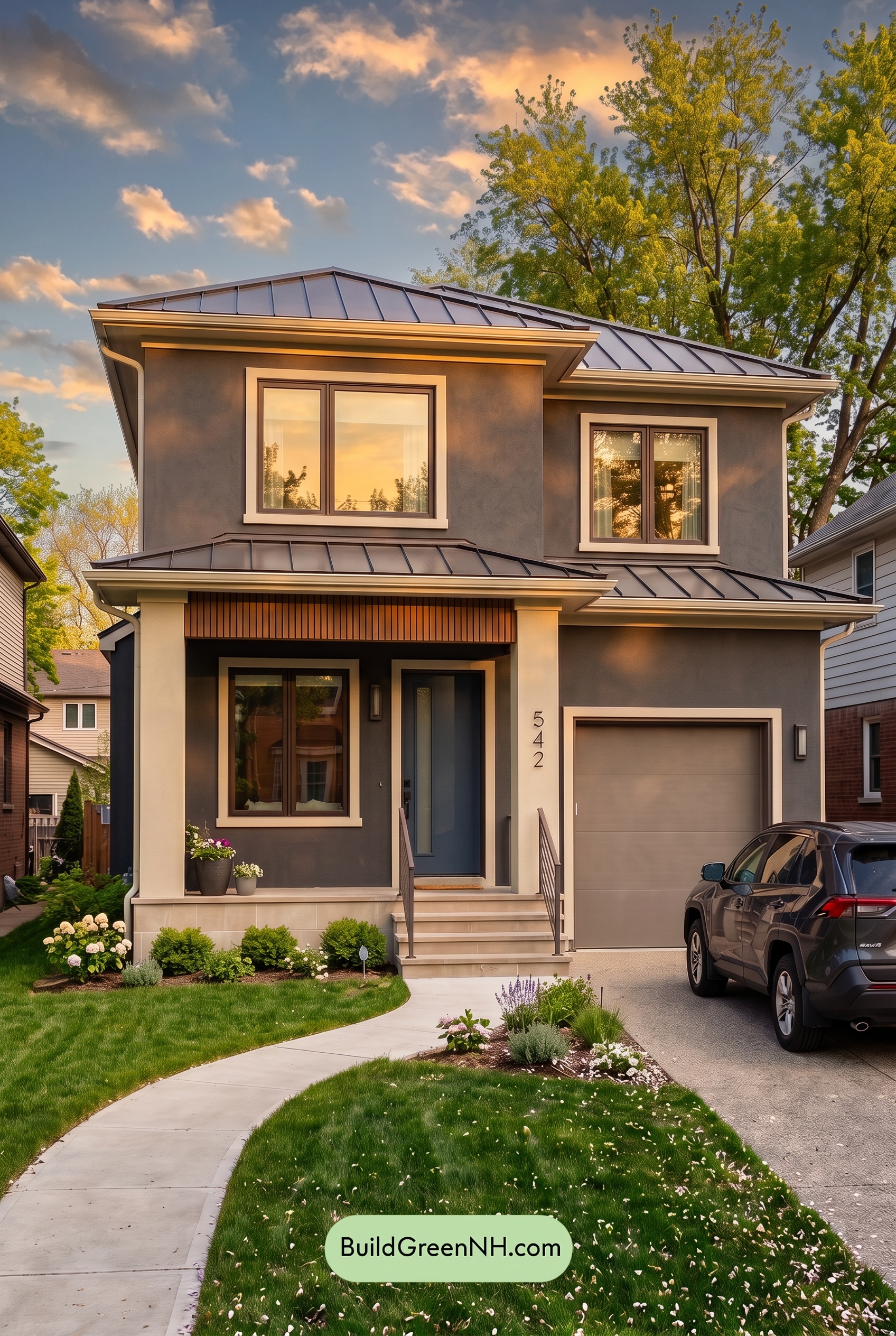
In neutral daylight, the gray exterior reads crisp and balanced, while the white trim provides clean definition around the windows and porch. At Golden Hour, the low, warm light softens the gray into a richer, warmer shade and gives the brown accent area a more pronounced, inviting depth. The blue door appears slightly deeper and moodier by comparison, creating a more noticeable focal point.
Lengthening shadows beneath the rooflines, columns, and railings increase contrast and bring out the home’s layered architecture. The white elements take on a creamy warmth rather than a stark brightness, while shaded gray details become deeper and more dramatic. Overall, the palette shifts from polished and neutral to warmly saturated, relaxed, and welcoming.
Shade
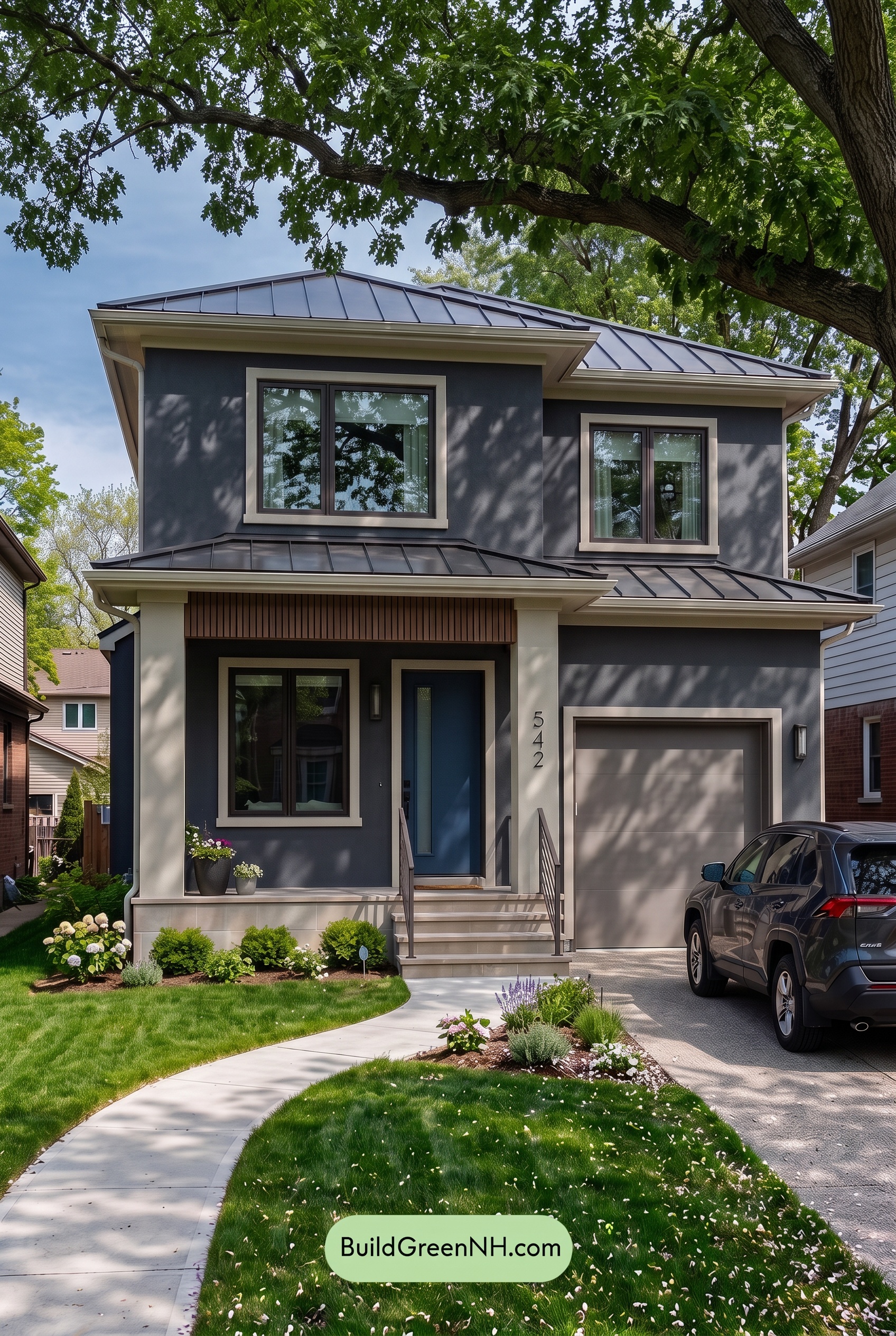
Under shade, the gray exterior takes on a deeper, quieter character than it would in neutral daylight, with its cooler undertones becoming more noticeable and its saturation appearing slightly softened. Dappled shadows add movement across the façade, making the dark gray window details and railings feel more defined while the blue entry becomes a richer, more inviting focal point.
The white trim and columns lose a little of their crisp brightness in the filtered light, reading as softer warm neutrals that gently frame the darker surfaces. The brown accent wall gains extra depth, while the reduced contrast between sunlit and shaded areas gives the whole palette a calm, sheltered mood with an elegant, layered feel.
Nighttime
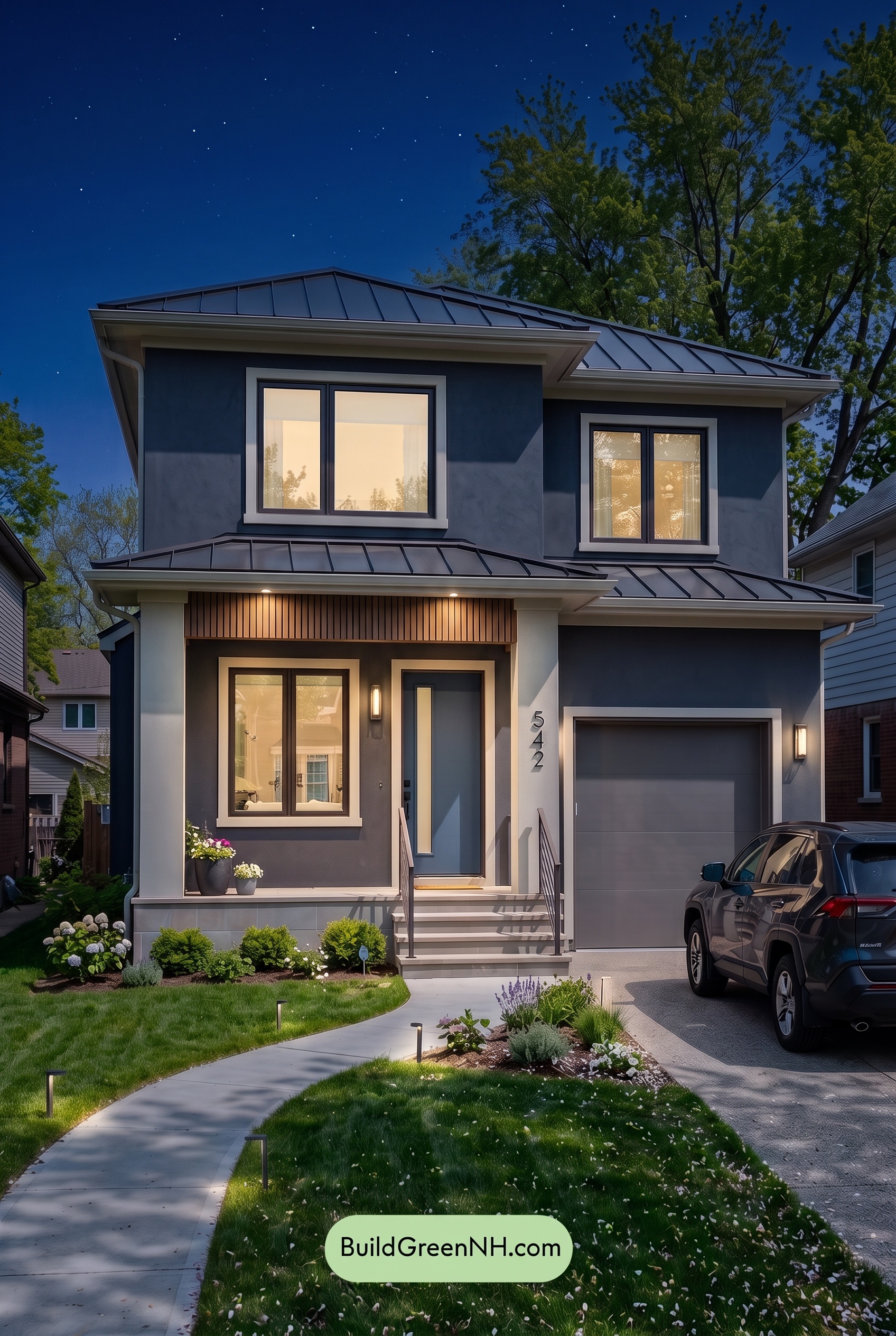
At night, the gray exterior shifts from a balanced daylight neutral to a deeper, cooler shade, with its saturation appearing more subdued in the broad shadowed areas. The blue entry door gains a richer, duskier presence, while the gray garage door and window frames recede, allowing the pale trim and columns to create crisp, luminous outlines.
Warm exterior and window lighting softens the contrast near the entry, bringing the brown accent wall forward with a cozier, more dimensional feel. Beyond those pools of light, shadows become more dramatic and the overall palette feels quieter, more refined, and inviting than it does under neutral daylight.
Pin these for later:
Want More?
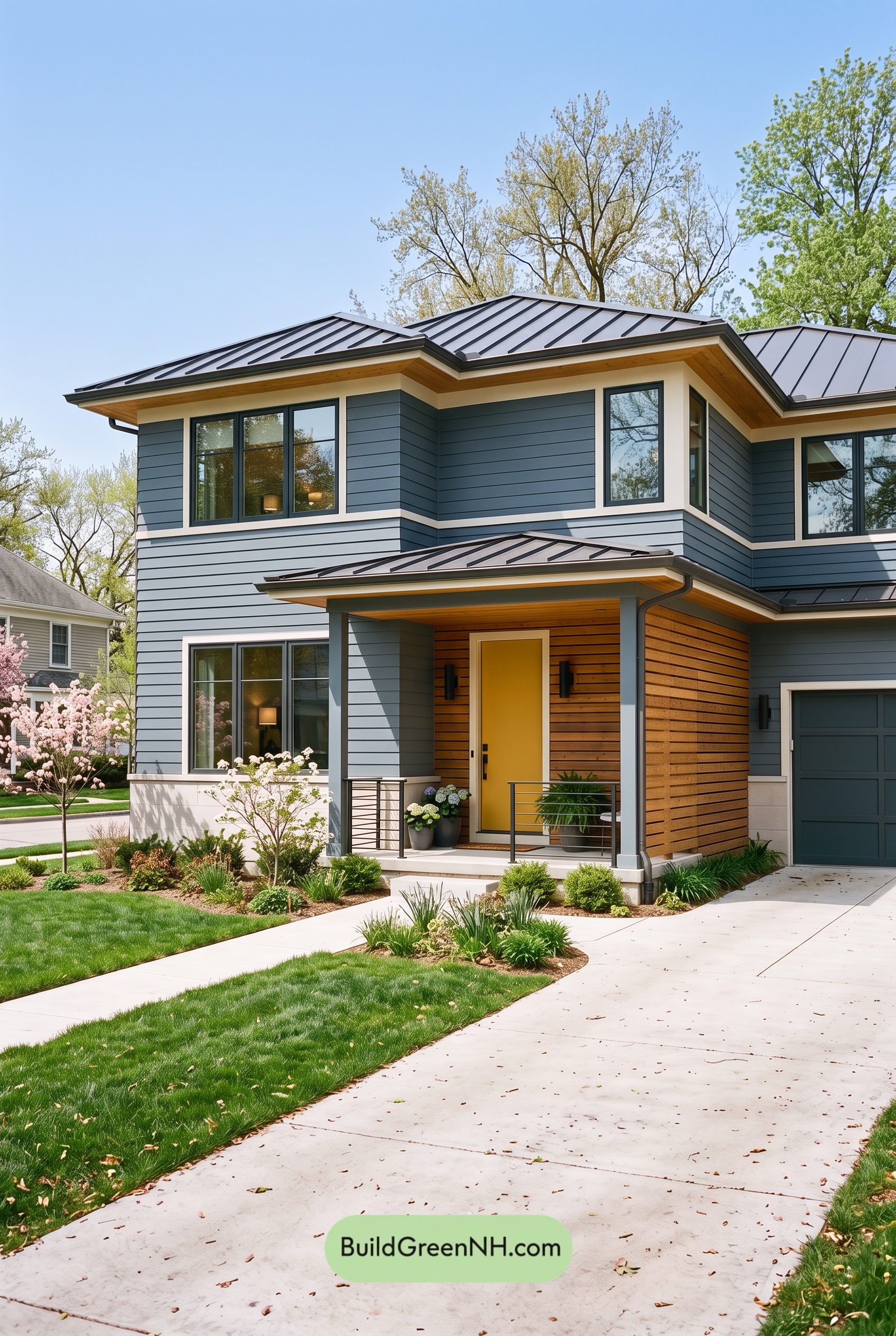 Blue House Front Door Color Scheme: Harbor Saffron
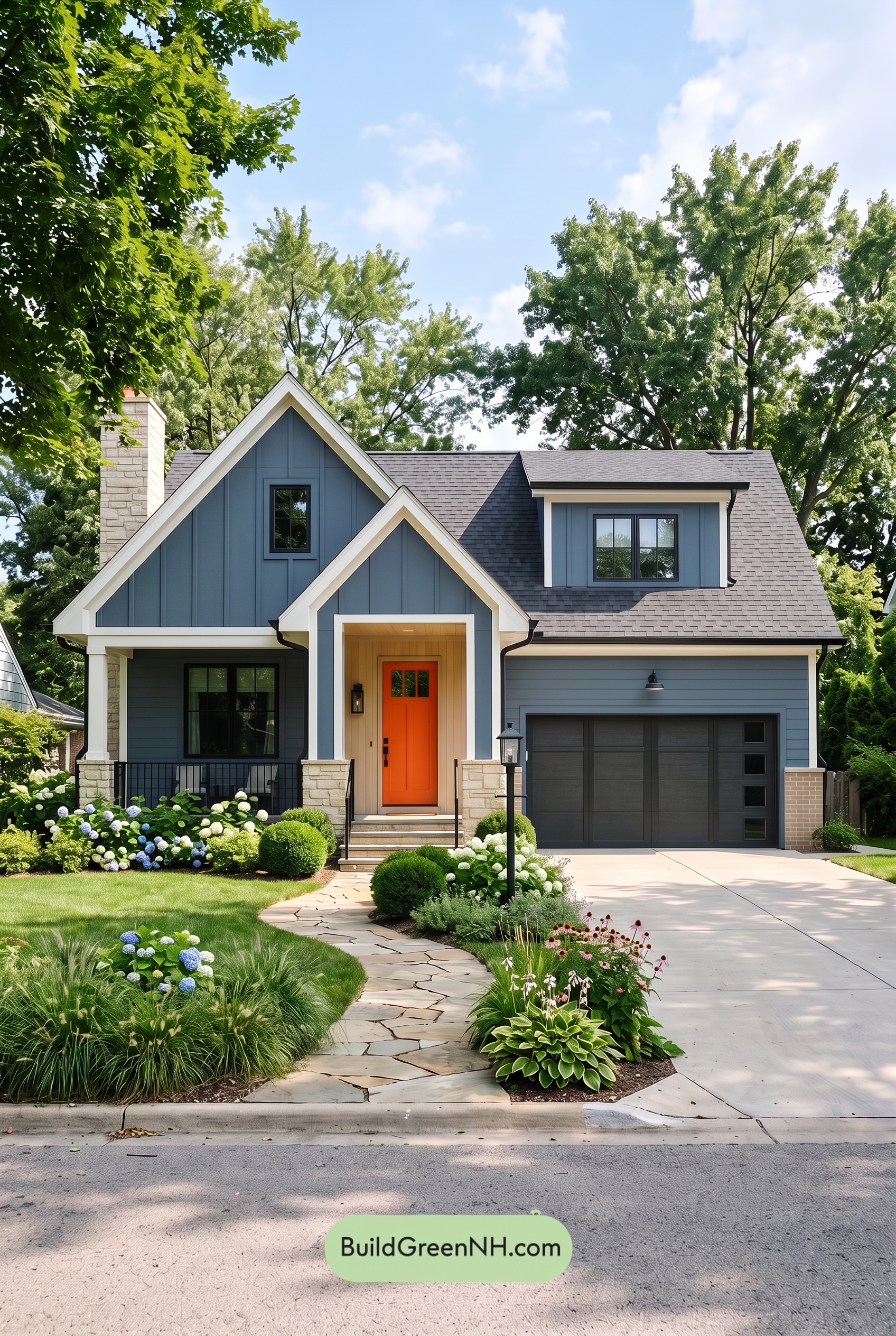 Blue House Front Door Color Scheme: Cobalt Persimmon
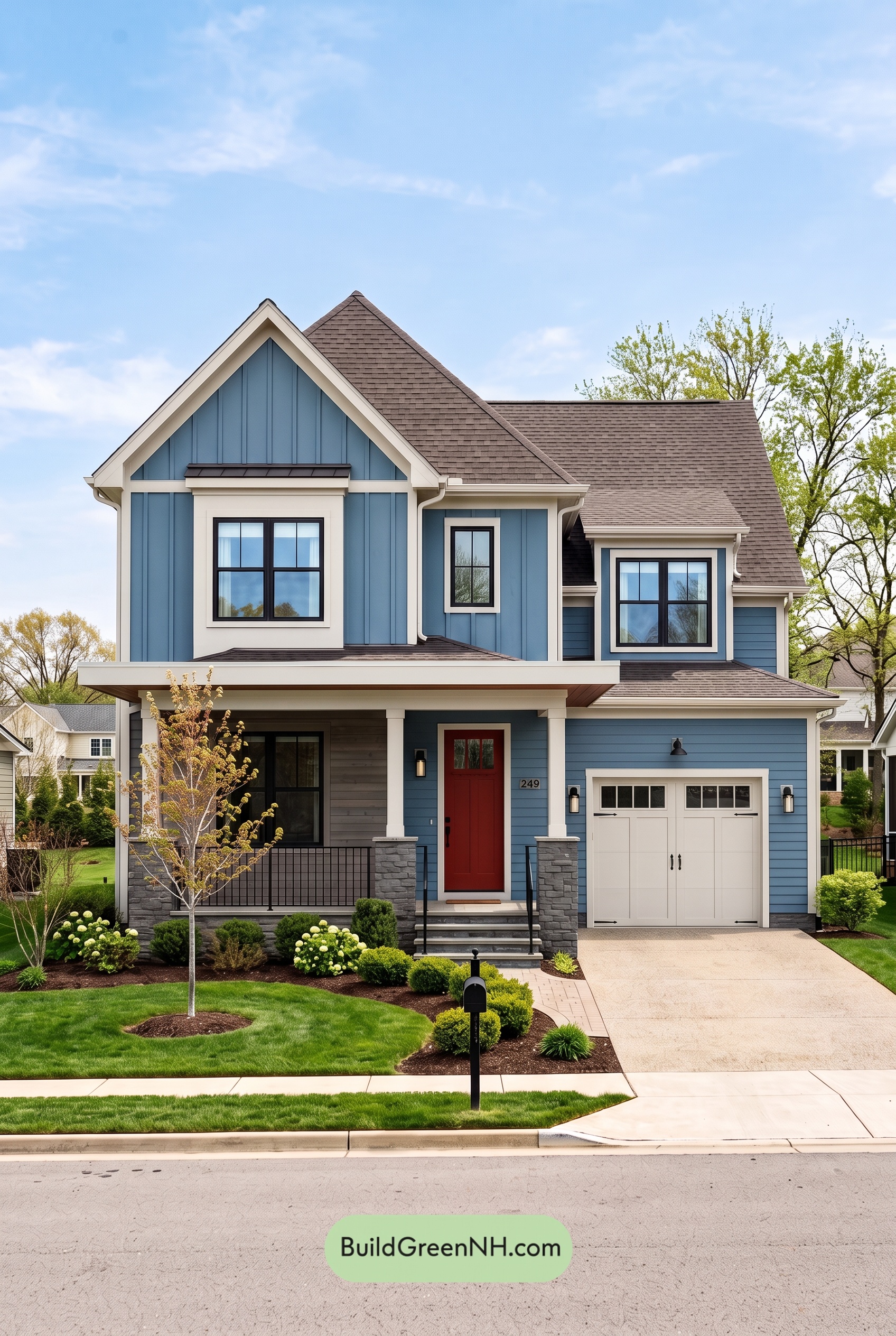 Blue House Front Door Color Scheme: Denim Poppy
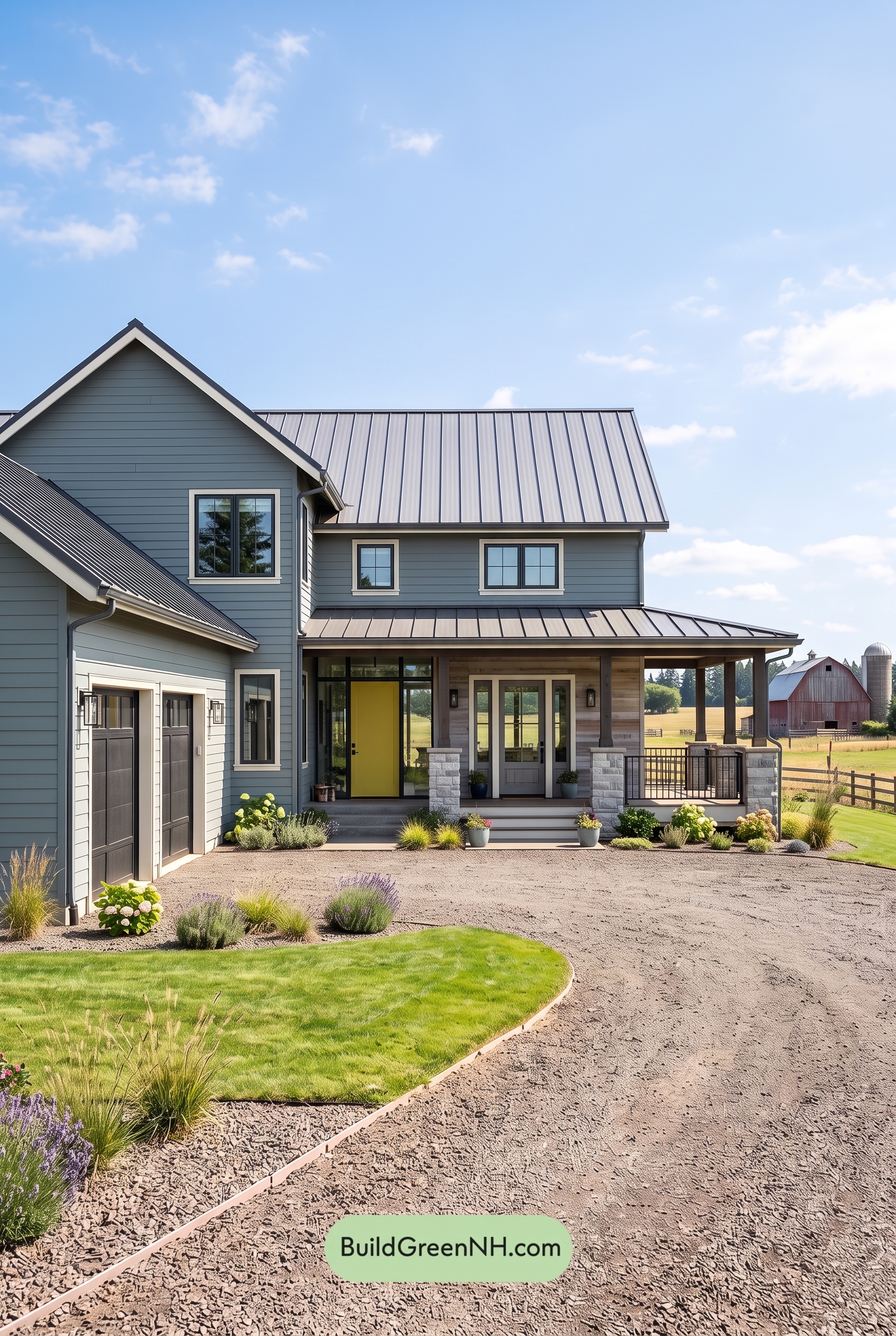 Blue House Front Door Color Scheme: Slate Citron
 Blue House Front Door Color Scheme: Mist Blue Haven
Table of Contents