Last updated on
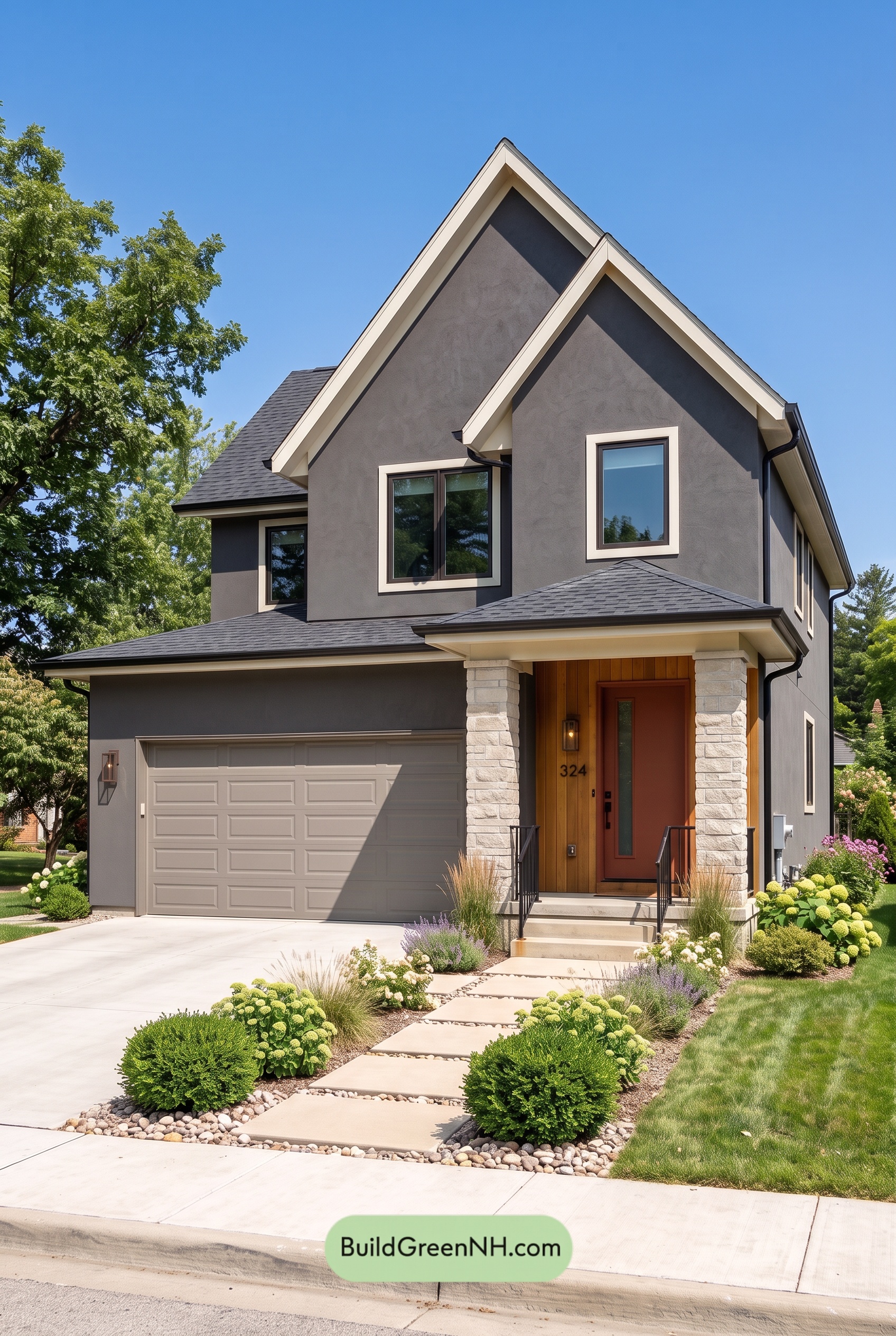

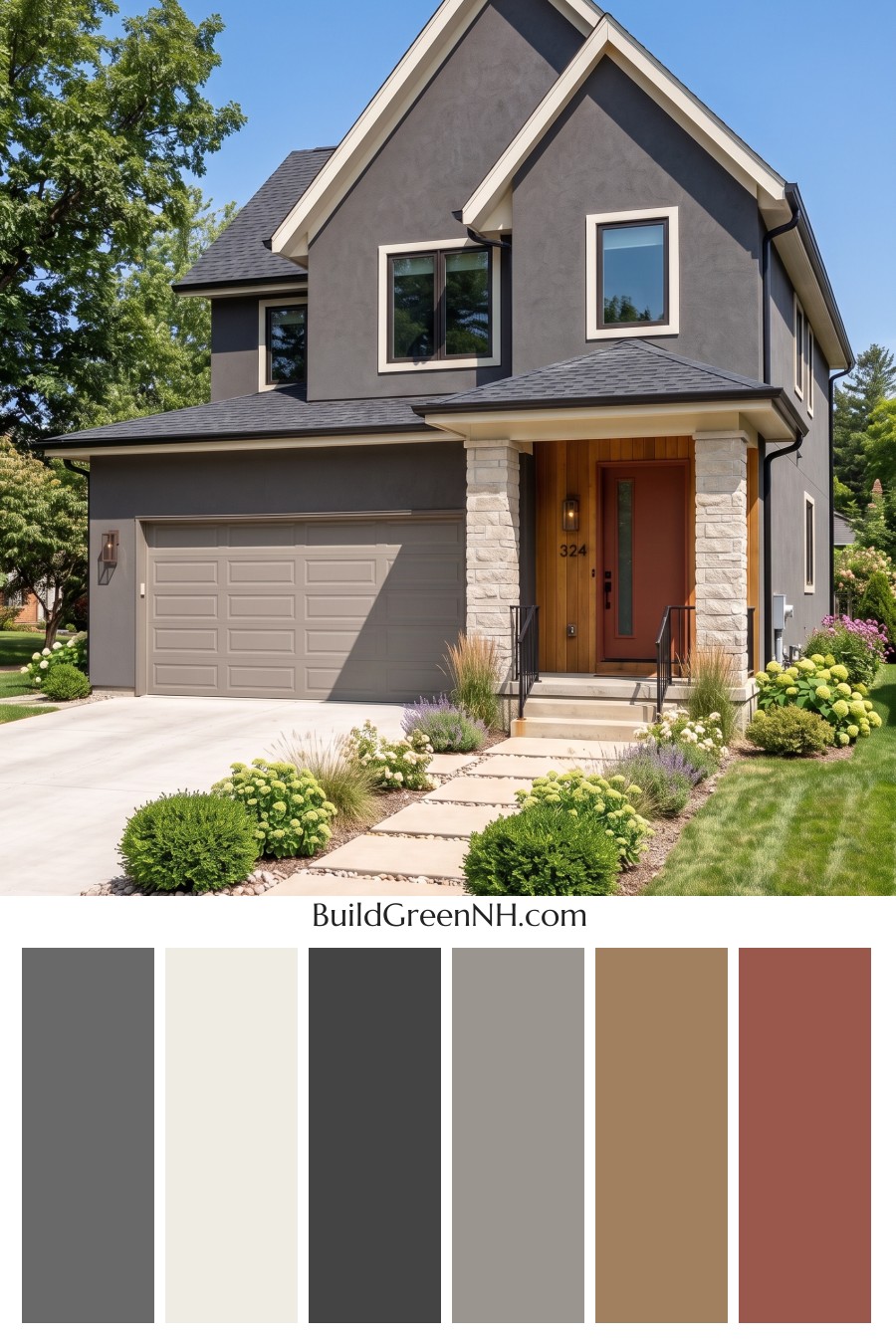
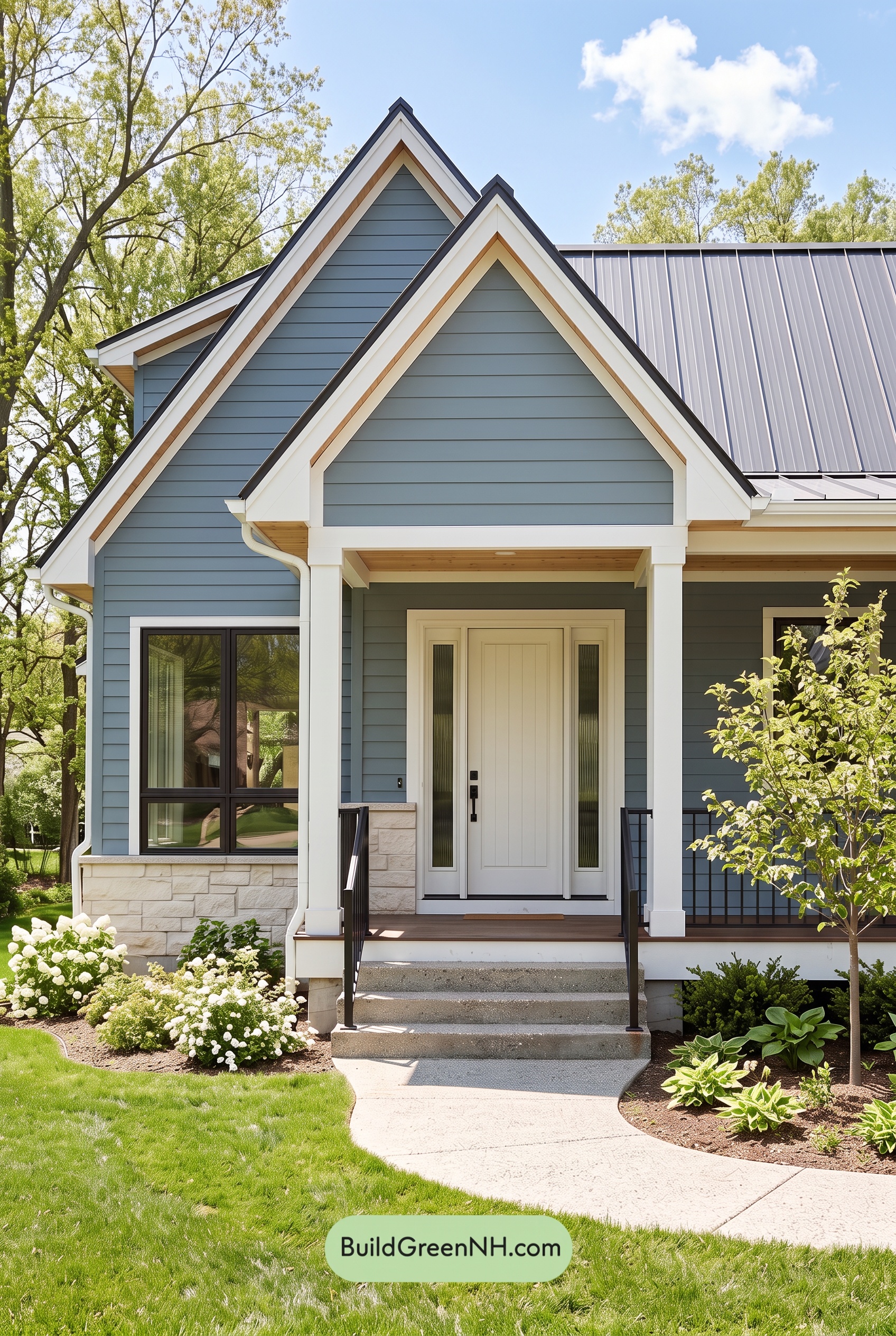
This sophisticated blend of layered grays, crisp light trim, and welcoming brown accents gives the home a polished modern presence without sacrificing warmth.
A Grounded Gray Foundation
The exterior walls are finished in a medium-to-deep gray that gives the home a strong, tailored look. This cool neutral shade beautifully emphasizes the sharp rooflines and tall gables while allowing the architecture to feel substantial rather than severe. Matching gray window frames, garage door panels, and railings keep the palette cohesive, creating a calm visual flow from one façade element to the next.
Light Trim That Defines Every Line
Soft white trim brings welcome brightness to the design. Used along the roof edges, gables, windows, and porch details, this pale shade creates clean contrast against the gray siding and makes the home’s layered silhouette stand out. The result is refined and airy, especially in direct sunlight, where the trim prevents the deeper exterior tones from feeling too heavy.
Warm Brown Accents at the Entry
The entry makes a memorable statement with rich brown vertical accent cladding and a deeper brown front door. These warm, earthy tones add texture and personality to the otherwise cool gray scheme, drawing the eye naturally toward the front porch. The contrast feels intentional: gray provides the modern structure, while brown brings an inviting, organic character.
Dark Roof Details for a Finished Look
A dark charcoal-gray roof anchors the entire composition and connects smoothly with the darker window framing, gutters, and metal railings. This nearly black shade adds depth at the top of the home without competing with the warm entry feature below. It is a practical, polished choice that gives the house a crisp outline against the lighter trim.
A Modern Exterior with Lasting Warmth
Overall, this exterior color scheme strikes an appealing balance between cool and warm, light and dark. The gray family feels contemporary and versatile, the soft white trim keeps the architecture fresh, and the brown accents offer a welcoming focal point. Together, these shades create a home that looks elegant from the street while still feeling approachable and comfortably connected to its landscaped setting.
Next, see how this color scheme looks under different lighting simulations throughout the day.
Overcast
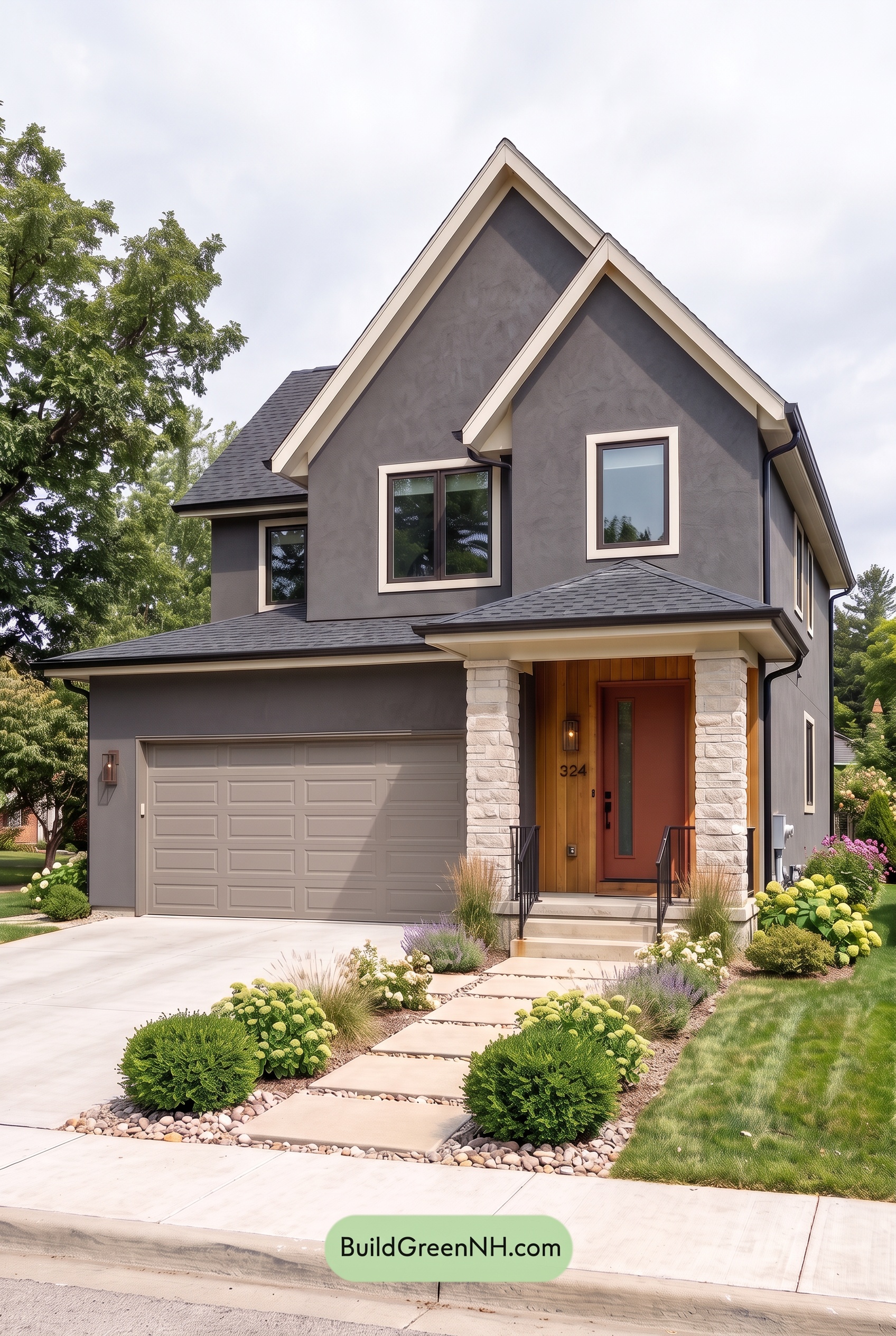
Under overcast skies, the medium gray siding takes on a quieter, slightly cooler character than it shows in neutral daylight, while the deeper gray details feel more unified and less sharply defined. The light trim remains crisp but softens in brightness, reducing the high-contrast outline around the rooflines, windows, and garage.
The warm brown entry accents lose a little saturation without direct sun, reading richer and more muted rather than vivid. With shadows diffused across the façade, the home feels calmer and more refined: architectural textures become easier to notice, while the overall palette shifts from bright contrast to a balanced, welcoming mood.
Golden Hour
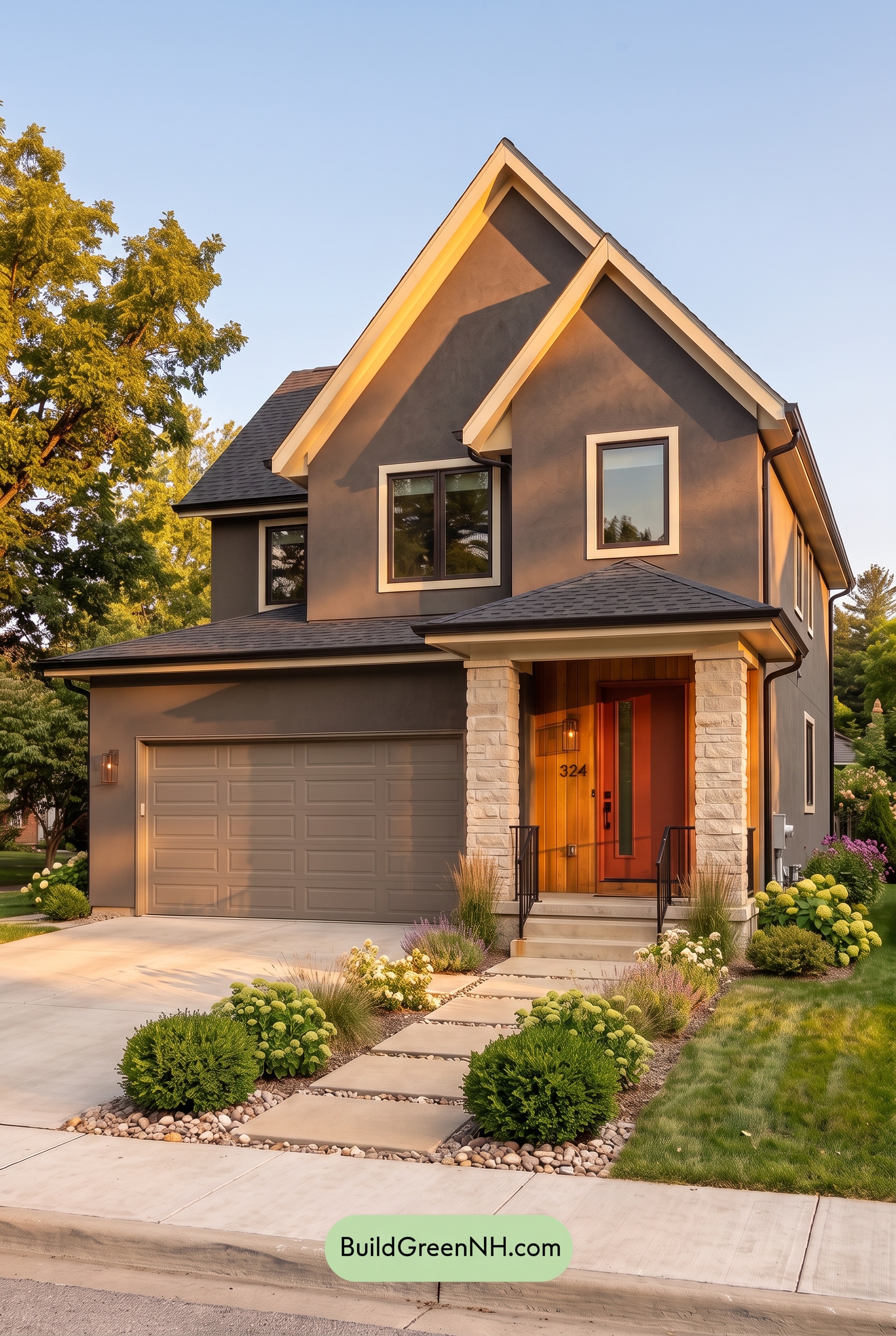
In neutral daylight, the gray exterior reads crisp and balanced, with the light trim providing a clean, tailored contrast. At Golden Hour, low amber light softens those cool gray shades into warmer, richer neutrals, while the brown accents and entry area gain depth and a more inviting saturation.
Longer shadows intensify around the rooflines, windows, and porch, making the darker gray details feel more defined against the glowing trim. The result is a moodier yet welcoming facade: less stark than it appears at midday, with gentle warmth and dramatic contrast that draw the eye toward the entrance.
Shade
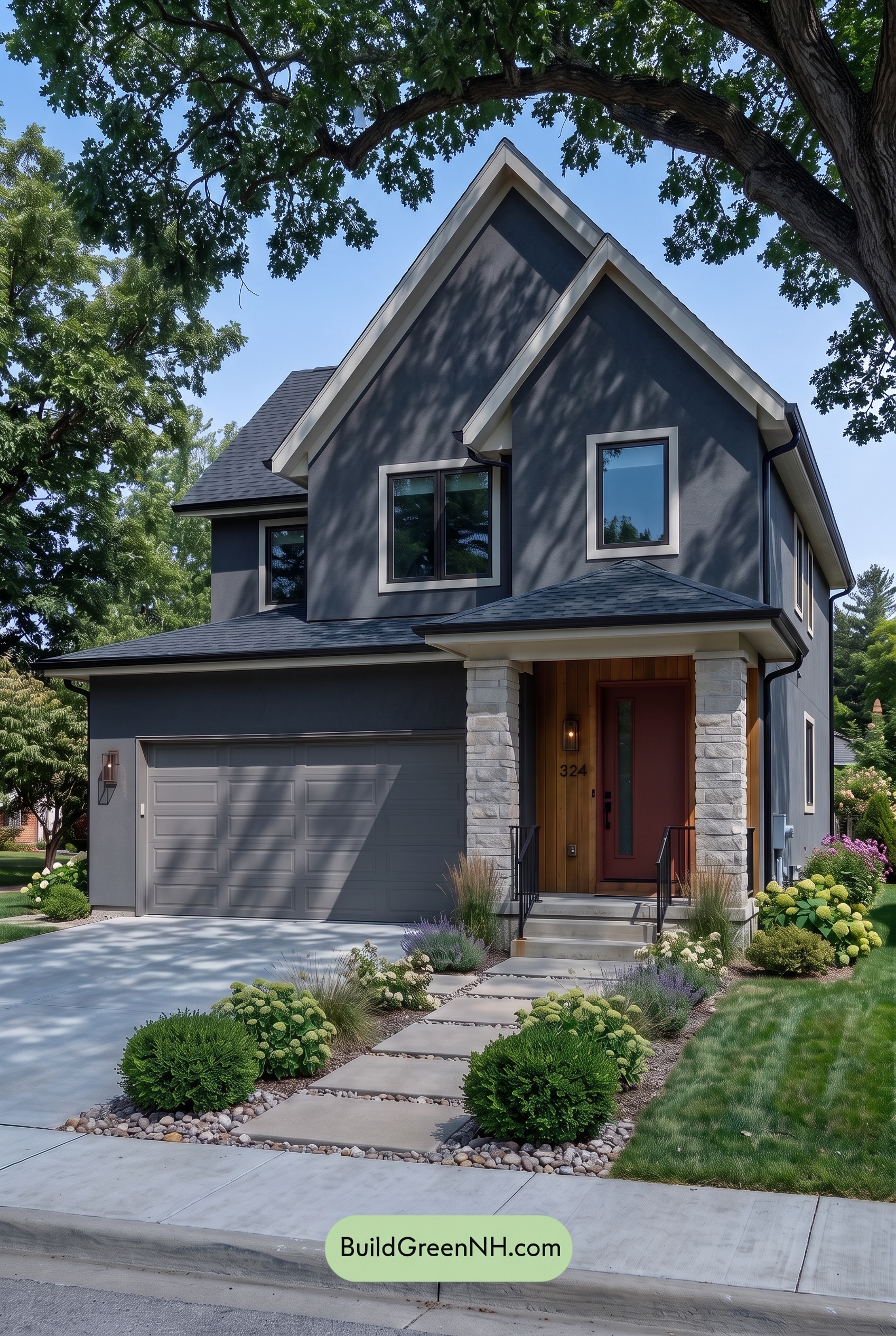
In shade, the gray exterior reads deeper and slightly cooler than it would in neutral daylight, with its saturation appearing more restrained across the broad wall surfaces. The white trim softens from crisp and bright to a gentler, quieter contrast, while the darker gray details recede into the shadowed areas for a more layered look.
The brown entry accents hold onto their warmth, becoming richer and more intimate against the subdued grays. Dappled shadows create shifting bands of light and dark that heighten the home’s architectural depth, giving the overall palette a calm, sheltered mood rather than the sharper contrast seen in open daylight.
Nighttime
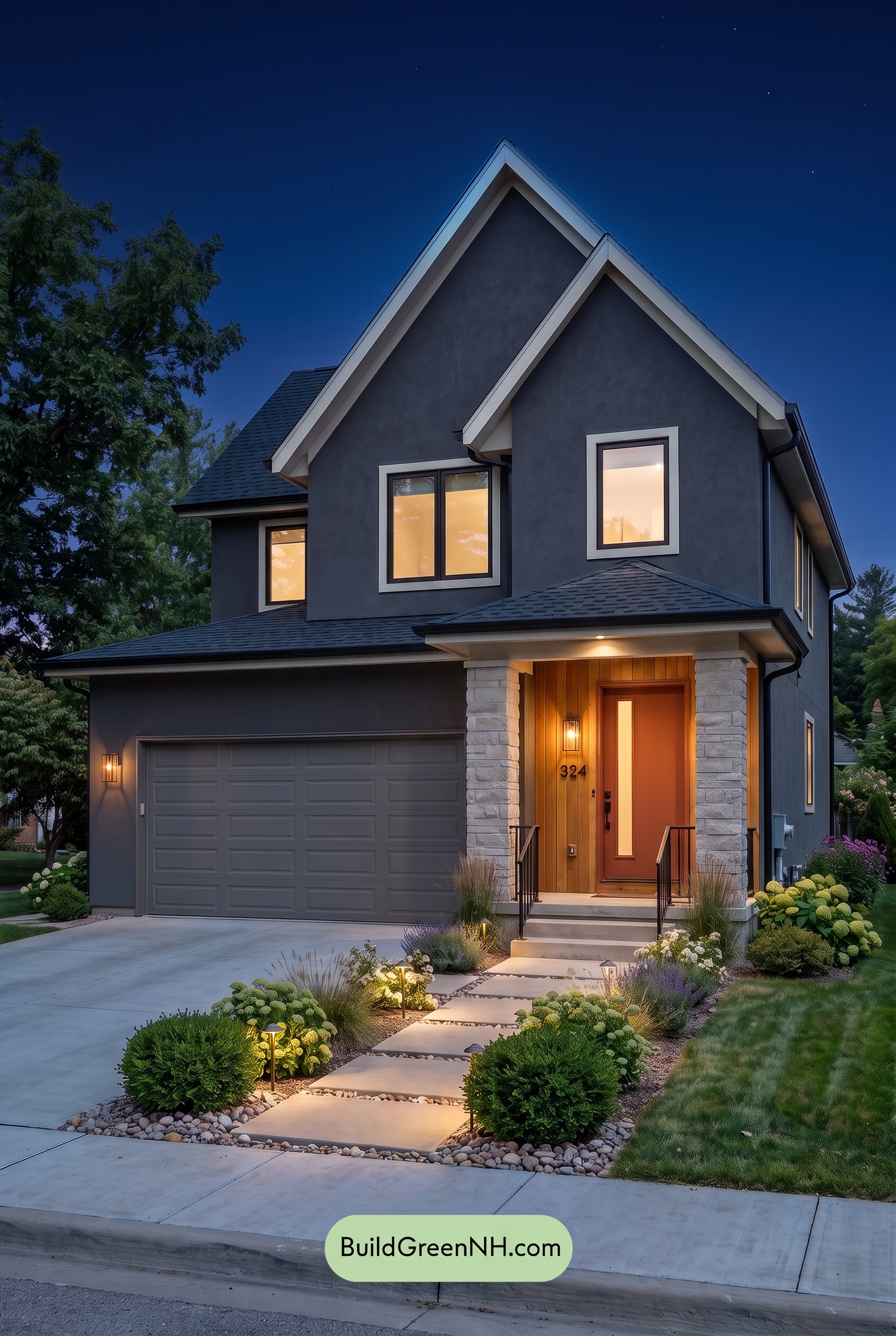
At night, the gray exterior takes on a deeper, cooler cast than it shows in neutral daylight, with shadows softening its saturation and giving the facade a more sculptural presence. The white trim remains crisp around the roofline and windows, but reads gentler where the light falls away, creating a refined contrast instead of a stark outline.
Warm lighting at the entry brings the brown accents forward, making them feel richer and more welcoming against the moody gray surroundings. Darker gray details recede into the shadows, while illuminated edges and warm interior glow create a layered, inviting nighttime atmosphere.
Pin these for later:
Want More?
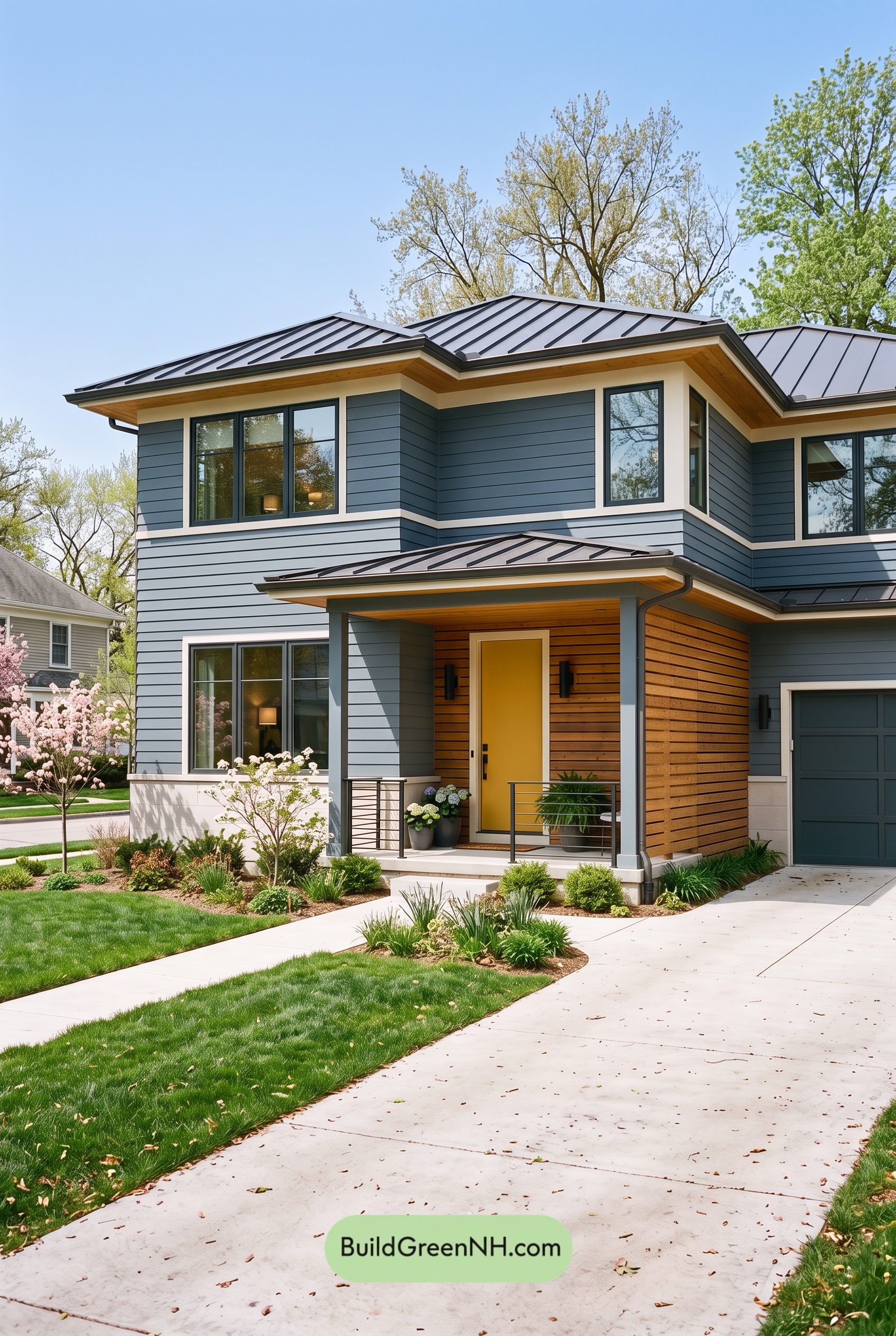 Blue House Front Door Color Scheme: Harbor Saffron
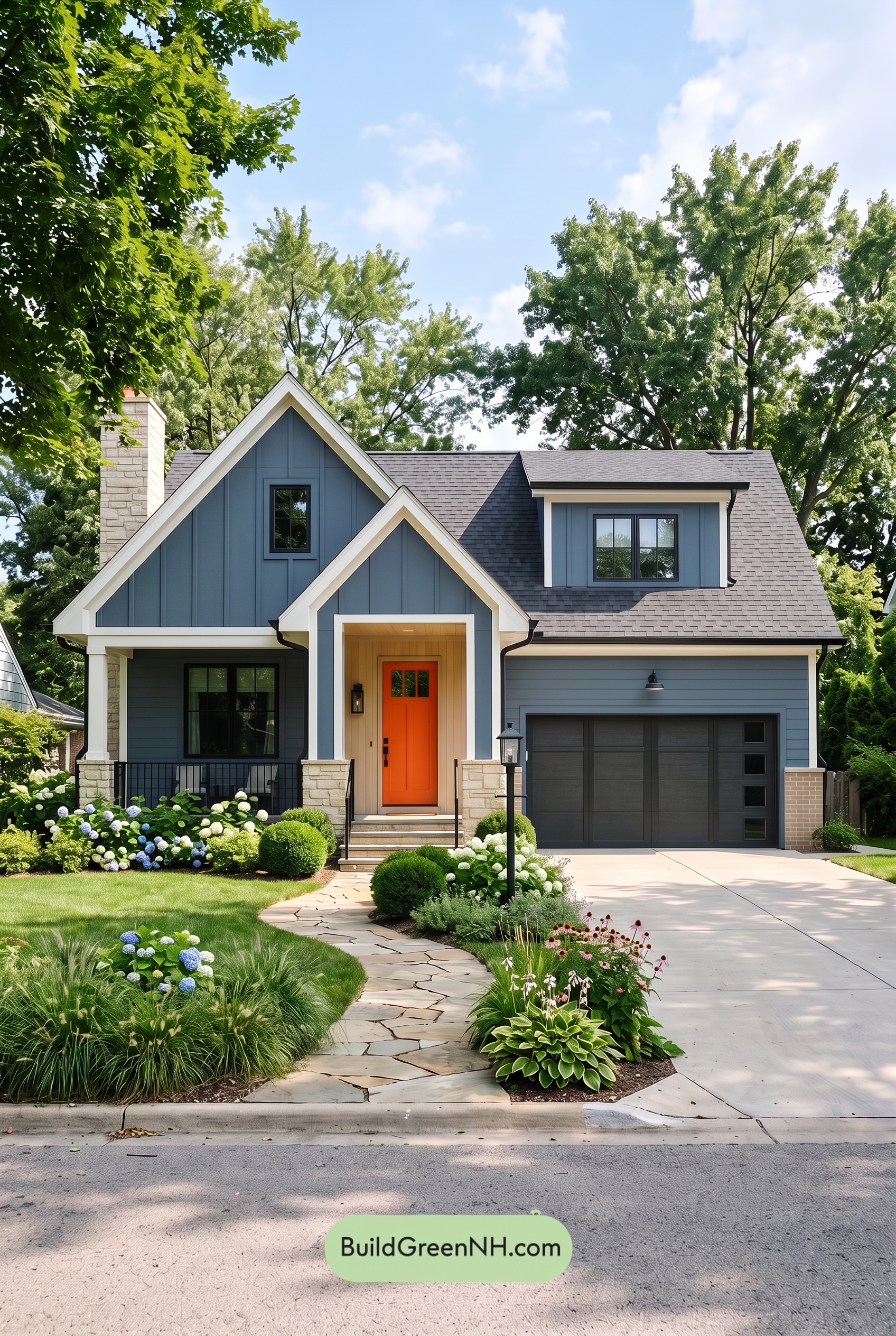 Blue House Front Door Color Scheme: Cobalt Persimmon
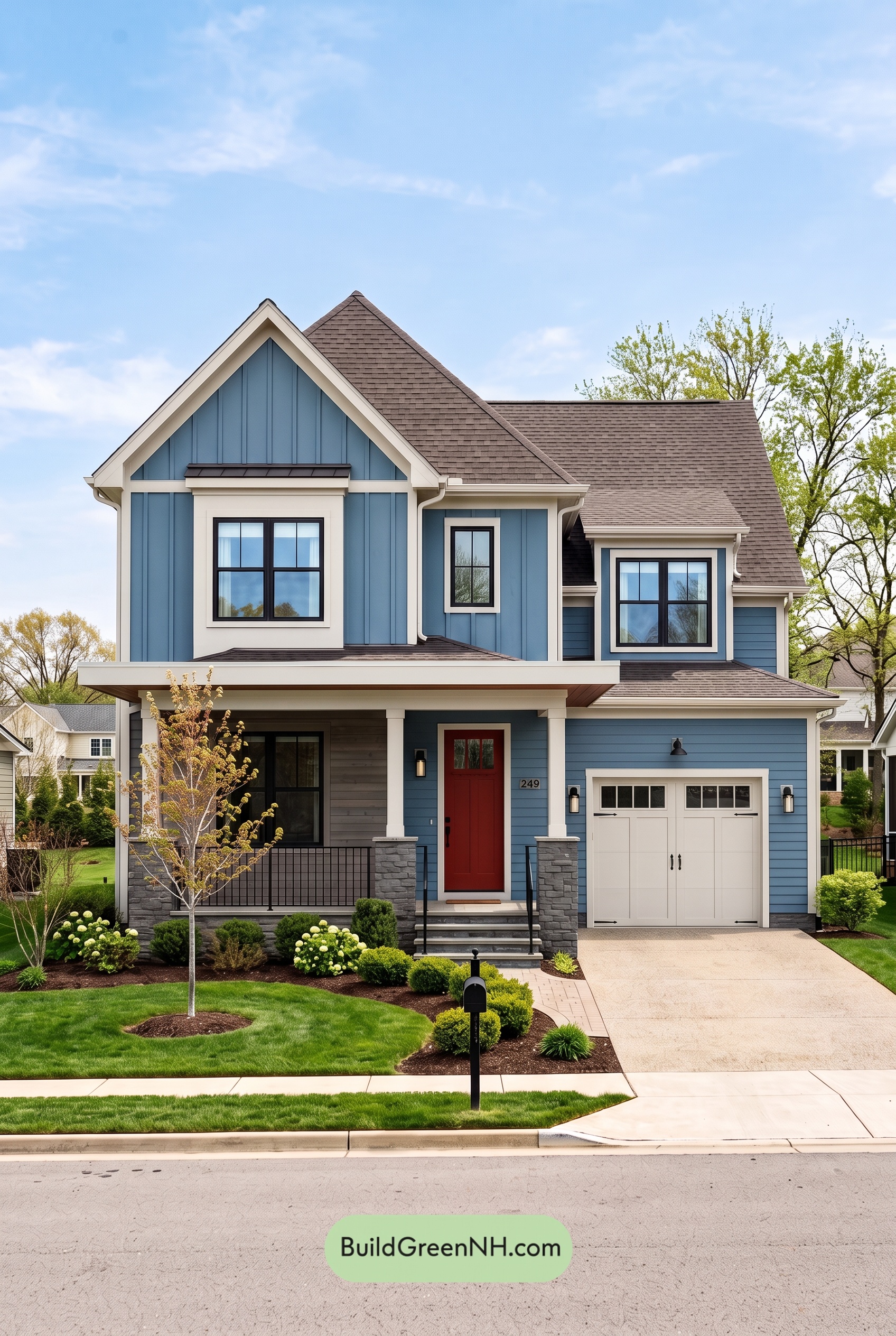 Blue House Front Door Color Scheme: Denim Poppy
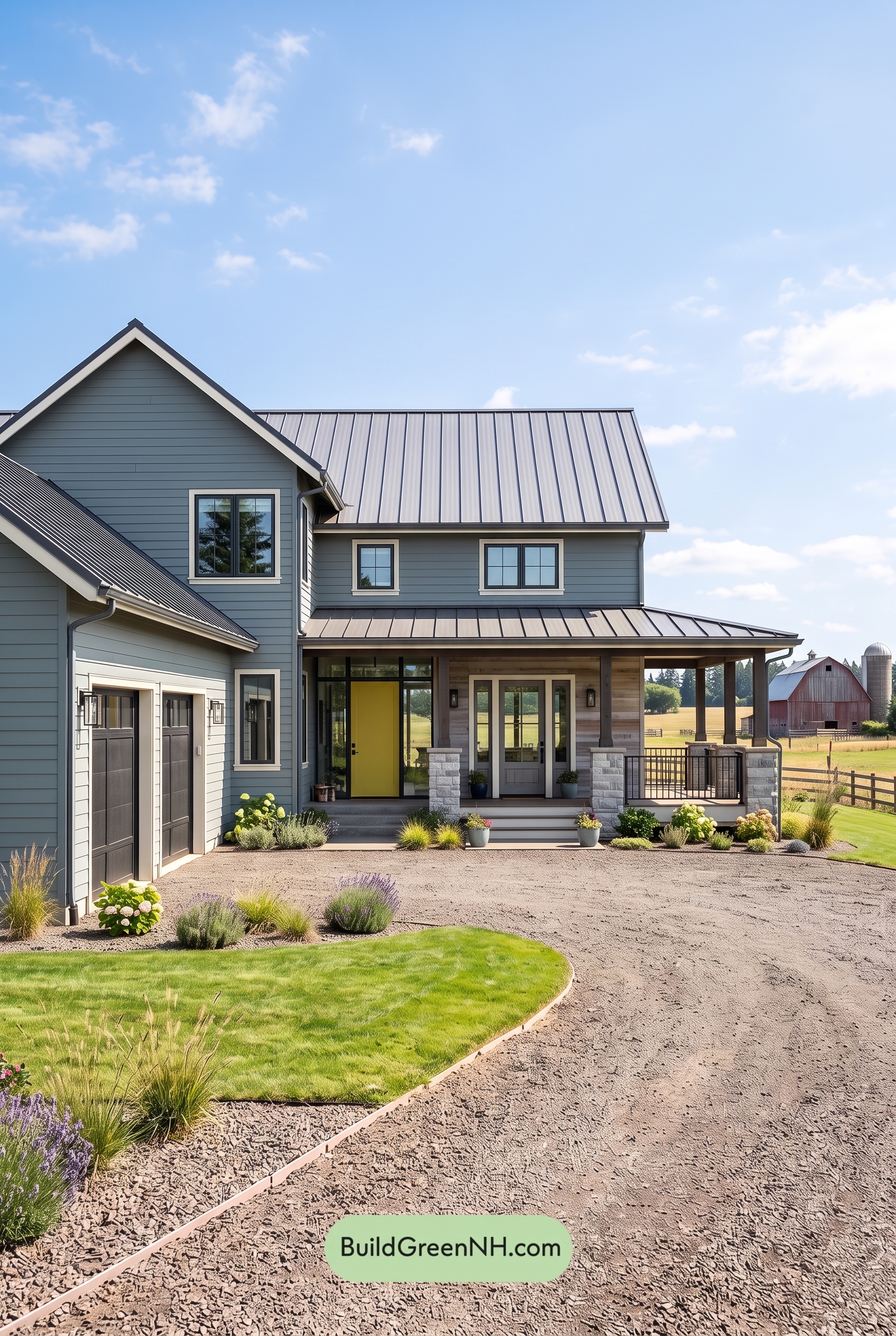 Blue House Front Door Color Scheme: Slate Citron
 Blue House Front Door Color Scheme: Mist Blue Haven
Table of Contents