Last updated on
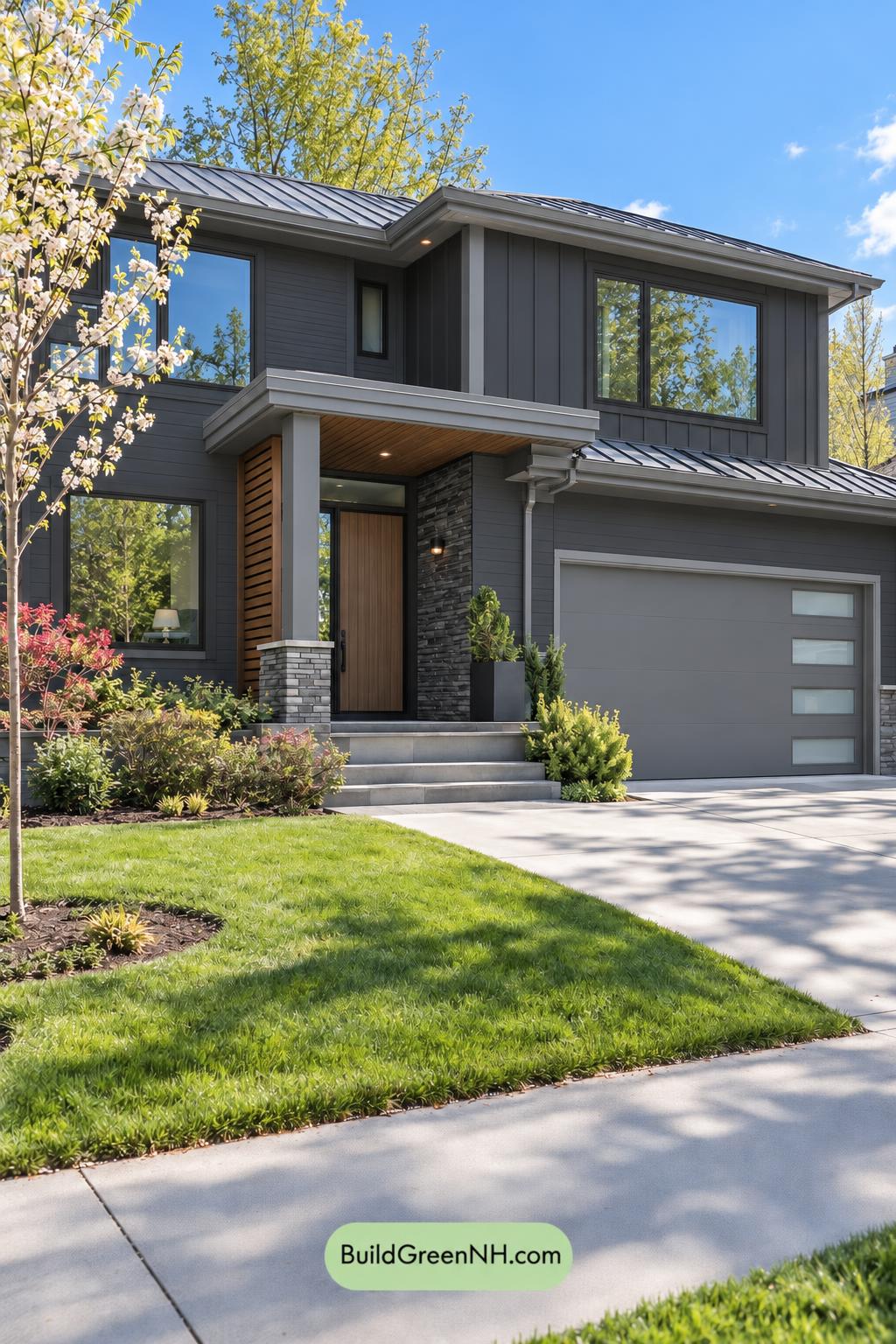

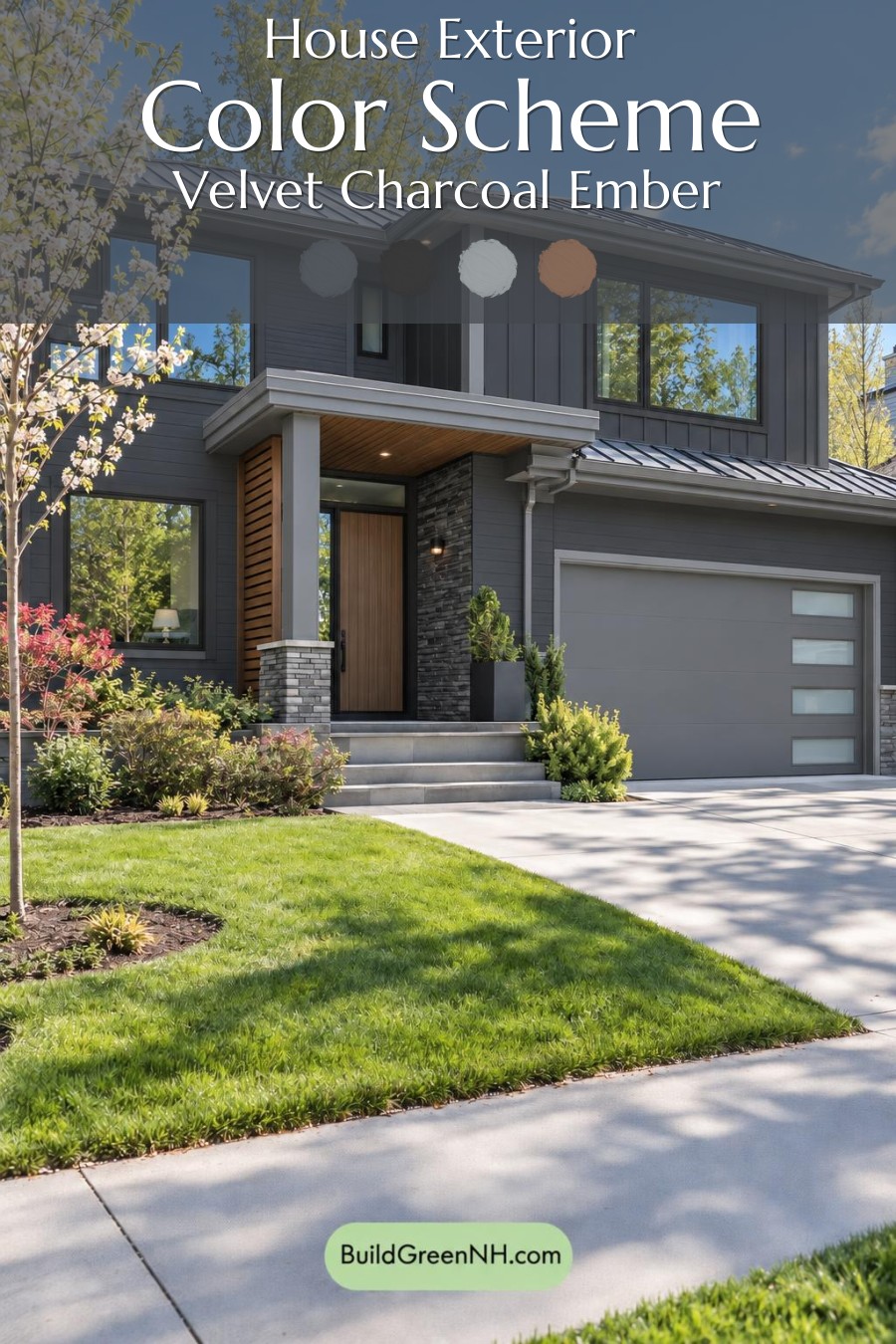
This layered gray exterior feels effortlessly modern because its cool, tailored shades gain warmth and welcome from a richly toned brown entry door.
A Refined Gray Foundation
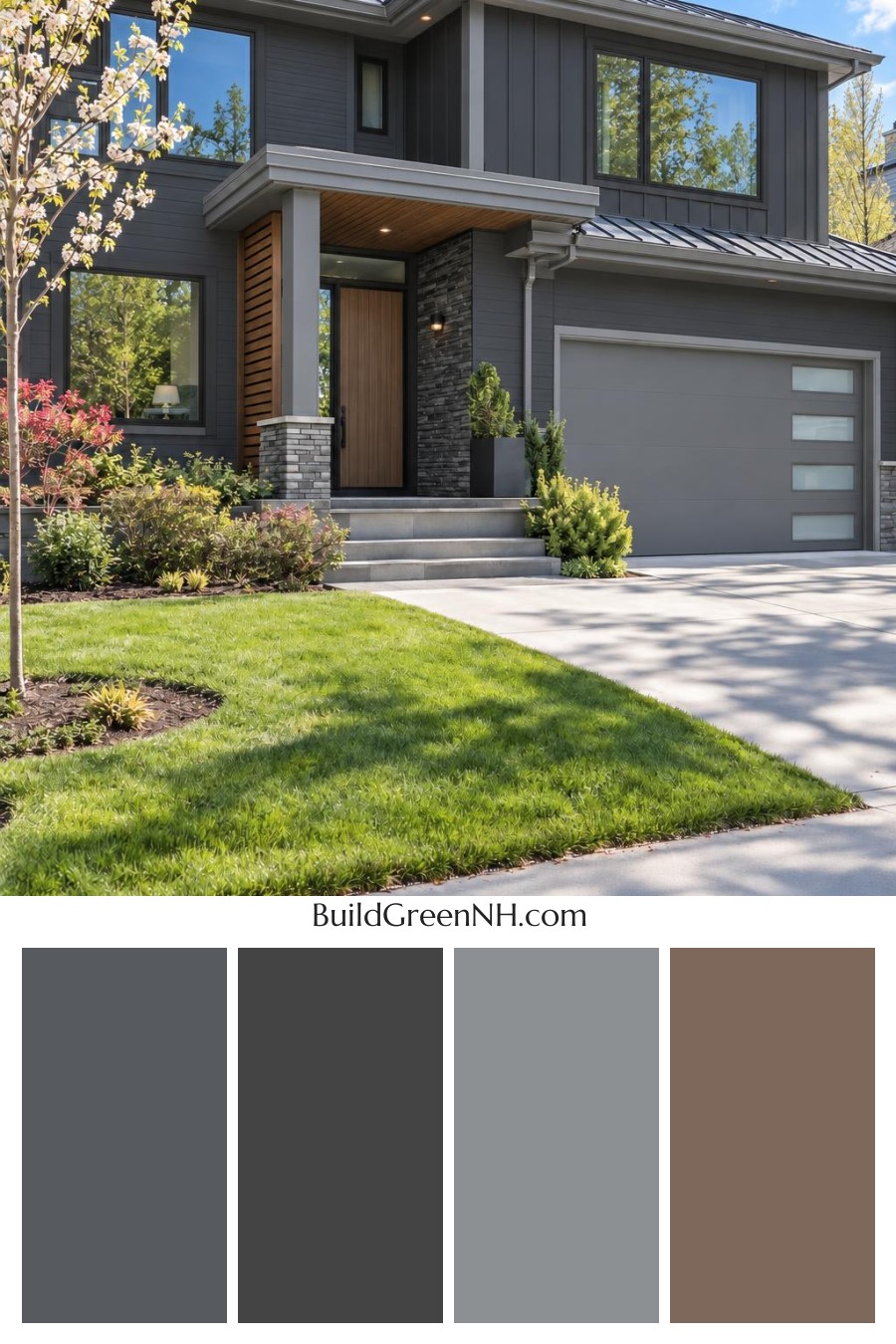
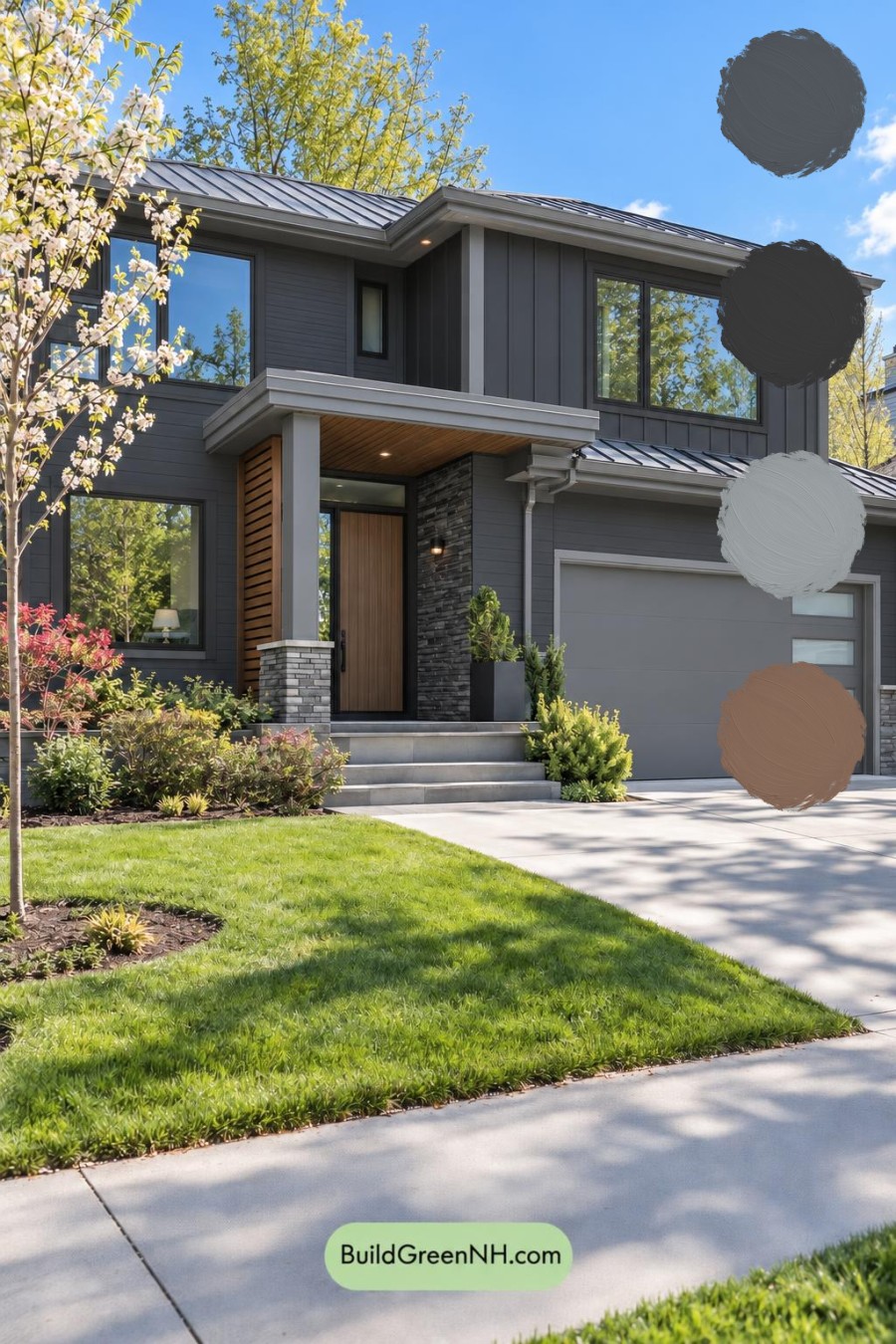
The home’s main siding is finished in a balanced medium-to-deep gray that gives the architecture a crisp, contemporary presence. This substantial shade anchors the broad wall planes without making the exterior feel overly heavy, especially with the generous windows reflecting the sky and surrounding greenery.
A darker charcoal-gray accent shade adds depth to the upper façade and recessed areas. Its placement emphasizes the home’s clean vertical lines and strong geometry, giving the exterior a layered, architectural look rather than a flat one-note finish.
Trim That Defines Every Edge
A lighter cool gray is used across the trim, fascia, and column details, creating a polished outline around the darker siding. This contrast is subtle enough to remain sophisticated, yet clear enough to highlight the rooflines, entry canopy, and garage surround.
The window frames continue the deep charcoal-gray direction, visually tying the glazing to the darker accent portions of the façade. The result is a seamless, tailored effect that makes the large windows look intentional and beautifully framed.
A Warm Entry Moment
The front door introduces a warm medium-brown wood tone that immediately softens the cooler gray palette. It becomes the natural focal point at the porch, drawing the eye inward and giving the streamlined exterior an inviting, human touch.
Warm brown detailing beneath the entry roof repeats that welcoming note. Against the surrounding gray shades and dark stacked-stone accents, this earthy warmth keeps the design from feeling too formal or industrial.
Garage and Roof Coordination
The garage door carries a mid-gray shade that blends smoothly with the main siding while still sitting apart from the lighter trim. Its restrained color allows the clean horizontal panels and small frosted windows to add interest without competing with the entry.
Above, the dark charcoal-gray roof provides a strong finishing line. It connects naturally with the window frames and darker wall accents, giving the entire composition a grounded, cohesive silhouette.
The Overall Mood
This is a confident, modern color scheme with a calm, welcoming side. The range of gray shades delivers contrast through lightness and depth rather than through bold color shifts, while the warm brown door creates just the right amount of balance. Surrounded by green landscaping, the exterior feels clean, enduring, and comfortably connected to its setting.
Next, see how this color scheme looks under different lighting simulations throughout the day.
Overcast
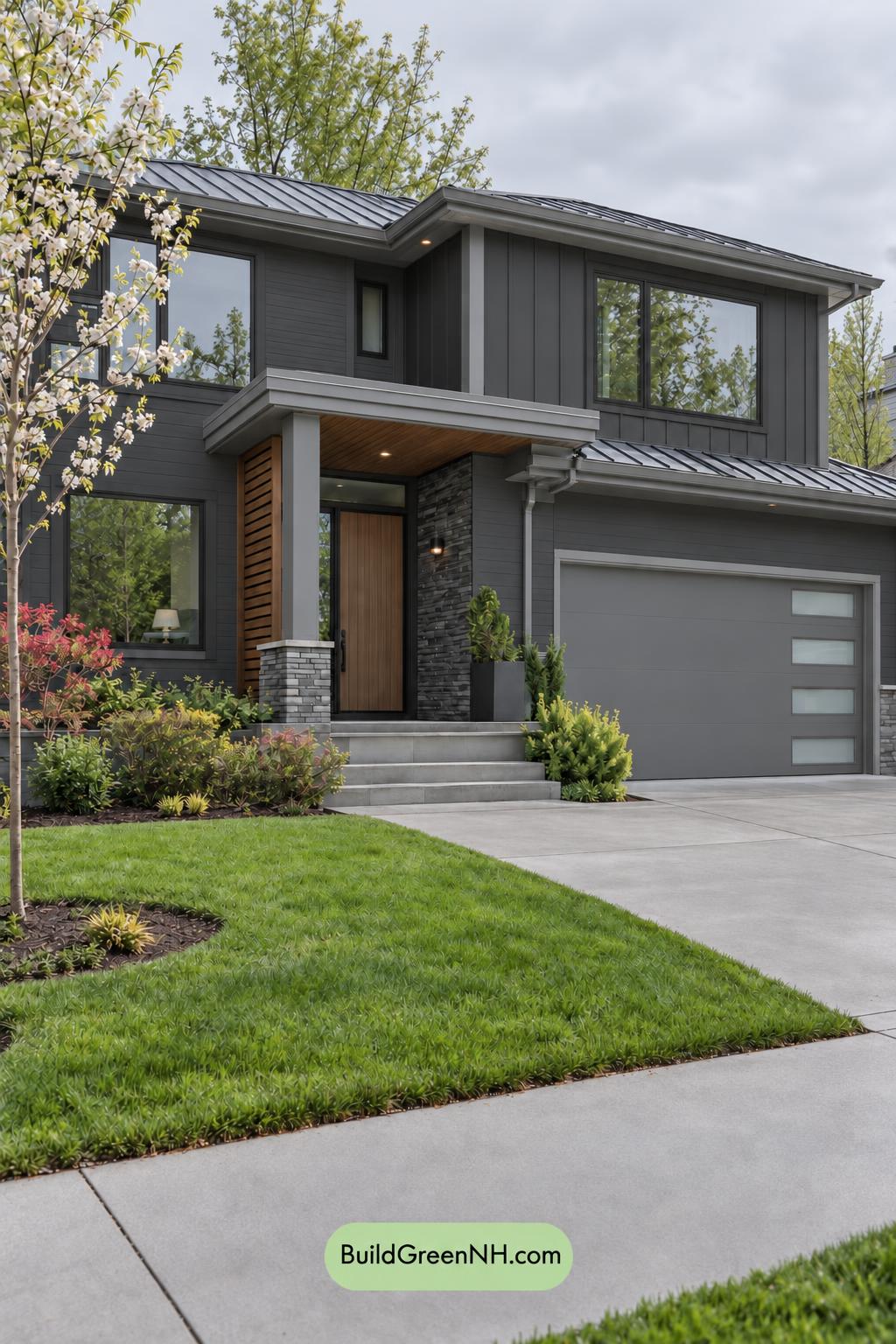
Under overcast skies, the layered gray exterior takes on a softer, more even appearance than it does in neutral daylight. Saturation relaxes slightly, while the deeper charcoal-leaning shades feel richer and more enveloping without strong sun highlights. Trim, columns, and the garage door read closer in value, creating a calm, cohesive facade with gentler contrast.
The brown front door and warm wood-toned details become a welcoming focal point against the cooler grays, though their warmth appears more subdued than in neutral daylight. With shadows diffused across the siding, stone, and rooflines, architectural texture remains visible but less dramatic, giving the home a polished, quietly modern mood.
Golden Hour
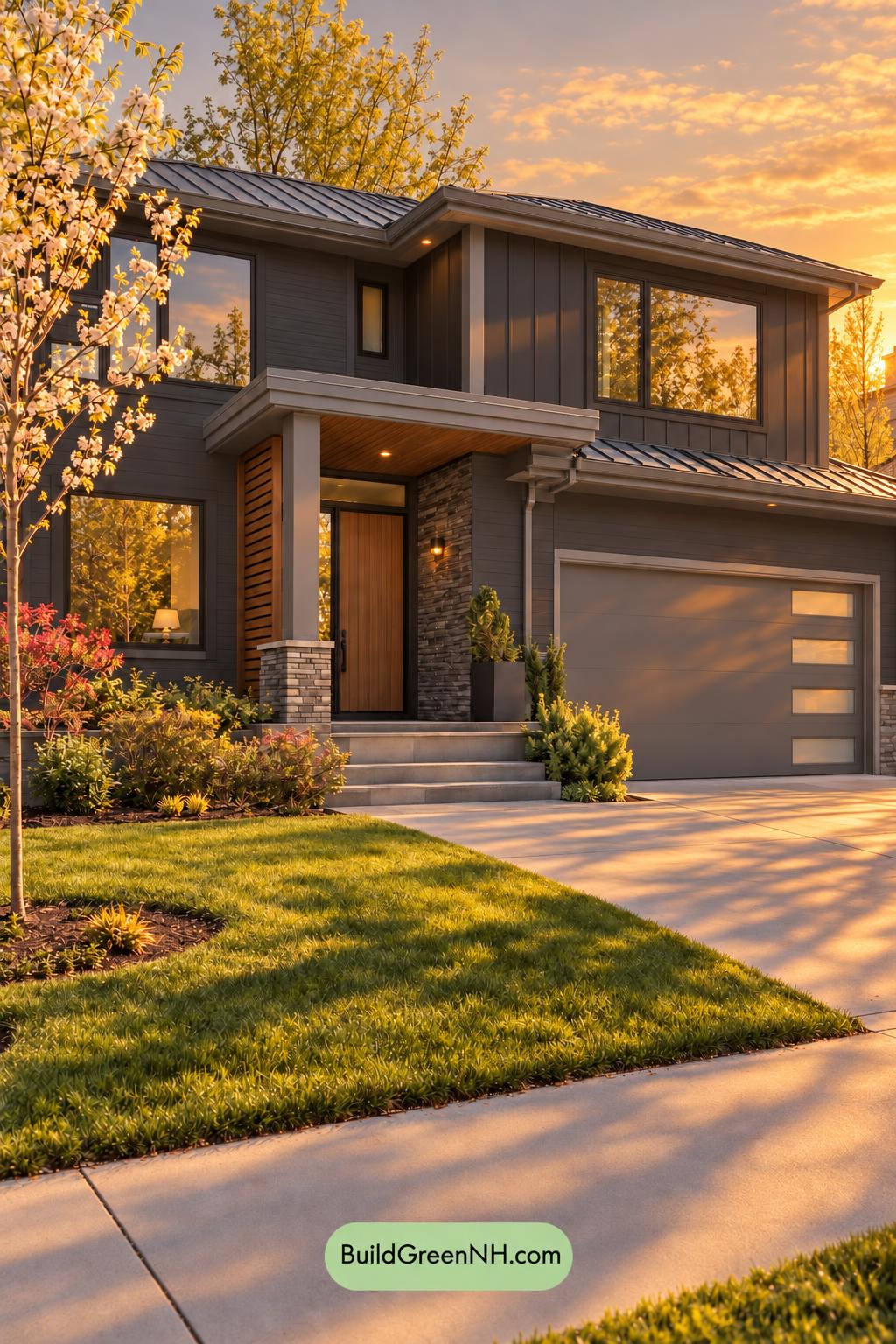
Golden Hour gives the gray exterior a richer, warmer cast than neutral daylight, softening its cool edges with a subtle amber glow. Mid-tone gray surfaces appear deeper and more saturated, while lighter gray trim and columns catch the low sun and take on a gentle, creamy warmth. The brown front door becomes especially inviting, with its warm undertones feeling fuller and more pronounced.
Long, angled shadows sharpen the home’s architectural layers, creating stronger contrast between sunlit gray planes and recessed charcoal-like areas. Compared with the balanced clarity of neutral daylight, this lighting feels more dramatic and relaxed—turning the facade into a cozy, polished composition with depth, texture, and evening warmth.
Shade
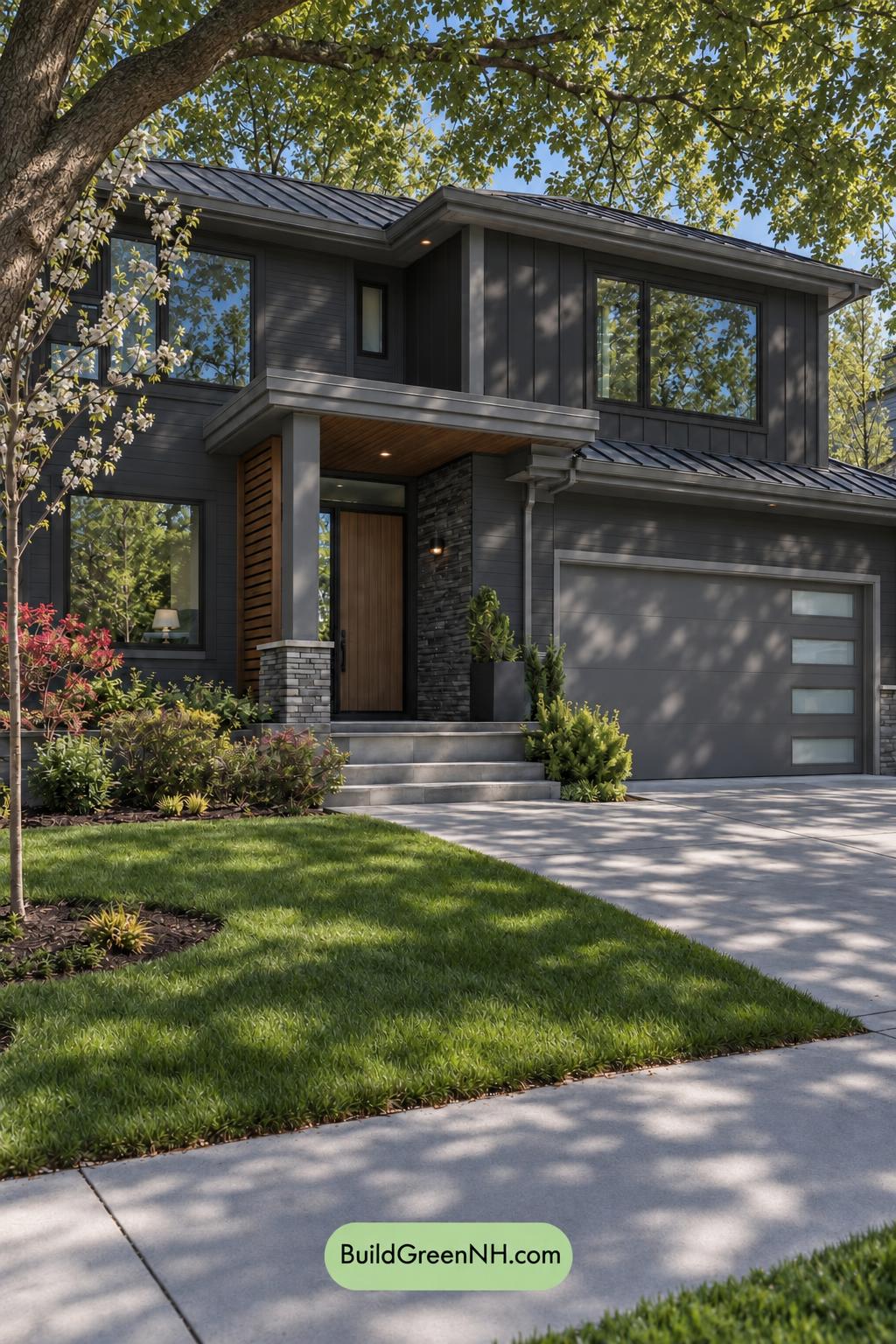
In shade, the layered gray exterior reads deeper and more subdued than it does in neutral daylight. The darker gray surfaces take on a richer, near-charcoal appearance, while the lighter gray trim and garage door soften slightly, creating a quieter contrast around the façade. Moving leaf shadows add gentle shifts in value that emphasize the home’s clean lines and textured details.
The brown front door becomes a warmer focal point against the cooled gray surroundings, though its saturation feels more restrained beneath the tree canopy. Overall, the shaded palette feels calm, polished, and inviting—less crisp than in neutral daylight, but more intimate and architectural.
Nighttime
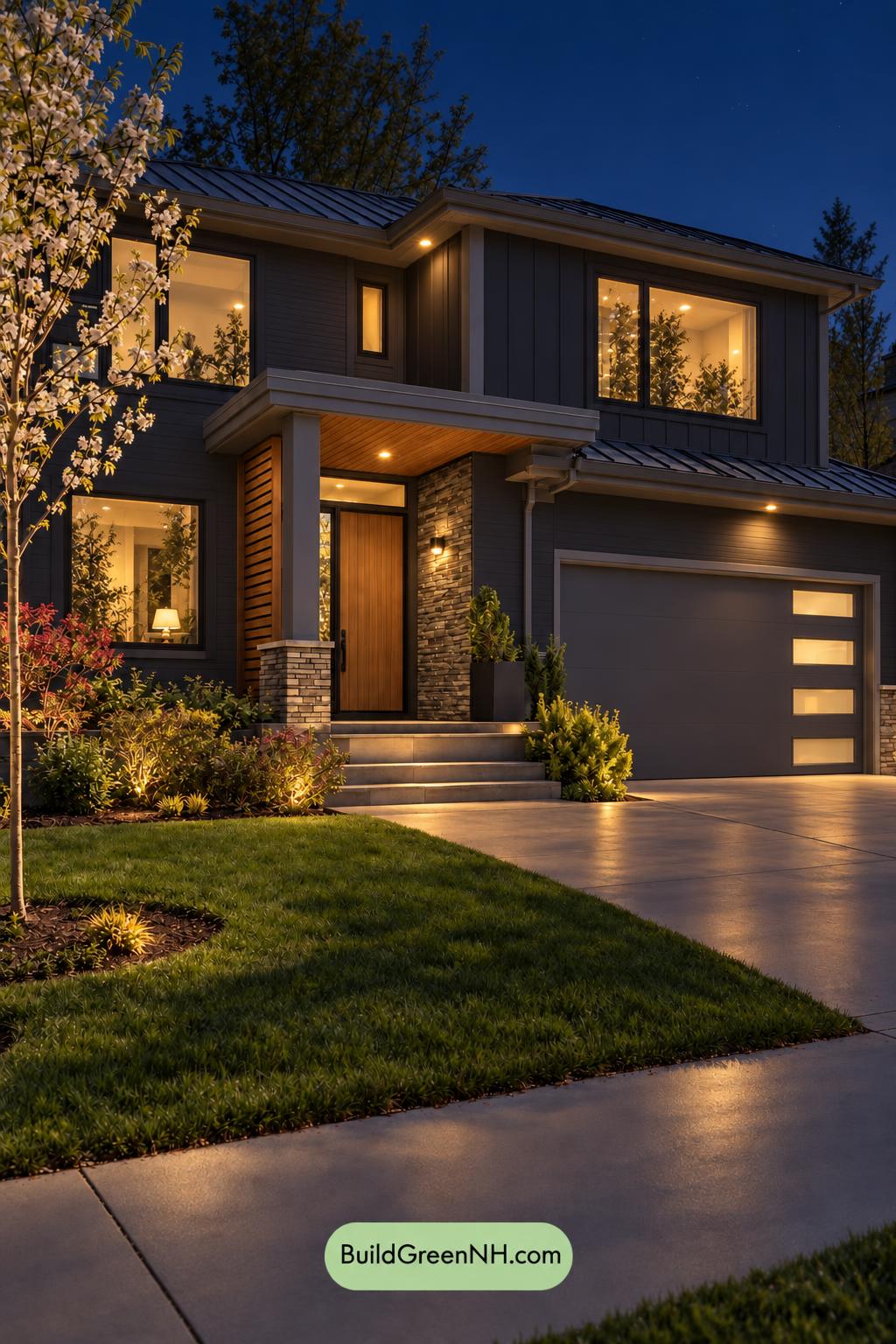
At nighttime, the gray exterior shifts from a balanced daylight neutral to a deeper, more dramatic charcoal presence. Shadows soften the distinction between the gray siding, trim, frames, and garage, while the darker shades gain richness and create a sleek, layered silhouette against the night sky.
Warm exterior and interior lighting brings out a gentler side of the palette, casting golden warmth across the gray surfaces and making the brown front door feel especially inviting. The contrast between cool dark grays and warm illuminated areas gives the façade a polished, welcoming mood with stronger depth around the entry, columns, and recessed details.
Pin these for later:
Want More?
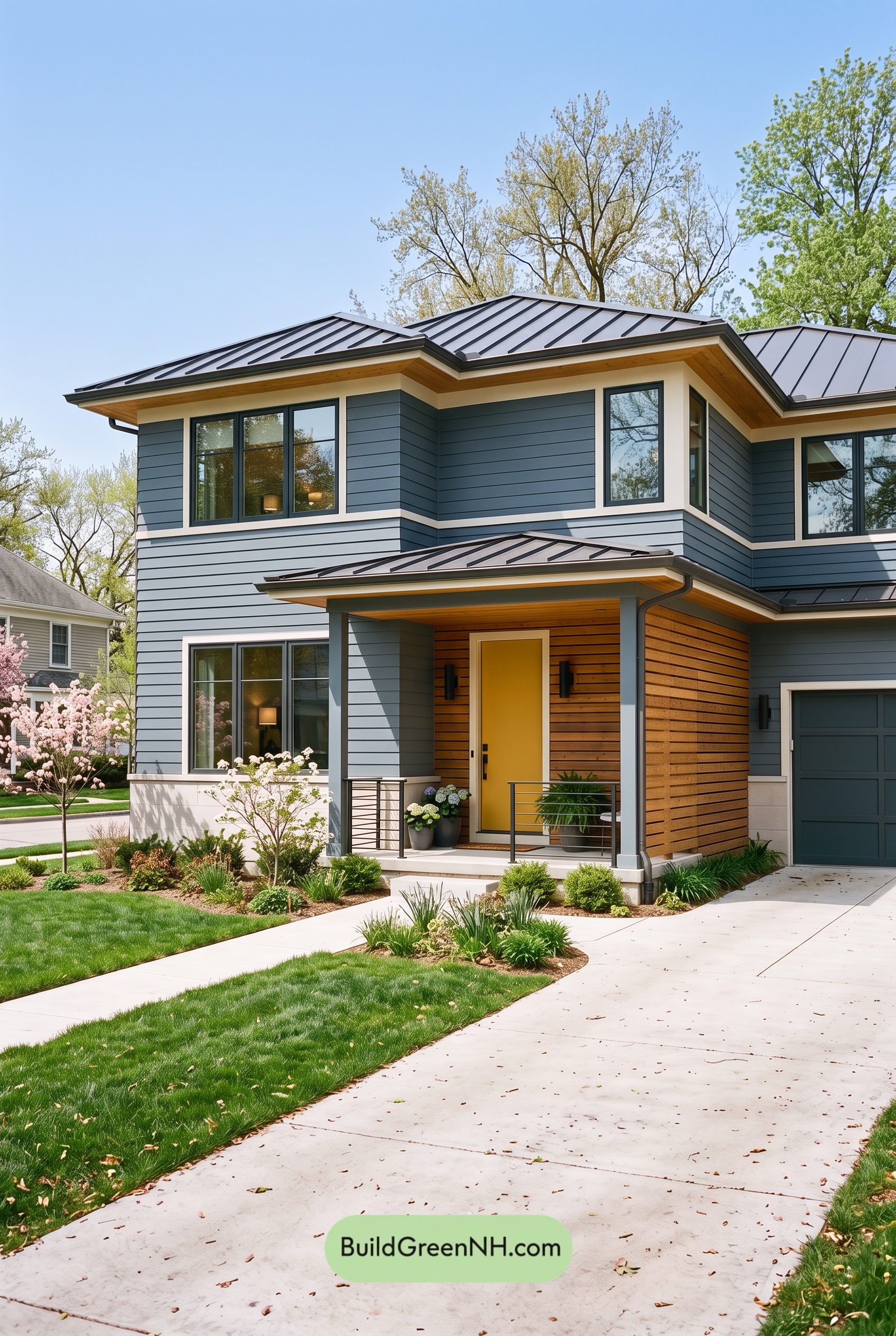 Blue House Front Door Color Scheme: Harbor Saffron
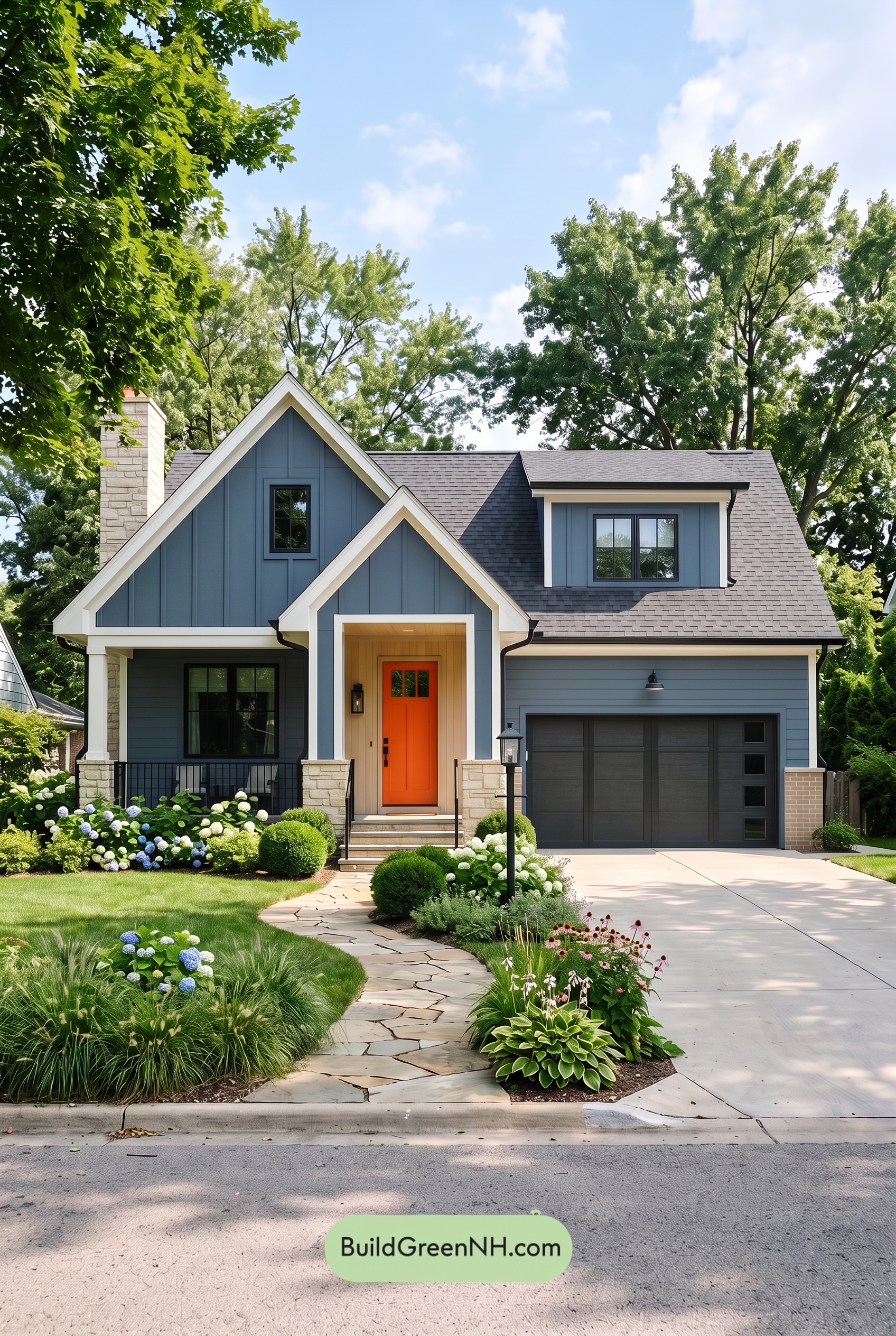 Blue House Front Door Color Scheme: Cobalt Persimmon
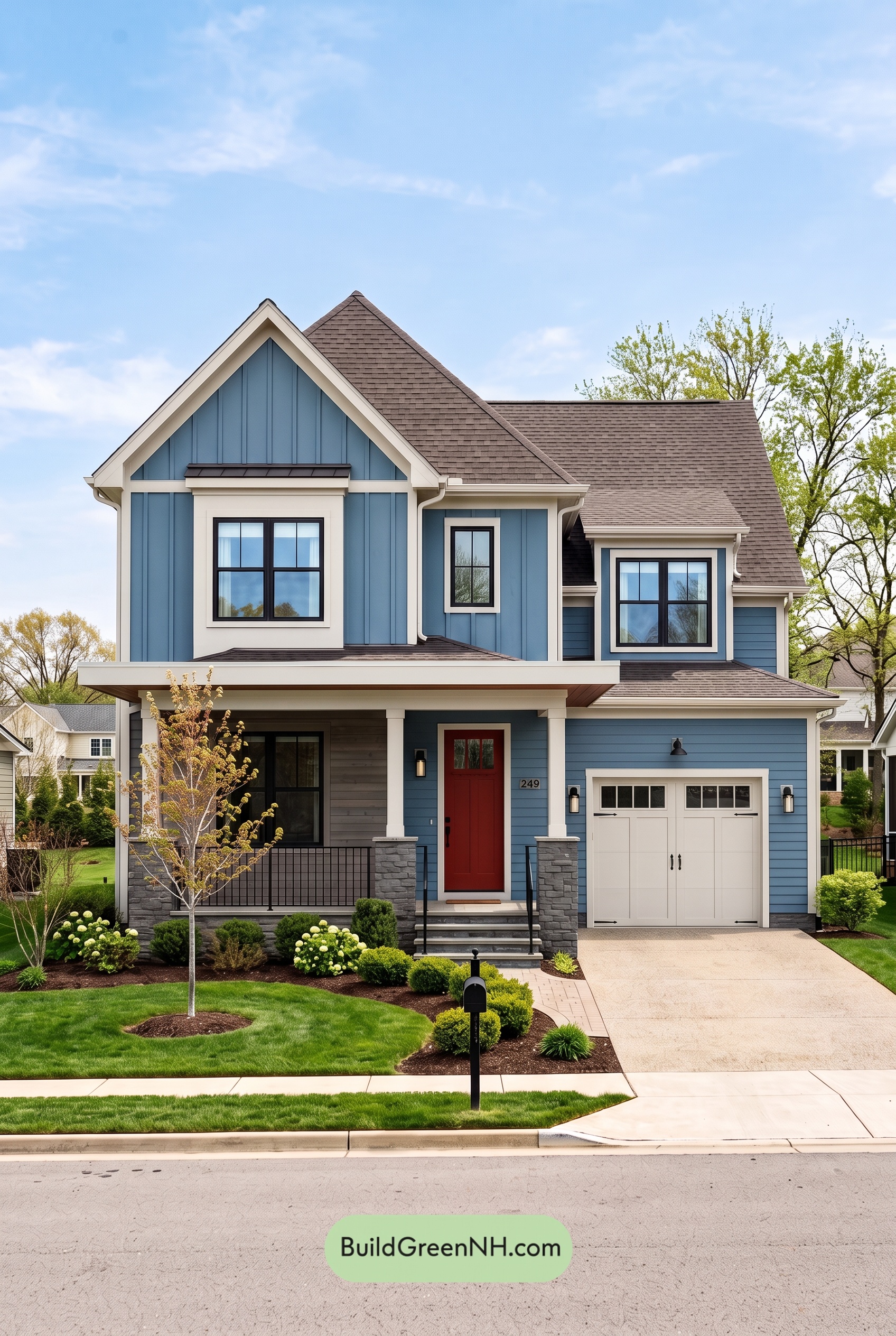 Blue House Front Door Color Scheme: Denim Poppy
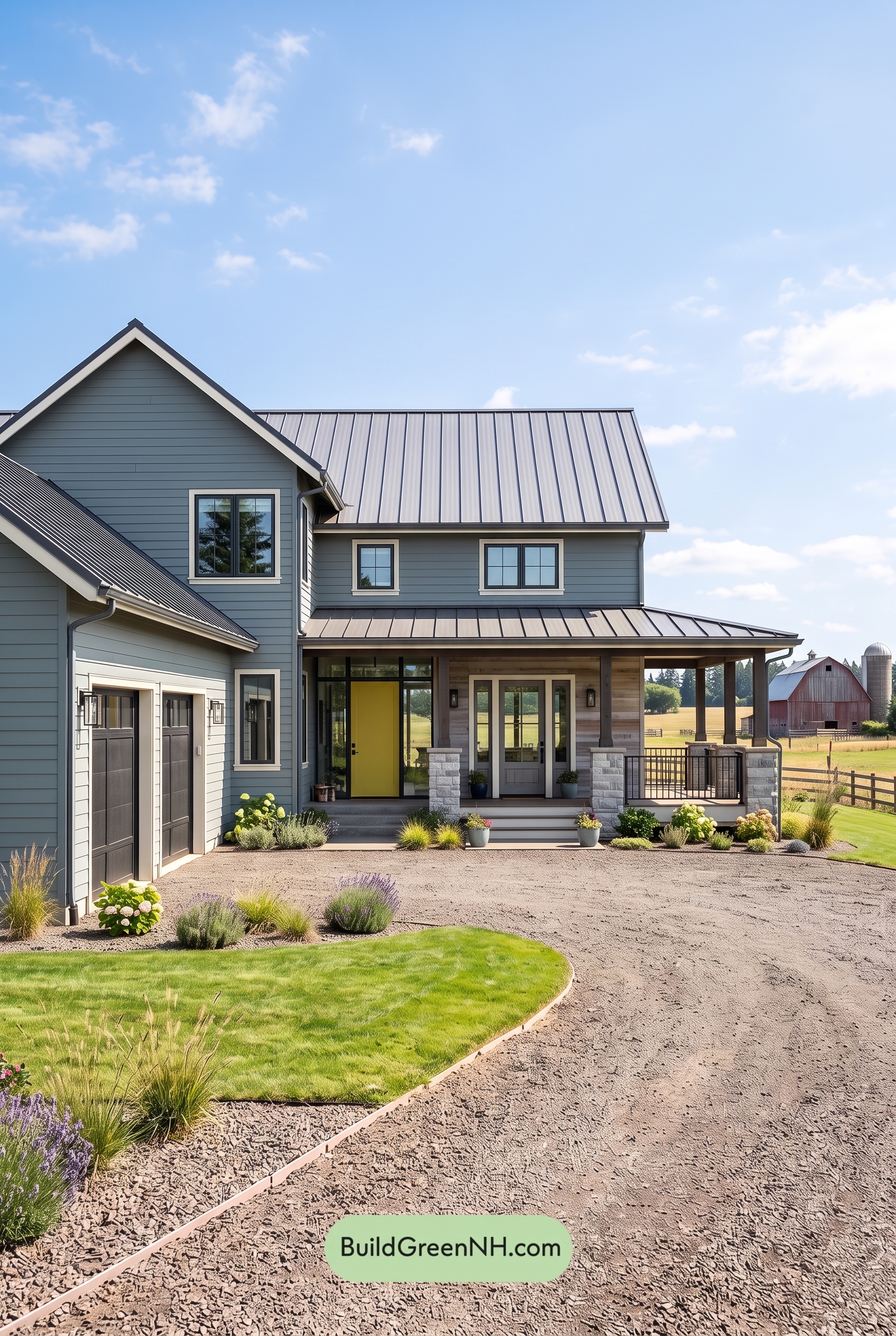 Blue House Front Door Color Scheme: Slate Citron
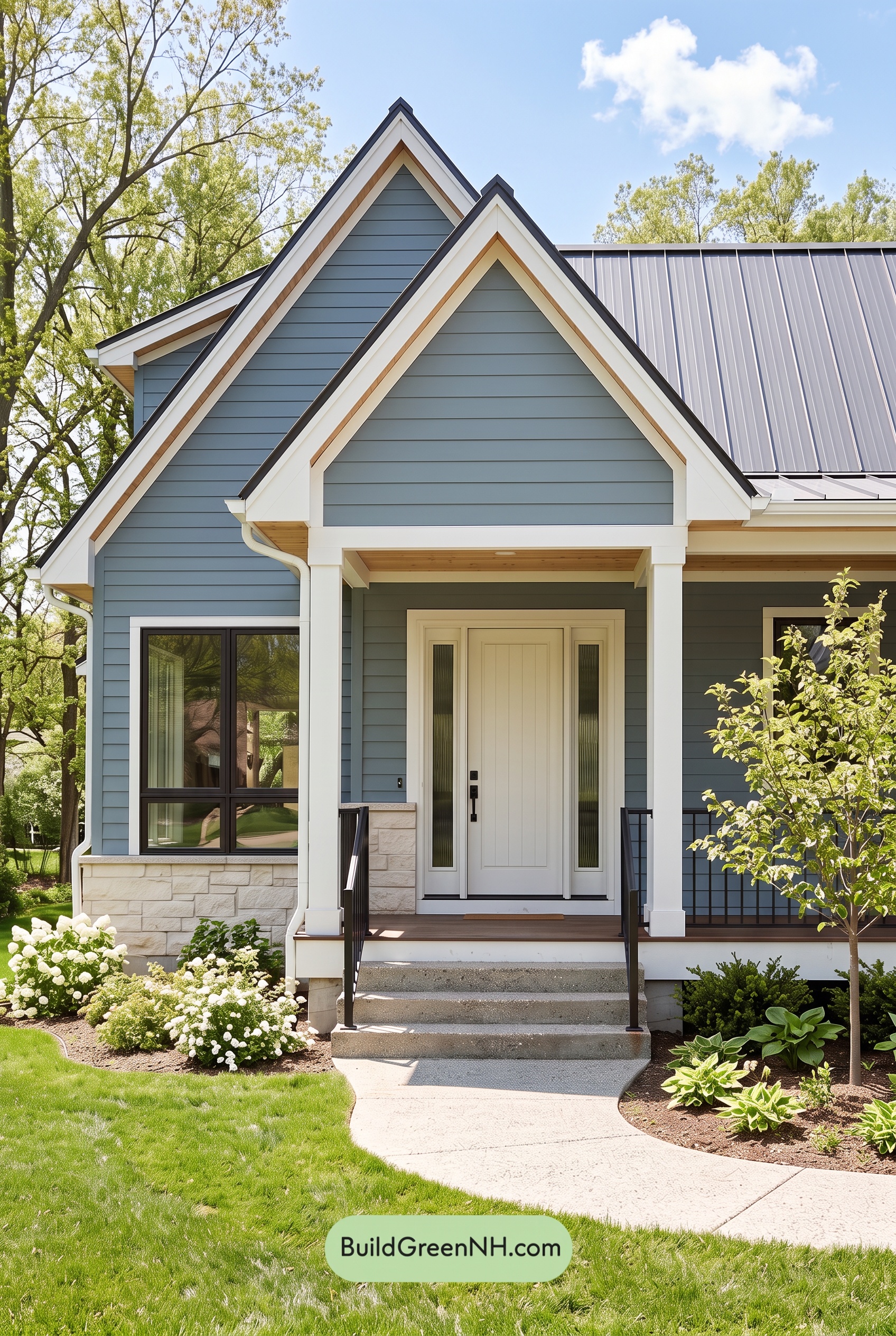 Blue House Front Door Color Scheme: Mist Blue Haven
Table of Contents