Last updated on
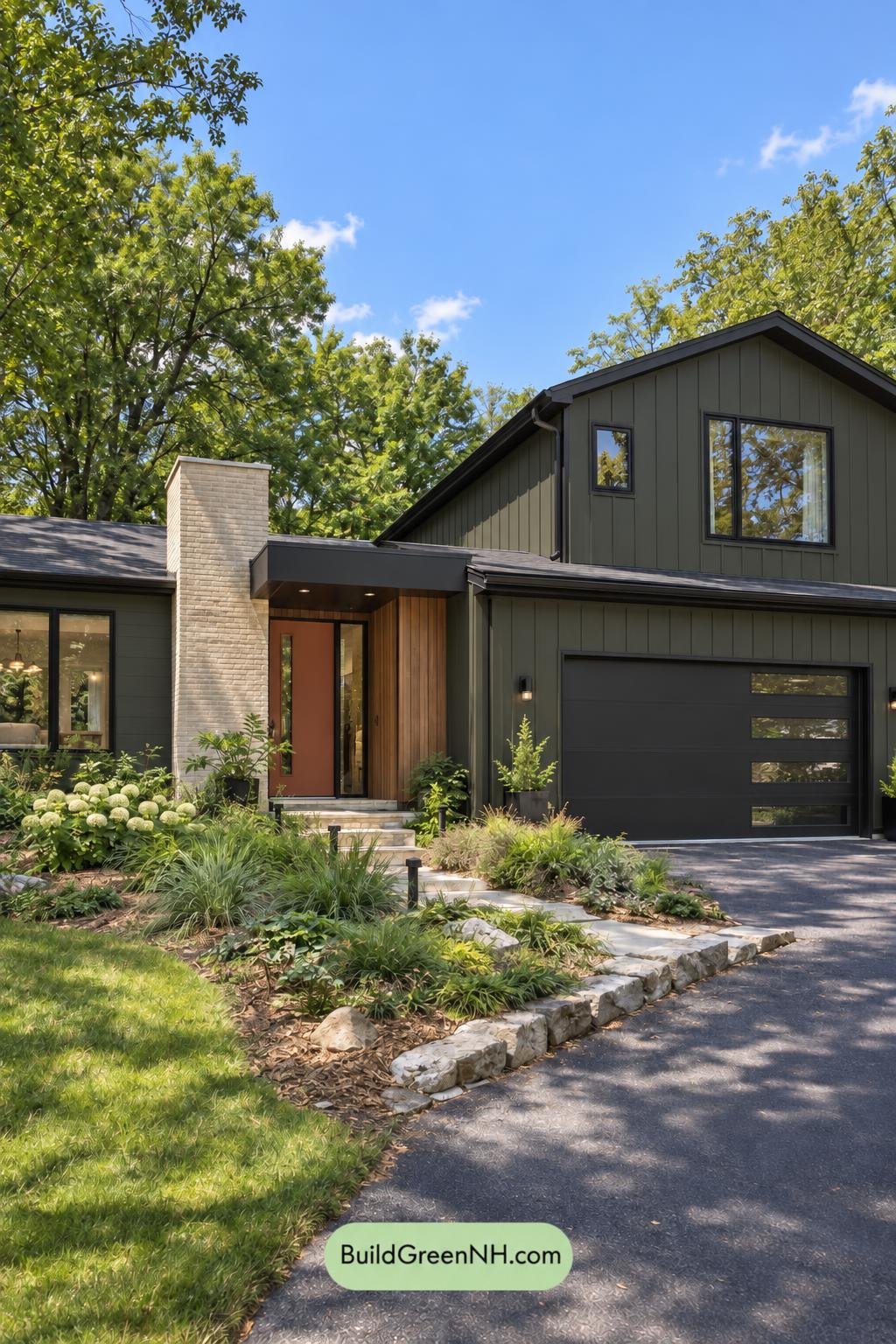

This earthy exterior palette feels both strikingly modern and effortlessly at home among the surrounding greenery.
A Grounded Green Exterior
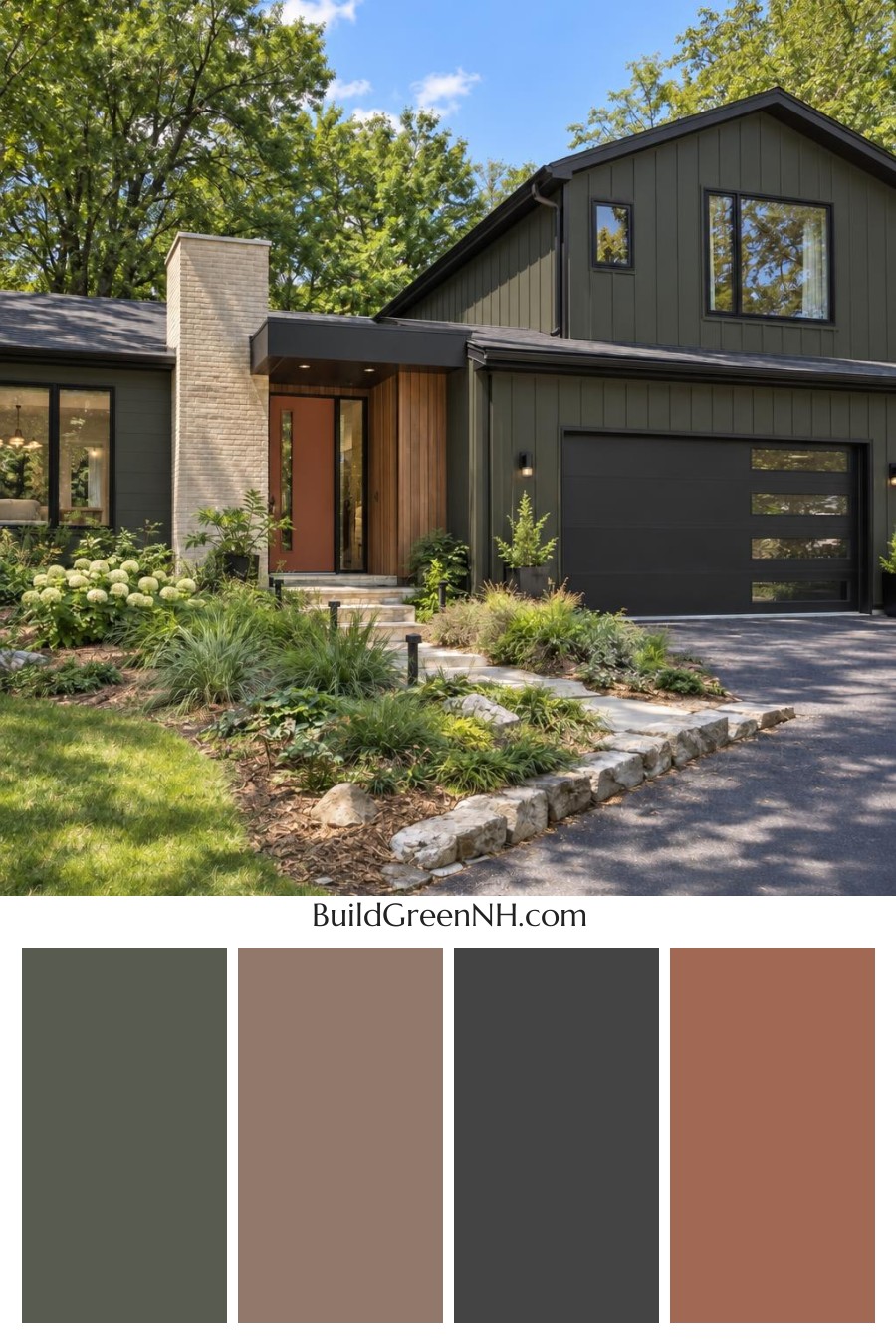
The main siding is finished in a deep, muted green that gives the home a calm, tailored presence. Its gray undertone keeps the shade sophisticated rather than overly rustic, while the vertical siding adds clean shadow lines that make the color feel rich and dimensional in changing daylight.
Because the green sits close to the tones found in mature foliage, the house feels beautifully connected to its wooded setting. It is a natural choice that still has enough depth to define the crisp, contemporary architecture.
Dark Gray for Structure and Contrast
Deep charcoal-gray trim outlines the roofline, windows, entry canopy, and garage with confident precision. This nearly black gray gives the facade a strong framework, sharpening the angles of the gables and creating a polished contrast against the softer green siding.
The dark gray garage door continues that visual anchor across the front elevation. Its low-key, dramatic shade helps the garage recede slightly while tying it to the window frames, roof edges, and architectural accents.
Warm Brown at the Entry
The entry introduces a warm brown front door and coordinating brown cladding around the recessed porch. These warmer shades are especially effective against the cool green and gray palette, bringing a welcoming sense of depth to the place guests approach first.
Rather than competing with the main exterior color, the brown accents create a focused moment of warmth. They make the entry feel intentional, sheltered, and inviting beneath the dark gray canopy.
A Balanced Modern-Natural Mood
Soft light gray-beige masonry near the entrance adds another layer of subtle texture and gently brightens the composition. This pale neutral bridges the darker charcoal-gray details and the organic green siding, keeping the exterior from feeling too heavy.
Overall, the scheme blends cool, earthy shades with just enough warm brown to feel welcoming. It is refined but not formal, bold but not harsh—a beautifully balanced exterior that looks especially at ease beside stone, planting beds, and leafy trees.
Next, see how this color scheme looks under different lighting simulations throughout the day.
Overcast
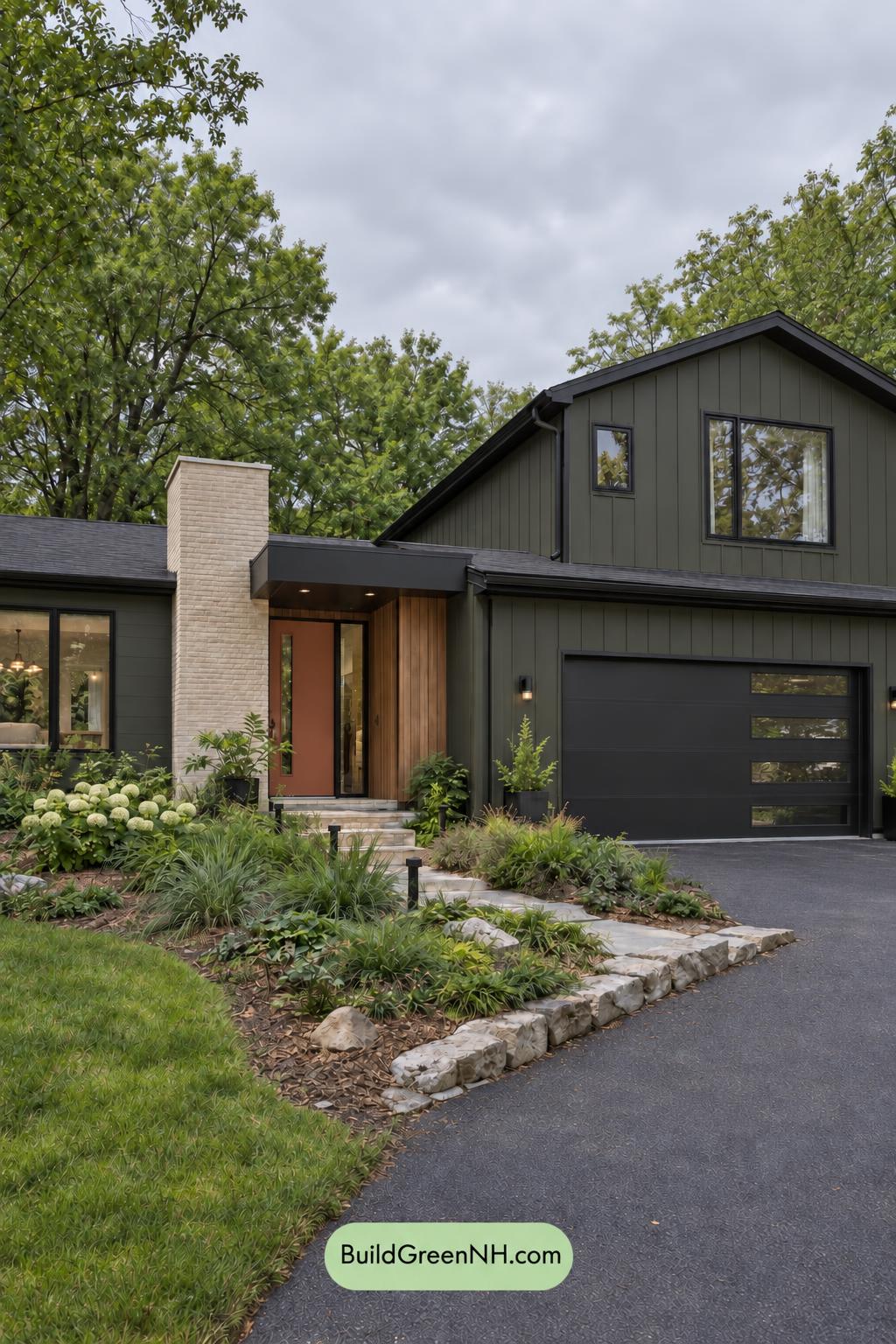
Under overcast skies, the deep green siding appears softer and slightly grayer than it would in neutral daylight, with its saturation gently muted by the cool, even light. The brown accents and front entry retain their warmth, but read calmer and less golden, creating a more grounded, natural balance against the subdued green.
Because cloud cover diffuses direct sun, sharp shadows around the rooflines, trim, and recessed entry become gentler. The dark gray details feel richer yet less stark, while contrast across the facade is more refined than dramatic. Overall, the palette takes on a quiet, polished mood that feels welcoming and composed.
Golden Hour
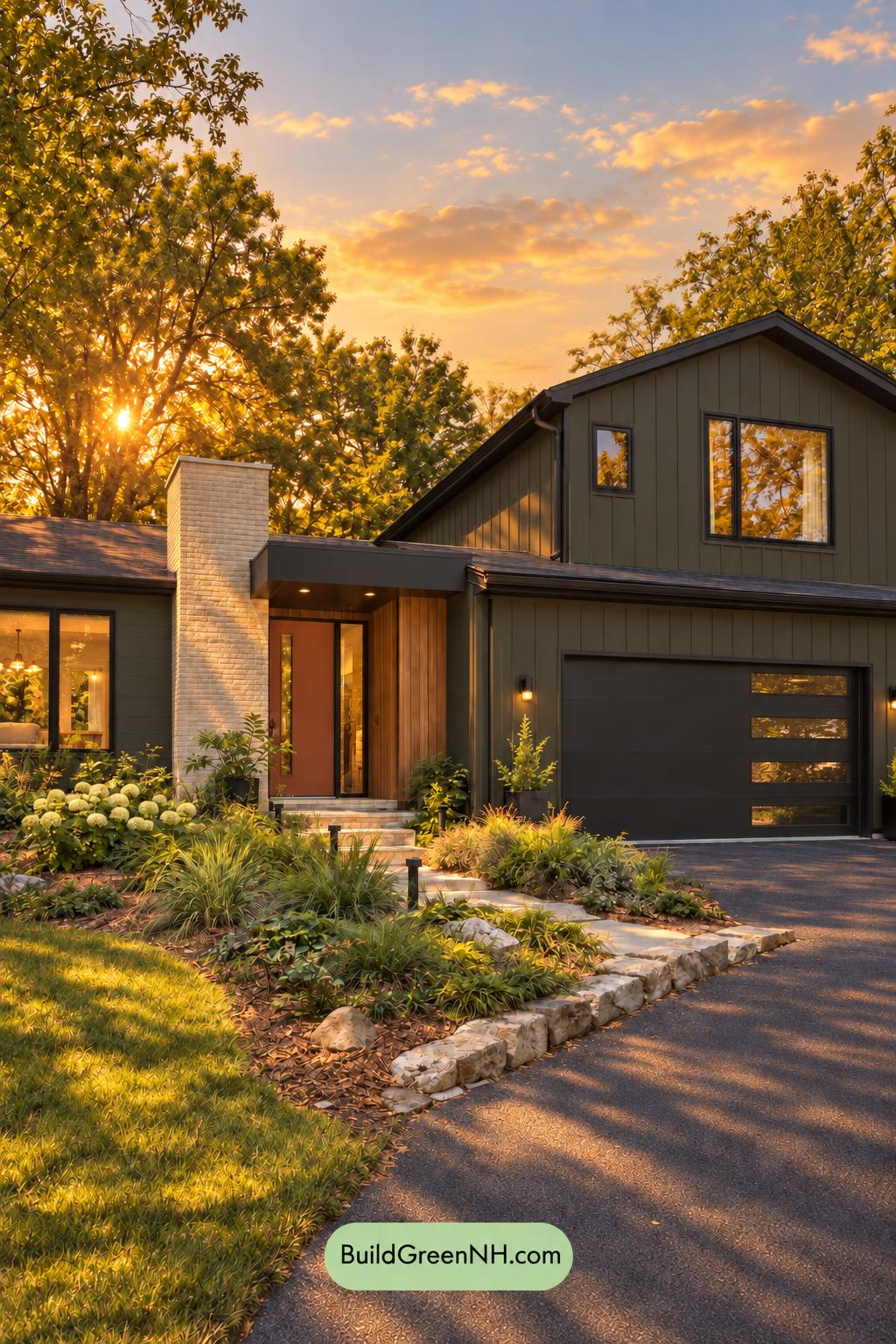
Under Golden Hour light, the green exterior takes on a warmer, more muted character than it shows in neutral daylight, with its depth softened by the low amber glow. The brown accents and front door become richer and more saturated, while the gray trim and garage door pick up subtle warmth that makes their darker shades feel less stark.
Long, directional shadows deepen the contrast around the roofline, entry, and window frames, giving the façade added texture and dimension. Compared with neutral daylight’s clearer separation of tones, Golden Hour creates a more cohesive, inviting mood—where warm highlights and softened darks make the entire exterior feel calm, grounded, and welcoming.
Shade
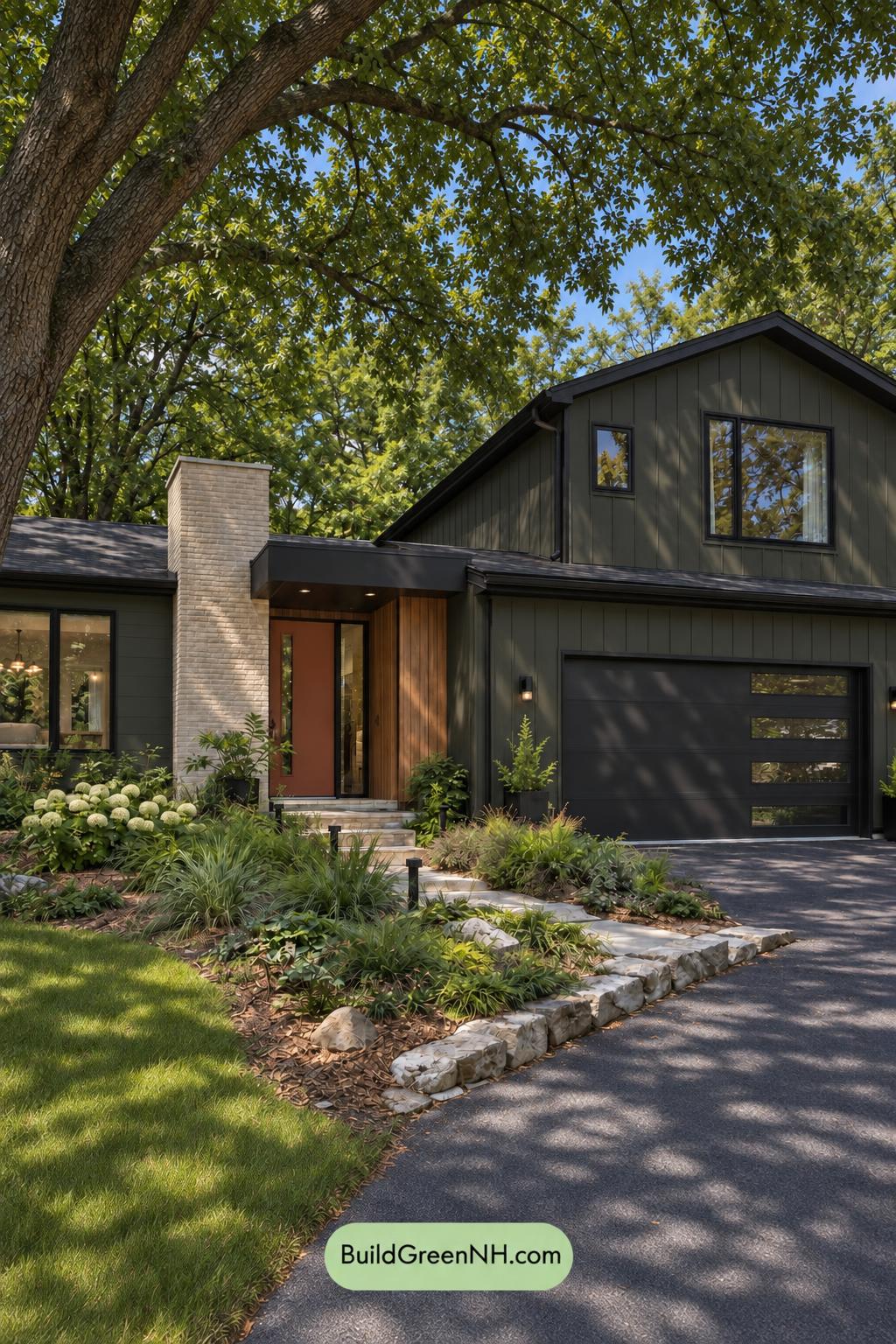
In shade, the muted green siding takes on a deeper, more restrained character than it shows in neutral daylight, with its saturation appearing softened beneath the tree canopy. Dappled shadows add subtle movement across the walls, while the dark gray trim and garage door read nearly charcoal, sharpening the home’s clean lines without feeling stark.
The warm brown entry details become richer and more inviting in the lower light, creating a welcoming focal point against the cool, shaded green and gray palette. Overall contrast is gentler than in open daylight, giving the exterior a calm, sheltered mood that feels especially connected to its leafy setting.
Nighttime
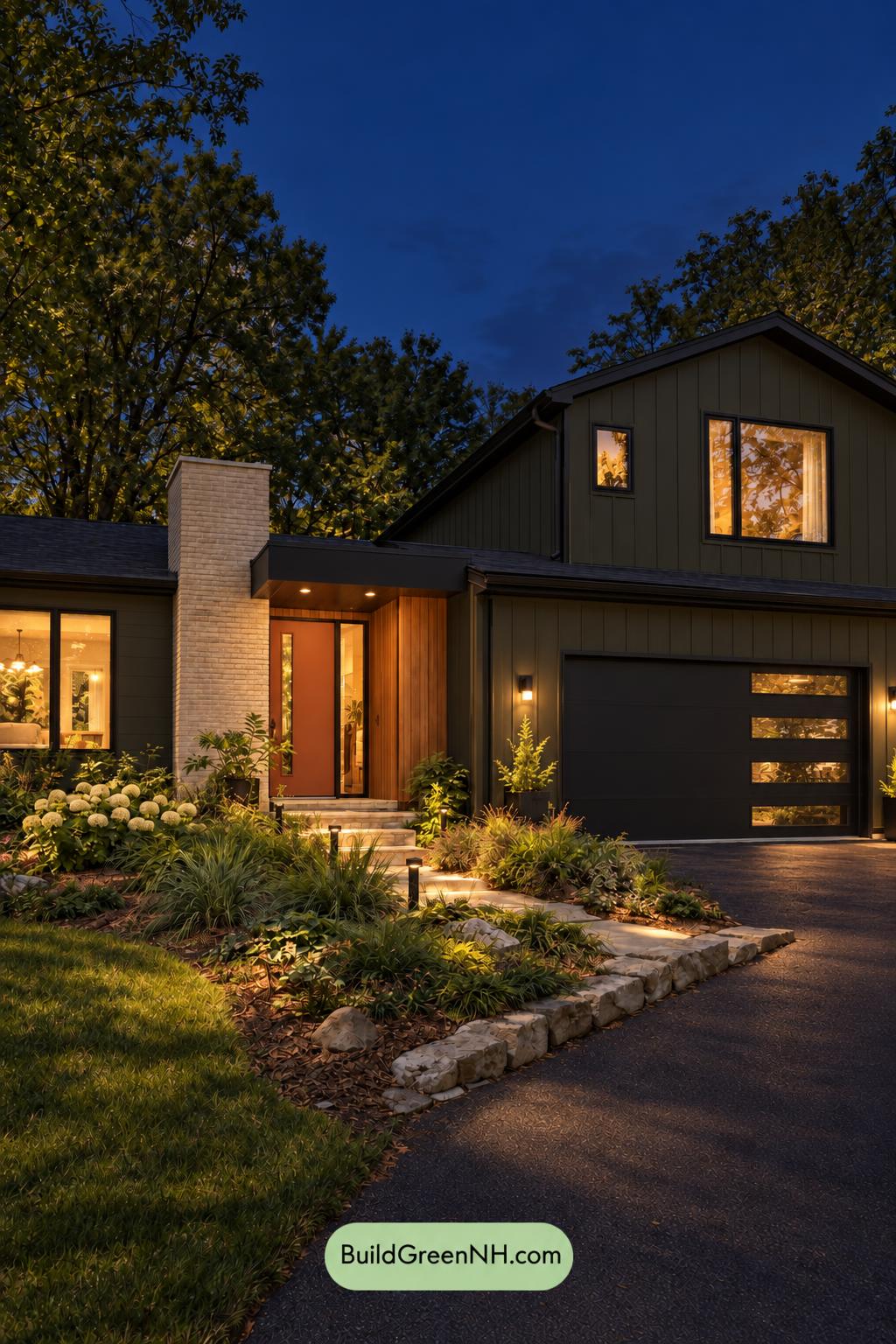
At nighttime, the deep green exterior appears richer and less saturated than it does in neutral daylight, settling into the shadows with a calm, almost charcoal-like depth. The gray trim, window frames, and garage door also recede into darker layers, creating stronger silhouette-like contrast along the roofline and architectural edges.
Warm lighting around the entry brings the brown accents forward, making them feel softer, warmer, and more inviting against the cooler darkened façade. Pools of amber light brighten selected surfaces while leaving others in shadow, giving the home a dramatic, welcoming mood that daylight presents with far less contrast.
Pin these for later:
Want More?
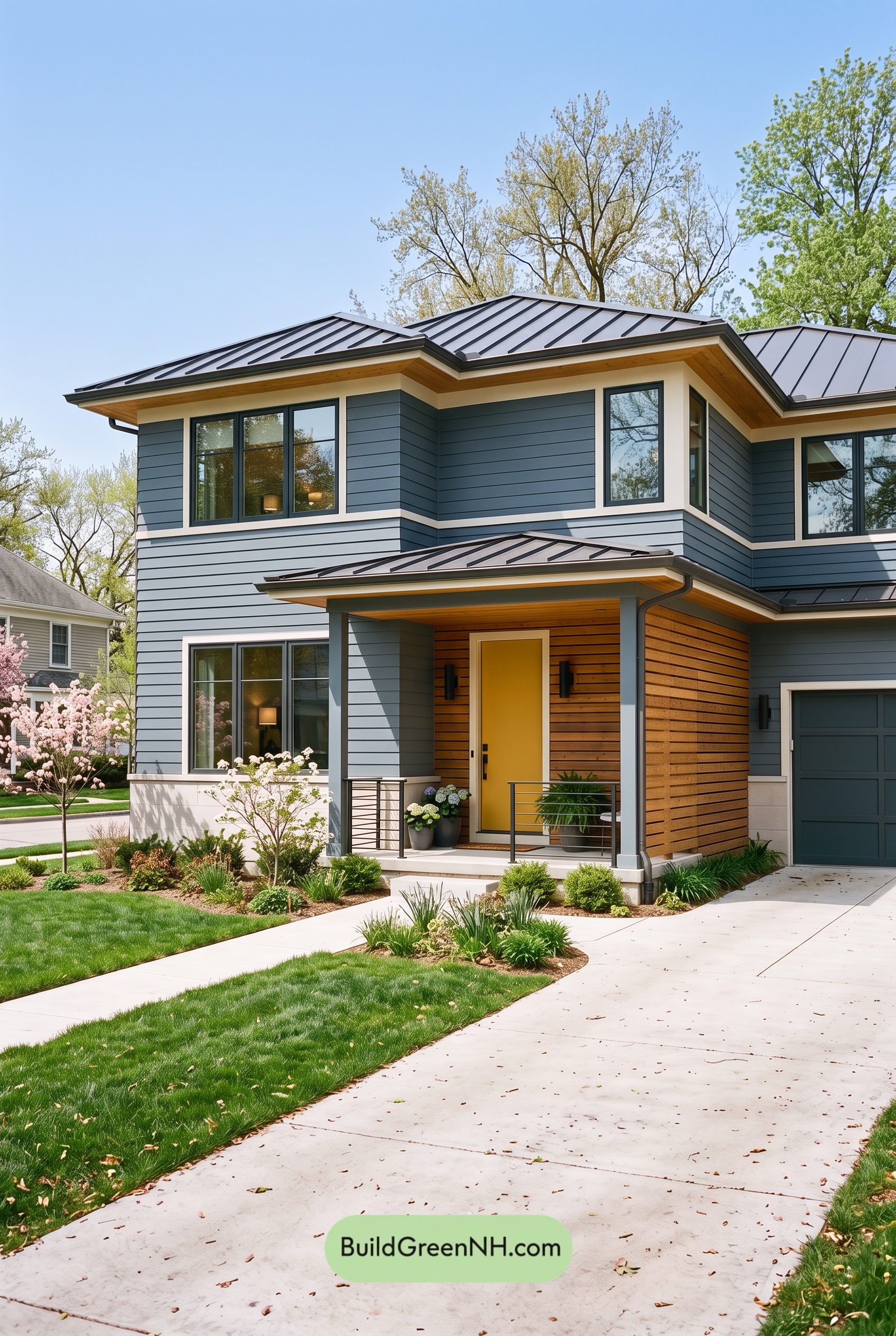 Blue House Front Door Color Scheme: Harbor Saffron
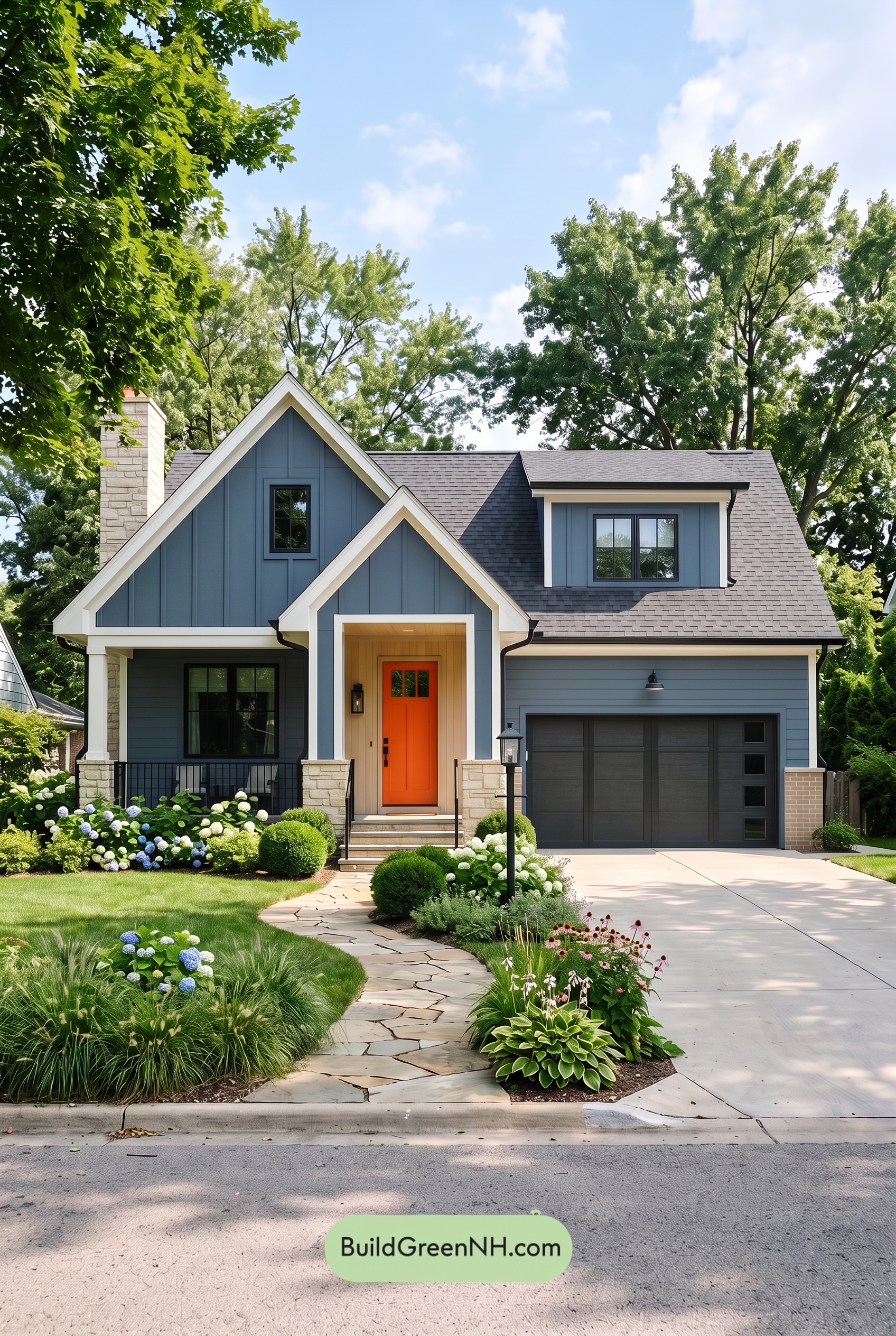 Blue House Front Door Color Scheme: Cobalt Persimmon
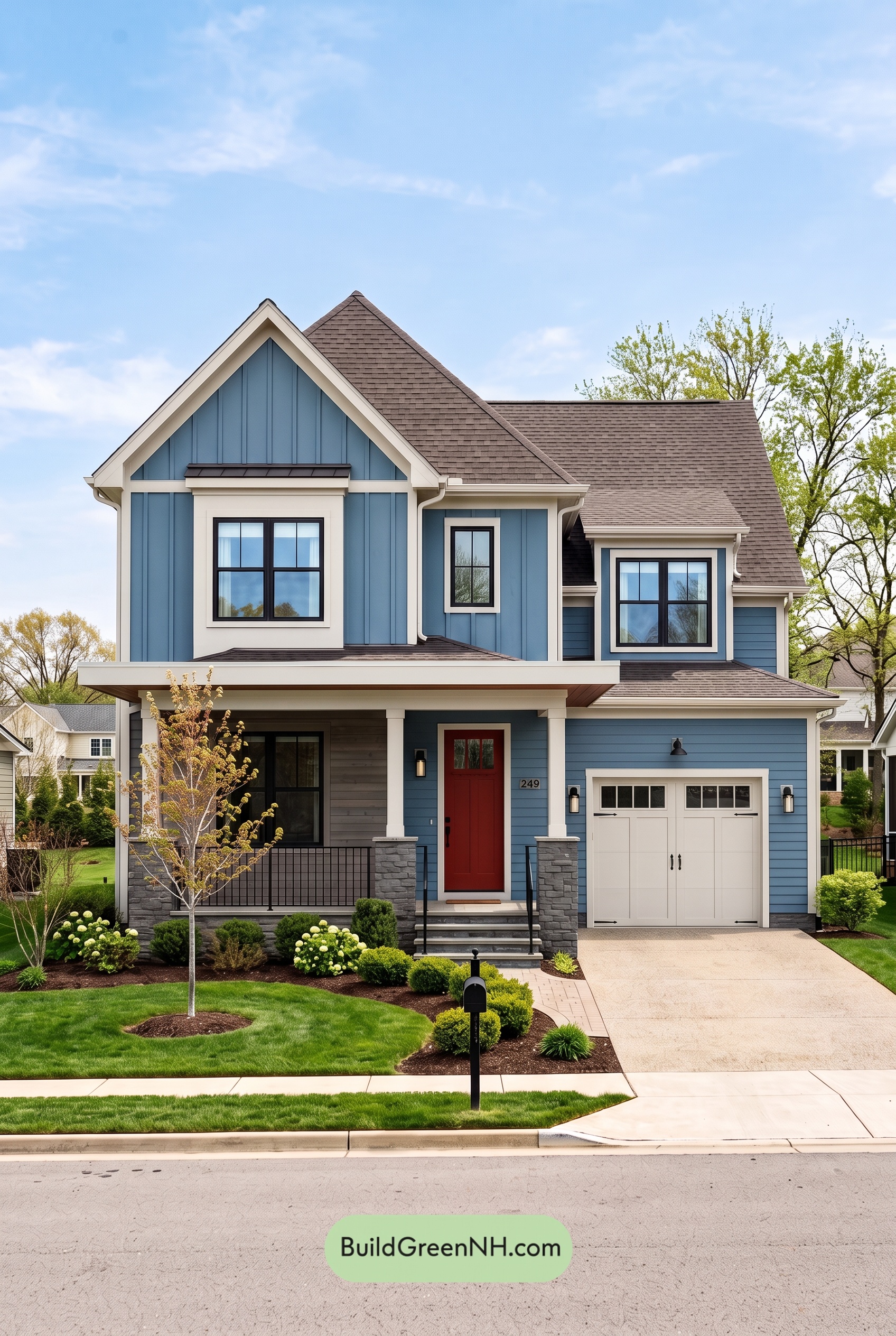 Blue House Front Door Color Scheme: Denim Poppy
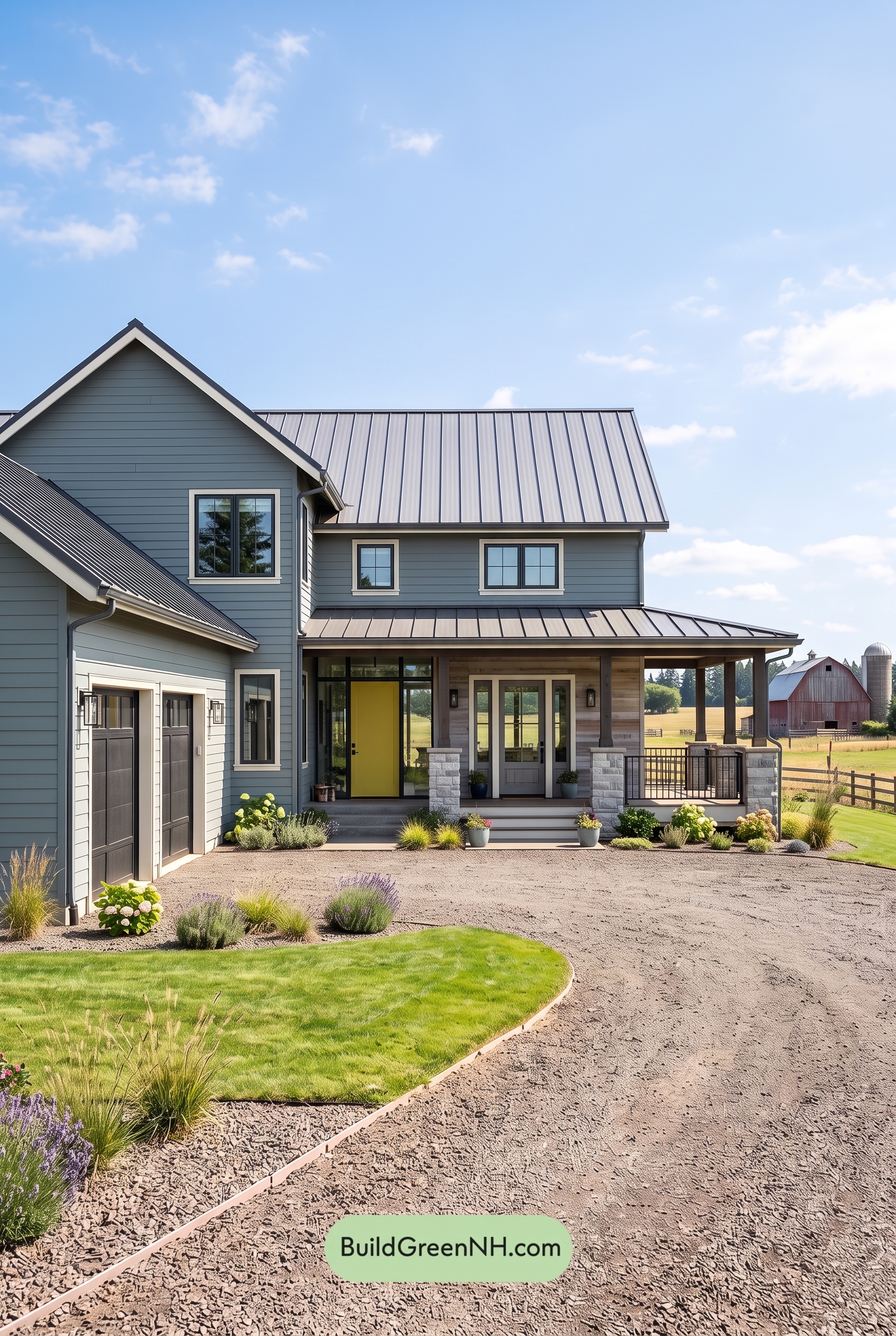 Blue House Front Door Color Scheme: Slate Citron
 Blue House Front Door Color Scheme: Mist Blue Haven
Table of Contents