Last updated on
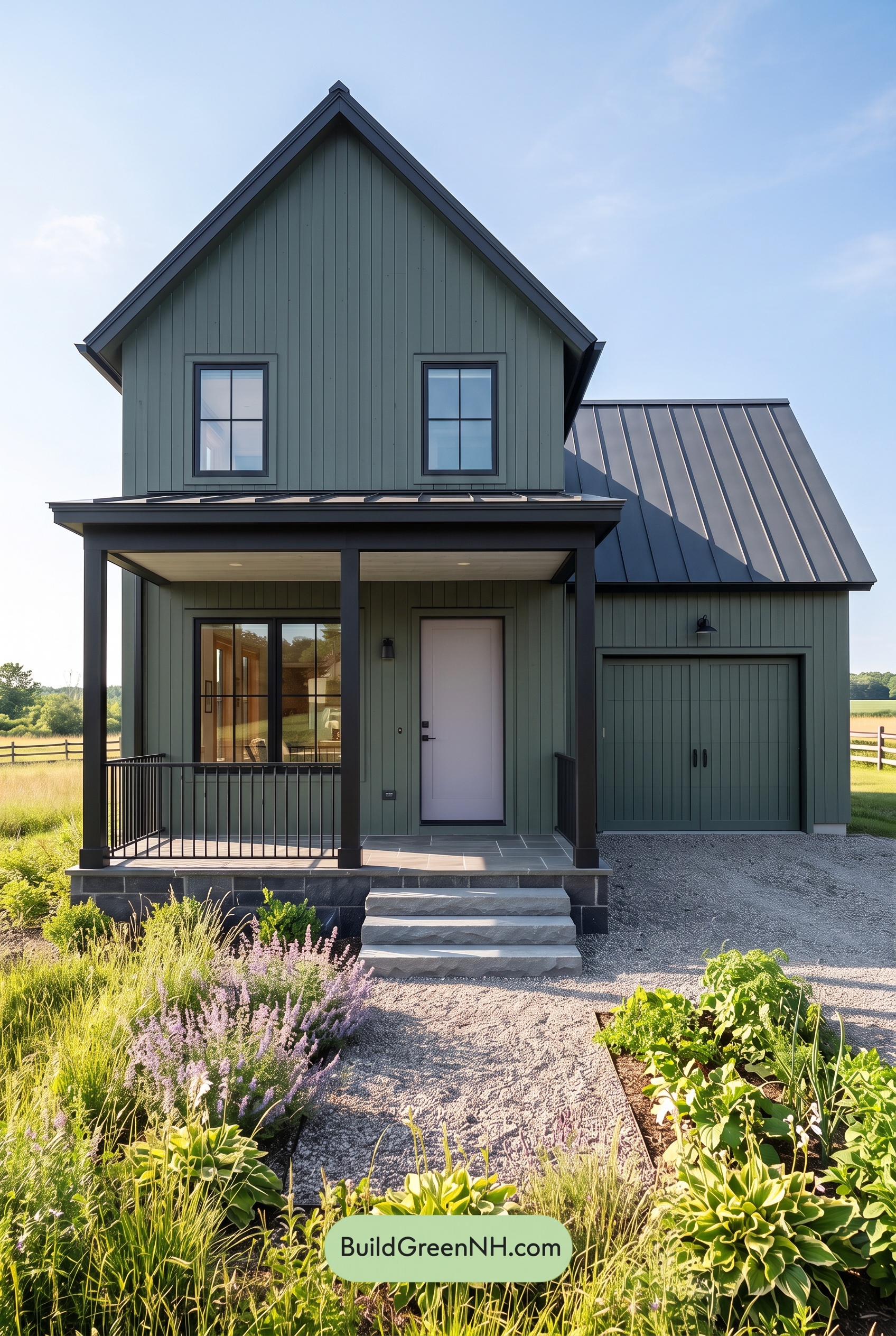

Muted green siding and deep gray accents give this home its irresistible balance of countryside calm and crisp, modern character.
A Soft Green That Connects With the Landscape
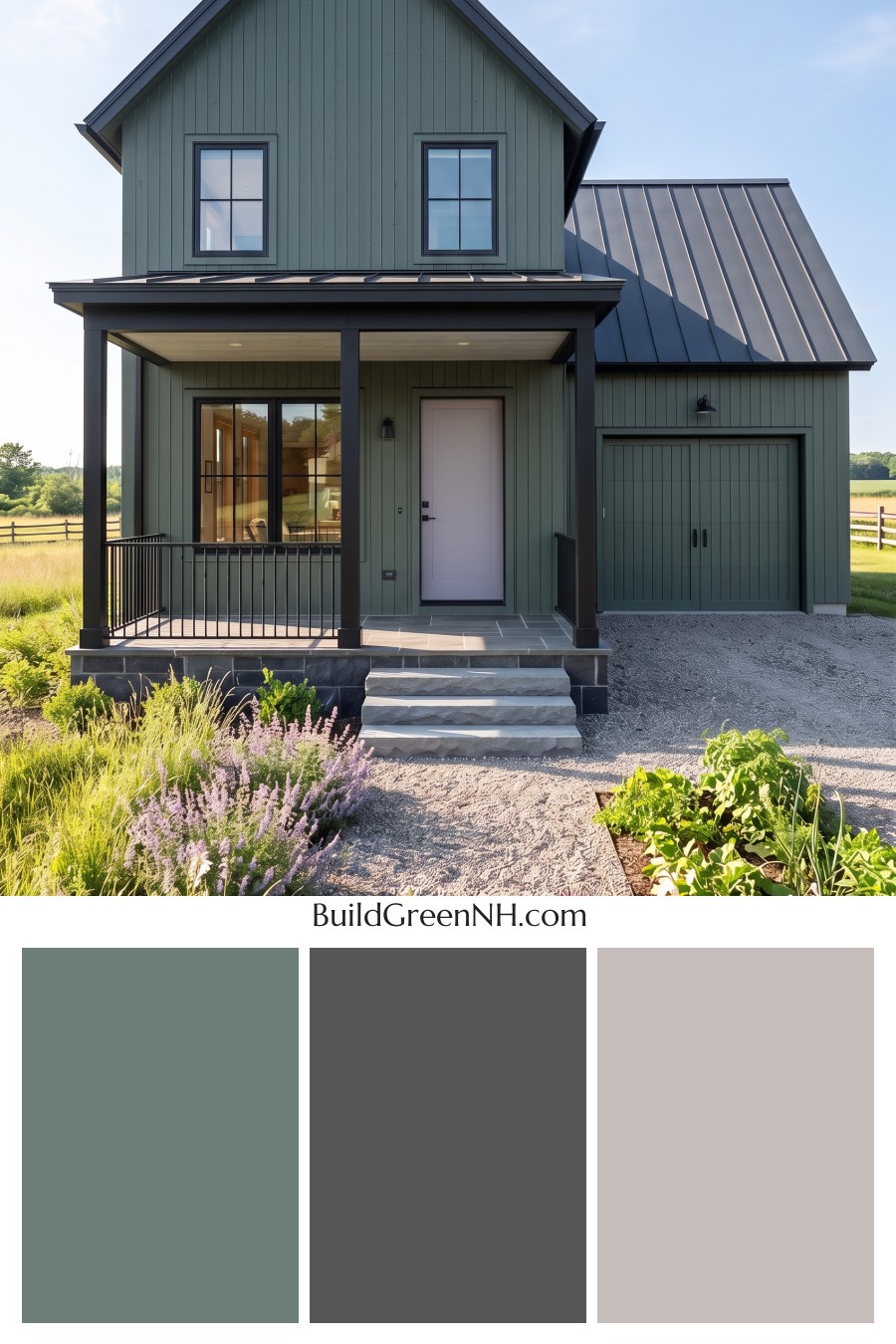
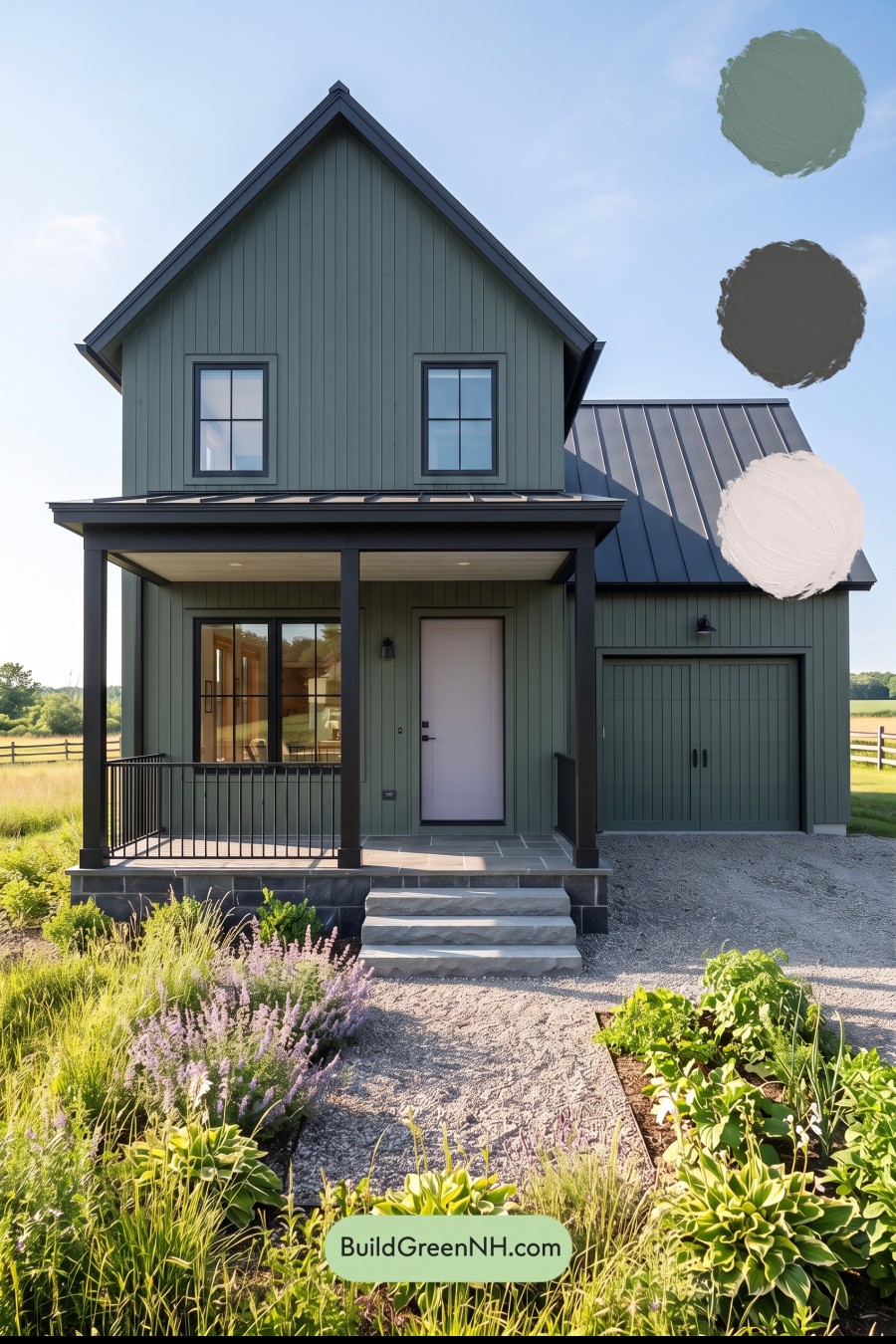
The exterior’s defining shade is a subdued, gray-leaning green spread across the vertical siding. It has enough depth to give the tall front gable presence, yet remains soft against the surrounding garden and open fields. Rather than competing with the landscaping, this earthy green feels like a natural extension of it.
The vertical boards add subtle rhythm, with their narrow shadows bringing dimension to the restrained color scheme. In sunlight, the green appears gentler; beneath the porch, it takes on a deeper, moodier character.
Deep Gray Gives the Architecture Definition
Dark charcoal gray traces the roofline and porch fascia, emphasizing the home’s steep peak and clean horizontal edges. The porch columns carry that same visual weight down toward the ground, creating a strong frame around the sheltered entrance.
Deep gray window frames and slender gray railings repeat the contrast on a smaller scale. These darker details keep the muted siding from feeling flat without introducing a competing color family. The result is sharp, but not stark.
Two Door Treatments, One Cohesive Look
The garage door stays close to the siding’s muted green, helping its broad surface blend into the right-hand wing. Its vertical detailing reinforces that continuity, so the garage feels integrated rather than visually dominant.
At the entrance, a much lighter gray front door offers a quiet change of pace. Set within darker framing, it gives the eye a clear destination beneath the shaded porch. It is an inviting focal point without needing a bright accent shade.
A Gray Roof and Grounded Finishing Touches
The standing-seam roof introduces a cool, medium-to-deep gray that shifts with the light. Its raised seams echo the siding’s vertical lines, linking the materials through both color and pattern.
Gray porch paving, darker foundation surfaces, and lighter gray steps carry the neutral palette down to the garden. Overhead, the pale beige porch ceiling adds a gentle touch of warmth.
Understated, Welcoming, and Well Balanced
What makes this scheme work is its measured contrast: green softens the house, charcoal gray defines its structure, and lighter neutrals brighten the entrance. The overall mood is peaceful and grounded, with just enough drama to make the architecture stand out.
Next, see how this color scheme looks under different lighting simulations throughout the day.
Overcast
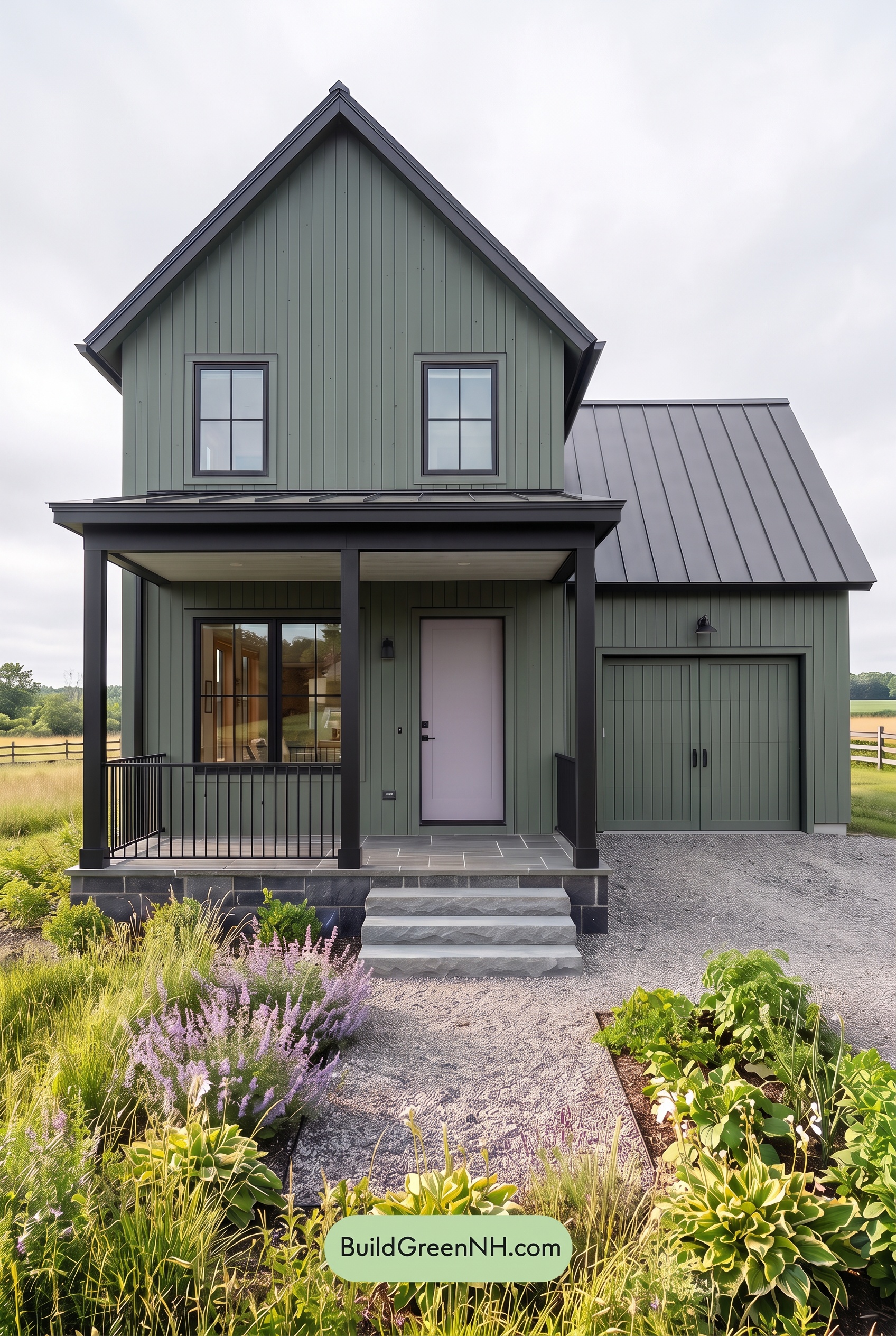
Under overcast skies, the muted green siding and garage door tend to look less saturated and slightly cooler than in neutral daylight. Their subtle yellow warmth recedes, bringing gray undertones forward. The deep gray accents feel softer and less stark, while the lighter gray entry takes on a cooler, quieter presence.
Diffused light softens shadows along the siding and beneath the rooflines, reducing the contrast between bright surfaces and shaded recesses. The sheltered porch still reads deeper, but transitions feel gentler. Compared with neutral daylight, the overall palette becomes more subdued and cohesive, giving the house a calm, understated mood.
Golden Hour
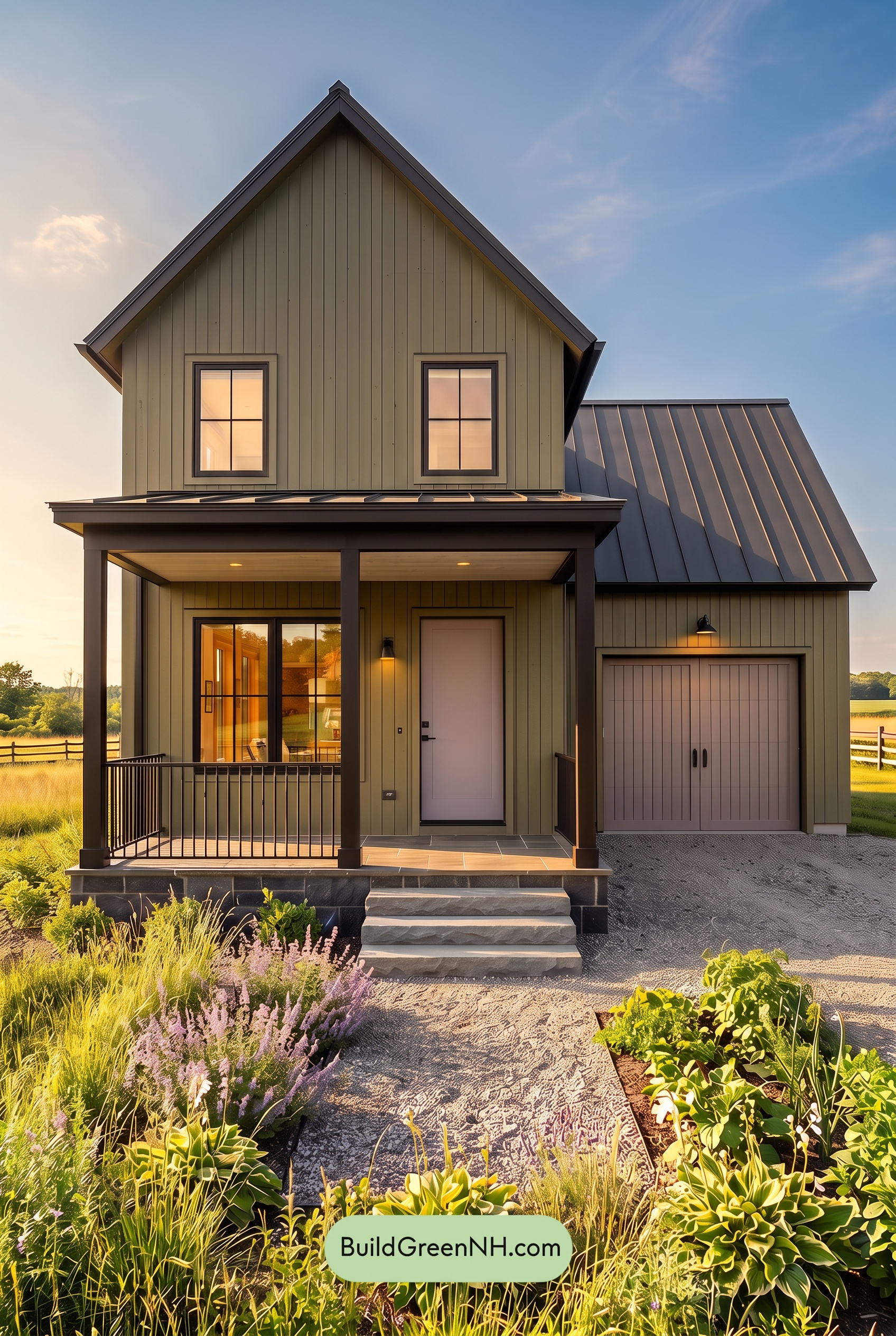
Golden Hour brings out the yellow undertones in this muted green exterior, making it feel warmer and earthier than it would in neutral daylight. Sunlit sections appear richer in saturation, while shaded areas beneath the eaves and porch deepen into cooler, more subdued green. That shift gives the vertical siding extra depth without making the color feel overly bold.
The gray accents take on a soft brown cast where the low sunlight touches them, softening their cooler daytime appearance. Meanwhile, the shaded columns, railings, and window frames read as deeper gray, strengthening the contrast against the glowing walls. Compared with the balanced, crisp effect of neutral daylight, the whole palette feels more layered, intimate, and welcoming.
Shade
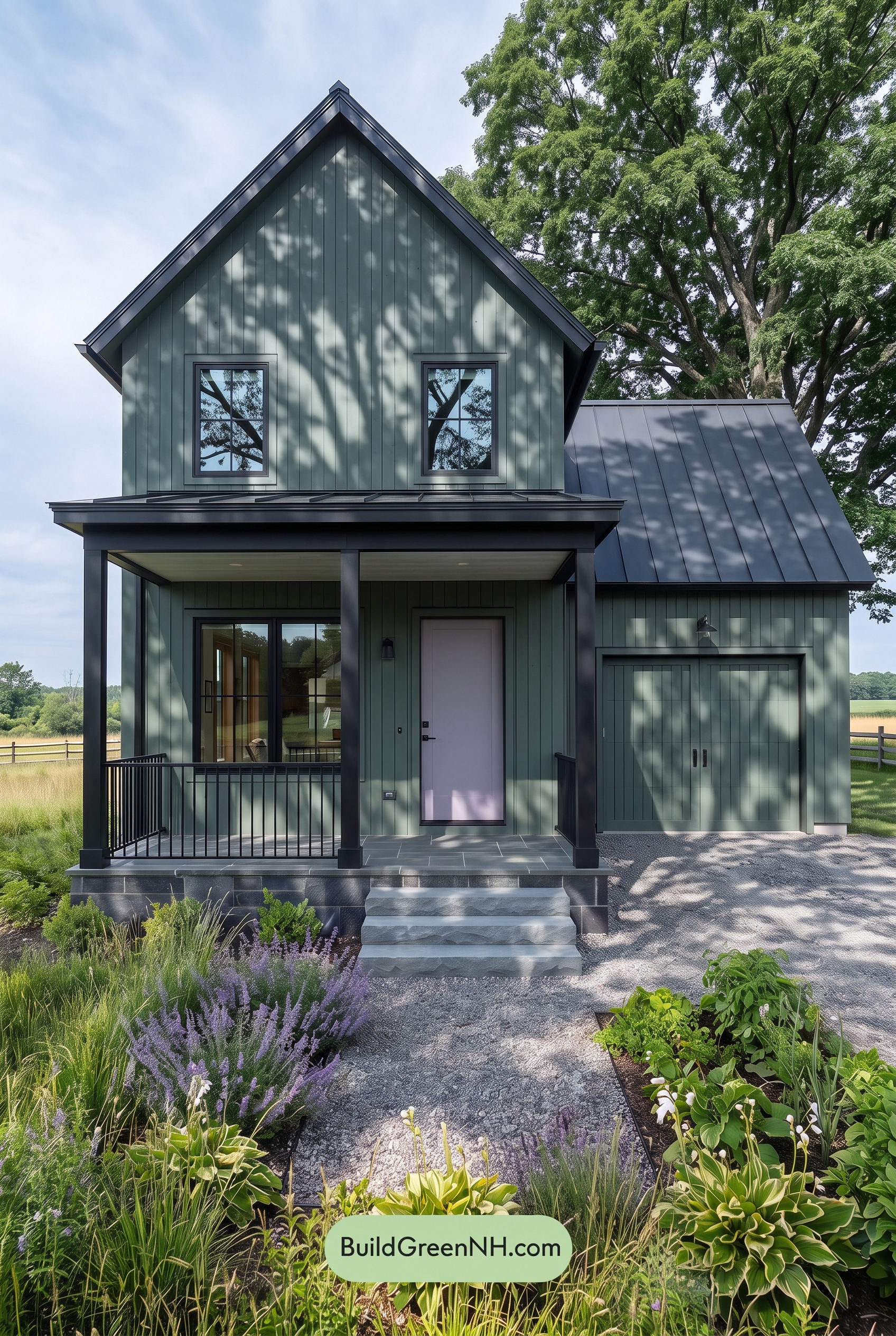
In shade, the muted greens appear deeper and less saturated than they would in neutral daylight, with their gentle warmth giving way to cooler, grayer undertones. The dark grays feel heavier and slightly blue, while the lighter gray at the entry takes on a soft, cool cast. Together, these shifts make the exterior feel quieter and more subdued.
Deep porch shadows bring the greens and dark grays closer together, softening their contrast. Across the upper walls and garage, pockets of filtered light interrupt that depth, making the lighter green areas appear brighter beside the leafy shadows. Compared with the more balanced color of neutral daylight, the shaded palette feels layered, sheltered, and calm.
Pin these for later:
Want More?
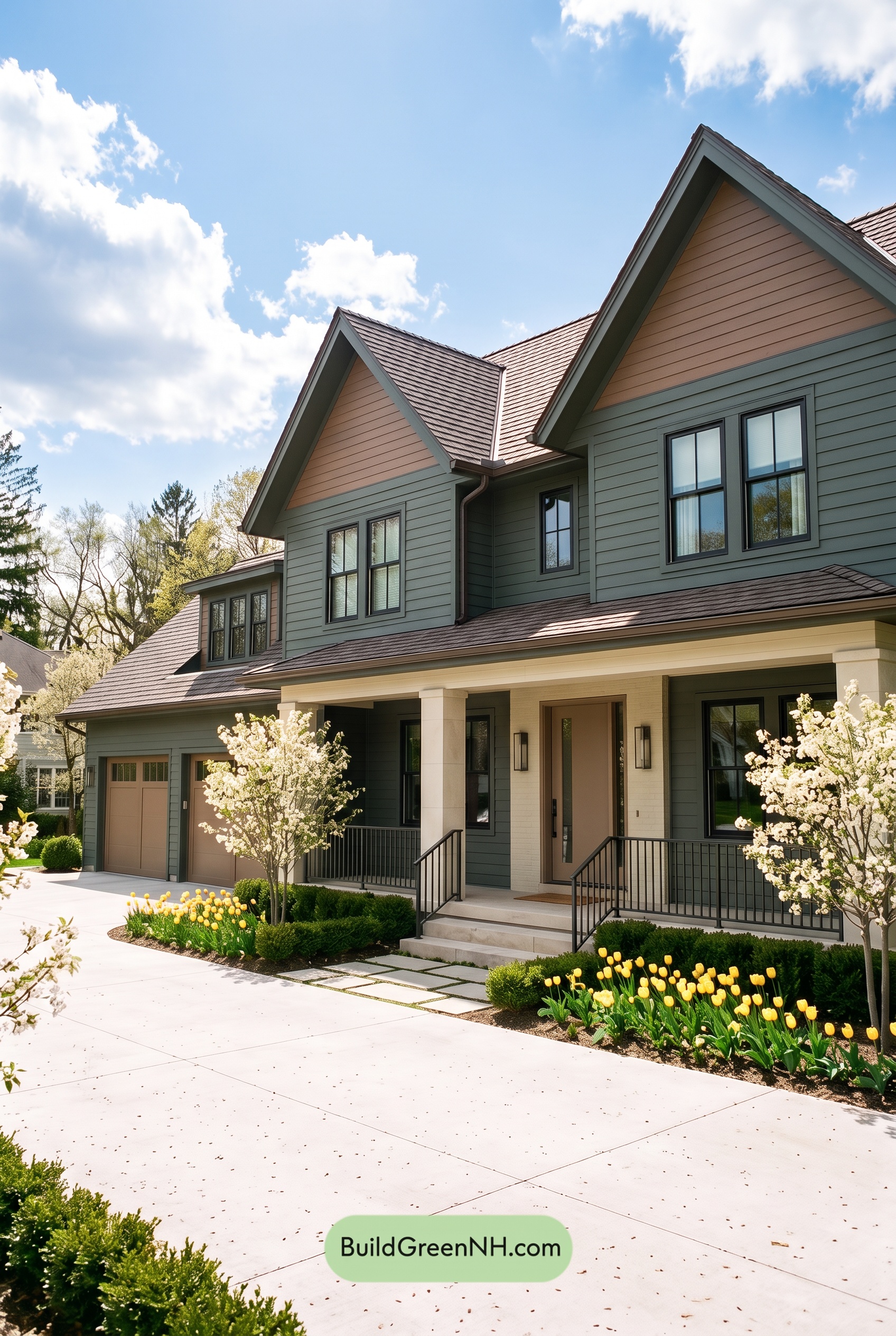 Earthy Green House Exterior Color Scheme: Brown Green Comfort
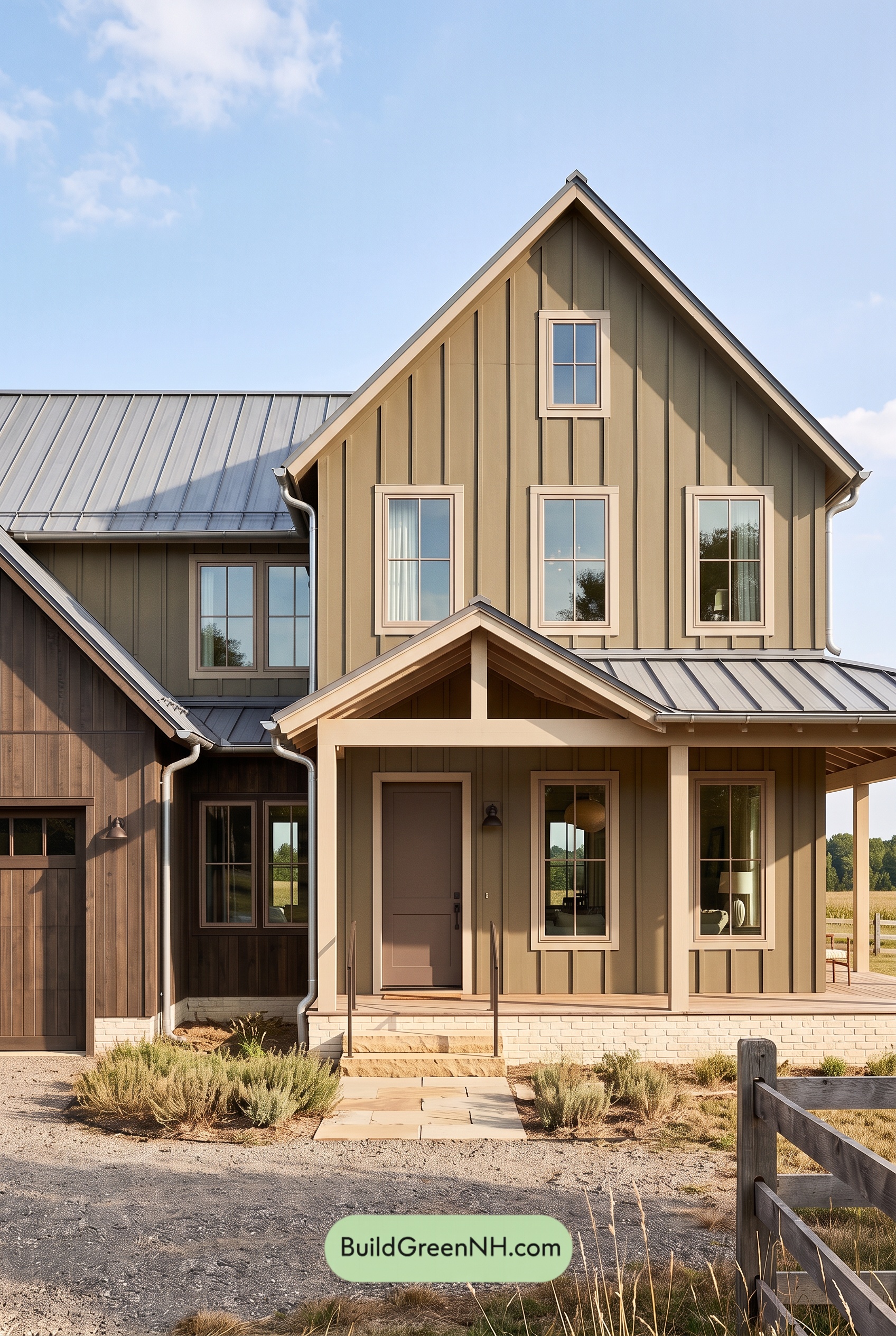 Earthy Green House Exterior Color Scheme: Green and Beige Sanctuary
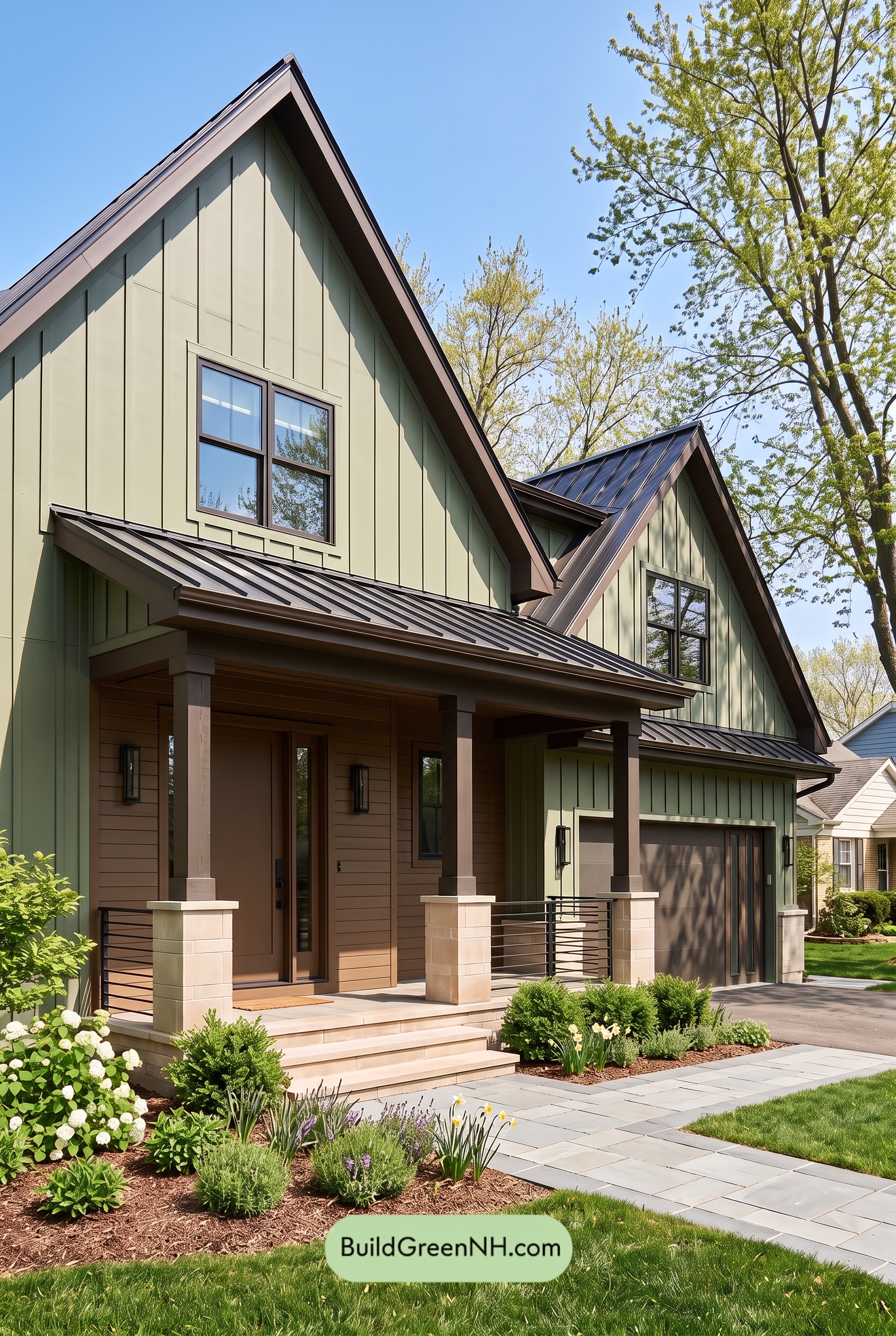 Earthy Green House Exterior Color Scheme: Green Velvet Assurance
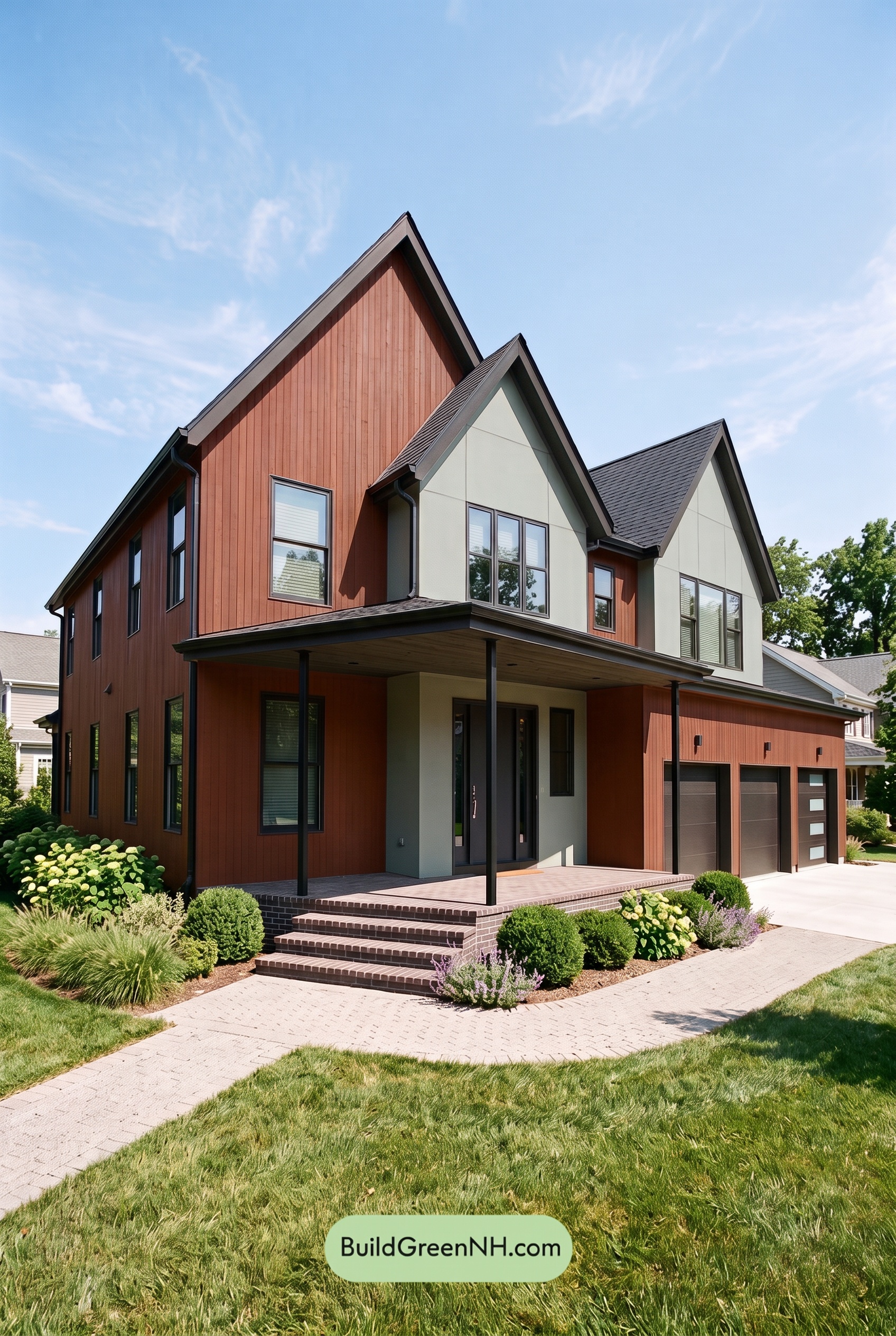 Earthy Green House Exterior Color Scheme: Brown Silken Calm
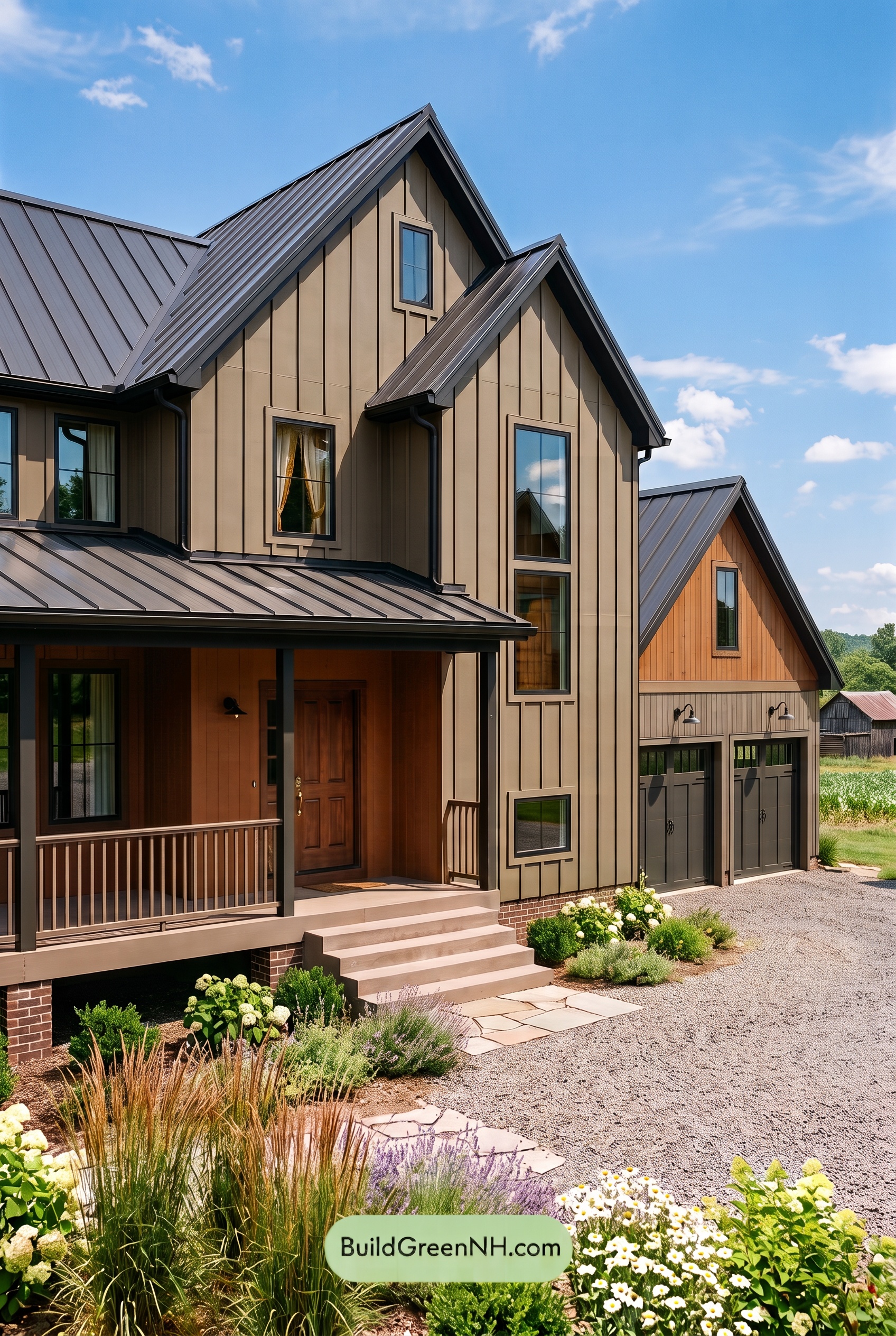 Earthy Green House Exterior Color Scheme: Green Amber Contentment
Table of Contents