Last updated on
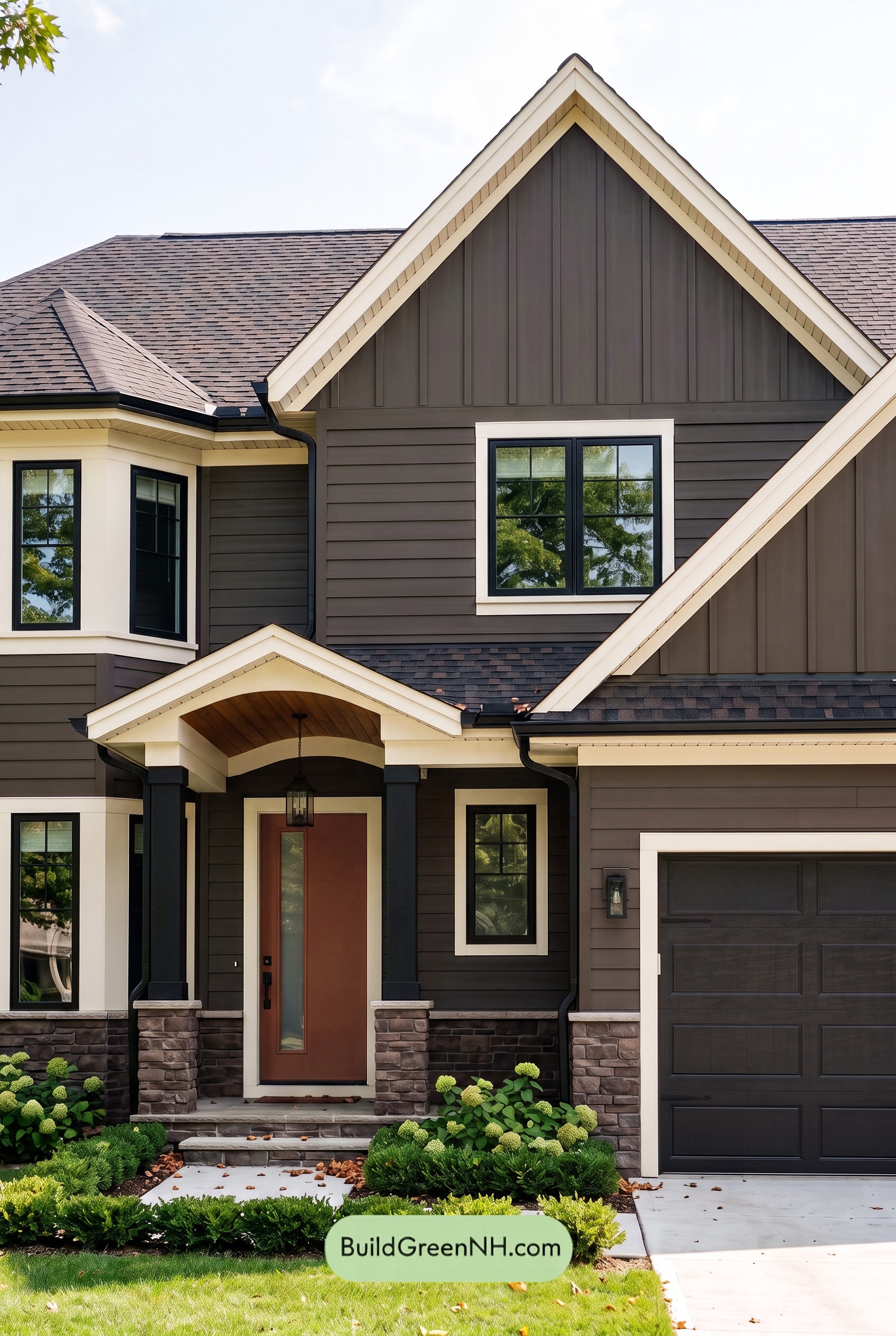

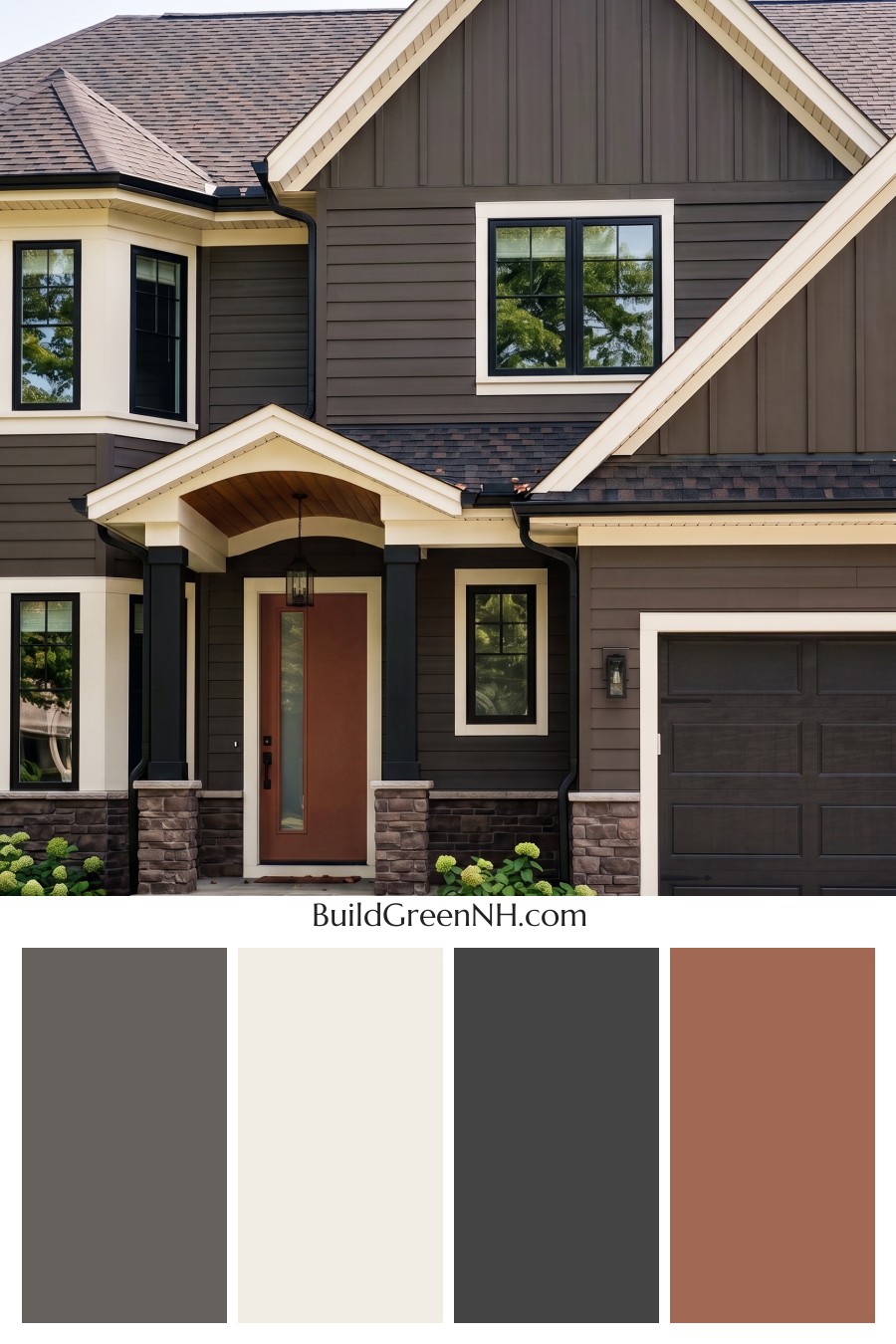
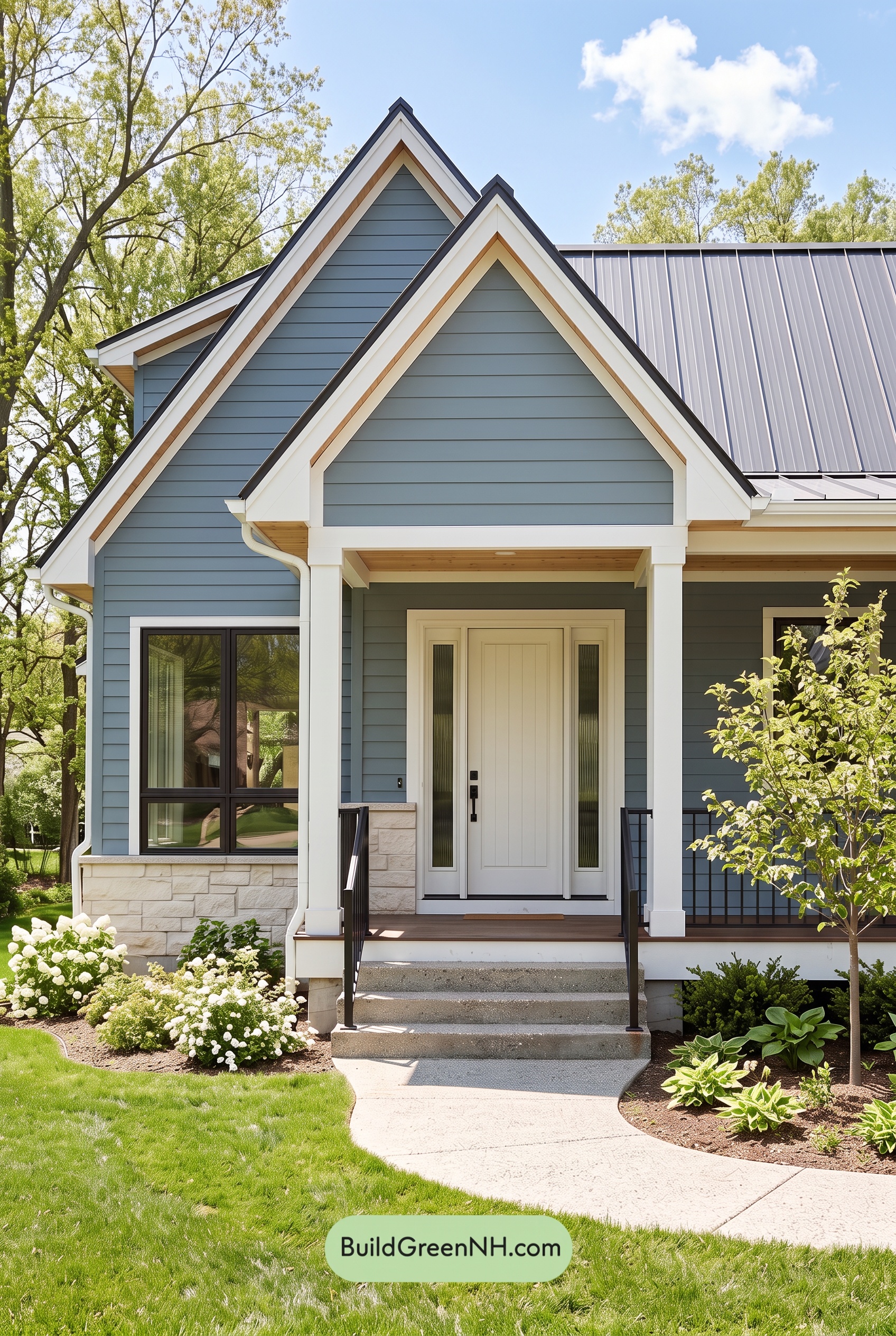
This layered gray, beige, and brown exterior scheme feels polished and welcoming because it balances dramatic depth with inviting warmth.
A Strong Foundation in Deep Gray
The house’s main siding is finished in a rich, deep gray that gives the architecture a tailored, contemporary presence. This saturated neutral works especially well across the horizontal siding and tall vertical gable panels, where the change in direction adds subtle texture without requiring a new color.
The dark gray continues on the garage door and porch columns, creating a grounded visual rhythm from one side of the façade to the other. Repeating this shade keeps the large exterior elements cohesive while allowing the home’s gables, porch, and entry to feel intentionally connected.
Soft Beige Trim Brightens Every Edge
A light, creamy beige trim provides a beautiful lift against the dark gray exterior. It traces the rooflines, frames the windows, defines the porch structure, and outlines the garage, bringing crisp contrast to the home’s layered silhouette.
Because this pale neutral has a gentle warmth, it softens the drama of the darker siding rather than making the contrast feel stark. The generous trim around the windows also gives each opening a clean, finished look and draws attention to the home’s balanced proportions.
Dark Window Details Add Definition
Deep gray window frames reinforce the home’s bold, refined character. Their dark tone visually recedes into the siding in some areas while standing out neatly against the light beige window surrounds, producing depth at every elevation.
This detail is particularly effective on the taller windows, where the dark frames echo the vertical lines of the gables and columns. The result is a consistent, architectural look that feels both modern and timeless.
A Warm Brown Door Creates a Welcoming Focal Point
The front door introduces a warm brown accent that immediately makes the entry feel more personal and inviting. Against the surrounding charcoal-toned siding and dark gray columns, this earthy shade brings welcome warmth to the center of the façade.
It is a smart use of contrast: the door is distinct enough to guide guests toward the entrance, yet its natural brown character pairs effortlessly with the nearby stonework and the warm beige trim. The covered porch makes that color moment feel even more intentional.
Roof and Stone Complete the Palette
The dark, variegated gray roof ties beautifully into the siding, window frames, garage door, and columns. Its slightly layered appearance adds movement overhead while maintaining the home’s sophisticated neutral foundation.
At ground level, the gray-brown stone bases introduce an organic, textured finish that anchors the composition. Together, the deep grays, creamy beige accents, and warm brown entry create a home exterior that feels substantial, elegant, and exceptionally welcoming.
Next, see how this color scheme looks under different lighting simulations throughout the day.
Overcast
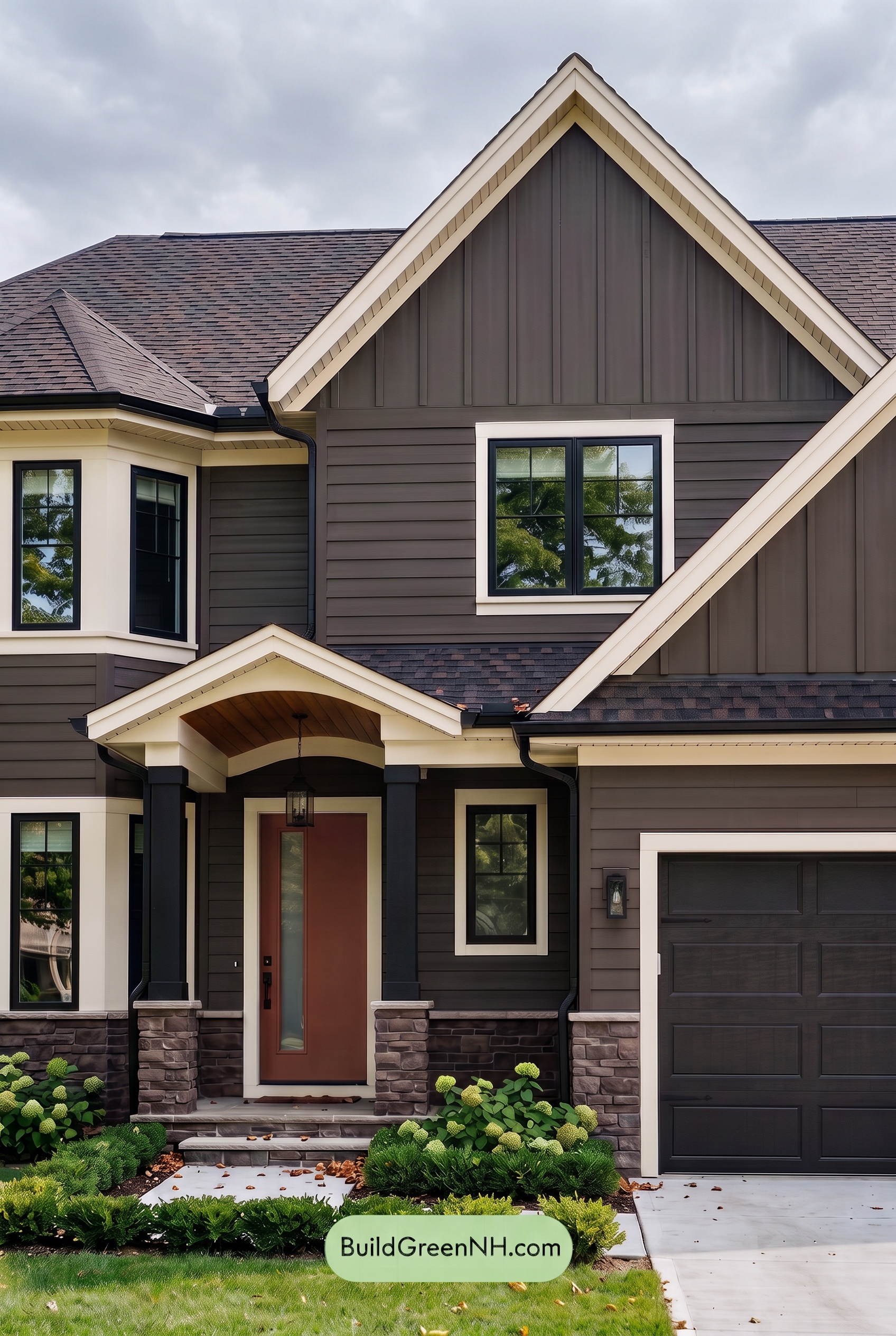
Under overcast skies, the gray siding and darker gray architectural details appear deeper and more uniform than they do in neutral daylight, with less reflected brightness and softer saturation. The beige trim loses some of its sunlit glow, reading as a quieter warm neutral that gently outlines the rooflines and windows rather than sharply popping forward.
With direct shadows diffused, the home’s layered siding, columns, and garage details show lower contrast but greater visual calm. The brown front door retains a welcoming warmth against the cool gray surroundings, while the overall palette takes on a refined, moody, and softly grounded character.
Golden Hour
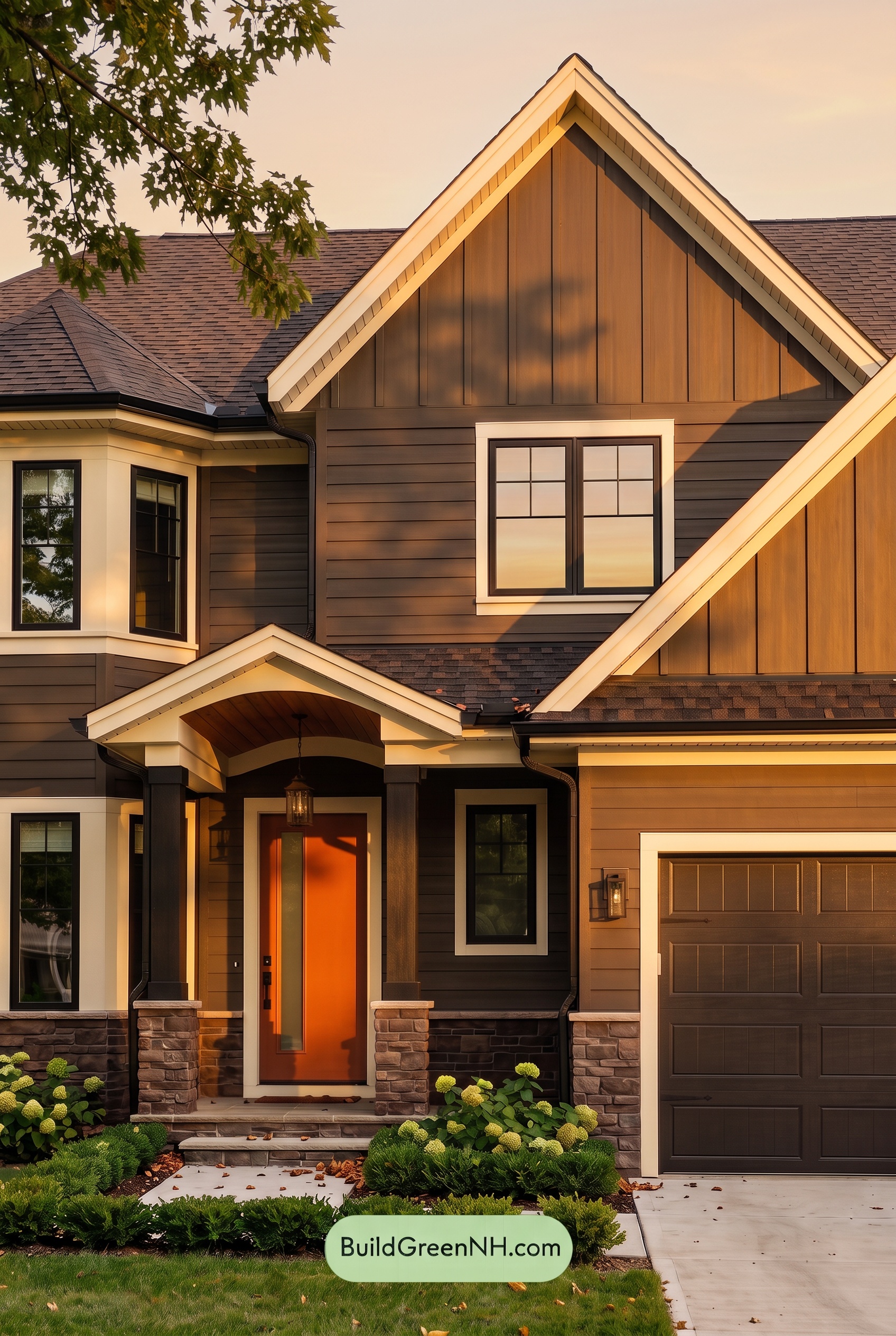
Golden Hour pours a soft amber glow across the exterior, warming the gray siding into a richer, earthier shade and giving the beige trim a creamy, luminous lift. The brown entry door appears more saturated and welcoming than it would in neutral daylight, becoming a natural focal point against the deepening gray window frames, columns, and garage door.
As the sun lowers, long shadows settle into the siding and beneath the rooflines, sharpening contrast between sunlit edges and recessed details. Neutral daylight presents the palette with a cleaner, more even balance; Golden Hour makes it feel layered, cozy, and quietly dramatic.
Shade
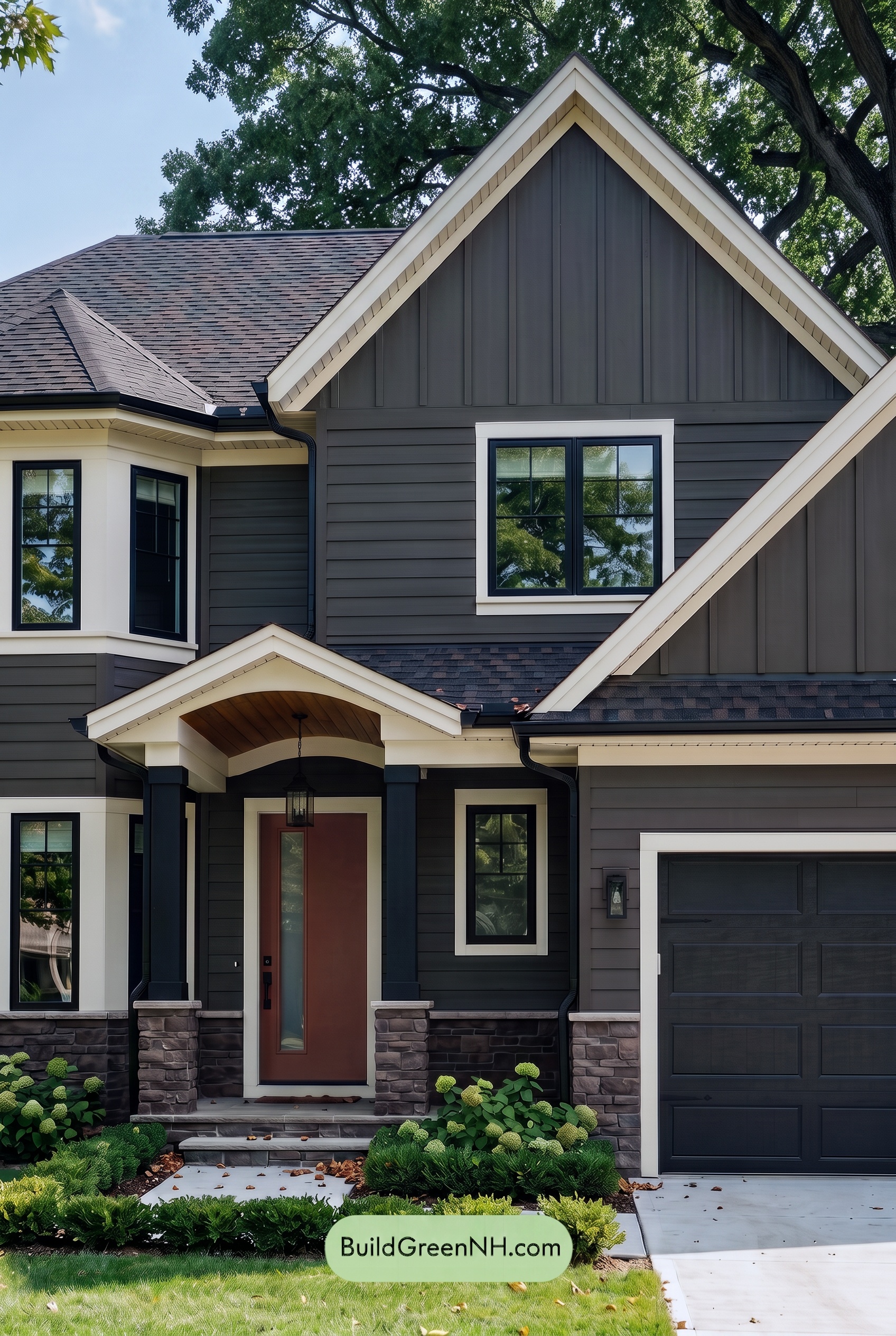
In shade, the charcoal-gray exterior reads deeper and slightly less saturated than it would in neutral daylight, giving the siding and columns a more grounded, tailored presence. Cooler shadows settle into the recessed areas, while the gray window and garage details merge into a quieter, layered contrast rather than standing sharply apart.
The soft beige trim retains a gentle warmth, though it appears creamier and more subdued beneath the tree canopy. Against those softened light edges, the brown entry accent feels richer and more inviting, creating a calm, sheltered mood with refined contrast instead of the brighter crispness seen in open daylight.
Nighttime
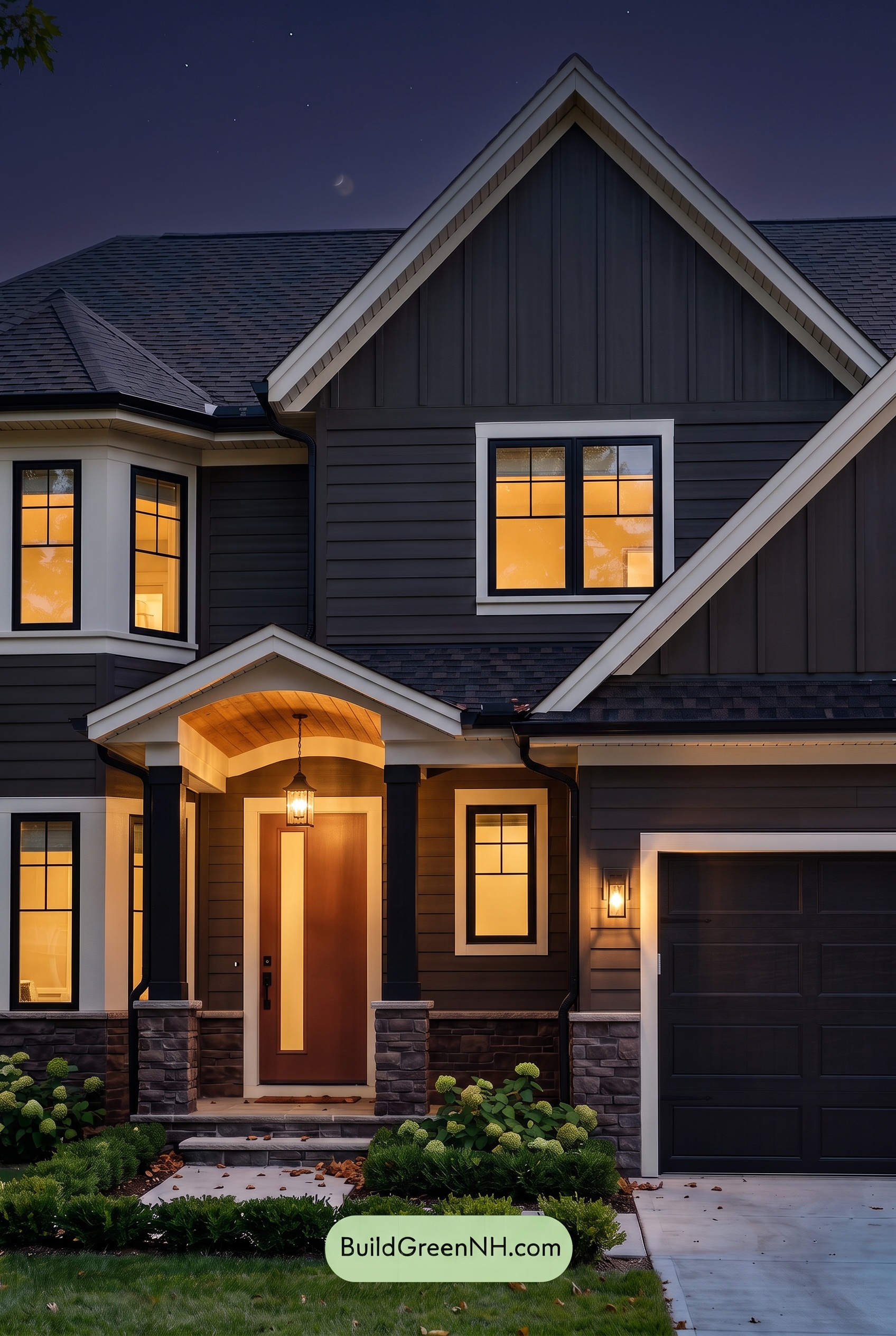
At night, the gray exterior shifts from a balanced neutral into a deeper, more dramatic shade, with its saturation appearing quieter beneath the cool sky. Shadows settle into the siding, columns, and garage door, blending their darker gray tones into a sleek, unified backdrop while the lighter beige trim becomes a crisp outline along the rooflines and windows.
Warm light from the entry and windows changes the mood completely: the brown front door takes on a richer, more inviting warmth, and nearby beige details feel softer and creamier than they do in neutral daylight. This mix of cool, shadowed grays and glowing warm neutrals heightens contrast and gives the facade a welcoming, refined nighttime presence.
Pin these for later:
Want More?
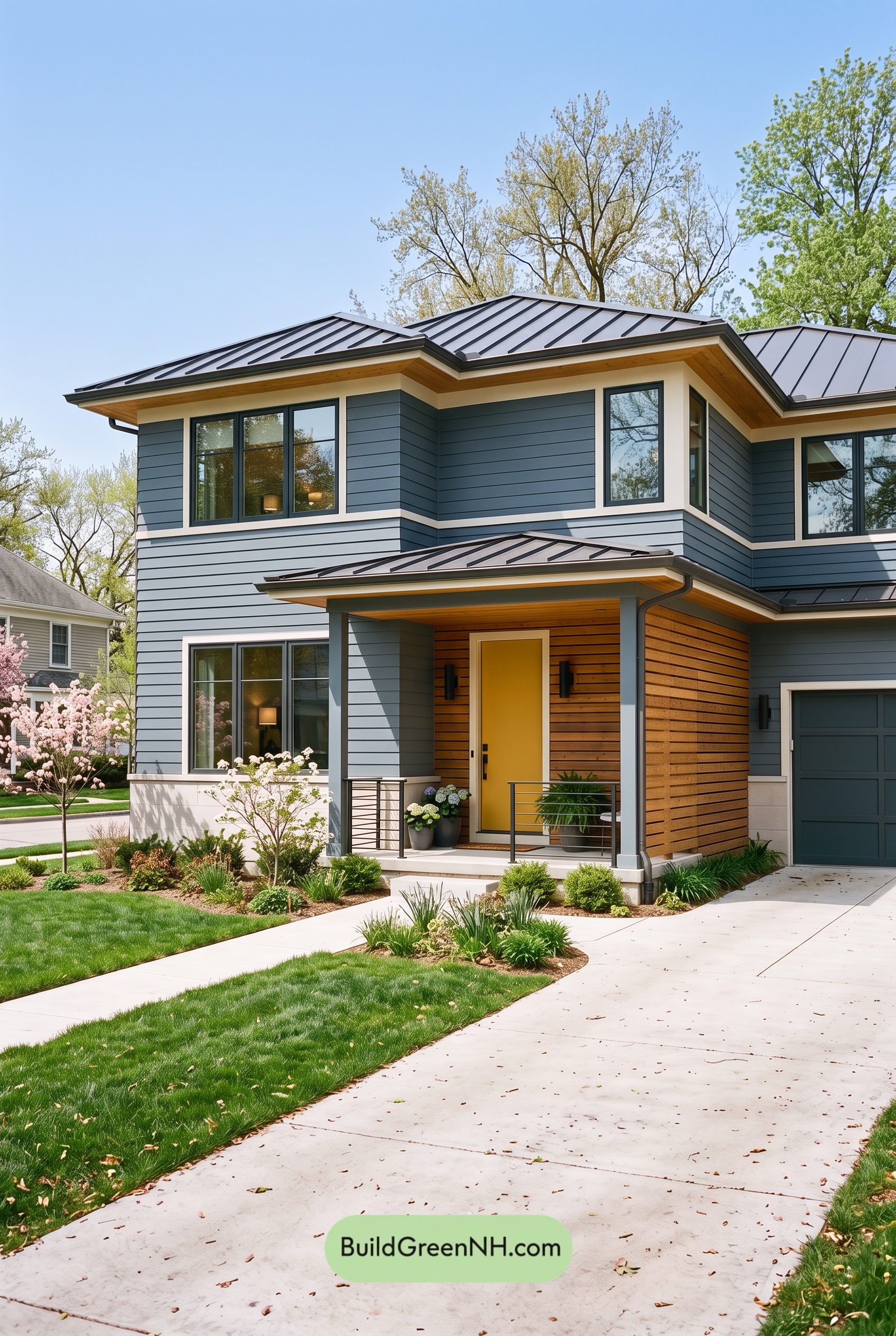 Blue House Front Door Color Scheme: Harbor Saffron
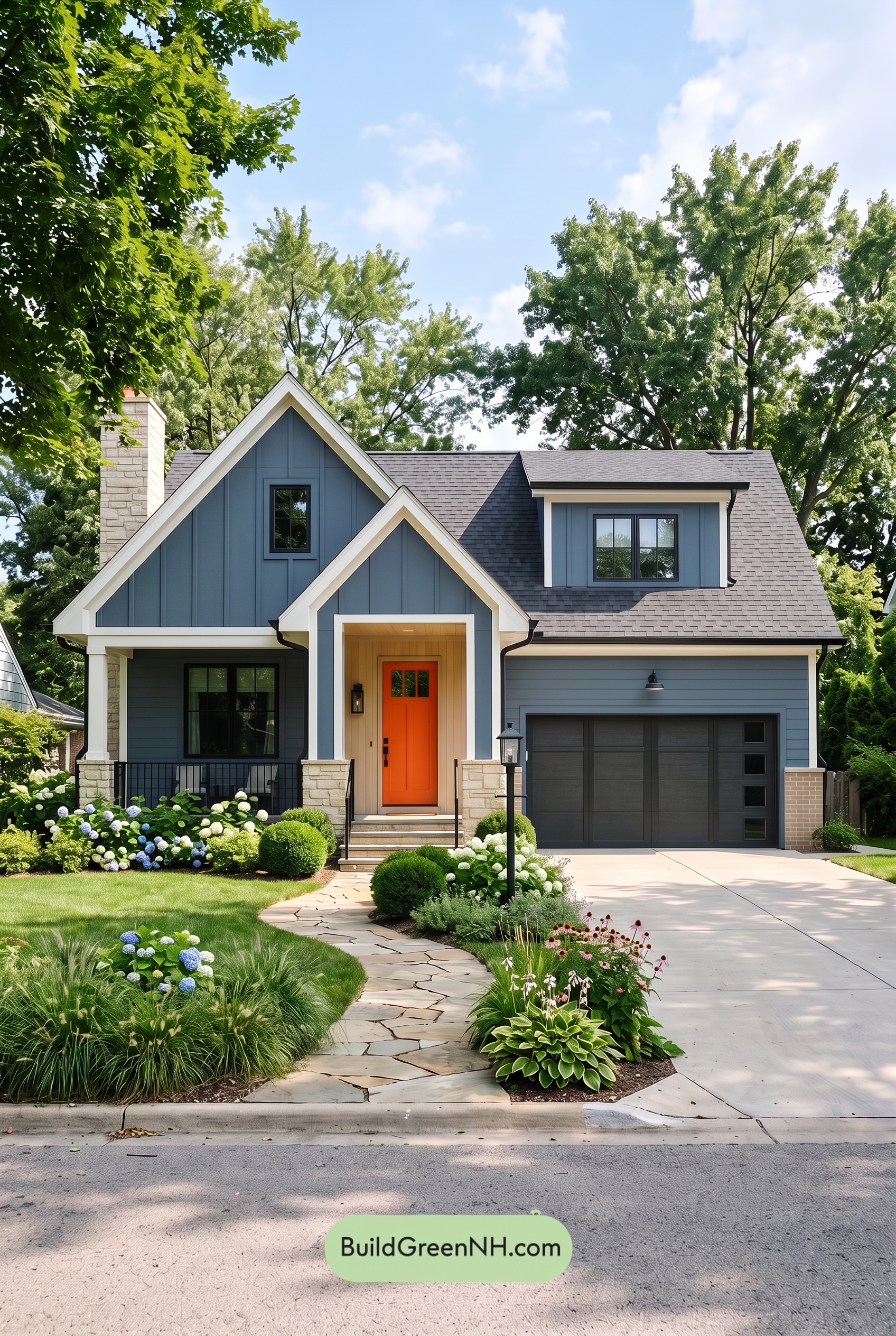 Blue House Front Door Color Scheme: Cobalt Persimmon
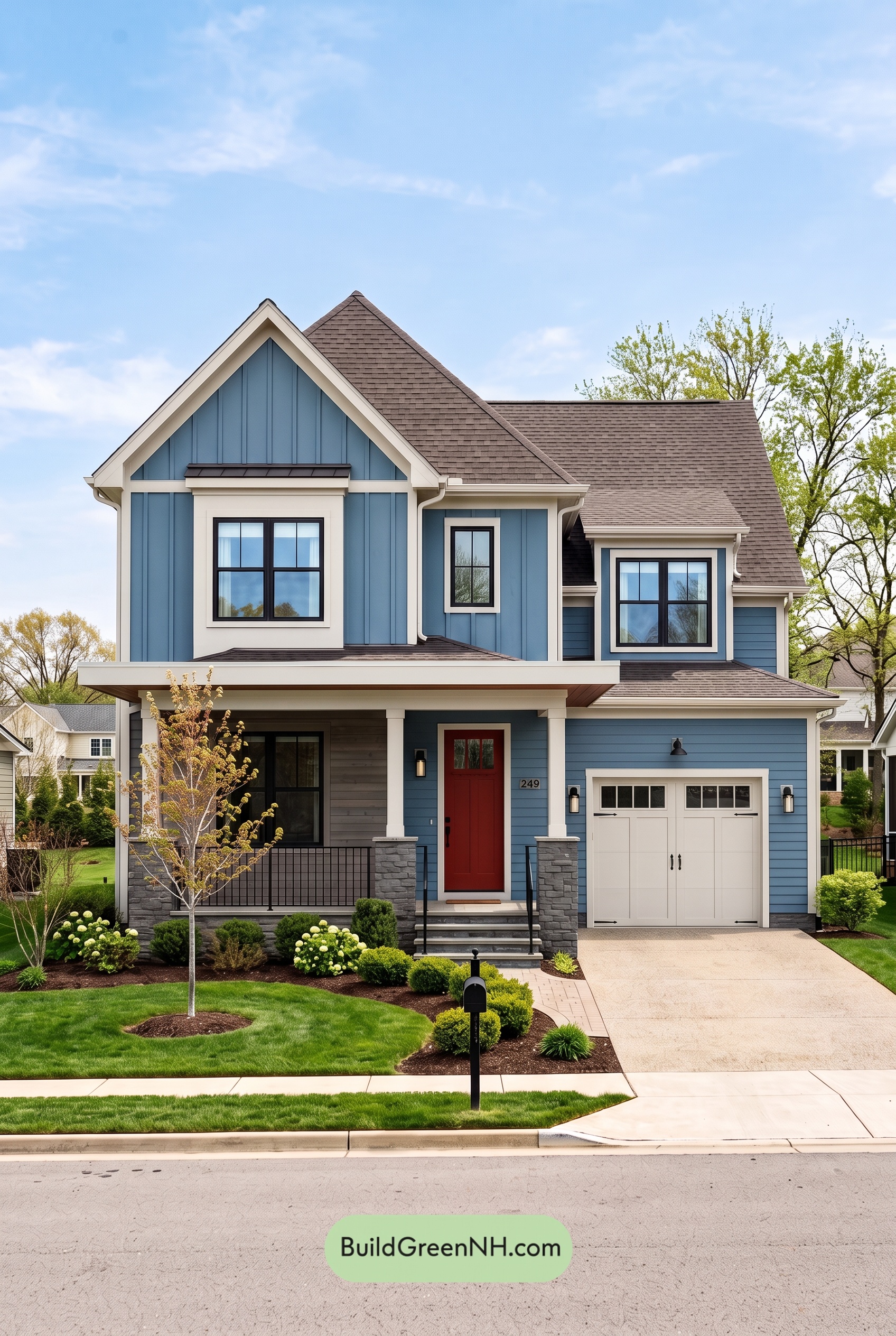 Blue House Front Door Color Scheme: Denim Poppy
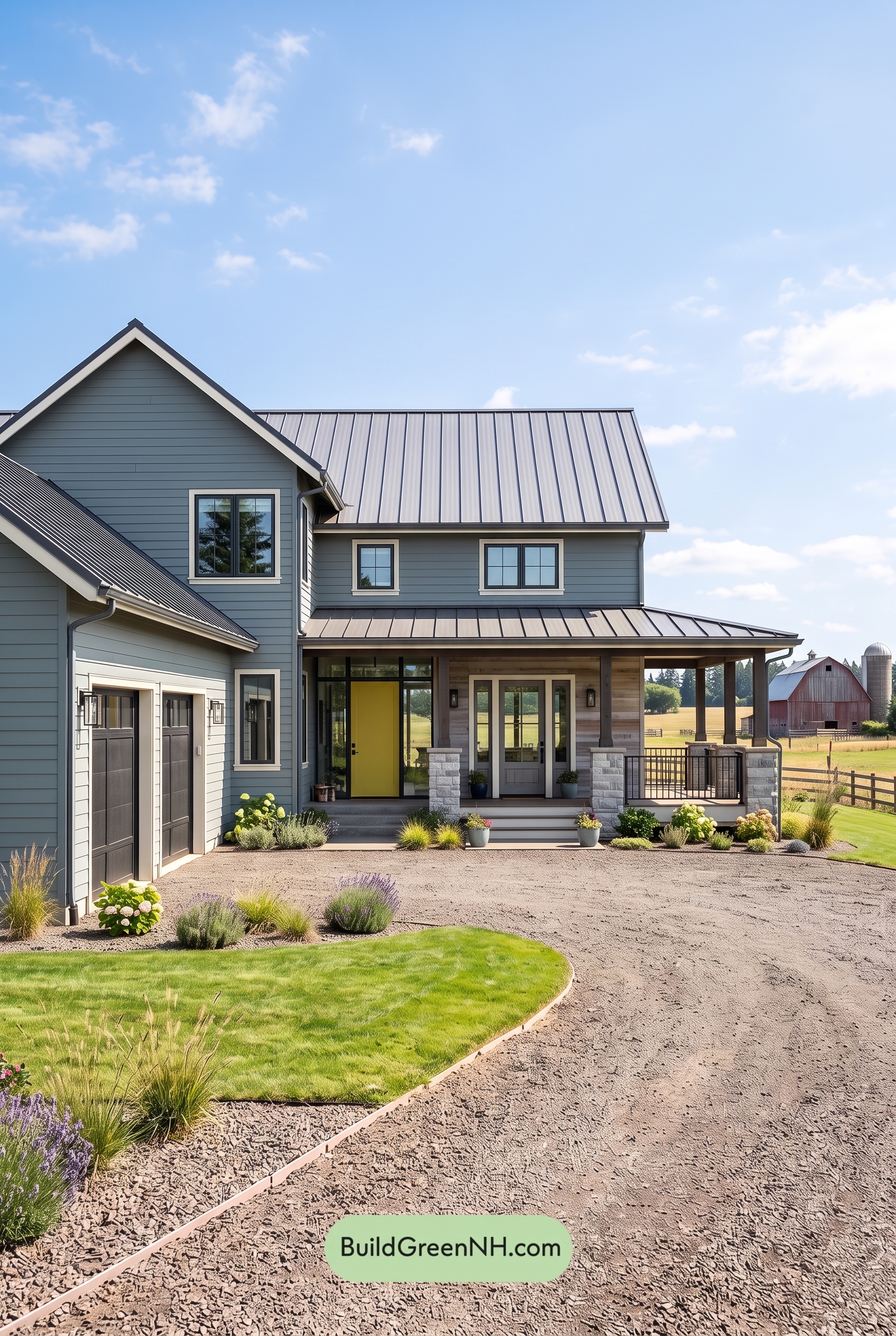 Blue House Front Door Color Scheme: Slate Citron
 Blue House Front Door Color Scheme: Mist Blue Haven
Table of Contents