Last updated on
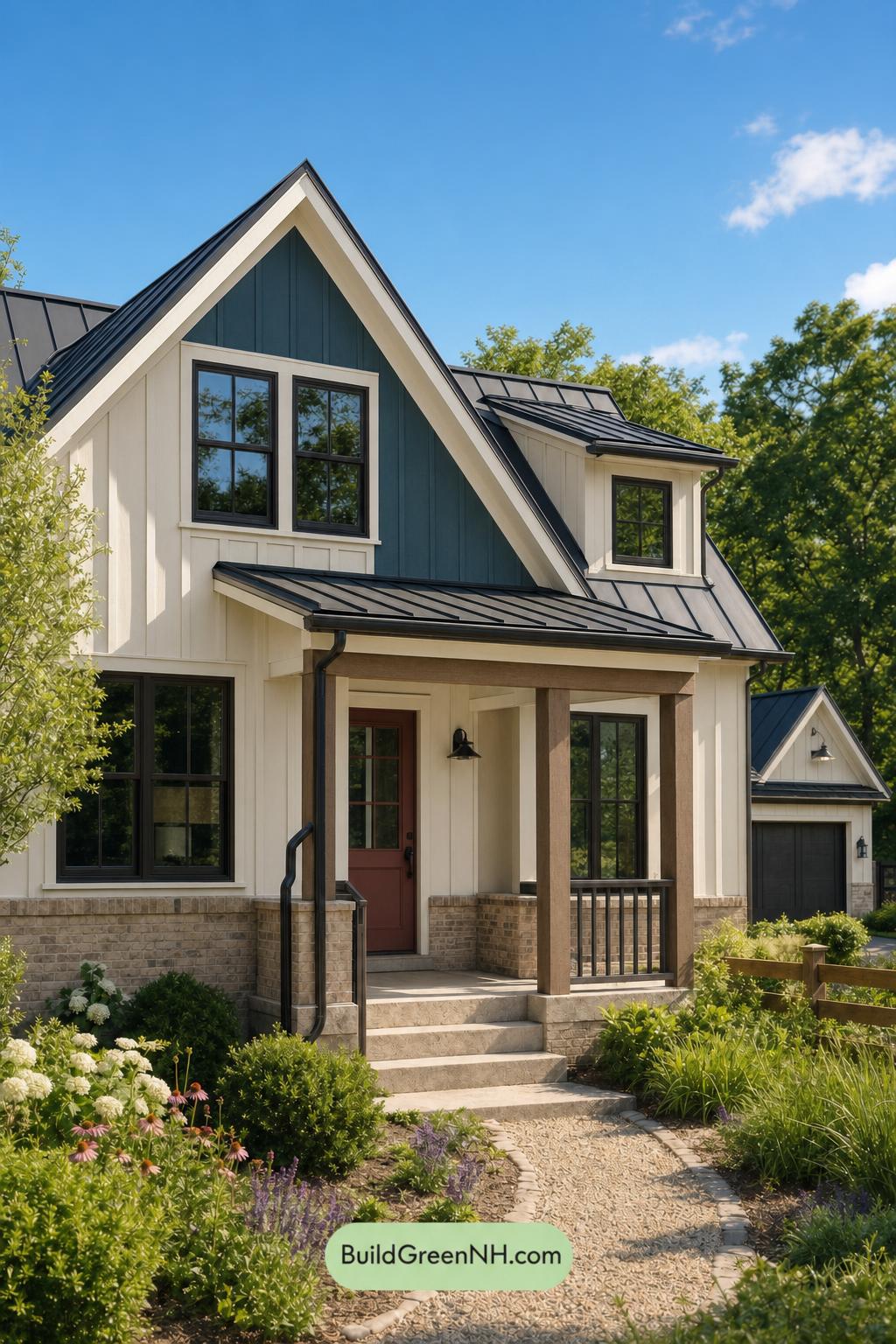

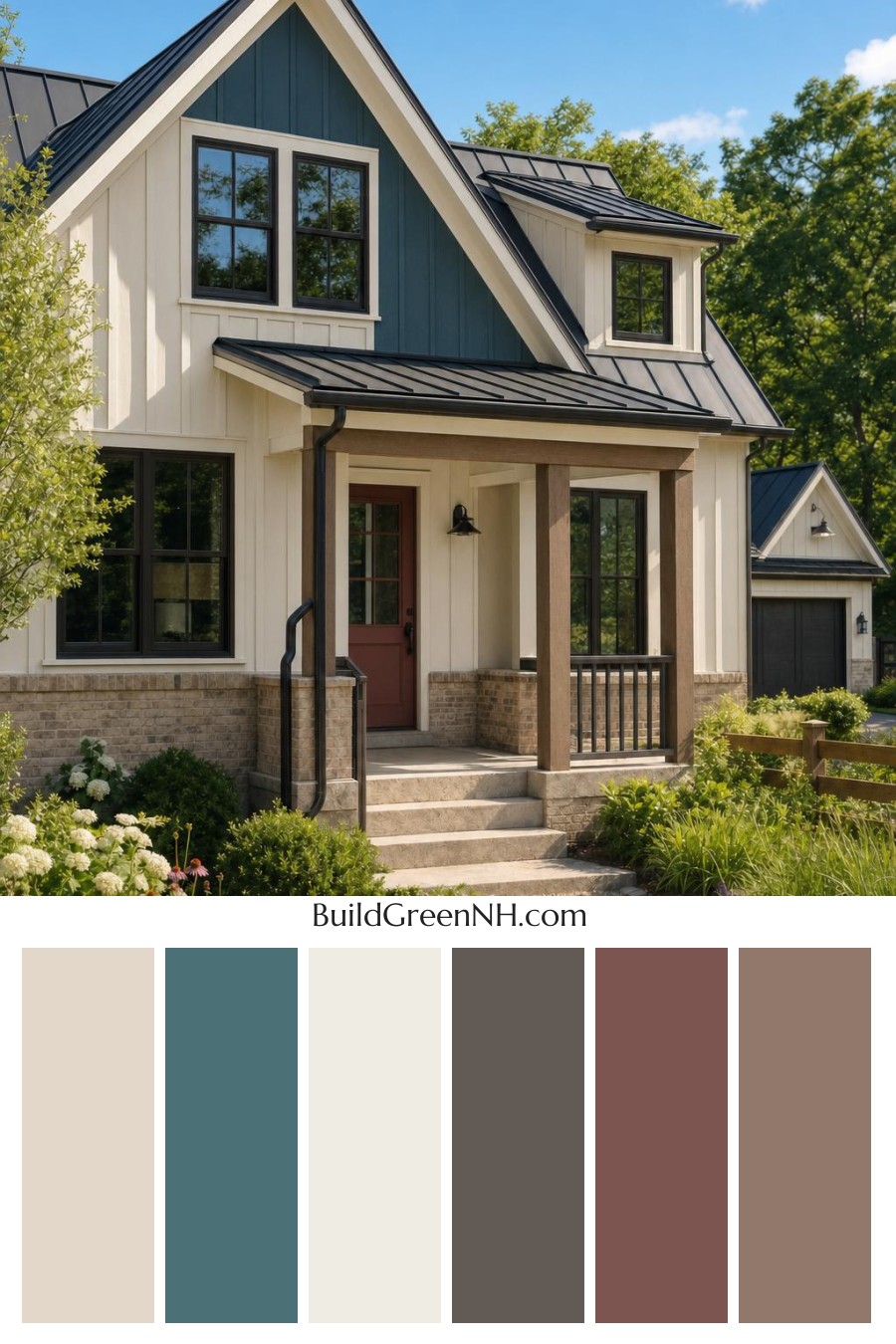
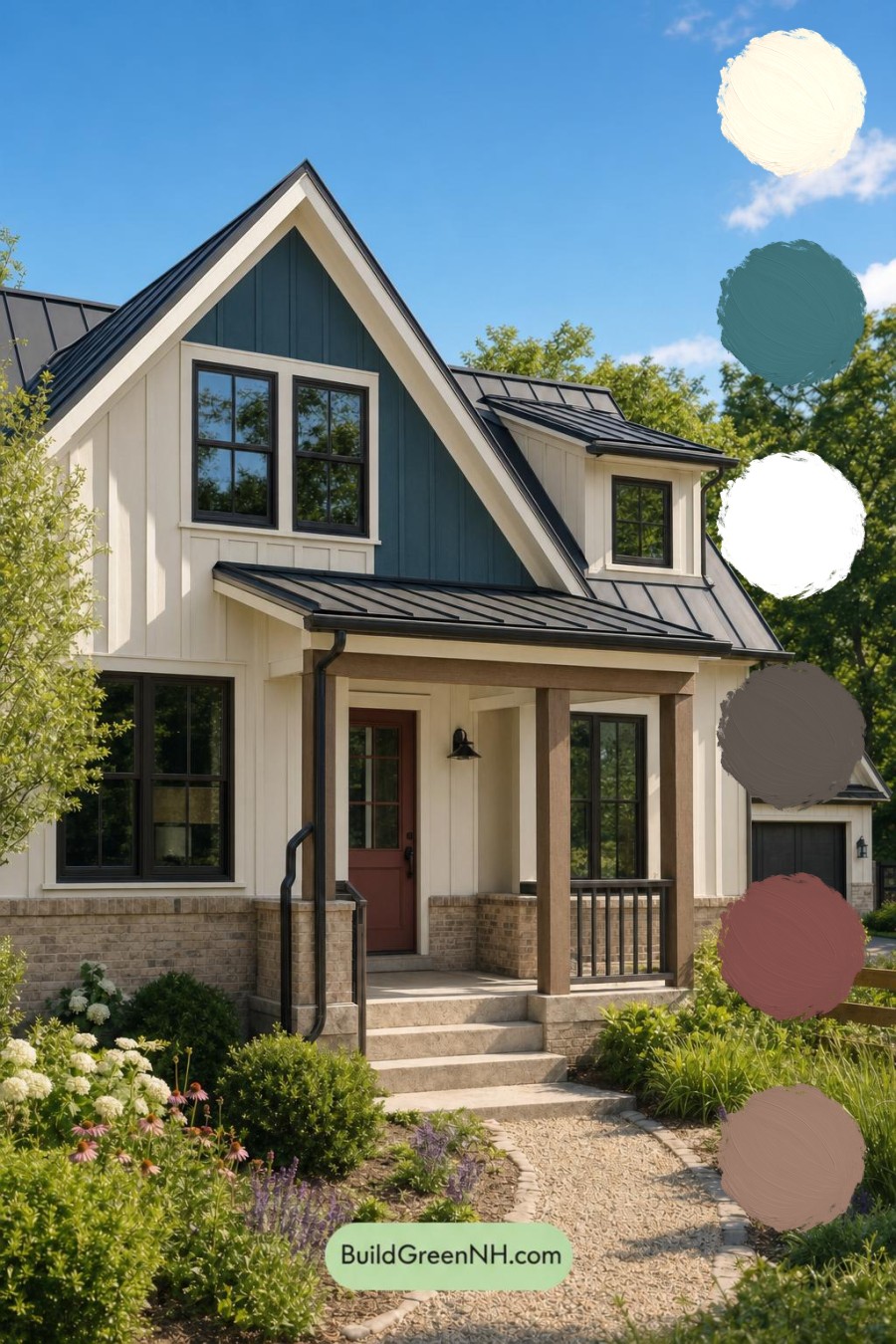
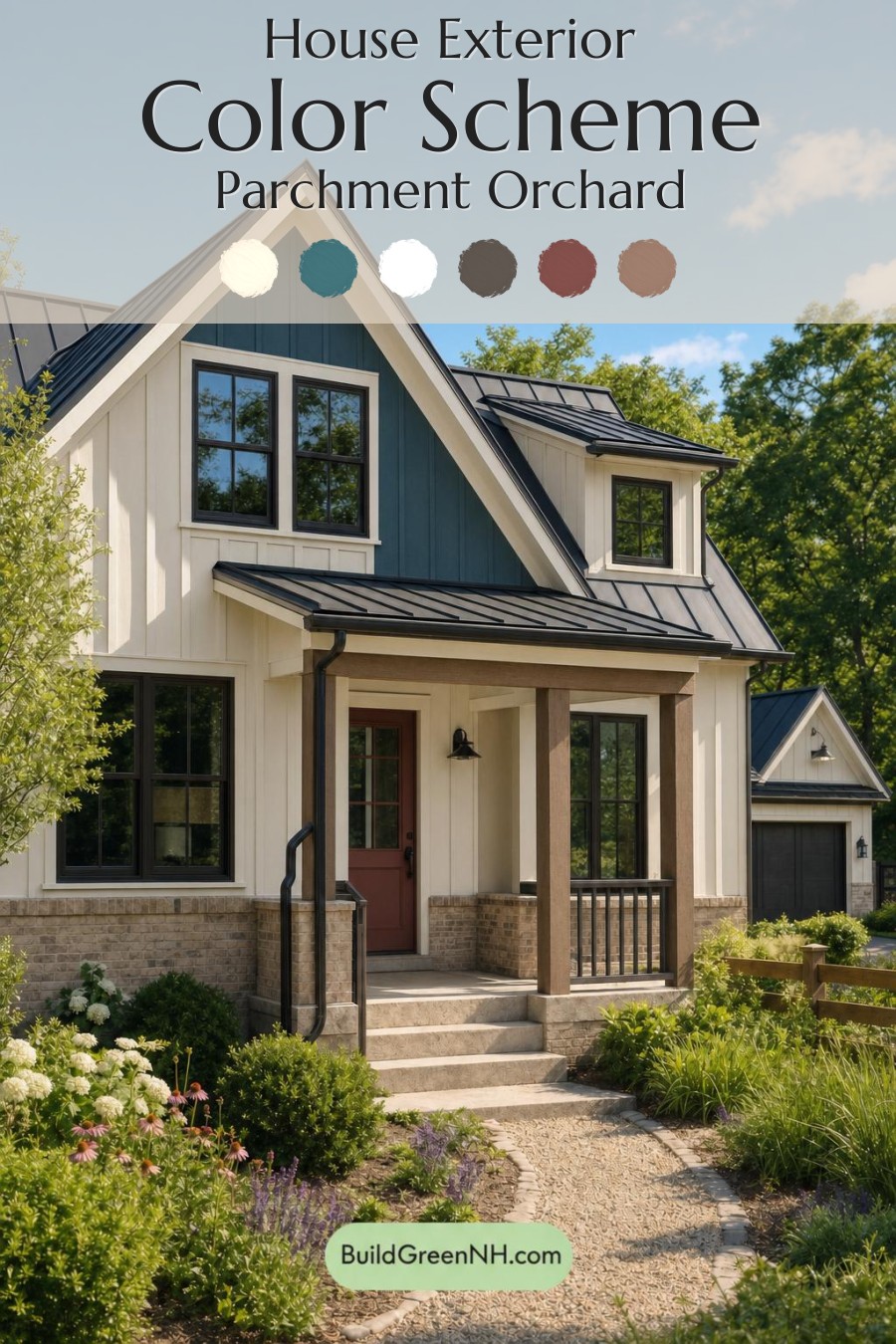
This exterior color scheme feels instantly welcoming because its crisp light siding, rich blue accent, and earthy brown details strike a beautiful balance between fresh and grounded.
A Bright Foundation with Architectural Definition
The main siding is finished in a soft, warm white that gives the home a clean, airy presence without feeling stark. It brightens the tall façade, emphasizes the vertical board detailing, and creates a calm backdrop for the more dramatic architectural features.
Matching light trim wraps the rooflines, windows, and gables, reinforcing the home’s tailored look. This repeated shade keeps every elevation connected while making the sharp roof angles and window shapes stand out beautifully.
A Deep Blue Gable Accent
The upper gable introduces a deep, muted blue that brings depth to the otherwise light exterior. Positioned high on the façade, this blue accent draws the eye upward and gives the house a distinctive focal point without overpowering the rest of the design.
Its cool, shaded character creates a refined contrast against the warm white siding. The result is classic with a slightly modern edge—especially effective on a home with strong lines and dramatic roof geometry.
Earthy Browns That Add Warmth
Brown window frames provide a strong outline against the pale walls, giving the windows a more substantial, grounded appearance. The same dark brown family appears on the porch columns, railings, garage door, and front door, creating an intentional thread across the exterior.
The front door leans toward a deep reddish brown, adding a subtle touch of warmth at the entry. It feels inviting rather than flashy, while the surrounding brown porch structure frames the doorway like a welcoming threshold.
The warm brown details also connect naturally with the understated taupe and sandy beige tones in the masonry base and front steps. Together, these earthy shades soften the crisp siding and help the home settle comfortably into its landscaped setting.
Dark Roof Contrast for a Polished Finish
A deep charcoal roof anchors the entire palette. Its nearly black appearance gives the home a sharp, confident silhouette and echoes the dark window frames, railings, and exterior hardware.
This dark roof color is especially effective beside the light trim, which cleanly traces each gable and roof edge. The contrast makes the architecture feel precise and polished while allowing the blue accent and warm brown details to remain visually balanced.
The Overall Mood
This is a thoughtful mix of cool and warm tones: light creamy white siding for brightness, a moody blue feature for character, deep charcoal for definition, and layered brown details for warmth. The palette feels modern farmhouse-inspired, yet timeless enough to remain appealing for years.
Because each shade has a clear role, the exterior feels layered rather than busy. It is bright, welcoming, and beautifully grounded—an ideal approach for a home that wants both personality and enduring curb appeal.
Next, see how this color scheme looks under different lighting simulations throughout the day.
Overcast
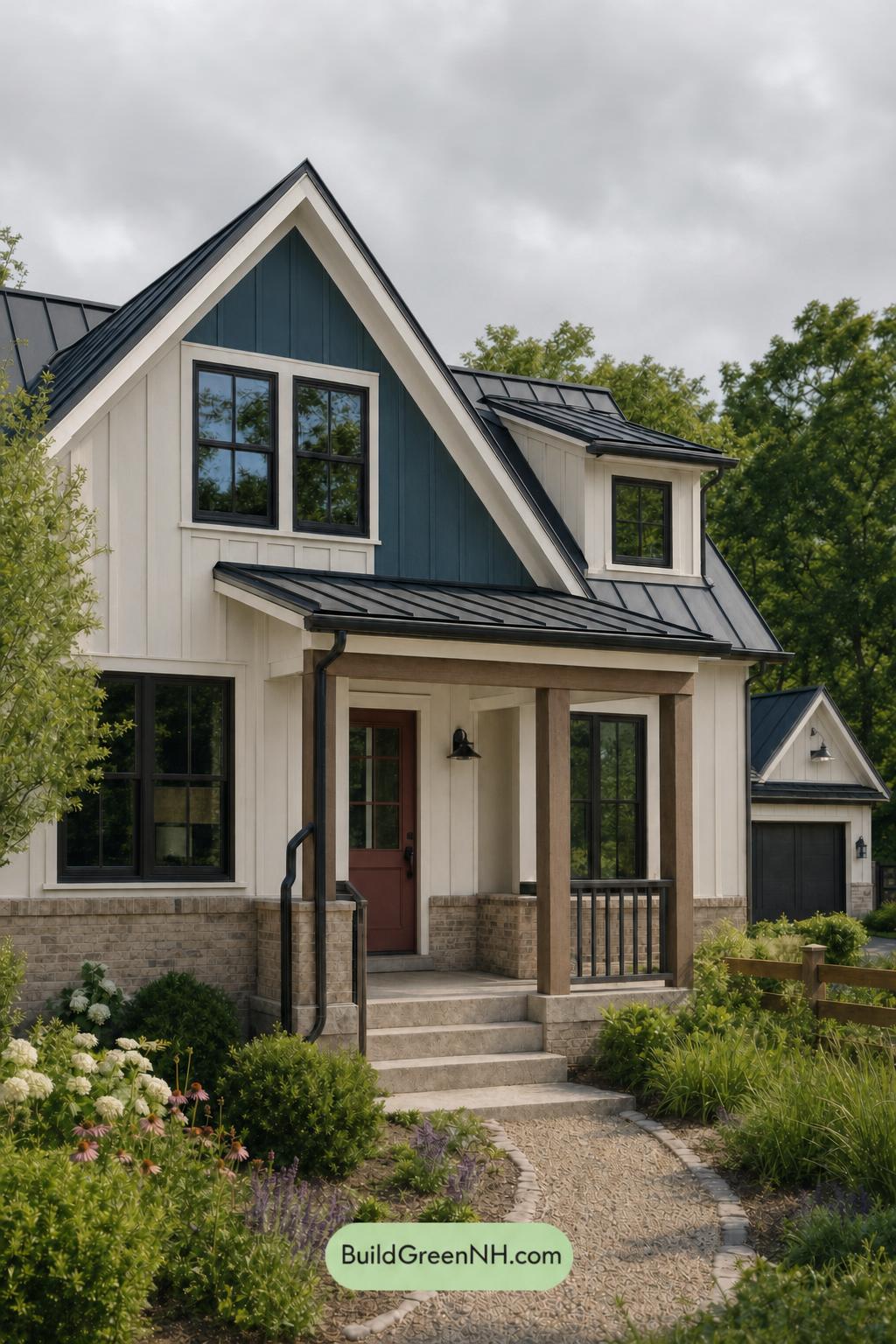
Under overcast skies, the white siding and trim appear softer and slightly cooler than they do in neutral daylight, with fewer bright highlights across the façade. The blue accent deepens into a more muted, sophisticated shade, while its saturation feels more even without direct sun.
The brown porch elements and entry details lose some of their sunlit warmth, reading calmer and more grounded against the softened whites. Diffused light reduces hard shadows and sharp contrast, giving the home a quiet, cohesive mood with gentle definition around the windows, rooflines, and architectural textures.
Golden Hour
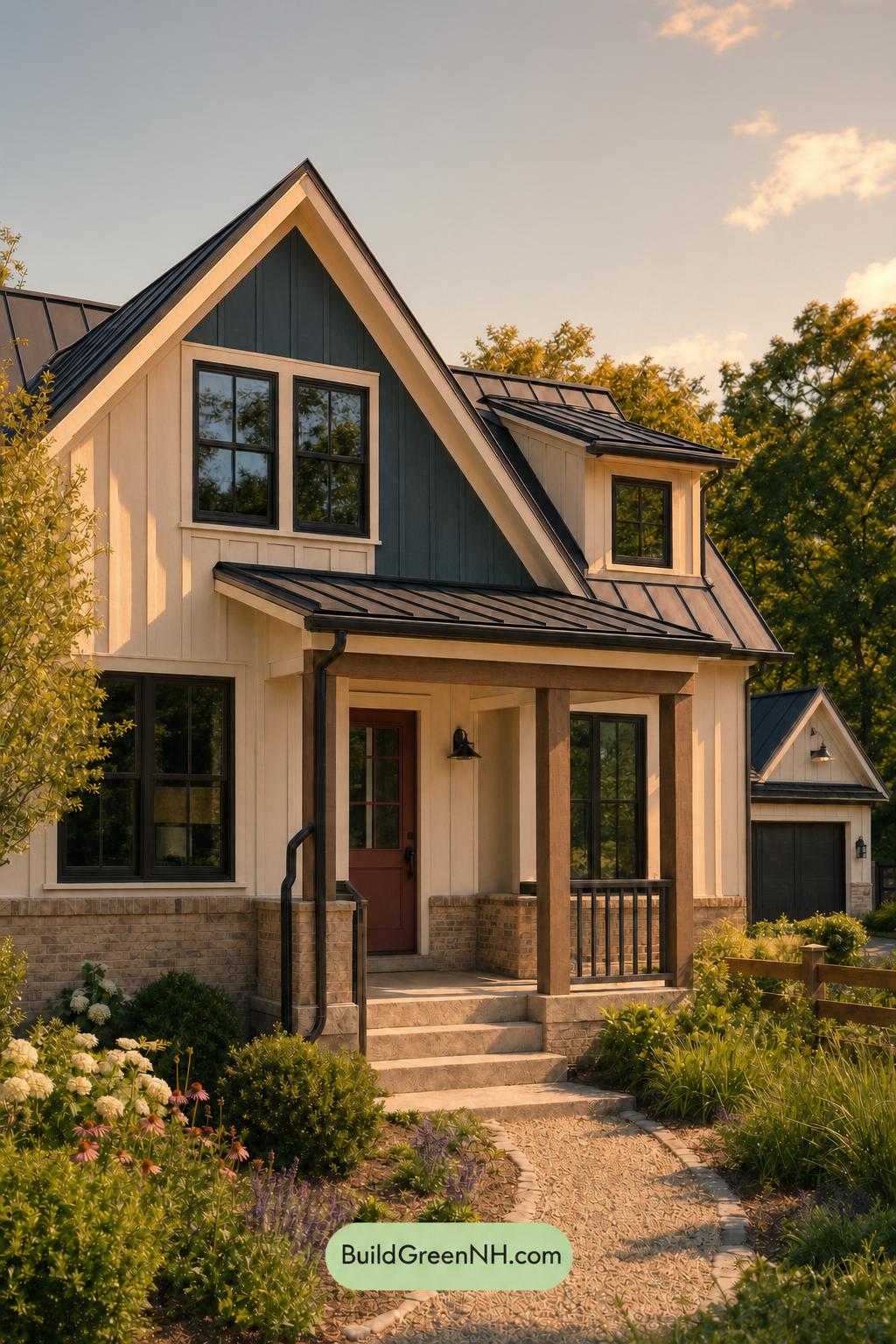
Under neutral daylight, the white siding reads crisp and balanced while the blue accent feels cool, steady, and distinctly defined. As Golden Hour arrives, the low amber light softens the white surfaces into a creamier, more luminous shade and brings a richer warmth to the brown details around the entry, windows, and porch.
The blue accent deepens in the growing shadows, creating stronger contrast against the sunlit warm neutrals. Darker brown features gain extra depth, while angled shade across the roofline and porch adds dimension and a relaxed, welcoming mood that neutral daylight cannot quite replicate.
Shade
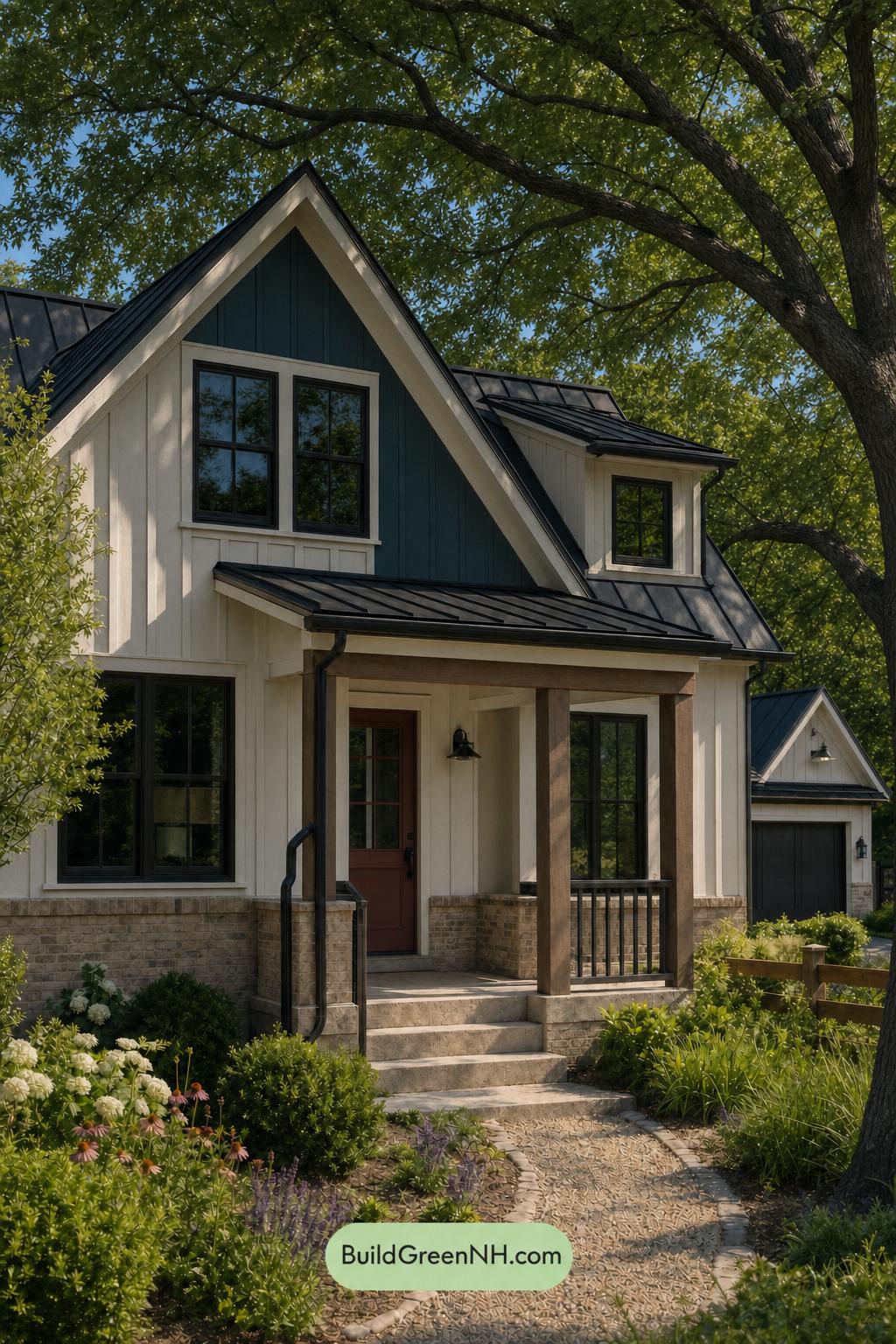
In shade, the white exterior shifts away from the crisp brightness it shows in neutral daylight and takes on a softer, quieter character. The blue accent appears deeper and more muted, while its saturation feels more refined than vivid. Layered tree shadows create subtle variations across the siding, giving the facade added texture and a relaxed, sheltered mood.
The brown wood elements become richer and more grounded under the canopy of shade, lending warmth against the cooler-looking white and blue surfaces. Dark window frames and railings gain visual weight, sharpening the contrast around openings and architectural edges without making the palette feel harsh. Together, the shaded colors create an inviting, intimate presence that feels calm and timeless.
Nighttime
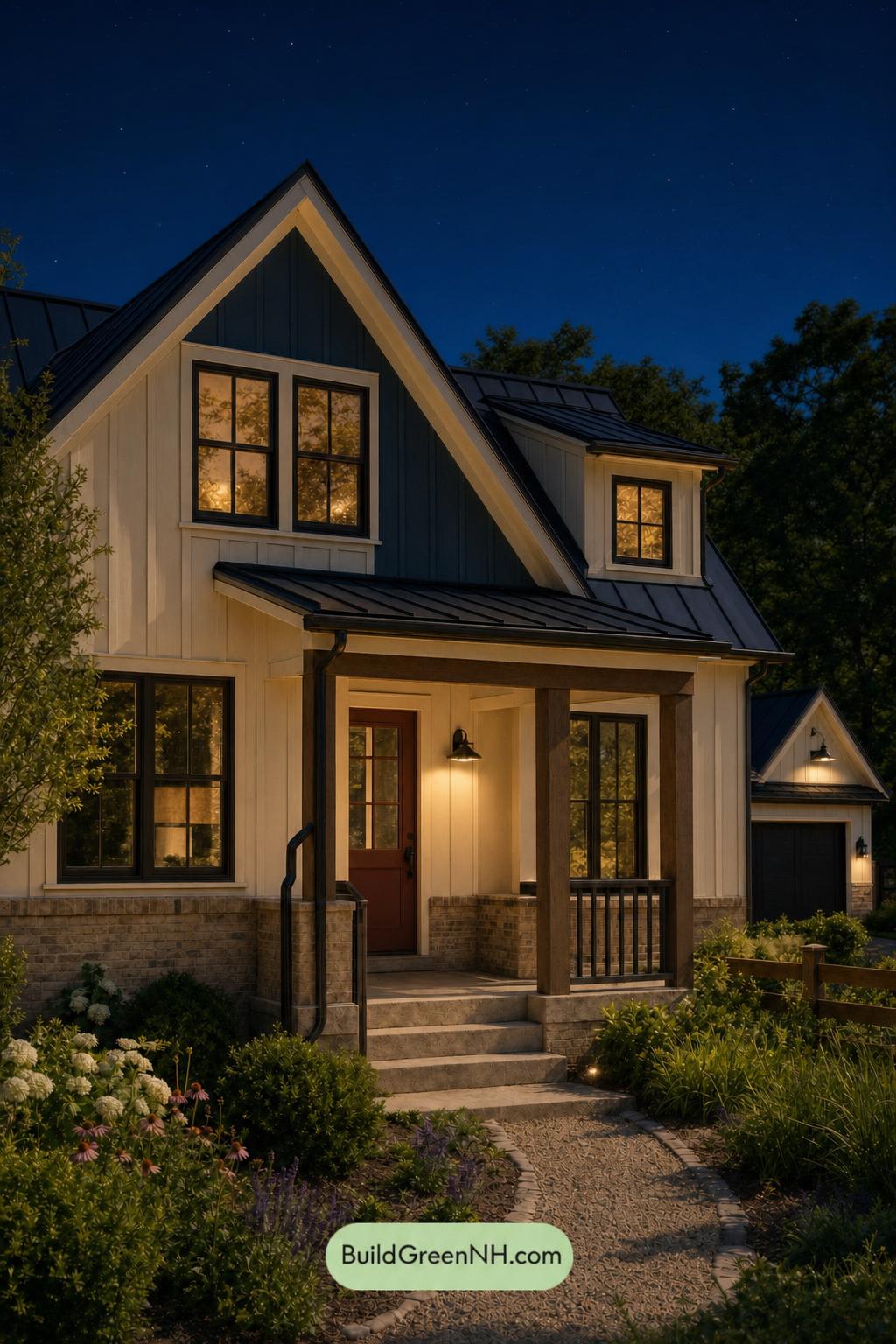
At night, the white siding and trim lose some of their crisp neutral-daylight brightness and take on a softer, warmer glow near the porch and windows. Beyond the pools of light, those pale surfaces recede into gentle gray shadows, while the blue accent area deepens into a richer, more subdued shade with less visible saturation.
The brown features become especially grounding after dark, reading as deeper and more dramatic against the illuminated walls. Warm lighting strengthens the contrast around the entry, making the brown door, columns, frames, and railings feel inviting and substantial, while the surrounding shadows create a calm, cozy mood that daylight cannot quite match.
Pin these for later:
Want More?
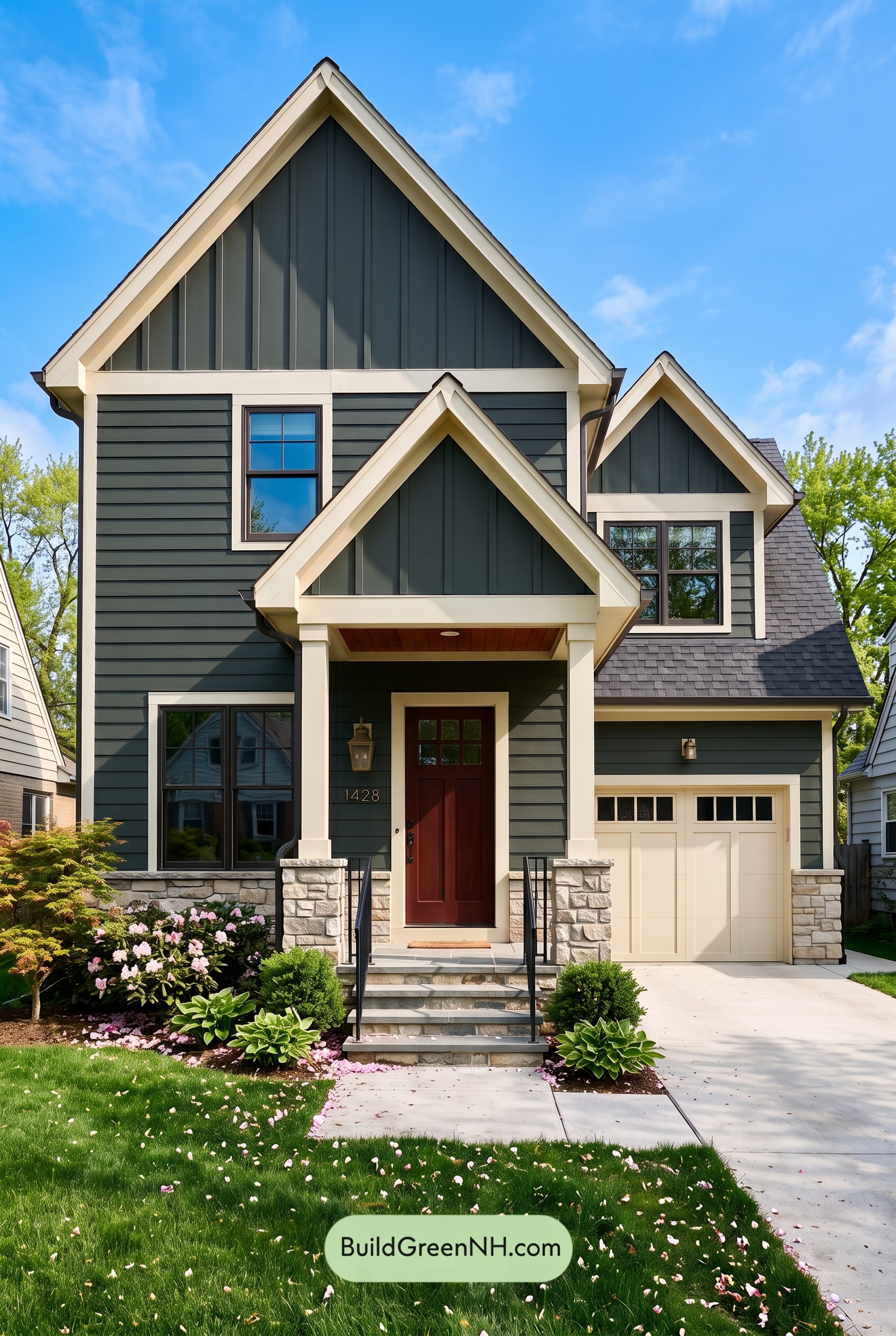 Exterior Color Scheme with Stone Accents: Pine Brass Threshold
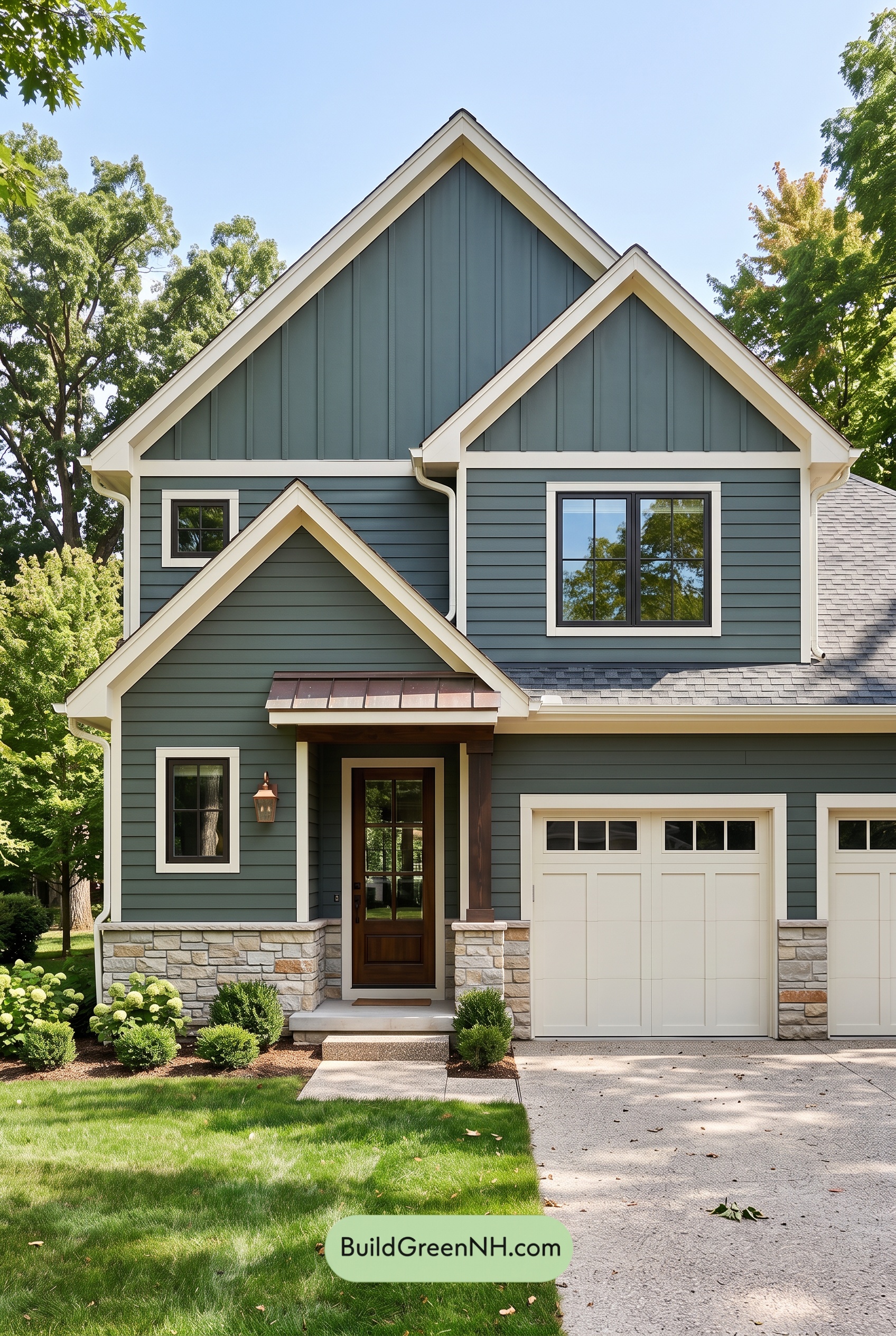 Exterior Color Scheme with Stone Accents: Evergreen Copper Welcome
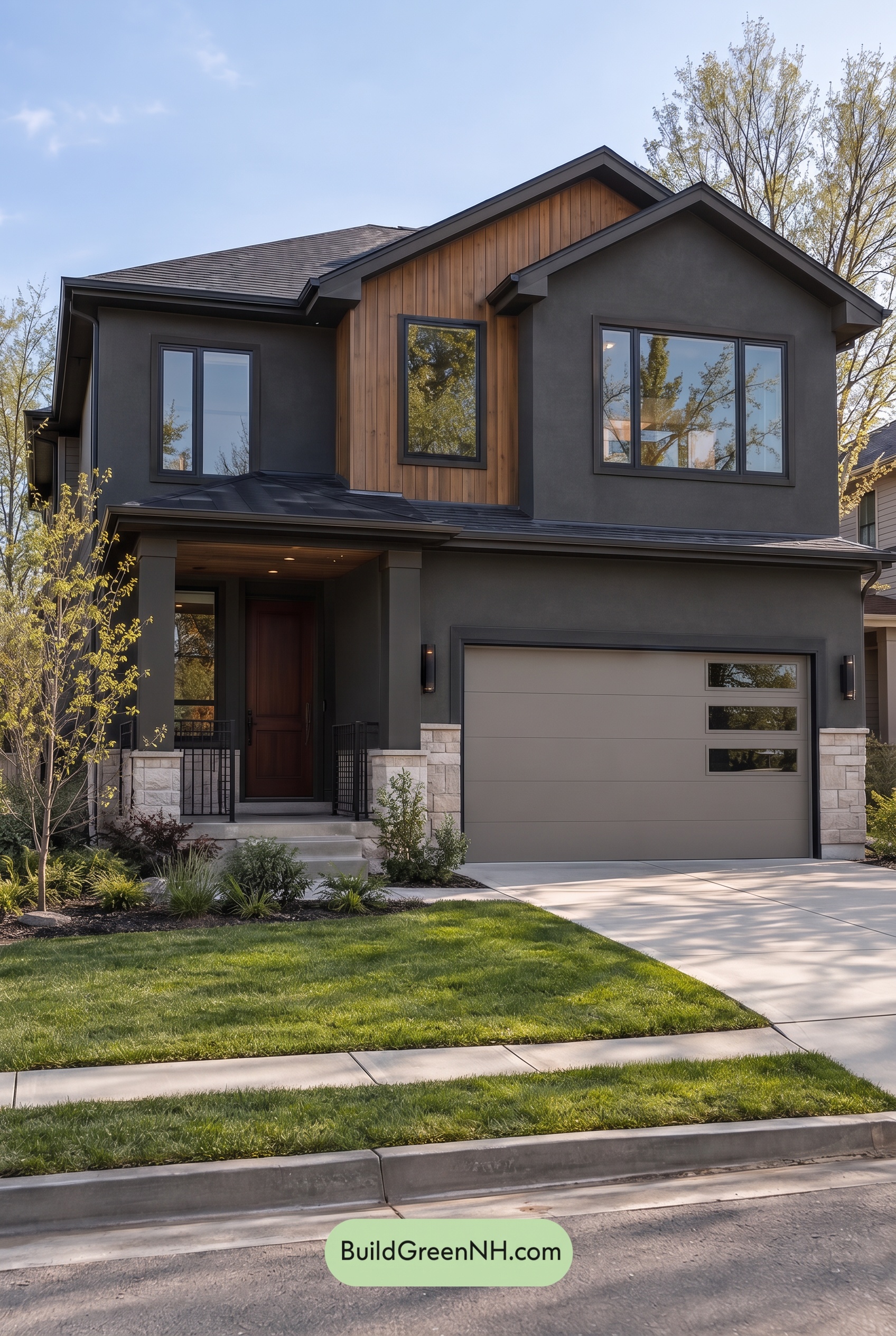 Dark Stucco House Exterior Color Scheme: Cedar Ember Calm
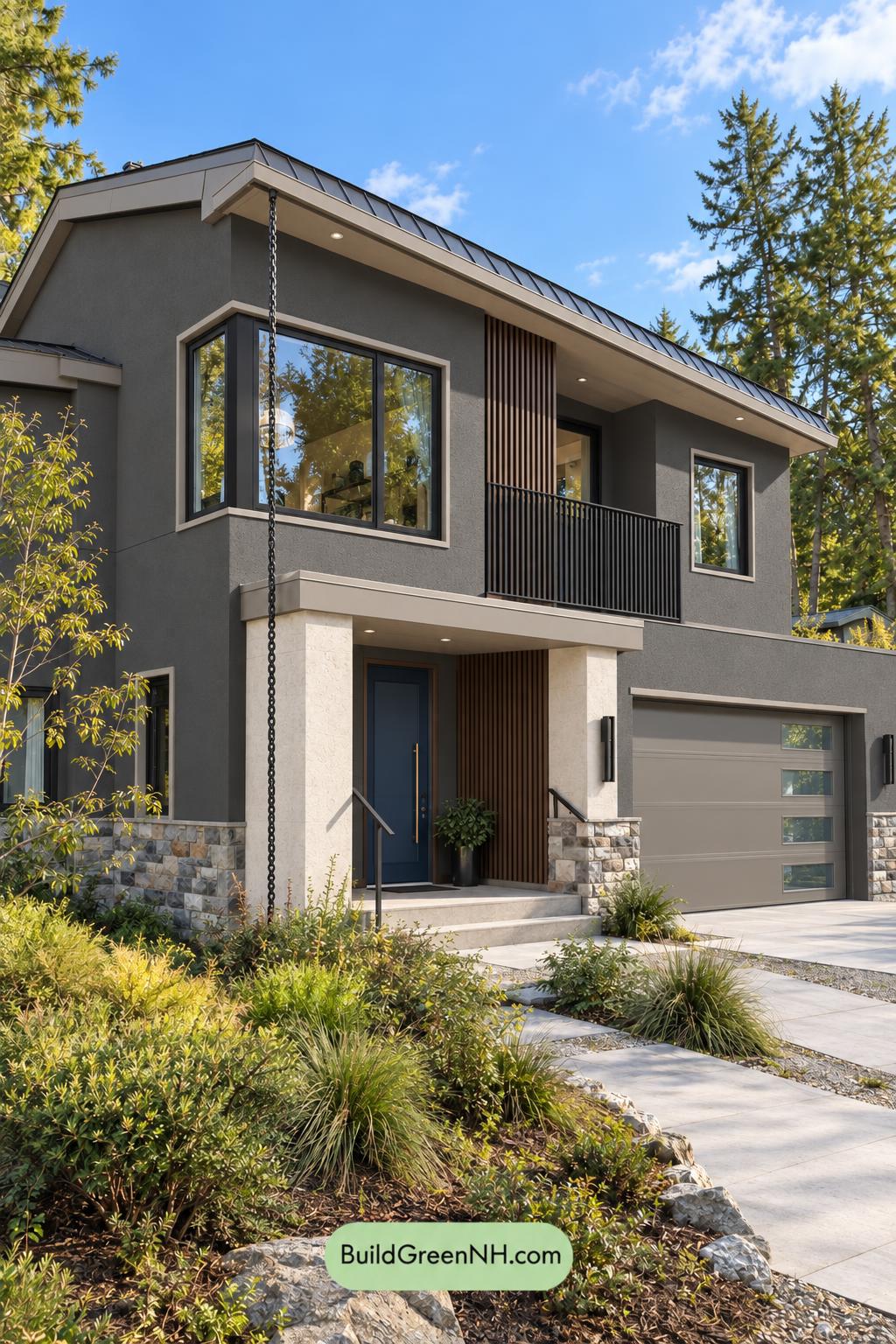 Dark Stucco House Exterior Color Scheme: Silver Pine Shelter
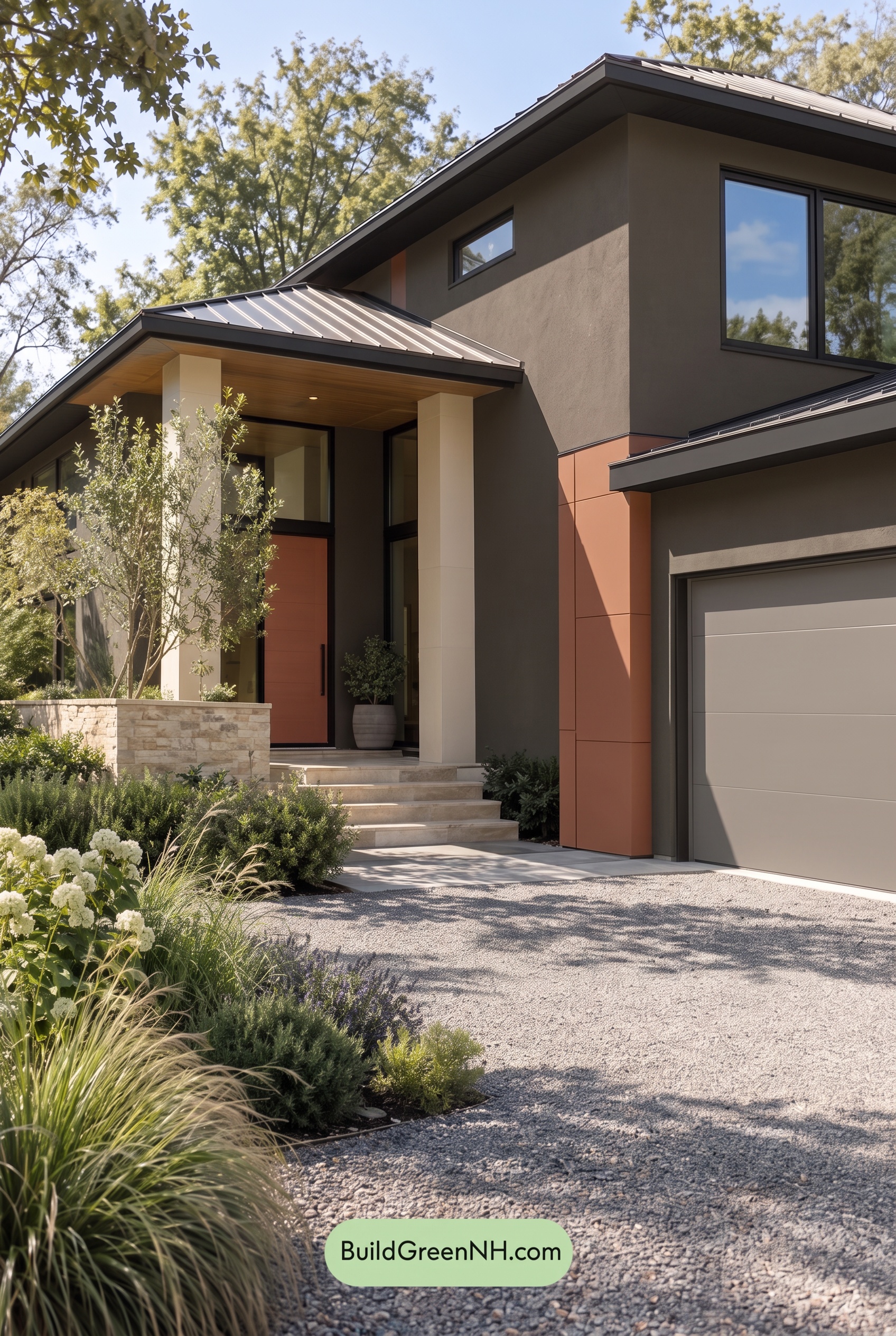 Dark Stucco House Exterior Color Scheme: Copper Orchard House
Table of Contents