Last updated on
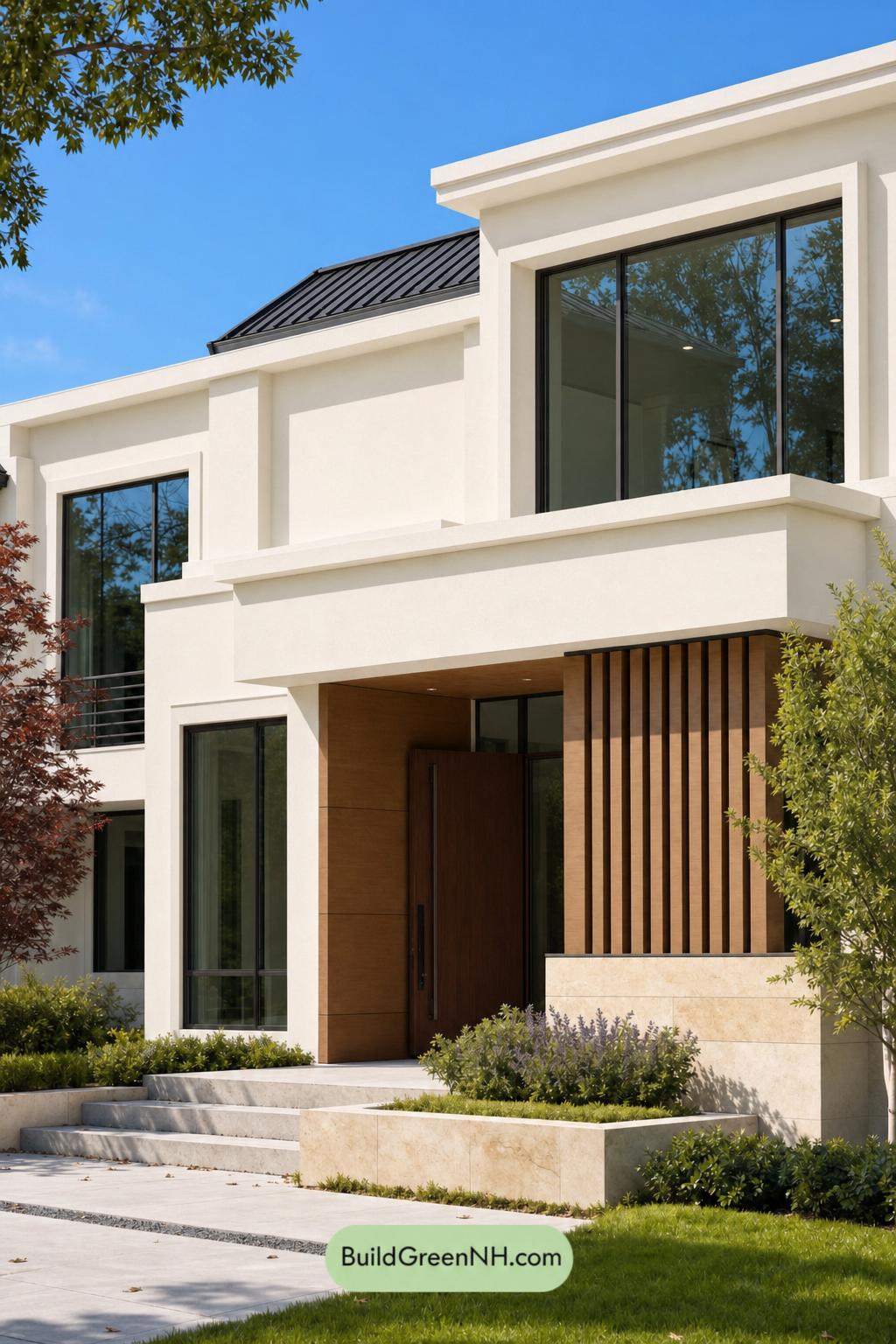

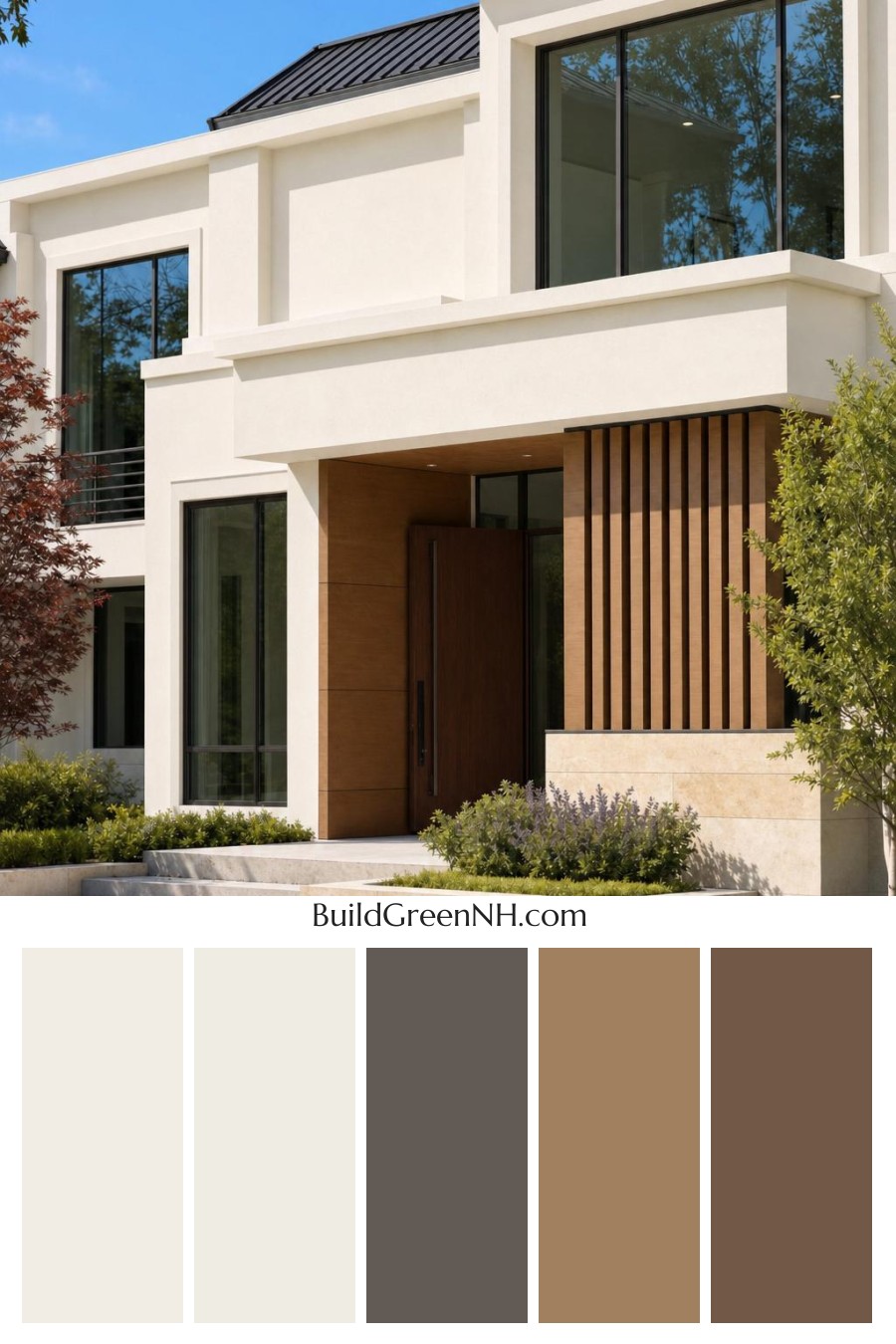
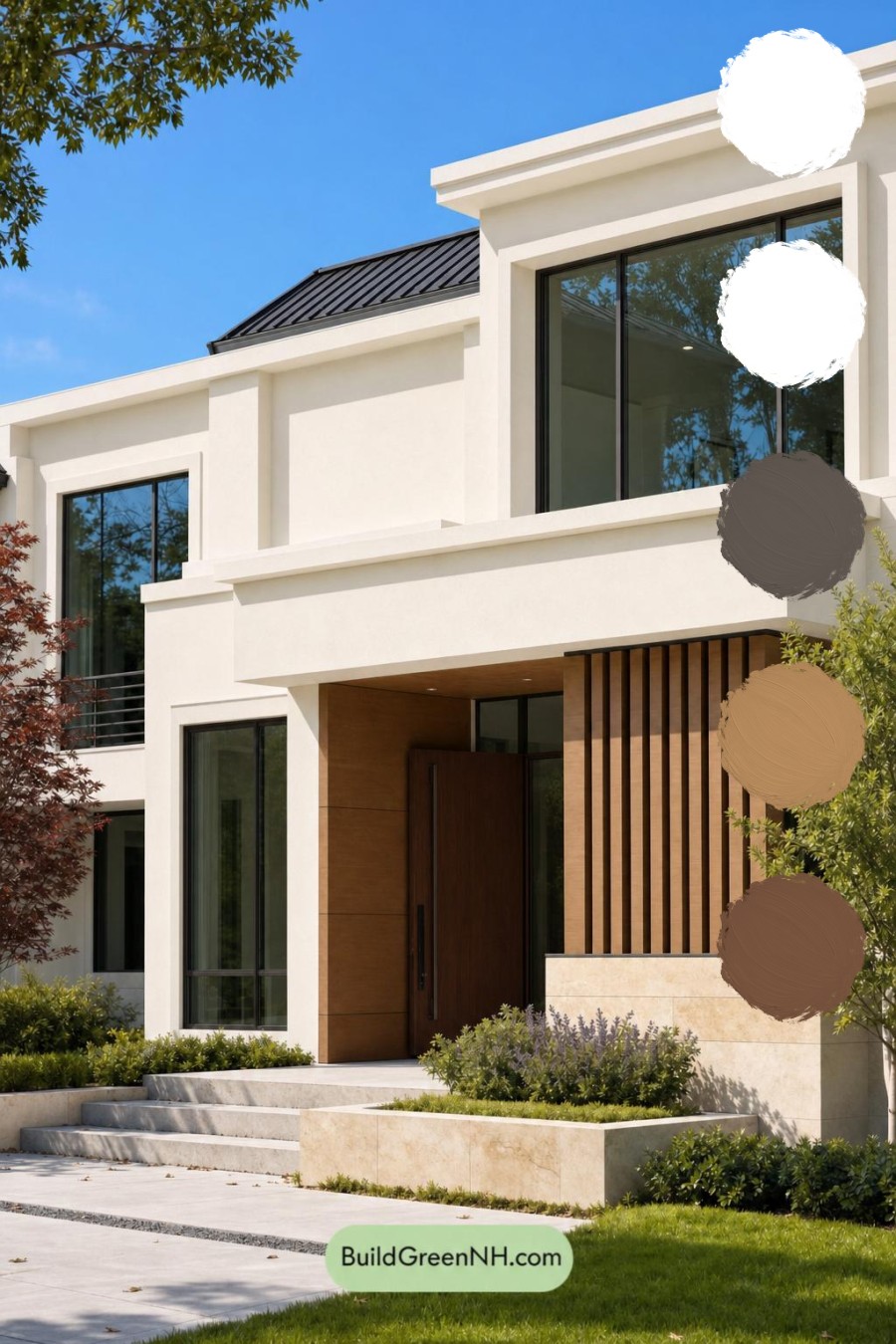
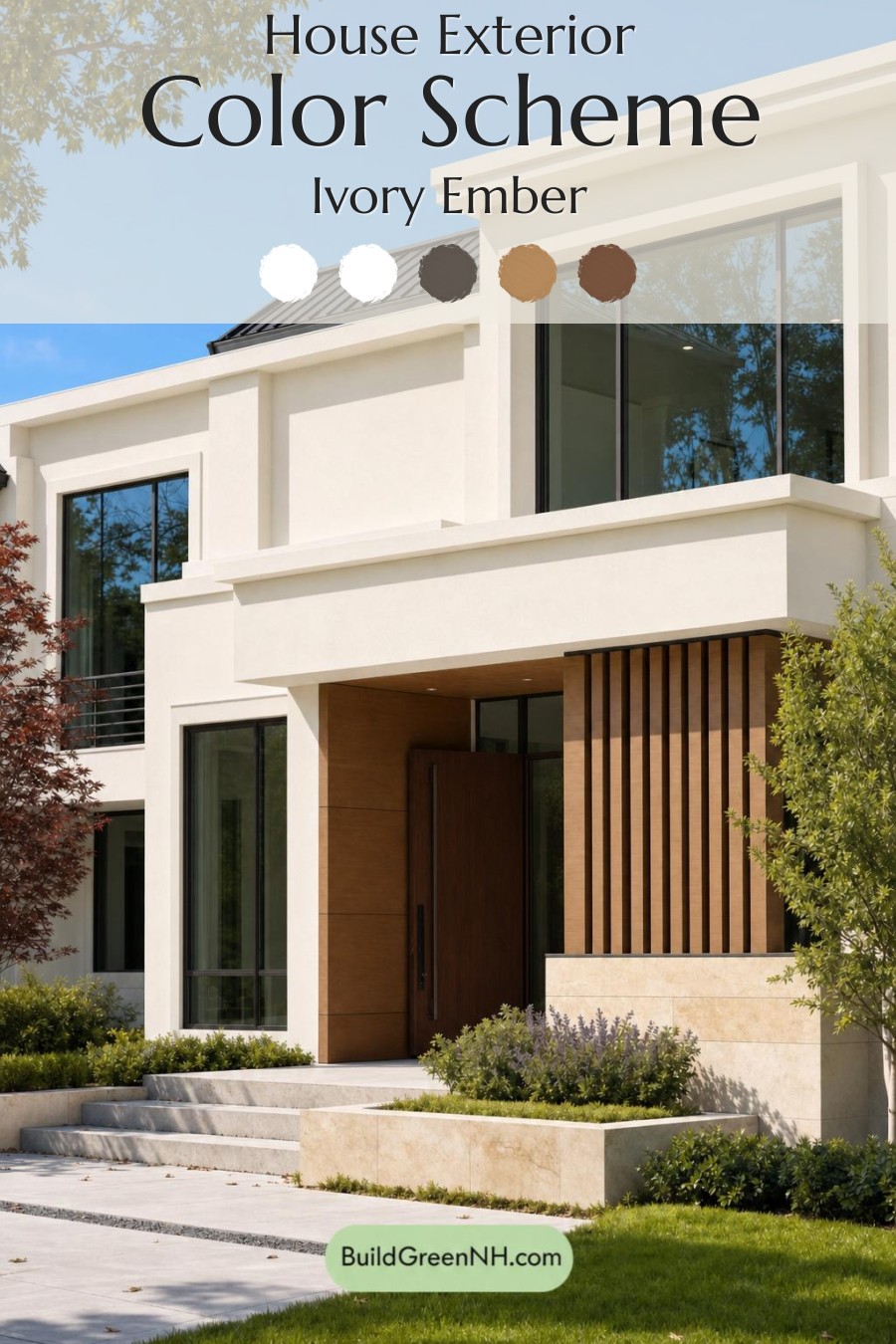
This warm, high-contrast exterior scheme gives the home a polished modern presence while still feeling inviting and grounded.
A Soft, Light Foundation
The main exterior is finished in a pale warm beige that keeps the broad walls looking bright, clean, and expansive. Its subtle warmth prevents the contemporary architecture from feeling stark, especially across the large geometric planes and sheltered entryway. This light neutral shade also works beautifully with the surrounding greenery, allowing the landscaping to feel like a natural extension of the design.
Crisp White Defines the Architecture
Bright white trim sharpens every major edge of the façade. It frames the windows, outlines the roofline, and emphasizes the deep horizontal ledges that give the home its layered, sculptural character. Against the warm beige walls, the white feels fresh and refined, adding a tailored finish without distracting from the home’s clean lines.
Deep Brown Adds Depth and Drama
Dark brown window frames create a strong visual anchor throughout the exterior. Their rich depth makes the expansive glass stand out while introducing a sleek, grounded contrast to the pale wall color. The same deep brown family appears in the roof, creating an intentional connection from the top of the house down through the window details.
At the entrance, medium-to-deep brown accents bring the scheme to life. The front door and surrounding wall panels create a warm focal point beneath the lighter upper façade, while the vertical brown screening adds texture, rhythm, and a sense of privacy. These wood-toned elements make the entry feel especially welcoming.
A Balanced Modern Mood
The overall effect is sophisticated yet approachable. Warm beige and white keep the home airy, while the dark brown details provide enough contrast to make its modern form feel bold and memorable. The repeated brown accents tie together the roof, window frames, door, and railings, giving the entire exterior a cohesive, carefully composed finish.
This is a versatile palette that feels equally elegant in bright daylight and more dramatic in the evening, when the darker accents become even more prominent against the softly lit neutral exterior.
Next, see how this color scheme looks under different lighting simulations throughout the day.
Overcast
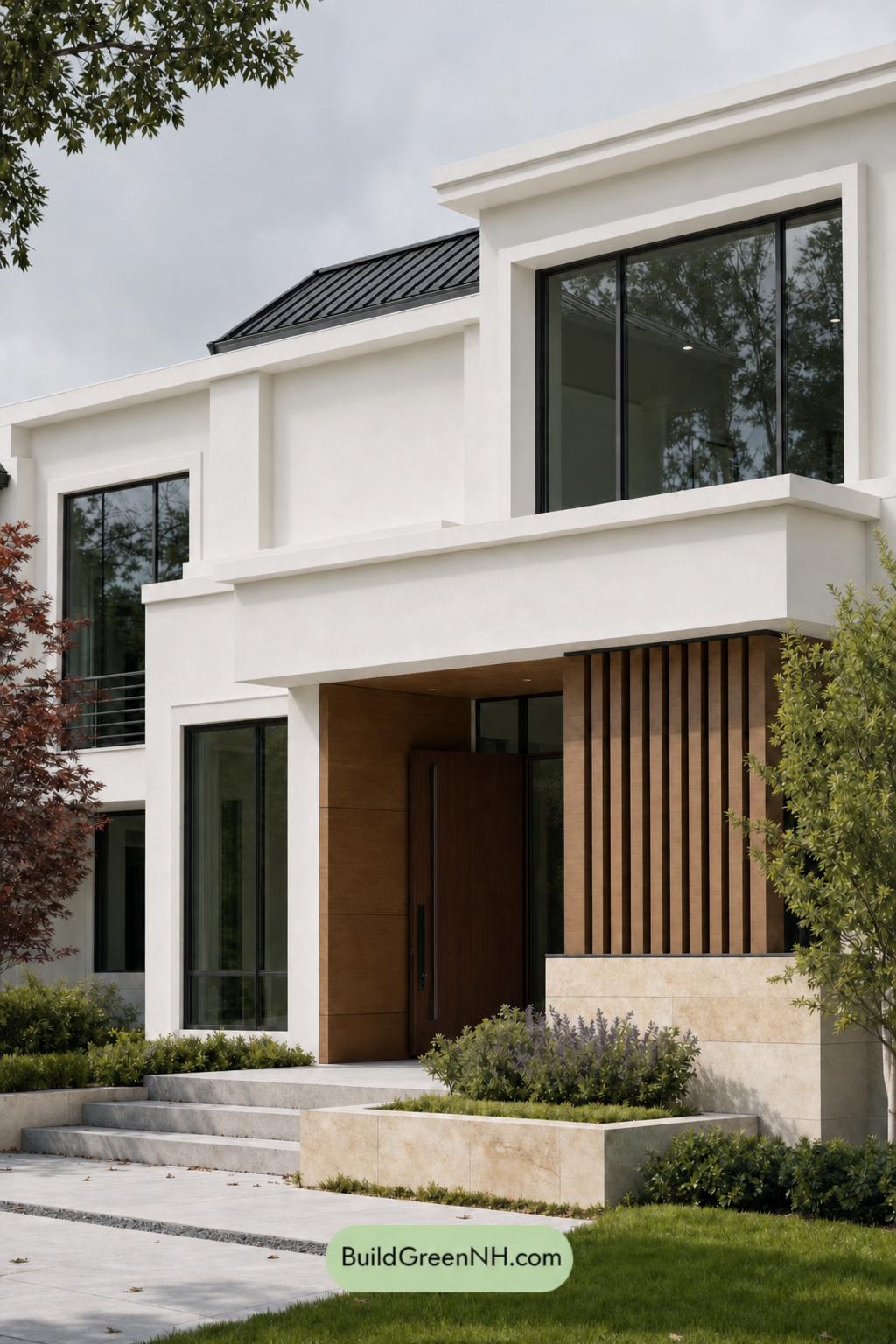
Under overcast skies, the warm beige exterior takes on a softer, more muted character than it has in neutral daylight. Its warmth is gently subdued, while the white trim appears calmer and slightly less crisp, creating a smooth, low-glare finish across the clean architectural planes.
The rich brown window frames, entry details, and railings deepen against the softened facade, though their contrast feels more refined than dramatic. With fewer sharp shadows, the recessed entry and layered trim read with subtle depth, giving the home a quiet, polished mood that feels inviting and contemporary.
Golden Hour
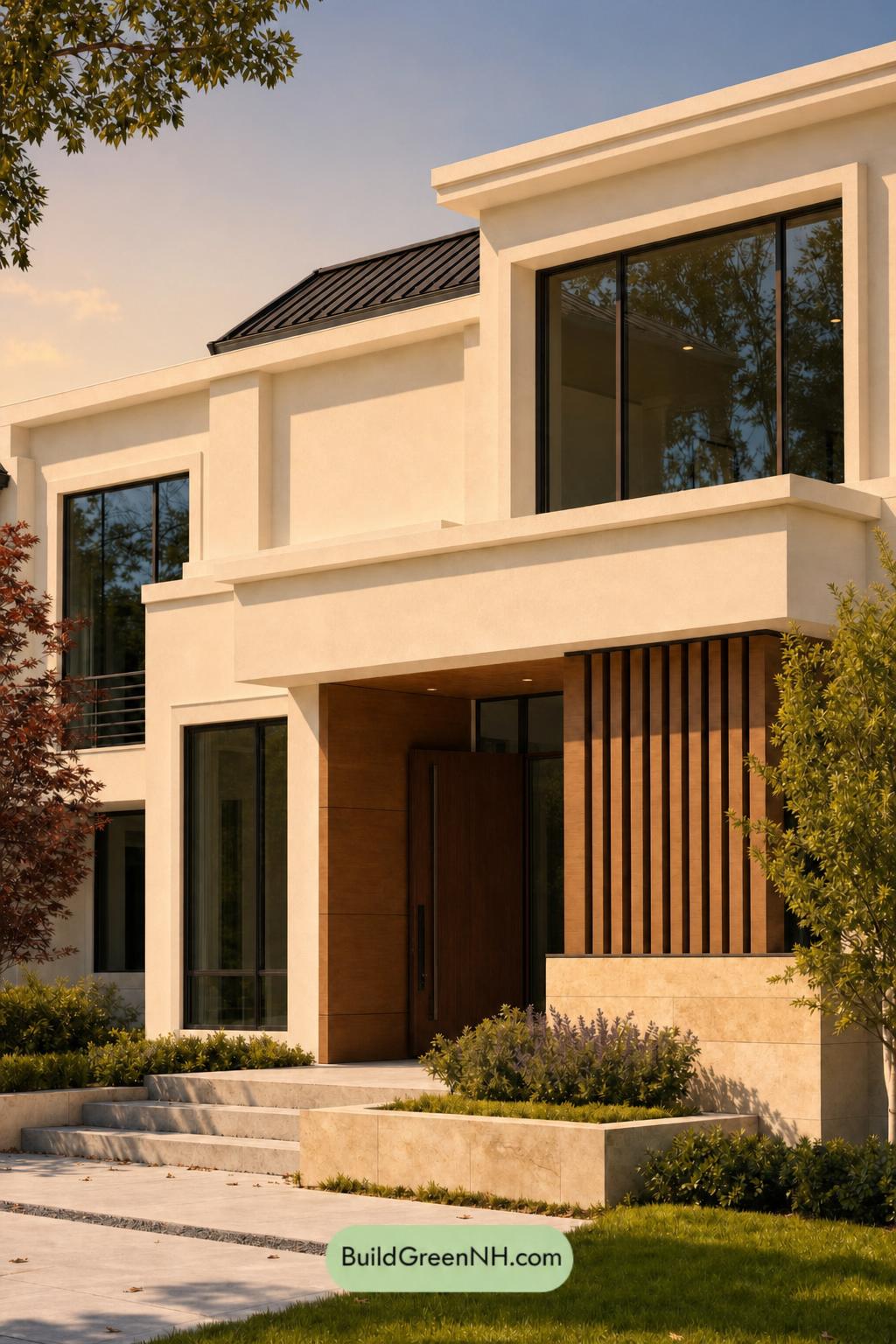
Under Golden Hour light, the beige exterior shifts from a balanced neutral to a softer, more luminous warm shade, with its creamy undertones becoming more noticeable than they are in neutral daylight. The white trim takes on a gentle ivory cast rather than reading as crisp and cool, creating a more cohesive, sun-washed facade.
The brown accents, including the door, frames, and vertical details, appear richer and slightly deeper as long shadows settle into the recesses. This increases contrast around the openings while keeping the overall palette warm and inviting, giving the home a relaxed, refined mood that feels more dramatic than it does under even midday light.
Shade
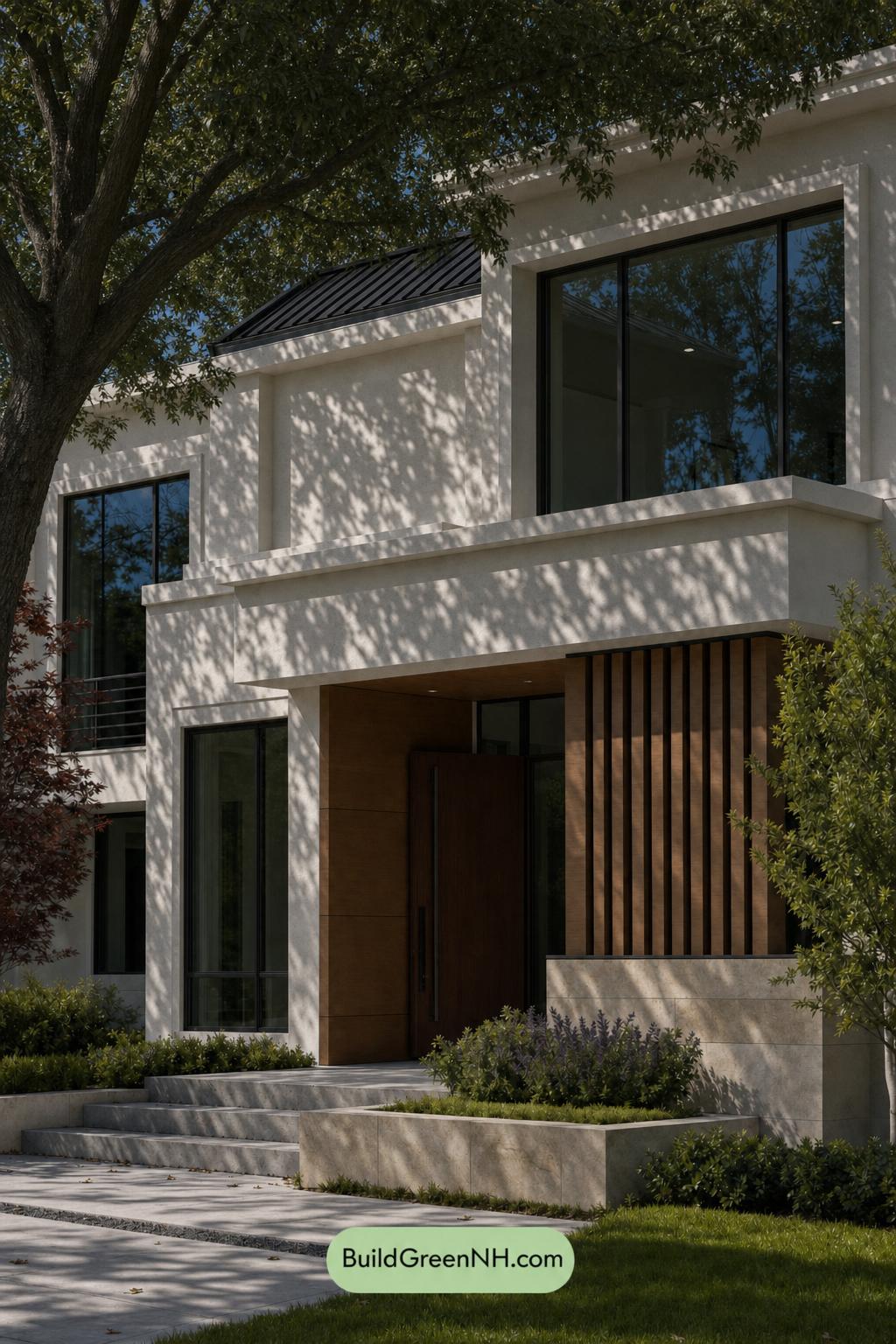
In shade, the beige exterior softens and appears a touch cooler and less saturated than it would in neutral daylight, giving the facade a calm, refined presence. The white trim shifts from crisp and bright to a gentler off-white impression, while dappled leaf shadows create movement across the pale surfaces.
The brown accents deepen noticeably under the tree canopy, bringing richer warmth to the entry and stronger definition to the railings and window frames. This darker contrast against the softened neutrals makes the architecture feel more layered and intimate, with a quiet, sheltered mood rather than the sharper brightness of open daylight.
Nighttime
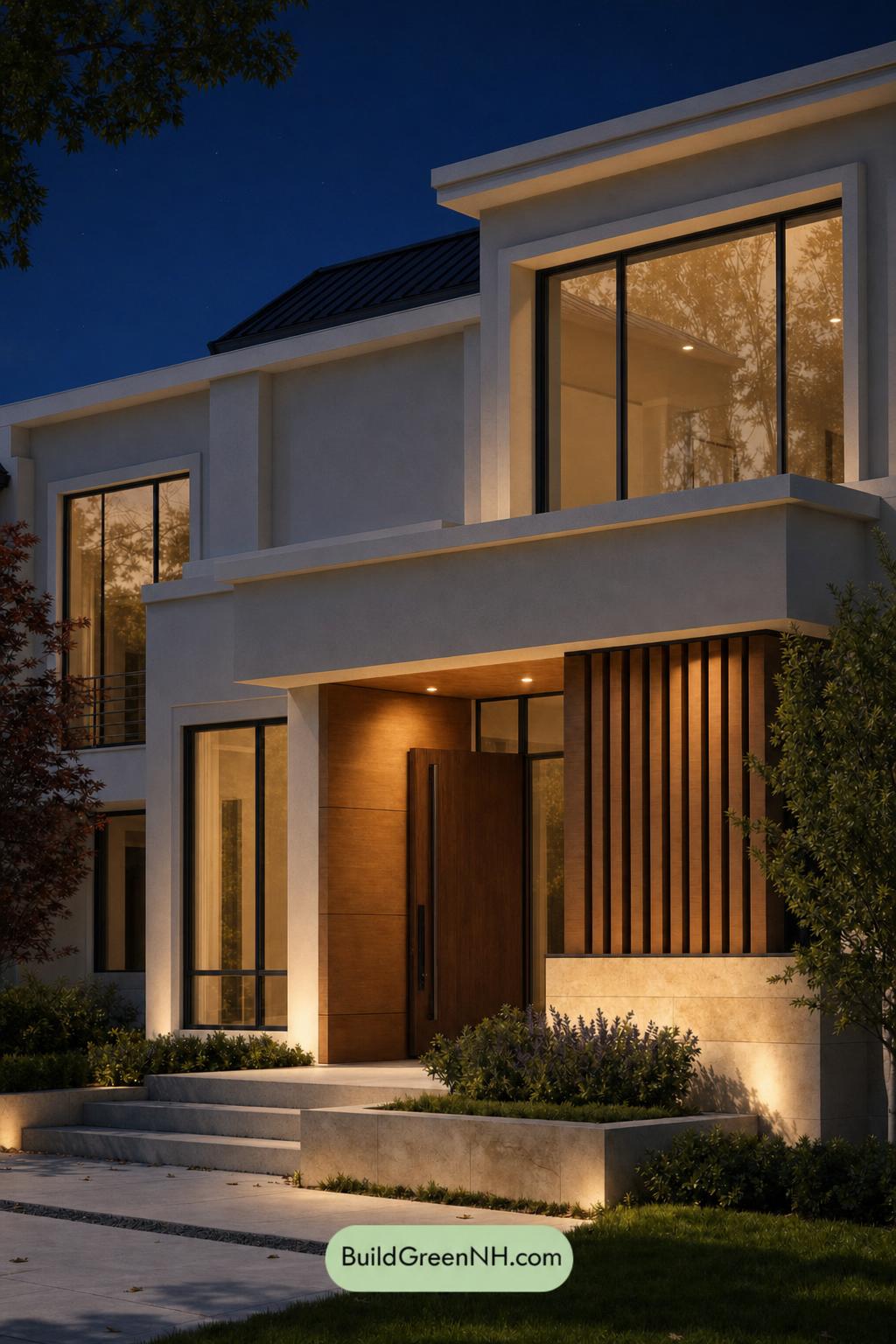
At night, the beige exterior shifts away from its neutral daylight softness, taking on a quieter, slightly cooler cast in the broad shadowed areas. Warm architectural lighting brings back a gentle golden warmth near the entry and lower walls, making the finish feel richer and more inviting while its overall saturation appears more subdued.
The white trim reads crisper where it catches the light, then fades into silvery gray in recesses. Deep brown accents, window frames, railings, and the front door become more saturated and dramatic against the illuminated walls, while the stronger shadow lines add depth, contrast, and a calm, polished nighttime mood.
Pin these for later:
Want More?
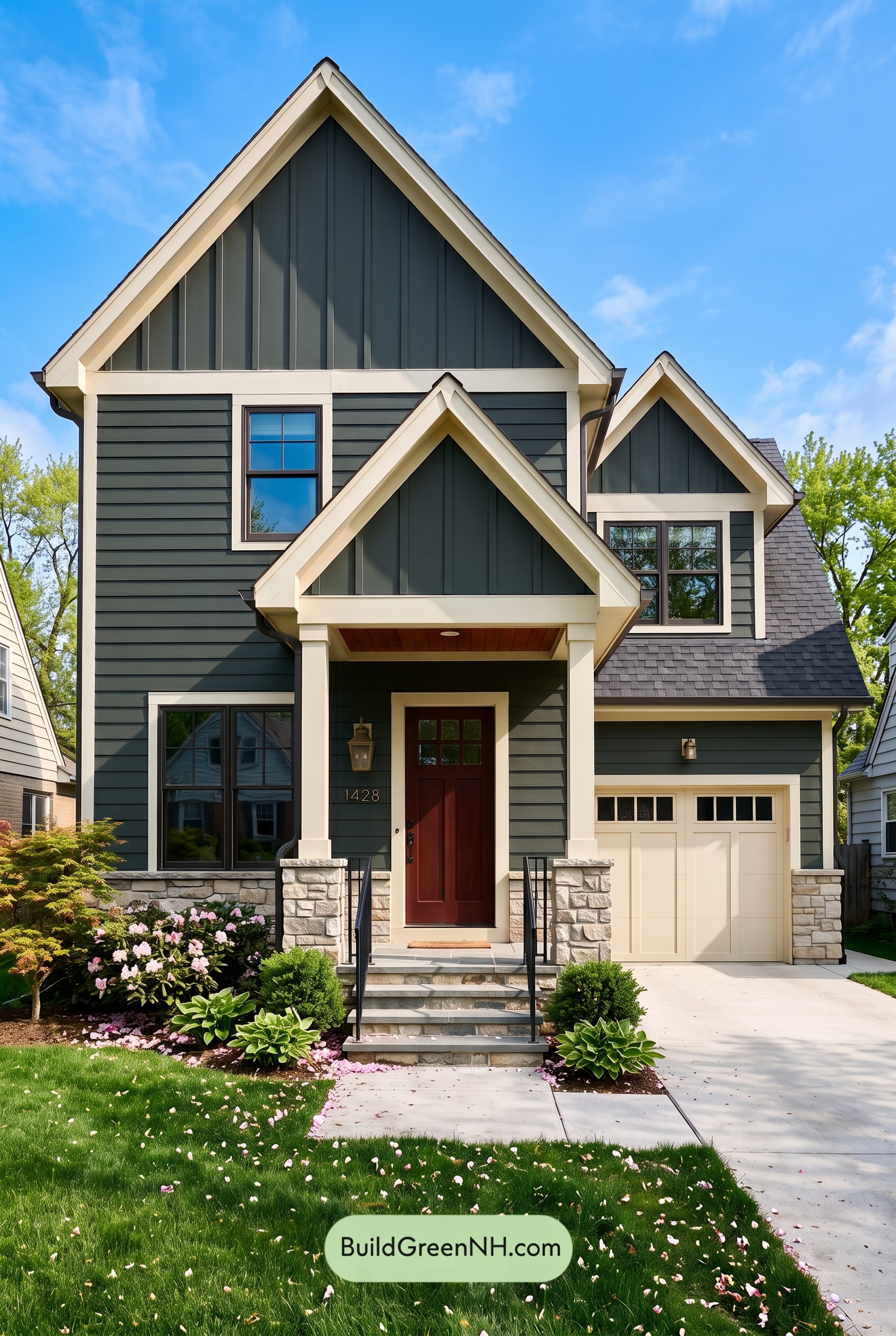 Exterior Color Scheme with Stone Accents: Pine Brass Threshold
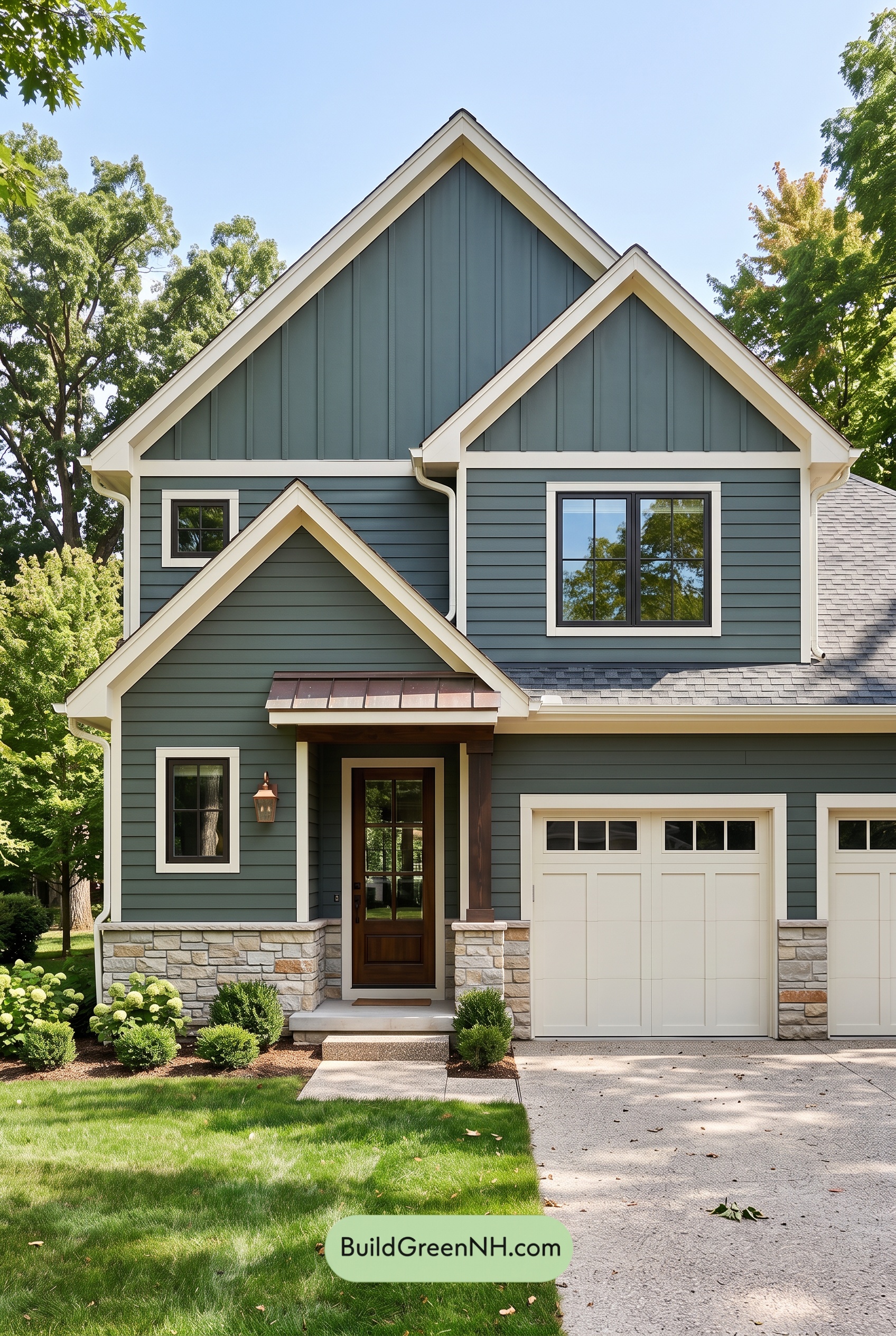 Exterior Color Scheme with Stone Accents: Evergreen Copper Welcome
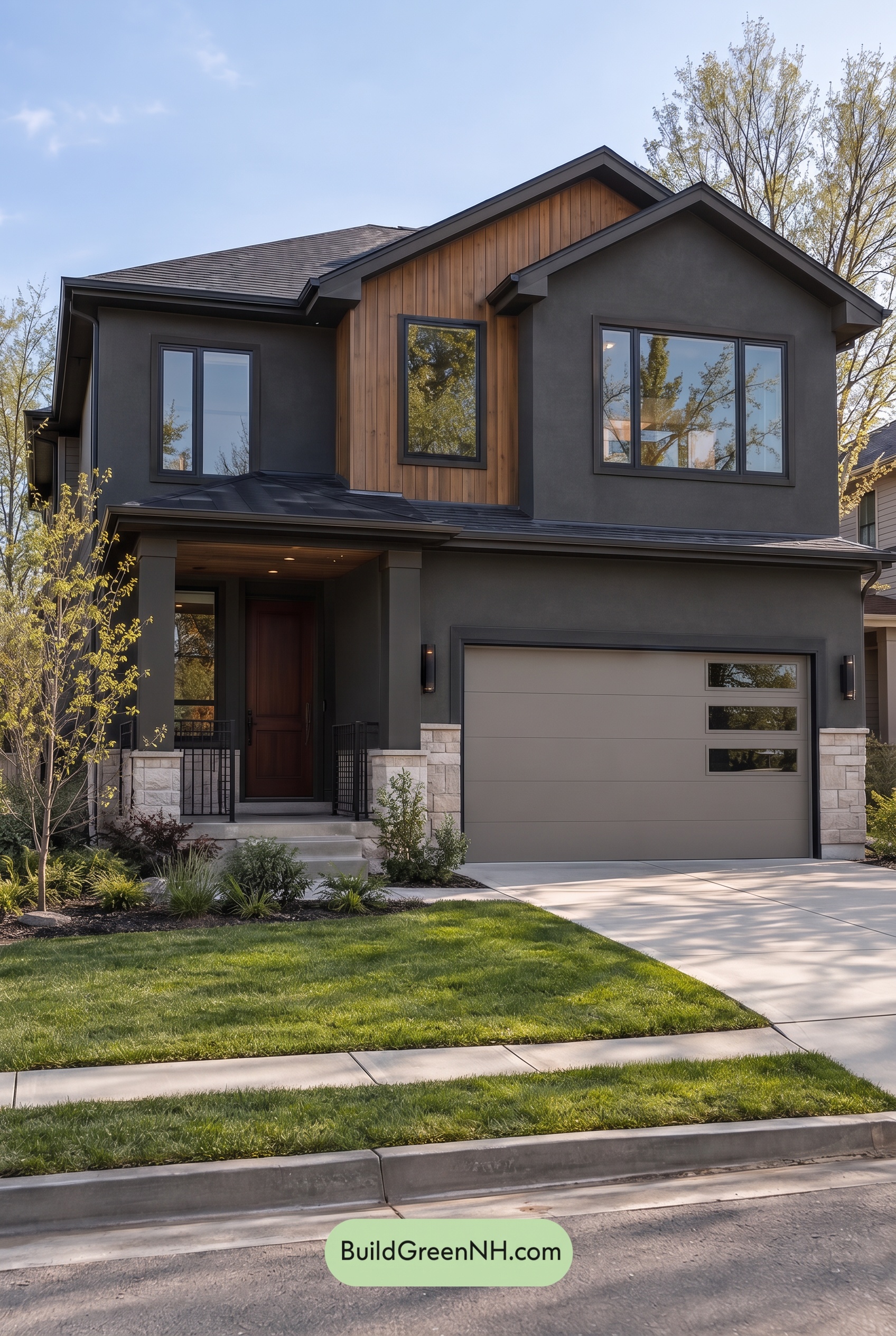 Dark Stucco House Exterior Color Scheme: Cedar Ember Calm
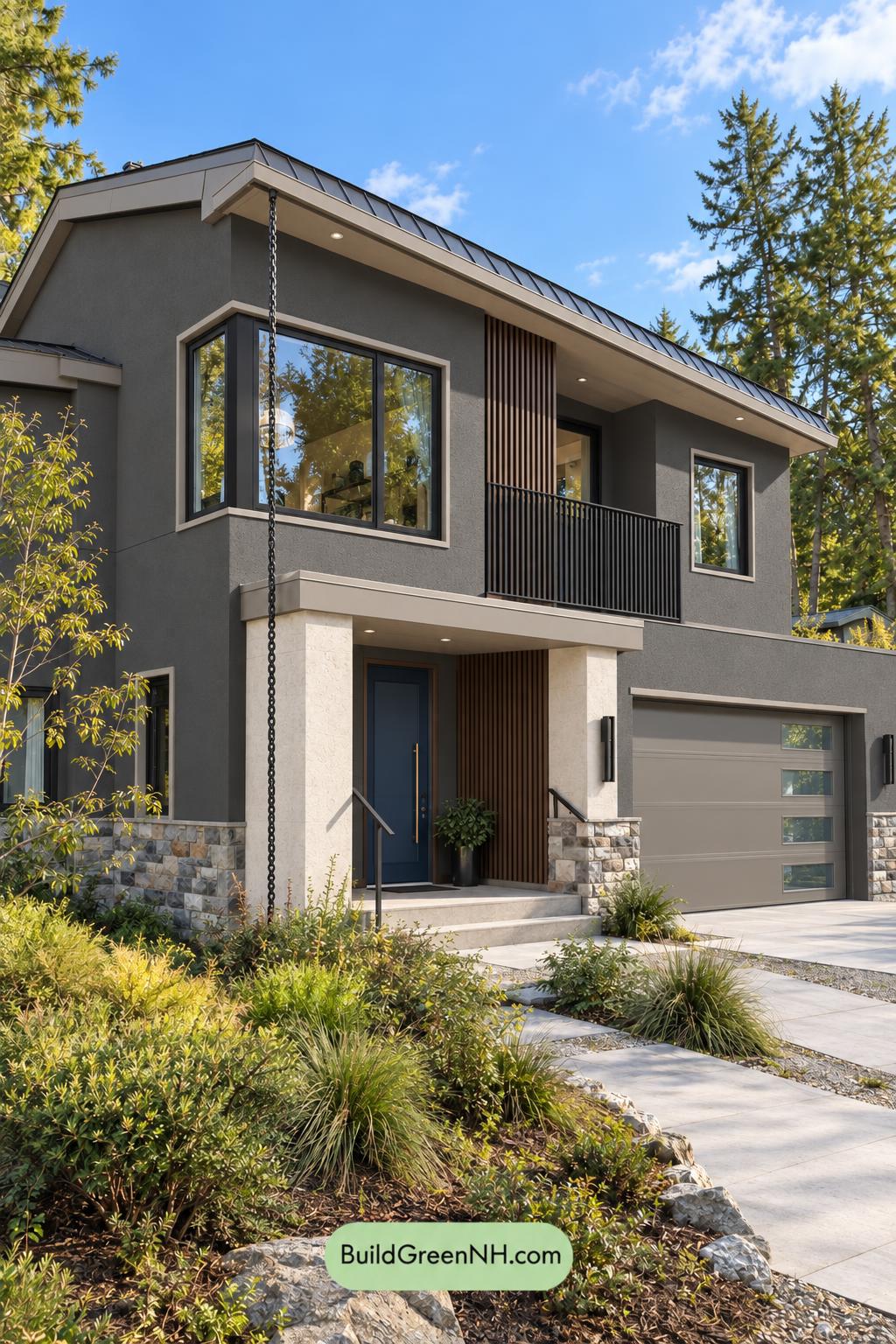 Dark Stucco House Exterior Color Scheme: Silver Pine Shelter
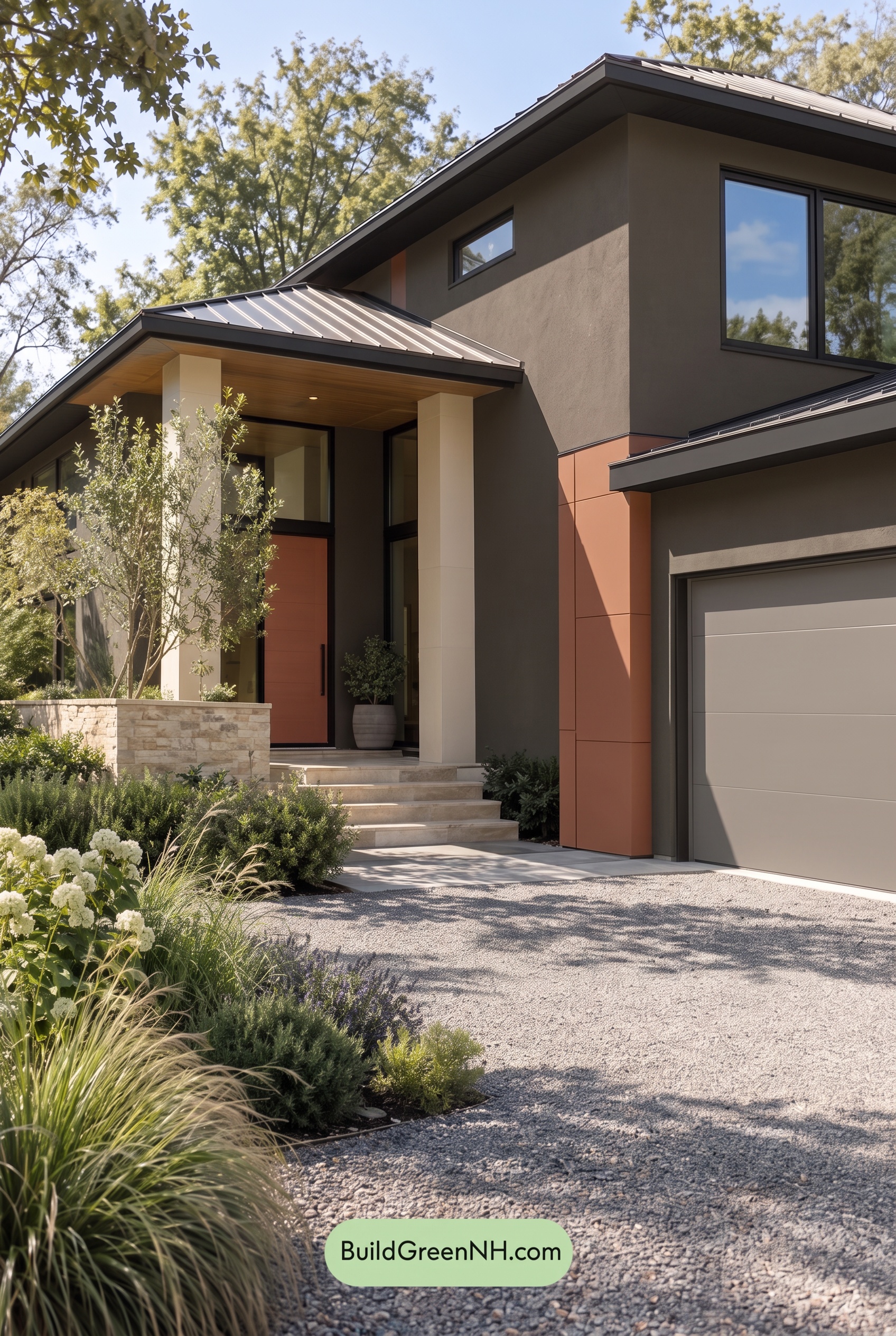 Dark Stucco House Exterior Color Scheme: Copper Orchard House
Table of Contents