Last updated on · ⓘ How we make our floor plans
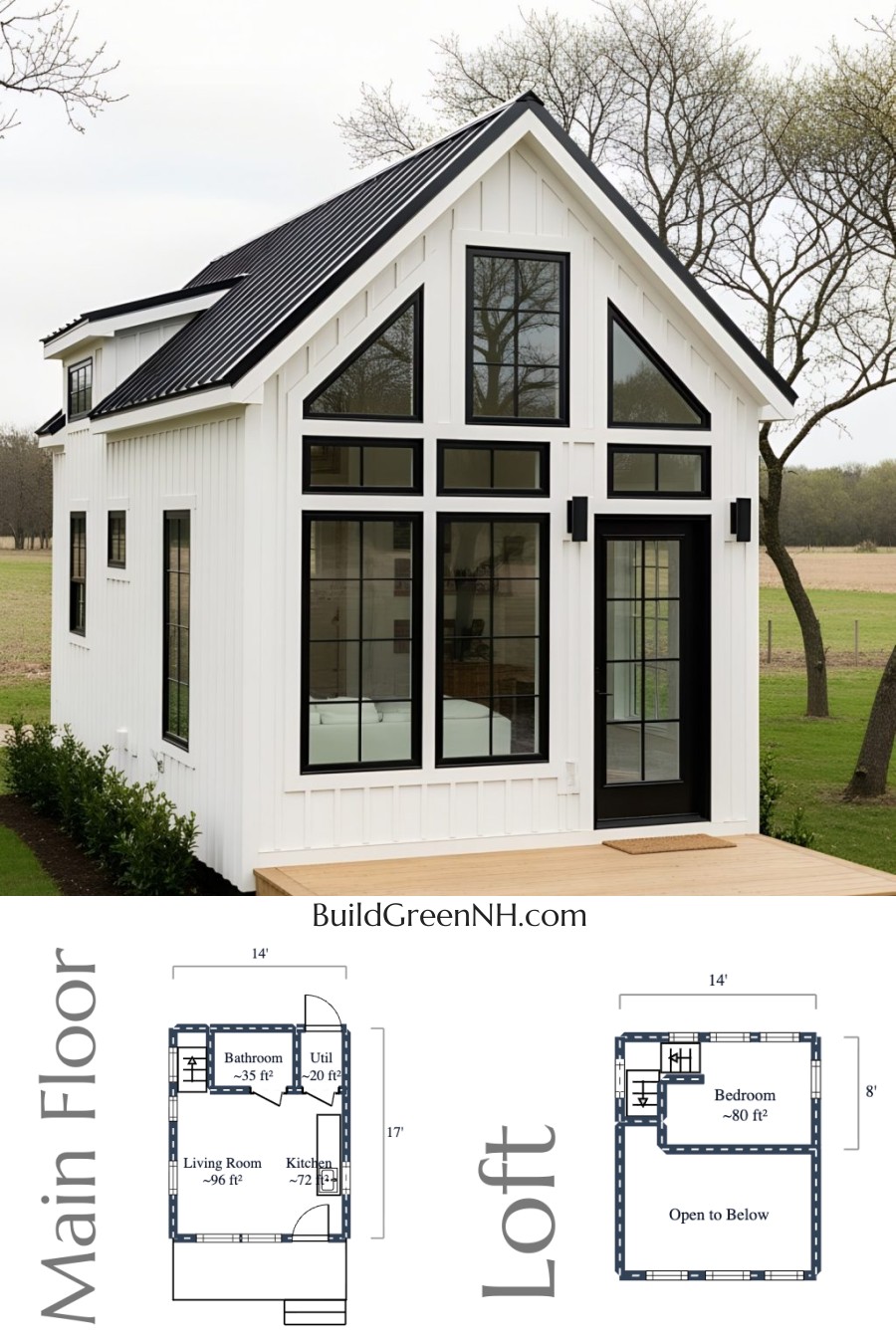
A compact modern farmhouse that punches well above its weight. This tiny home delivers sharp architectural character and a surprisingly functional two-floor layout — all within a modest 476 square feet.
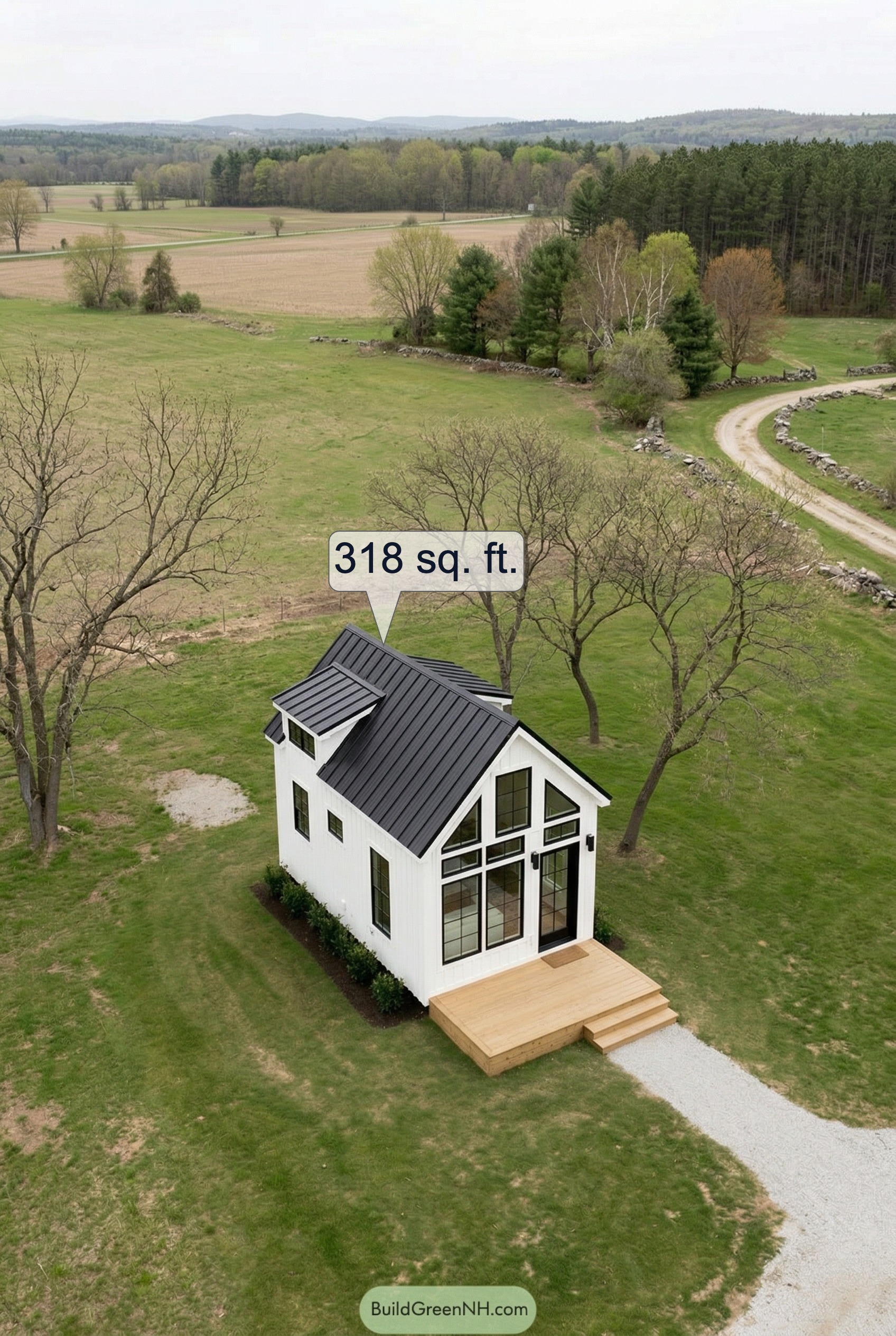
The facade is a study in crisp contrast. Crisp white vertical board-and-batten siding wraps the exterior, punctuated by bold black-framed windows that climb the full height of the front gable.
That dramatic floor-to-peak glazing is the showpiece — letting light pour in and giving the home a much larger presence than its footprint suggests. A standing seam black metal roof crowns the structure with clean, angular lines, perfectly complementing the farmhouse aesthetic. A warm natural wood deck at the entry softens the monochrome palette and invites you in graciously.
These floor plans are currently available as draft layouts and can be downloaded as printable PDF files. Whether you are a builder, a future owner, or simply a tiny-home enthusiast, the PDFs are formatted and ready for review at any scale.
- Total Area: 318 ft²
- Bedrooms: 1
- Bathrooms: 1
- Floors: 2 (Main Floor + Loft)
Main Floor — 238 ft²
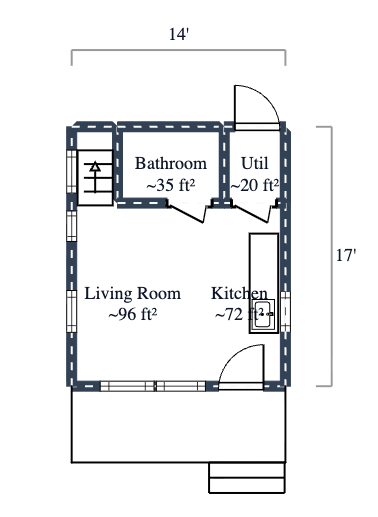
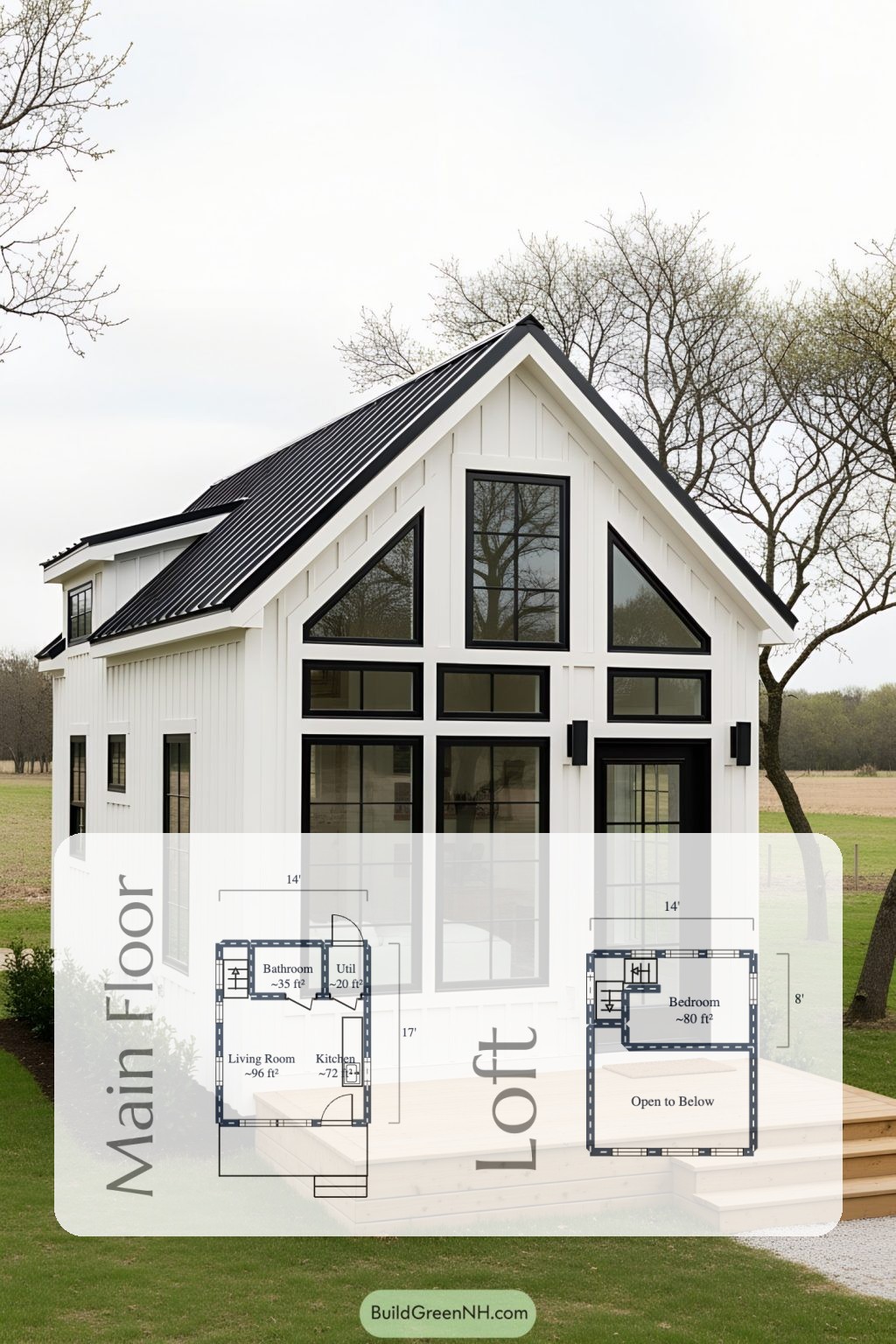
The main floor keeps things lean and logical. Every square foot is accounted for, and nothing is wasted. The 14′ × 17′ footprint is divided into four distinct zones that flow with surprising ease.
The Living Room is the anchor of the floor at 96 ft² — a generous allocation for a home this size. It occupies the front-left portion of the plan, soaking up all that gable glazing. Adjacent to it, the Kitchen claims 72 ft² toward the rear-right, compact but workable. Tucked in the upper-right corner, a Utility room at 20 ft² handles the behind-the-scenes business. The Bathroom sits at 35 ft² — roomy enough to feel civilized. Stairs to the loft are positioned along the left wall, neatly integrated into the layout.
Loft — 80 ft²
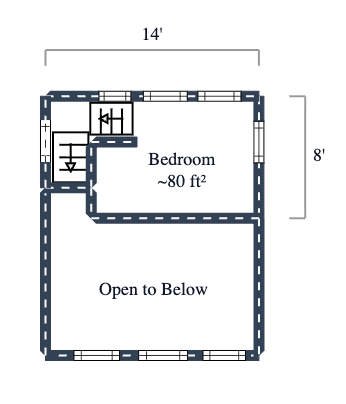
Up the stairs, the loft tells a tale of two halves. The total floor area matches the main floor at 238 ft², but only a portion of it is enclosed living space — the rest is open to below, creating that soaring volume visible through the front windows.
The Bedroom occupies 80 ft² in the upper portion of the loft, sitting snugly above the main floor’s bathroom and utility zone. It is a private, well-defined sleeping space. The remainder of the loft level is open to the floor below — a dramatic architectural move that enhances the sense of volume and airiness throughout the home. Small but smart.
Pin this for later:
We have more facade options of this design:
Urbane Bronze Color Siding
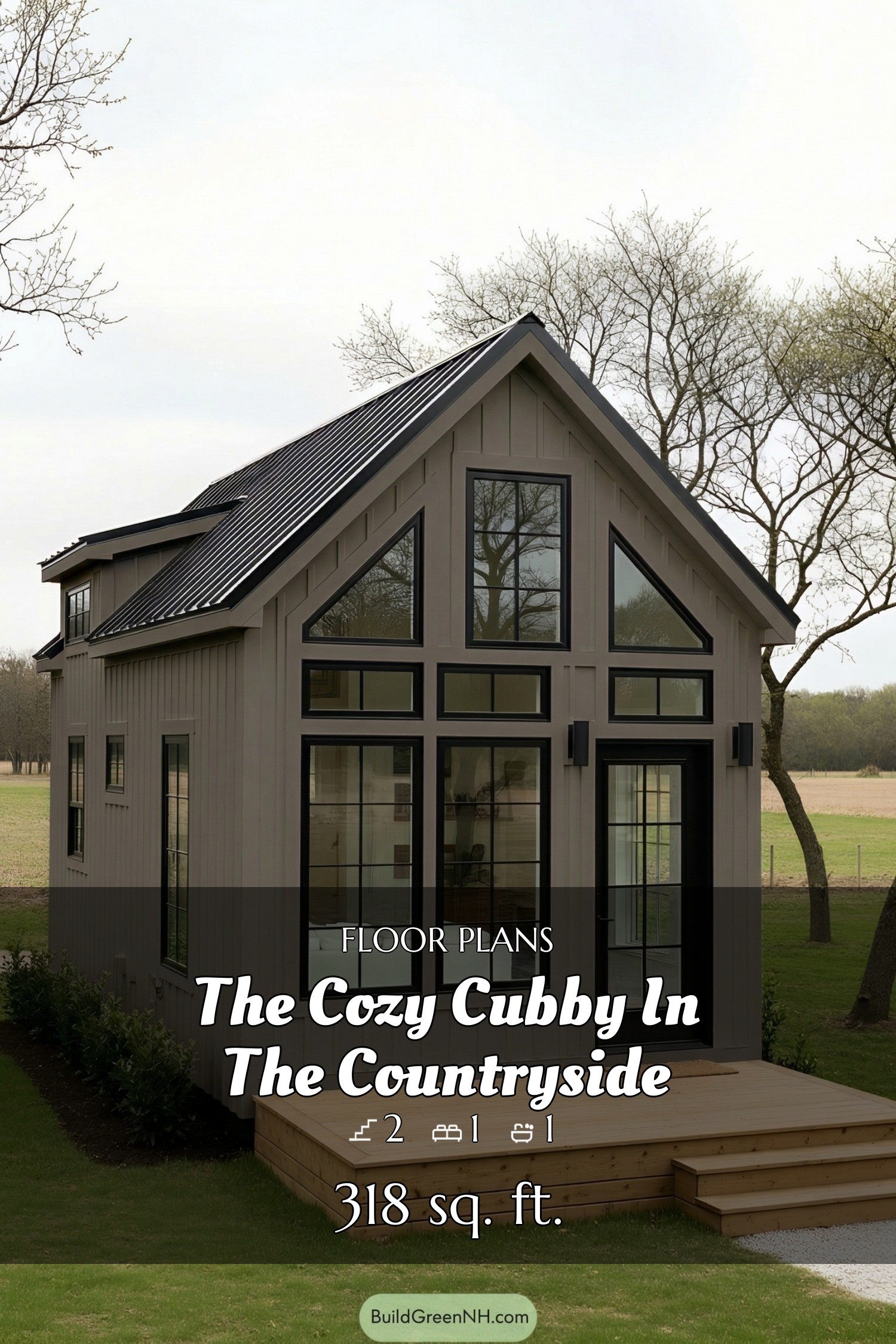
The big switch: the siding now wears Urbane Bronze. This rich gray-brown coats the vertical board-and-batten, sharpening the tall A-frame and those angular clerestory panes.
Black window mullions and the standing-seam roof pop harder, giving the front gable a crisp, graphic outline. Even the slim corner boards recede, letting the glazing headline the facade.
The darker skin grounds the tiny footprint to the deck, makes the transoms read like a tidy ribbon, and gives the twin sconces real stage presence.
Warm wood at the porch glows against it, while reflections in the big panes feel calmer, less shouty. Same compact form, new mood: modern cabin with city polish—like it swapped flannel for a tailored jacket.
Deep Red Siding
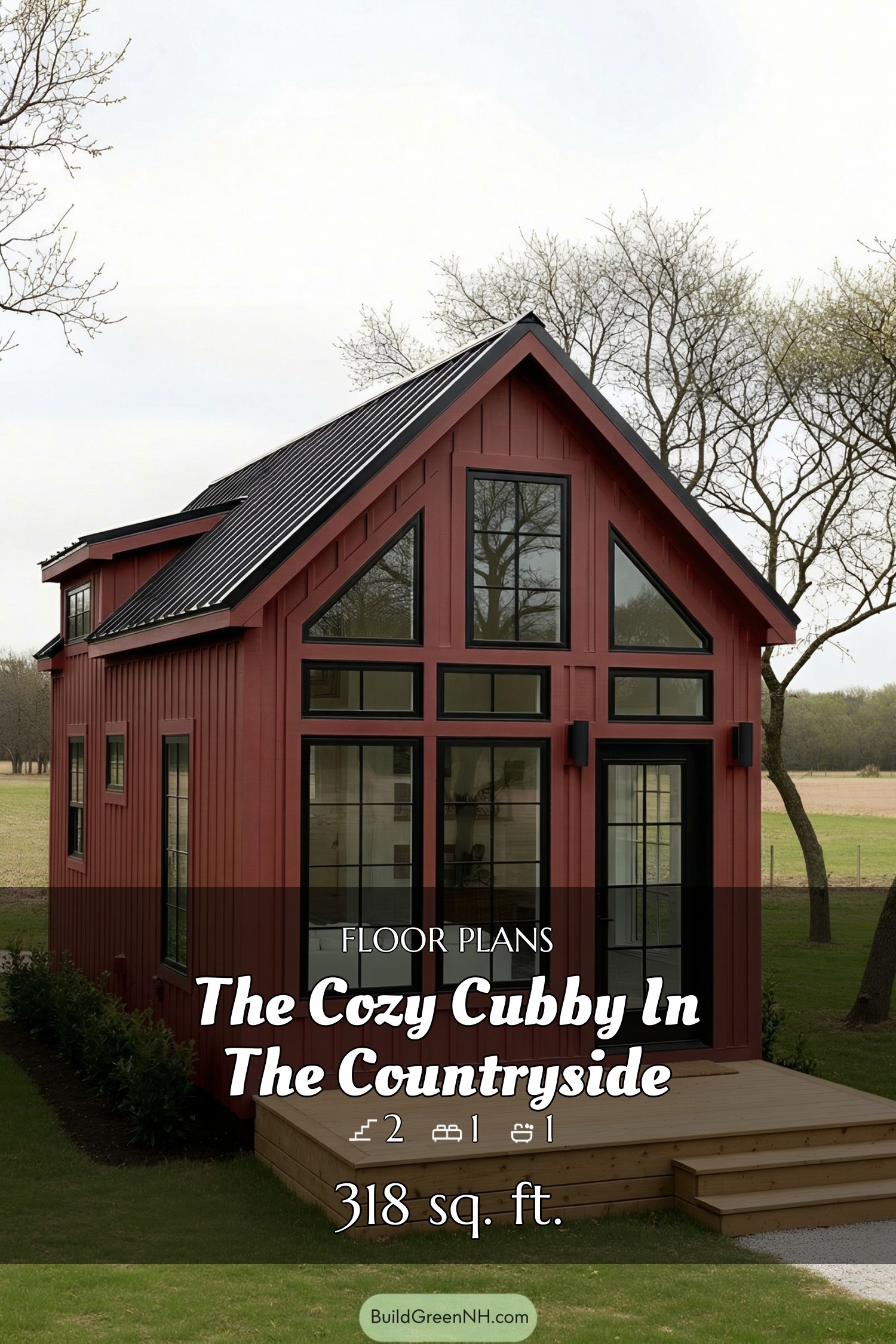
The siding changed to a deep red, turning the facade from polite to punchy. Board-and-batten lines snap into focus, tracing the steep gable around that big glass wall like crisp eyeliner.
Black metal roof and trim now contrast fiercely, sharpening the triangular clerestories and gridded panes. Same house, new cape—red and ready.
The deeper hue tweaks the proportions: vertical battens read taller, the glazed entry projects with more intent, and the slim black sconces act like exclamation points. The window wall feels curated, each pane a frame instead of mere glass.
Even the side dormer and simple deck play backup to the bold shell. Compact, but strutting.
Deep Blue Color Siding
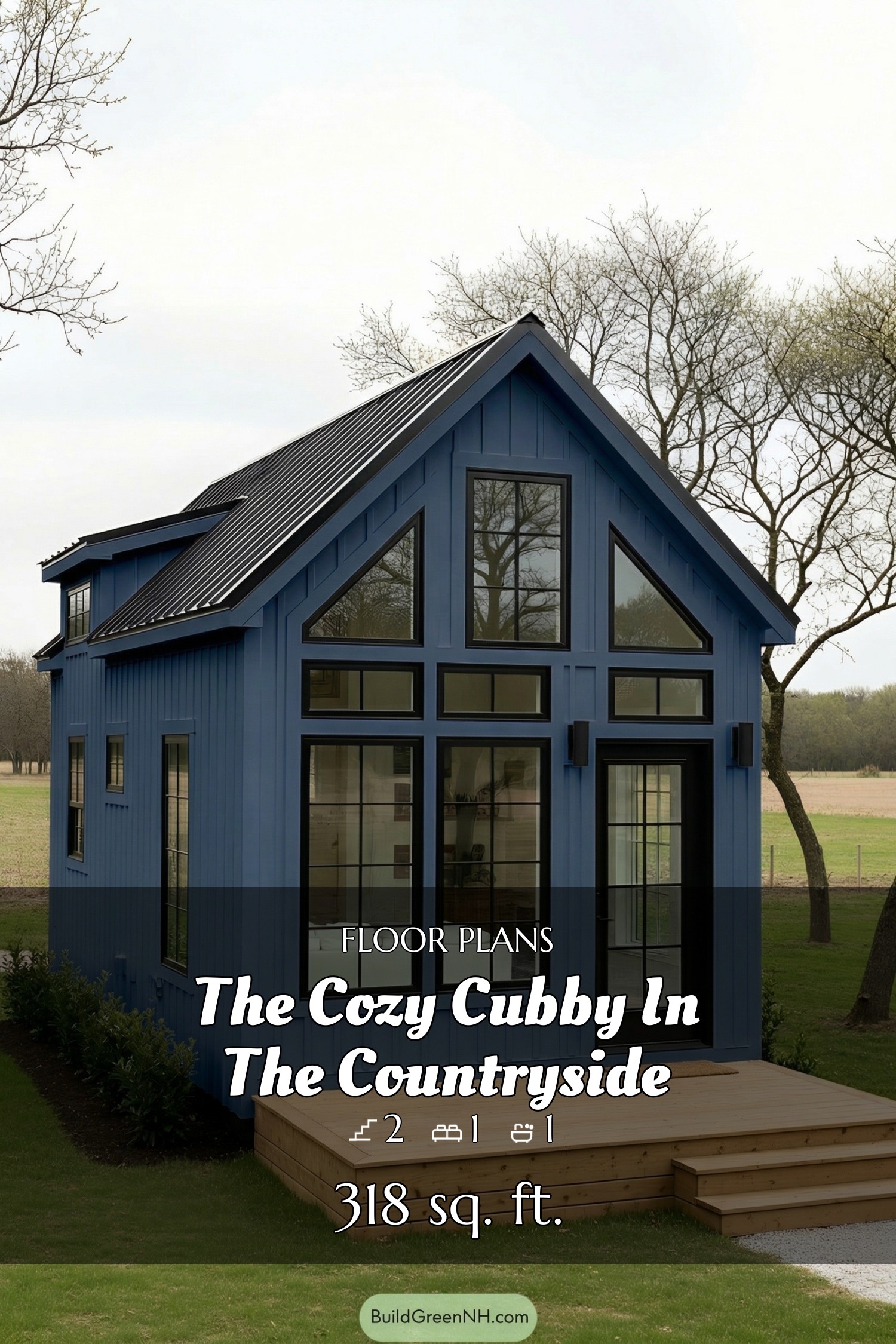
The siding just dove into a deep blue, and the whole cottage put on a tailored navy suit. Against it, the black standing‑seam roof and trim snap into a single, crisp line.
Vertical board‑and‑batten grooves throw longer shadows, so the gable reads taller and tidier. It’s the same form, but now it walks with purpose.
That blue makes the big glazed wall and triangular clerestories pop like framed artwork that actually pays rent. The door, slender mullions, and twin sconces hit stronger, little exclamation marks on a cool canvas.
Even the light wood deck feels brighter by contrast, like a stage in front of the show. Mood shift accomplished: cozy cabin, urban polish.
Grey Color Siding
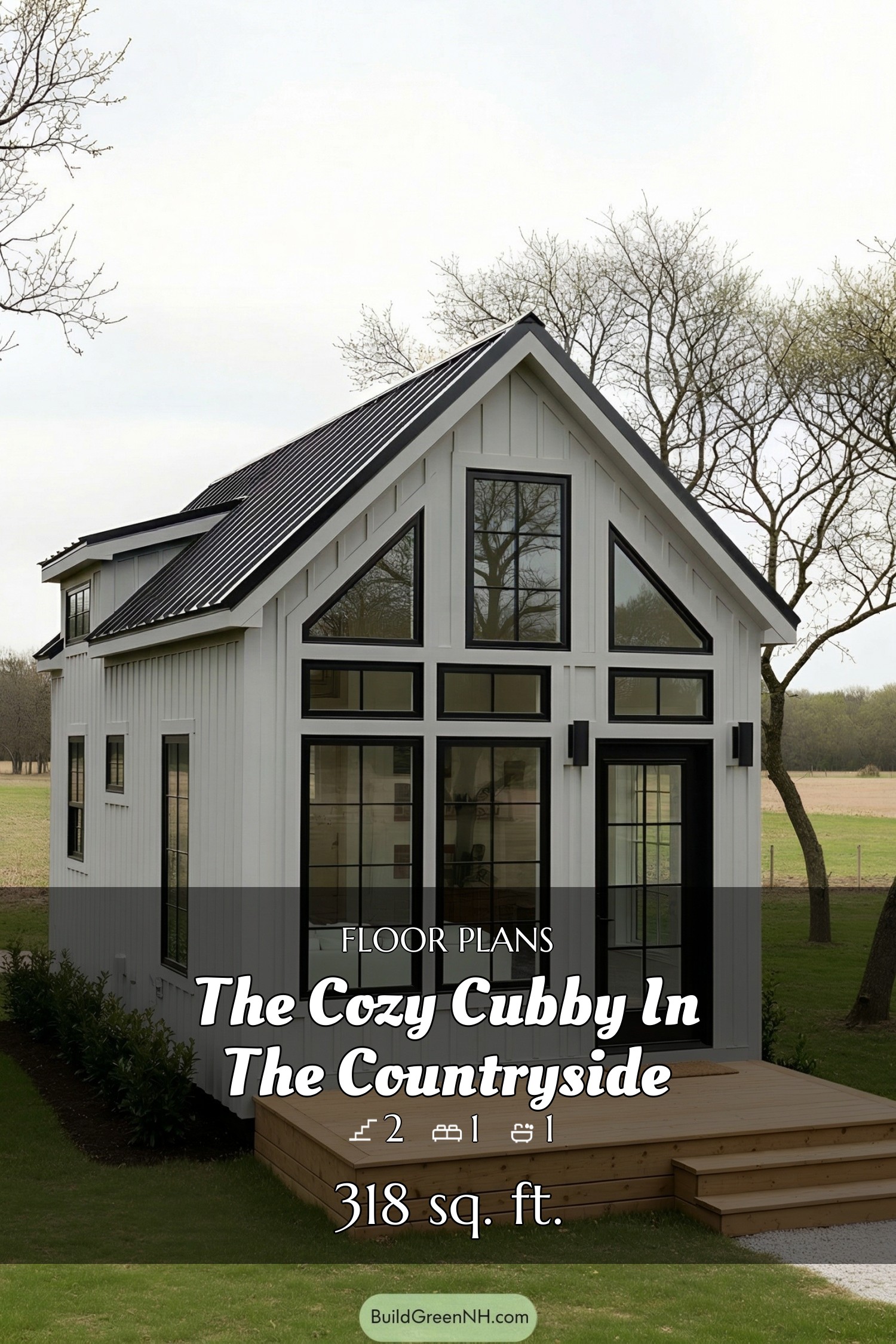
The board-and-batten skin just switched to a cool gray, trading farmhouse white for calm graphite. Against the black metal roof and ink-trimmed glazing, the new tone reduces glare and spotlights the window geometry—the tall panes and triangular clerestories read like a crisp graphic.
Even the steep gable looks sharper, as if it had a strong espresso.
Gray cladding makes the wood deck glow toastier, while the black sconces and door muntins pop without shouting. The facade now leans gallery over barn, with softer battens shadows sliding down the compact mass. Small house, big monochrome swagger.
Forest Green Siding
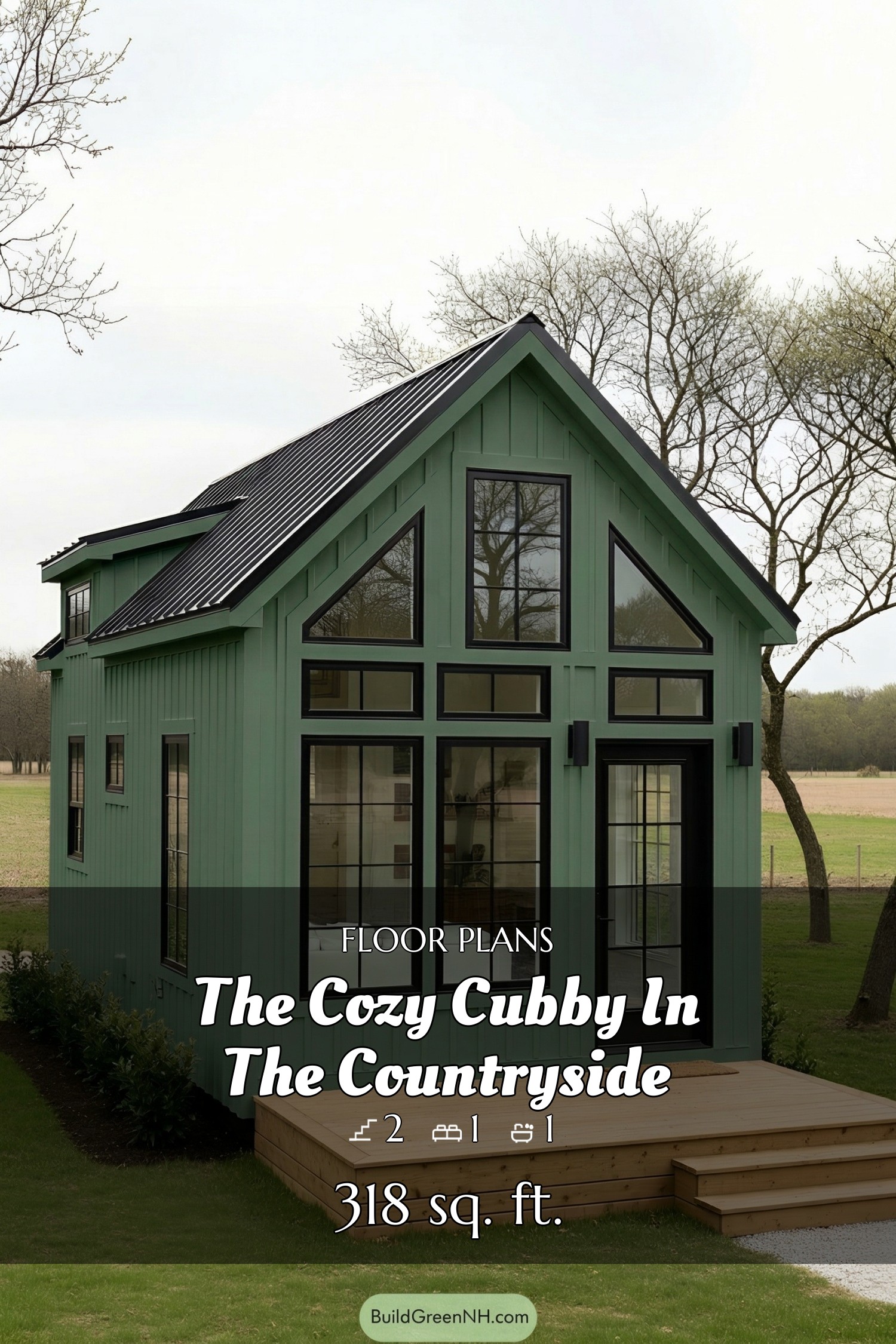
The siding switches to deep forest green, retiring the old neutral. That saturated tone anchors the steep gable and makes the black standing‑seam roof and trim snap, like contrast cranked just right.
The floor‑to‑peak window wall now pops, its mullions reading as bold ink against green.
Along the flanks, the vertical board‑and‑batten grooves sharpen, visually stretching the compact mass. The hue cools the timber deck so the glazed entry feels like a tiny stage, not a shrug.
Same bones, but the facade moves from cute cottage to modern‑woodsy—camouflage with a wink.
Want More?
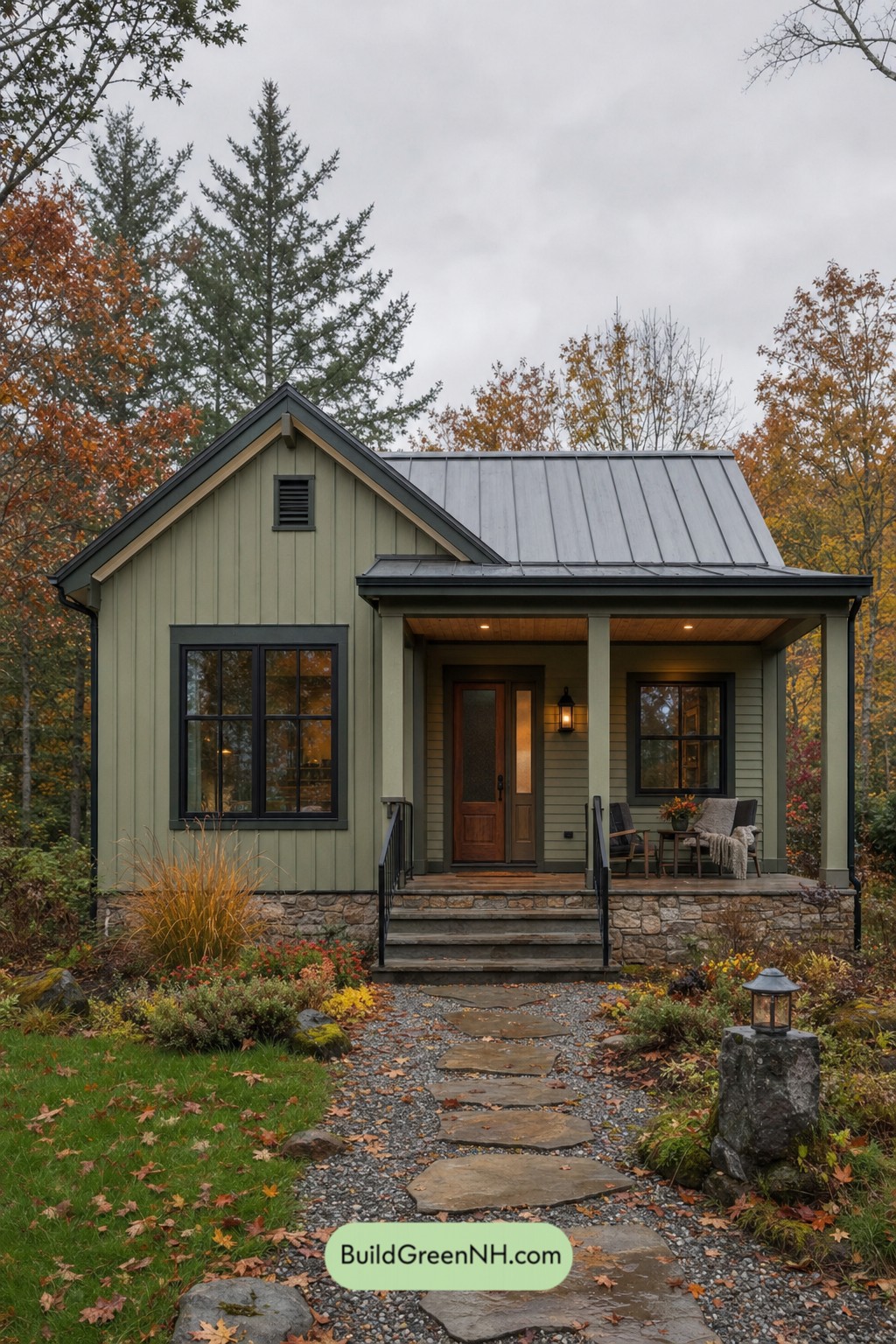 531 sq. ft., 1 Bed, 1 Bath, Single Story Cottage Floor Plans: Mossline Cottage Profile
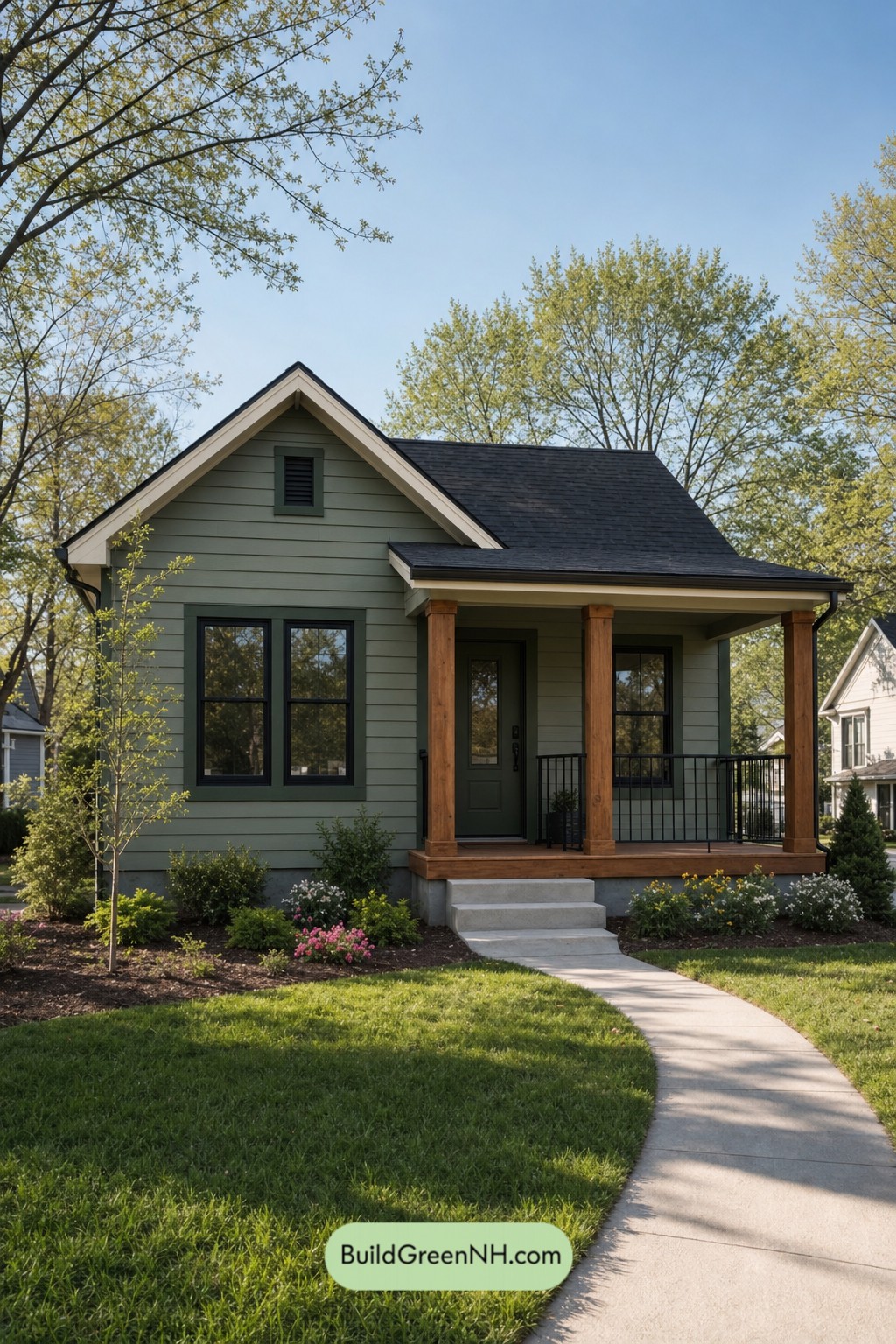 531 sq. ft., 1 Bed, 1 Bath, Single Story Small Modern Cottage Floor Plans: Sage Gable Porchcraft
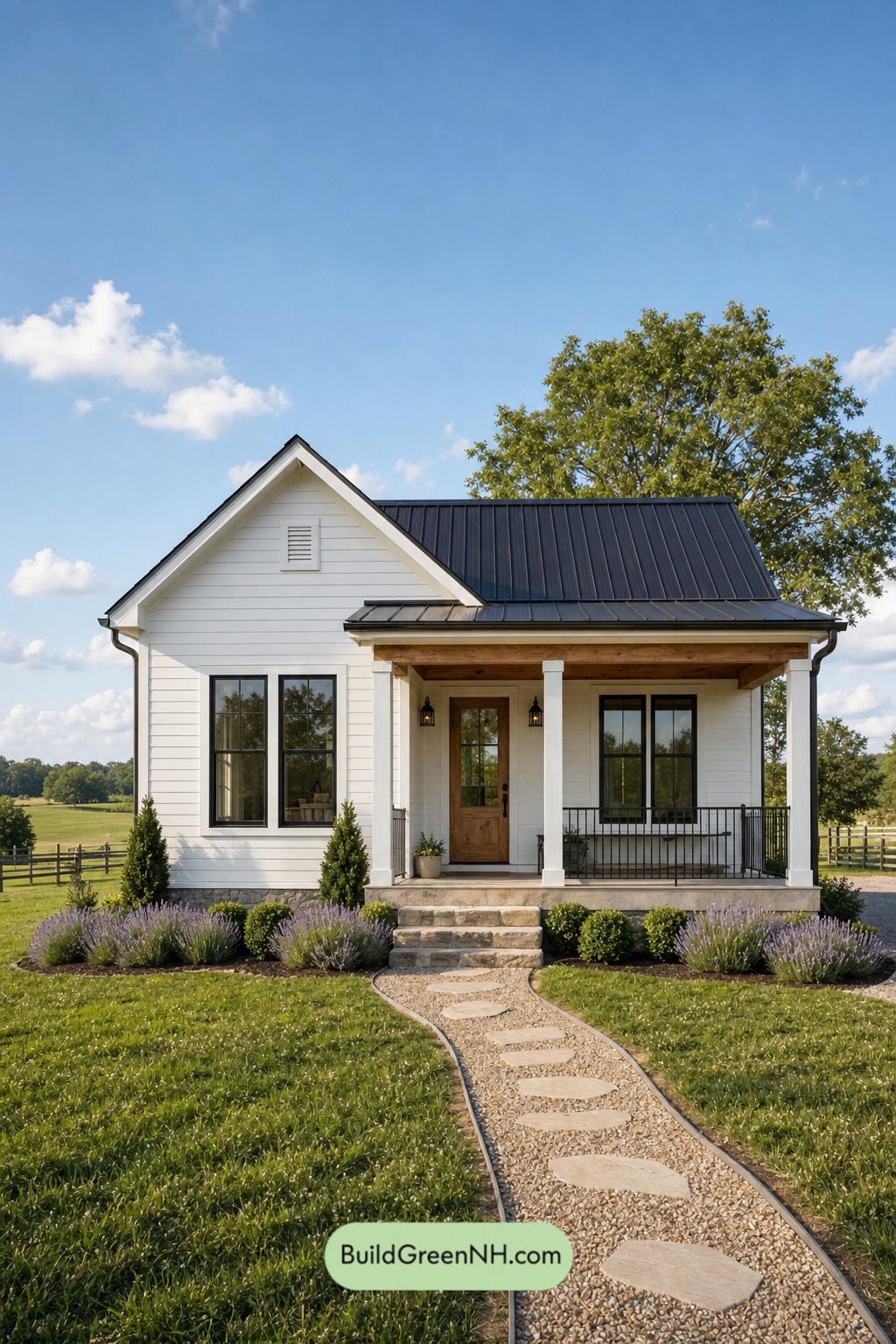 531 sq. ft., 1 Bed, 1 Bath, Small Modern Cottage Floor Plans: Cedarcrest Farm Cottage
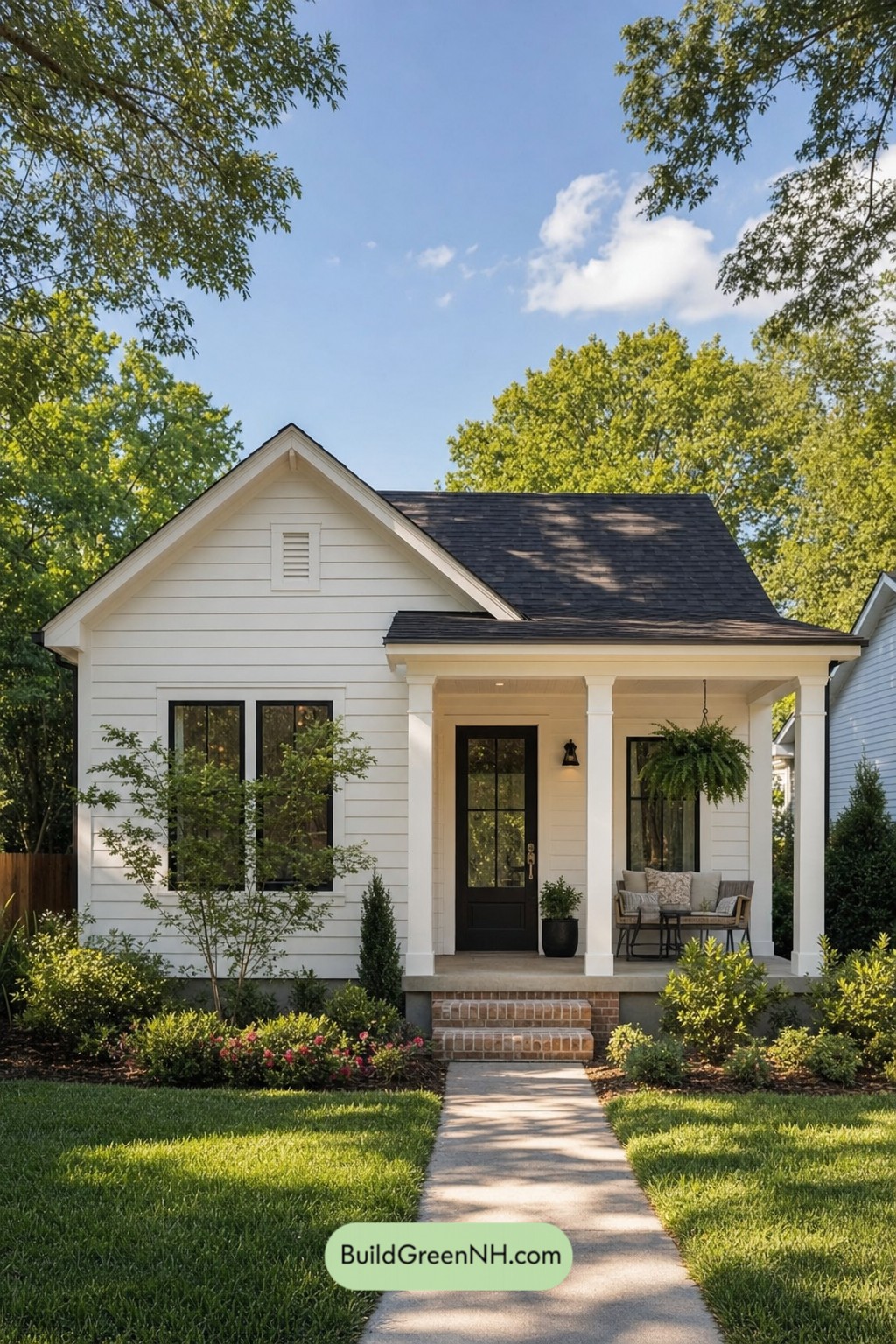 531 sq. ft., 1 Bed, 1 Bath, Single Floor Cottage House Floor Plans: Gablewood Quiet Cottage
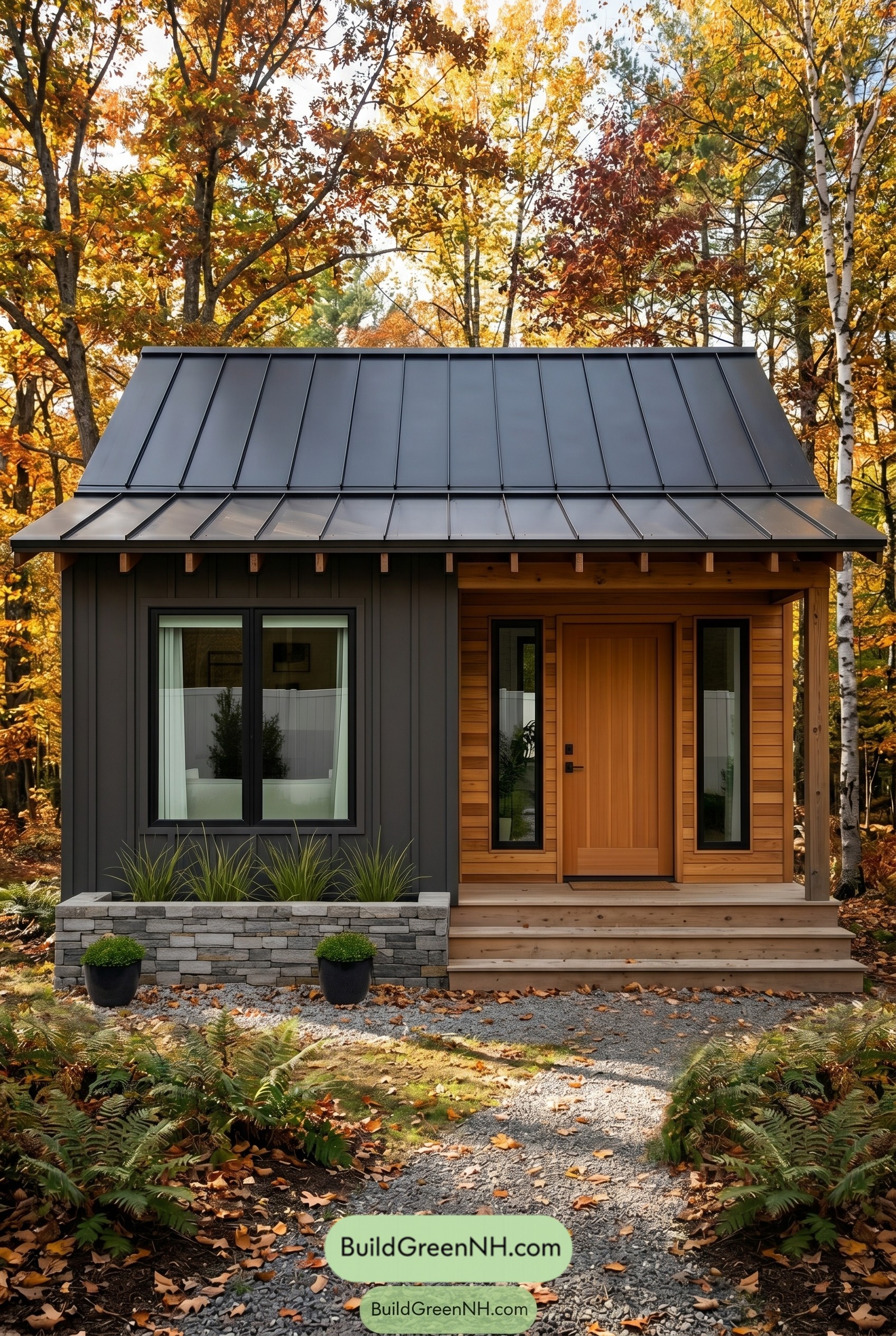 526 sq. ft., 1 Bed, 1 Bath, Single Story Small House Floor Plans: Pine Edge Microhouse
Table of Contents