Last updated on
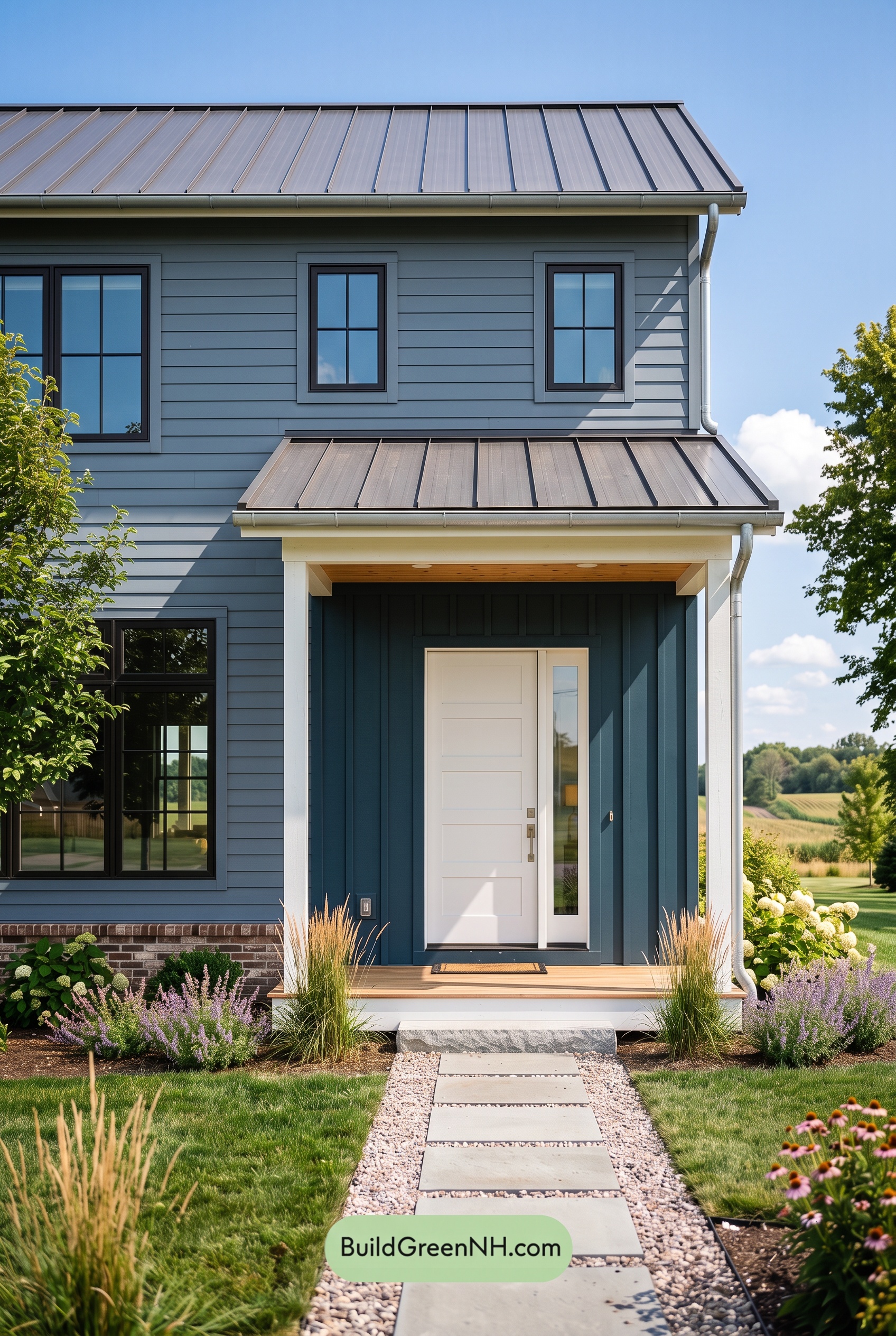

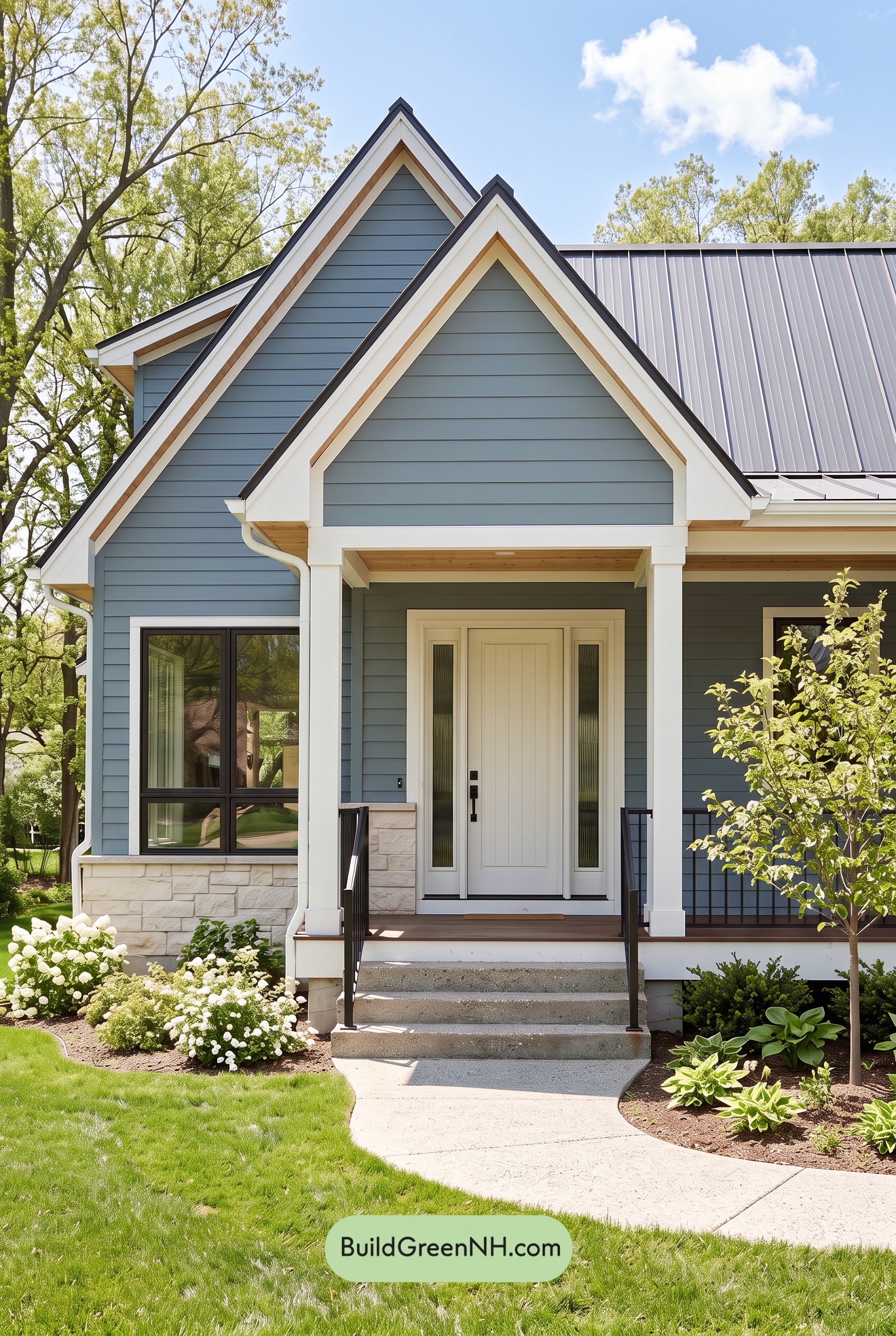
This layered blue exterior scheme feels fresh, tailored, and instantly welcoming because it balances cool sophistication with crisp, bright contrast.
A Calm Blue Foundation
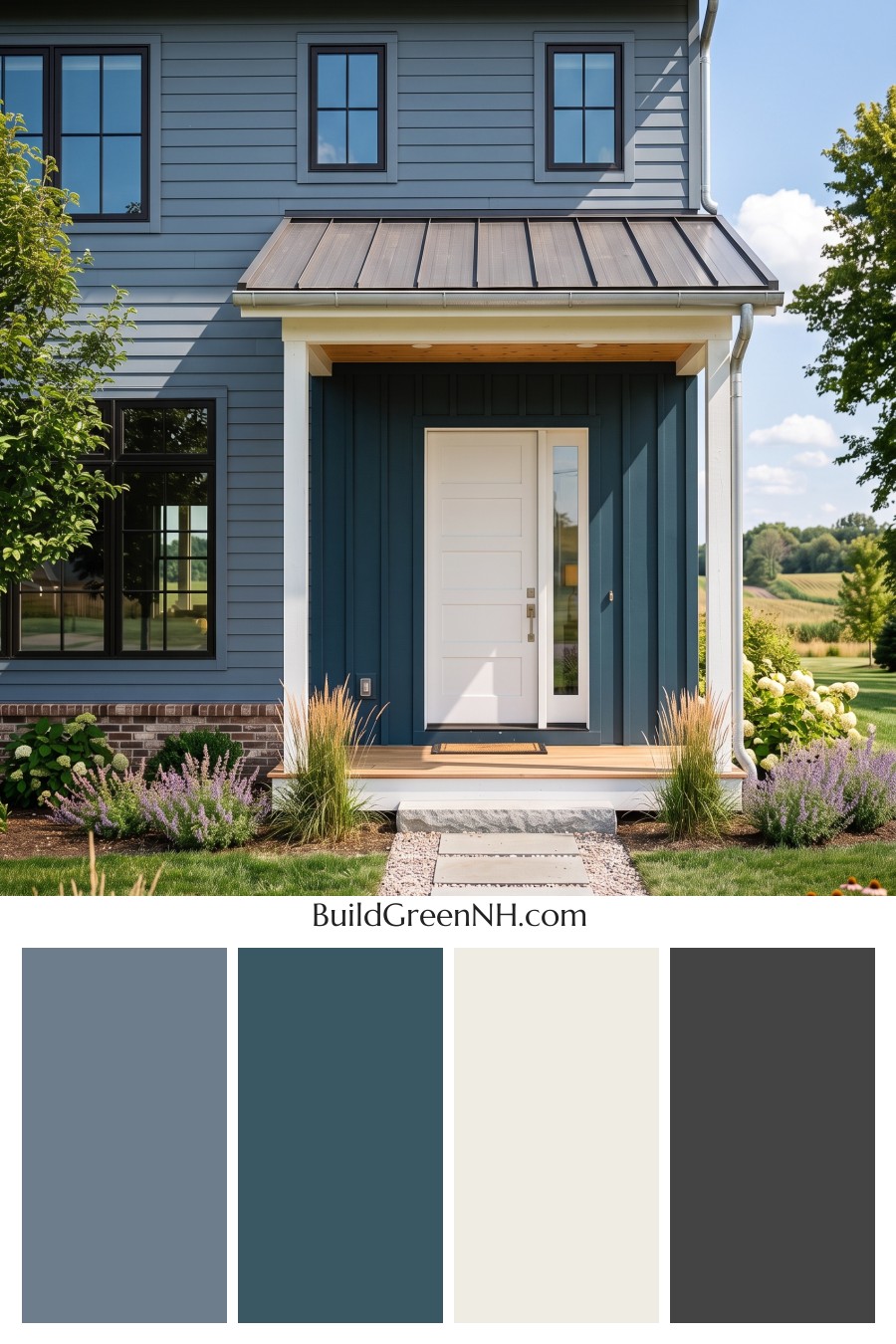
The main siding wears a soft, muted blue-gray shade that gives the home a serene, polished presence. Its gentle coolness works especially well across the broad horizontal siding, creating a clean backdrop that feels modern without becoming stark. In daylight, the shade carries a subtle coastal character while still looking grounded against the landscape.
A deeper blue-green accent surrounds the entry, adding welcome depth at the most important focal point of the façade. This richer shade gives the recessed porch an inviting sense of dimension and makes the entrance feel intentional, sheltered, and beautifully defined.
Crisp Contrast at the Entry
Bright white columns, porch framing, and trim bring a sharp, refreshing contrast to the blue exterior. Rather than competing with the siding, these light details outline the architecture and draw the eye toward the front door. The white door continues that light, clean feeling, making the entry appear open and approachable.
The combination of a bright white entry surround and a deeper blue accent wall is particularly effective. It creates a classic high-contrast moment that feels timeless, while the softened blue-gray siding keeps the overall look relaxed.
Dark Framing and a Grounded Roofline
Dark charcoal-gray window frames add definition without interrupting the calm palette. Their strong lines sharpen the windows, provide visual rhythm across the façade, and echo the deeper notes at the entry. This darker neutral gives the home a slightly contemporary edge.
Above, the medium charcoal-gray roof offers a quiet anchor for the cooler wall colors. Its subdued depth connects naturally with the window frames and helps balance the brightness of the white trim. Together, these darker elements keep the airy blues from feeling overly light or delicate.
The Overall Mood
This is a confident, composed palette with a welcoming personality. The soft blue-gray siding creates calm, the deep blue-green entry accent adds character, and the white architectural details keep everything looking luminous and crisp. Dark gray framing and roofing complete the scheme with just enough contrast to make the exterior feel refined from curb to roofline.
Next, see how this color scheme looks under different lighting simulations throughout the day.
Overcast
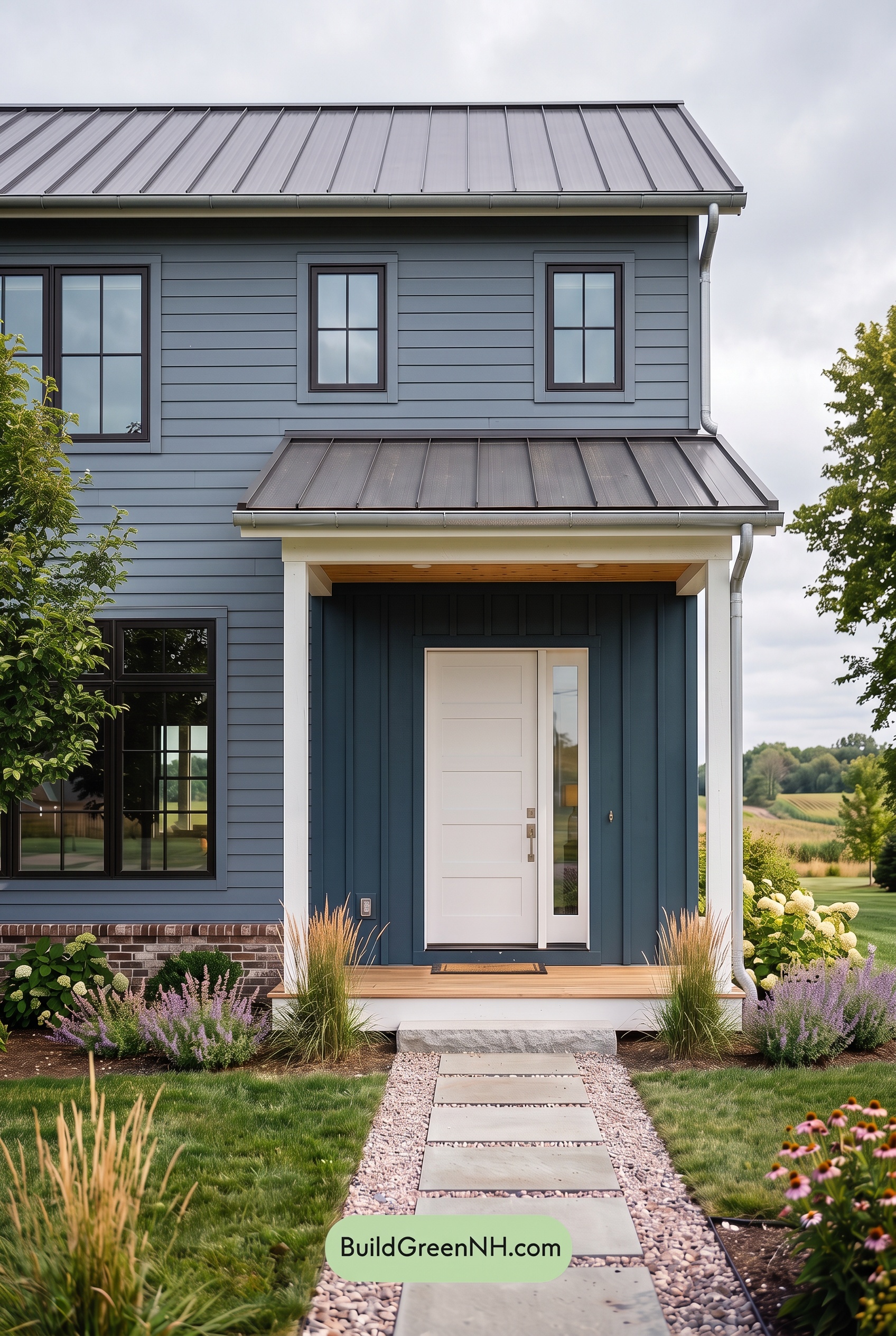
Under overcast skies, the blue siding reads a little deeper and more muted than it does in neutral daylight, with its cool character becoming especially calm and refined. The darker blue around the entry gains a richer, more enveloping presence, while the white trim, columns, and door shift from bright and crisp to softer, gently gray-white accents.
With direct sun removed, shadows along the siding and beneath the porch become broader but less harsh, lowering contrast across the façade. The gray window frames blend more quietly into the cool palette, creating a cohesive, understated mood that feels serene, polished, and slightly more dramatic than the brighter look of neutral daylight.
Golden Hour
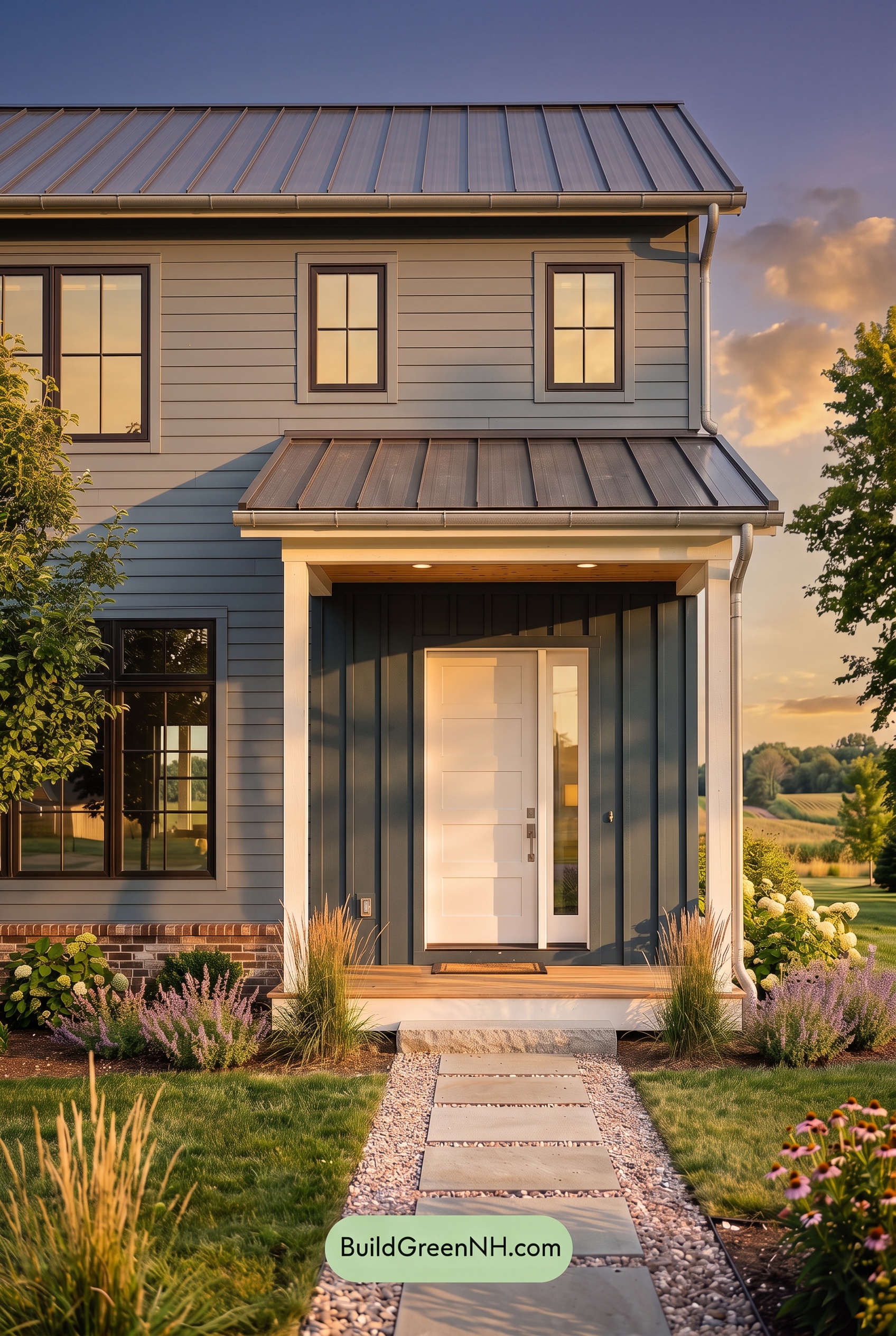
Under neutral daylight, the blue siding reads balanced and composed, with crisp white trim and gray window frames creating a clean, tailored contrast. At Golden Hour, the low, warm light softens that contrast: the blue shades take on a richer, slightly muted depth, while the white elements glow with a creamy warmth rather than appearing stark.
Longer shadows bring extra dimension to the siding and porch details, allowing the deeper blue accent area to feel more dramatic and saturated. The warmer illumination gives the whole exterior a welcoming, relaxed mood, balancing cool blue undertones with sunlit highlights and softly defined gray details.
Shade
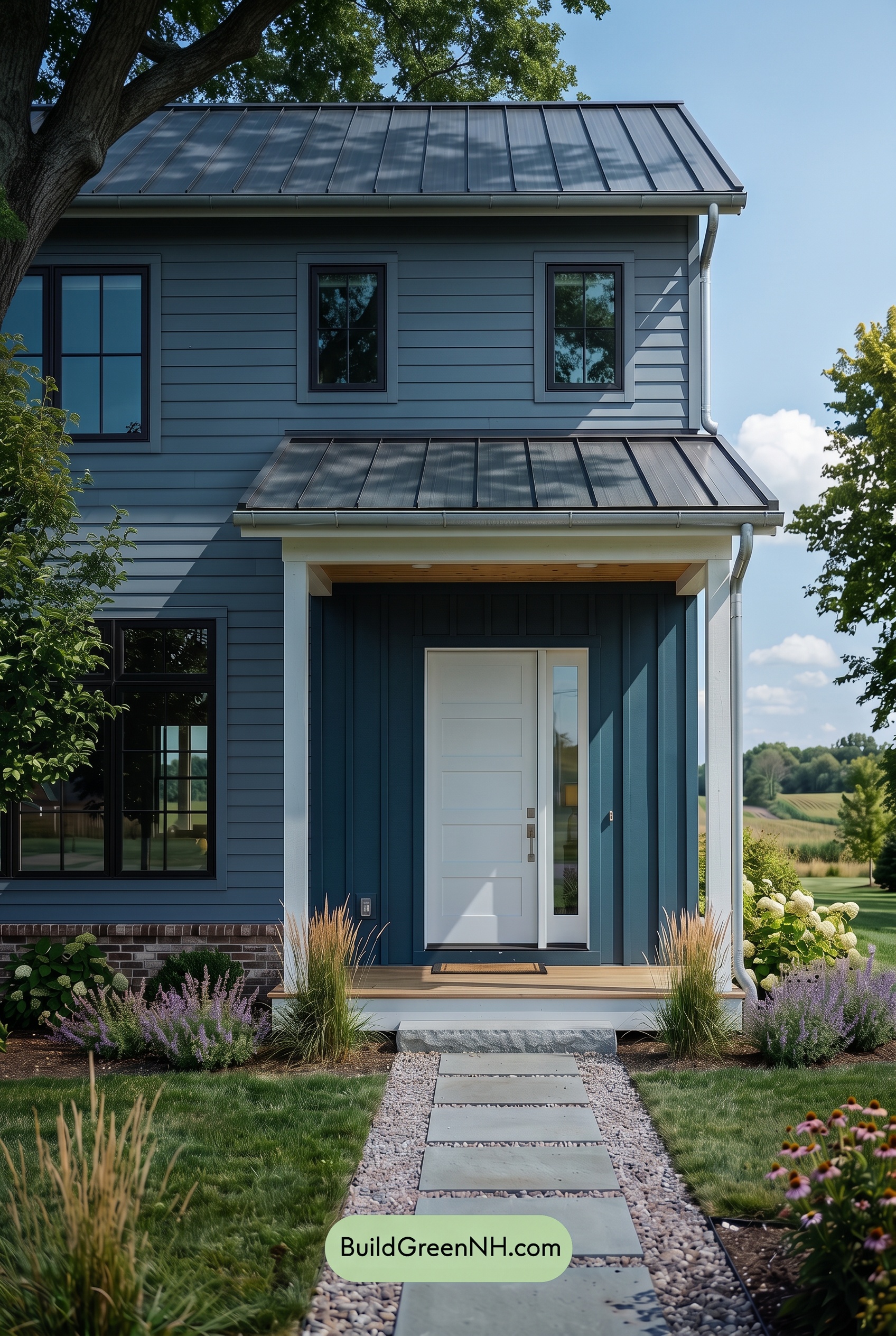
In shade, the blue siding takes on a deeper, quieter character than it shows in neutral daylight. Its saturation appears more restrained, with cooler undertones and tree-cast shadows adding dimension across the horizontal surfaces. The darker blue around the entry becomes especially rich, creating a more intimate focal point beneath the porch.
The white trim and columns lose some of their bright crispness in shaded areas, reading softer and slightly cooler, while the gray window frames appear more pronounced. This gentler contrast gives the exterior a calm, tailored mood—less sunlit and energetic than in neutral daylight, but wonderfully grounded and inviting.
Nighttime
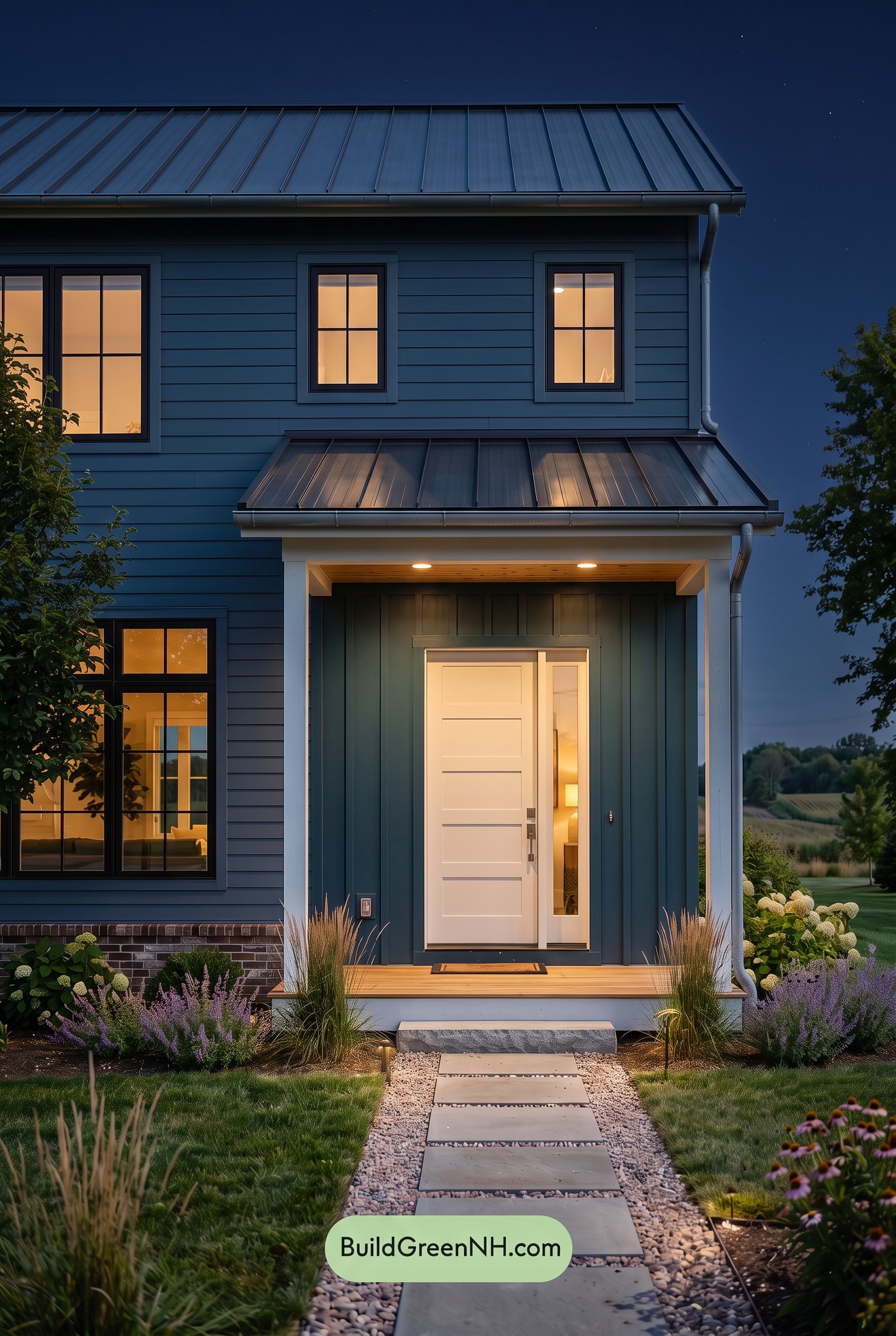
At night, the blue exterior deepens and appears more saturated than it does in neutral daylight, taking on a richer, quieter presence across the siding and entry accent. Shadows settle into the panel lines and beneath the roof, softening smaller details while giving the facade more depth and definition.
Warm interior and porch lighting shifts the mood dramatically: the white trim, columns, and front door read creamier and gentler near the glow, while the gray window frames recede into crisp dark outlines. This warm-to-cool contrast makes the entry feel especially welcoming, balancing the blue shades’ calm nighttime character with an inviting sense of light.
Pin these for later:
Want More?
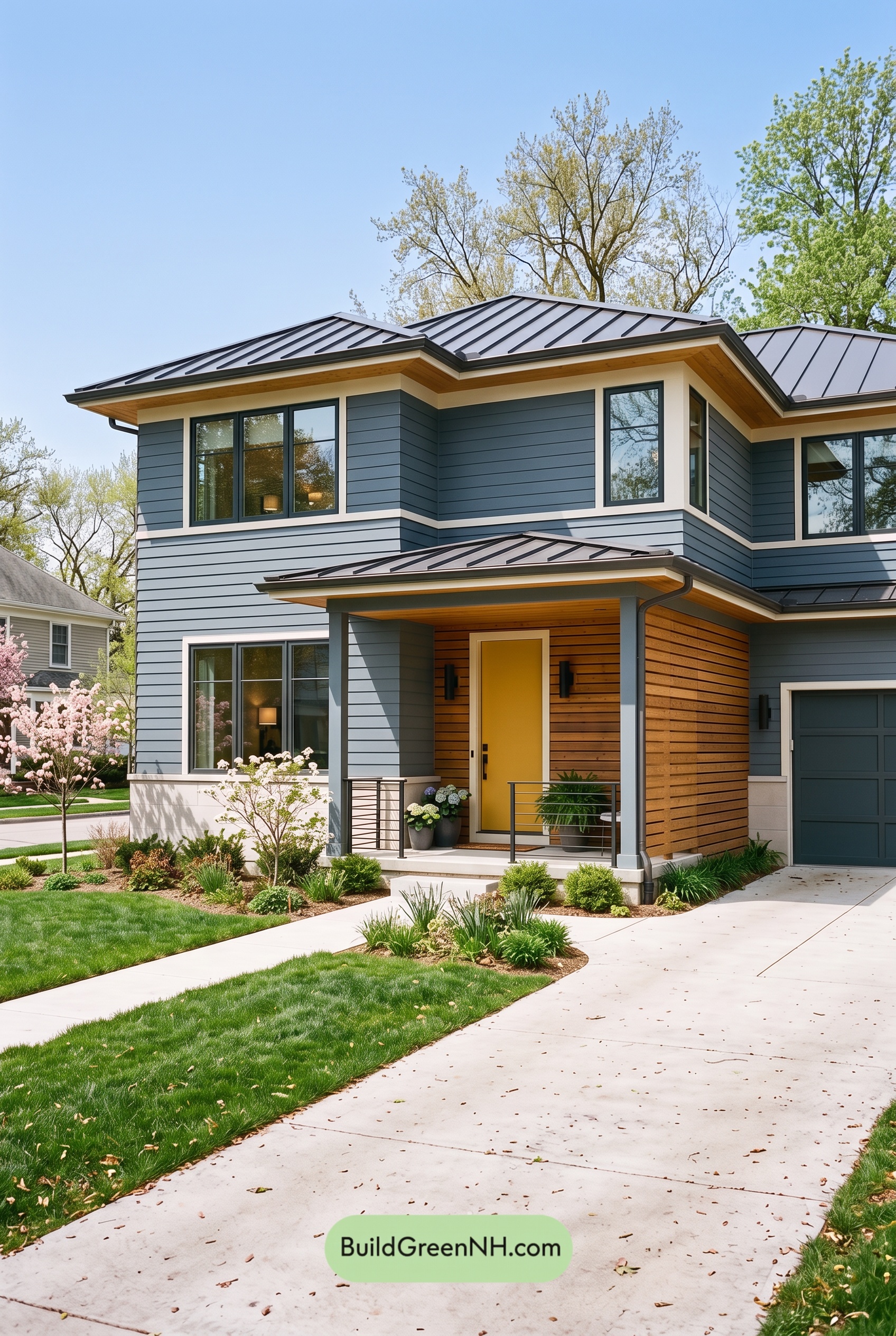 Blue House Front Door Color Scheme: Harbor Saffron
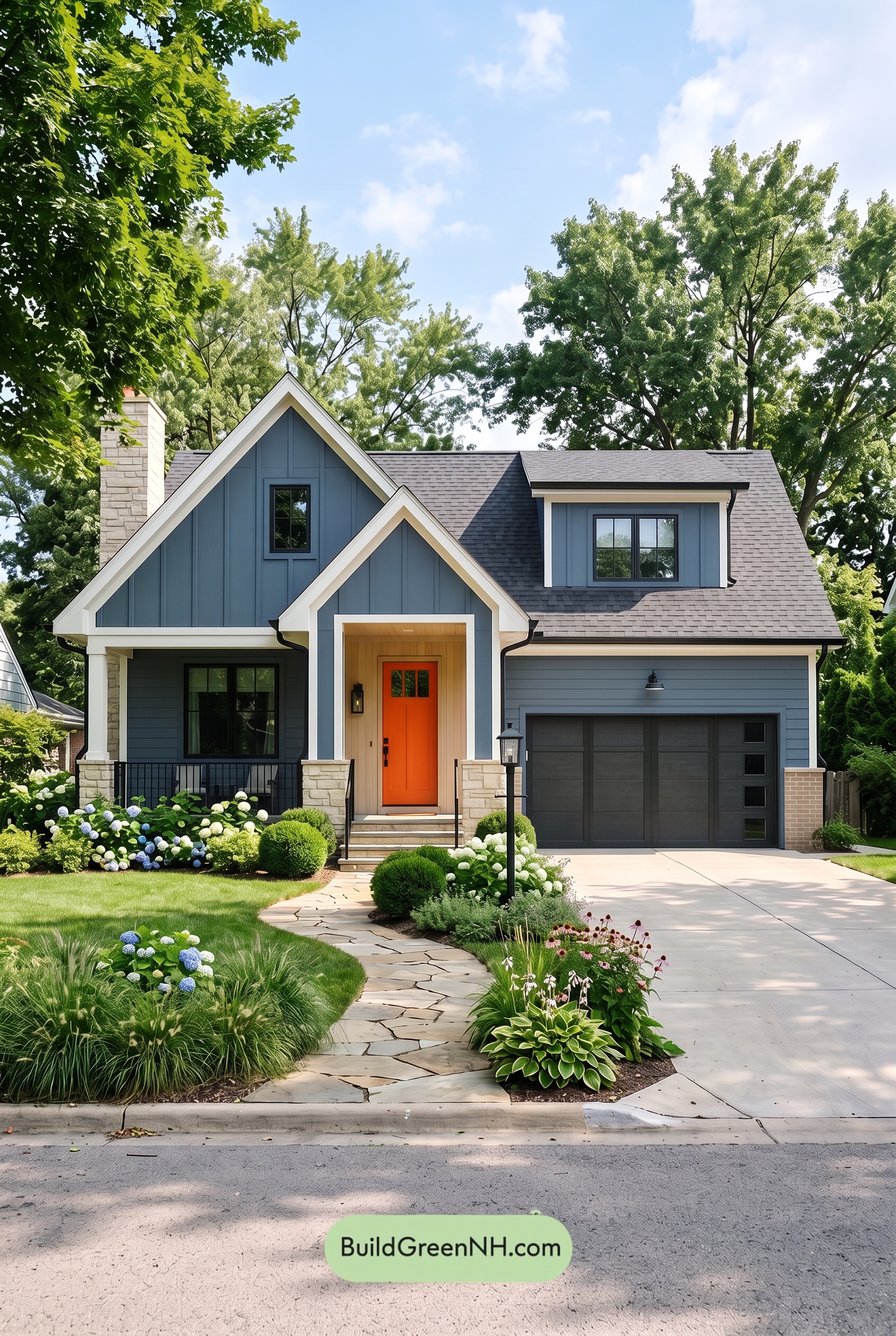 Blue House Front Door Color Scheme: Cobalt Persimmon
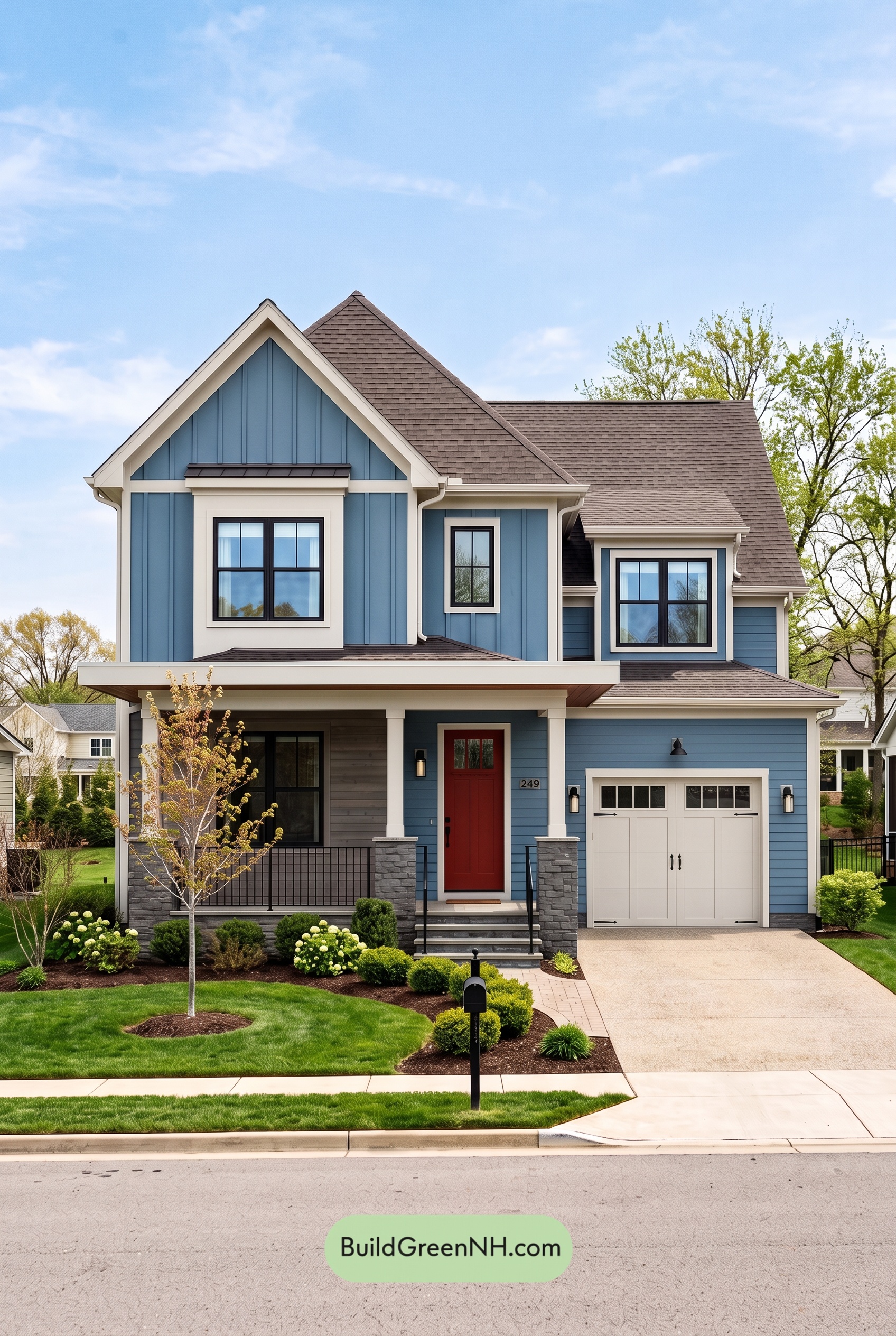 Blue House Front Door Color Scheme: Denim Poppy
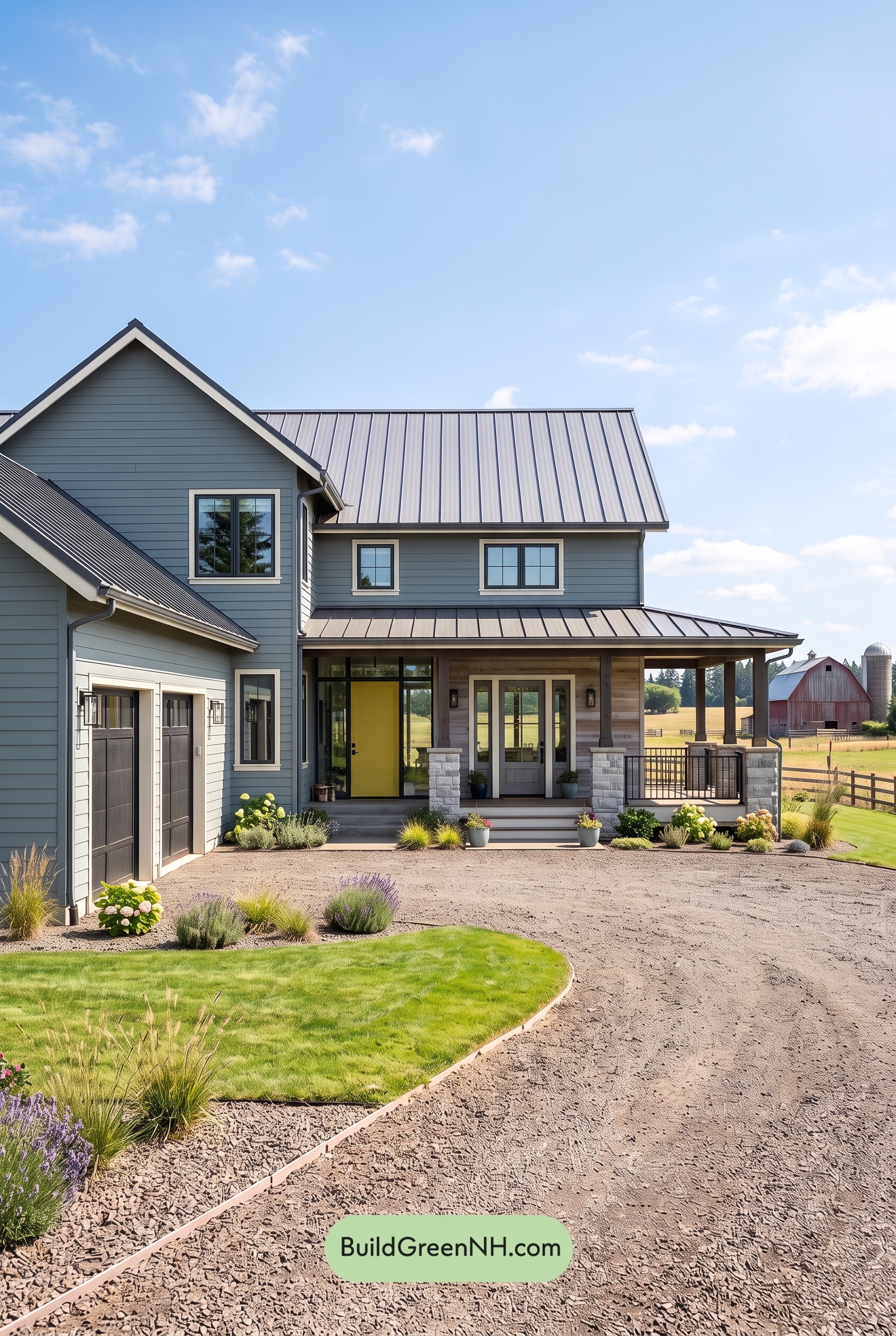 Blue House Front Door Color Scheme: Slate Citron
 Blue House Front Door Color Scheme: Mist Blue Haven
Table of Contents