Last updated on · ⓘ How we make our floor plans
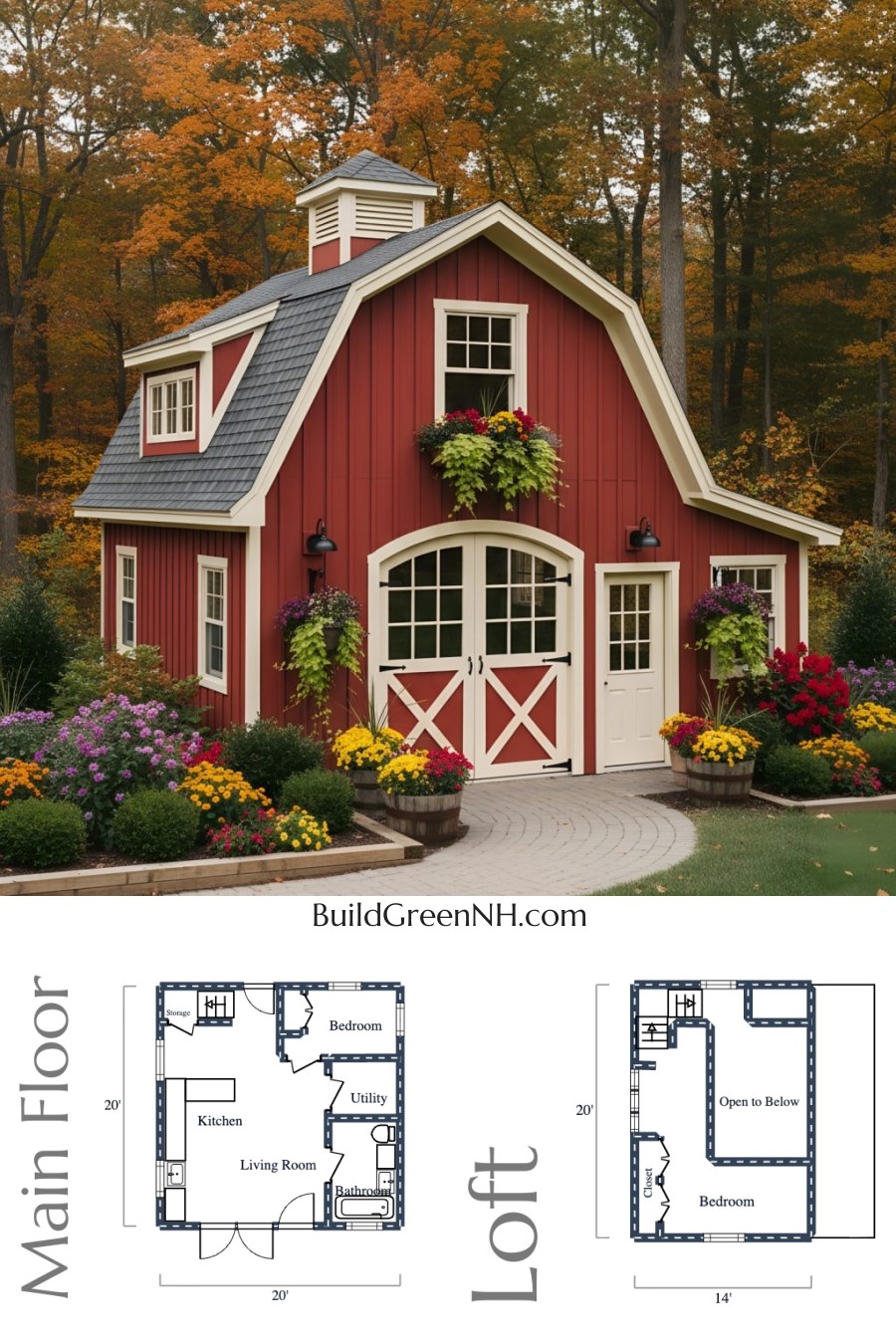
This design is a compact barn-style cottage with a lofted upper level. It blends tiny-house efficiency with a classic carriage-house look. Small footprint. Big character.
The facade leans rustic and tidy. Red board-and-batten siding, crisp white trim, and a gambrel roof give it a true barn-inspired profile. A small cupola adds a neat vertical accent. Gray shingles keep the roof simple and sharp. The front uses barn-style double doors with a separate side entry, so the whole exterior feels practical without looking plain.
These floor plan drafts are available for download as a printable PDF. They are handy for planning, marking up, and winning the occasional design debate with a finger on the page.
- Total area: 604 sq. ft.
- Bedrooms: 2
- Bathrooms: 1
- Floors: 1.5
Main Floor
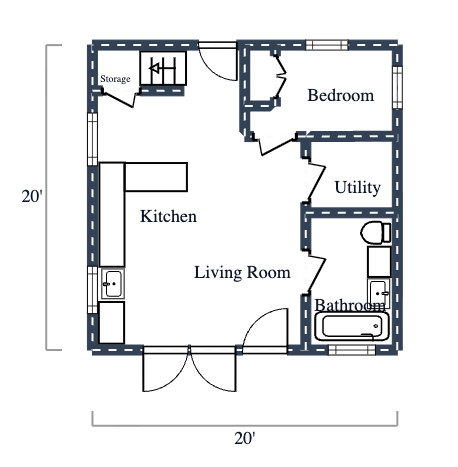
The main floor is a 20′ by 20′ layout, or about 400 sq ft. It is arranged as a compact square with the living space spread across the center and left side, while the service rooms sit to the right and rear. Circulation is simple. No hallway marathon here.
- Living Room: Central main space with direct access from the front entry.
- Kitchen: Located on the left side, open to the living room, with an efficient counter layout.
- Bedroom: Placed at the upper right for a more private position.
- Utility: Set beside the bedroom for laundry or mechanical use.
- Bathroom: Positioned at the lower right, fitted with a tub, toilet, and sink.
- Storage: Tucked into the upper left corner near the stair.
- Stair: Rear-left stair leading up to the loft.
Loft
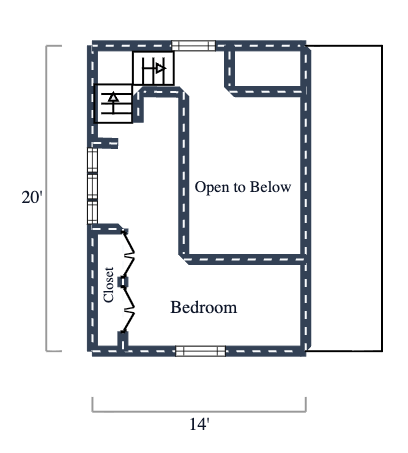
The loft measures 14′ by 20′ on the plan, with 204 sq ft of bedroom space. The layout stays airy and connected. A smart move in a compact home.
- Bedroom: Main loft room occupying the lower portion of the plan.
- Closet: Located along the left side near the bedroom.
- Open to Below: Large central void overlooking the main level.
- Stair/Landing: Access point at the upper left corner.
We have more facade options of this design:
White Color Siding
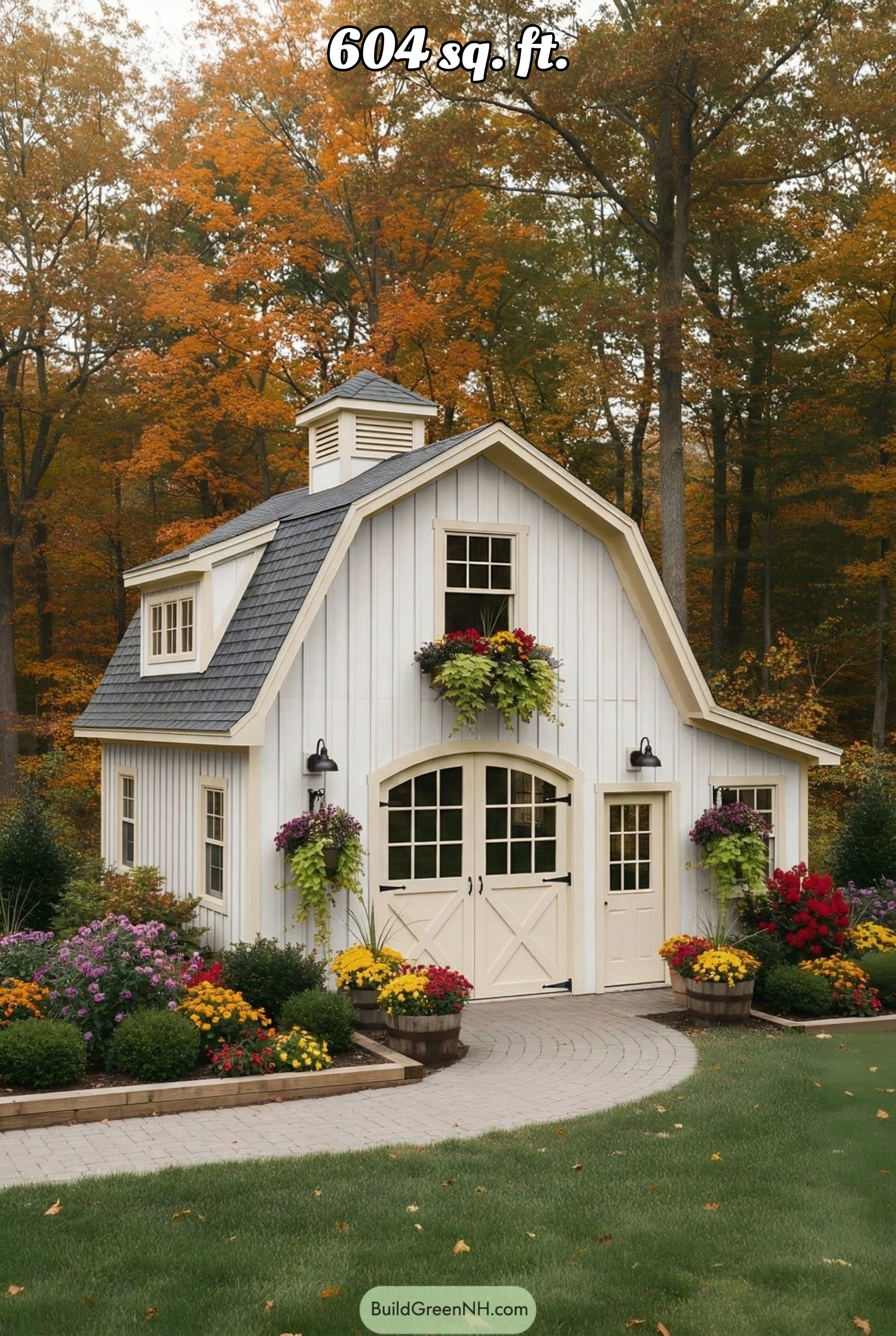
The siding just went full white, turning the facade bright and buoyant. Vertical board‑and‑batten lines throw crisp shadows, so every rib reads clearly.
Creamy trim wraps the arched carriage doors and the slim side entry, while black strap hinges and barn lights now act like bold punctuation marks.
Against the white, the gambrel roof and its shed dormer sharpen up, charcoal shingles framing windows and cupola like eyeliner on a barn.
The window grilles and the planter brackets look tidier, and the door arch suddenly feels more pronounced. Same charming bones, but now dressed in formal whites—clean, perky, a little dapper.
Grey Color Siding
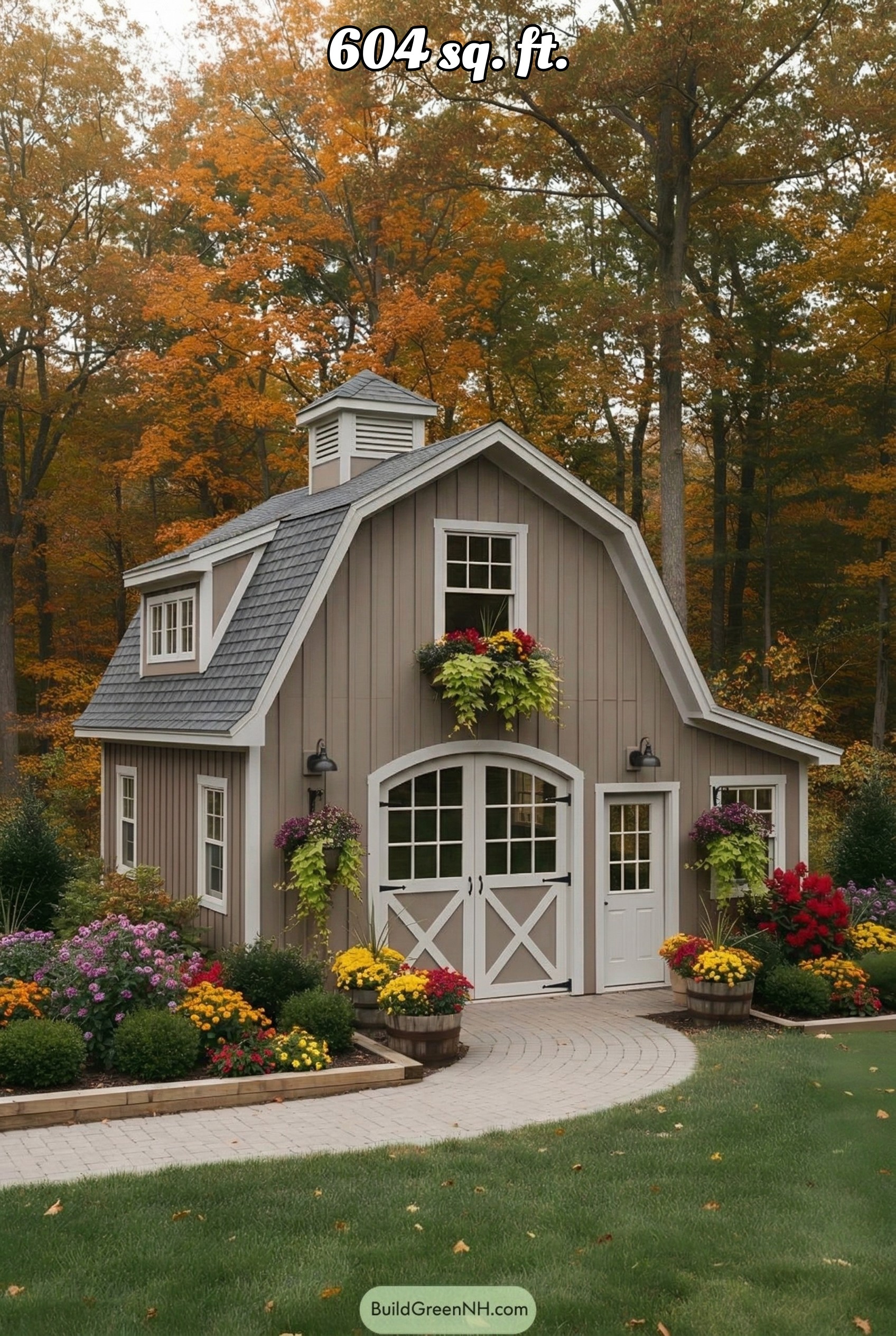
The siding just went grey—swapping warm tones for a cool, board-and-batten cloak—and it crisps up the gambrel front. Against it, the white trim, arched cross-braced doors, and gridded windows pop like exclamation points, while the dark sconces suddenly look bespoke.
The cooler skin now syncs with the shingled roof and dormer, letting the cupola, rakes, and window boxes read sharper. One color flip, and the facade feels cleaner, a touch more modern, and maybe a little proud of itself.
Black Color Siding
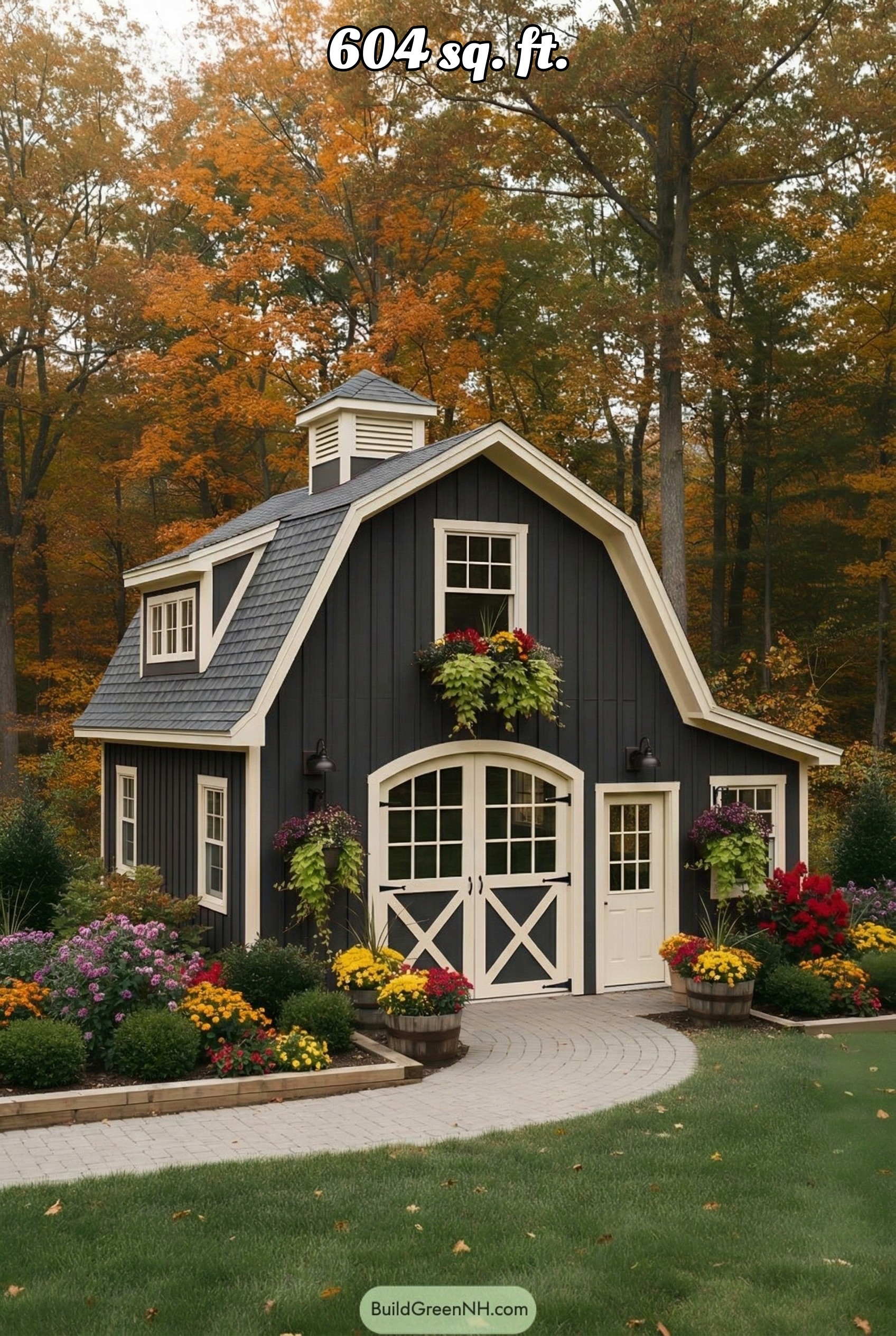
The siding went black, and the whole gambrel-front suddenly looks sharper and a touch moodier—in a good, espresso-shot way.
White trim now pops like chalk on slate, framing the arched crossbuck doors and gridded windows with crisp definition. Vertical board-and-batten reads cleaner, and that petite entry door feels more intentional, less shy.
Up top, the dormers and the cupola stand out like tidy chess pieces against the dark field, while the pale eaves carve a bold outline around the roof breaks. The arched header over the main doors feels taller, the window boxes more sculptural, and the black backdrop makes the barn lights act like punctuation—periods that say, “Yes, this facade means business.”
Forest Green Color Siding
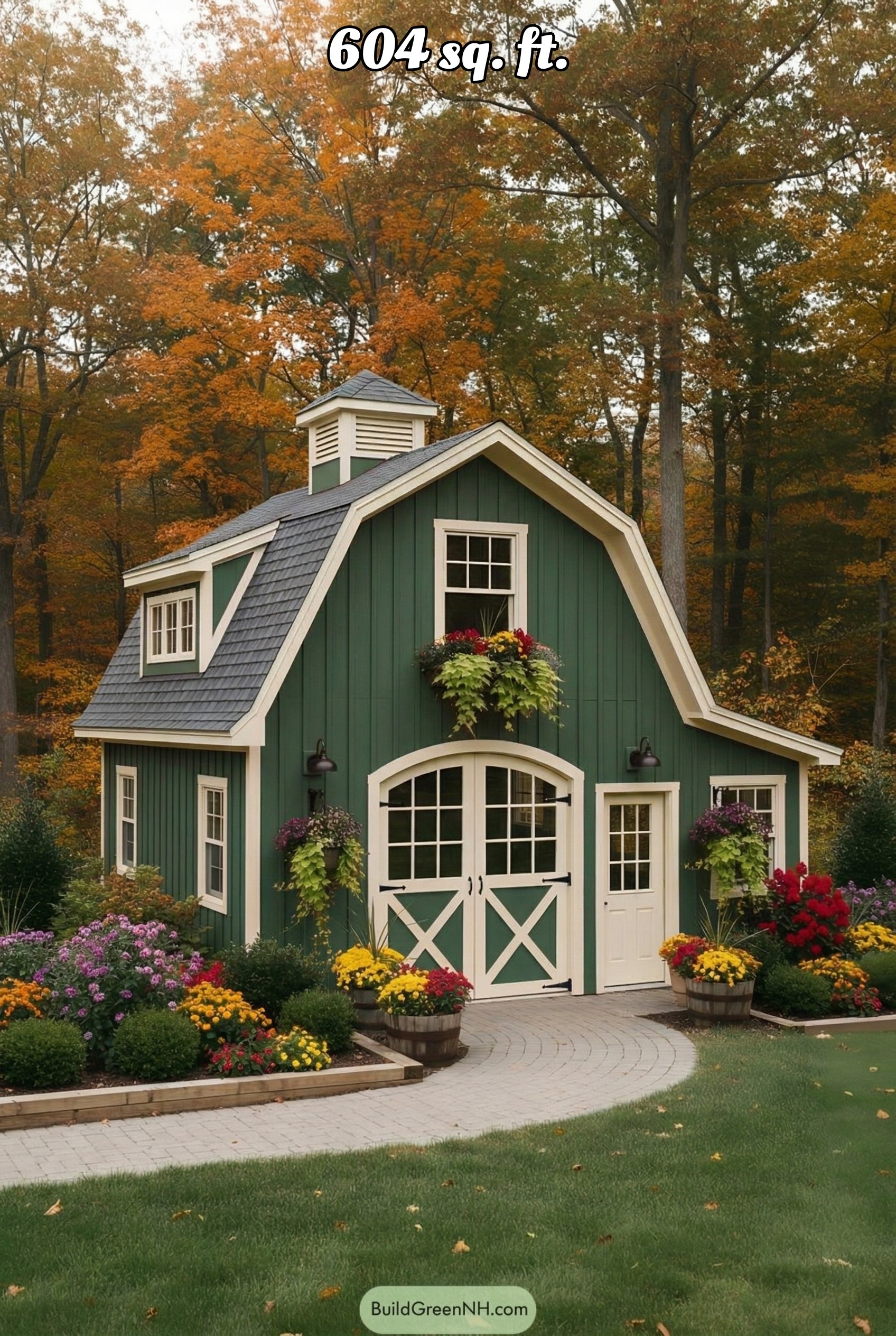
Switched to forest‑green board‑and‑batten, the facade now feels deeper and crisper. Cream trim zings around the gambrel gables, arched carriage doors, and gridded windows like tidy icing.
The dormer and side bump‑out read bolder, edges clean and assertive. Even the cupola looks like it put on a sharper hat.
With the darker field, gray shingles cool down while bright rake boards outline the silhouette. The arched double doors and X‑bracing take center stage; the slim side entry now plays the quiet understudy.
Window boxes pop as framed color bars, not scene stealers. Same bones, snappier suit.
Bronze Color Siding
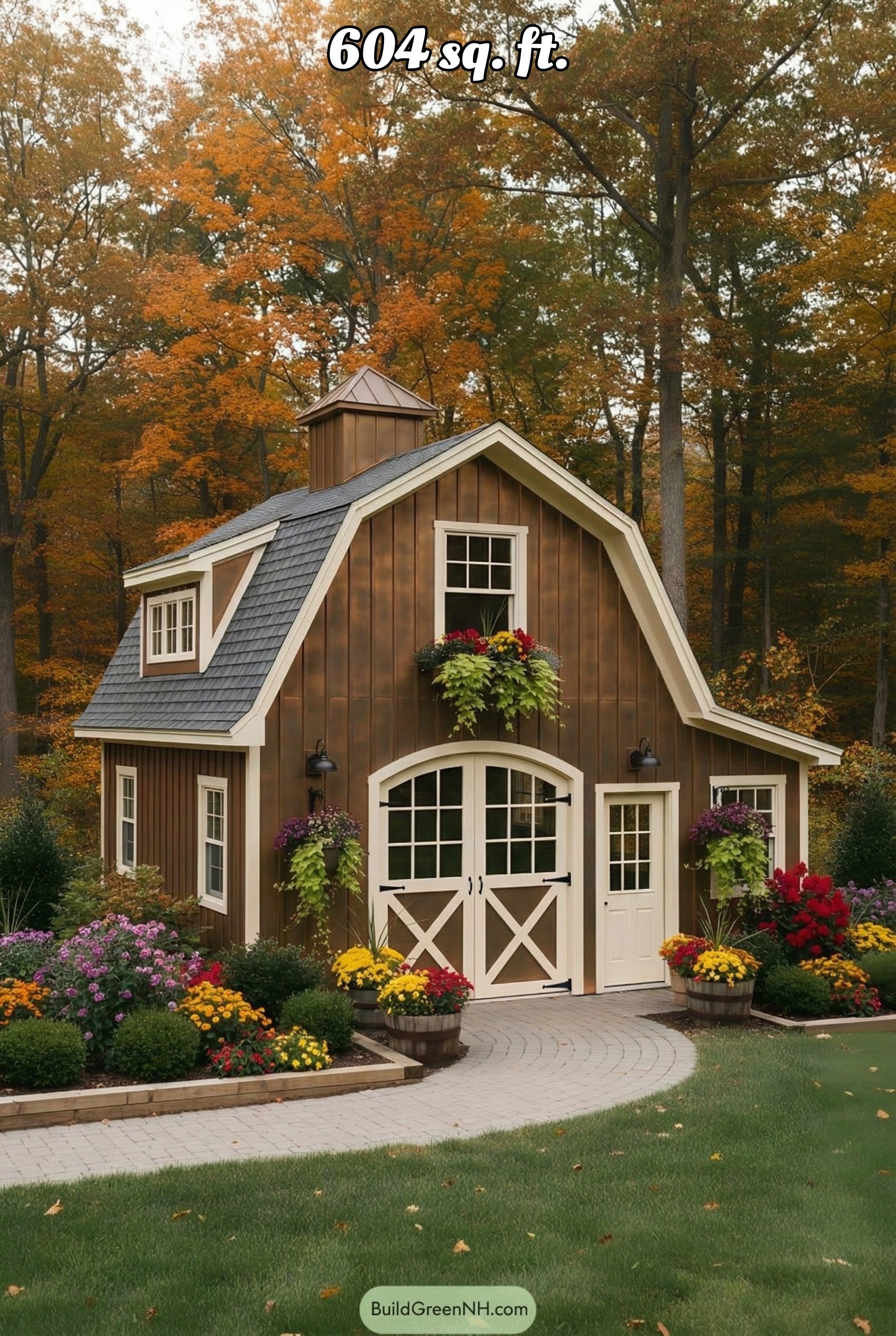
The siding shifts to a bronze finish, and the façade suddenly gleams—polished yet sturdy. The vertical board‑and‑batten reads bolder across the gambrel-front, while the cream trim snaps around the arched Dutch doors, side entry, and gridded windows.
Even the little cupola looks more intentional, less whimsy, more statement.
That bronze skin recalibrates the whole composition. Gray shingles feel cooler and tighter, the dormer projects with extra definition, and the gambrel break is crisply legible.
Crossbucks, mullions, eaves, and rake boards now pop with graphic contrast—same compact barn-house, upgraded to evening wear.
Want More?
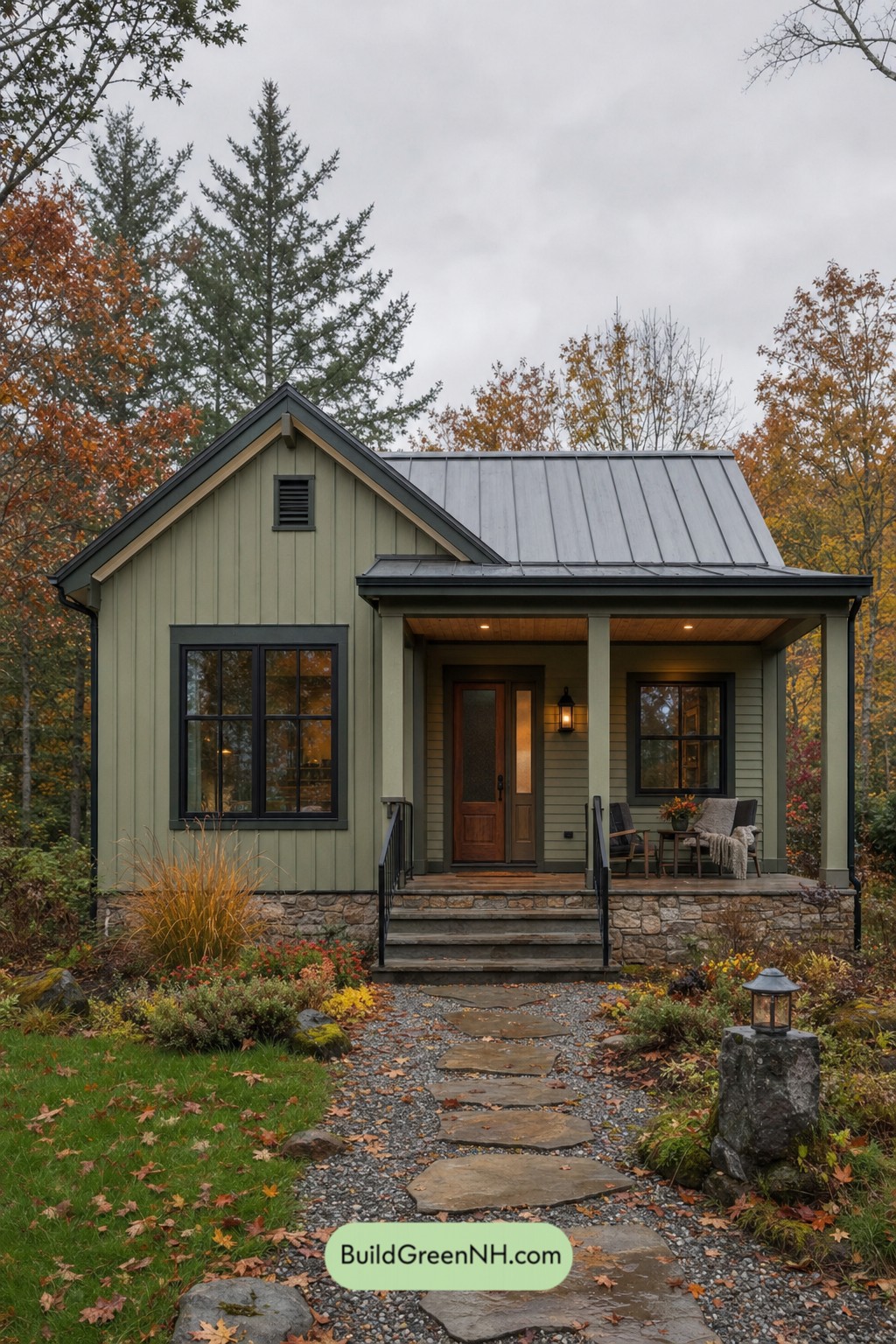 531 sq. ft., 1 Bed, 1 Bath, Single Story Cottage Floor Plans: Mossline Cottage Profile
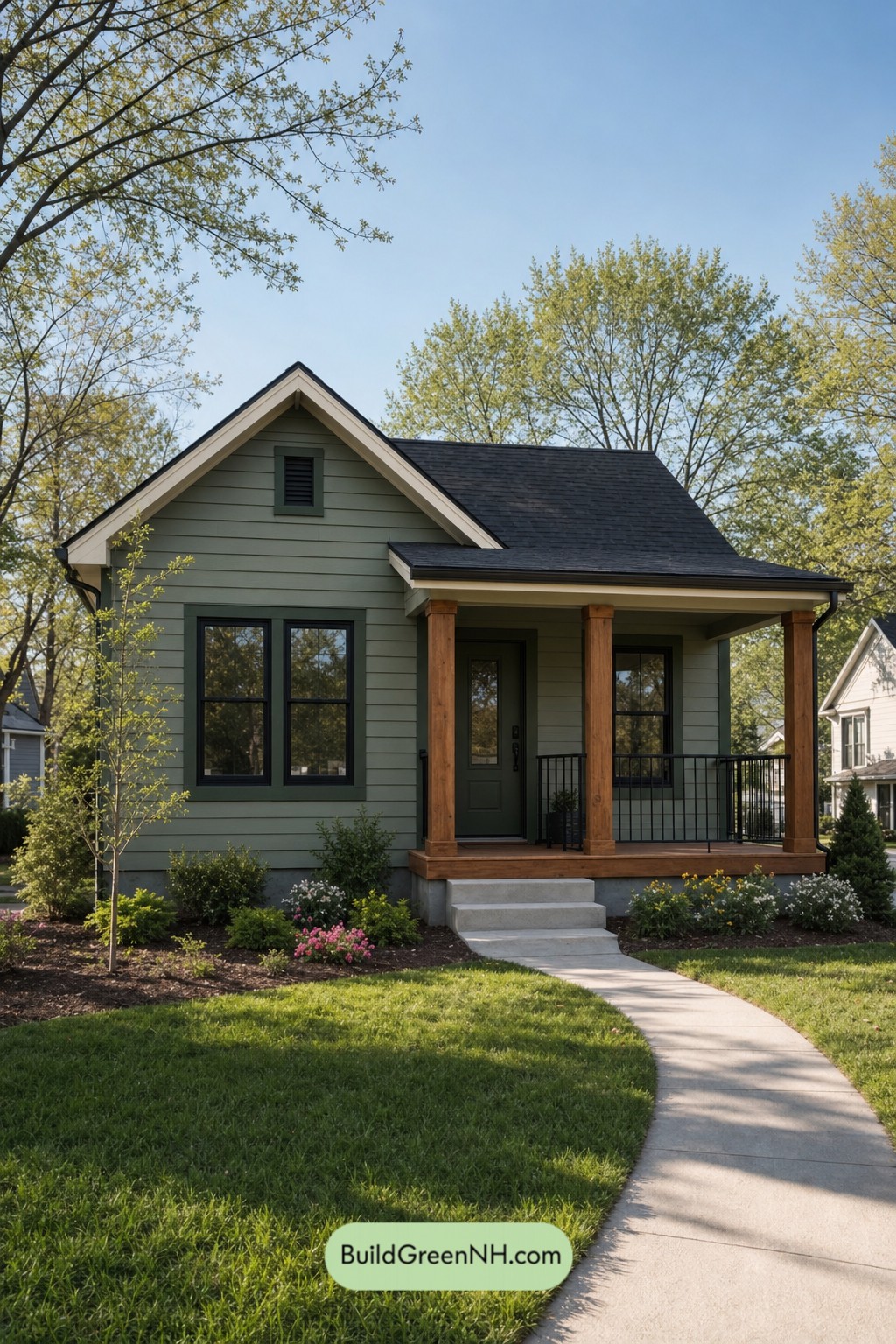 531 sq. ft., 1 Bed, 1 Bath, Single Story Small Modern Cottage Floor Plans: Sage Gable Porchcraft
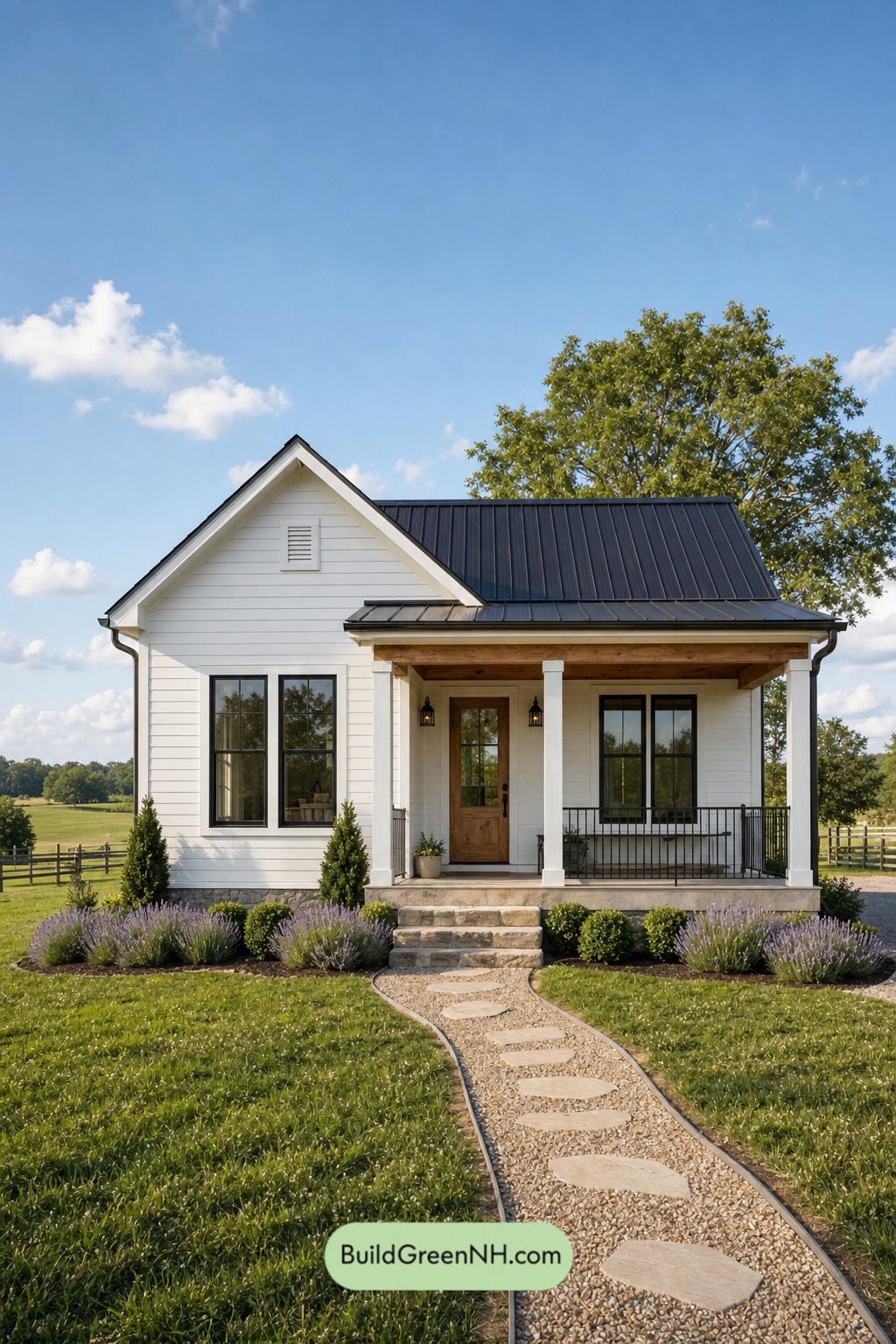 531 sq. ft., 1 Bed, 1 Bath, Small Modern Cottage Floor Plans: Cedarcrest Farm Cottage
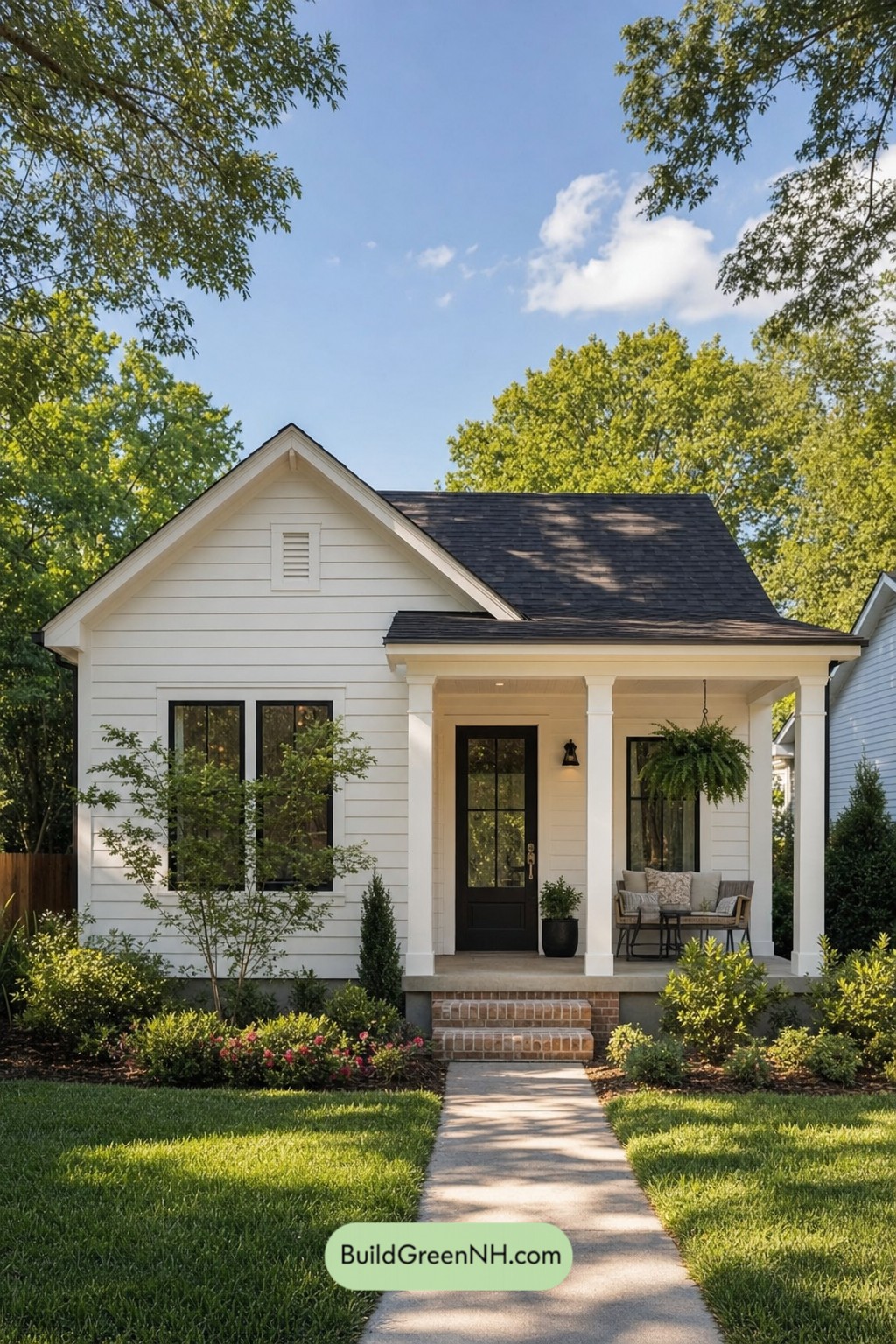 531 sq. ft., 1 Bed, 1 Bath, Single Floor Cottage House Floor Plans: Gablewood Quiet Cottage
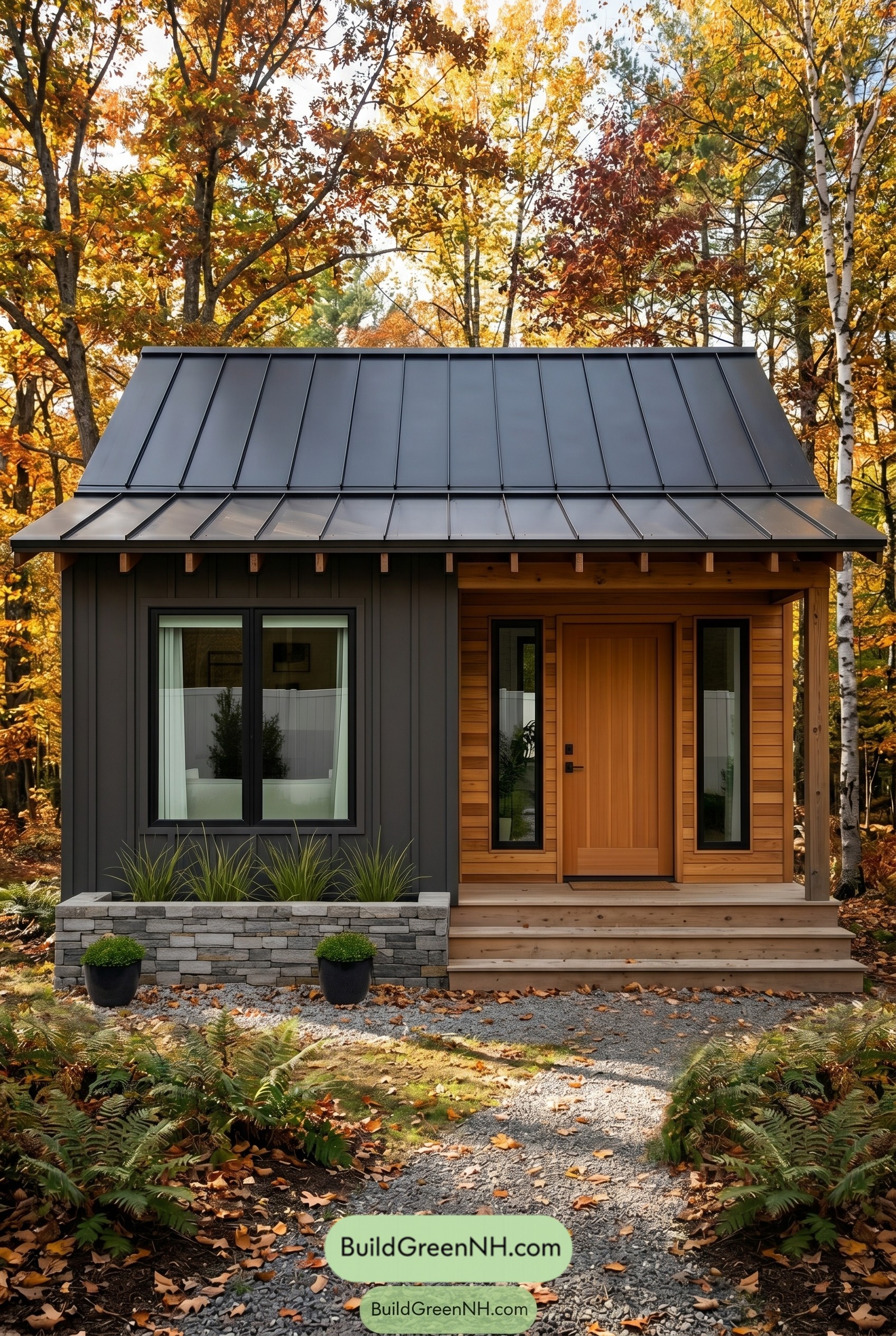 526 sq. ft., 1 Bed, 1 Bath, Single Story Small House Floor Plans: Pine Edge Microhouse
Table of Contents