Last updated on
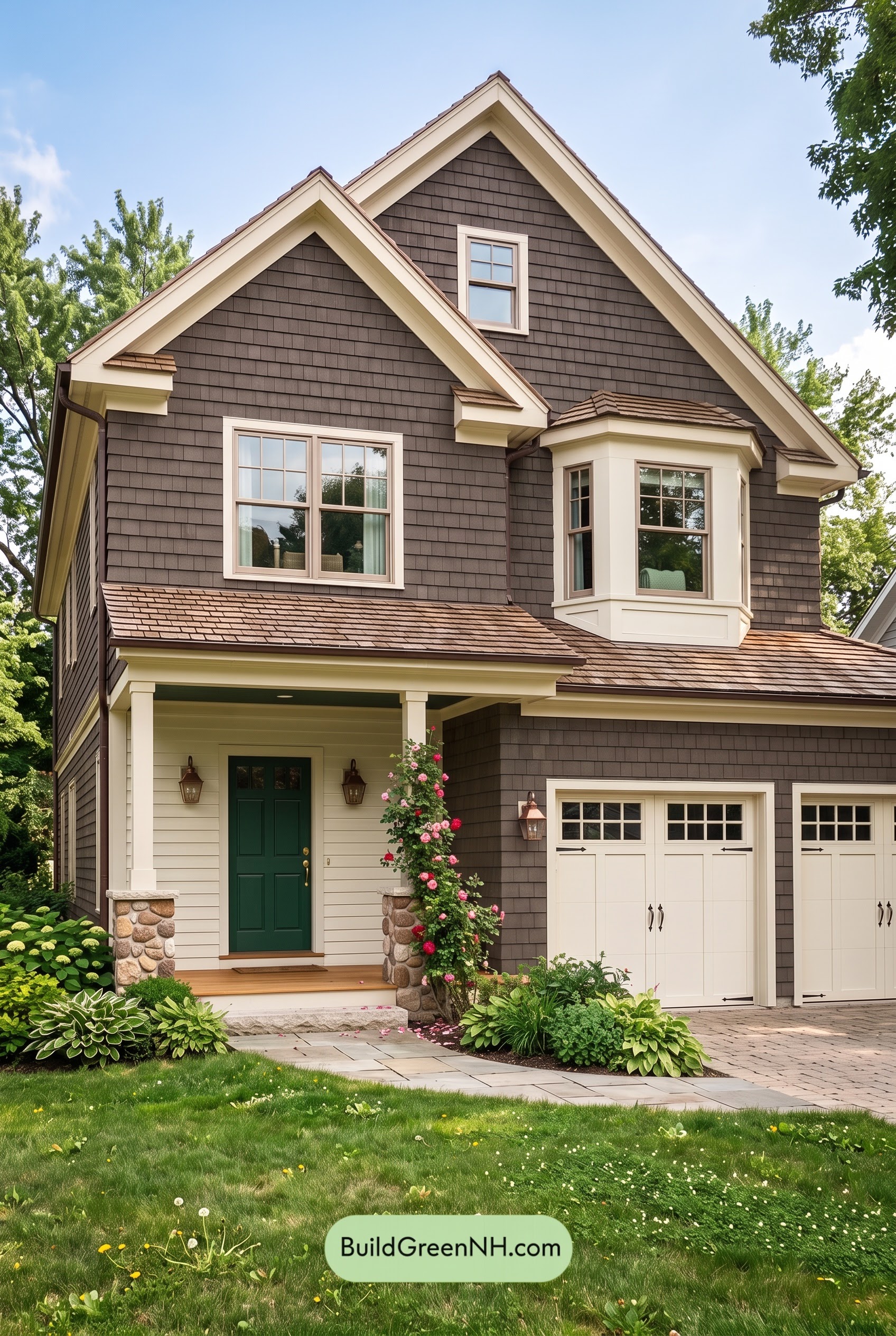

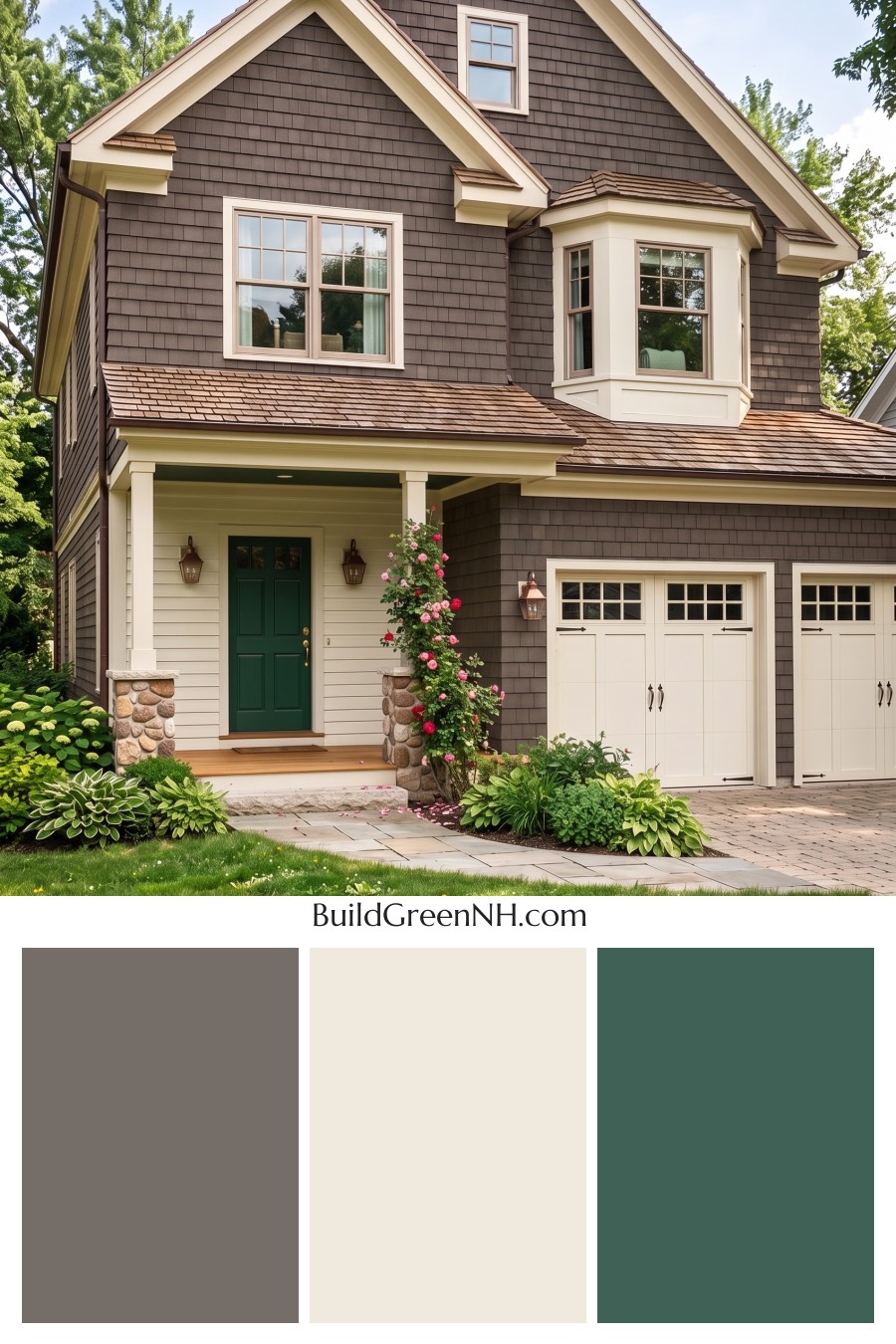
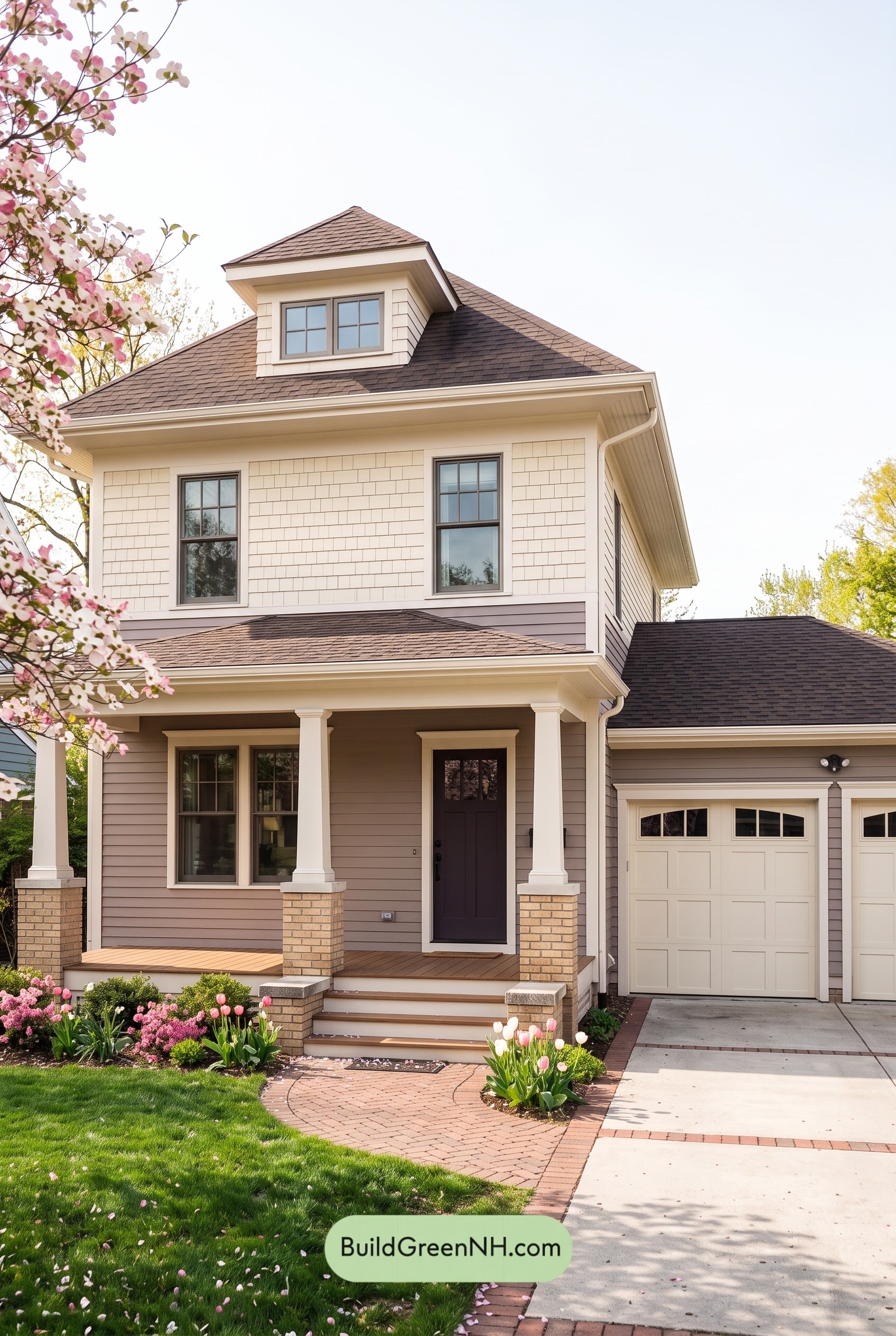
Warm gray siding, creamy beige details, and a deep green front door give this home the perfect balance of architectural presence and welcoming charm.
Warm Gray Gives the Siding Depth
A medium-to-deep gray covers the shingle siding, creating a grounded backdrop for the home’s layered gables and textured exterior. Subtle brown undertones keep the gray from feeling cold. Across these large surfaces, the shade feels substantial without overpowering the smaller details.
The shingle pattern adds another layer of interest. Sunlight catches the individual edges, giving the gray gentle variations that make the walls feel lively rather than flat.
Creamy Beige Highlights the Architecture
Light, creamy beige traces the rooflines, outlines the windows, and brightens the porch columns. Against the darker siding, these pale edges make the steep gables especially striking. The contrast is clear but softer than a stark white would be.
The projecting bay window carries that same beige across its surrounding panels, turning it into a standout feature. Slightly deeper beige window frames add quiet definition within the lighter surrounds.
At ground level, pale beige porch siding and garage doors repeat the trim shade on broader surfaces. This repetition connects the entry and garage, helping the whole front elevation feel coordinated.
A Deep Green Door Creates a Welcoming Focus
The front door introduces a rich, deep green that feels right at home beside the surrounding planting. It provides a distinct focal point without disrupting the restrained palette.
Framed by light beige, the green looks especially saturated. A similarly dark green beneath the porch roof subtly extends the accent, giving the sheltered entry its own cozy character.
Earthy Finishes Pull It All Together
Warm brown roof shingles bridge the gray siding and beige trim. Deeper brown gutters follow the roof edges discreetly, while near-black garage hardware adds crisp finishing touches.
The porch’s golden-brown flooring and the mixed gray, beige, and brown stone column bases reinforce that earthy warmth. Together, these shades create a home that feels polished but comfortable—defined by thoughtful contrast, softened by warm undertones, and beautifully connected to its garden setting.
Next, see how this color scheme looks under different lighting simulations throughout the day.
Overcast
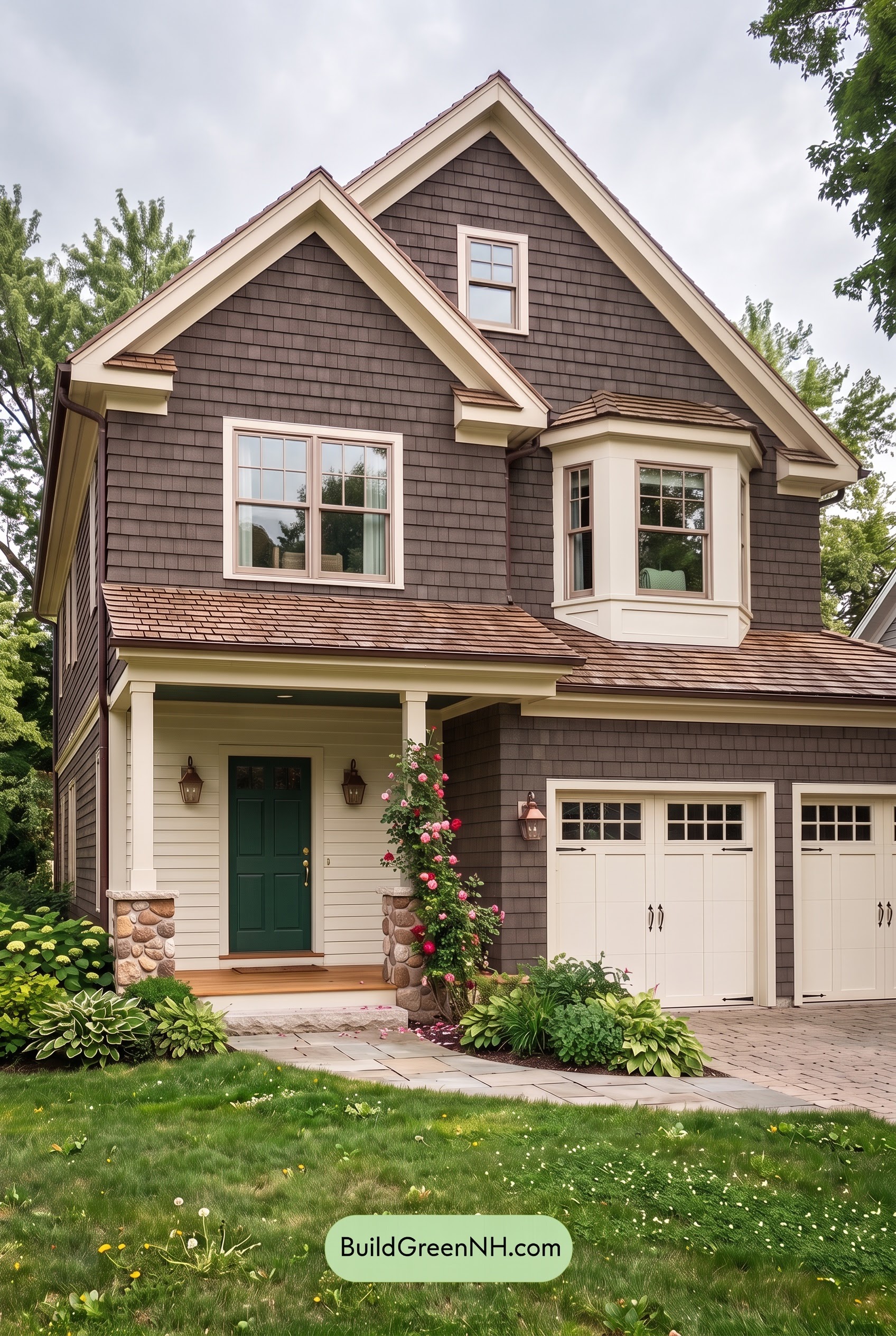
Under overcast skies, the gray siding reads cooler and more subdued than it would in neutral daylight, with its warmer undertones less noticeable. The pale beige trim, bay surround, and garage doors lose a little of their golden warmth, taking on a softer, quieter appearance. Colors feel less saturated overall, giving the exterior a gently muted finish.
Diffused light softens shadows beneath the gables and porch, reducing dramatic light-and-dark contrasts while keeping the pale beige details distinct against the deeper gray. The dark green front door feels more reserved, especially within the sheltered entry. Compared with neutral daylight, the overall mood becomes calmer and slightly moodier, without losing its welcoming warmth.
Golden Hour
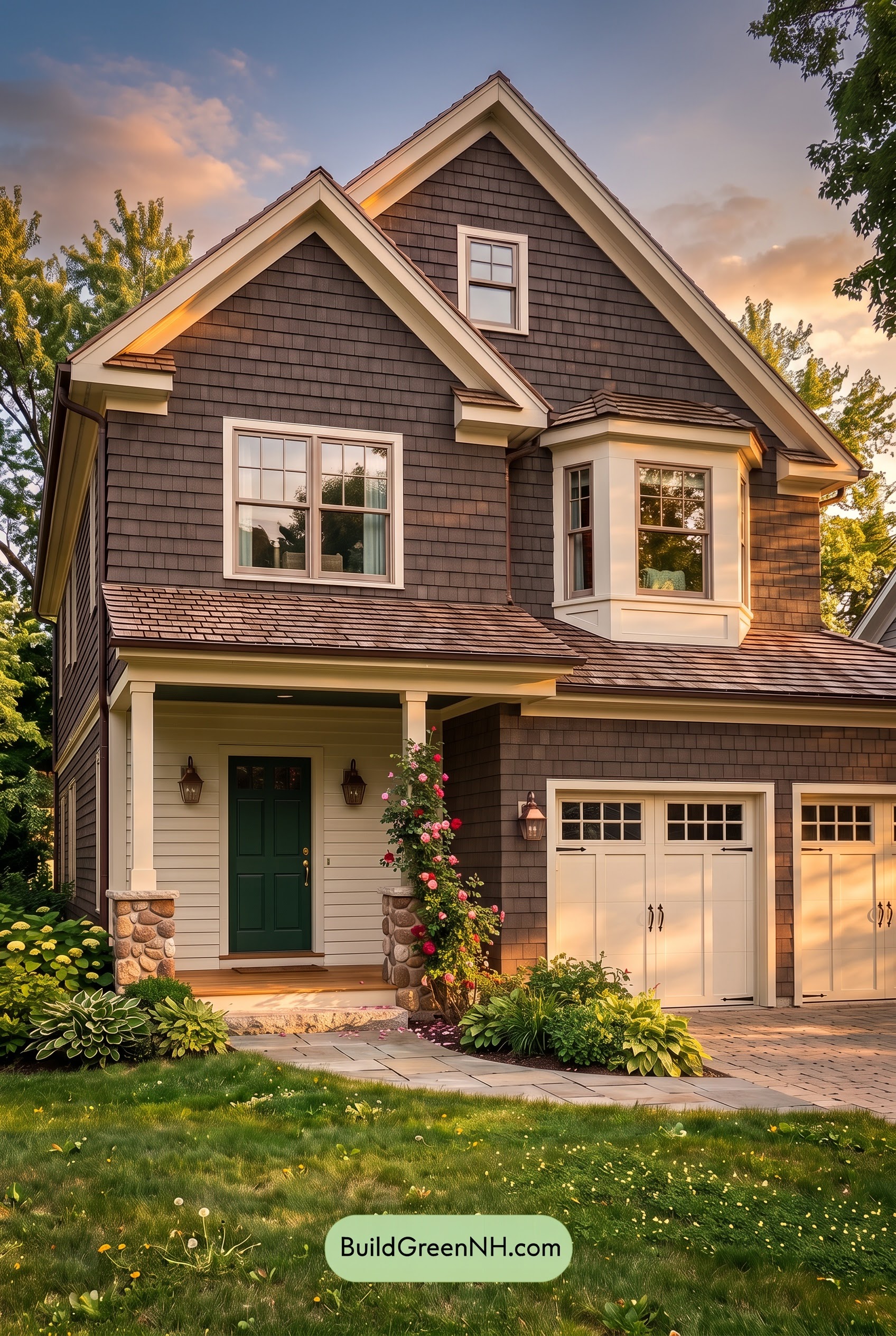
Golden Hour gives the gray siding a warmer, brown-leaning cast, softening the cooler appearance it would have in neutral daylight. The pale beige shades take on a creamy glow, with sunlit areas appearing richer and more saturated. Together, these warm neutrals feel softer and more inviting than they would under even midday light.
Long shadows beneath the gables and across the garage doors deepen the darker shades, creating stronger light-and-dark contrast and highlighting the siding’s texture. In the sheltered entry, the deep green appears darker and more subdued, standing apart from the glowing pale neutrals. The overall mood shifts from crisp and composed in neutral daylight to cozy and quietly dramatic.
Shade
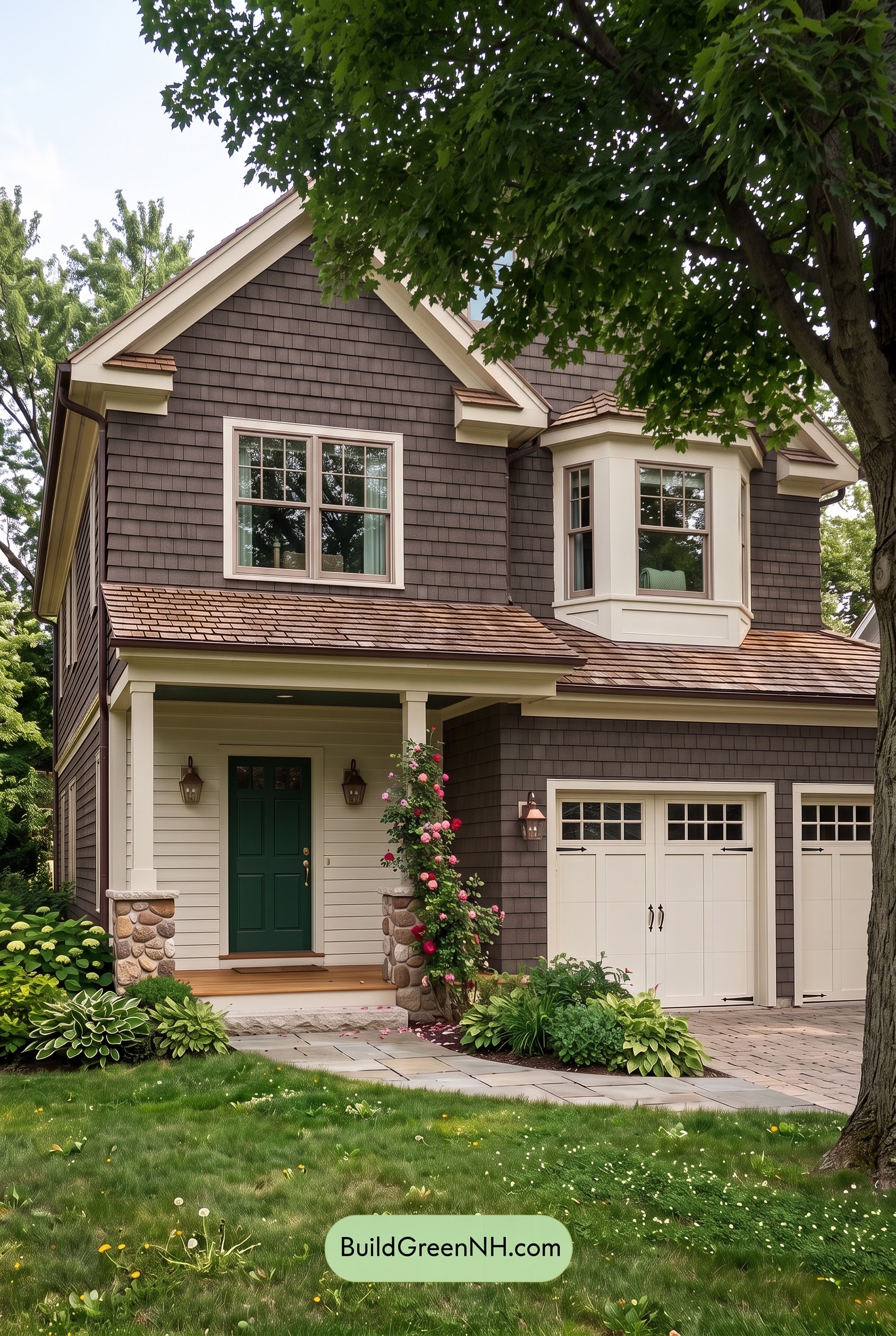
In shade, the gray shades appear deeper and more subdued than in neutral daylight, with their warm undertones less pronounced. The pale beige shades lose some golden warmth and feel softer, keeping a gentle contrast against the darker grays without looking as bright. Overall, the palette feels quieter and slightly cooler.
Deeper shadows beneath the eaves and around the entry add depth, while the shaded green appears darker and less vivid than it would in neutral daylight. Softer light reduces sharp surface contrasts, but the light neutrals still stand out against the gray and green shades, giving the house a calm, sheltered, welcoming mood.
Nighttime
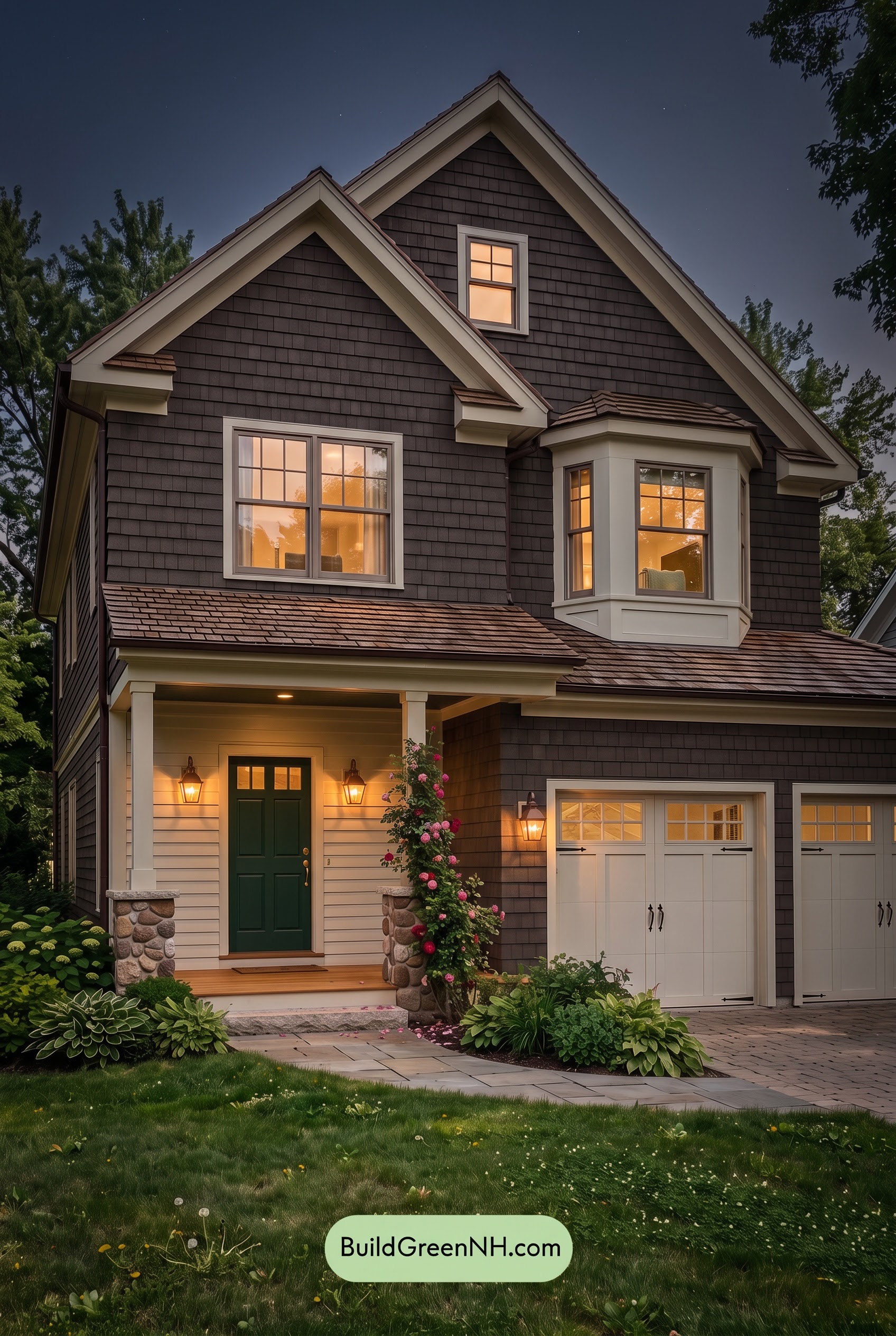
At night, the gray siding deepens, with its subtle undertones becoming less distinct than in neutral daylight. Shadows beneath the eaves and between shingles add depth, while the pale beige trim stands out against the darker walls. Near the lanterns, the beige shades take on a warmer, softly yellow cast; farther from the light, they look cooler and more subdued.
The green front door appears darker and less visibly saturated, creating a quiet focal point within the warmly lit entry. Compared with daylight’s more even color balance, nighttime brings stronger contrasts between illuminated details and shaded surfaces, giving the house a cozy, intimate mood.
Pin these for later:
Want More?
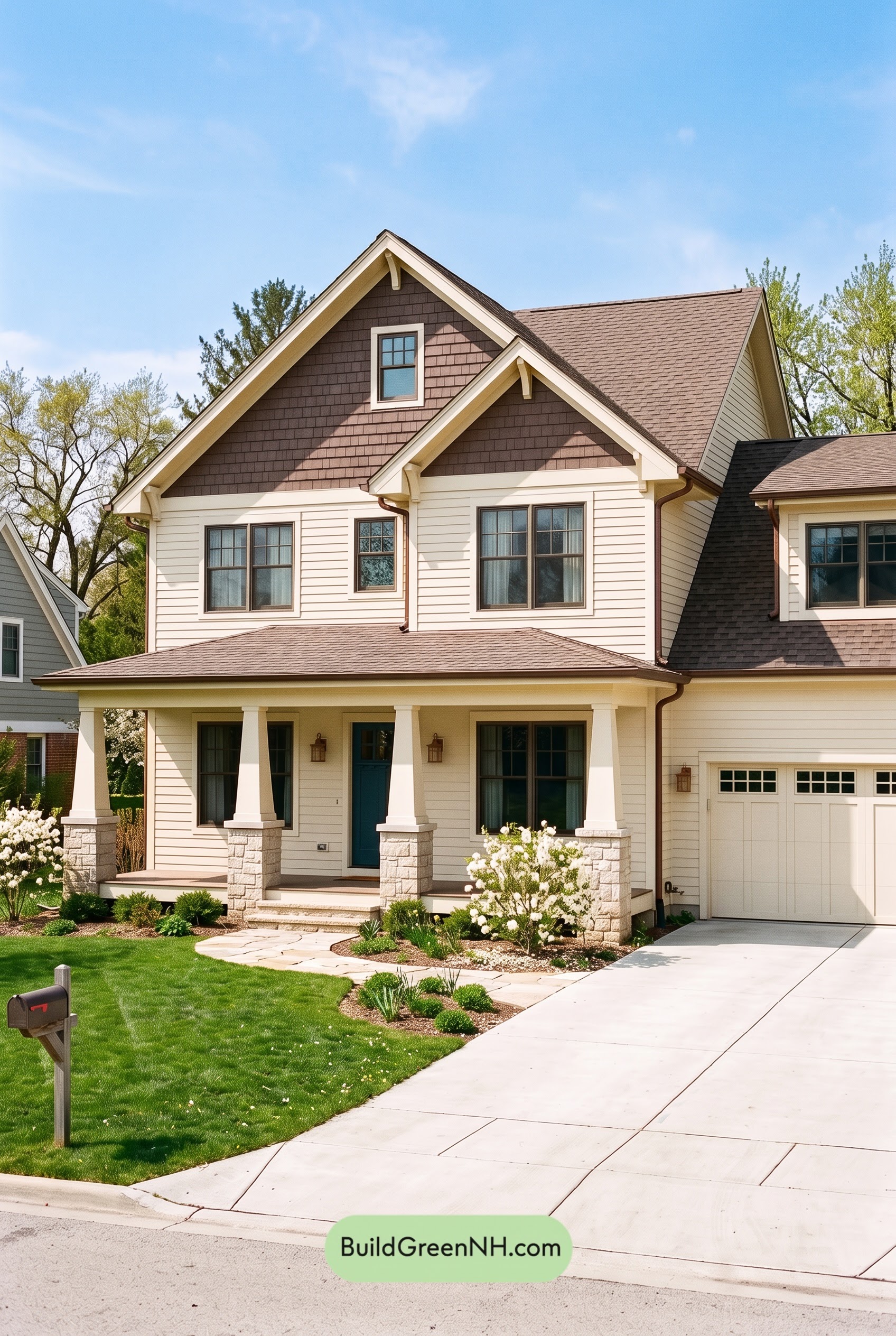 Cream Exterior Paint Color Schemes With a Brown Roof: Cream and Teal Welcome
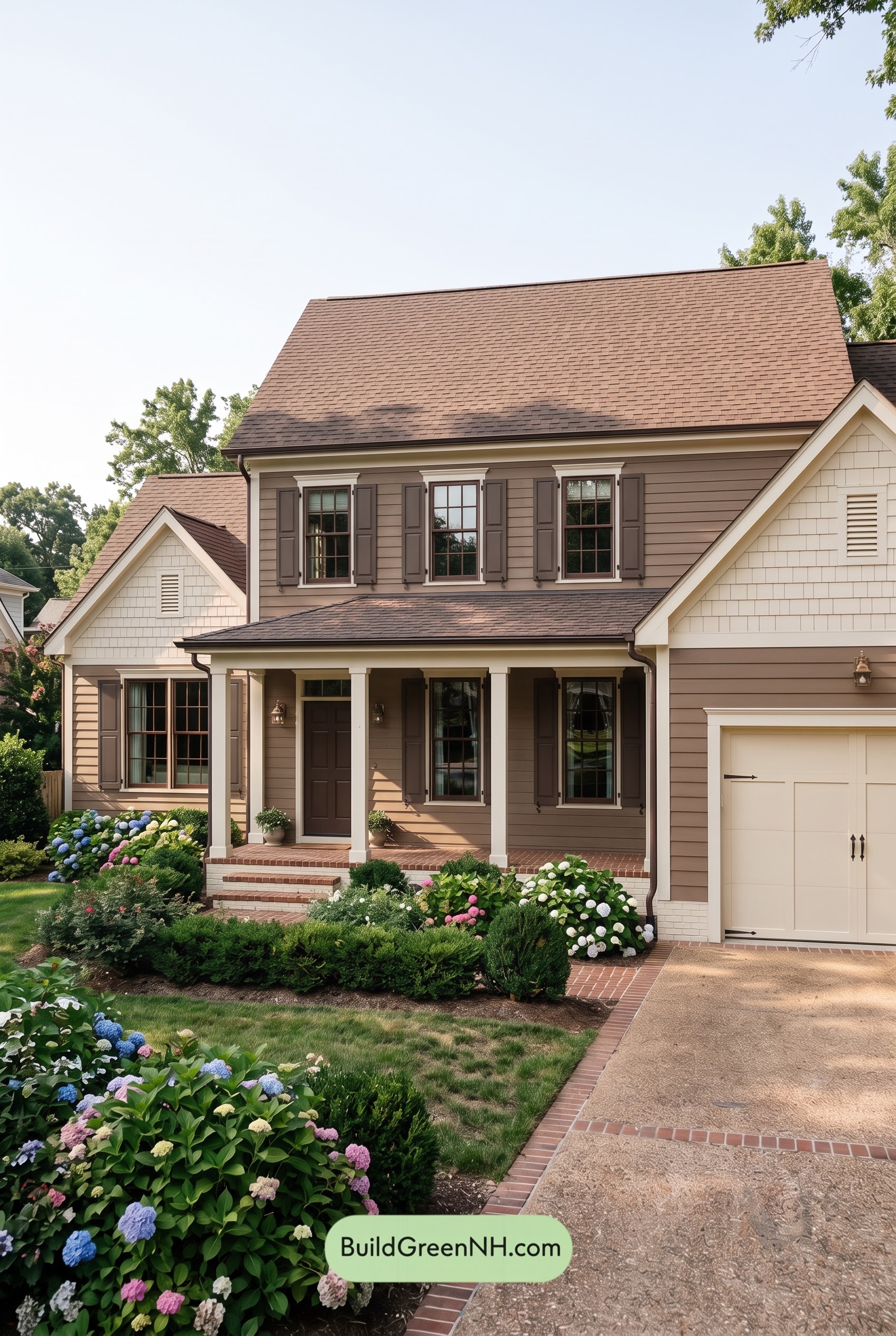 Cream Exterior Paint Color Schemes With a Brown Roof: Cocoa and Burgundy Embrace
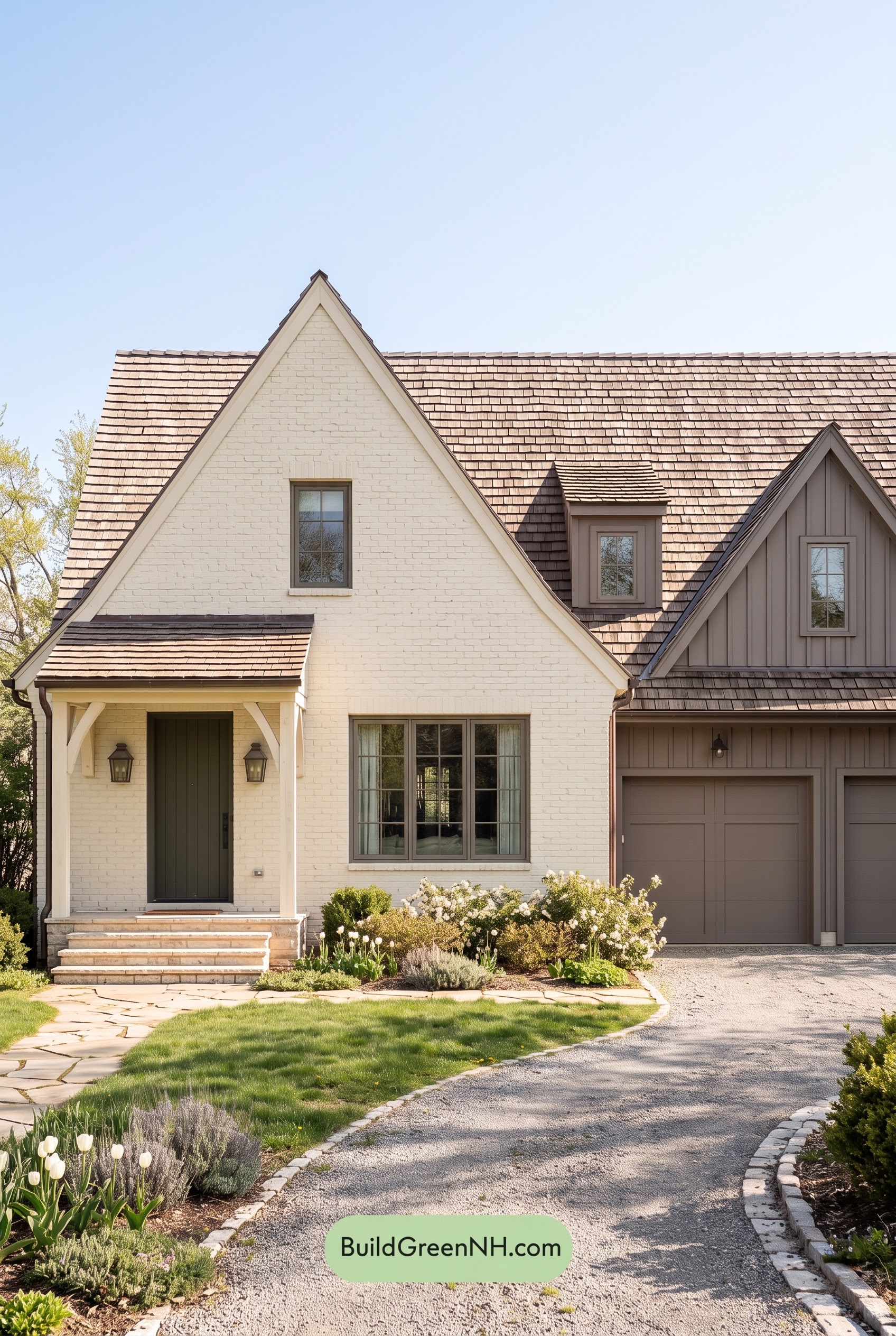 Cream Exterior Paint Color Schemes With a Brown Roof: Cream and Sage Serenity
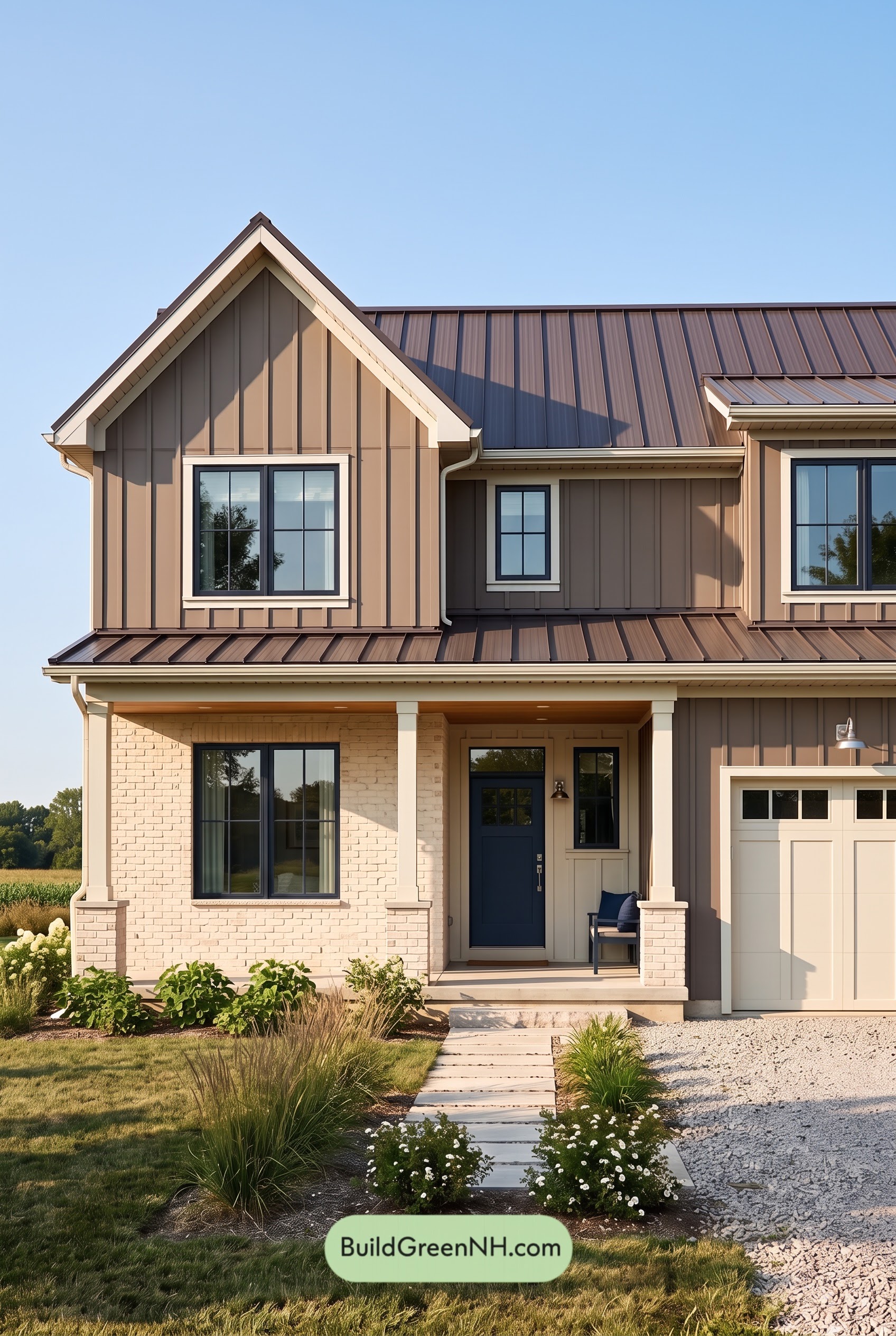 Cream Exterior Paint Color Schemes With a Brown Roof: Cocoa and Navy Assurance
 Cream Exterior Paint Color Schemes With a Brown Roof: Cocoa and Plum Charm
Table of Contents