Last updated on
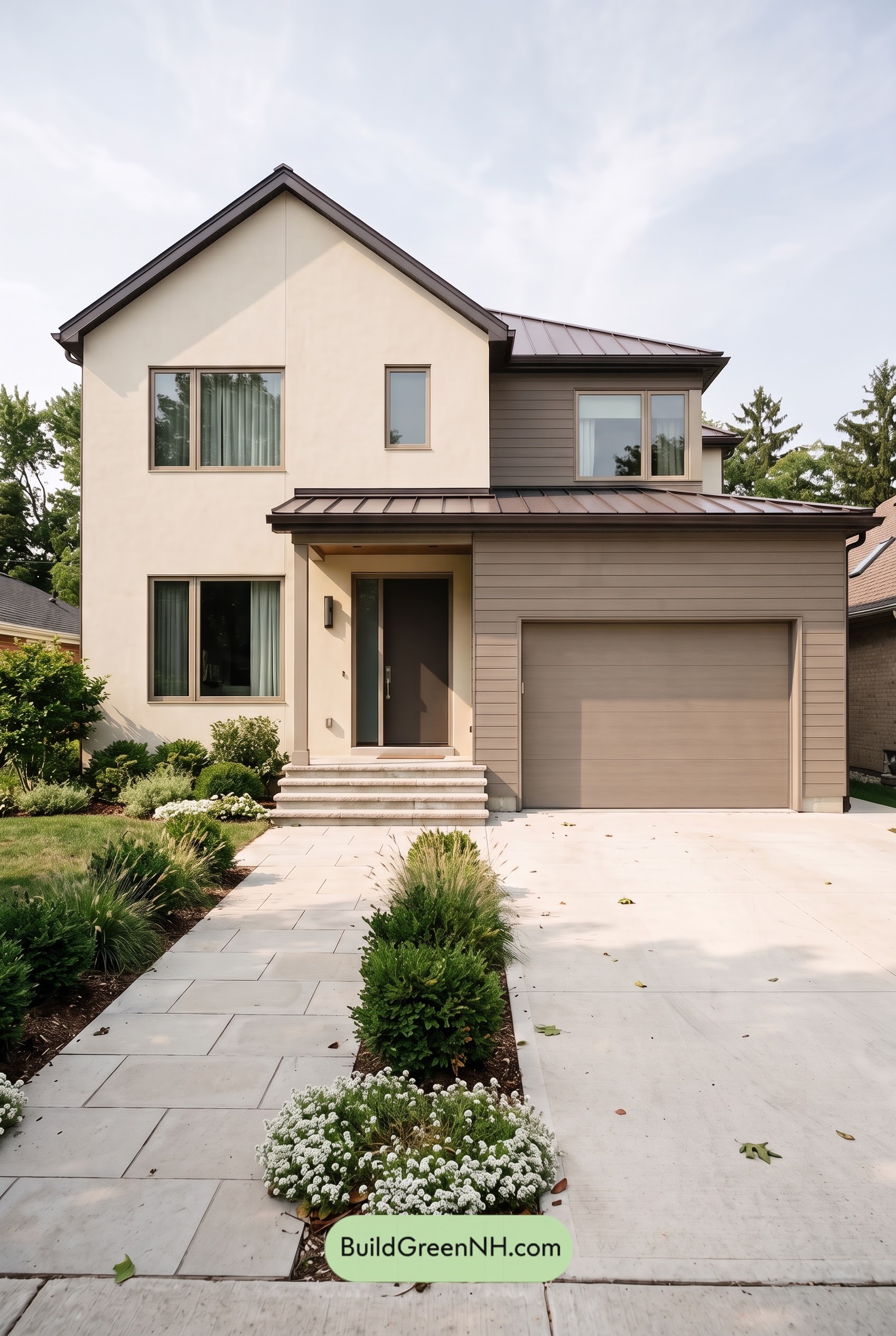

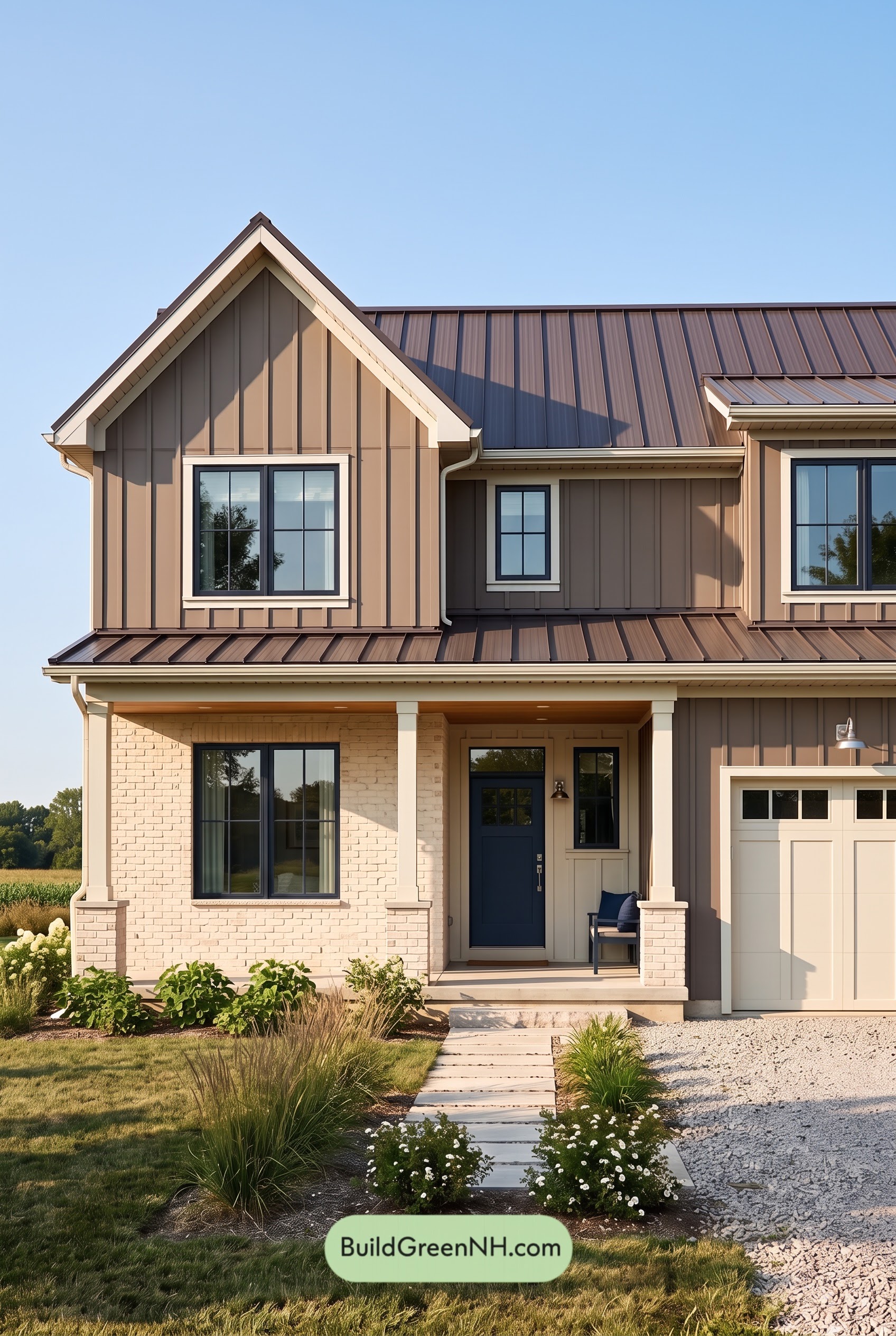
Warm beige layers and deep brown accents give this home the best of both worlds: crisp architectural definition and a genuinely welcoming feel.
A Soft Beige Foundation
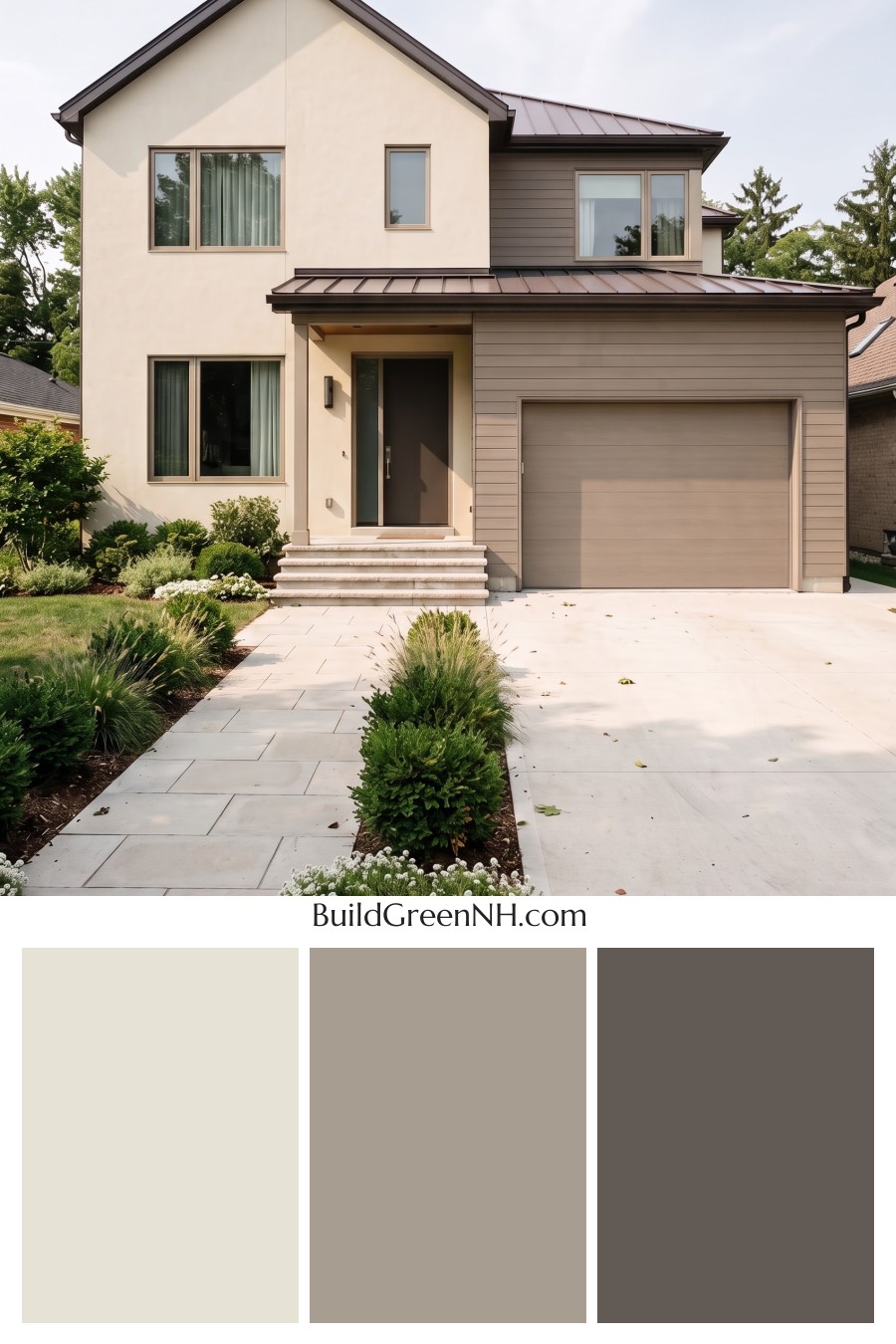
The tall, front-facing gable makes a graceful first impression in a pale, creamy beige. Carried across the smooth walls and into the recessed entry, this light shade gives the exterior an airy appearance without feeling stark. Its gentle warmth also softens the home’s strong angles.
On the right, the horizontal siding introduces a deeper, slightly gray-leaning beige. That subtle shift distinguishes the upper story and garage surround from the main wall while keeping everything comfortably within the same color family. The contrast is quiet, but it gives the facade depth.
Coordinated Windows and Garage Door
The window frames sit in a muted beige shade that bridges the pale walls and deeper siding. Rather than outlining every window with a dramatic contrast, they keep the glazing neatly integrated into the exterior.
The garage door follows the same restrained approach. Its medium beige shade closely relates to the surrounding siding, helping this large surface blend into the architecture instead of dominating the view. Horizontal detailing adds interest without introducing another color.
Deep Brown Details That Define the Shape
Dark brown trim traces the gable, eaves, and projecting roof edges, giving the lighter walls a clear outline. These deeper accents emphasize the roof geometry and connect the different sections of the house. Just enough contrast makes the structure feel crisp.
The metal roofing reads as a muted brown with gray undertones, creating a softer transition between the beige walls and darkest trim. Across the lower roof, its repeated seams add texture while the related brown shades keep the composition cohesive.
At the entrance, a deep brown front door creates a natural focal point. Framed by lighter beige walls, it feels substantial and inviting, with enough visual weight to hold its own beside the garage.
Warm, Calm, and Beautifully Balanced
What makes this scheme so effective is its controlled range of shades. Pale beige brings brightness, deeper beige adds dimension, and brown supplies definition. Nothing competes for attention.
Against the surrounding greens and pale paving, the palette feels settled and welcoming. It is a lovely example of how closely related neutrals can give a modern exterior character without sacrificing simplicity.
Next, see how this color scheme looks under different lighting simulations throughout the day.
Overcast
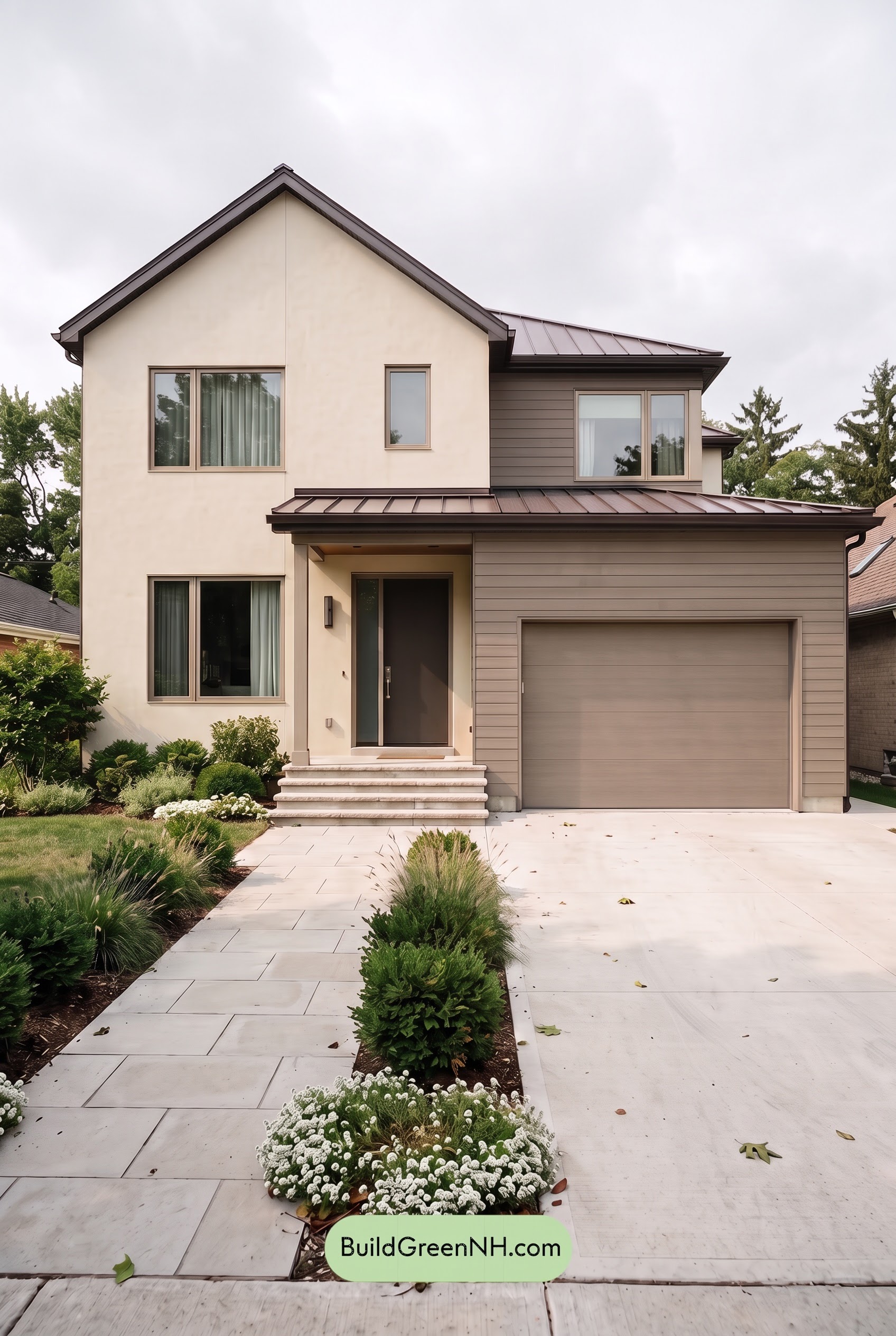
Under overcast skies, the light beige walls appear more muted and slightly cooler than in neutral daylight, with their golden warmth softened. The deeper beige siding and garage door lean toward gray-beige, making the palette feel less saturated and more closely blended. Those subtle differences between pale and deeper neutrals become the quiet focus.
Cloud-filtered light softens shadows beneath the eaves and around the entry, reducing dramatic light-to-dark contrast. The deep brown trim and front door still anchor the lighter shades, but their warm undertones appear more restrained. Compared with neutral daylight, the overall mood feels calmer, softer, and more understated.
Golden Hour
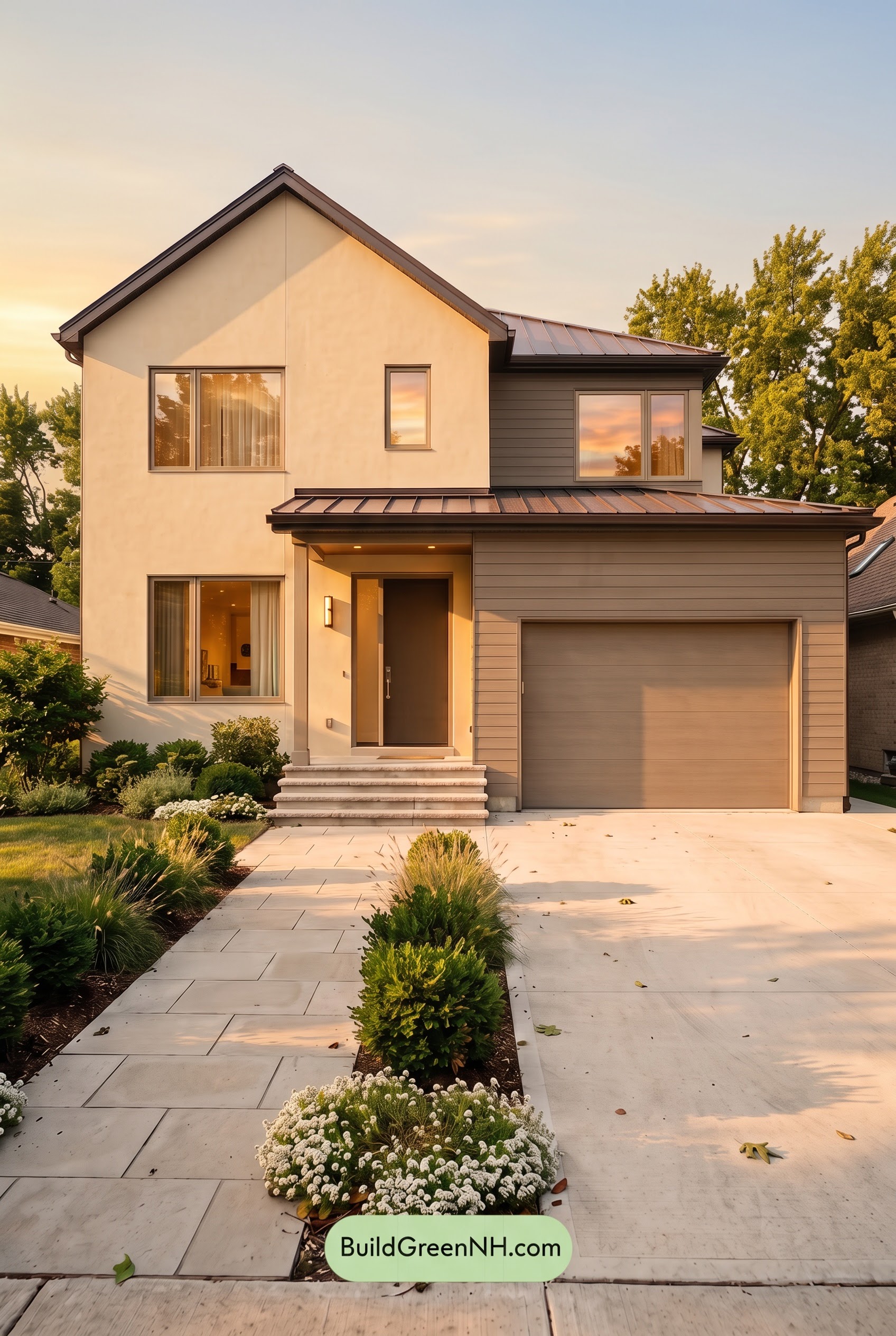
Golden Hour gives the light warm neutrals a richer, more saturated glow than they would show in neutral daylight. Yellow and soft orange undertones become more noticeable across the sunlit facade, while shaded areas look cooler and more muted. That shift adds depth to shades that would otherwise appear quieter and more even.
The deeper brown shades look richer beside those glowing surfaces, creating stronger contrast around the roofline and recessed entrance. Long, angled shadows emphasize the house’s shapes, while the shared warmth keeps the palette feeling cohesive. Compared with neutral daylight’s more straightforward appearance, the overall mood becomes softer, cozier, and more inviting.
Shade
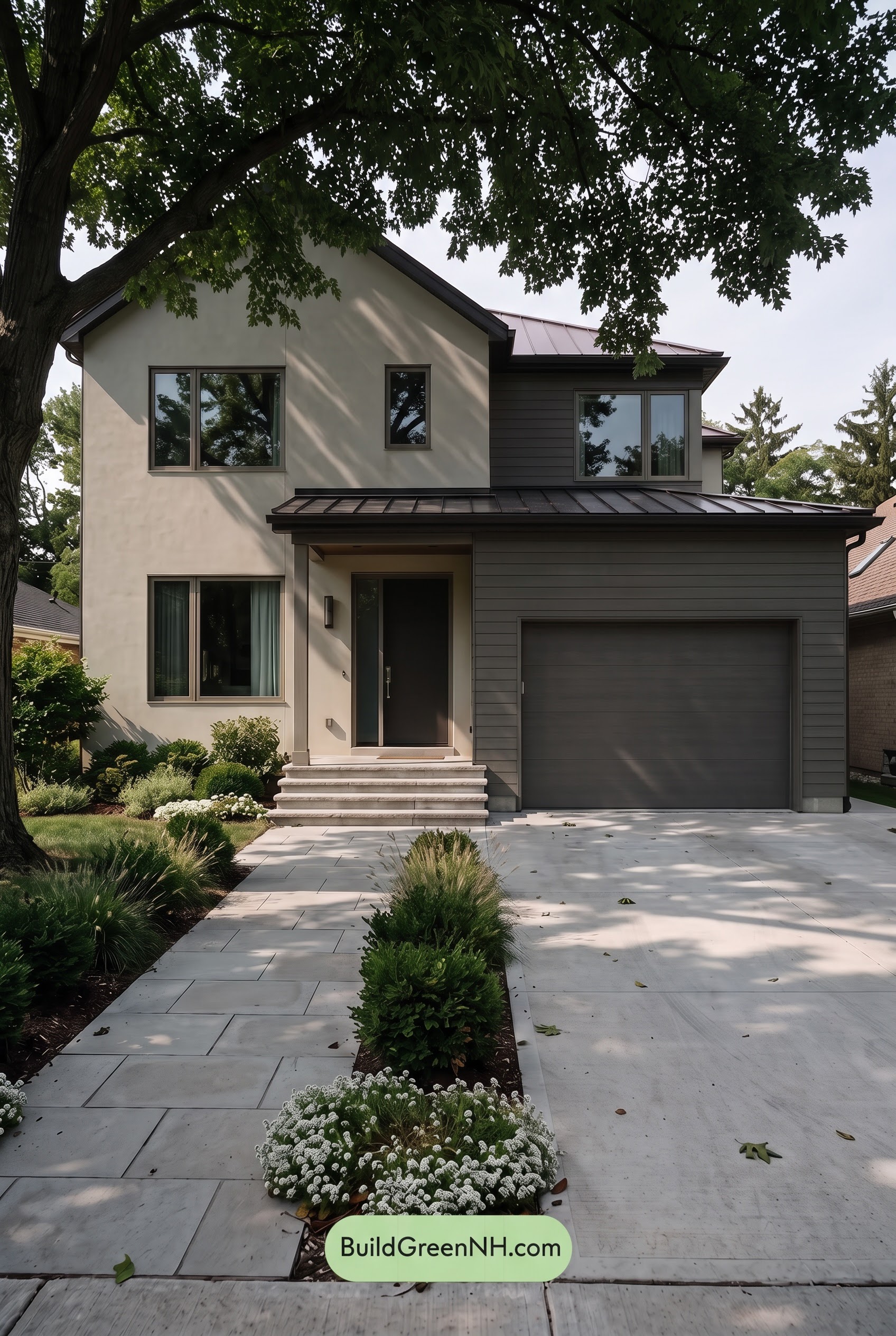
Under the tree’s shade, the light beige shades look cooler and more muted than they would in neutral daylight, with their warmth softened and gray undertones more noticeable. The deeper beige shades appear darker and less saturated, while scattered brighter patches reveal a gentler, warmer side of the palette.
The deep brown shades lose some of their warm richness in shadow, lending the roofline and entrance a quieter presence. Contrast remains strong against the light beige, but darker shades blend together beneath the overhangs. Combined with the leafy shadows across the walls, the effect feels calm and sheltered rather than bright and crisp.
Nighttime
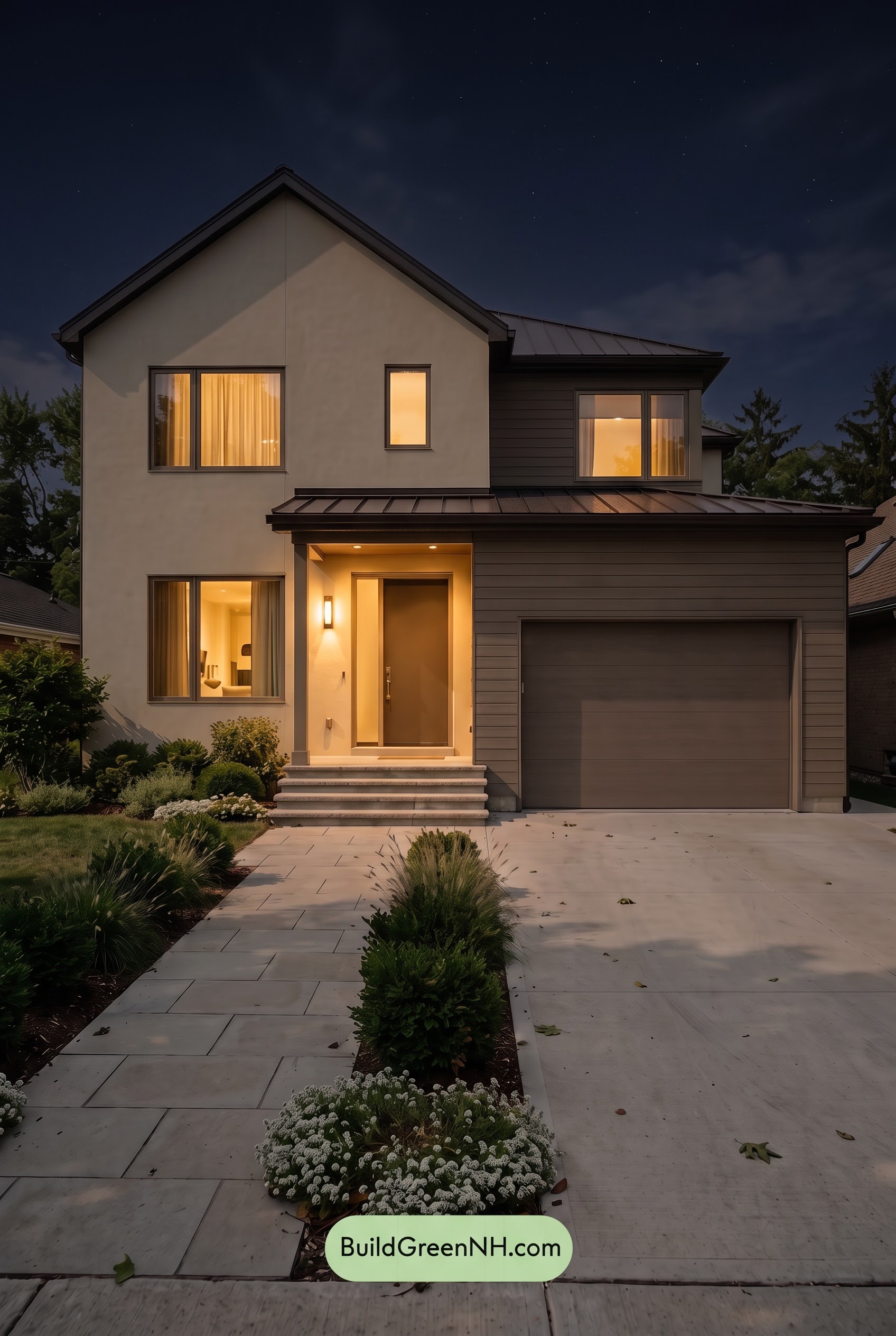
At night, the pale beige shades look more muted and less evenly saturated than they would in neutral daylight. Warm entry lighting draws out golden undertones, giving nearby surfaces a richer, softer glow, while unlit areas read as cooler, grayer neutrals. This creates a gentle shift in warmth across the facade.
Deep shadows beneath the rooflines and around the garage make the darker neutral shades feel heavier, while the brown shades near the illuminated doorway appear warmer and fuller. Subtle shade differences recede in darkness, but contrast between the glowing entrance and shaded walls grows stronger—turning a calm daylight palette into a cozy, quietly dramatic nighttime scene.
Pin these for later:
Want More?
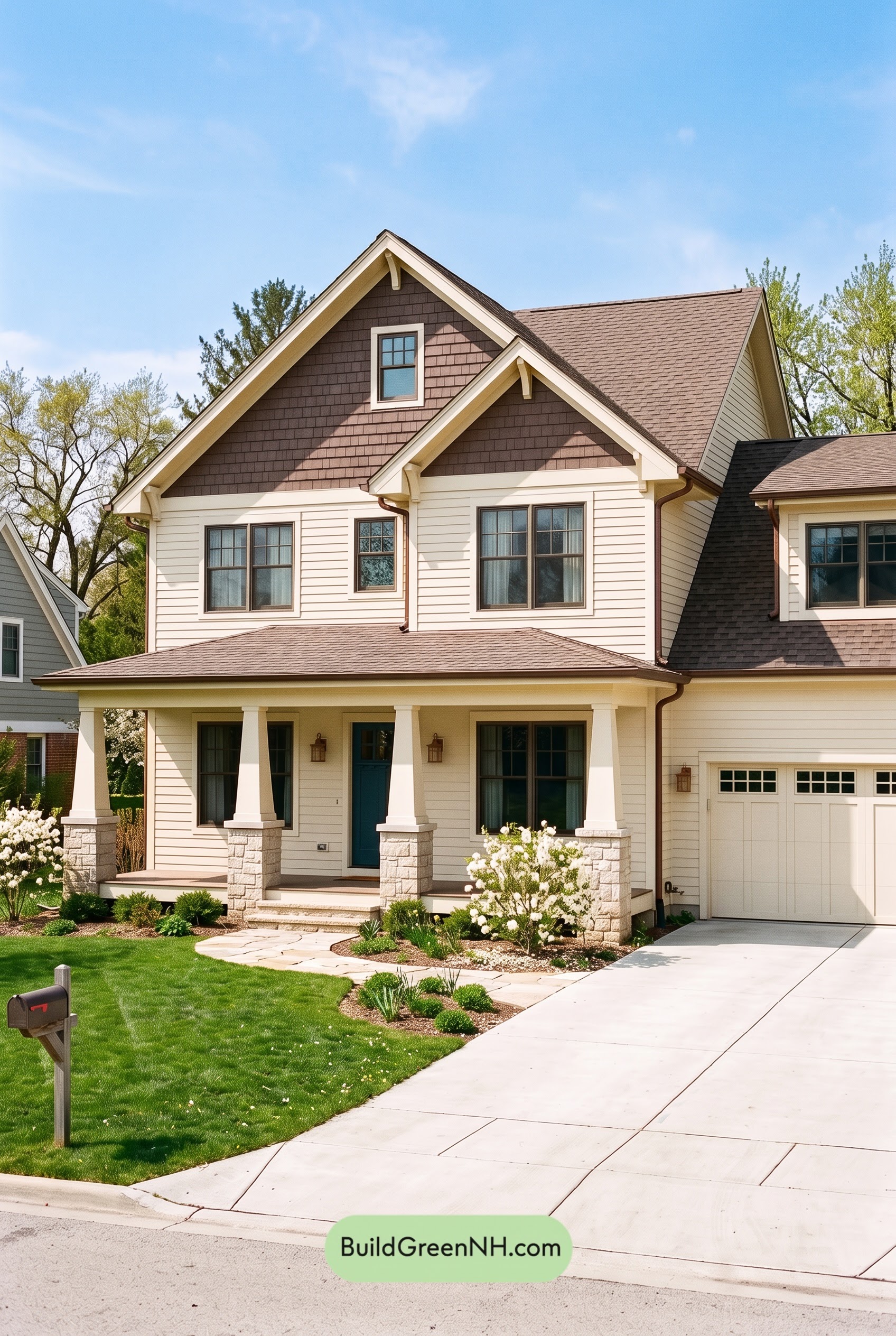 Cream Exterior Paint Color Schemes With a Brown Roof: Cream and Teal Welcome
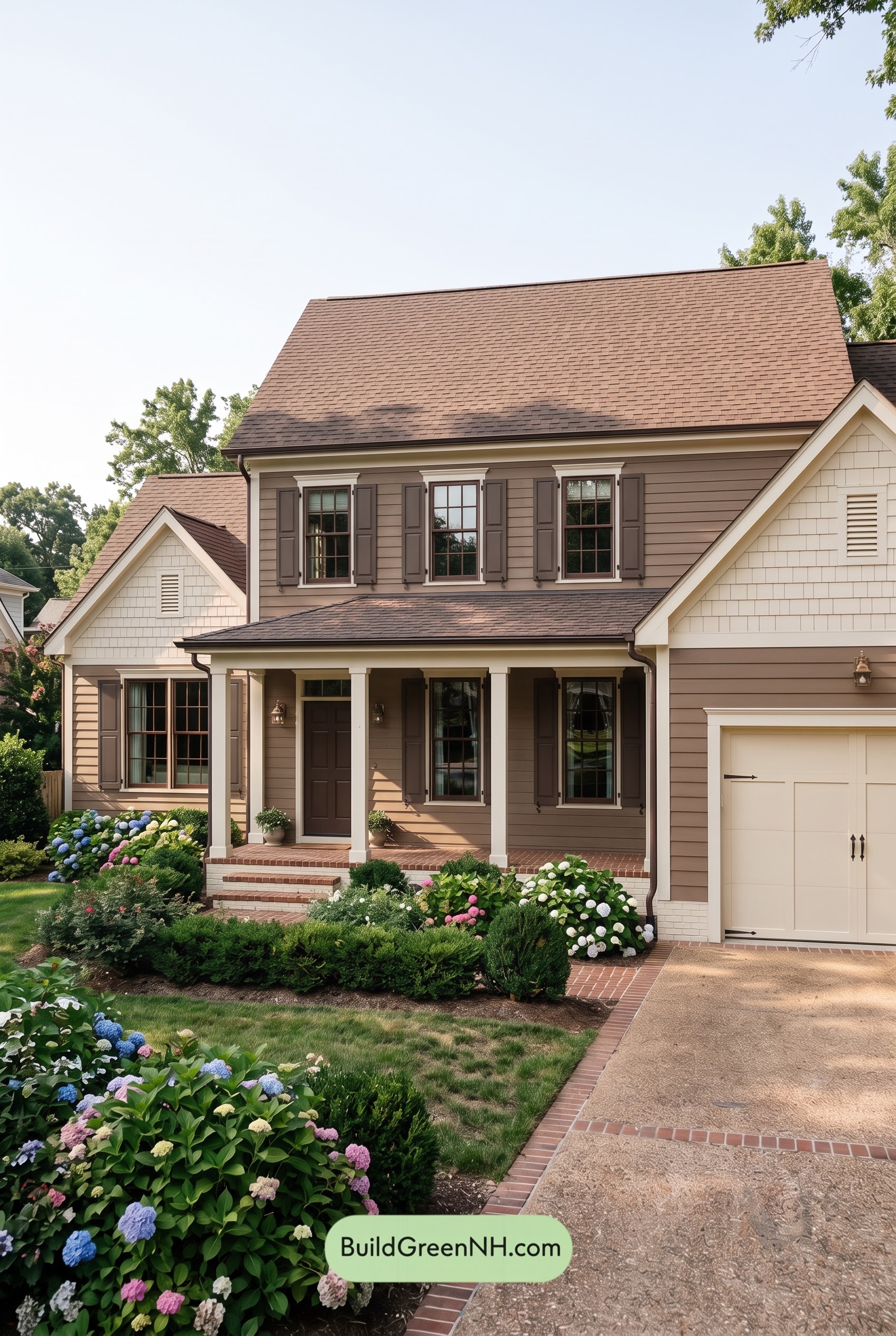 Cream Exterior Paint Color Schemes With a Brown Roof: Cocoa and Burgundy Embrace
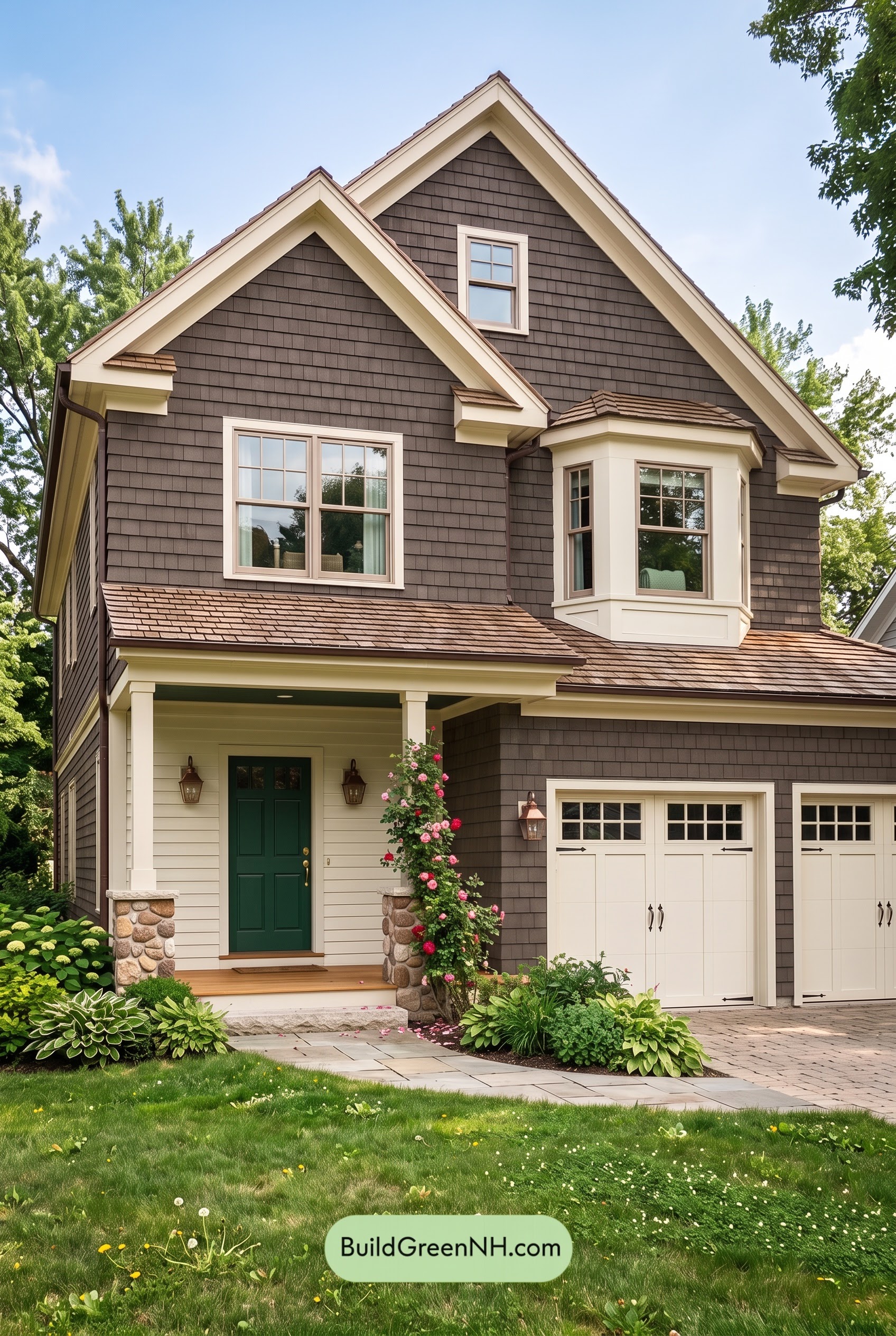 Cream Exterior Paint Color Schemes With a Brown Roof: Cocoa and Green Grace
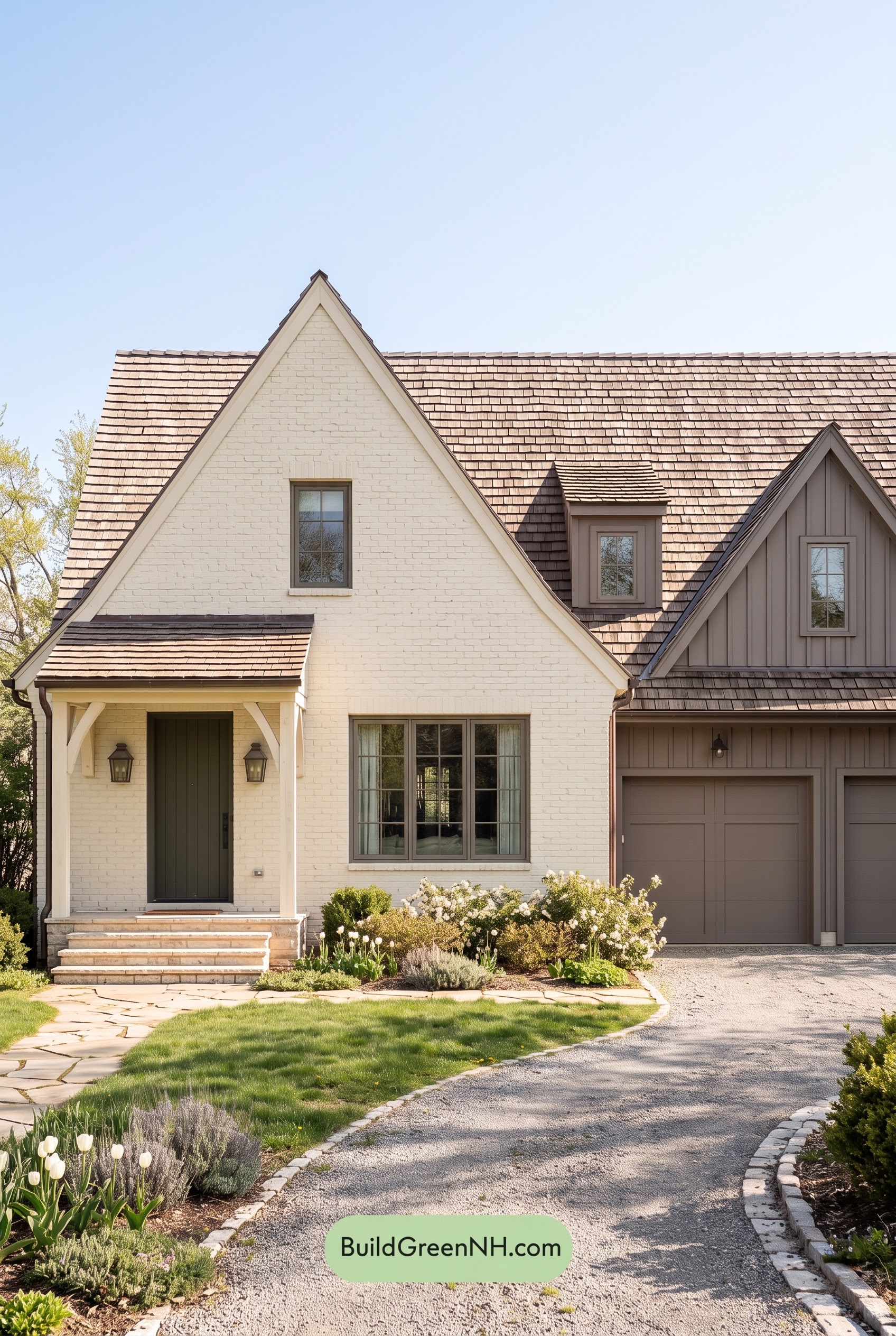 Cream Exterior Paint Color Schemes With a Brown Roof: Cream and Sage Serenity
 Cream Exterior Paint Color Schemes With a Brown Roof: Cocoa and Navy Assurance
Table of Contents