Last updated on
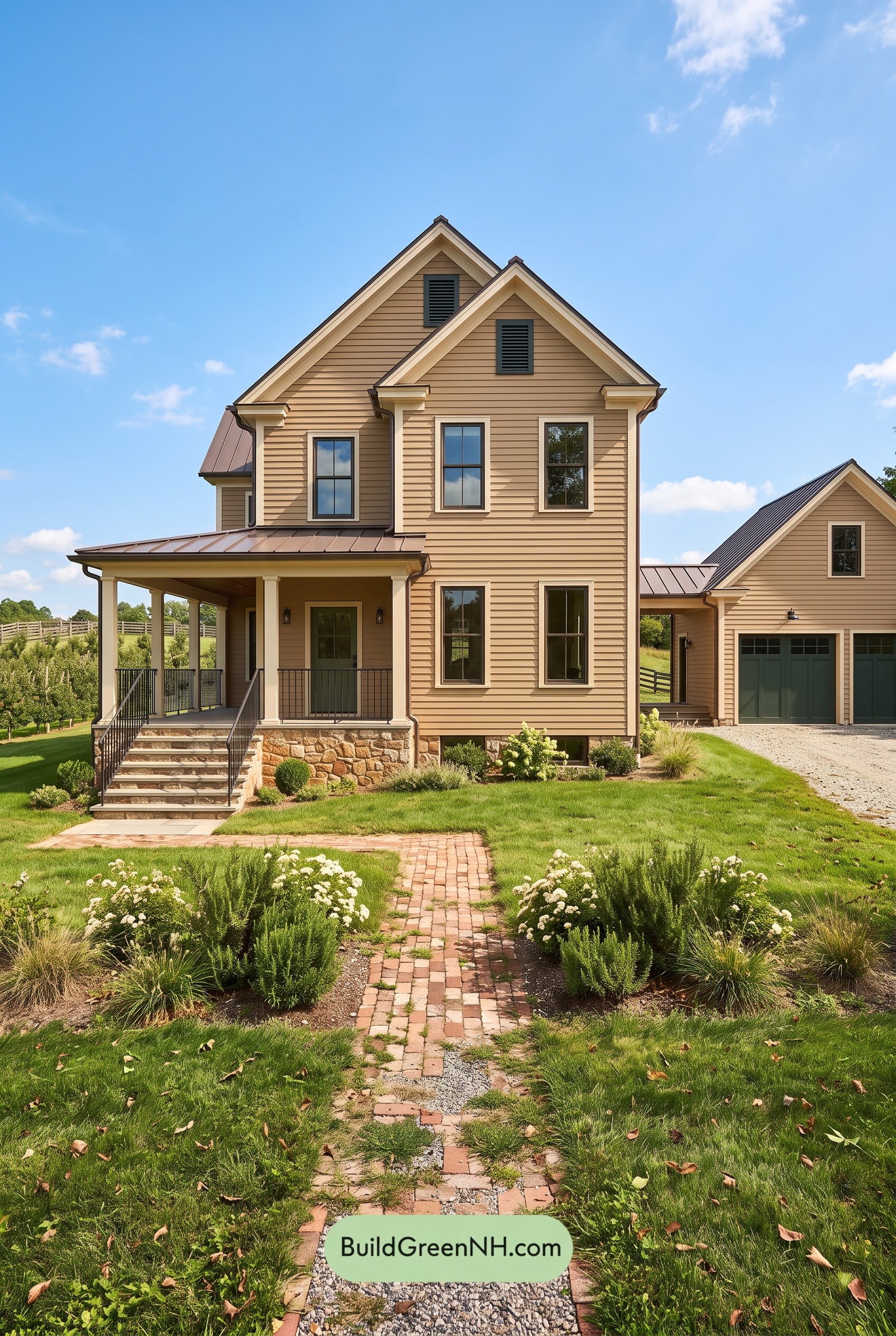

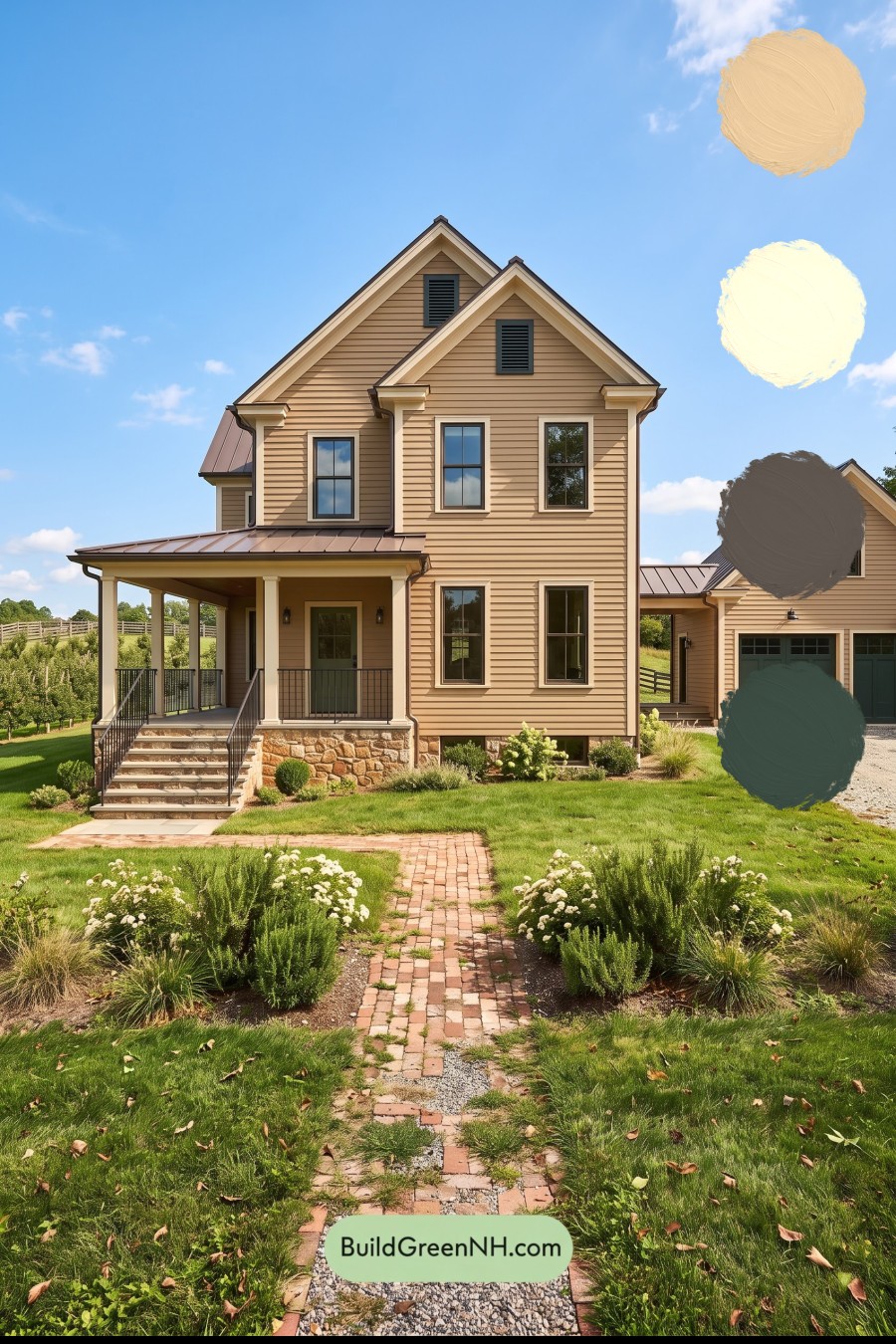
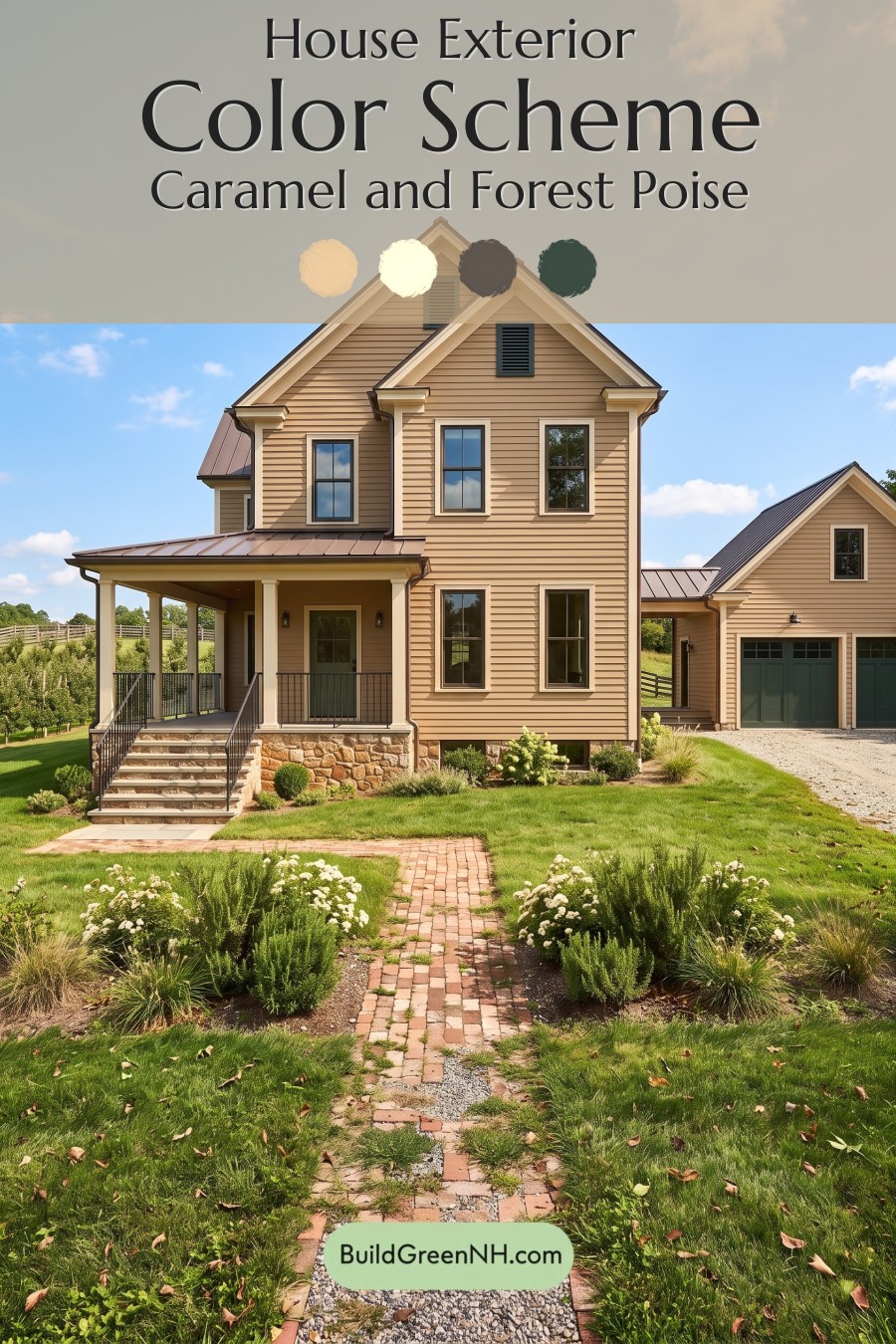
Warm beige siding, softly contrasting trim, and deep green doors give this home its inviting character, balancing countryside charm with beautifully defined architectural details.
A Warm Beige Backdrop
The horizontal siding wears a warm, medium-light beige that brings a sunny softness to the exterior. It feels substantial without looking heavy, allowing the tall facade and overlapping gables to remain welcoming rather than imposing.
Repeating this shade across the main house and garage creates continuity. Even with different roof heights and a connecting passage, the buildings read as parts of one thoughtfully coordinated design.
Lighter Trim That Highlights the Architecture
A pale, creamy beige outlines the windows, traces the gables, and brightens the porch columns. Rather than introducing a sharp contrast, this lighter shade stays close to the siding’s warm undertones. The result is gentle definition with plenty of depth.
That approach works especially well around the roof peaks, where layered trim emphasizes the geometry. Below, the light columns give the shaded porch a brighter, more open appearance.
Deep Green Doors with Natural Appeal
The front door and garage doors introduce a rich, muted green that gives the neutral exterior a distinctive focal point. Beneath the porch, the entry takes on a shaded, slightly olive-green appearance; across the garage, the green reads deeper and cooler.
These darker surfaces provide a welcome pause among the lighter walls. Repeating the green across both entrances also connects the house and garage without making every detail match. Small, deep green gable vents carry that accent upward, balancing its presence across the facade.
Brown Details Add Definition
Deep brown window frames sit neatly inside the pale beige surrounds, creating a layered effect that makes the windows stand out. The slim, dark brown porch railings offer similar definition while preserving views through the porch.
Overhead, the muted brown metal roofing echoes these darker details. Its subtle gray undertones temper the warmth of the siding, while the darker roof edges give the gables a crisp outline.
A Grounded, Welcoming Finish
The foundation’s varied beige and brown stone reinforces the warmth above it, helping the house feel settled into its surroundings. Nearby greenery draws out the doors’ muted green shades without competing with them.
What makes this palette so appealing is its restraint: warm neutrals cover the broad surfaces, lighter shades reveal the architecture, and deeper greens and browns supply just enough contrast. It feels polished, comfortable, and perfectly at ease in the landscape.
Next, see how this color scheme looks under different lighting simulations throughout the day.
Overcast
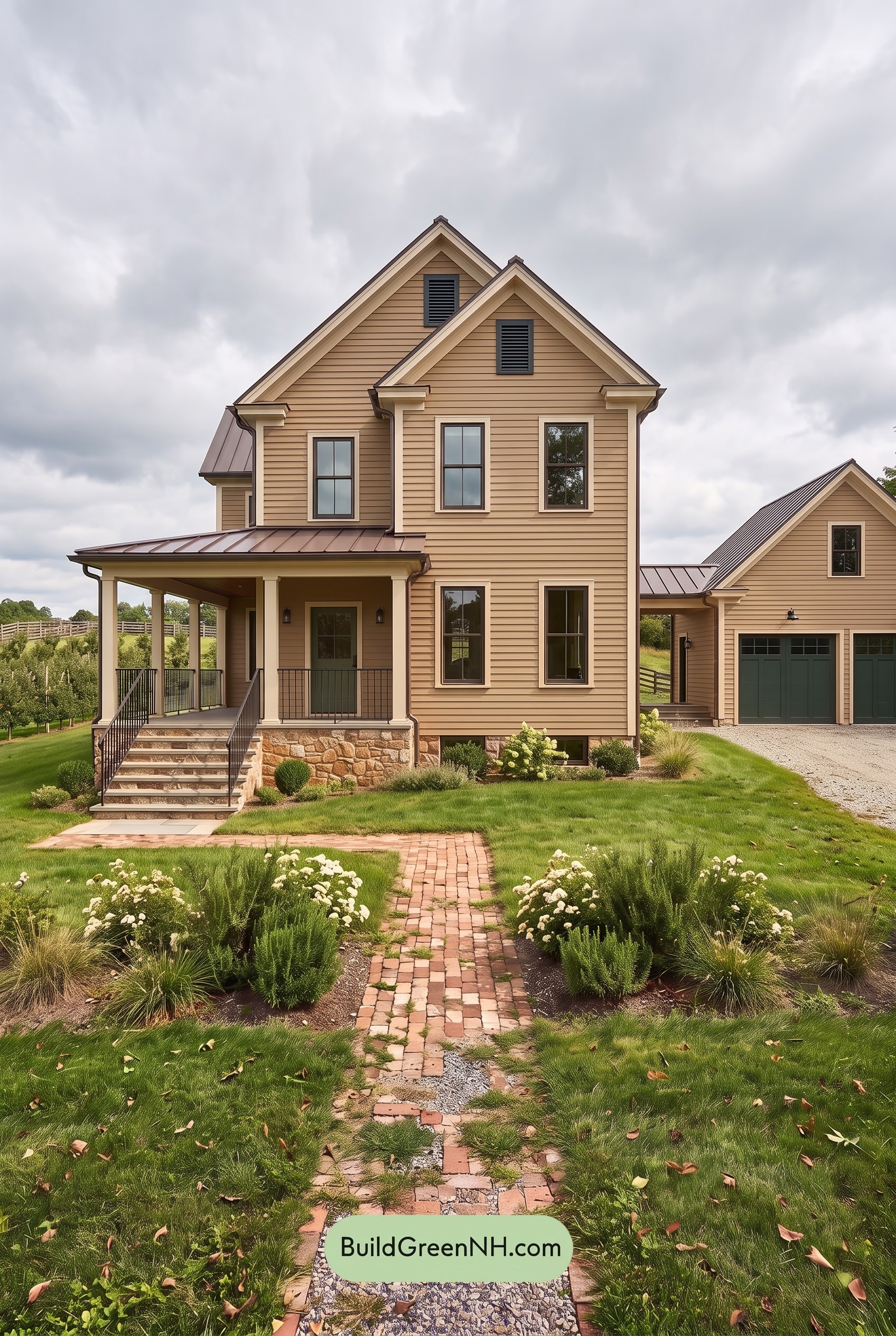
Under overcast light, the warm beige shades look softer and slightly cooler than they would in neutral daylight, with their golden undertones less pronounced. Saturation feels gently dialed back, bringing the lighter and deeper neutrals closer together for a quieter, more unified appearance.
The deep greens appear more subdued and slightly grayer, while the dark browns retain their depth without as much warm richness. Diffused light softens shadows beneath the porch and along the siding, easing the contrast between bright and shaded areas. Dark accents still stand out against the pale neutrals, but the overall mood feels calm, grounded, and understated.
Golden Hour
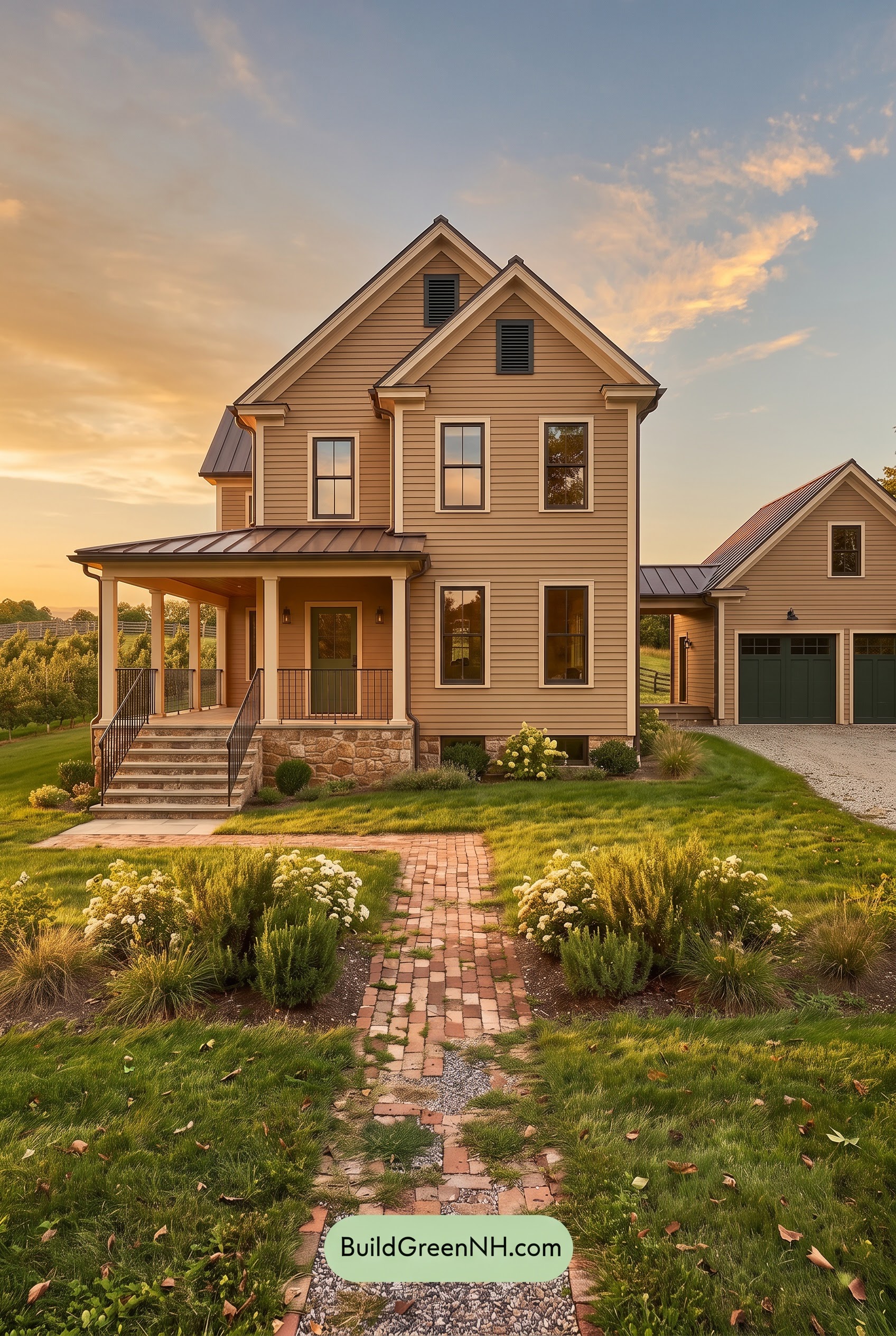
Golden Hour turns the beige shades warmer and richer than they appear in neutral daylight, drawing out soft yellow undertones across the siding. The lighter beige trim and columns take on a gentle glow, while shadows beneath the porch and gables deepen toward muted brown. That mix of luminous edges and shaded recesses gives the exterior more depth without losing its softness.
The deep greens look more subdued in shadow, with their saturation less apparent than in neutral daylight. Dark brown window frames and railings create stronger contrast against the glowing neutrals. Together, these shifts make the house feel less crisp and more relaxed, warm, and welcoming.
Shade
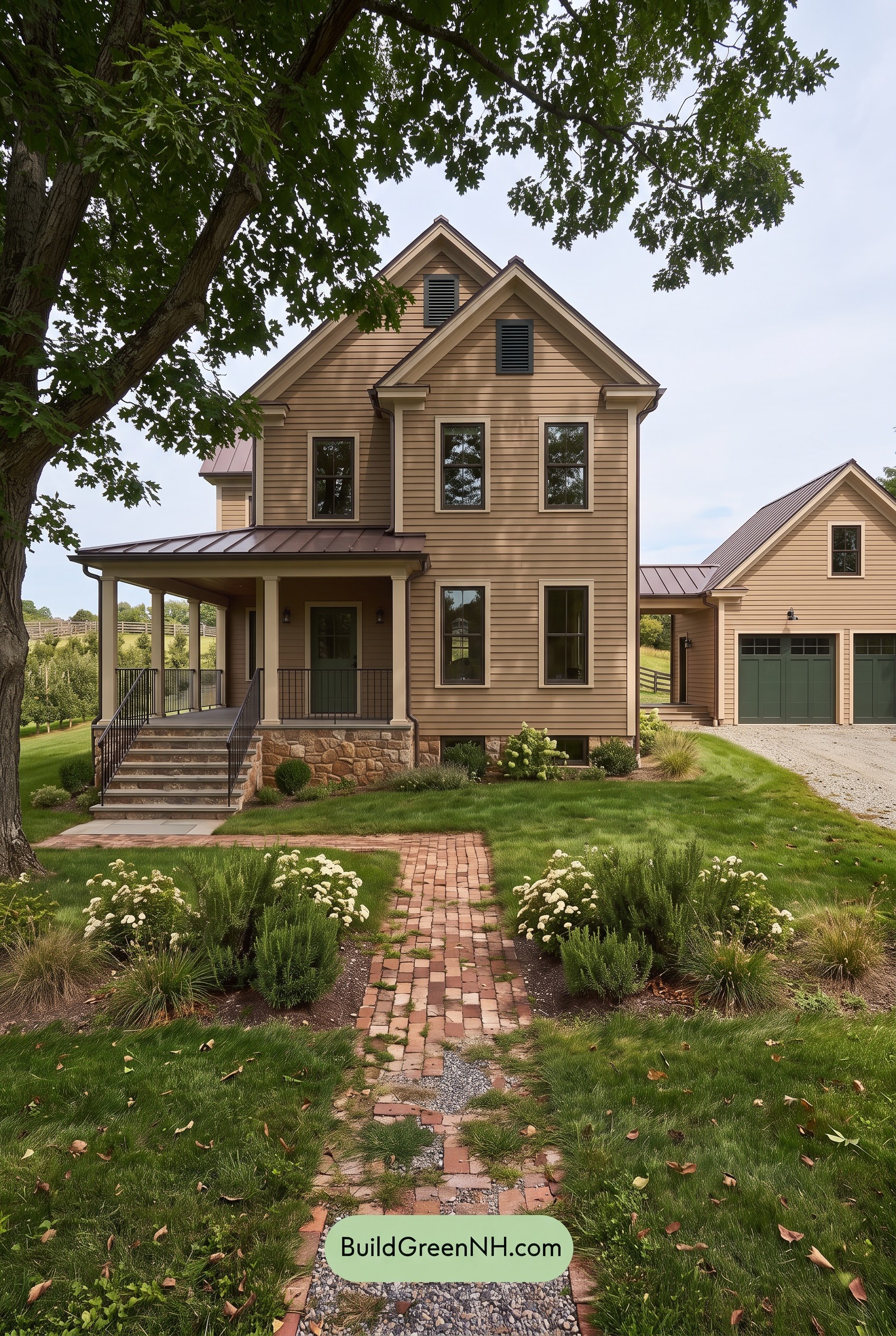
In shade, the beige siding looks deeper and less saturated than it would in neutral daylight, with its golden warmth settling into a softer, slightly grayer cast. The lighter beige trim and columns feel creamier in brighter areas but more subdued beneath the porch roof. Leaf shadows add gentle variations across the siding, giving the broad walls a quieter, more textured appearance.
The muted greens deepen in shade, appearing less vivid and more reserved, especially at the recessed entrance. Dark brown details lose some of their warmth and stand out against the pale beige surrounds. While nearby neutral shades blend more softly, these light-to-dark contrasts remain distinct, shifting the house toward a calm, sheltered mood.
Nighttime
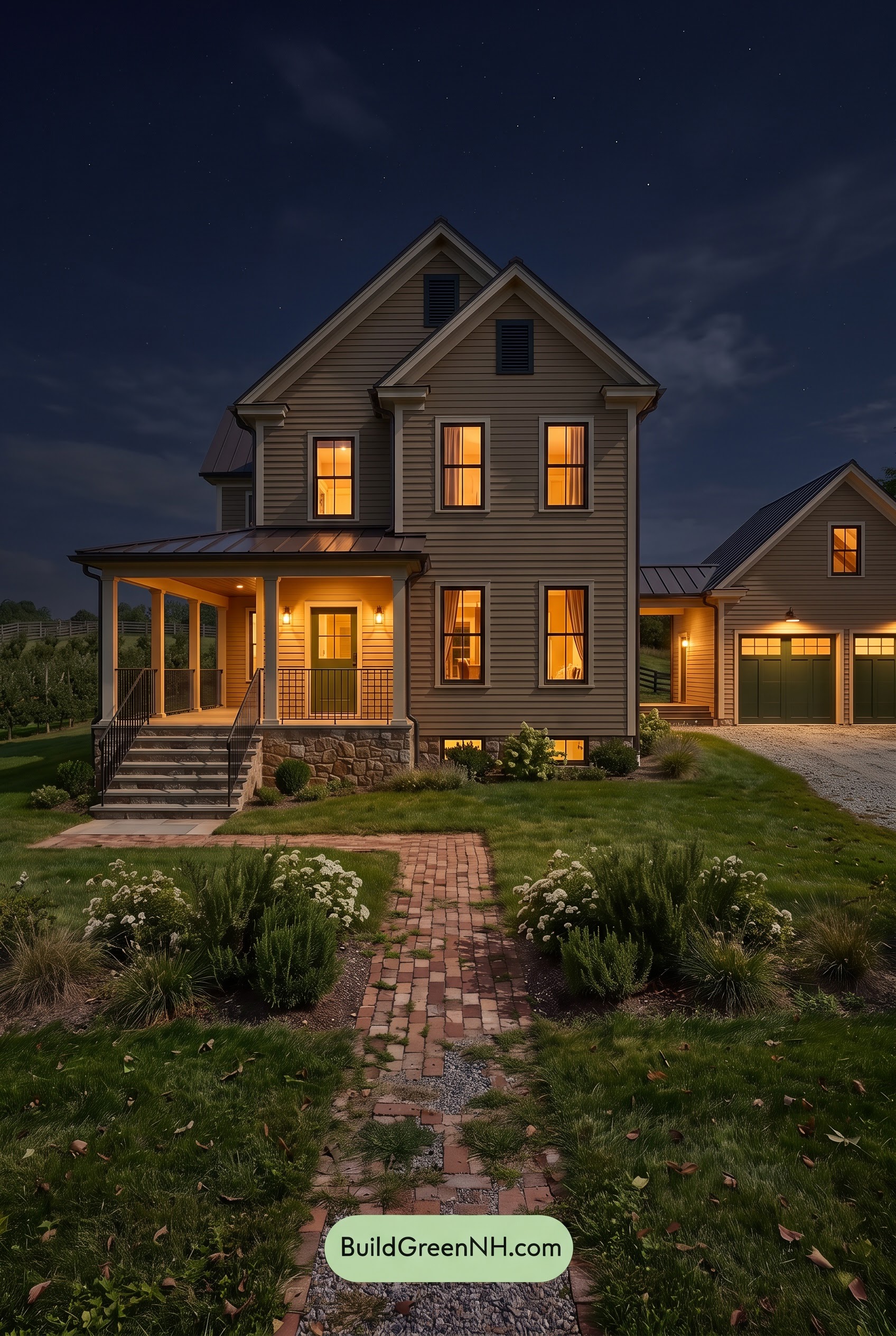
At night, the beige shades look deeper and more muted than they would in neutral daylight. Warm porch lighting brings out yellow undertones, making the entry feel softer and more welcoming, while unlit walls take on cooler, grayer shades. Shadows beneath the eaves and along the siding strengthen the sense of depth, and the lighter beige trim stands out most where the light catches it.
The green shades on the doors become darker and less visibly saturated, with warmer, yellow-green hints near the fixtures. Brown window frames and railings deepen toward near-black in shadow, creating stronger contrast beside illuminated surfaces. Compared with daylight’s more even color balance, this mix of warm highlights and subdued shades gives the house a cozy, quietly dramatic mood.
Pin these for later:
Want More?
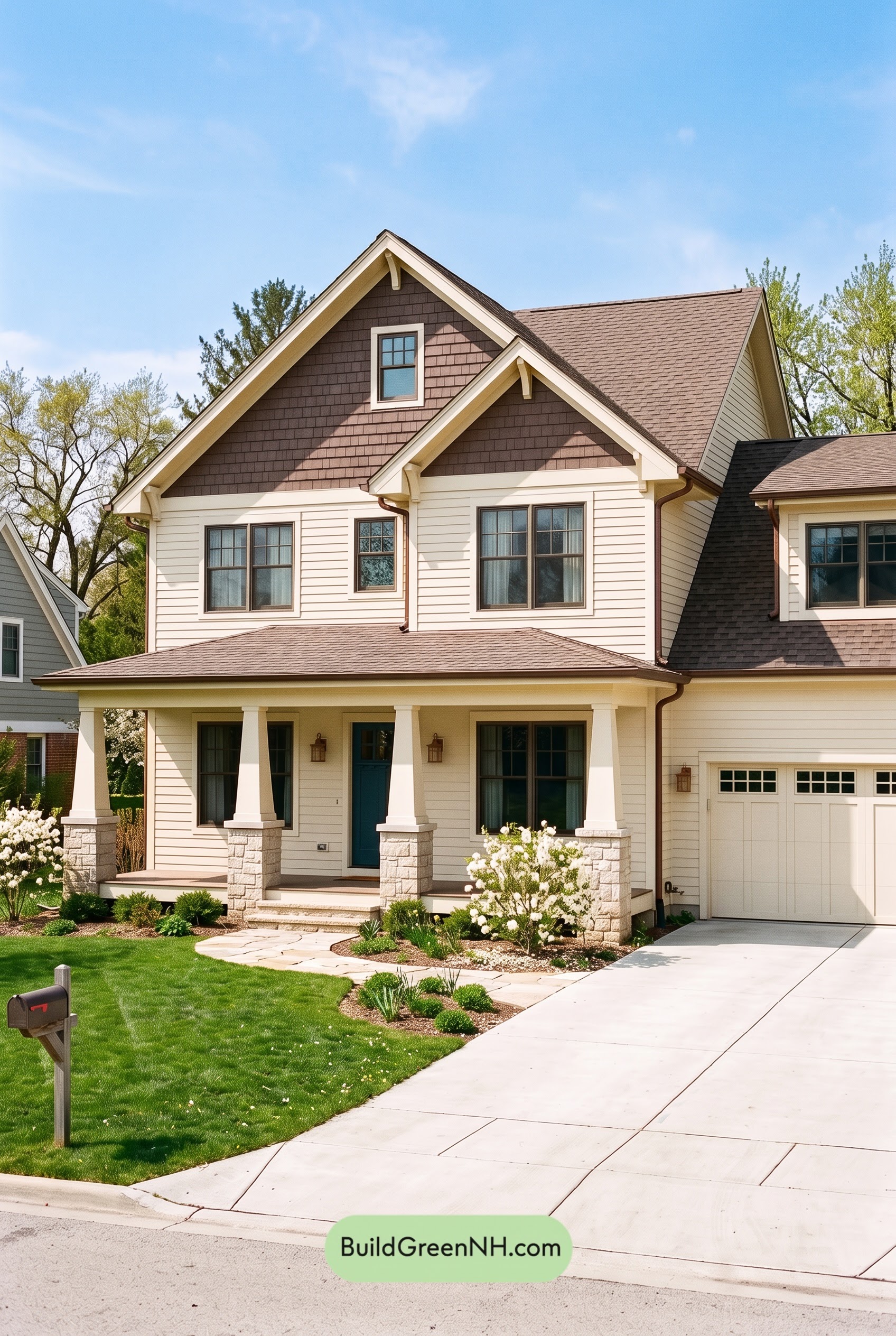 Cream Exterior Paint Color Schemes With a Brown Roof: Cream and Teal Welcome
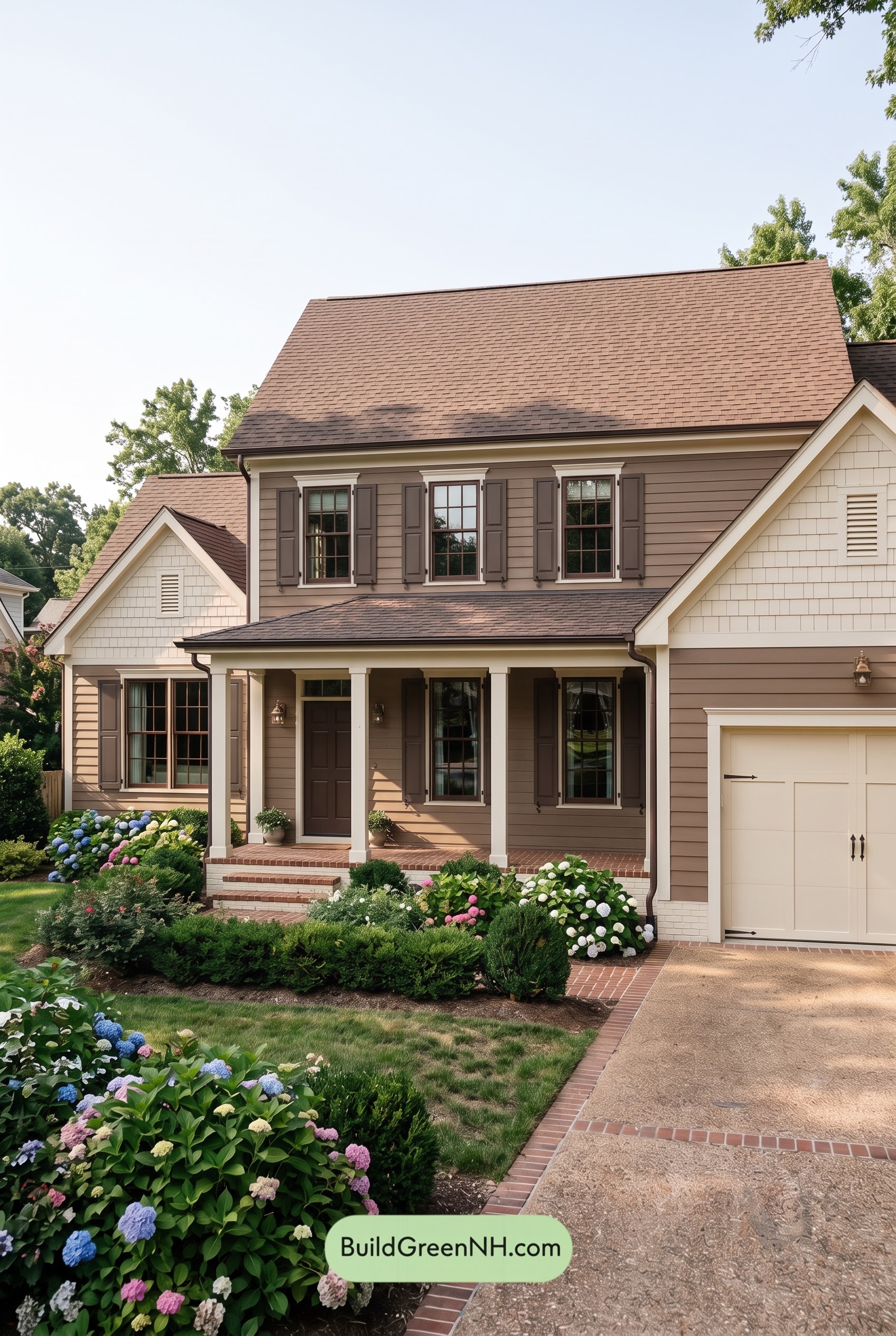 Cream Exterior Paint Color Schemes With a Brown Roof: Cocoa and Burgundy Embrace
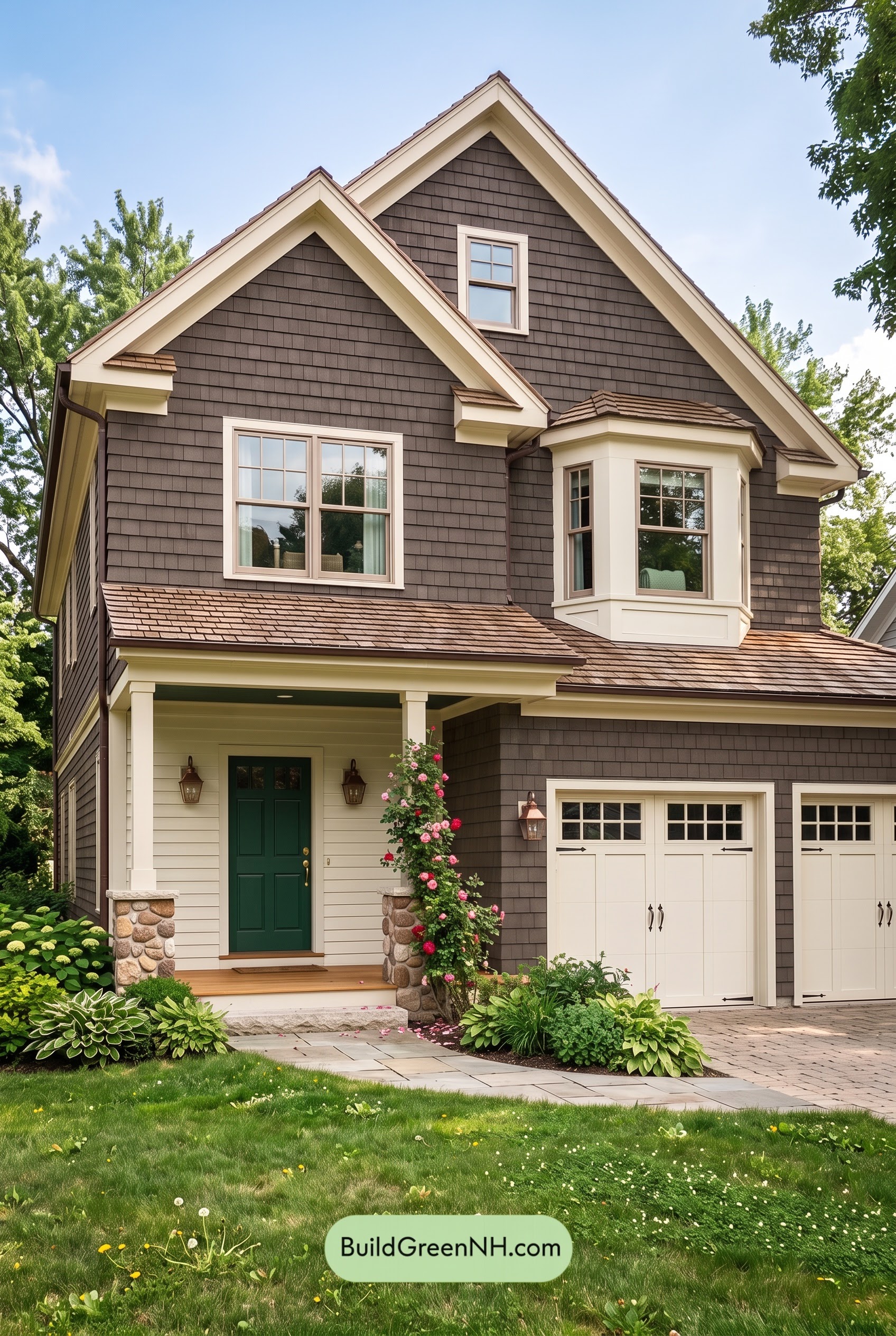 Cream Exterior Paint Color Schemes With a Brown Roof: Cocoa and Green Grace
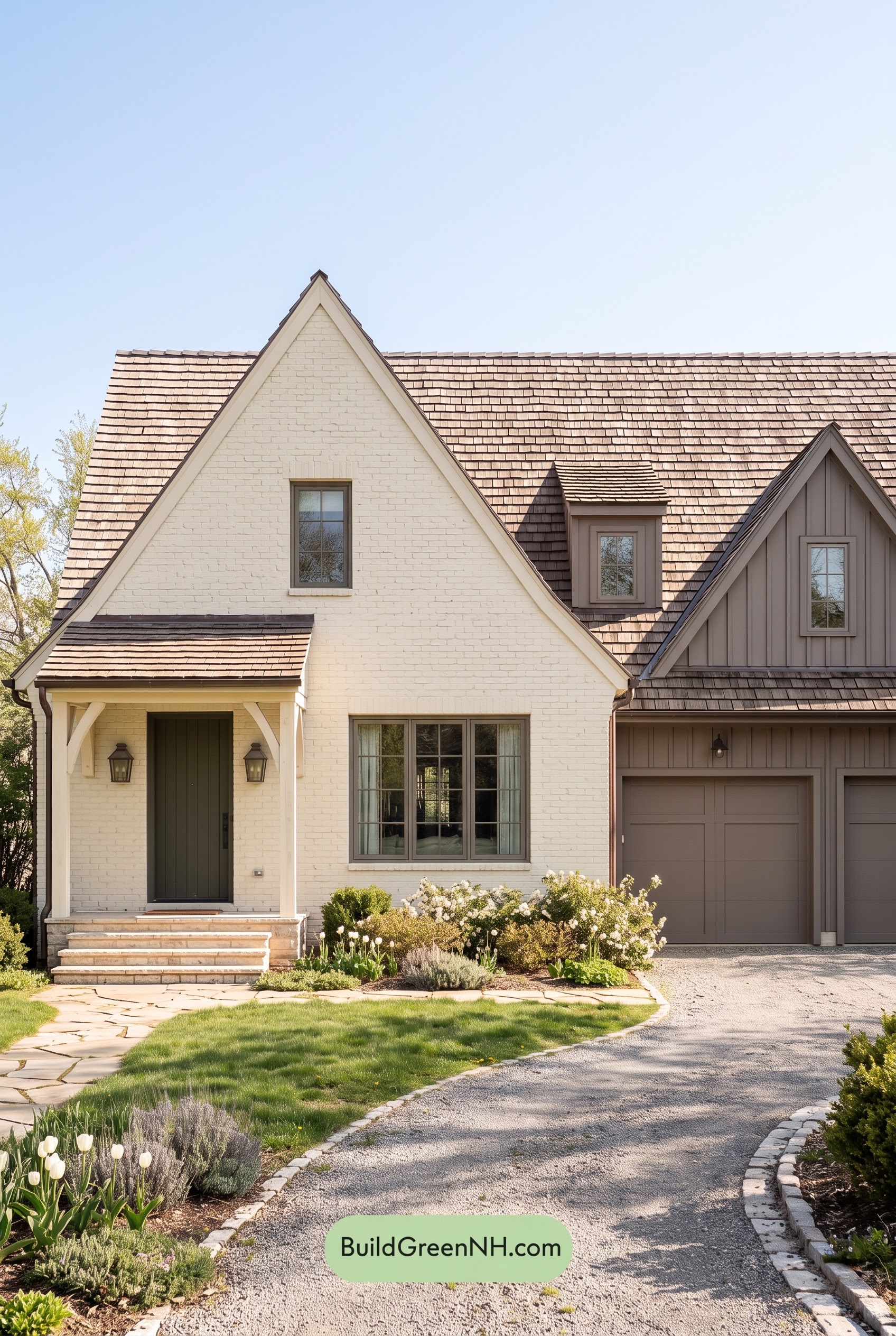 Cream Exterior Paint Color Schemes With a Brown Roof: Cream and Sage Serenity
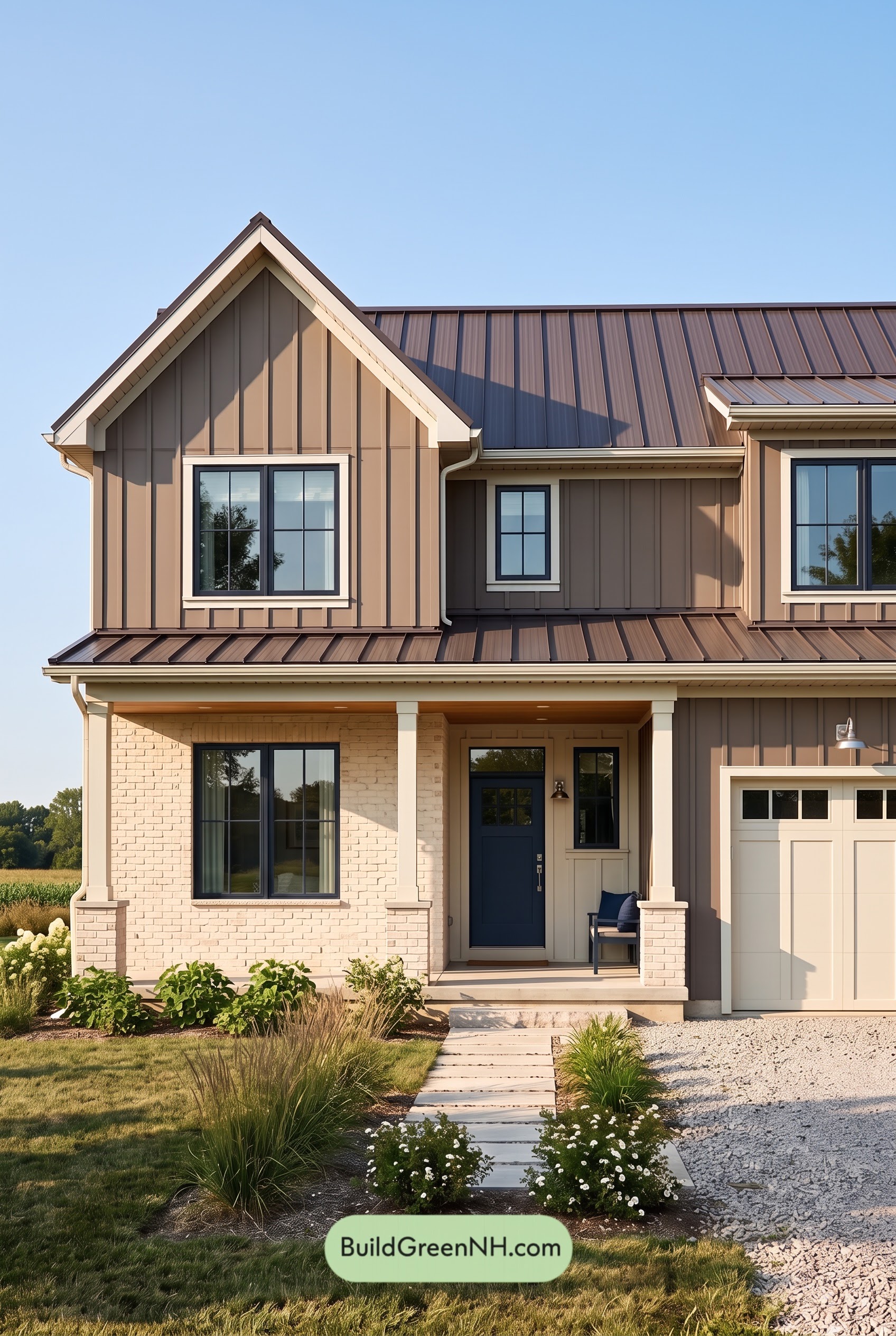 Cream Exterior Paint Color Schemes With a Brown Roof: Cocoa and Navy Assurance
Table of Contents