Last updated on
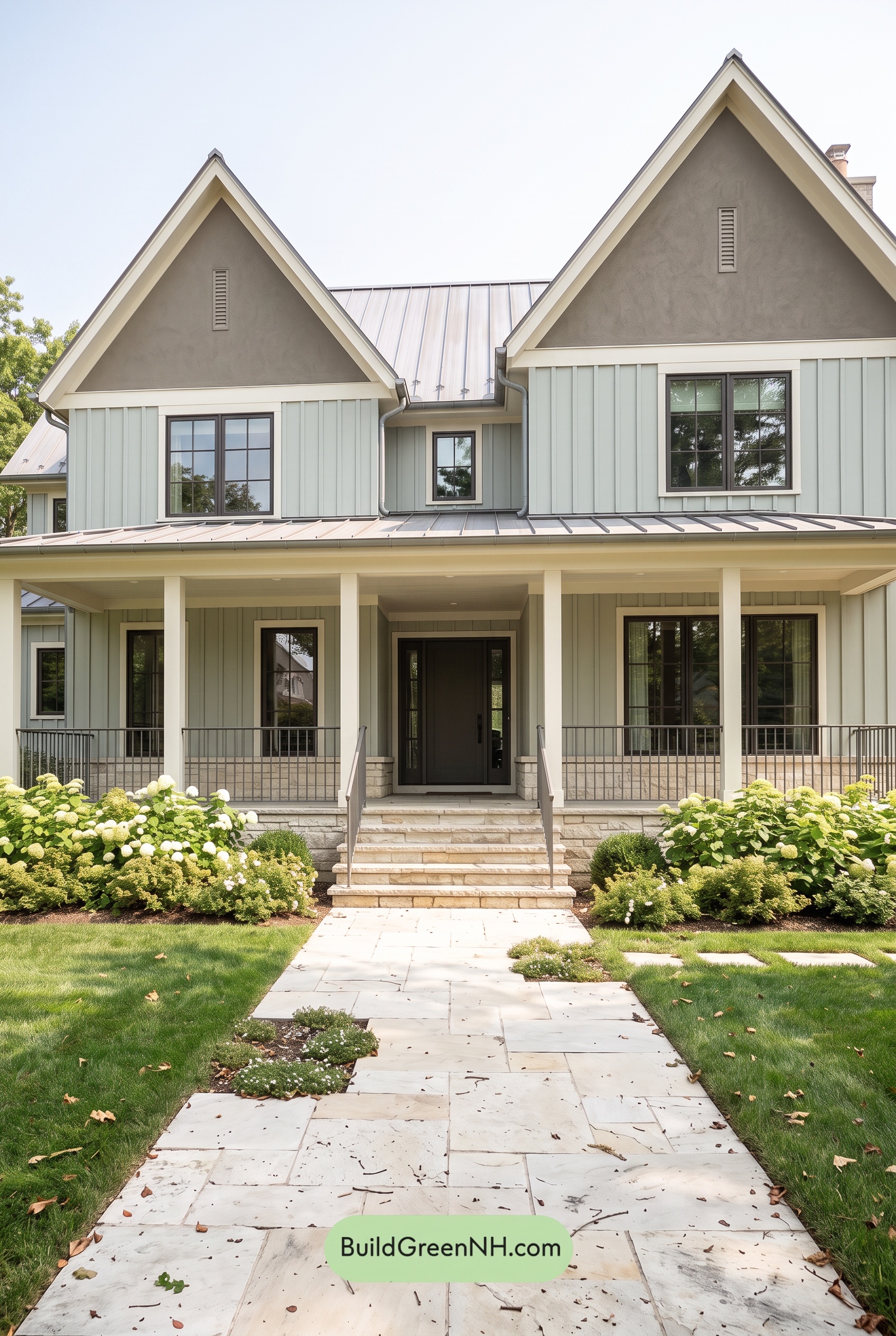

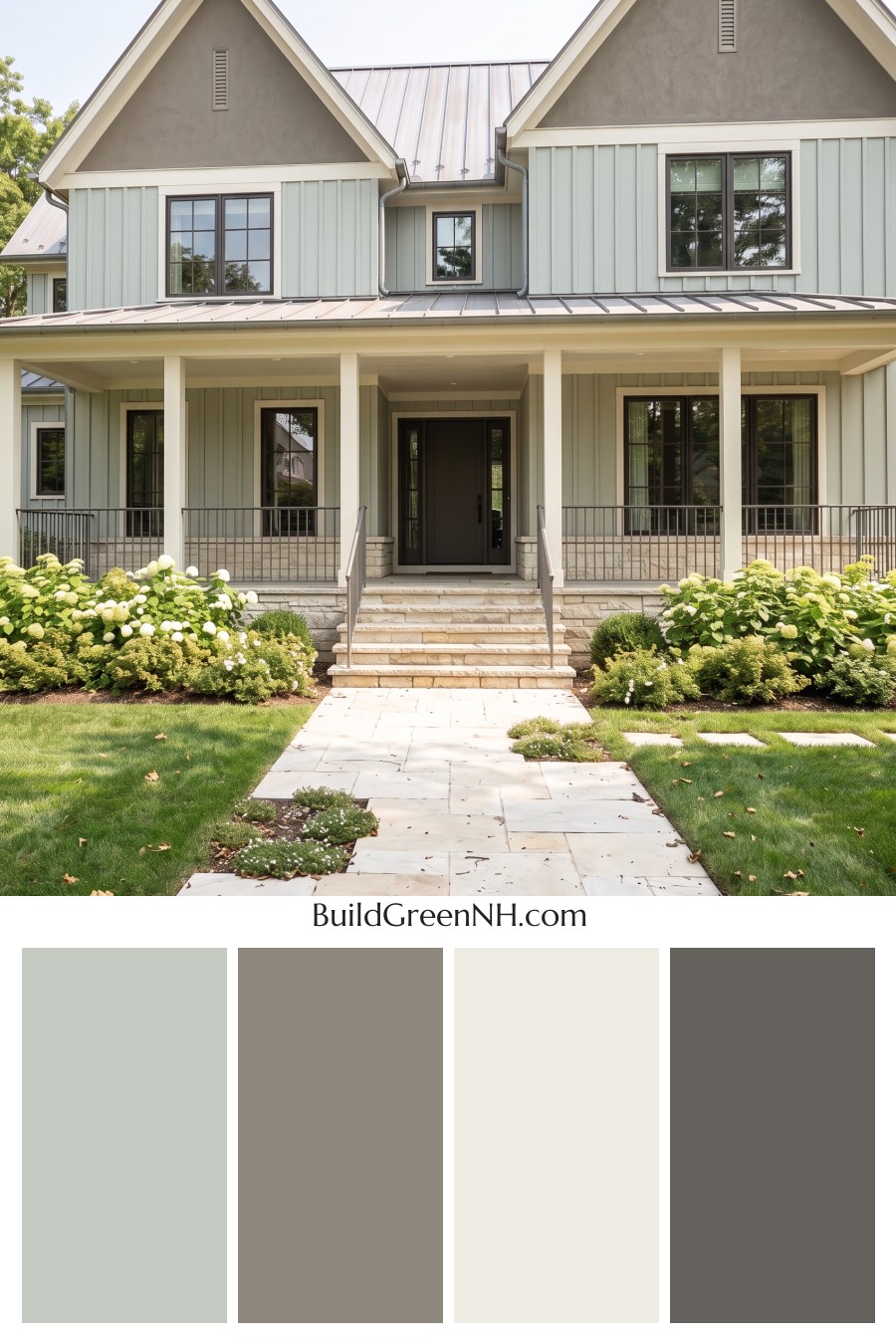
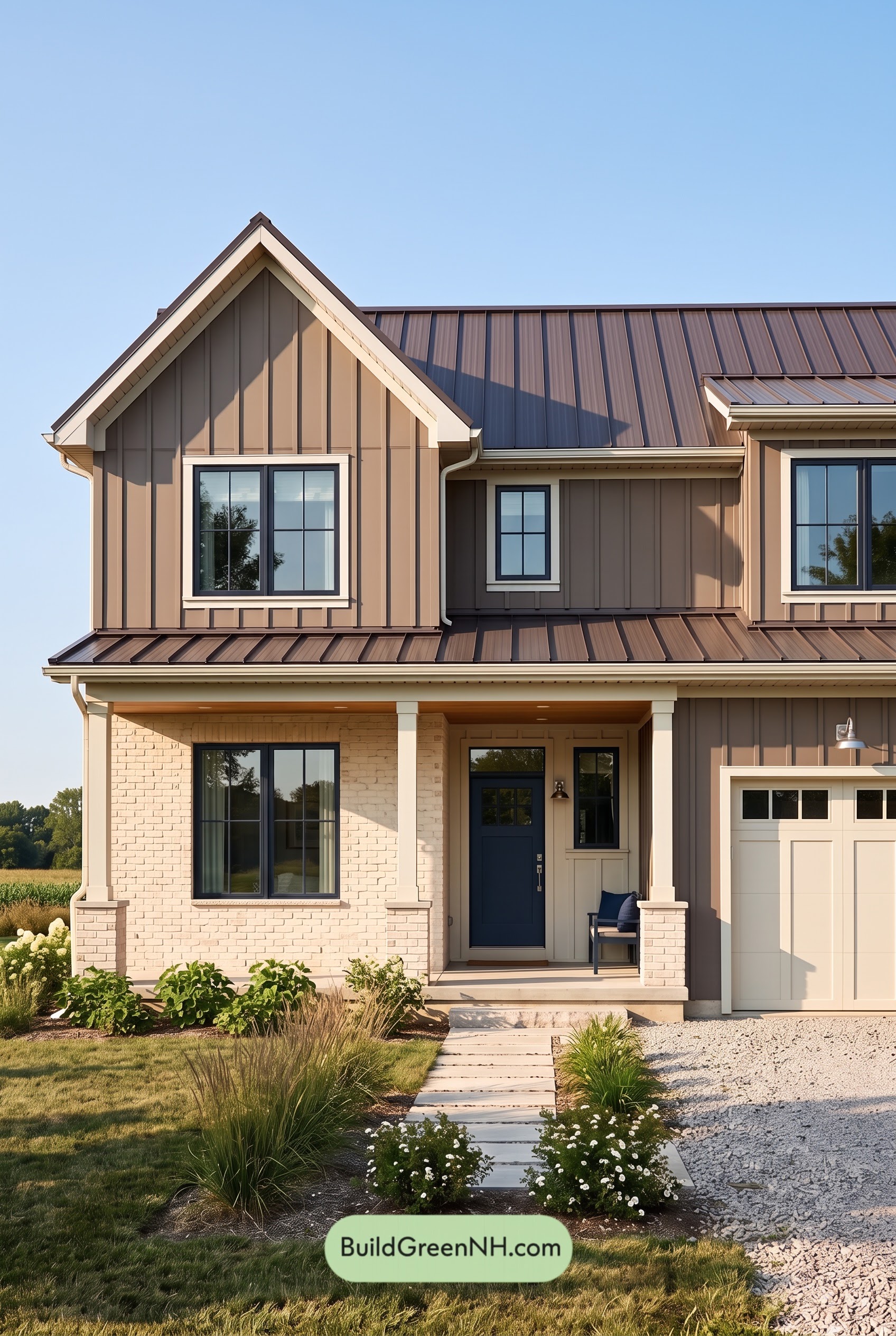
Soft gray siding, warm white trim, and deep gray accents give this home its inviting balance of farmhouse charm and polished, modern contrast.
Layered Grays Give the Exterior Depth
The vertical siding wears a pale gray with a subtle green undertone, creating a gentle backdrop for the home’s generous porch and tall windows. It feels light without looking stark. That muted shade also sits comfortably beside the surrounding greenery, helping the house feel connected to its setting.
Across the two prominent gables, a warmer, medium gray adds depth. Its slightly taupe undertone distinguishes these upper sections from the lighter siding below, emphasizing the roof peaks without introducing an unrelated color. The shift is understated, but it gives the facade much of its character.
Warm White Highlights the Architecture
A soft, warm white outlines the gables, frames the windows, and stretches across the porch beams. These lighter edges make the architectural shapes easy to appreciate, especially where the steep rooflines meet the darker upper walls.
The porch columns repeat that warm white, establishing a welcoming rhythm across the front of the house. Rather than creating a sharp, icy contrast, the creamy undertone softens the gray palette. It also relates beautifully to the pale beige and light gray shades in the stone foundation and steps.
Deeper Accents Bring Everything Into Focus
Deep charcoal gray window frames add definition within the wider white trim. Their slender lines give the windows a crisp, tailored appearance while keeping the overall scheme restrained.
The front door carries a similarly deep, warm gray, creating a quiet focal point beneath the shaded porch. Gray railings echo the darker accents in a lighter, more delicate way. Together, these details provide enough contrast to anchor the pale siding without overpowering it.
Above, the standing-seam roof introduces a silvery gray that bridges the lighter walls and darker details. Its reflective surface adds variation as the light changes, while the gray gutters remain visually connected to the surrounding palette.
A Calm Palette With Lasting Appeal
What makes this combination work is its balance of temperature and depth: cool-leaning pale gray siding, warmer gray gables, creamy white framing, and dark gray accents. Each shade has a clear role. The result feels composed yet approachable—a home with plenty of architectural presence and a porch that still invites you to linger.
Next, see how this color scheme looks under different lighting simulations throughout the day.
Overcast
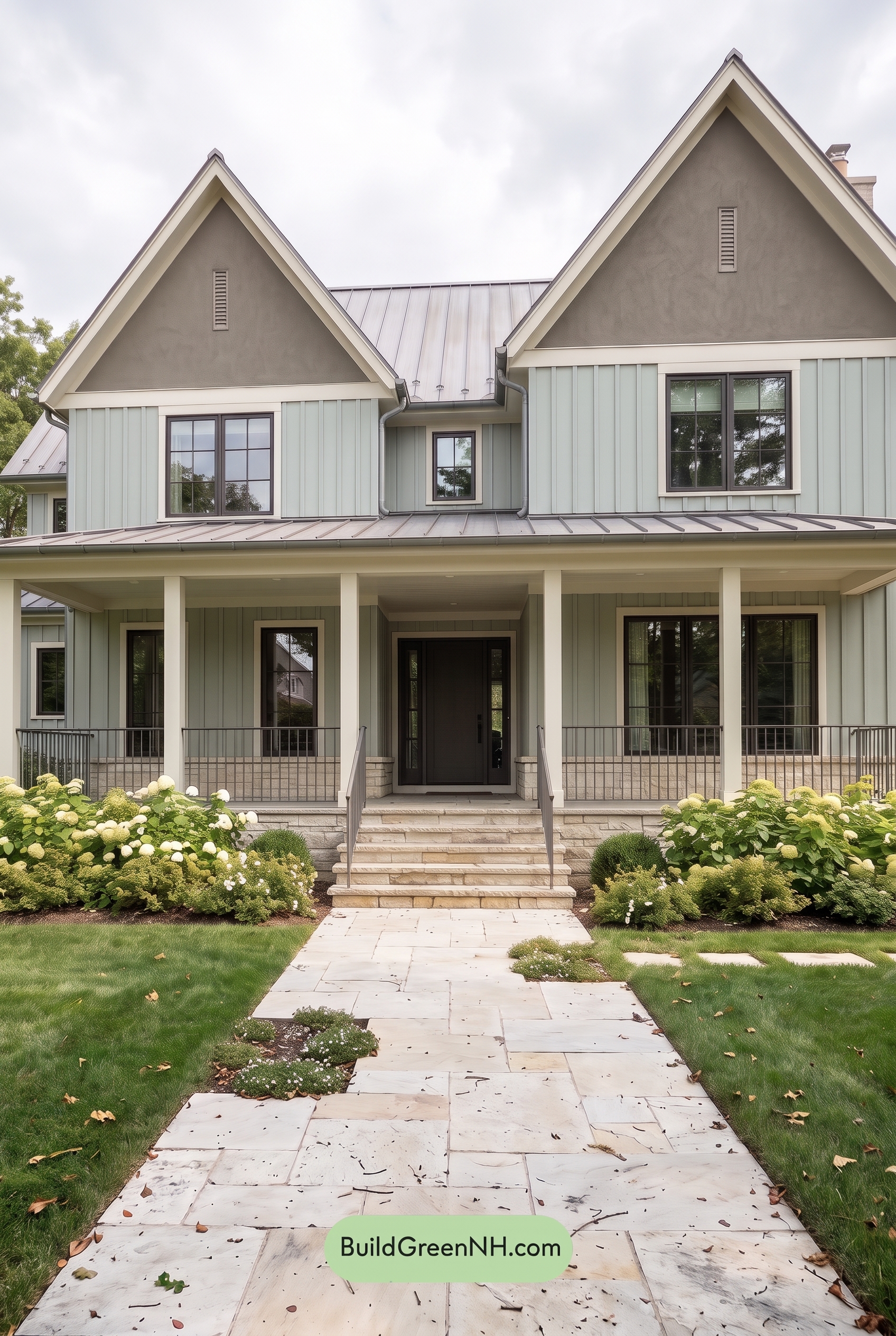
Under overcast skies, the pale grays appear cooler and less saturated than in neutral daylight, with subtle green undertones becoming more noticeable. The warmer grays feel quieter and earthier, while the soft whites lose some sparkle, giving the exterior a gentle, understated finish.
Diffused light softens shadows and smooths the transitions between light and dark shades. Deep grays still provide definition against the whites, but the contrast feels less sharp. Compared with neutral daylight, the overall mood becomes calmer and more subdued, with the muted palette lending the house a quietly welcoming presence.
Golden Hour
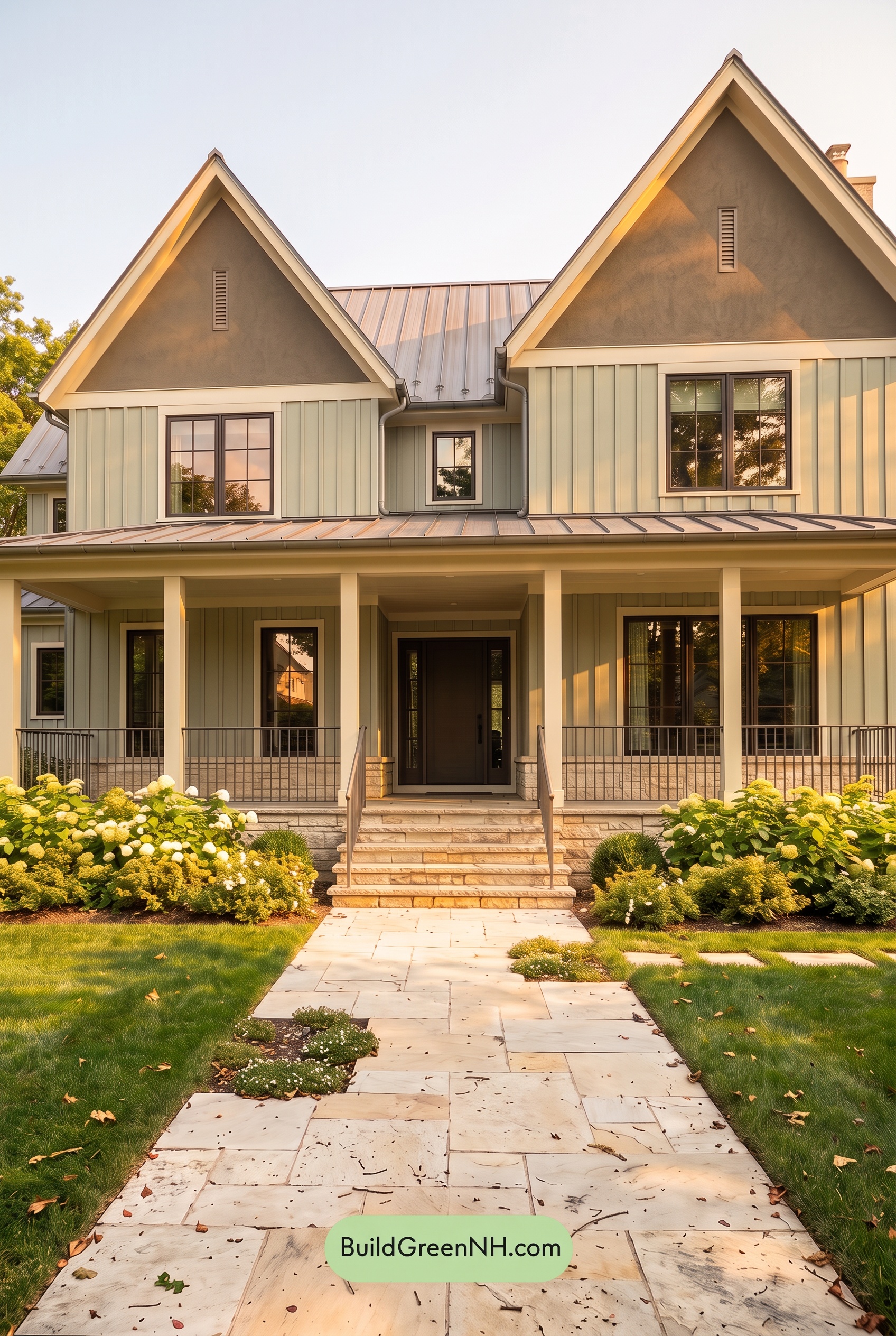
Golden Hour nudges the house’s grays toward warmer, beige-leaning shades, making the sunlit siding feel richer without looking brightly saturated. The deeper gray gables take on a soft brown cast, while the white trim and columns appear creamy rather than crisp. Compared with neutral daylight, the palette feels less cool and more gently glowing.
Long shadows beneath the eaves and across the porch deepen the darker grays, heightening their contrast with the illuminated whites. Subtle siding grooves become more pronounced, while the shaded doorway feels deeper and more secluded. That balance of warm highlights and deep shadows shifts the house from daylight’s clean, composed look to a softer, more inviting evening mood.
Shade
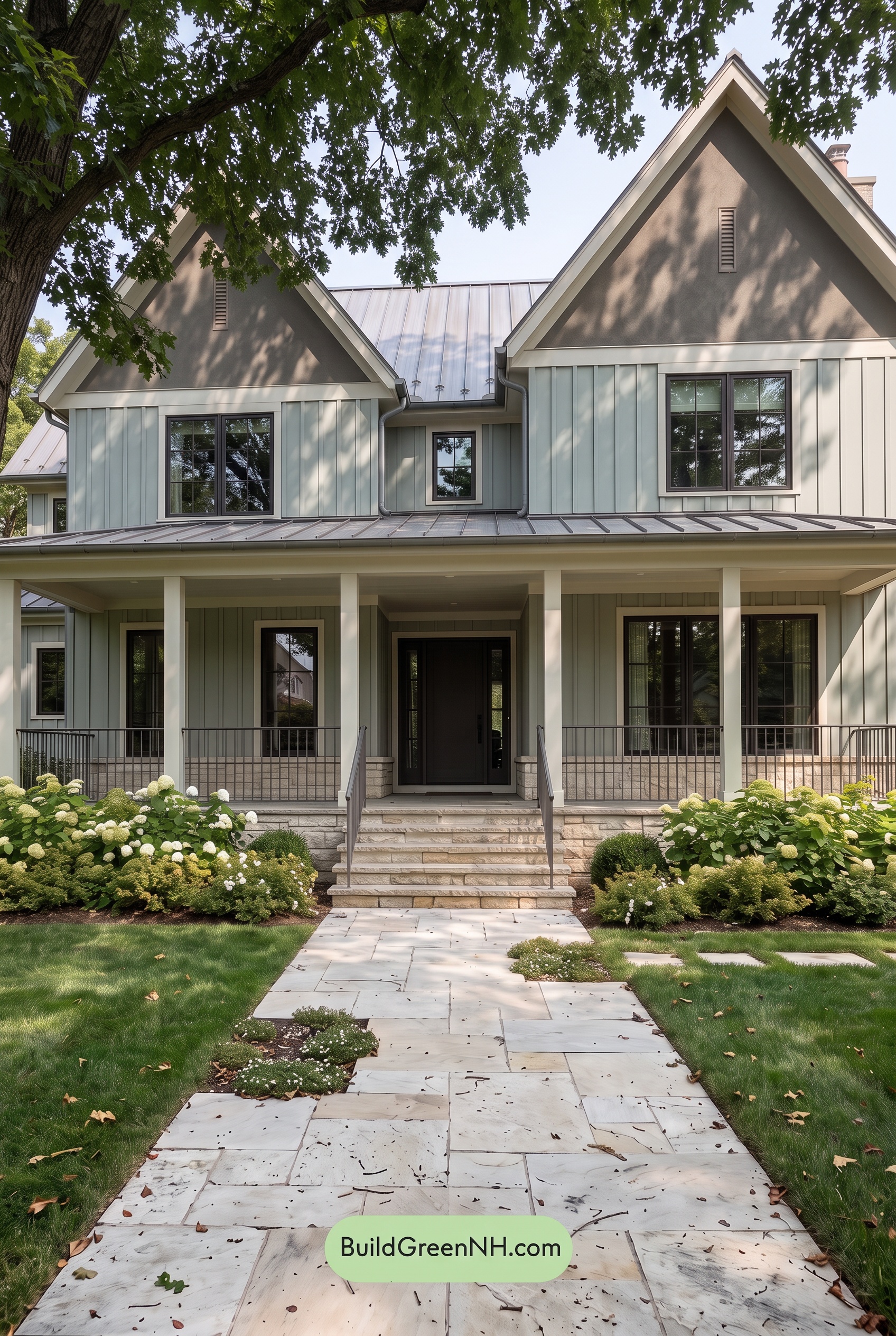
Under the tree canopy, the pale grays look cooler and more muted than they would in neutral daylight, allowing subtle blue-green undertones to peek through. The warmer gray gables lose some of their beige warmth and appear deeper beneath the leafy shadows. Saturation stays restrained, giving the exterior a soft, restful character rather than a bright, crisp look.
The white trim and columns soften toward pale gray in shade, while the charcoal-gray accents deepen around the windows and entry. Contrast becomes gentler across the shaded siding, but the light trim still clearly frames the darker surfaces. Dappled light adds shifting pockets of brightness, making the overall mood feel sheltered, calm, and inviting.
Nighttime
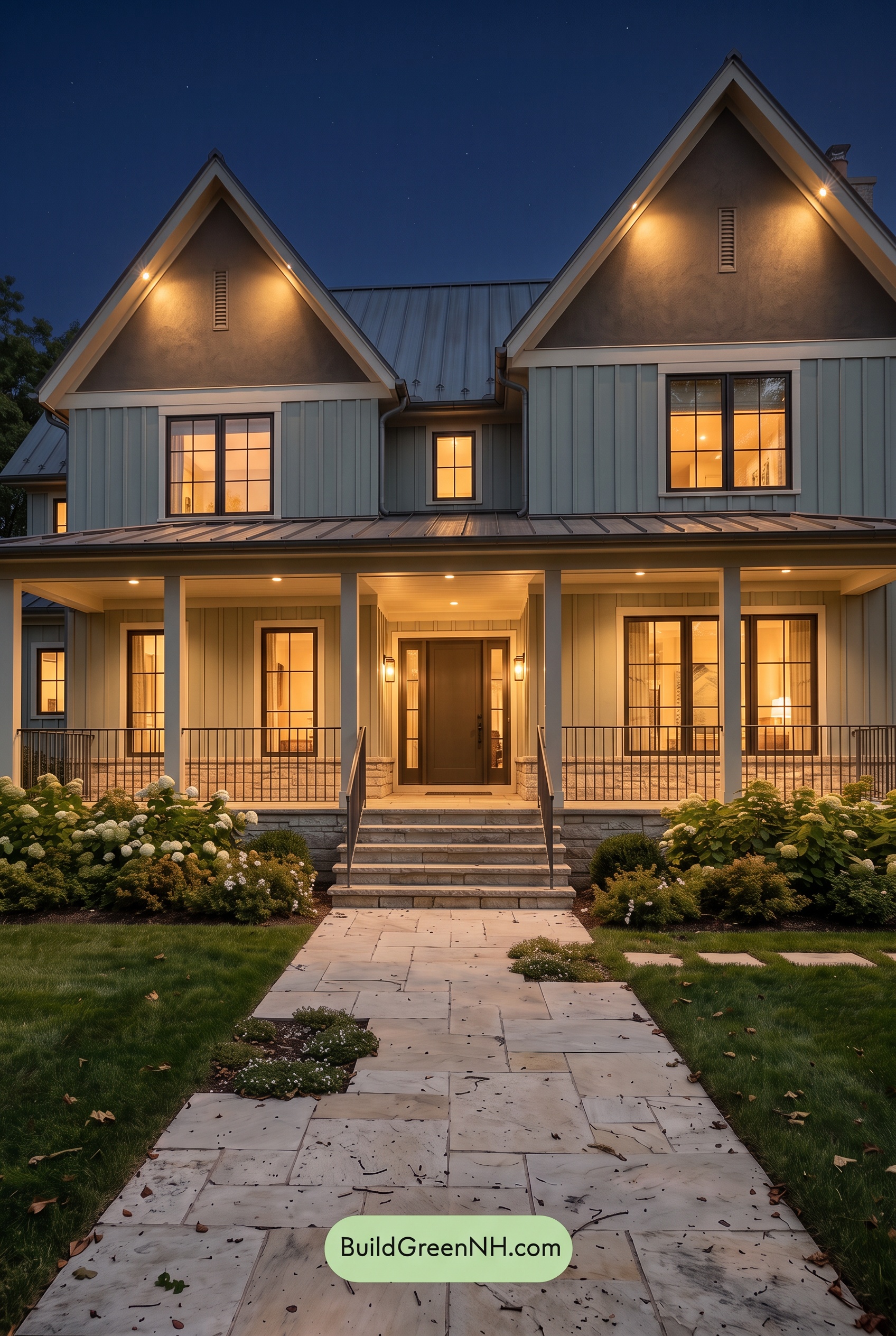
At night, the gray siding deepens and looks more muted, with a cool blue-gray cast where the lighting falls away. Beneath the warm exterior lights, those same grays lean toward soft beige and brown, creating richer-looking pockets of warmth. Compared with neutral daylight, the color feels less uniform and more atmospheric, especially across the illuminated gables.
The white trim and columns take on a creamy warmth near the lights, rather than the crisper white they would show in daylight. Deep shadows beneath the rooflines strengthen the contrast, while the darker gray door, frames, and railings become more subdued. The result is a cozy, quietly dramatic exterior, with warm highlights drawing attention to the welcoming porch.
Pin these for later:
Want More?
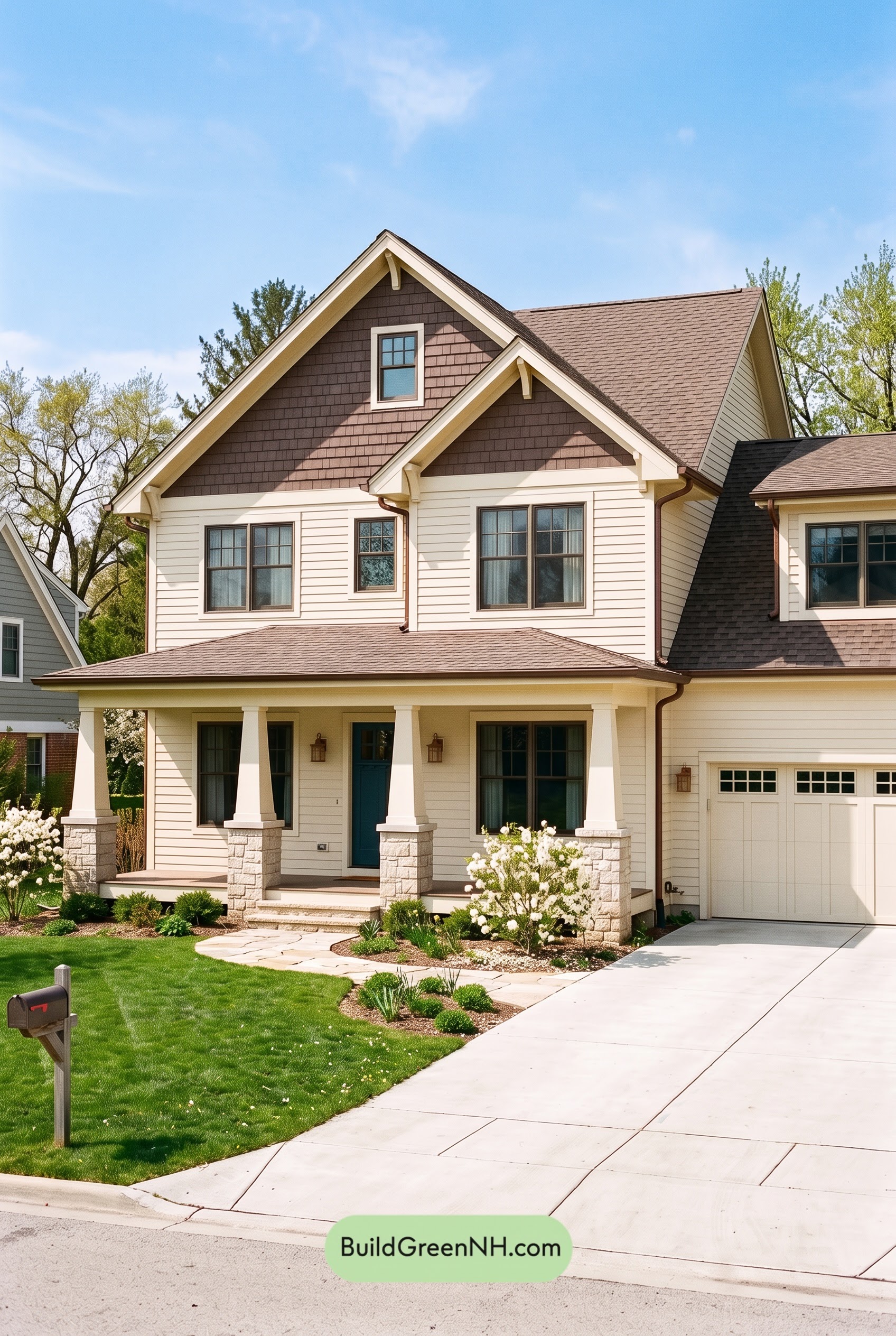 Cream Exterior Paint Color Schemes With a Brown Roof: Cream and Teal Welcome
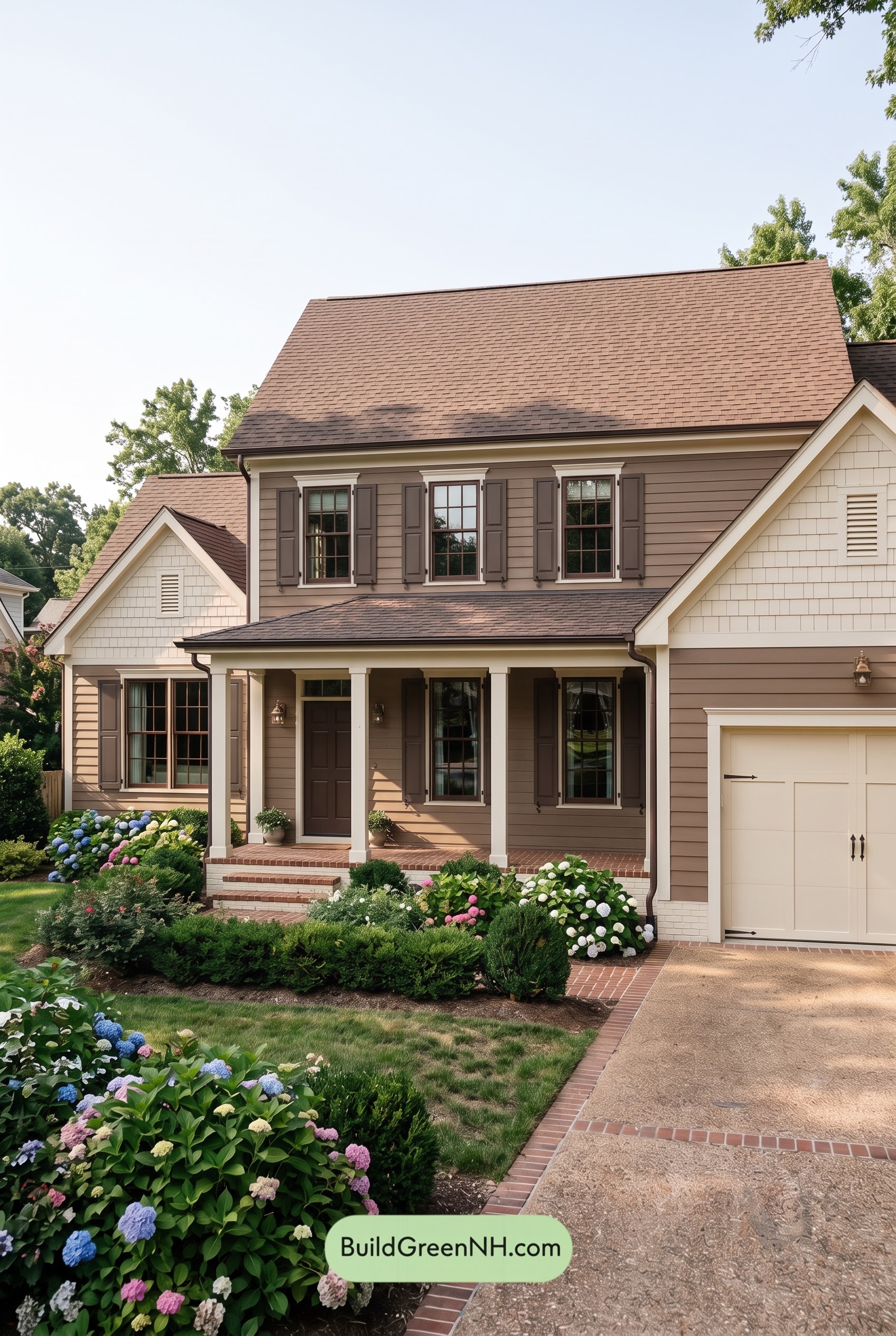 Cream Exterior Paint Color Schemes With a Brown Roof: Cocoa and Burgundy Embrace
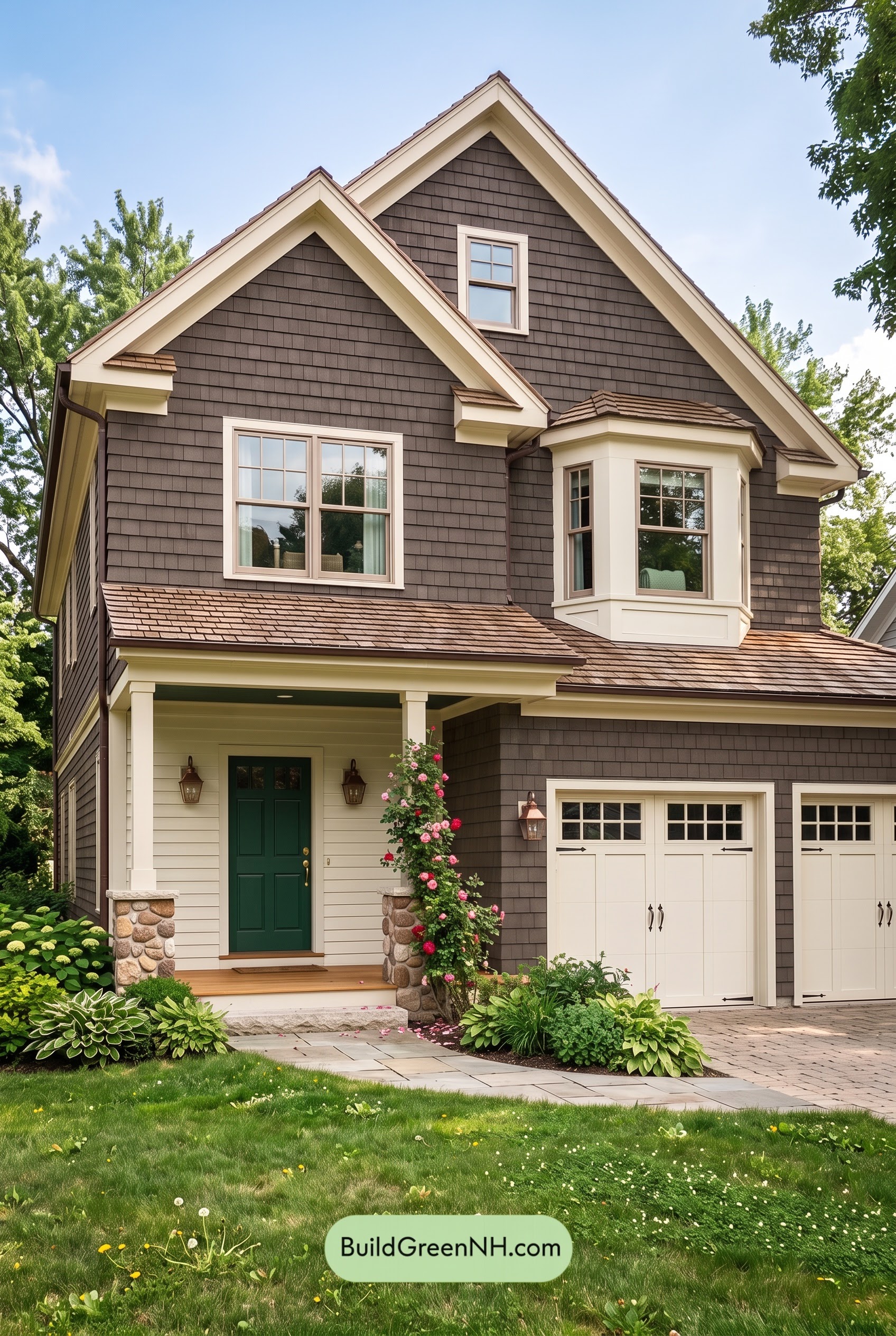 Cream Exterior Paint Color Schemes With a Brown Roof: Cocoa and Green Grace
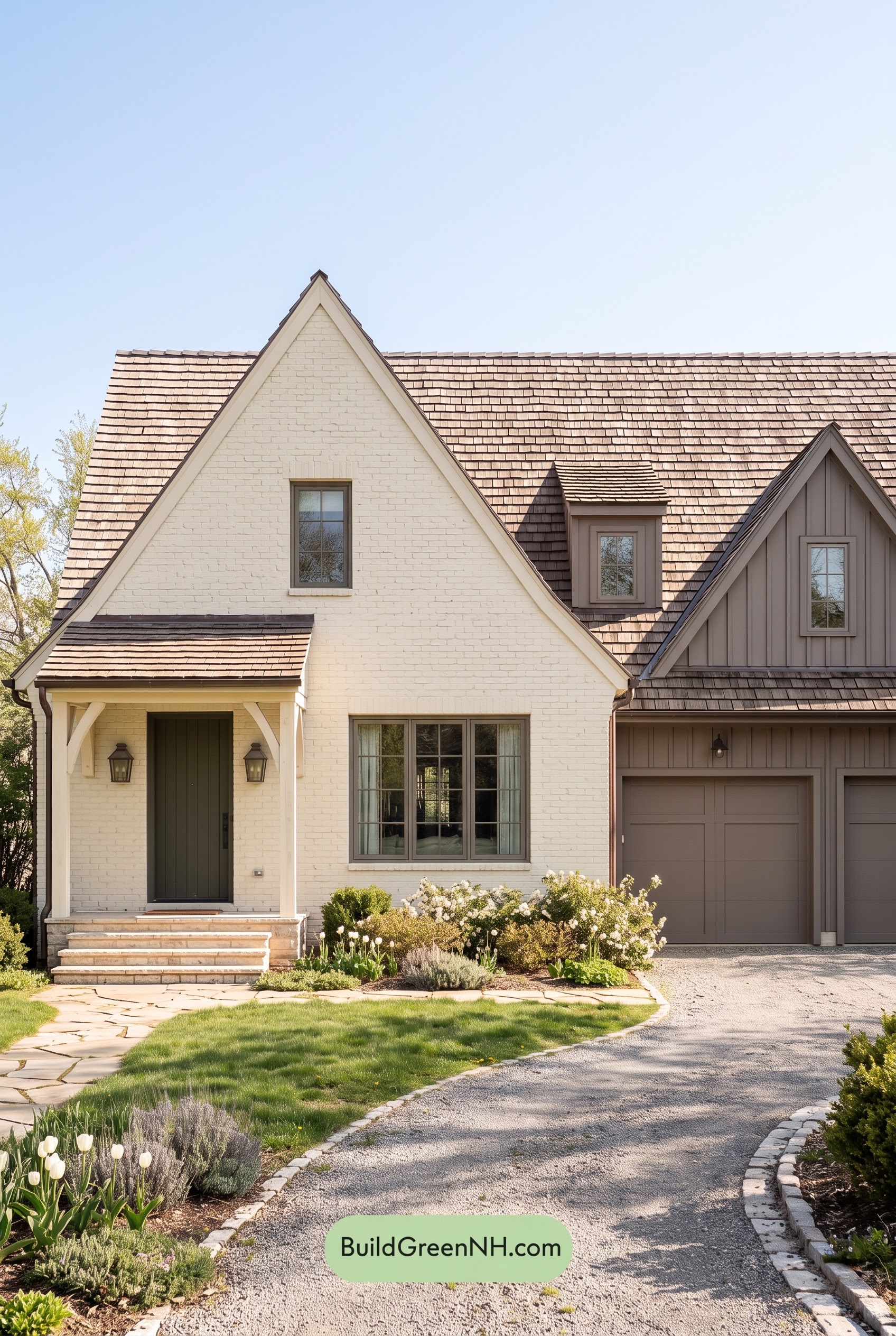 Cream Exterior Paint Color Schemes With a Brown Roof: Cream and Sage Serenity
 Cream Exterior Paint Color Schemes With a Brown Roof: Cocoa and Navy Assurance
Table of Contents