Last updated on
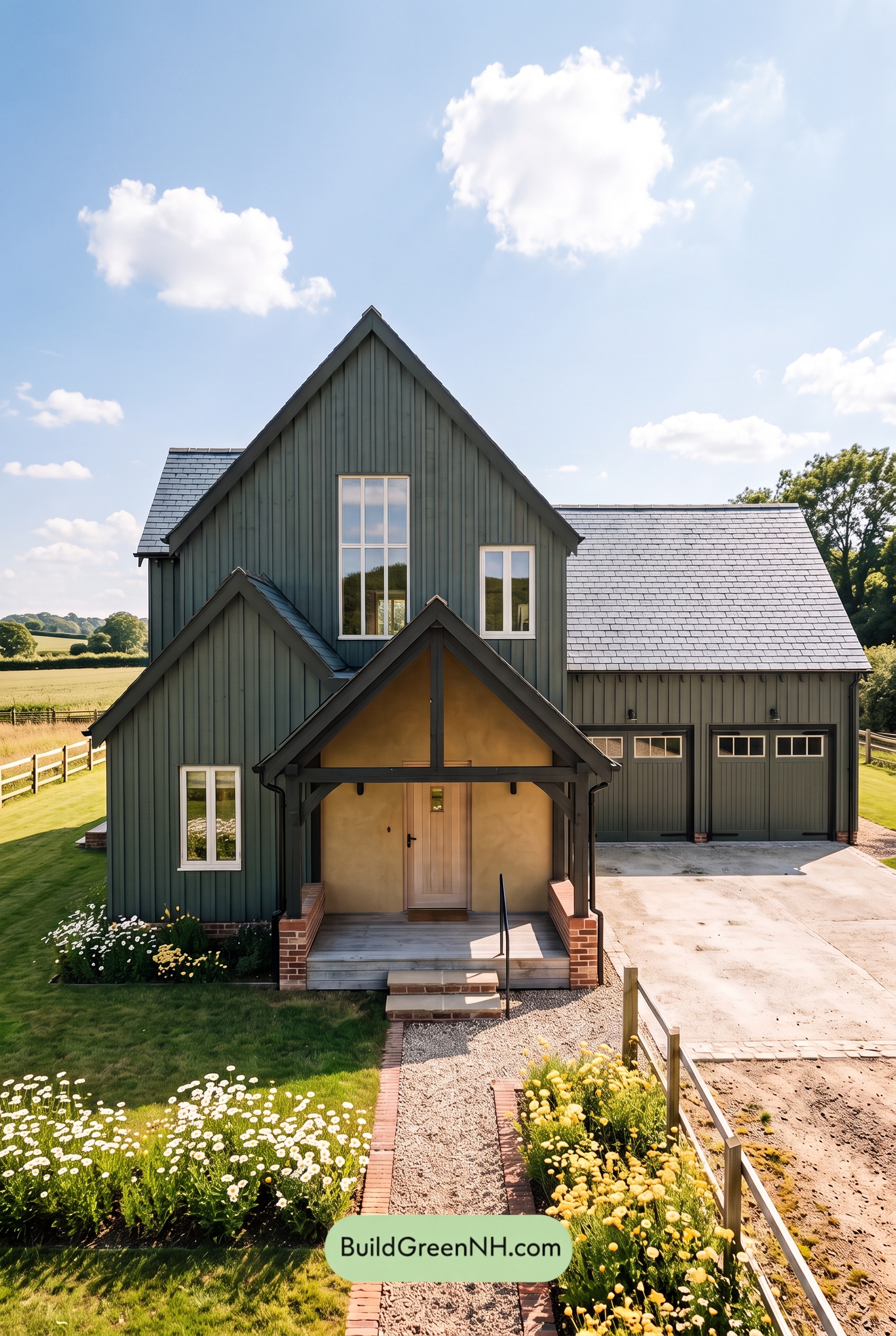

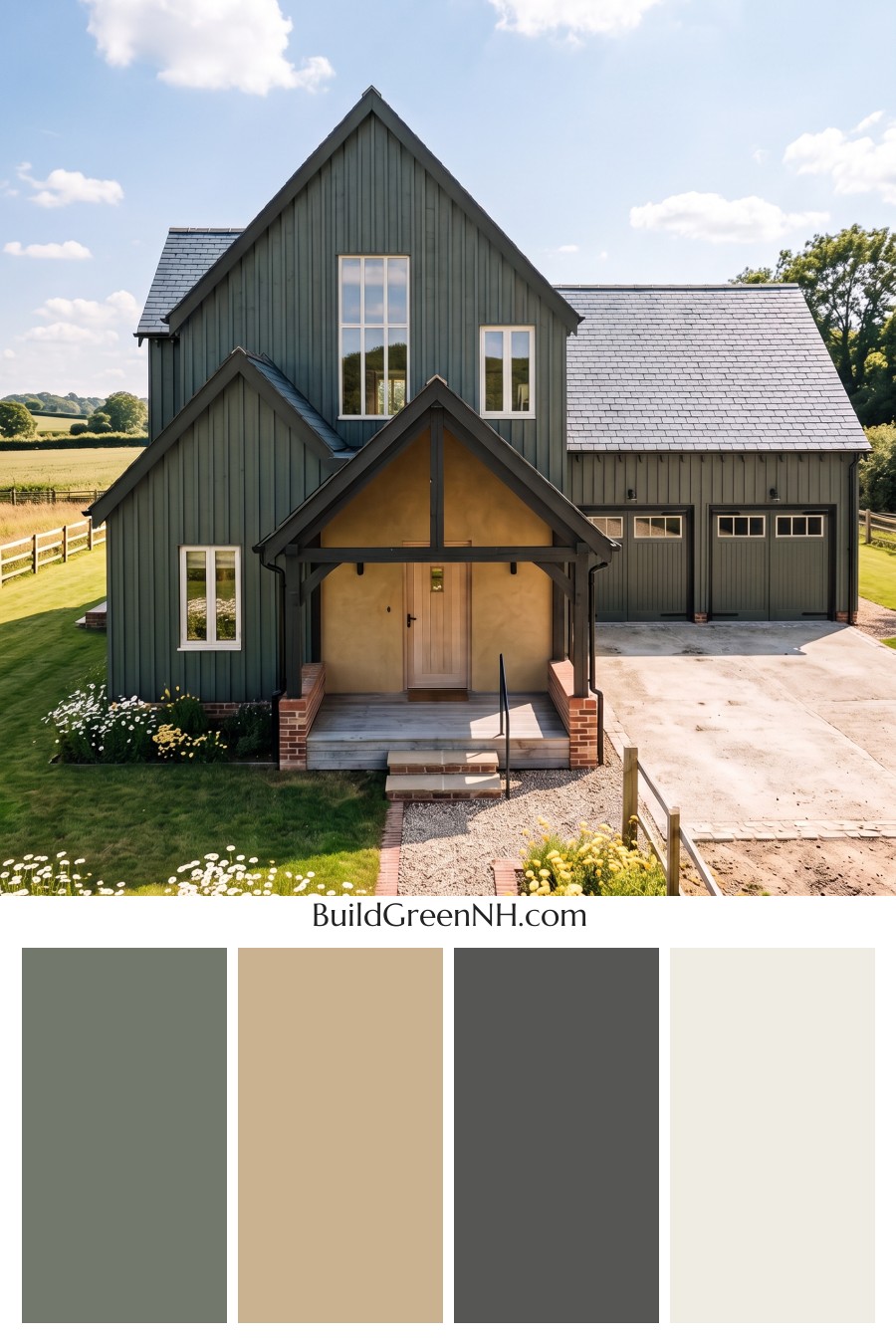
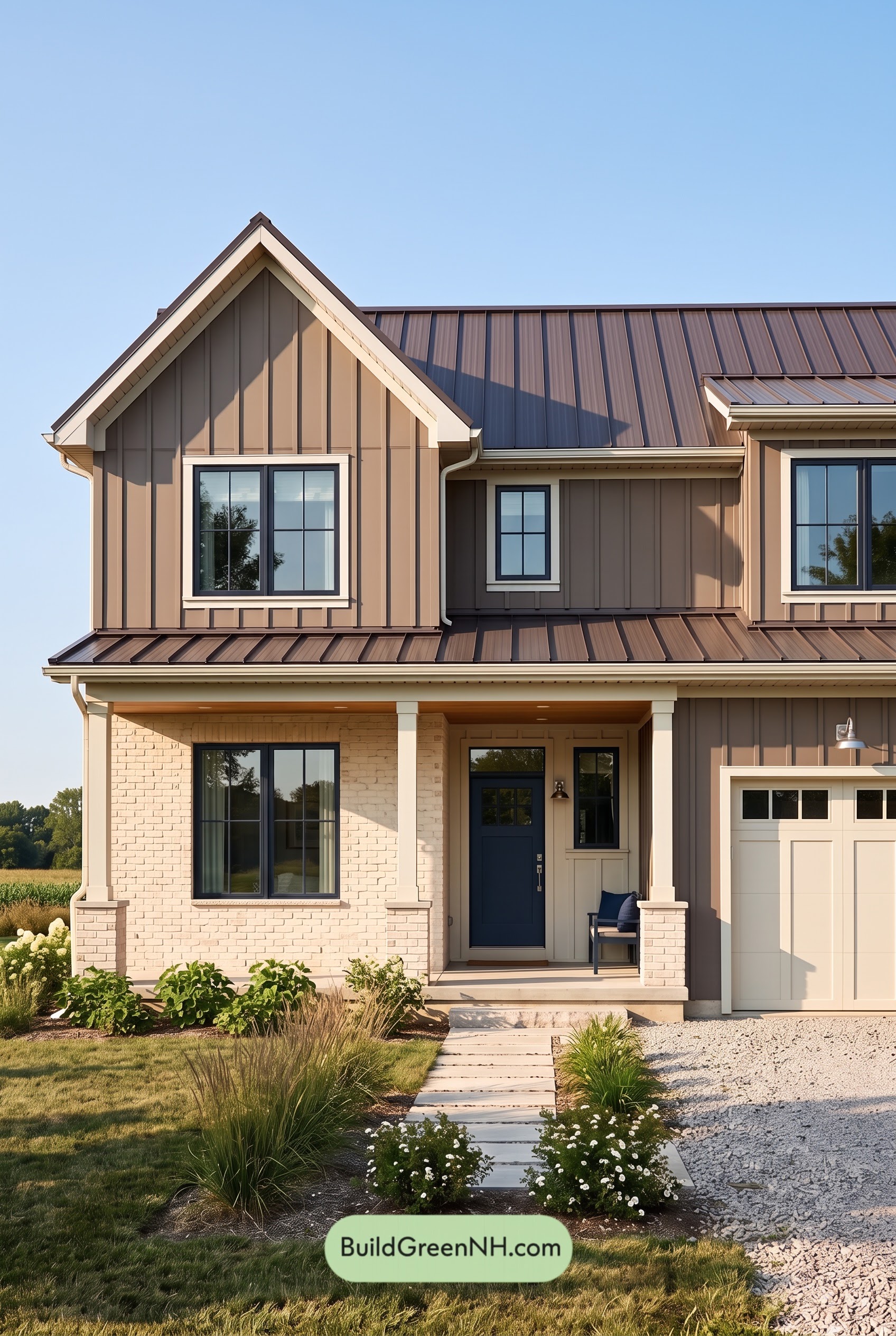
Deep gray siding, warm beige accents, and soft white window frames give this home a beautiful balance of bold architectural definition and welcoming warmth.
Rich Gray Siding Sets the Tone
A deep, muted gray covers most of the vertical siding, giving the tall gables a strong, cohesive presence. Subtle green undertones soften the shade, helping the house feel connected to the surrounding countryside rather than stark against it.
The vertical boards add another layer of interest. As sunlight catches their edges, the siding shifts between lighter gray highlights and deeper shadows. That natural variation brings dimension to the large wall surfaces without introducing extra colors.
A Warm Beige Welcome
The recessed entrance offers a lovely change of temperature. Here, a golden shade of beige covers the accent wall and the triangular area beneath the porch roof, creating a warm focal point within the darker exterior.
The front door sits in a softer, lighter beige. It belongs comfortably to the same color family as the surrounding wall, yet the subtle difference keeps it distinct. This restrained pairing makes the entrance inviting without relying on a bright statement door.
Dark Definition and Light Contrast
Charcoal gray trim traces the steep rooflines and frames the porch, emphasizing the home’s striking geometry. Matching dark gray columns and railings carry that definition down toward the steps. Repeating these deeper shades gives the exterior a consistent visual rhythm.
Soft white window frames provide a crisp counterpoint. Their narrow outlines brighten the gray walls and draw attention to the tall windows without competing with the entrance. Against the darker siding, even this small amount of white makes a noticeable difference.
A Roof and Garage That Bring It Together
The roof’s lighter gray shades balance the deeper siding, with cool, slightly blue undertones adding freshness. Its textured surface keeps the broad roof planes visually interesting while remaining within the restrained palette.
Muted gray garage doors echo the main walls, helping the garage feel integrated rather than separate. Below, reddish-brown brick at the porch bases introduces an earthy note that complements the beige entrance.
The overall mood is calm, grounded, and quietly welcoming. Cool grays give the house structure, warm beige softens the approach, and white adds just enough brightness—a thoughtful balance that lets the architecture shine.
Next, see how this color scheme looks under different lighting simulations throughout the day.
Overcast
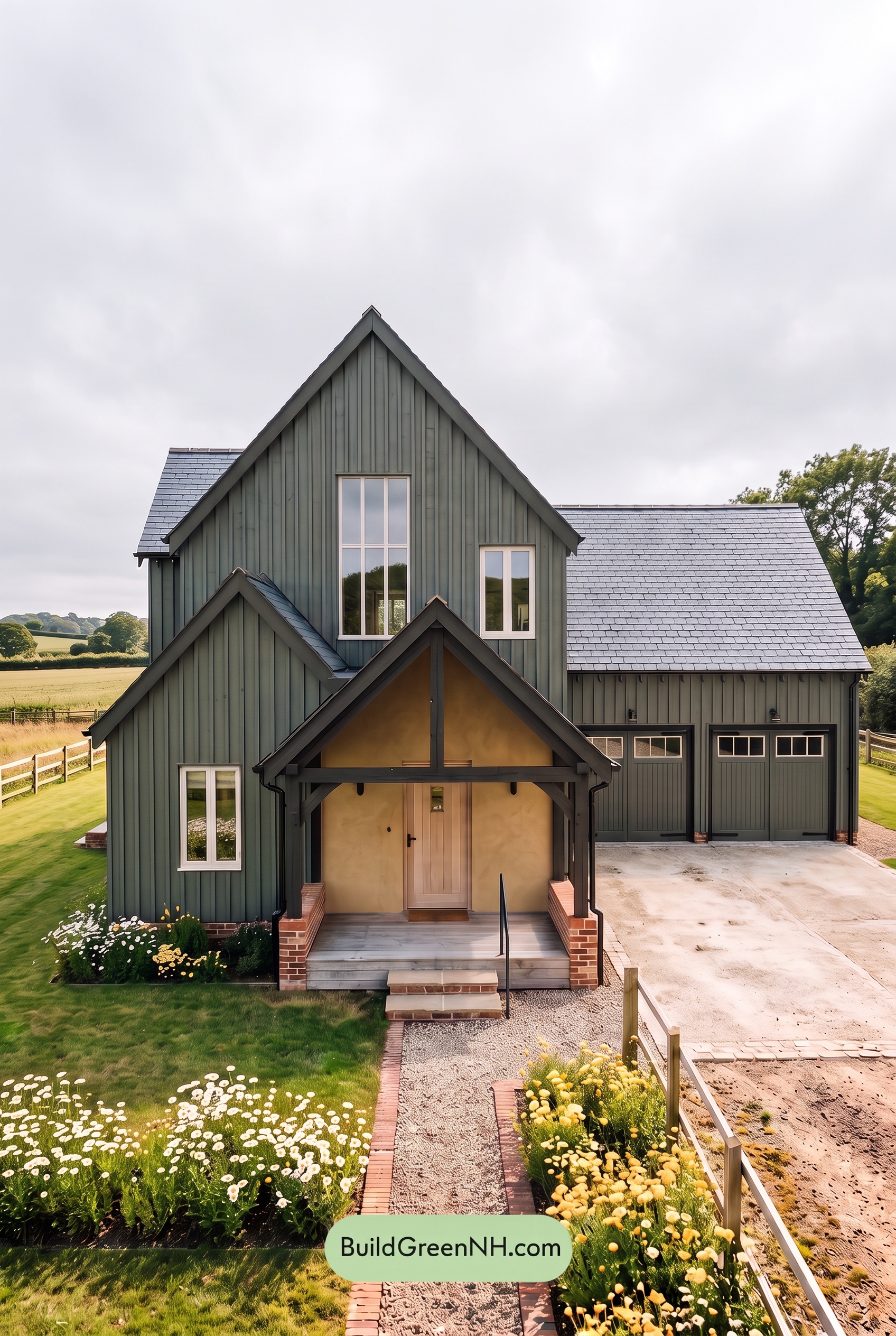
Under overcast skies, the gray siding would appear more muted and slightly deeper than in neutral daylight, with its subtle green undertones potentially becoming more noticeable. The beige entry would lose some of its golden warmth, reading as a softer, less saturated neutral while still offering a welcoming contrast to the cooler grays.
Diffused light would soften shadows beneath the gables and porch, making the siding and dark gray trim feel less sharply separated. The white window frames would look gentler rather than brilliant, retaining definition without such a crisp contrast. Together, these shifts would give the exterior a quieter, more subdued mood than its clearer, warmer appearance in neutral daylight.
Golden Hour
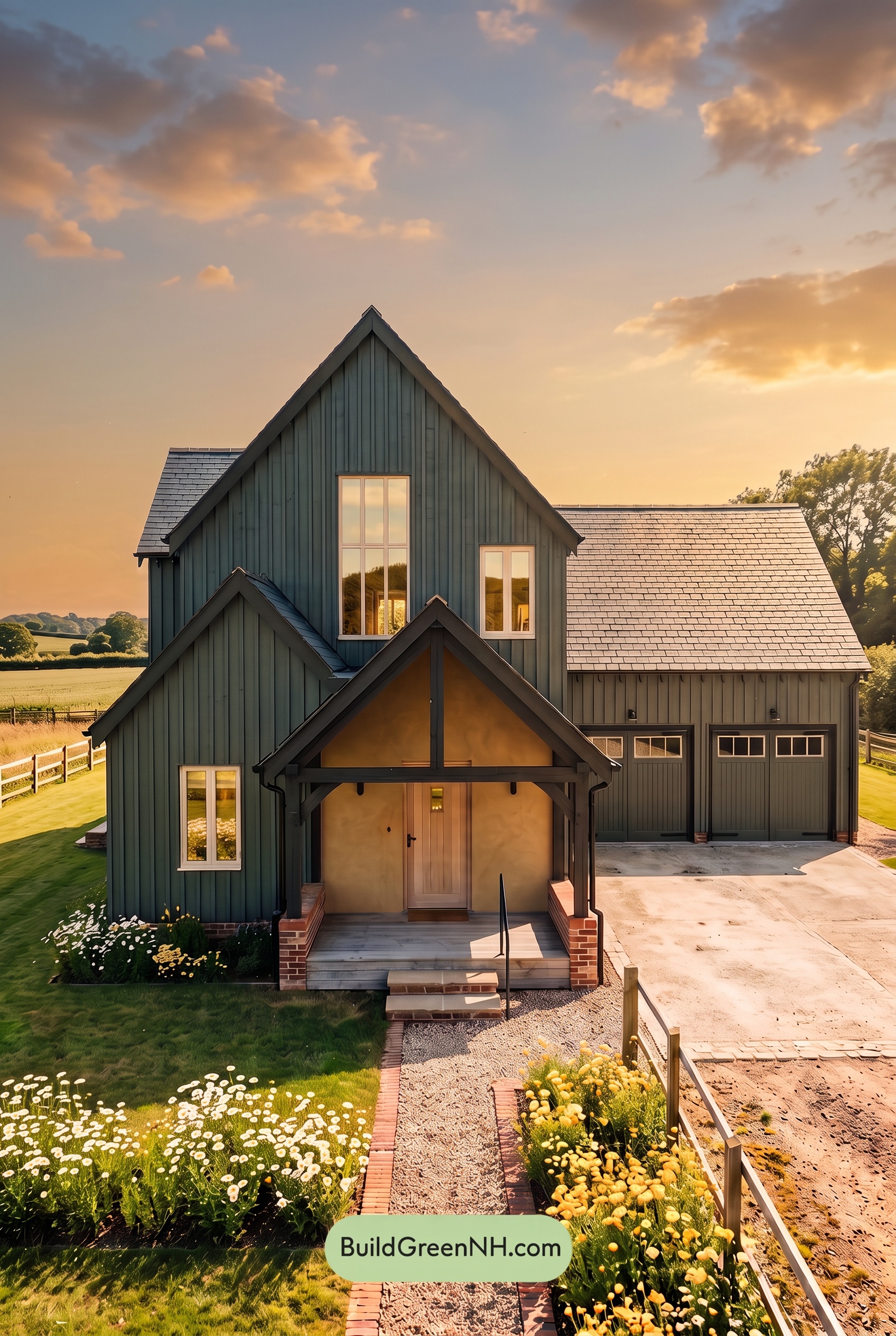
Golden Hour gives this gray exterior a warmer, more layered look than neutral daylight. Sunlit gray shades soften toward warm neutrals, while shaded sections deepen and reveal cooler undertones. The beige around the entry appears richer and more saturated, picking up a gentle yellow warmth, and the white window frames take on a softer, creamier cast.
Long shadows beneath the gables and porch make the darker grays feel deeper, strengthening their contrast with the glowing beige entry. At the same time, the warmer light softens the contrast between white and sunlit gray. Compared with the crisp, restrained palette of neutral daylight, the overall mood becomes cozier and more inviting, with the entrance drawing the eye.
Shade
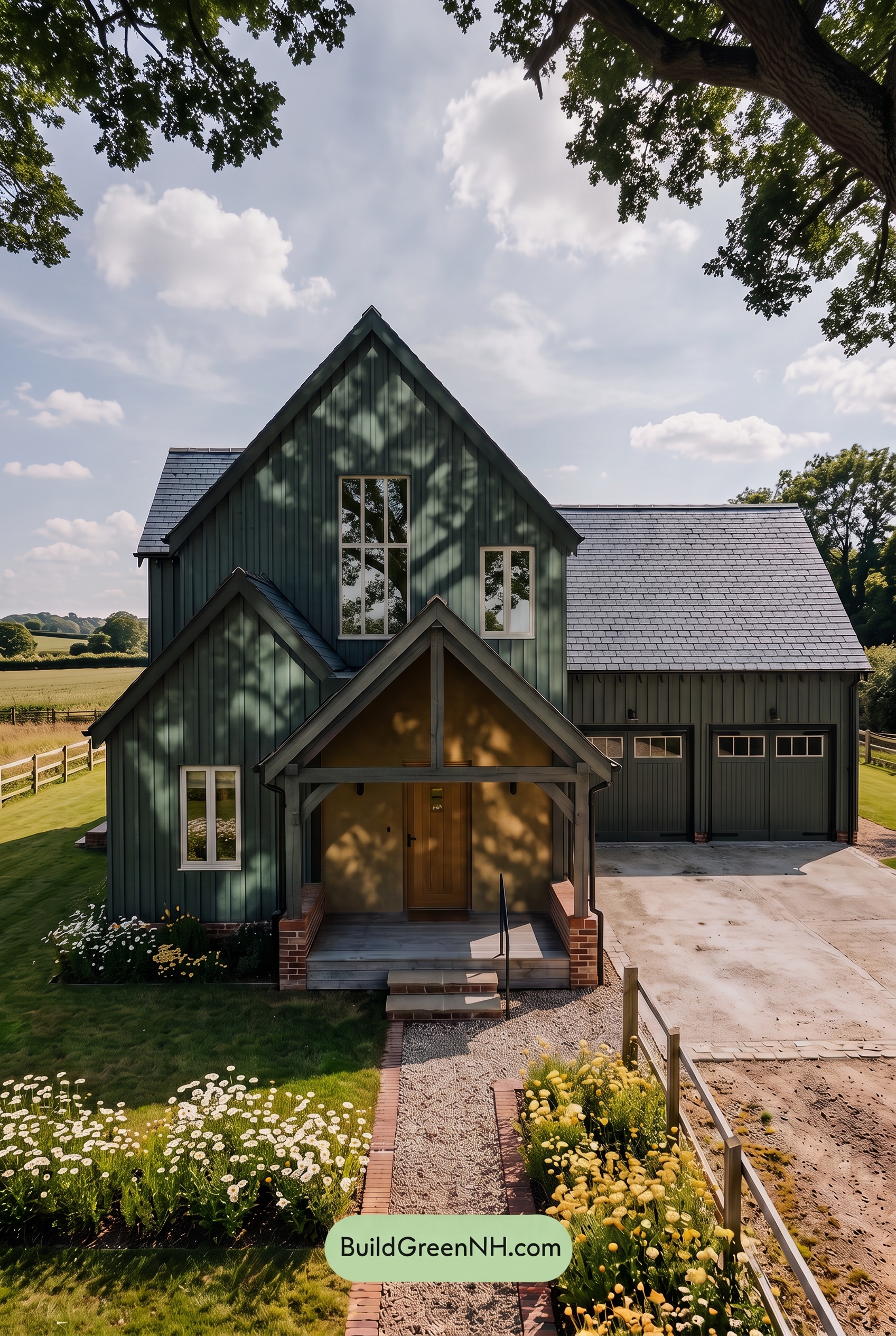
In shade, the gray shades look deeper and cooler than they would in neutral daylight, with a subtle green cast becoming more noticeable. Their saturation feels restrained rather than vivid, while the beige shades lose some golden warmth and settle into softer, earthier neutrals. The palette feels quieter and more enveloping without losing its welcoming character.
Leaf shadows create shifting pockets of darker gray, adding depth across the exterior. The white shades appear less bright in shade but still stand out against the deepened surroundings. Compared with neutral daylight’s clearer color separation, shaded grays blend more closely together, while the contrast between light and dark shades gives the house a calm, slightly moody presence.
Nighttime
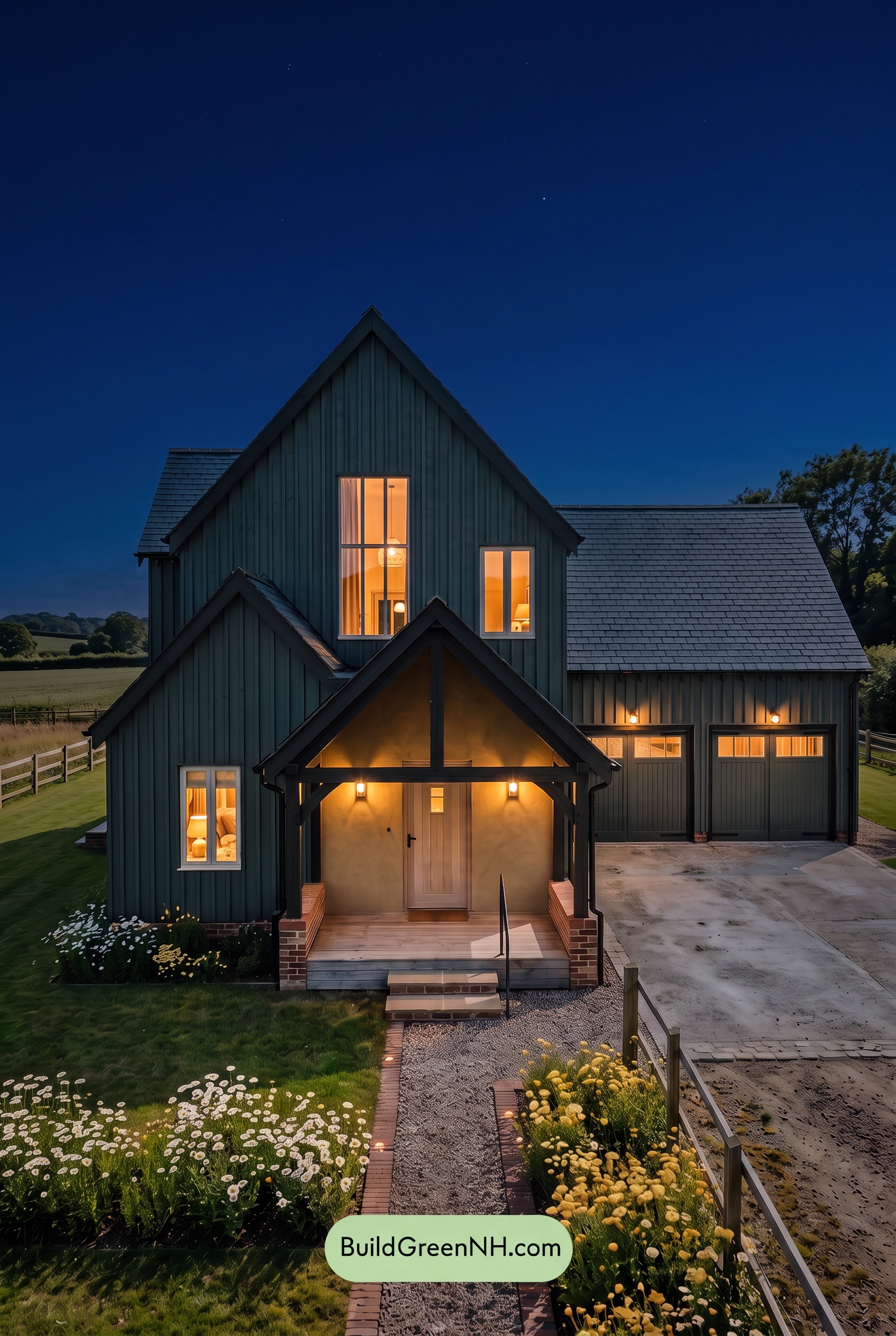
At night, the gray exterior deepens toward charcoal, with a cool blue-gray cast across the unlit siding. Compared with neutral daylight, subtle color differences become less distinct, and saturation feels muted in the shadows. Darker gray trim and columns nearly merge beneath the gables, while the lighter window frames stand out against the deepened walls.
The porch lighting gives the beige entry a richer, golden warmth, making it feel more luminous than it would in daylight. Nearby whites soften toward cream, while the gray garage doors catch small pools of warm light. This contrast between cool shadows and glowing warm neutrals shifts the house from crisp and balanced to cozy, dramatic, and inviting.
Pin these for later:
Want More?
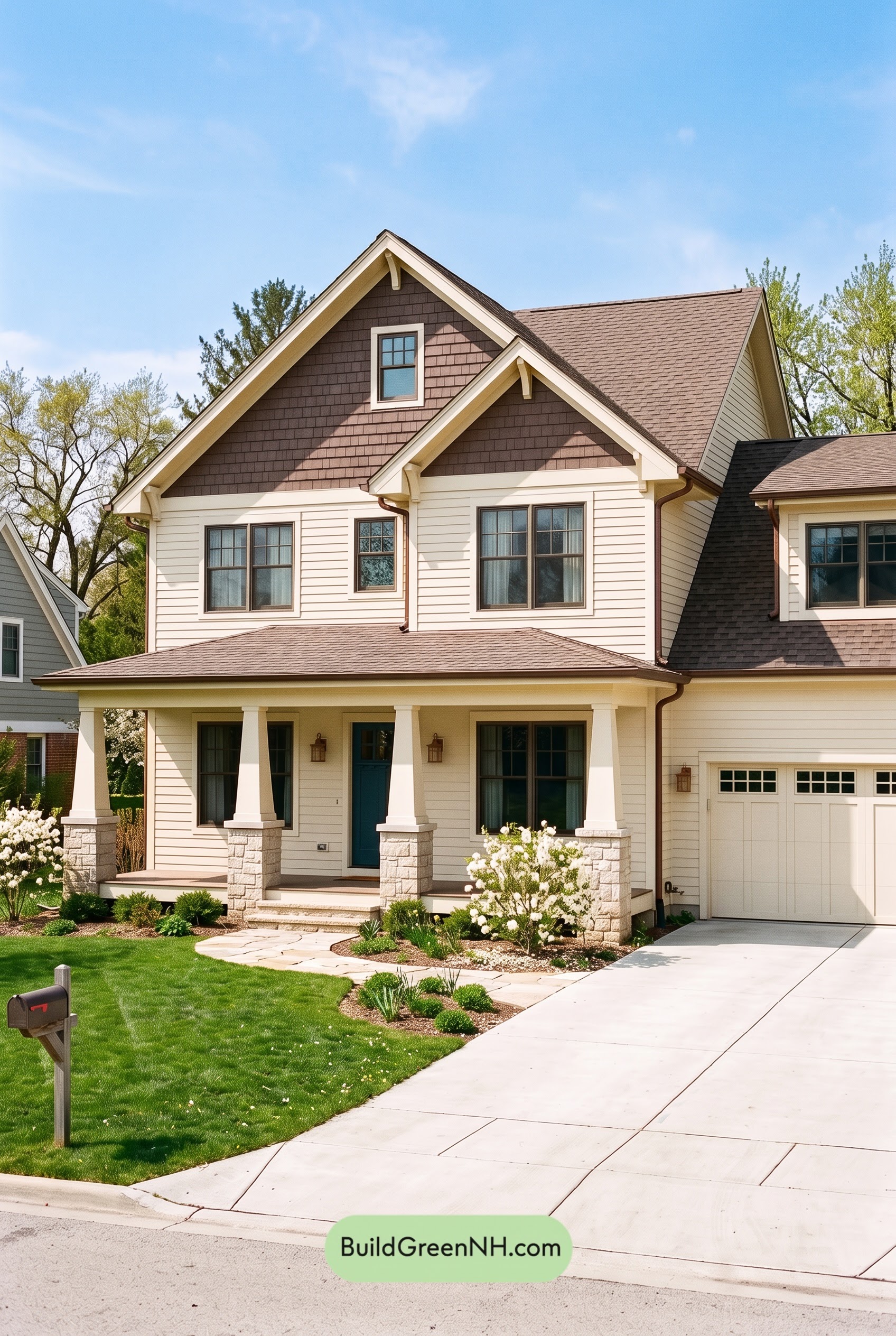 Cream Exterior Paint Color Schemes With a Brown Roof: Cream and Teal Welcome
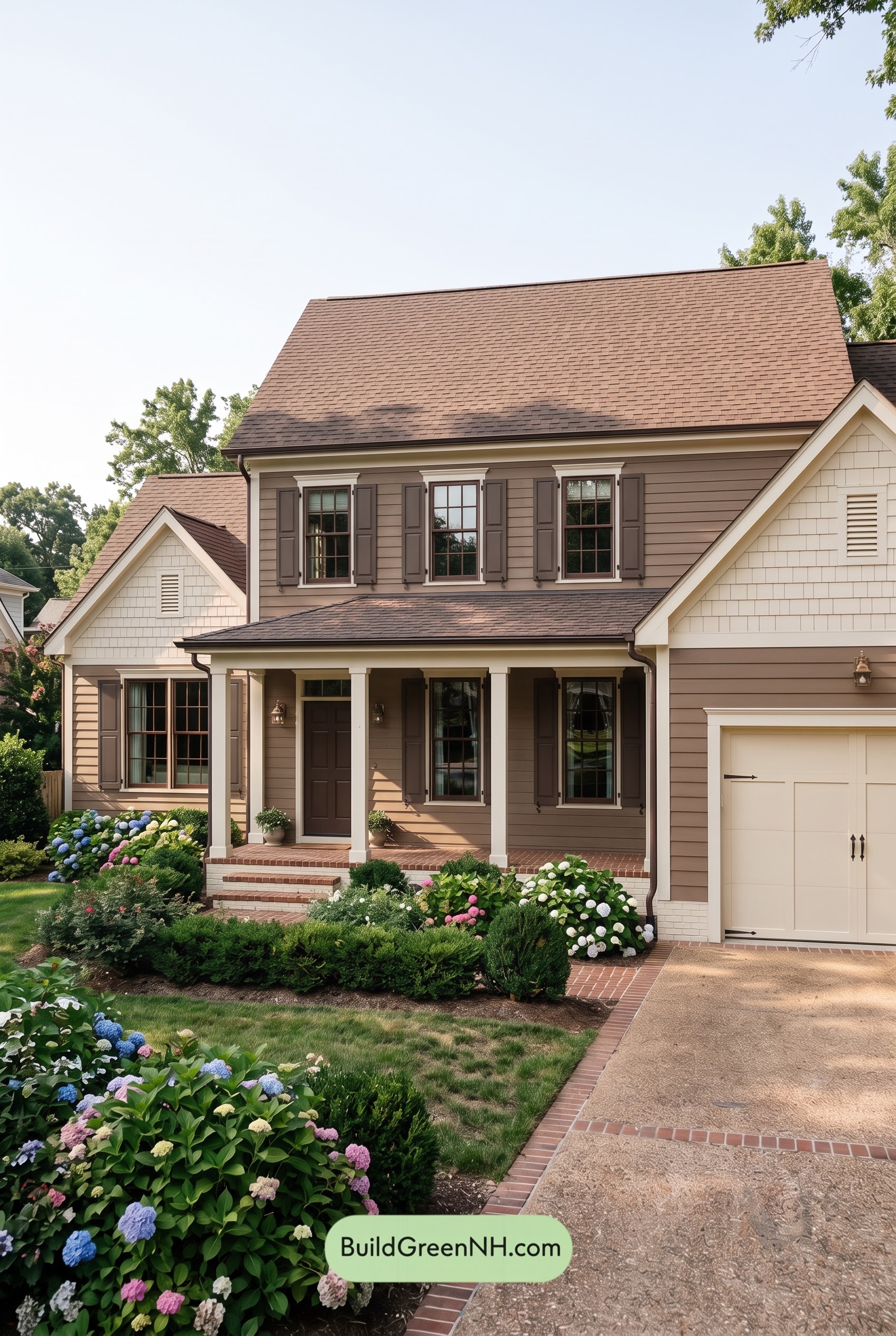 Cream Exterior Paint Color Schemes With a Brown Roof: Cocoa and Burgundy Embrace
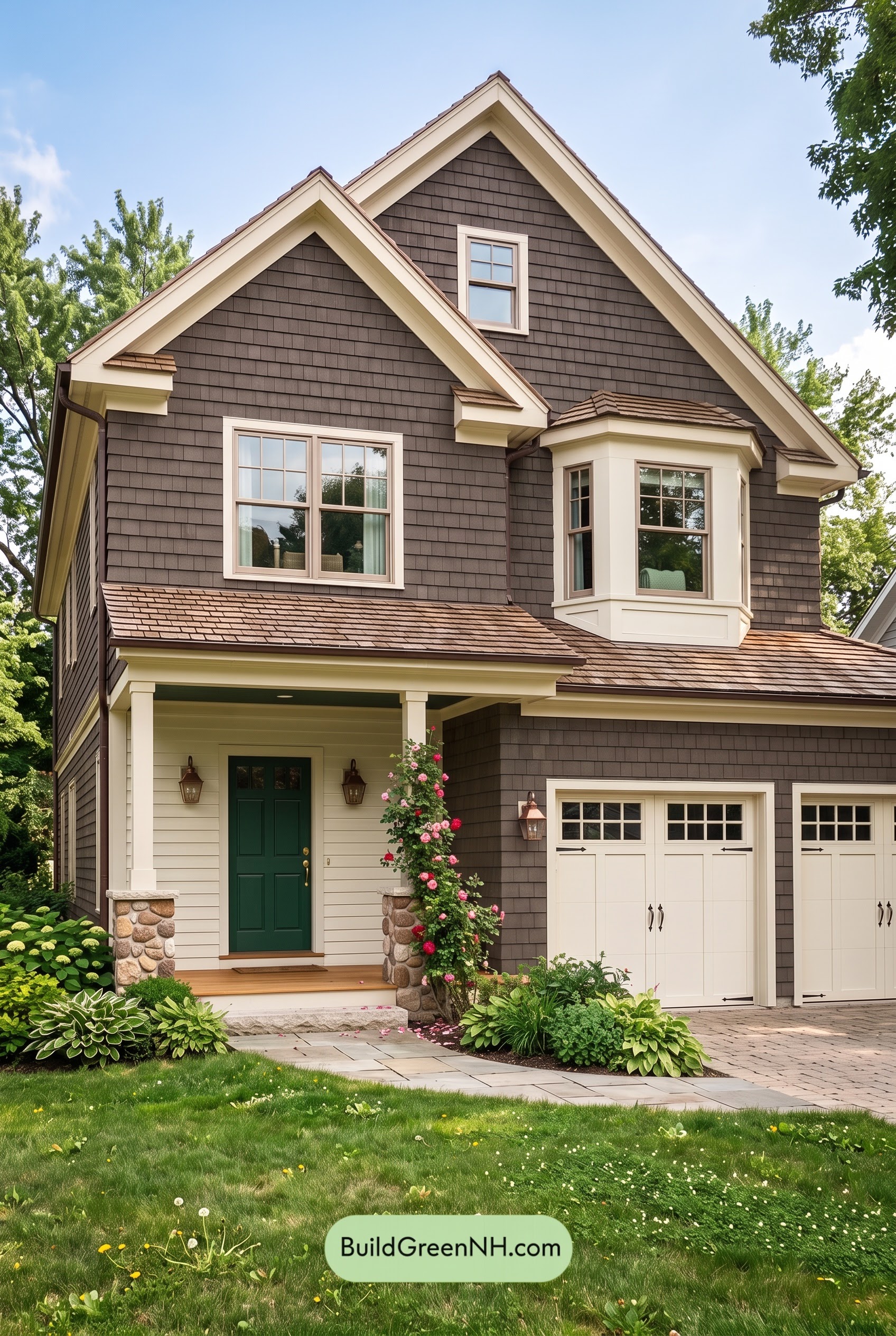 Cream Exterior Paint Color Schemes With a Brown Roof: Cocoa and Green Grace
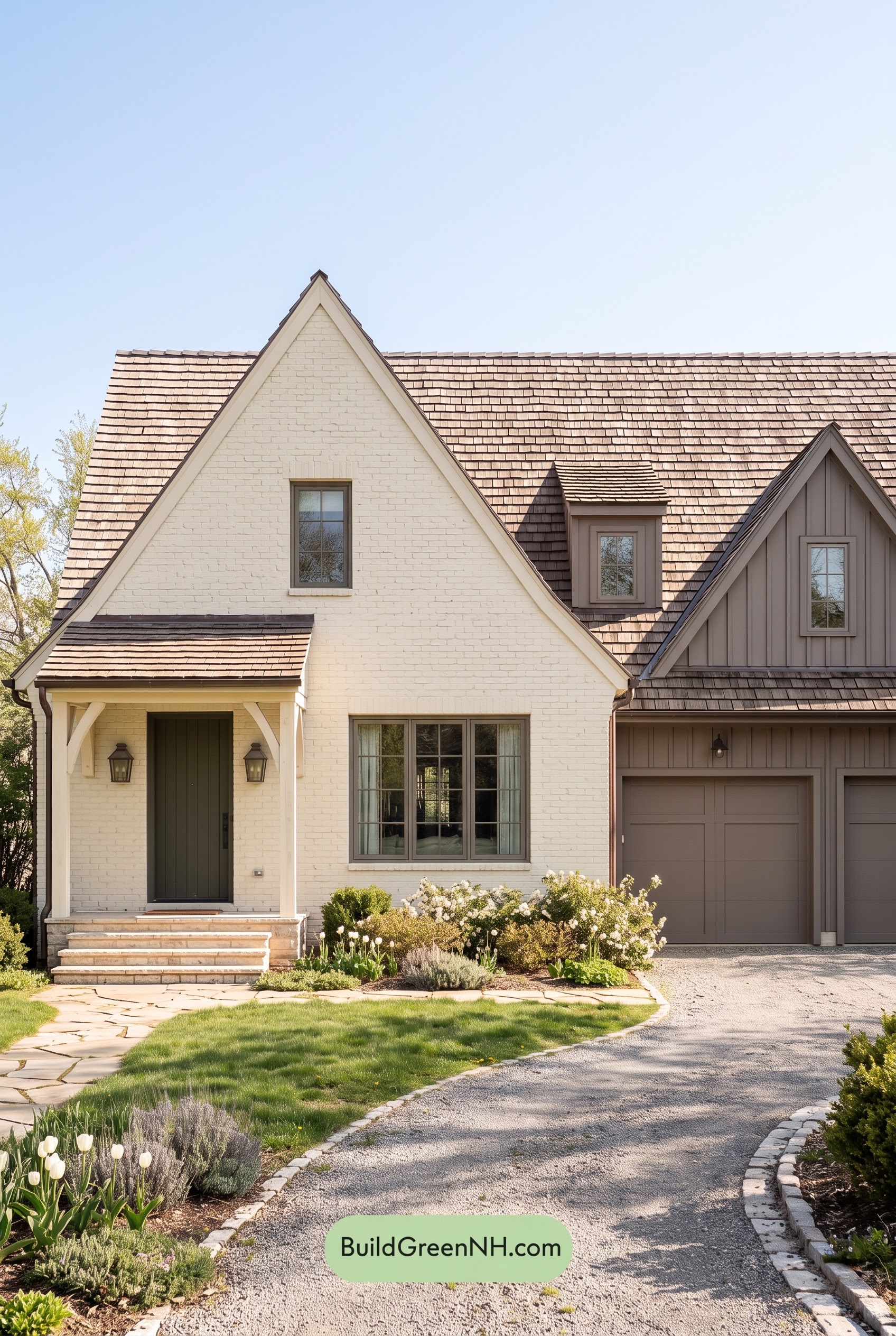 Cream Exterior Paint Color Schemes With a Brown Roof: Cream and Sage Serenity
 Cream Exterior Paint Color Schemes With a Brown Roof: Cocoa and Navy Assurance
Table of Contents