Last updated on
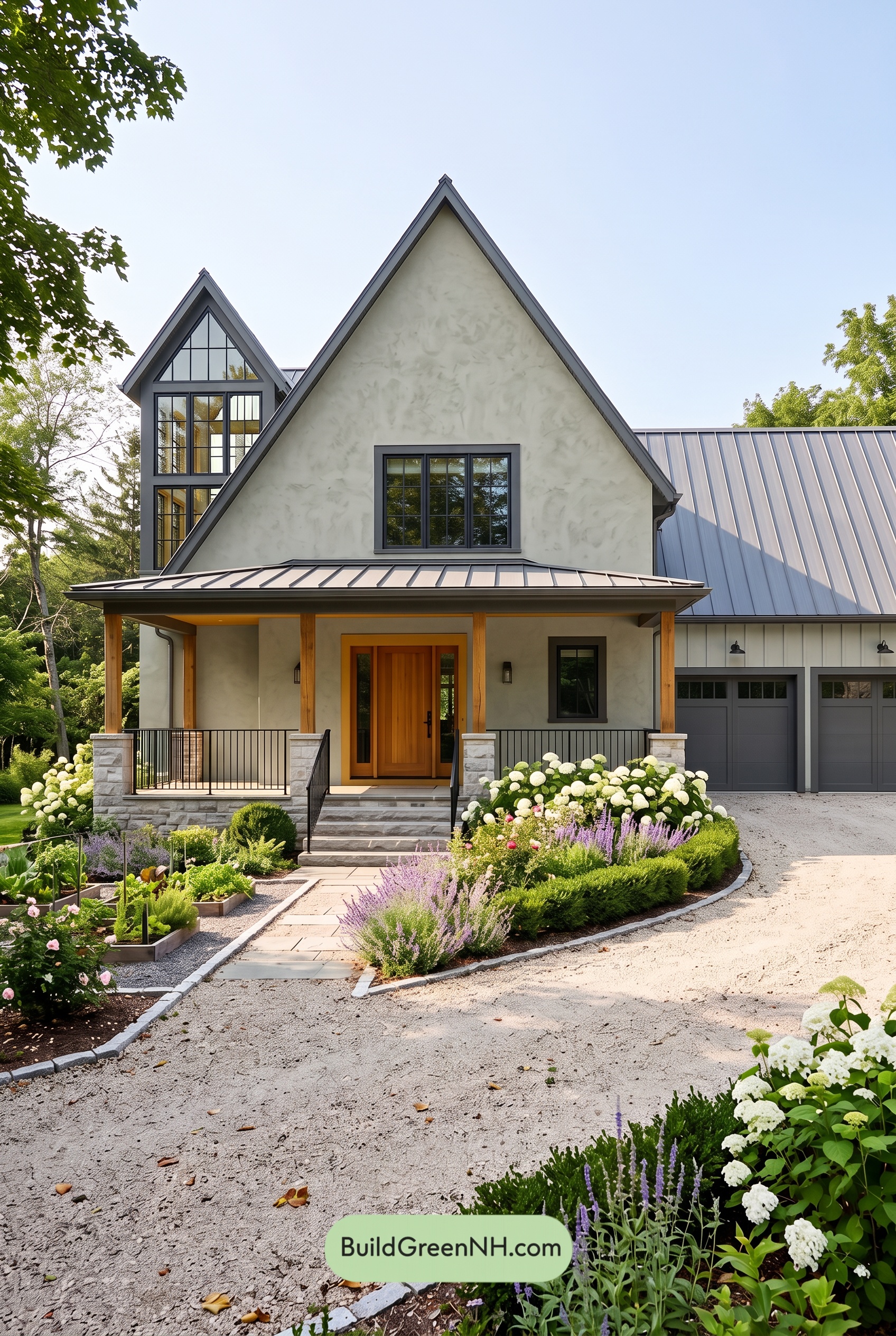

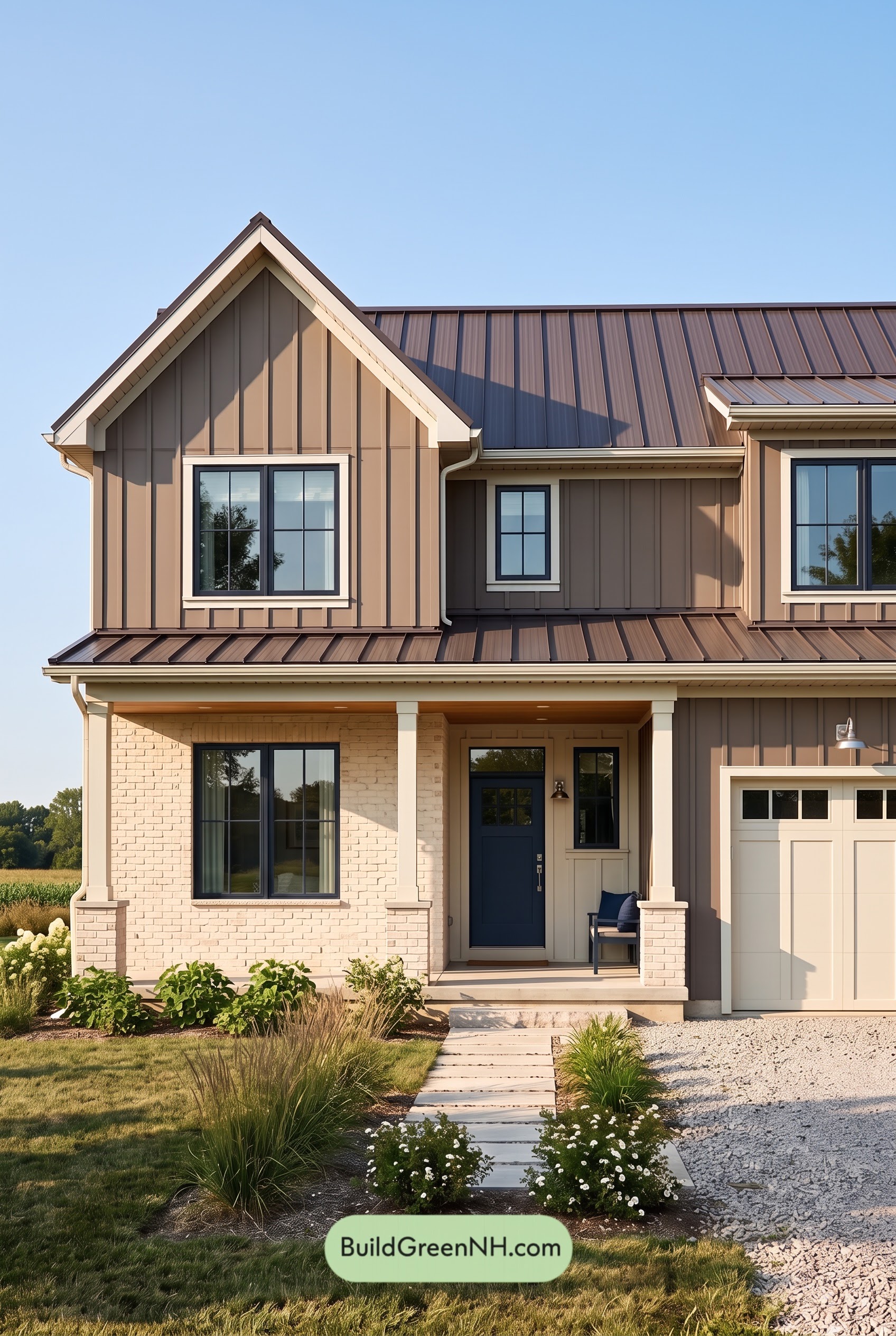
Soft gray walls, deep gray detailing, and warm brown accents give this home a beautiful balance of architectural drama and everyday welcome.
A Soft Gray Foundation
A light, warm shade of gray covers the main exterior walls, giving the tall front gable a calm, airy presence. The subtle surface texture adds depth without competing with the home’s strong rooflines. It’s a gentle backdrop that lets the darker details stand out.
The vertical siding above the garage continues the pale gray palette. Although its texture differs from the main facade, the close color relationship keeps the two sections connected. That consistency is especially effective on a house with several distinct roof shapes.
Deep Gray Details That Define the Architecture
Medium-to-deep gray trim traces the steep gables and outlines the windows, emphasizing the home’s crisp geometry. Against the lighter walls, these darker edges make each architectural feature easier to appreciate without creating an overly stark contrast.
The window frames deepen toward charcoal gray, giving the large glazed areas a clean, structured appearance. Deep gray porch railings repeat that darker note at ground level. Their slender profiles keep the porch feeling open while visually linking it to the windows above.
The garage doors carry a similarly rich gray shade across a larger surface. Rather than introducing another competing color, they reinforce the existing palette and give the garage a quietly substantial presence.
Warm Brown Makes the Entrance Shine
The front door provides the most inviting contrast: a golden shade of brown that feels warm against the surrounding grays. Its coordinating surround extends that warmth around the entry, making the doorway a natural focal point beneath the porch roof.
Brown porch columns echo the door, spreading the warmer tones across the facade. This repetition matters. Instead of leaving the entrance as one isolated accent, it creates a welcoming rhythm that softens the cooler window frames, railings, and roof details.
A Roof and Base That Bring It Together
The standing-seam roof introduces a silvery shade of gray, with darker seams adding definition. Its lighter, reflective appearance bridges the pale walls and deeper trim, allowing the generous roof surfaces to feel coordinated rather than heavy.
At the porch base and steps, layered light and medium grays provide a grounded finish. Together, these shades create an exterior that feels composed but never cold: pale gray offers softness, charcoal gray supplies structure, and golden brown brings warmth exactly where guests arrive.
Next, see how this color scheme looks under different lighting simulations throughout the day.
Overcast
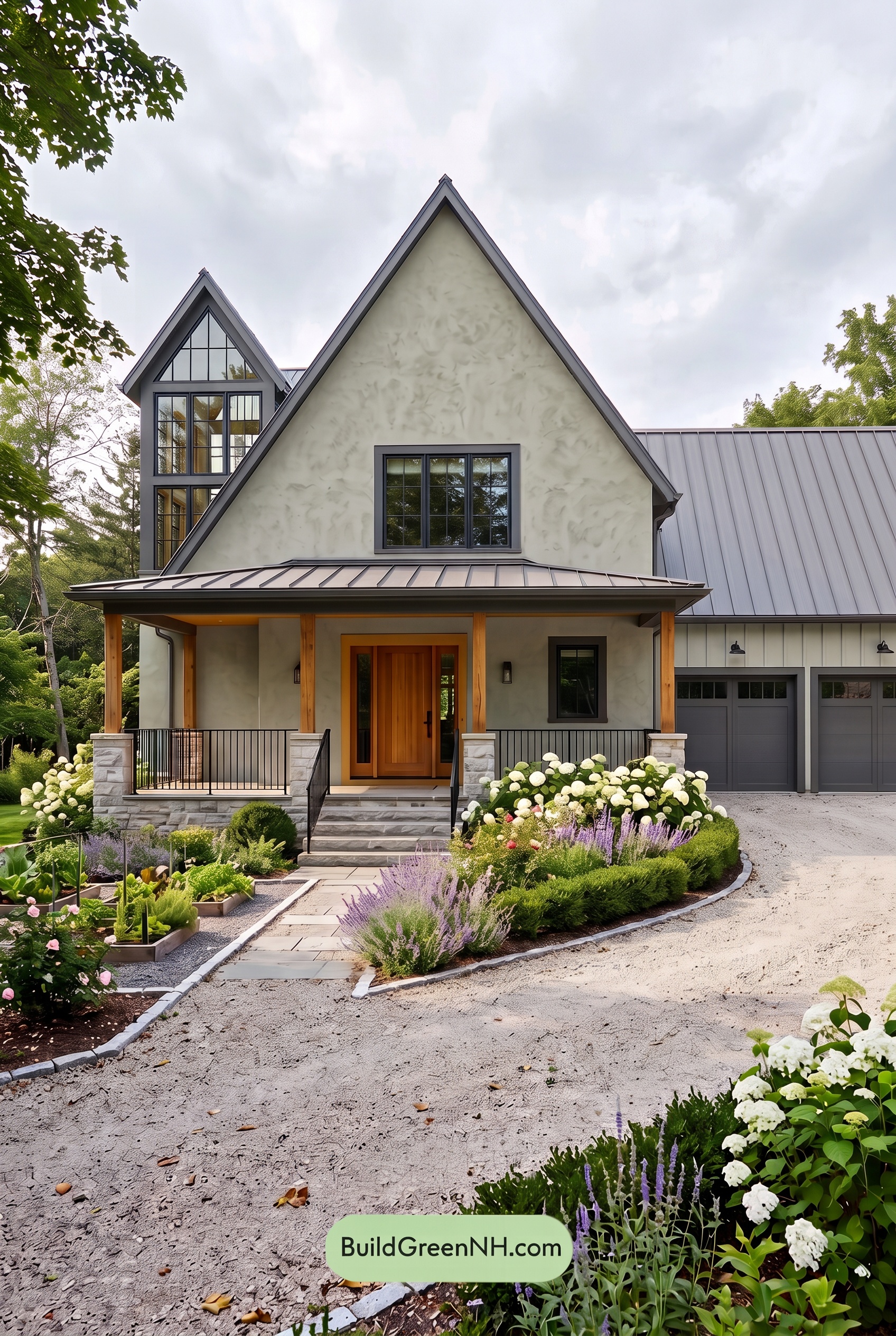
Under overcast skies, the pale gray walls appear softer and slightly cooler than in neutral daylight, with their warm undertones less noticeable. The palette feels more muted, while the deeper gray trim and window frames retain their definition. Diffused light softens shadows beneath the gables, reducing dramatic light-to-dark contrast.
The warm brown door and columns lose some of their golden glow, appearing gentler and less saturated. Yet against the cooler grays, they remain welcoming focal points. With fewer bright highlights and softer transitions between shades, the house takes on a calm, understated mood rather than the crisper feel of neutral daylight.
Golden Hour
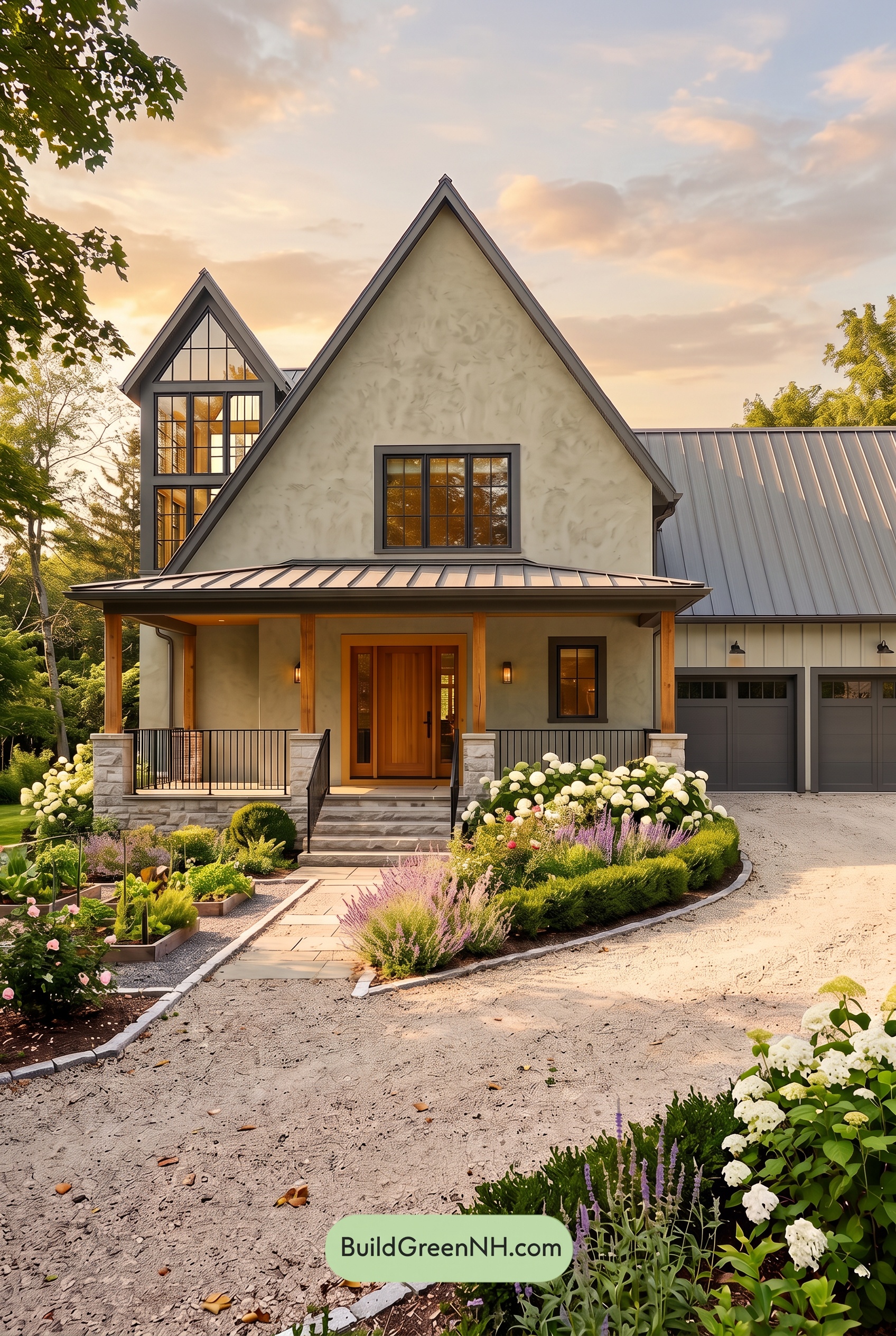
Golden Hour gives the pale grays across this exterior a soft beige warmth, making them feel gentler than they would in neutral daylight. The brown shades around the entrance appear richer and more saturated, while the deeper grays pick up subtle warm highlights. The palette feels less crisp and cool, more relaxed and welcoming.
Longer shadows beneath the porch and along the steep gables deepen the darker shades, strengthening their contrast with the softly lit walls. Shaded grays remain relatively cool, adding depth beside the warmer surfaces. Compared with the more even color balance of neutral daylight, this warm-and-cool interplay gives the house a cozy, quietly dramatic mood.
Shade
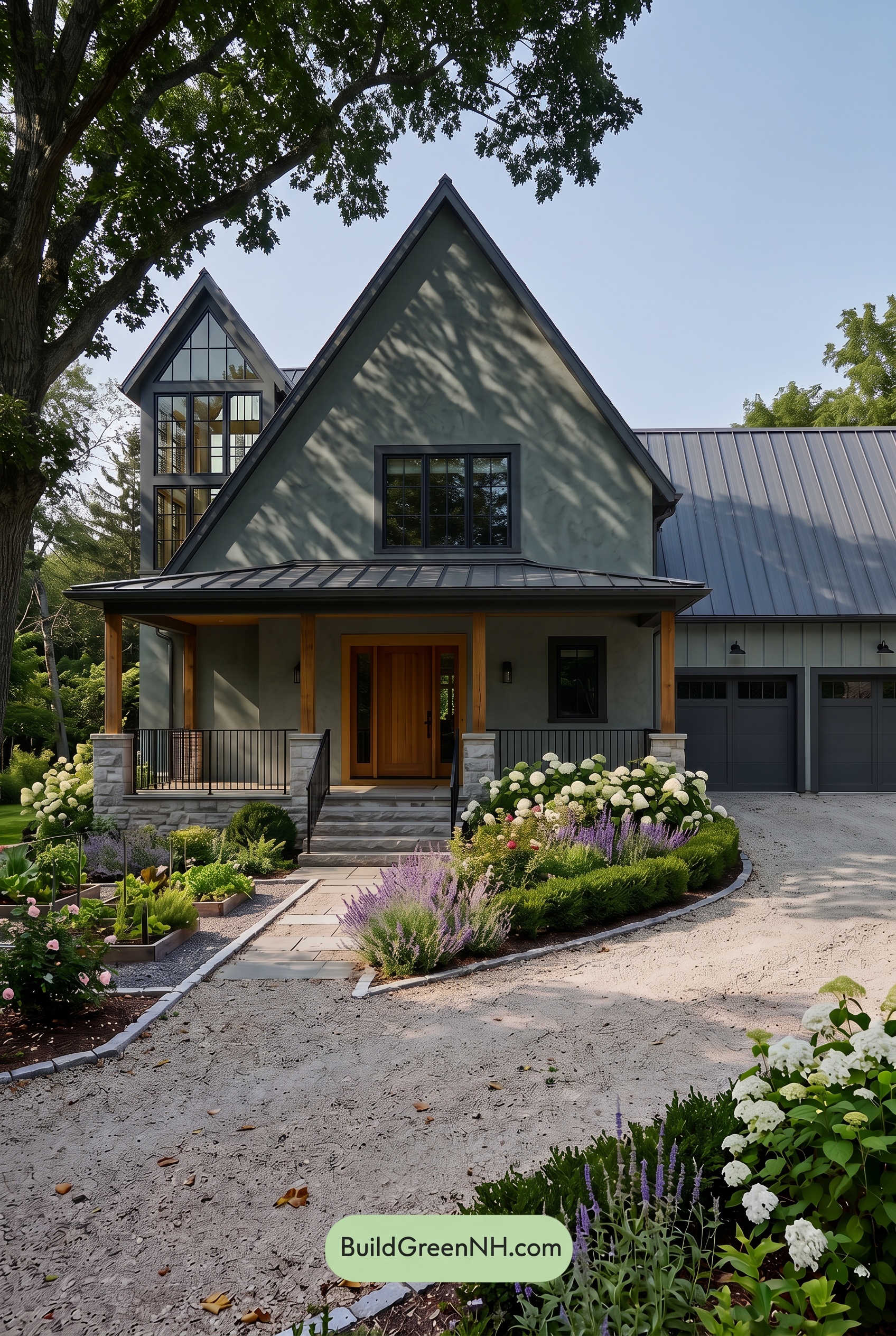
In shade, the midtone grays appear deeper and cooler than they would in neutral daylight, with a subtle green cast beneath the leafy canopy. Their color feels more muted, while the darkest gray shades settle toward charcoal. Dappled shadows add gentle movement across the broad surfaces, and deeper porch shadows make neighboring gray shades blend more closely together.
The warm browns lose some of their golden brightness, becoming softer and earthier without losing their welcoming character. Against the cooler grays, that remaining warmth feels especially inviting. Compared with neutral daylight’s clearer separation of shades, the shaded palette feels quieter and more enveloping, with dark outlines preserving definition around the softer midtones.
Nighttime
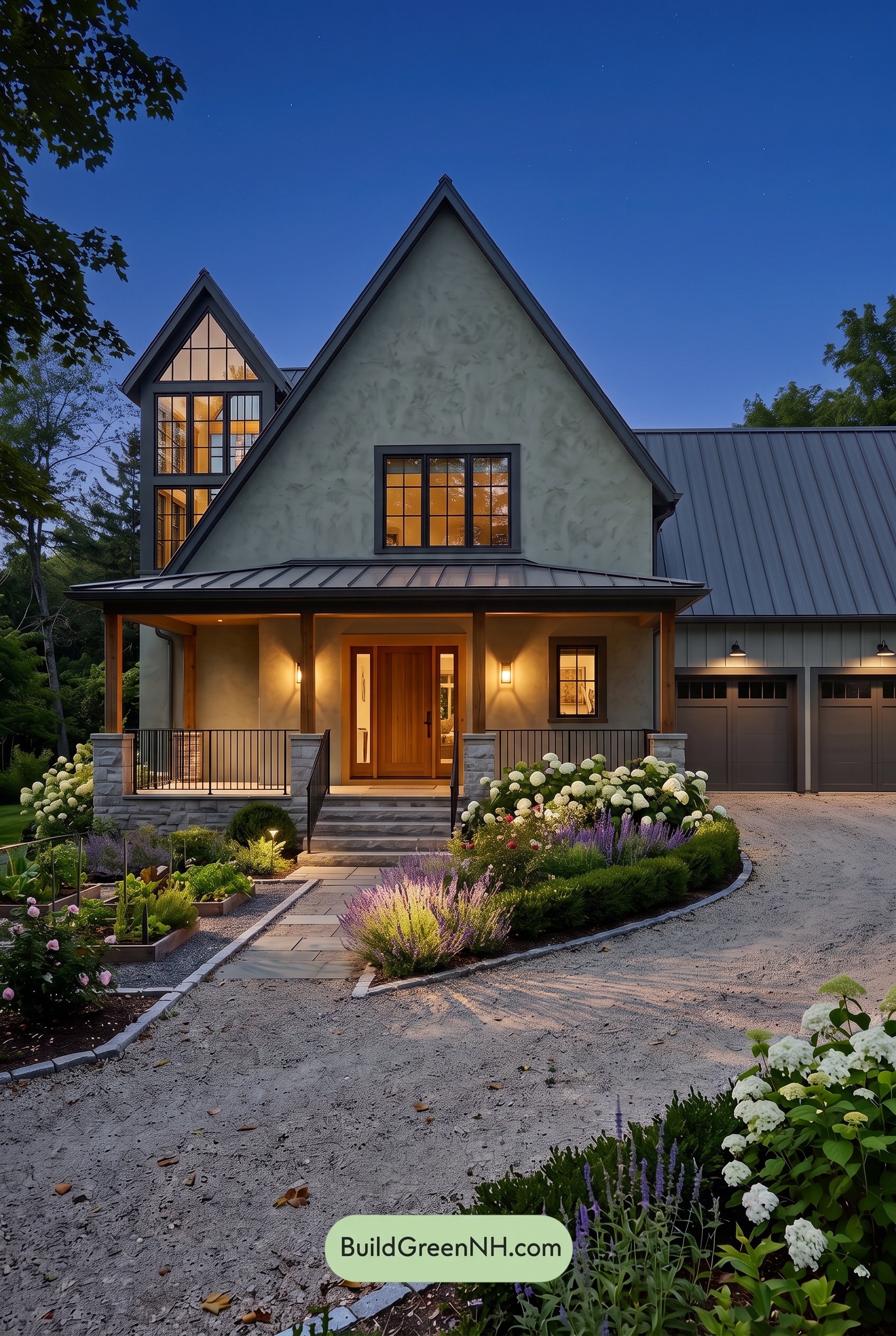
At night, the light gray walls appear deeper and cooler than they would in neutral daylight, with a subtle blue-gray cast across the unlit gables. Their already restrained saturation feels even more muted, while warm porch lighting lends nearby grays a soft beige glow. Shadows beneath the eaves deepen the darker gray trim, sharpening its contrast against the lighter walls.
The brown door and columns look richer under the warm lighting, with golden-brown undertones becoming more noticeable. Away from the lights, the gray garage doors and railings darken, and their finer details recede. Compared with daylight’s more even color balance, this mix of cool shadows and warm highlights creates a cozy, quietly dramatic mood centered on the entrance.
Pin these for later:
Want More?
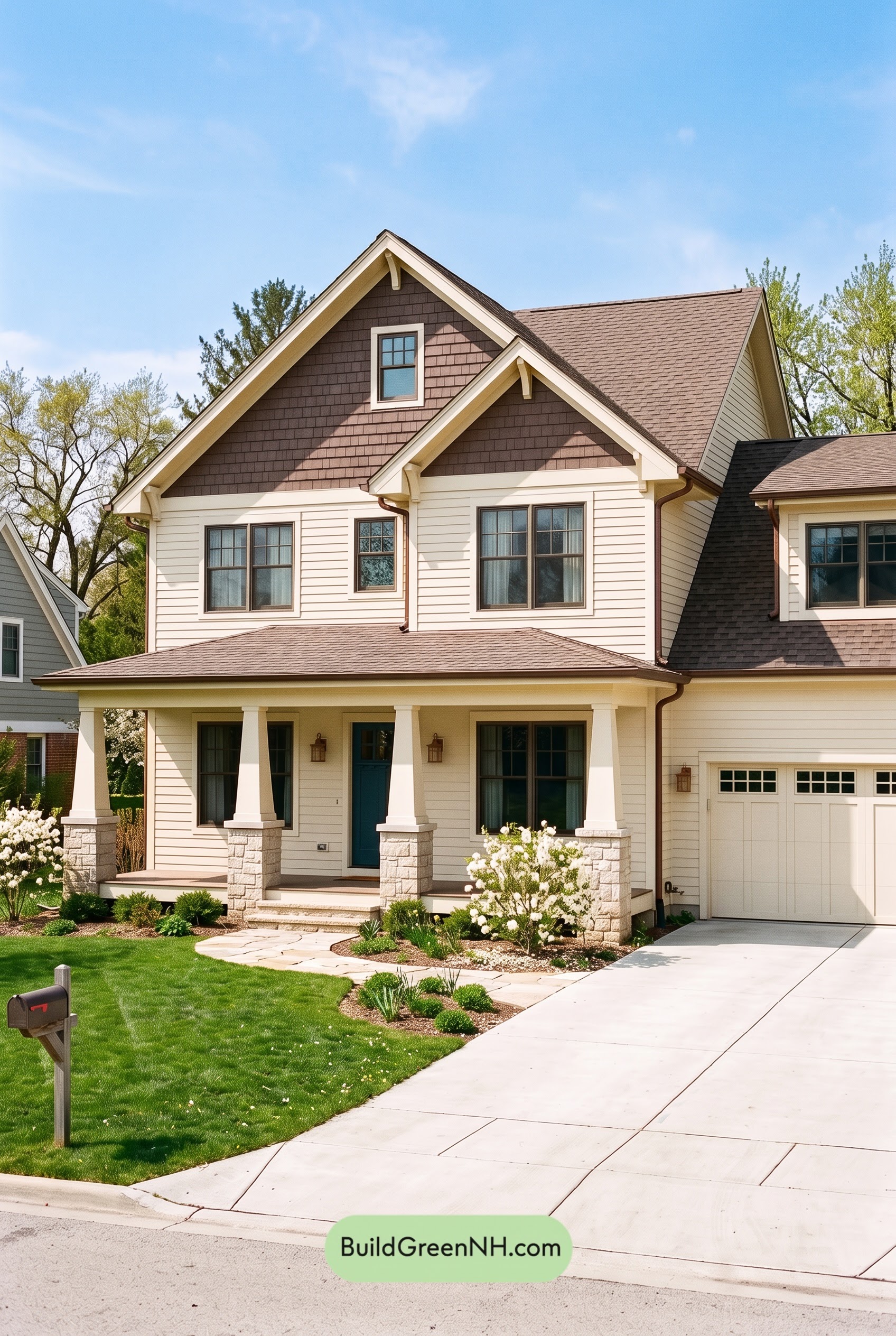 Cream Exterior Paint Color Schemes With a Brown Roof: Cream and Teal Welcome
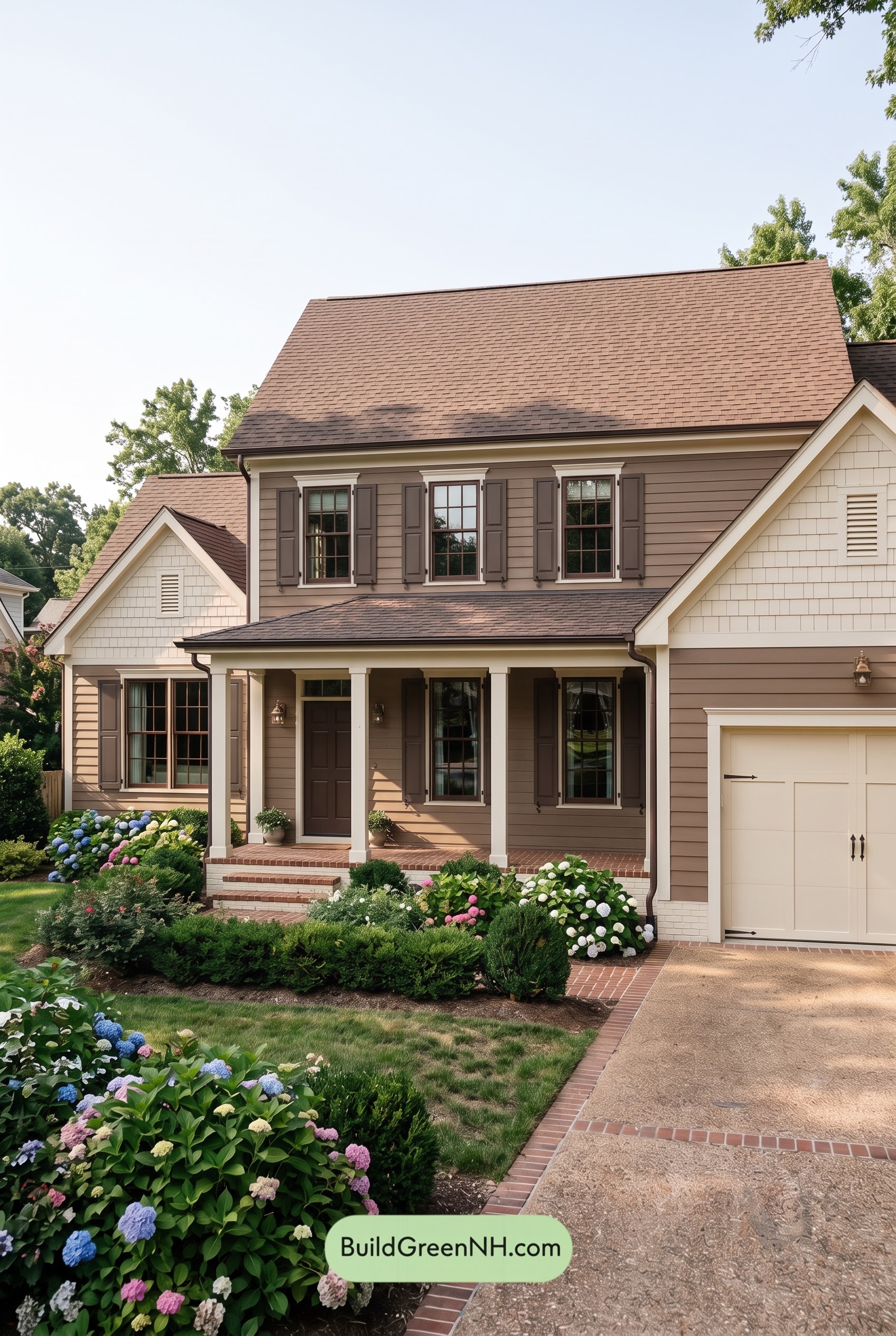 Cream Exterior Paint Color Schemes With a Brown Roof: Cocoa and Burgundy Embrace
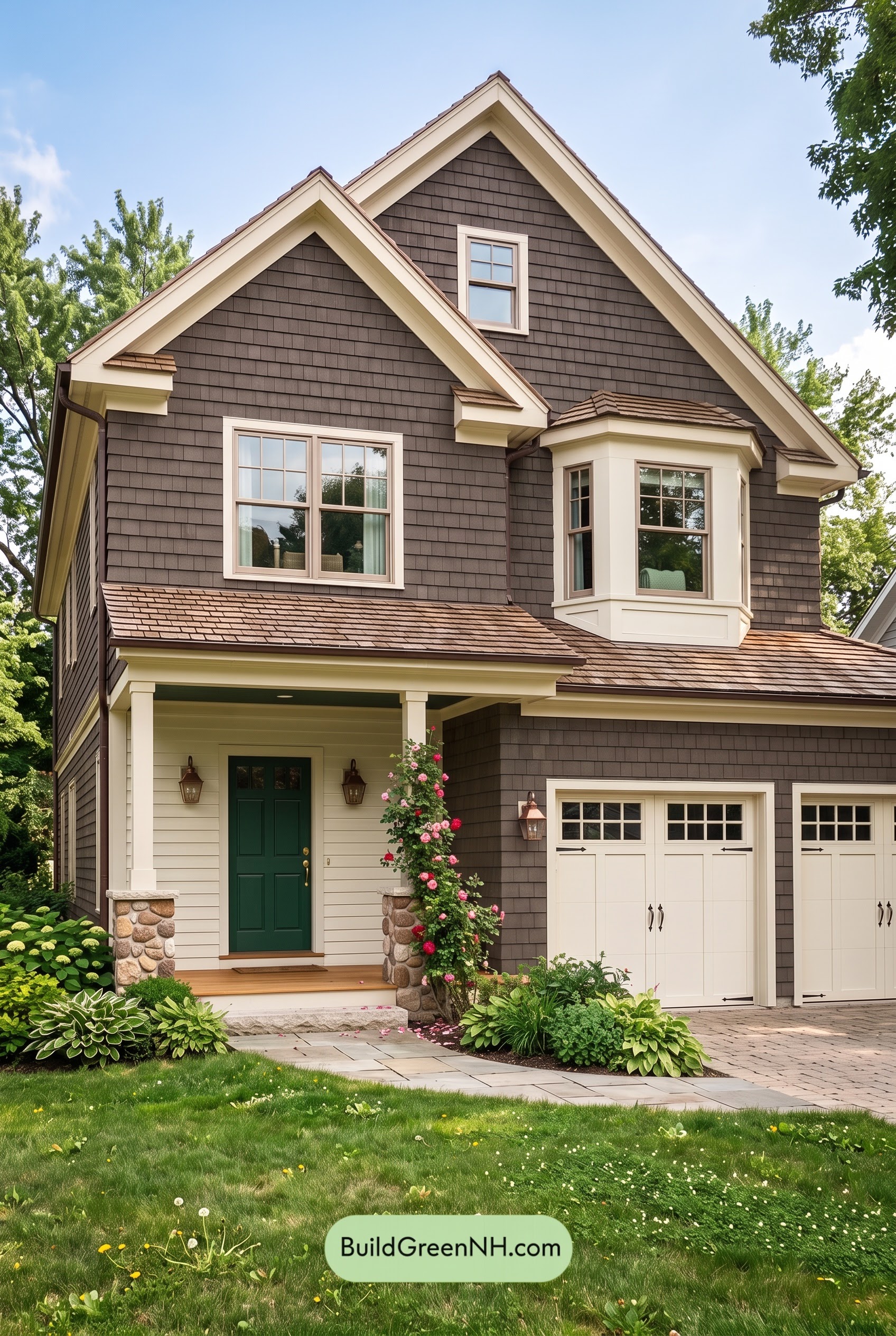 Cream Exterior Paint Color Schemes With a Brown Roof: Cocoa and Green Grace
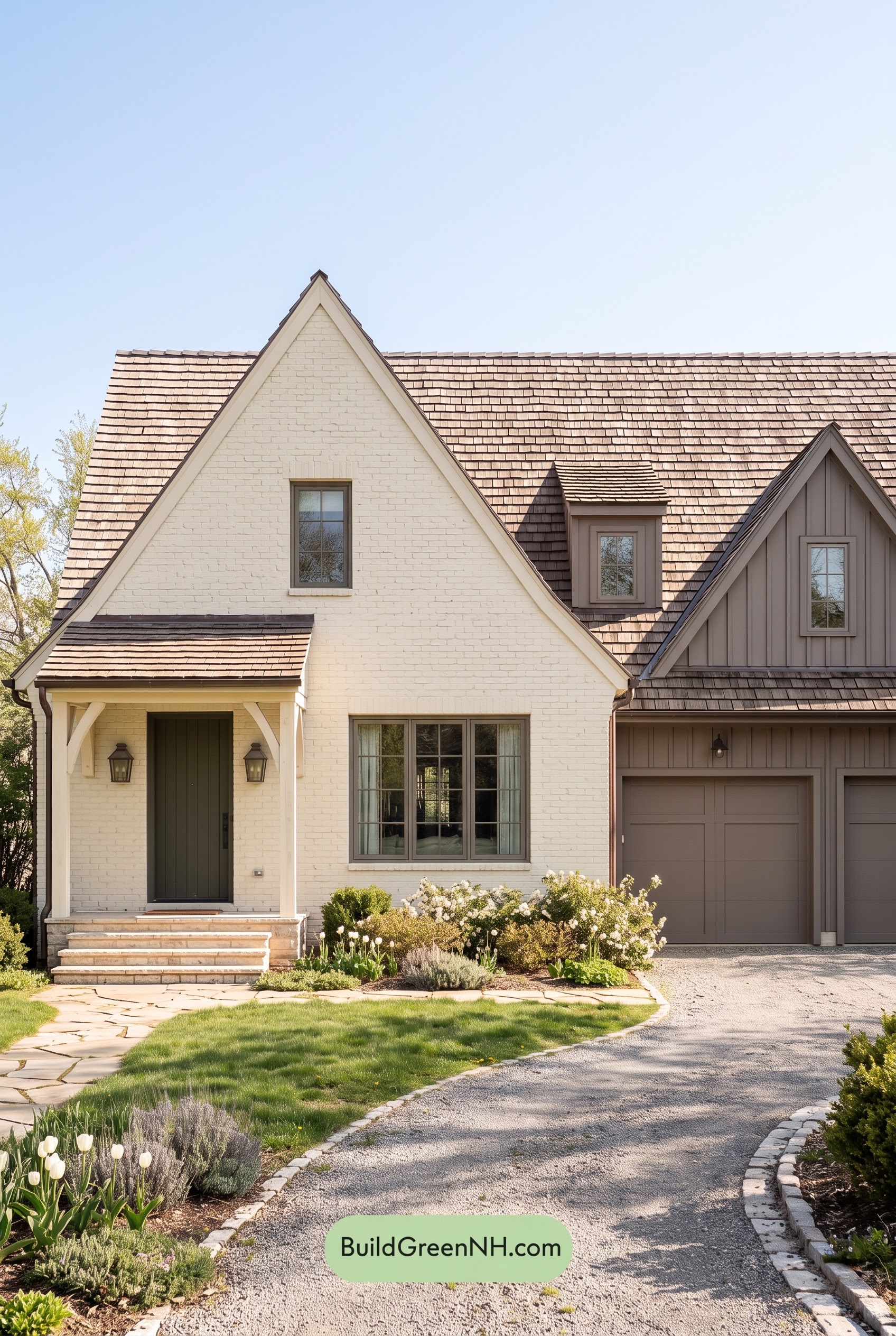 Cream Exterior Paint Color Schemes With a Brown Roof: Cream and Sage Serenity
 Cream Exterior Paint Color Schemes With a Brown Roof: Cocoa and Navy Assurance
Table of Contents