Last updated on
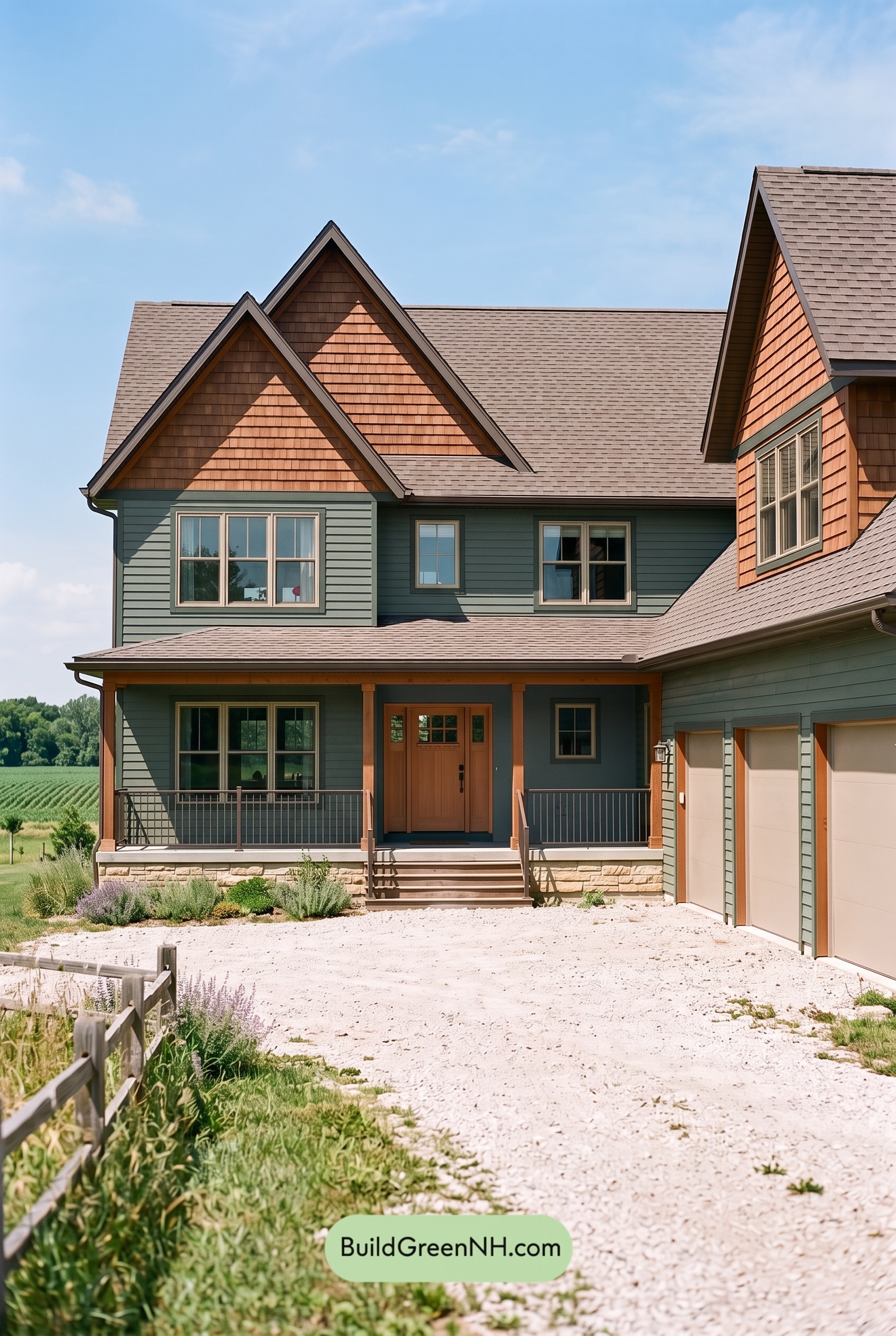

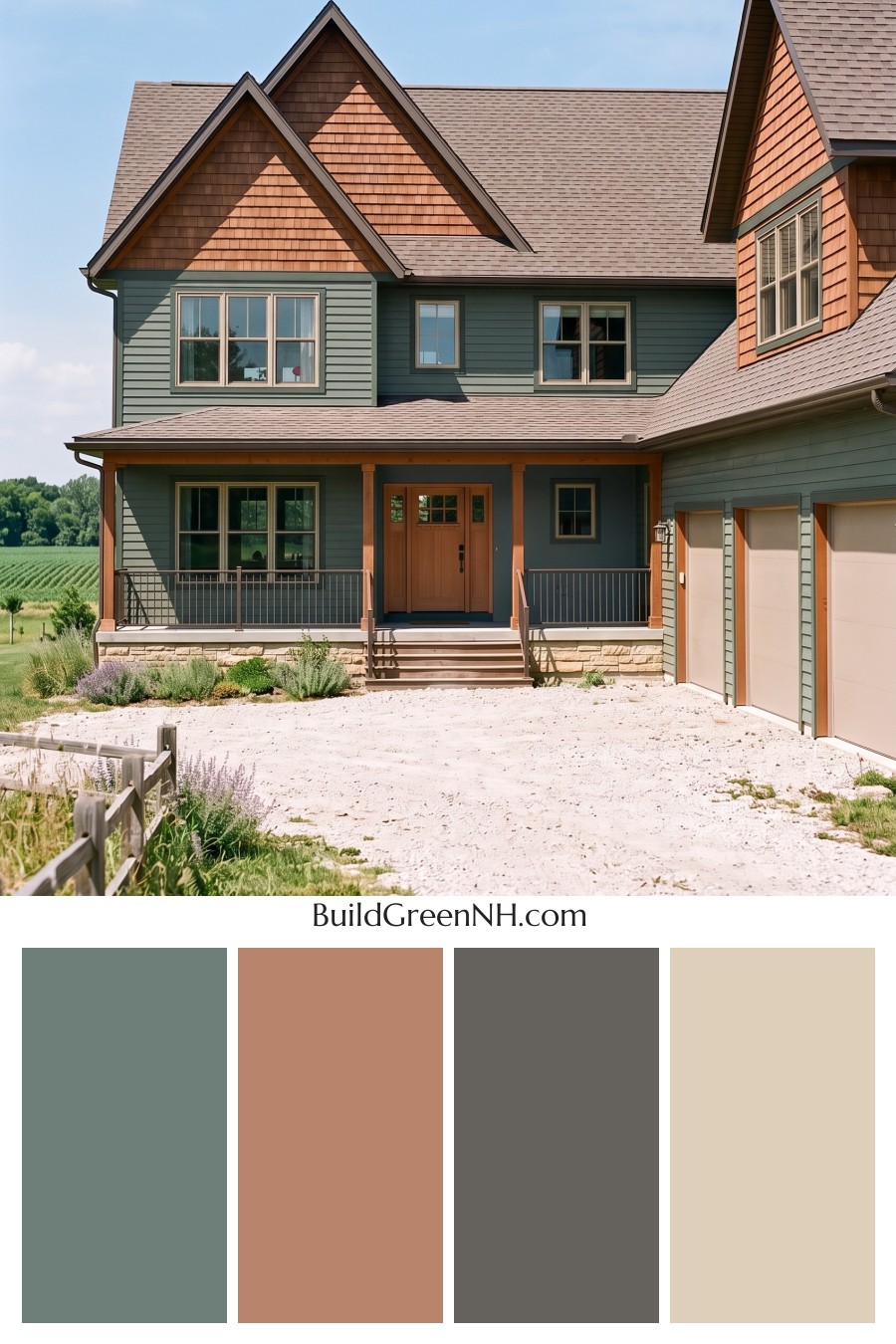
Muted sage green, golden beige, and deep gray give this home its inviting balance of countryside warmth and crisp architectural definition.
Sage Green Sets a Peaceful Foundation
The horizontal siding wears a subdued sage green with noticeable gray undertones. It is a grounded, easygoing shade that connects the house to the surrounding landscape without disappearing into it. Across the broad walls and garage wing, the green creates continuity, helping the home’s many rooflines and projections feel like parts of one cohesive design.
Sunlight brings out its softer side, while the shaded porch makes the same green appear deeper and richer. That variation adds dimension without introducing another color.
Warm Upper Walls Bring the Gables Forward
The shingled upper walls shift into a rich golden beige with warm brown undertones. Against the cooler green siding, these areas give the steep gables a welcoming glow. Their warmth also highlights the change from horizontal siding to smaller, overlapping shingles.
This is where the scheme gains much of its character. Rather than relying on a bright accent, it pairs two earthy color families with enough contrast to make the architecture stand out.
Layered Neutrals Define the Details
Deep gray trim outlines the roof edges and sharpens the gables, lending structure to the softer wall colors. Gray porch railings repeat that darker note below, connecting the upper and lower portions of the exterior without making the porch feel visually heavy.
Light beige window frames provide a gentler contrast. They brighten the openings while staying comfortably within the warm neutral palette. Overhead, the roof’s grayish taupe shades bridge the cool siding and golden upper walls, keeping the large roof surfaces from competing with either.
A Welcoming Entry and Quiet Garage Doors
The front door and porch columns carry deeper golden-tan shades that echo the upper shingles. This repetition draws warmth down to the entrance and makes the sheltered porch feel especially inviting.
The garage doors take a quieter approach in pale beige. Their lighter shade softens these large surfaces, while the surrounding green siding and darker detailing keep them connected to the rest of the house.
The overall mood is relaxed, substantial, and thoughtfully coordinated. Cool green provides calm, warm beige adds hospitality, and gray gives everything a clean outline—a balanced combination that lets the home’s textures and rooflines shine.
Next, see how this color scheme looks under different lighting simulations throughout the day.
Overcast
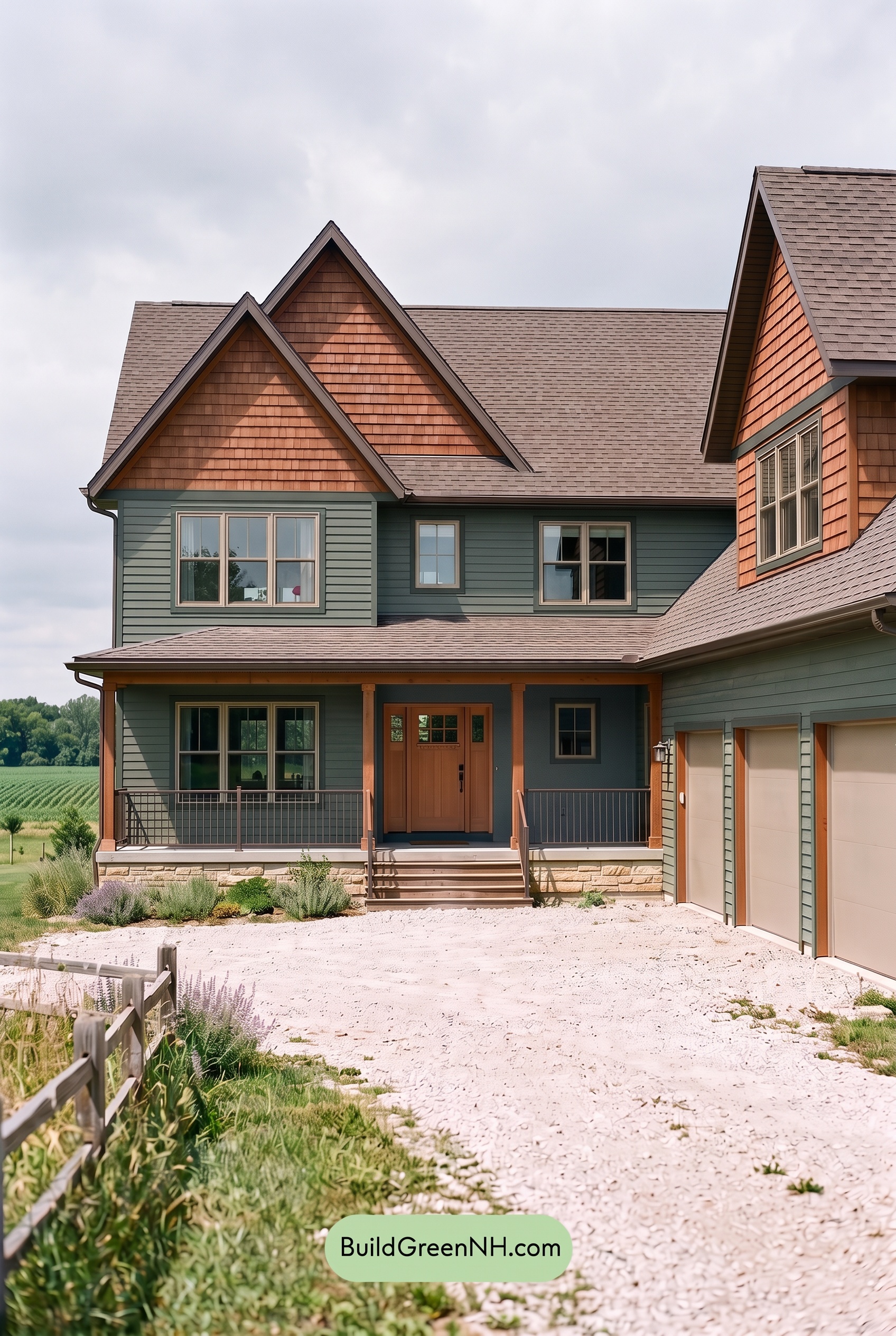
Under overcast skies, this muted green siding would look slightly deeper and less saturated than in neutral daylight, with its gray undertones becoming more noticeable. The warm beige shades would feel softer and less golden, lending the exterior a cooler, quieter character without losing all its warmth.
Diffused light would soften the shadows beneath the gables and porch, making the colors appear more even across the house. Gray accents would blend more gently with the green, while lighter neutrals would still provide subtle definition. Compared with neutral daylight, the overall mood would feel calmer and more understated, with less dramatic contrast between light and dark areas.
Golden Hour
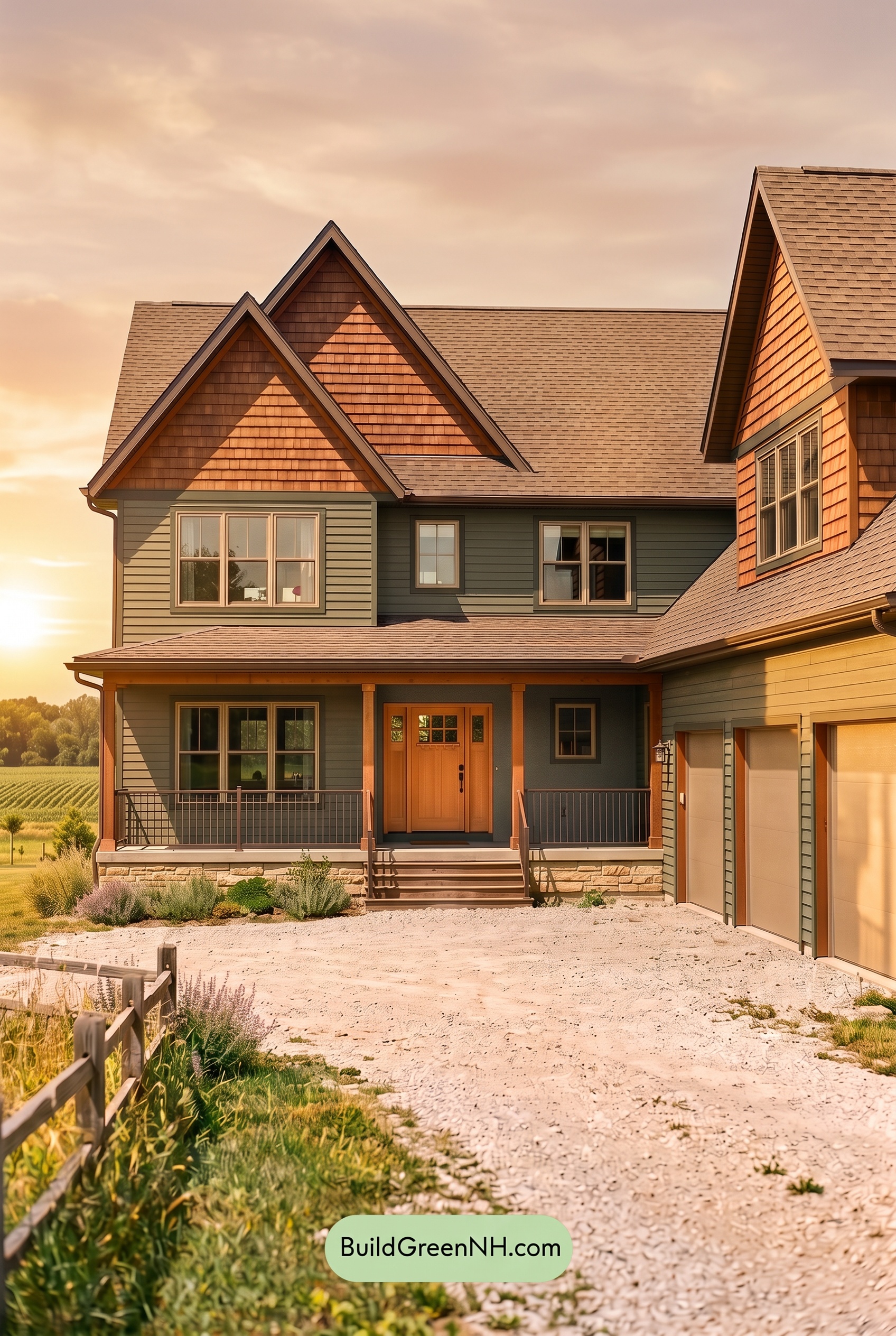
Golden Hour gives the muted green siding a warmer, more olive cast than it would show in neutral daylight. Sunlit sections look softer and less distinctly green, while shaded areas deepen into richer, grayer greens. Across the upper walls, pale beige takes on a peachy warmth, making these light neutrals feel more saturated and luminous rather than simply brighter.
The beige doors, columns, and window frames gain a warm glow, while the gray trim and railings lose some of their coolness. Long shadows beneath the gables and porch heighten the contrast between glowing pale shades and deep, muted tones. Compared with the more balanced color separation of neutral daylight, the palette feels warmer and more unified—even as the stronger light-and-shadow pattern adds drama and a welcoming evening mood.
Shade
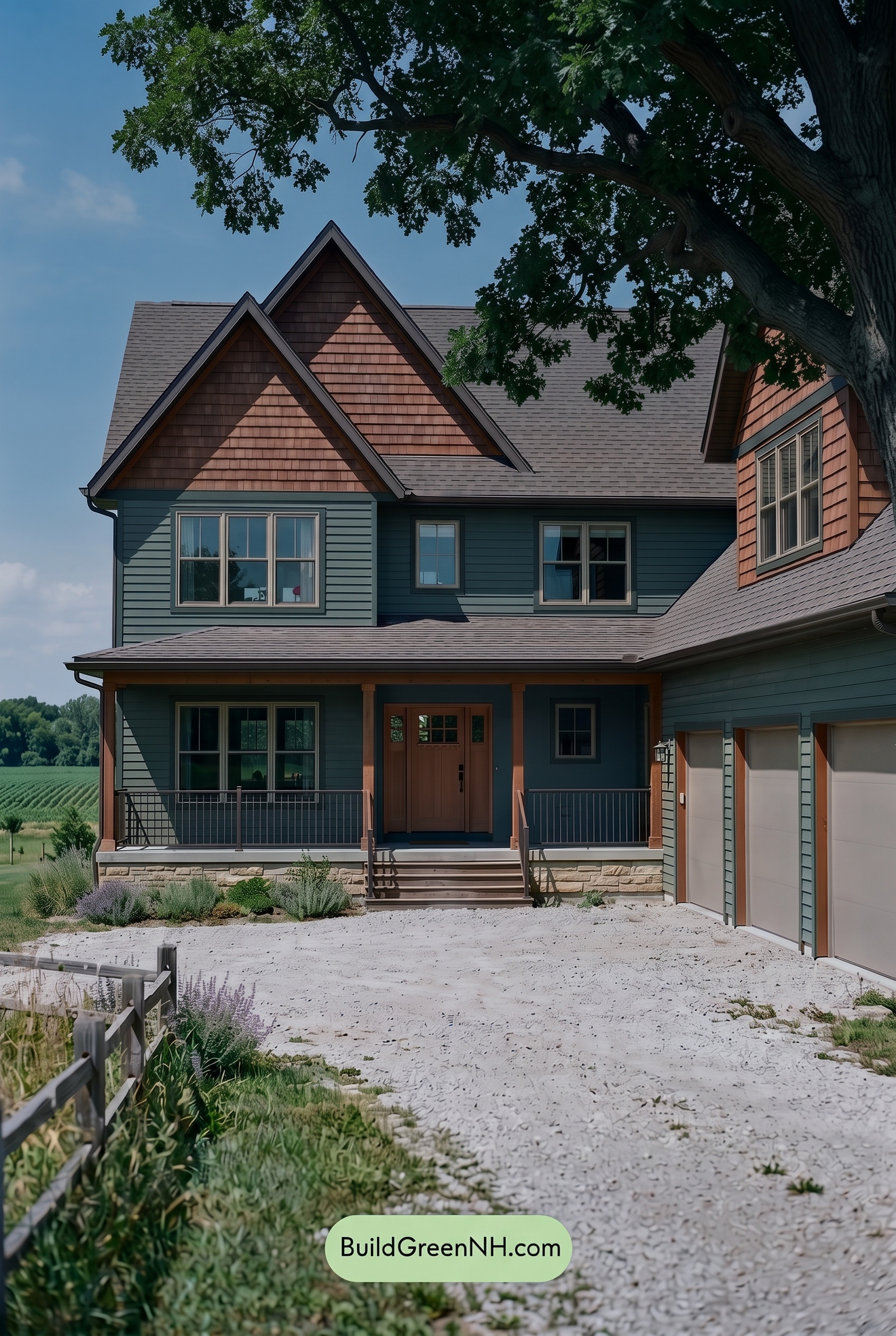
Compared with neutral daylight, shade gives the green siding a deeper, cooler appearance, drawing out blue-gray undertones while making its saturation feel more subdued. The warm beige shades lose some of their golden glow and look softer and earthier, creating a quieter balance with the surrounding greens.
Under the porch roof and eaves, deeper shadows bring the green and gray shades closer together, softening contrast between the siding, trim, and railings. Lighter beige details still stand out against these shaded surfaces, but with less brightness than in neutral daylight. The overall mood feels calm and sheltered, with gentle warmth keeping the cooler palette inviting.
Nighttime
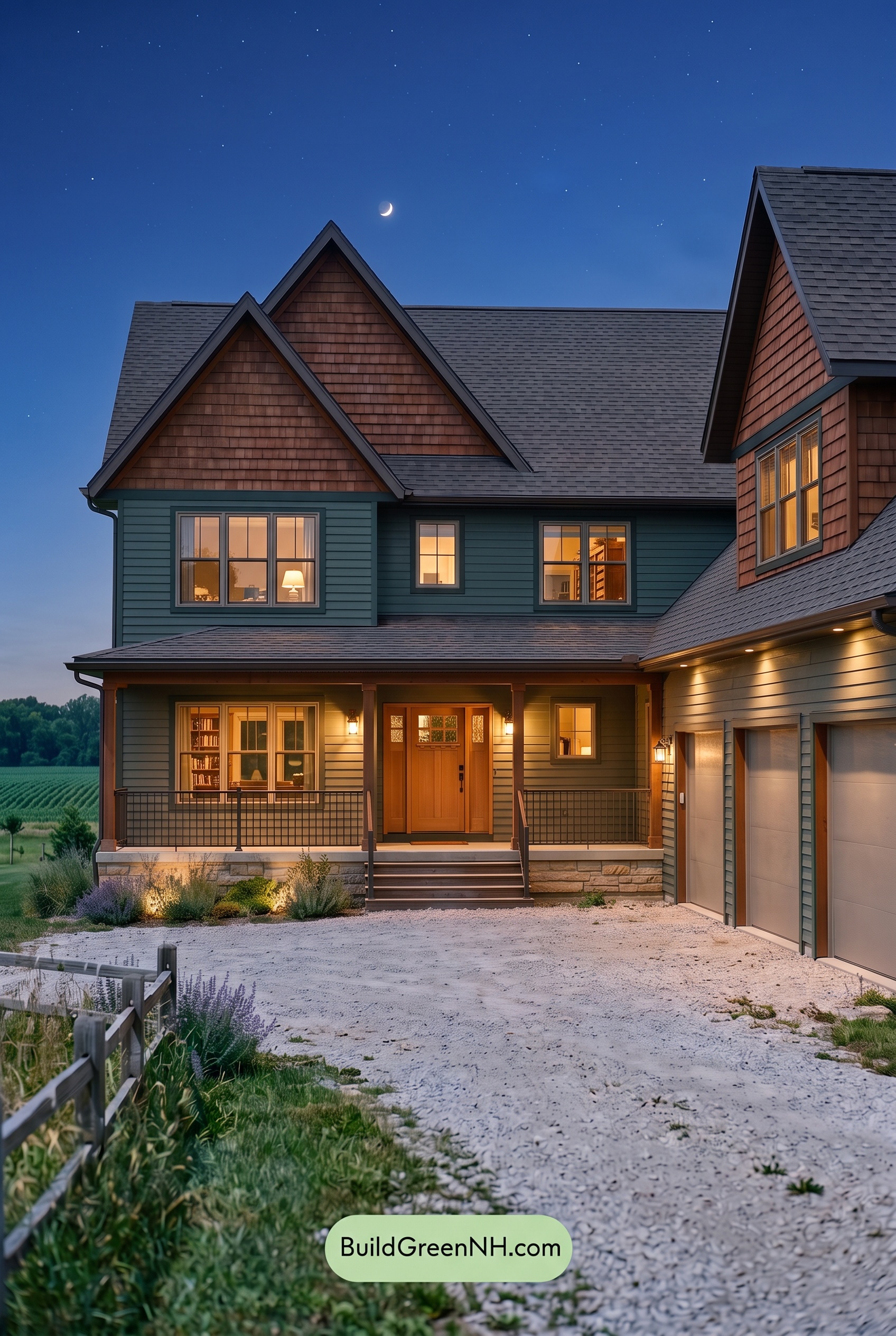
At night, the green shades deepen and look less saturated than they would in neutral daylight, with a cooler, blue-green cast across the unlit walls. Warm lighting near the porch and garage brings out softer, yellow-beige undertones, creating gentle pools of warmth against the darker exterior.
The beige shades feel richer and warmer beneath the lights, while gray details darken toward charcoal in shadow. Deep shade beneath the eaves softens some color boundaries, even as the illuminated entrance stands out more strongly. Compared with daylight’s clearer, more even palette, the nighttime effect feels intimate, welcoming, and quietly dramatic.
Pin these for later:
Want More?
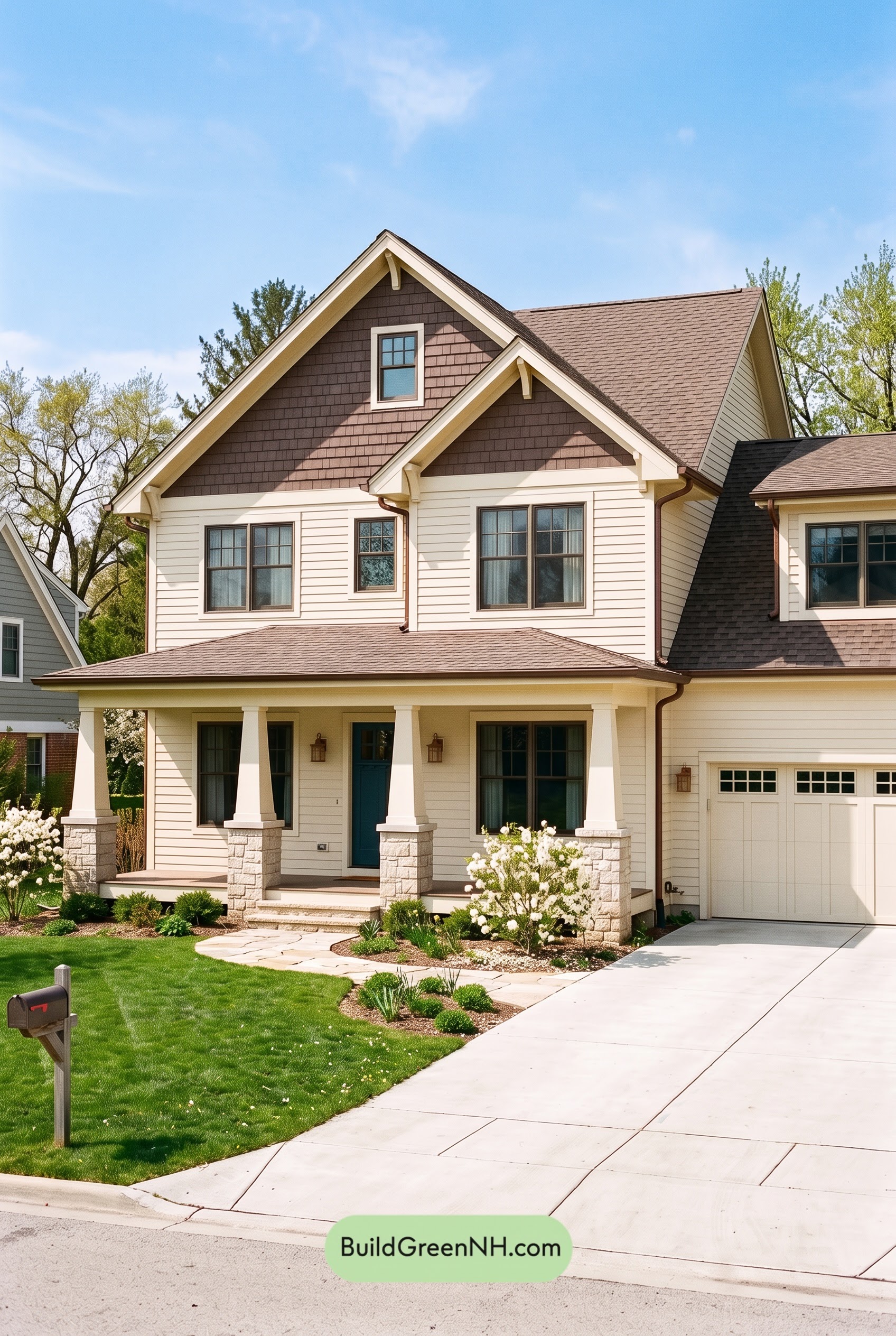 Cream Exterior Paint Color Schemes With a Brown Roof: Cream and Teal Welcome
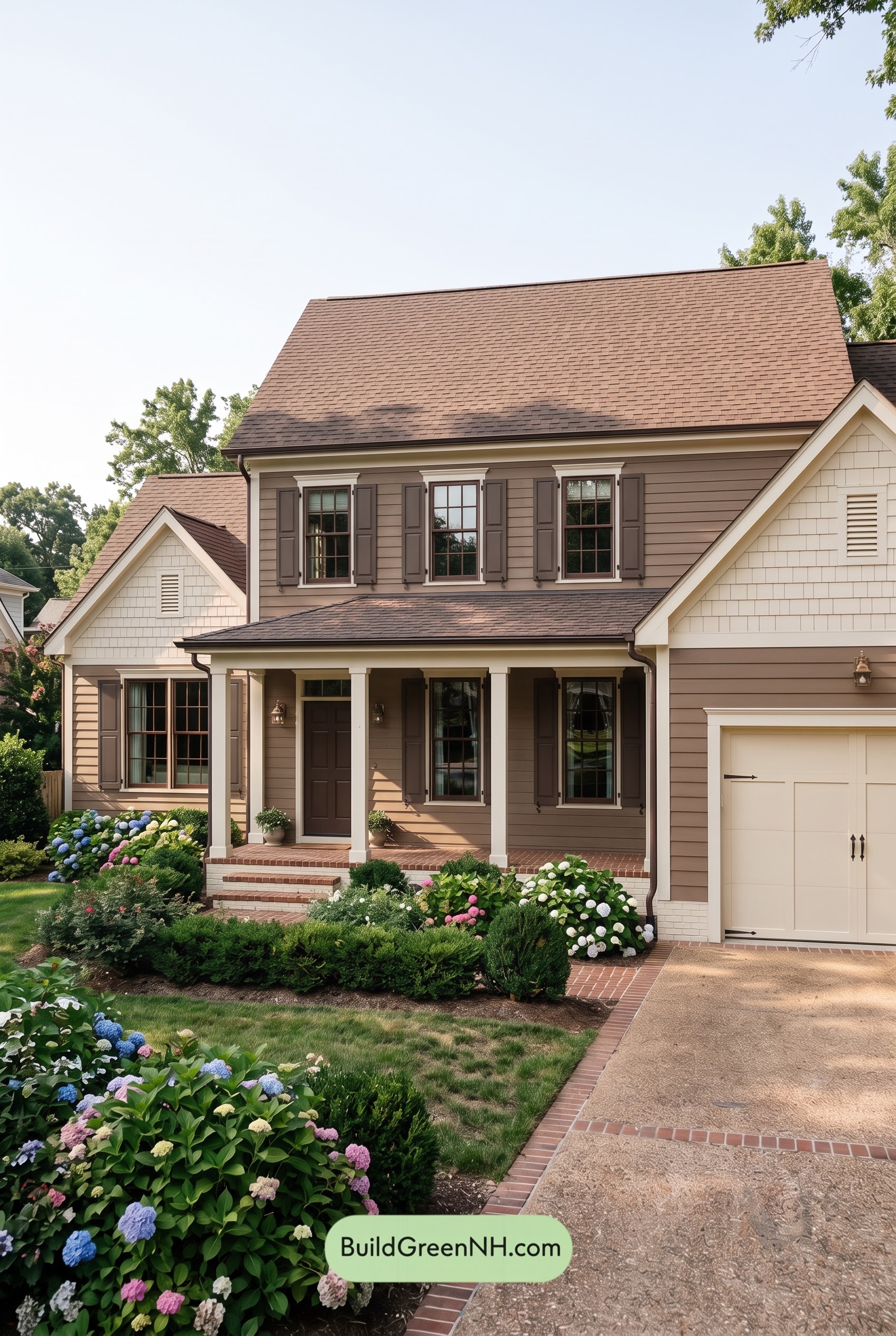 Cream Exterior Paint Color Schemes With a Brown Roof: Cocoa and Burgundy Embrace
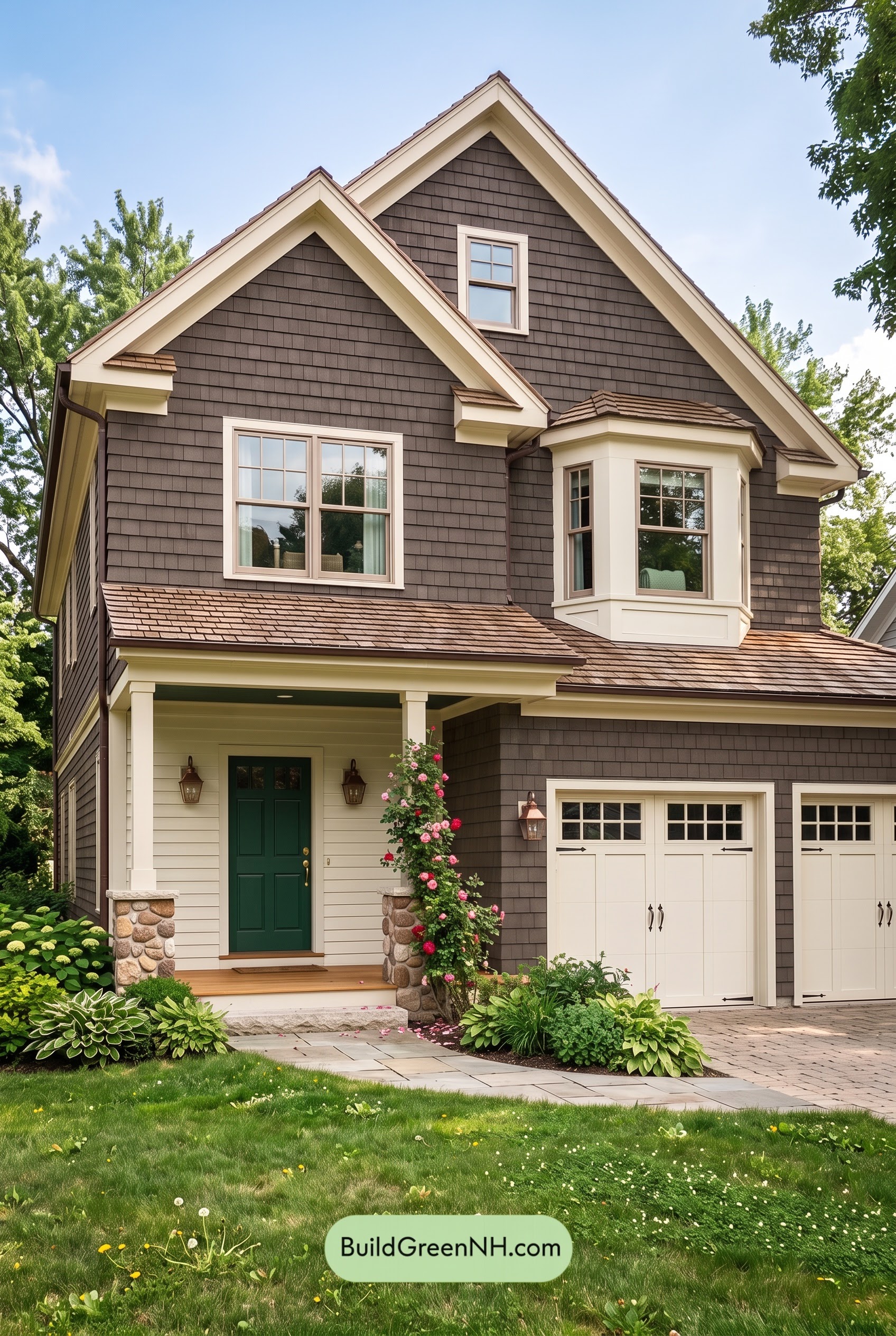 Cream Exterior Paint Color Schemes With a Brown Roof: Cocoa and Green Grace
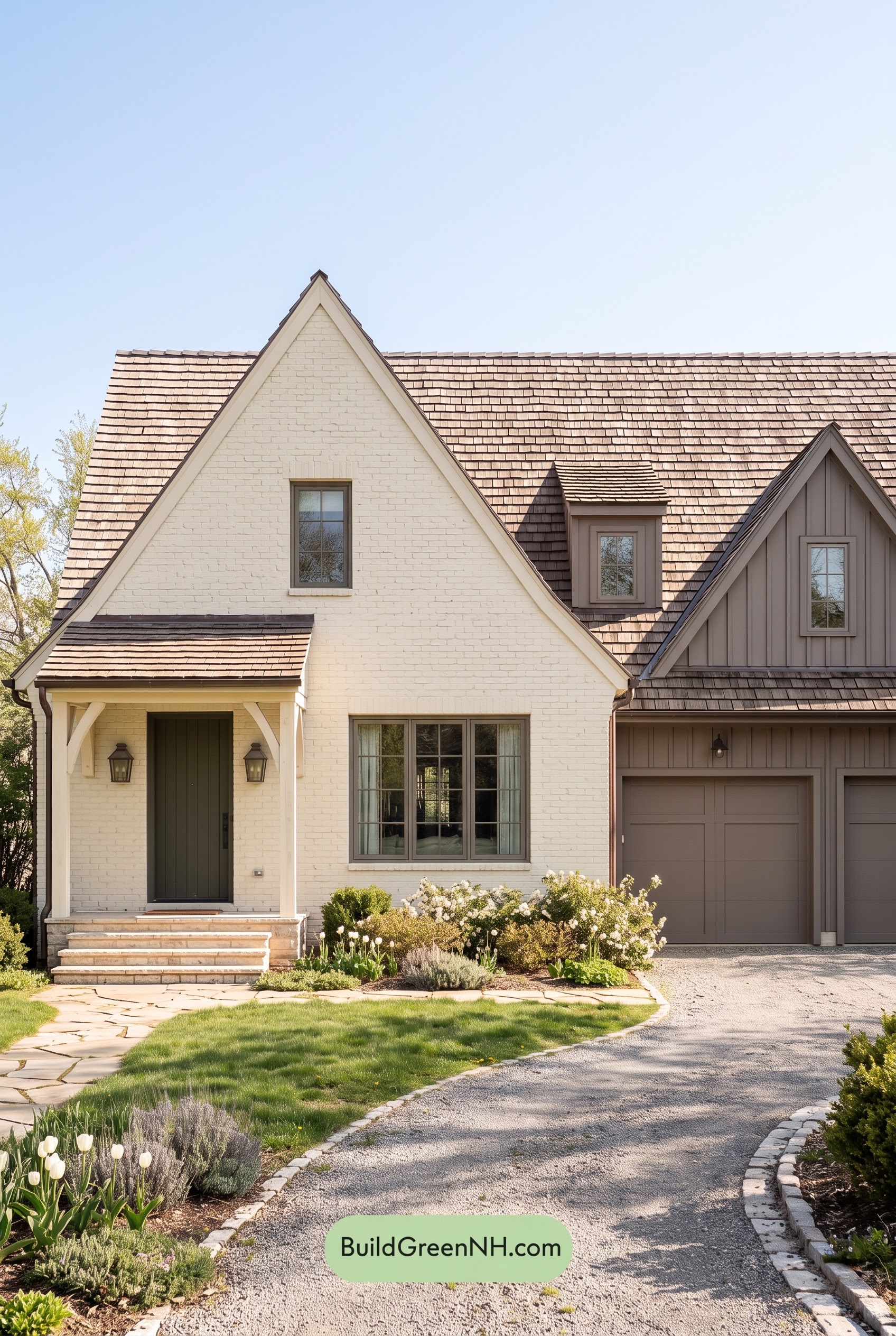 Cream Exterior Paint Color Schemes With a Brown Roof: Cream and Sage Serenity
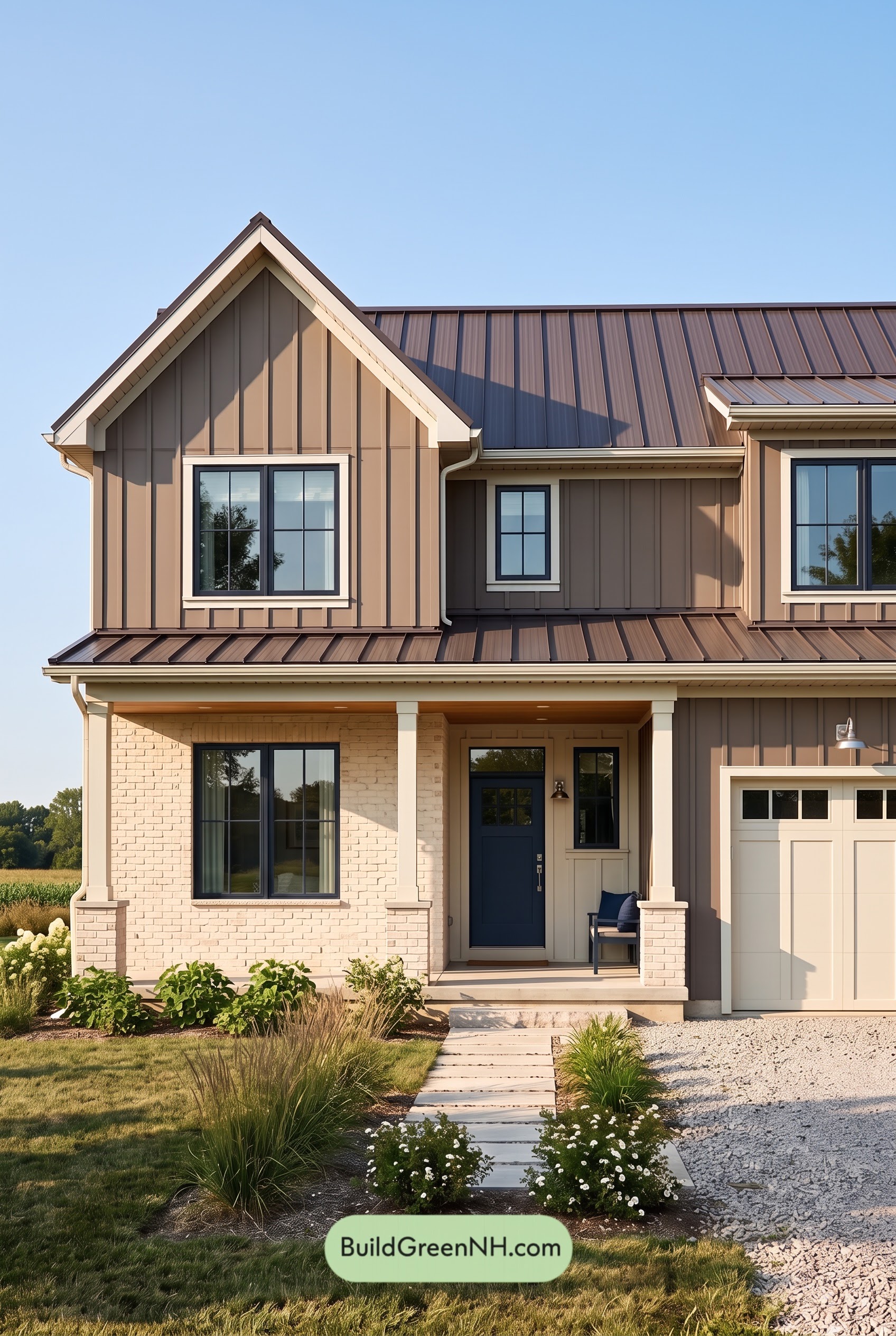 Cream Exterior Paint Color Schemes With a Brown Roof: Cocoa and Navy Assurance
Table of Contents