Last updated on
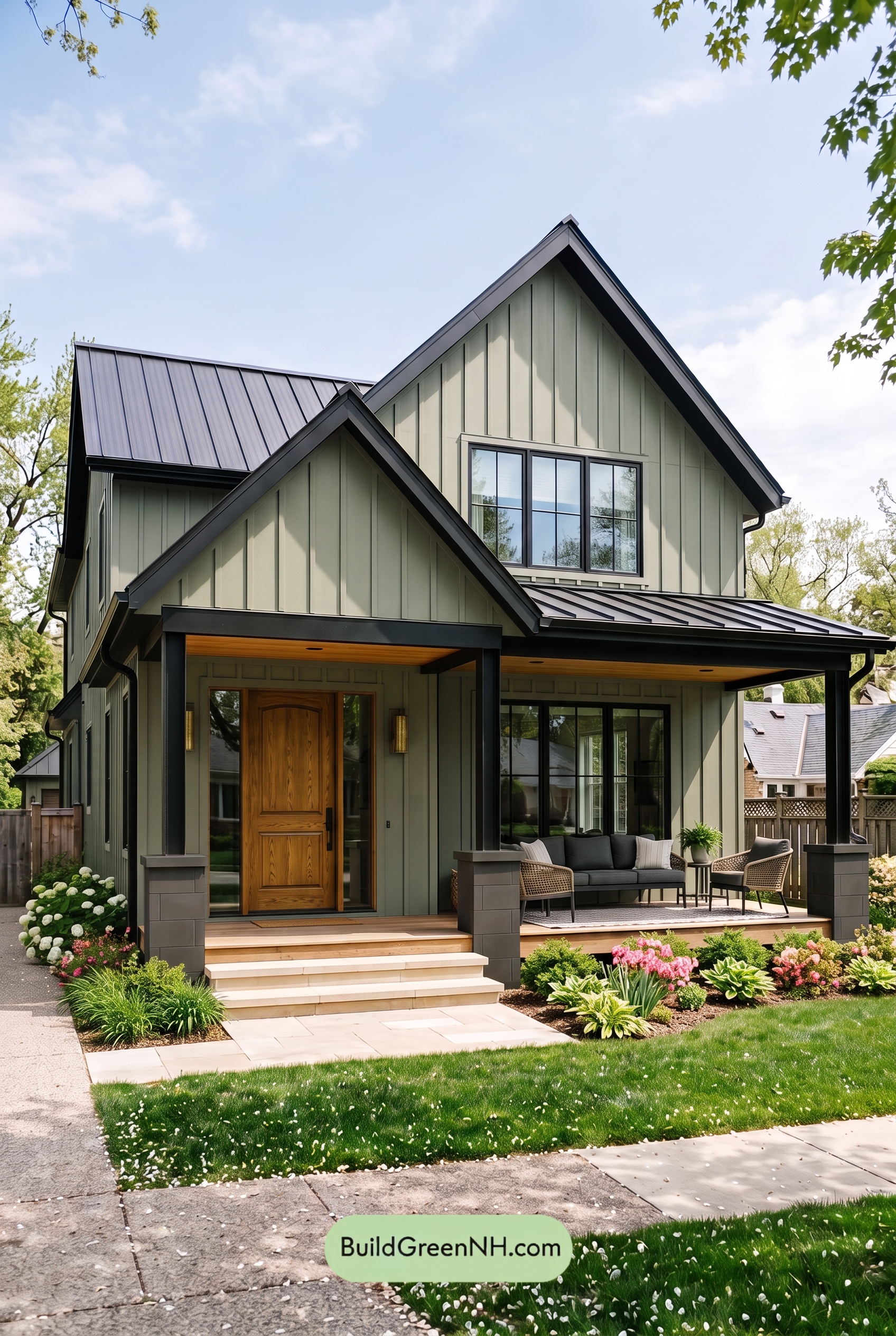

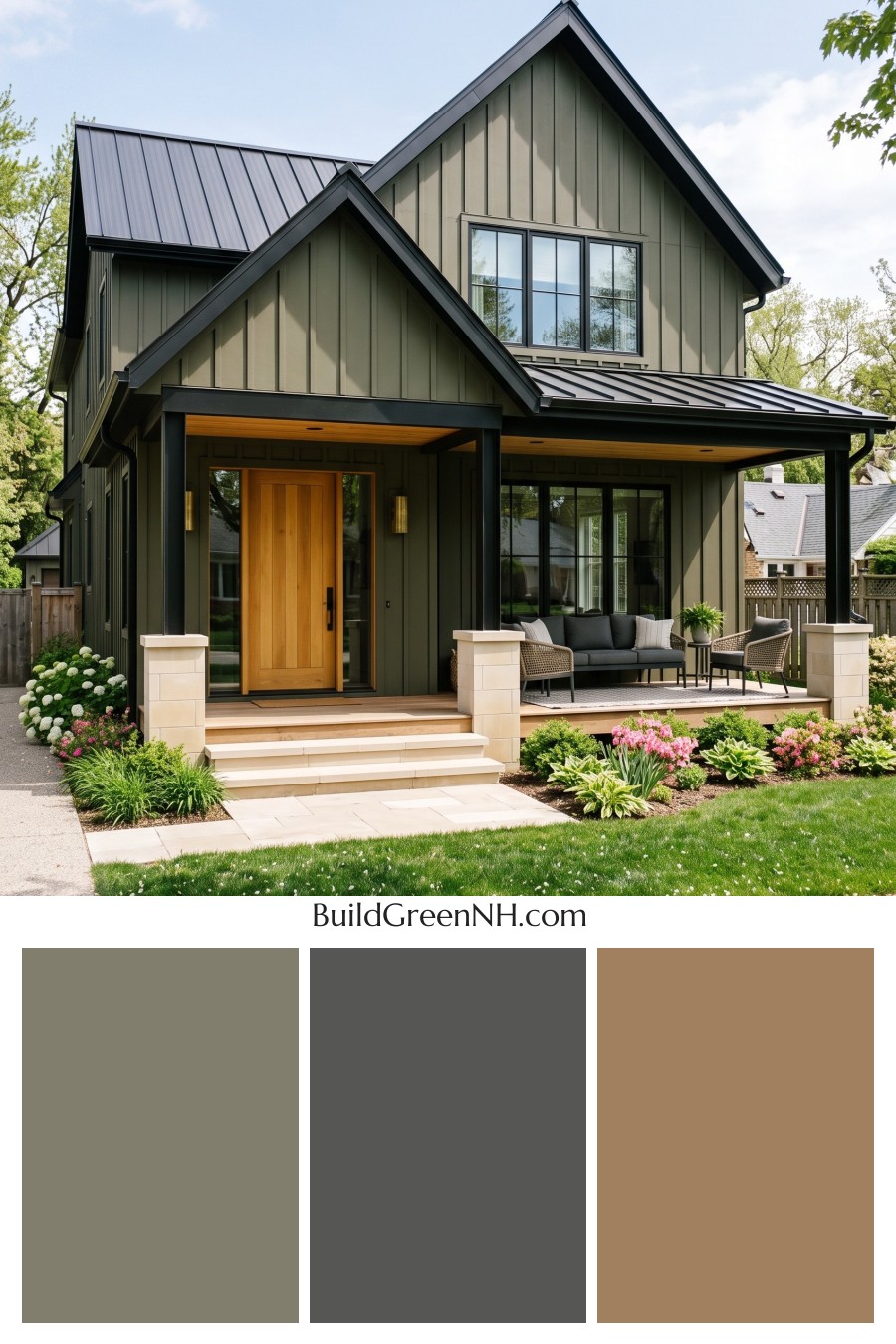
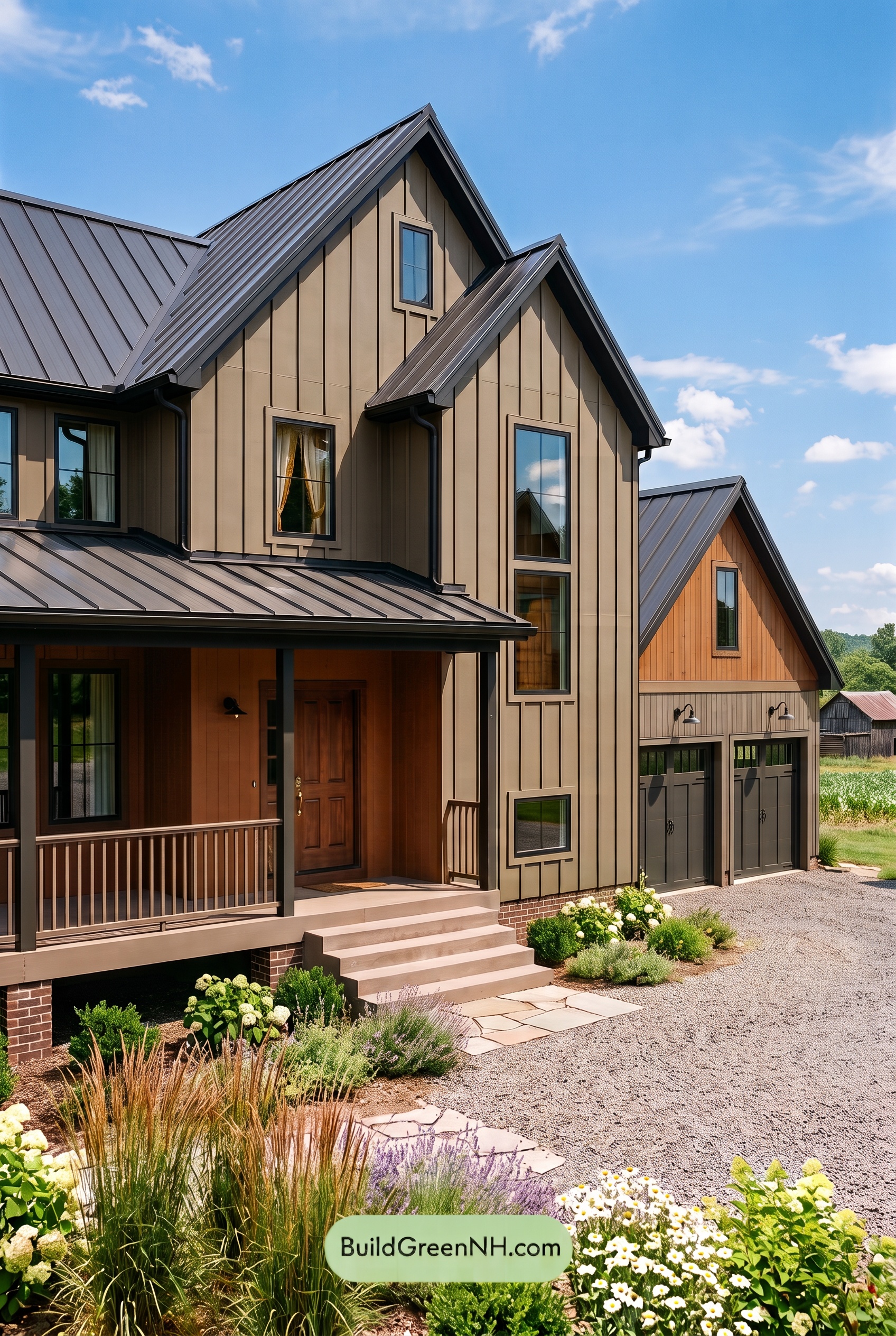
Soft sage green, layered grays, and golden brown give this home a beautiful balance of crisp architectural detail and relaxed, nature-inspired warmth.
A Soft Green Foundation
The muted sage green siding sets an inviting tone across the exterior. With its gentle gray undertone and subtle olive warmth, this shade feels earthy rather than bright. It complements the surrounding trees and garden without disappearing into them.
Carrying the green across the board-and-batten siding also gives the intersecting gables a cohesive look. Sunlight brightens the upper walls, while the covered porch reveals a deeper, quieter side of the same shade. Those natural shifts add dimension without requiring another wall color.
Layered Grays That Define the Architecture
Gray provides the structure this soft green needs. Deep charcoal gray follows the roof edges and porch beams, drawing attention to the strong peaks and long horizontal lines. The contrast is distinct, but less stark than a bright white outline would be.
The windows continue that layered approach. Dark gray frames sharpen the glass divisions, while lighter gray surrounds offer a gentler transition into the siding. On the porch, charcoal gray posts rise from medium warm-gray bases, giving the entrance a grounded, substantial feel.
The standing-seam roof brings in another expression of gray. Its broad surfaces appear softer and slightly cooler in the daylight, while the seams and shaded edges read darker. Repeating this color family overhead ties the roof neatly to the trim below.
Golden Brown Makes the Entrance Glow
The front door supplies the palette’s most welcoming contrast: a rich golden brown that stands out against the subdued green walls. Its warmth draws the eye toward the entrance without competing with the home’s architectural lines.
Similar golden-brown tones across the porch ceiling extend that warmth beneath the dark beams. Lighter tan-brown decking and pale creamy-beige steps keep the lower portion of the facade feeling open and approachable. Together, these warmer shades prevent the green-and-gray combination from becoming too cool.
Calm, Collected, and Full of Character
What makes this scheme work is its clear balance: green softens the broad wall surfaces, gray defines the structure, and brown welcomes you at the door. Each family has a distinct role, yet their muted, earthy character keeps them connected. The result feels polished without being formal—a comfortable exterior with just enough contrast to make every gable, window, and porch detail count.
Next, see how this color scheme looks under different lighting simulations throughout the day.
Overcast
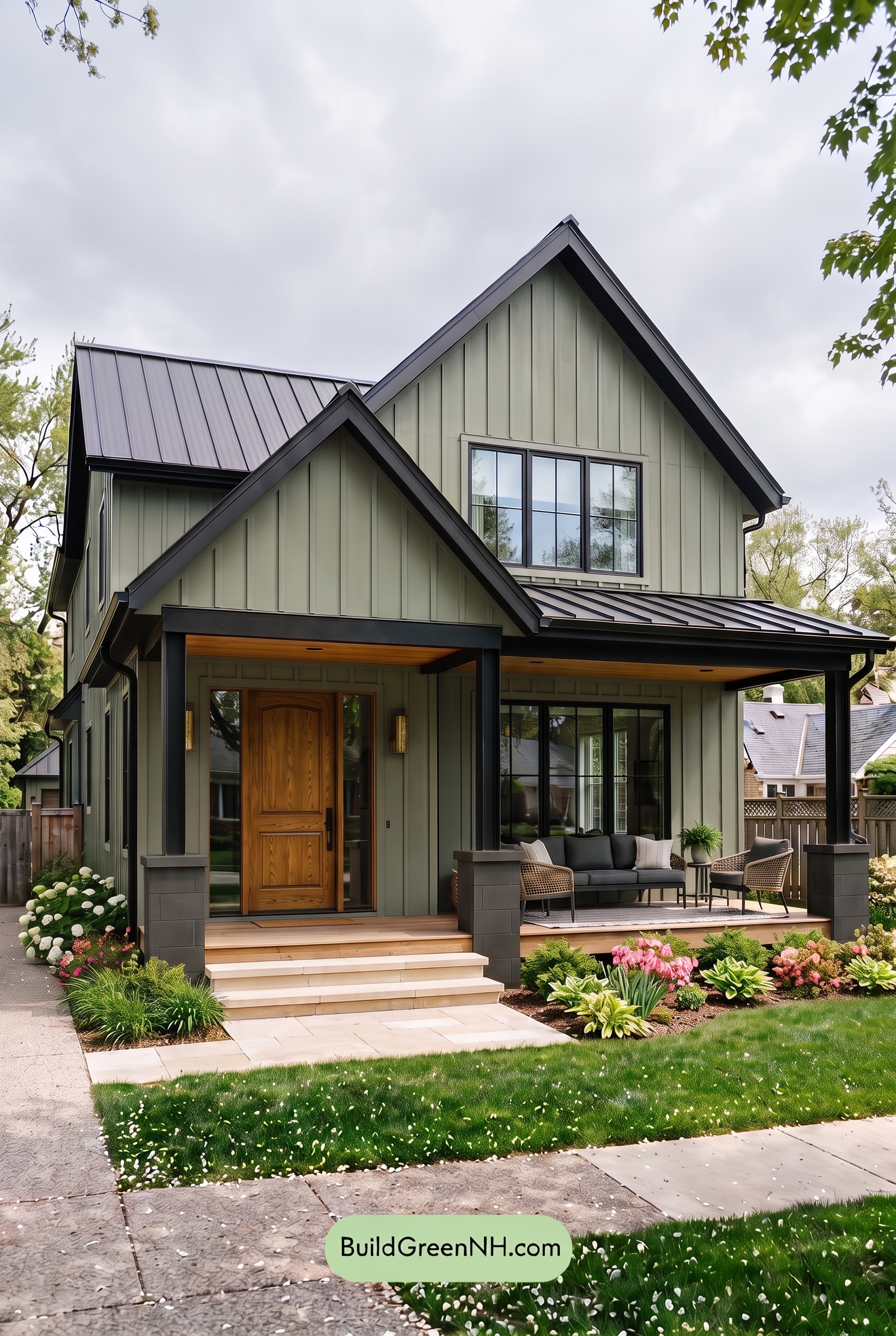
Under overcast skies, this muted shade of green appears cooler and slightly less saturated than it would in neutral daylight, bringing its gray undertones forward. Soft, scattered light gently blends the shadows along the siding, making the color feel more even and subdued. The deep gray trim and window frames still give the house definition, but without the sharper light-and-shadow contrast of brighter conditions.
The lighter gray accents feel quieter, while the brown front door’s warmth becomes more restrained. That warm brown still offers a welcoming focal point against the cooler greens and grays. Overall, the palette shifts from crisp and lively toward calm, earthy, and softly atmospheric.
Golden Hour
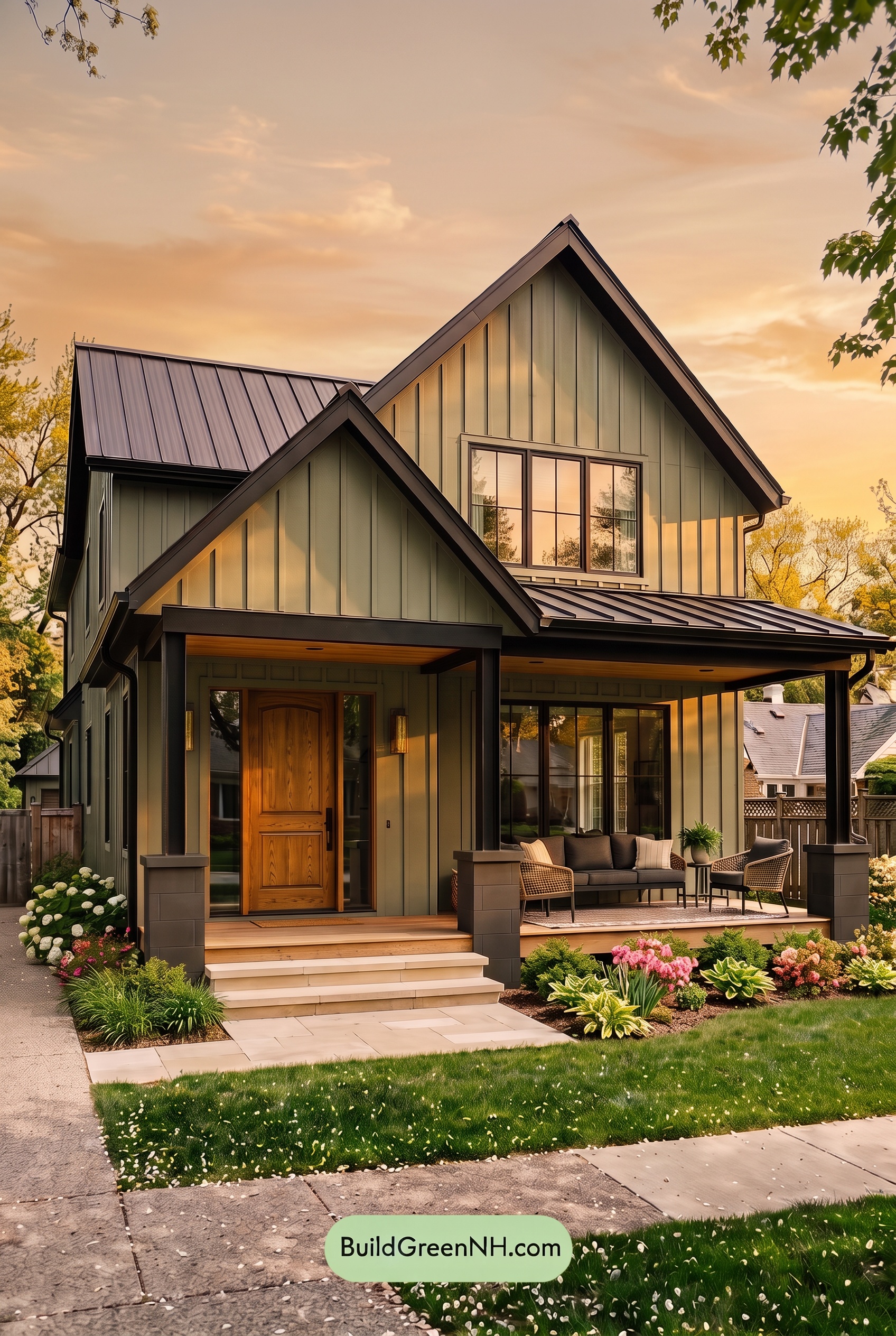
Golden Hour gives the muted green siding a warmer, more yellow-toned cast than it would have in neutral daylight. Sunlit sections look softer and less distinctly green, while shaded areas deepen into richer, subdued shades. The gray trim and window frames pick up warm brown undertones, softening their coolness without losing their definition.
Long shadows beneath the gables and porch make the darker grays appear deeper, strengthening the contrast with the glowing walls. The brown front door looks richer and more saturated where the light catches it, drawing attention to the entrance. Compared with the cooler, more even appearance of neutral daylight, the whole palette feels warmer, cozier, and more dramatic.
Shade
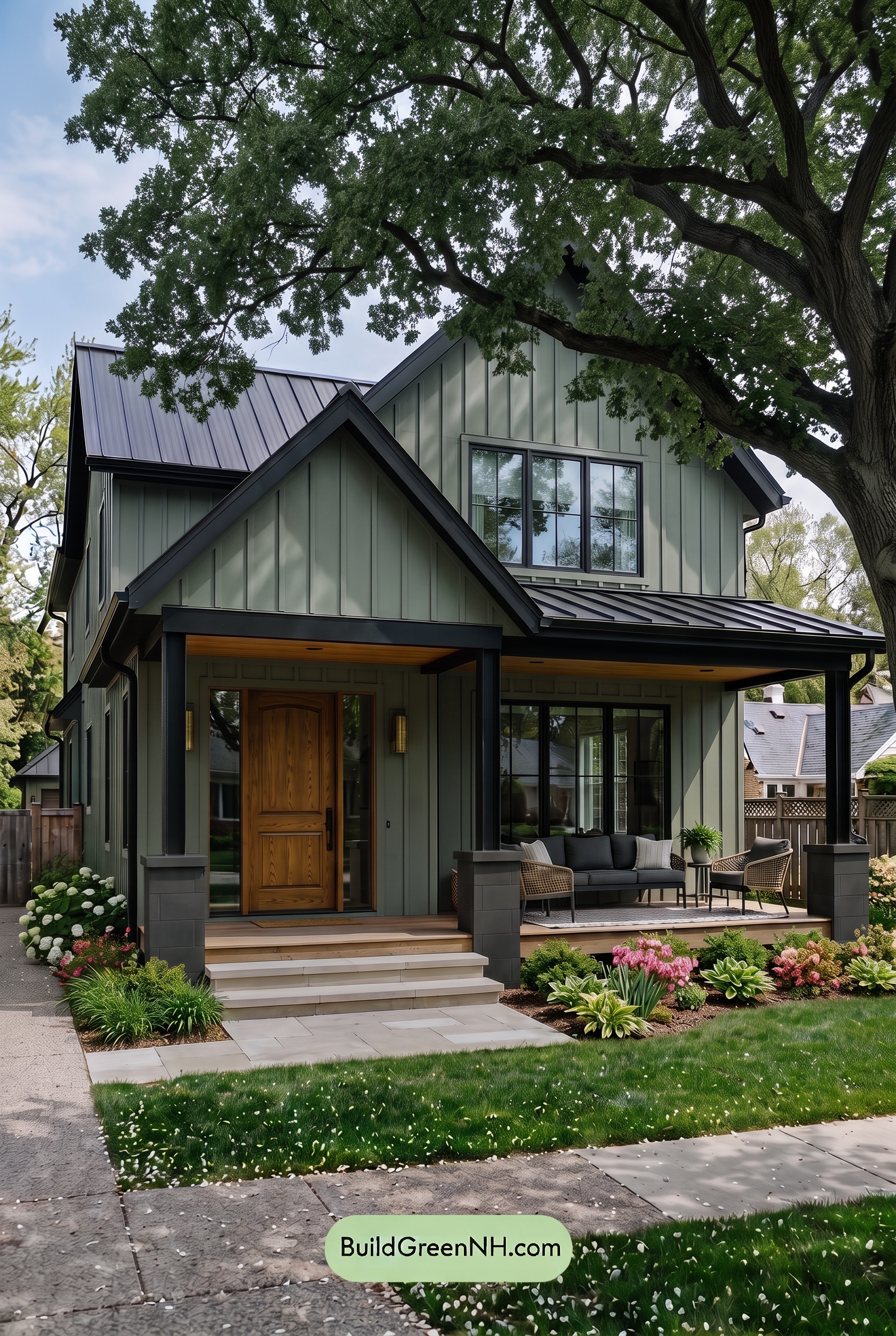
Under the tree canopy, this muted green appears deeper, cooler, and less saturated than it would in neutral daylight. Its warmer undertones recede, bringing its gray undertones forward. Dappled shadows create gentle shifts between lighter and darker green, giving the exterior depth without making the color feel bold.
The deep grays look more enveloping in shade, blending into the darkest areas while retaining crisp contrast against the lighter green above. The brown feels less golden than it would in neutral daylight, yet still offers a warm counterpoint to the cooler surroundings. Together, these shifts give the house a quiet, sheltered mood.
Nighttime
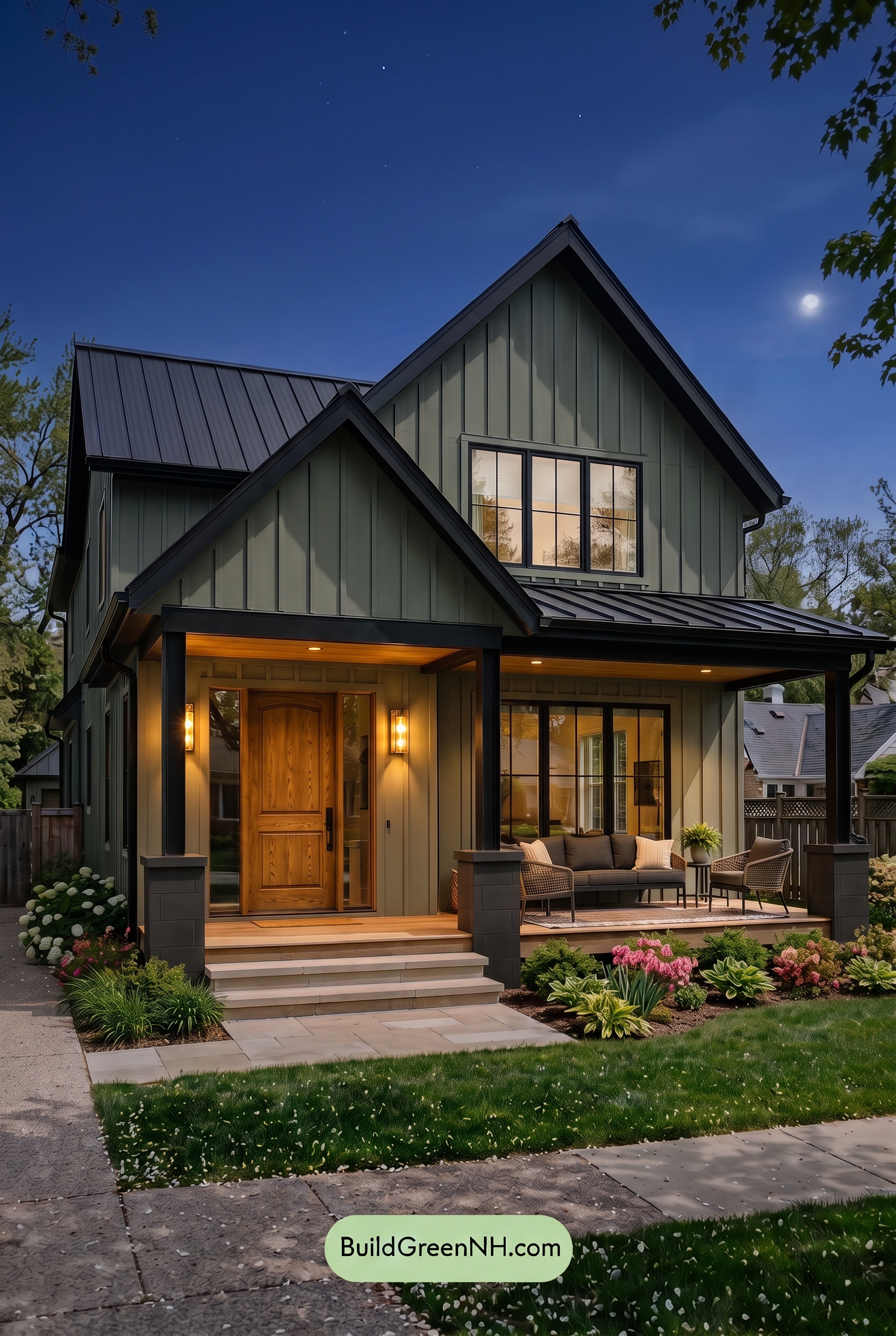
At night, the muted greens deepen and appear less saturated than they would in neutral daylight, taking on a cooler, grayer character away from the porch lights. Deep shadows beneath the gables pull the darker grays toward near-black, softening some color differences while giving the rooflines a more dramatic outline.
Near the entry, warm lighting brings out yellow undertones in the greens and makes the browns feel richer and more golden. Nearby grays appear warmer and softer, contrasting with the cool, shadowed shades above. Compared with daylight’s more even color balance, this mix of glowing warmth and deep shadow creates a cozy, intimate mood.
Pin these for later:
Want More?
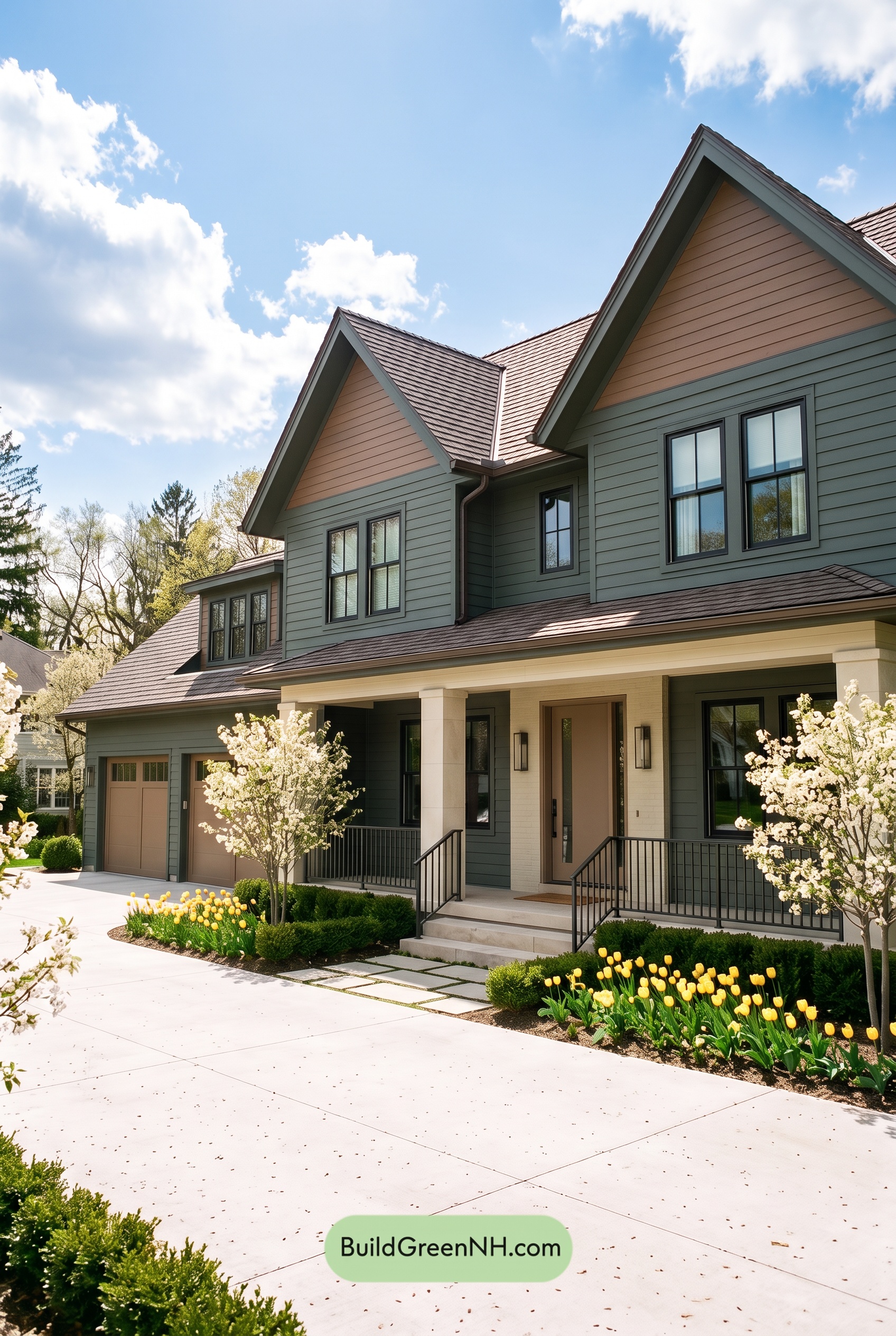 Earthy Green House Exterior Color Scheme: Brown Green Comfort
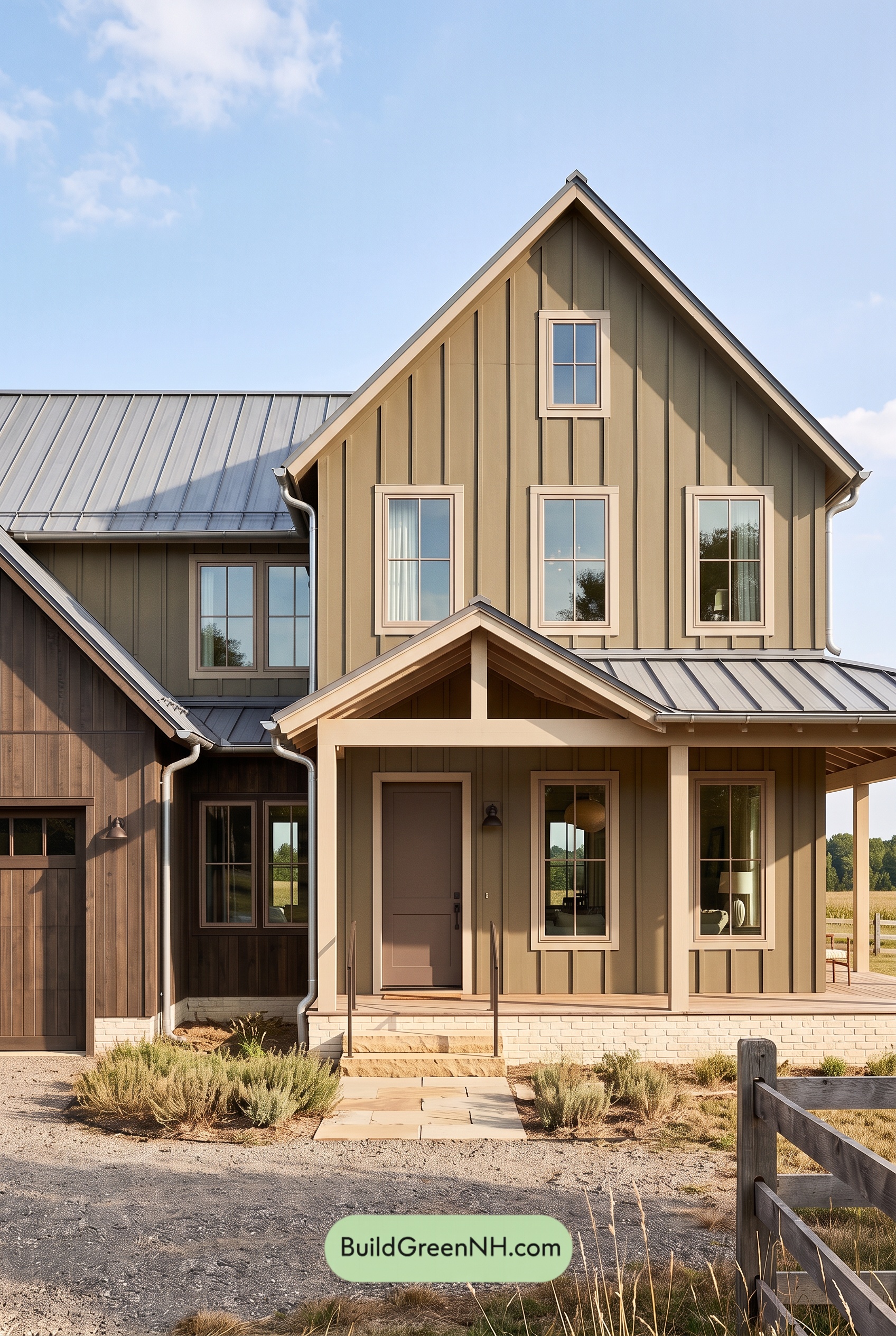 Earthy Green House Exterior Color Scheme: Green and Beige Sanctuary
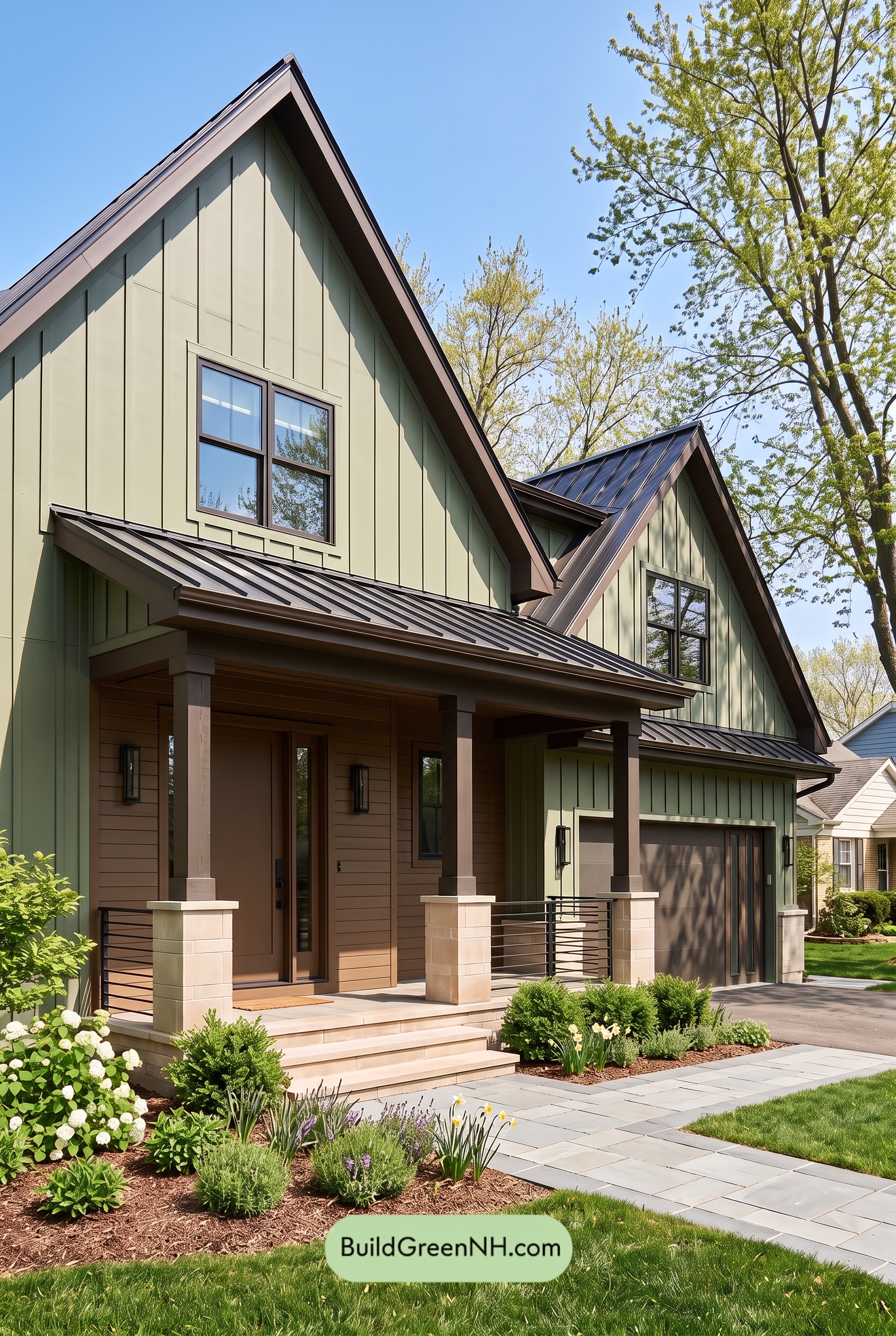 Earthy Green House Exterior Color Scheme: Green Velvet Assurance
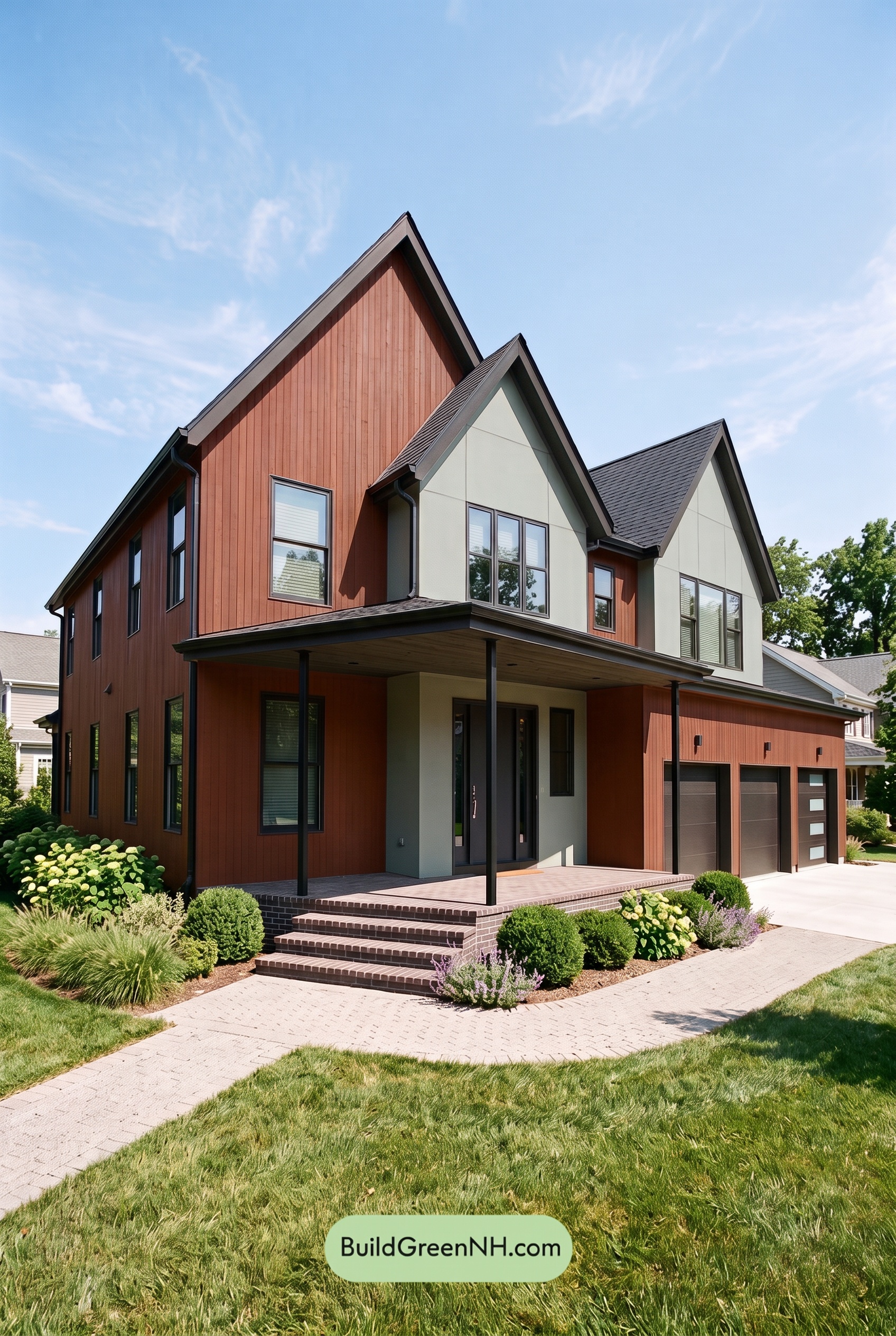 Earthy Green House Exterior Color Scheme: Brown Silken Calm
 Earthy Green House Exterior Color Scheme: Green Amber Contentment
Table of Contents