Last updated on
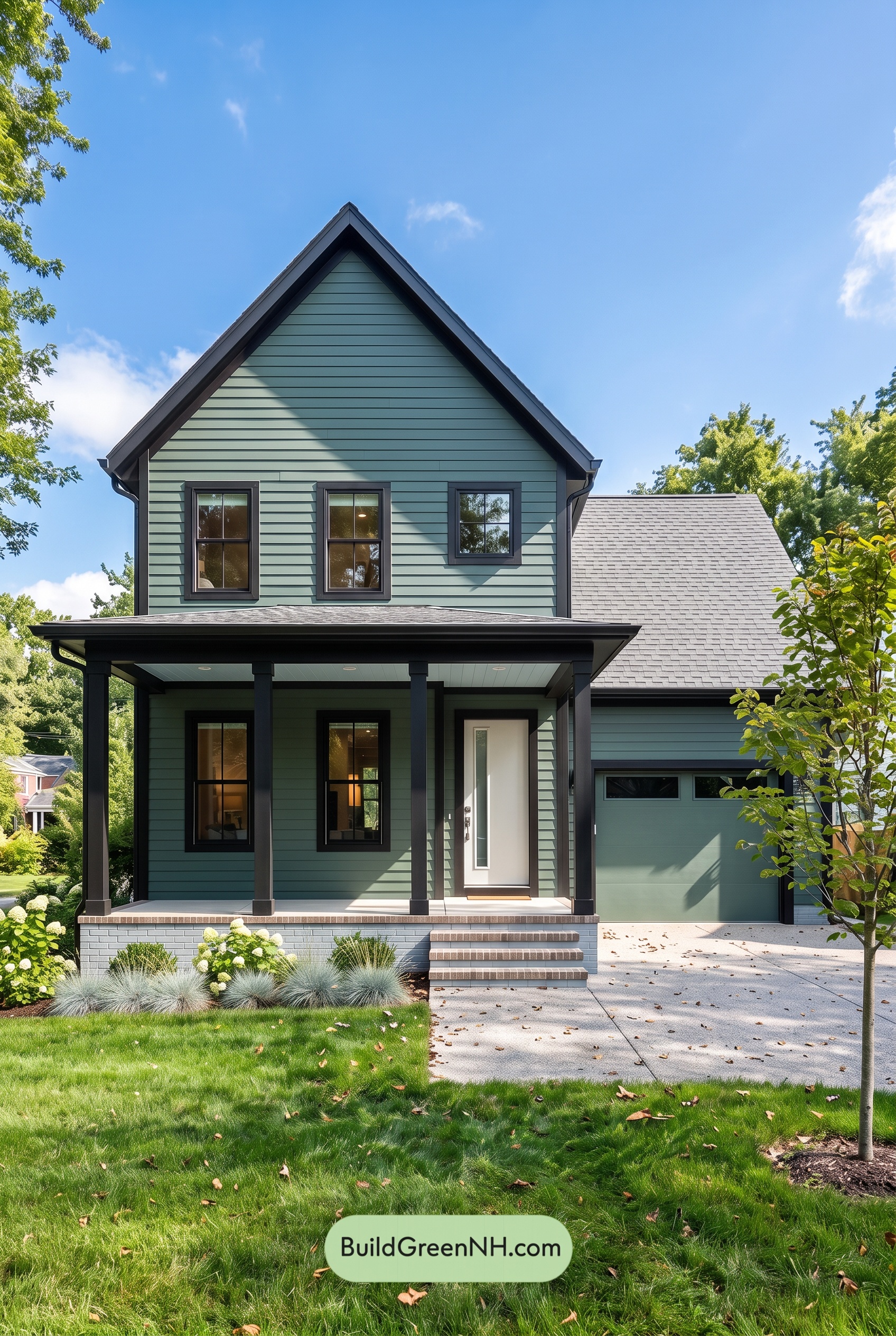

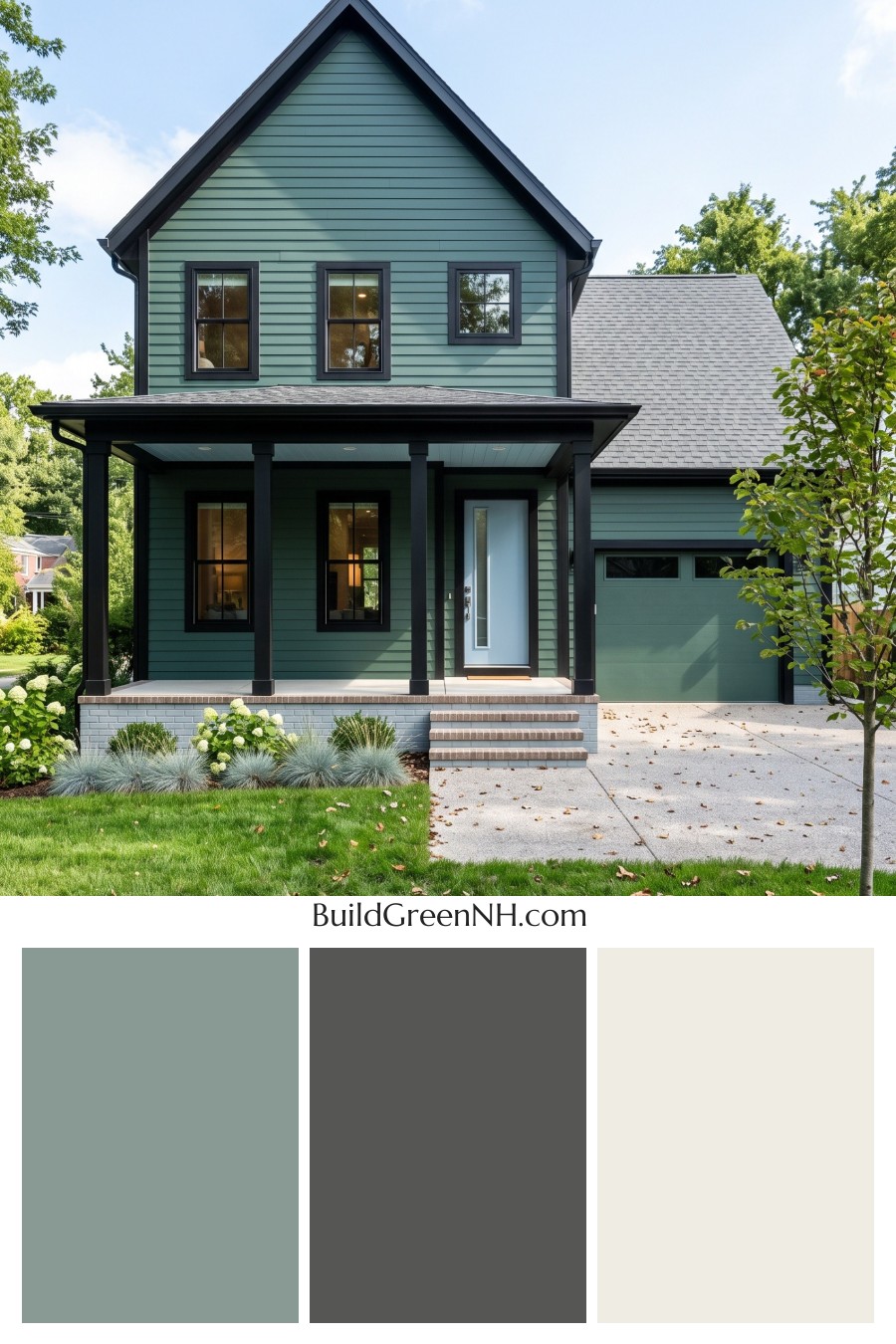
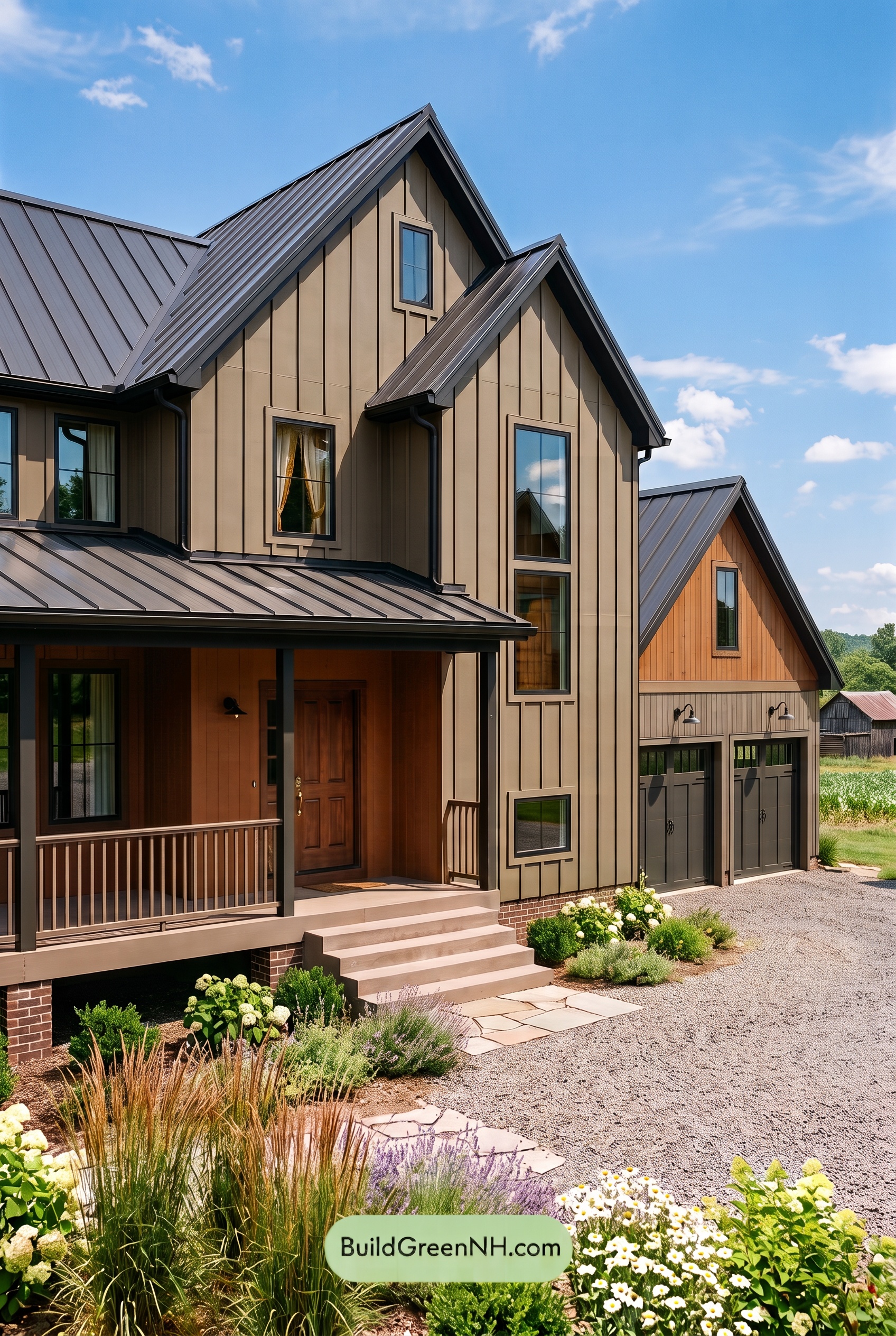
Soft gray-green siding, deep charcoal-gray details, and a warm white front door give this home the perfect balance of quiet charm and striking definition.
A Soft Gray Base with Natural Character
The horizontal siding wears a muted, medium gray with gentle green undertones. It is an inviting choice for such a prominent surface: substantial enough to give the house presence, yet soft enough to feel at home among the surrounding trees and garden beds.
Across the tall front gable, this shade lets the siding’s horizontal lines add texture without becoming distracting. Sunlight brings out its softer green notes, while the shaded porch reveals a deeper, cooler side of the same color.
Dark Details That Define the Architecture
Deep charcoal gray outlines the roof edges, window trim, and window frames. These darker elements create crisp boundaries against the quieter siding, drawing attention to the steep gable and tall windows. The contrast is strong, but the shared gray foundation keeps it cohesive.
The porch columns and overhead beams repeat that dark shade, giving the covered entry a sturdy, grounded appearance. A much paler gray-green porch ceiling provides a gentle lift above them, keeping the sheltered space from feeling too heavy.
A Bright Entry and a Quiet Garage
The warm white front door offers a refreshing break from the deeper surrounding tones. Framed in charcoal gray, it becomes a clear focal point beneath the porch. It is a small area of brightness with a big welcoming effect.
Meanwhile, the garage door stays close to the siding’s muted gray-green shade. This restrained treatment helps its broad surface blend into the house rather than compete with the entrance. Dark edging around the garage opening connects it to the windows and porch structure.
Roof and Masonry That Complete the Palette
The roof shingles introduce a lighter, varied gray that balances the dark roofline trim. Below, pale gray foundation brick brightens the base of the porch, while warm taupe-gray step surfaces add a subtle earthy note.
Together, these shades create an exterior that feels composed rather than flat. Soft midtones provide calm, charcoal accents supply structure, and the white door adds just enough sparkle. The result is fresh and welcoming, with contrast that celebrates the architecture instead of overwhelming it.
Next, see how this color scheme looks under different lighting simulations throughout the day.
Overcast
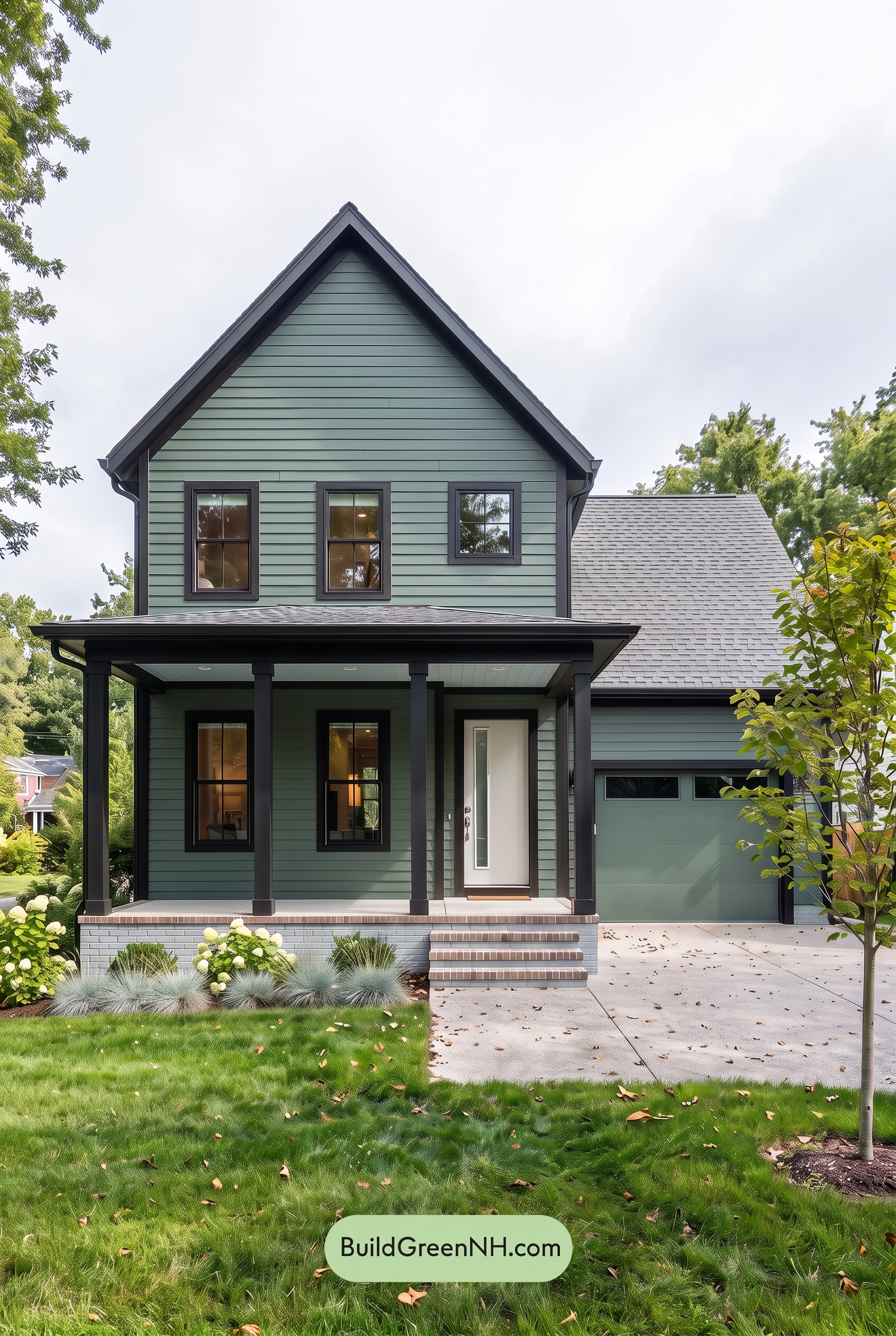
Under overcast skies, the midtone grays appear cooler and more muted than in neutral daylight, with subtle green undertones becoming easier to notice across the broad facade. Any gentle warmth recedes, while the white accent feels softer and less luminous. The overall palette takes on a quieter, slightly moodier character.
Diffused light softens shadows beneath the porch and along the siding, reducing the sharp light-to-dark changes that make the exterior feel crisp in neutral daylight. The deep grays still define the steep gable and windows, but their contrast feels less dramatic, giving the house a calm, cohesive presence.
Golden Hour
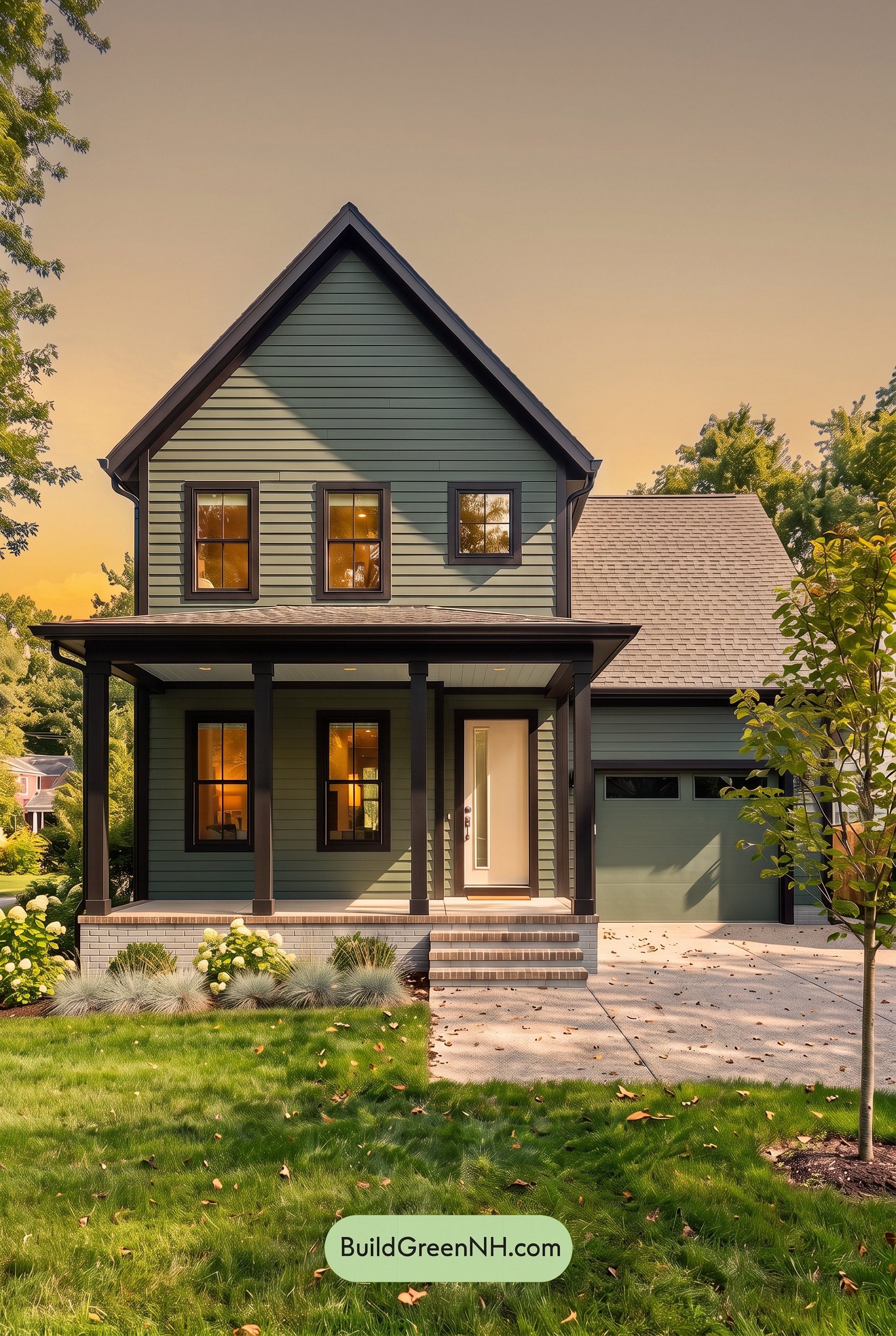
Golden Hour gives the muted gray siding a warmer, richer appearance than neutral daylight, bringing out subtle green undertones without making the color feel overly saturated. Sunlit sections lean toward soft beige-gray, while shaded areas retain a cooler, deeper gray-green cast. The pale front door takes on a creamy warmth, trading daylight’s crispness for a gentle glow.
Long, angled shadows across the gable and garage create stronger contrasts between light and dark, adding depth to the restrained palette. The deep gray trim and columns look nearly black in the porch shadows, framing the warmer surfaces beautifully. Compared with the more even, subdued appearance of neutral daylight, the house feels cozier and more dramatic.
Shade
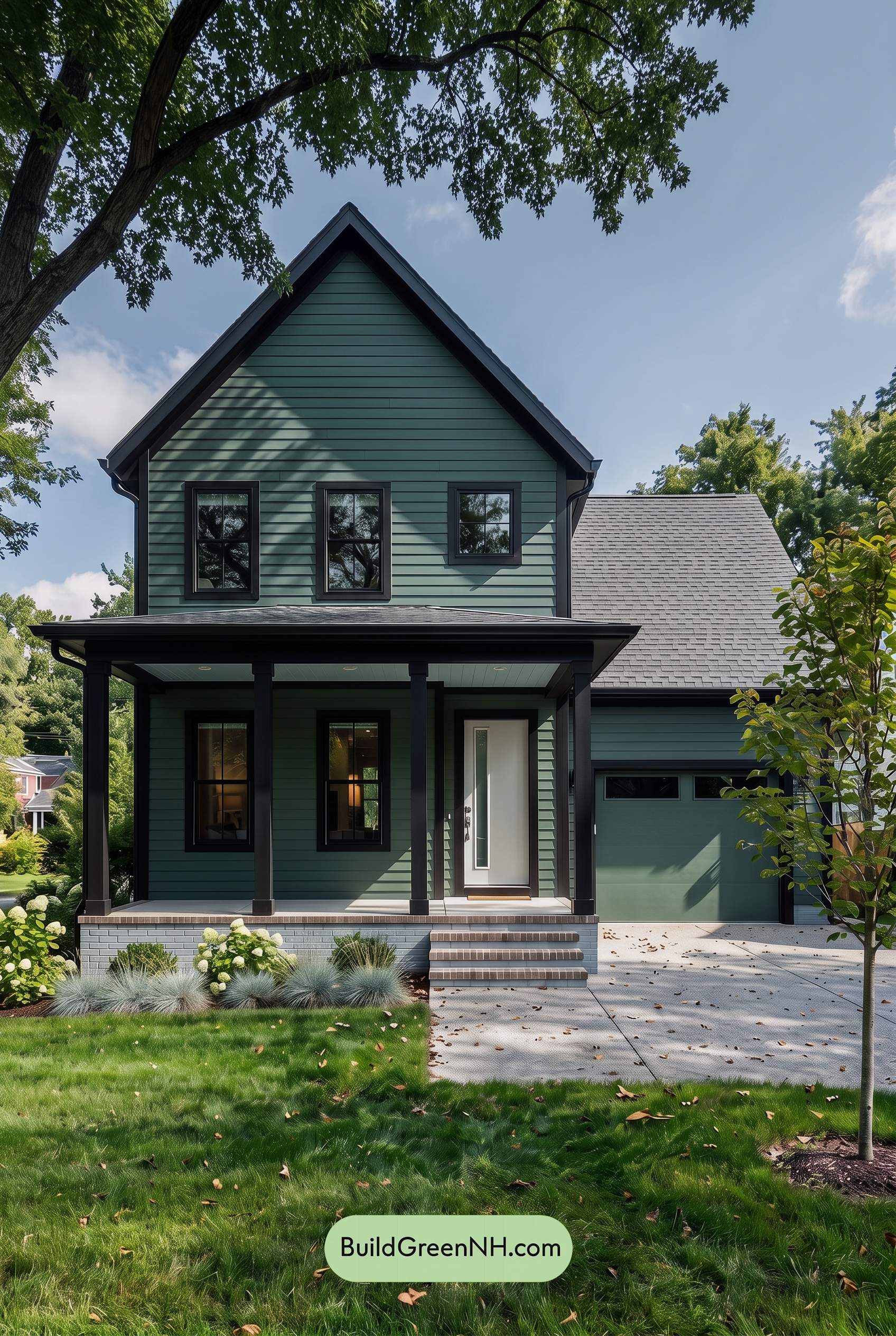
In shade, the midtone grays deepen and take on a cooler, subtly green-blue cast compared with neutral daylight. Warm undertones recede, while saturation feels more restrained, giving the exterior a quiet, softened character. Dappled shadows add darker layers across the siding, making the same shade appear to shift from gently muted to rich and moody.
The deepest grays approach black beneath the porch and eaves, allowing some architectural edges to blend into shadow. Against those darker shades, the soft white at the entry remains a clear focal point, though it looks less crisp and slightly cooler than in neutral daylight. The overall mood becomes calm and sheltered, with contrast concentrated around the entry and windows.
Nighttime
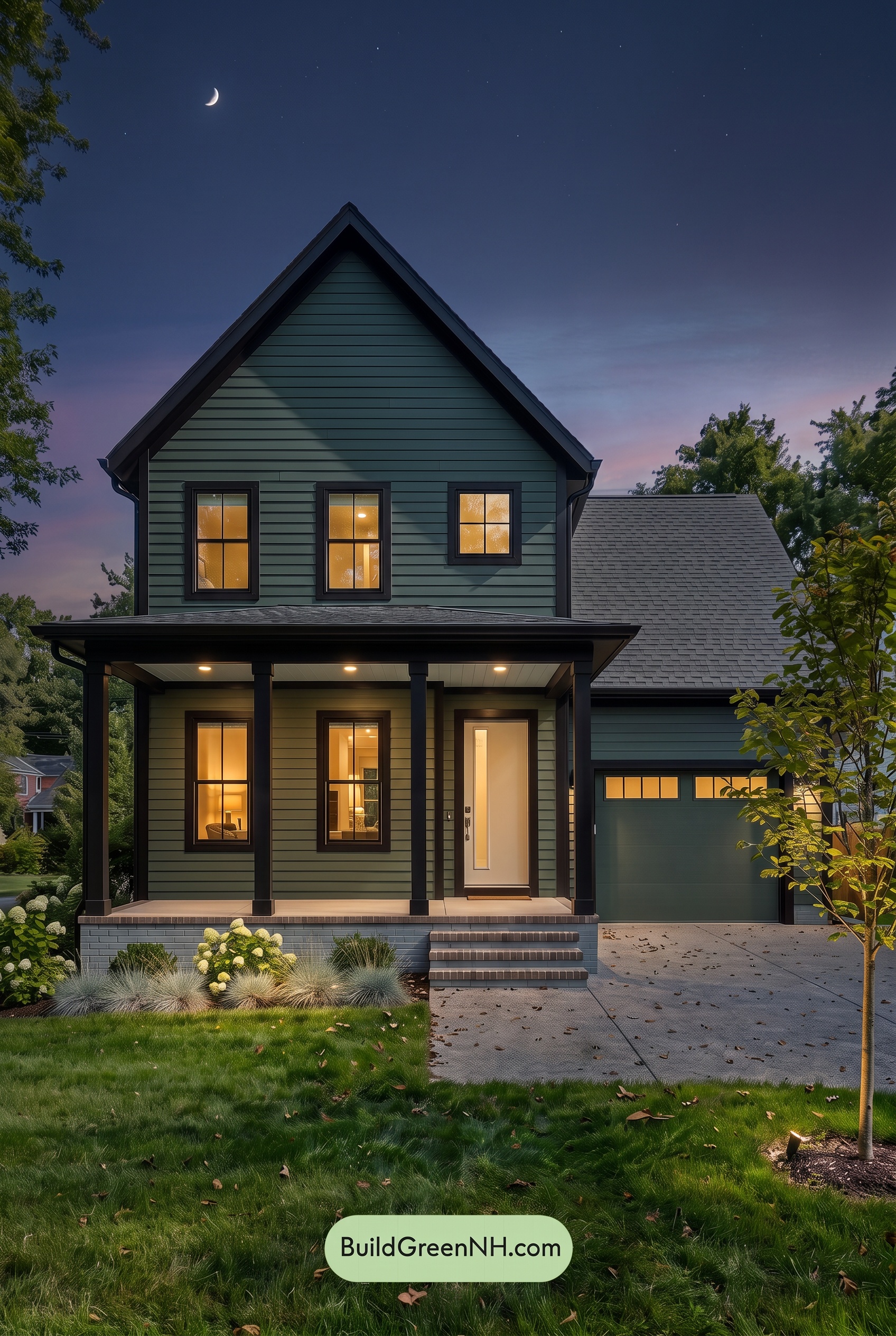
At night, the gray siding looks deeper and more muted than it would in neutral daylight, taking on a cool blue-green cast away from the porch lights. Shadows beneath the gable and eaves push the darker gray trim toward near-black, softening subtle shade differences while making the roofline and window frames feel more dramatic.
Under the warm porch lighting, those same gray tones appear softer and warmer, while the white front door takes on a creamy glow. These illuminated areas contrast with the cooler, shadowed walls and garage, shifting the mood from daylight’s crisp clarity to a quieter, more intimate welcome.
Pin these for later:
Want More?
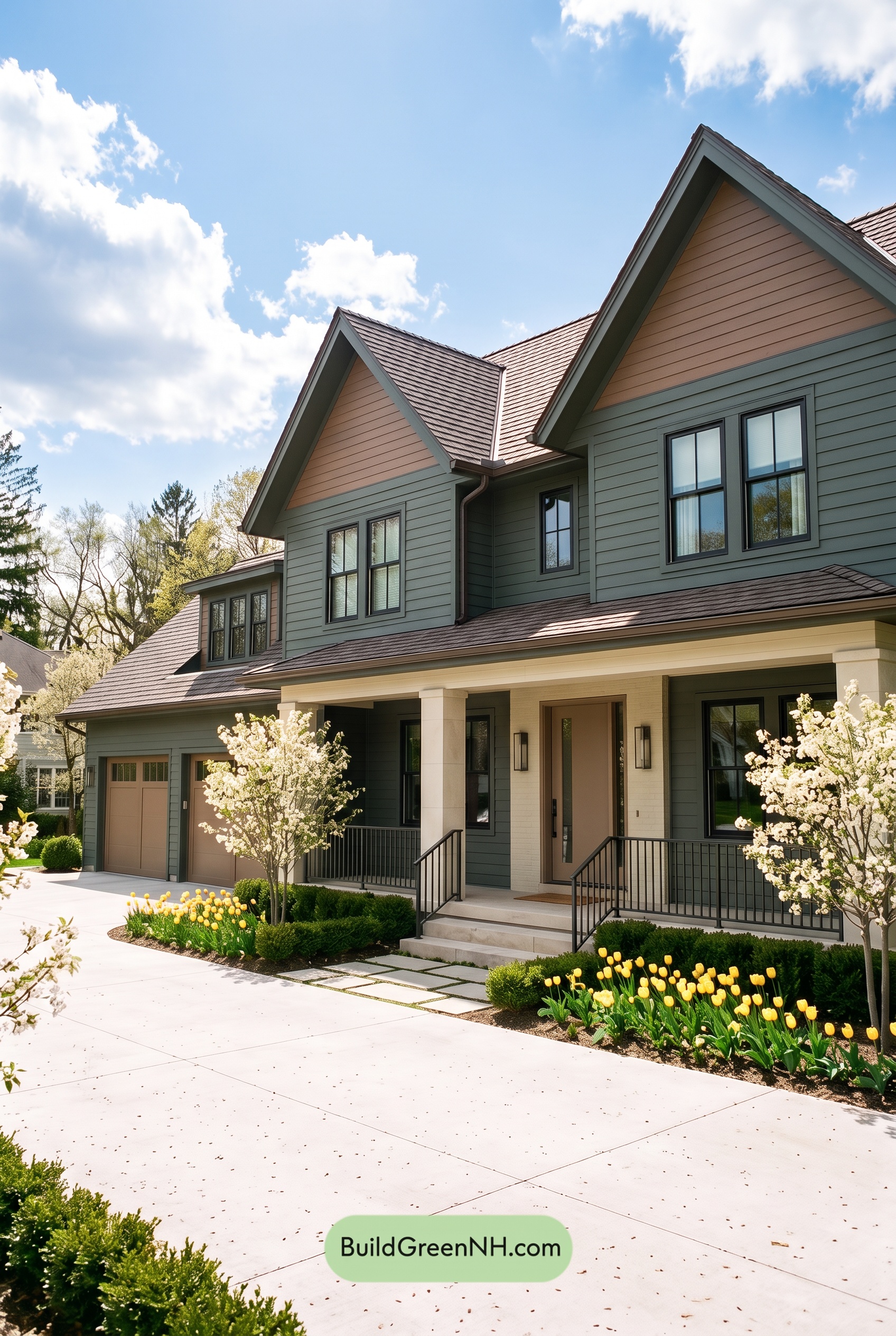 Earthy Green House Exterior Color Scheme: Brown Green Comfort
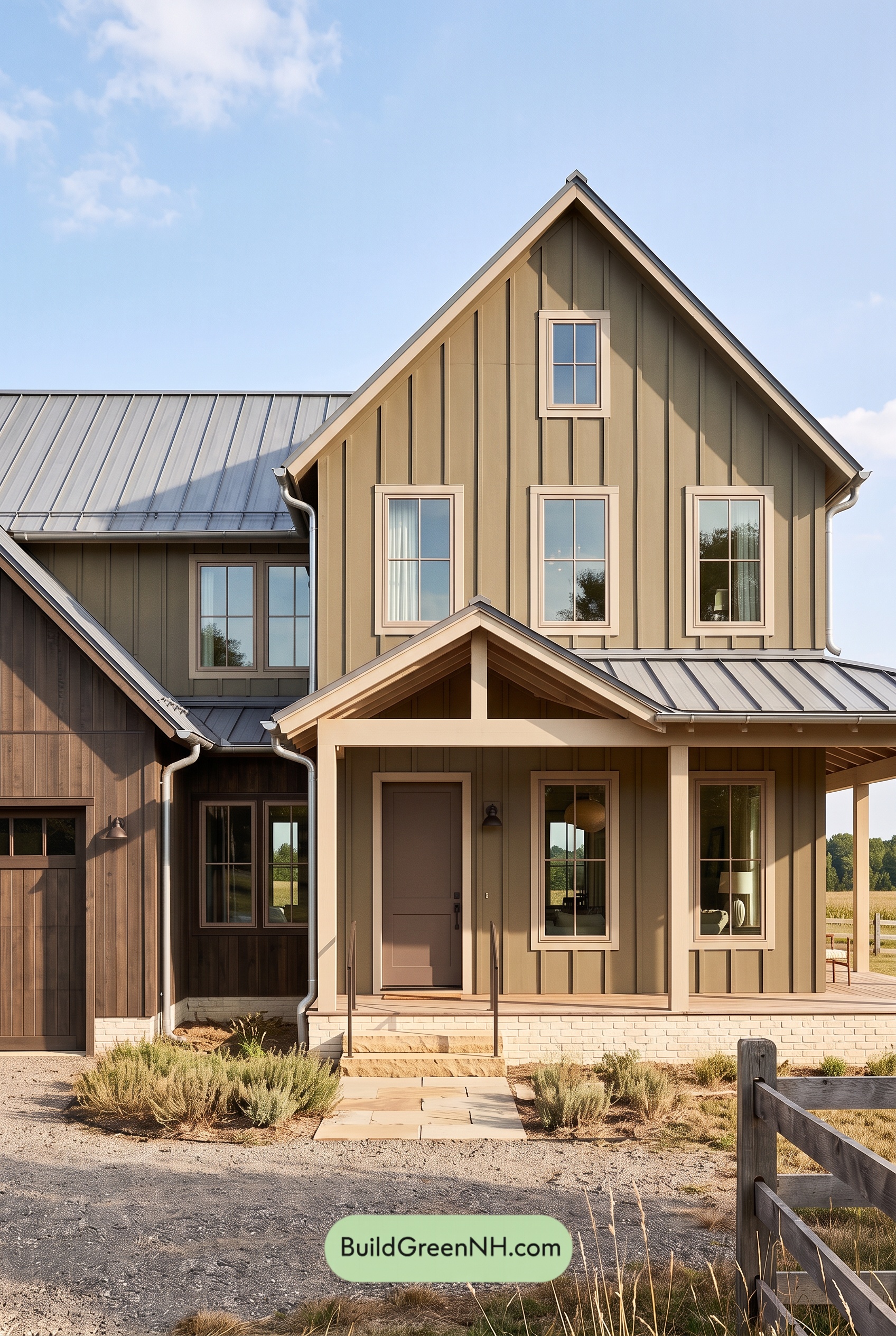 Earthy Green House Exterior Color Scheme: Green and Beige Sanctuary
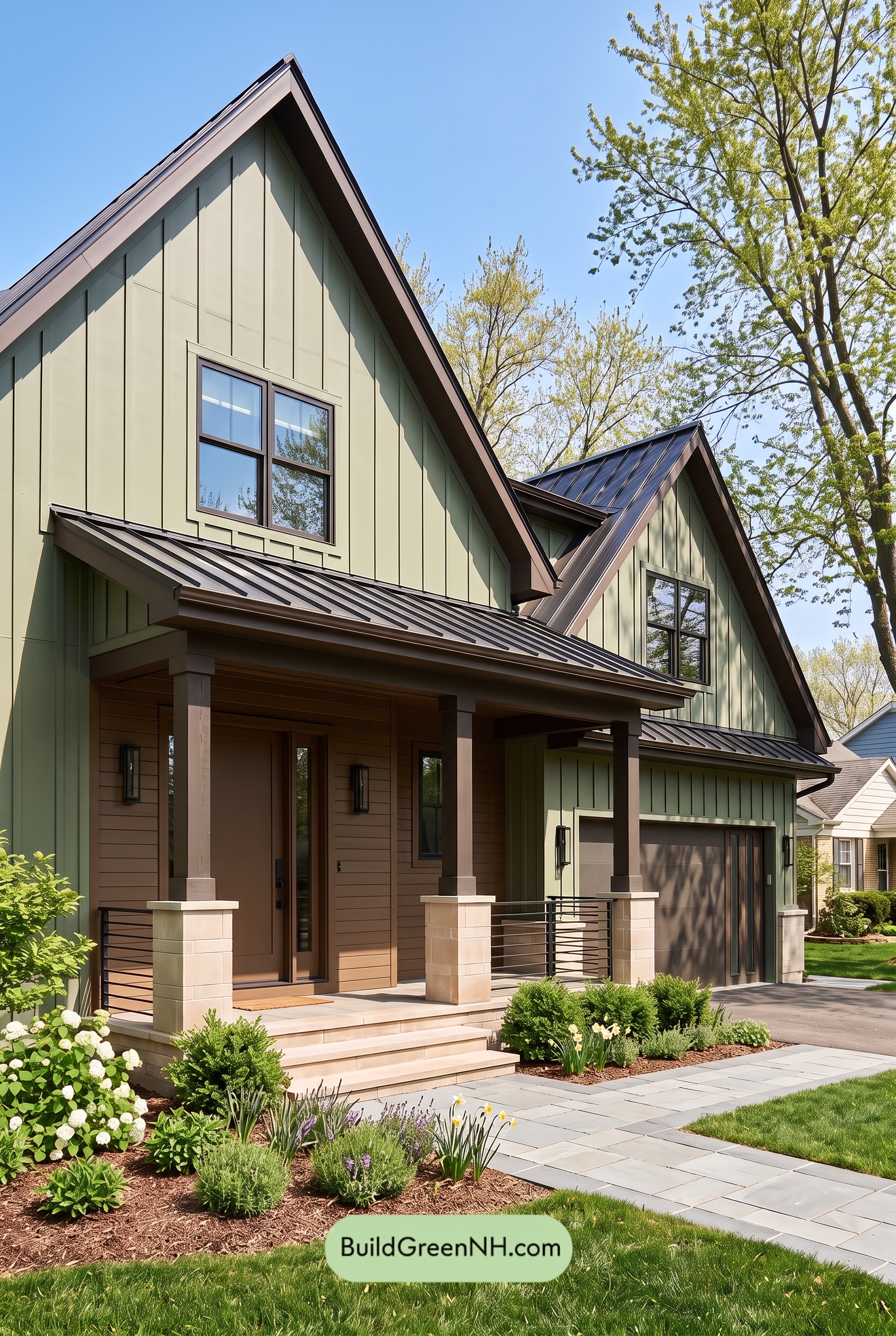 Earthy Green House Exterior Color Scheme: Green Velvet Assurance
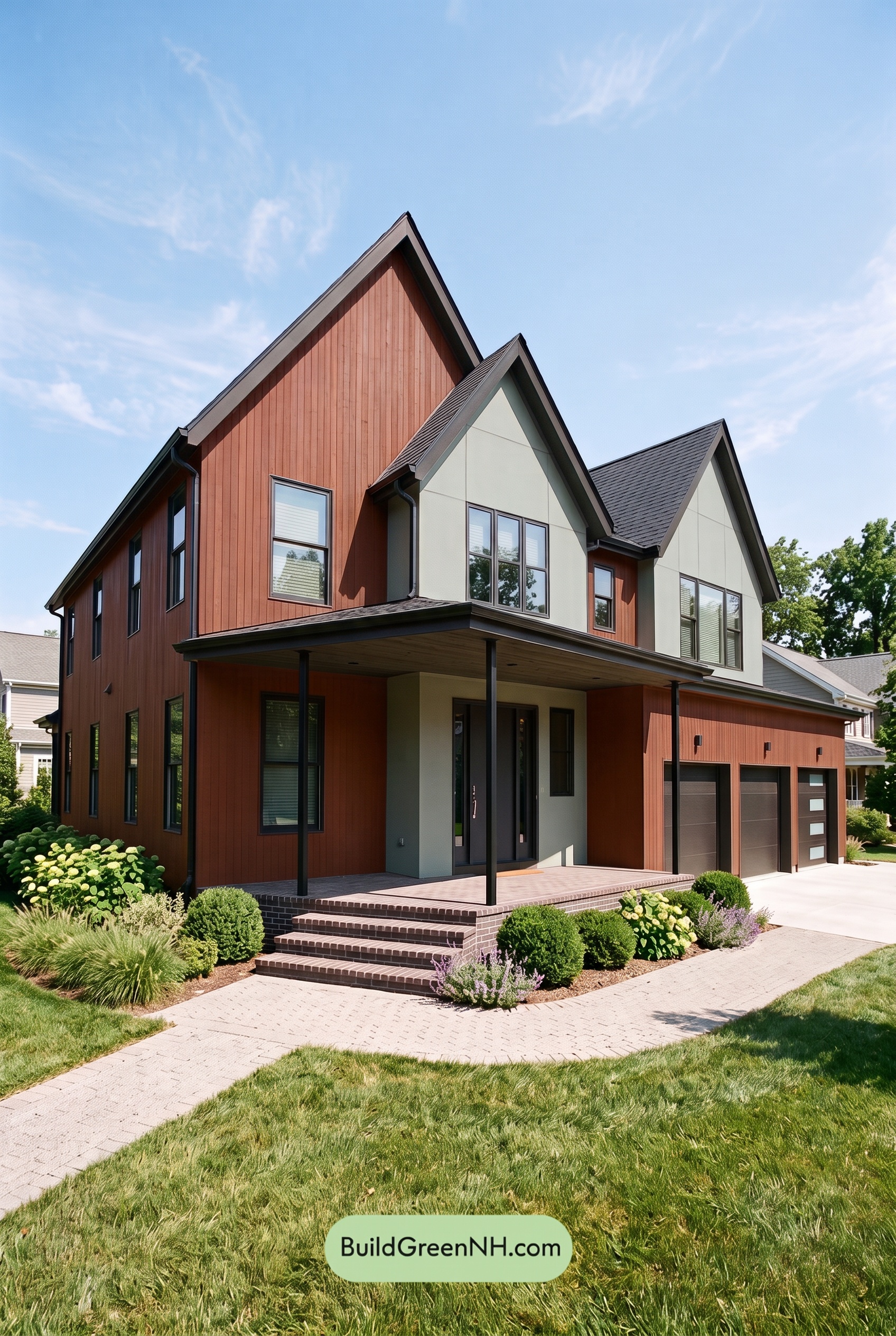 Earthy Green House Exterior Color Scheme: Brown Silken Calm
 Earthy Green House Exterior Color Scheme: Green Amber Contentment
Table of Contents