Last updated on
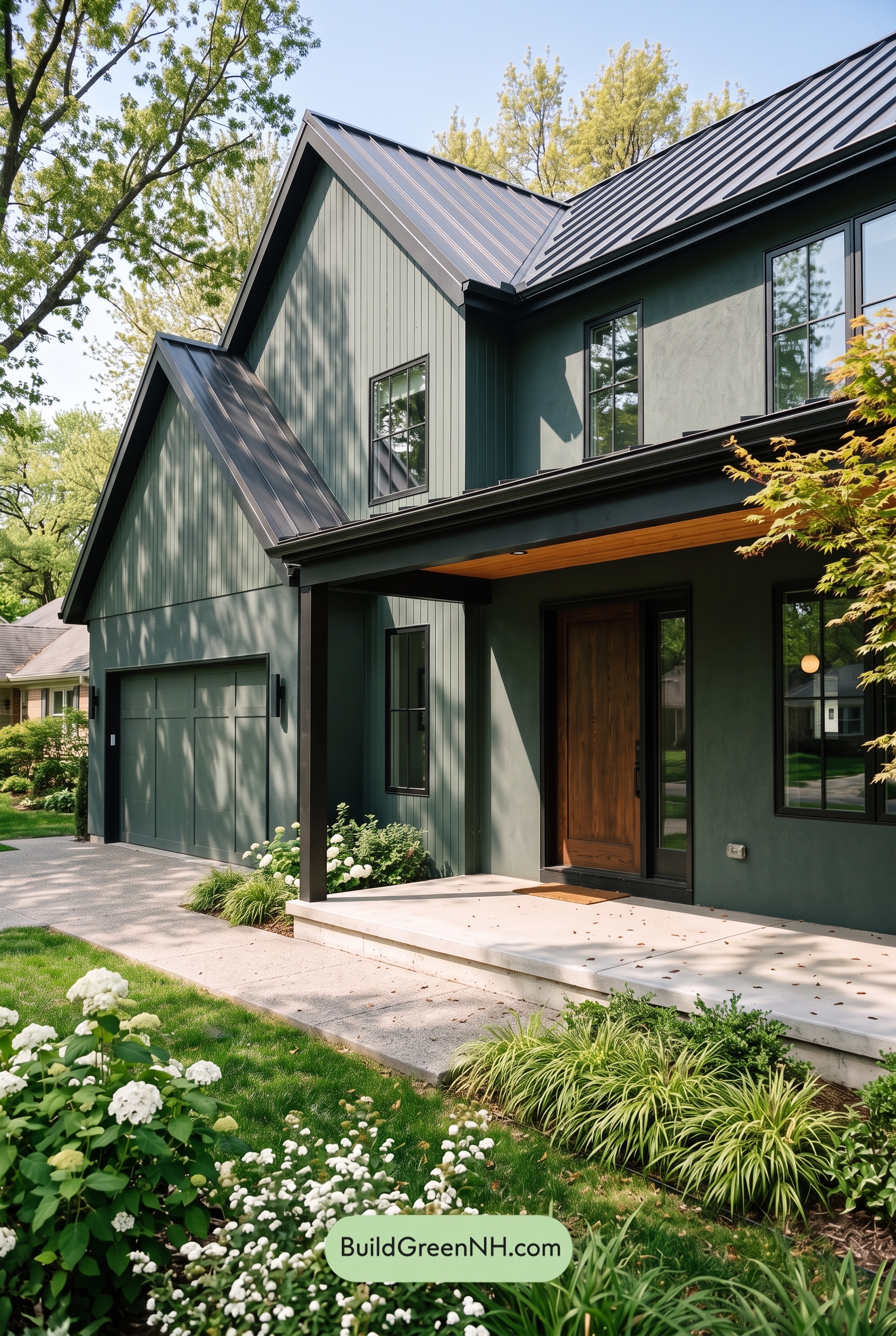

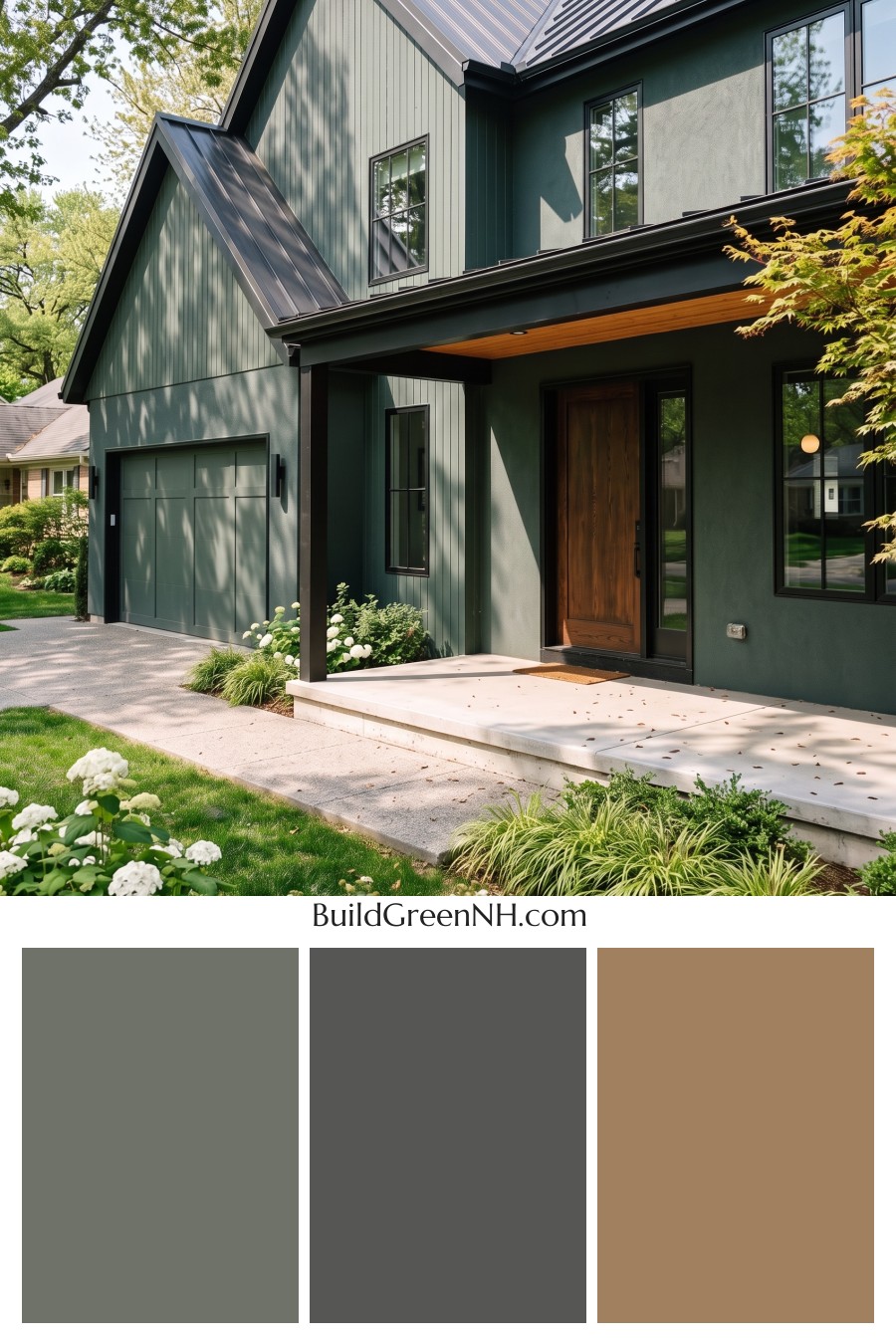
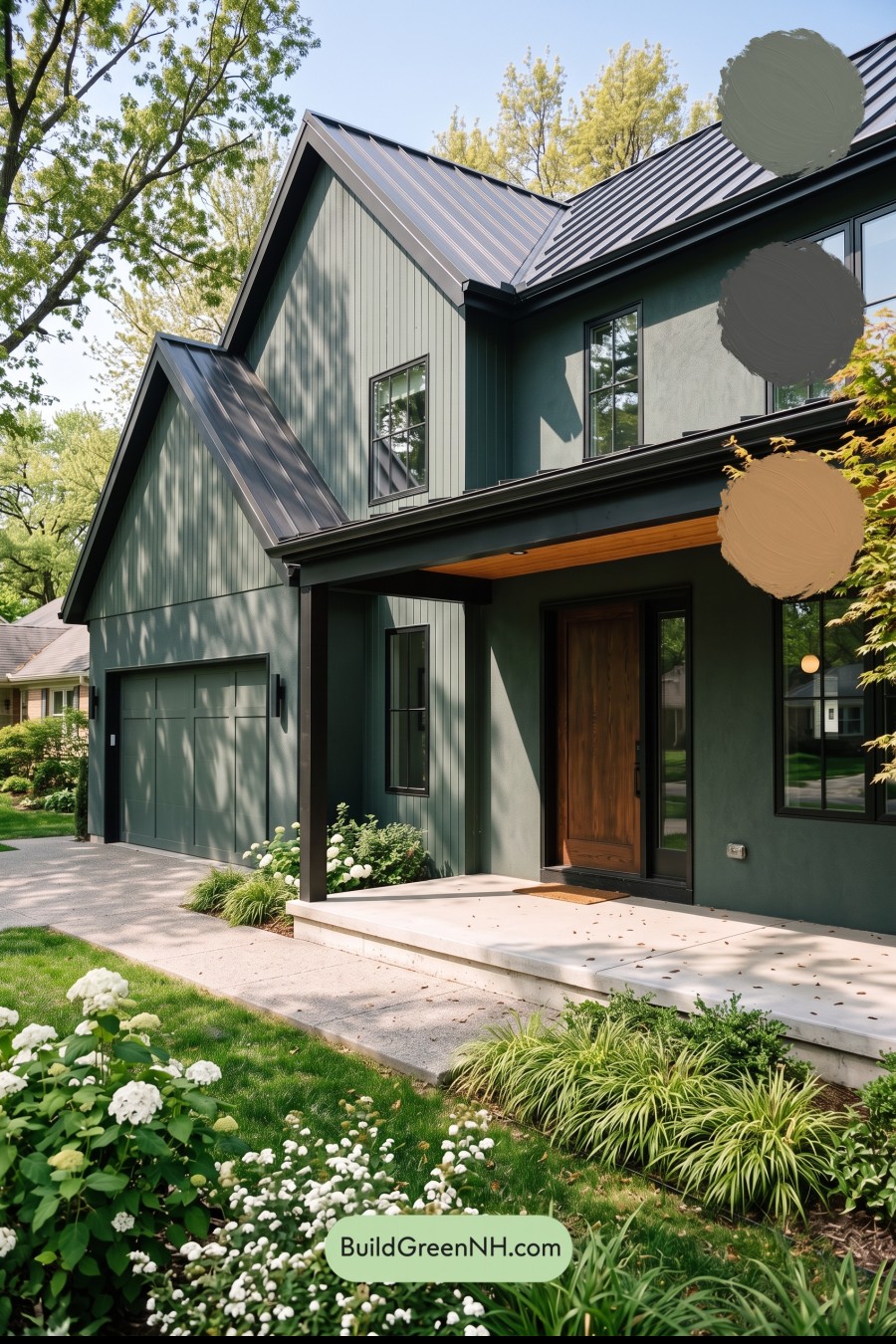
Muted gray siding, deep charcoal accents, and a warm brown front door give this home a beautifully balanced exterior that feels modern without losing its welcoming character.
A Gray Foundation with Natural Depth
The main exterior features a medium-to-deep gray with subtle green undertones, creating a gentle connection to the surrounding landscape. It has enough depth to emphasize the architecture without making the house feel overly heavy.
Across the vertical siding and smoother wall sections, the closely related shades keep the facade cohesive. Texture and sunlight provide the variation: raised siding edges catch the light, while recessed areas settle into deeper gray shadows. There is plenty of visual interest without a busy palette.
Dark Details That Define the Architecture
Deep charcoal gray outlines the windows, porch columns, and much of the roofline. These darker elements give the exterior crisp definition, drawing attention to the tall windows and strong gable shapes. Against the softer wall color, the contrast feels deliberate rather than stark.
The gable edging introduces a somewhat lighter gray, helping those steep roof profiles stand out. Above it all, the standing-seam roof carries the gray palette upward, shifting from charcoal in shadow to lighter, silvery gray where sunlight reflects across the metal.
A Garage That Blends and an Entry That Welcomes
The garage door stays close to the siding’s muted gray shade. That restrained choice lets its panel details add texture without turning the broad door into the main focal point.
Instead, attention moves toward the rich brown front door. Its warm shade offers a clear contrast to the cooler grays, making the entrance feel inviting and easy to find. Golden-brown tones beneath the porch roof echo that warmth overhead, giving the sheltered entry a comfortable glow.
Why the Palette Works So Well
This scheme succeeds through measured contrast. The gray walls establish a calm backdrop, charcoal details sharpen the structure, and brown accents soften the overall effect. Pale warm-gray porch surfaces add a lighter note at ground level, balancing the deeper shades above.
The result is quietly striking. Each color has a clear role, and the limited palette allows the home’s proportions, textures, and surrounding greenery to remain part of the story.
Next, see how this color scheme looks under different lighting simulations throughout the day.
Overcast
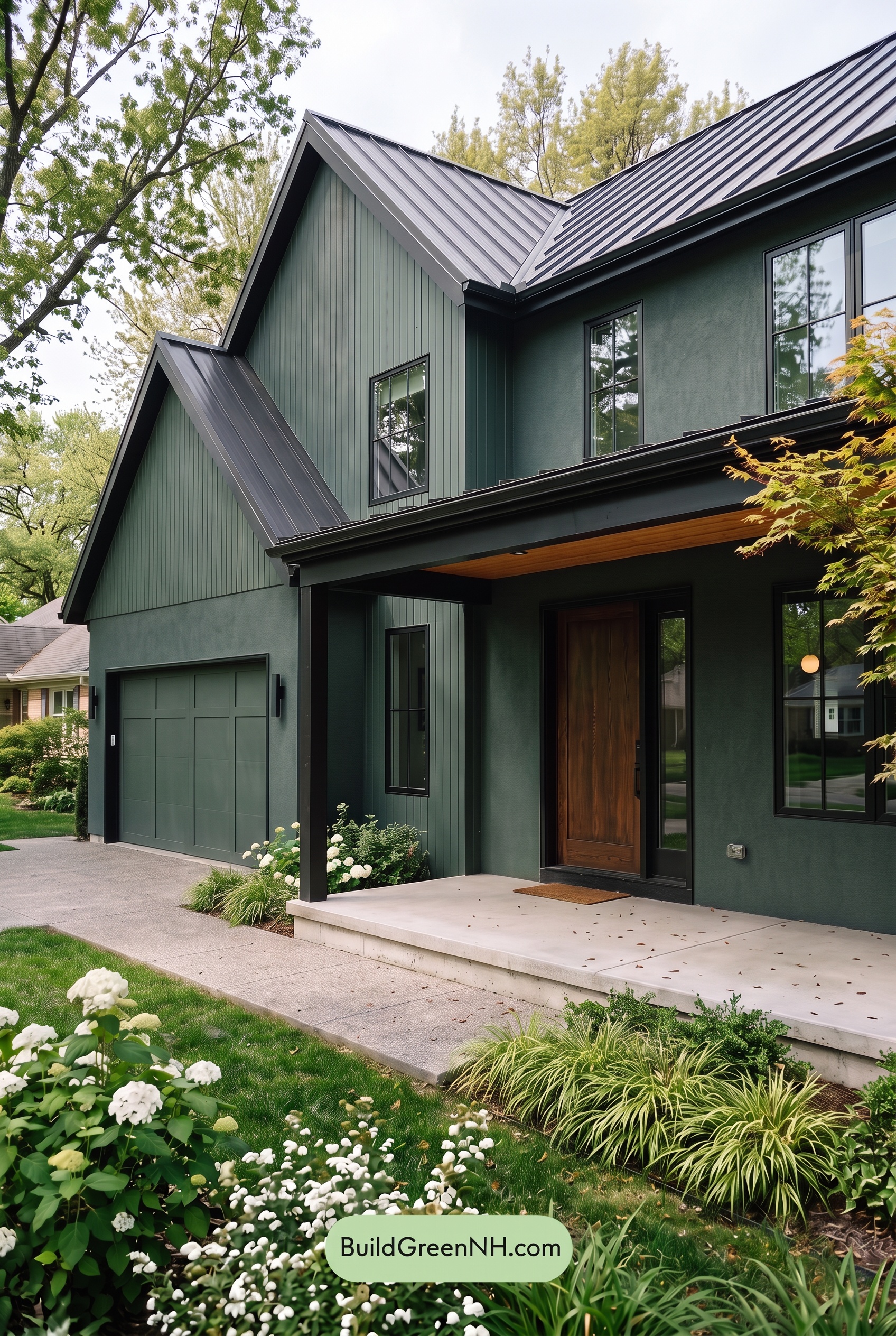
Under overcast skies, the midtone grays appear cooler and more muted than in neutral daylight, allowing their subtle green undertones to become more noticeable. The deeper gray shades feel duskier, while the warm browns lose some of their golden glow and take on a softer, earthier richness.
Diffuse light softens shadows beneath the gables and porch, reducing sharp light-to-dark contrasts across the exterior. The darkest grays still define the edges, but the overall palette feels more unified and subdued. Compared with neutral daylight, the mood shifts toward quiet sophistication, with the warm brown providing a gentle, welcoming counterpoint to the cooler neutrals.
Golden Hour
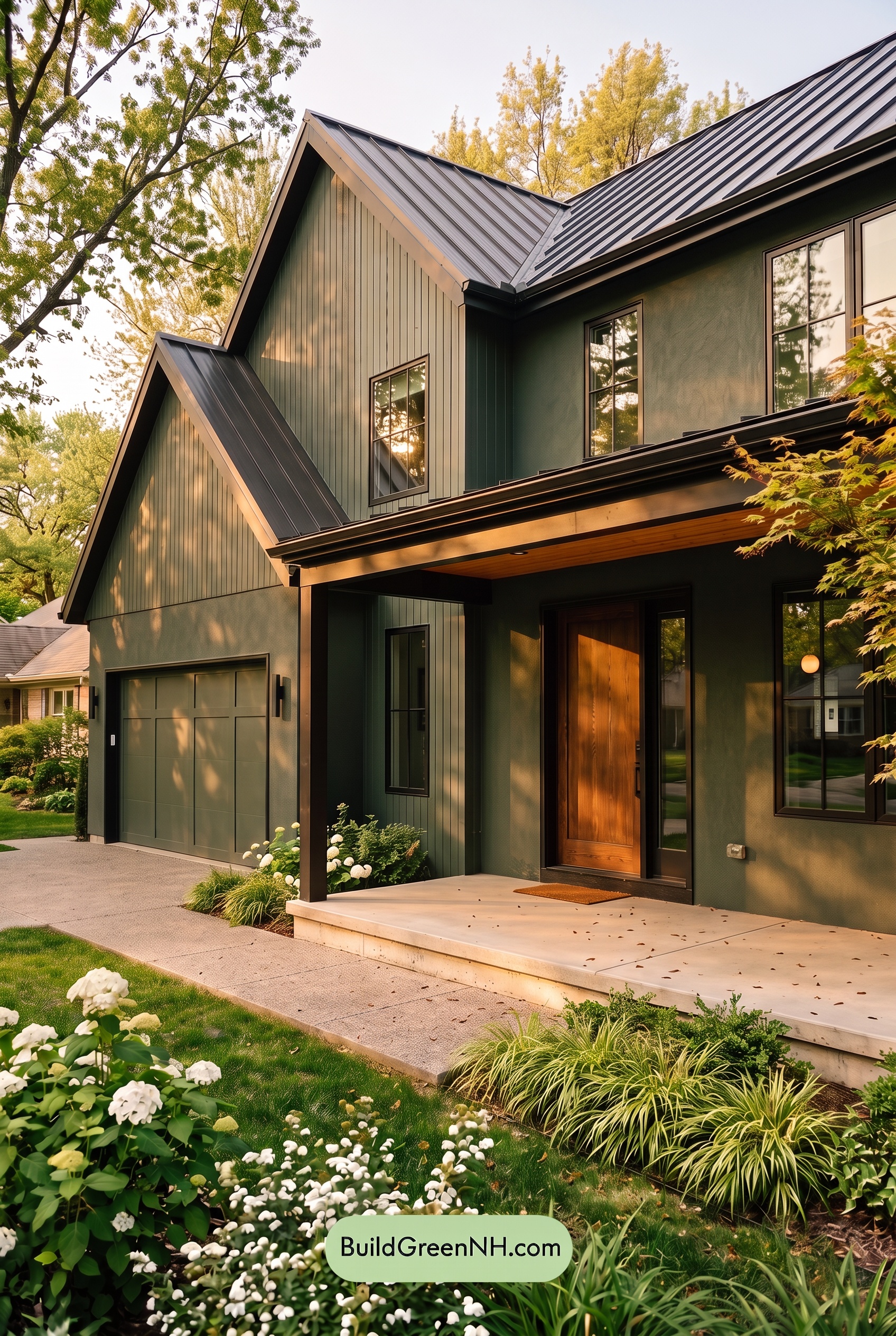
Golden Hour nudges these gray shades toward warmer, earthier tones, with sunlit areas taking on soft beige and muted green undertones. Compared with their more neutral appearance in daylight, the grays feel mellower, while the brown shade looks richer and more saturated as its orange undertones catch the low sunlight.
Long tree shadows and deep shade beneath the eaves push darker grays toward charcoal, creating stronger contrast with the glowing highlights. The subtle differences between gray shades become less obvious than the shifts between light and shadow. The result feels warmer and more intimate than in neutral daylight, while the dark outlines keep the exterior looking crisp.
Shade
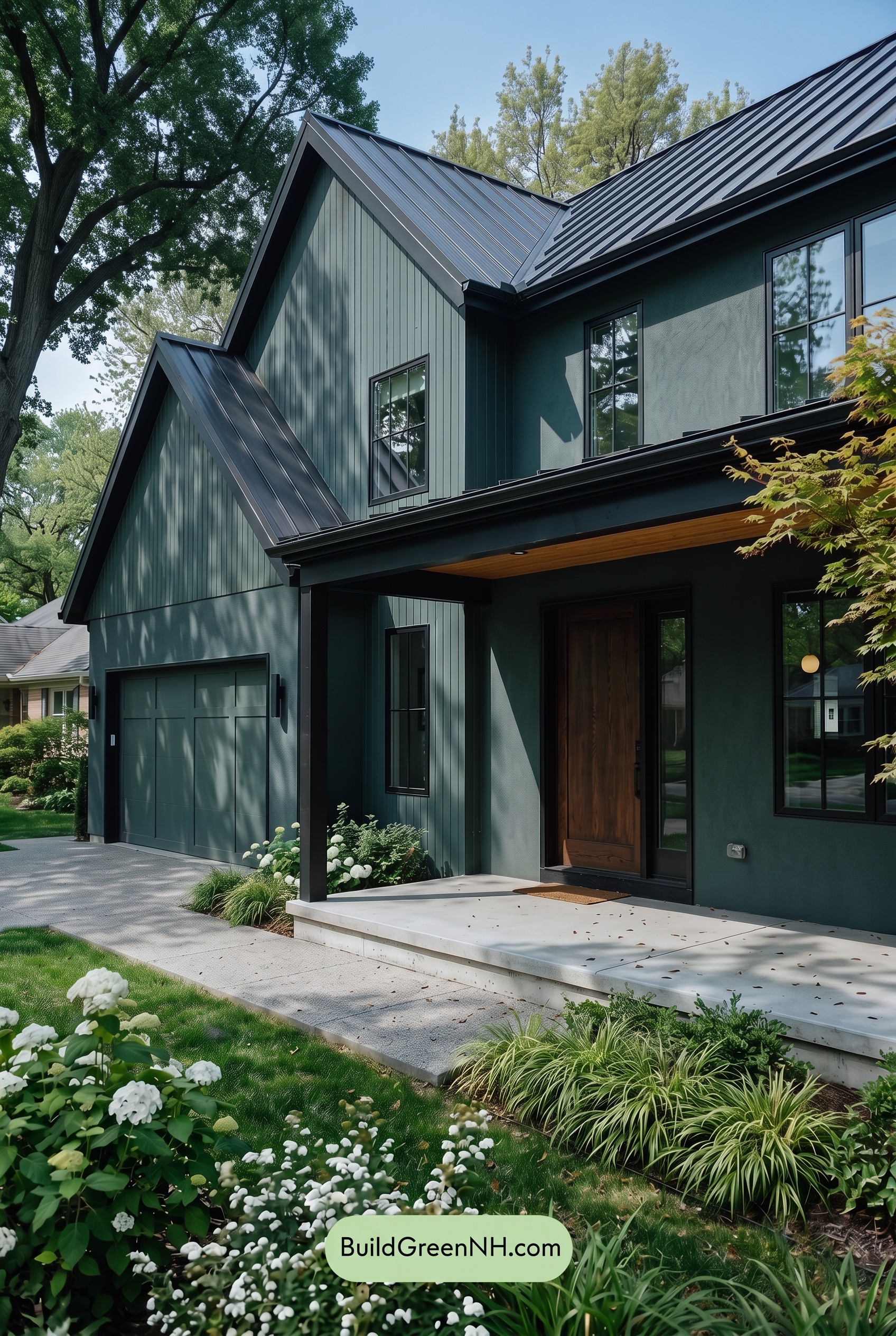
In shade, the gray shades across this house appear deeper and cooler than they would in neutral daylight, with subtle blue-green undertones becoming more noticeable. Their saturation feels restrained rather than vivid, giving the exterior a quiet, velvety richness. The darkest grays approach charcoal beneath the overhangs, where shadows soften the distinction between neighboring shades.
The warm browns look less golden and more subdued in shade, yet offer a welcoming contrast to the cooler grays. Compared with neutral daylight’s clearer tonal separation, shaded areas feel more unified and atmospheric. That balance of softened warmth, deep shadows, and gentle contrast gives the house a calm, slightly moody elegance.
Bright Midday
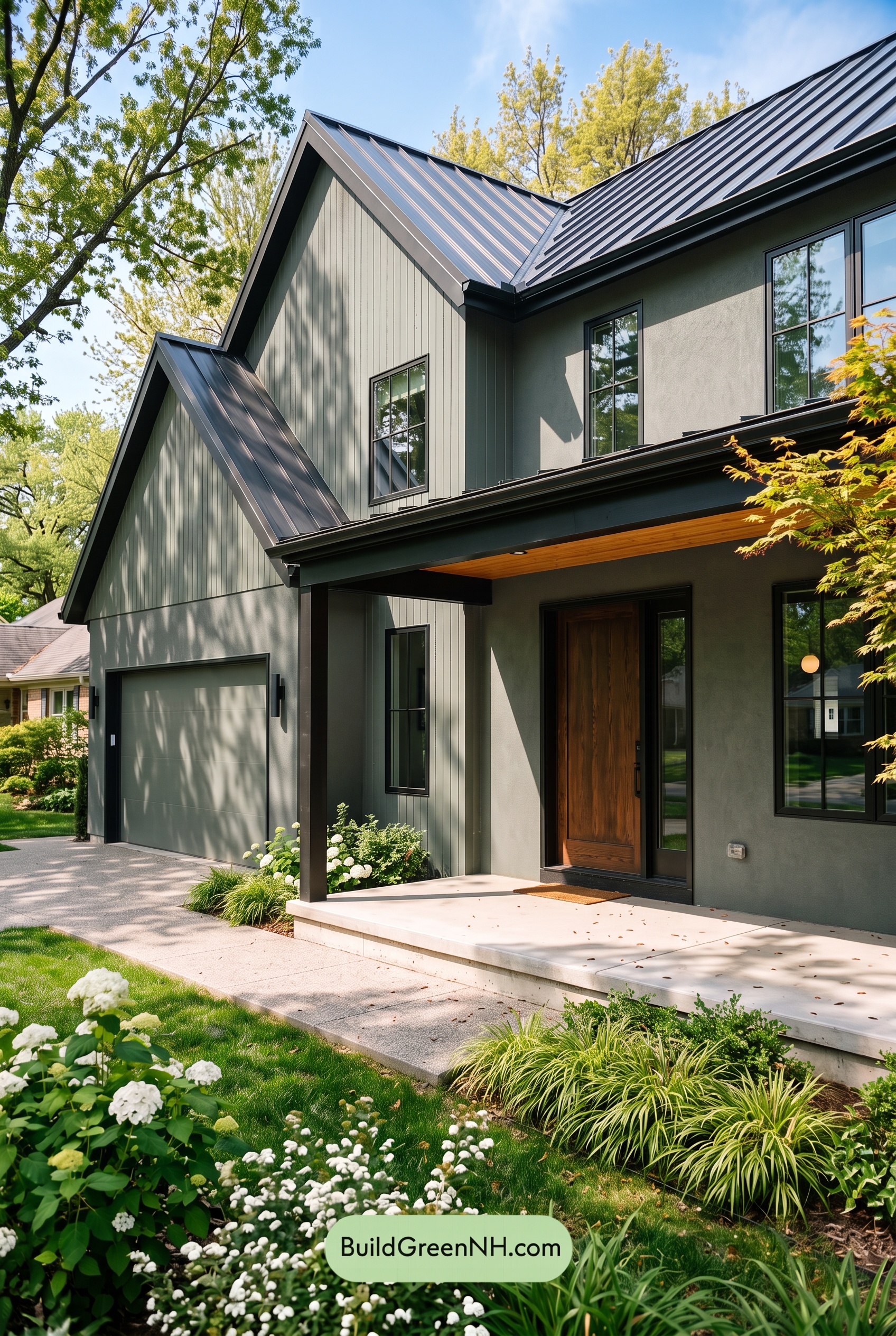
Bright midday light lifts the gray shades across this exterior, making sunlit areas appear paler and slightly less saturated than they would in neutral daylight. Subtle warm undertones emerge in the brightest patches, while shaded grays feel cooler and deeper. That light-to-dark shift gives the otherwise restrained palette a more lively, dimensional look.
Crisp shadows beneath the rooflines and porch sharpen the contrast between the lighter walls and deep gray accents. Dappled shade adds further variation across the garage, while the rich brown at the entry provides a warm focal point. Compared with neutral daylight’s more even appearance, the overall mood feels brighter, bolder, and more dramatic without losing its welcoming character.
Nighttime
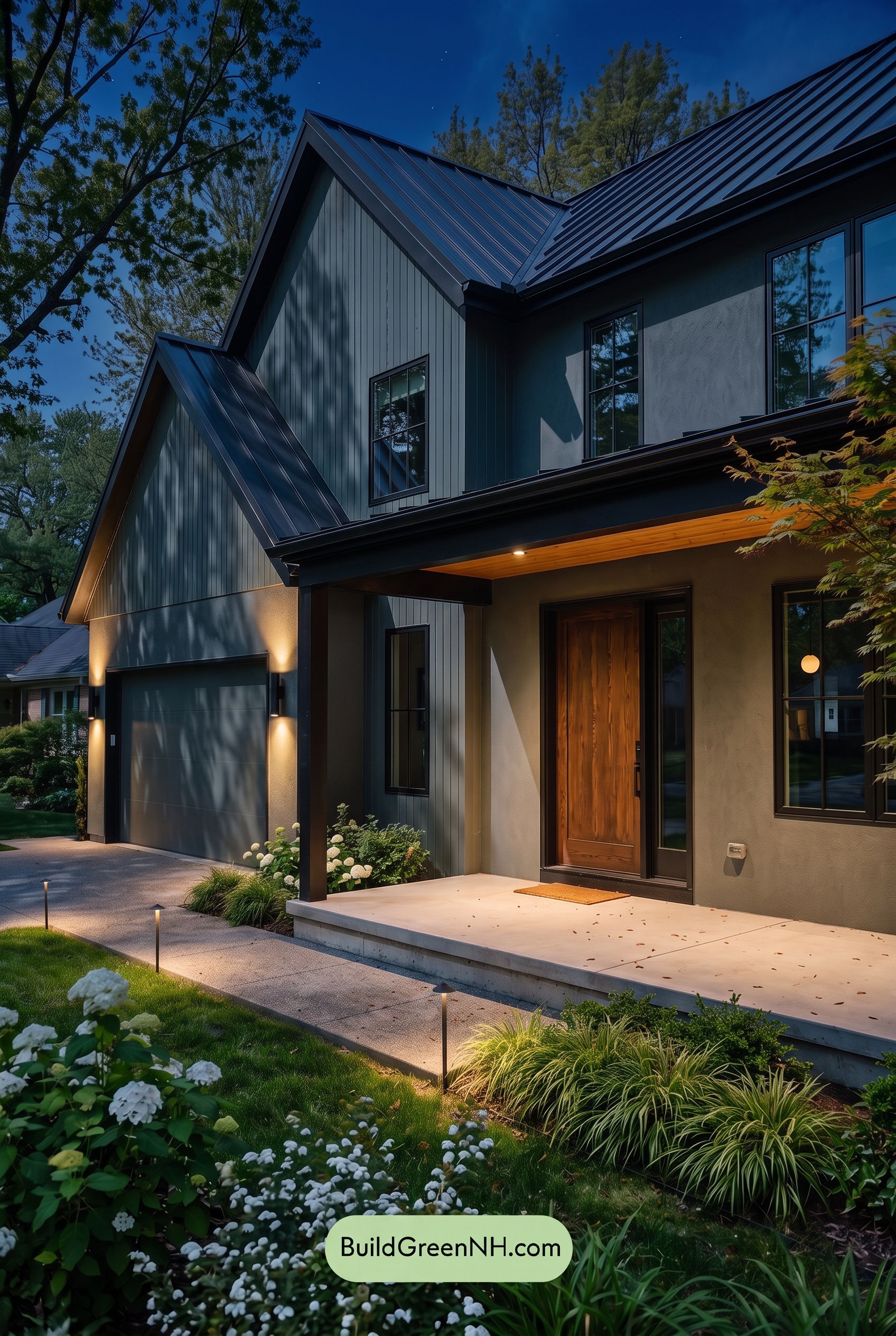
At night, the gray exterior takes on a cooler, blue-tinged cast, appearing deeper and more subdued than it would in neutral daylight. Subtle color differences become harder to distinguish in shadow, while the darkest gray trim and window frames nearly merge with the shaded eaves. Illuminated sections stand out more sharply, giving the facade a dramatic sense of depth.
Warm lighting near the garage and entry softens the surrounding grays toward warmer neutrals, creating a gentle counterpoint to the cooler upper walls. The brown front door appears richer and more saturated beneath the porch lights. Compared with daylight’s more even color balance, these pools of warmth make the house feel intimate and welcoming against its darker, quieter surroundings.
Pin these for later:
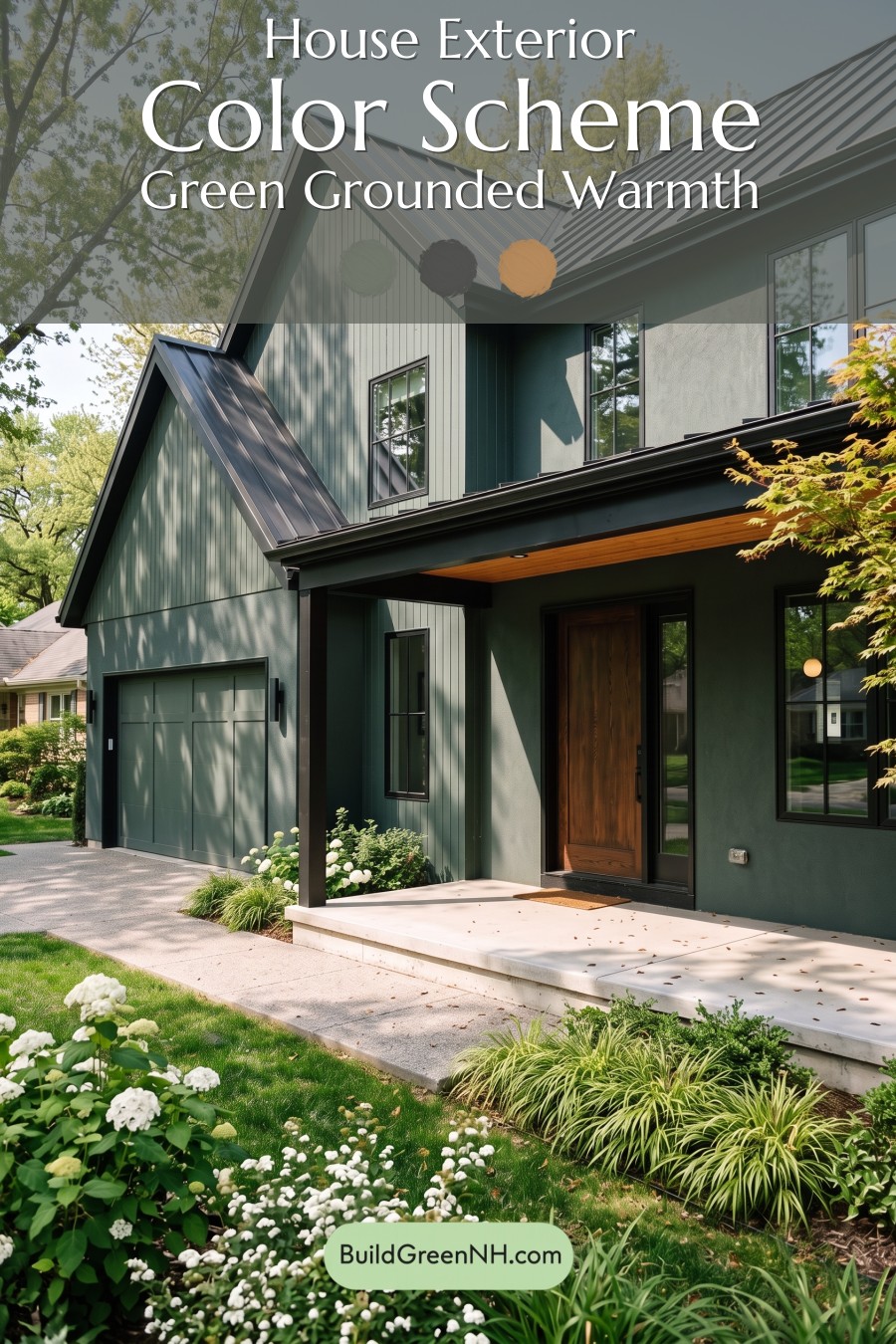
Want More?
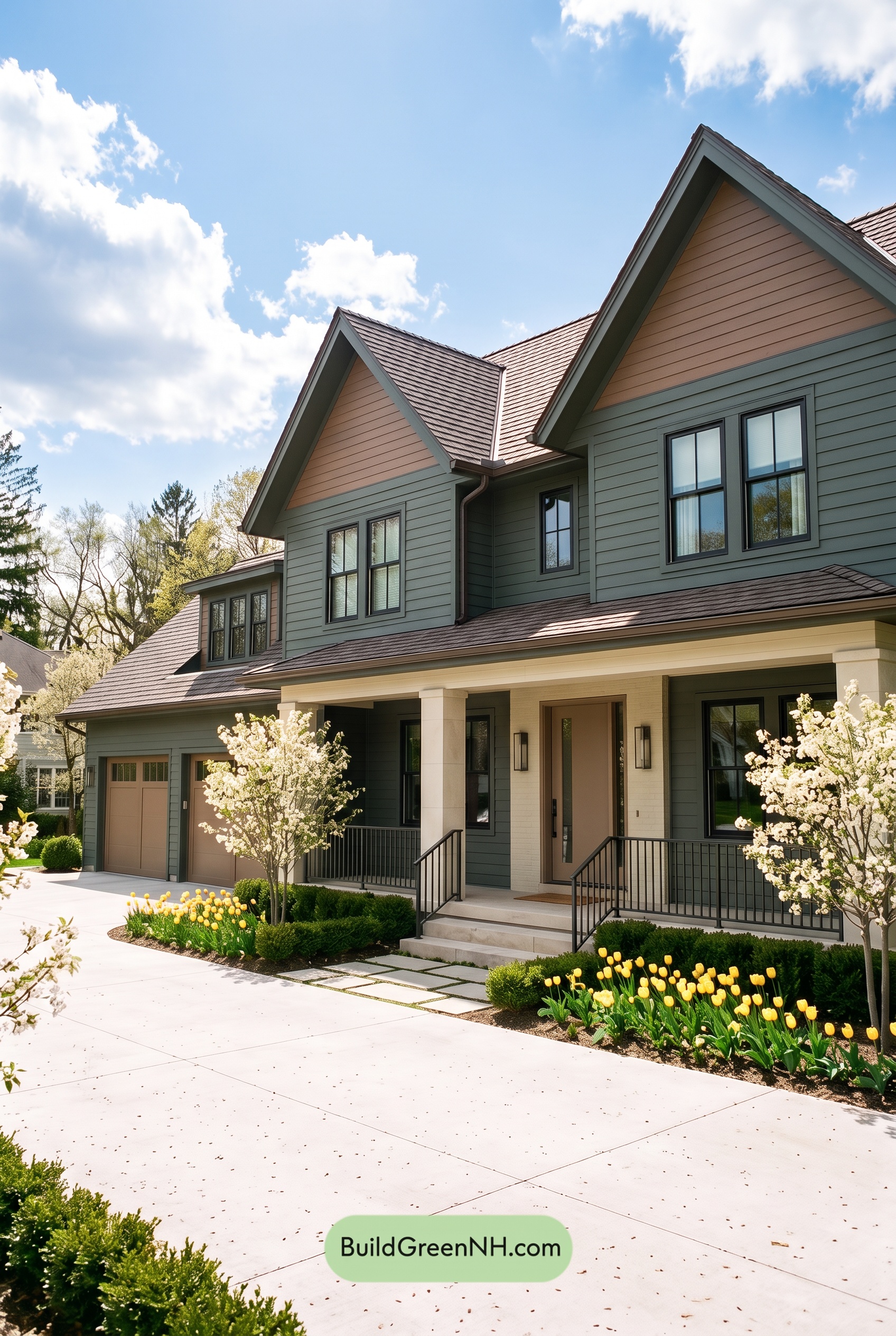 Earthy Green House Exterior Color Scheme: Brown Green Comfort
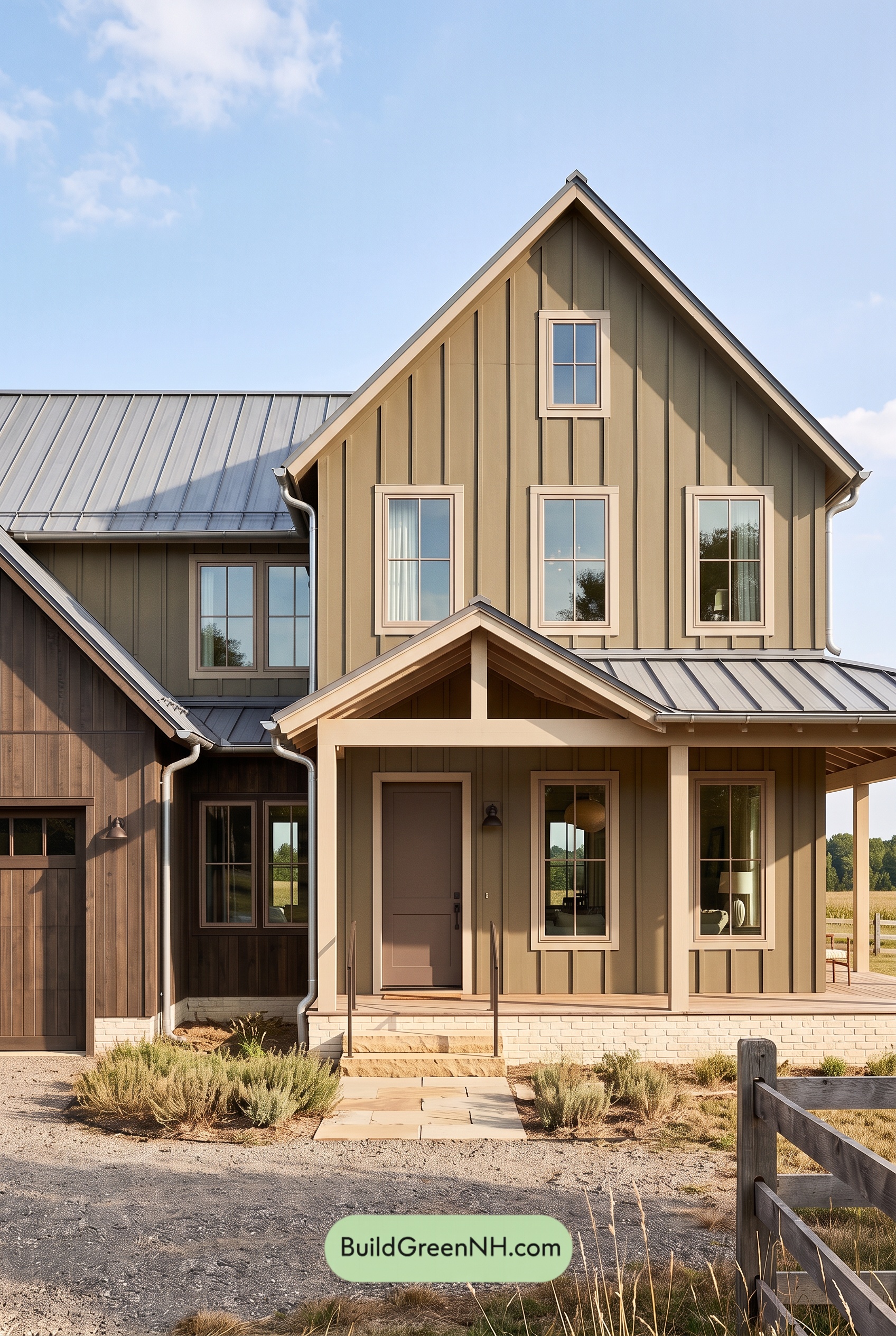 Earthy Green House Exterior Color Scheme: Green and Beige Sanctuary
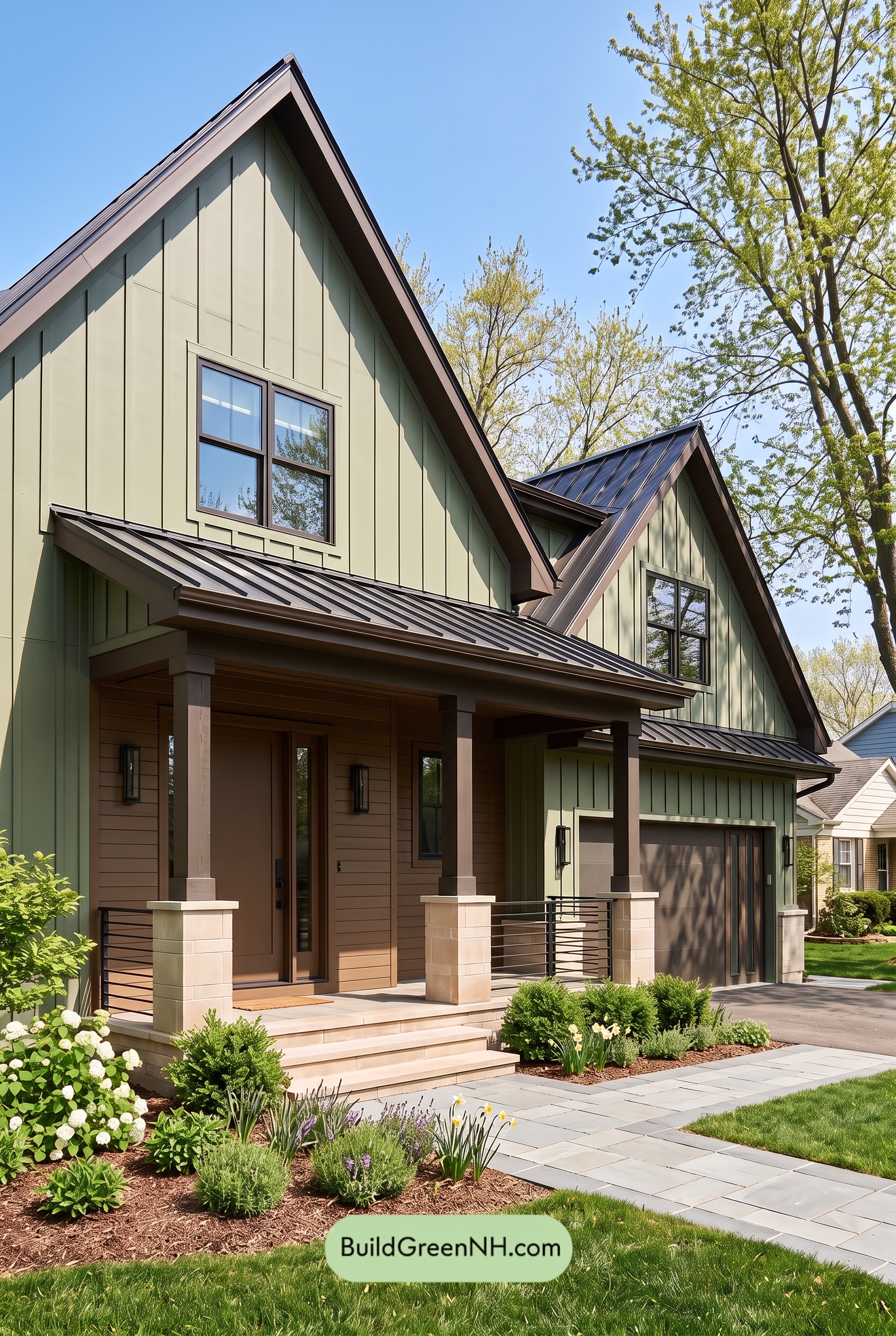 Earthy Green House Exterior Color Scheme: Green Velvet Assurance
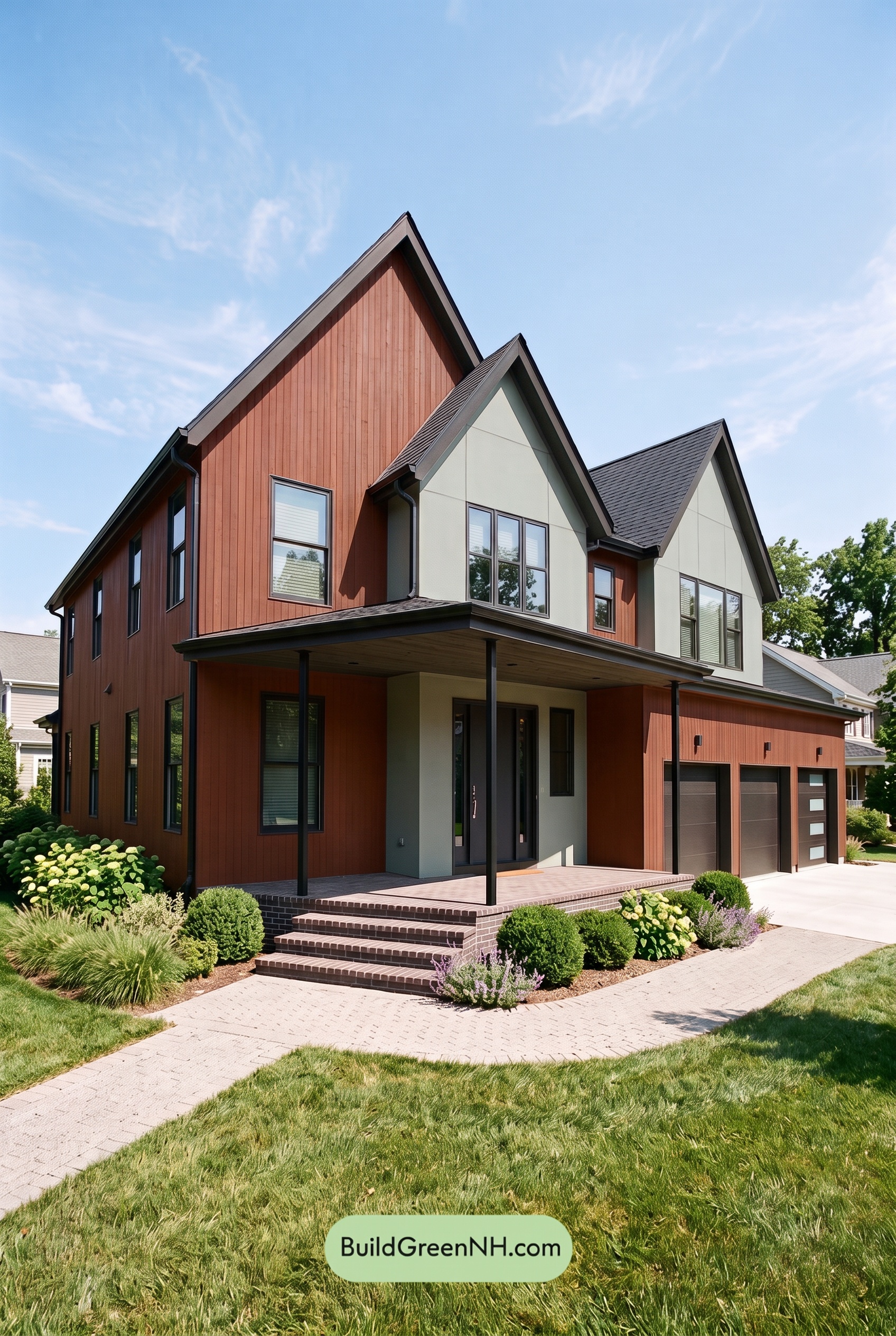 Earthy Green House Exterior Color Scheme: Brown Silken Calm
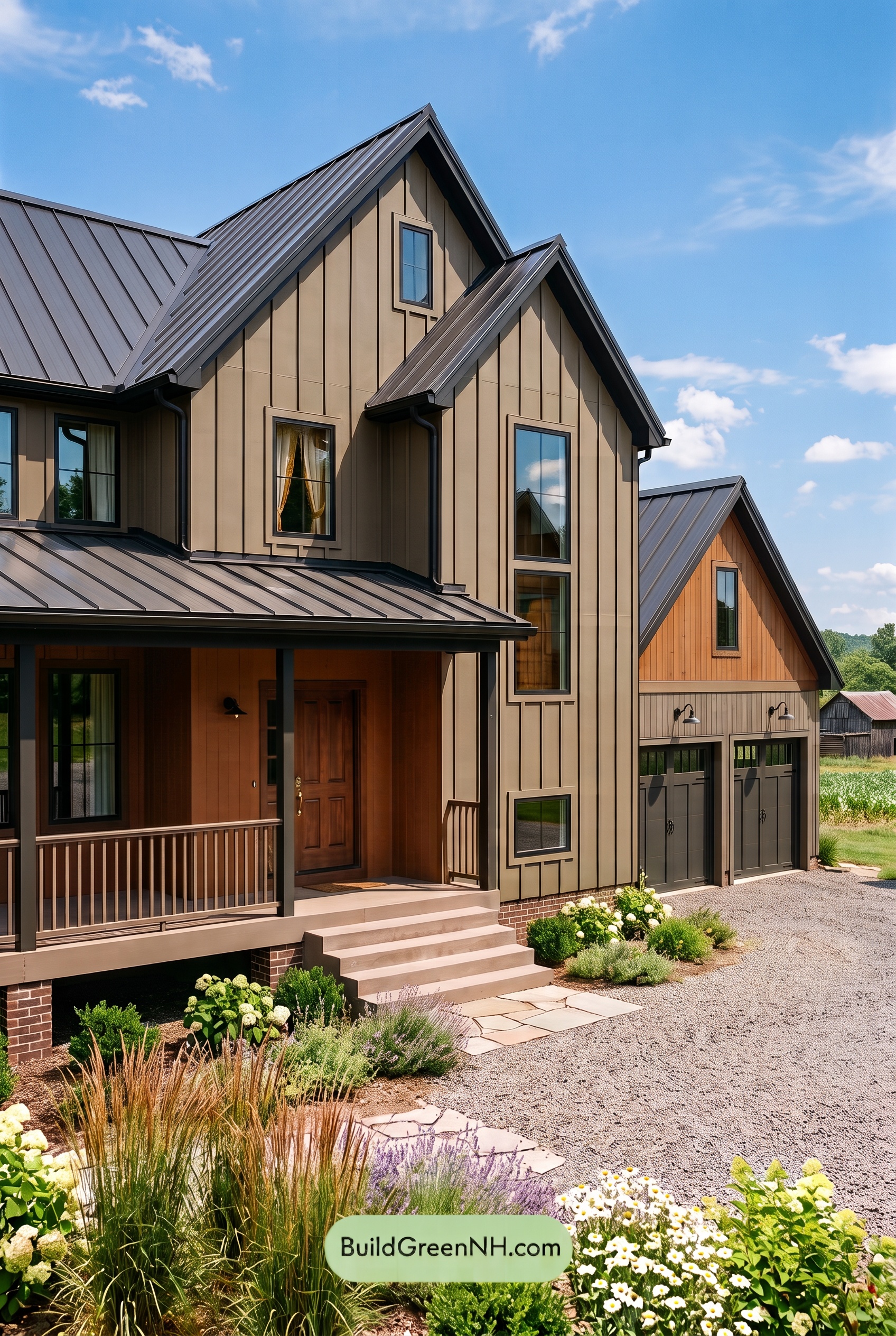 Earthy Green House Exterior Color Scheme: Green Amber Contentment
Table of Contents