Last updated on
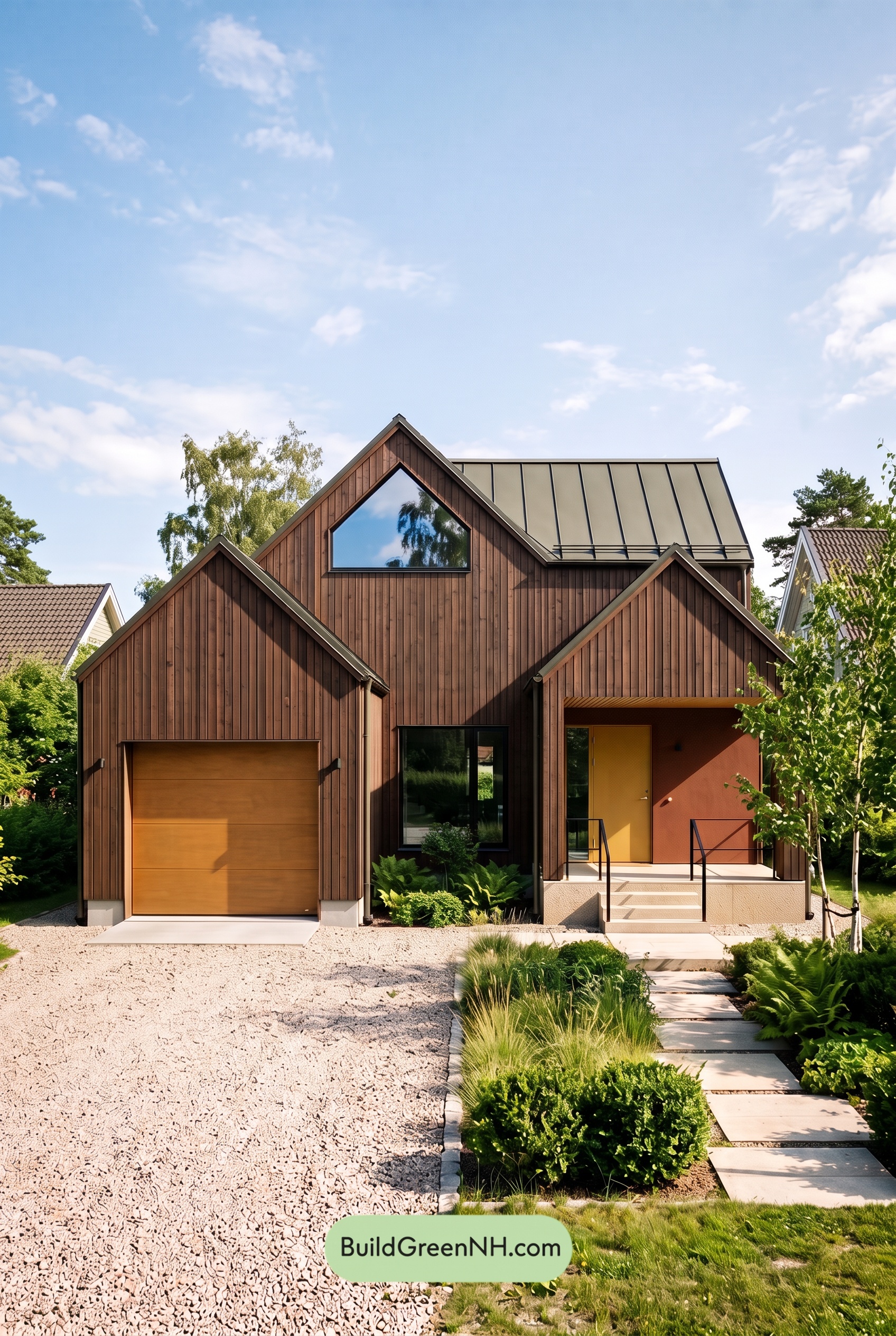

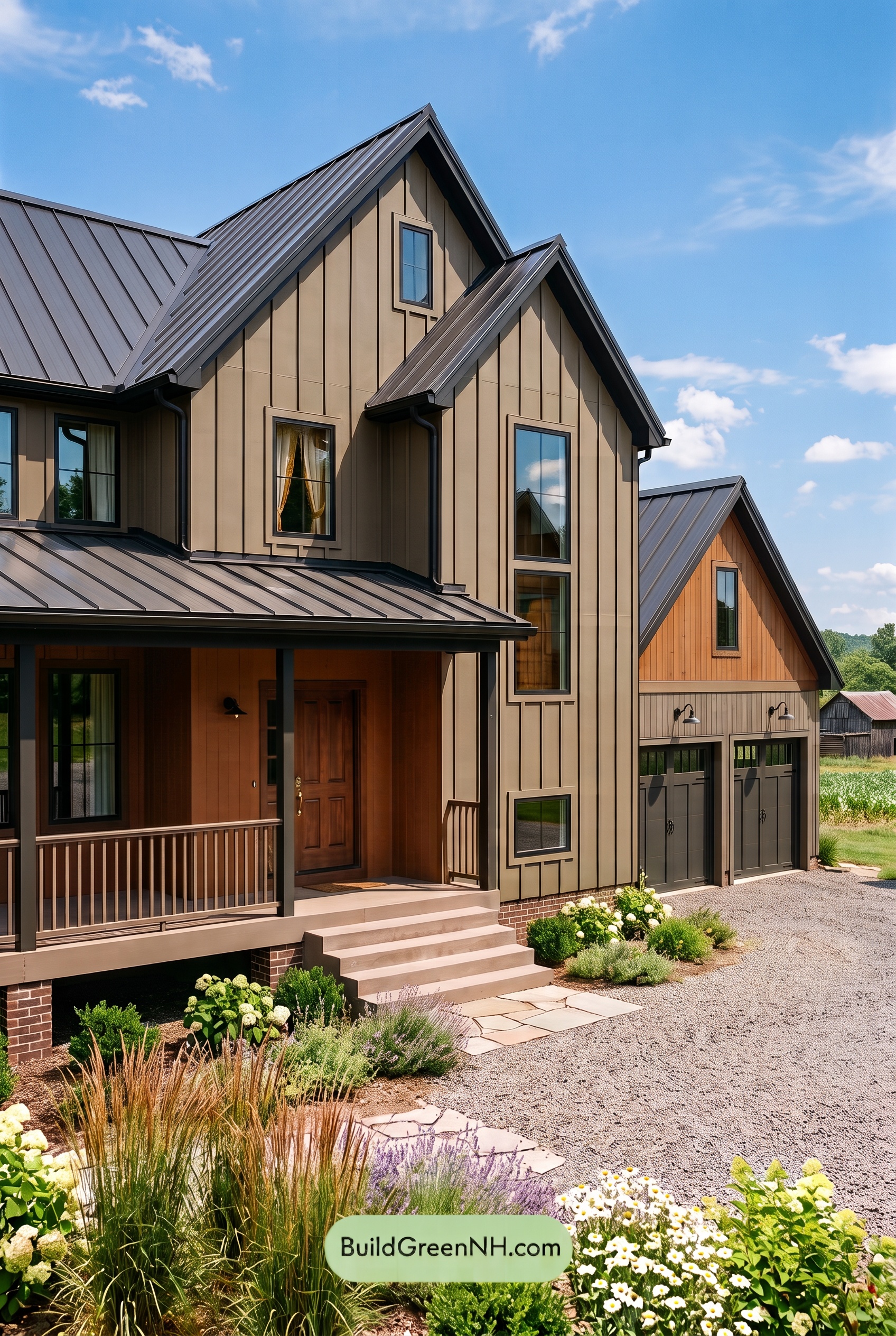
Rich brown siding, tailored gray details, and golden-orange doors give this home a winning balance of natural warmth and modern definition.
Warm Brown Siding Unifies the Gables
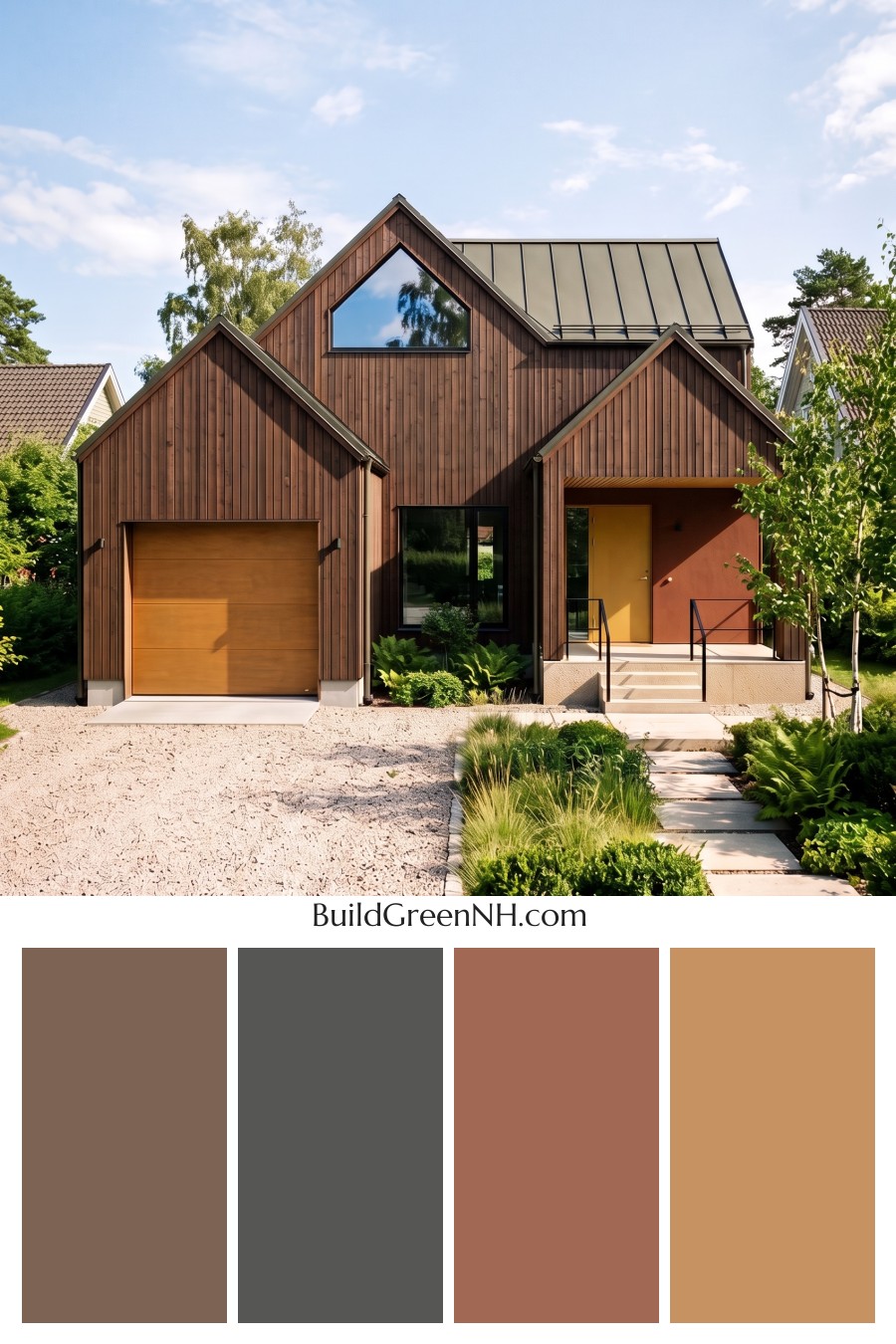
A warm, medium-to-deep brown wraps the vertical siding, connecting the home’s three prominent gables into one cohesive composition. Subtle reddish undertones keep the broad walls from feeling flat, while sunlight brings out lighter brown variations across the boards.
This shade gives the angular architecture a softer, more welcoming character. The vertical lines still stand out, but the earthy color makes the house feel comfortably settled among the surrounding greenery rather than sharply separated from it.
Gray Details Give the Exterior Definition
Muted warm-gray trim follows the sloping rooflines, neatly outlining each gable without creating a stark contrast against the siding. The standing-seam roof carries a similar gray tone across a larger surface, tying the upper portion of the house to those crisp edges.
Deeper charcoal-gray window frames add another layer of contrast. Around the large upper window and lower glazing, these darker outlines emphasize the openings while allowing the brown siding to remain the dominant feature. Slender gray railings repeat that restrained detailing at the steps, giving the entrance definition without making it feel enclosed.
Golden-Orange Doors Bring the Warmth Forward
The doors provide the scheme’s brightest notes. A golden-orange front door draws attention to the sheltered entrance, while the garage door introduces a deeper orange-brown shade across its wider surface. They feel related, not identical—a useful distinction when one feature is much larger than the other.
Behind the front door, a muted reddish-brown accent wall adds depth to the porch. Its earthy warmth bridges the main siding and the brighter door, so the entrance feels integrated rather than added on.
A Grounded Palette With a Welcoming Mood
The appeal lies in the balance: brown supplies warmth, gray brings structure, and orange adds a cheerful focal point. Pale warm-gray steps and foundation surfaces lighten the base, keeping the richer walls from feeling too heavy.
Together, these shades create an exterior that feels contemporary but approachable. There is enough contrast to celebrate the architecture, yet enough shared warmth to make the whole house feel calm and connected.
Next, see how this color scheme looks under different lighting simulations throughout the day.
Overcast
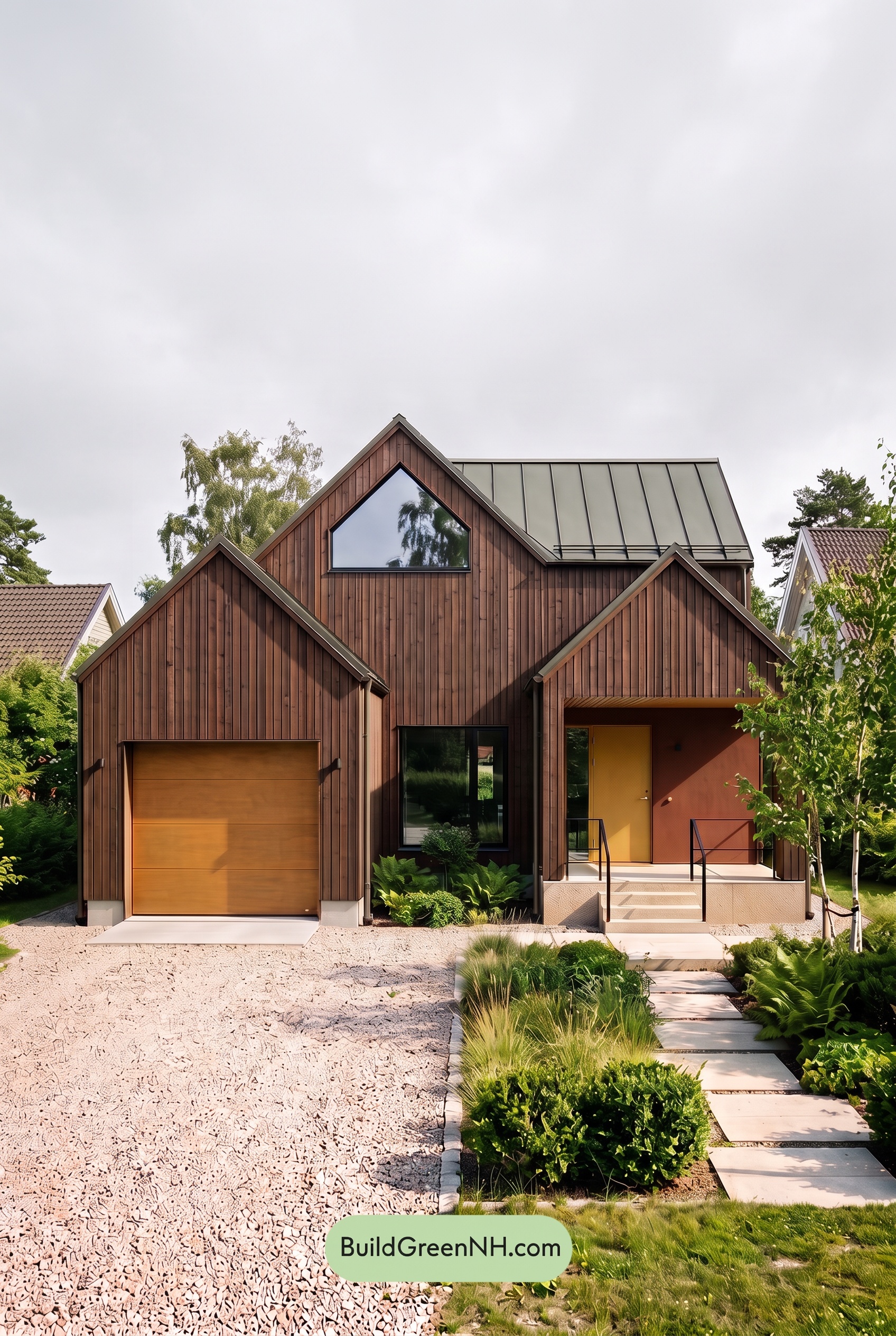
Under overcast skies, the brown shades across this exterior would appear more muted and less warm than in neutral daylight, giving the house a quieter, earthier character. The gray shades would lean cooler, while the orange shades at the entry and garage would lose some golden brightness yet remain welcoming focal points against the subdued browns.
Diffused light would soften shadows beneath the gables and around the recessed entrance, reducing the contrast between bright surfaces and deep shade. With fewer sharp highlights, the color transitions would feel gentler and more unified—shifting the overall mood from crisp and lively to calm and understated.
Golden Hour
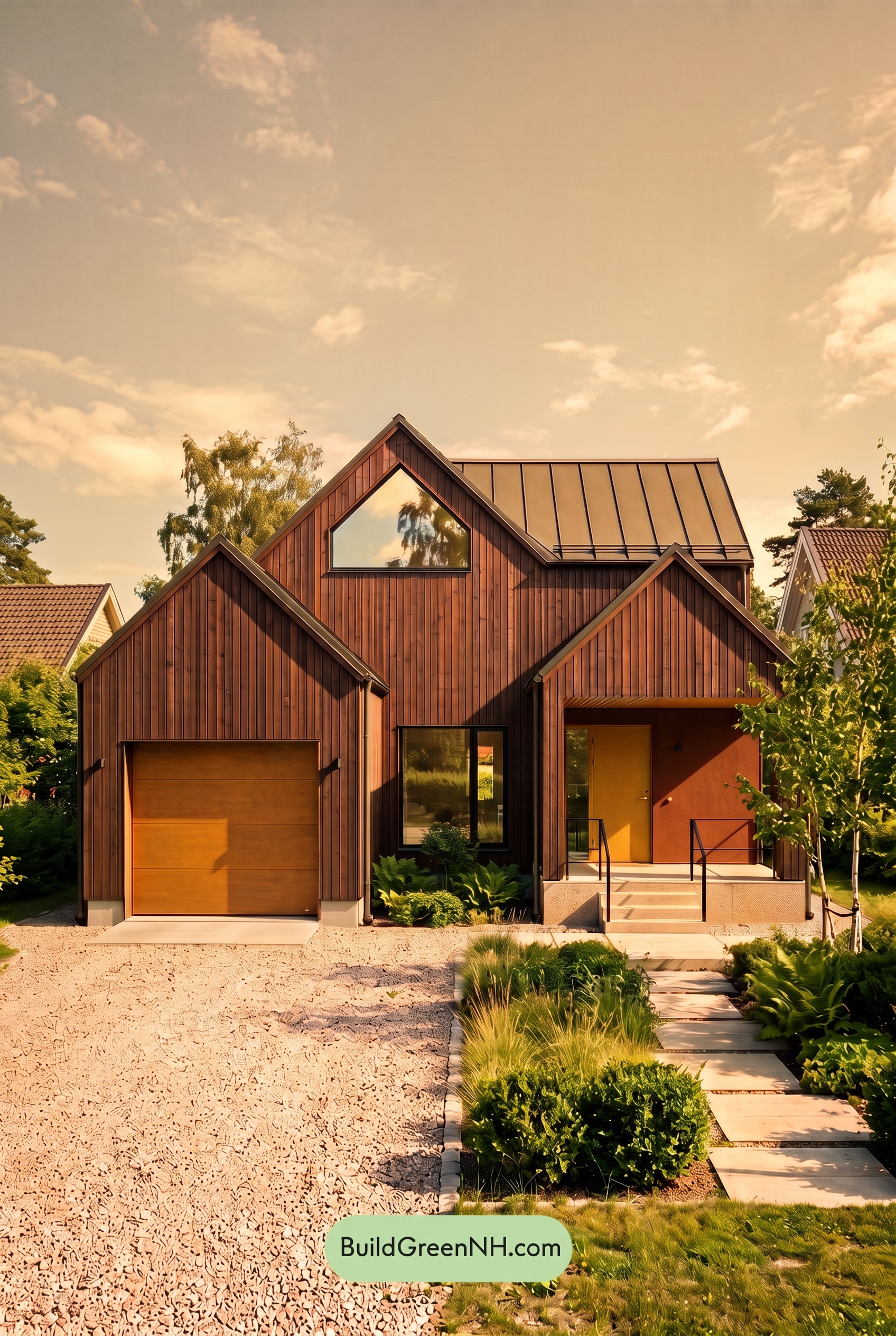
Golden Hour brings out the reddish warmth in these brown shades, making sunlit areas appear richer and more saturated than they would in neutral daylight. The orange shades gain a glowing warmth, while the grays pick up a softer, warmer cast wherever the light touches them. Together, the colors feel more closely connected and inviting.
Long, angled shadows deepen the browns and make shaded grays appear cooler by comparison, strengthening the contrast between glowing highlights and dark recesses. Unlike the more even, balanced appearance of neutral daylight, this light gives the exterior a dramatic sense of depth—yet the overall mood feels cozy and calm.
Shade
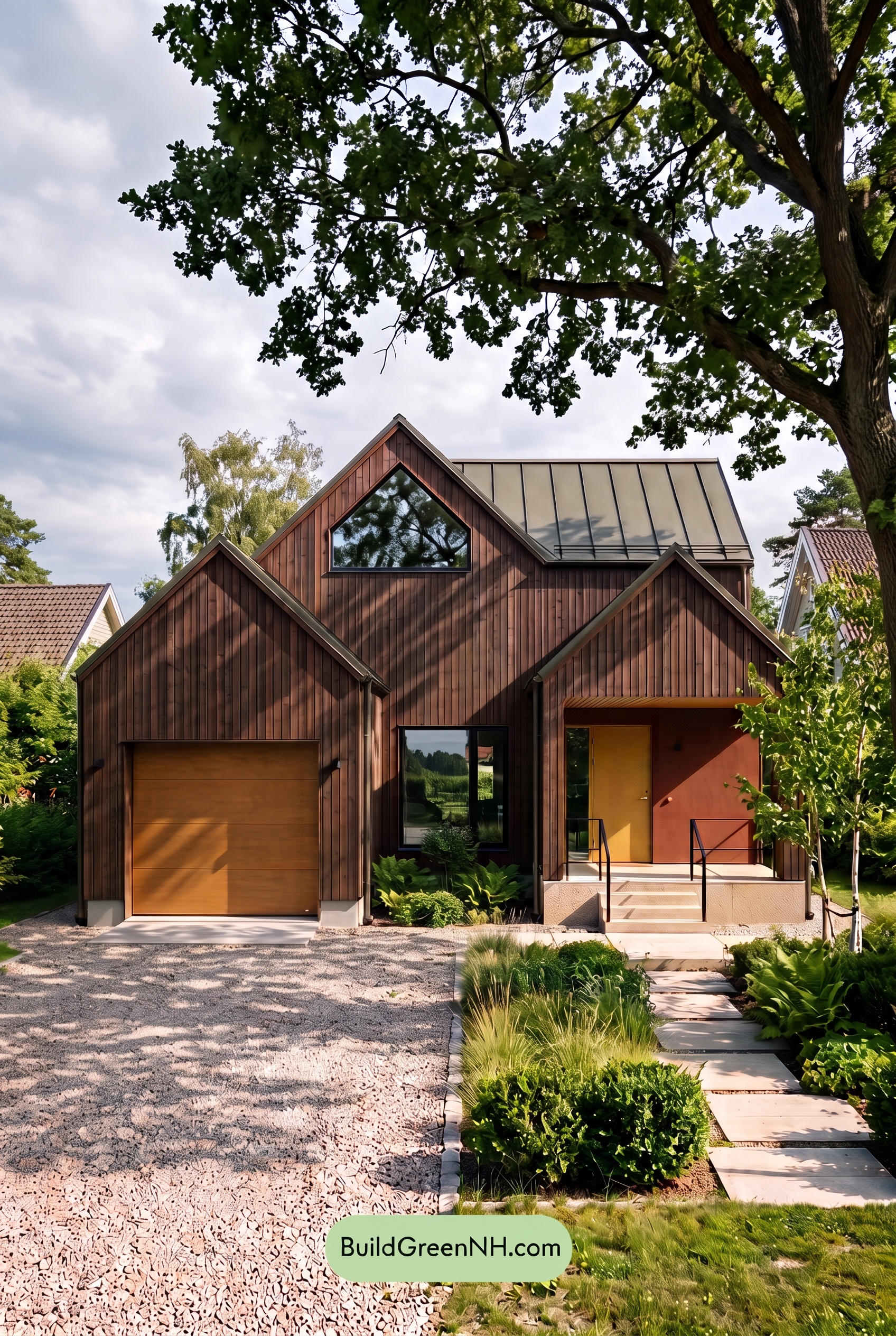
In shade, the brown shades across this house deepen and feel more muted than they would in neutral daylight, with their reddish warmth becoming less pronounced. The gray shades take on a cooler, quieter character, while shadows beneath the gables draw the darkest browns and grays closer together. This gives the exterior a more sheltered, understated mood.
The orange shades retain a welcoming warmth, but shade softens their brightness and saturation compared with neutral daylight. Against the deeper browns, they still offer a gentle focal point rather than a bold burst of color. Where leafy shadows meet brighter patches, local contrast becomes stronger, adding movement across an otherwise calm, earthy palette.
Nighttime
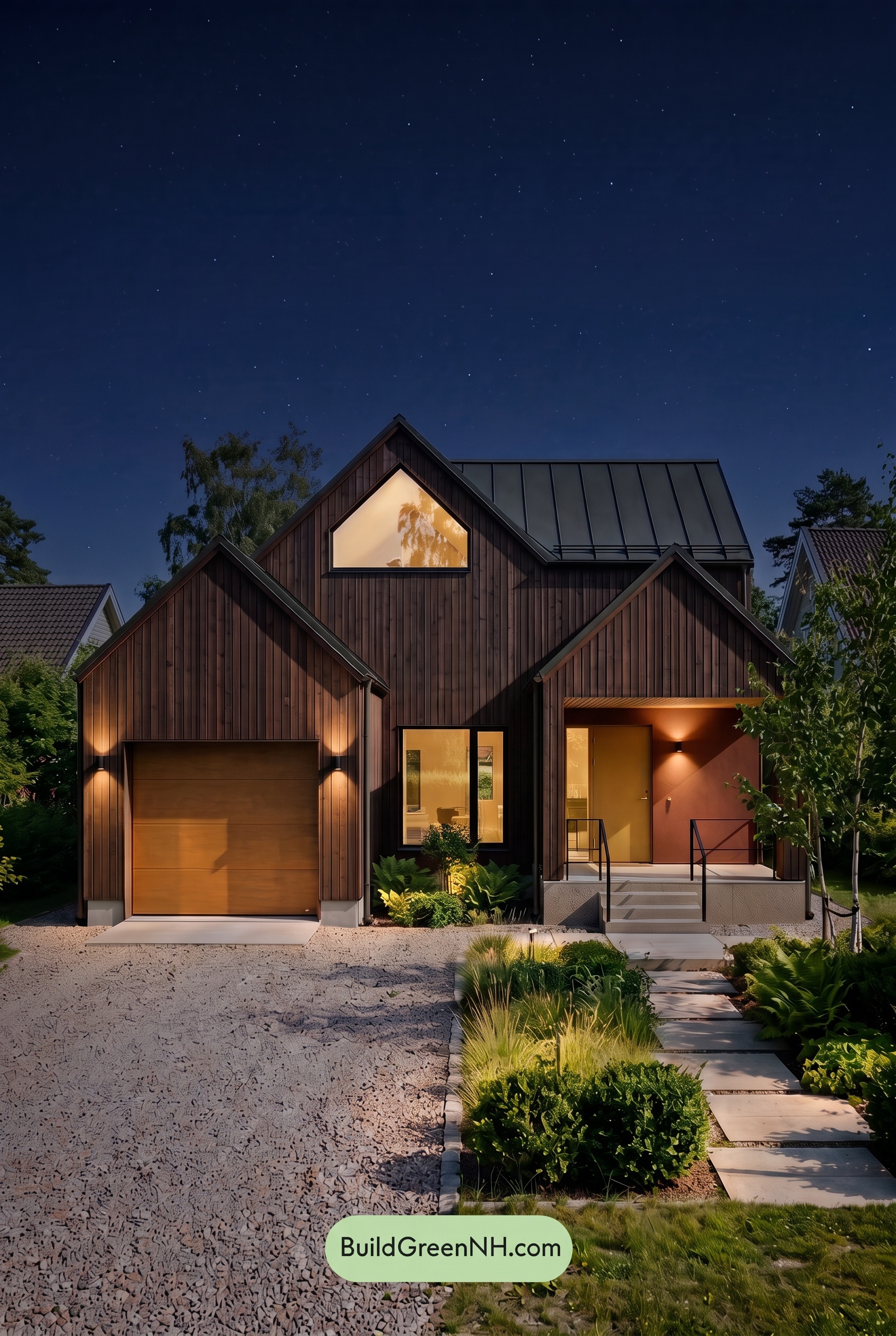
At night, the brown shades deepen and appear less saturated in shadow than they would in neutral daylight, giving the upper gables a quieter, more dramatic presence. Beneath the exterior lights, those same browns reveal warmer, reddish undertones. Deep shadows under the rooflines and between the vertical boards strengthen the contrast, making the siding feel more textured.
The orange shades look richer and more golden where warm light reaches them, drawing attention to the entrance and garage. Meanwhile, the gray trim, window frames, and railings darken toward nearly black, losing some of the subtle distinctions daylight would reveal. This balance of glowing warm shades and cool, shadowed neutrals shifts the house from crisp and earthy by day to cozy and inviting after dark.
Pin these for later:
Want More?
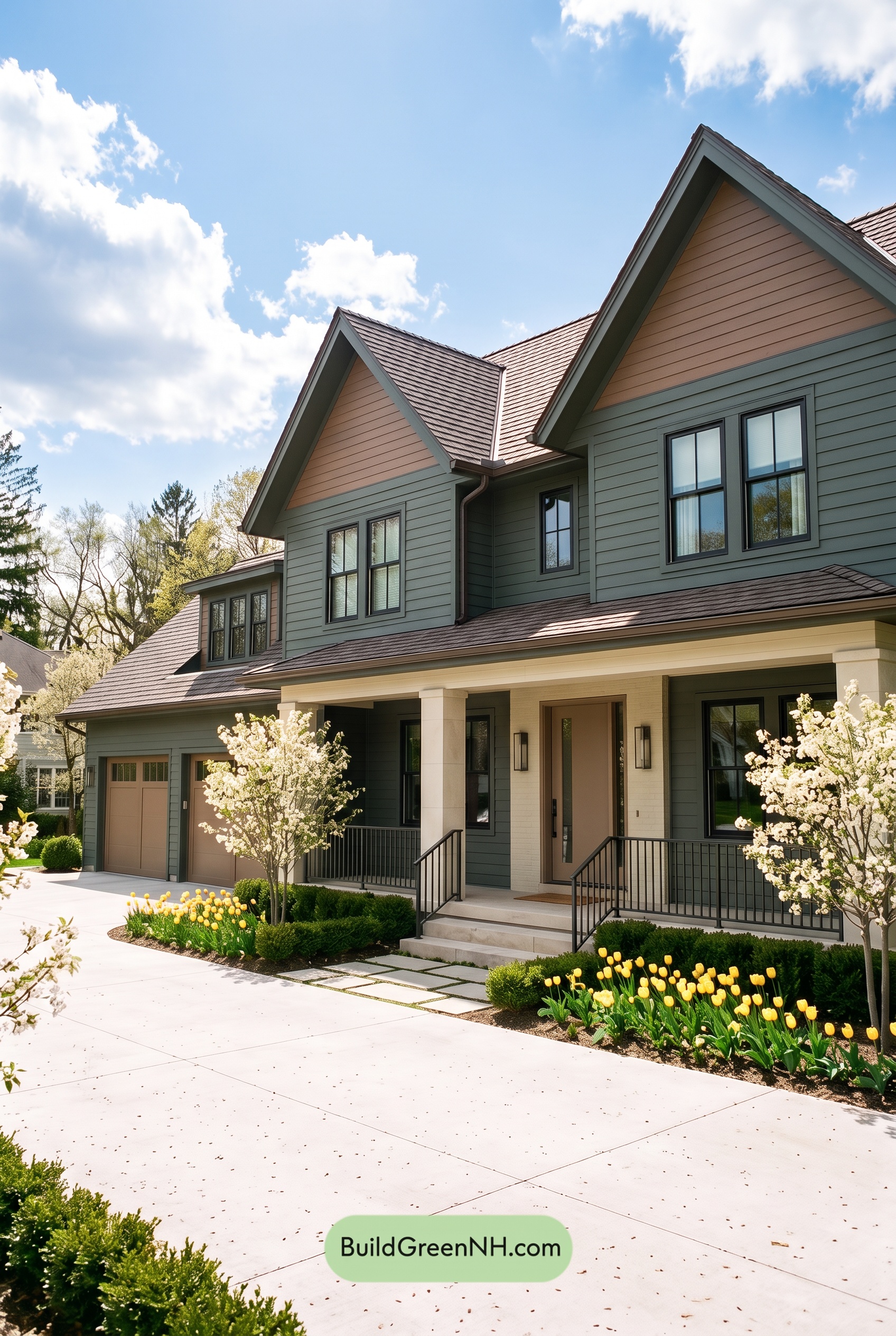 Earthy Green House Exterior Color Scheme: Brown Green Comfort
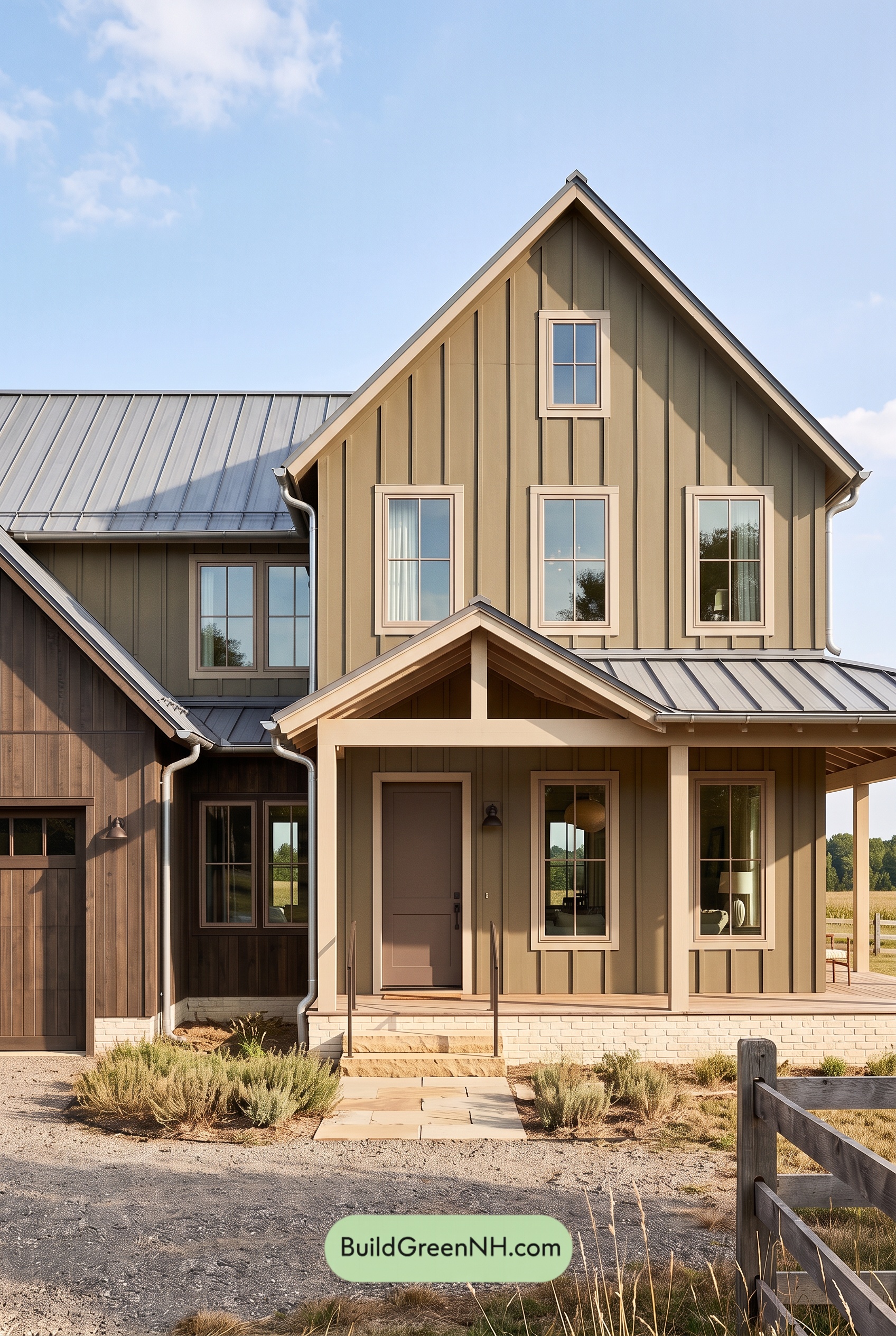 Earthy Green House Exterior Color Scheme: Green and Beige Sanctuary
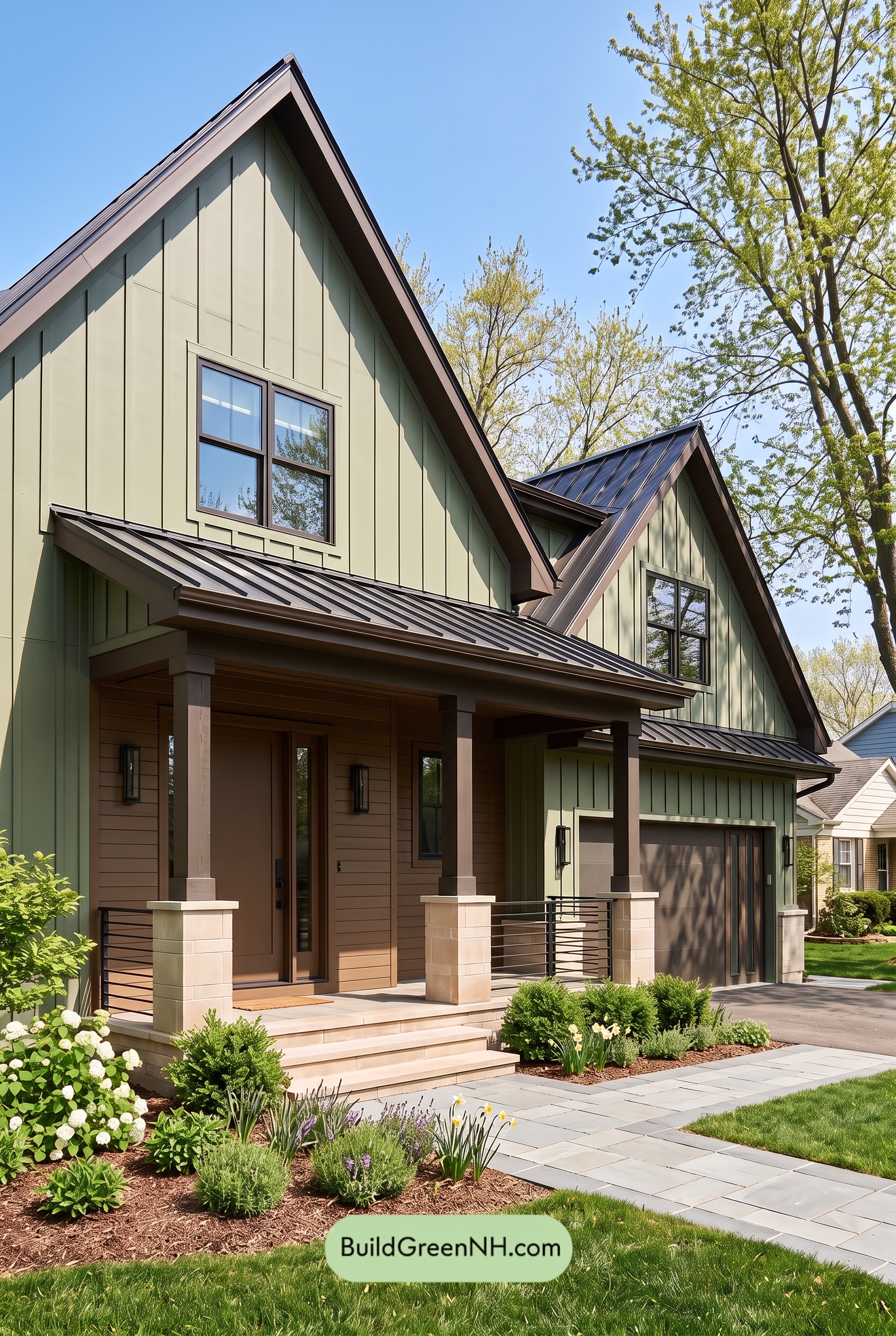 Earthy Green House Exterior Color Scheme: Green Velvet Assurance
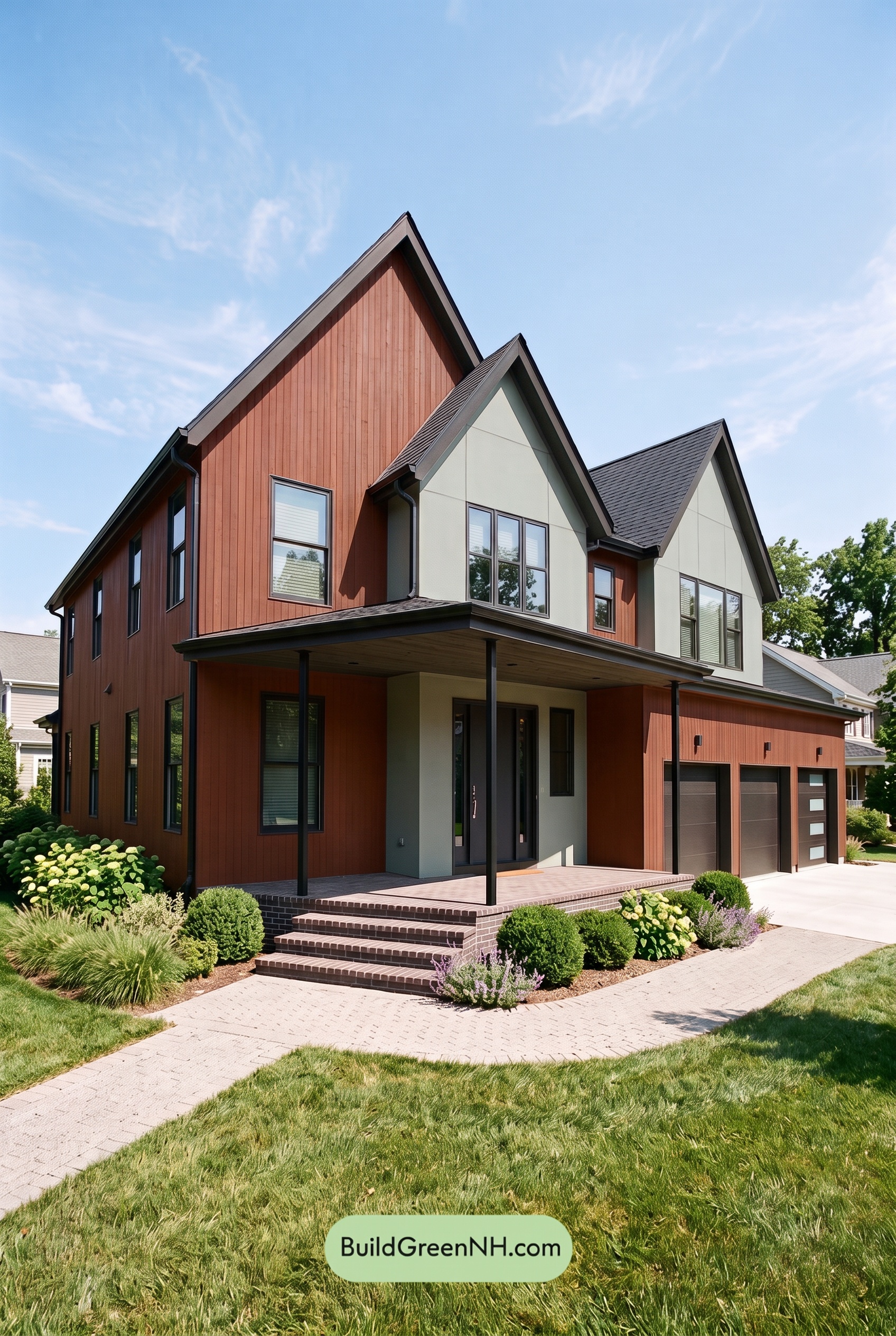 Earthy Green House Exterior Color Scheme: Brown Silken Calm
 Earthy Green House Exterior Color Scheme: Green Amber Contentment
Table of Contents