Last updated on
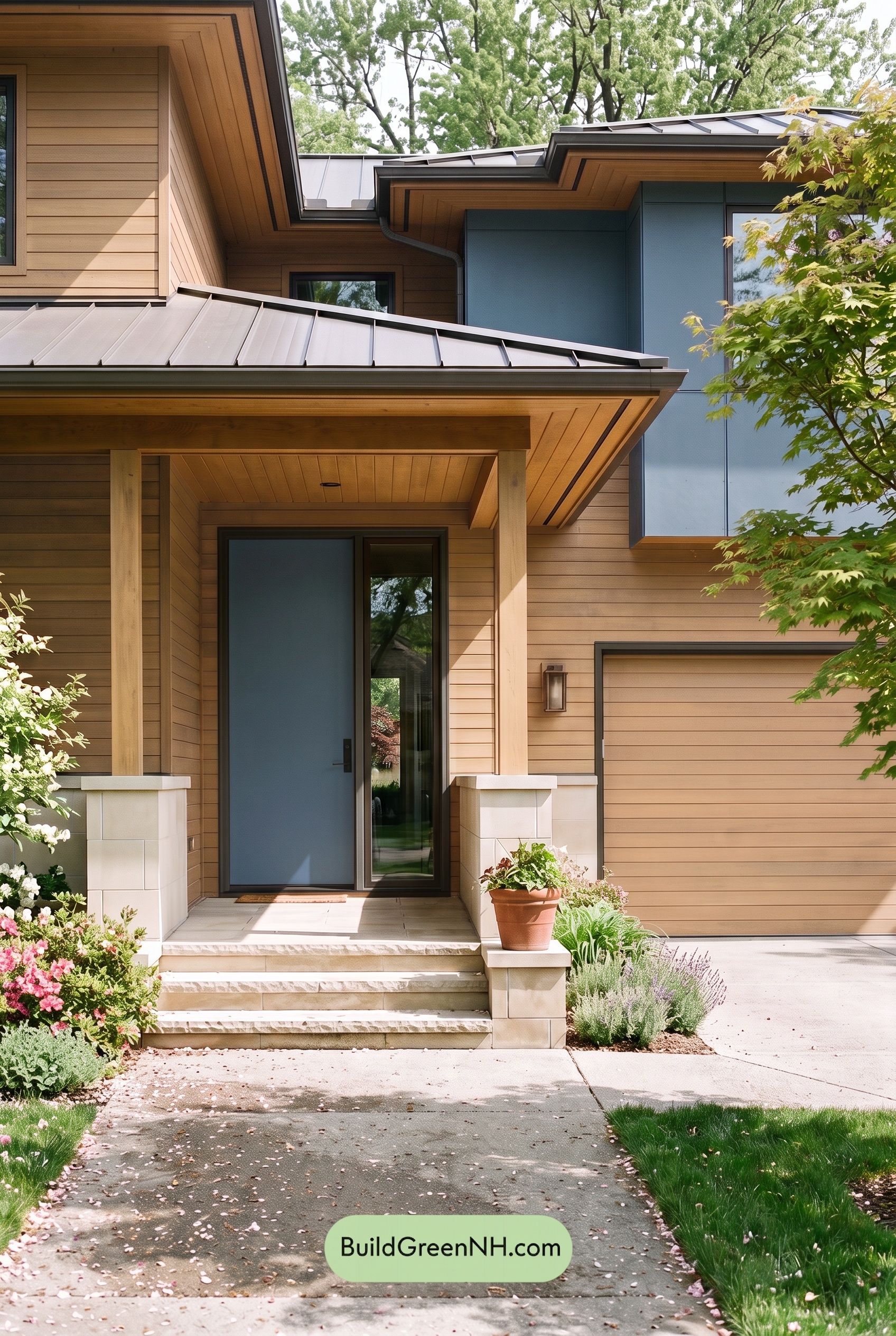

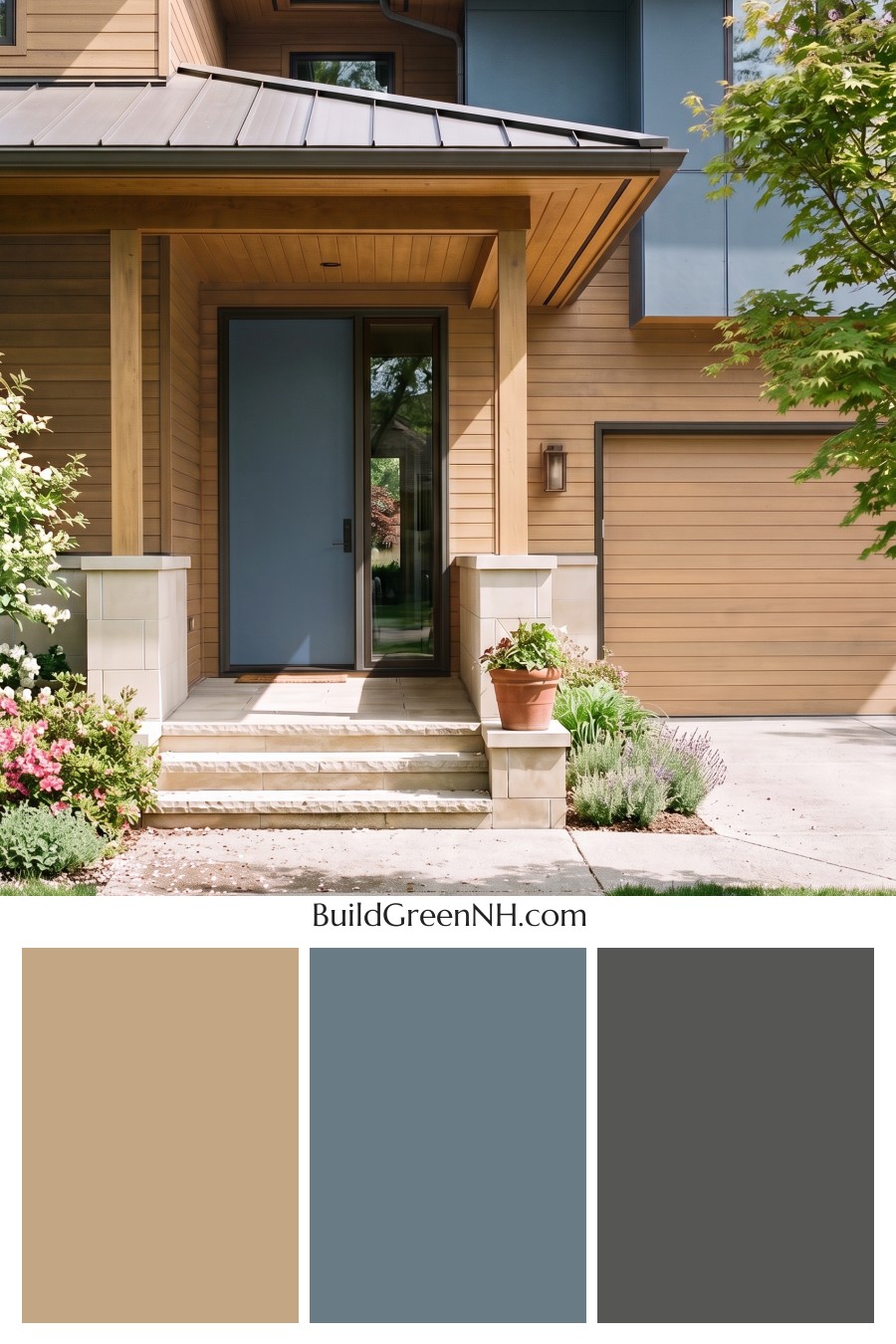
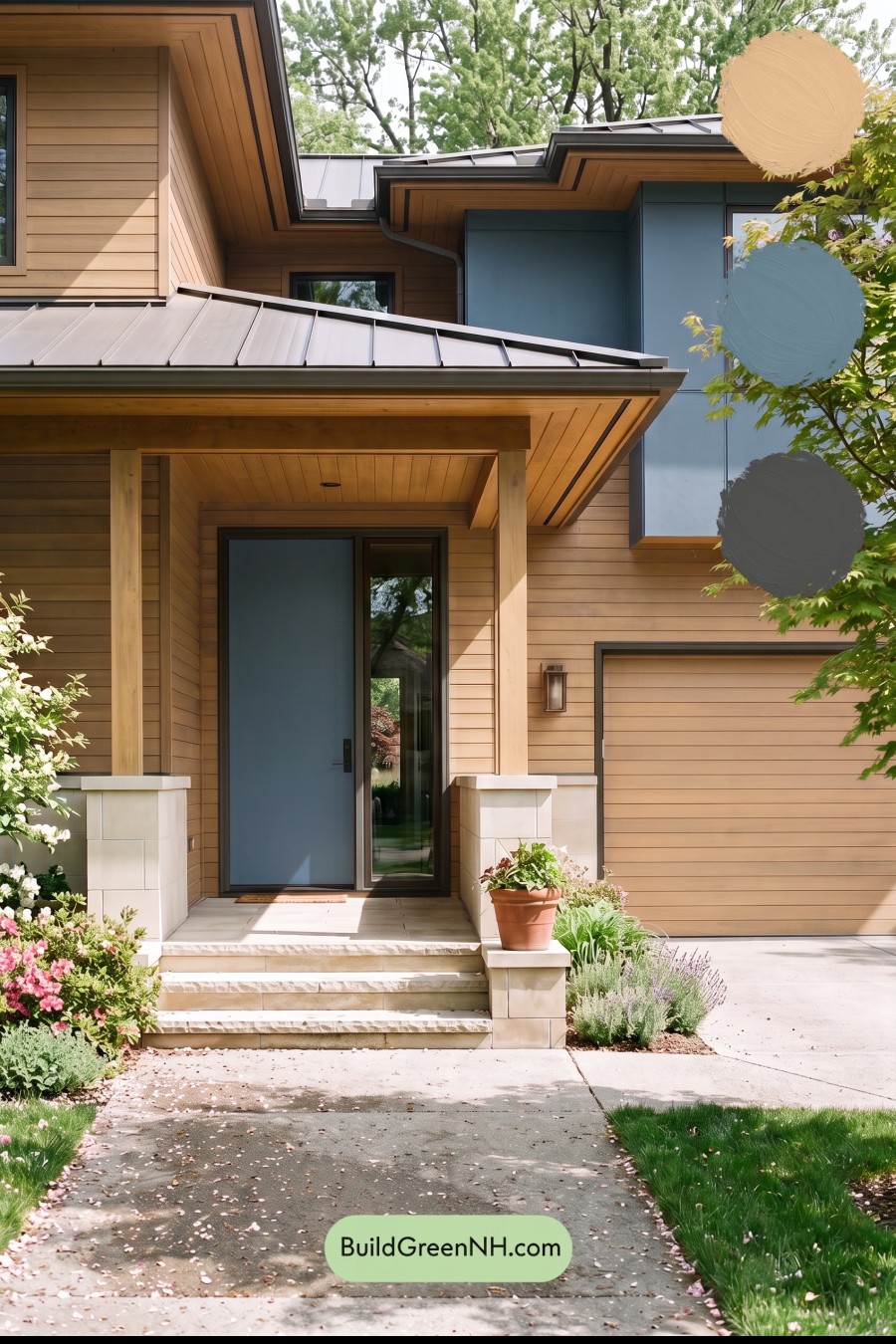
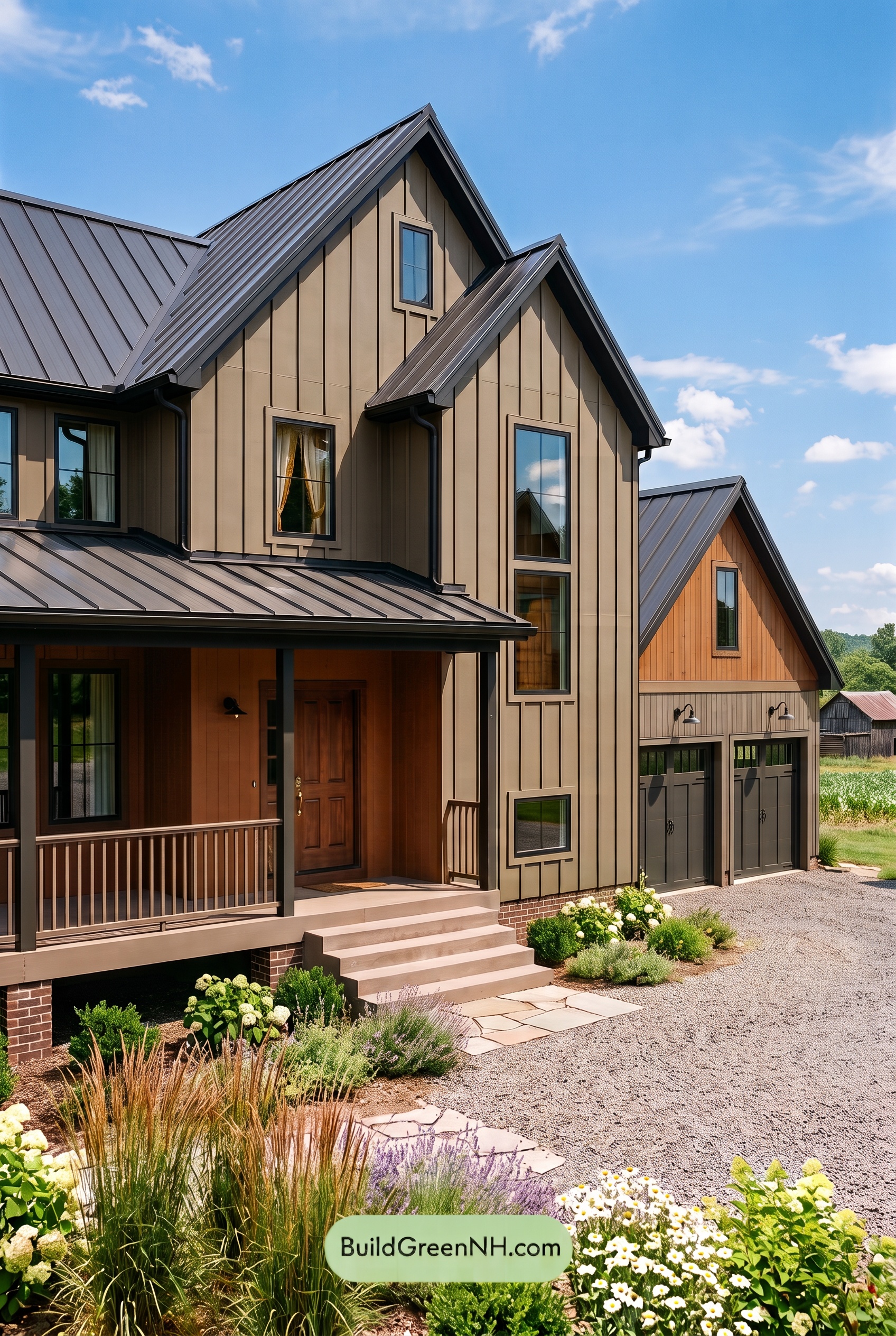
Warm beige, muted blue, and deep gray give this home an inviting balance of natural warmth and crisp, contemporary style.
Warm Beige Sets a Welcoming Foundation
A golden shade of beige stretches across the horizontal siding, softening the home’s angular architecture. It feels warm without becoming overly bright, and the subtle variations between sunlit walls and shaded recesses give the exterior depth. Keeping this shade across the largest surfaces makes the different sections feel connected.
The garage door follows the same warm beige direction, allowing its broad surface to blend into the facade rather than compete with the entrance. Beige porch columns continue that warmth, while their pale cream bases create a gentle transition to the light neutral steps.
Muted Blue Gives the Exterior Personality
The upper accent wall introduces a medium blue with soft gray undertones. Its cooler character provides a pleasing contrast to the beige siding, and the large panels give the blue an uncluttered presence. The result is distinctive but calm.
A deeper, shaded version of that blue appears at the front door. Repeating the color at the entrance ties the upper and lower portions of the house together while giving visitors a clear focal point. Framed by warm beige siding and columns, the door feels especially inviting.
Gray Defines the Architectural Lines
Deep charcoal-gray trim traces the roof edges and openings, sharpening the silhouette without the harder contrast of pure black. Dark gray window frames repeat this detail, bringing consistency to the facade. Around the entrance, the darker framing neatly separates the blue door from the surrounding beige.
The standing-seam roof adds another layer of gray, appearing lighter where it catches the sun. Those broader gray surfaces connect naturally with the darker edging, keeping the roof visually integrated with the rest of the palette.
A Balanced Mix of Warmth and Coolness
What makes this scheme so effective is its restraint: beige provides the welcoming backdrop, blue supplies personality, and gray gives the architecture definition. Pale cream details near the steps keep the entrance from feeling too dark, while the surrounding greens complement both the warm siding and cooler accents.
The overall mood is relaxed, polished, and approachable. There is enough contrast to celebrate the home’s clean lines, but nothing feels competing or abrupt—a thoughtful balance that lets both the architecture and the garden shine.
Next, see how this color scheme looks under different lighting simulations throughout the day.
Overcast
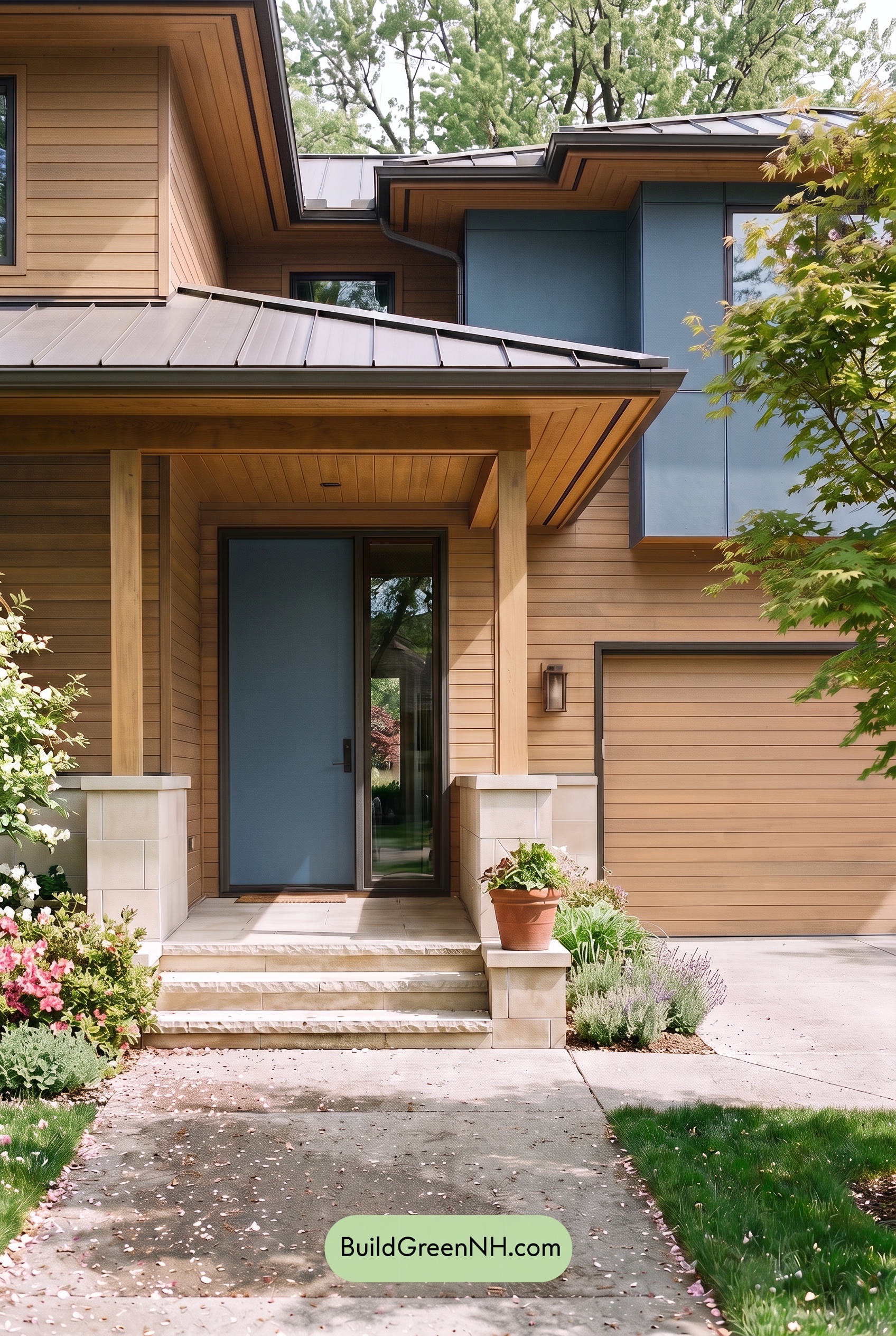
Under overcast skies, the warm beige siding, columns, and garage door would appear softer and less golden than in neutral daylight. Their saturation feels gently muted, while the blue accent wall and front door can read cooler and slightly grayer. With fewer bright highlights, these blue shades feel quietly rich rather than vivid, giving the exterior a more restrained mood.
Diffused light also softens shadows beneath the rooflines and around the entry, reducing the contrast between exposed and sheltered surfaces. The gray trim and window frames still define the architecture, but with less visual sharpness. The overall palette feels calmer and more cohesive, with a gentler distinction between the warm neutrals and cool blues.
Golden Hour
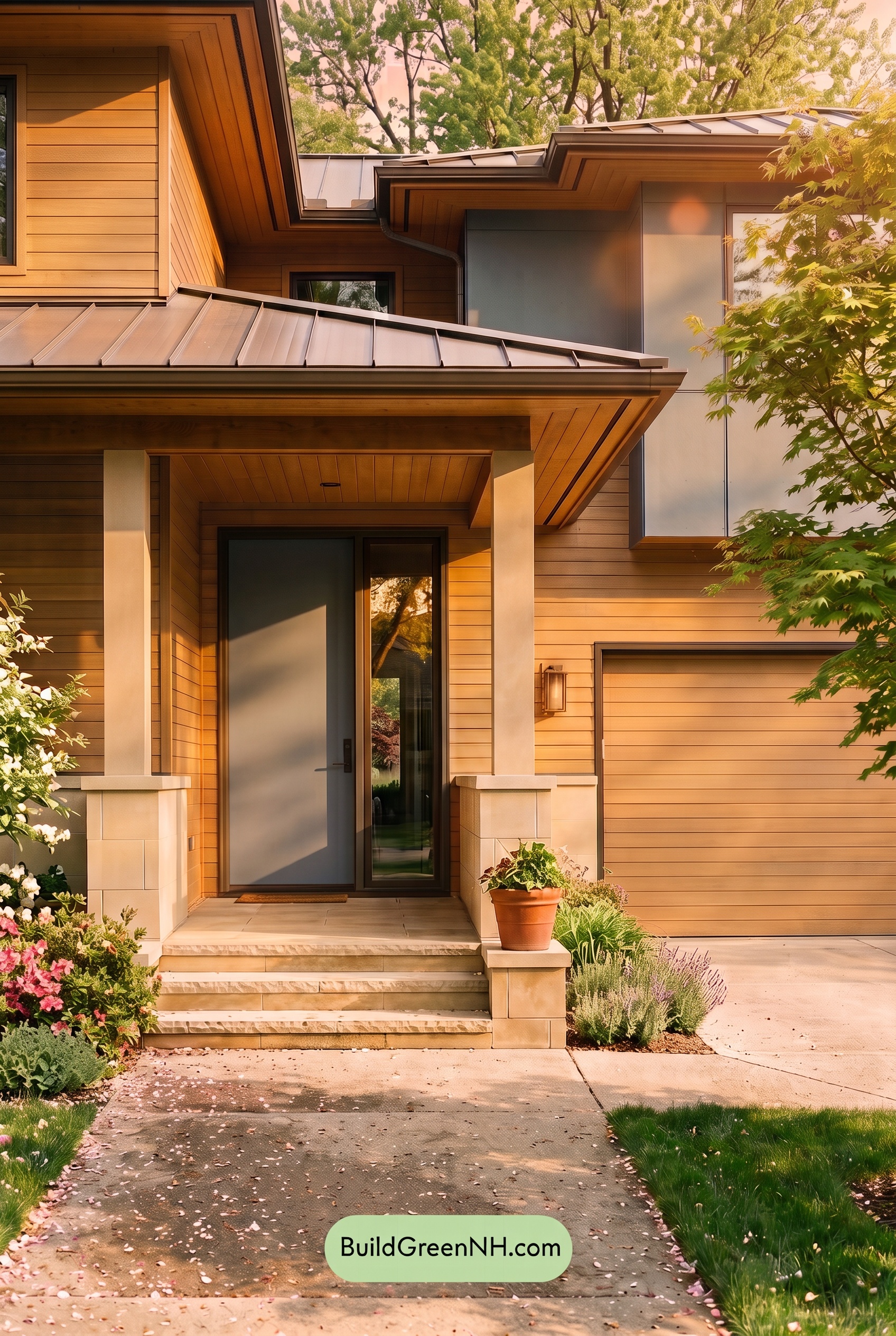
Golden Hour turns the soft beige shades richer and warmer, bringing out golden and peach undertones that feel subtler in neutral daylight. Sunlit areas appear more saturated, while the gray shades take on a warmer cast. The muted blues look smokier where the warm light touches them, rather than as distinctly cool as they would under neutral daylight.
Beneath the deep eaves and around the entry, shadows make those blue shades appear darker, creating stronger contrast with the glowing warm neutrals. Long, angled shadows add depth across the exterior, even as the warm light softens the separation between neighboring shades. Compared with the cleaner, more evenly balanced daytime palette, the overall mood feels cozier, quieter, and more inviting.
Shade
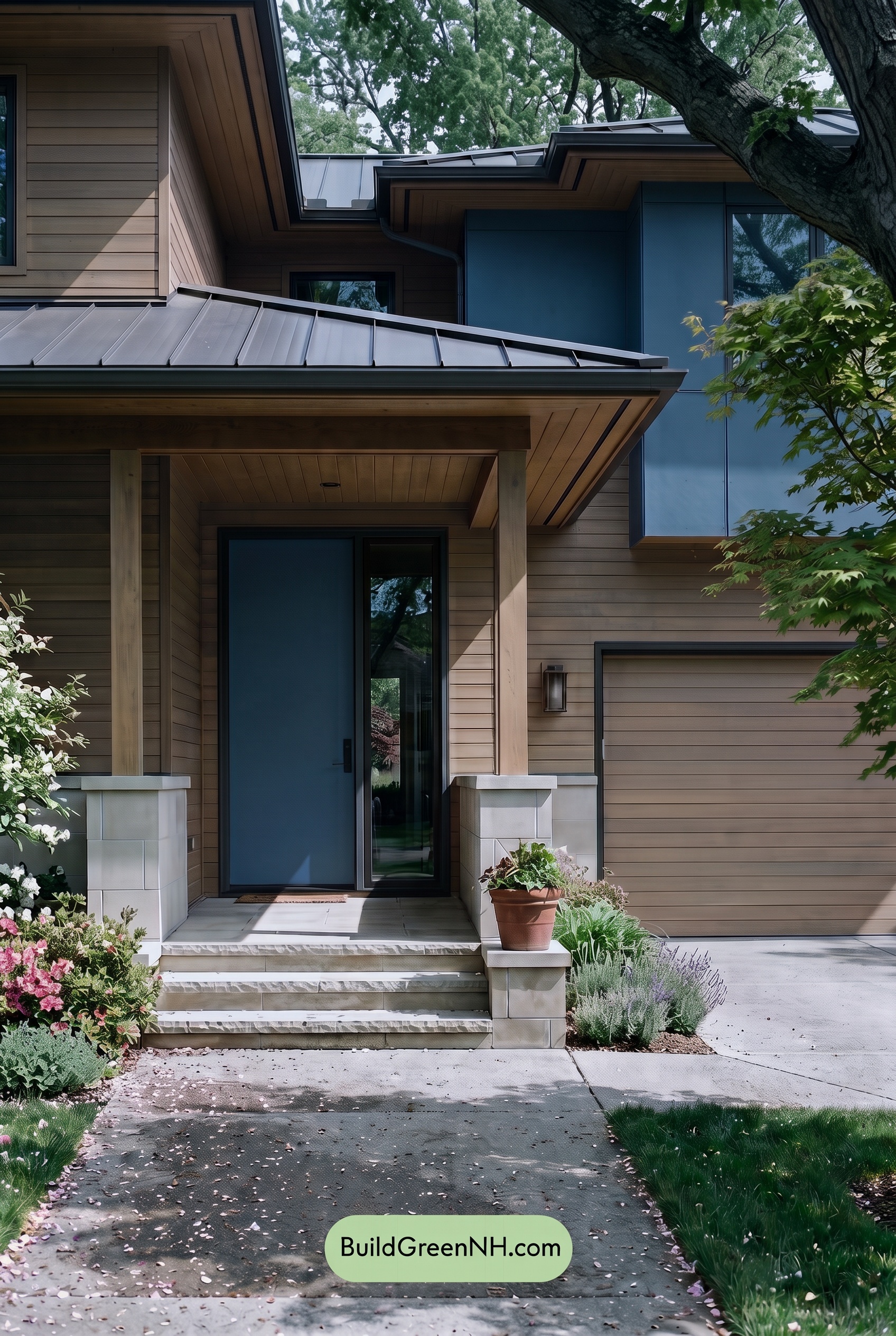
In shade, the beige siding loses some of the warmth it shows in neutral daylight, settling into a softer, grayer shade. The blue accents deepen and feel cooler, with saturation appearing more restrained rather than bright. Around the sheltered entry, this shade of blue takes on a quiet richness, while the gray trim darkens and blends more closely with the surrounding shadows.
Shadows beneath the eaves pull the beige toward deeper brown-gray shades, adding depth without the brighter warmth of neutral daylight. The contrast between the beige and blue feels gentler, though the darkest gray edges still give the exterior definition. Together, these shifts create a calm, tucked-away mood, with small patches of brighter light making the shaded colors feel even more restful.
Nighttime
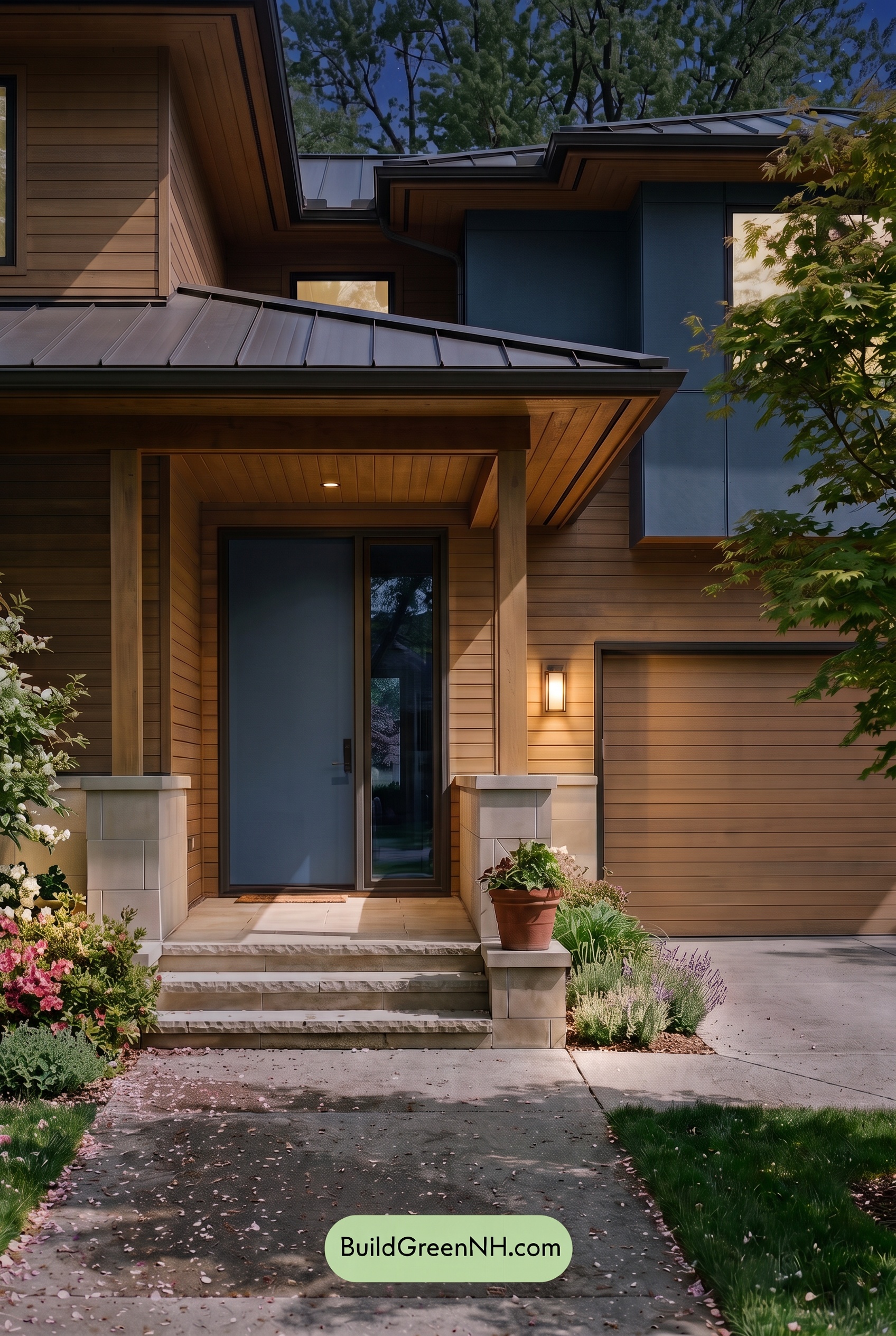
At night, the beige siding and garage door take on a warmer, more golden cast beneath the exterior lights, rather than the balanced neutrality they would show in daylight. The blue accent wall and front door deepen into quieter, less saturated shades, creating a cool counterpoint to the softly glowing warm neutrals.
Shadows beneath the rooflines and around the entry make the gray trim and window frames appear closer to charcoal, with some edges blending into the darkness. Compared with neutral daylight’s even color definition, nighttime lighting heightens the contrast between illuminated surfaces and shaded recesses. The result feels more intimate and dramatic, with the warm entry becoming an inviting focal point.
Pin these for later:
Want More?
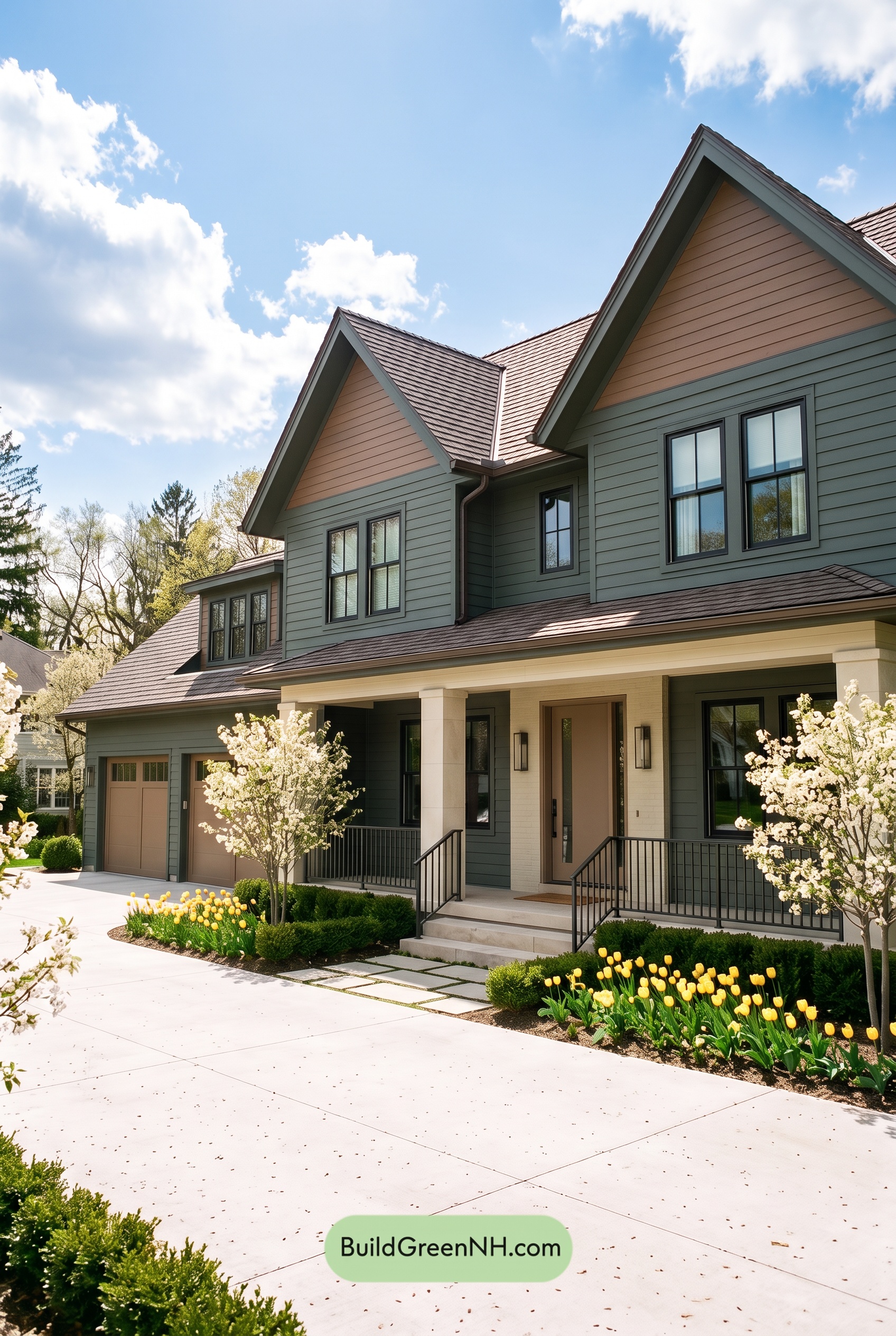 Earthy Green House Exterior Color Scheme: Brown Green Comfort
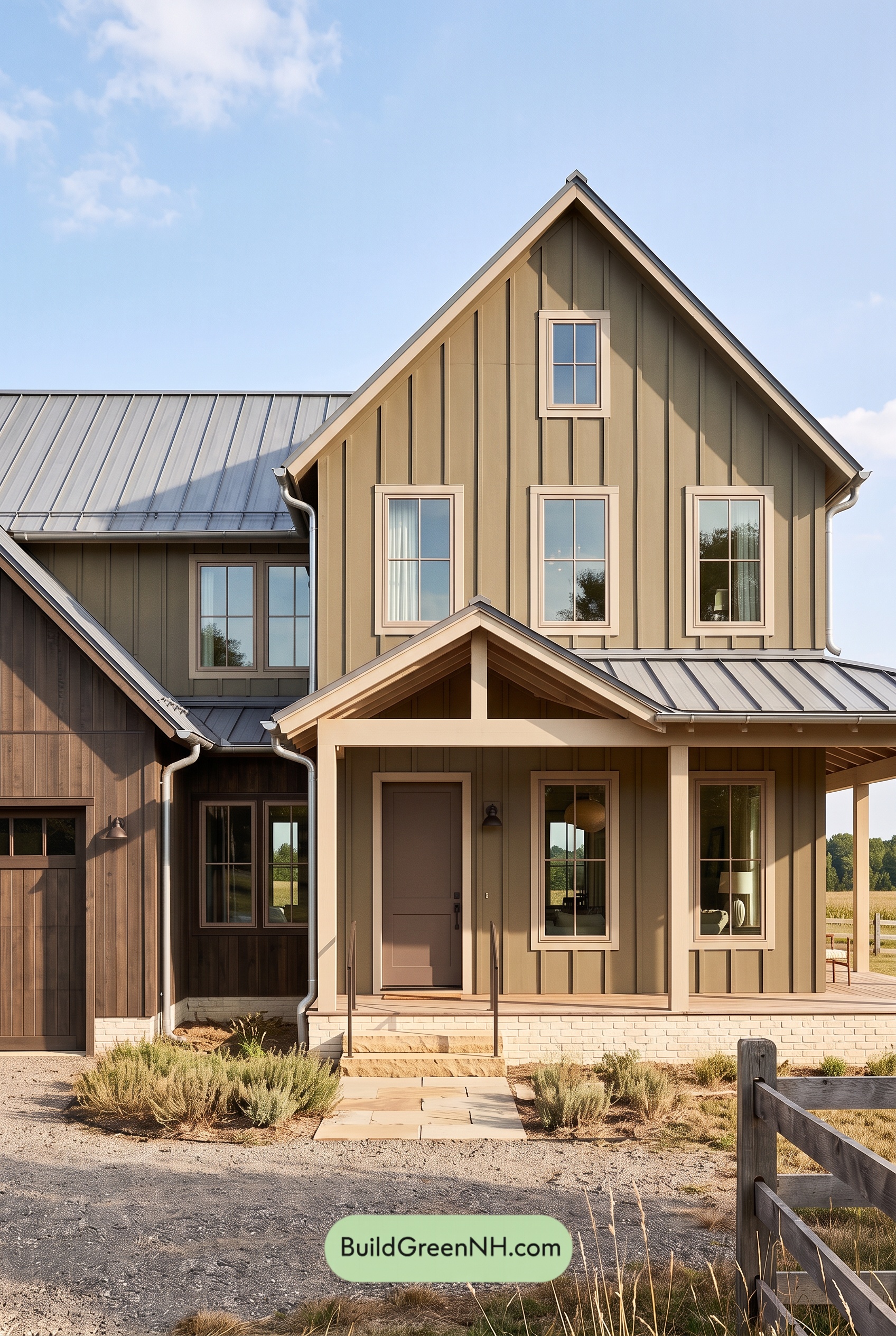 Earthy Green House Exterior Color Scheme: Green and Beige Sanctuary
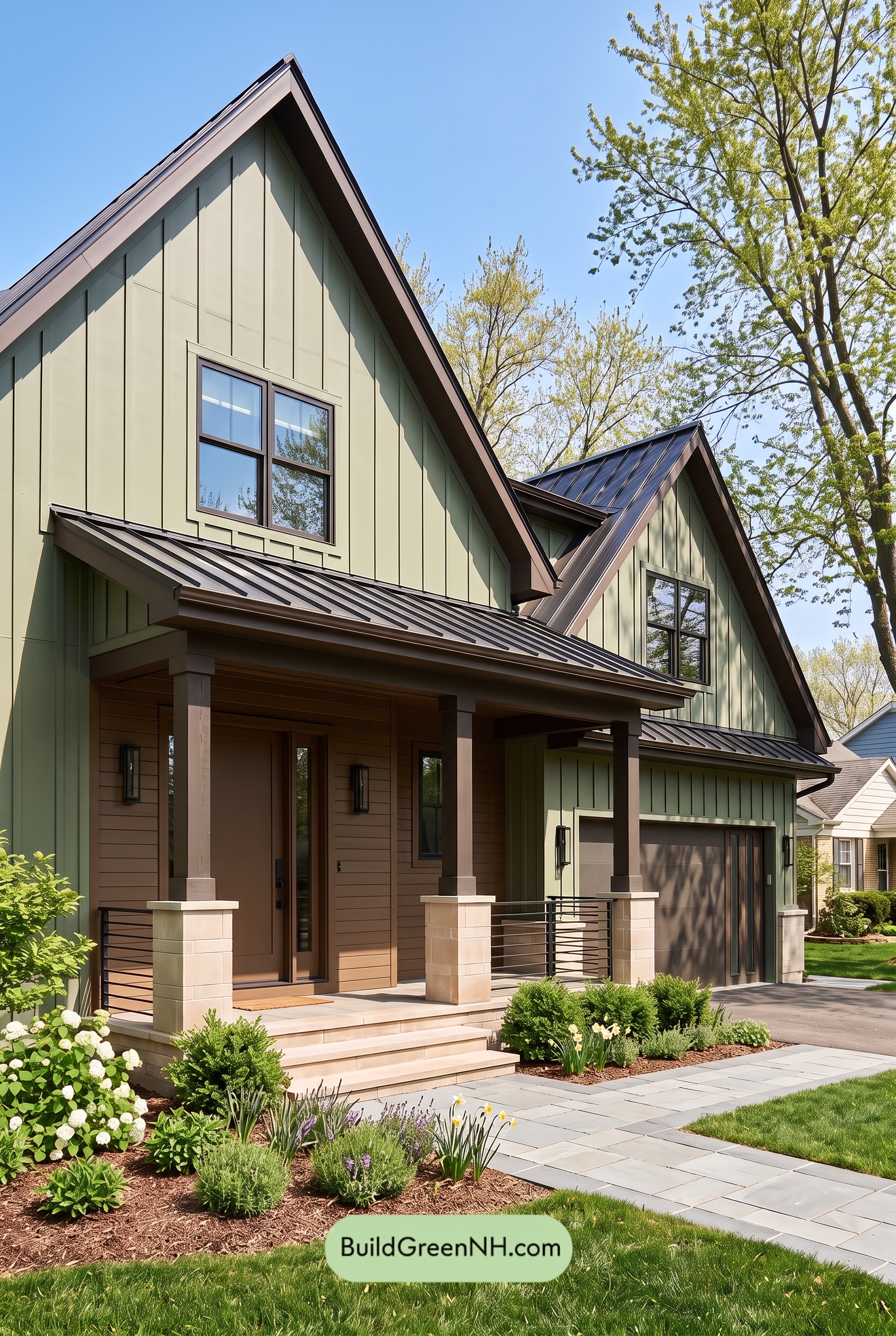 Earthy Green House Exterior Color Scheme: Green Velvet Assurance
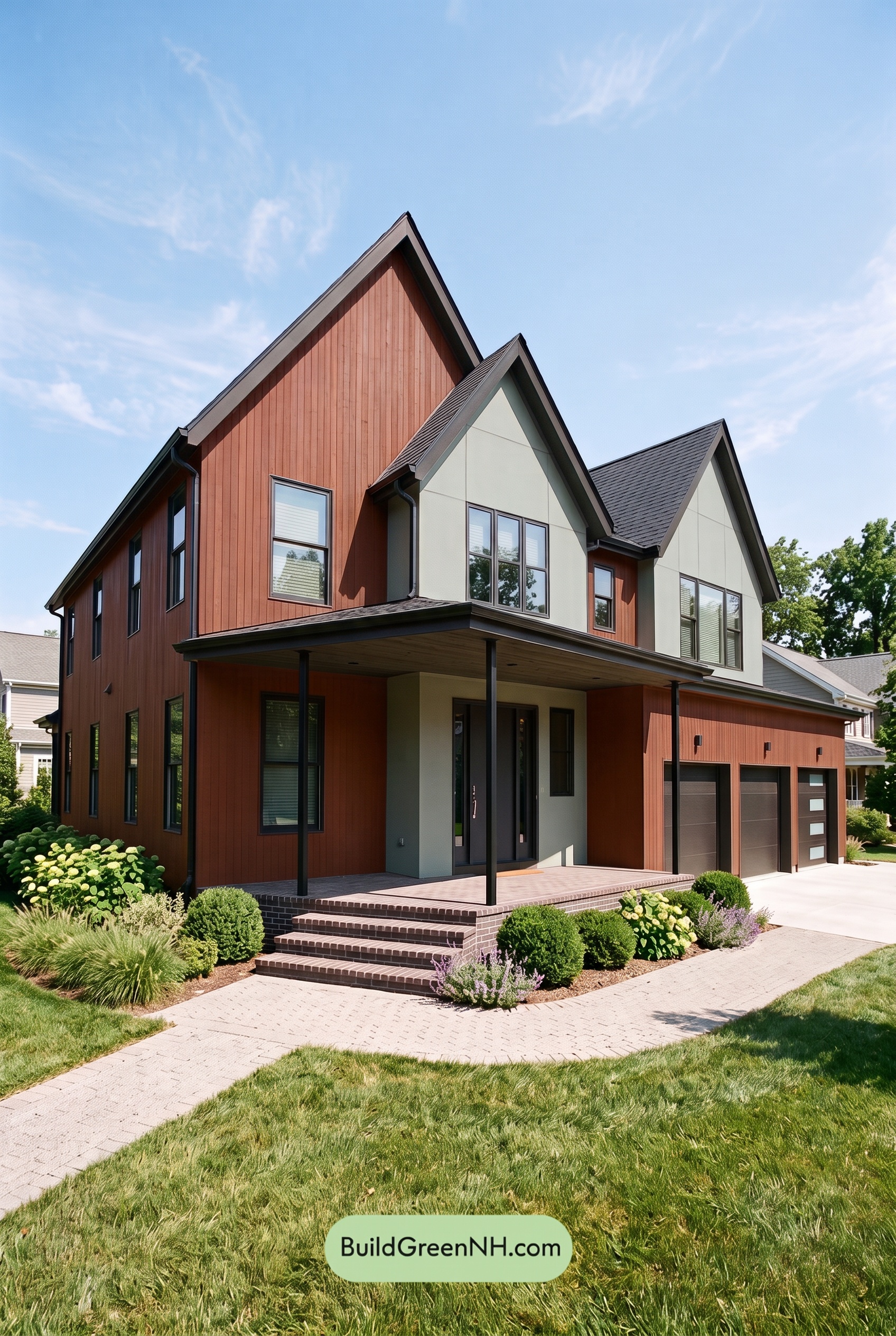 Earthy Green House Exterior Color Scheme: Brown Silken Calm
 Earthy Green House Exterior Color Scheme: Green Amber Contentment
Table of Contents