Last updated on
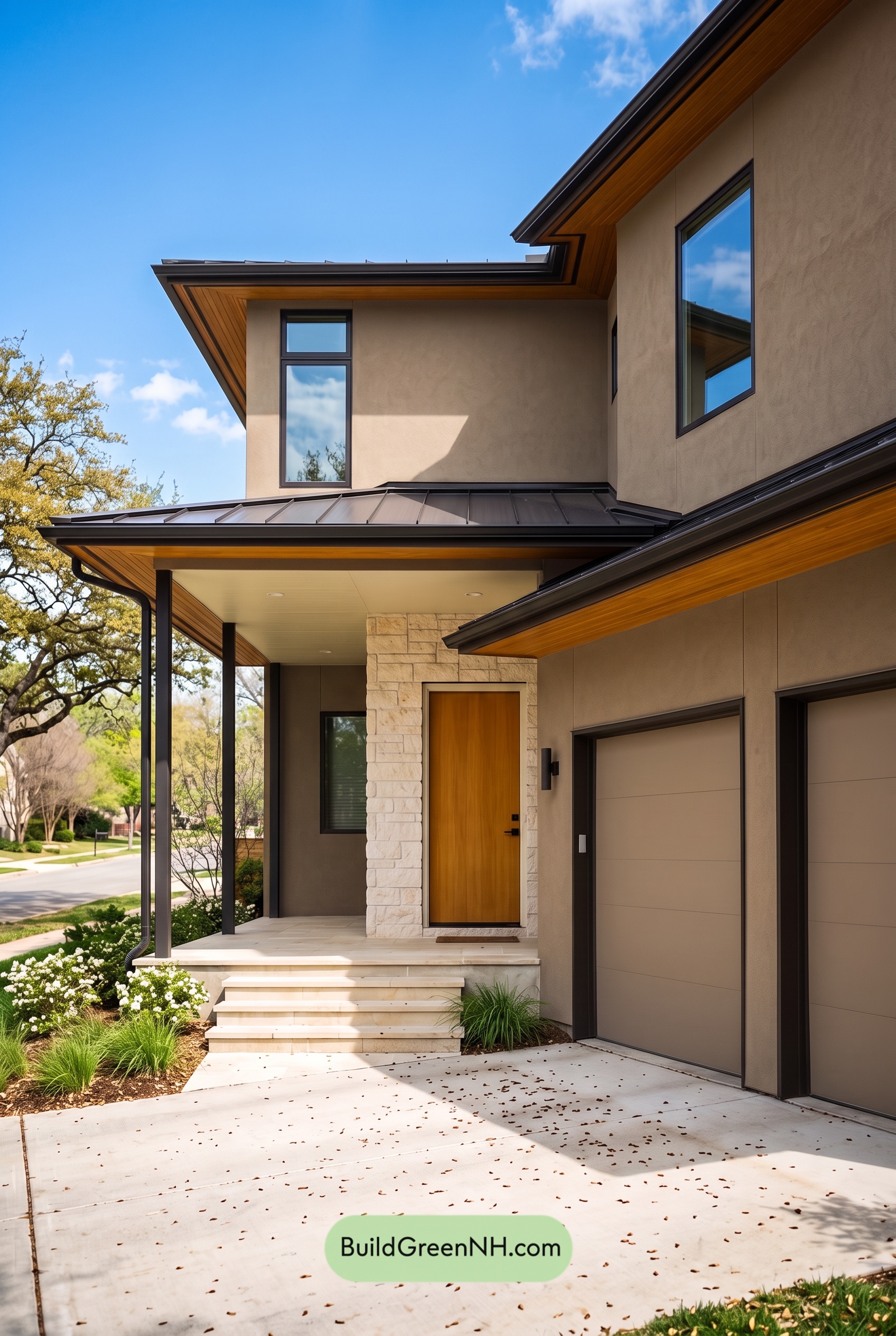

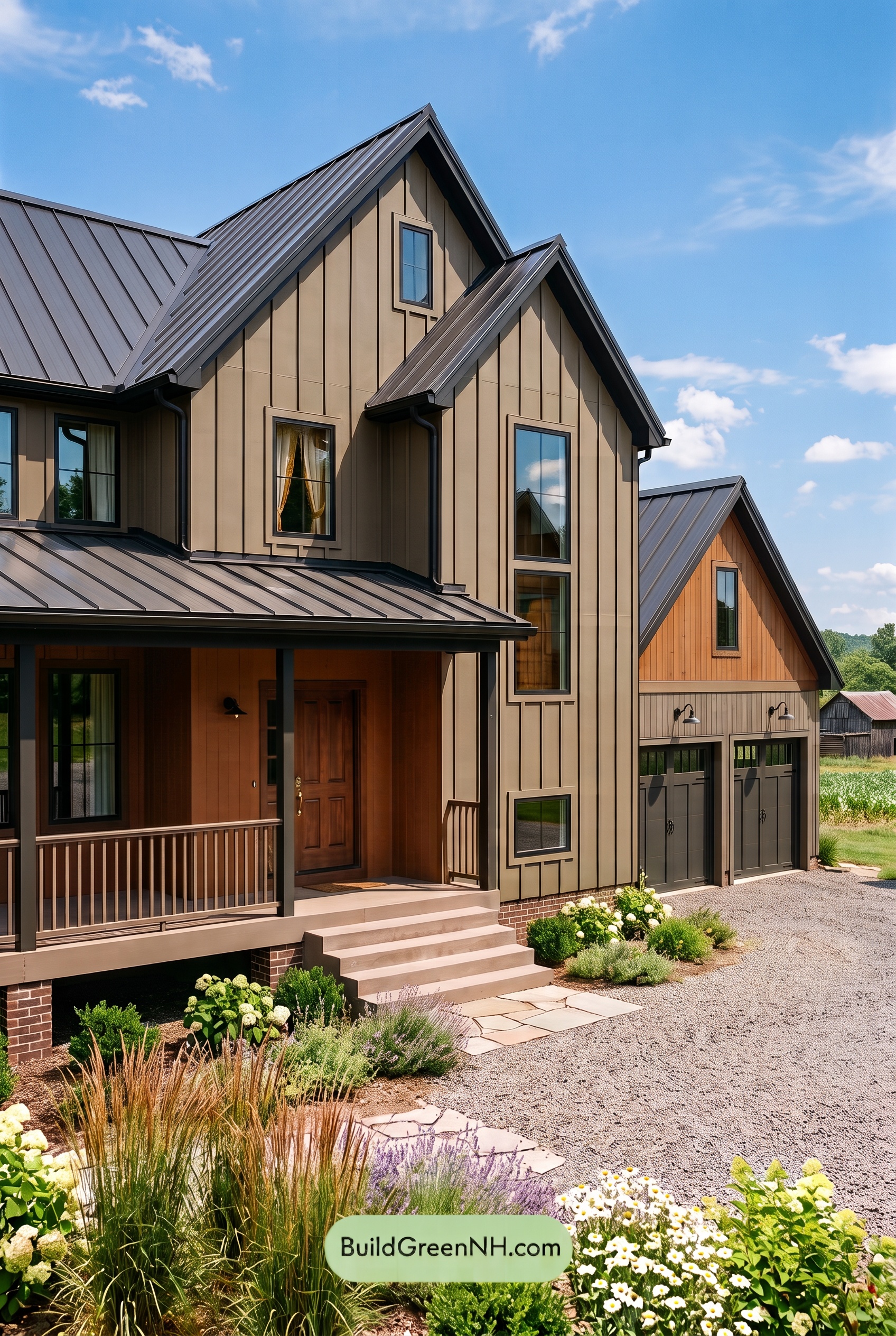
Warm beige walls, deep brown detailing, and golden-brown accents give this home the perfect balance of modern definition and inviting warmth.
A Soft, Warm Foundation
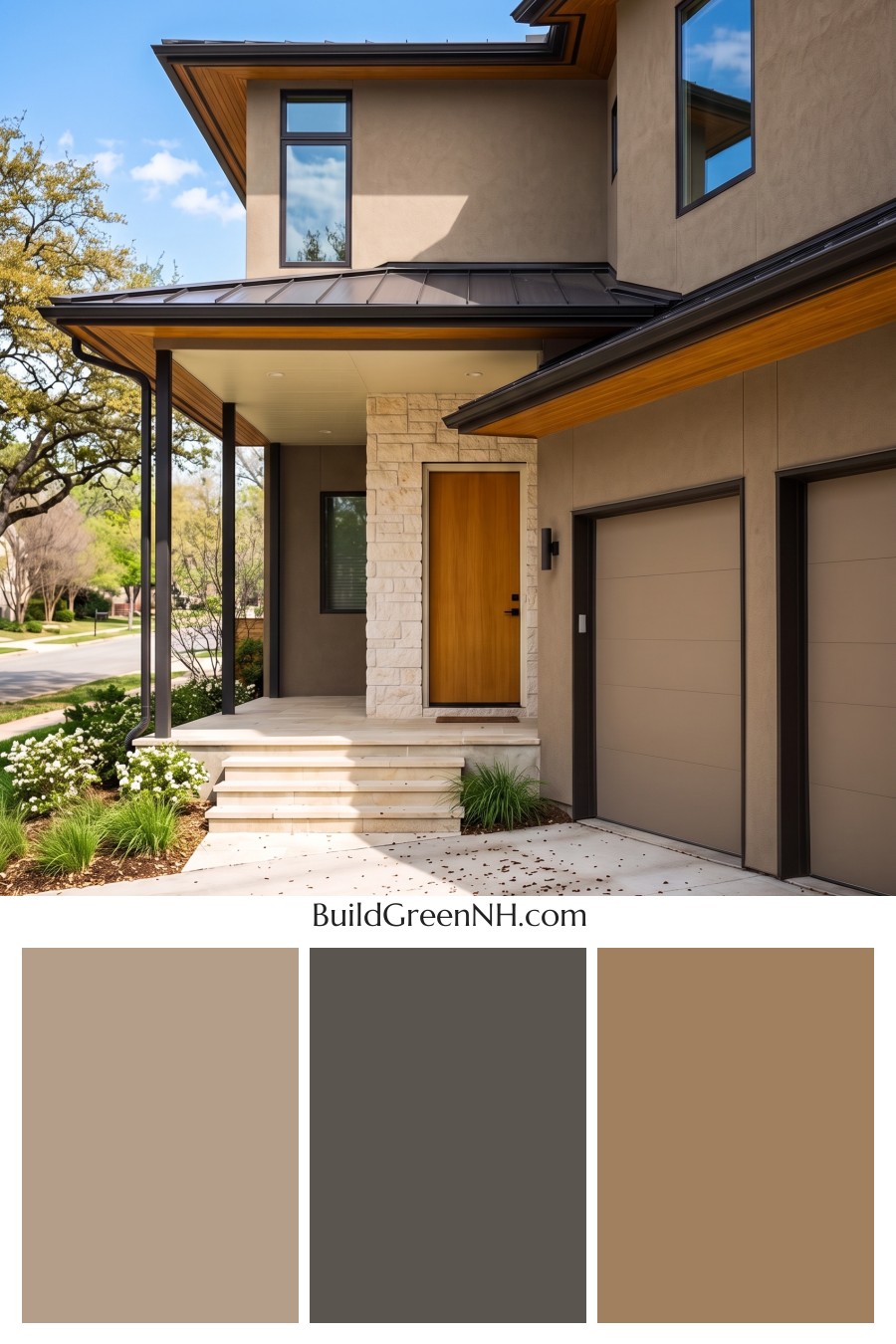
The main exterior walls wear a muted beige with gentle taupe undertones, creating a calm backdrop for the home’s angular architecture. It’s a welcoming choice for such broad surfaces: light enough to keep the facade feeling open, yet rich enough to avoid looking stark.
Sunlight brings out the warmer side of this shade, while the sheltered areas appear slightly deeper. That subtle variation adds dimension without introducing another color. The textured wall finish makes the effect especially appealing.
Deep Brown Details That Define the Architecture
Dark brown trim traces the roof edges, windows, and garage openings, giving the exterior a crisp, cohesive outline. The slender porch columns repeat that depth, framing the entry without making it feel enclosed. Against the softer walls, these darker elements help every architectural line read clearly.
The visible metal roofing carries a deep gray-brown tone that connects naturally with the trim. Keeping these upper elements similarly dark gives the roofline a unified appearance, even as it changes direction and height.
Golden-Brown Accents Bring the Warmth
The front door offers the scheme’s richest warm accent. Its golden-brown shade draws the eye toward the entrance, providing a welcoming focal point between the pale stone surround and the darker framing.
Similar golden-brown tones appear beneath the roof overhangs and along the porch edges. This repetition is important: it makes the door feel connected to the whole facade rather than like an isolated feature. The warm overhead surfaces also soften the contrast between the beige walls and deep brown roof trim.
A Balanced Finish from Entry to Garage
The garage doors stay within the muted beige family, allowing their broad surfaces to blend with the surrounding walls. Deep brown borders provide definition without turning the garage into the main attraction. Meanwhile, pale cream and light beige shades in the entry stonework and steps gently brighten the approach.
The overall mood is grounded, polished, and comfortable. Light neutrals provide breathing room, dark browns establish structure, and golden-brown accents add warmth exactly where it counts. It’s a restrained palette with plenty of character—and a lovely example of how thoughtful color placement can make modern architecture feel like home.
Next, see how this color scheme looks under different lighting simulations throughout the day.
Overcast
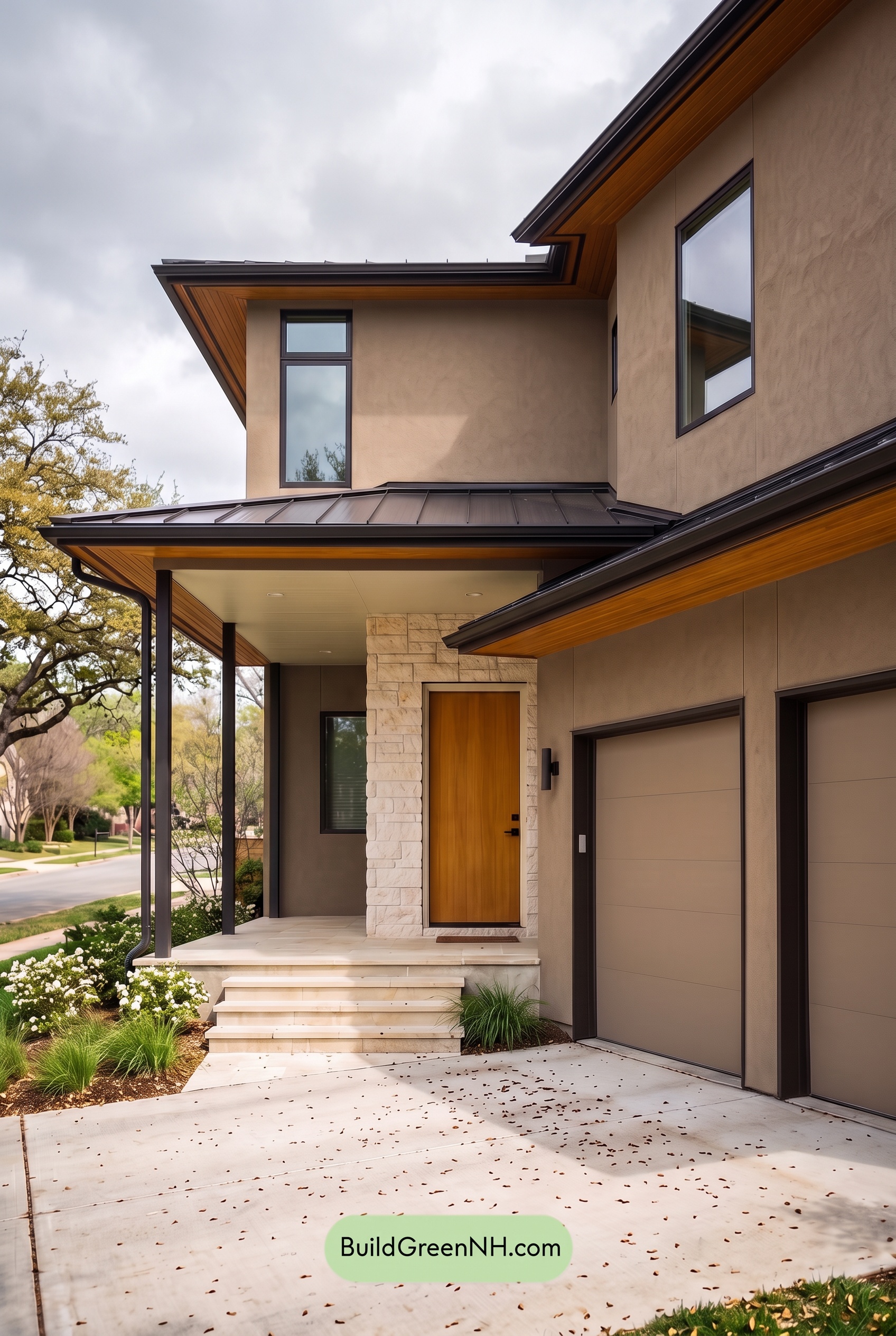
Under overcast skies, the light beige shades appear more muted and slightly grayer than they would in neutral daylight. Their warmth feels quieter, while the deeper browns look more subdued and less reddish. The warmer brown accents still offer a welcoming touch, but their golden undertones lose some intensity, giving the palette a softer, earthier character.
Diffused light softens shadows beneath the eaves and around the entry, making transitions between light and dark feel gentler. The dark brown outlines remain distinct against the pale neutrals, though the overall contrast feels less dramatic. Compared with neutral daylight, the house takes on a calmer, more understated mood.
Golden Hour
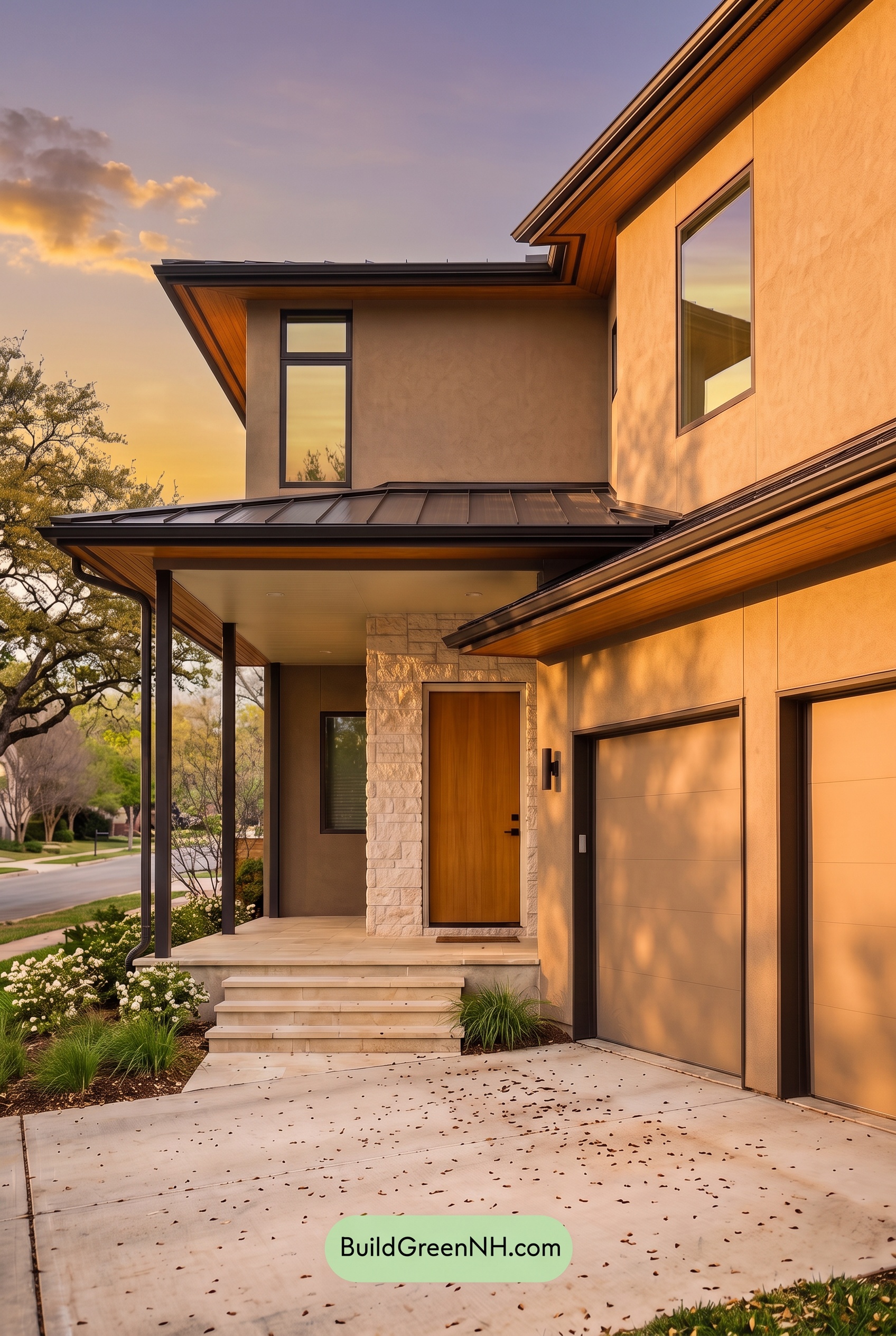
Golden Hour gives the light warm neutrals a richer, more saturated glow, drawing out yellow and orange undertones that would appear quieter in neutral daylight. The sunlit walls and garage doors feel especially warm, while shaded sections remain muted and slightly cooler, adding depth to the exterior.
The deeper brown shades look warmer where the light catches them and nearly black beneath the eaves, strengthening their contrast with the glowing walls. Long, soft-edged tree shadows introduce subtle shifts across the lighter surfaces. Compared with the more balanced appearance of neutral daylight, the house feels more dramatic yet inviting, with crisp architectural lines softened by the evening warmth.
Shade
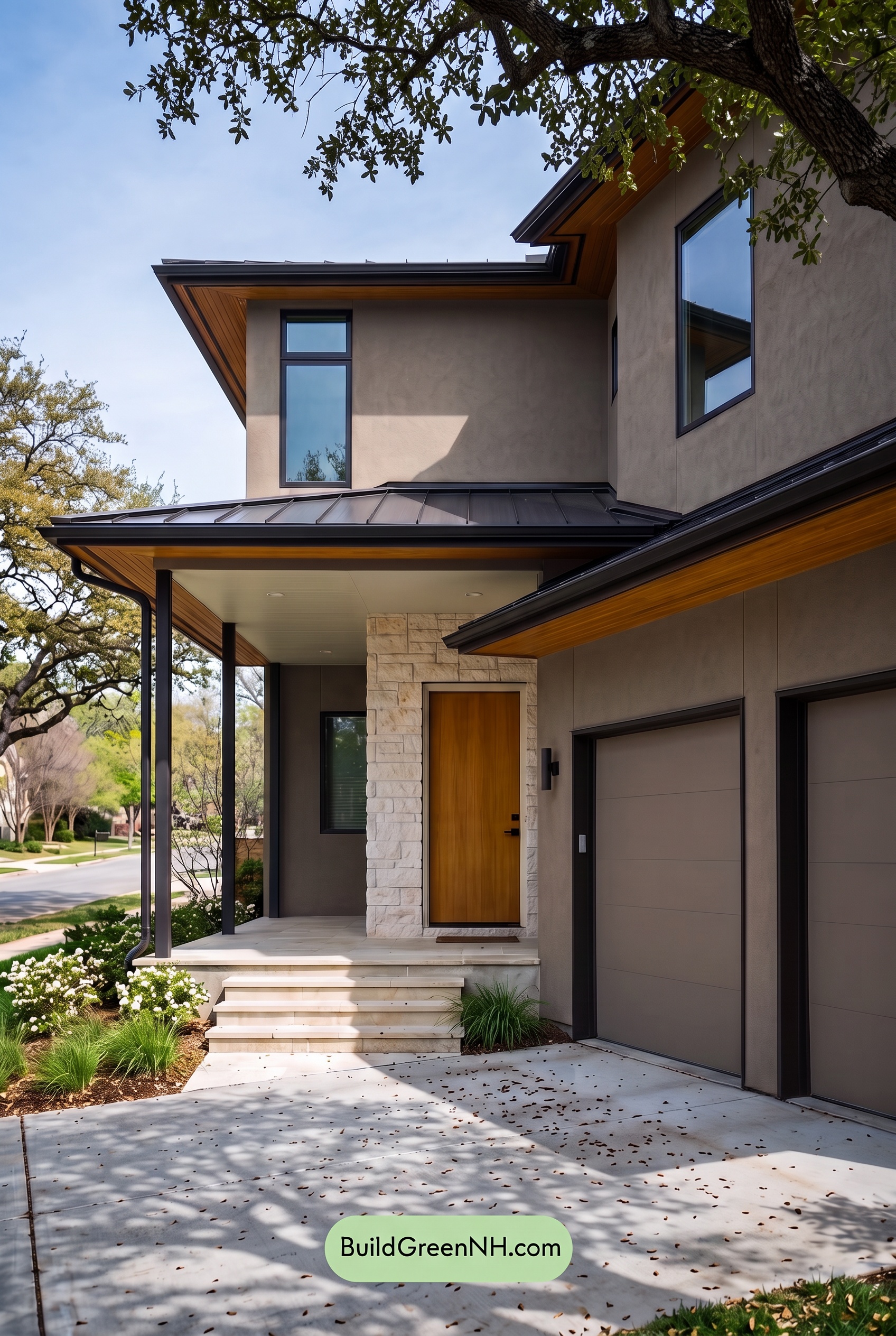
In shade, the beige walls and garage doors appear deeper and more muted than they would in neutral daylight. Their yellow warmth recedes, allowing gray undertones to come forward for a softer, cooler impression. Shadows beneath the eaves draw these neutrals into darker shades, giving the broad surfaces a quiet sense of depth.
The dark browns around the windows and along the columns approach near-black in the deepest shade, maintaining crisp outlines against the lighter beige. Meanwhile, the golden-brown shades at the entrance and beneath the roofline feel less saturated but still offer a gentle touch of warmth. Compared with neutral daylight, the palette feels more subdued and sheltered, with contrast concentrated around the architectural edges.
Nighttime
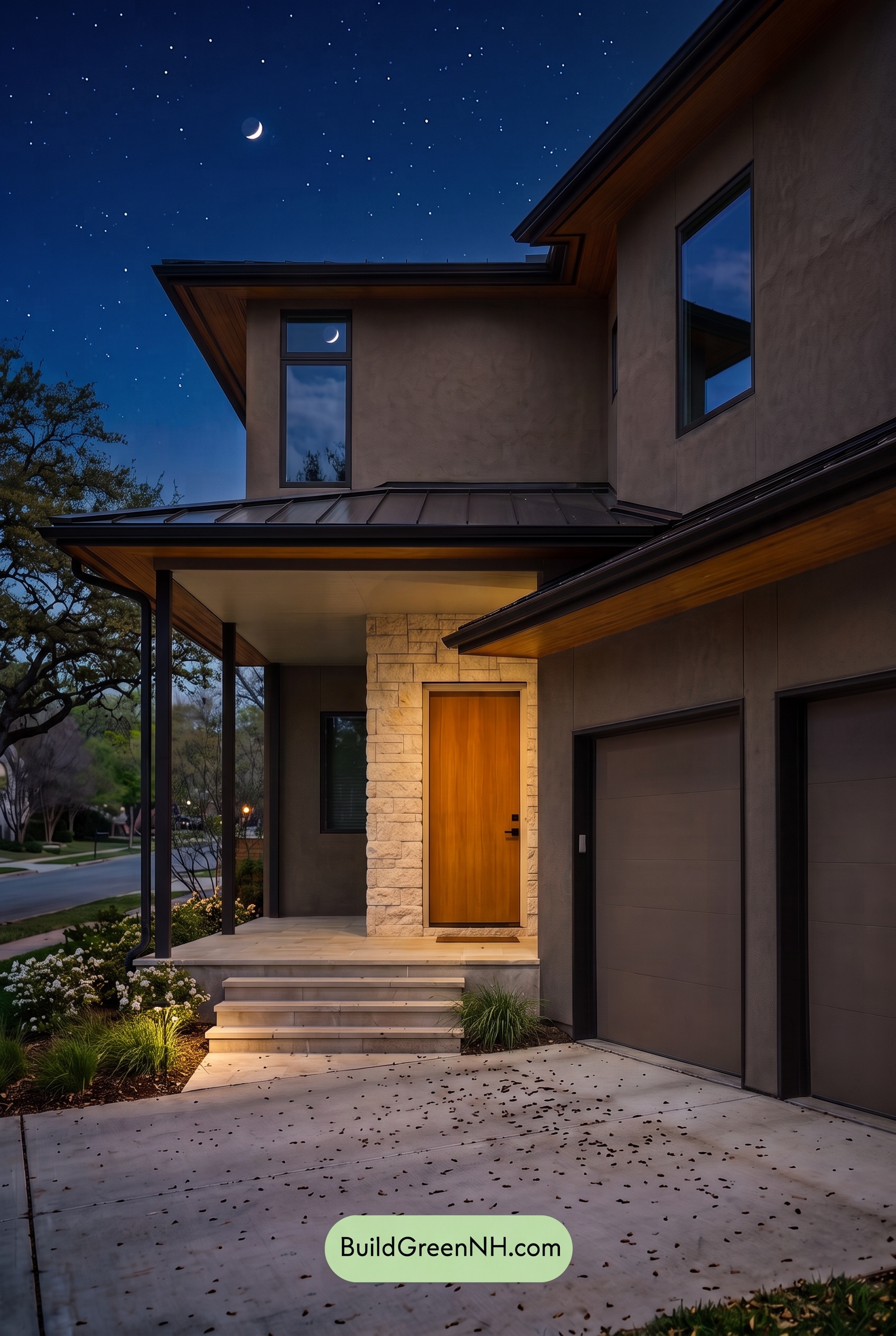
At night, the light beige shades look deeper and more muted than they would in neutral daylight, with shaded walls taking on a cooler, grayer cast. Near the illuminated entry, those warm neutrals feel softer and more golden, while the brown door appears richer and more saturated beneath the warm glow.
The deep brown trim, window frames, and columns approach near-black in the shadows, creating crisp outlines where they meet lighter surfaces but blending into darker corners. Shadows beneath the eaves add depth, while the beige garage doors become subdued and less distinct from the surrounding walls. Compared with daylight’s even clarity, the nighttime palette feels intimate and dramatic, drawing attention toward the welcoming entrance.
Pin these for later:
Want More?
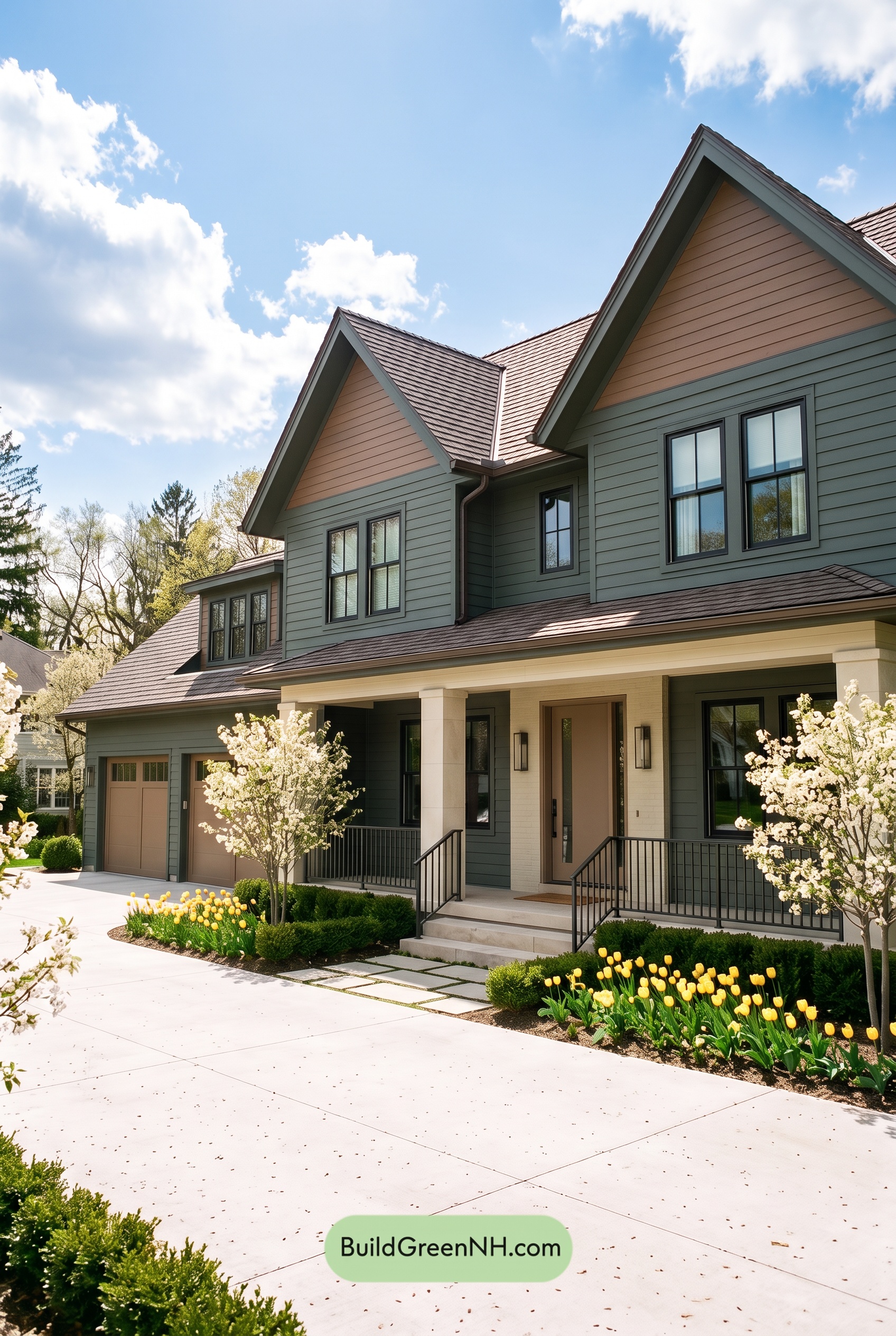 Earthy Green House Exterior Color Scheme: Brown Green Comfort
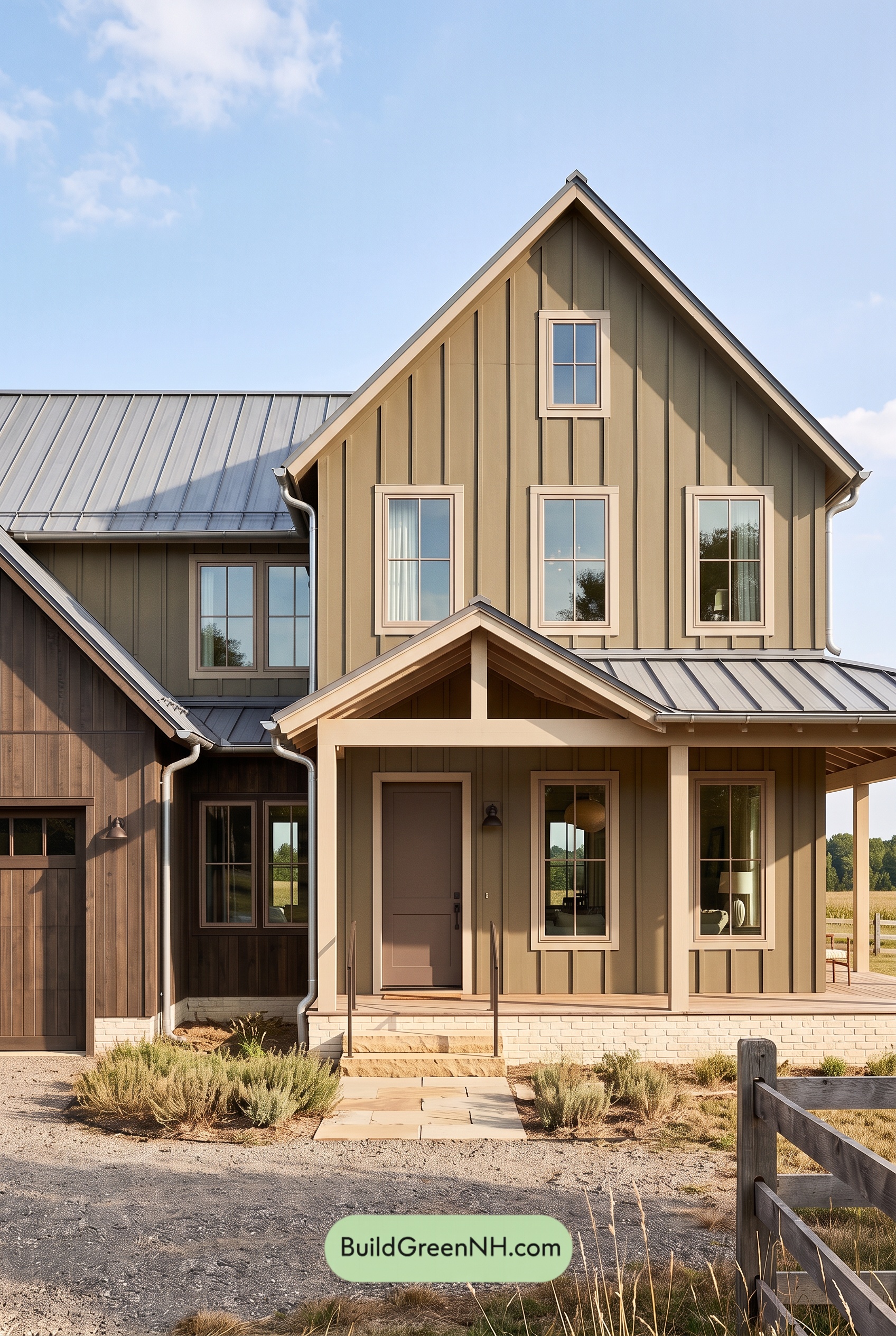 Earthy Green House Exterior Color Scheme: Green and Beige Sanctuary
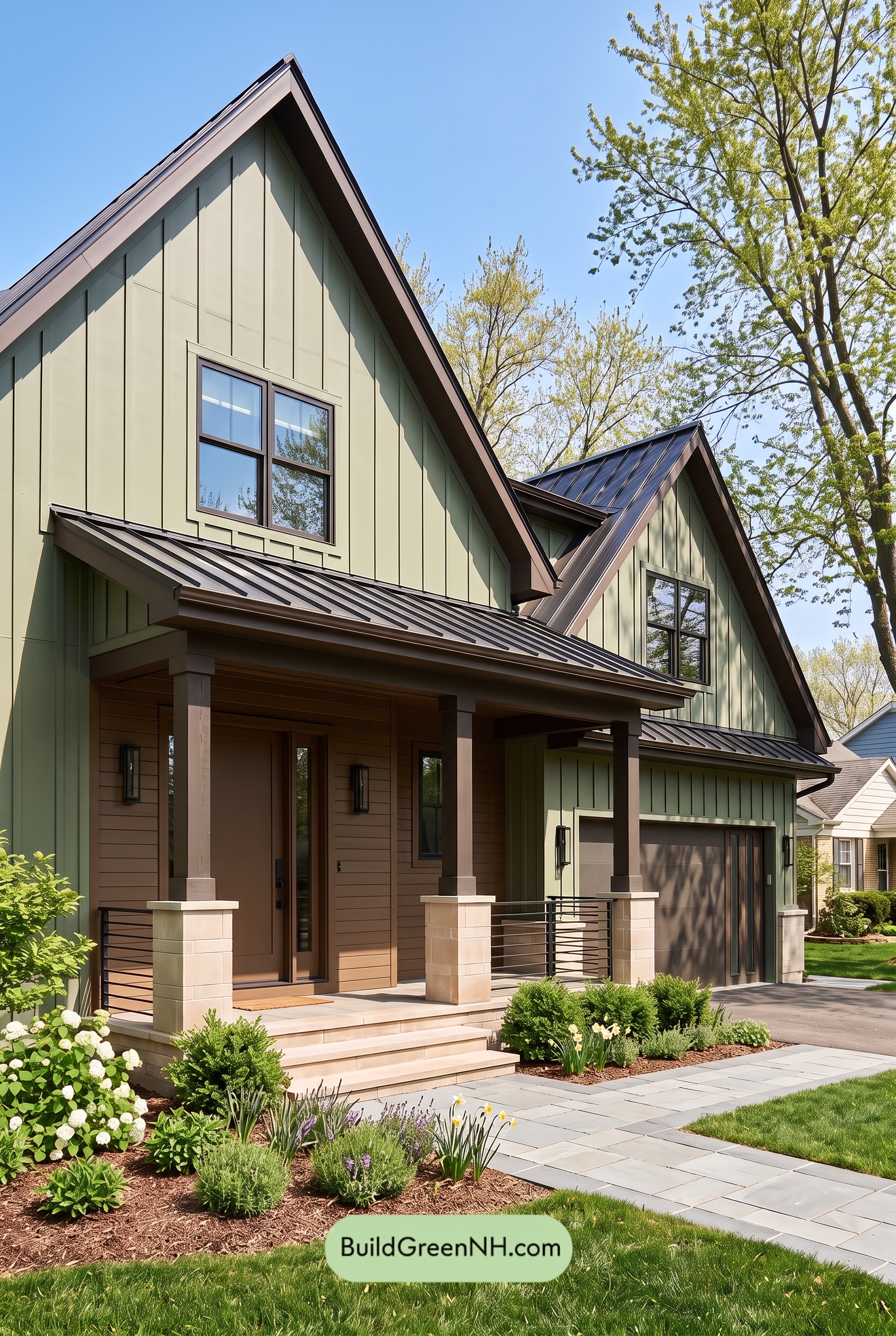 Earthy Green House Exterior Color Scheme: Green Velvet Assurance
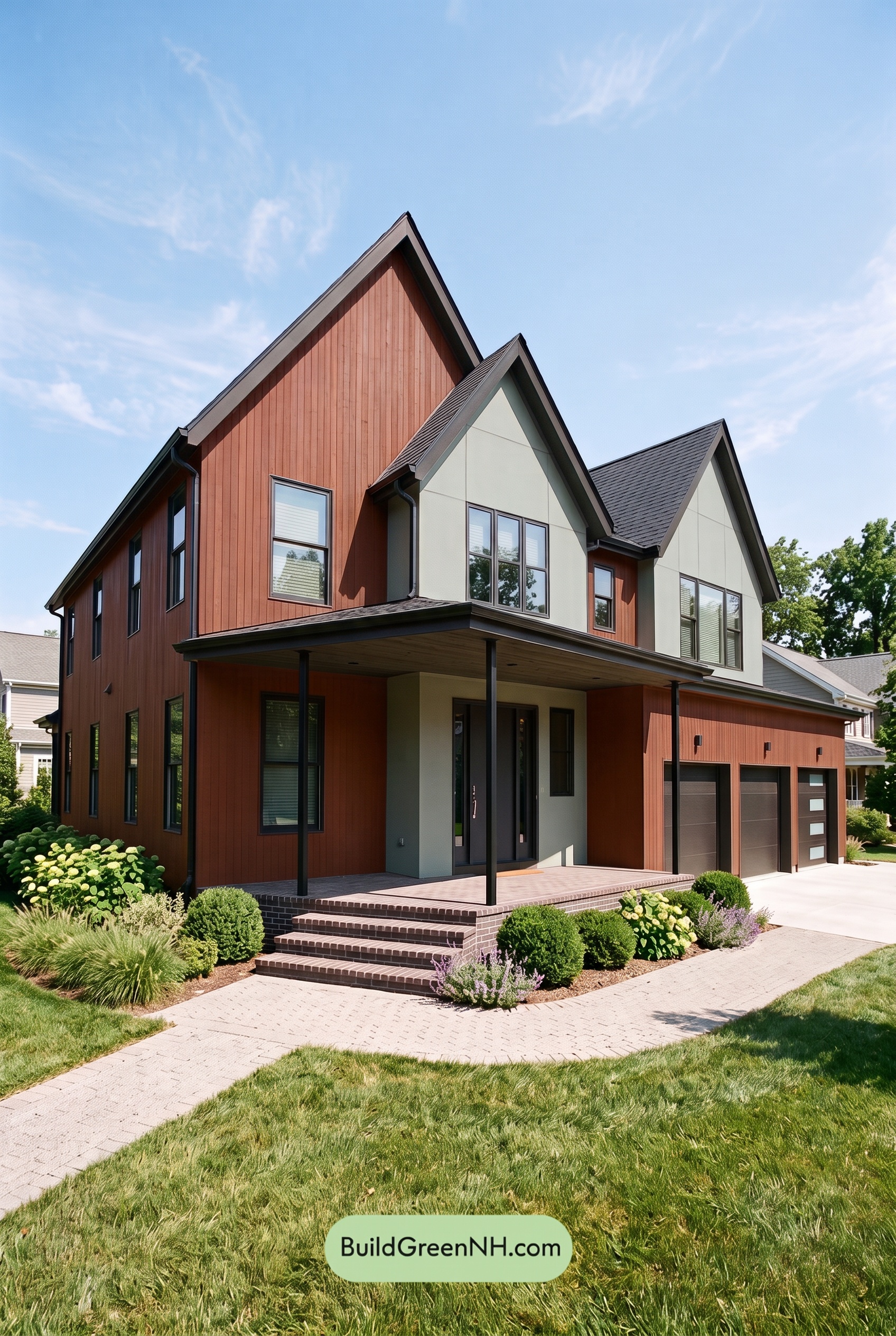 Earthy Green House Exterior Color Scheme: Brown Silken Calm
 Earthy Green House Exterior Color Scheme: Green Amber Contentment
Table of Contents