Last updated on
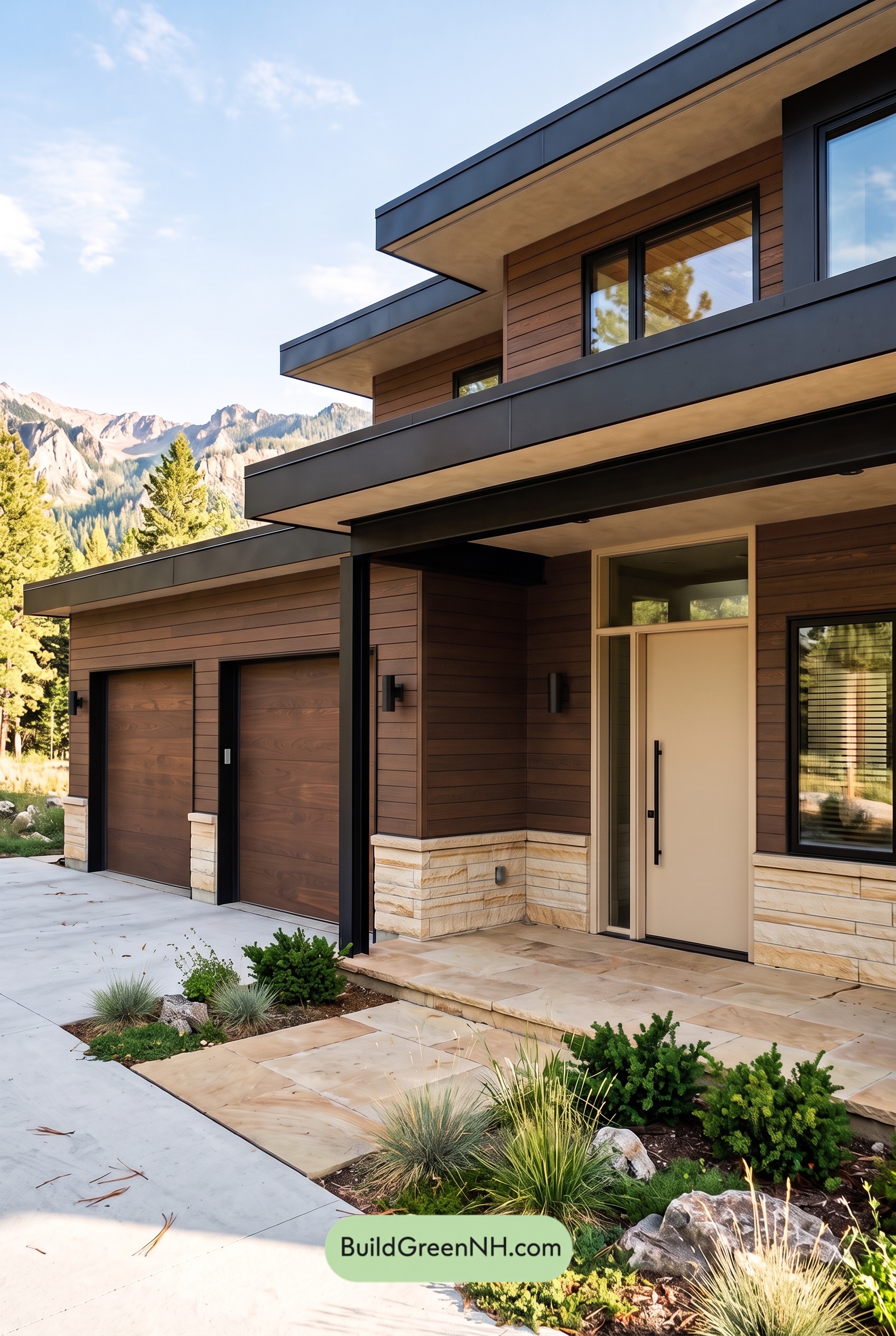

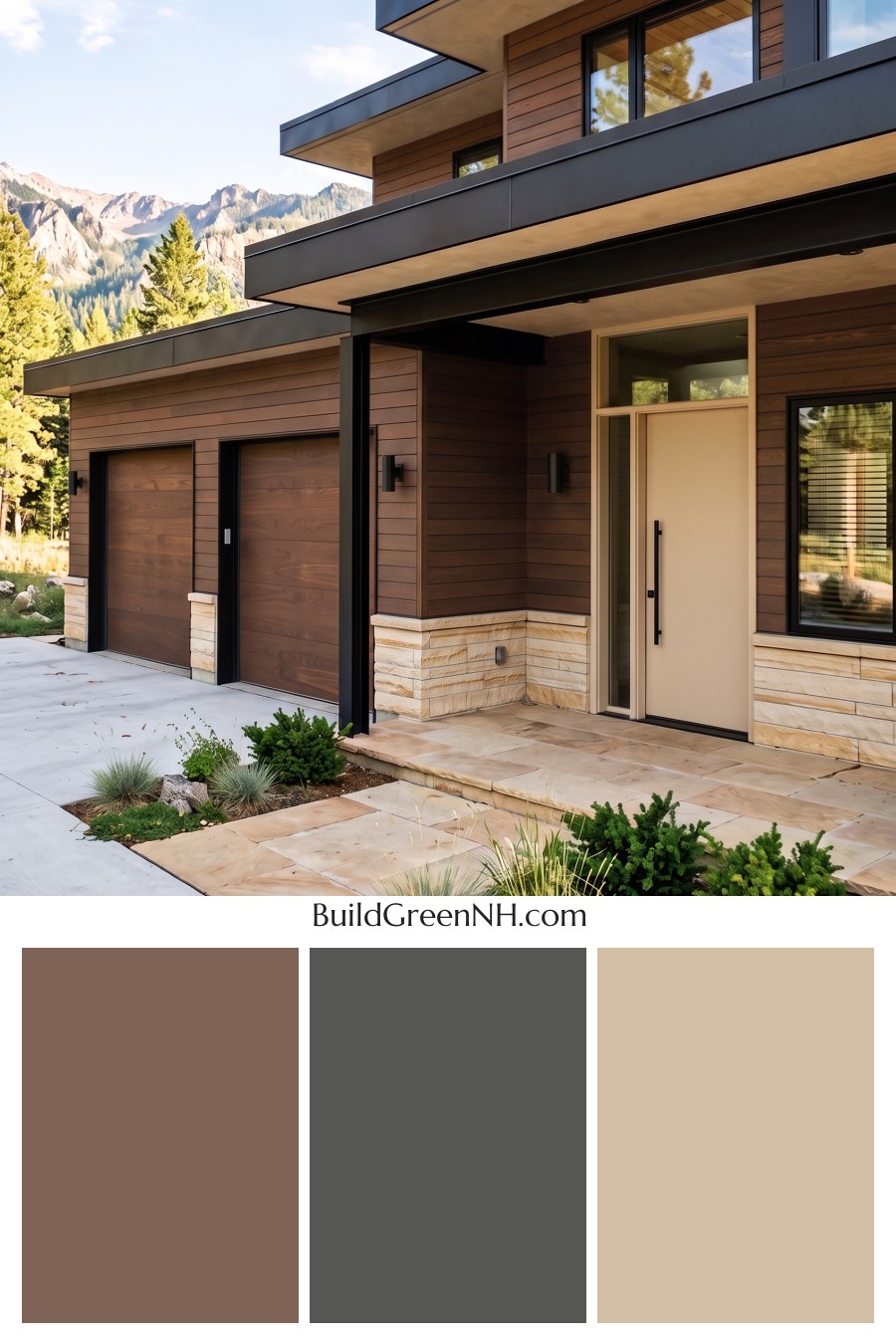
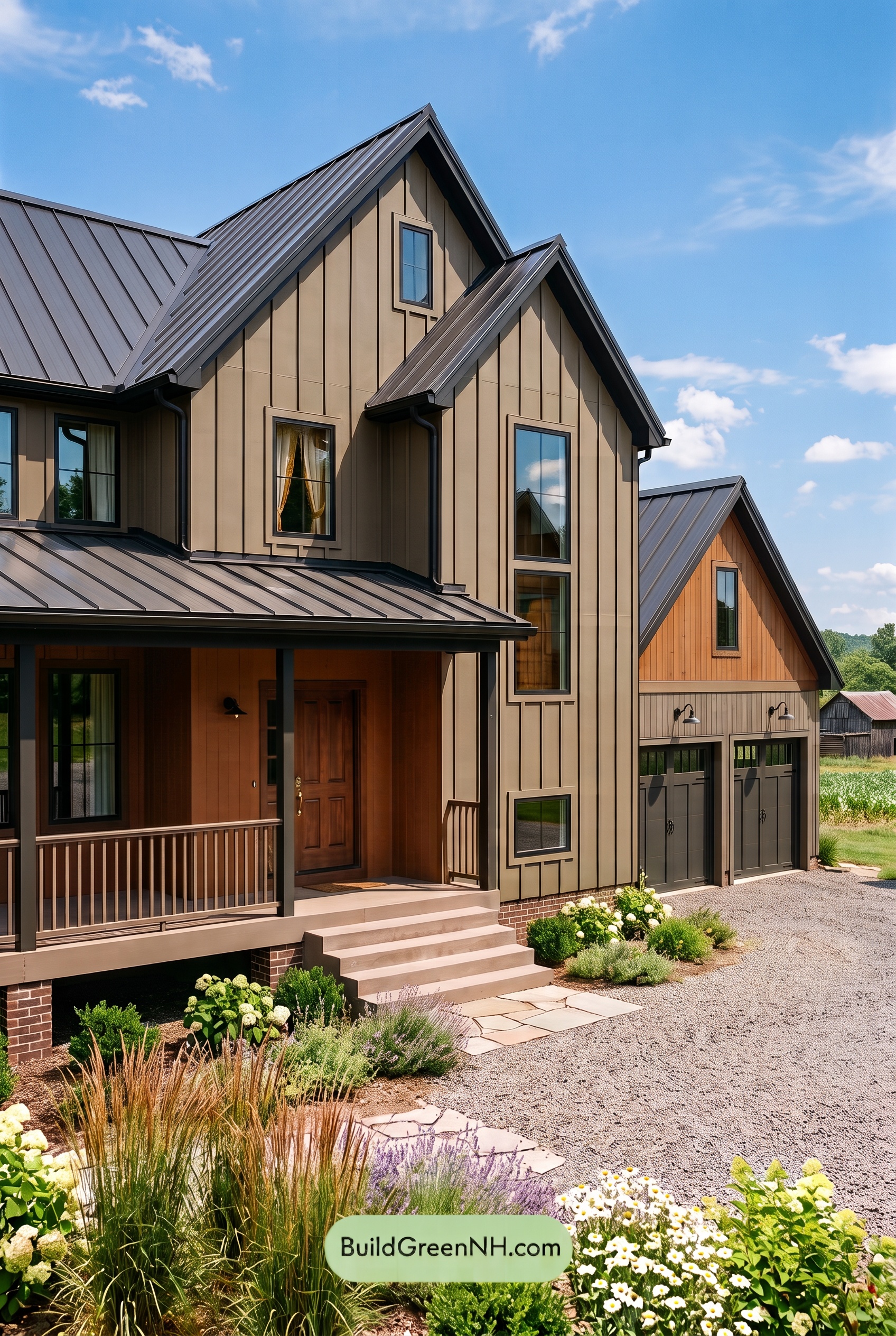
Warm brown siding, deep gray accents, and a soft beige entry make this exterior feel both strikingly modern and naturally welcoming.
Warm Brown Sets the Tone
A rich, medium brown covers the horizontal siding, giving the home a grounded presence against its mountain backdrop. Subtle reddish undertones keep the broad wall surfaces warm, while the visible grain adds depth without introducing another competing color.
The garage doors stay within the same brown family. Their slightly deeper shading creates gentle variation, but the close relationship to the siding keeps these large surfaces from dominating the front of the house. It’s a cohesive approach that lets the architecture stand out.
Deep Gray Defines the Architecture
Dark charcoal gray brings crisp definition to the roof edges, broad fascia bands, window frames, and slender porch columns. Against the warmer siding, these cooler accents sharpen the home’s horizontal lines and give the projecting overhangs a strong, deliberate outline.
Repeating that deep gray at different heights makes the exterior feel connected. The eye moves easily from the garage surrounds to the entry supports and upper windows, with no abrupt change in the palette. Near-black hardware and wall lights add smaller points of contrast.
A Lighter Entry Creates a Welcome
The front door introduces a soft, warm beige that brightens the sheltered entrance. Rather than competing with the brown siding, this lighter shade offers a quiet focal point—especially helpful beneath the deep overhang.
Similar beige tones appear in the stone base, porch paving, and undersides of the eaves. These lighter surfaces soften the dark framing and carry warmth through the lower portion of the facade. Subtle cream and golden-beige variations in the stone add interest while staying comfortably within the neutral scheme.
Modern Contrast, Relaxed Character
What makes this combination work is its balance of warmth, depth, and lightness. Brown provides the welcoming foundation, deep gray emphasizes structure, and beige keeps the entrance from feeling too heavy.
The result is polished without being stark. Surrounded by muted green planting and pale gray rock, the house feels connected to its setting while retaining a clean, contemporary identity.
Next, see how this color scheme looks under different lighting simulations throughout the day.
Overcast
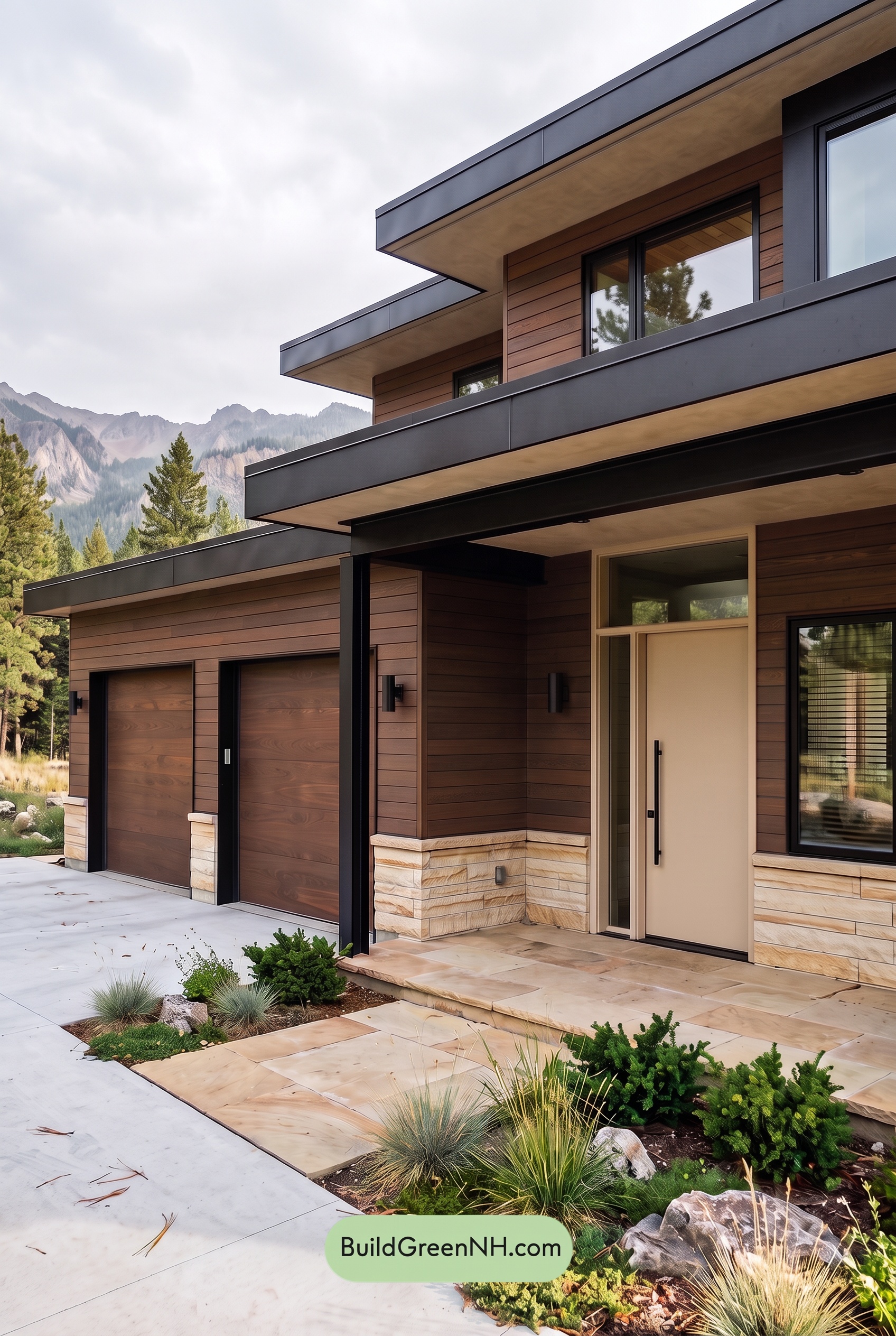
Under overcast skies, the rich browns appear a little deeper and less saturated than in neutral daylight, with their reddish warmth gently subdued. The dark grays take on a cooler cast, while the light beige feels quieter and less golden. Together, these shifts give the exterior a softer, more understated warmth.
Diffused light softens shadow edges beneath the broad overhangs and reduces bright highlights, making the colors look more even across the facade. The recessed entry still holds depth, and the light beige remains distinct against the surrounding browns and dark grays. The overall mood becomes calm and grounded, with gentler contrasts rather than dramatic light-and-dark changes.
Golden Hour
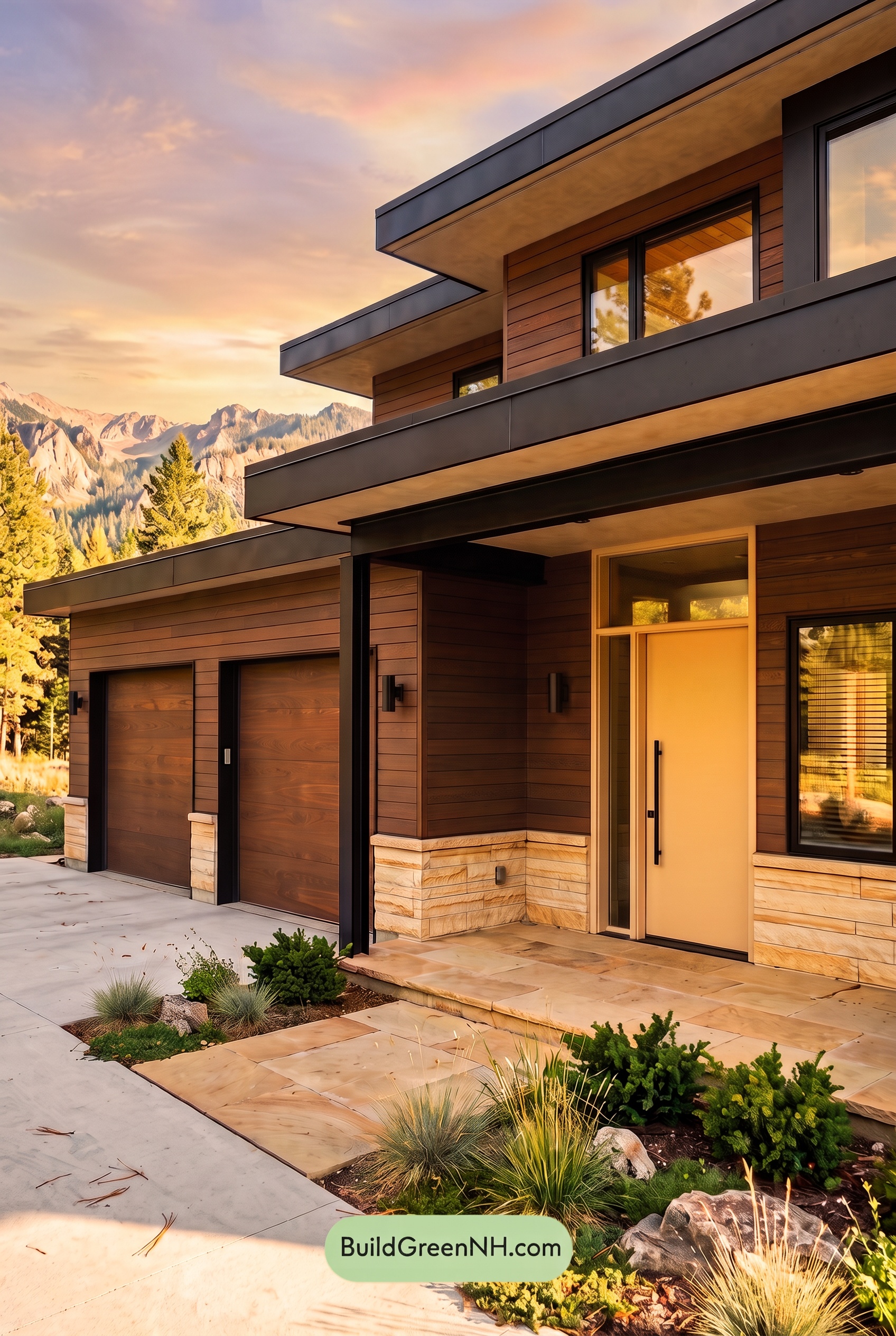
Golden Hour brings out the red and orange undertones in these midtone browns, making them appear richer and more saturated than they would in neutral daylight. The light beige takes on a gentle golden warmth, while sunlit gray shades feel softer and less cool, giving the exterior a welcoming glow.
Under the broad overhangs, brown shades deepen and dark grays approach black, creating stronger contrast with the warmly lit surfaces. These long shadows give the facade more depth, even as the warm light softens the overall mood. Compared with the more evenly balanced colors of neutral daylight, the palette feels cozier, richer, and more dramatic.
Shade
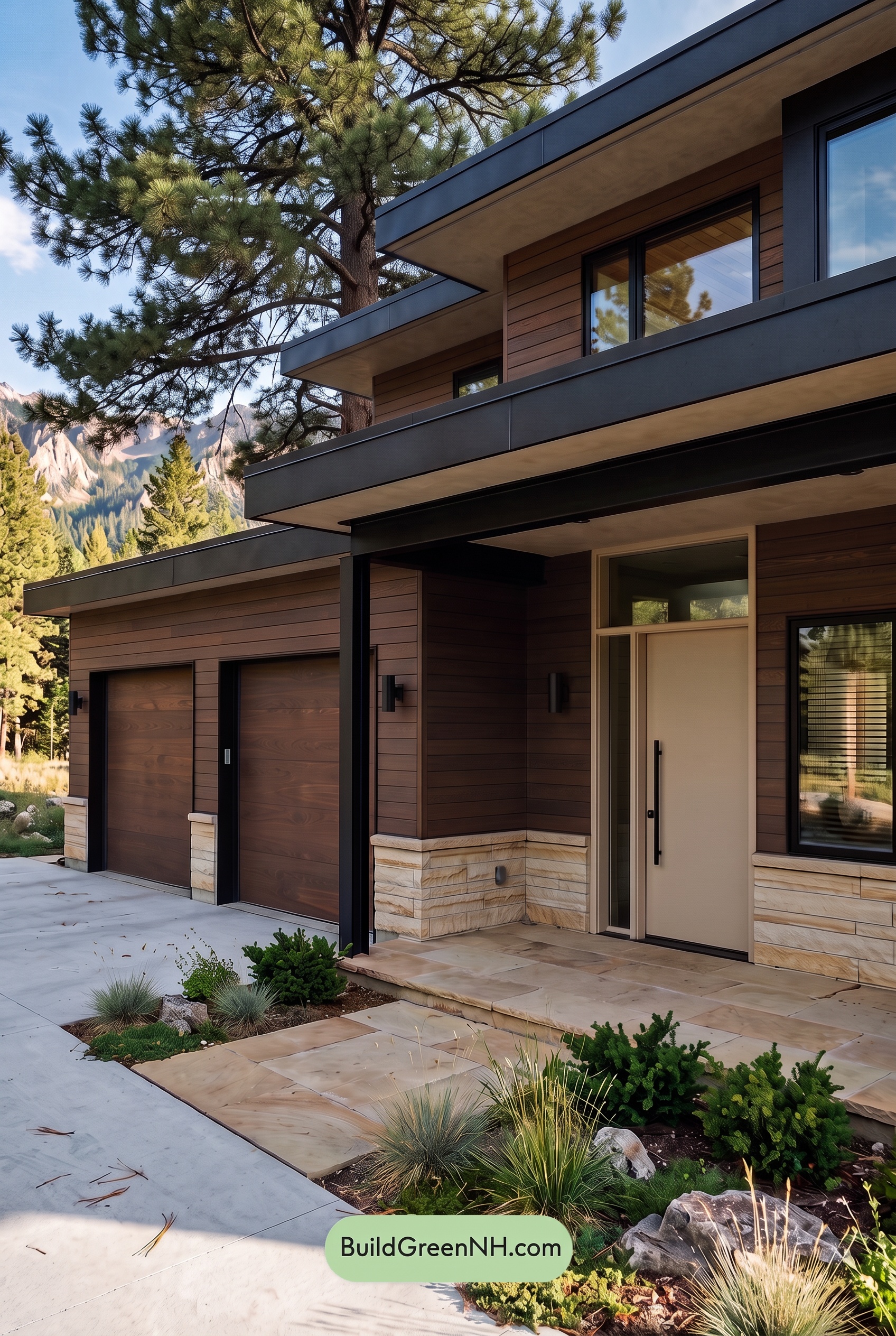
In shade, the brown siding and garage doors look deeper and less saturated than they would in neutral daylight, with their reddish warmth becoming more subdued. The dark gray trim and window frames take on a cooler cast, while shadows beneath the broad overhangs bring the deepest browns and grays closer together, softening the contrast between them.
The light beige entry stays distinct against those darker shades, though its warmth feels gentler and less golden. With fewer bright highlights, the overall palette shifts from crisp and lively in neutral daylight to quiet and sheltered in shade—a mood that makes the entrance feel especially inviting.
Nighttime
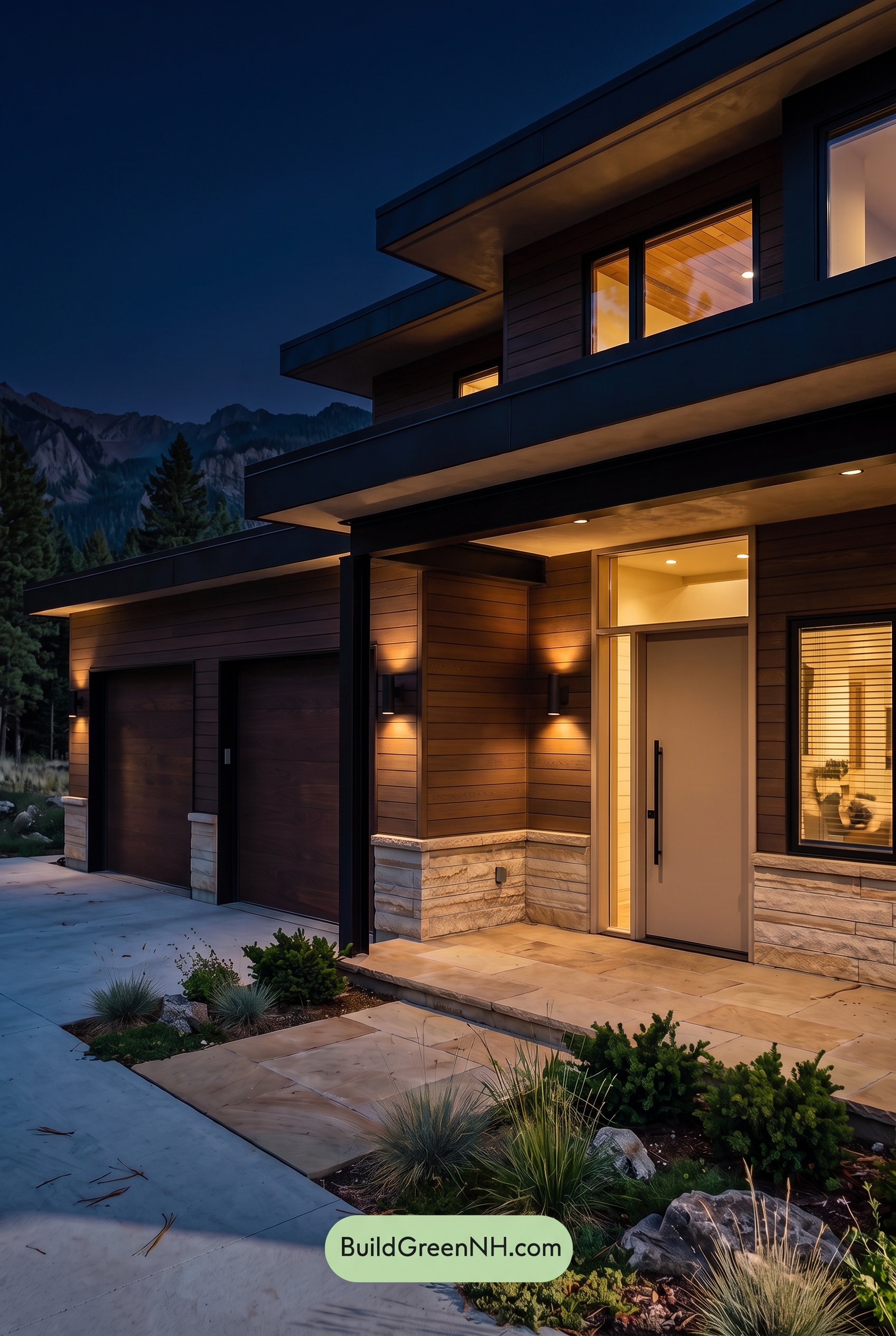
At night, the warm, earthy shades look deeper and more subdued than they would in neutral daylight. Near the wall lights, those same shades appear richer and more saturated, with golden warmth highlighting the horizontal siding. Away from the glow, shadows soften the color differences, allowing the garage doors and upper walls to settle into a darker, quieter backdrop.
The cool gray shades along the roofline and window frames become nearly black in shadow, sharpening their contrast with the illuminated entrance. Meanwhile, the lighter warm neutrals around the doorway feel softer and creamier under the lighting. Compared with daylight’s more balanced appearance, this mix of cool shadows and warm highlights gives the exterior a dramatic yet welcoming nighttime mood.
Pin these for later:
Want More?
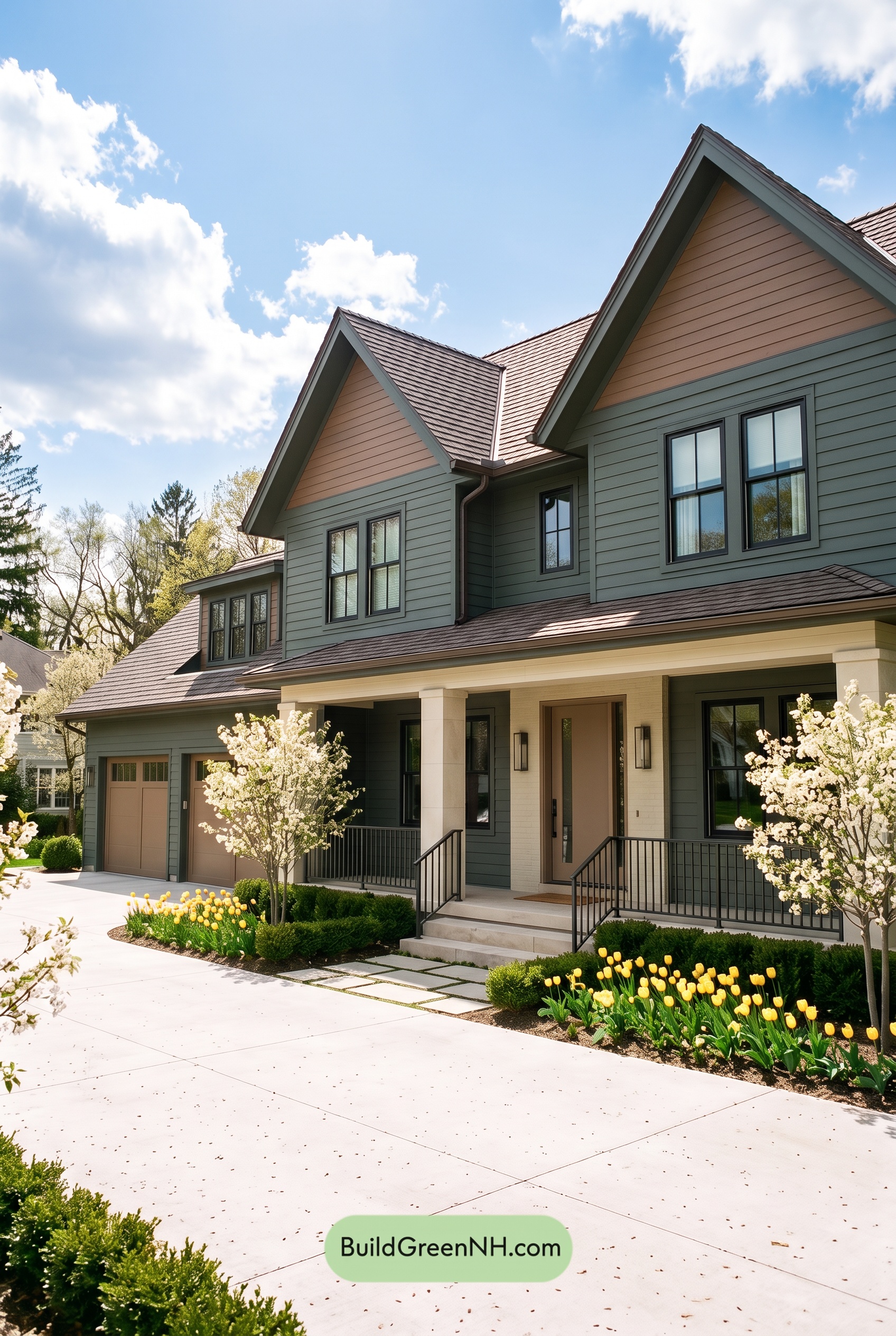 Earthy Green House Exterior Color Scheme: Brown Green Comfort
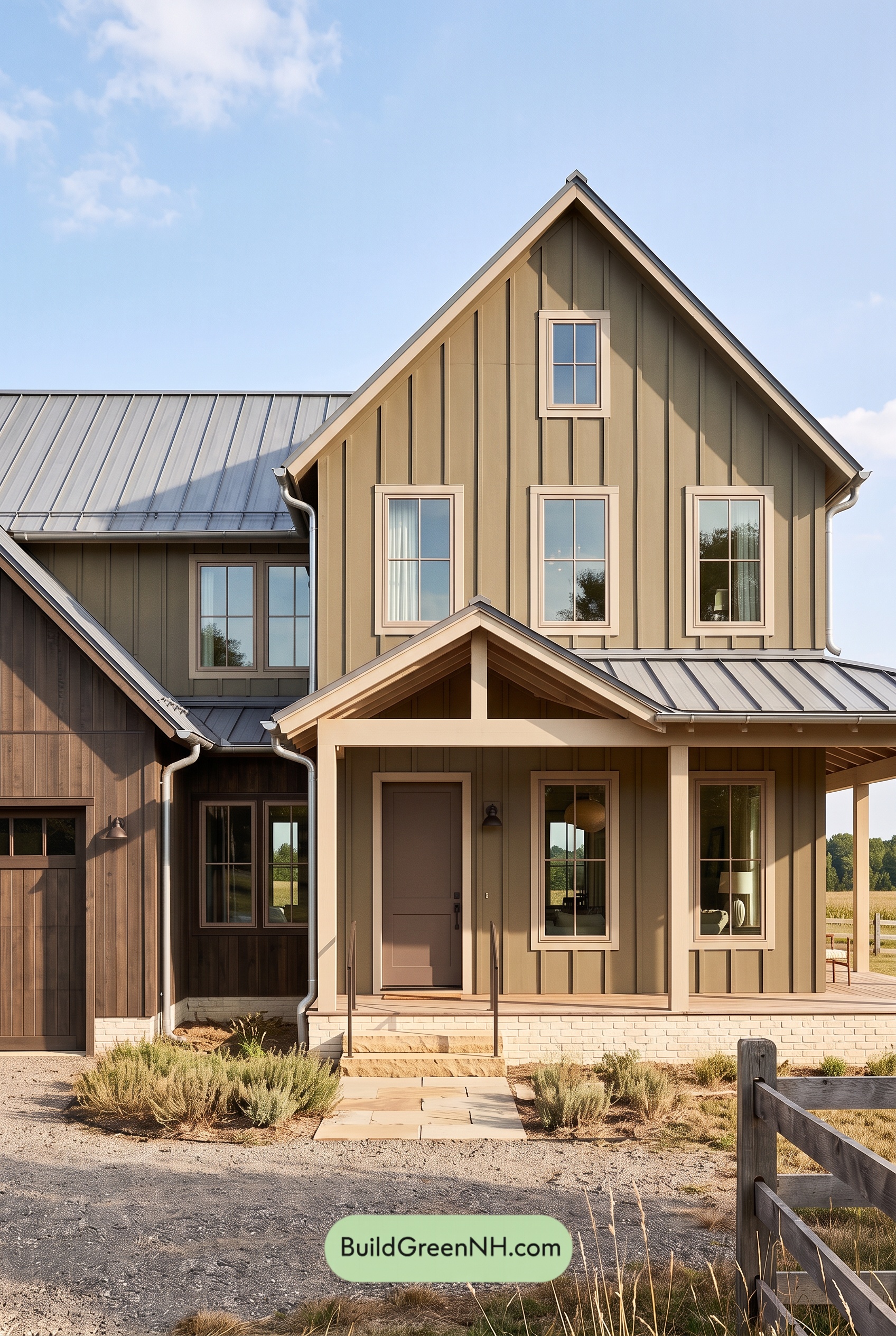 Earthy Green House Exterior Color Scheme: Green and Beige Sanctuary
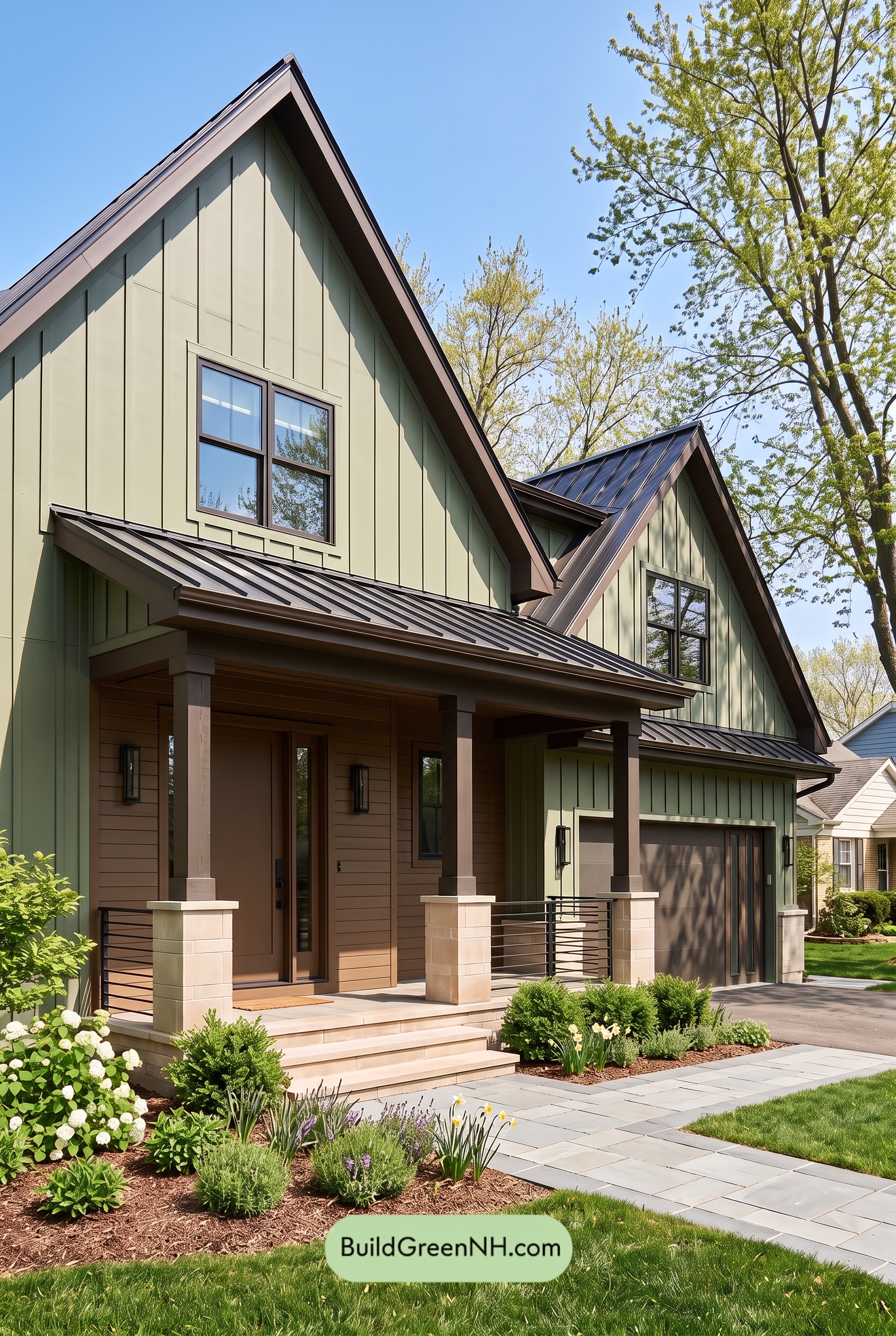 Earthy Green House Exterior Color Scheme: Green Velvet Assurance
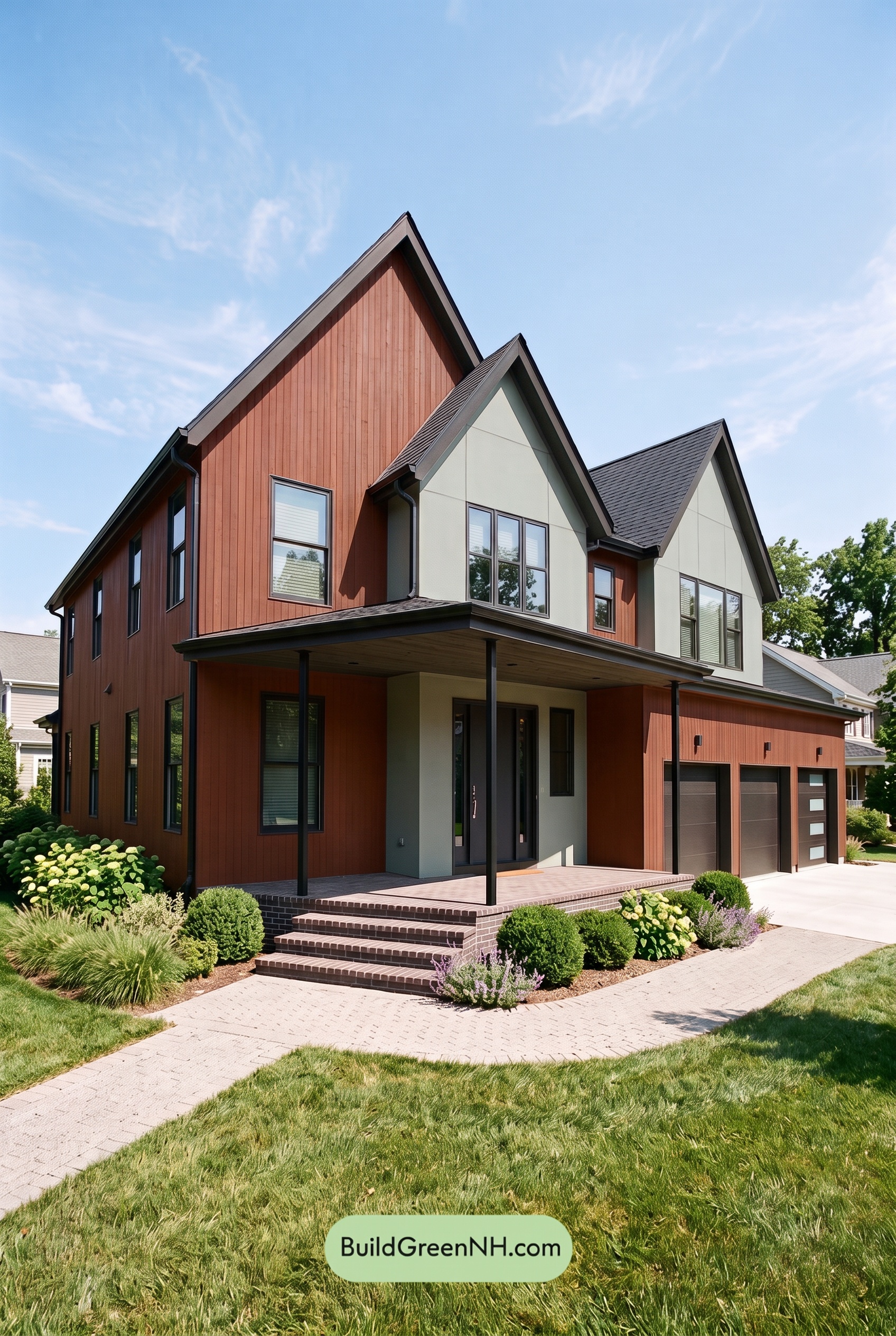 Earthy Green House Exterior Color Scheme: Brown Silken Calm
 Earthy Green House Exterior Color Scheme: Green Amber Contentment
Table of Contents