Last updated on
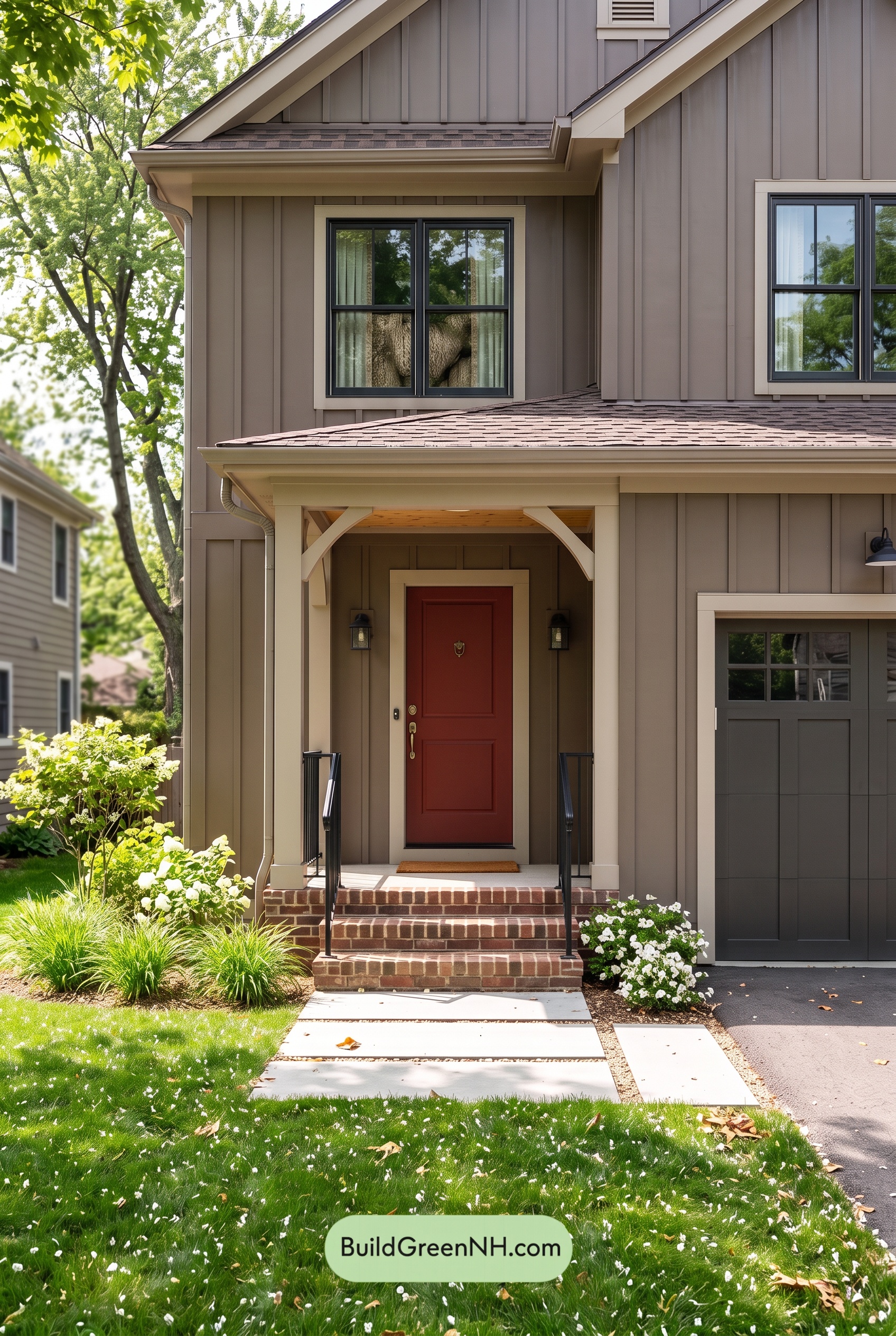

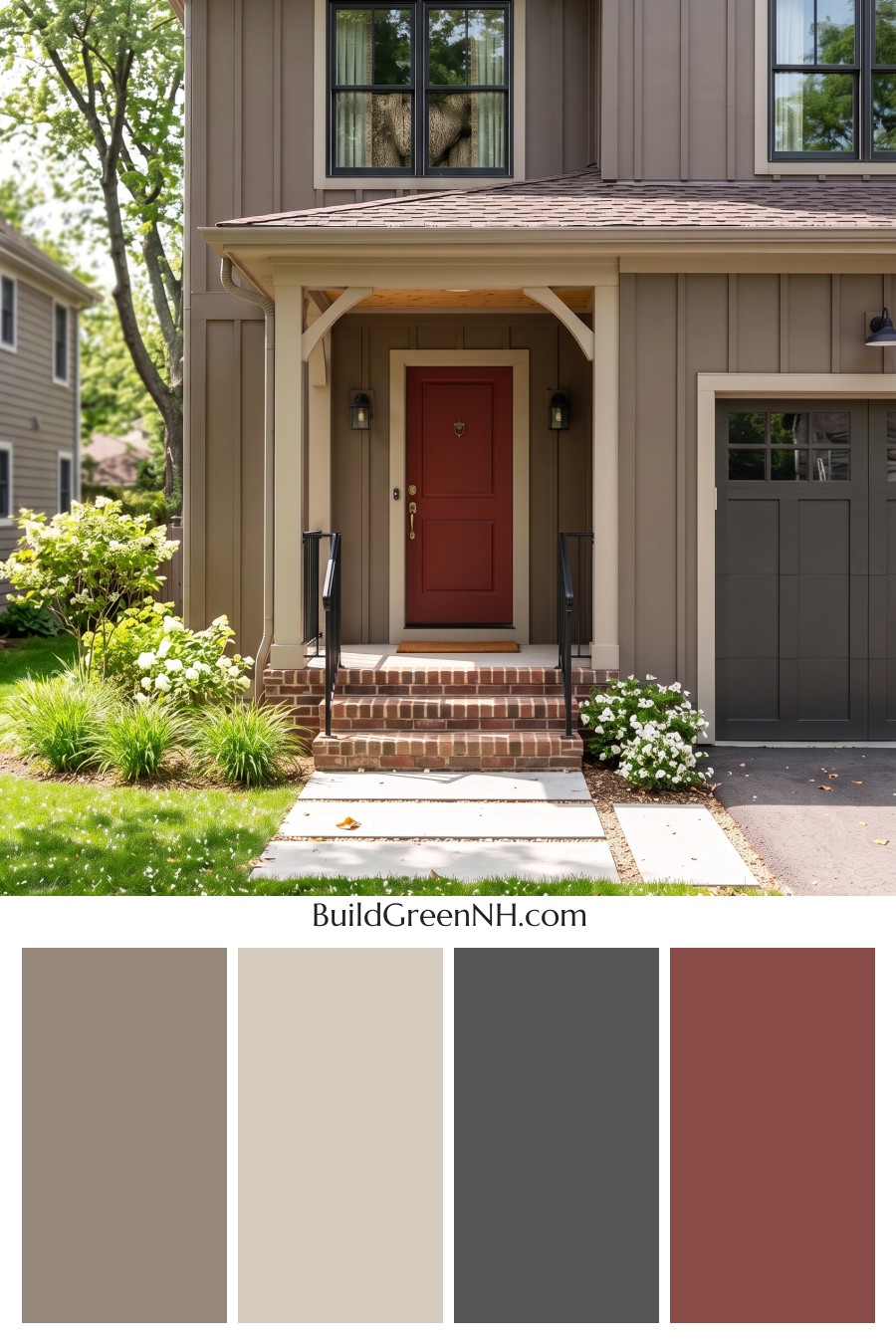
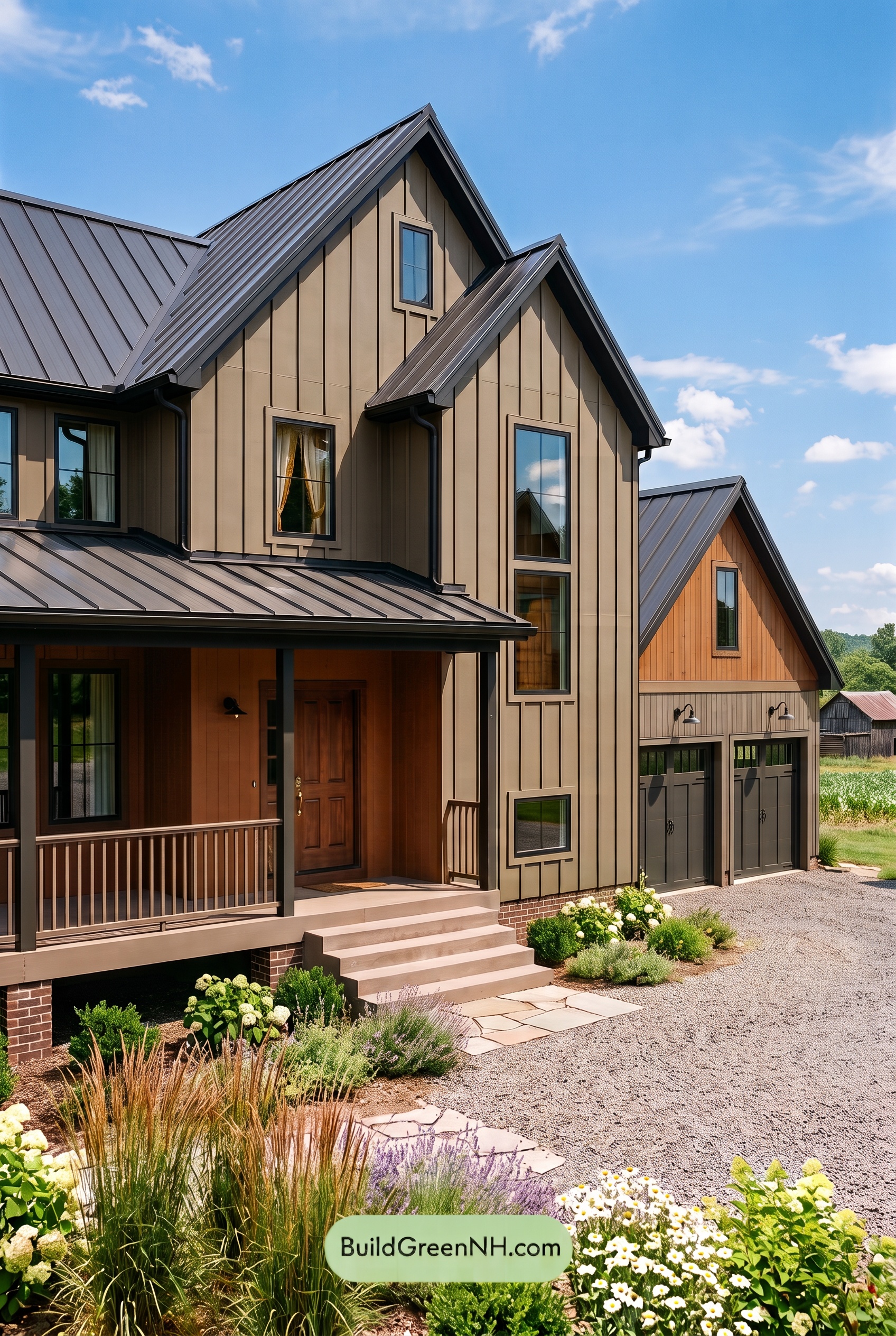
Warm taupe siding, soft beige trim, and deep gray accents give this home an inviting balance of gentle warmth and crisp architectural definition.
A Warm, Quiet Foundation
The board-and-batten siding wears a muted shade of taupe with warm beige undertones. It gives the exterior a soft, grounded appearance while allowing the vertical lines to stand out through subtle shifts of light and shadow. There’s plenty of character here without a busy mix of colors.
This shade also sits comfortably beside the surrounding greenery. In sunlight, its warmer qualities become more noticeable; beneath the porch and eaves, it takes on a deeper, more subdued appearance.
Soft Beige Frames the Architecture
A lighter shade of beige outlines the windows, follows the roof edges, and carries across the porch columns and angled brackets. Keeping these details within the same warm neutral family creates definition without a stark contrast.
The porch benefits especially from this lighter framing. Pale beige columns brighten the recessed entrance, while the matching door surround gives the entry a clear outline. Repeating that shade around the garage helps connect the two areas visually.
Deep Gray Adds Structure
The window frames and slender railings introduce a deep charcoal gray that sharpens the softer siding and trim. These narrow, dark accents emphasize the window divisions and porch steps without overwhelming the facade.
The garage door repeats the gray family on a larger scale, using a slightly softer, warm-leaning shade. That connection feels deliberate: the garage has enough depth to anchor the right side of the house, yet it remains quieter than the front entrance.
A Rich Entry and a Coordinated Roof
The front door provides the warmest focal point with a deep reddish-brown shade. Against the restrained neutrals, it feels welcoming and distinctive rather than overly bright. The red-brown tones in the brick steps echo that warmth, linking the entrance to the approach.
Above, the shingles blend muted brown and gray shades, tying the warmer siding to the darker accents. The result is a cohesive exterior with an easygoing mood: softly traditional, neatly defined, and full of warmth. Its appeal comes from giving each shade a clear role, with broad neutral surfaces, lighter architectural framing, and deeper accents exactly where the eye needs direction.
Next, see how this color scheme looks under different lighting simulations throughout the day.
Overcast
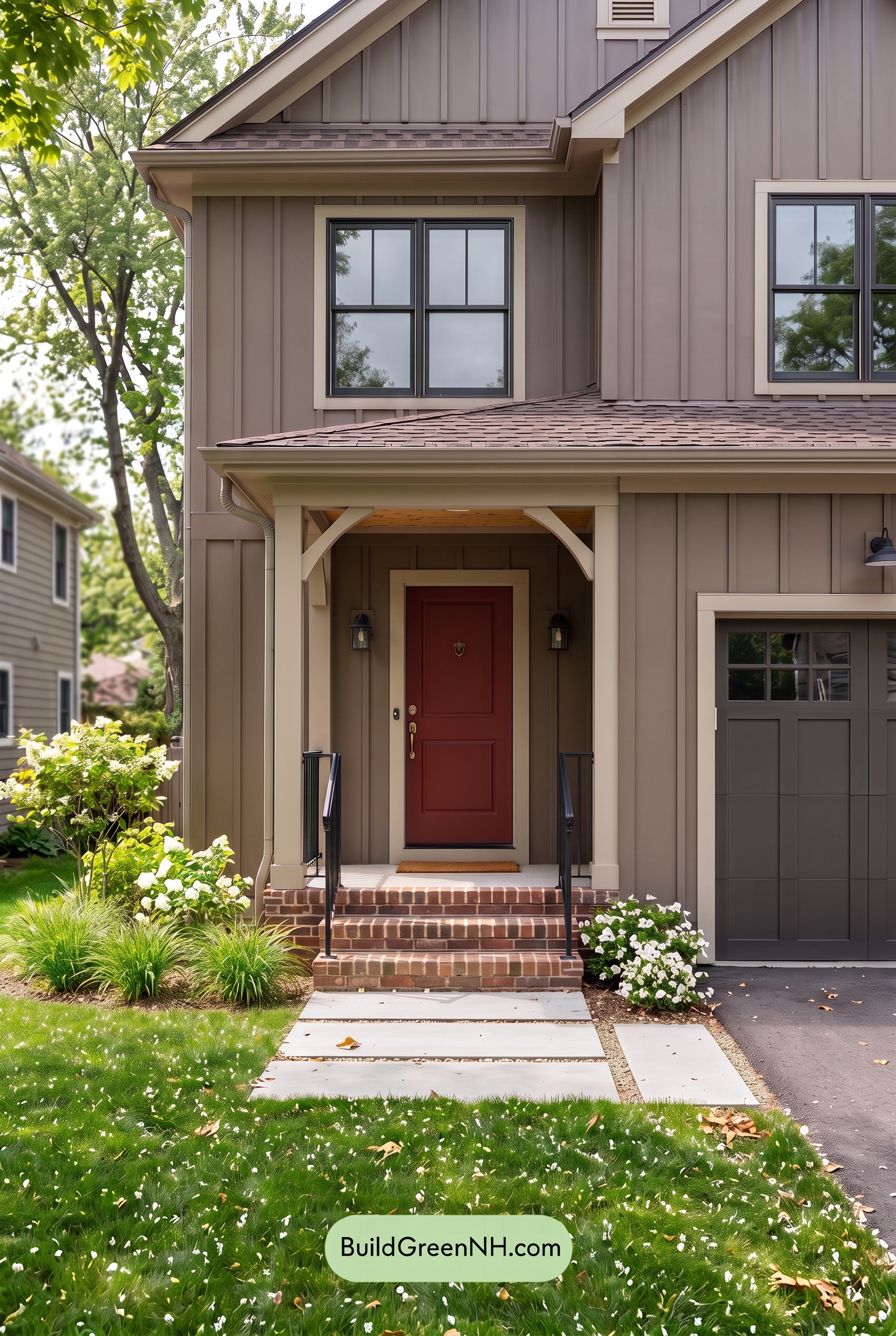
Under overcast skies, the beige siding would look more muted and slightly grayer than in neutral daylight, with its warm undertones softened by the cooler, diffused light. The lighter beige trim and columns would feel less creamy, creating a quieter transition between shades. The reddish-brown front door would appear deeper and less vibrant, keeping its welcoming warmth without the same sunny glow.
Softened shadows beneath the eaves and along the vertical siding would make the facade feel more evenly shaded and less sculpted. The dark gray window frames, railings, and garage door would still provide definition, but with fewer bright highlights and gentler overall contrast. The mood shifts from warm and lively toward calm, understated, and cohesive.
Golden Hour
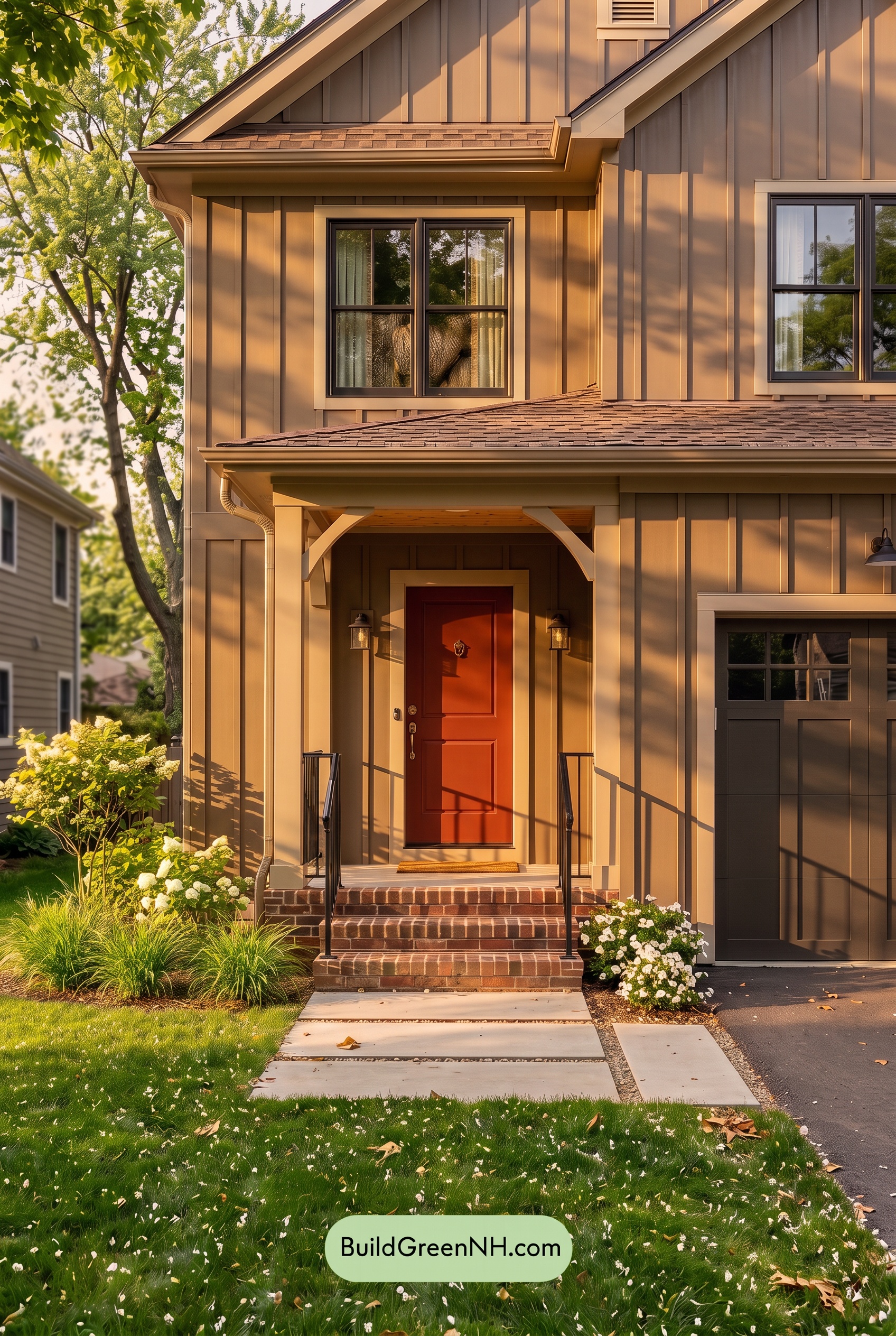
Golden Hour gives the beige shades a richer, warmer glow, bringing out yellow undertones that would look more restrained in neutral daylight. The lighter beige trim feels softer, while sunlit sections of siding appear more saturated. The brown at the entry takes on a stronger red-orange warmth, creating an inviting focal point.
Long shadows beneath the eaves and across the siding make shaded neutrals look deeper and cooler beside the glowing highlights. Dark gray details appear closer to charcoal in shadow, sharpening their contrast with the pale beige surroundings. Compared with the more even, balanced appearance of neutral daylight, this mix of warm highlights and deep shade gives the house a cozy, quietly dramatic mood.
Shade
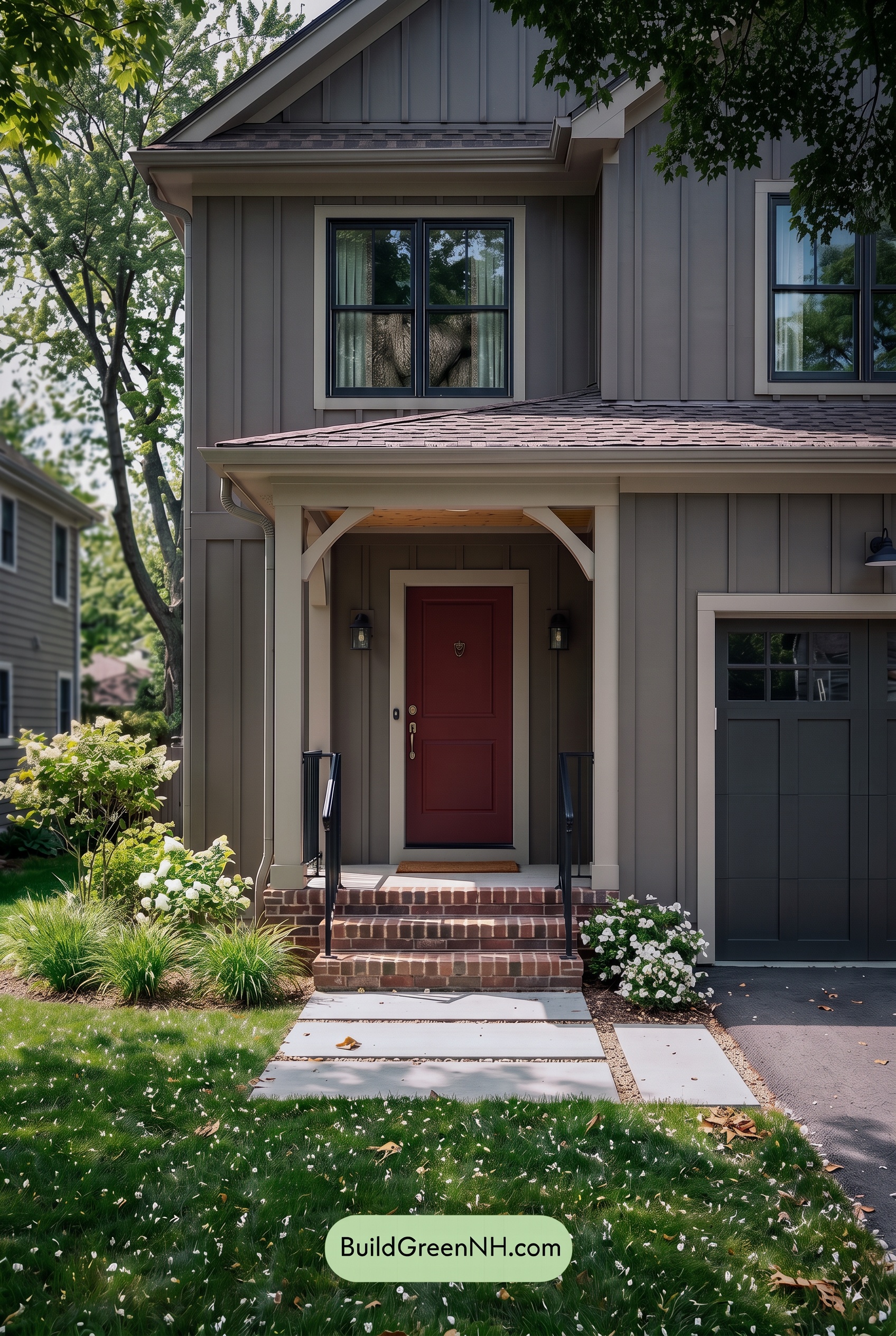
In shade, the beige shades appear cooler and more muted than they would in neutral daylight, with their golden warmth softened by a gray cast. The lighter beige trim still gently outlines the house, while shadows beneath the eaves and along the vertical siding deepen the surrounding neutrals, adding dimension without making the palette feel busy.
The dark gray shades look deeper in the shaded areas, creating a stronger contrast against the lighter beige. At the entrance, the warm brown shades feel richer but less vivid, offering a subtle warmth within the cooler surroundings. Compared with neutral daylight’s clearer color separation, shade gives the exterior a quieter, more intimate mood.
Nighttime
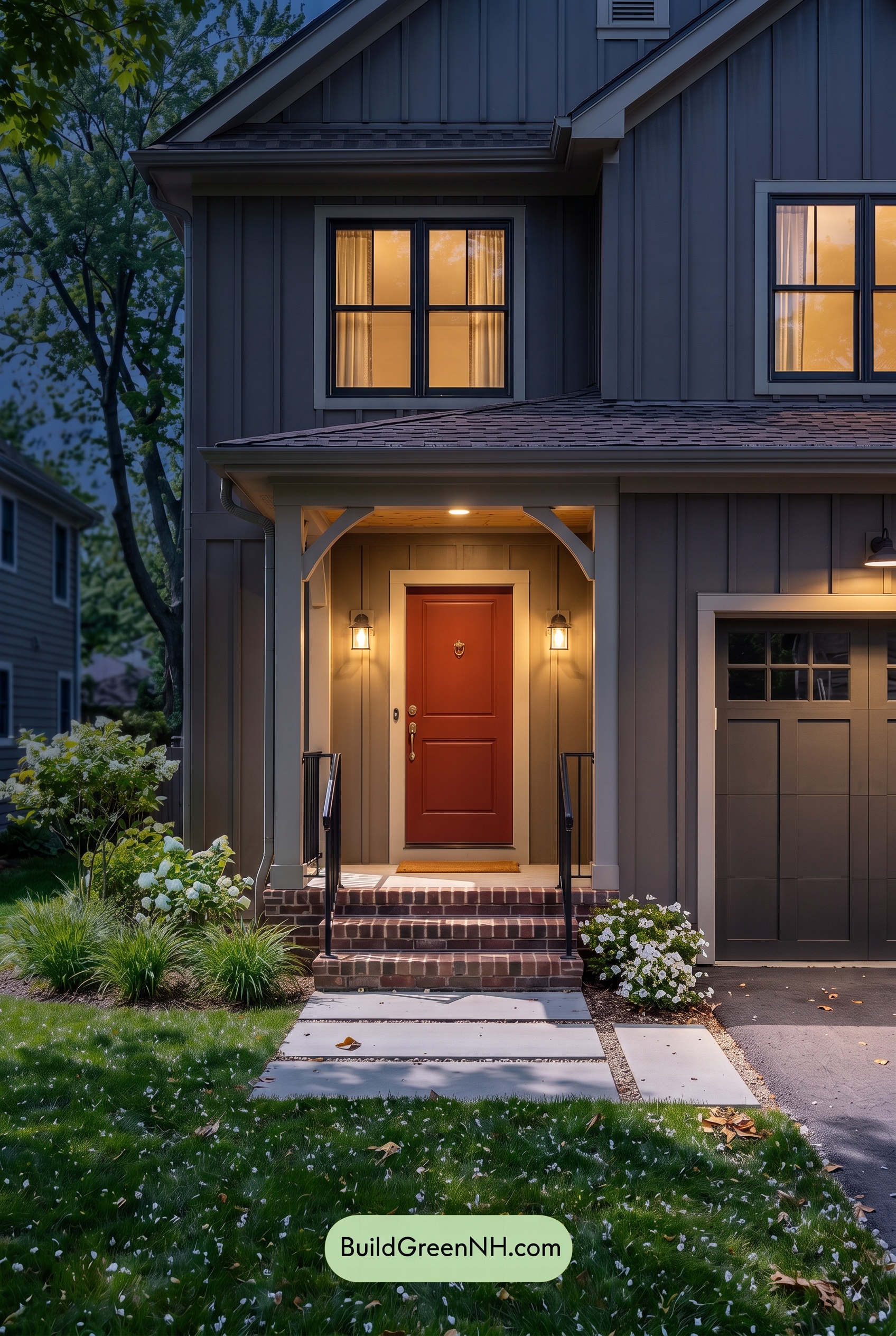
At night, the warm neutrals look deeper and more muted than they would in neutral daylight, with unlit areas taking on a cool, blue-gray cast. Warm yellow lighting around the entry brings back their softer, golden undertones, while the reddish-brown door appears richer and more saturated against the subdued surroundings.
Shadows beneath the eaves and along the siding deepen, giving the exterior more dimension. Dark gray details recede toward near-black, while illuminated pale trim stands out more sharply. Compared with daylight’s even color balance, this mix of cool shadows and warm highlights creates a mood that feels intimate, welcoming, and quietly dramatic.
Pin these for later:
Want More?
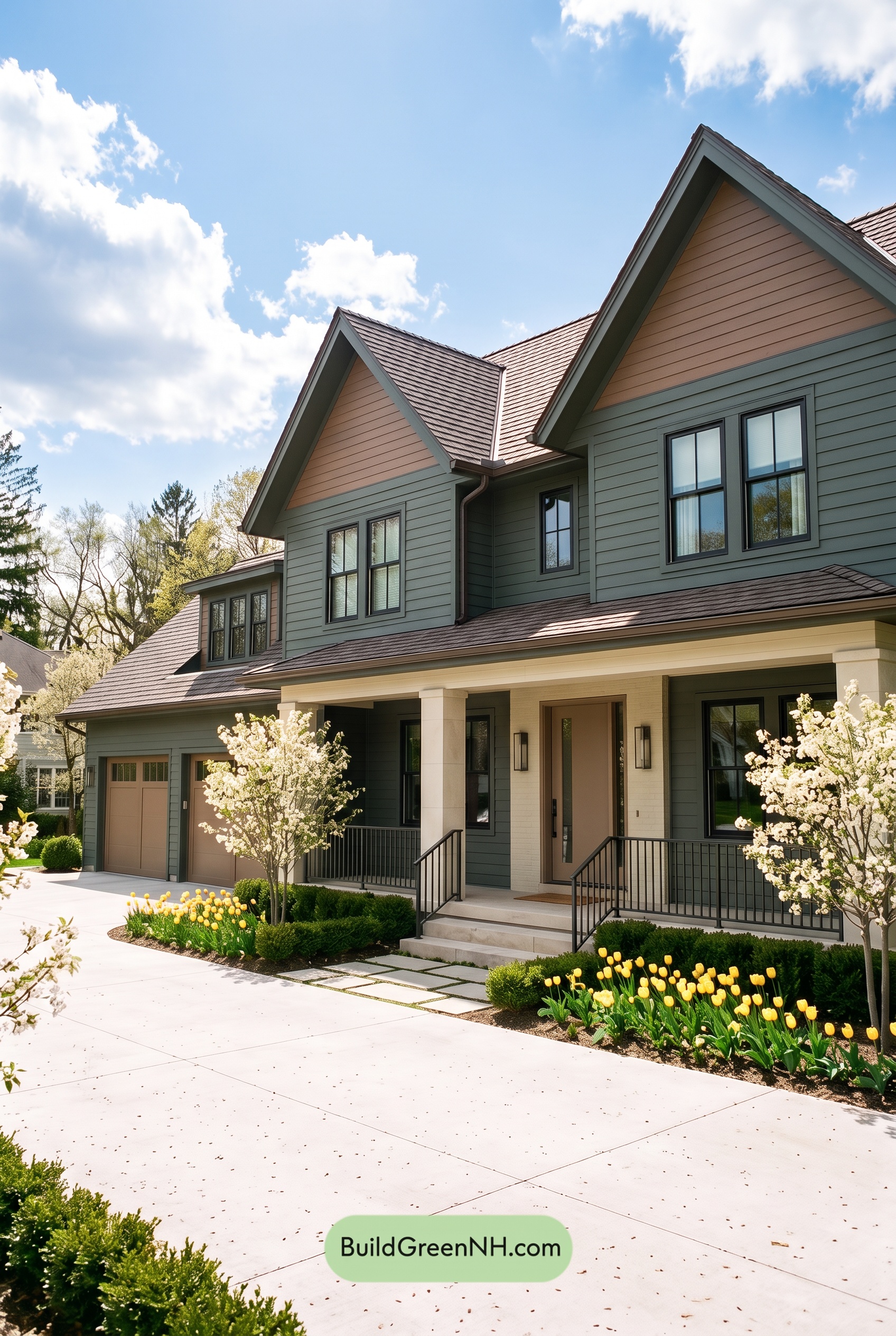 Earthy Green House Exterior Color Scheme: Brown Green Comfort
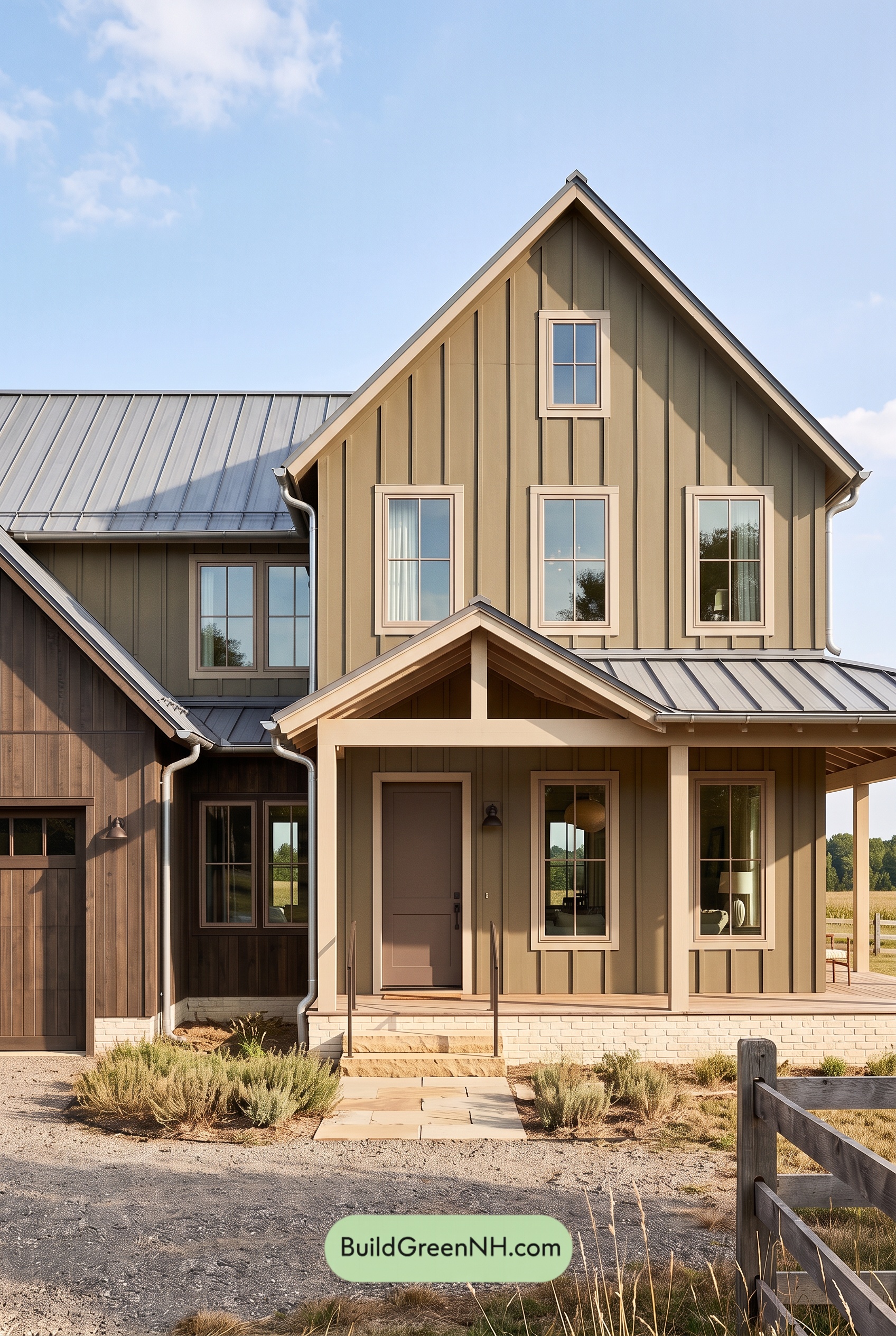 Earthy Green House Exterior Color Scheme: Green and Beige Sanctuary
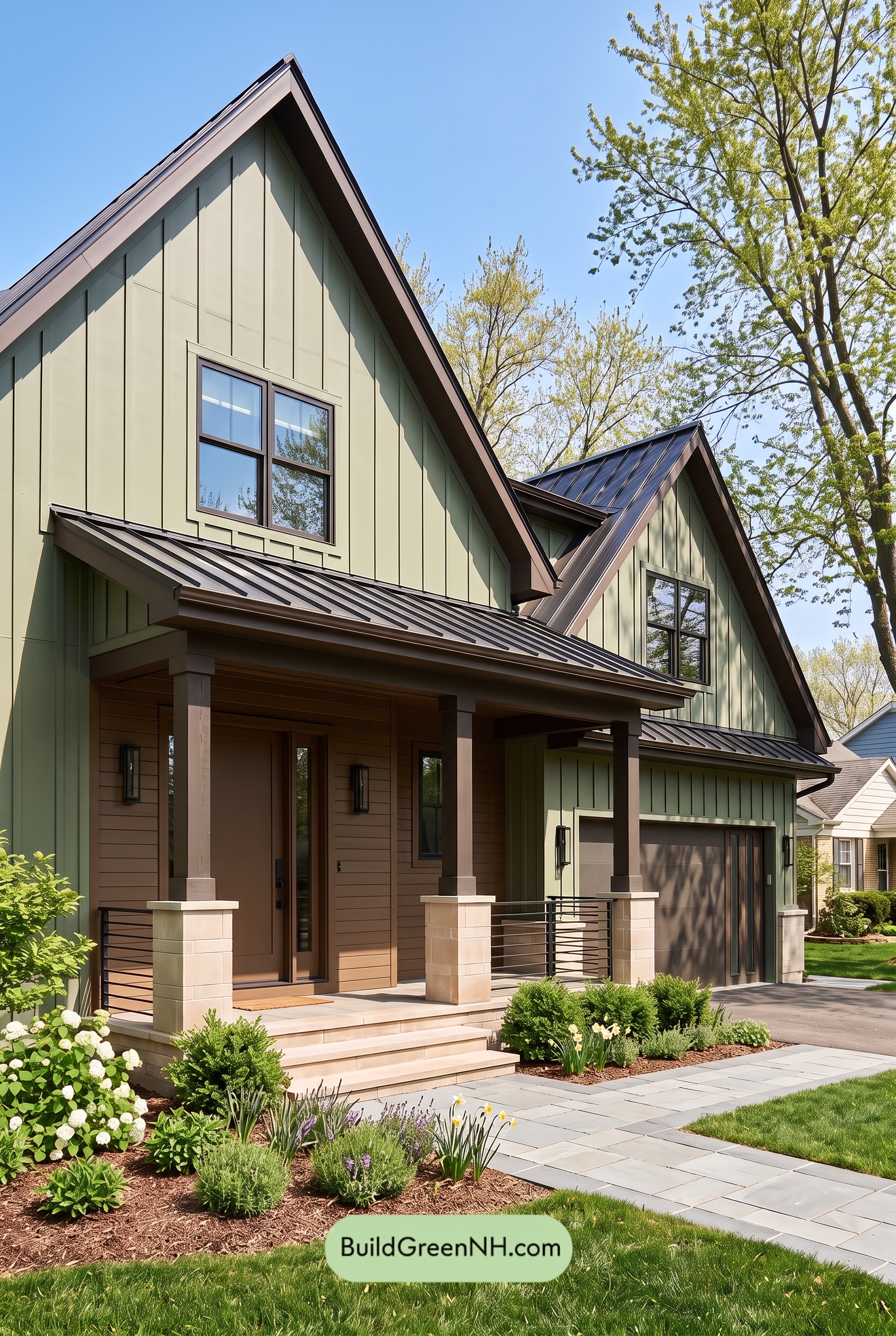 Earthy Green House Exterior Color Scheme: Green Velvet Assurance
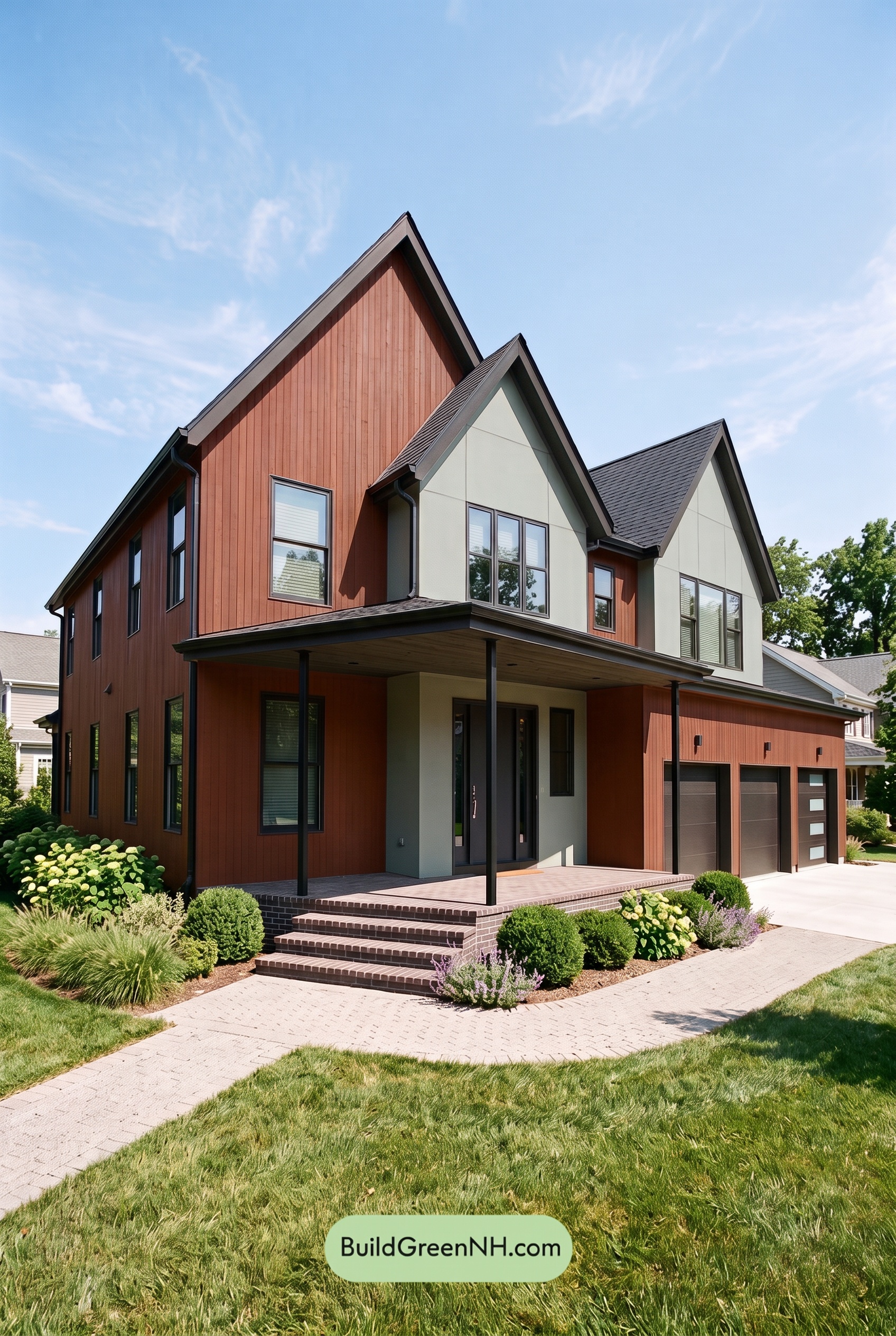 Earthy Green House Exterior Color Scheme: Brown Silken Calm
 Earthy Green House Exterior Color Scheme: Green Amber Contentment
Table of Contents