Last updated on
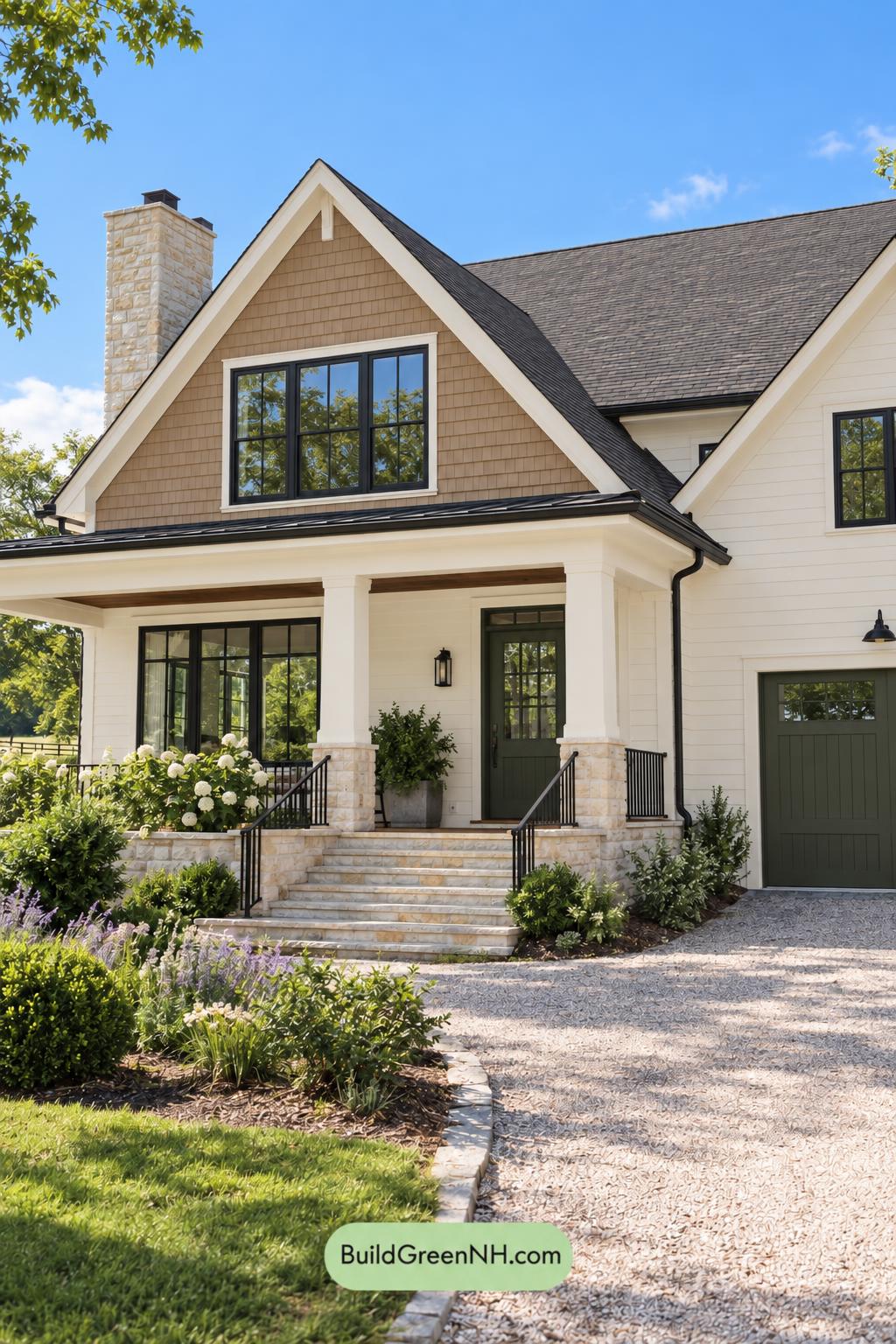

This beautifully balanced mix of warm neutrals and deep gray accents gives the home a polished, welcoming presence with timeless curb appeal.
A Layered Neutral Foundation
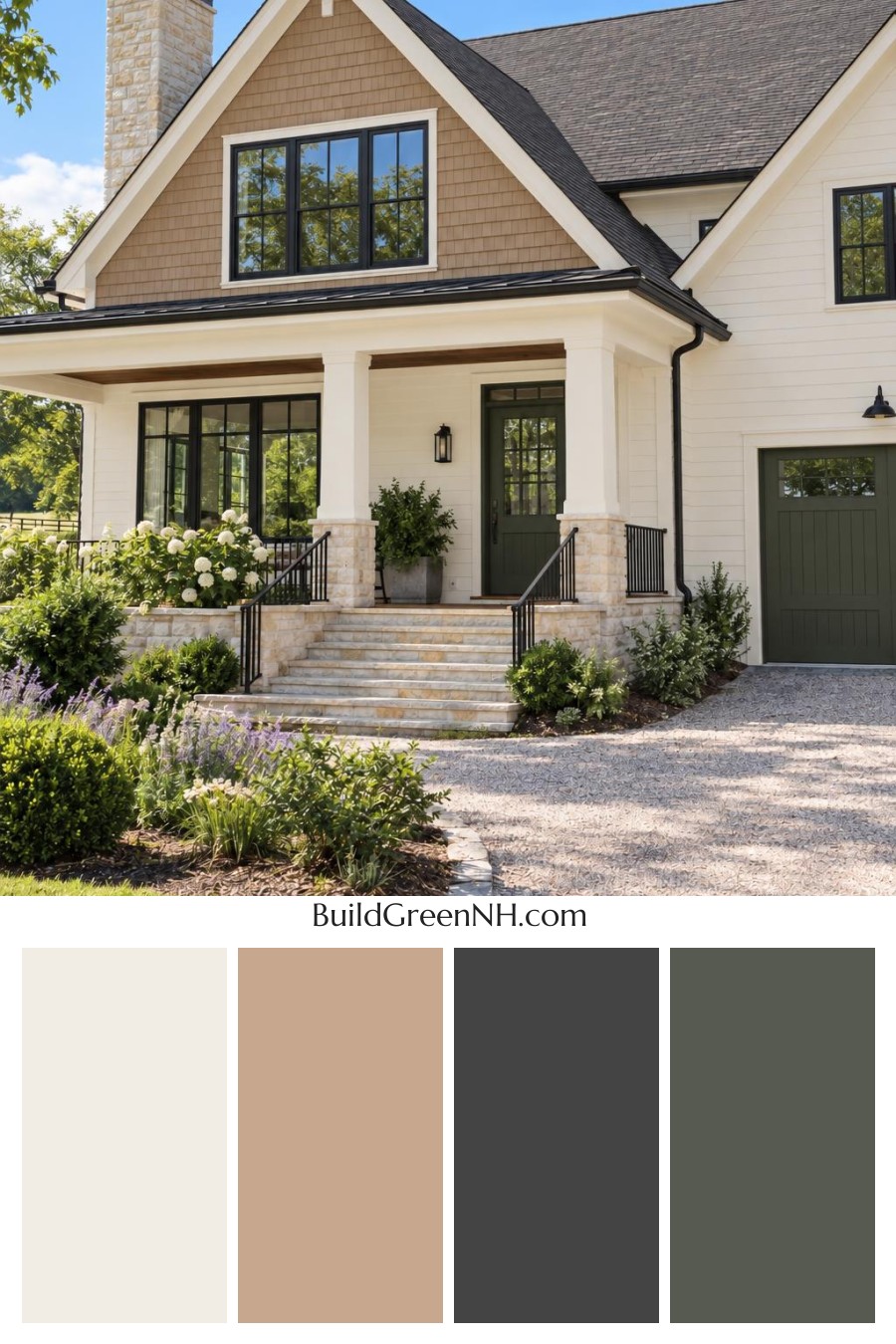
The main siding is finished in a soft, creamy beige that keeps the exterior light, fresh, and inviting. Its gentle warmth pairs naturally with the pale beige trim, which crisply outlines the rooflines, porch, and windows without creating a harsh contrast.
Above the porch, a richer medium beige on the shingle-style siding adds depth and texture to the front-facing gable. This slightly deeper neutral prevents the facade from feeling flat while giving the architecture a cozy, tailored character.
Deep Gray Details Add Definition
Deep charcoal-gray window frames create strong, elegant definition against the lighter walls. Their dark tone repeats at the railings and exterior accents, visually connecting the porch, upper windows, and garage area in a cohesive way.
The front door and garage door continue the gray family in a softer, earthy deep shade. This approach provides contrast while still feeling calm and grounded rather than overly dramatic. The result is an entry that feels substantial and inviting.
Roof and Stone Complete the Look
A dark charcoal-gray roof anchors the entire color scheme and gives the home a confident silhouette. It echoes the window frames and railings, creating a pleasing rhythm from the peak of the gables down to the front steps.
Light beige stone at the chimney base, porch columns, and stairs adds another layer of warmth. Its varied neutral shading bridges the creamy siding, medium beige gable, and charcoal-gray accents beautifully, making the whole exterior feel thoughtfully composed.
A Warm, Refined Mood
Overall, this palette feels classic yet current: warm enough for a welcoming first impression, but structured enough to highlight the home’s crisp lines and generous porch. The soft beige shades keep the exterior luminous, while the deep gray elements deliver the contrast that makes every architectural detail stand out.
Next, see how this color scheme looks under different lighting simulations throughout the day.
Overcast
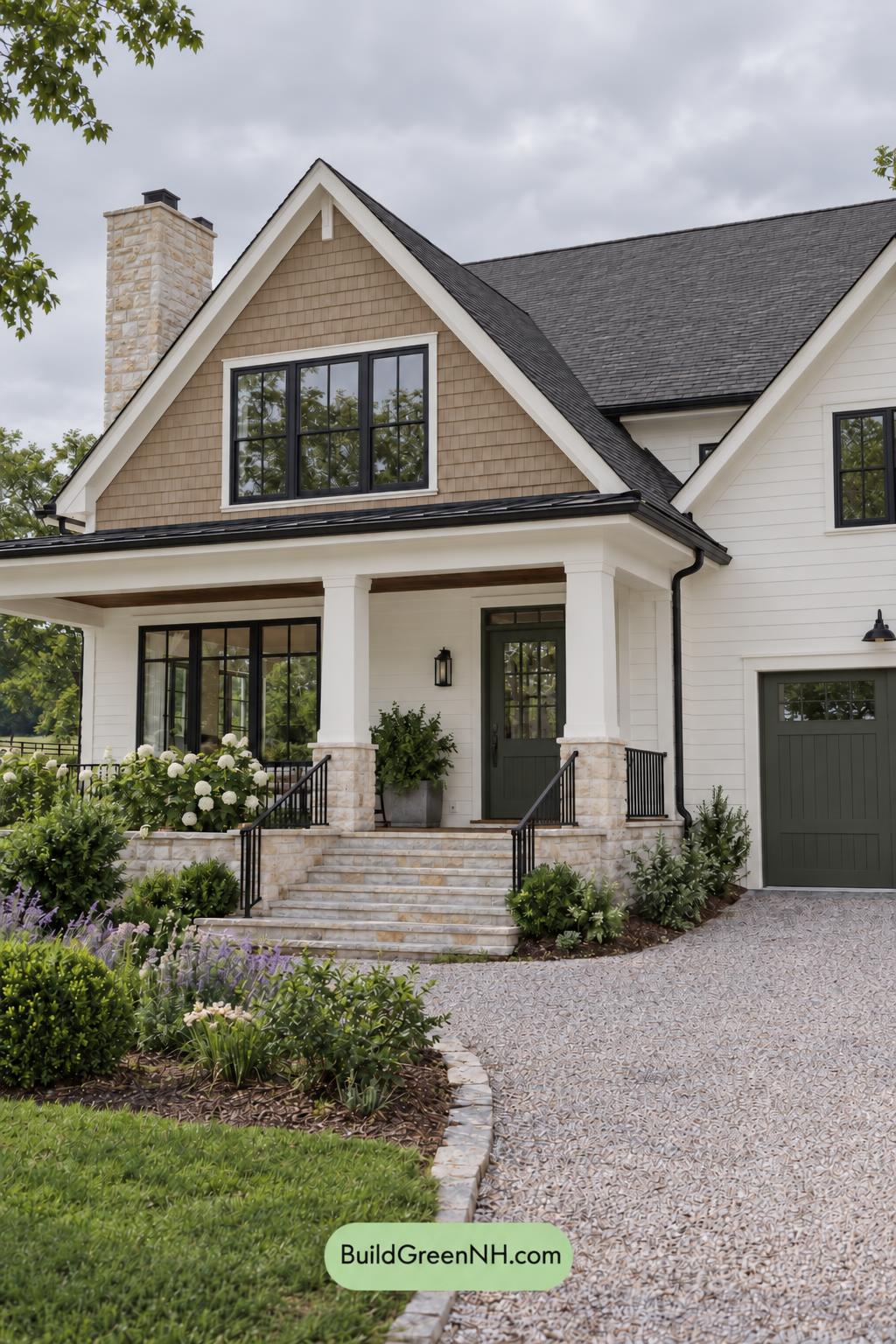
Under overcast skies, the beige exterior reads softer and slightly cooler than it does in neutral daylight, with its warmth appearing more subdued and refined. The diffused light lowers saturation across the facade, allowing the lighter beige sections and deeper beige siding to feel gently layered rather than sharply separated.
Gray window frames, railings, and doors gain a richer, more grounded presence in the softened light, while shadows become broad and subtle instead of crisp. With less glare and lower contrast, the home takes on a calm, tailored mood, balancing warm neutrals with quiet gray accents for an inviting, understated appearance.
Golden Hour
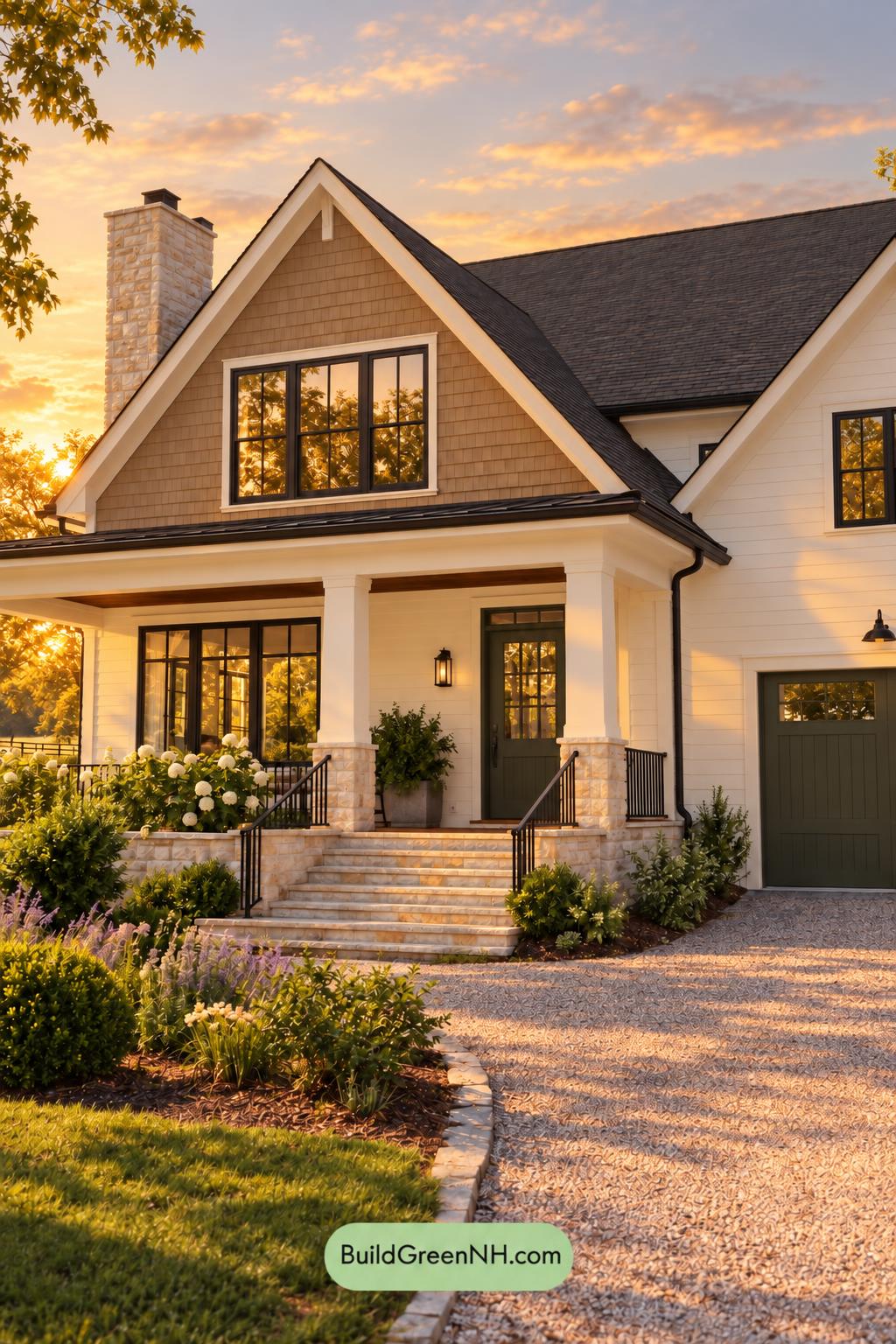
Under neutral daylight, the beige exterior reads clean and balanced, while the gray details provide crisp, grounded contrast. At Golden Hour, the low amber light enriches the beige shades, making them appear warmer, creamier, and slightly more saturated across the siding, columns, and trim.
Gray window frames, railings, and doors deepen into moodier, softer-looking accents as long shadows gather beneath eaves and around the porch. This heightened light-and-shadow contrast gives the home a more dimensional, inviting presence, replacing daylight’s even clarity with a calm, glowing warmth.
Shade
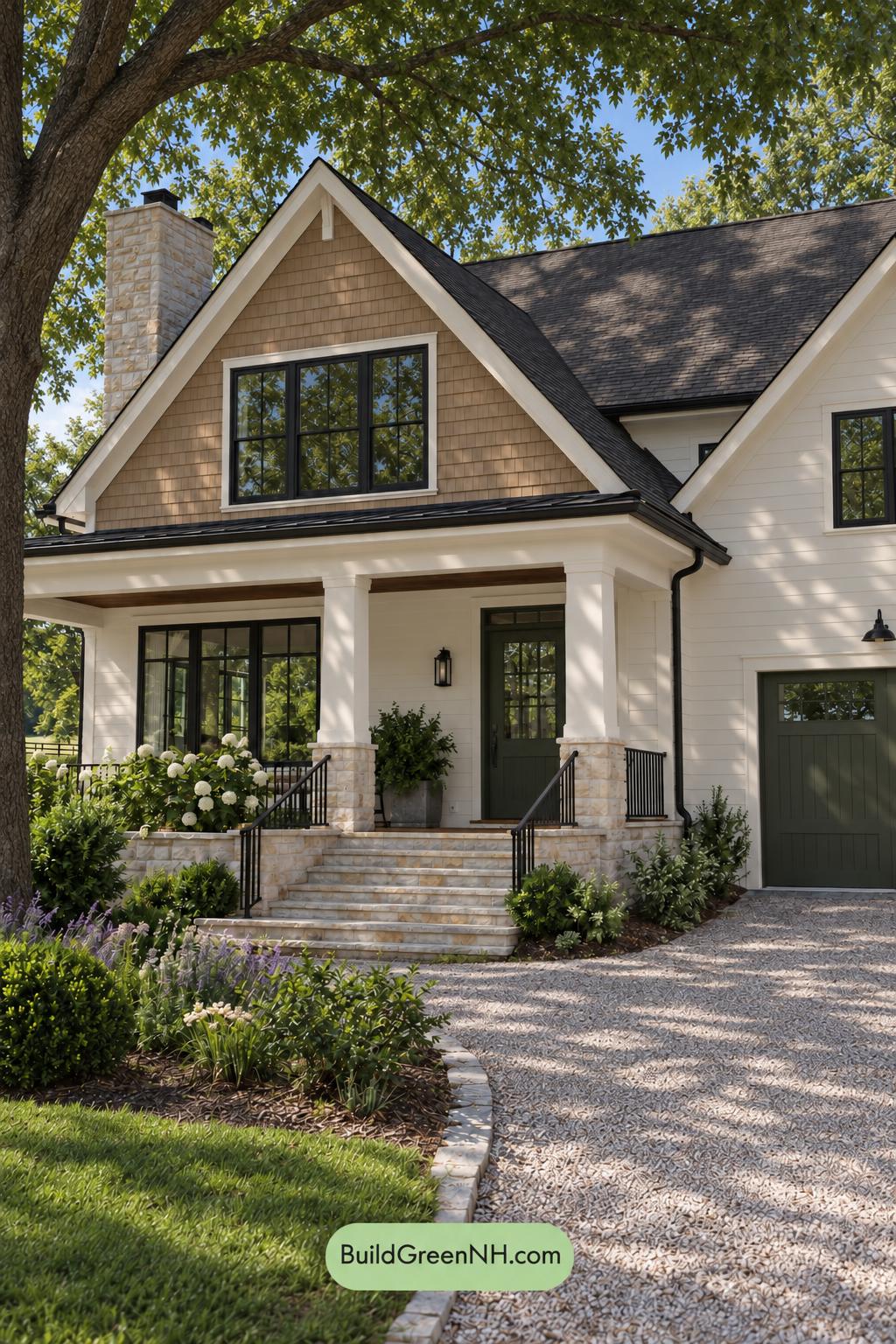
In shade, the beige exterior shifts away from the brighter, creamier look it has in neutral daylight and settles into a softer, more muted warmth. The upper beige surfaces appear a little deeper and less saturated beneath the canopy, while the shaded areas around the porch gain gentle, layered shadows that make the facade feel calm and inviting.
The gray window frames, railings, and doors take on a richer, more grounded presence in shade, increasing their contrast against the light beige walls. Rather than feeling stark, the darker gray details frame the architecture with a quiet definition, giving the home a more intimate, refined mood than it has under open daylight.
Nighttime
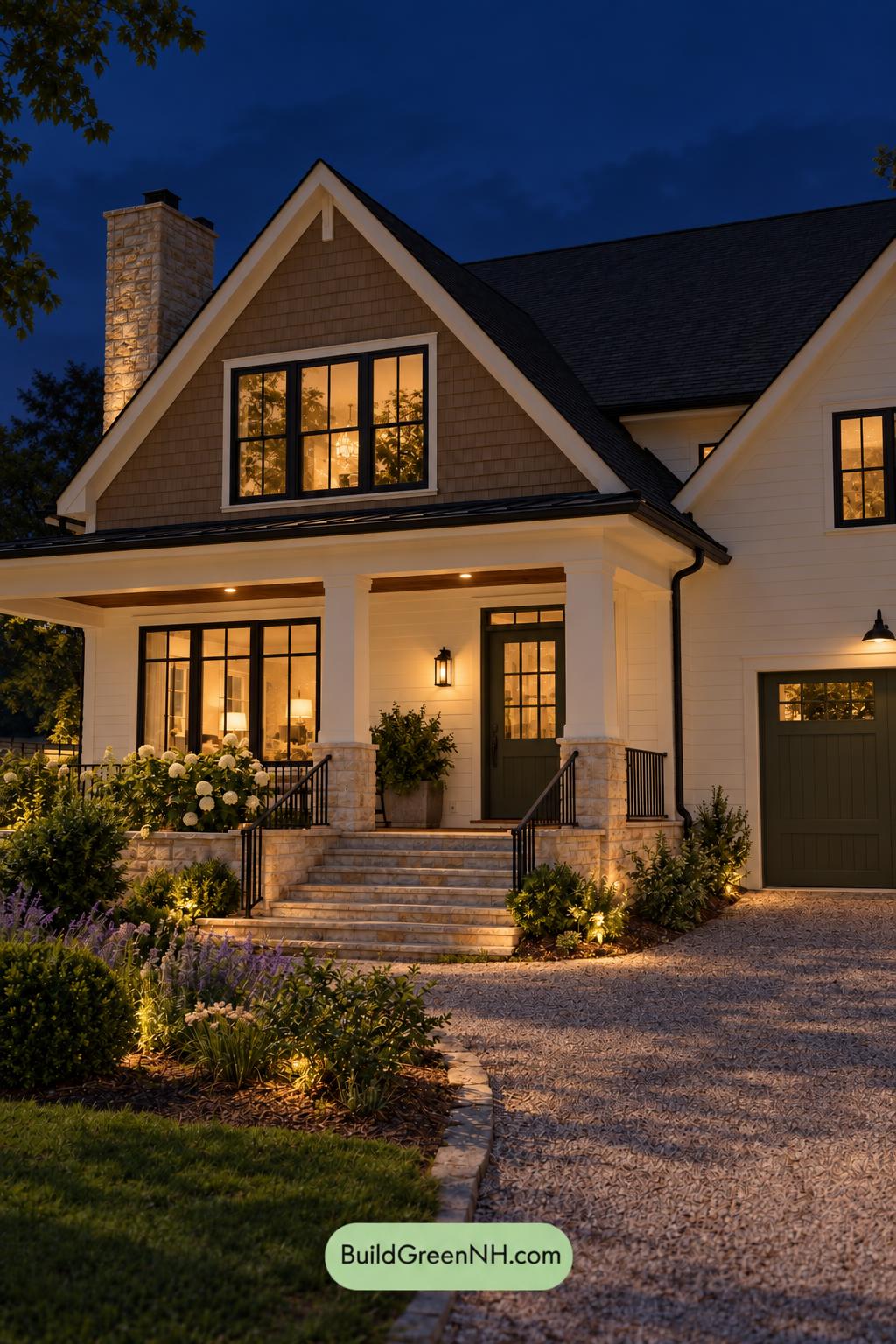
At night, the beige exterior takes on a softer, creamier warmth under the porch and landscape lighting, while areas beyond the glow settle into deeper, muted neutral shades. Compared with neutral daylight, the overall saturation feels lower in the shadows but richer where warm light pools across the walls, columns, and entry.
The gray window frames, railings, and doors appear nearly charcoal in the evening, creating sharper contrast against the illuminated beige surfaces. Deep shadow lines around the roof and porch add definition, while the warm interior glow gives the home a welcoming, cozy mood that daylight presents in a more even and restrained way.
Pin these for later:
Want More?
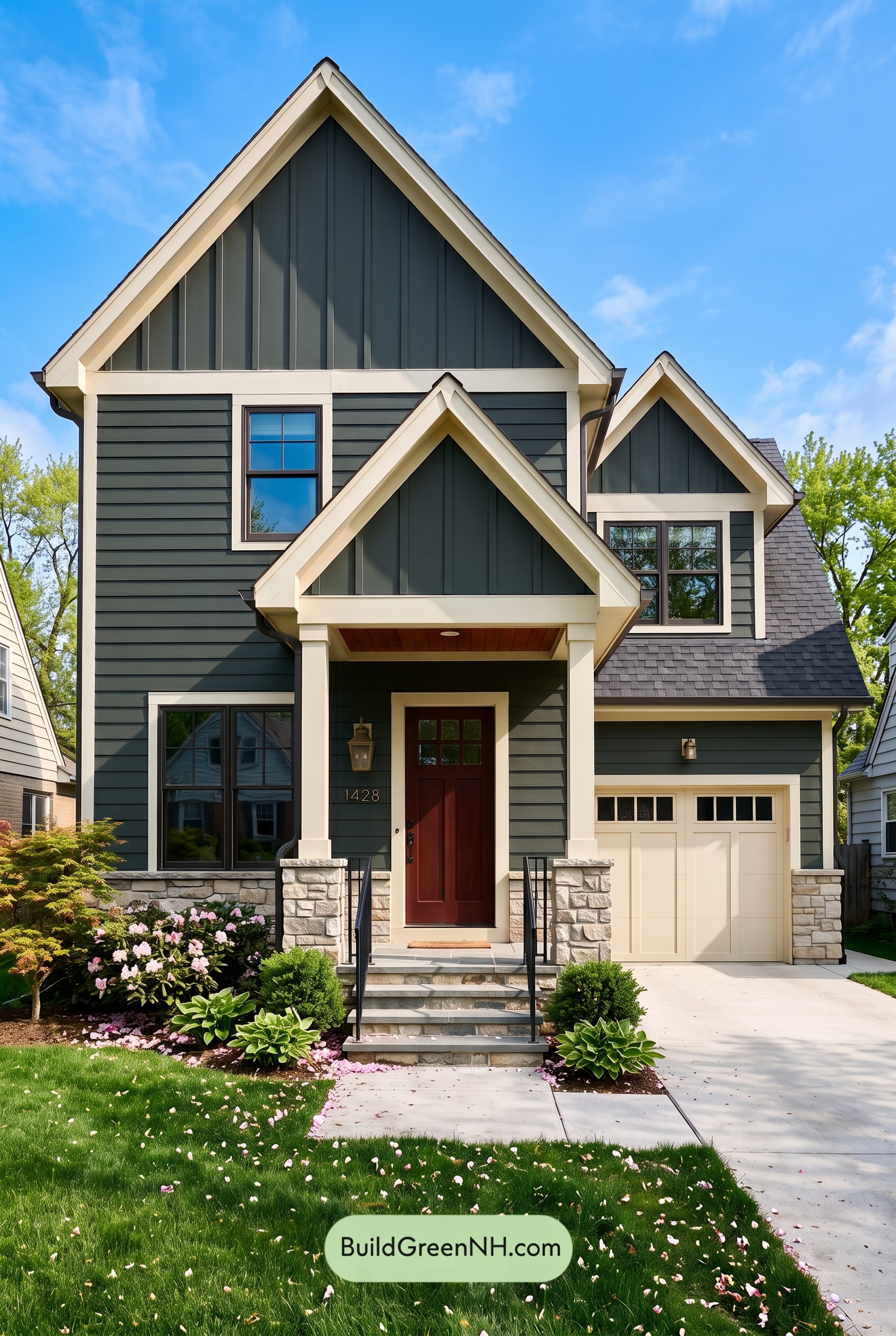 Exterior Color Scheme with Stone Accents: Pine Brass Threshold
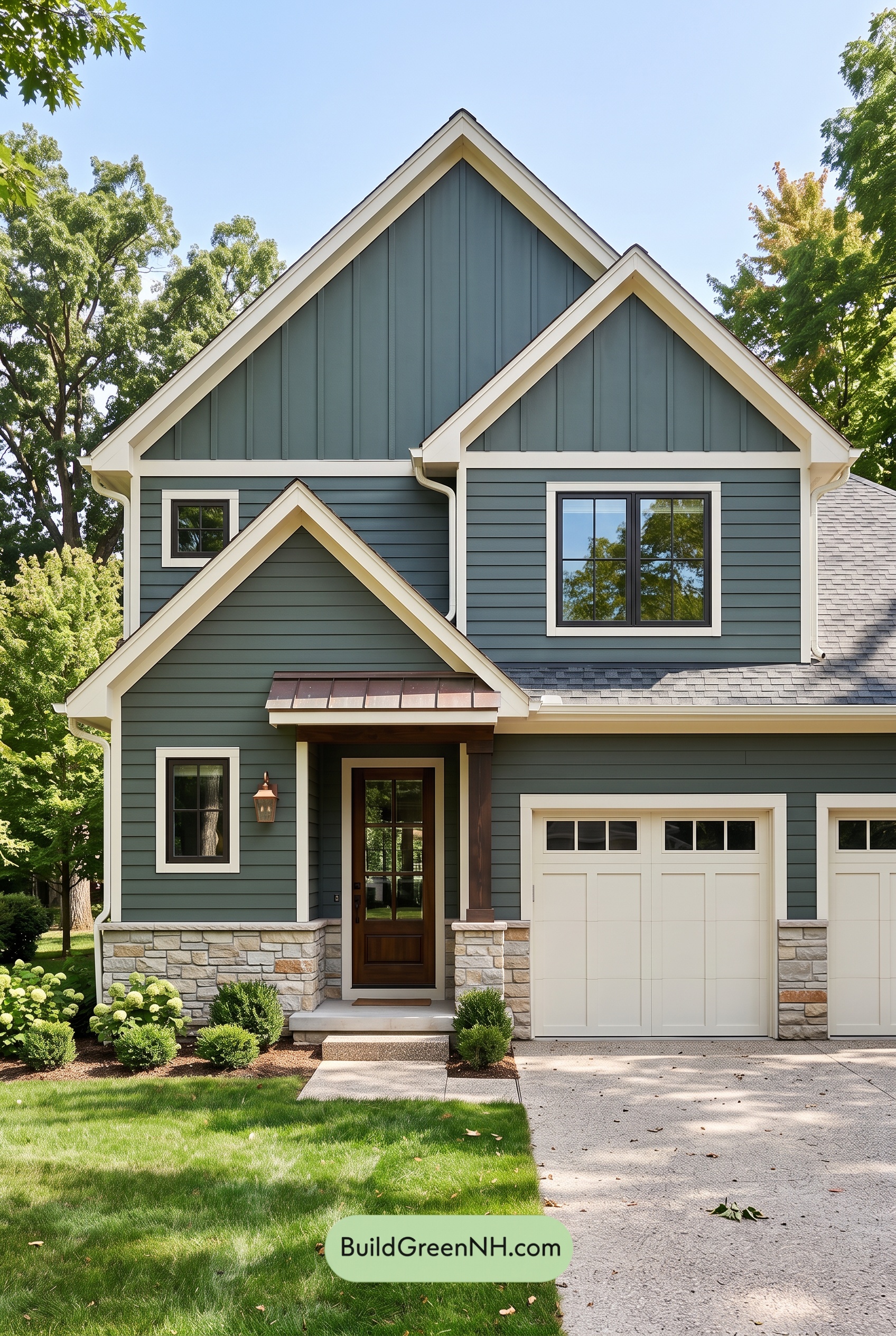 Exterior Color Scheme with Stone Accents: Evergreen Copper Welcome
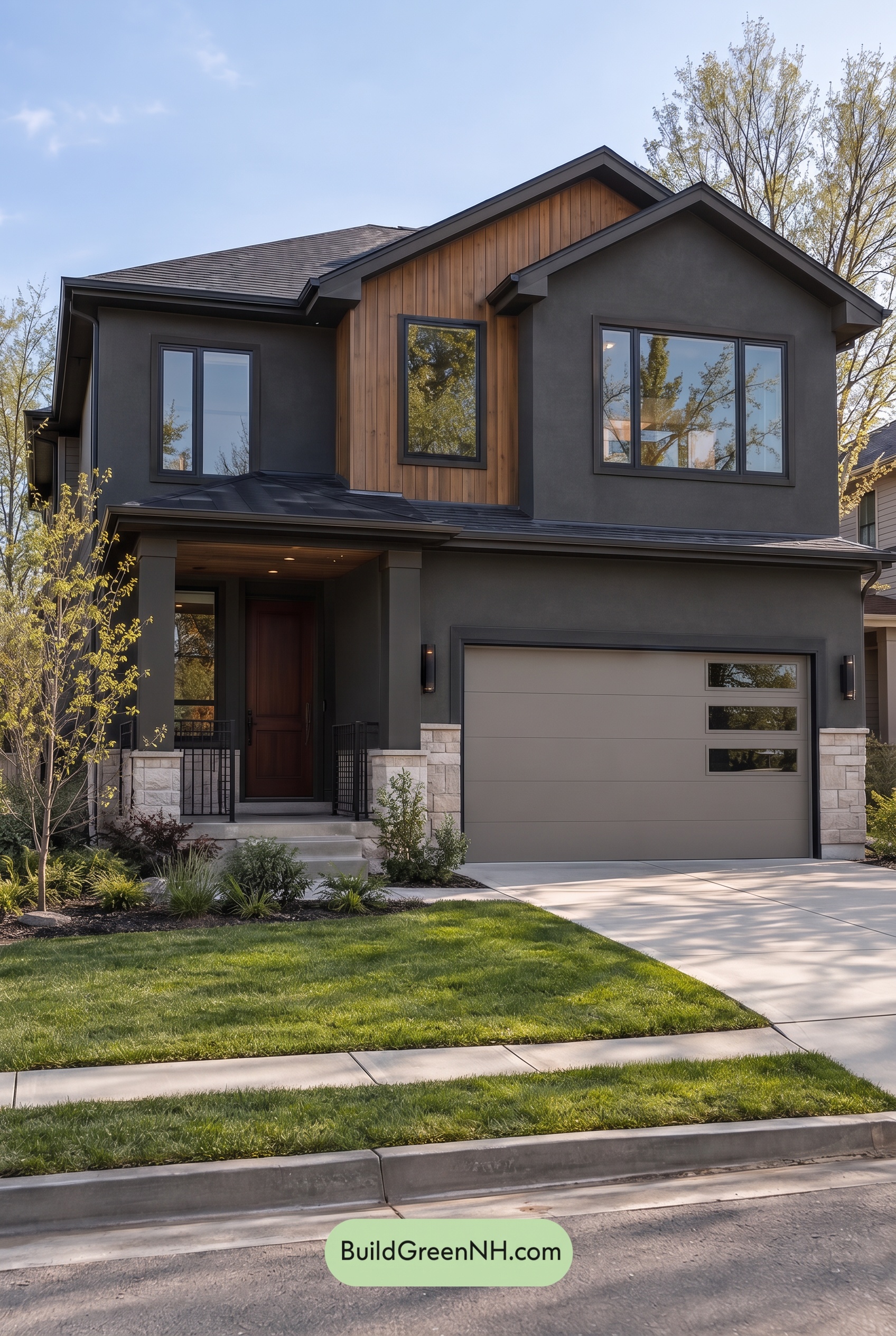 Dark Stucco House Exterior Color Scheme: Cedar Ember Calm
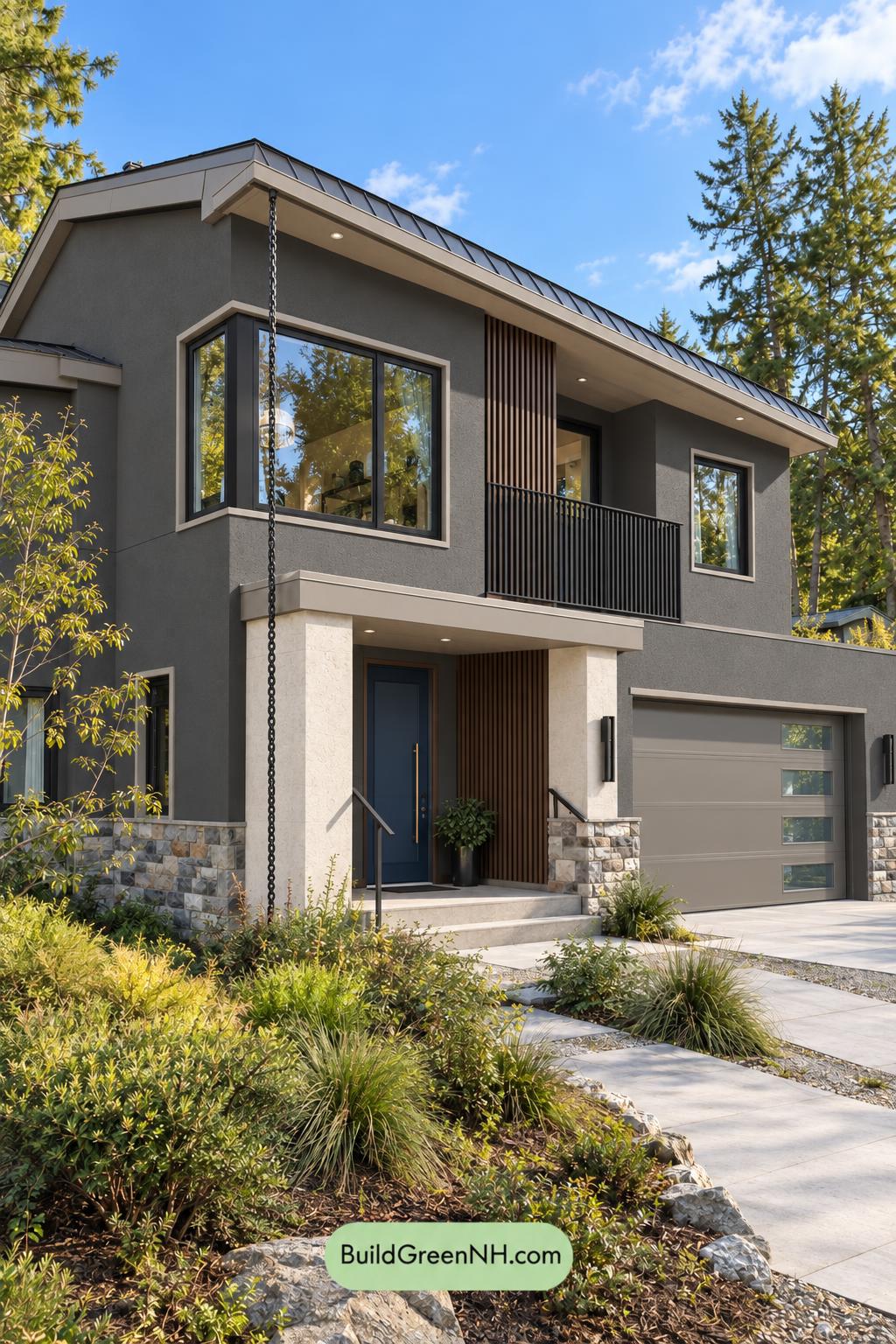 Dark Stucco House Exterior Color Scheme: Silver Pine Shelter
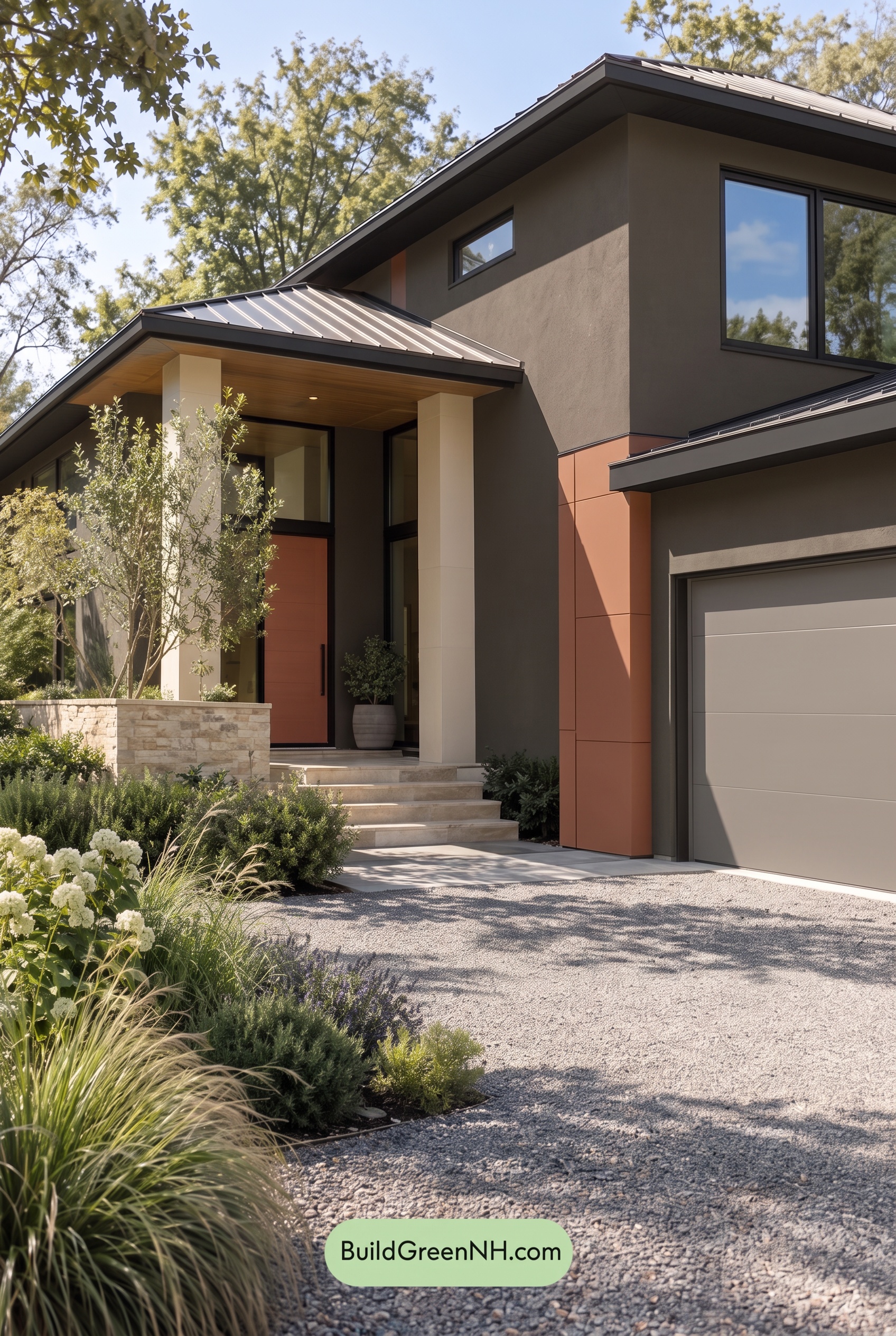 Dark Stucco House Exterior Color Scheme: Copper Orchard House
Table of Contents