Last updated on
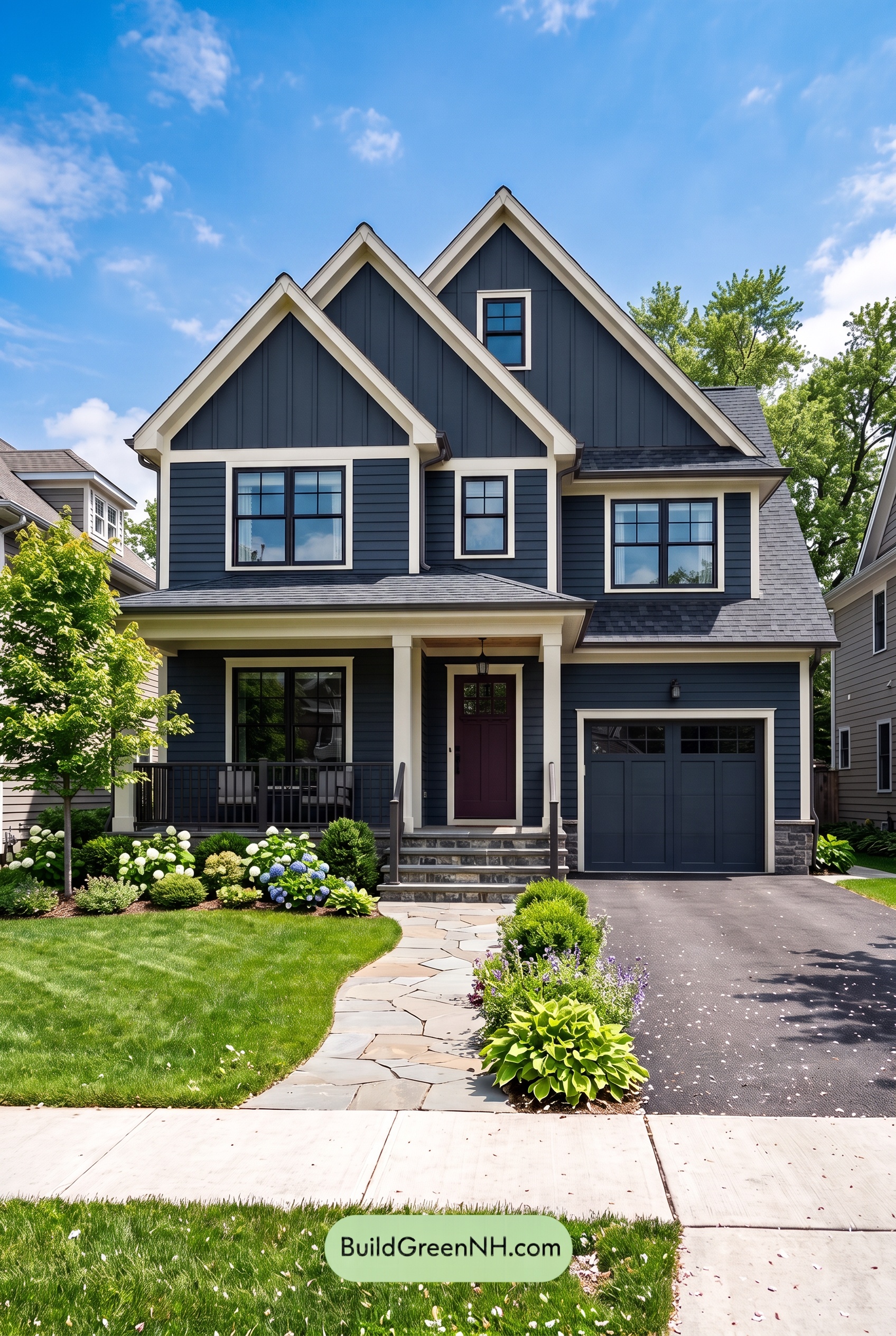

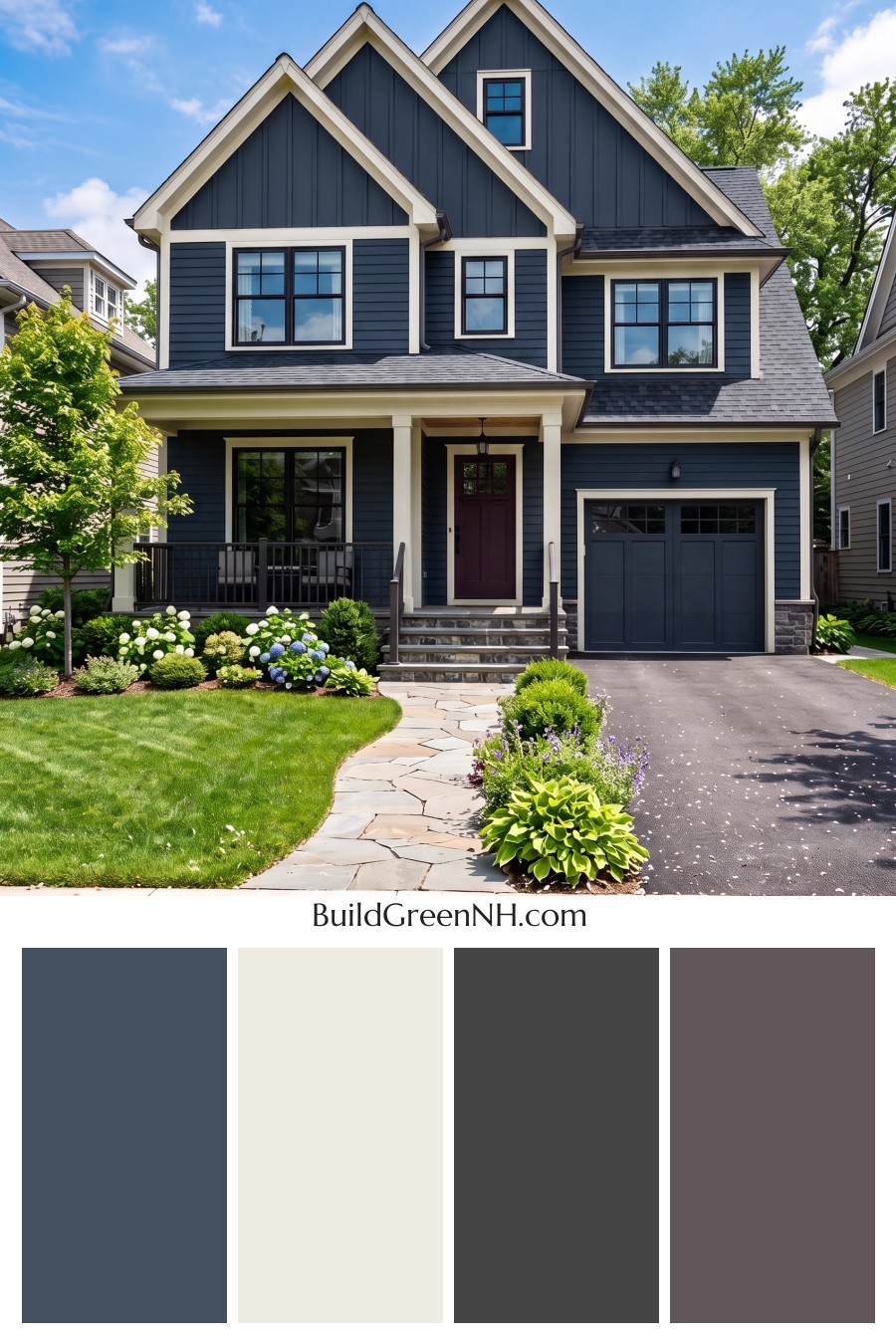
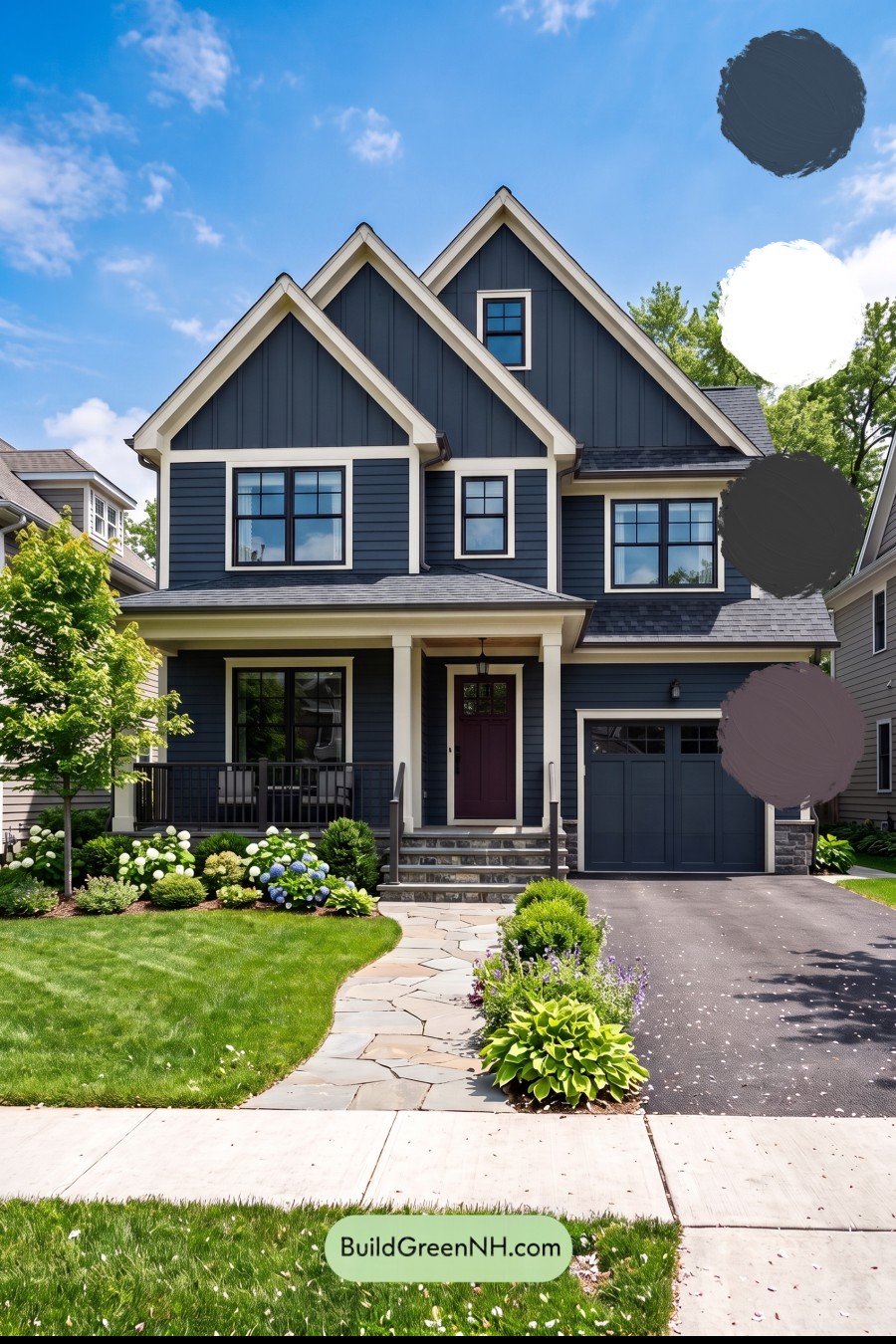
This rich blue, crisp white, and layered dark-neutral palette gives the home a polished presence that feels both timeless and boldly welcoming.
A Strong Blue Foundation
The exterior siding is finished in a deep, slate-leaning blue that brings instant character to the home’s tall gables and broad facade. This saturated cool shade feels refined rather than overly formal, giving the traditional architecture a clean, updated edge. Its depth also creates beautiful contrast with the bright landscaping and makes the home stand out in every season.
The garage door carries the same blue family forward, helping the large lower-level feature blend smoothly into the overall design. Instead of interrupting the facade, it reads as an intentional extension of the siding and keeps the color story cohesive.
Bright Trim Defines Every Detail
A soft, warm white trim outlines the windows, rooflines, gables, and porch structure with precision. Against the dark blue siding, this light shade gives every architectural layer a sharp, tailored profile. The dramatic gable peaks become especially eye-catching, while the window surrounds gain a classic, balanced appearance.
The white porch columns add a sense of openness at the entry. They brighten the covered area and create a graceful transition between the substantial blue facade and the darker accents below.
Dark Neutrals Add Dimension
Deep charcoal-gray window frames bring definition to the broad panes of glass without competing with the siding. Their near-black appearance ties naturally into the dark gray roof, gutters, railings, and stone foundation details. This repeated use of dark neutrals grounds the house and gives the layered exterior a unified, architectural feel.
The roof’s medium-to-deep gray shade is particularly effective with the blue siding. It is dark enough to feel substantial, yet it avoids flattening the home into a single dark mass. Together, the roof and framing create a calm, sophisticated backdrop for the lighter trim.
A Welcoming Accent at the Entry
The front door introduces a deep wine-toned accent that brings warmth to this cool-leaning exterior scheme. Framed in white and surrounded by the navy-inspired siding, the dark reddish-purple shade becomes a natural focal point. It adds a little personality at the entrance while maintaining the home’s polished, upscale mood.
Overall, this exterior balances cool blues, warm whites, dark grays, and one inviting jewel-toned accent with impressive ease. The result is a home that feels crisp in daylight, rich in shadow, and welcoming from the curb all year long.
Next, see how this color scheme looks under different lighting simulations throughout the day.
Overcast
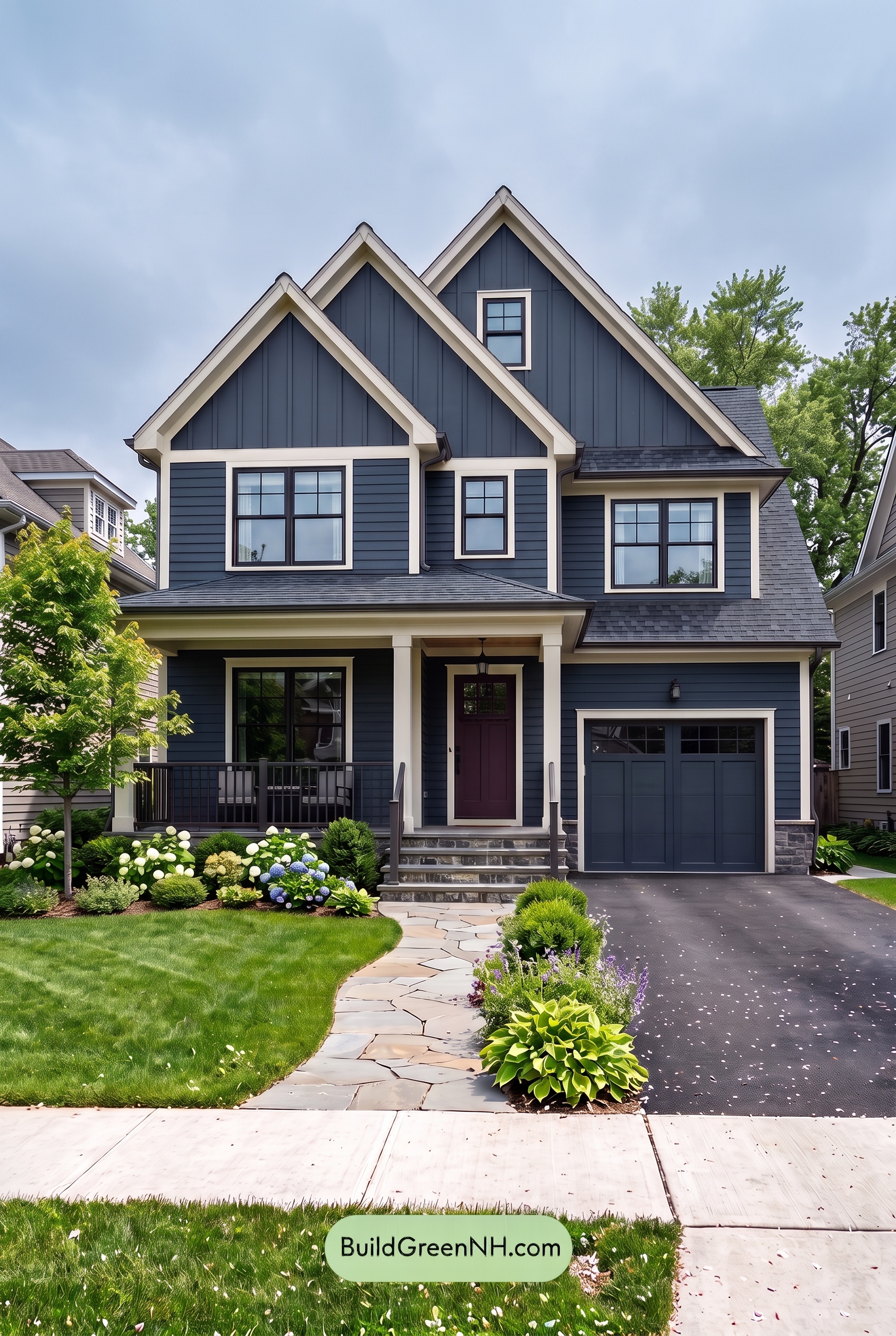
Under overcast skies, the blue siding reads deeper and slightly grayer than it does in neutral daylight, with its saturation appearing more reserved and refined. The white trim and columns lose some bright crispness, settling into a softer, quieter contrast against the darker blue surfaces.
With direct sun removed, shadows around the gables, porch, and window details become gentler and more even. The gray accents take on a cooler, more cohesive character, while the overall exterior feels calm, polished, and subtly moody rather than sharply defined.
Golden Hour
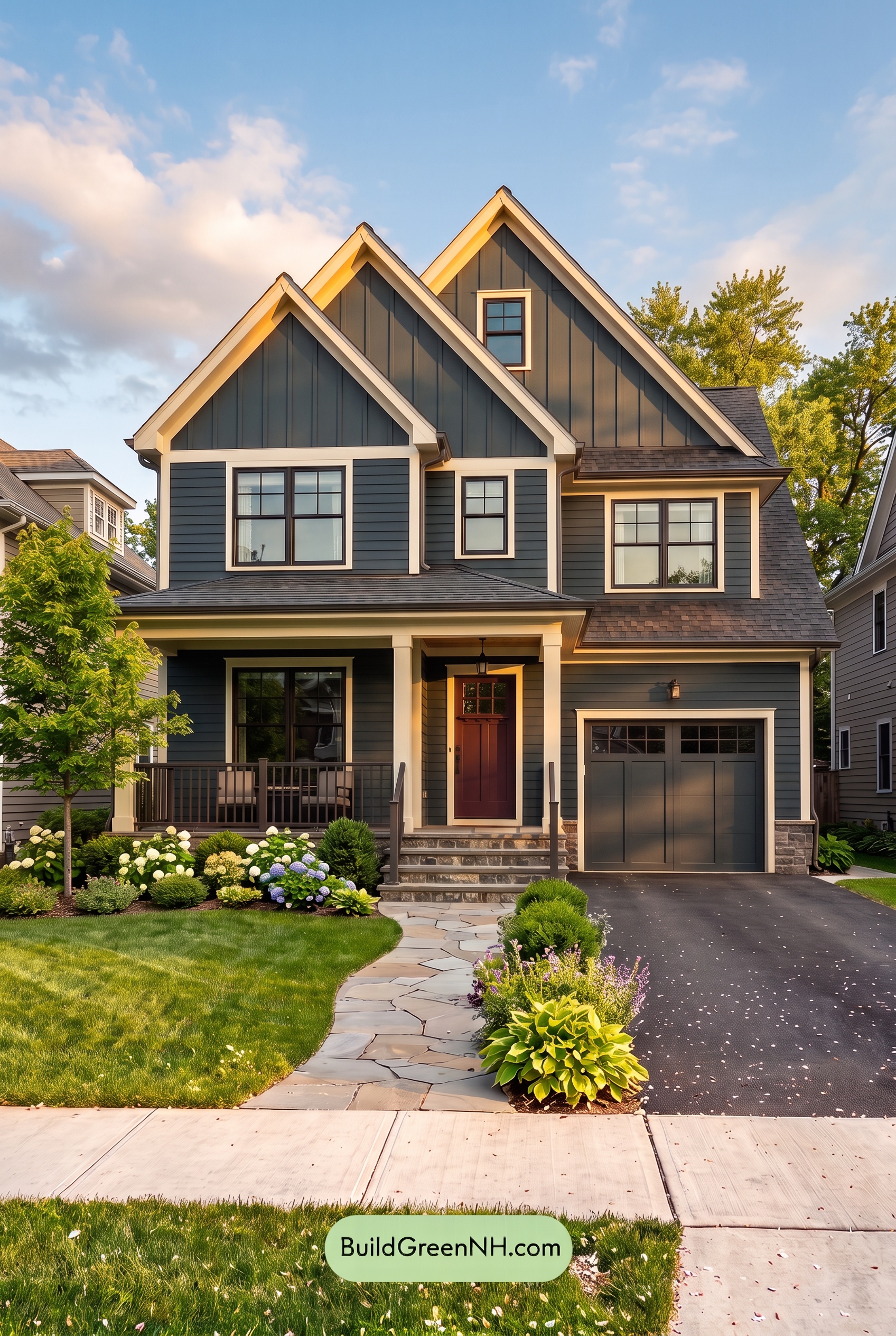
Under Golden Hour, the blue exterior takes on a softer, slightly smokier depth than it shows in neutral daylight, while its shaded planes become richer and more dramatic. The low, warm light heightens the contrast between sunlit siding and the darker recesses beneath the gables, giving the facade added dimension without making the blue feel overly saturated.
The white trim and columns shift from crisp and bright to creamy and gently luminous, catching the warm glow along rooflines and porch details. Gray window frames, railings, and the garage door appear deeper in shadow, creating a tailored outline around the warmer highlights and lending the whole home a welcoming, calm evening mood.
Shade
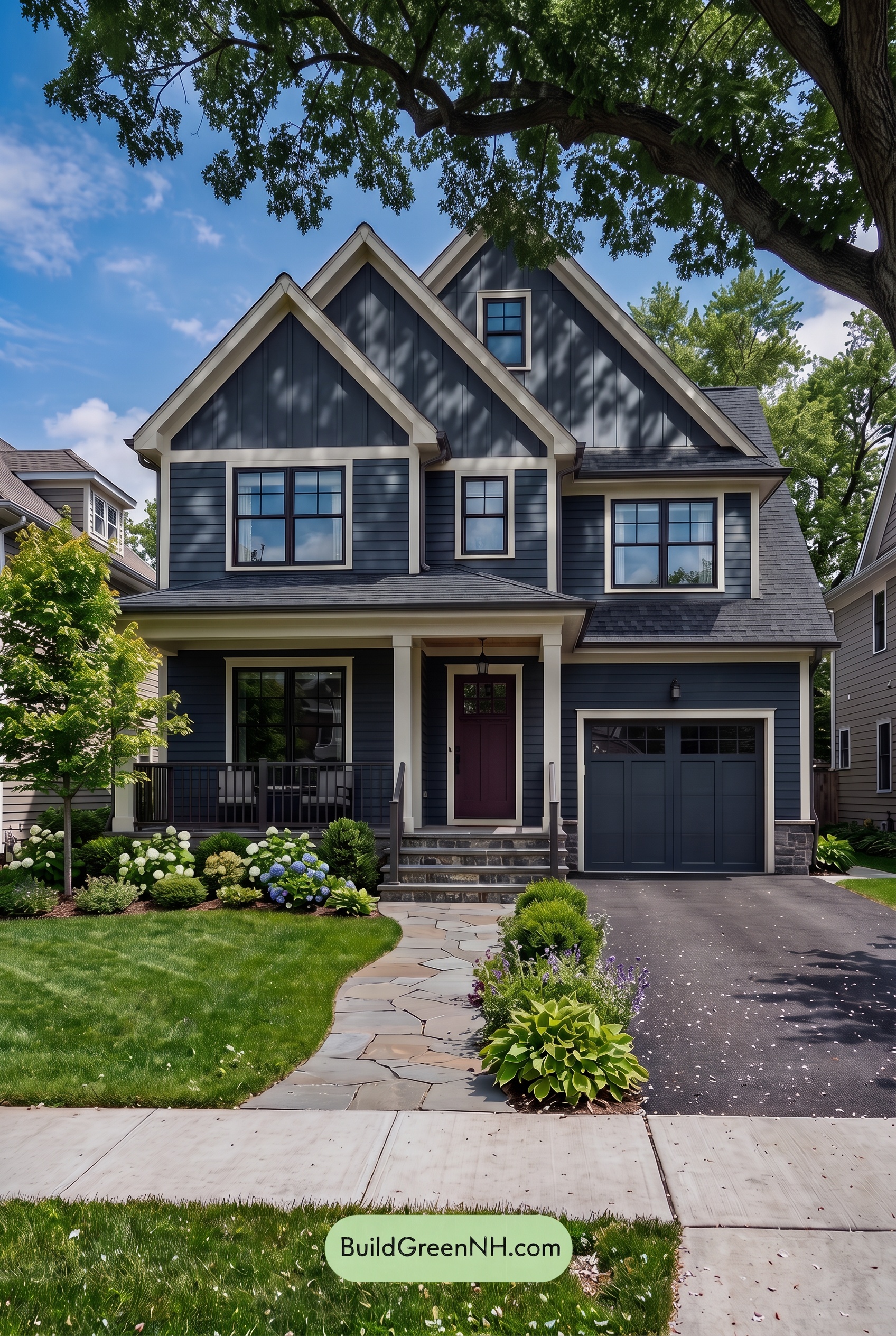
In shade, the deep blue siding takes on a quieter, more muted character than it has in neutral daylight, with its cool undertones becoming more pronounced and its saturation appearing slightly softened. Dappled shadows from the trees add depth across the facade, making the blue surfaces feel layered and atmospheric rather than flat.
The light trim and columns lose a little brightness in the lower light, shifting toward a softer warm-neutral impression that tempers the crisp contrast seen in open daylight. Meanwhile, the gray window frames, railings, and entry details recede into the shadows, creating a calm, tailored mood where the pale accents still define the architecture without feeling overly sharp.
Nighttime
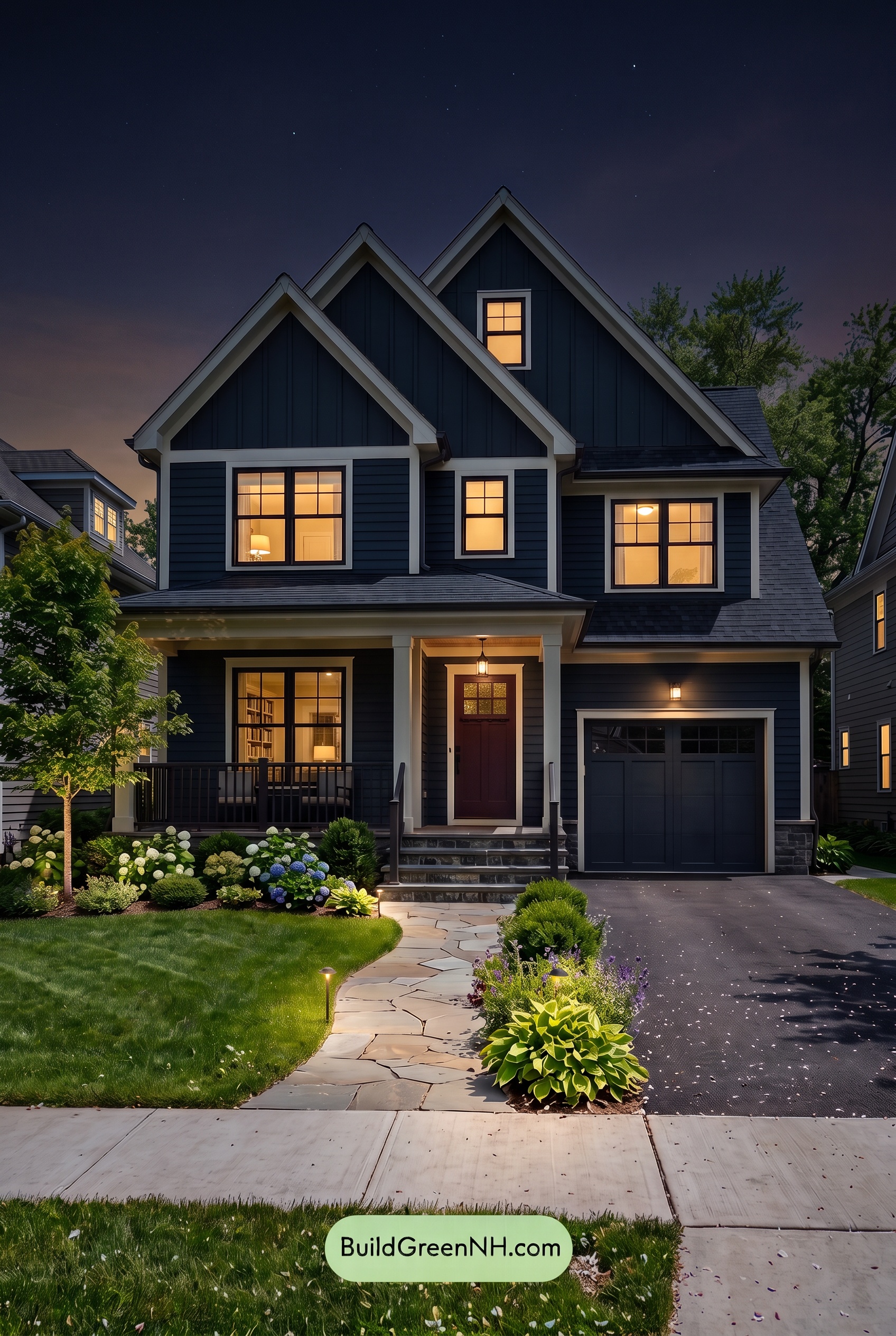
At nighttime, the blue exterior deepens toward a near-ink shade, with its daytime saturation appearing quieter and more refined. Shadows settle into the siding and rooflines, emphasizing the home’s vertical details and giving the darker blue surfaces a dramatic, tailored presence.
Warm interior and porch lighting softens the white trim and columns into a creamy glow, while the gray frames, railings, and entry details recede into elegant shadow. The resulting contrast between cool, dark blue planes and warm illuminated areas creates an inviting, quietly sophisticated mood that feels more intimate than the same palette in neutral daylight.
Pin these for later:
Want More?
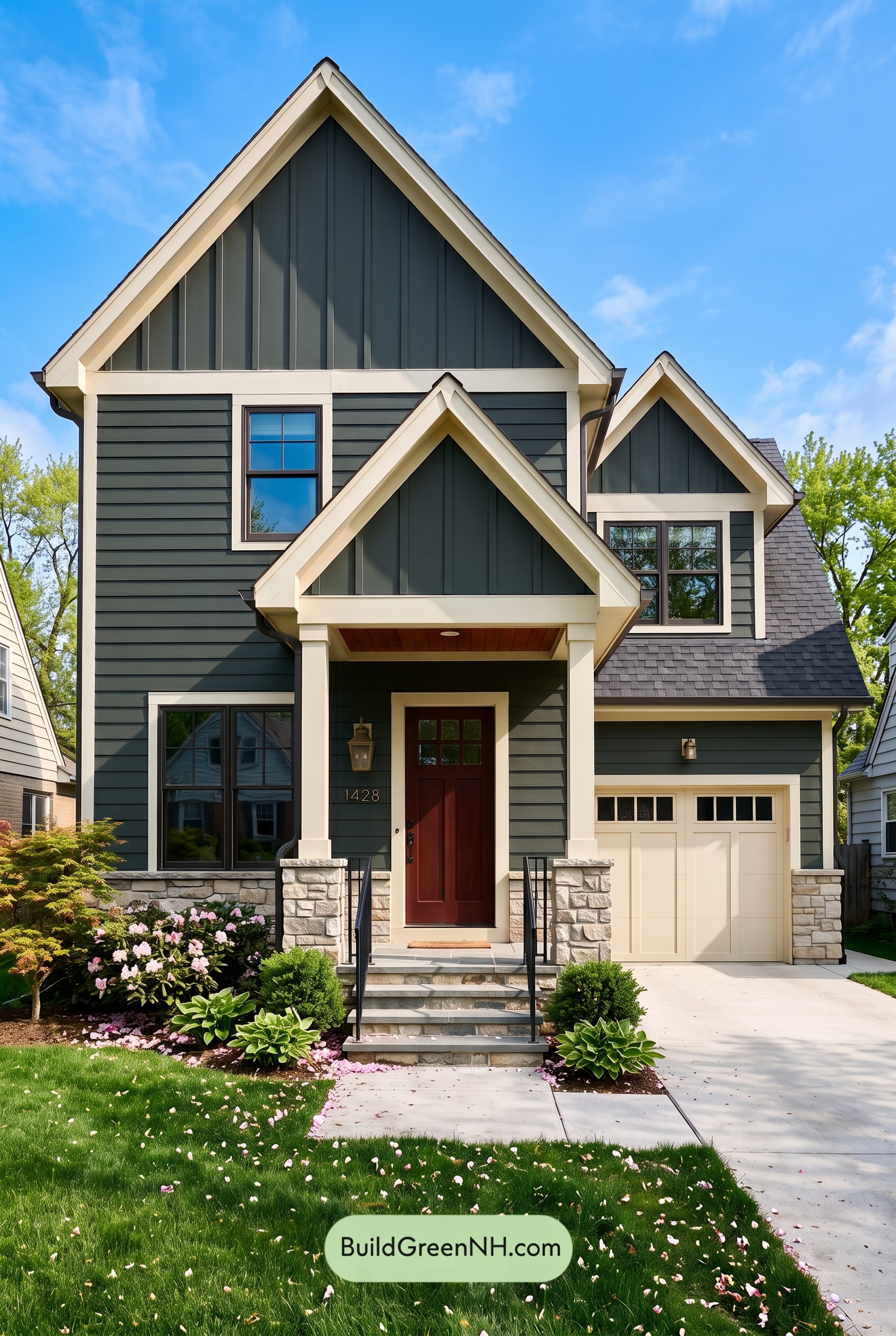 Exterior Color Scheme with Stone Accents: Pine Brass Threshold
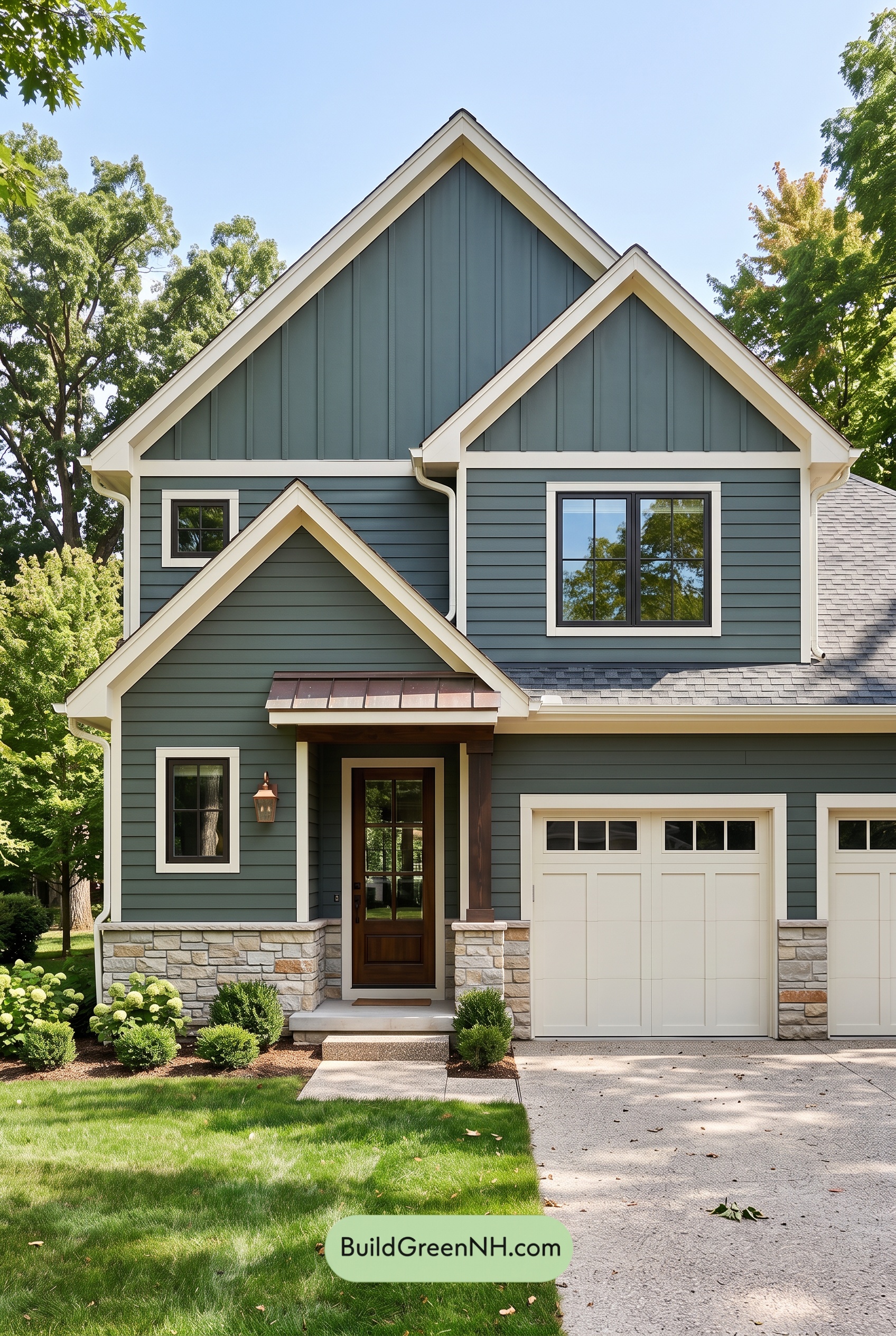 Exterior Color Scheme with Stone Accents: Evergreen Copper Welcome
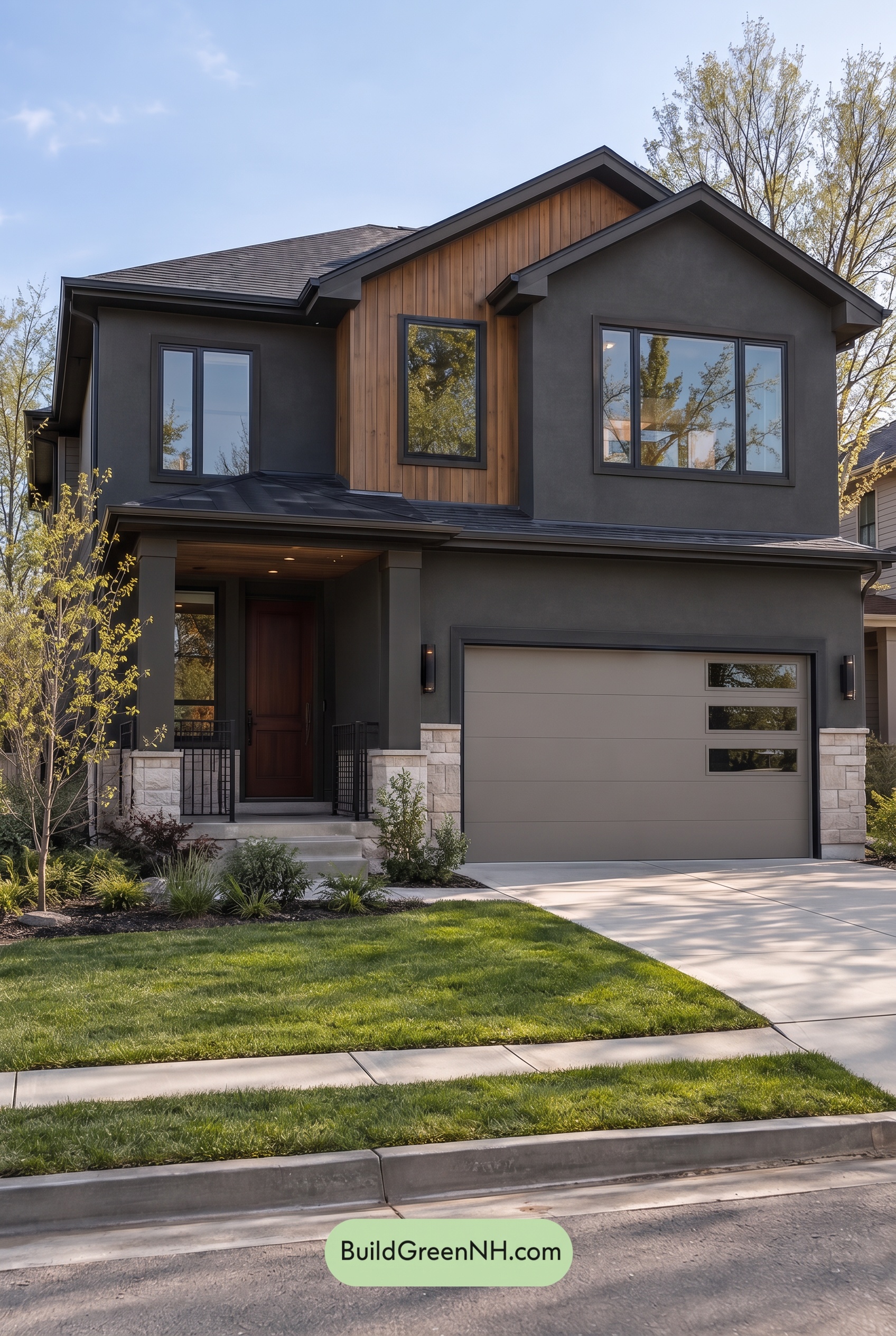 Dark Stucco House Exterior Color Scheme: Cedar Ember Calm
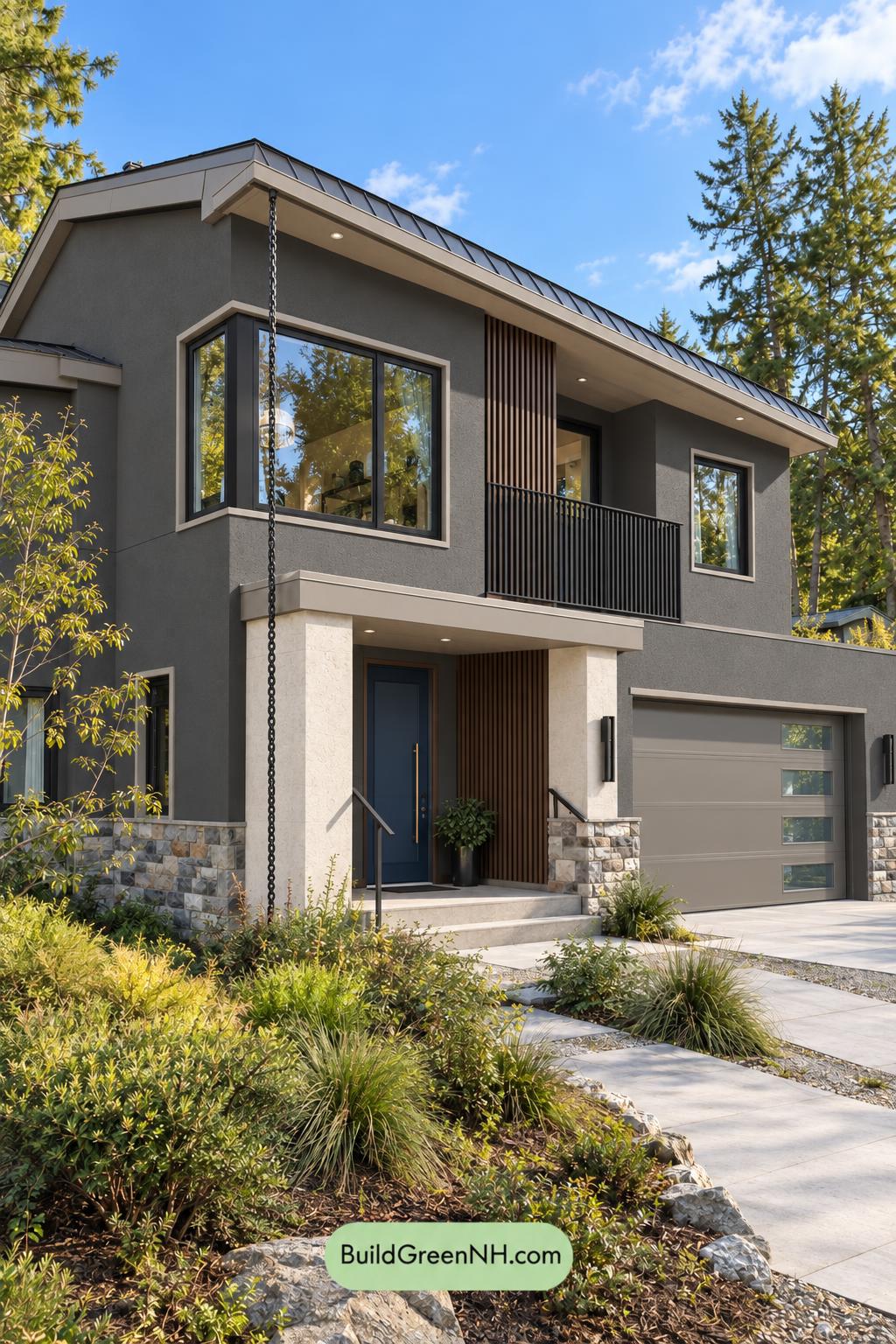 Dark Stucco House Exterior Color Scheme: Silver Pine Shelter
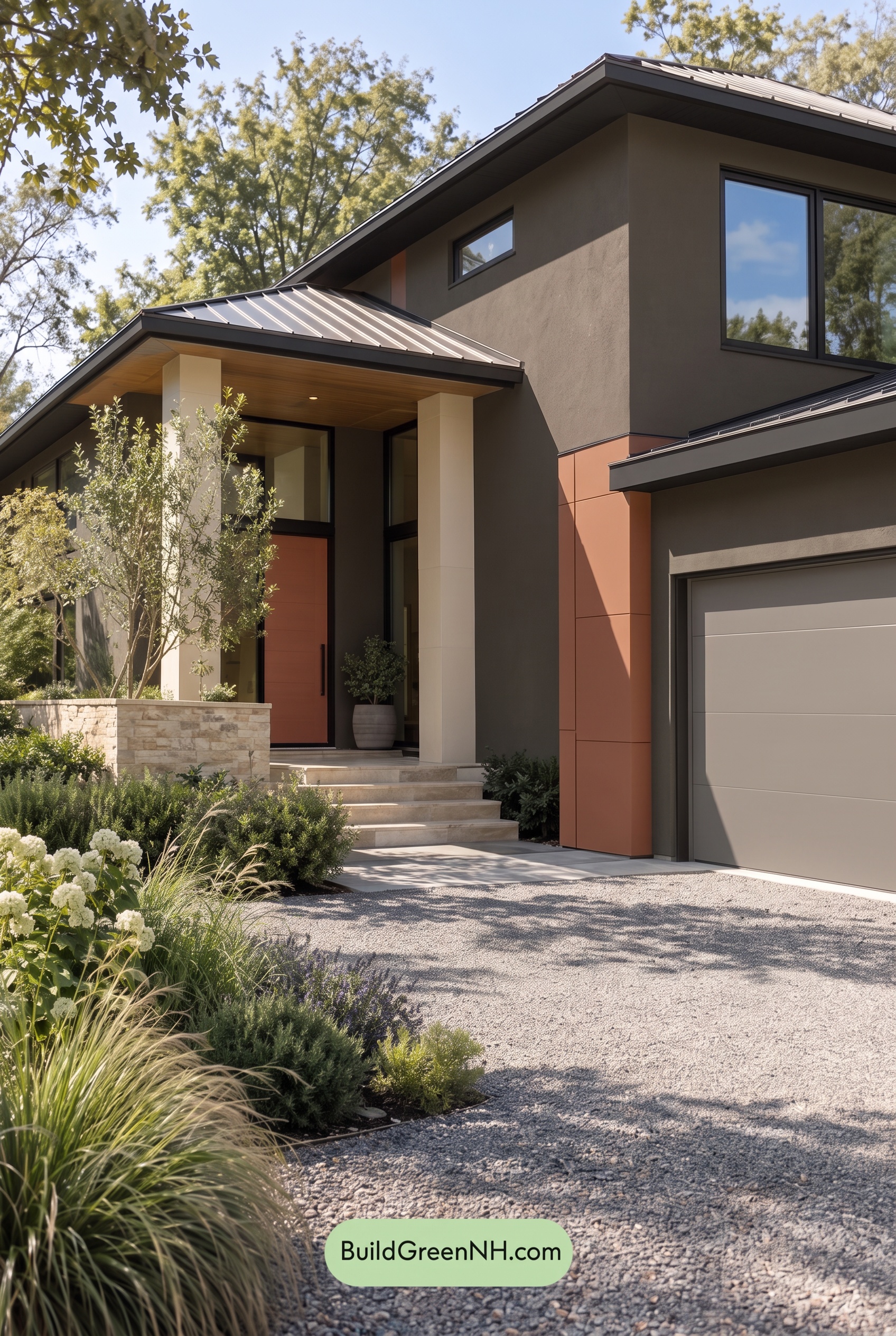 Dark Stucco House Exterior Color Scheme: Copper Orchard House
Table of Contents