Last updated on
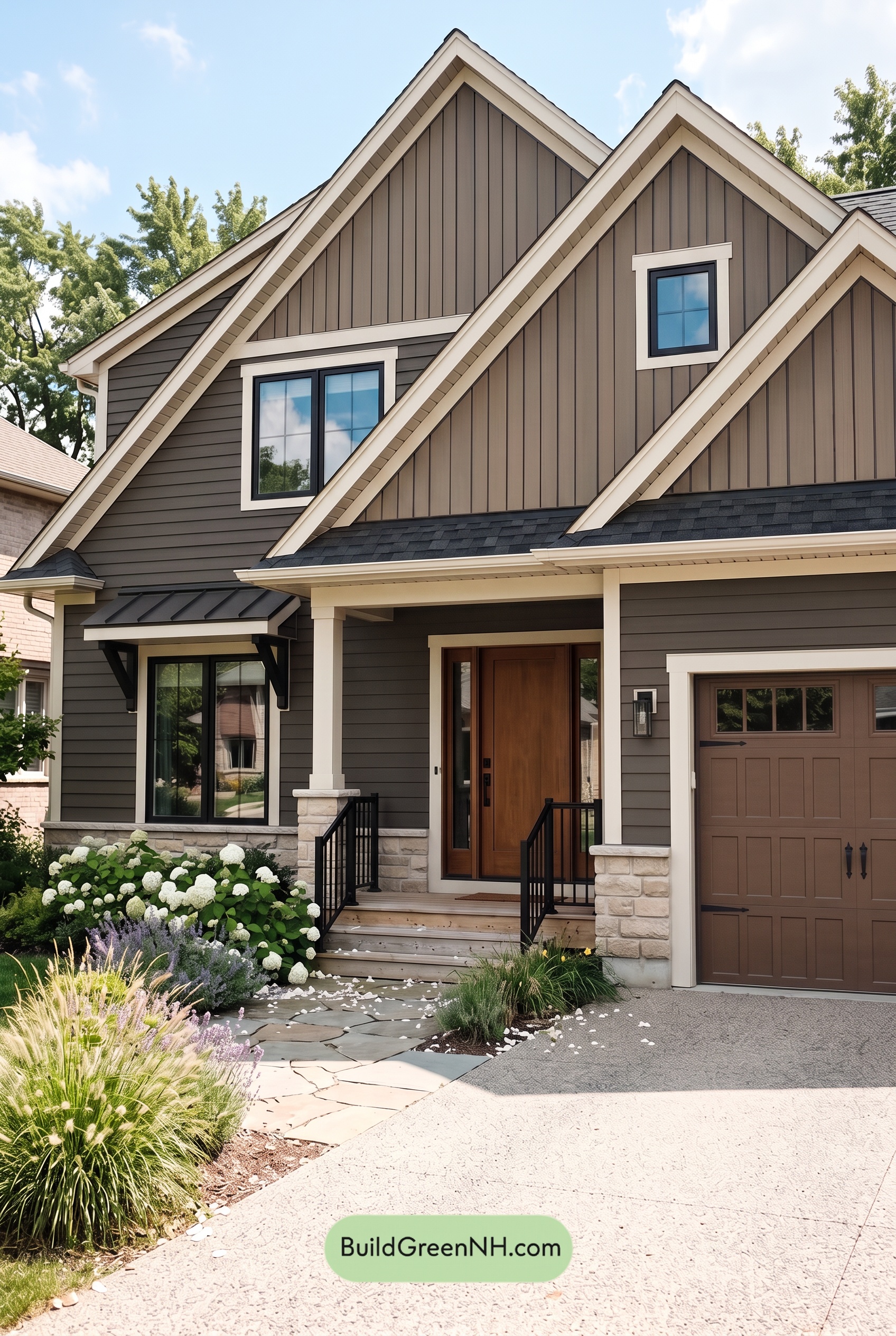

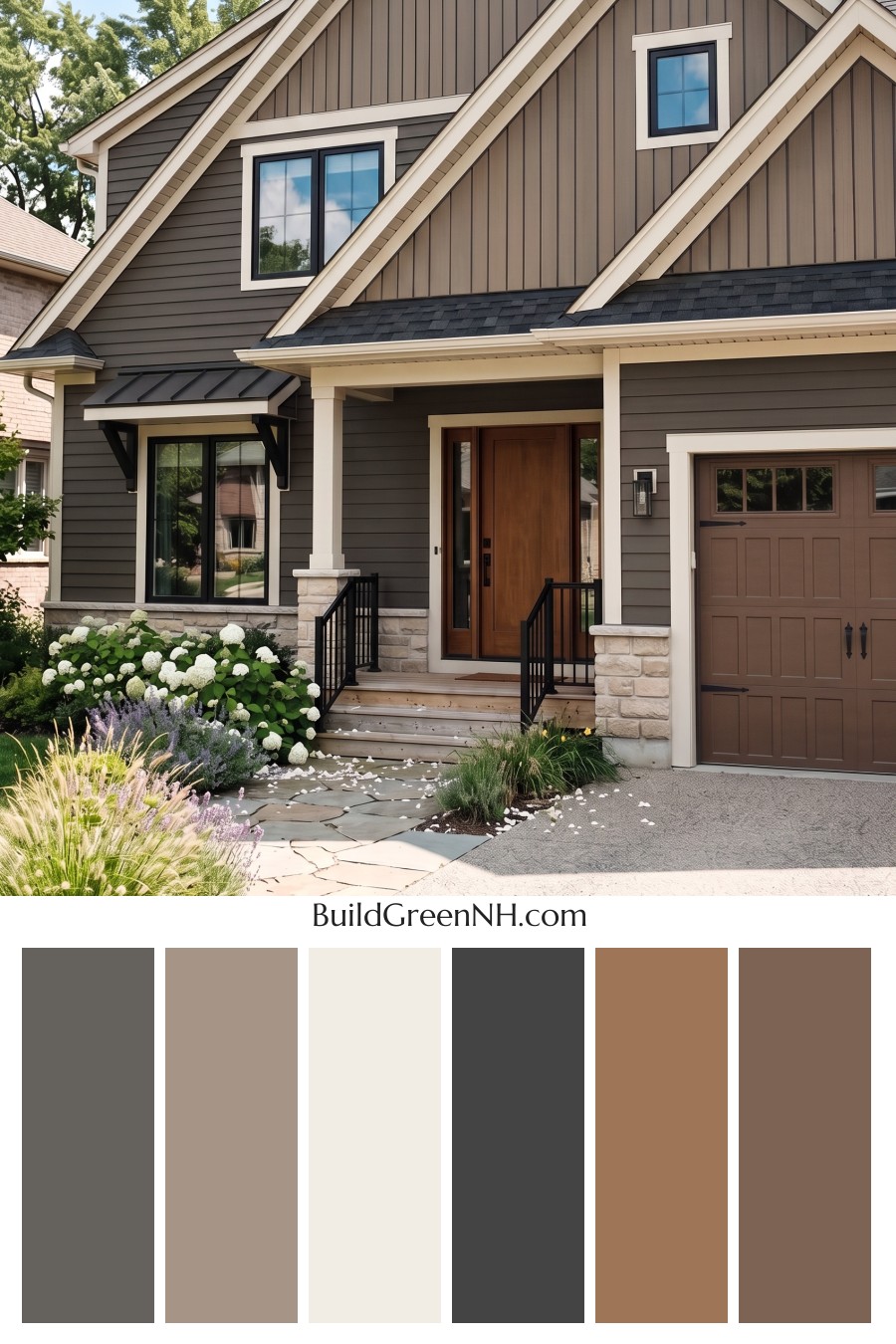
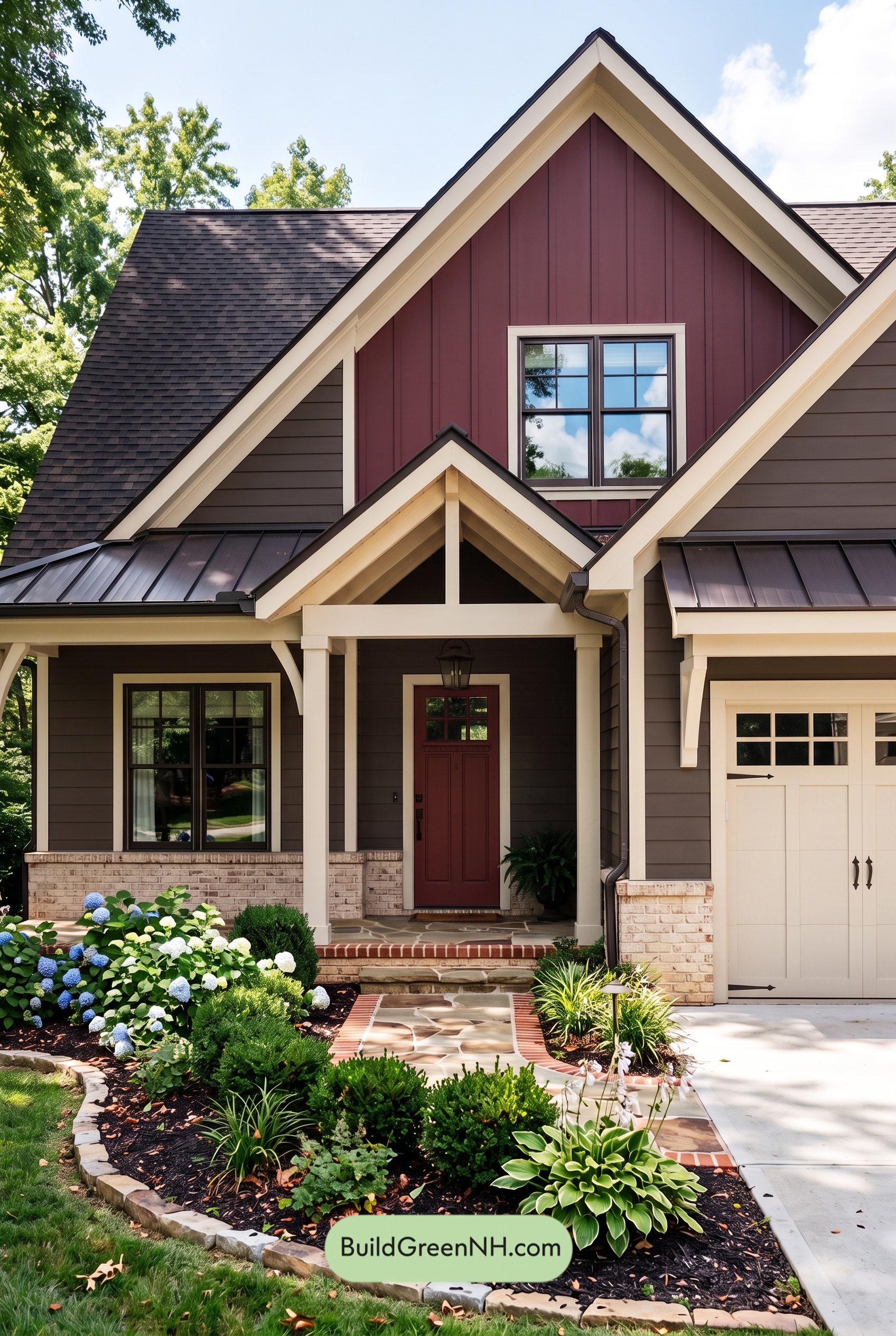
This layered blend of warm grays, soft beige tones, and rich brown accents gives the home a polished look that feels both welcoming and timeless.
A Grounded Gray Foundation
The main siding wears a deep, warm gray that gives the exterior a confident, tailored base. Rather than feeling flat or severe, this gray has enough softness to complement the home’s traditional details and varied rooflines. It also creates a beautiful backdrop for the landscaping, allowing greenery and pale blooms to stand out naturally.
Dark gray window frames and railings sharpen the overall composition. These deeper accents add definition around the glass and porch, echoing the dark gray roof for a cohesive, well-anchored appearance. The result is crisp but not overly formal.
Soft Beige for Contrast and Light
A warm beige shade appears across the upper gables, bringing subtle variation to the façade. The vertical siding in these prominent sections catches the light differently than the horizontal gray siding below, so the tonal shift adds depth without making the exterior feel busy.
The creamy beige trim is especially effective around the windows, eaves, gables, and porch columns. It outlines the architecture with a clean, bright edge and keeps the dark siding from overwhelming the home. This light trim also highlights the dramatic roof peaks, making the exterior feel airy despite its strong contrast.
Brown Accents That Invite You In
The front door introduces a rich medium brown that immediately warms the entry. Its natural, wood-inspired depth softens the gray-and-beige palette and gives the porch a focal point that feels inviting from the curb.
The garage door repeats that brown family in a more muted shade, tying this large functional surface back to the entry without competing with it. Together, these brown accents bring an organic, comfortable quality to the scheme and balance the cooler influence of the gray siding and roof.
A Refined, Welcoming Mood
This exterior succeeds because every color has a clear role: warm gray grounds the home, beige brightens and frames it, dark gray creates definition, and brown adds warmth at the most welcoming points. The palette feels classic enough for the architecture, yet the contrast gives it a fresh, current presence.
It is a thoughtful combination for a home that wants to look substantial, approachable, and beautifully composed in every season.
Next, see how this color scheme looks under different lighting simulations throughout the day.
Overcast
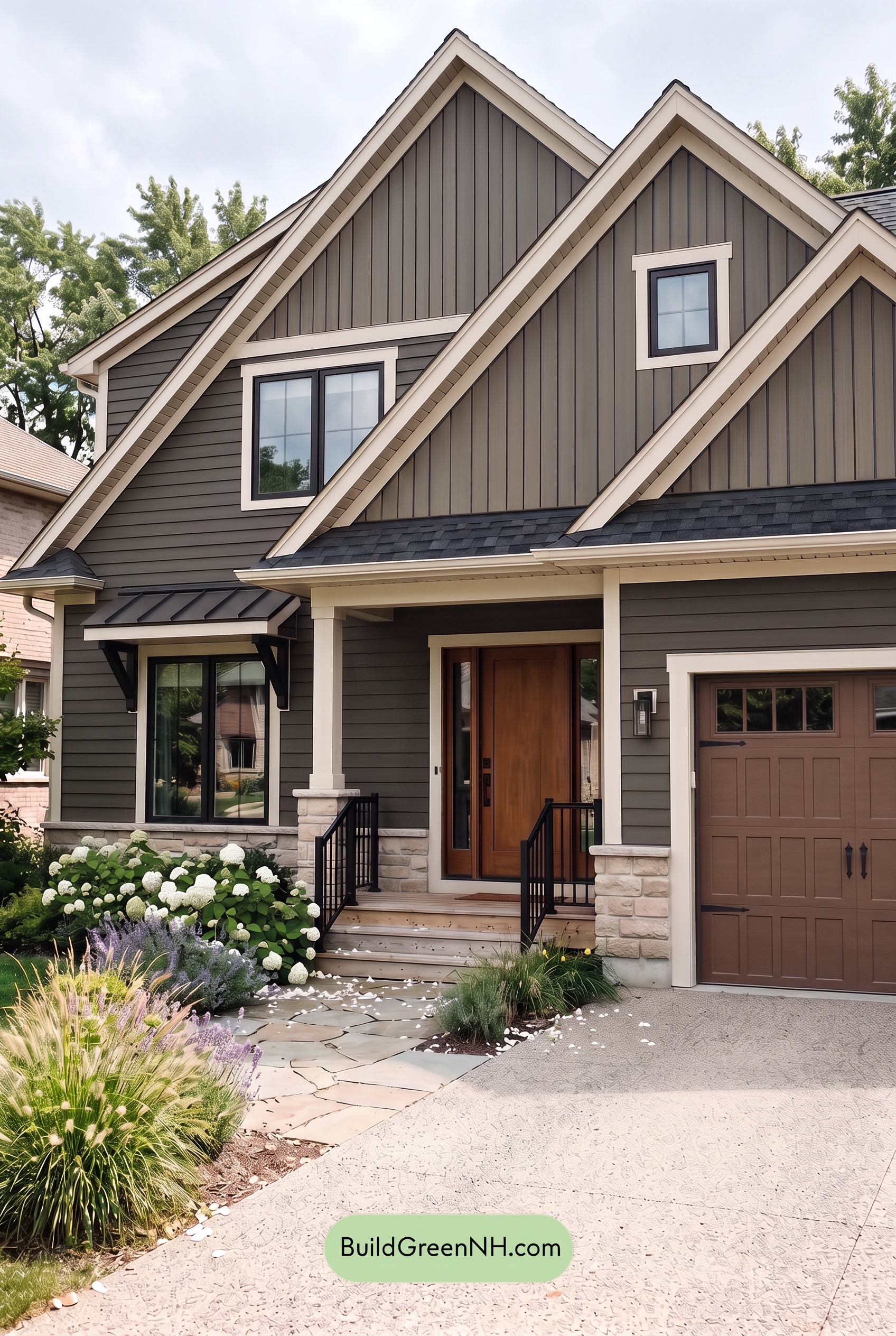
Under overcast skies, the gray siding reads deeper and more even than it does in neutral daylight, with its saturation appearing slightly muted and its undertones less influenced by direct sun. The beige upper details and trim lose some of their sunny warmth, settling into softer, quieter neutrals that create a more relaxed transition against the darker gray.
Because cloud cover diffuses the light, strong shadows beneath the gables, porch, and rooflines become gentler, reducing sharp contrast while preserving the home’s layered architecture. The brown entry and garage areas appear richer and more grounded, while the dark gray frames and railings feel less stark. Overall, the palette takes on a calm, polished mood—subtle, cohesive, and inviting rather than crisp and sunlit.
Golden Hour
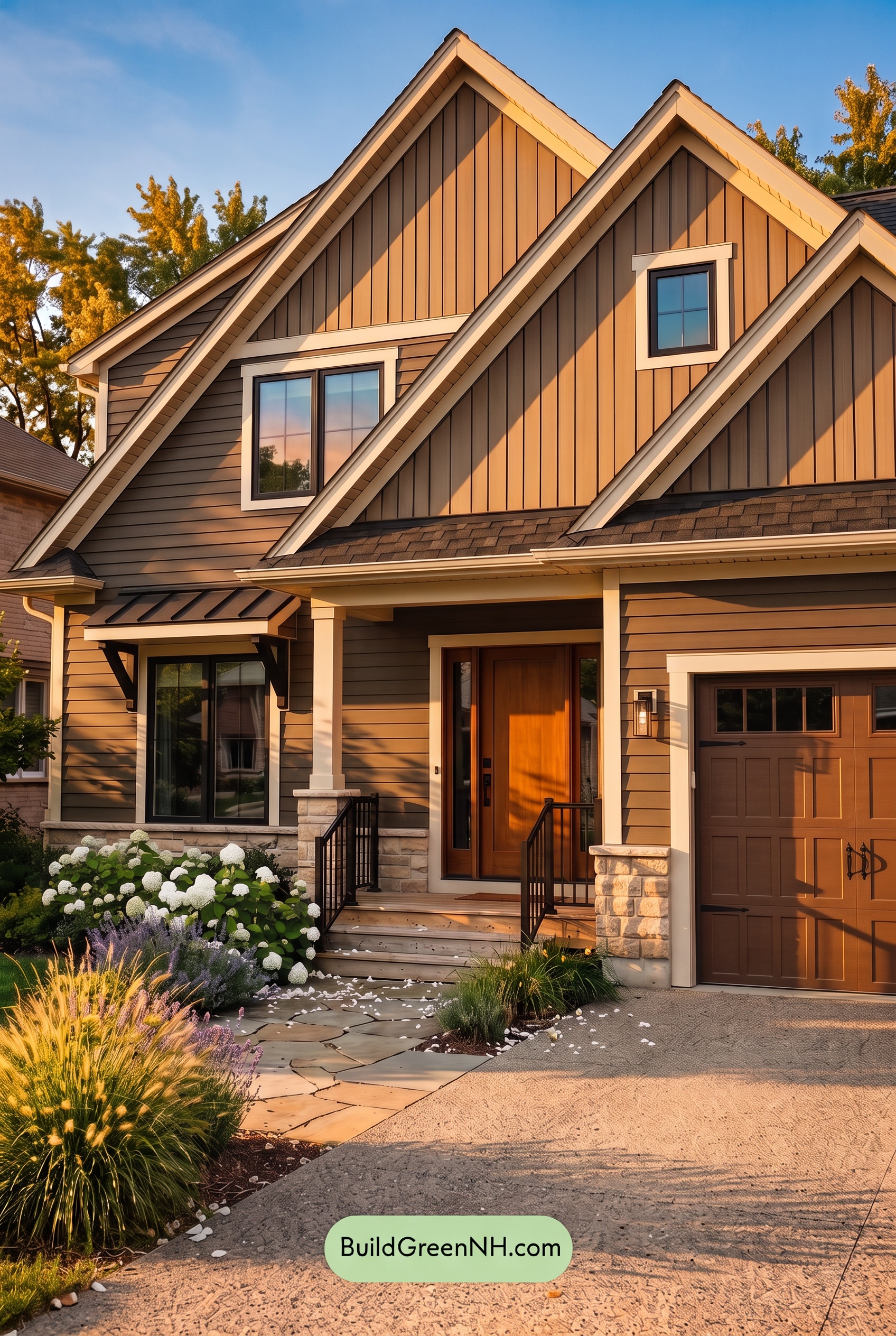
Golden Hour lends the exterior a rich, welcoming glow that neutral daylight does not. The gray siding takes on a softer, warmer cast, while the beige upper walls, trim, and columns appear more luminous and gently saturated. Brown elements deepen into a more inviting, wood-like presence, giving the entry and garage area extra visual warmth.
Low-angle light also lengthens shadows across the siding and gables, sharpening the contrast between sunlit planes and recessed details. Dark gray frames and railings read deeper against the glowing neutrals, adding definition without disrupting the relaxed, cozy mood. The overall palette feels more layered, dimensional, and warmly composed than it does under even daylight.
Shade
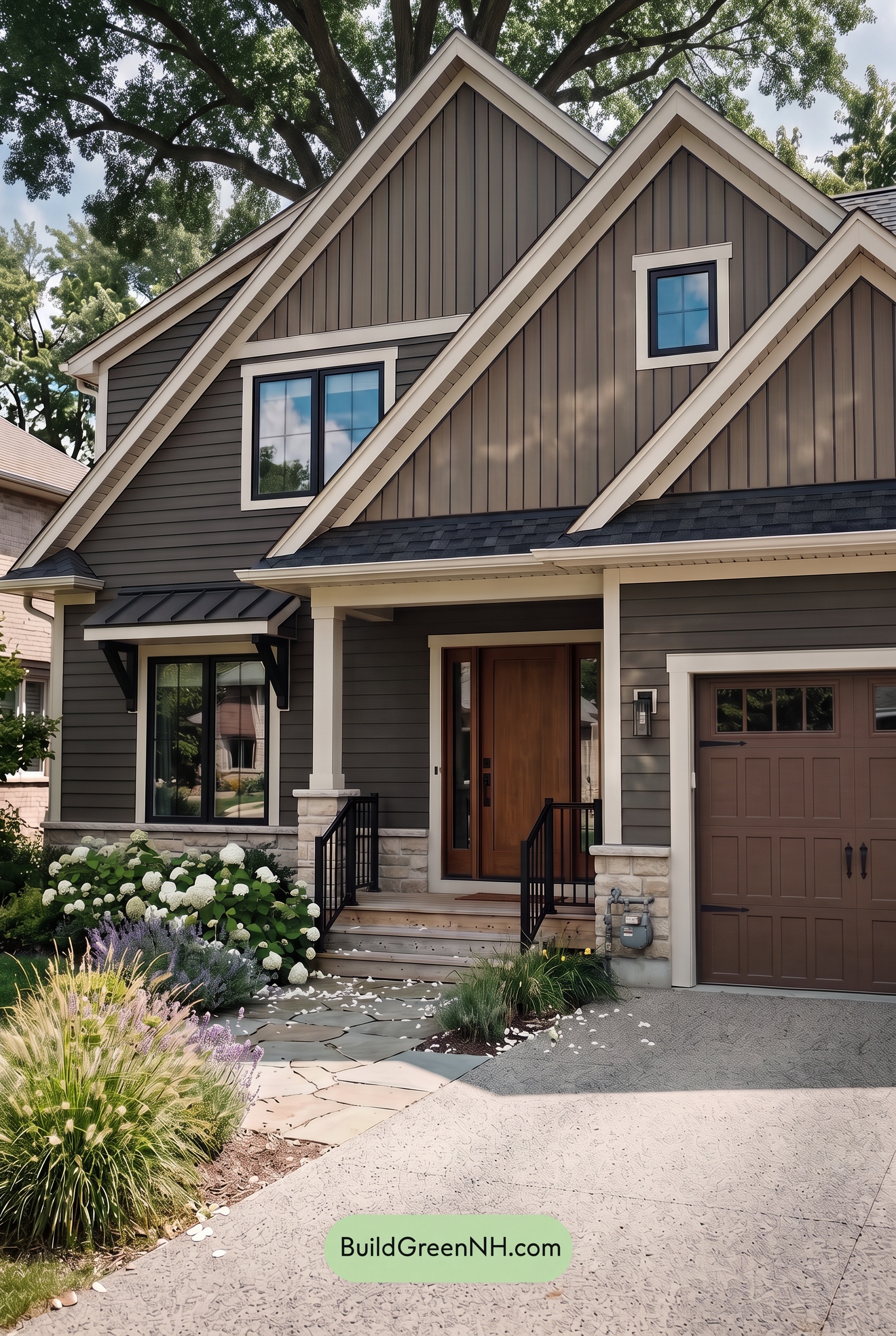
Under shade, the gray siding reads deeper and more muted than it would in neutral daylight, giving the façade a grounded, tailored presence. The beige trim and upper accents appear softer and slightly less warm, while their lighter value still creates crisp definition around the rooflines and windows.
Dappled shadows heighten the contrast between the pale beige details and the darker gray and brown elements, though the overall saturation feels gently subdued. The brown entry and garage areas take on a richer, more restrained warmth, creating a calm, welcoming mood that feels more intimate than the same palette would in open daylight.
Nighttime
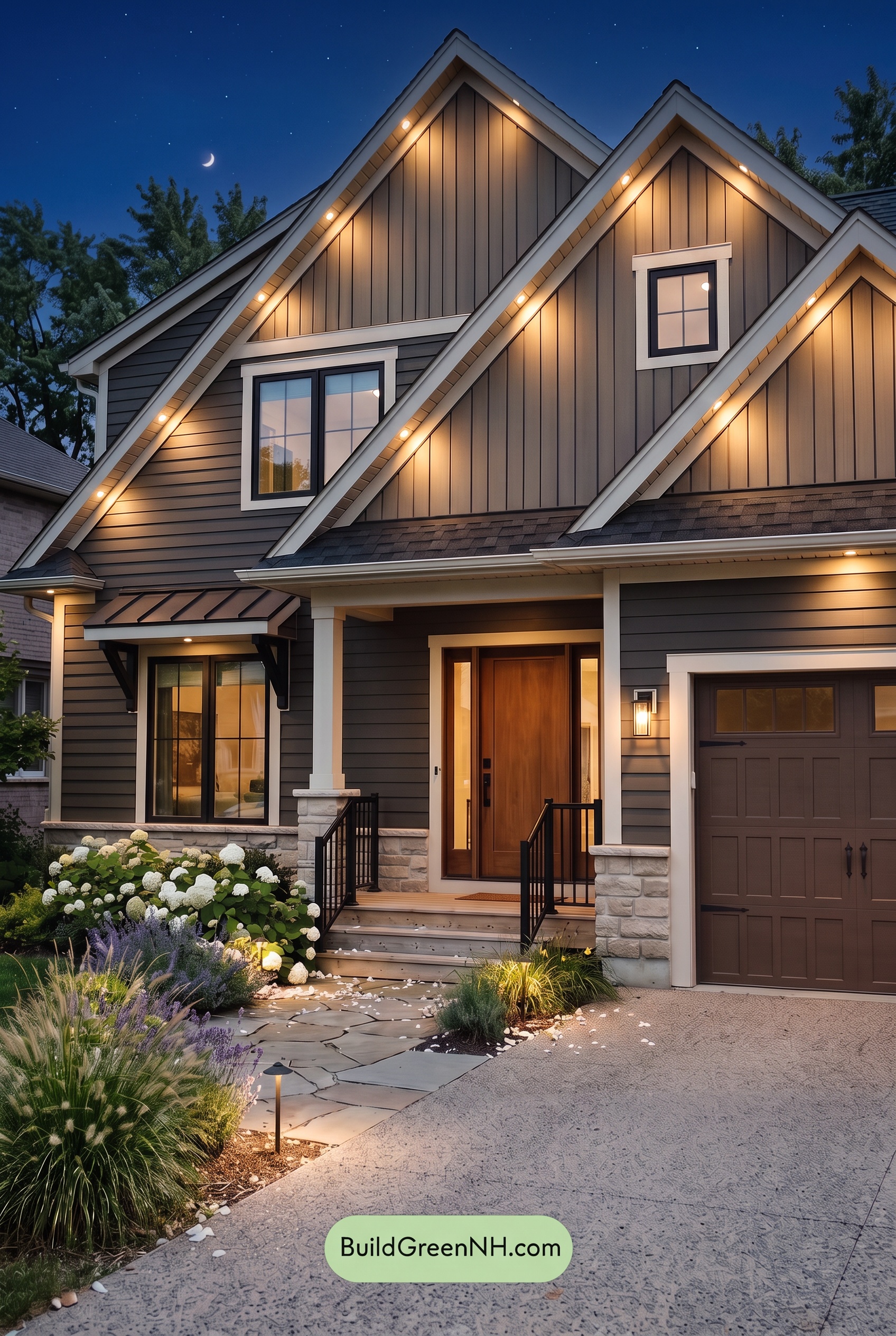
At night, the gray siding shifts deeper and more muted than it appears in neutral daylight, allowing the warm glow from the exterior lighting to create rich pools of golden warmth across the facade. Beige trim and columns take on a softer, creamier presence, while the brown door and garage door feel fuller and more welcoming beneath the warmer illumination.
Shadows sharpen along the gables, railings, and recessed details, increasing contrast and giving the architecture more dimension. The dark gray window frames and railings recede into the evening, while the illuminated warm neutrals become focal points, creating a calm, polished, and inviting nighttime mood.
Pin these for later:
Want More?
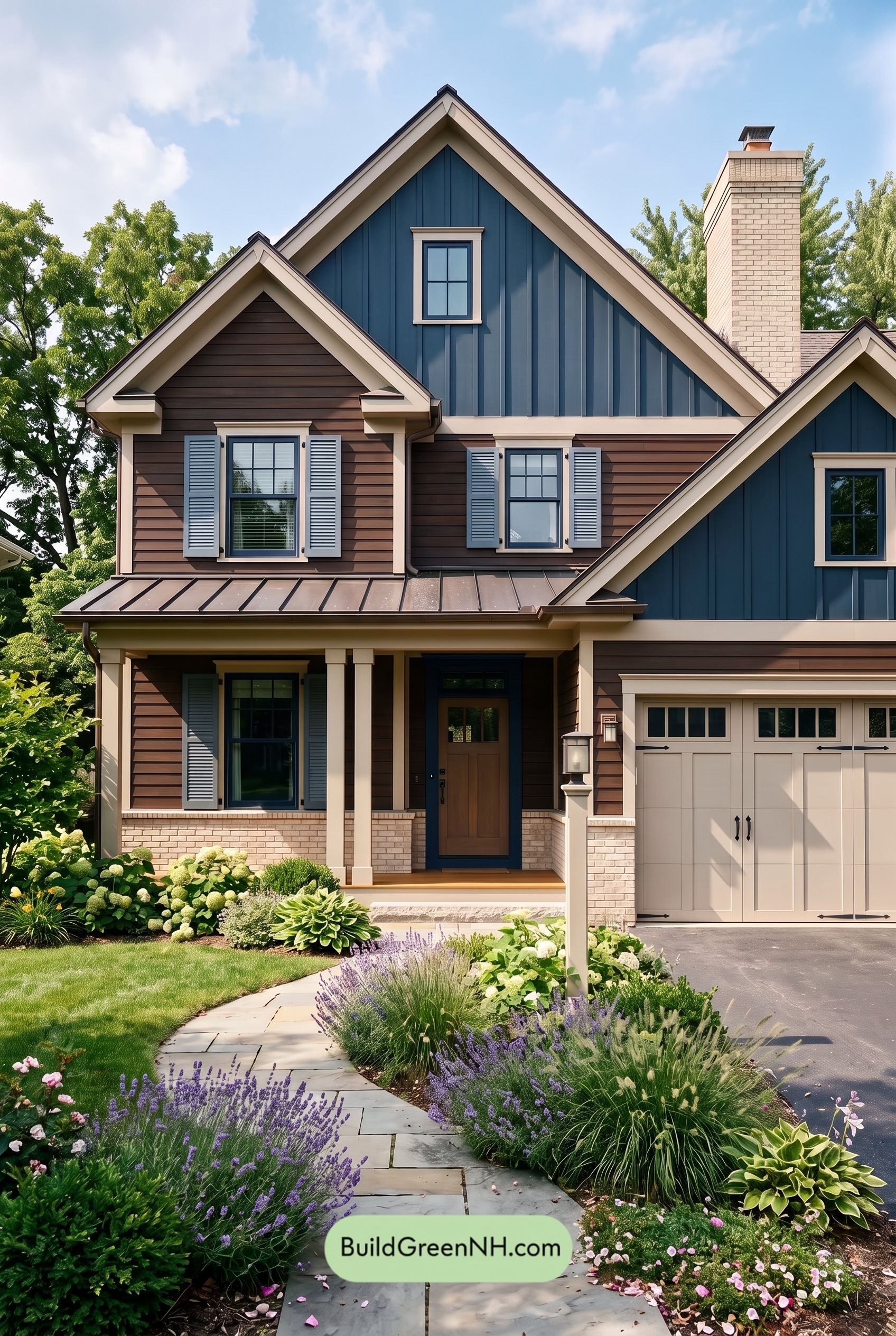 Dark Brown House Exterior Color Scheme: Inkwood Lantern
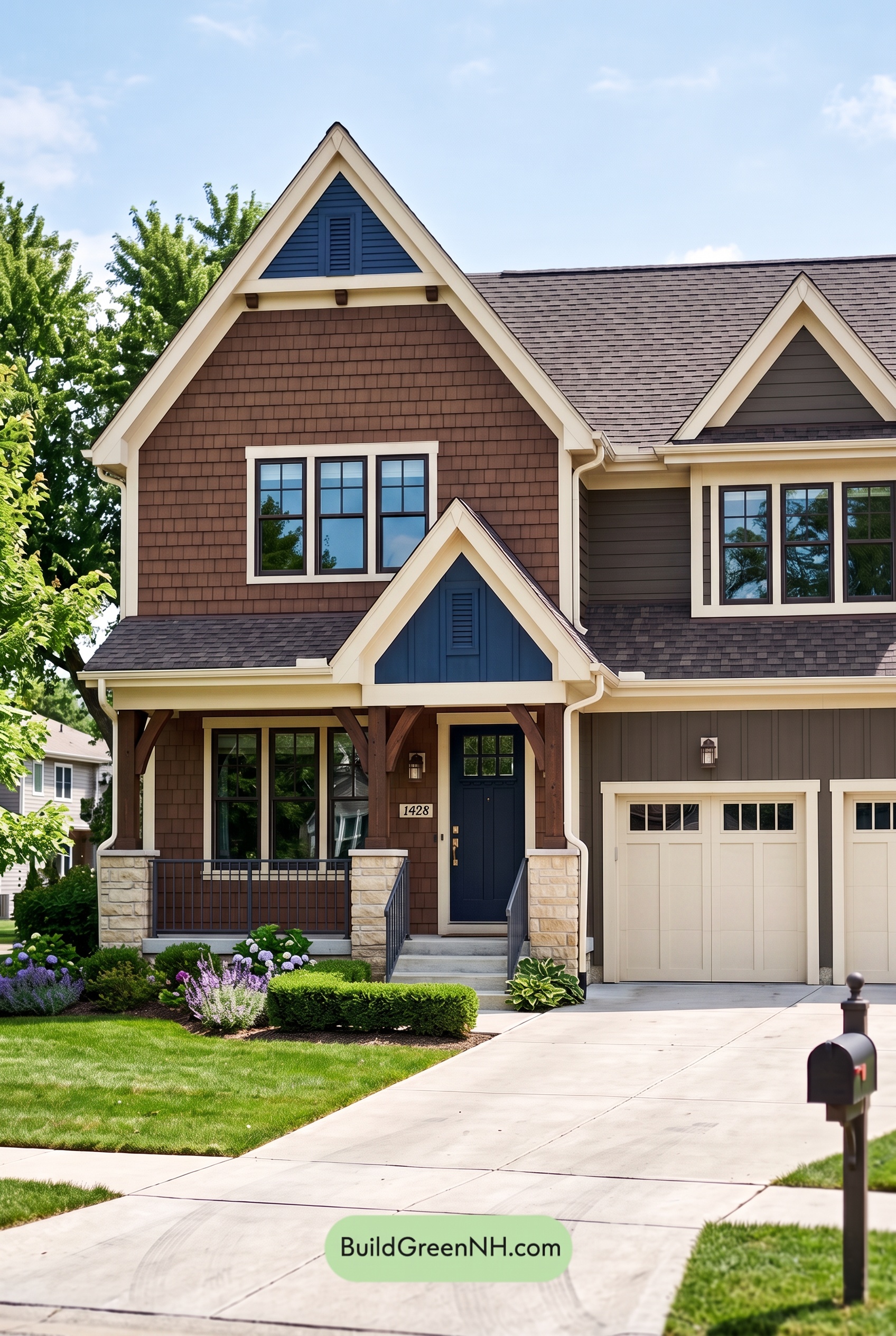 Dark Brown House Exterior Color Scheme: Bluebell Timberline
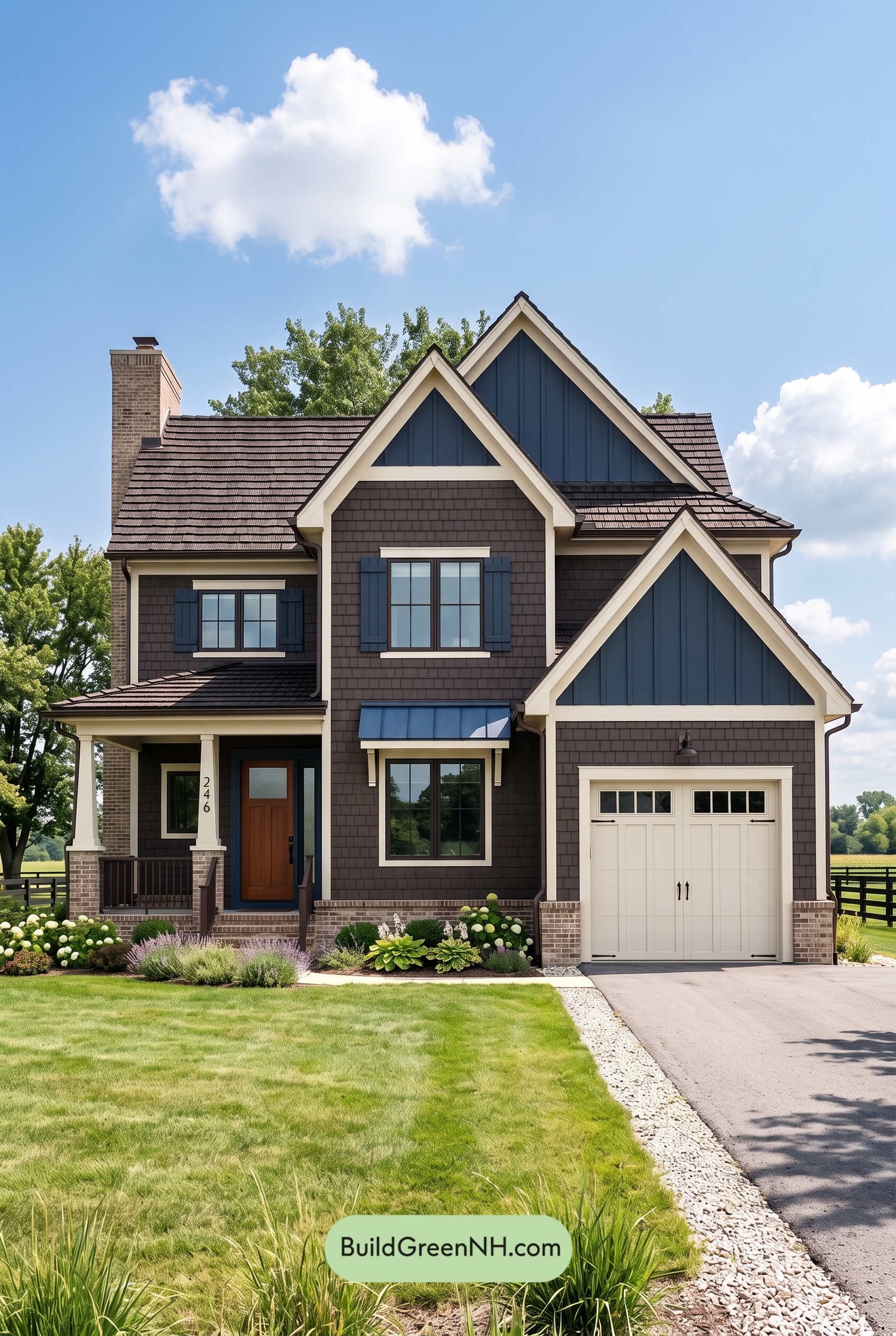 Dark Brown House Exterior Color Scheme: Sapphire Homestead
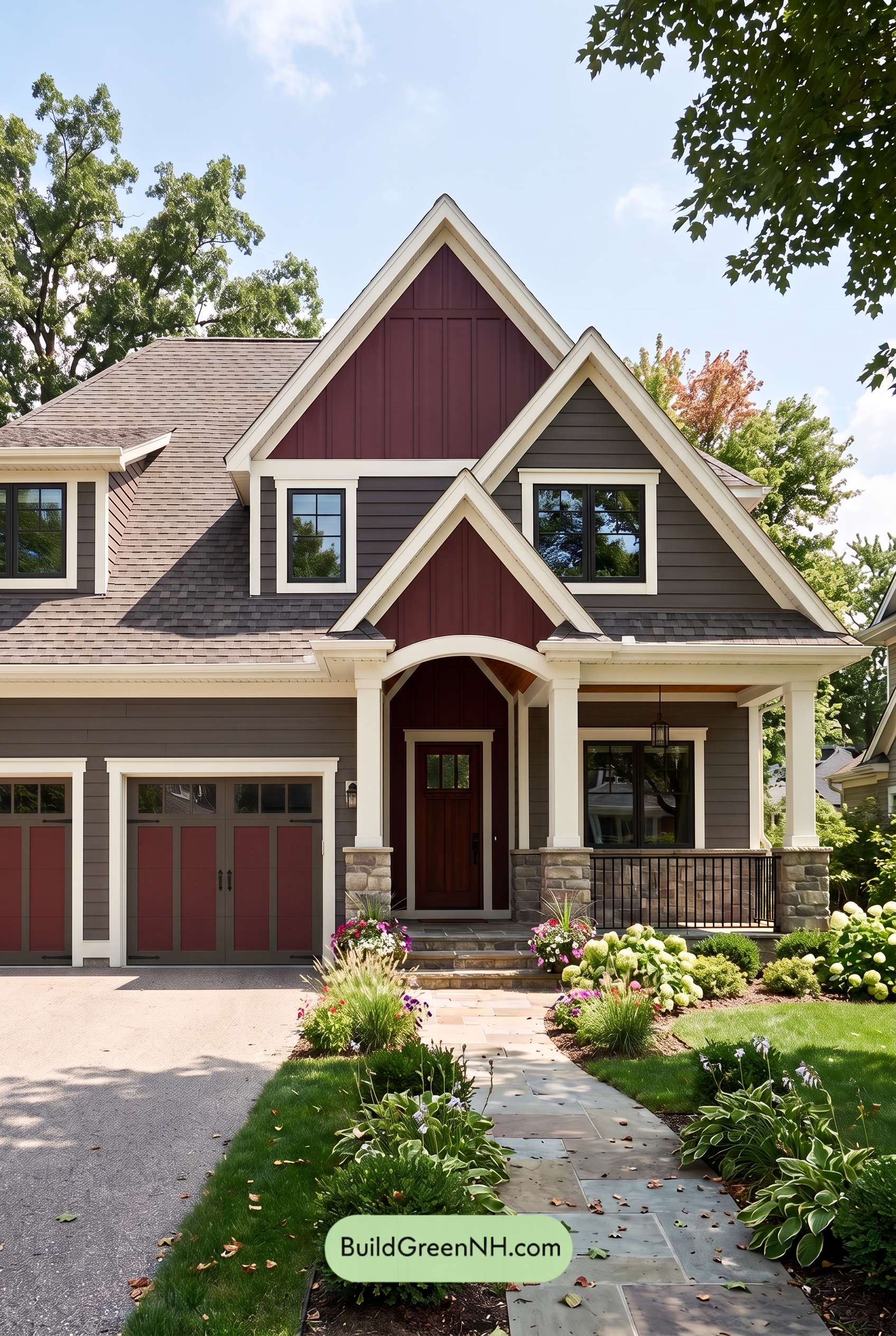 Dark Brown House Exterior Color Scheme: Hearthglow Arrival
 Dark Brown House Exterior Color Scheme: Embercrest Welcome
Table of Contents