Last updated on
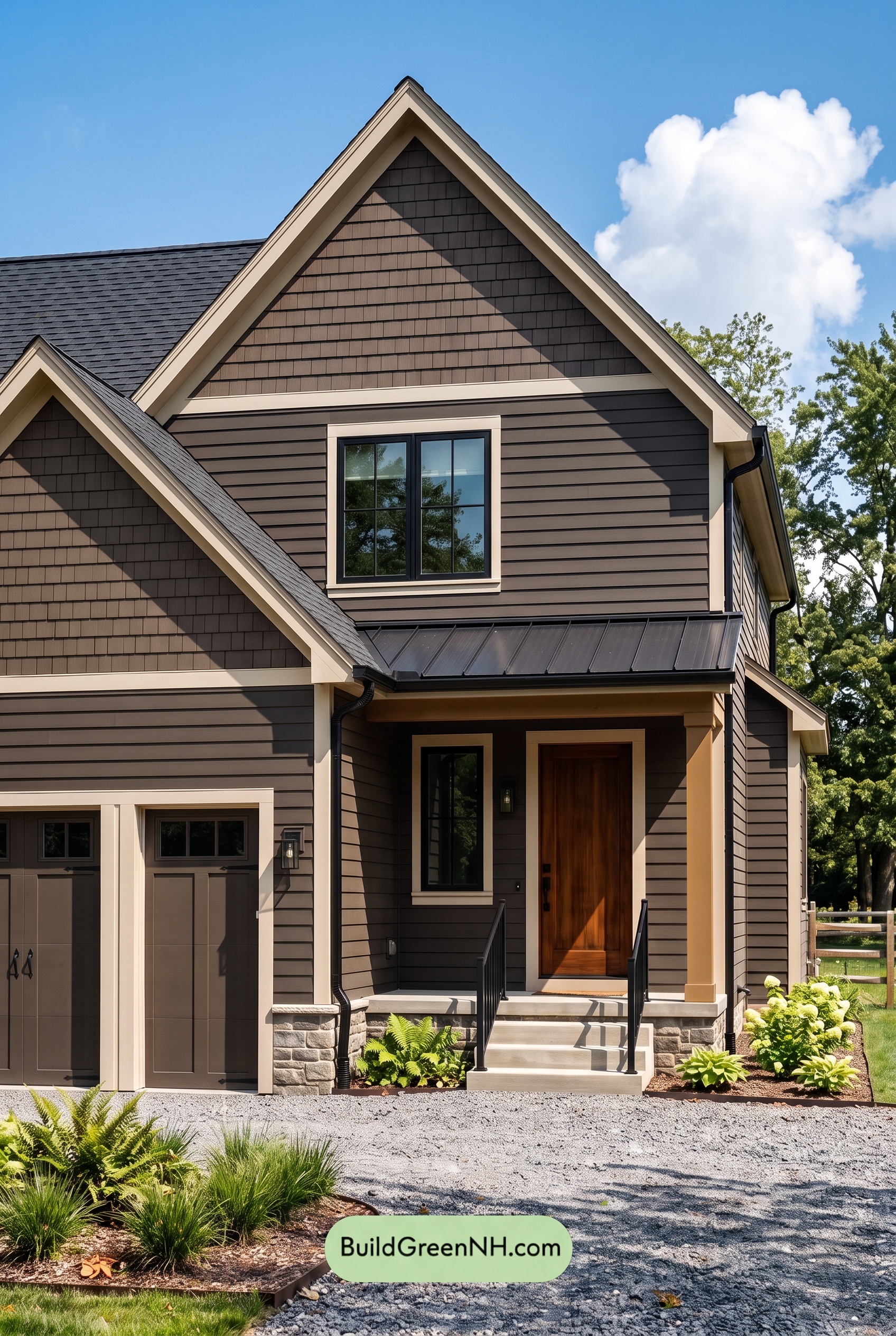

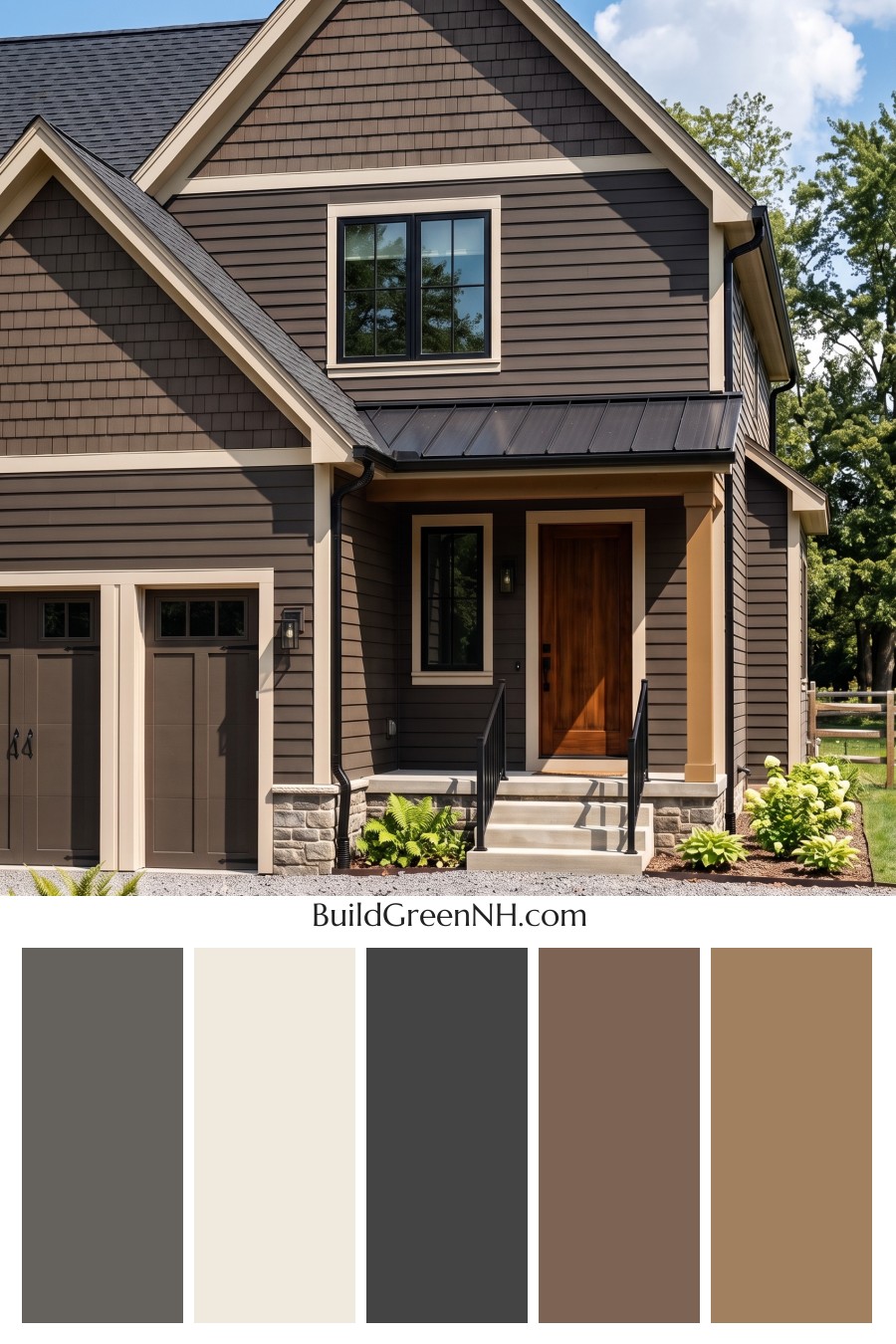
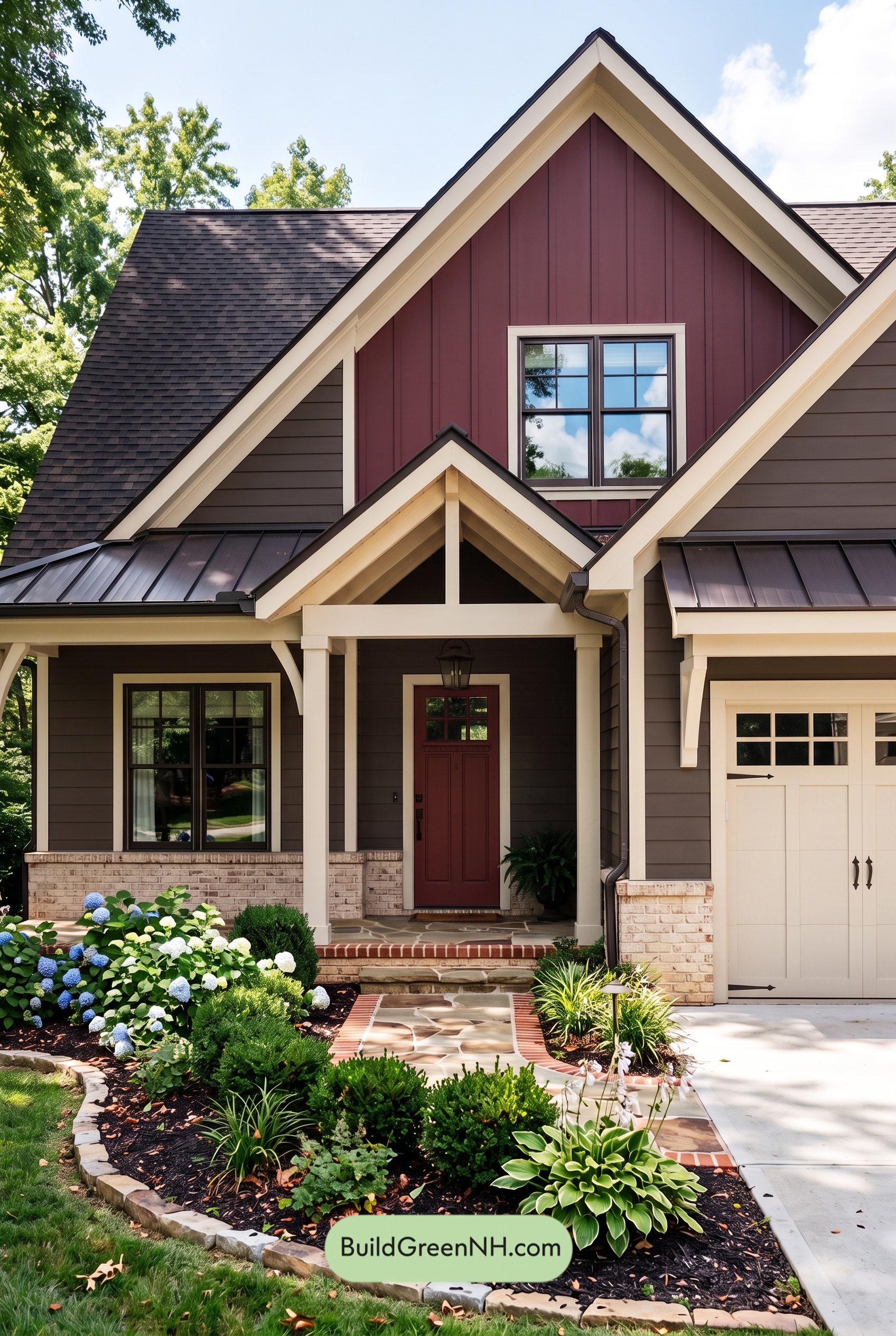
This layered blend of warm grays, creamy beige trim, deep charcoal accents, and a rich wood-toned entry creates a polished exterior that feels both welcoming and enduring.
A Soft, Grounded Gray Exterior
The main siding is finished in a medium warm gray that gives the home a calm, tailored foundation. Its subtle brown undertone keeps the gray from feeling stark, helping the broad walls sit comfortably within the natural landscape.
Above, the shingle-style gables continue the gray family in a slightly deeper shade. This variation adds texture and dimension to the tall rooflines, making the architectural layers feel intentional rather than busy. The horizontal siding and smaller shingle details work together beautifully because they share a closely related, earthy depth.
Light Trim That Defines Every Detail
A soft beige trim outlines the roof peaks, windows, garage doors, and entryway. This lighter neutral brings welcome contrast without creating a sharp, overly formal look. It highlights the home’s crisp gables and framed openings while preserving the warm, relaxed character of the palette.
The same light beige tone carries through the porch structure and column details, giving the entrance a cohesive, finished appearance. Against the gray siding, it feels bright enough to lift the façade while still blending naturally with the warmer accents.
Deep Accents Add Structure
Deep charcoal window frames, railings, gutters, and roof surfaces introduce a strong architectural edge. These nearly black accents ground the softer siding and trim, creating clear visual lines around the windows, porch, and roof transitions.
The charcoal garage door also helps the lower portion of the home feel anchored. Repeating this dark neutral across several exterior elements creates balance, so the eye moves easily from the roofline down to the entry and garage.
A Warm Door Makes the Entrance Shine
The front door brings in a rich, medium-to-dark brown wood tone that instantly warms the composition. Surrounded by pale trim and framed by dark accents, it becomes the natural focal point of the façade without overpowering it.
Warm brown porch columns echo that inviting note and connect the entry to the home’s more neutral exterior. The result is a front door area that feels substantial, personal, and easy to approach.
The Overall Mood
This exterior color scheme feels refined, grounded, and quietly welcoming. The warm gray siding provides a versatile backdrop, the soft beige trim adds gentle brightness, and the charcoal accents lend modern definition. Finally, the brown entry details keep the entire composition from feeling too cool.
It is a smart palette for a home with prominent gables and layered materials: each shade has a clear role, yet every element belongs to the same cohesive story.
Next, see how this color scheme looks under different lighting simulations throughout the day.
Overcast
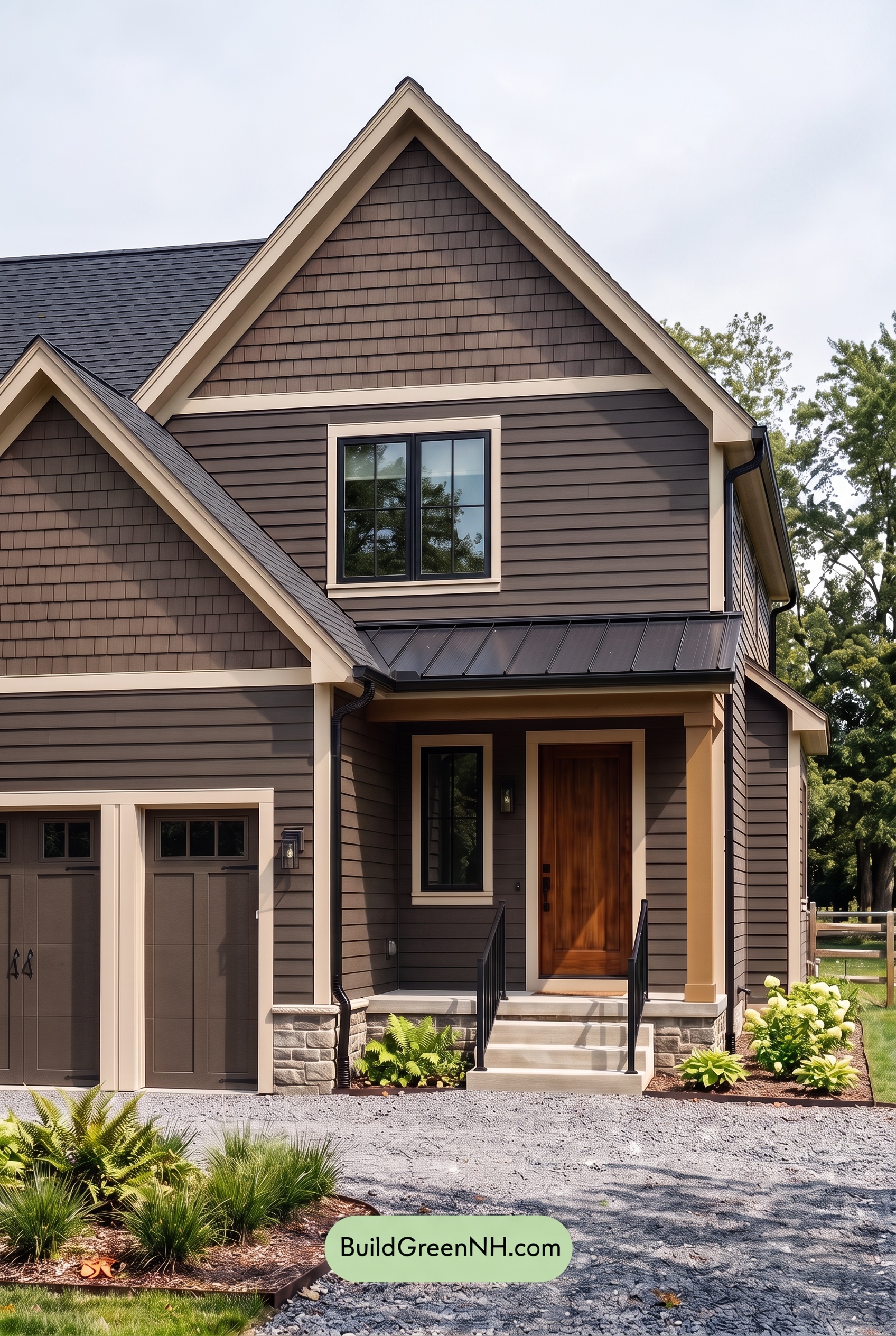
Under overcast skies, the gray siding appears softer and slightly deeper than it does in neutral daylight, with less visible saturation and fewer bright highlights across the horizontal lines. The beige trim loses some of its sunlit glow, reading as a quieter warm neutral that gently frames the darker gray window details and roof accents.
With direct sunlight removed, shadows become broad and diffused rather than sharply defined, reducing contrast around the gables, porch, and garage. The brown entry and column tones retain a welcoming warmth, but appear more subdued against the coolened gray exterior, giving the home a calm, polished, and slightly moodier presence.
Golden Hour
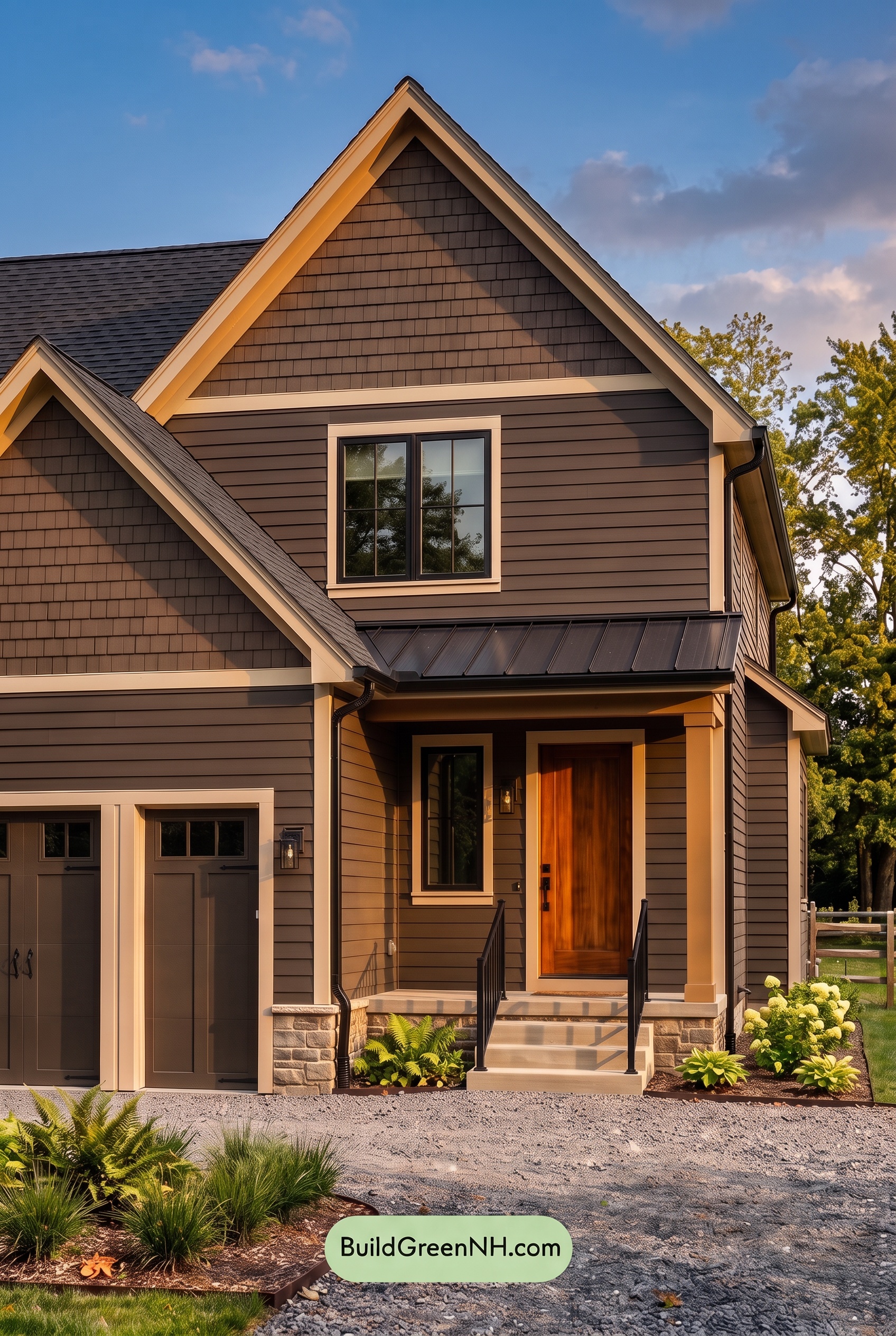
Under Golden Hour, the gray exterior takes on a softer, warmer cast than it shows in neutral daylight, with the sunlit planes appearing richer and slightly more saturated. The beige trim glows with a creamy warmth, while the brown entry and columns become especially inviting, their deeper tones gaining a burnished, welcoming character.
Longer shadows settle into the siding, rooflines, and recessed porch, deepening the darkest gray details and sharpening the contrast around the windows and railings. Compared with neutral daylight’s crisp balance, this low-angle light creates a layered, cozy mood—warm highlights, velvety shadows, and a more dramatic sense of depth across the façade.
Shade
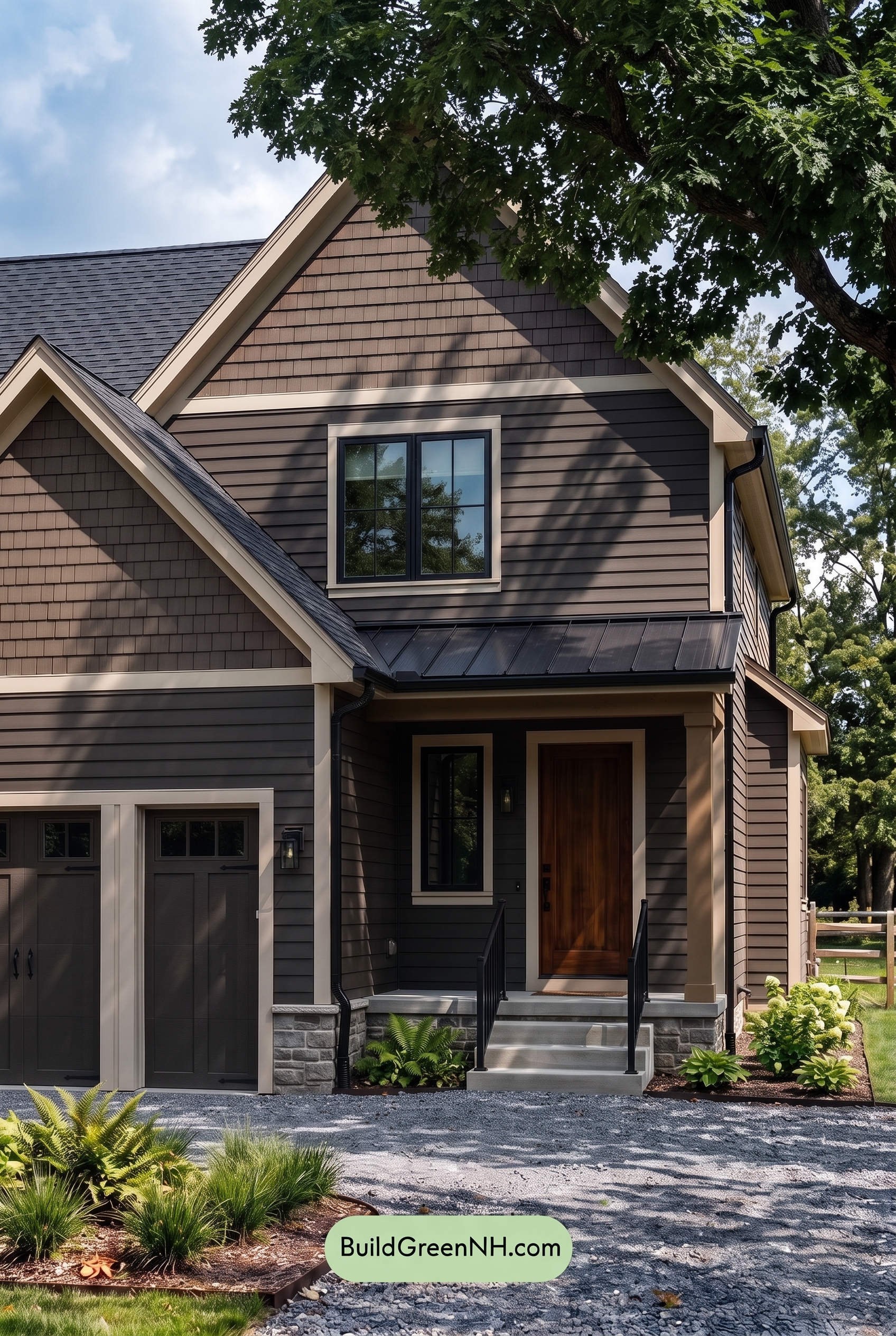
In shade, the layered gray exterior reads deeper and more subdued than it would in neutral daylight, with its saturation appearing softer and its undertones less pronounced. The beige trim shifts into a gentler, warmer accent, while the brown entry and columns gain a richer, more grounded presence against the cooler-looking gray surfaces.
Leaf-cast shadows heighten the contrast between illuminated edges and recessed areas, making the dark gray frames, railings, and garage details feel crisper. Overall, shade gives the palette a calm, tailored mood—less bright and expansive than neutral daylight, but more dimensional, intimate, and refined.
Nighttime
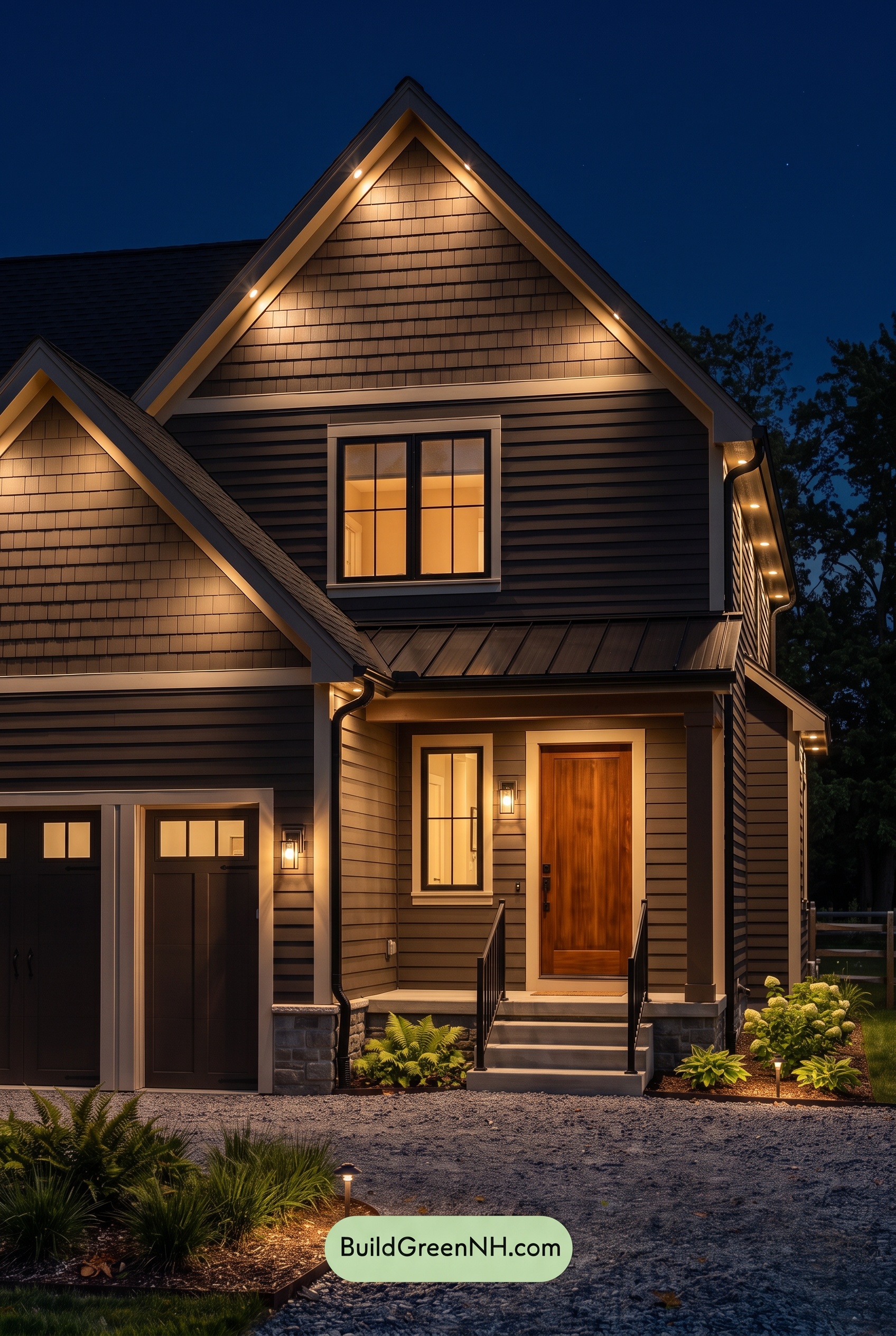
At night, the gray exterior shifts from a balanced daylight neutral to a deeper, more dramatic shade, with its saturation subdued by the dark sky and recessed shadows. The darker gray details around the windows, railings, and garage blend more closely into the façade, while illuminated edges create crisp contrast and bring out the home’s layered architectural lines.
Warm lighting softens the beige trim and gives the brown door and columns a richer, more inviting glow. Against the cooler darkness surrounding the house, these warm highlights feel especially pronounced, creating a cozy, welcoming mood that daylight presents with less intensity.
Pin these for later:
Want More?
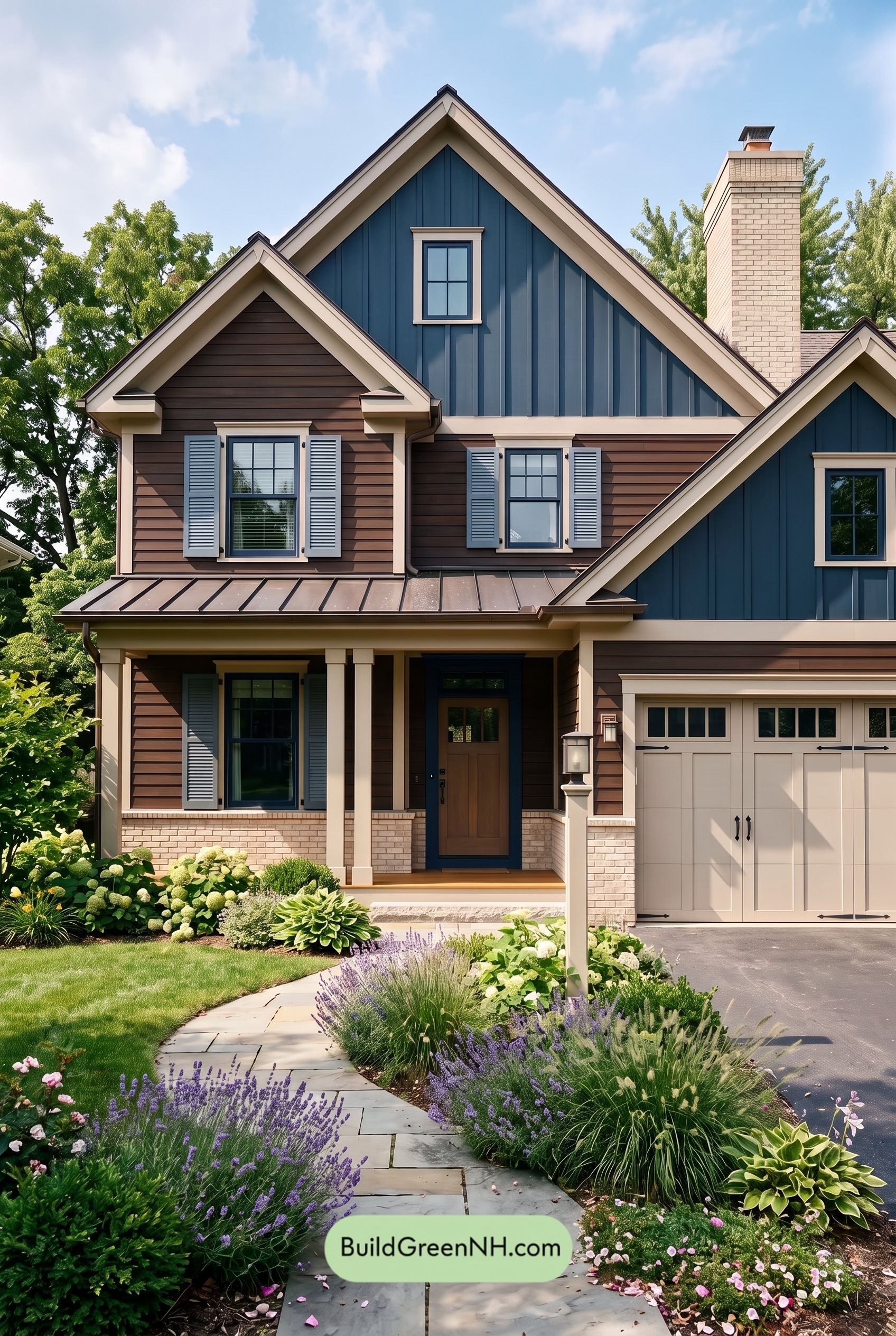 Dark Brown House Exterior Color Scheme: Inkwood Lantern
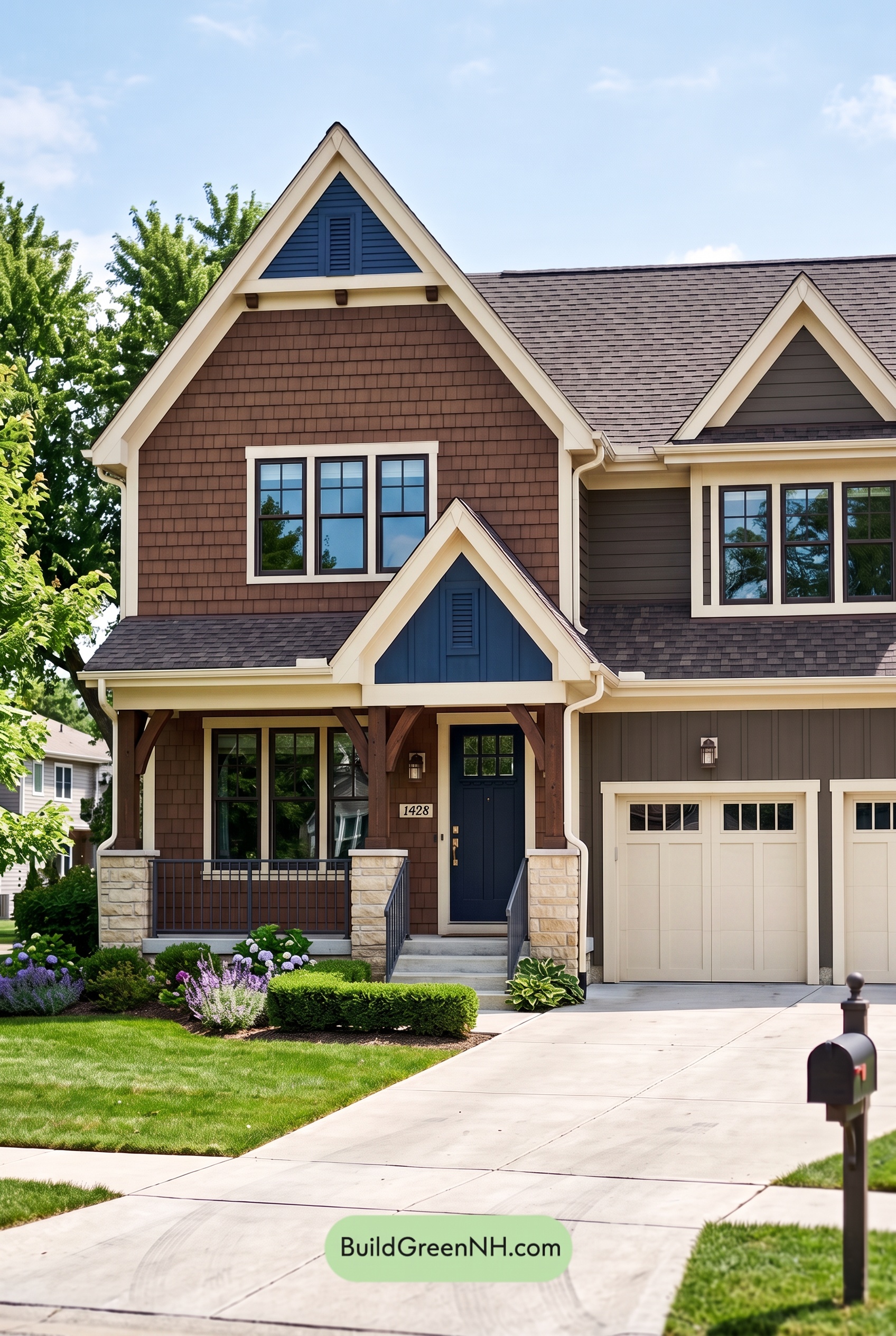 Dark Brown House Exterior Color Scheme: Bluebell Timberline
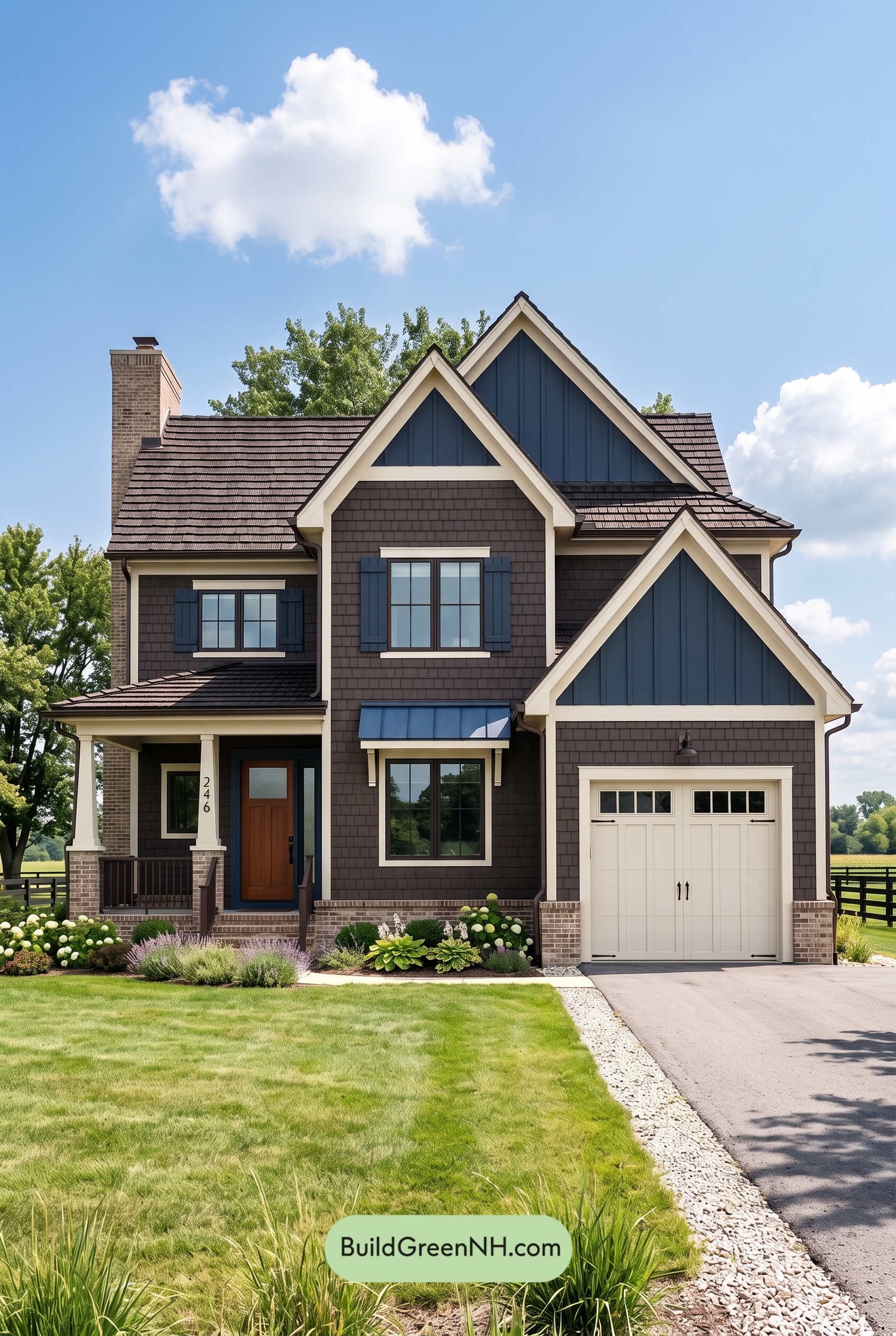 Dark Brown House Exterior Color Scheme: Sapphire Homestead
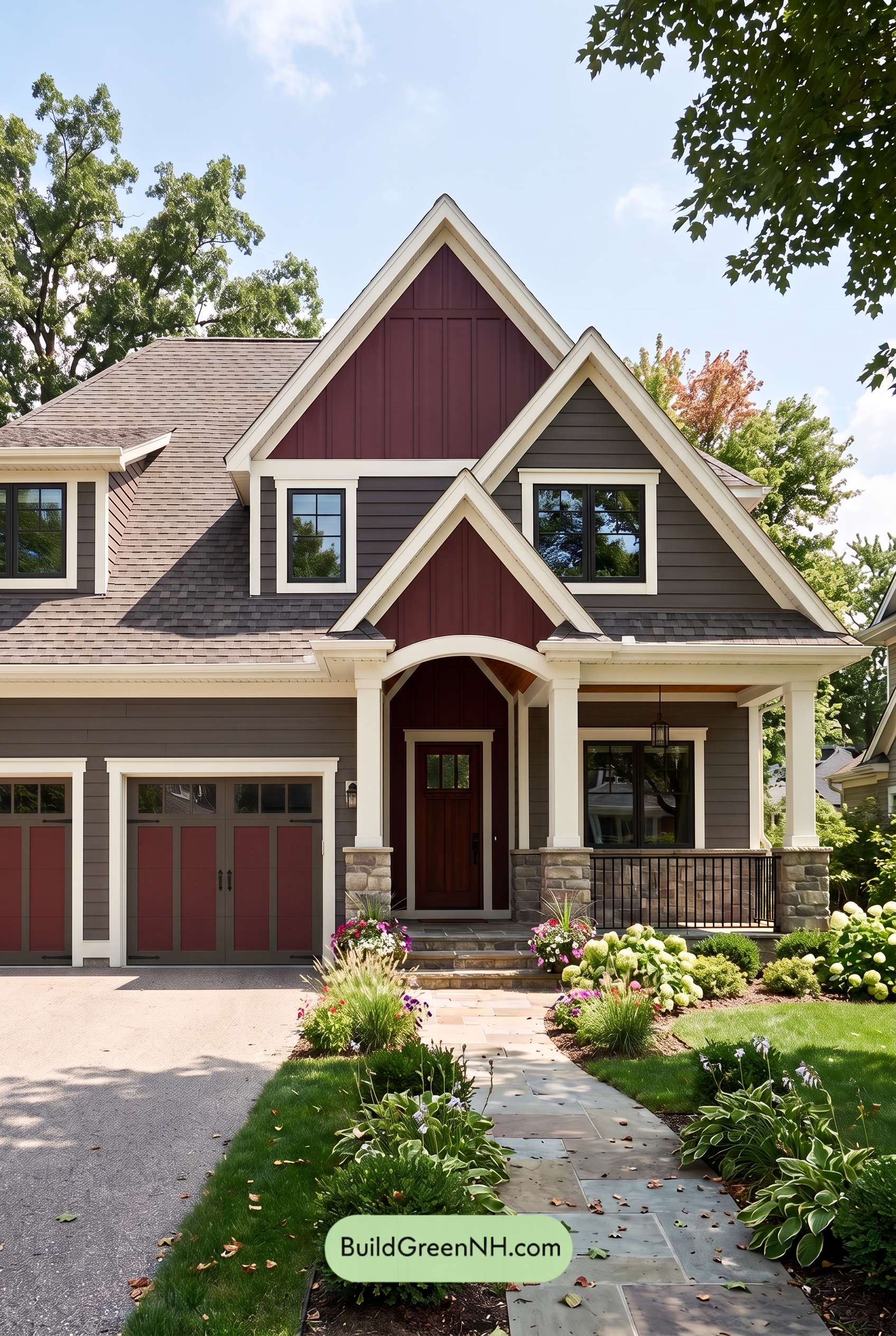 Dark Brown House Exterior Color Scheme: Hearthglow Arrival
 Dark Brown House Exterior Color Scheme: Embercrest Welcome
Table of Contents