Last updated on
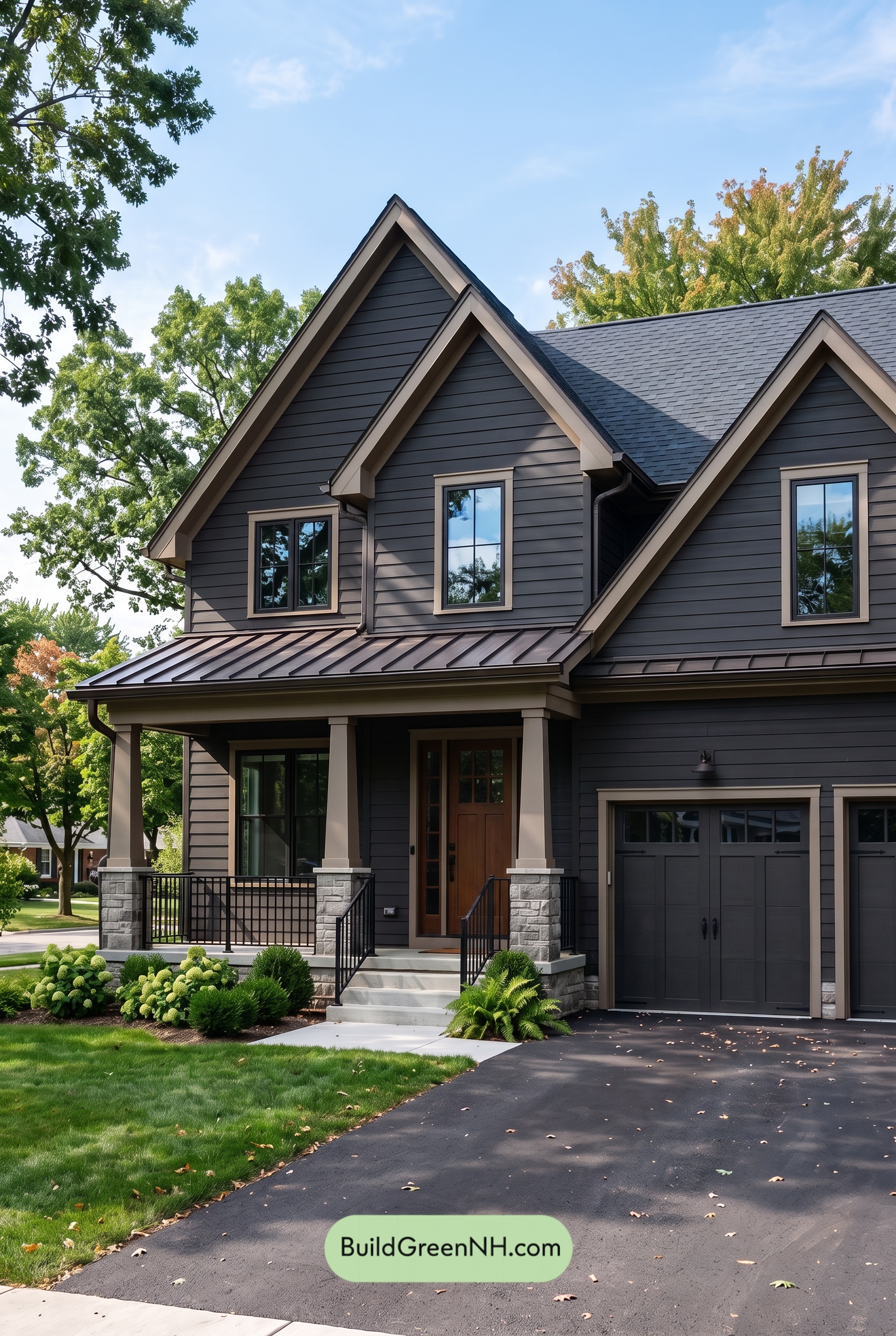

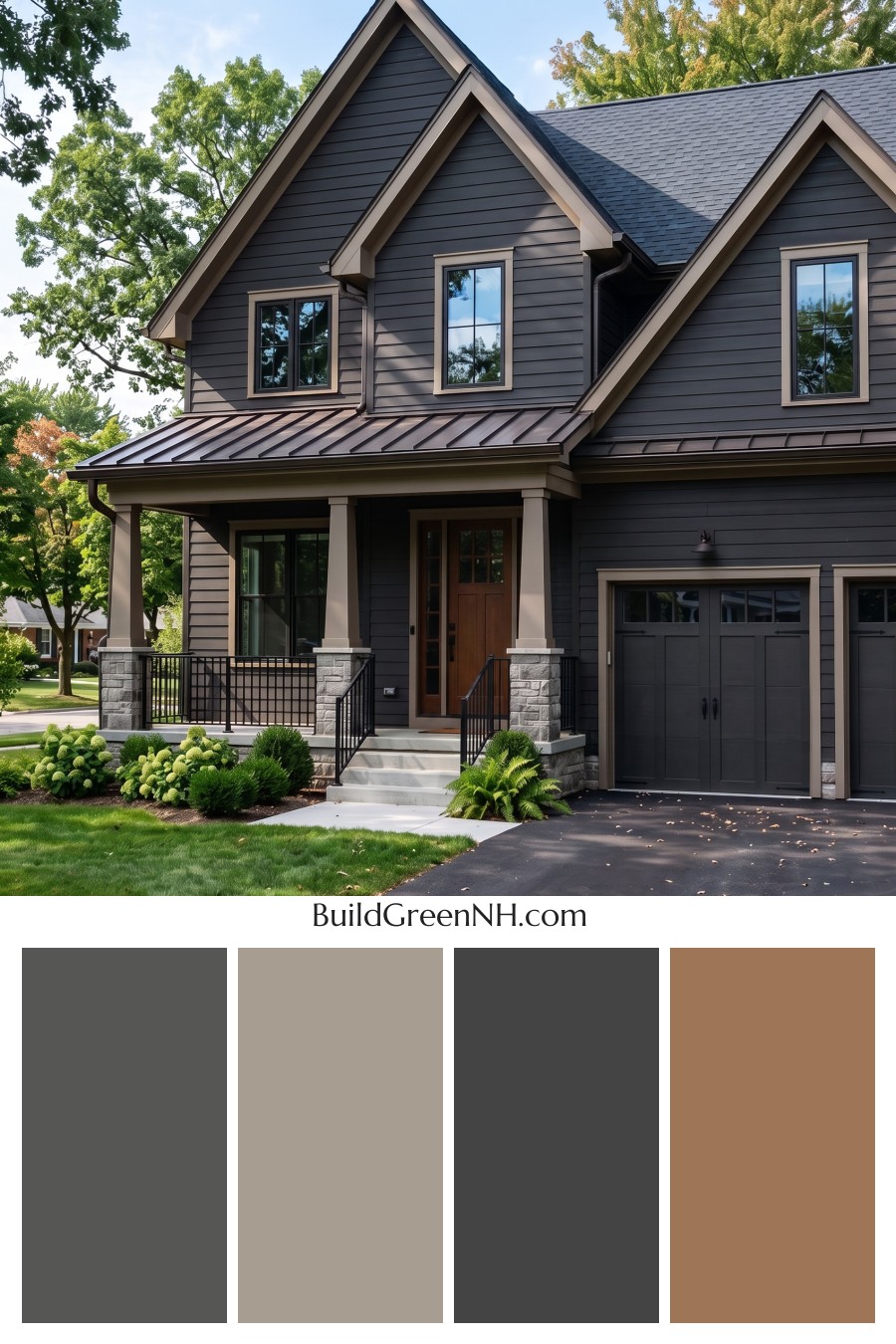
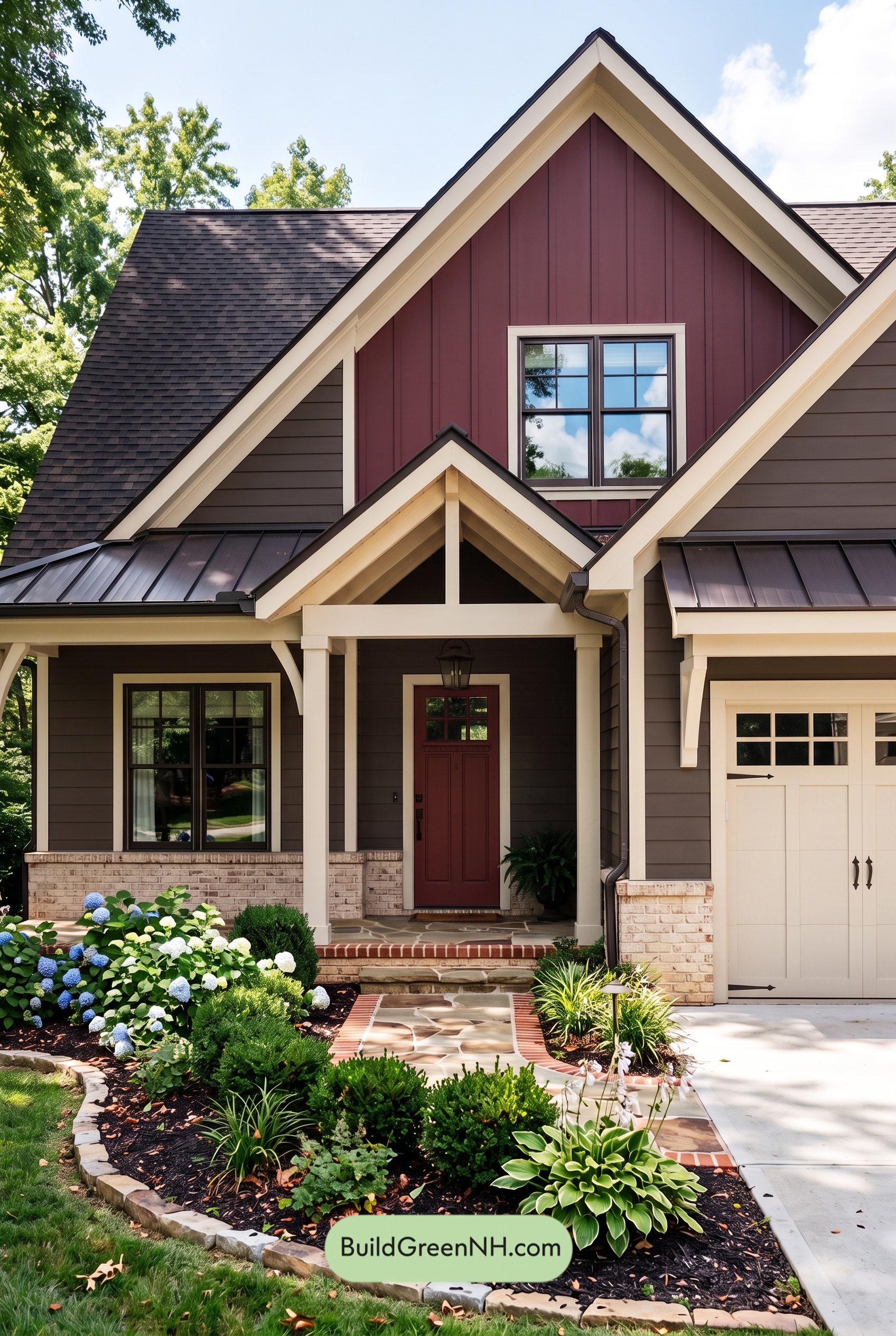
This layered gray, warm beige, and rich brown exterior scheme feels polished and welcoming while giving the home’s dramatic architecture plenty of presence.
A Strong Gray Foundation
The siding is finished in a deep, softened gray that gives the exterior a grounded, contemporary character. Its cool undertone complements the crisp lines of the gables and allows the home’s height and layered roofline to stand out without feeling overly stark.
Matching gray window frames and garage doors keep the facade visually connected from one side to the other. Rather than introducing unnecessary contrast, these coordinated gray elements create a smooth, tailored look that feels intentional and enduring.
Warm Beige Defines the Details
A light warm beige appears along the trim, gable edges, window surrounds, and porch columns. This gentle neutral brightens the darker siding and traces the architectural details with a clean, elegant outline. Around the windows, it adds just enough contrast to make each opening feel refined and well-proportioned.
The same warm beige on the porch columns brings a softer, more inviting note to the entry. It also connects beautifully with the light gray stone bases, creating a gradual transition from the landscape to the darker wall color above.
A Welcoming Brown Front Door
The front door introduces a deep, warm brown that immediately draws the eye toward the entry. Against the cool gray siding and light beige trim, this earthy shade feels especially welcoming. It gives the porch a natural focal point while adding a hint of traditional warmth to the otherwise modern palette.
This balance is what makes the scheme so successful: cool grays provide structure, warm beige softens the contrast, and the brown door adds personality without disrupting the calm composition.
Dark Accents Add Definition
The roof and metal porch covering are finished in a dark charcoal-gray shade that gives the home a crisp silhouette against the sky. Dark gray railings, gutters, and small exterior details repeat that deeper tone, grounding the porch and sharpening the edges of the facade.
Because these accents are used selectively, they bring depth rather than heaviness. The result is a sophisticated exterior that feels substantial, balanced, and beautifully suited to its green surroundings.
The Overall Mood
This color scheme delivers a confident blend of modern restraint and classic warmth. The deep gray siding feels composed, the warm beige trim adds approachability, and the brown entry creates an easy sense of welcome. Together, these shades make the house feel elegant from the curb while still distinctly livable.
Next, see how this color scheme looks under different lighting simulations throughout the day.
Overcast
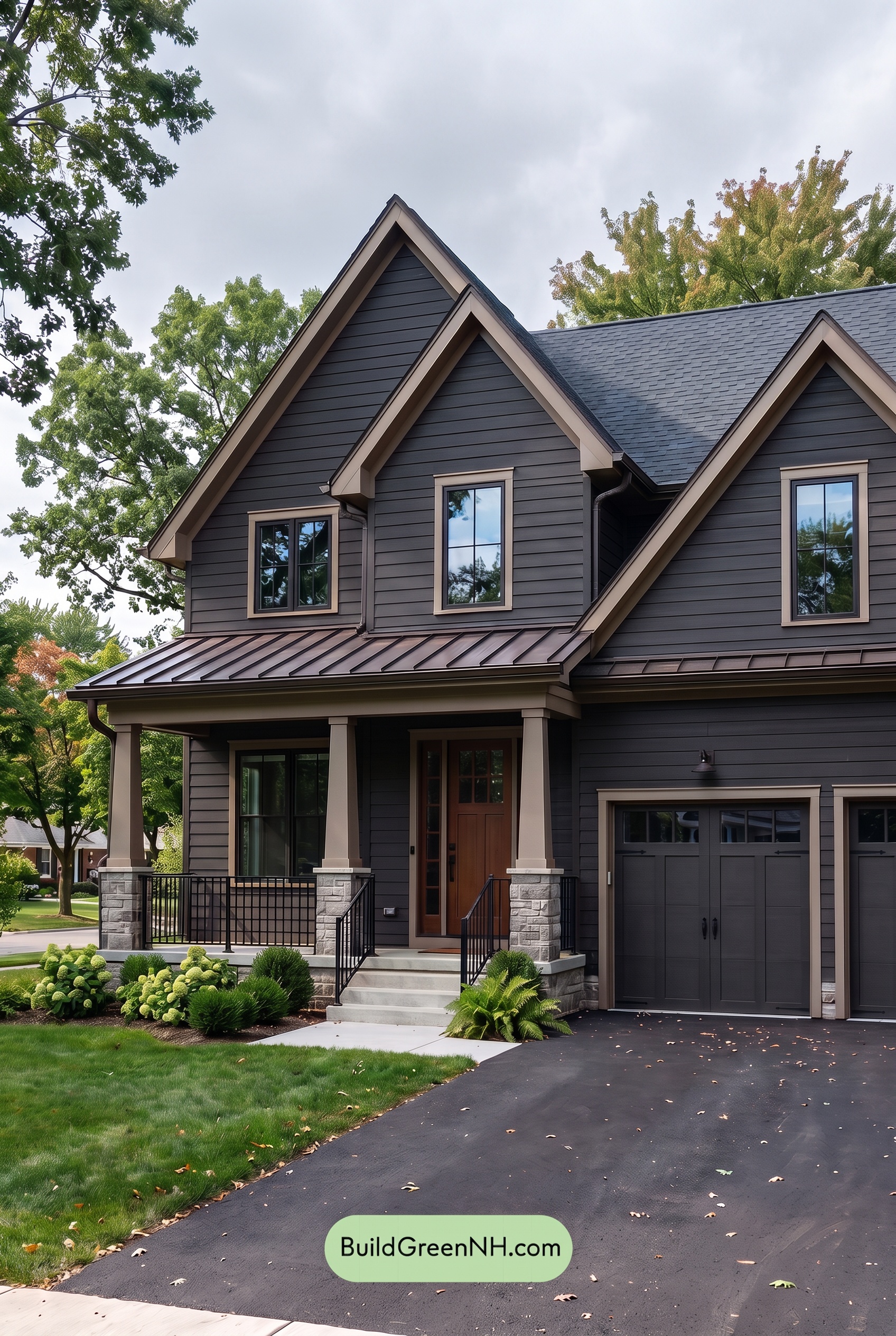
Under overcast skies, the gray exterior takes on a deeper, quieter character than it shows in neutral daylight, with its cool undertones appearing more pronounced and its saturation slightly softened. Diffused light reduces sharp shadows across the siding and rooflines, allowing the architectural layers to read smoothly rather than with crisp, sunlit contrast.
The beige trim and columns feel gentler and less golden in the cloud-filtered light, while the brown entry becomes a more grounded, inviting focal point against the muted gray surroundings. Dark gray window frames, railings, and garage details blend into a refined, low-contrast palette, giving the home a calm, tailored mood.
Golden Hour
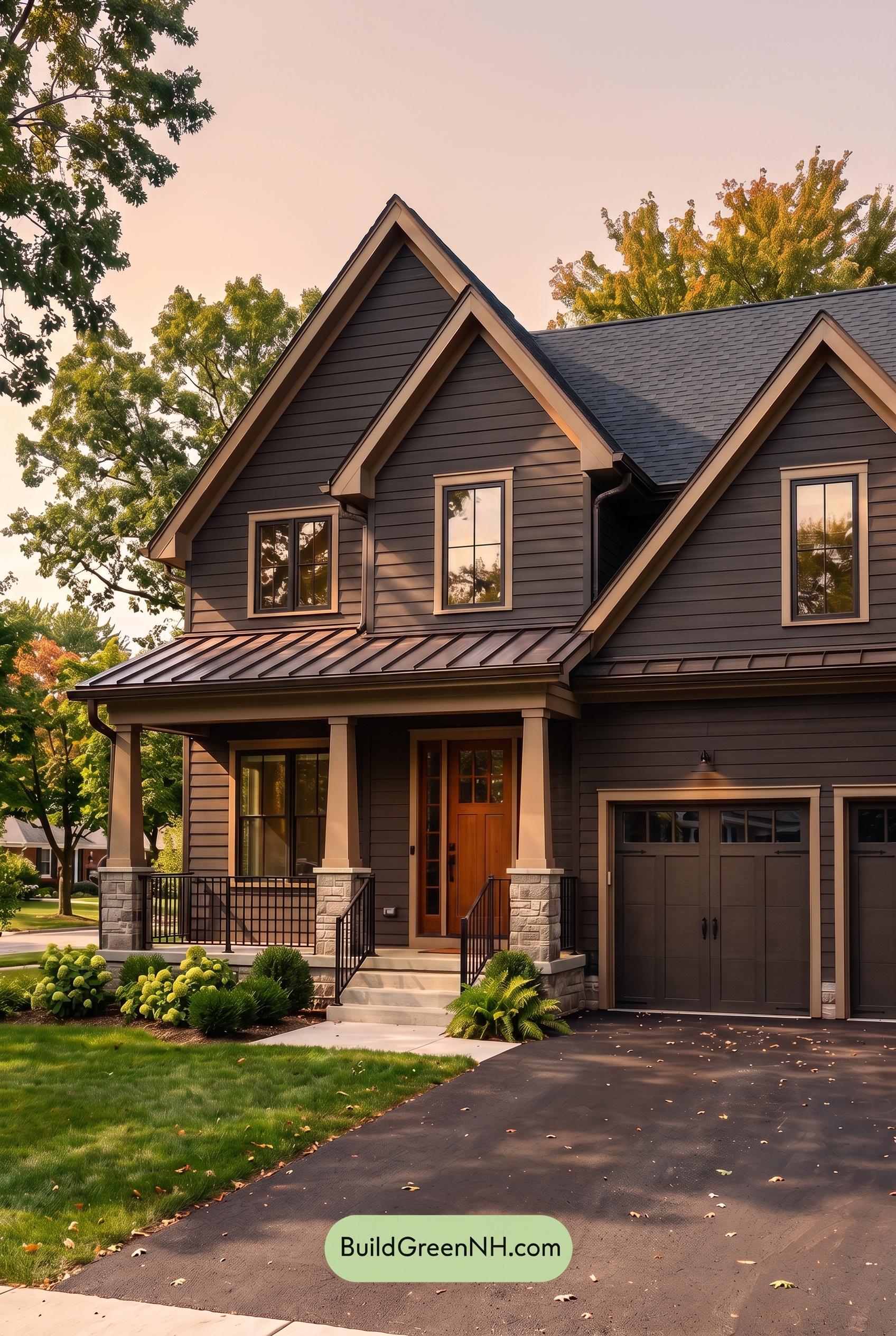
Golden Hour lends the gray siding a softer, warmer cast than it shows in neutral daylight, while its shaded areas deepen into a richer, more dramatic gray. The beige trim and columns catch the low-angle light beautifully, appearing creamier and more luminous, which heightens their contrast against the darker wall and roof surfaces.
The brown front door becomes warmer and more saturated in this light, creating an inviting focal point at the entry. Long shadows beneath the gables, porch, and railings sharpen the architectural depth, giving the entire exterior a cozy, polished mood that feels more layered and welcoming than it does under even daylight.
Shade
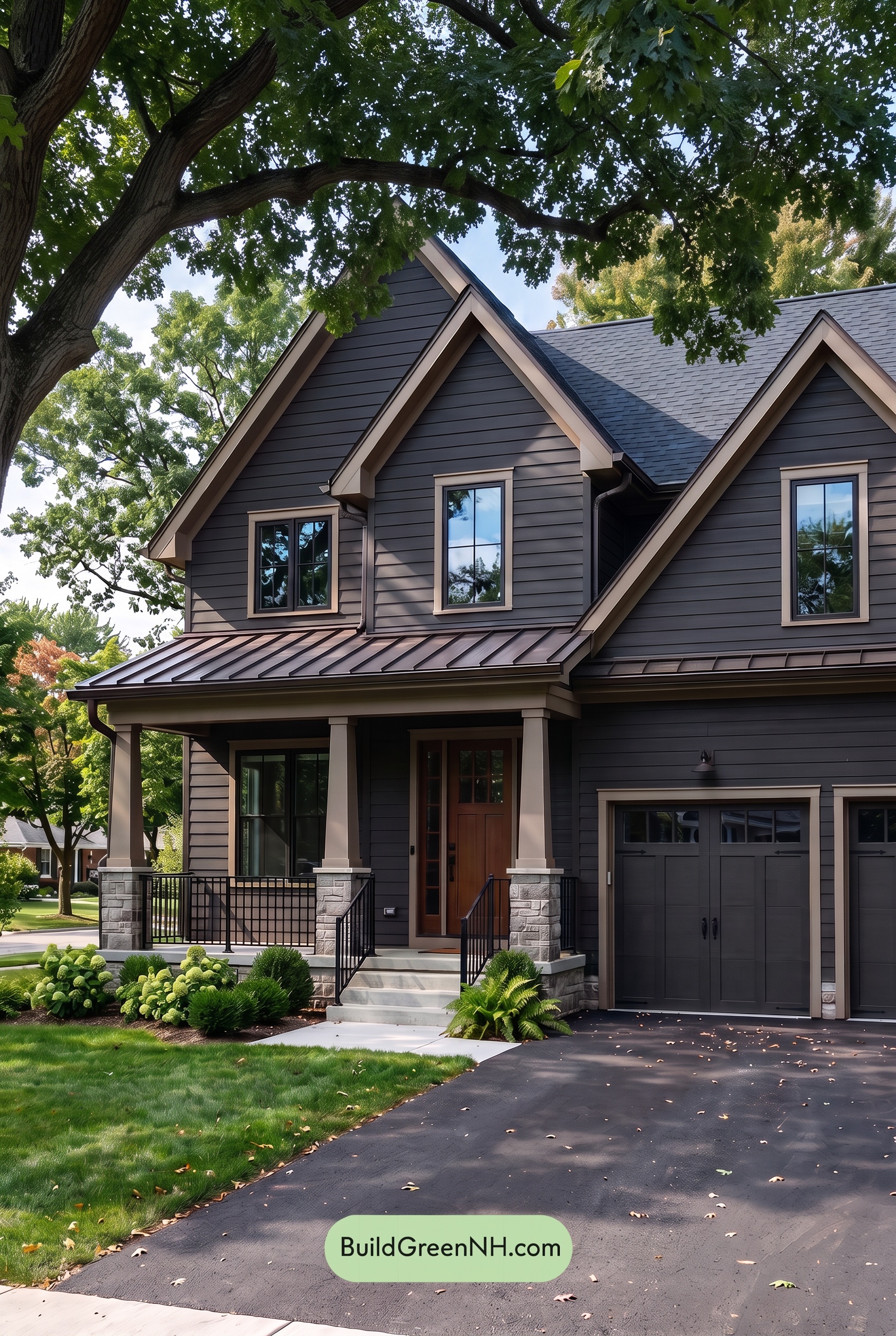
In shade, the gray exterior shifts away from the crisp balance it shows in neutral daylight, reading deeper and slightly cooler across the broad siding and garage surfaces. Reduced light softens saturation, so the layered gray shades feel more restrained and sophisticated, while the dark window frames and railings recede into richer shadows.
The beige trim and columns retain a gentle warmth, but appear quieter against the shaded facade. This creates a more pronounced light-to-dark contrast along gables, windows, and porch details, while the brown entry becomes a warm focal point. Overall, the shade gives the home a calm, sheltered mood with elegant depth rather than bright, high-contrast drama.
Nighttime
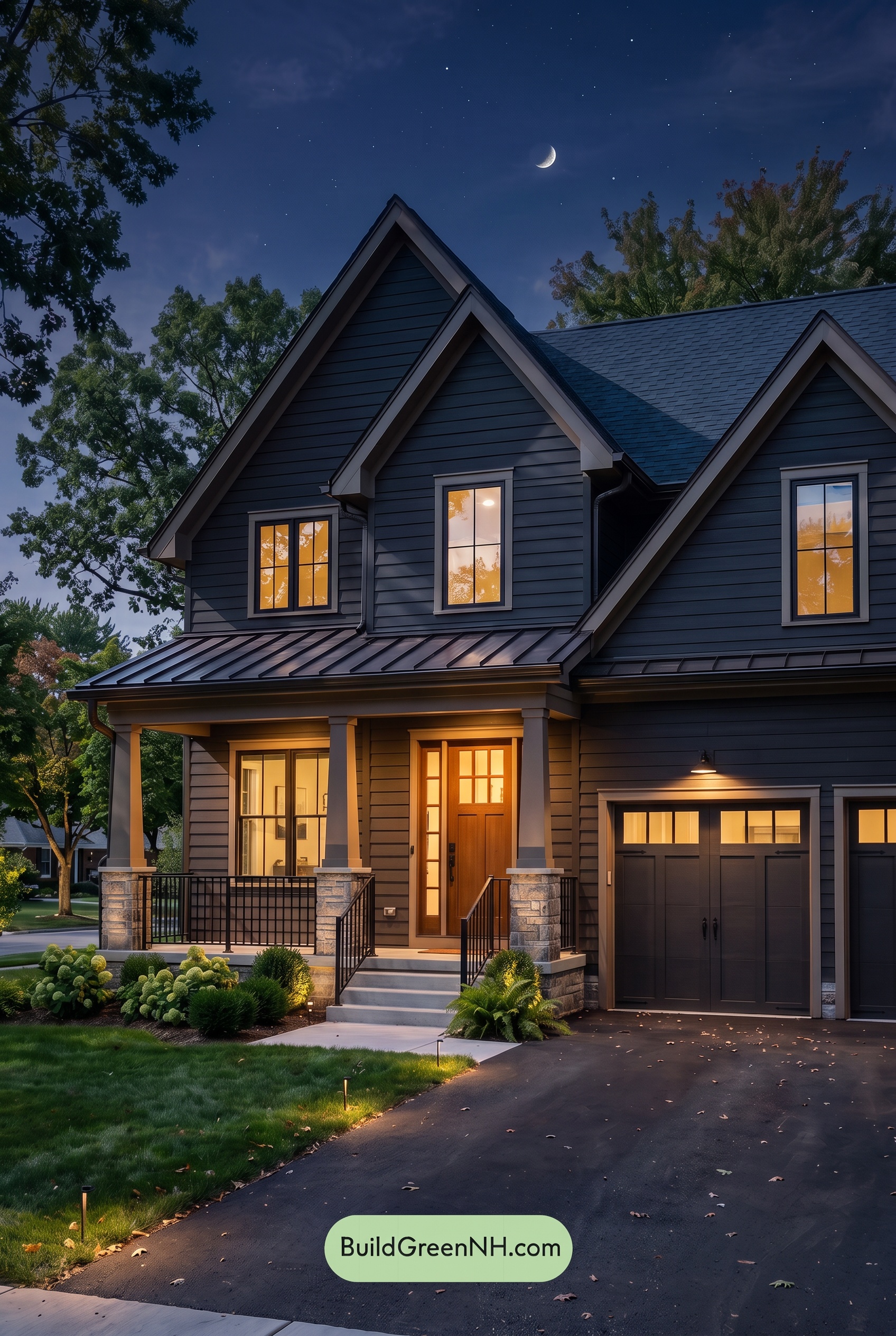
At night, the gray exterior deepens into a richer, cooler shade, with its daylight softness giving way to more dramatic shadow and a slightly more saturated appearance. Darker gray details along the windows, railings, and garage recede into the façade, creating a sleek, layered silhouette rather than the clearer separation seen in neutral daylight.
Warm light around the entry shifts the beige trim and columns toward a softer, inviting warmth, while the brown door gains a golden, welcoming presence. This interplay of cool gray planes and warm illuminated accents heightens contrast at the porch, giving the home a calm, polished mood with a distinctly cozy focal point.
Pin these for later:
Want More?
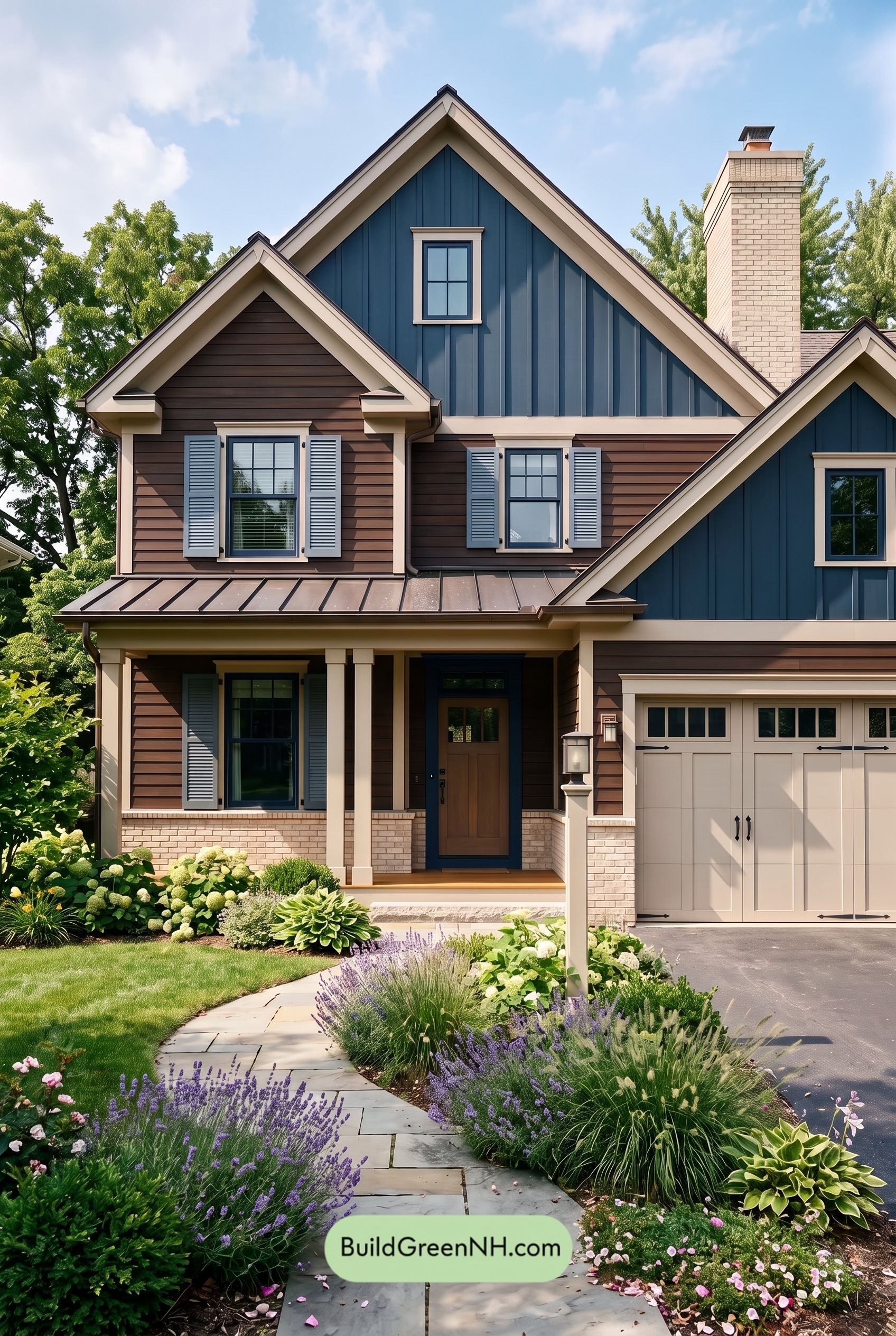 Dark Brown House Exterior Color Scheme: Inkwood Lantern
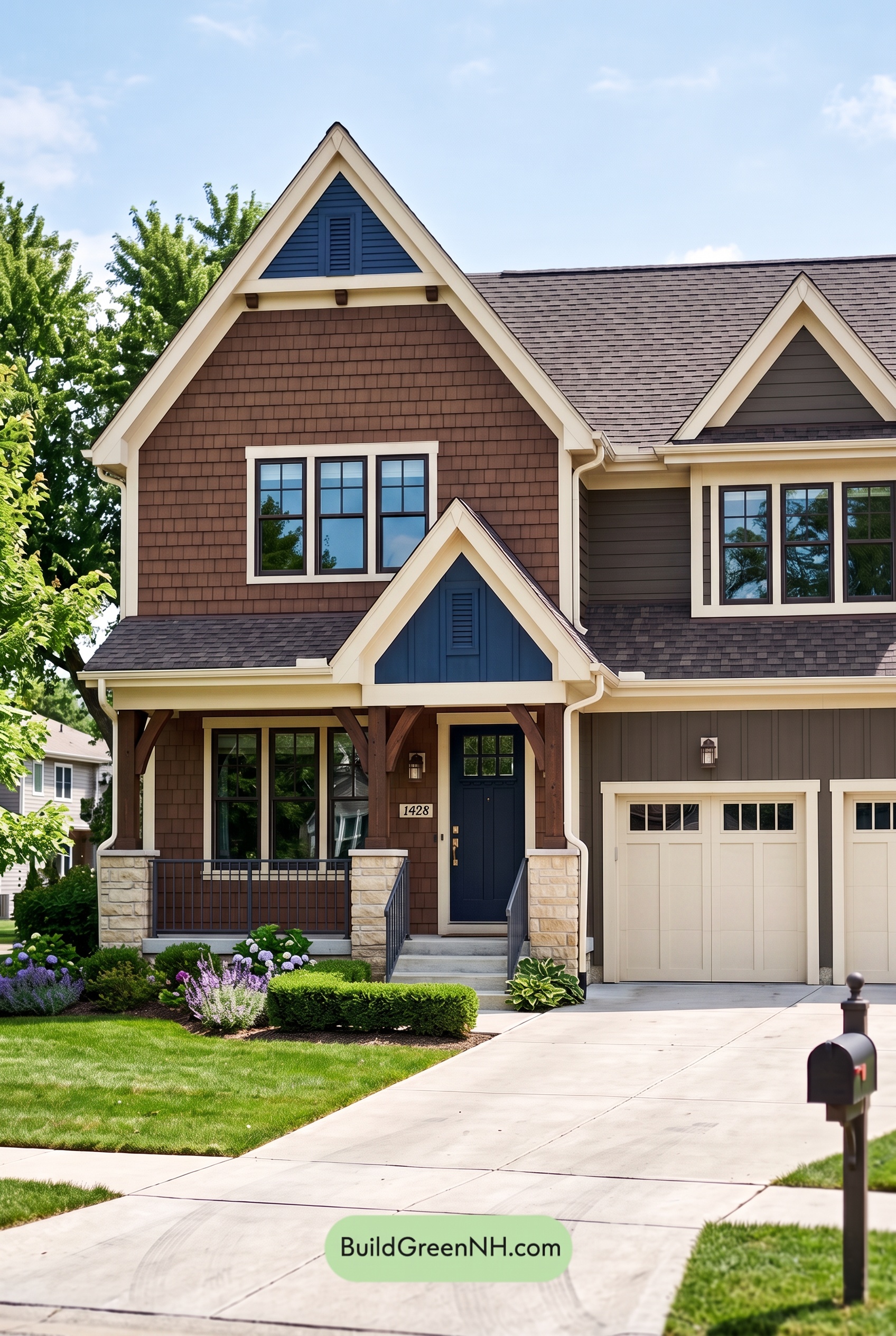 Dark Brown House Exterior Color Scheme: Bluebell Timberline
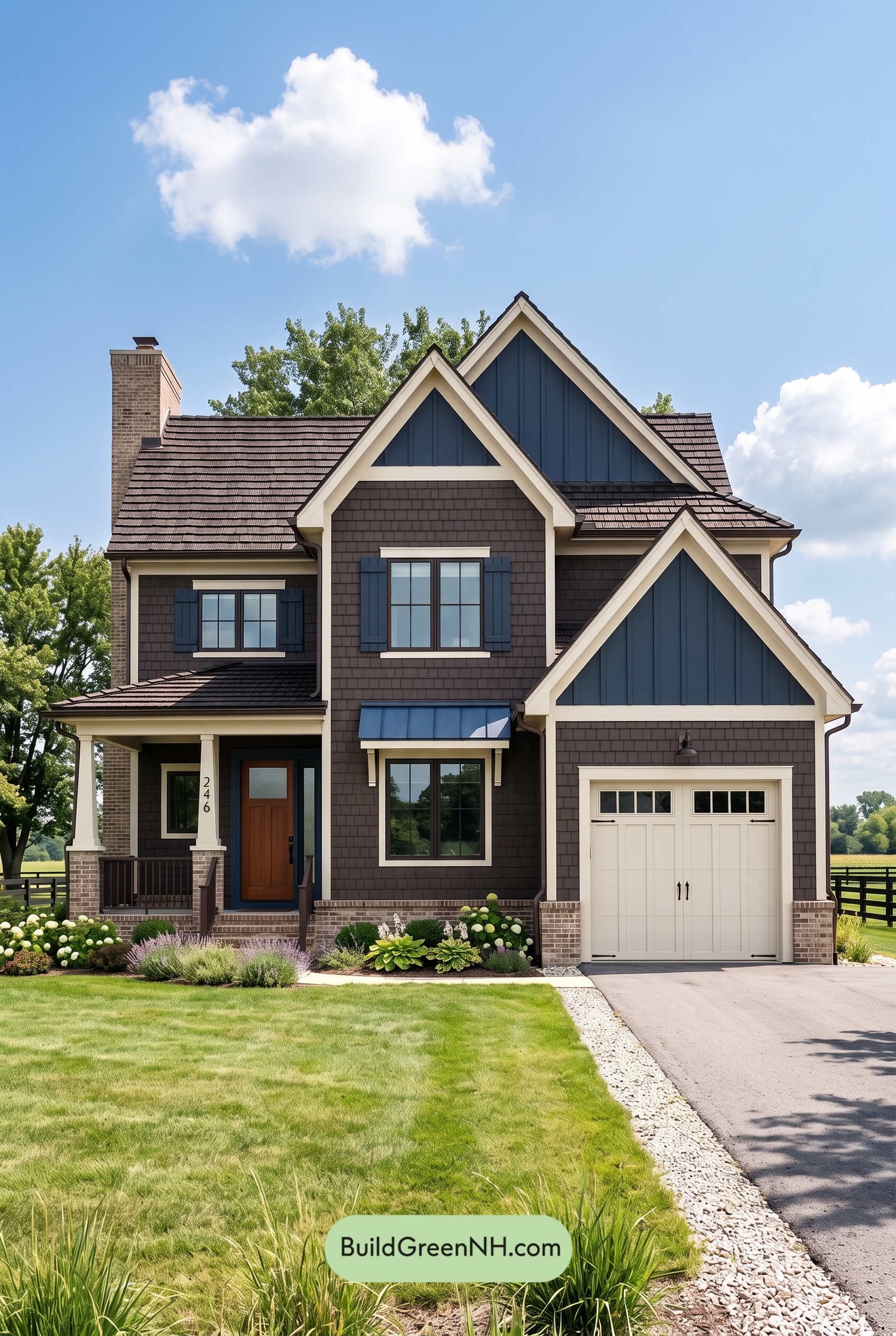 Dark Brown House Exterior Color Scheme: Sapphire Homestead
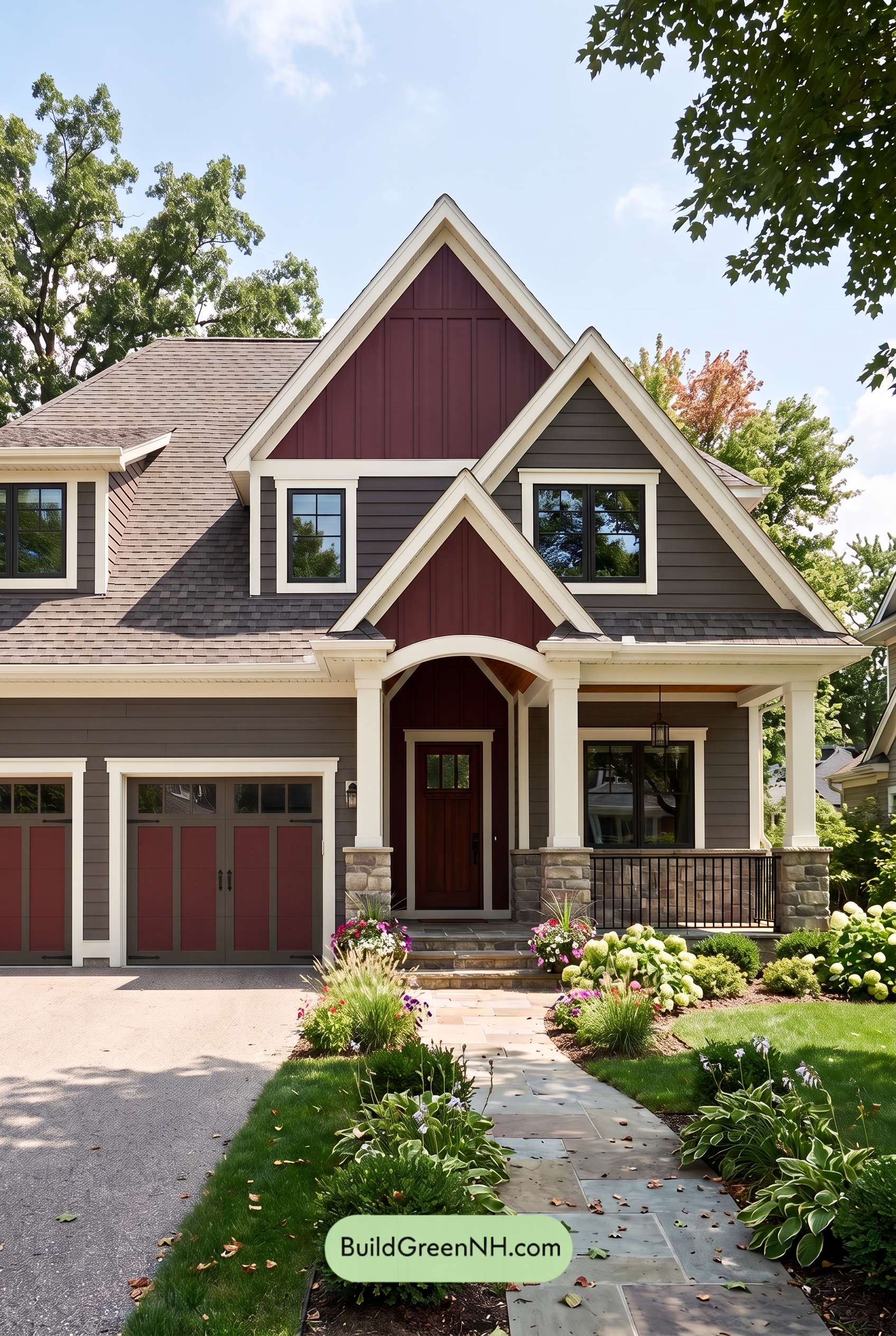 Dark Brown House Exterior Color Scheme: Hearthglow Arrival
 Dark Brown House Exterior Color Scheme: Embercrest Welcome
Table of Contents