Last updated on
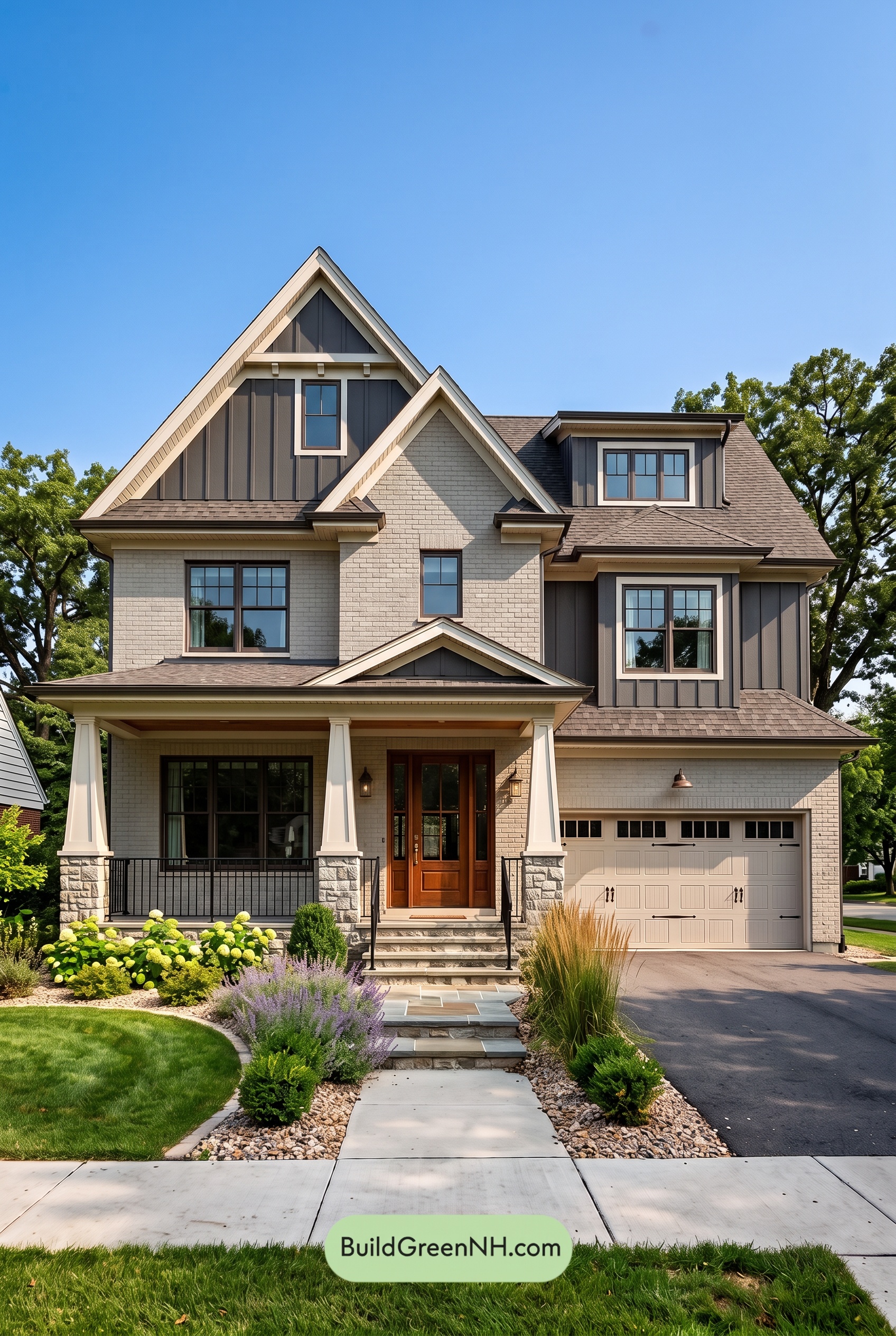

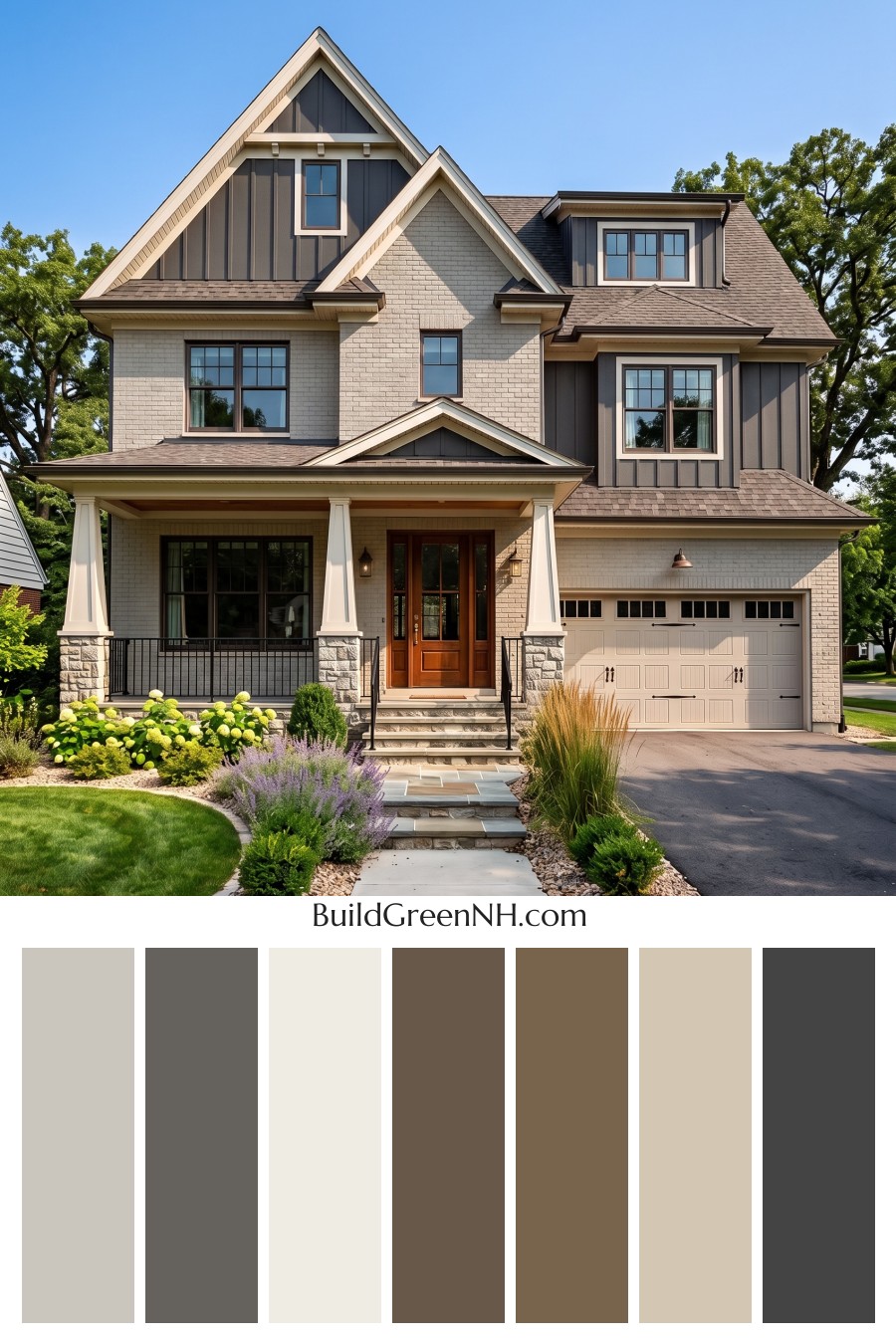
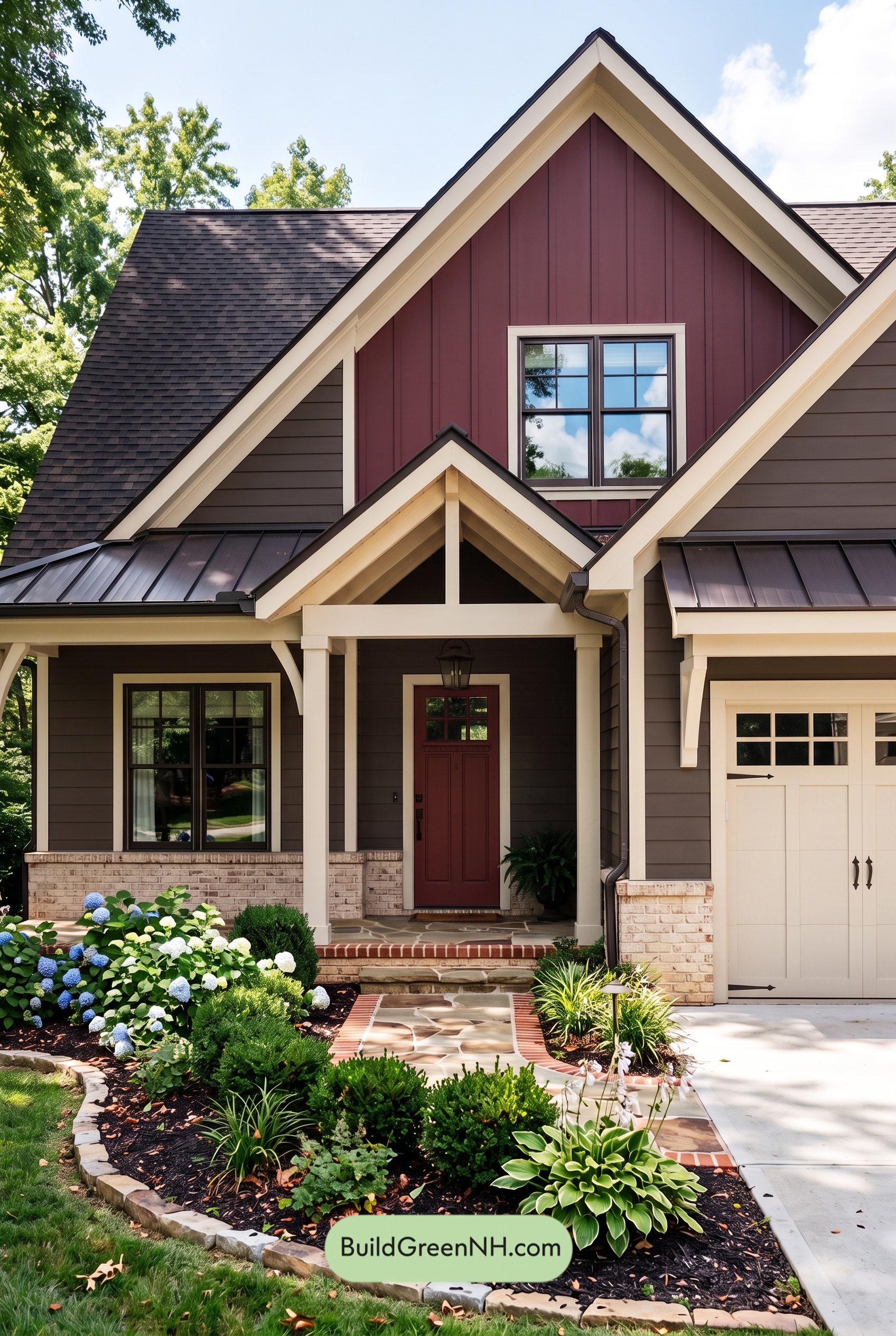
This beautifully balanced blend of warm neutrals, moody grays, and rich brown accents gives the home a polished presence that feels both timeless and welcoming.
A Layered Neutral Foundation
The main exterior is grounded by a light, warm beige that brings softness to the masonry and keeps the substantial facade from feeling heavy. This pale neutral continues onto the garage door, creating a cohesive lower level and allowing the architectural details to stand out naturally.
Above, deep gray siding adds dramatic contrast across the prominent gables and upper-story walls. The darker shade emphasizes the home’s vertical lines and steep roof forms, giving the exterior a tailored, modern-traditional character. Paired with the lighter beige base, it creates a pleasing sense of depth from top to bottom.
Bright Trim That Defines Every Detail
Crisp white trim traces the rooflines, gables, windows, and porch structure with a clean, bright edge. It is especially effective around the dark gray upper siding, where it highlights the layered peaks and makes each section of the architecture feel intentional.
The white porch columns introduce a classic, welcoming note at the entry. Their light shade visually lifts the covered porch while connecting beautifully with the window trim, fascia, and garage details.
Rich Brown Accents Bring Warmth
Deep brown window frames provide a refined bridge between the cool gray siding and the warmer beige masonry. Rather than disappearing into the facade, these darker frames give every window definition and a subtle sense of craftsmanship.
The front door becomes the warm focal point in a richer brown shade. Set beneath the bright porch trim, it creates an inviting destination and adds a natural-looking layer of warmth to the otherwise neutral palette. The brown roof, in a muted medium-to-deep shade, ties these accents upward and gives the entire exterior a grounded finish.
A Calm, Sophisticated Curb Appeal
Soft beige, deep gray, bright white, and warm brown work together here because each shade has a clear role. The light tones brighten the foundation and trim, the gray adds structure and contrast, and the brown details supply warmth and visual weight.
Dark gray railings complete the composition with a subtle graphic touch, echoing the upper siding without overwhelming the porch. The result is a house that feels elegant yet approachable: classic in its use of contrast, current in its clean neutral palette, and exceptionally welcoming from the street.
Next, see how this color scheme looks under different lighting simulations throughout the day.
Overcast
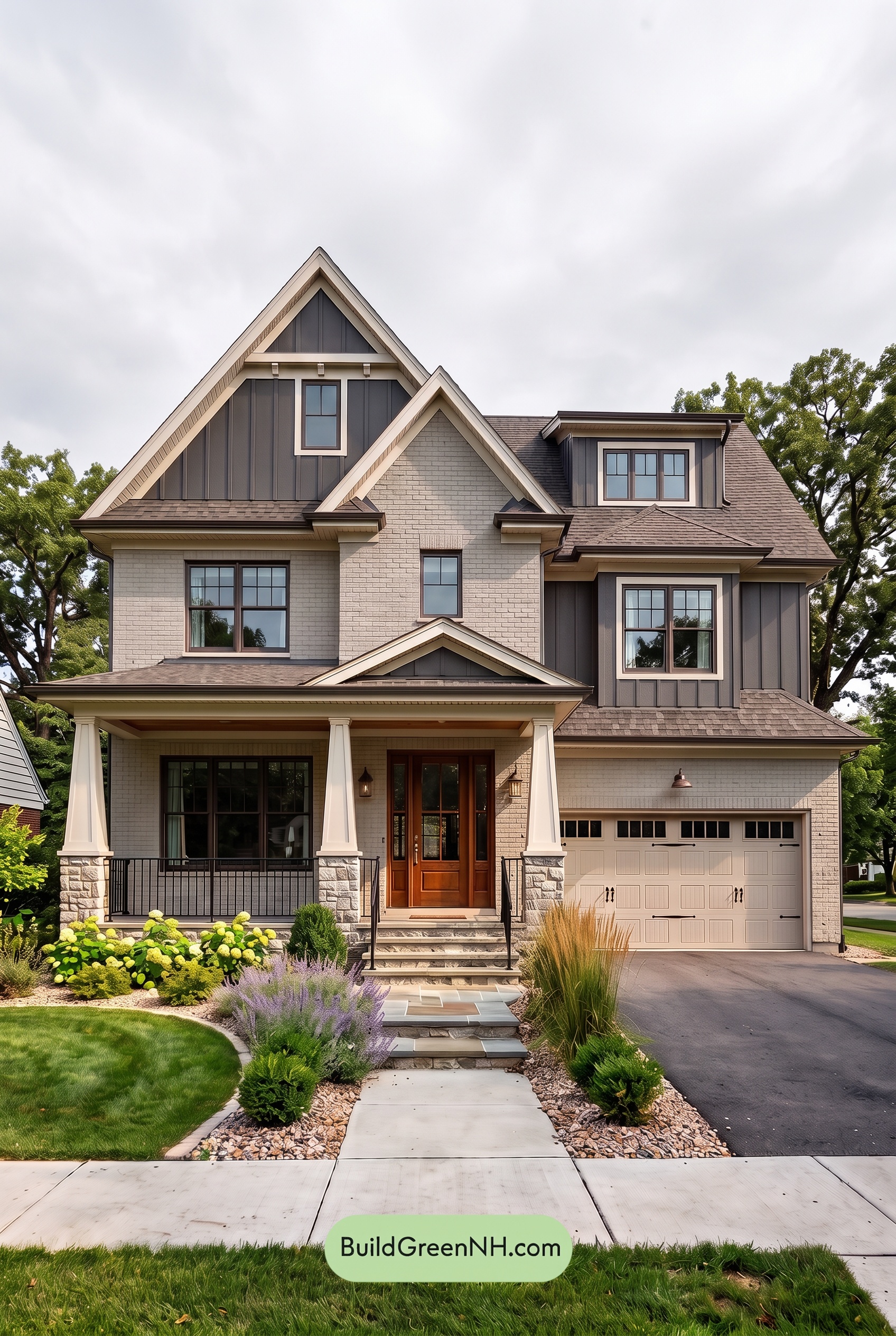
Under overcast skies, the warm beige surfaces and garage door appear softer and slightly more muted than they do in neutral daylight, while the white trim and columns lose a little of their crisp brightness. The brown window frames and entry door retain their welcoming warmth, but read deeper and more understated without direct sun.
The gray upper walls and railings take on a cooler, richer cast in the diffuse light, creating gentle contrast against the softened warm neutrals. With sharp sun shadows replaced by broad, even shading, the facade feels calmer, more cohesive, and quietly refined.
Golden Hour
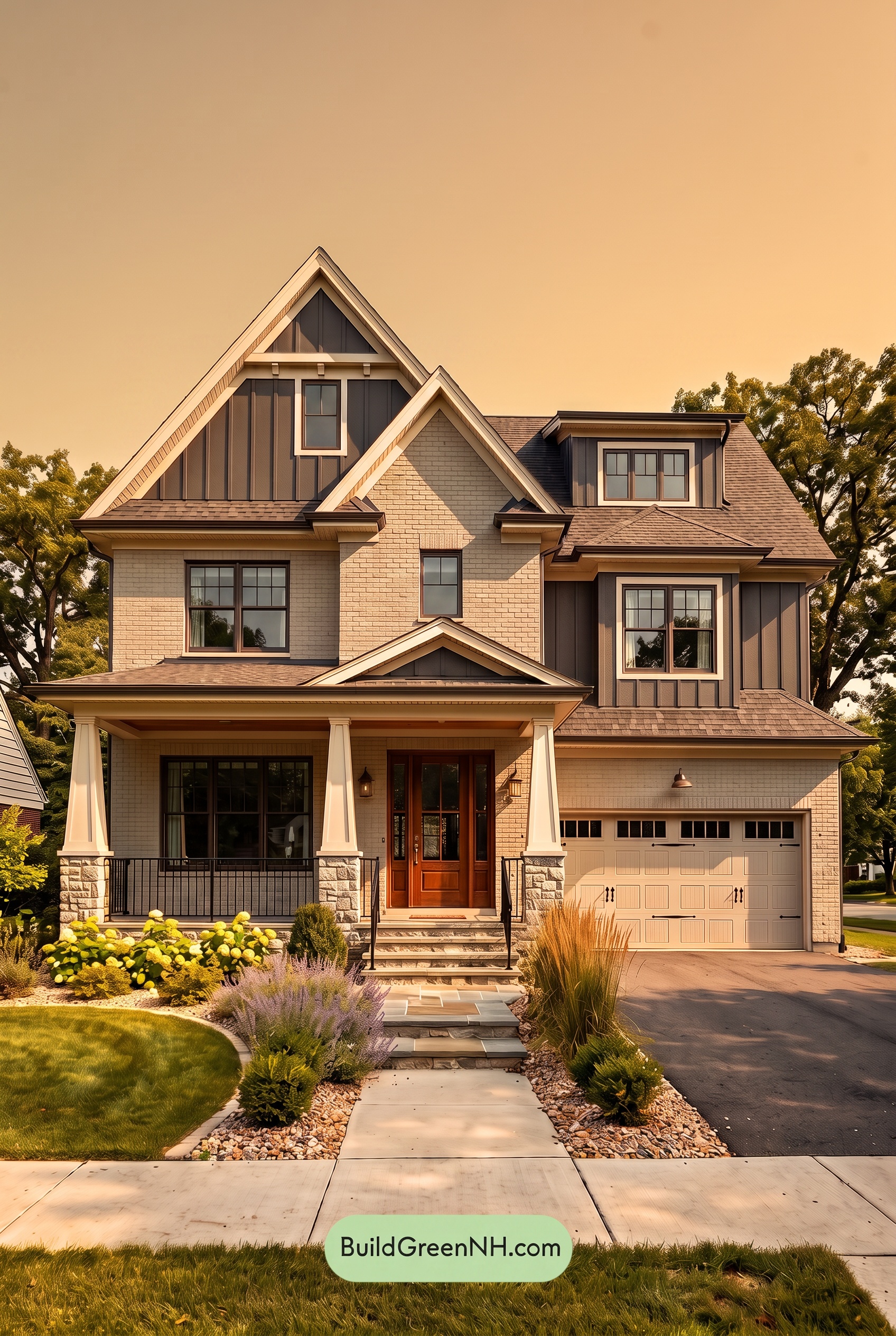
Under Golden Hour, the beige masonry and garage door take on a richer, honeyed warmth than they show in neutral daylight, while the white trim and columns soften into a creamy, sunlit shade. The brown door and window frames become more saturated and inviting, creating a stronger focal point at the entry.
The gray upper walls and railings deepen in the lengthening shadows, giving the façade more contrast and definition than under balanced daylight. Warm highlights along the rooflines and trim play against those cooler, darker areas, creating a welcoming, dimensional mood that feels both polished and cozy.
Shade
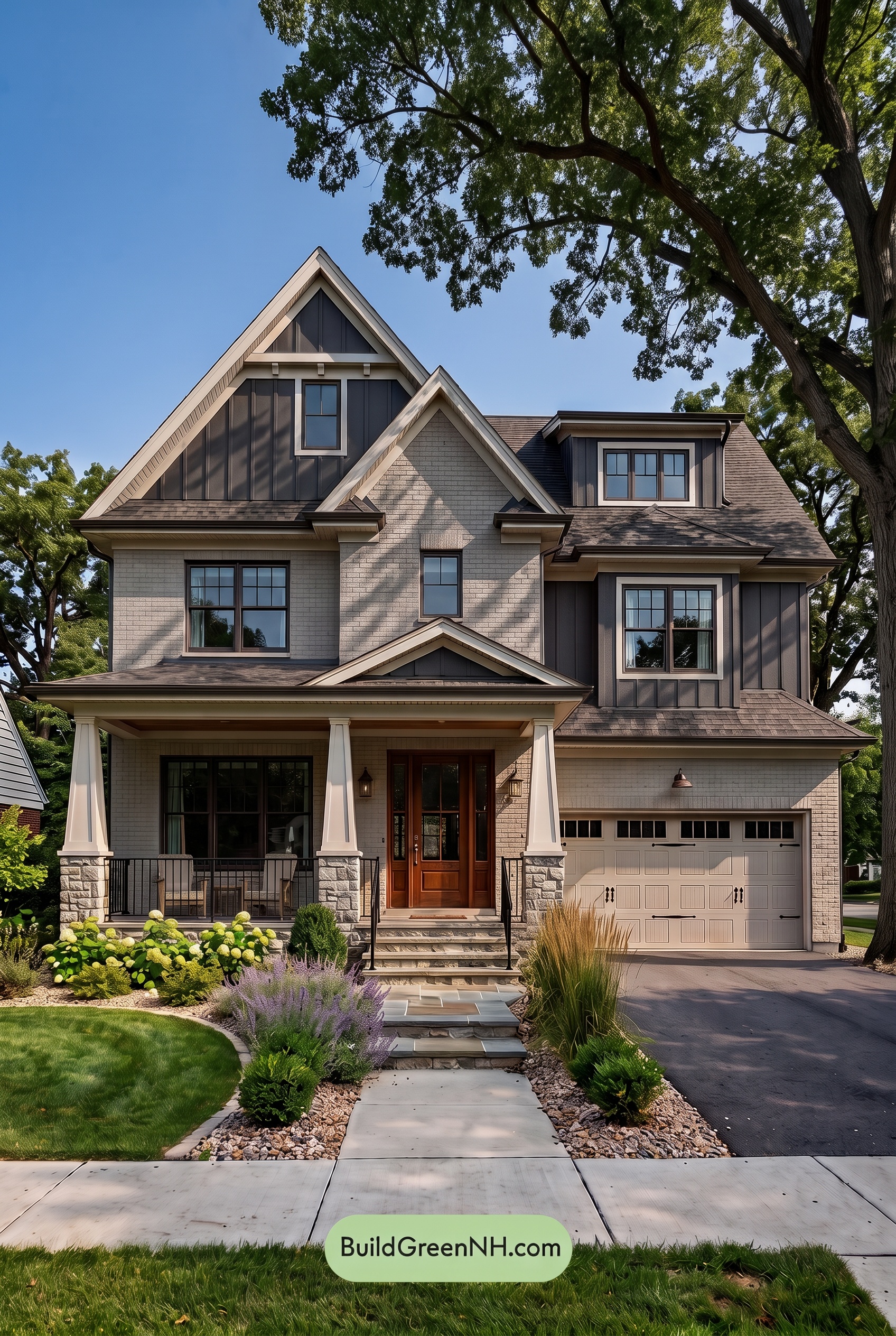
In shade, the beige exterior reads softer and more muted than it does in neutral daylight, with its warmth becoming gentler beneath the tree-filtered light. The gray upper sections deepen toward a more charcoal-like shade, while the brown window frames and entry become richer, creating a stronger, more grounded contrast against the pale trim.
Shadows across the façade amplify the home’s layered lines and shift the overall mood from bright and airy to calm and tailored. White trim and columns lose a little brightness in the shade, appearing creamier and less crisp, while the darker gray and brown accents gain visual weight and give the exterior a cozy, dramatic presence.
Nighttime
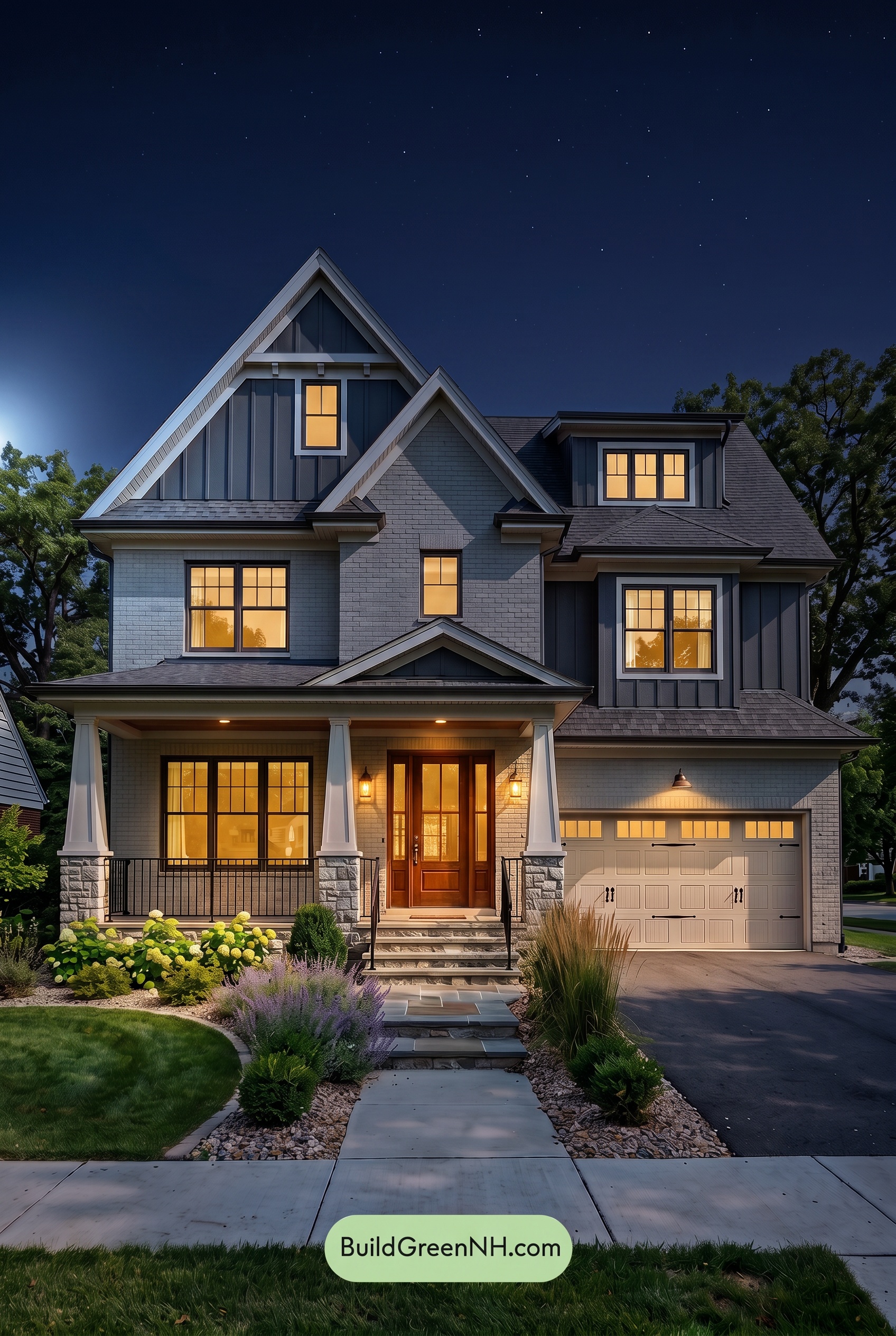
At night, the gray upper sections deepen into a moodier, lower-saturation shade, while the beige masonry and garage areas pick up a softer, subtly warmer cast near the entry lighting. White trim and columns become crisp points of brightness, creating stronger contrast against the darkened rooflines, railings, and window framing than they do in neutral daylight.
Warm interior and porch light brings the brown door and frames forward, giving the entry a welcoming glow amid the cool nighttime shadows. Details that appear evenly balanced during the day become more dramatic after dark: recesses grow deeper, layered gables feel sharper, and the mix of cool grays, warm neutrals, and bright whites creates a polished, inviting evening mood.
Pin these for later:
Want More?
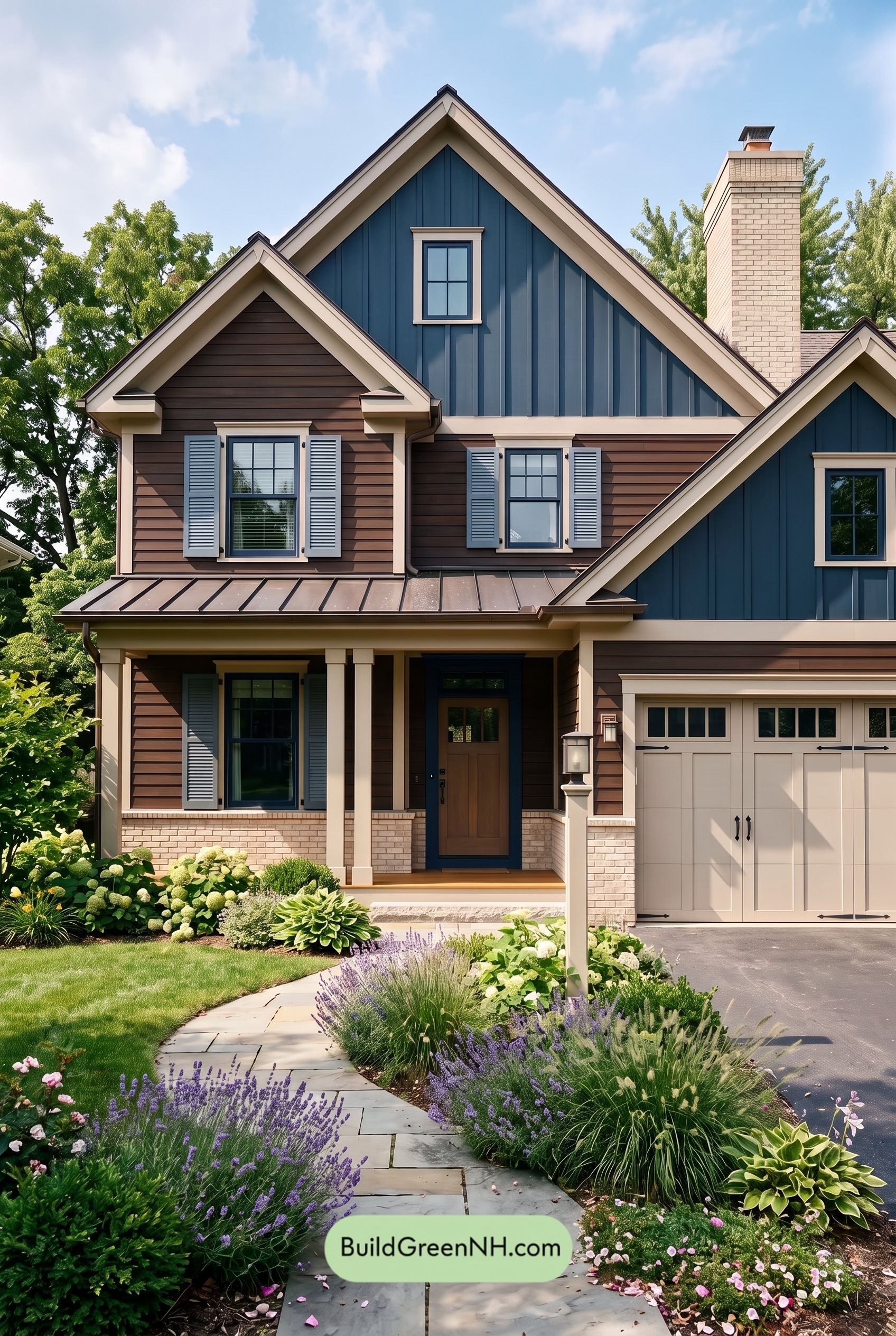 Dark Brown House Exterior Color Scheme: Inkwood Lantern
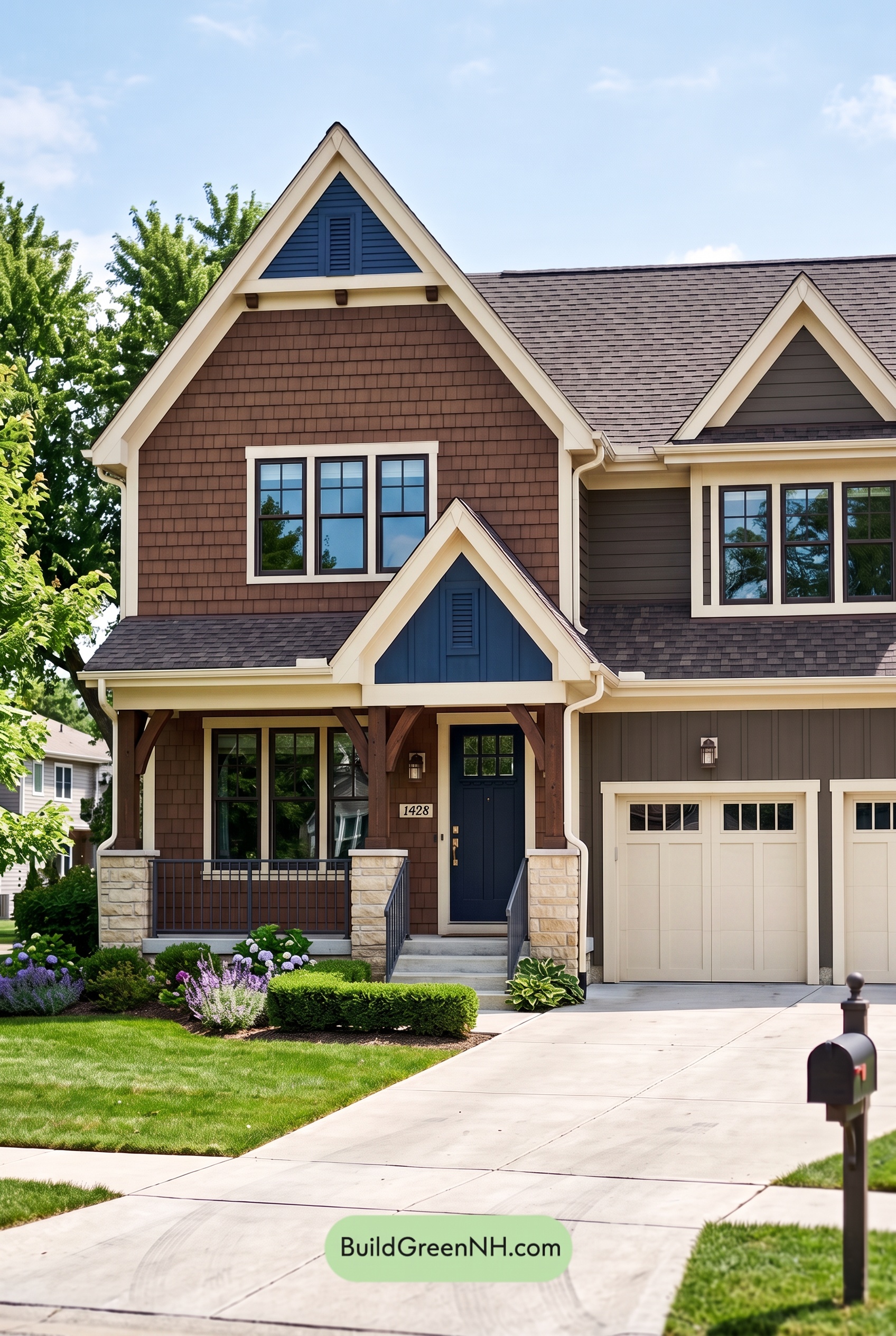 Dark Brown House Exterior Color Scheme: Bluebell Timberline
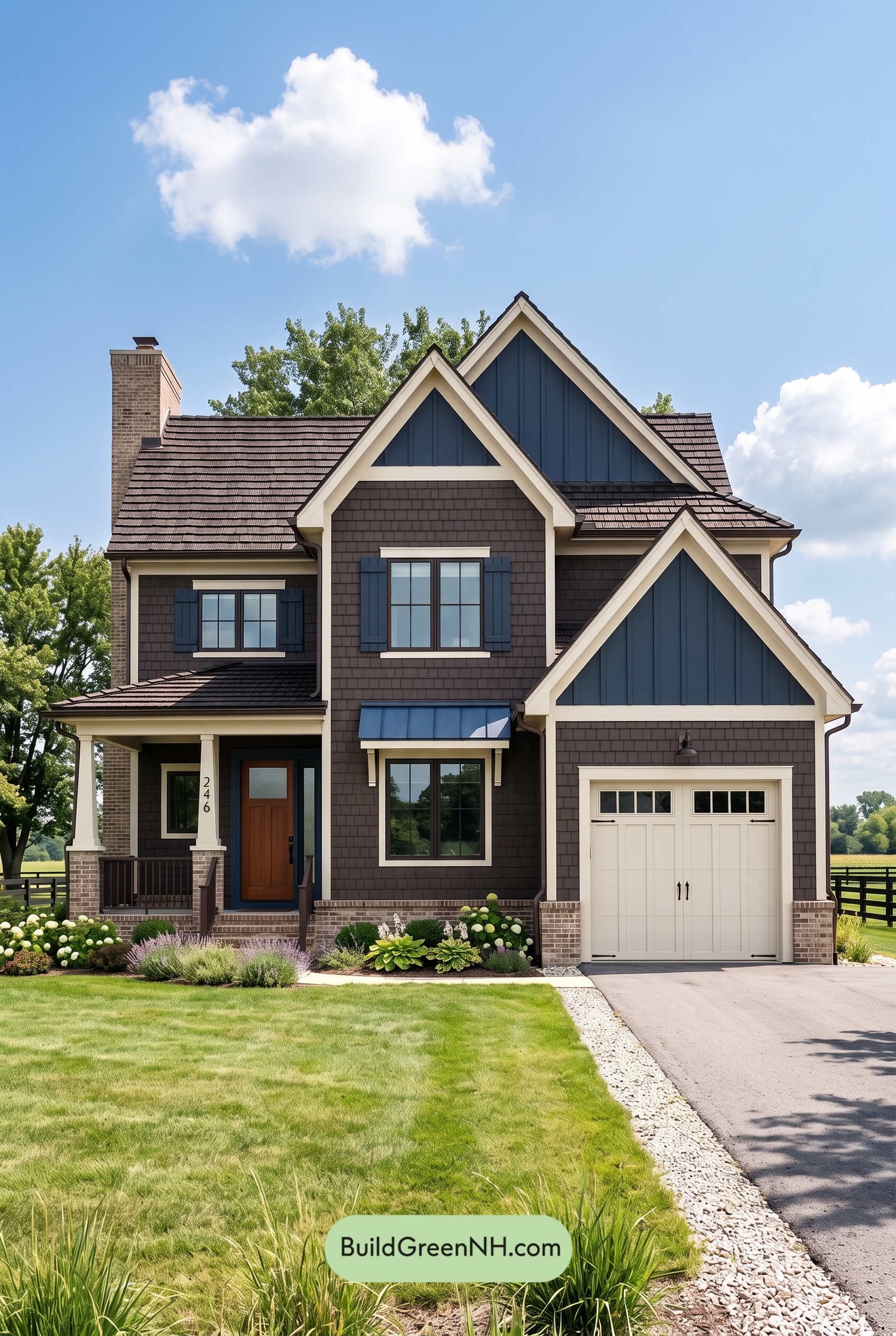 Dark Brown House Exterior Color Scheme: Sapphire Homestead
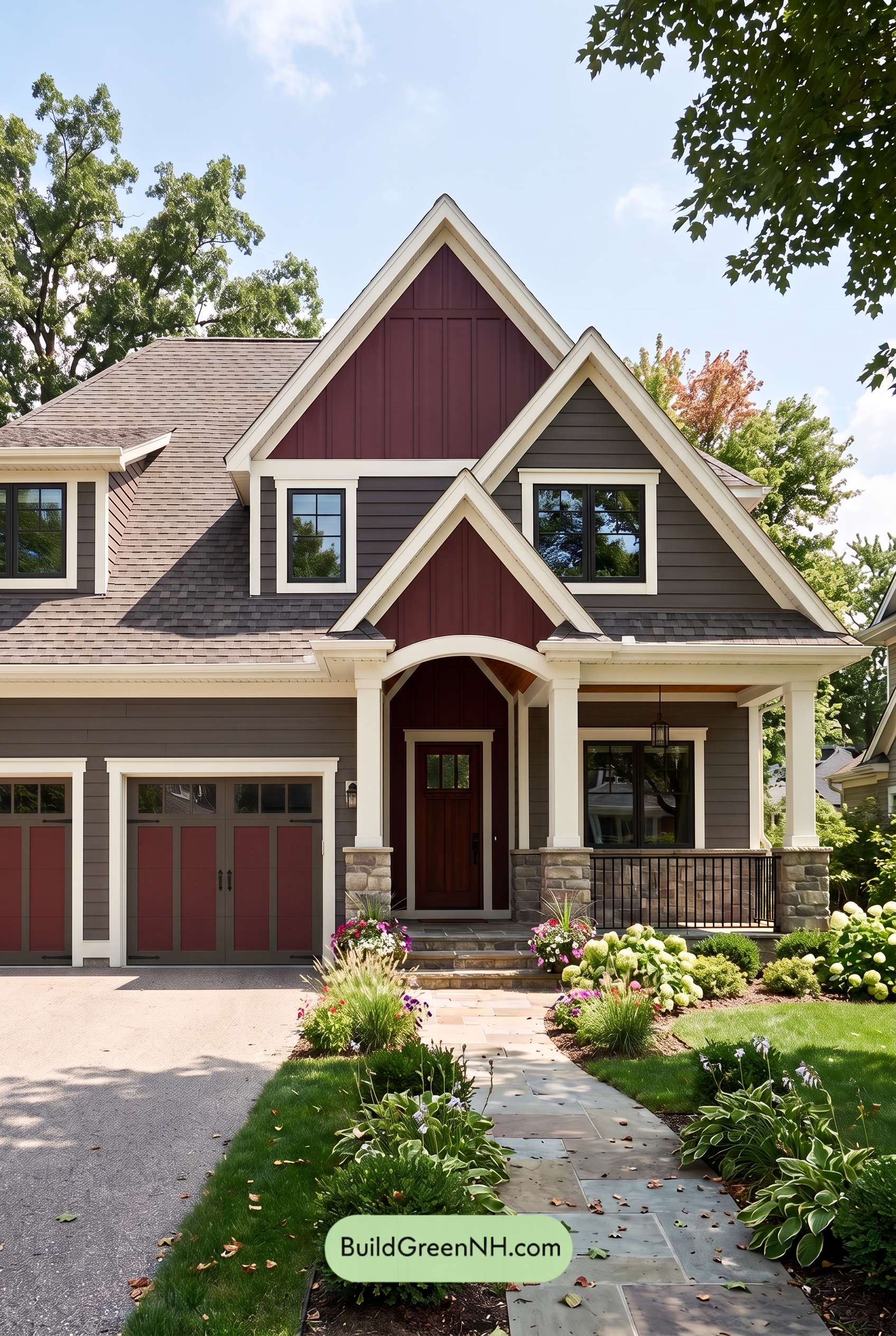 Dark Brown House Exterior Color Scheme: Hearthglow Arrival
 Dark Brown House Exterior Color Scheme: Embercrest Welcome
Table of Contents