Last updated on
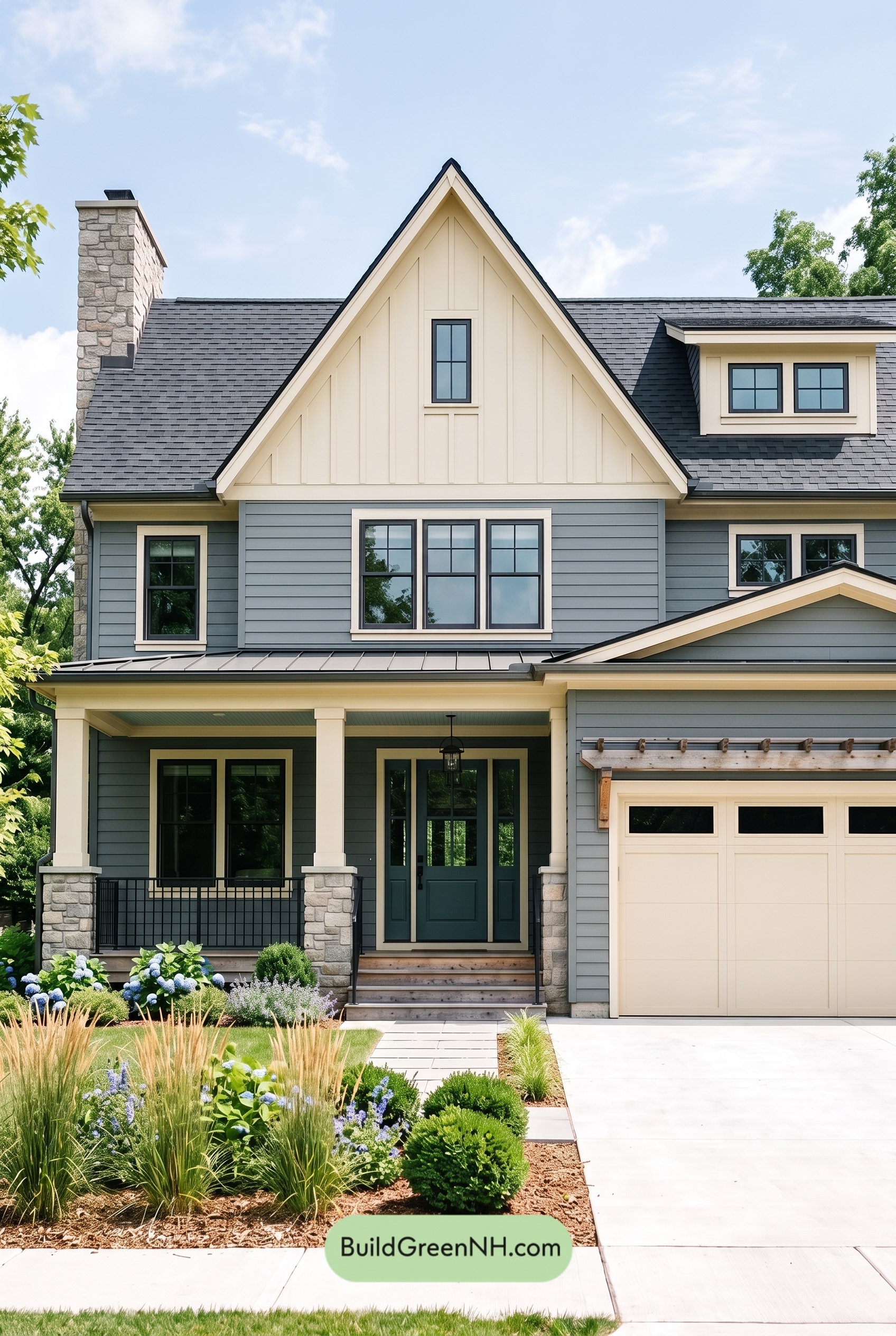

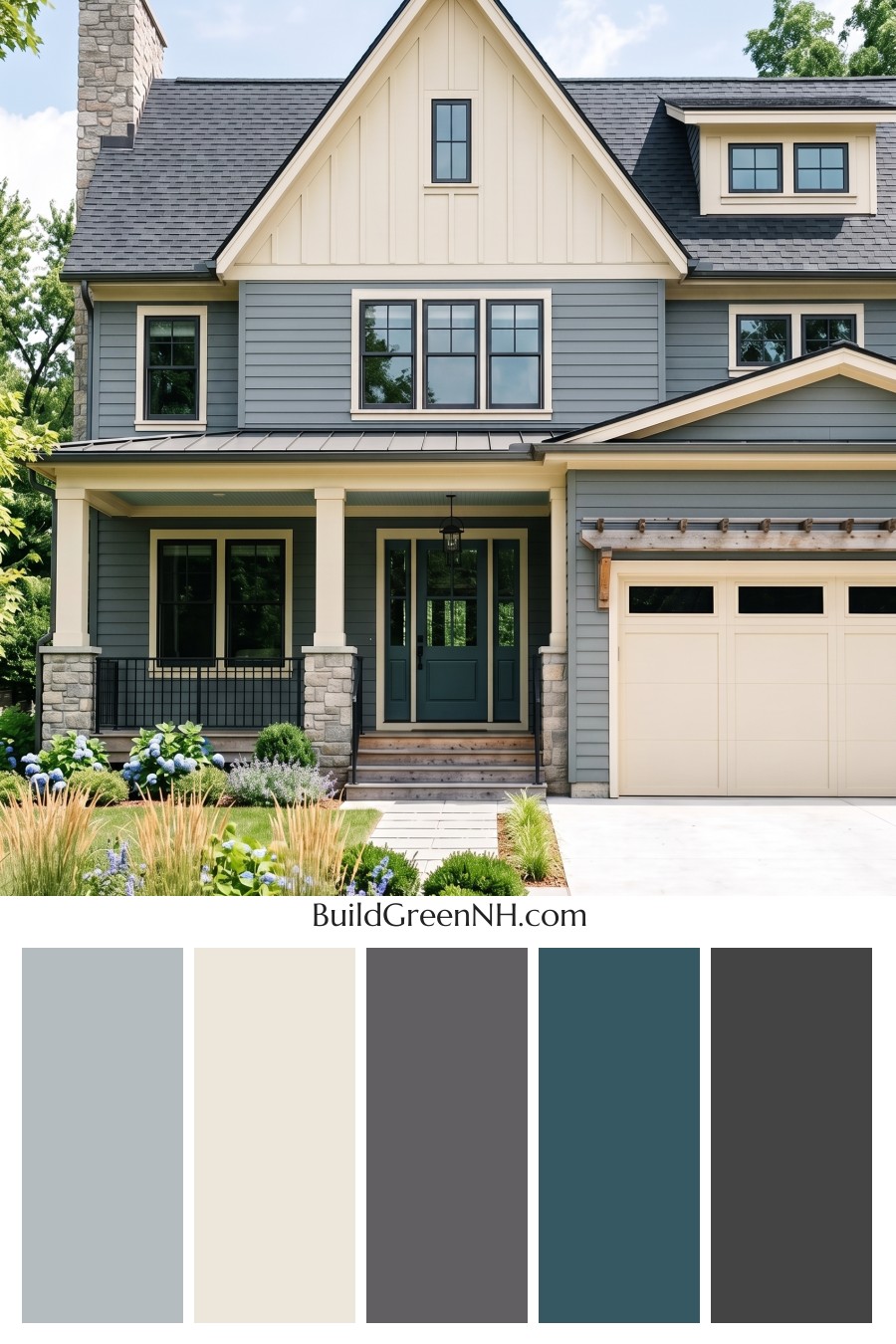
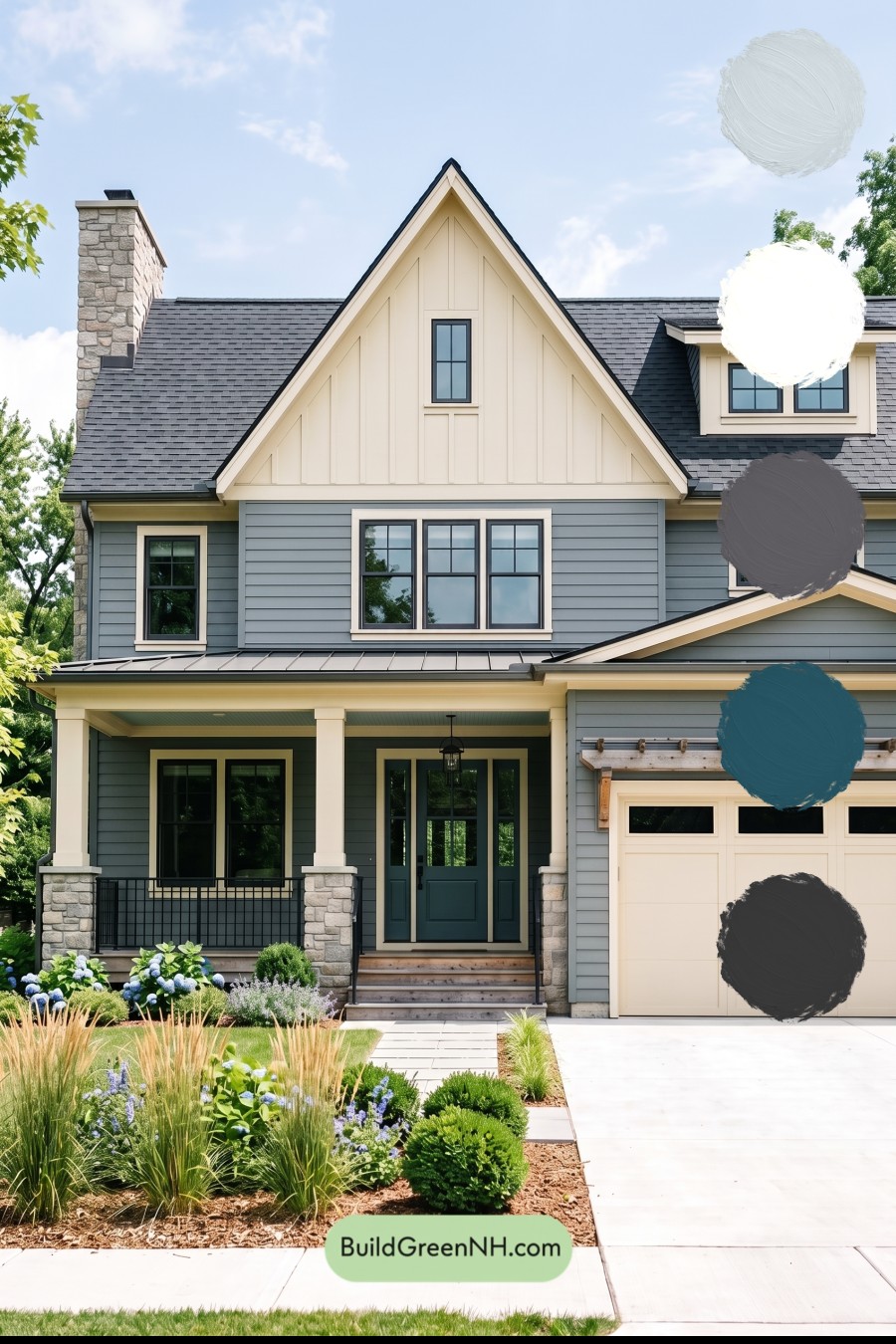
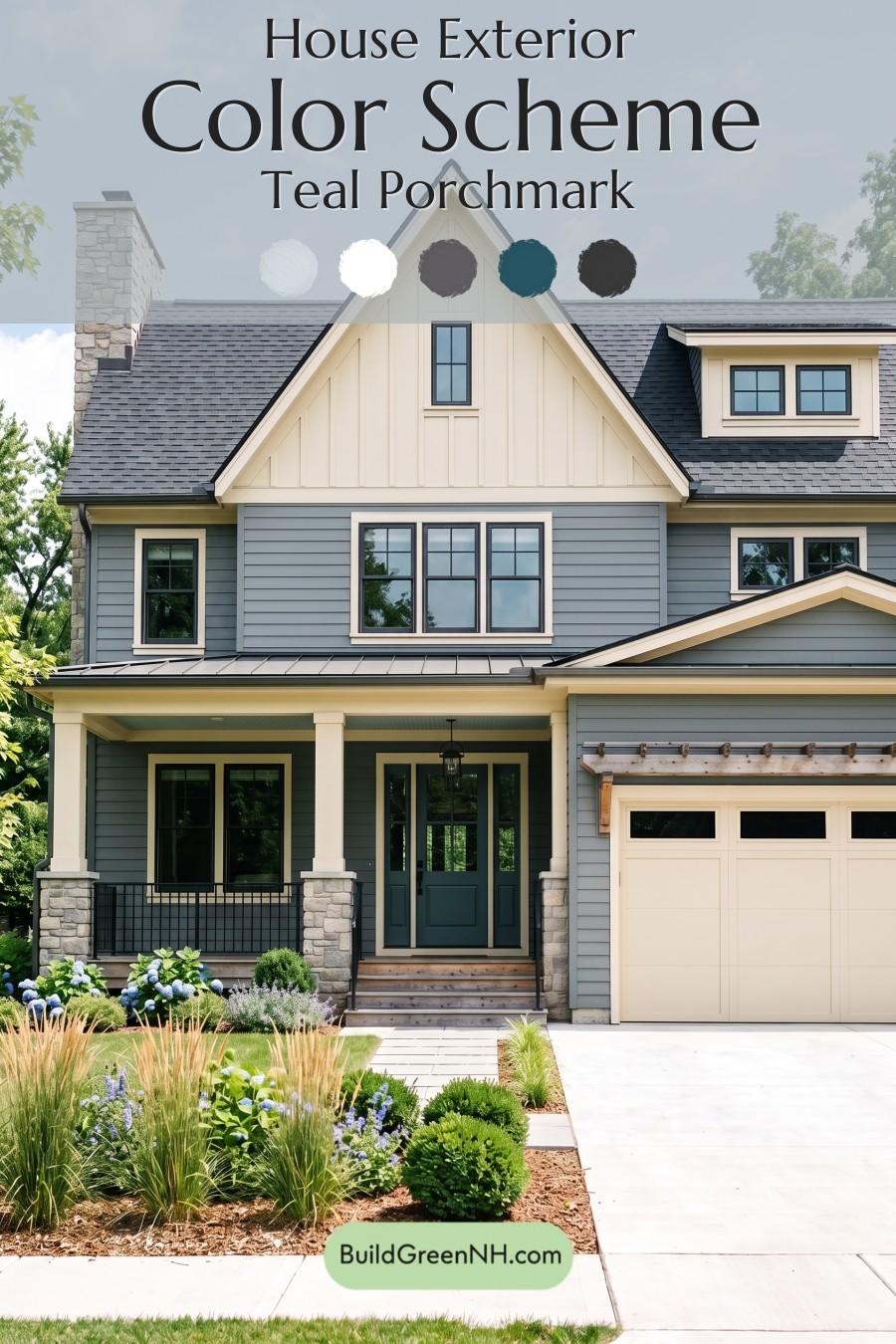
This layered mix of soft gray, creamy white, and dramatic dark accents gives the home a polished look that feels both welcoming and timeless.
A Balanced Foundation of Soft Gray
The main siding is finished in a calm, mid-tone gray that provides a refined backdrop for the home’s substantial facade. Its gently cool character feels fresh against the landscaping while giving the many gables, windows, and porch details a cohesive base.
The same gray family carries through the lower walls and garage-side elevation, creating continuity across the exterior. A slightly deeper gray presence at the window frames and railings adds definition without interrupting the relaxed flow of the design.
Warm White Highlights the Architecture
A soft warm white brightens the upper gable, broad trim boards, porch columns, garage door, and window surrounds. This light shade draws attention to the home’s crisp rooflines and vertical gable detailing, making the architecture feel even more tailored.
Because the white has a subtle warmth, it avoids looking stark beside the gray siding. Instead, it brings a gentle, inviting contrast that works beautifully with the natural gray stone at the chimney and column bases.
Dark Accents Add Depth
Deep charcoal-gray roofing grounds the light-and-dark balance from above, giving the home a strong silhouette against the sky. The dark window frames, metal roof edge details, porch railings, and near-black entry door echo that roof color in smaller, intentional moments.
The front door is especially effective: its rich, nearly black shade creates a memorable focal point at the porch while lending the entry a sense of depth and sophistication. Paired with dark hardware and railings, it gives the welcoming white-and-gray palette a tailored finish.
An Inviting, Modern-Classical Mood
Overall, this exterior feels classic yet current. The soft gray siding offers everyday versatility, warm white trim keeps the facade luminous, and the dark accents deliver enough contrast to make every architectural layer stand out.
It is a color scheme that feels equally at home among mature greenery, natural stone, and clean contemporary landscaping—quietly elegant from the curb and full of thoughtful detail up close.
Next, see how this color scheme looks under different lighting simulations throughout the day.
Overcast
Under overcast skies, the gray siding takes on a quieter, slightly deeper cast than it shows in neutral daylight, while its cool undertones become more noticeable. The light white areas lose some of their sunlit brightness, reading softer and less creamy, with lower saturation creating a more even, refined appearance across the facade.
Because clouds diffuse the light, strong shadows around the porch, trim, and window frames relax into gentler definition. The near-black accents still provide a crisp anchor, but the overall contrast feels less sharp and more cohesive, giving the exterior a calm, polished mood with a subtle cool-weather character.
Golden Hour
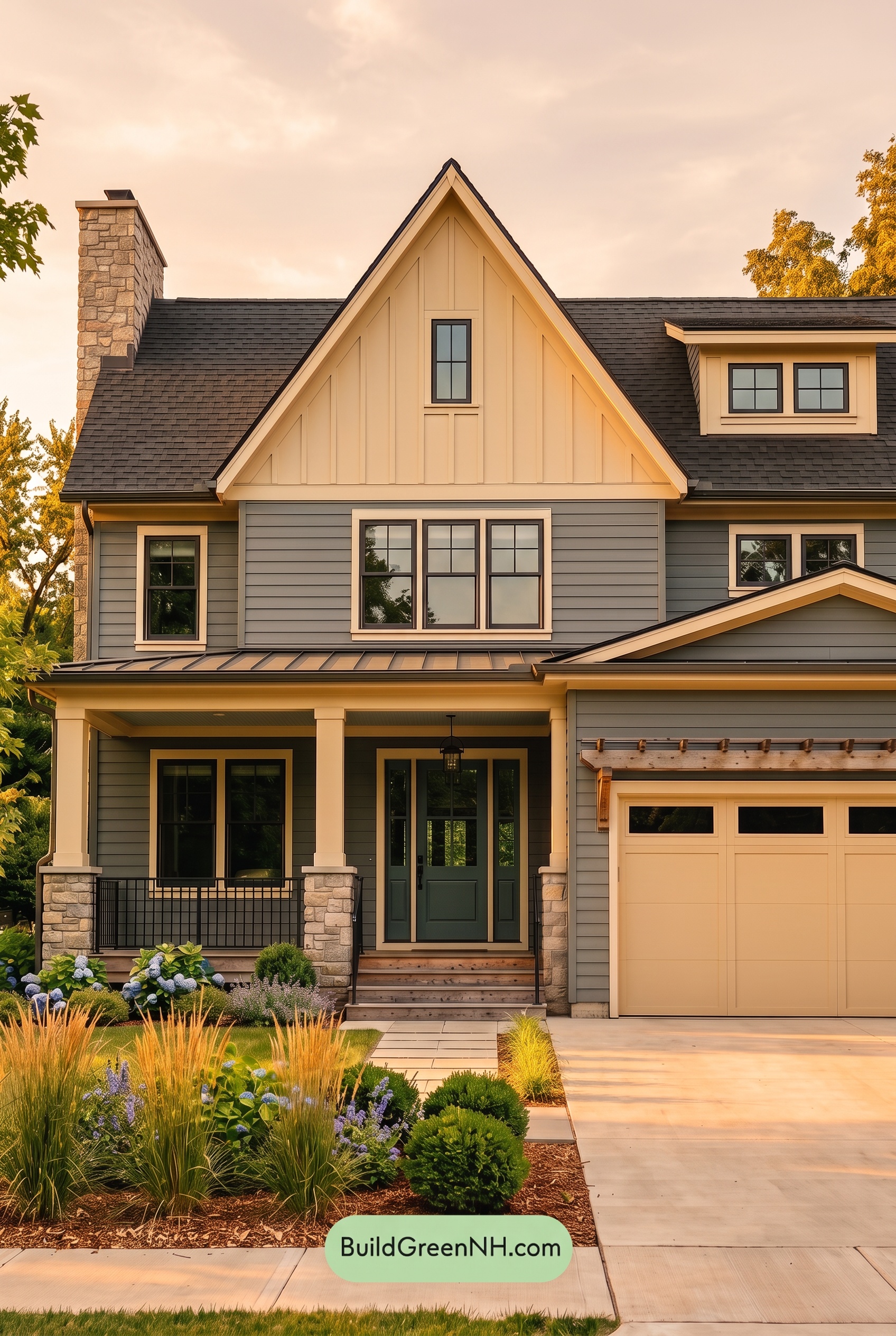
In neutral daylight, the gray siding reads crisp and balanced against the bright white trim and upper wall. At Golden Hour, that gray takes on a softer, warmer cast, while the white elements glow with a gentle creaminess. The result is richer apparent saturation and a more welcoming blend between the home’s cool and warm undertones.
Low-angle sunlight deepens the black door, dark window frames, and gray railings, creating stronger shadow lines around the porch and roof details. This heightened contrast gives the facade extra dimension, while the softened light turns the overall mood from clean and tailored to cozy, golden, and inviting.
Shade
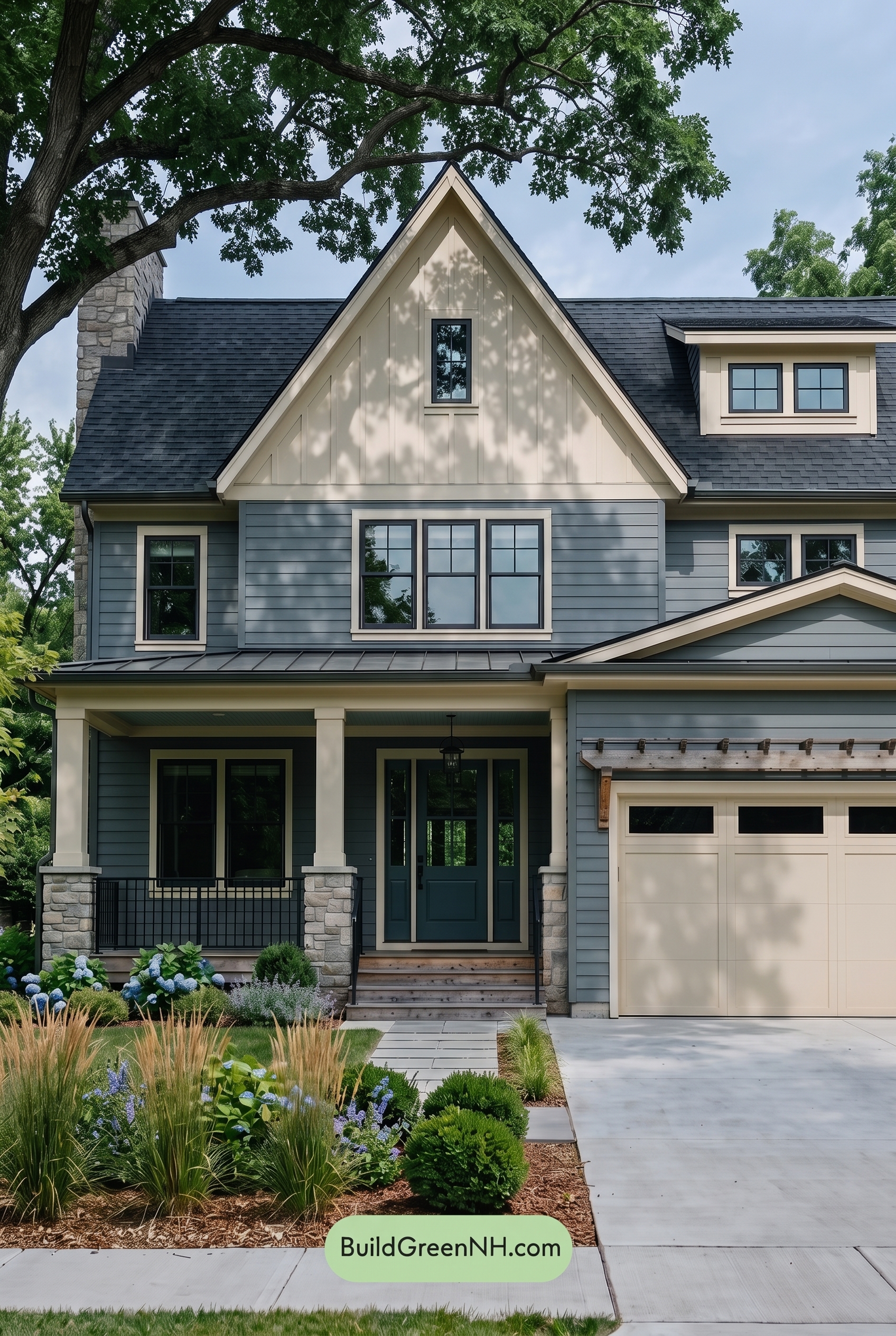
Under the tree’s shade, the gray siding reads deeper and slightly cooler than it would in neutral daylight, with its saturation softened by the filtered light. The white upper wall, trim, columns, and garage door take on a gentler, warmer cast, so their brightness feels creamy rather than crisp.
Moving leaf shadows create shifting layers across the façade, strengthening the dark contrast at the window frames, railings, and front door while muting transitions elsewhere. Compared with neutral daylight, the overall palette feels more grounded and serene, with a quiet, sheltered mood that makes the architectural details feel especially inviting.
Nighttime
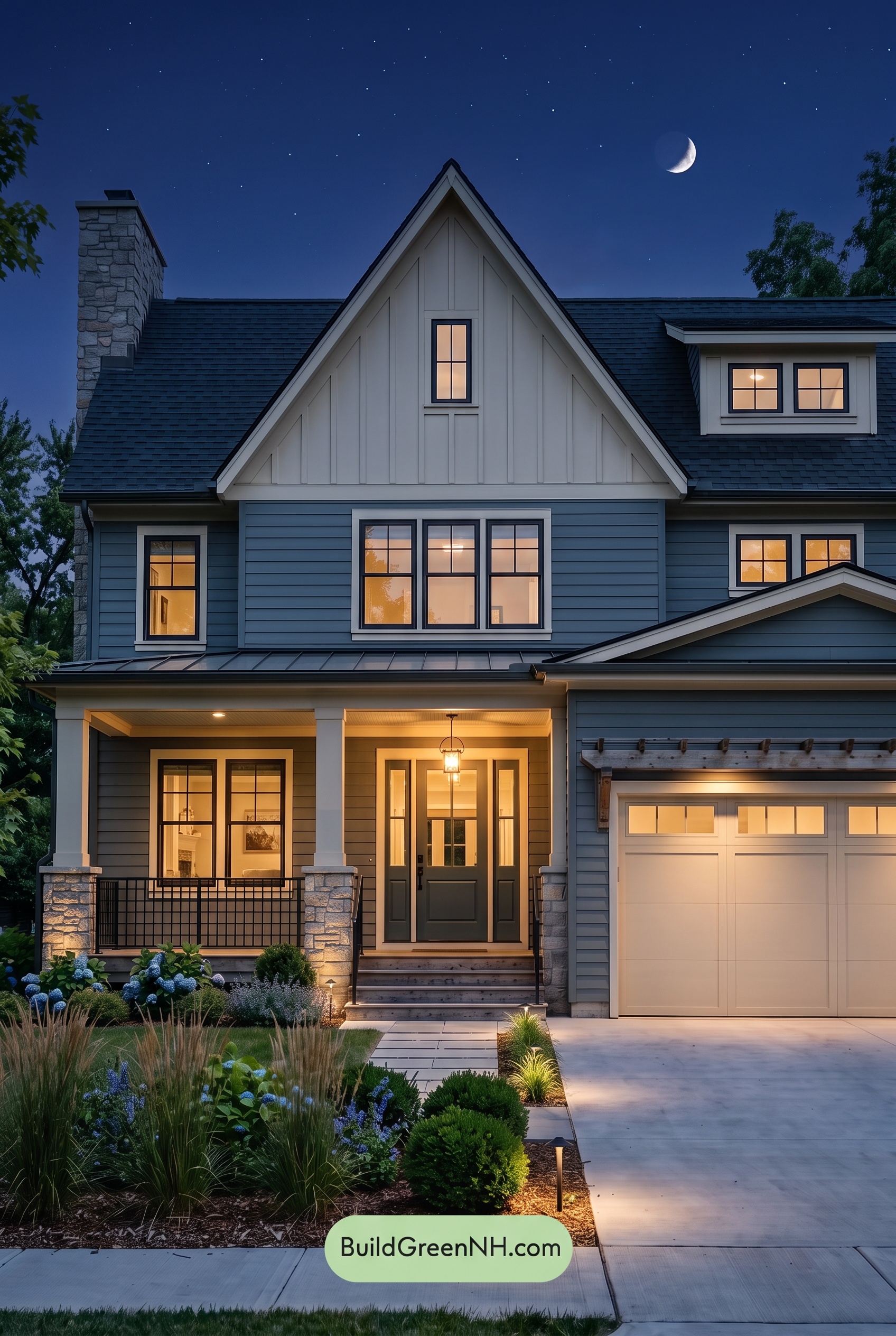
At night, the gray siding takes on a deeper, more muted character than it has in neutral daylight, with its cool undertones becoming more pronounced in the surrounding shadows. The white upper wall, trim, columns, and garage door appear softer and slightly warmer where porch and interior lights fall, while receding to a gentle silvery shade away from the glow.
The darkest accents gain dramatic definition after dusk, sharpening the contrast around windows, railings, and the entry. Warm light spilling from the windows and porch creates a welcoming counterpoint to the cool gray and white exterior, giving the home a calm, layered mood that feels both polished and inviting.
Pin these for later:
Want More?
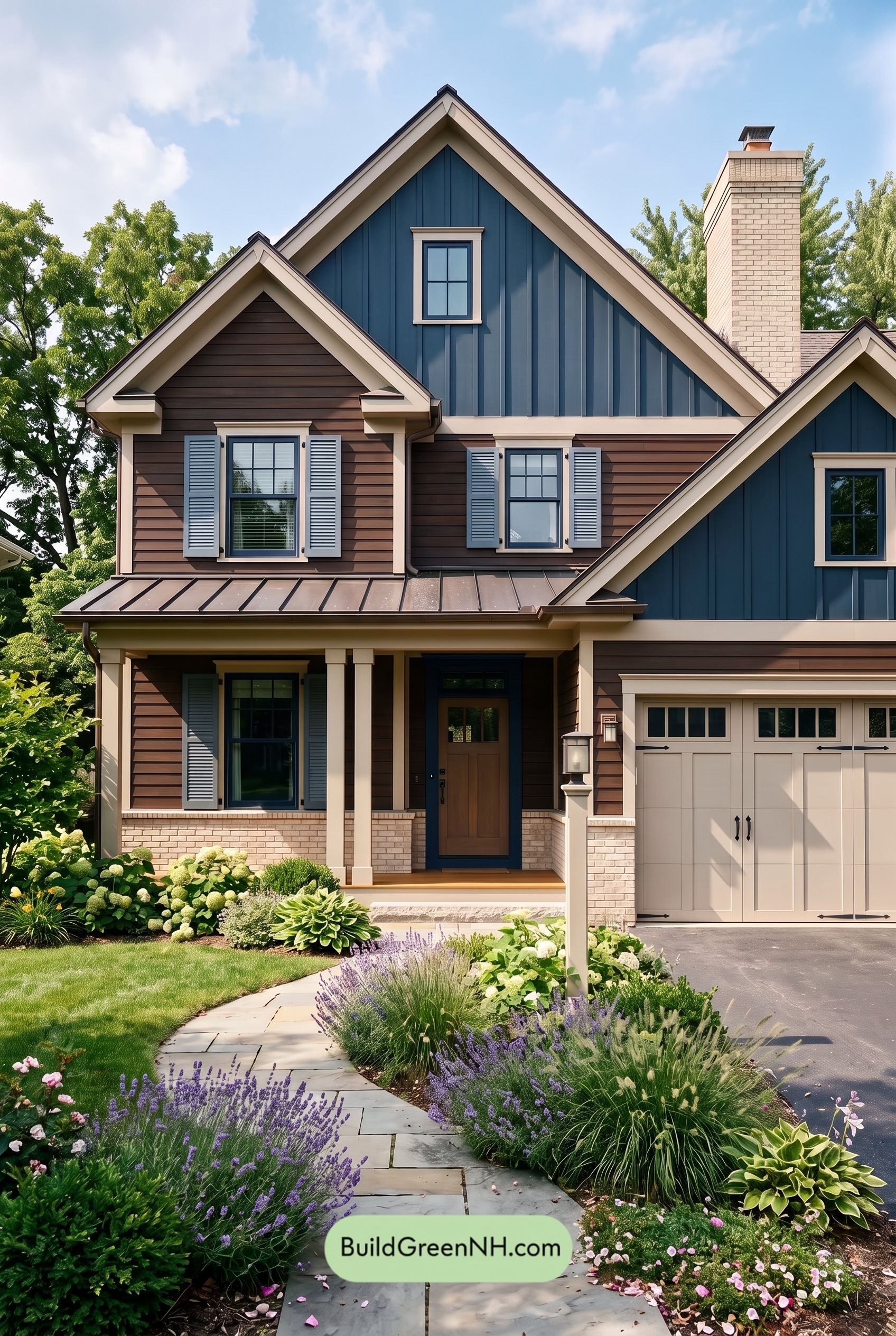 Dark Brown House Exterior Color Scheme: Inkwood Lantern
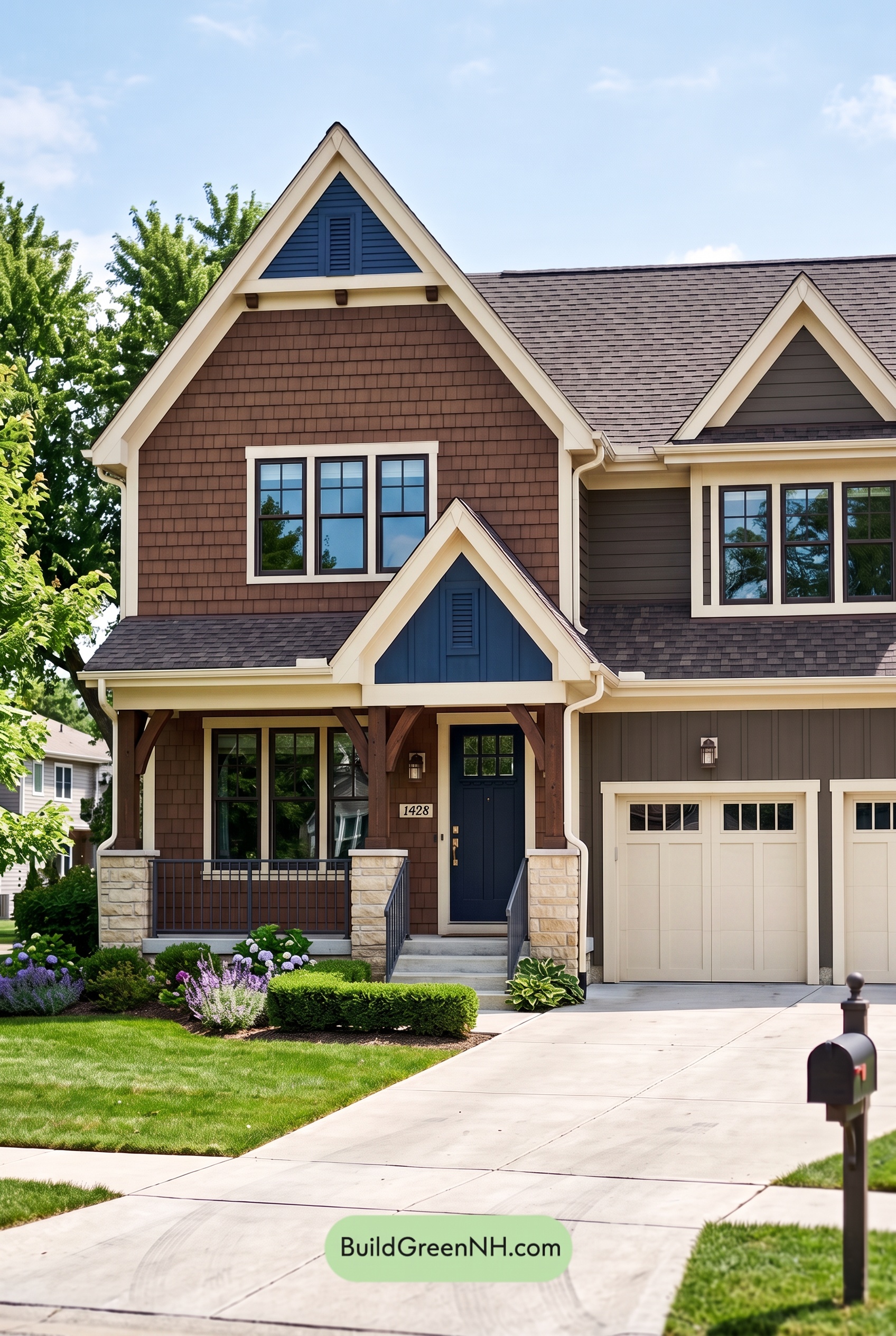 Dark Brown House Exterior Color Scheme: Bluebell Timberline
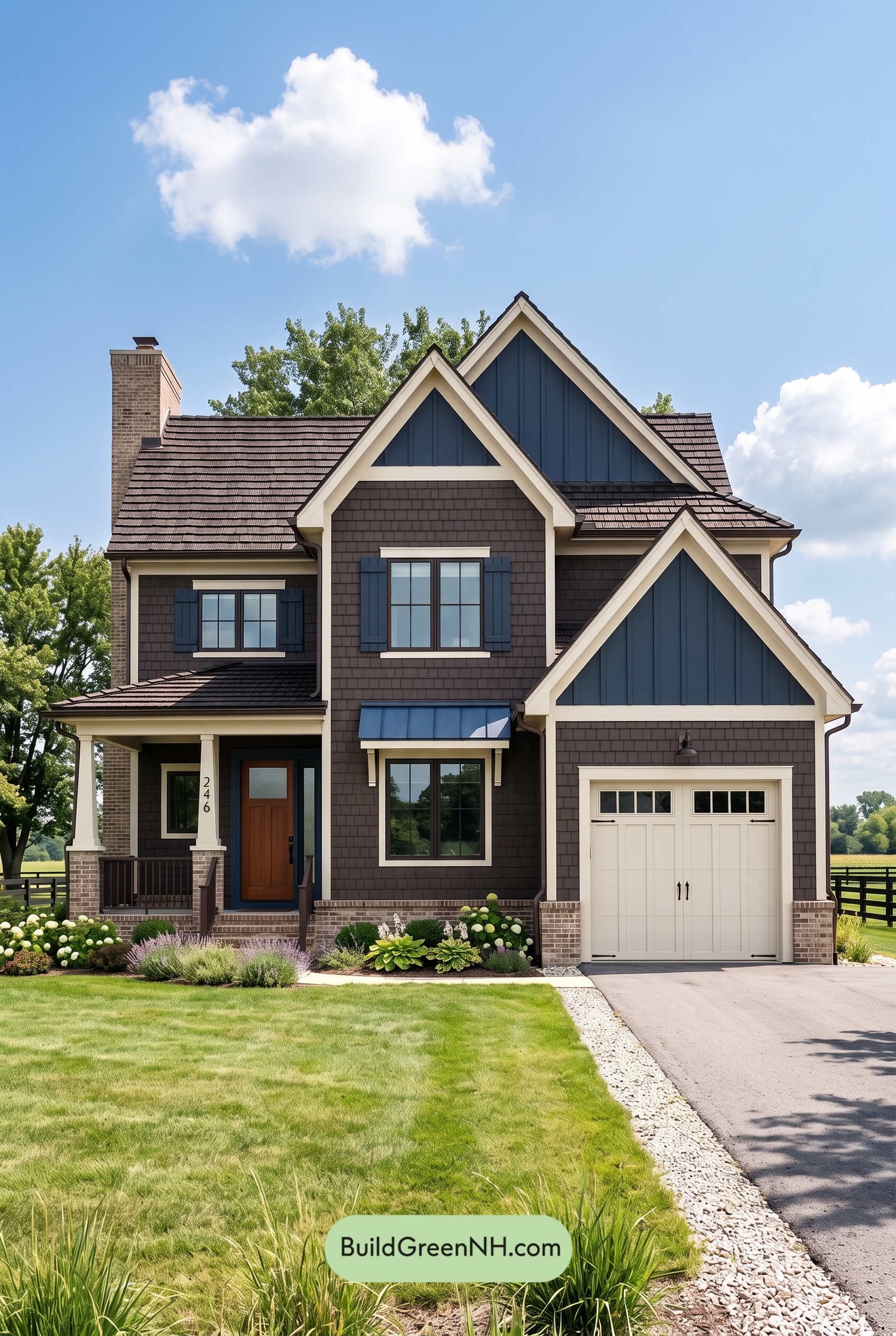 Dark Brown House Exterior Color Scheme: Sapphire Homestead
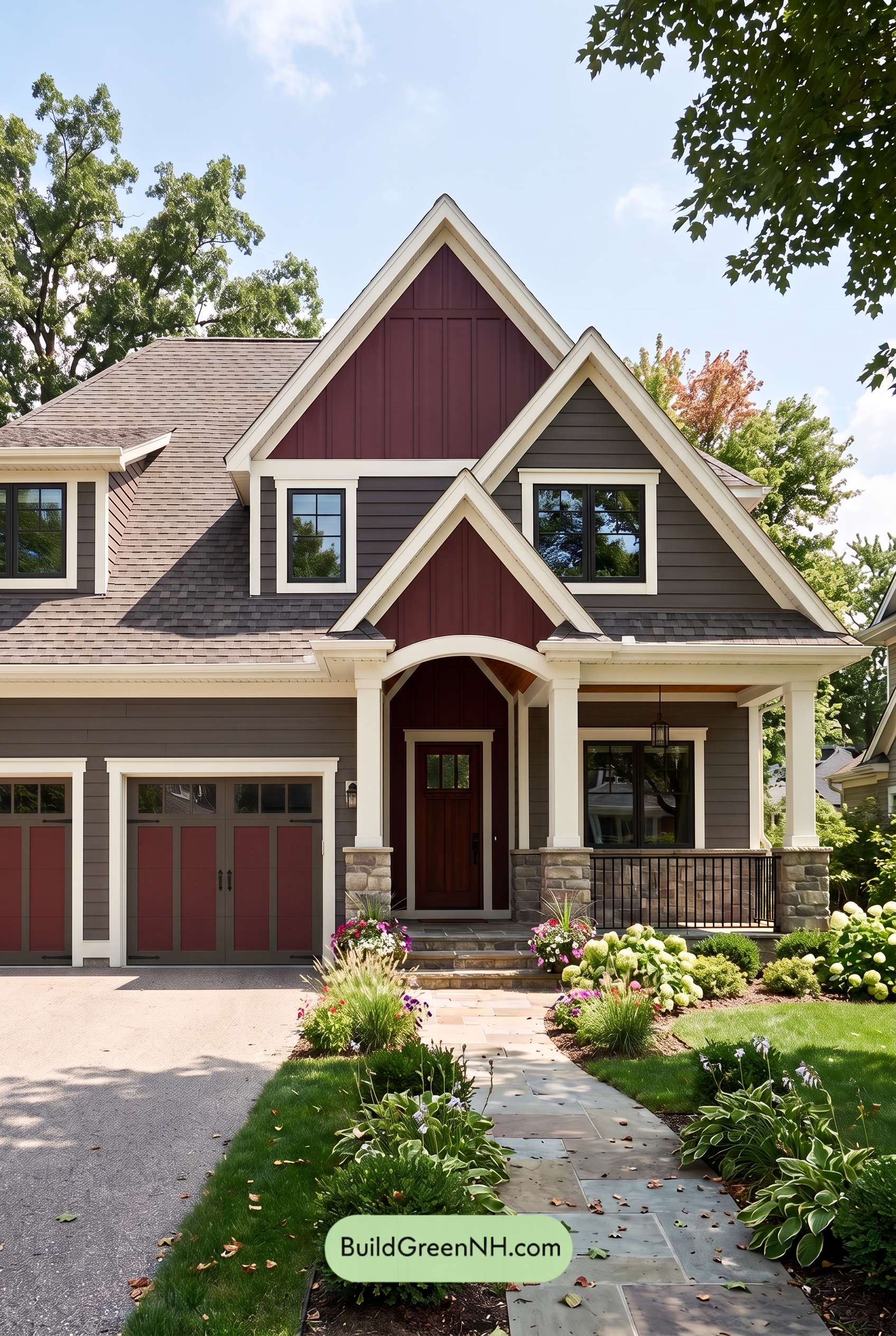 Dark Brown House Exterior Color Scheme: Hearthglow Arrival
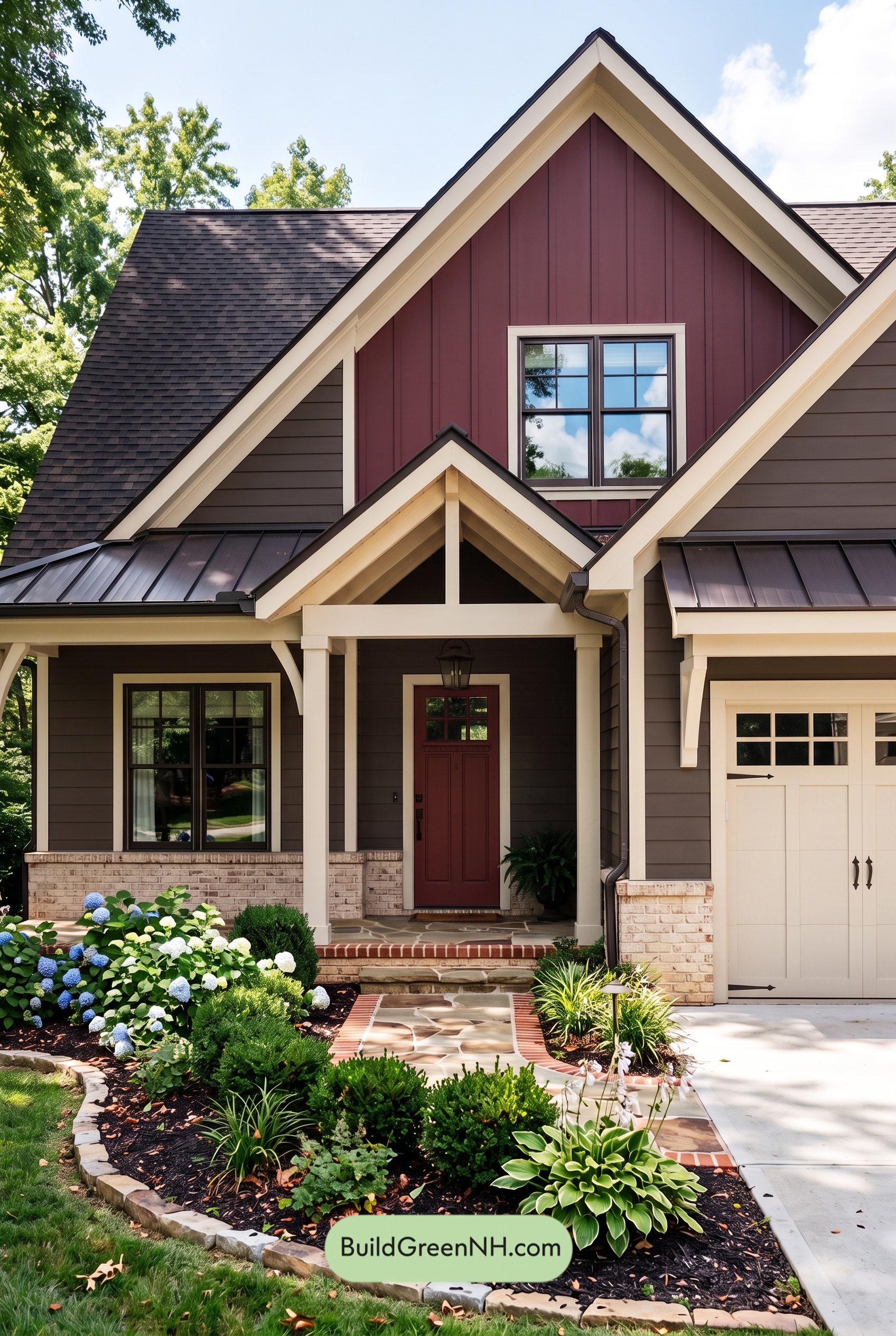 Dark Brown House Exterior Color Scheme: Embercrest Welcome
Table of Contents