Last updated on
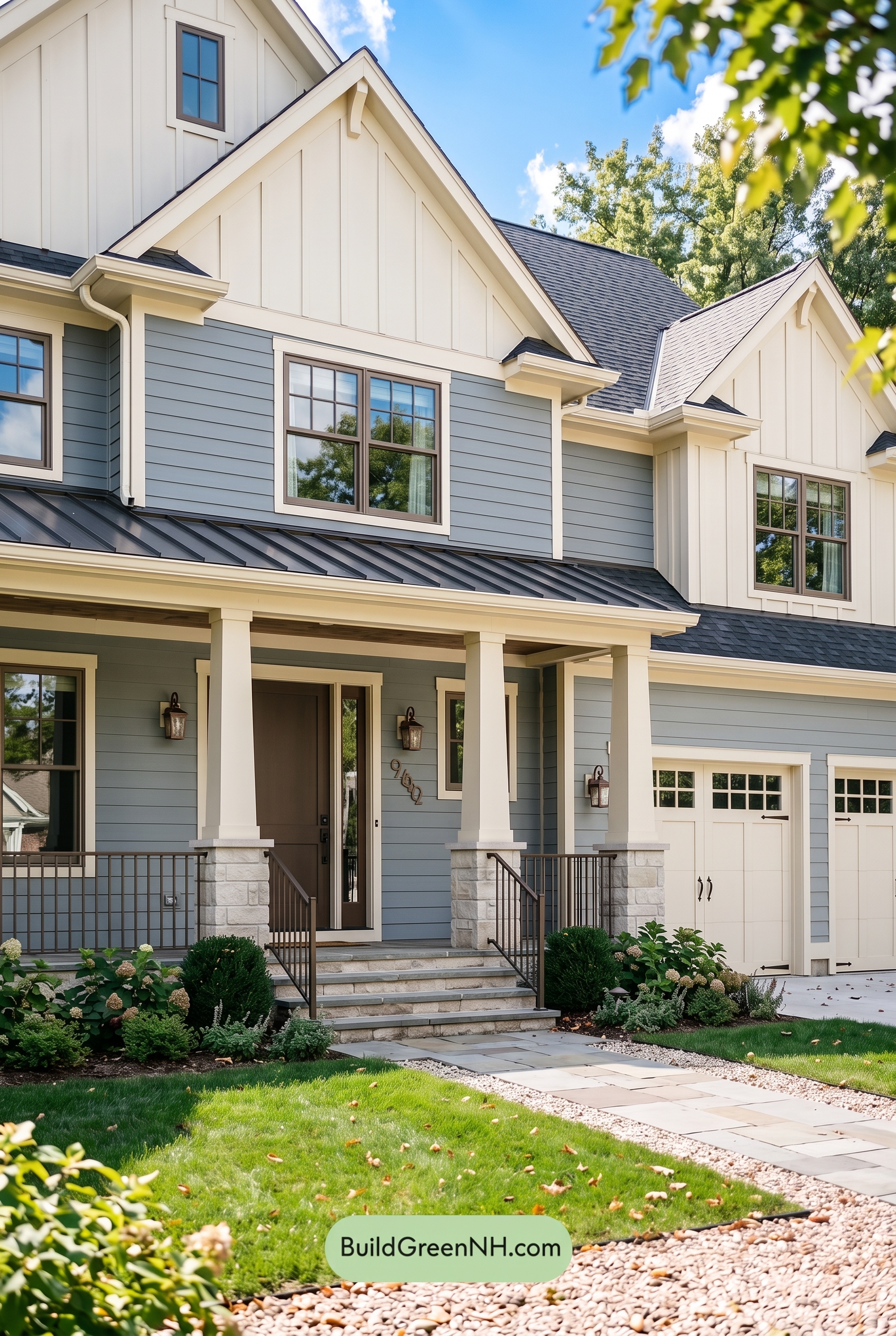

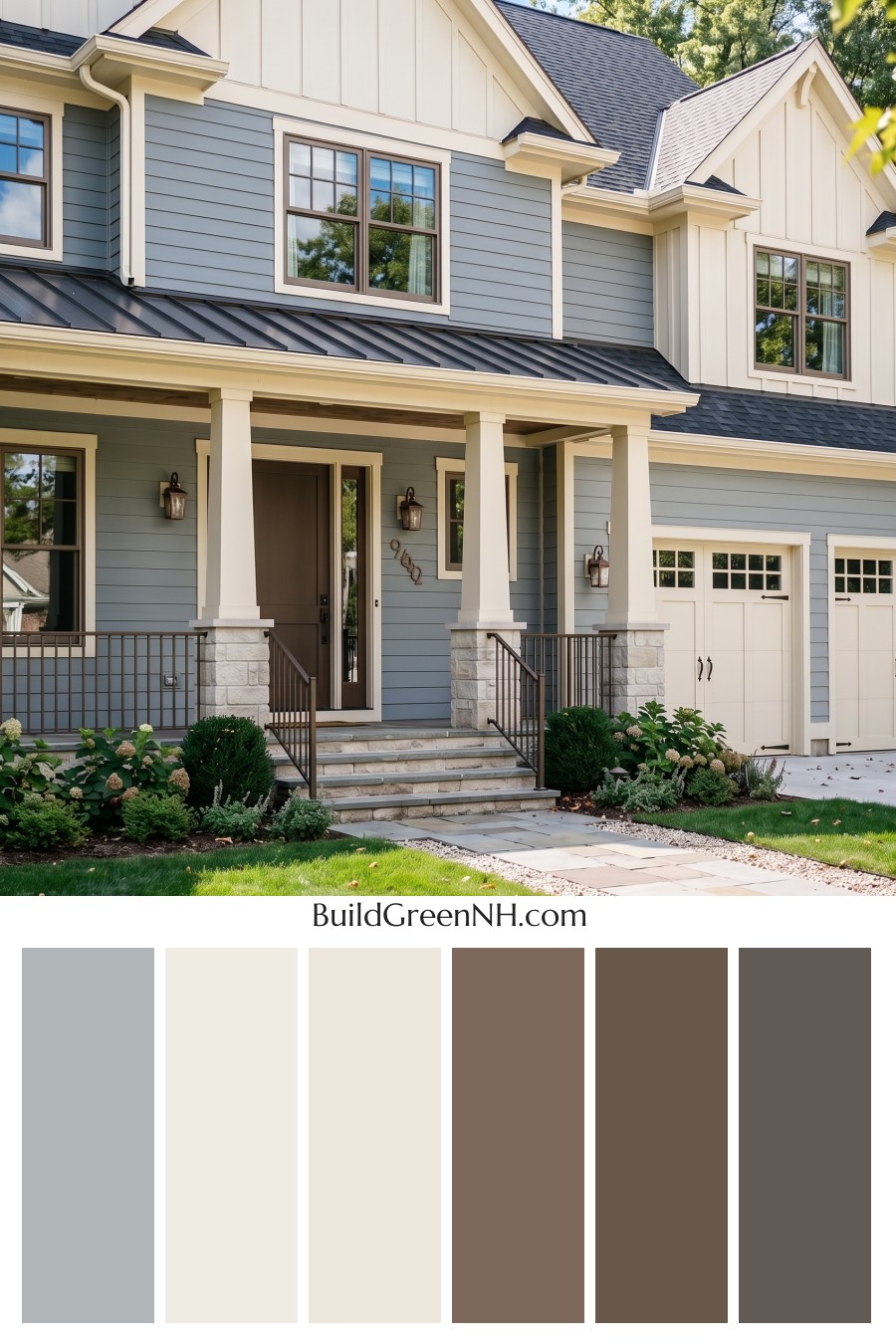
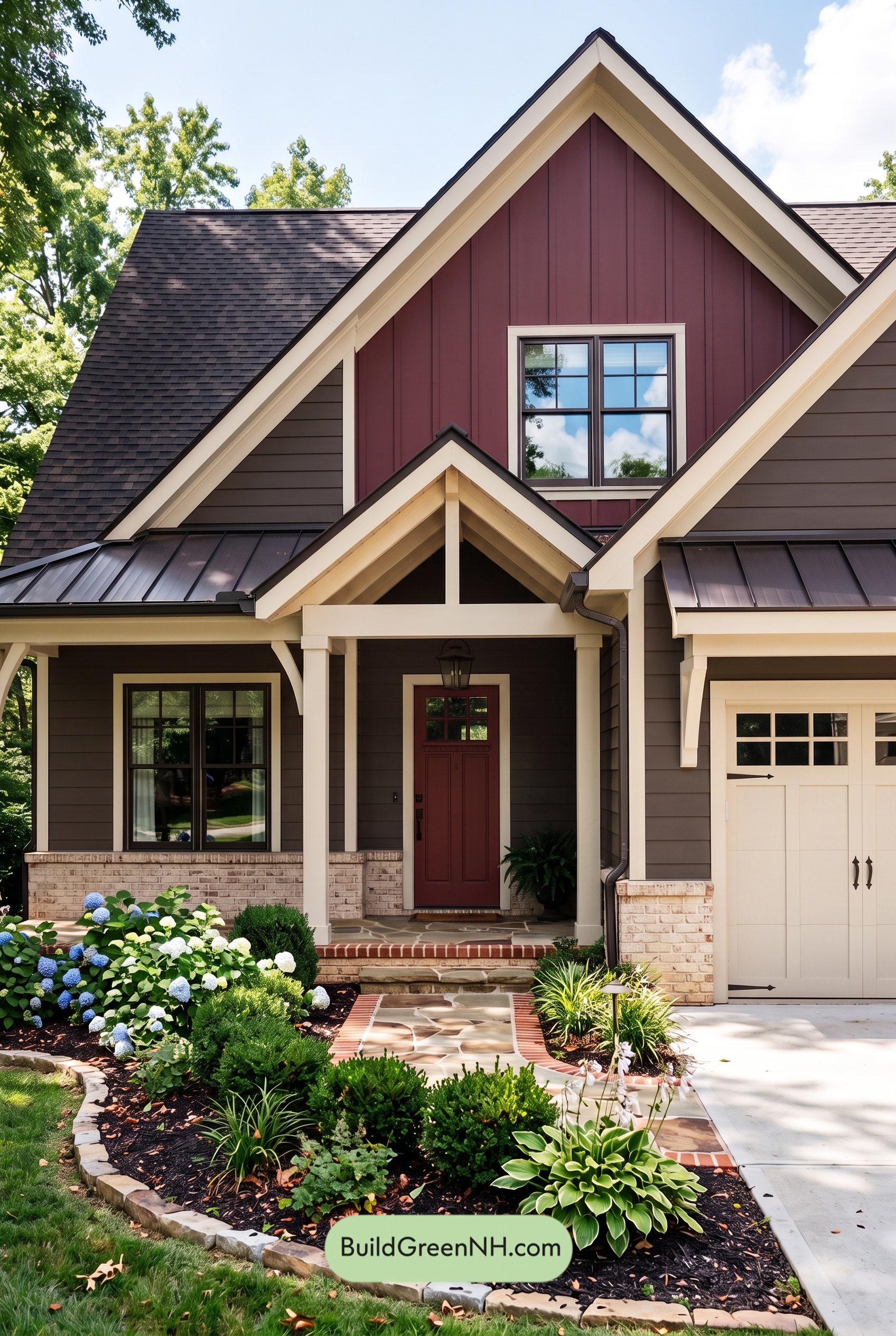
This refined blend of soft gray, creamy white, and rich brown gives the home an inviting presence while beautifully highlighting its layered architecture.
A Balanced Foundation of Soft Gray
The main siding wears a gentle blue-gray shade that feels calm, tailored, and timeless. Its muted character gives the exterior a substantial yet approachable base, allowing the home’s wide façade and varied rooflines to feel cohesive rather than busy. This cool gray also pairs naturally with the surrounding greenery, creating a polished look that still feels connected to the landscape.
Warm White Defines Every Detail
A warm off-white brightens the upper walls, gables, trim, columns, and garage doors. This lighter shade brings a crisp outline to the architecture, emphasizing the vertical paneling, deep eaves, and decorative gable details. Against the gray siding, it creates clean contrast without feeling stark.
The same warm white carries through the porch structure and window surrounds, which gives the exterior a pleasing sense of continuity. It helps the large home feel airy and welcoming, especially across the prominent entry and garage areas.
Deep Brown Anchors the Accents
Rich brown window frames, railings, and the front door add depth to the cooler siding and lighter trim. These dark accents create definition around the windows and provide a grounded focal point at the entrance. The front door feels especially inviting in its deep brown shade, giving the porch a sense of warmth and permanence.
The brown railings repeat that warmth at the steps and porch edges, visually linking the entry details with the window frames. This repetition makes the palette feel intentional from every angle.
A Dark Roofline for Contrast
The roof introduces a deep charcoal-gray shade that caps the composition with confident contrast. It adds a subtle modern edge while echoing the darker brown accents below. Together, the roof and window frames create a strong visual framework around the softer gray and warm white exterior shades.
The Overall Mood
This exterior color scheme feels classic, comfortable, and quietly sophisticated. Cool gray siding sets a serene backdrop, warm white detailing brings brightness, and deep brown accents add welcome richness. The result is a home that looks equally at ease in bright sunshine, soft overcast light, and the changing colors of the seasons.
Next, see how this color scheme looks under different lighting simulations throughout the day.
Overcast
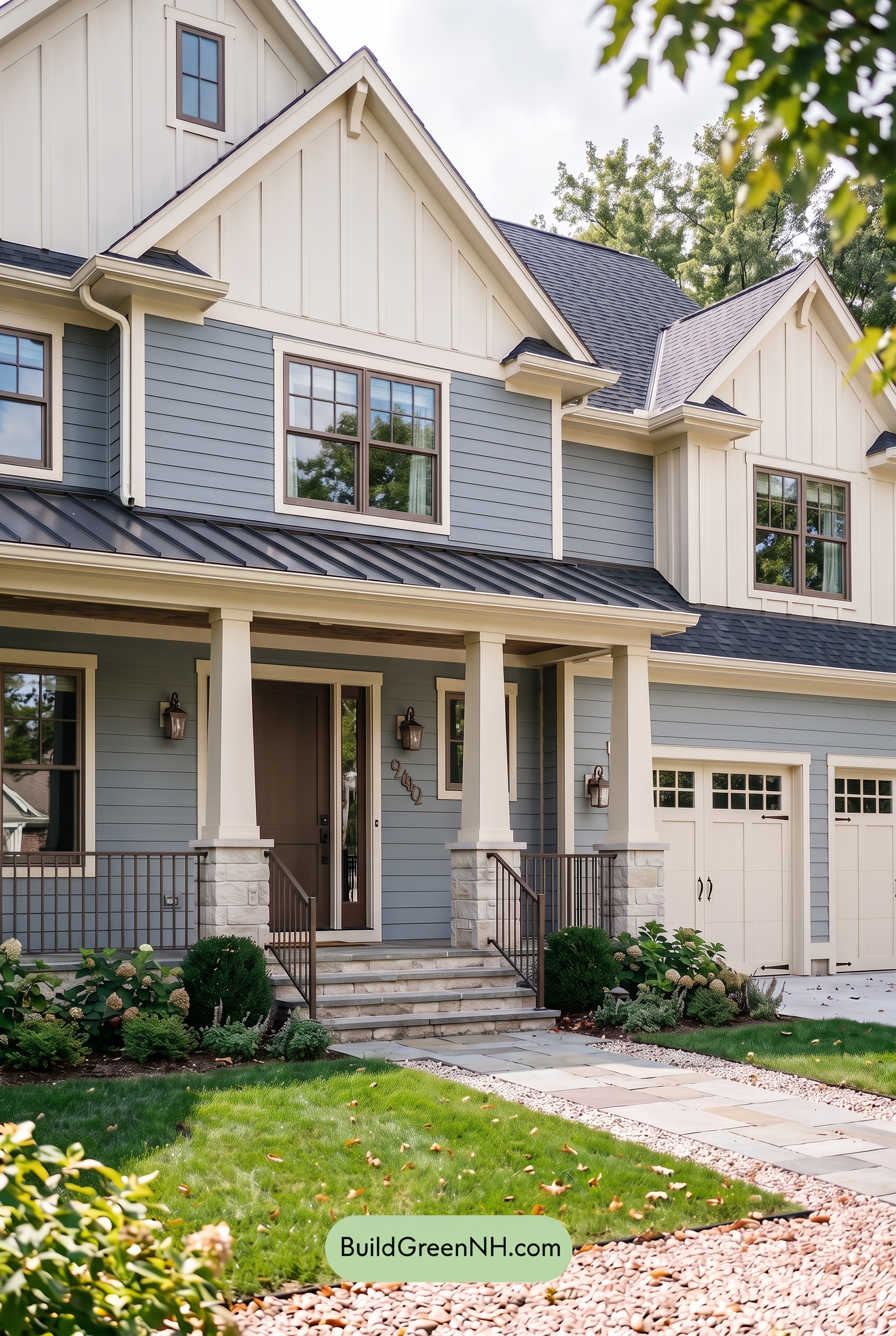
Under overcast skies, the blue-gray siding would appear slightly deeper and more muted than it does in neutral daylight, with its cool undertone taking a quieter lead. The creamy white upper walls, trim, and garage doors would lose some sunlit brightness, reading softer and less warm while still creating a clean frame around the darker surfaces.
Cloud-filtered light reduces sharp shadows, so the brown window frames, railings, and front door would feel richer but less dramatic against the softened whites. With gentler contrast and more even color across the façade, the overall mood shifts from crisp and sun-warmed to calm, polished, and inviting.
Golden Hour
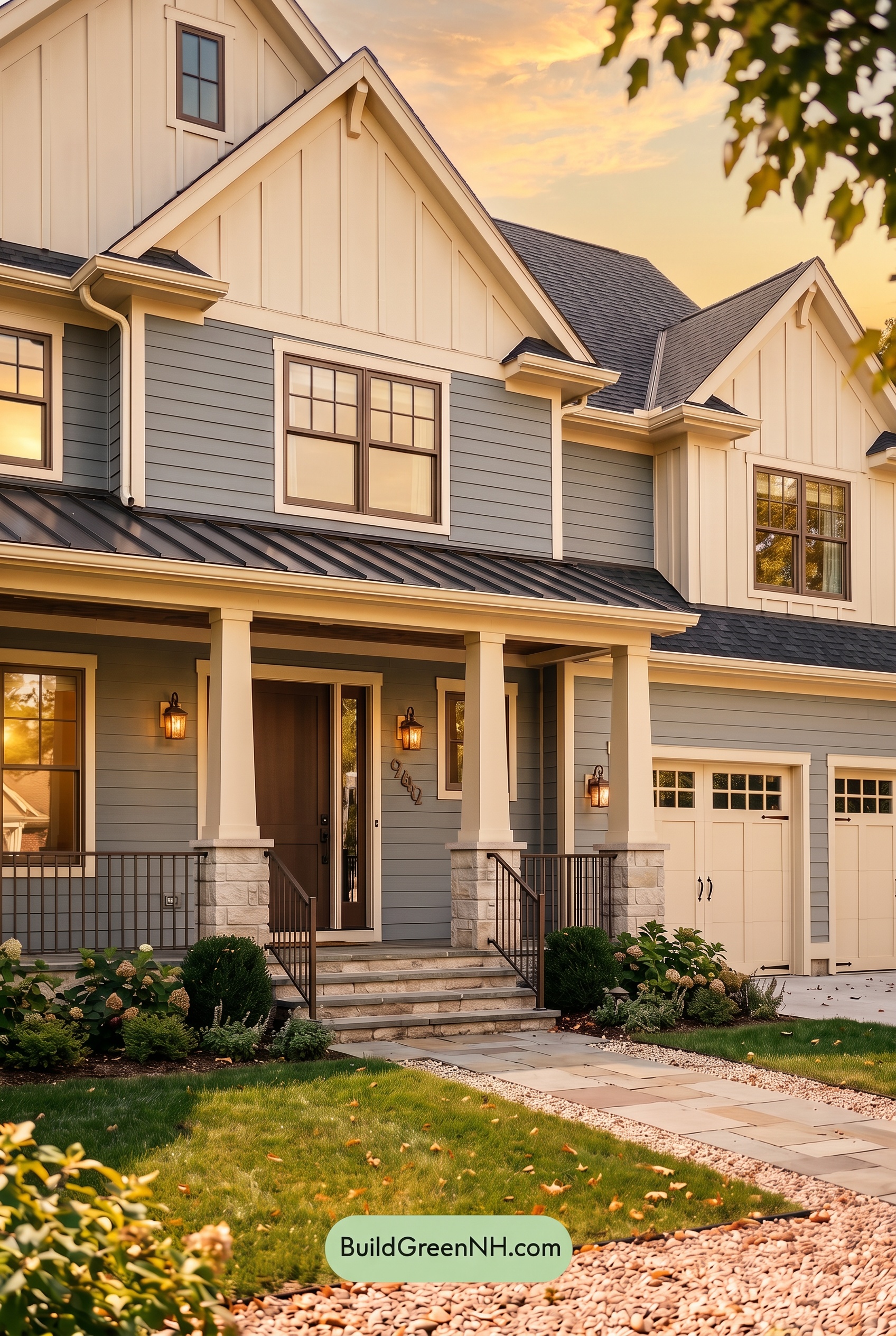
Golden Hour lends the gray siding a softer, warmer cast than it has in neutral daylight, gently muting its coolness while making its depth feel richer. The white upper walls, trim, and garage surfaces shift toward a creamy, sunlit shade, creating a more inviting glow and a slightly lower, more blended contrast across the façade.
Brown window frames, railings, and the entry door appear deeper and more saturated against those illuminated light neutrals. As long shadows gather beneath eaves and around the porch, they sharpen the architectural lines and add dimension, giving the home a calm, welcoming mood that feels more dramatic and intimate than its crisp daytime appearance.
Shade
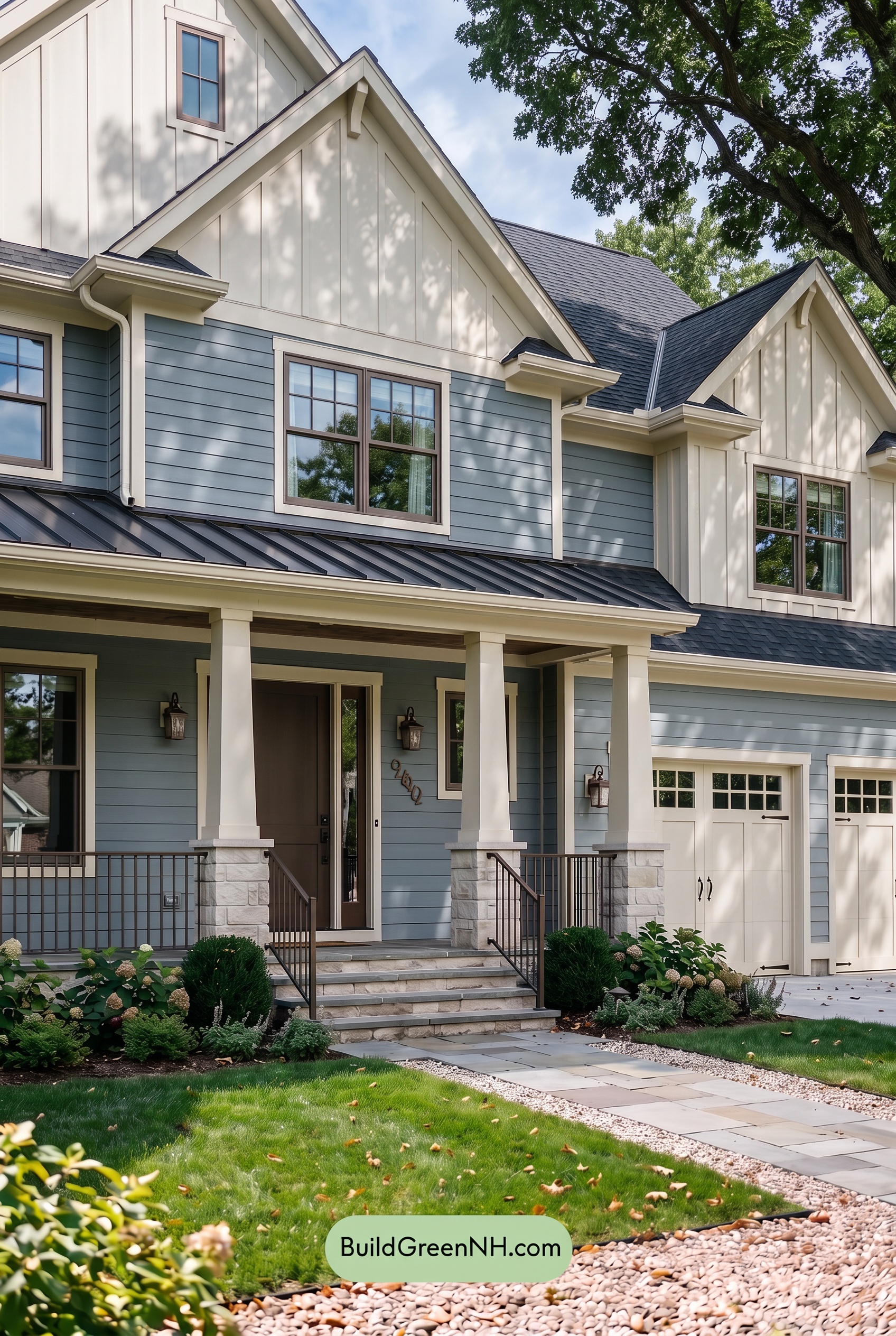
In shade, the gray exterior settles into a deeper, quieter version of itself, with its cool cast becoming more apparent than it would in neutral daylight. The white upper walls and trim lose a little brightness and read softer, while the brown window frames, door, and railings gain visual weight against the subdued backdrop.
Tree-filtered shadows add layers of contrast across the facade, making the pale and dark surfaces feel more dimensional without becoming harsh. Compared with neutral daylight, the overall palette feels less saturated, slightly cooler, and more intimate—giving the home a calm, sheltered mood.
Nighttime
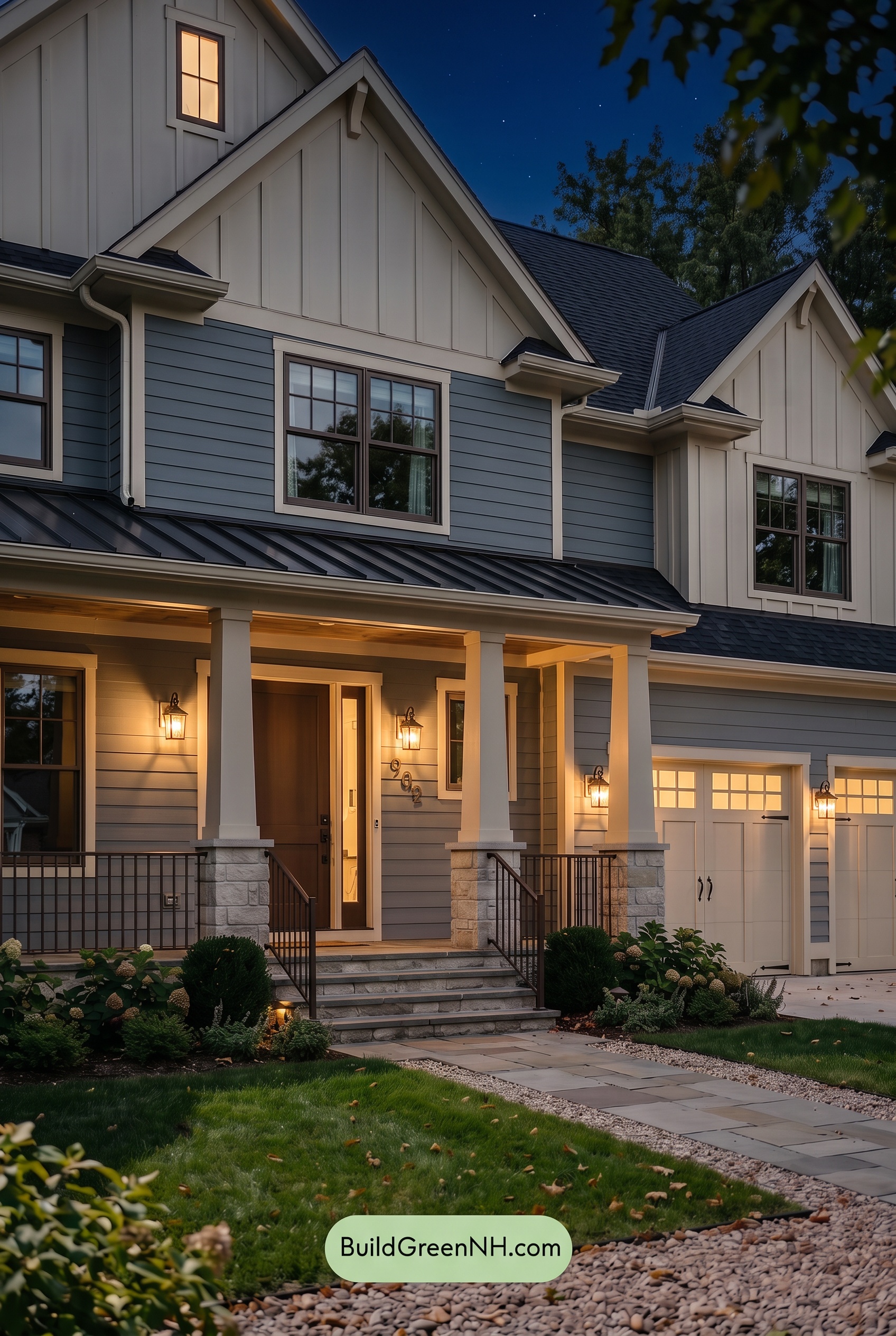
At night, the gray siding takes on a deeper, more subdued character than it has in neutral daylight, with its cool cast becoming more noticeable in the shaded areas. The light neutrals above and around the windows soften under the warm exterior fixtures, shifting from crisp daylight brightness to a gentler glow that keeps the architectural lines visible without feeling stark.
The brown details read richer and more grounded after dark, while the darkest shadows sharpen the contrast around windows, railings, and rooflines. Pools of warm light at the entry and garage create an inviting focal point, balancing the cooler surrounding facade and giving the whole exterior a calm, welcoming mood.
Pin these for later:
Want More?
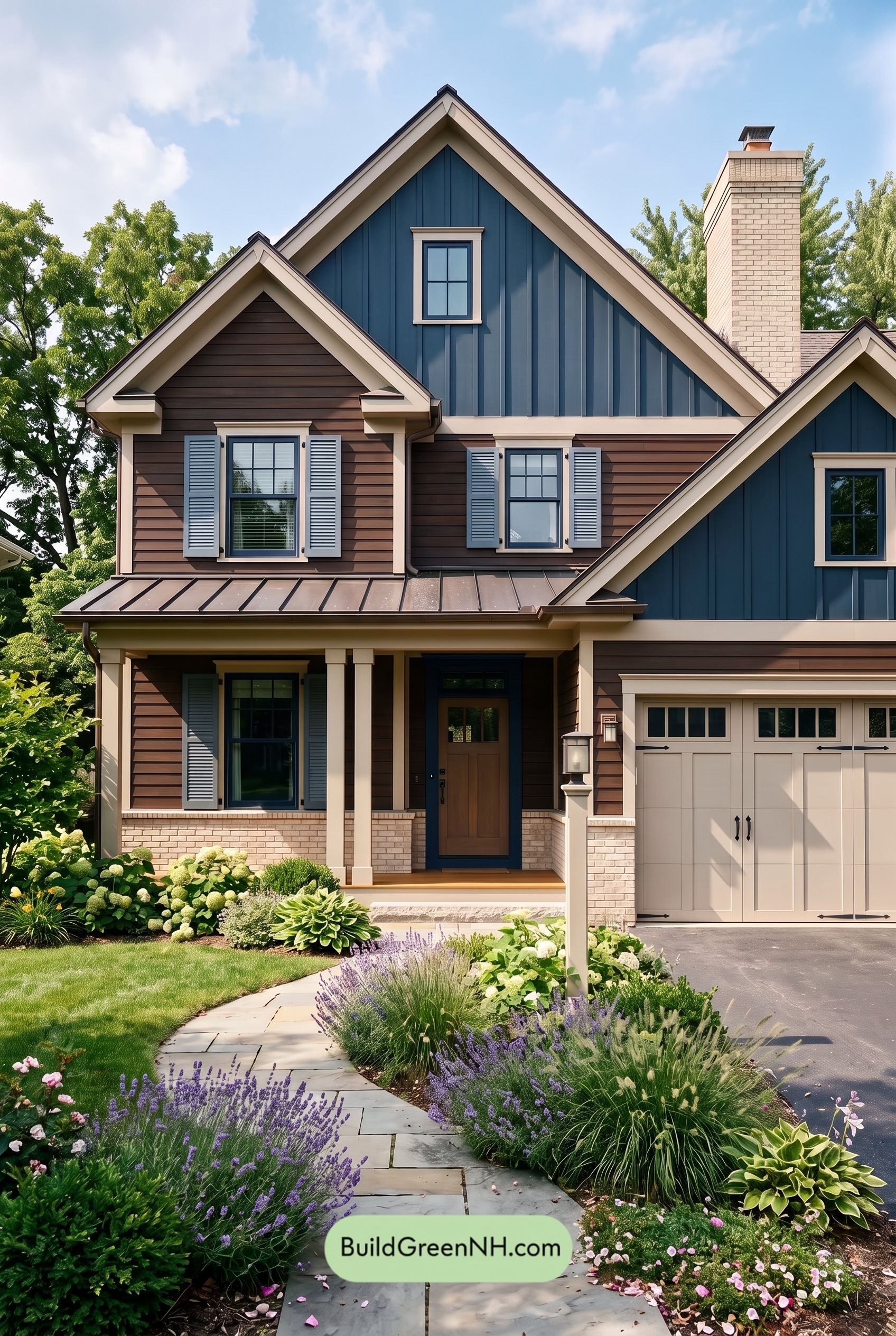 Dark Brown House Exterior Color Scheme: Inkwood Lantern
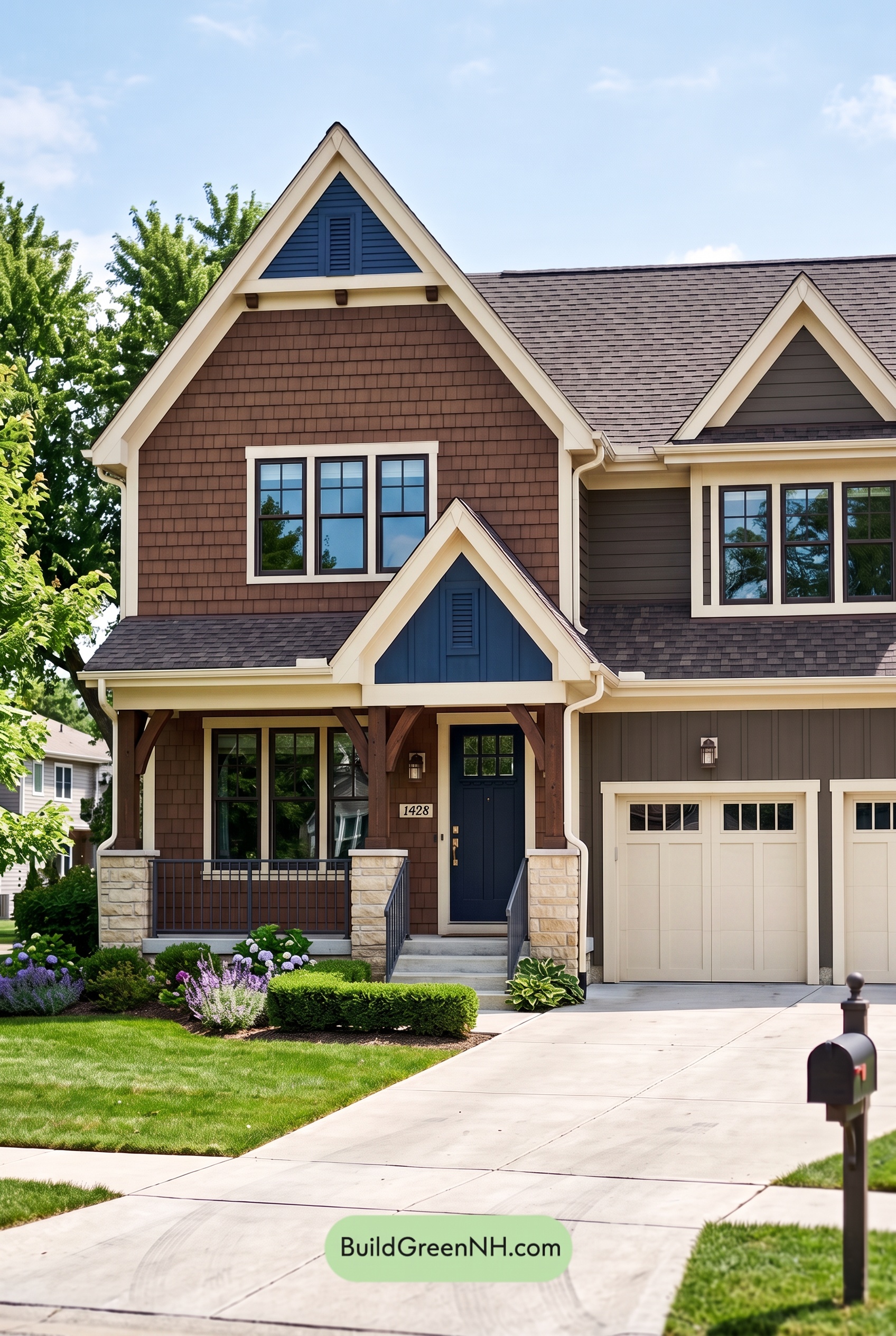 Dark Brown House Exterior Color Scheme: Bluebell Timberline
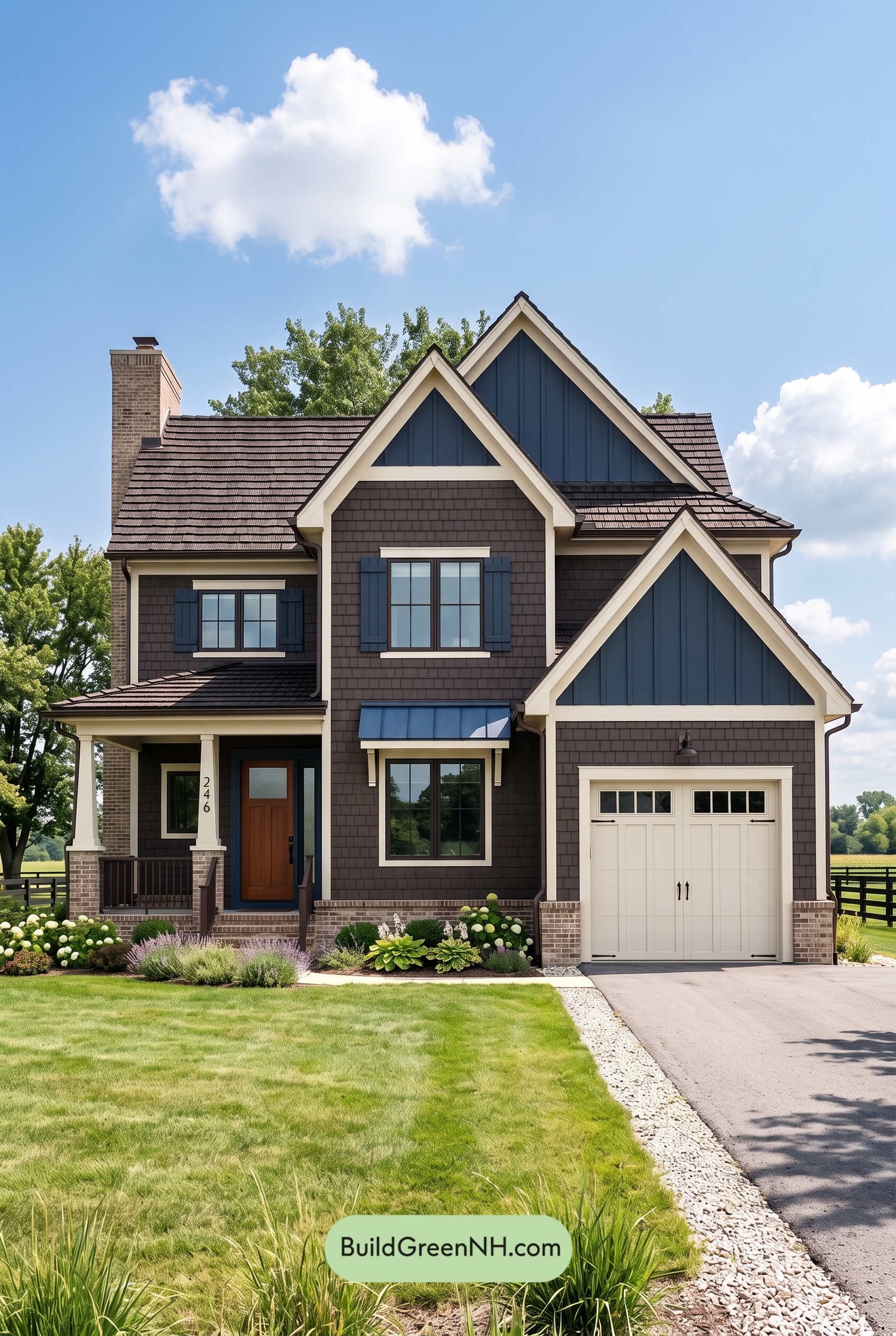 Dark Brown House Exterior Color Scheme: Sapphire Homestead
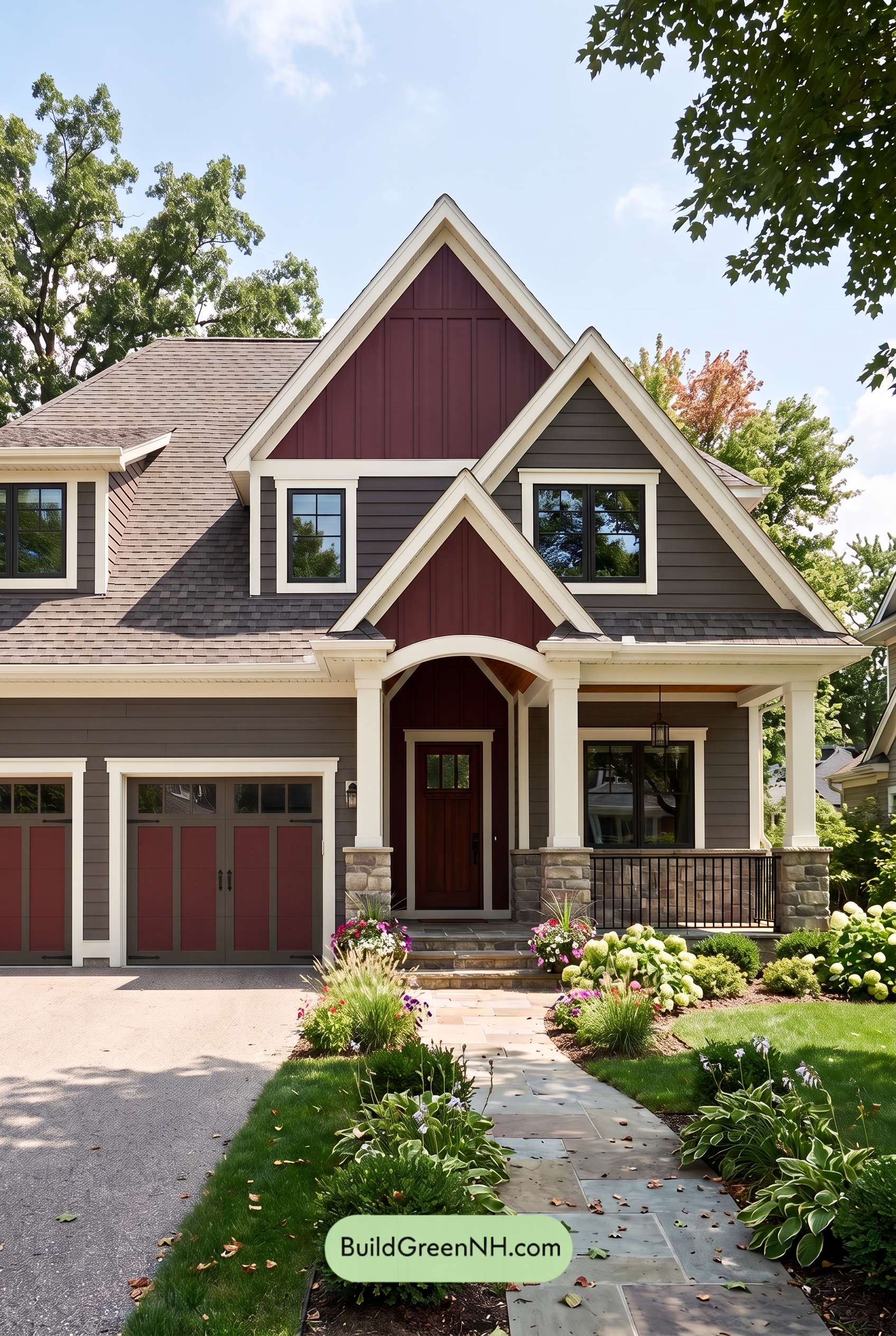 Dark Brown House Exterior Color Scheme: Hearthglow Arrival
 Dark Brown House Exterior Color Scheme: Embercrest Welcome
Table of Contents