Last updated on
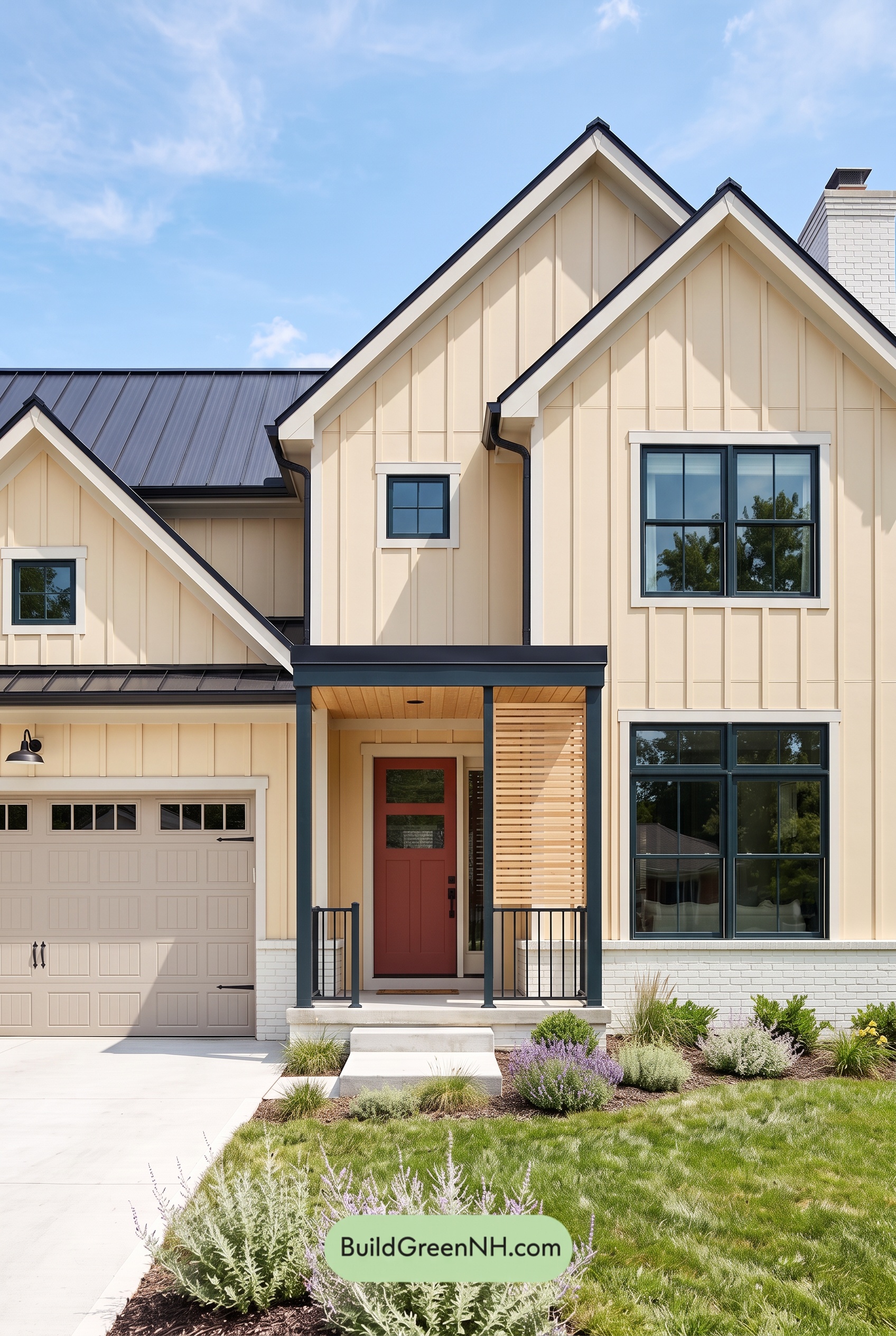

This warm-and-dark exterior palette feels instantly inviting while giving the home a crisp, confident modern character.
A Soft, Sunlit Foundation
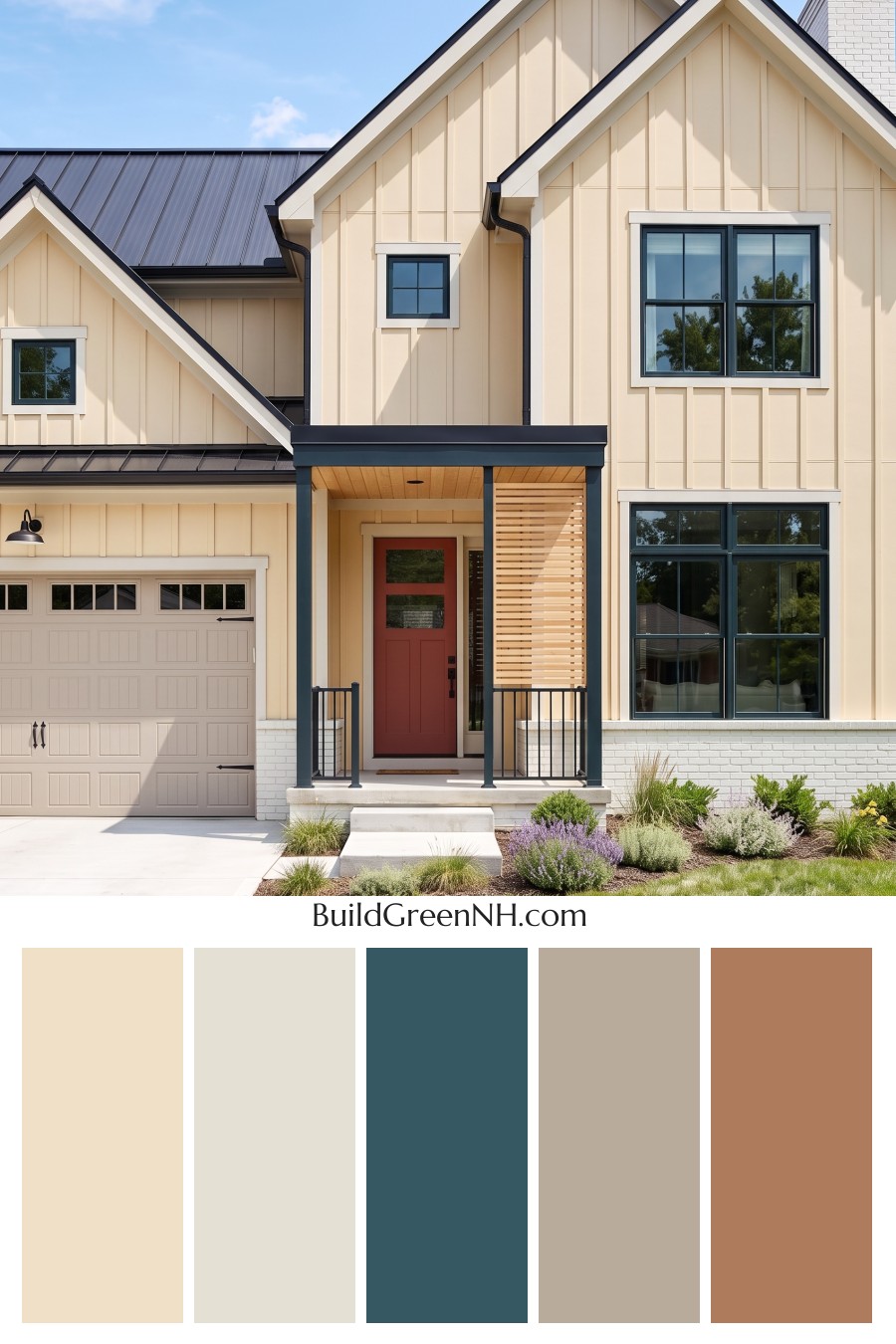
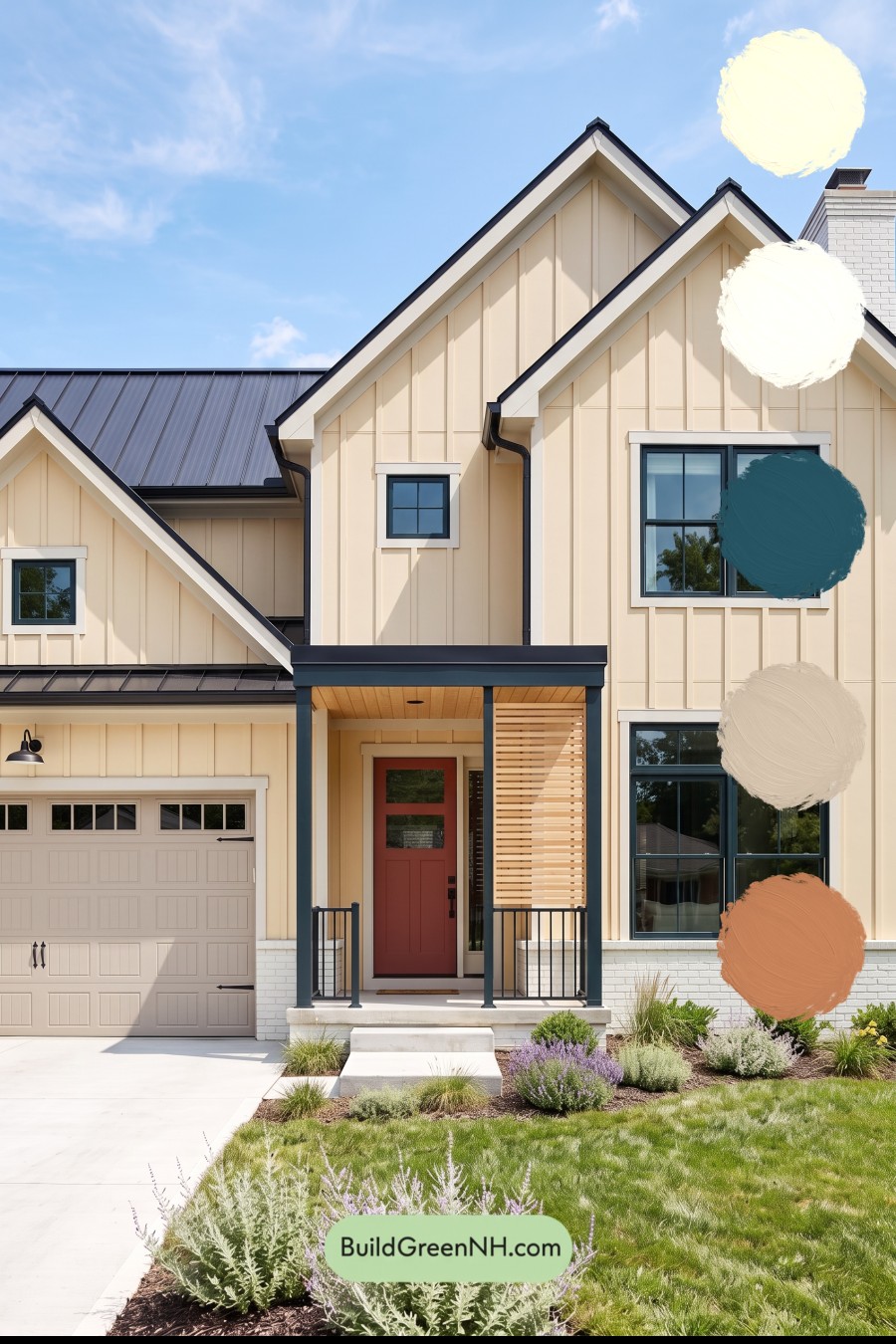
The vertical siding is finished in a light, creamy beige that brightens the tall gables and gives the facade a gentle, welcoming presence. Its warm undertone keeps the large exterior from feeling stark, especially in direct sunlight, while also drawing attention to the texture and rhythm of the paneling.
A slightly lighter warm neutral appears on the surrounding trim, including the window casings, roofline details, and garage-door framing. This close tonal pairing creates subtle definition rather than sharp contrast, allowing the architectural layers to feel polished and cohesive.
Deep Contrast That Defines the Architecture
Deep charcoal-black accents provide the scheme’s dramatic structure. The dark roof establishes a strong cap across the gables, while matching window frames give every opening a tailored, graphic look. These near-black details are repeated on the porch columns, railings, gutters, and roof edges, connecting distant elements with intentional consistency.
Against the creamy beige siding and pale trim, the dark accents make the home’s angular rooflines and generous windows stand out beautifully. The contrast is bold, but it remains refined because the warm neutral background keeps the effect grounded.
A Front Entry With Warm Personality
The front door introduces a rich, muted red accent that brings a welcome burst of warmth to the entry. Set beneath the dark porch framing, this deeper red shade becomes an immediate focal point without overpowering the rest of the exterior.
The garage door stays within the soft beige family, helping it recede visually and allowing the entry, windows, and gables to take center stage. Pale brick at the base adds another quiet neutral layer, giving the facade extra depth while maintaining the calm, coordinated palette.
Modern, Approachable, and Enduring
This color scheme balances farmhouse-inspired warmth with contemporary contrast. Creamy beige siding feels timeless and friendly, dark charcoal-black architectural details add sophistication, and the muted red door supplies just enough personality. Together, these shades create a home exterior that feels bright by day, striking from the street, and welcoming at the front walk.
Next, see how this color scheme looks under different lighting simulations throughout the day.
Overcast
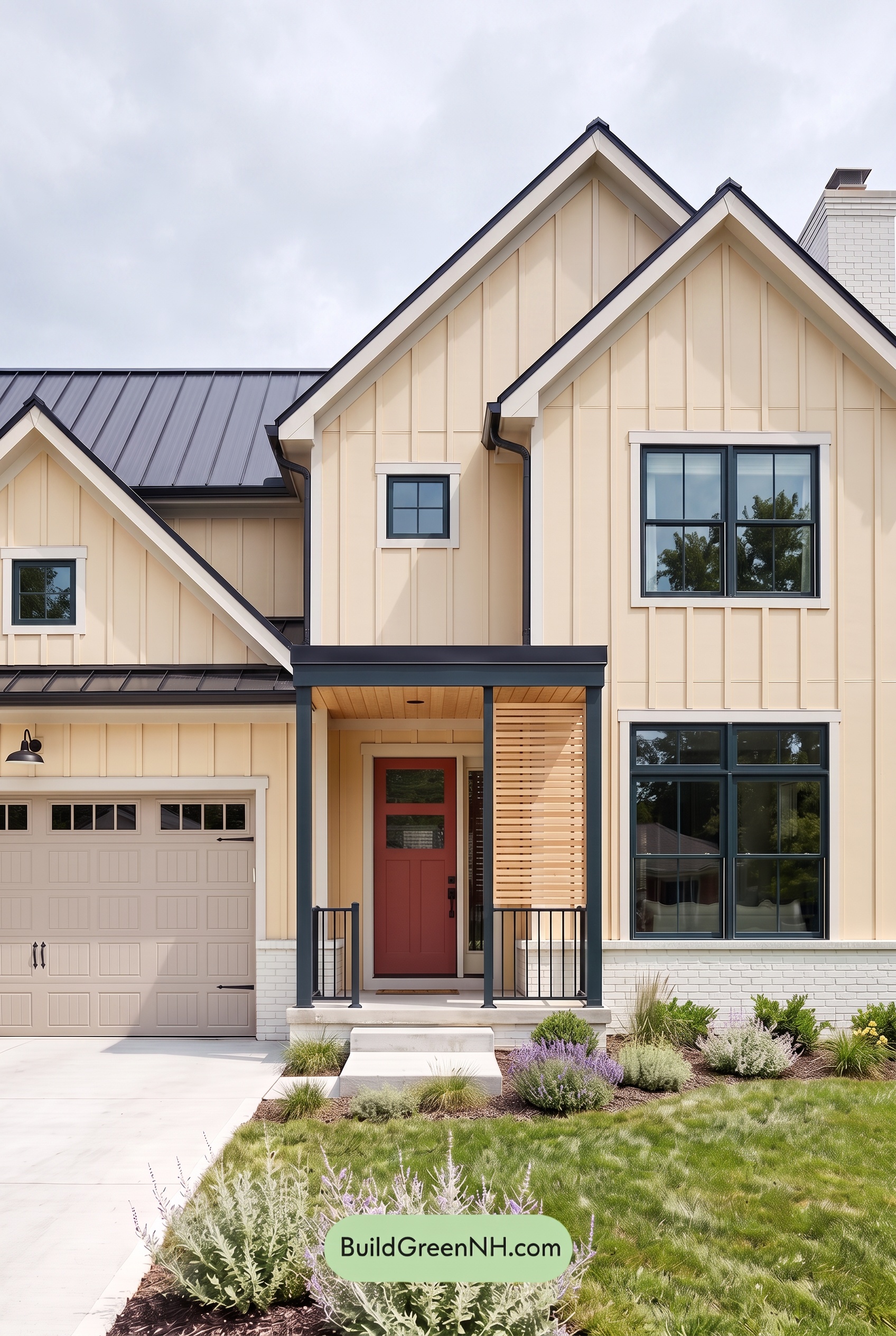
Under overcast skies, the beige siding, trim, garage door, and entry door lose some of the sunny glow they show in neutral daylight, reading softer, quieter, and slightly more muted. Their warmth remains present, but the even gray light lowers saturation and turns sharp sunlit highlights into a more consistent, gentle wash across the façade.
The black window frames, columns, and railings appear deeper and more velvety under this diffused light, while their contrast against the pale beige surfaces feels refined rather than dramatic. With fewer hard-edged shadows beneath the rooflines and porch, the home takes on a calm, polished mood, and the architectural lines become more noticeable through subtle tonal shifts.
Golden Hour
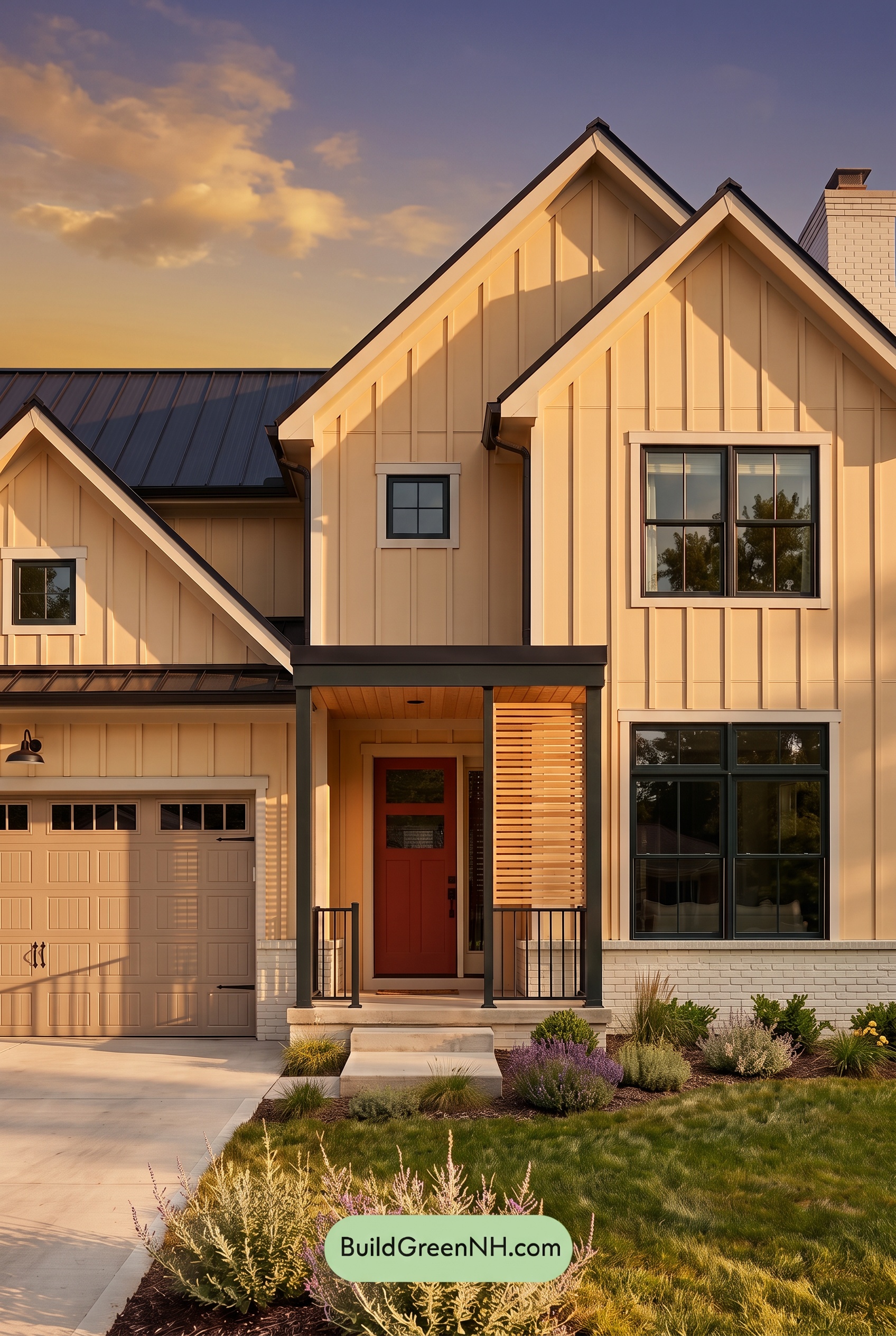
Golden Hour gives the beige exterior a richer, more sun-kissed character than it has in neutral daylight, drawing out soft golden and creamy undertones while making the vertical details feel more dimensional. The beige trim and garage door take on a gentler glow, so the overall facade feels warmer, fuller, and more inviting rather than evenly lit and understated.
As the low sun casts longer shadows, the black window frames, columns, and railings deepen into crisp silhouettes, increasing contrast against the luminous warm neutrals. This interplay of glowing highlights and dramatic shaded planes gives the home a cozy, elevated mood—more intimate and architectural than the flatter, more balanced appearance seen under neutral daylight.
Shade
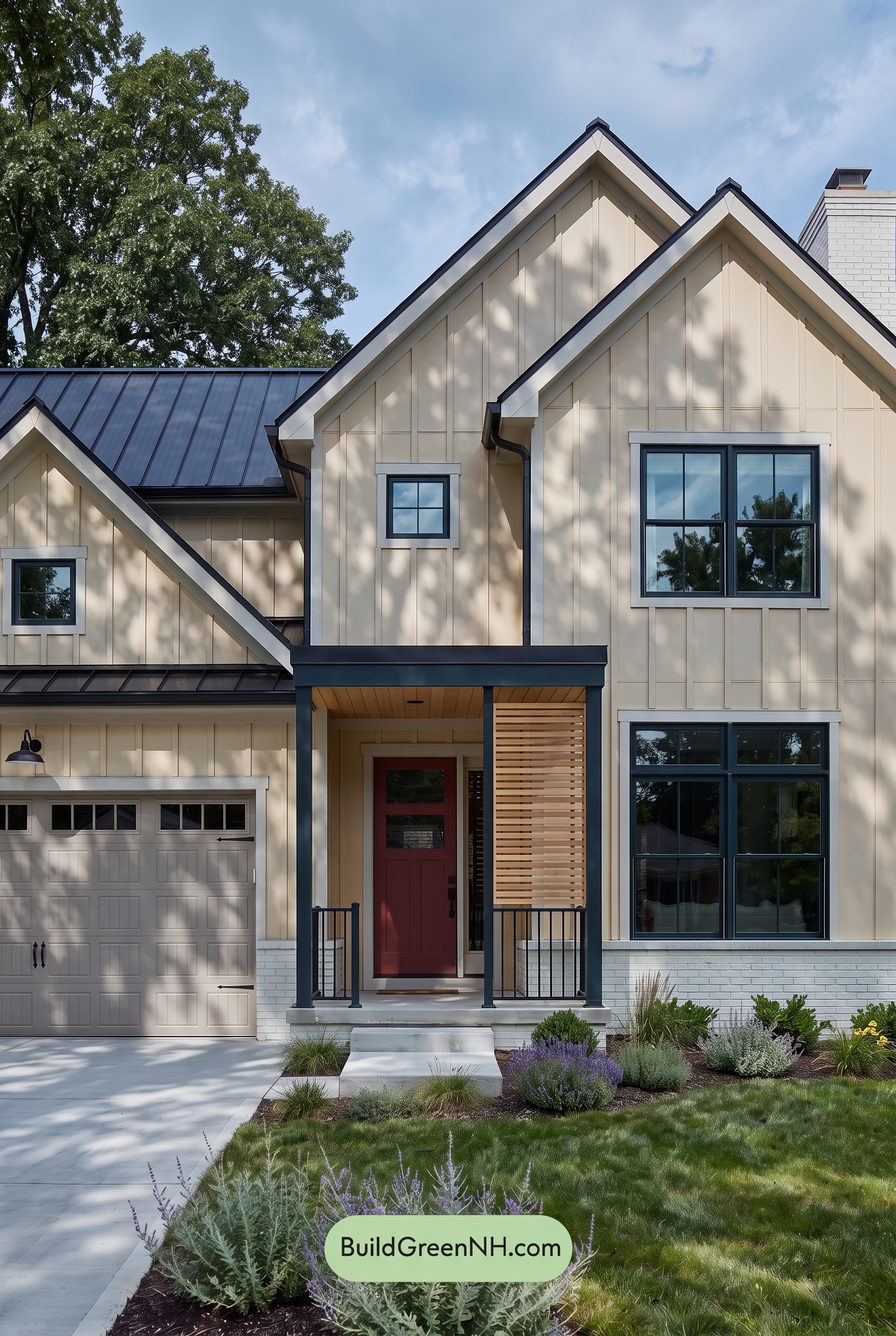
In shade, the beige exterior shifts away from the brighter warmth it shows in neutral daylight, taking on a softer, more muted character. Lower light reduces saturation and lets the wall, trim, and garage shades blend more quietly together, while tree shadows create gentle variation across the siding and emphasize its texture.
The black accents appear deeper and more substantial in shade, sharpening the contrast around the windows, columns, and railings without feeling harsh. This cooler, shadowed balance gives the facade a calm, tailored mood—less sunlit and crisp than neutral daylight, but richer and more inviting.
Nighttime
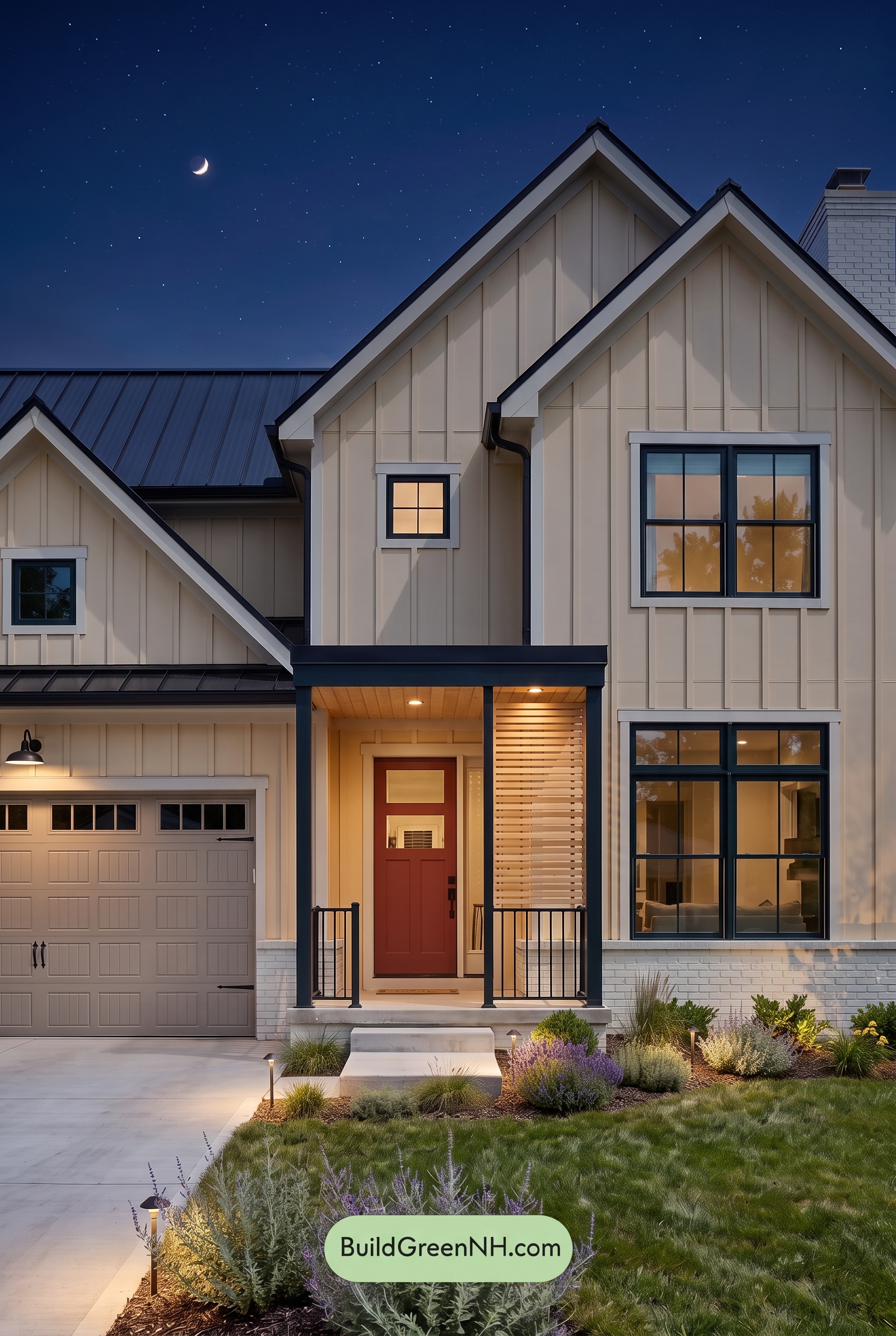
At night, the beige exterior shifts away from its neutral daylight character and takes on a softer, warmer glow around the entry and windows. Away from those pools of light, the same pale shades become quieter and slightly grayer, while the vertical siding and rooflines gain depth through longer, more dramatic shadows.
The black window frames, columns, and railings deepen into crisp silhouettes against the illuminated beige, creating stronger contrast than they do in daylight. This balance of warm highlights and dark edges gives the façade a welcoming yet polished nighttime mood, with the entry feeling especially inviting.
Pin these for later:
Want More?
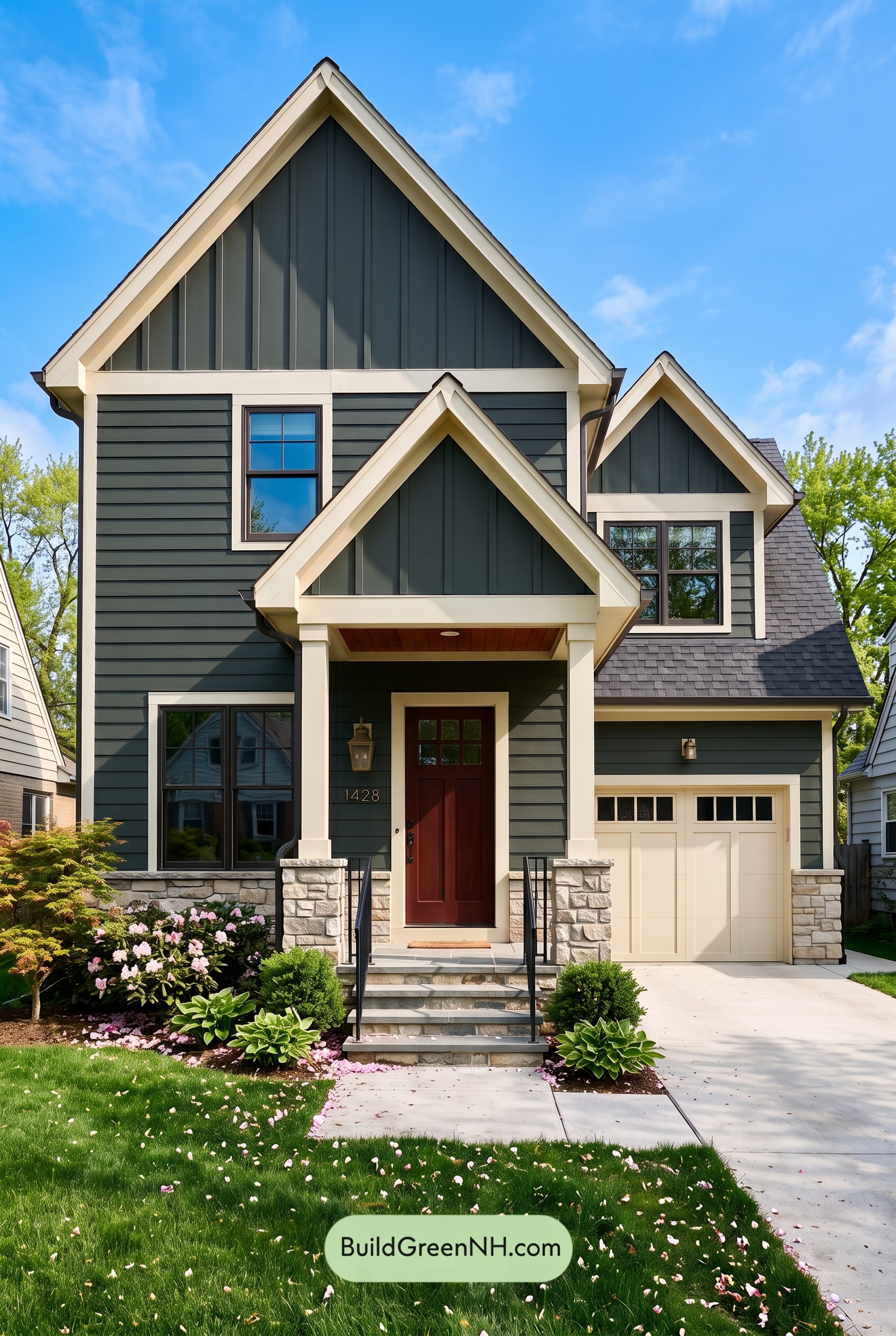 Exterior Color Scheme with Stone Accents: Pine Brass Threshold
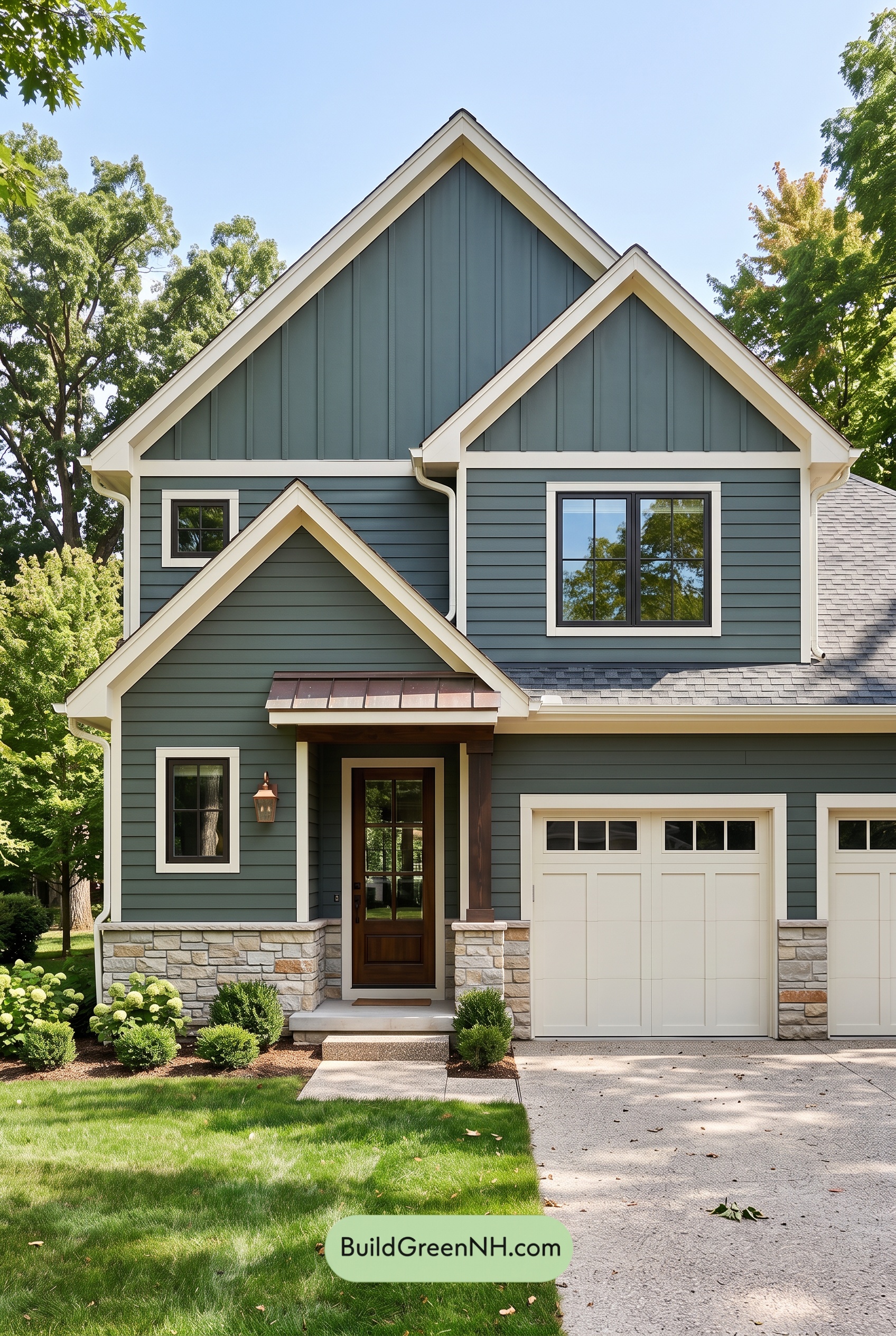 Exterior Color Scheme with Stone Accents: Evergreen Copper Welcome
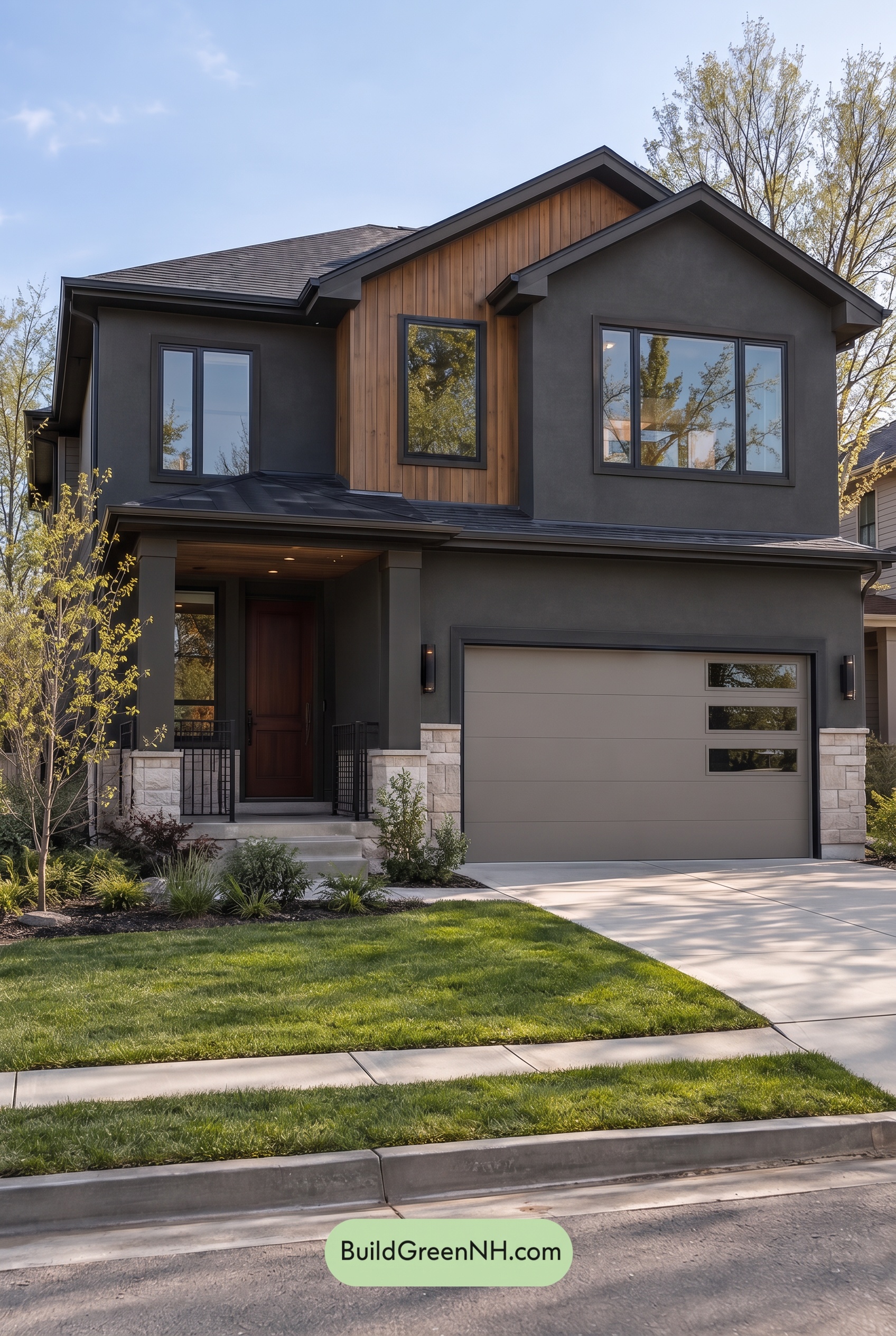 Dark Stucco House Exterior Color Scheme: Cedar Ember Calm
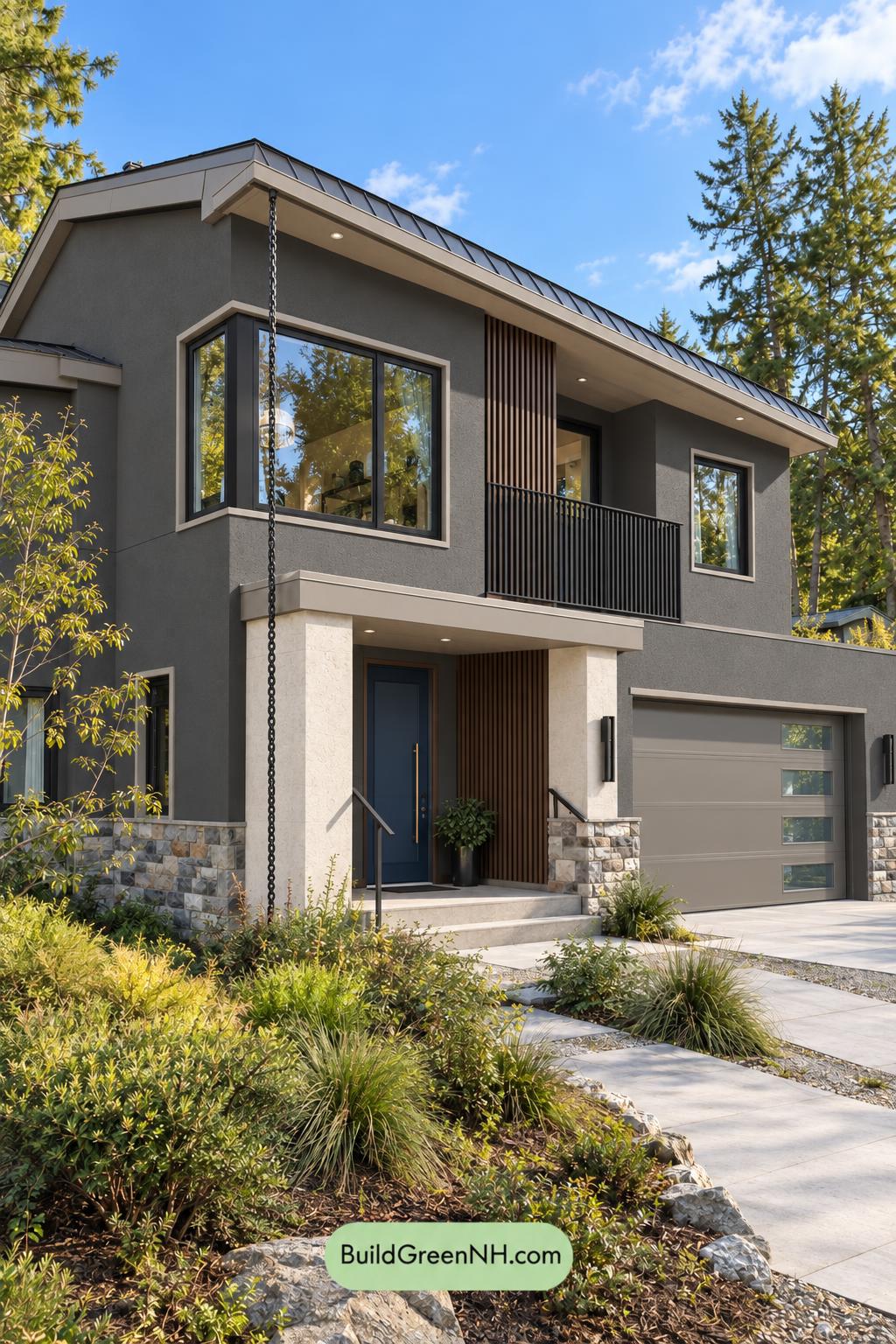 Dark Stucco House Exterior Color Scheme: Silver Pine Shelter
 Dark Stucco House Exterior Color Scheme: Copper Orchard House
Table of Contents