Last updated on
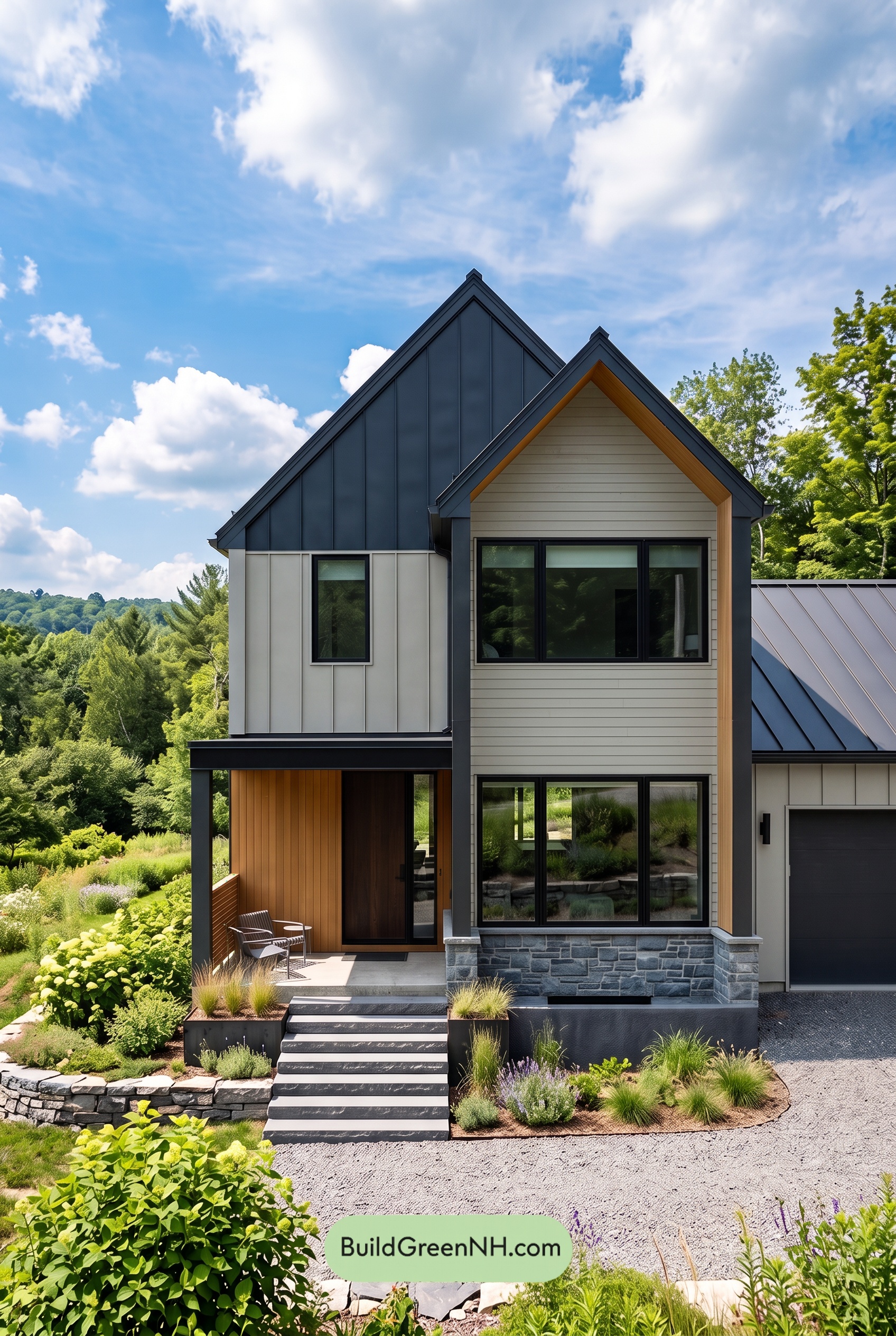

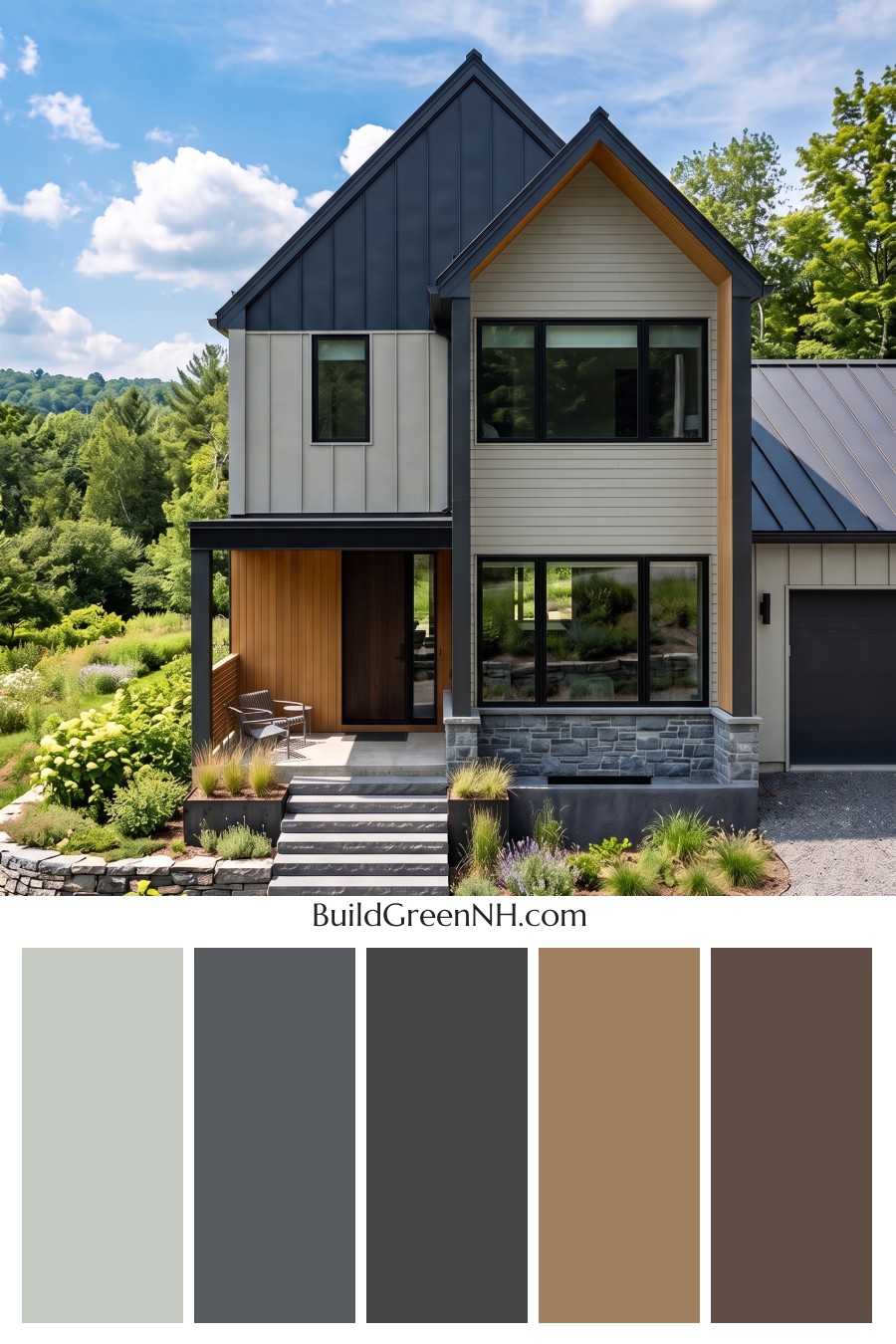
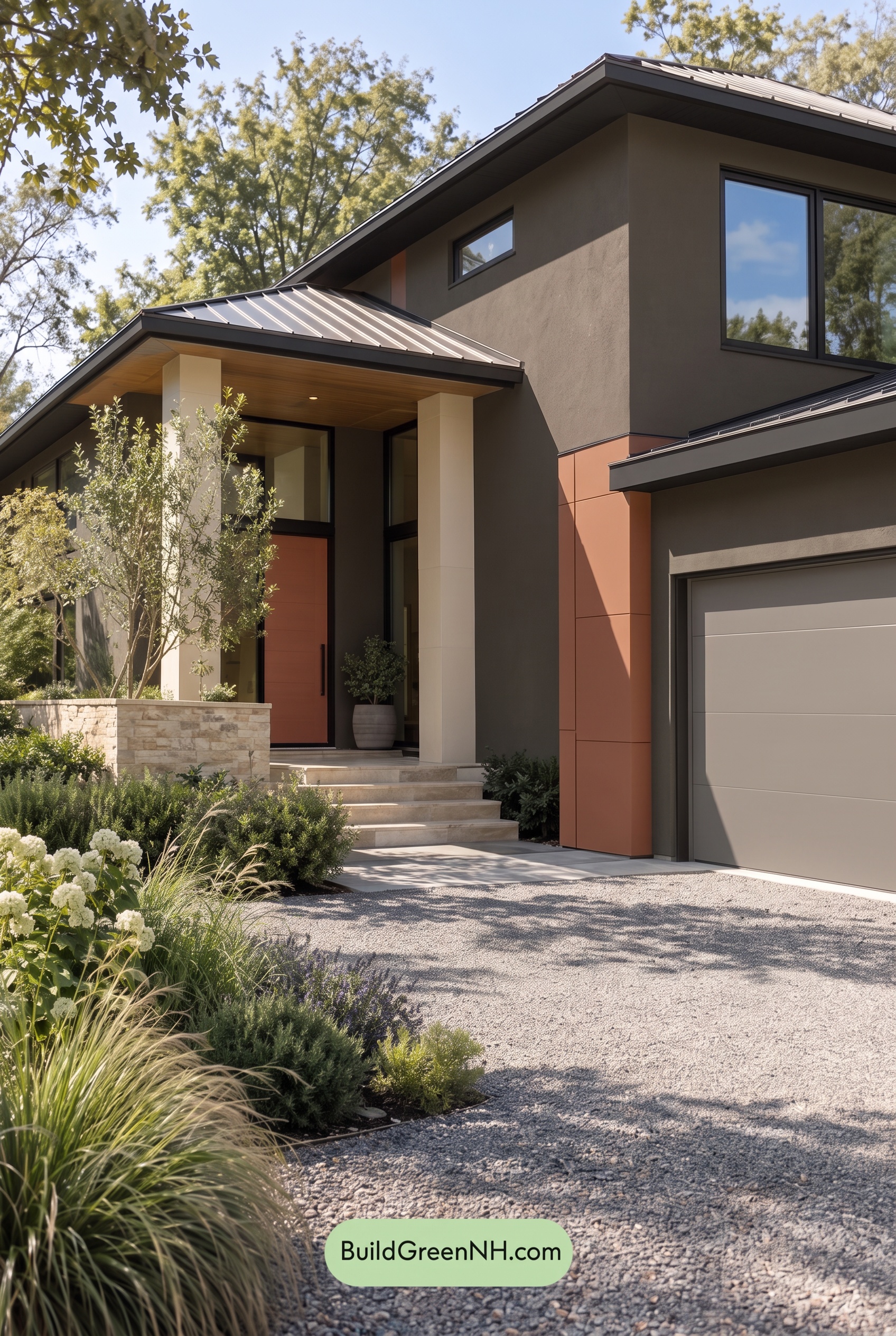
This layered gray-and-brown exterior scheme feels strikingly modern while still creating a warm, welcoming approach to the front door.
A Strong Foundation of Layered Grays
The house uses several shades within the gray family to create depth without making the facade feel busy. A soft, light gray covers much of the siding, brightening the main walls and helping the tall windows stand out. Above, a deep blue-gray shade defines the dramatic gables, giving the roofline a crisp, tailored silhouette against the sky.
Dark charcoal-gray trim continues around the windows, along the eaves, and across the structural columns. This darker shade adds graphic contrast and neatly outlines the home’s clean, contemporary geometry. The dark gray roof and lower architectural details reinforce that grounded look, tying the upper and lower portions of the exterior together.
Warm Brown Accents That Invite You In
Warm medium-to-deep brown accents soften the cool gray palette beautifully. The vertical brown feature wall at the entry creates an immediate sense of warmth, while the rich brown front door gives the porch a natural focal point. These wood-toned shades are used sparingly, which makes them feel intentional and memorable rather than overwhelming.
A lighter golden-brown trim detail around the front-facing gable brings another subtle layer of warmth. It draws the eye upward and gives the angular roofline a more welcoming character. Paired with the darker brown entry area, this accent creates a pleasing transition from the bright siding to the deep gray framing.
Modern, Grounded, and Connected to the Landscape
The overall mood is polished, calm, and quietly dramatic. Cool gray siding gives the house a refined contemporary presence, while charcoal-gray window frames and columns lend it visual confidence. The brown accents prevent the scheme from feeling too stark, adding an organic note that connects naturally with the surrounding greenery.
Even the darker gray tones at the base of the home work with the palette, anchoring the facade and echoing the deeper shades overhead. The result is a balanced exterior that feels substantial from the street, inviting at the entry, and especially handsome in changing daylight.
Next, see how this color scheme looks under different lighting simulations throughout the day.
Overcast
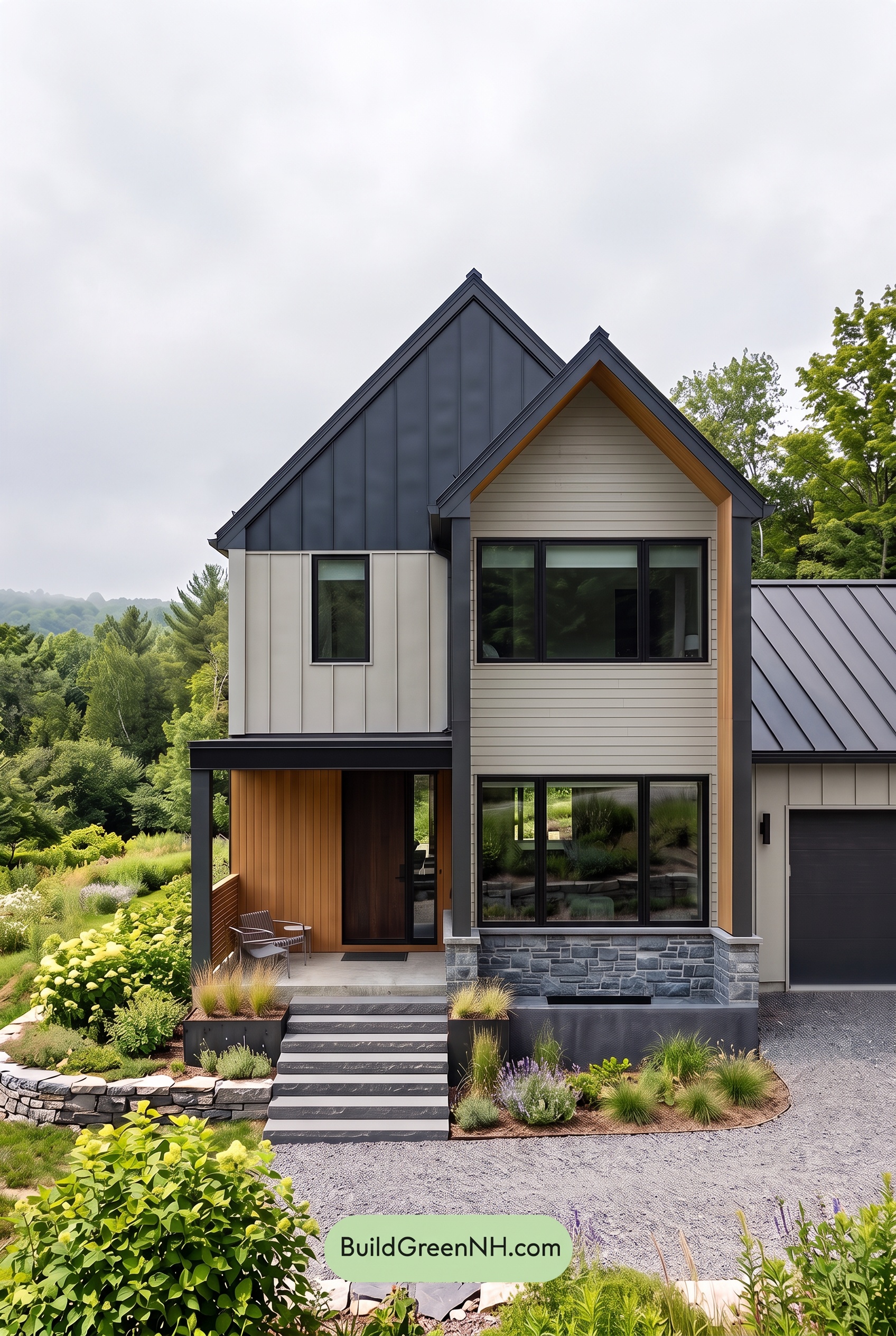
Under overcast skies, the gray exterior takes on a softer, more even character than it does in neutral daylight. With direct highlights reduced, the deeper gray roofline, trim, and window framing appear slightly richer and less saturated, while the lighter gray walls read calmer and more cohesive. Shadows lose their sharp edges, so the home’s vertical panels and architectural layers feel quietly refined rather than strongly contrasted.
The brown accents become especially inviting in this diffused light, though their warmth is gentler and more subdued than in neutral daylight. Against the cool gray family, they still provide welcome contrast, but the overall effect shifts from crisp and graphic to moody, grounded, and serene.
Golden Hour
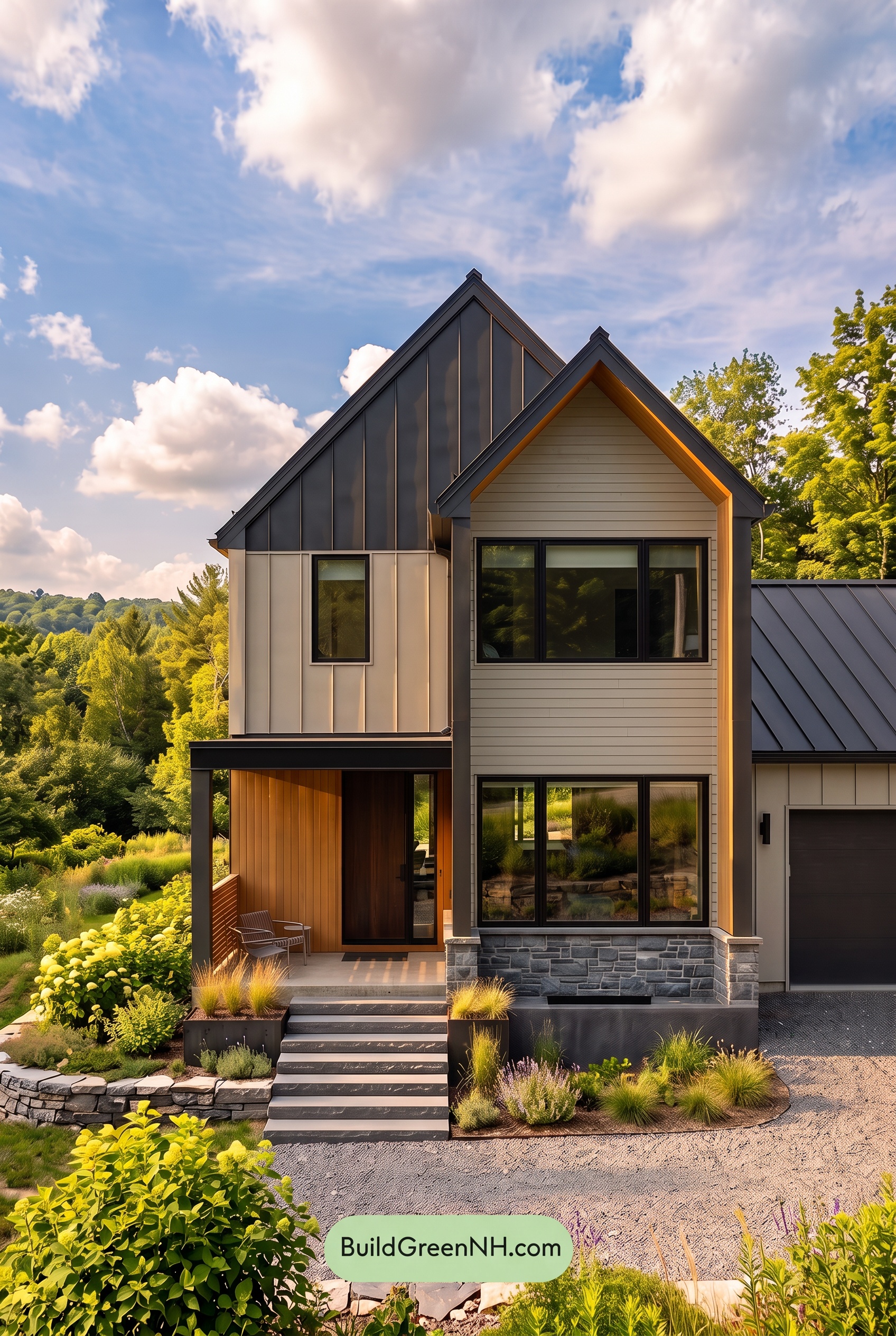
Under Golden Hour, the gray exterior shifts from its neutral daylight balance toward a softer, warmer character. Sunlit planes take on a gentle beige cast, while the deeper gray trim, frames, and columns become richer and more dimensional. The brown accent areas gain a glowing, more saturated presence, creating a welcoming focal point against the cooler-looking gray family.
Longer shadows heighten contrast along the siding, rooflines, and recessed entry, making the architecture feel crisper without losing warmth. Compared with neutral daylight’s clean, even appearance, this low-angle light gives the whole palette a more intimate, layered mood—dark shades feel moodier, warm shades feel more inviting, and every transition appears more intentional.
Shade
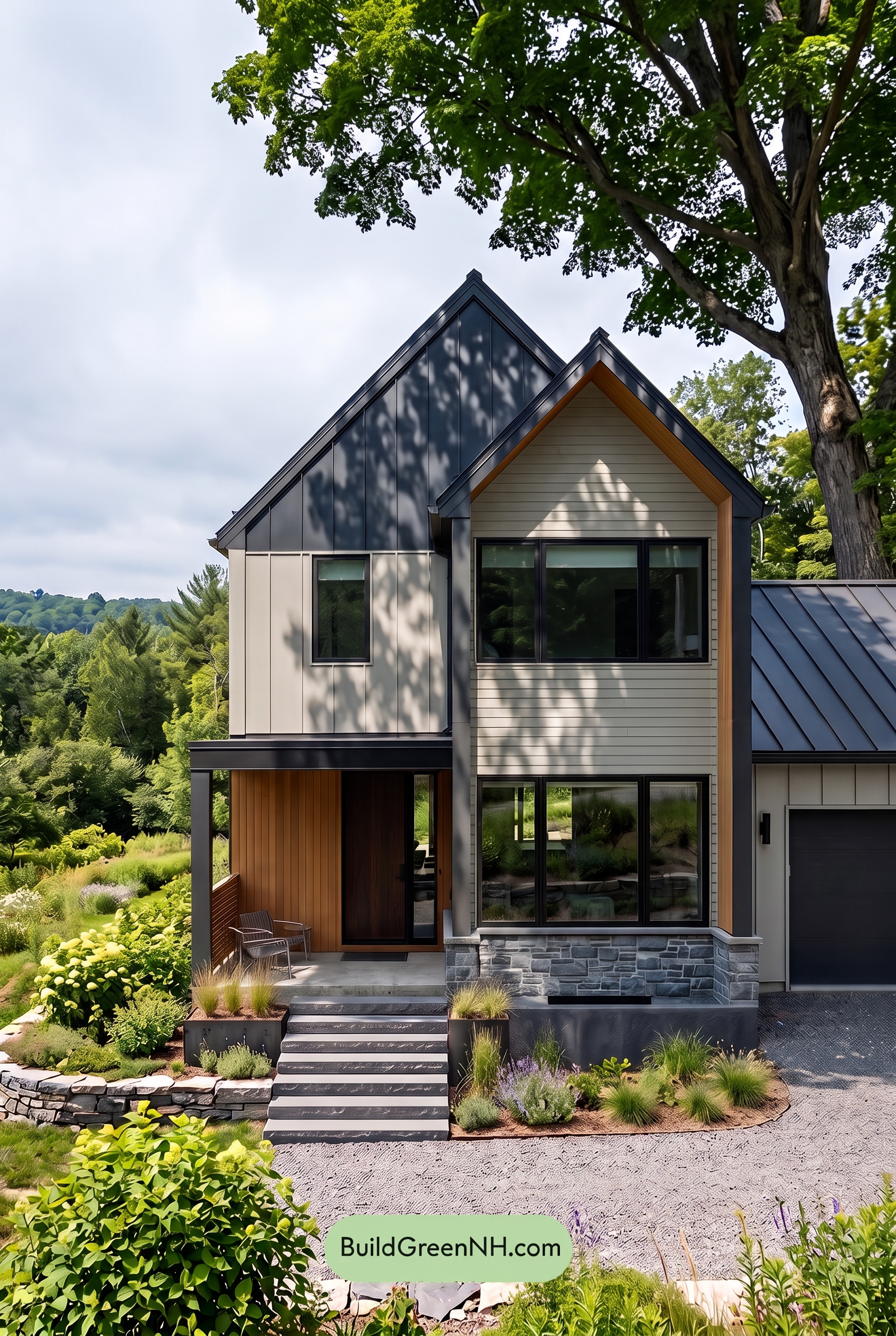
In shade, the gray exterior shifts away from the crisp balance it shows in neutral daylight, reading deeper and slightly cooler across the broad wall planes. The darkest gray details become more saturated and dramatic, while soft, dappled shadows create changing layers of contrast along the siding, trim, and window surrounds.
The brown accents retain their welcoming warmth, yet appear richer and more subdued beside the cooler grays. This reduced brightness gives the facade a calm, sheltered mood: architectural lines feel sharper, warm and cool tones feel more distinct, and the home takes on a polished, quietly dramatic presence.
Nighttime
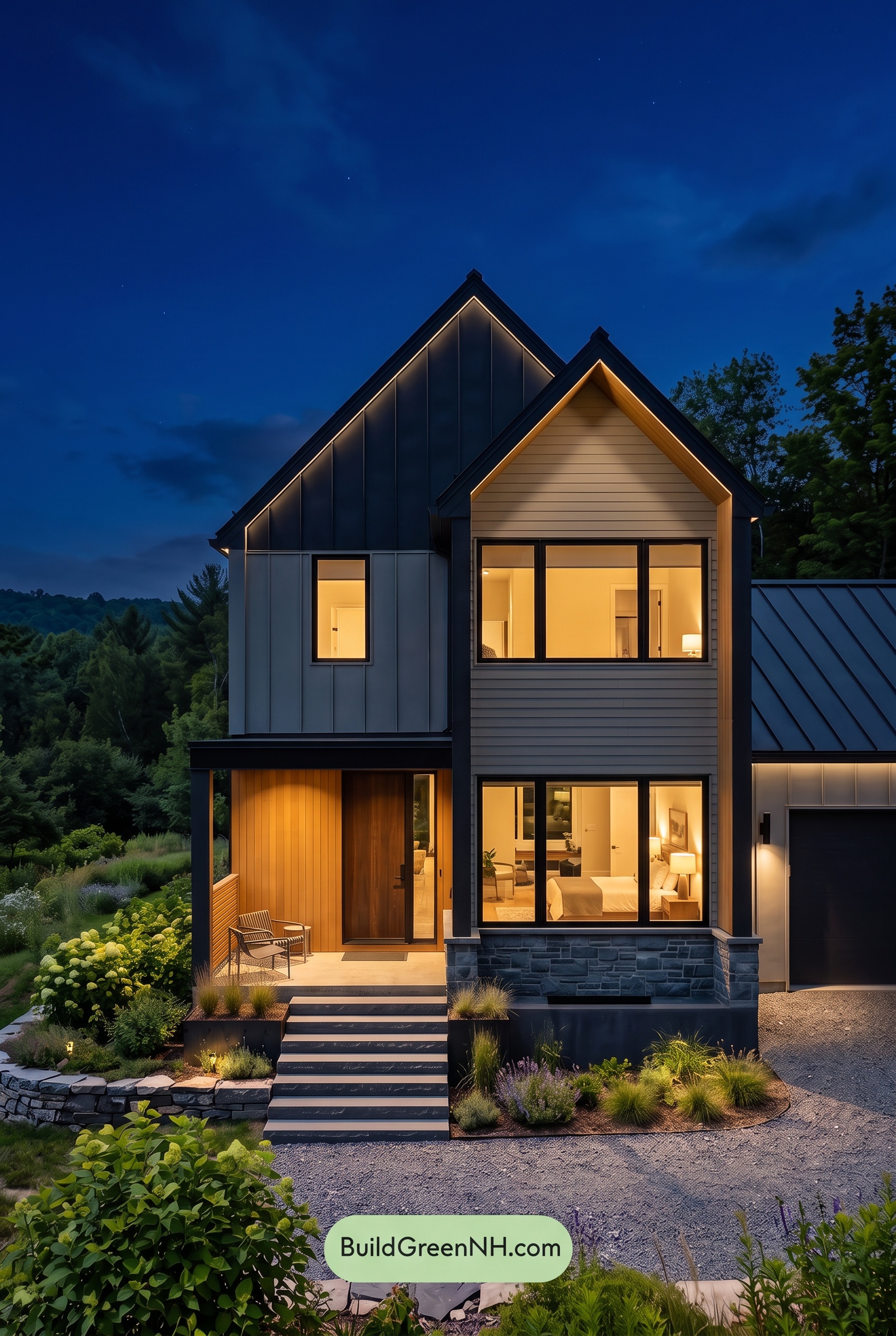
At nighttime, the gray exterior shades deepen and appear less saturated than they do in neutral daylight, taking on a cooler, more sculptural presence. Shadows settle into the vertical siding, trim, and window frames, sharpening the contrast between the lighter gray planes and the near-black recesses beneath the rooflines.
Warm interior and architectural lighting transforms the brown accents into a richer, more inviting feature, while nearby gray surfaces pick up a subtle warmth. This interplay of cool, shadowed grays and glowing warm neutrals gives the façade a dramatic yet welcoming mood after dark.
Pin these for later:
Want More?
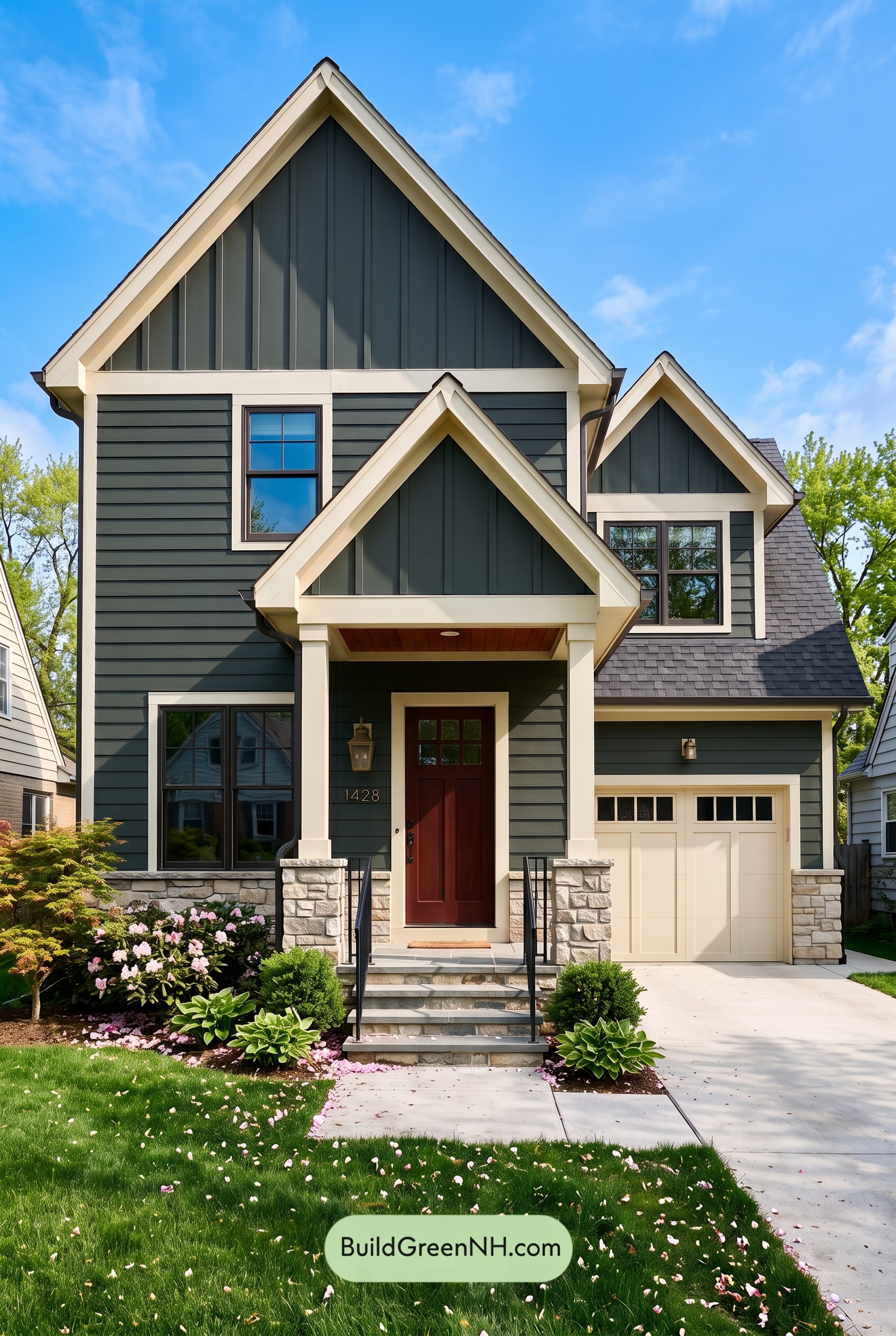 Exterior Color Scheme with Stone Accents: Pine Brass Threshold
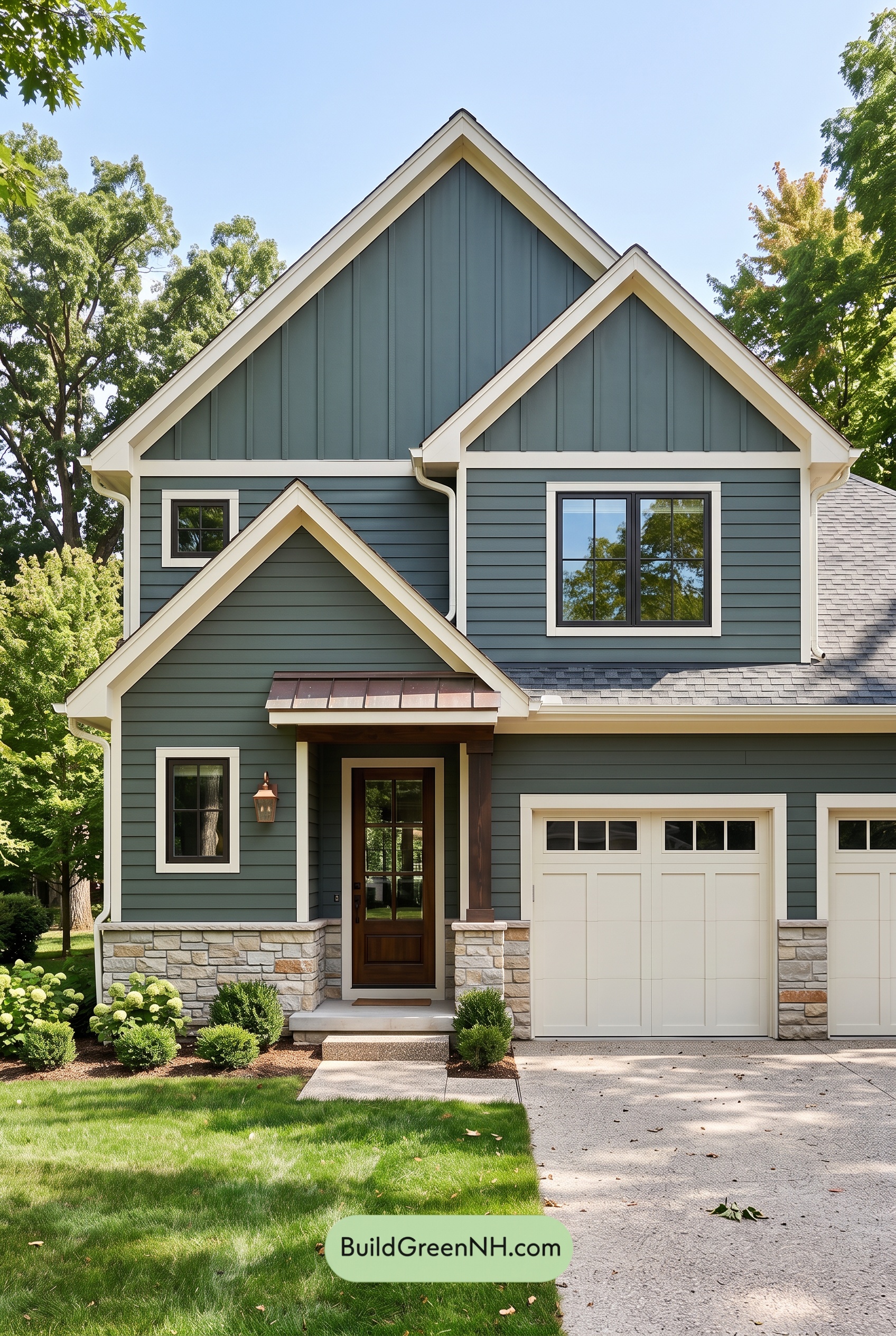 Exterior Color Scheme with Stone Accents: Evergreen Copper Welcome
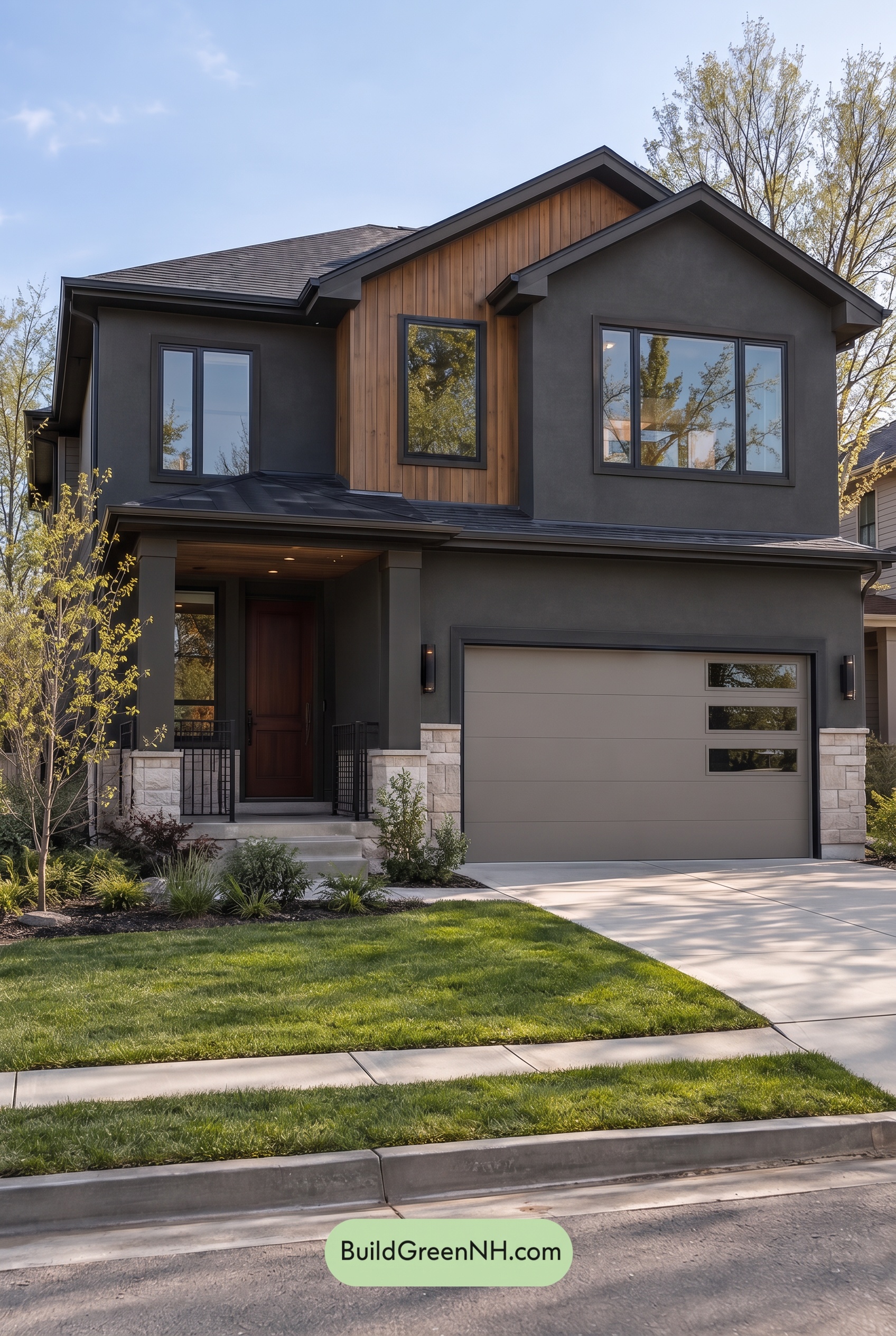 Dark Stucco House Exterior Color Scheme: Cedar Ember Calm
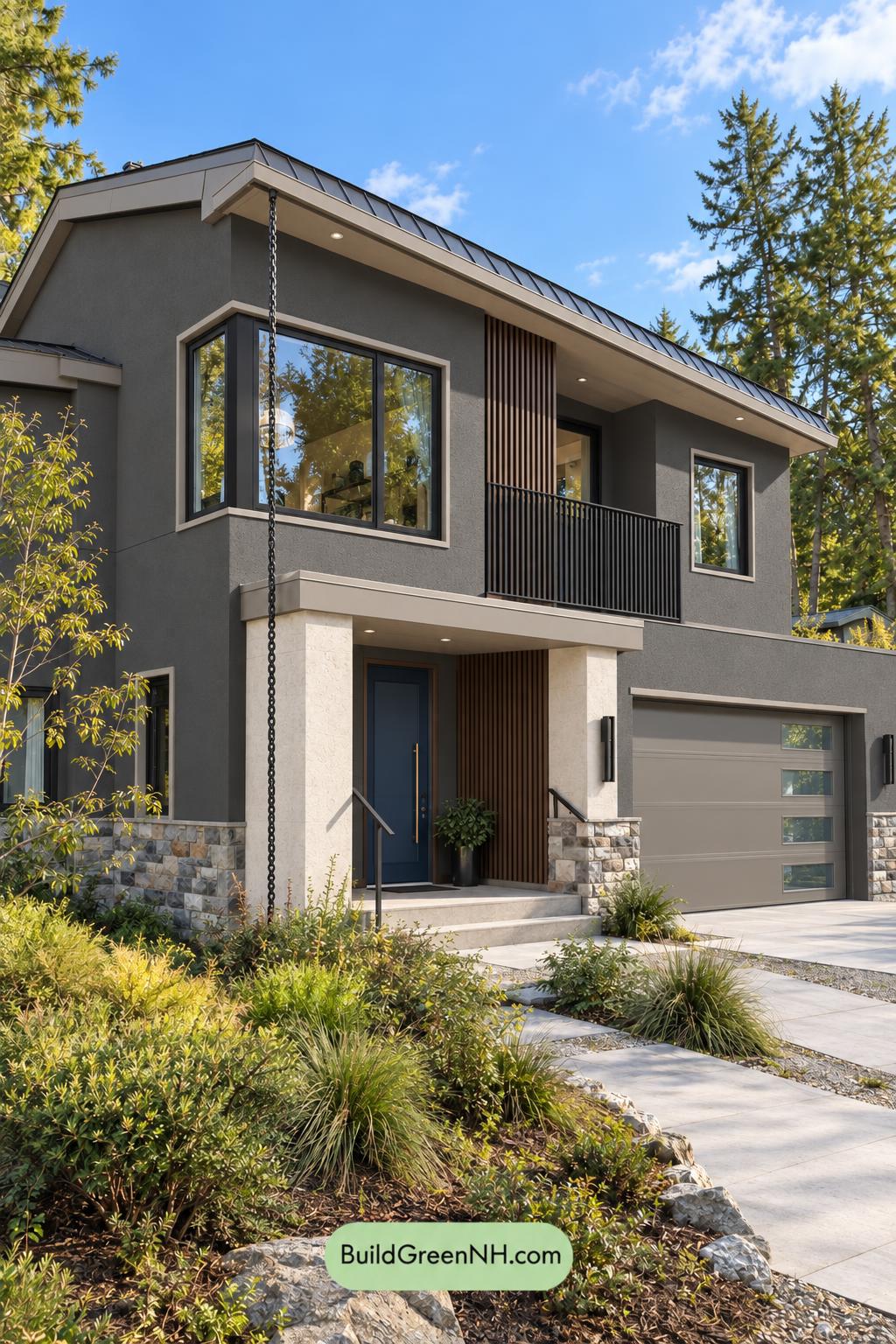 Dark Stucco House Exterior Color Scheme: Silver Pine Shelter
 Dark Stucco House Exterior Color Scheme: Copper Orchard House
Table of Contents