Last updated on · ⓘ How we make our designs
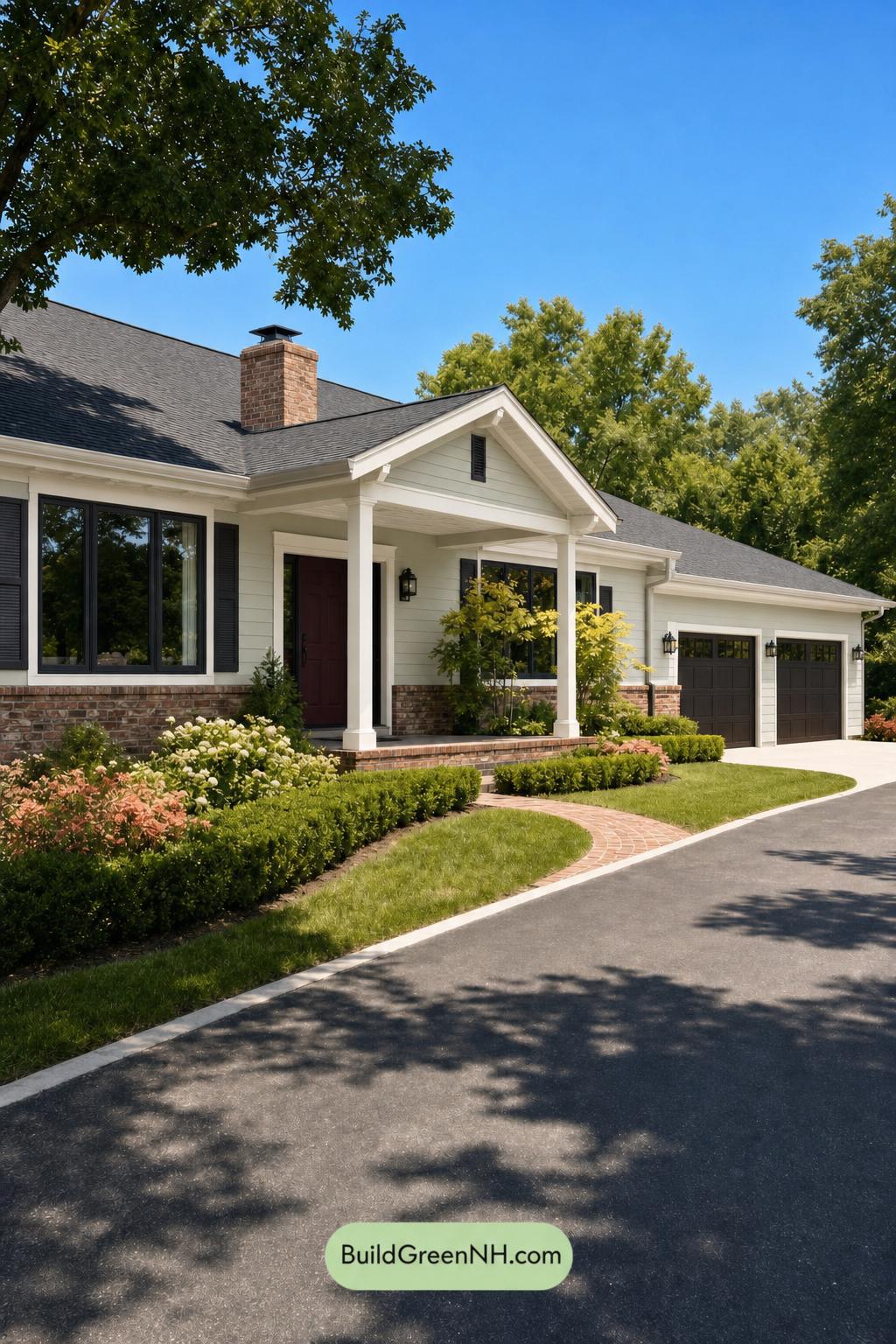




This inviting exterior succeeds because its soft neutrals, dark accents, and warm brown details create a polished look that feels instantly at home among the landscaping.
A Soft, Layered Foundation
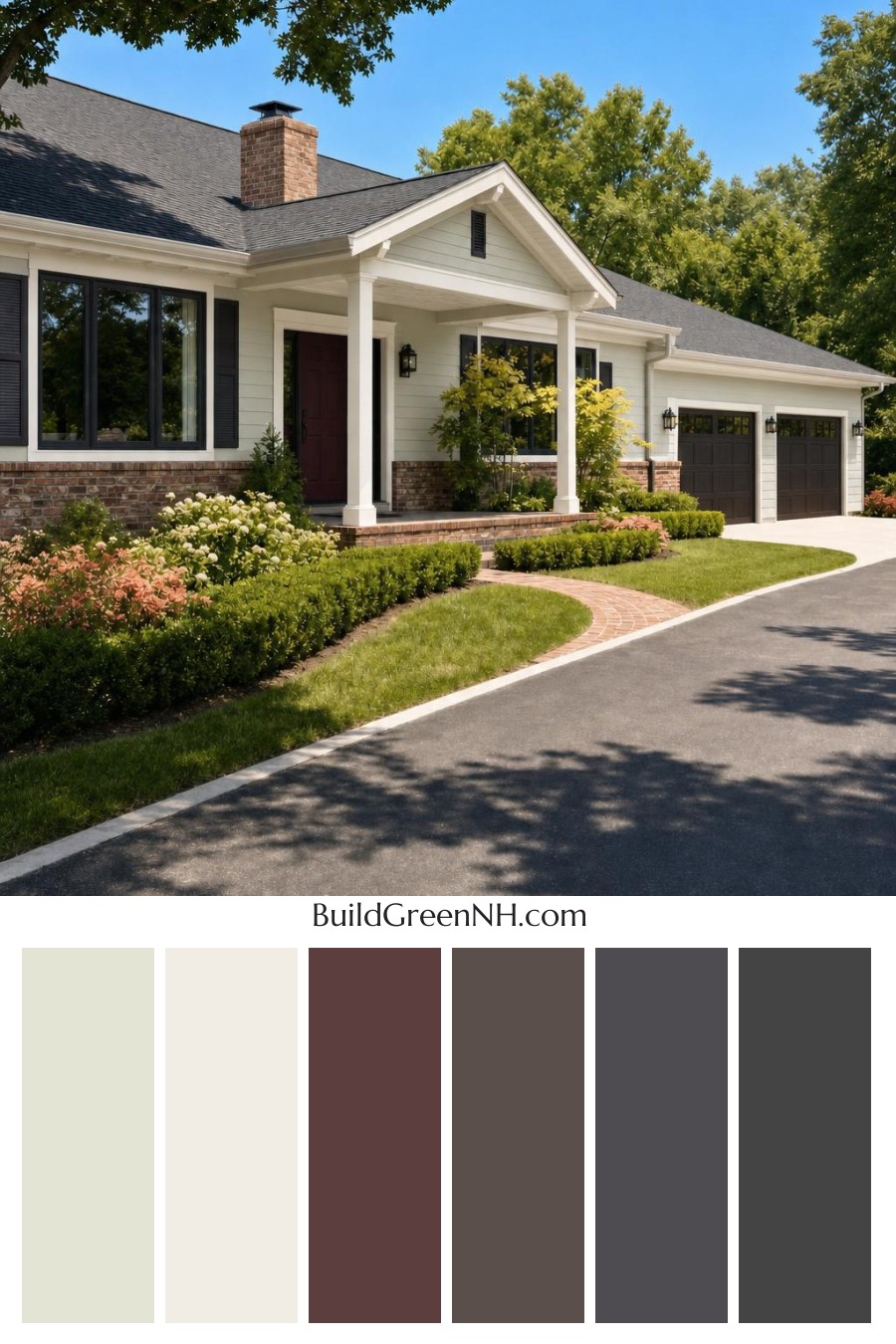
The main siding wears a light beige shade with a subtle warm undertone, giving the home an airy, welcoming presence without feeling stark. This gentle neutral brightens the broad façade and lets the porch, windows, and architectural lines stand out naturally.
A slightly lighter creamy beige is used on the trim, fascia, porch posts, and decorative gable details. That tonal shift is quiet but effective: it crisply outlines the roofline and gives the covered entry a tailored, substantial appearance. Keeping these shades within the same warm neutral family makes the exterior feel cohesive from every angle.
Dark Accents That Add Definition
Deep charcoal-gray shutters and window frames bring welcome contrast to the pale siding. Their strong, cool depth anchors the larger windows and adds a refined, almost tailored edge to the otherwise soft palette. The dark gray roof continues this visual weight overhead, tying the accents together and giving the house a grounded silhouette.
The restrained use of this dark shade is especially successful. Rather than overwhelming the exterior, it appears in focused architectural moments, creating clear definition around the windows and drawing the eye up toward the roofline.
Warm Brown Details Create a Welcoming Entry
The front door introduces a rich, dark brown shade that makes the entry feel warm and memorable. Set against the light beige porch and framed by deep gray accents, it becomes a natural focal point without disrupting the calm character of the scheme.
Matching dark brown garage doors repeat that warmth on the wider side of the façade. This repetition gives the home balance, while the brown tones connect beautifully with the earthy variation in the brick chimney, foundation, and front walk.
A Timeless, Comfortable Mood
Overall, this palette feels classic, calm, and carefully layered. Warm beige shades soften the structure, charcoal-gray elements provide modern contrast, and dark brown accents lend depth and hospitality. Surrounded by green landscaping, the colors feel especially natural—elegant enough for strong curb appeal, yet relaxed enough to feel welcoming every day.
Next, see how this color scheme looks under different lighting simulations throughout the day.
Overcast
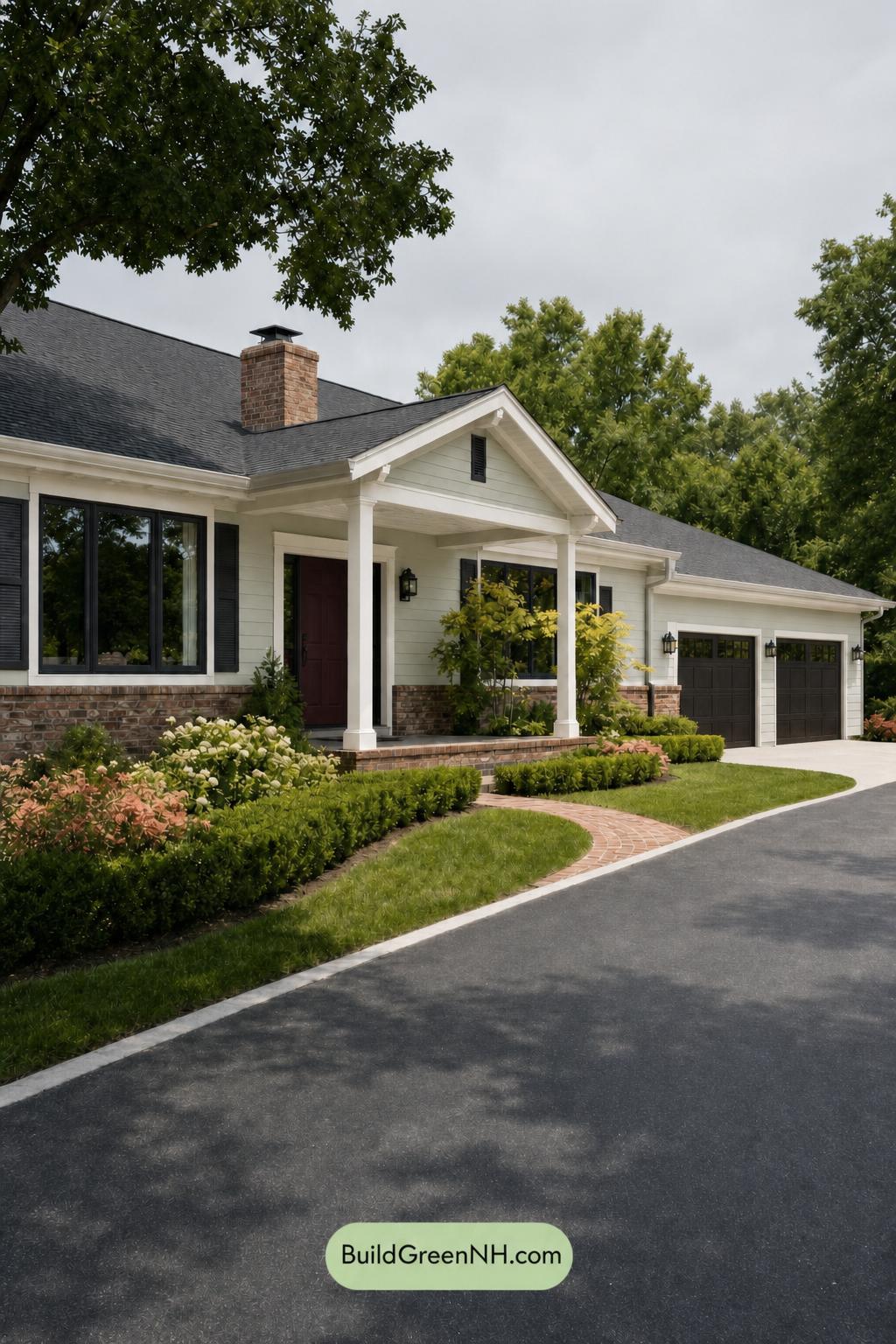

Under overcast skies, the light beige siding and trim appear softer and slightly less saturated than they do in neutral daylight, with their warmth gently muted by the cool, diffuse light. Without strong sun, the porch columns and gable details read more evenly, creating a calm, refined facade with fewer sharp highlights.
The deep brown door and garage doors take on a richer, more grounded presence, while the gray shutters and window frames can appear deeper and cooler. Shadows become broad and subtle rather than crisp, reducing contrast across the exterior and giving the whole palette a quiet, welcoming mood.
Golden Hour
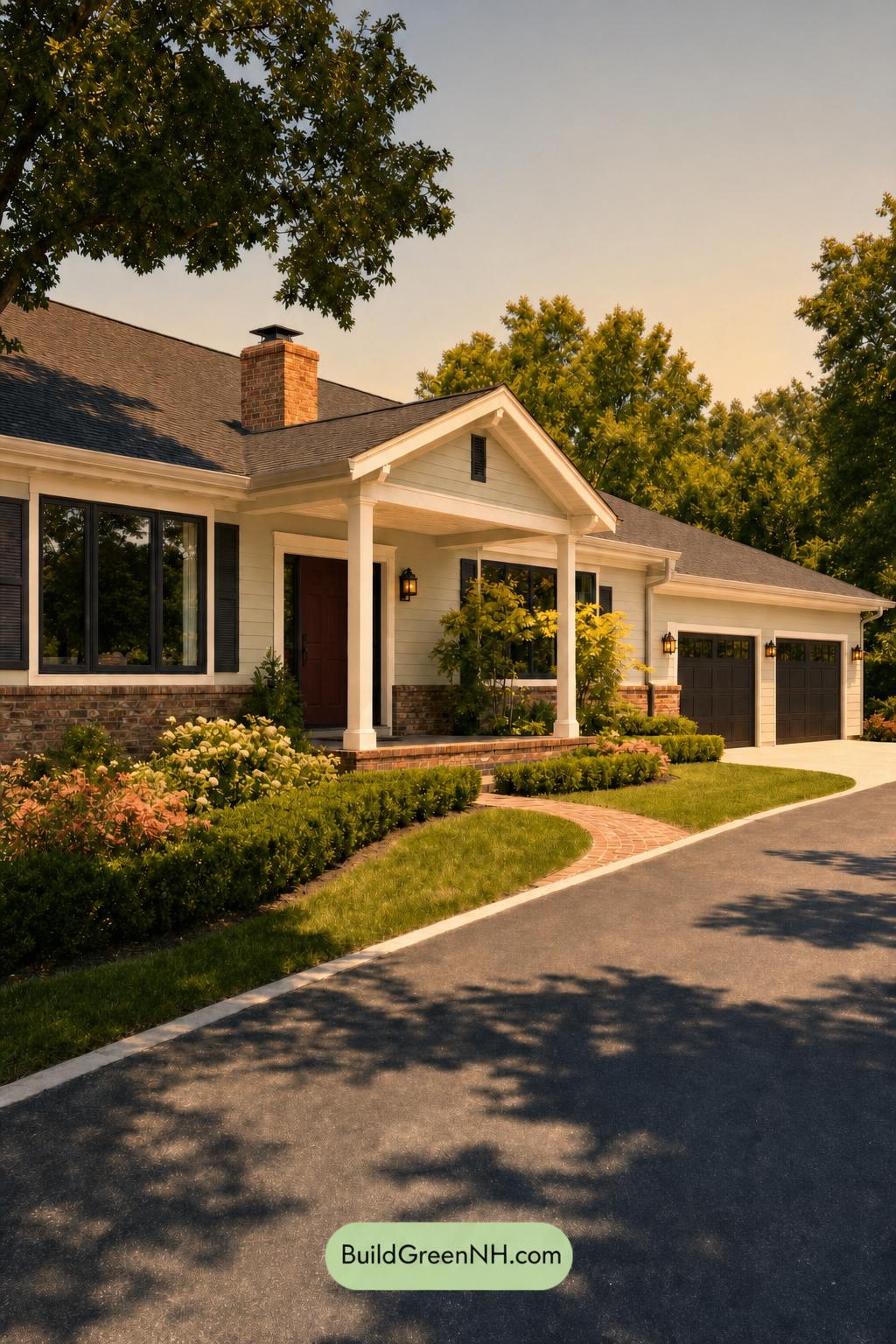

Golden Hour lends the beige siding and trim a richer, creamier warmth than neutral daylight, making the facade feel softer and more inviting. The brown door and garage doors gain a deeper, more saturated presence, while the gray shutters and window frames take on a gentler, slightly warmer cast.
As the low sun stretches shadows across the porch and roofline, contrast becomes more dramatic: bright beige highlights stand out against the darkened brown and gray details. This interplay of glowing warm neutrals and layered shadow gives the exterior a relaxed, welcoming evening mood that feels more dimensional than it does under balanced daylight.
Shade
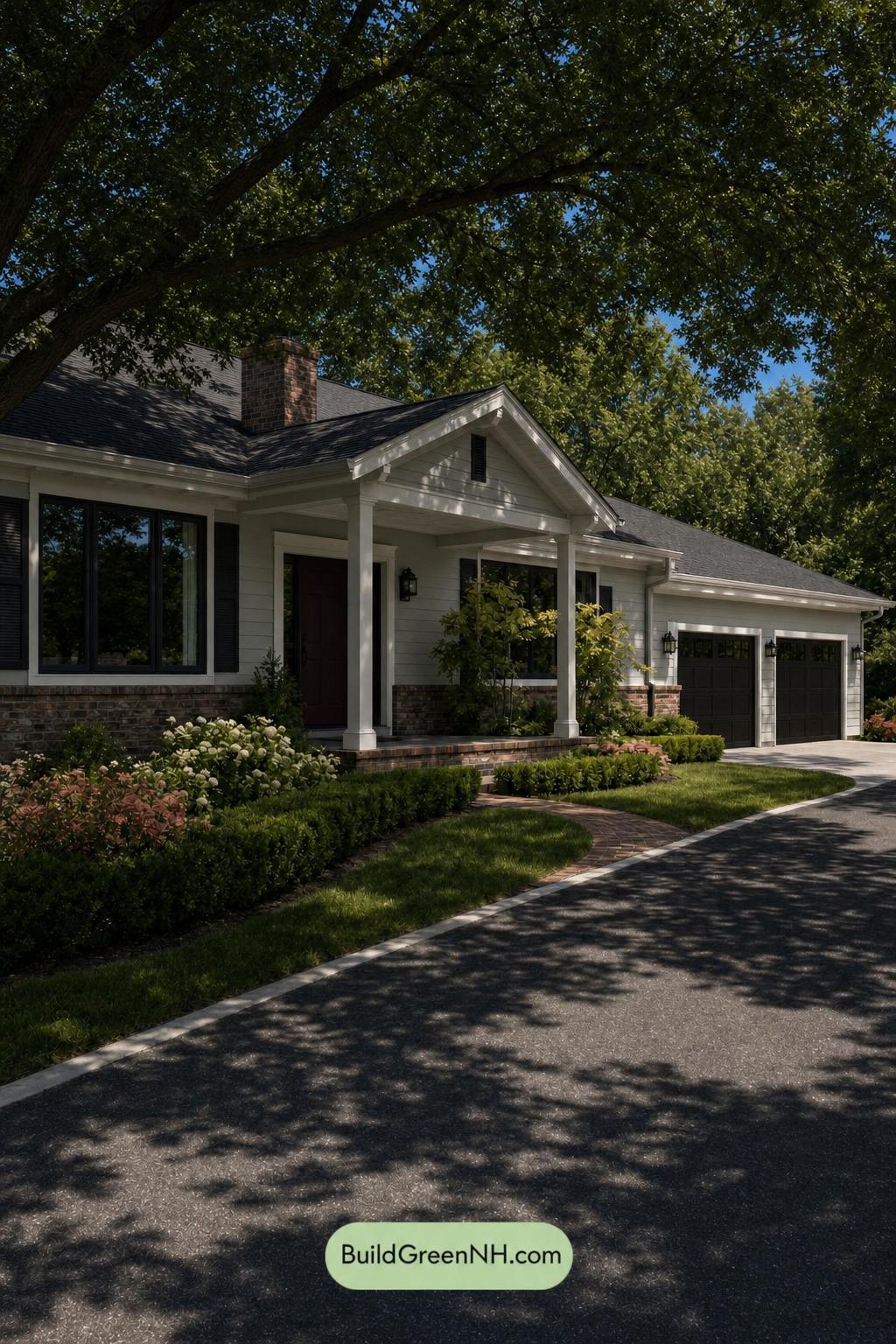

In shade, the soft beige siding and trim lose some of their sunlit warmth, settling into a calmer, more muted neutral that feels refined rather than bright. Dappled shadows deepen the horizontal lines and porch details, while the shaded areas make the beige surfaces appear slightly cooler and less saturated than they would in neutral daylight.
The brown entry and garage doors take on a richer, deeper presence beneath the tree canopy, creating stronger contrast against the softened beige exterior. Gray shutters and window frames read darker and crisper in the shade, adding definition without overpowering the palette. Overall, the filtered light gives the home a quiet, grounded mood with inviting depth and subtle architectural drama.
Nighttime
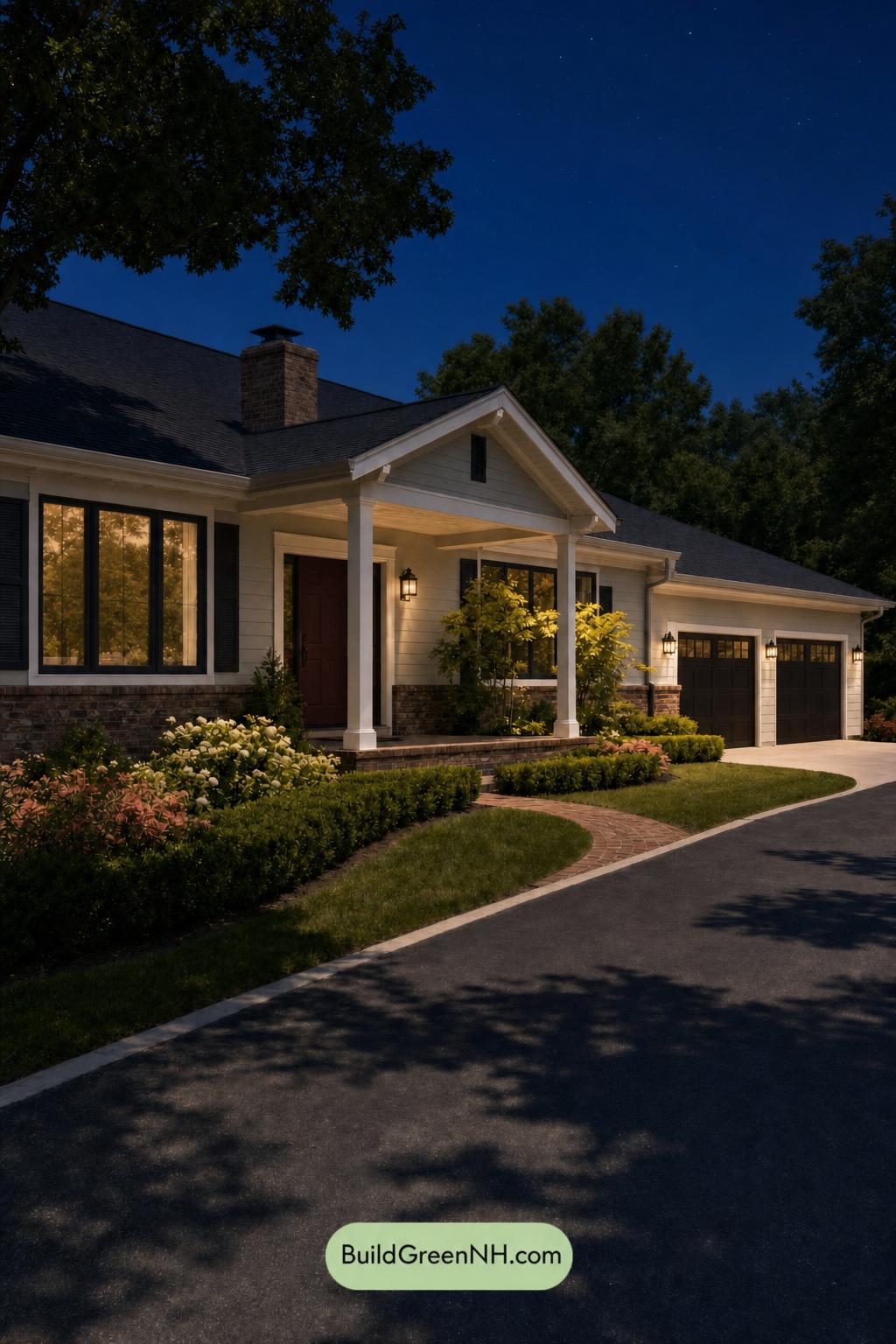

At night, the beige exterior shifts from its balanced daylight neutrality to a softer, creamier warmth under the porch and garage lighting. Its saturation appears gentler, while the beige trim and columns catch the glow and stand out more clearly against the deeper, shadowed wall planes.
The brown doors become richer and more grounded, creating a stronger contrast with the illuminated neutrals. Gray shutters and window frames recede into near-black shadows, sharpening the window outlines and giving the home a calm, welcoming mood with more depth and drama than it has in neutral daylight.
Pin these for later:
Want More?
 18 Modern Bahay Kubo Houses That Turn Tropical Living Into Art
 19 Daring Curved Roof Houses That Make Gravity Look Optional
 20 Stunning Japanese Roof Designs That Turn Rain Into Living Art
 20 Pitched Roof House Designs That Make Rainy Days Feel Magical
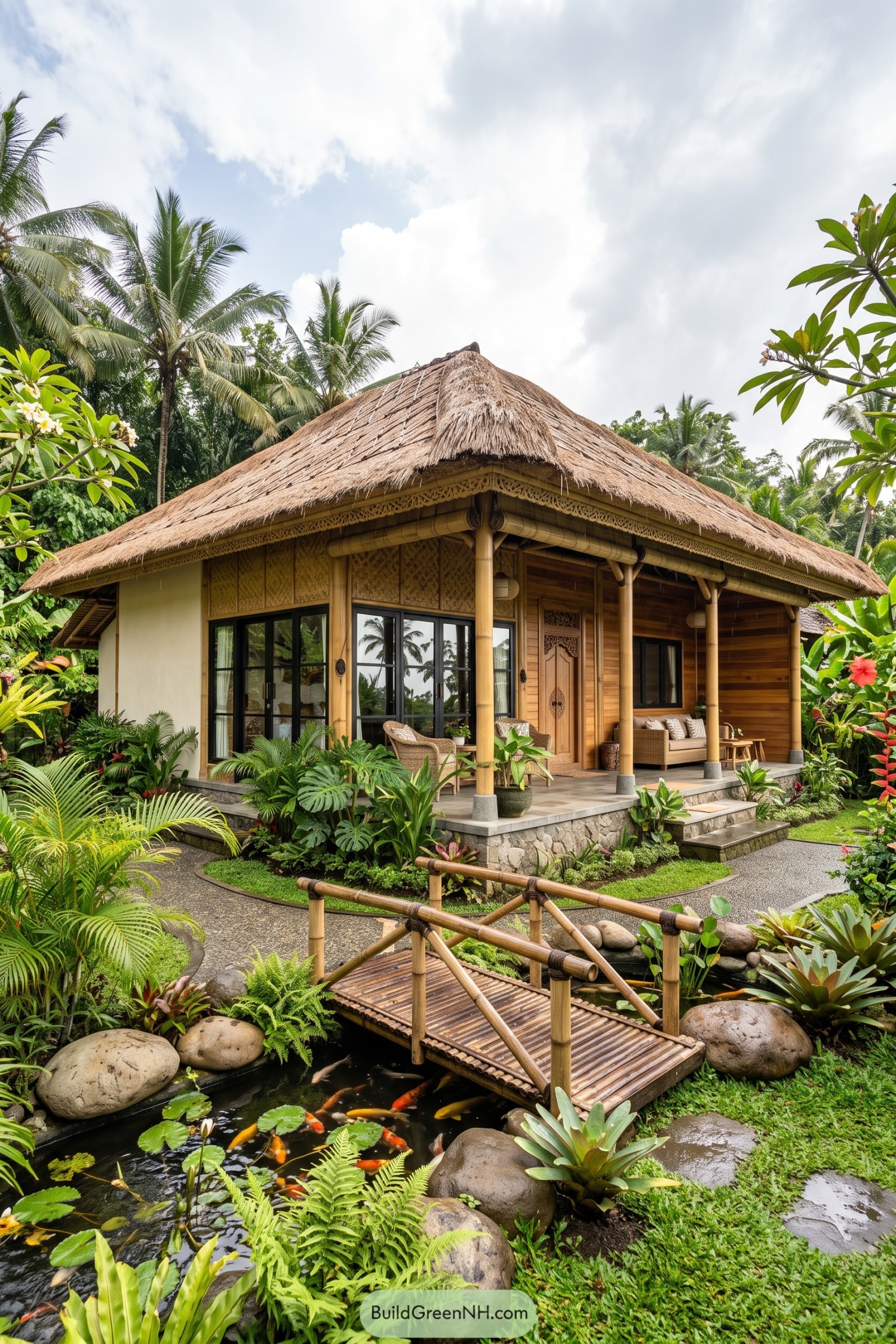 20 Stunning Bamboo Roof Houses to Inspire Your Dream Escape
Table of Contents