Last updated on
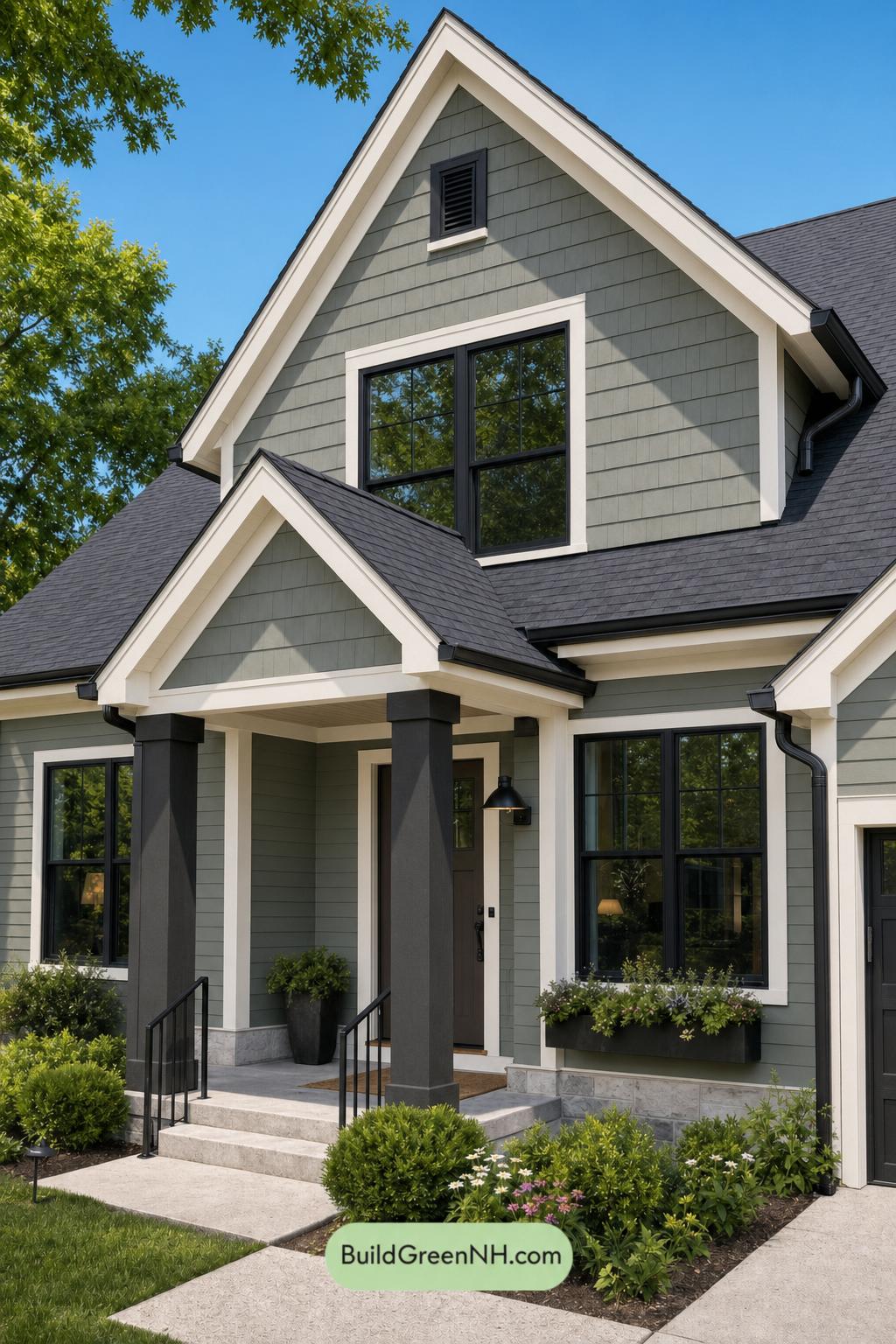

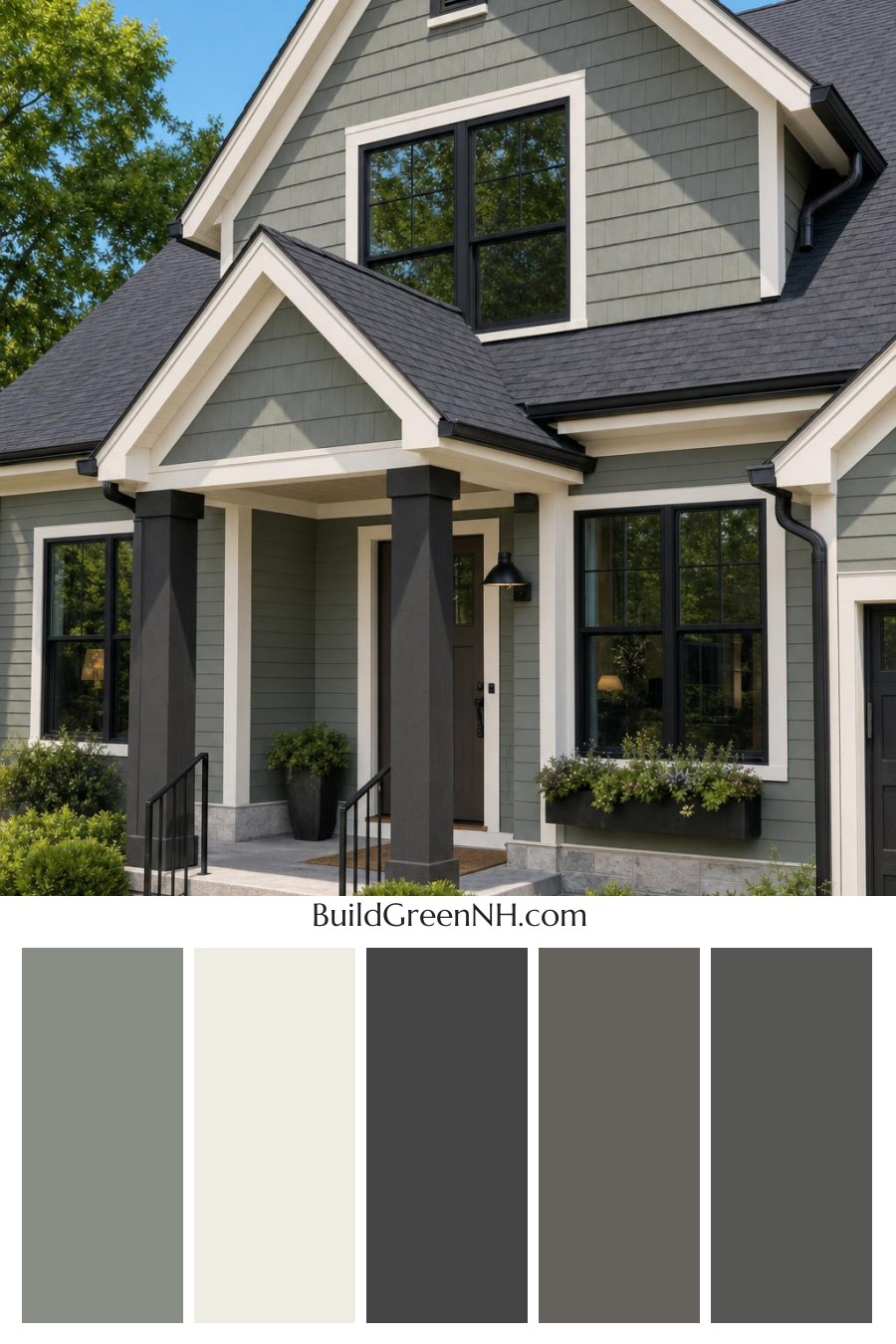
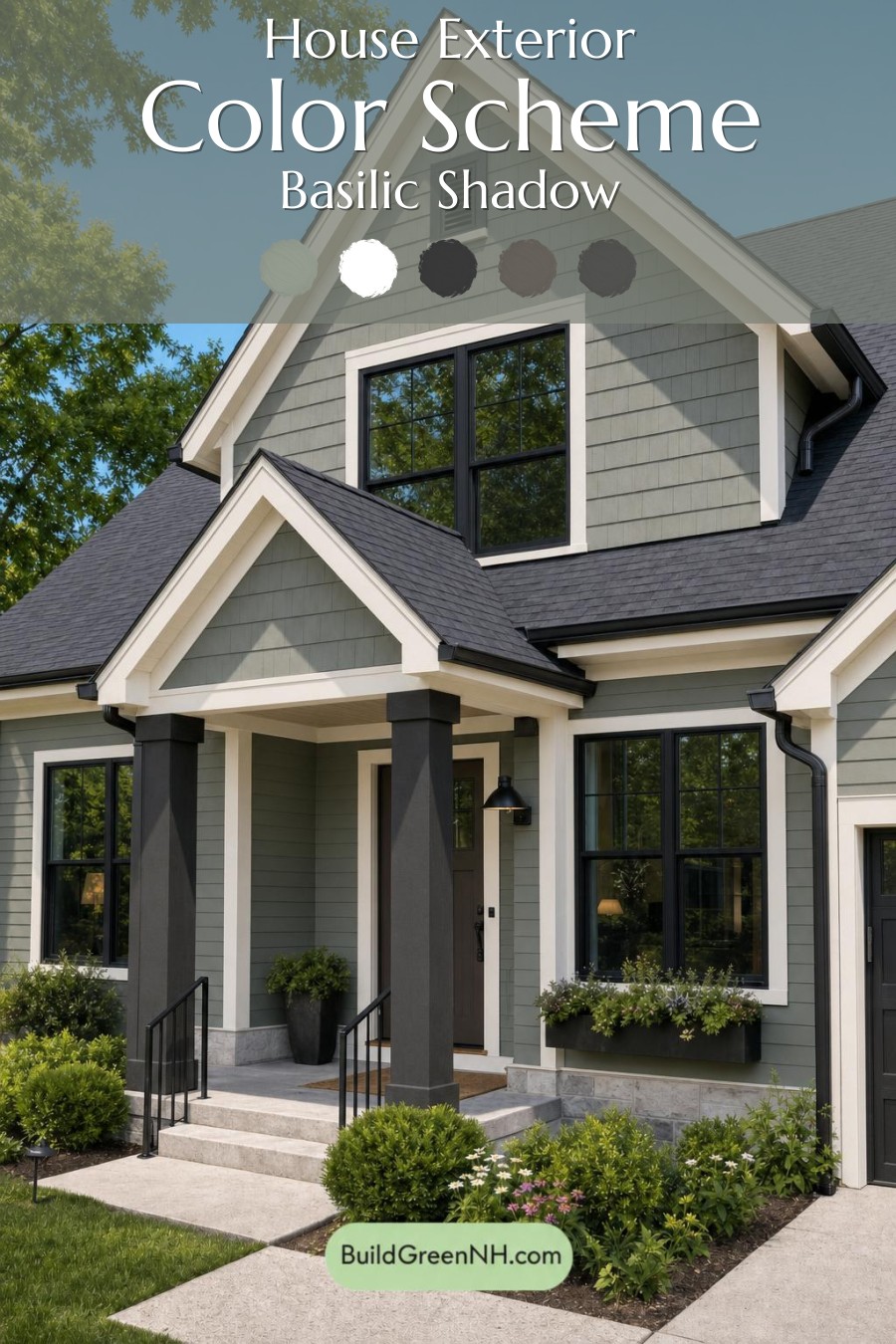
The refined blend of soft gray siding, crisp light trim, and deep charcoal accents gives this home a polished look that feels both timeless and warmly welcoming.
A Calm, Layered Exterior Palette
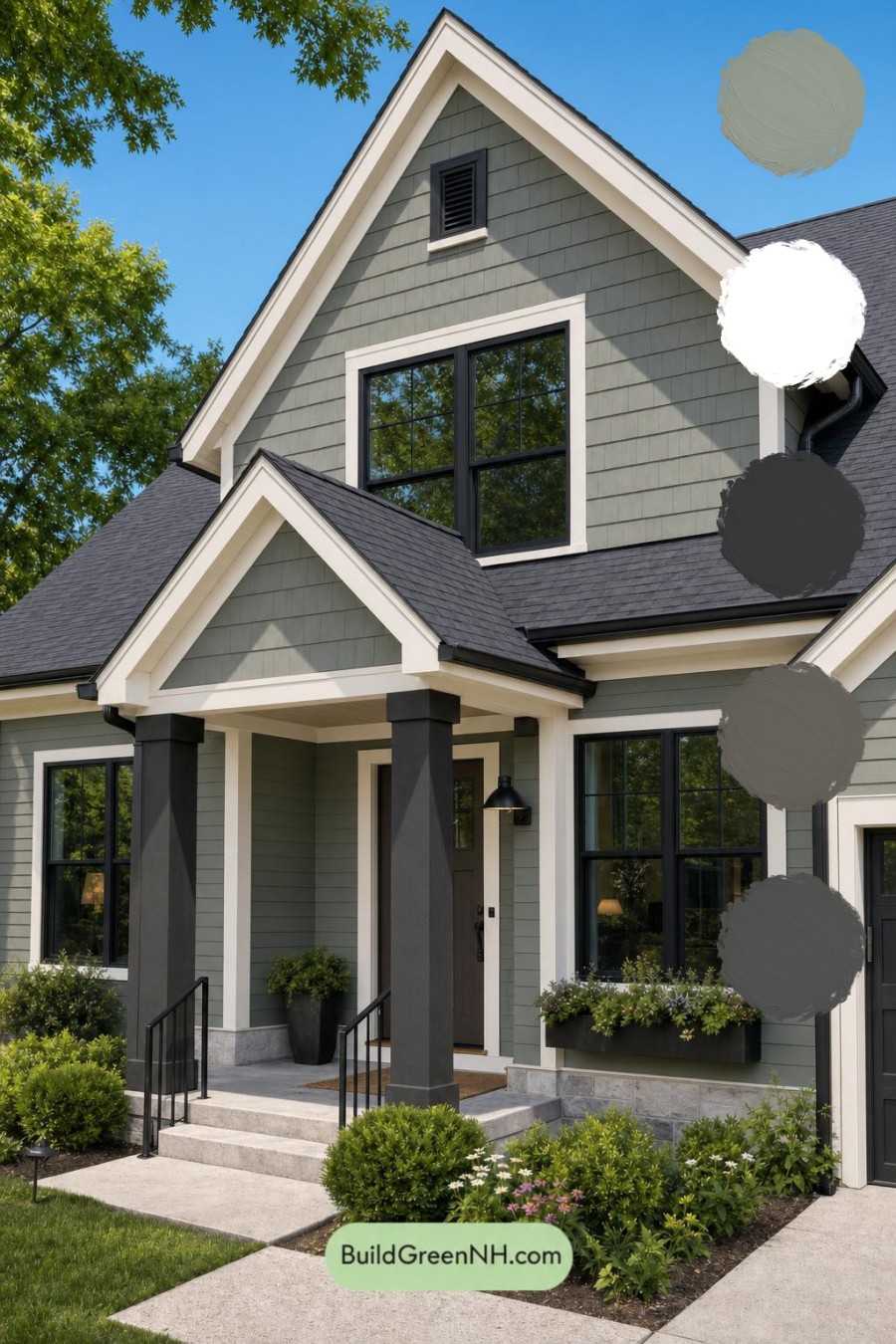
The main siding wears a gentle, muted gray with a subtle natural cast, creating a calm foundation for the home’s tall gables and classic architectural lines. This softened shade keeps the exterior from feeling stark while allowing the shingle texture and horizontal siding to add plenty of visual interest.
Bright, creamy white trim outlines the rooflines, windows, porch details, and gables. Its clean contrast defines every angle of the façade, especially around the dramatic peaks, and gives the house a fresh, tailored finish.
Deep Charcoal Details Add Definition
Deep charcoal gray appears on the roof, window frames, columns, railings, gutters, and small accent details. These dark elements ground the lighter gray siding and bring a handsome sense of depth to the design. The roof color visually anchors the upper stories, while the dark window frames create strong, elegant focal points across the façade.
The substantial porch columns use the same rich gray family to make the entry feel more established and inviting. Paired with slim dark railings, they add a subtle modern edge without competing with the home’s traditional character.
An Understated Entry That Belongs
The front door continues the gray palette in a medium-to-deep shade, producing a cohesive entry rather than an overly bold interruption. It sits beautifully between the pale trim and charcoal architectural accents, creating a layered transition that feels intentional and balanced.
Even the garage door follows the darker gray direction, helping this functional feature recede gracefully into the overall design. The result is a unified exterior where each shade has a role: soft gray for warmth, light trim for clarity, and charcoal gray for contrast and structure.
The Overall Mood
This color scheme feels sophisticated, grounded, and quietly contemporary. The cool gray family complements surrounding greenery beautifully, while the light trim keeps the elevation bright in full sun. With its careful mix of pale, mid-tone, and deep grays, the home achieves impressive curb appeal without relying on loud color.
Next, see how this color scheme looks under different lighting simulations throughout the day.
Overcast
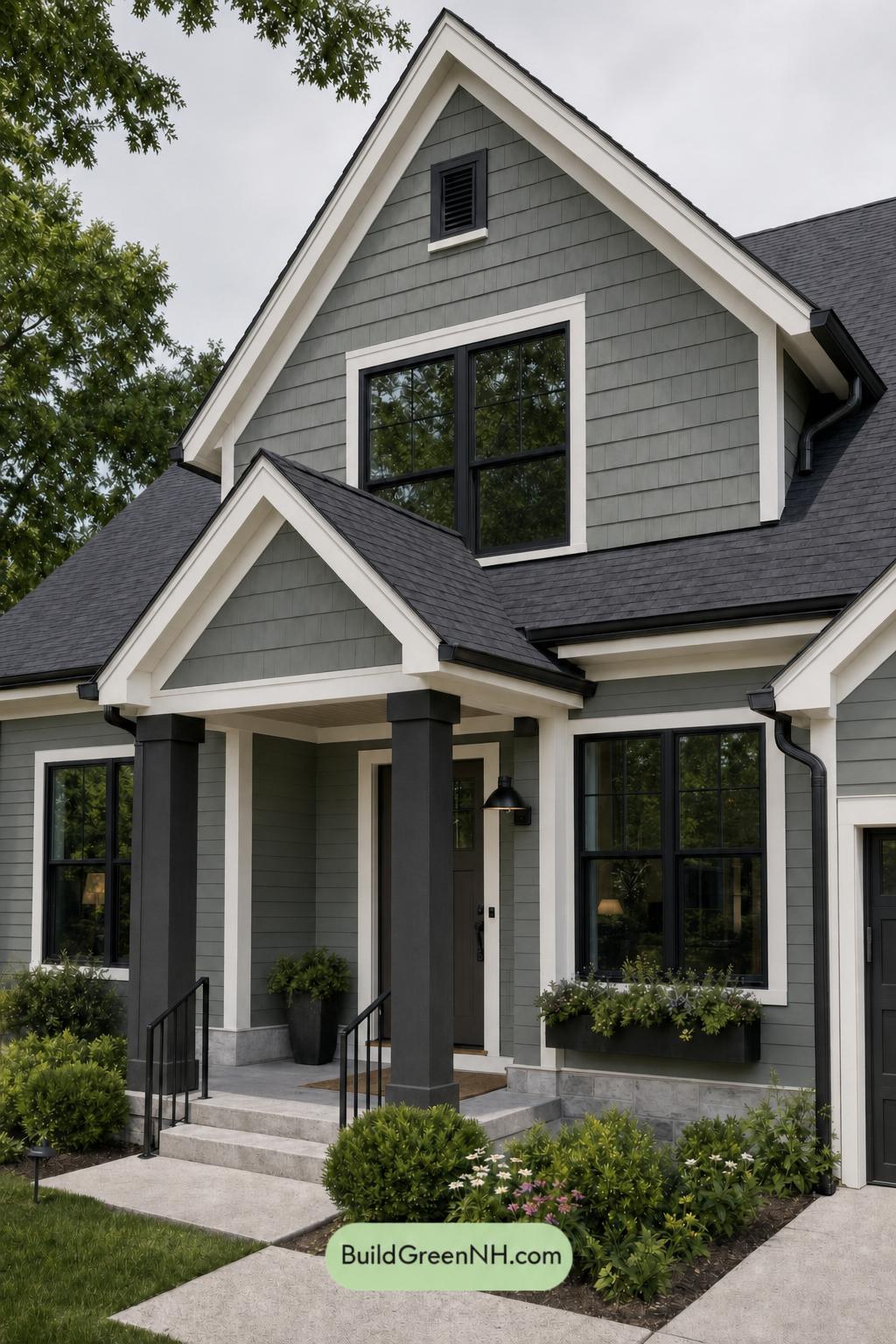
Under overcast skies, the muted gray siding reads a touch deeper and cooler than it does in neutral daylight, with its saturation appearing more restrained and even across the façade. The soft white trim loses some brightness but gains a calm, velvety quality, while the dark gray architectural details feel richer without becoming overly harsh.
Because clouds diffuse direct sun, shadows along the gables, columns, and porch become gentler, reducing sharp contrast while preserving the home’s crisp layered lines. The overall effect is polished and quietly dramatic: a composed palette of cool gray shades and softened white accents that feels grounded, sophisticated, and inviting.
Golden Hour
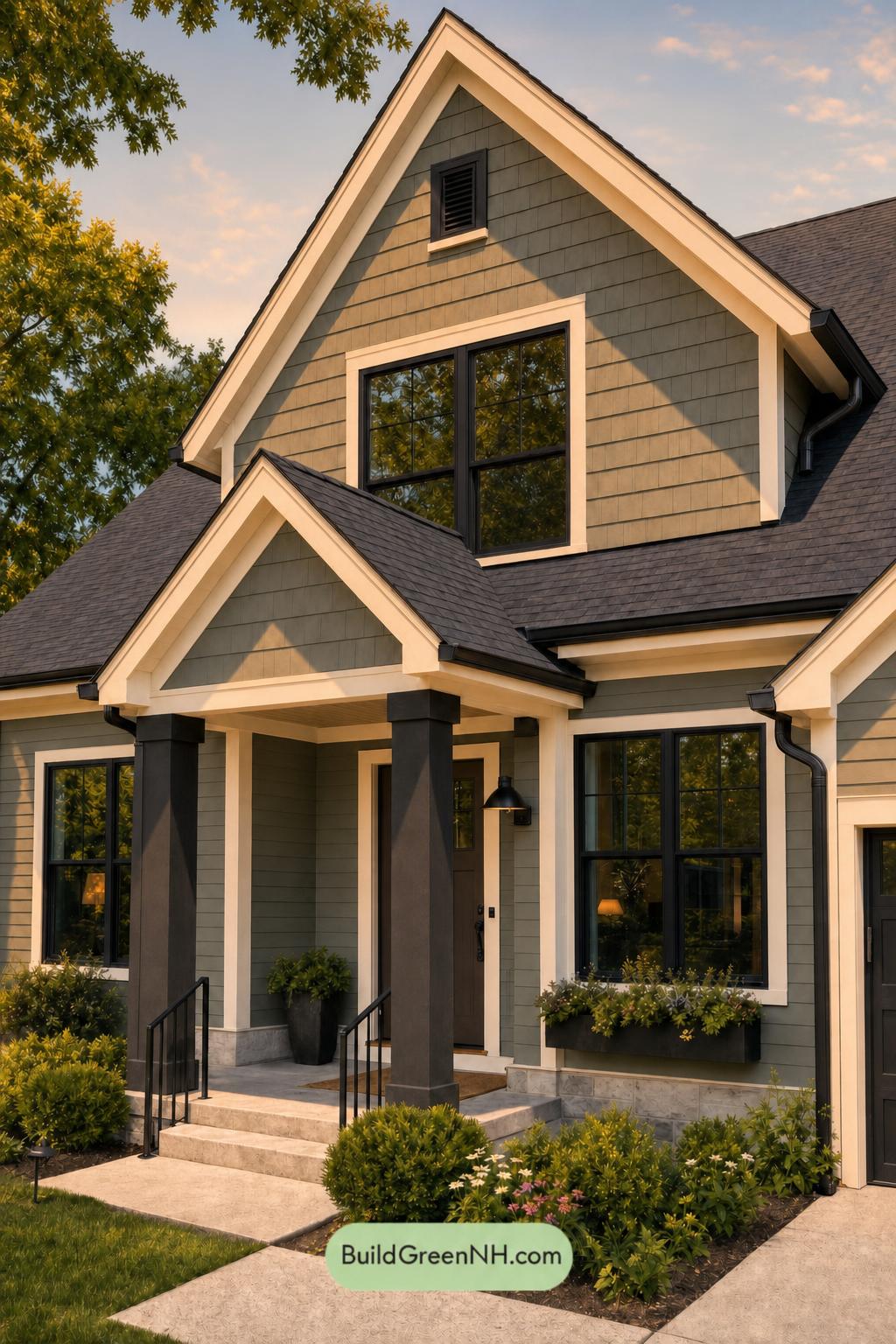
Under Golden Hour light, the gray siding takes on a softer, warmer cast than it shows in neutral daylight, with its muted character appearing richer and slightly more saturated. The light trim shifts from crisp white to a creamy, sunlit shade, bringing a gentle glow to the rooflines and window surrounds.
Longer shadows deepen the charcoal-toned frames, columns, railings, and door, increasing contrast against the warmed gray walls. This low-angle light emphasizes the siding texture and architectural layers, giving the exterior a cozy, polished mood that feels more dramatic and inviting than the even clarity of neutral daylight.
Shade
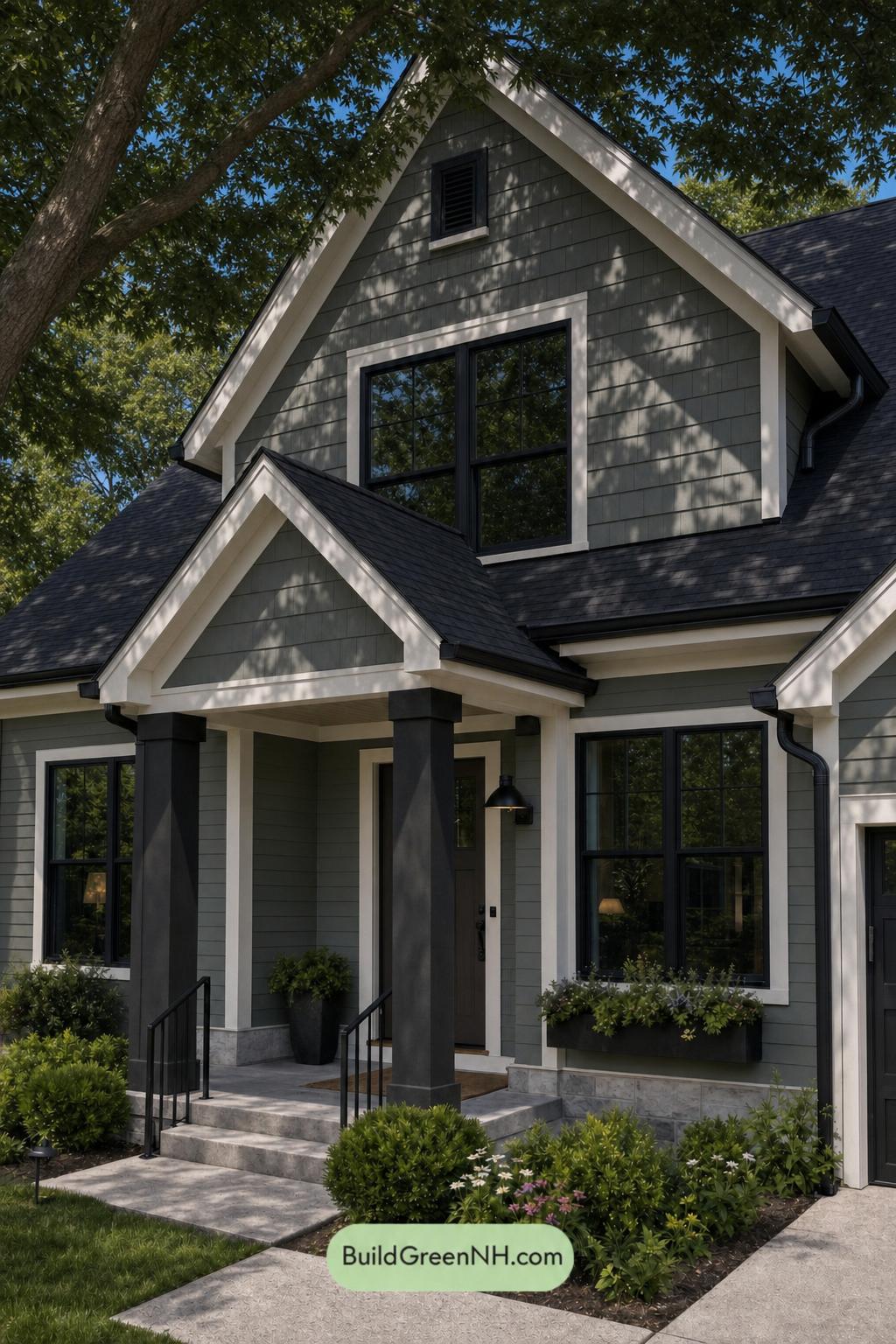
In shade, the gray exterior takes on a deeper, more subdued character than it would in neutral daylight, with its saturation appearing quieter and its undertones feeling cooler. Dappled shadows add movement across the siding, making the gray shades look layered rather than flat while giving the darker gray details a richer, more architectural presence.
The white trim softens slightly under the canopy, shifting from crisp brightness to a gentler contrast against the muted gray walls. Where shade falls most heavily, the contrast between light and dark gray elements becomes more dramatic, creating a calm, refined mood that feels sheltered and inviting.
Nighttime
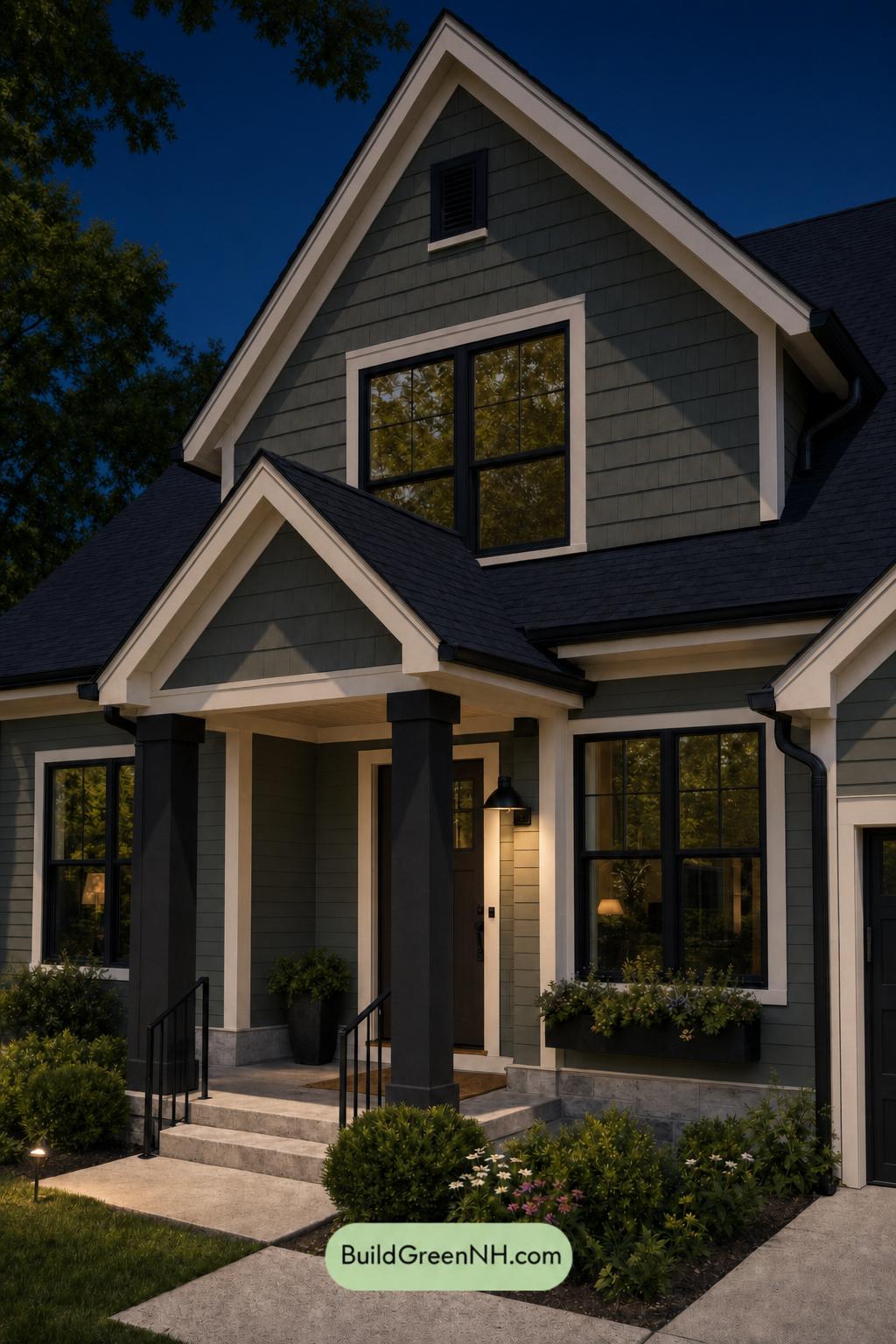
At night, the medium gray siding settles into a deeper, more muted shade, while the darkest gray details become nearly black in the surrounding shadows. The white trim takes on a softer, warmer cast under the porch light, creating a crisp but less stark contrast than it has in neutral daylight.
Warm illumination around the entry draws attention to the layered gray tones and makes the façade feel more intimate and welcoming. Beyond the light’s reach, cooler shadows simplify the color palette and heighten the dramatic contrast between pale trim, dark window frames, and the quietly receding gray walls.
Pin these for later:
Want More?
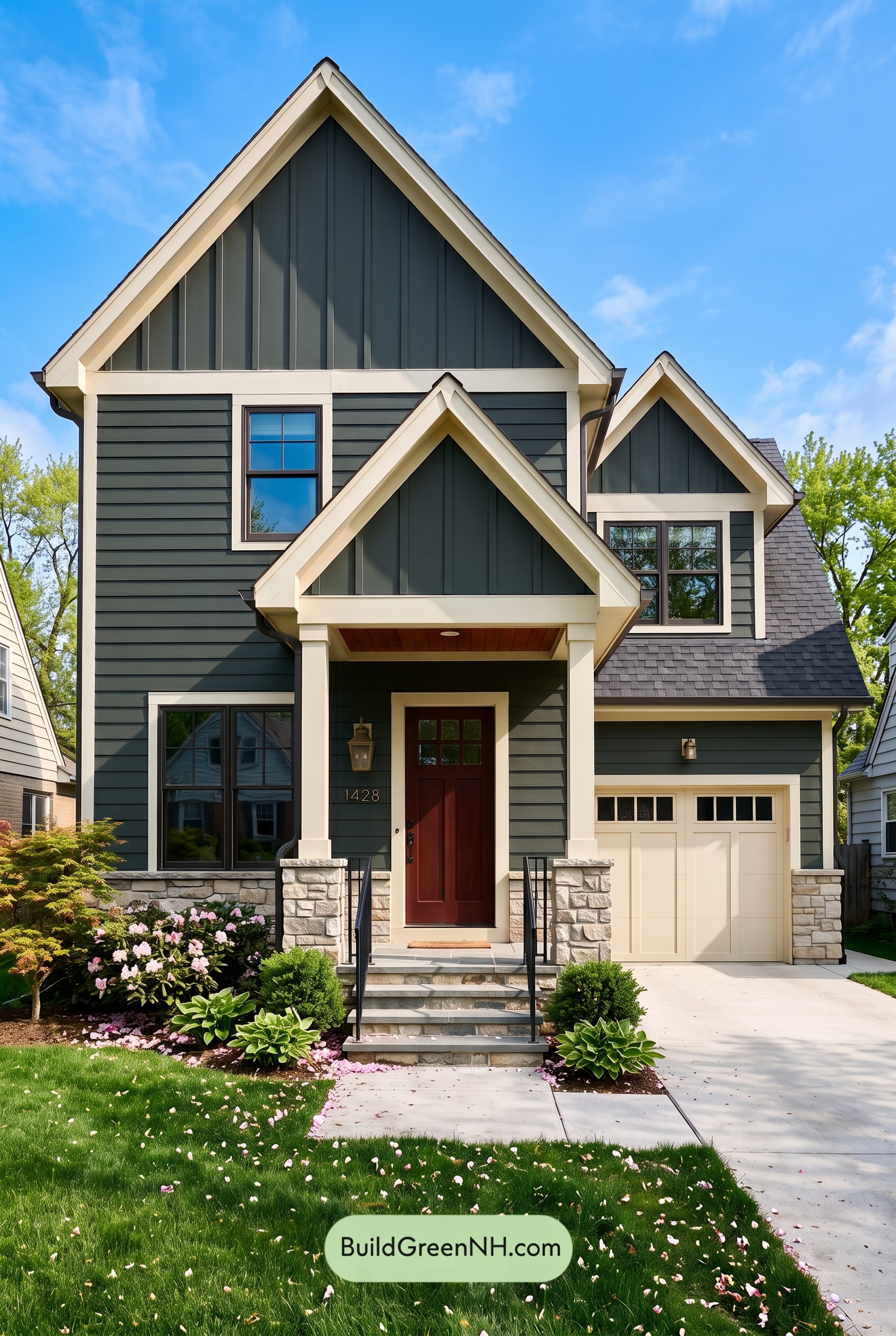 Exterior Color Scheme with Stone Accents: Pine Brass Threshold
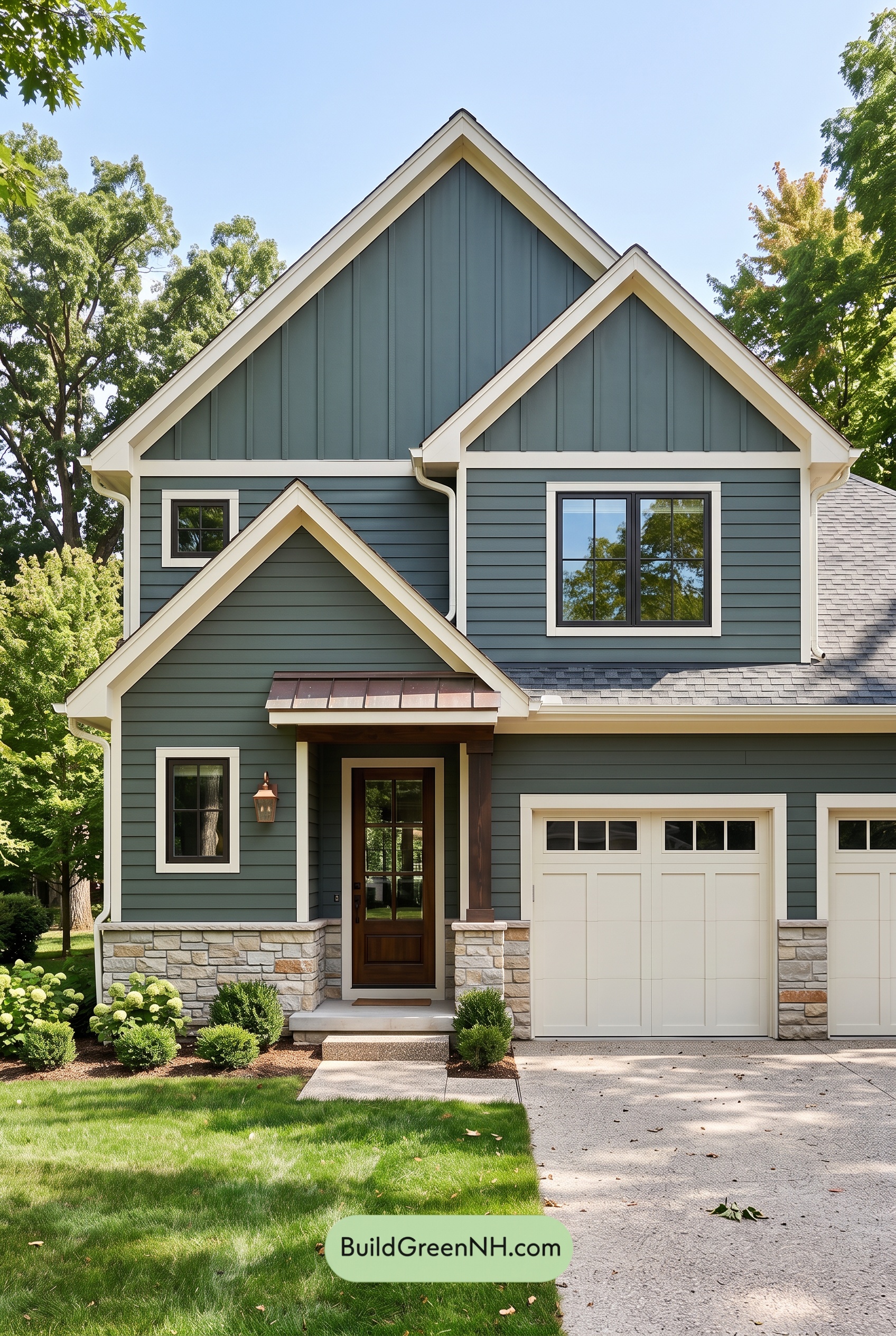 Exterior Color Scheme with Stone Accents: Evergreen Copper Welcome
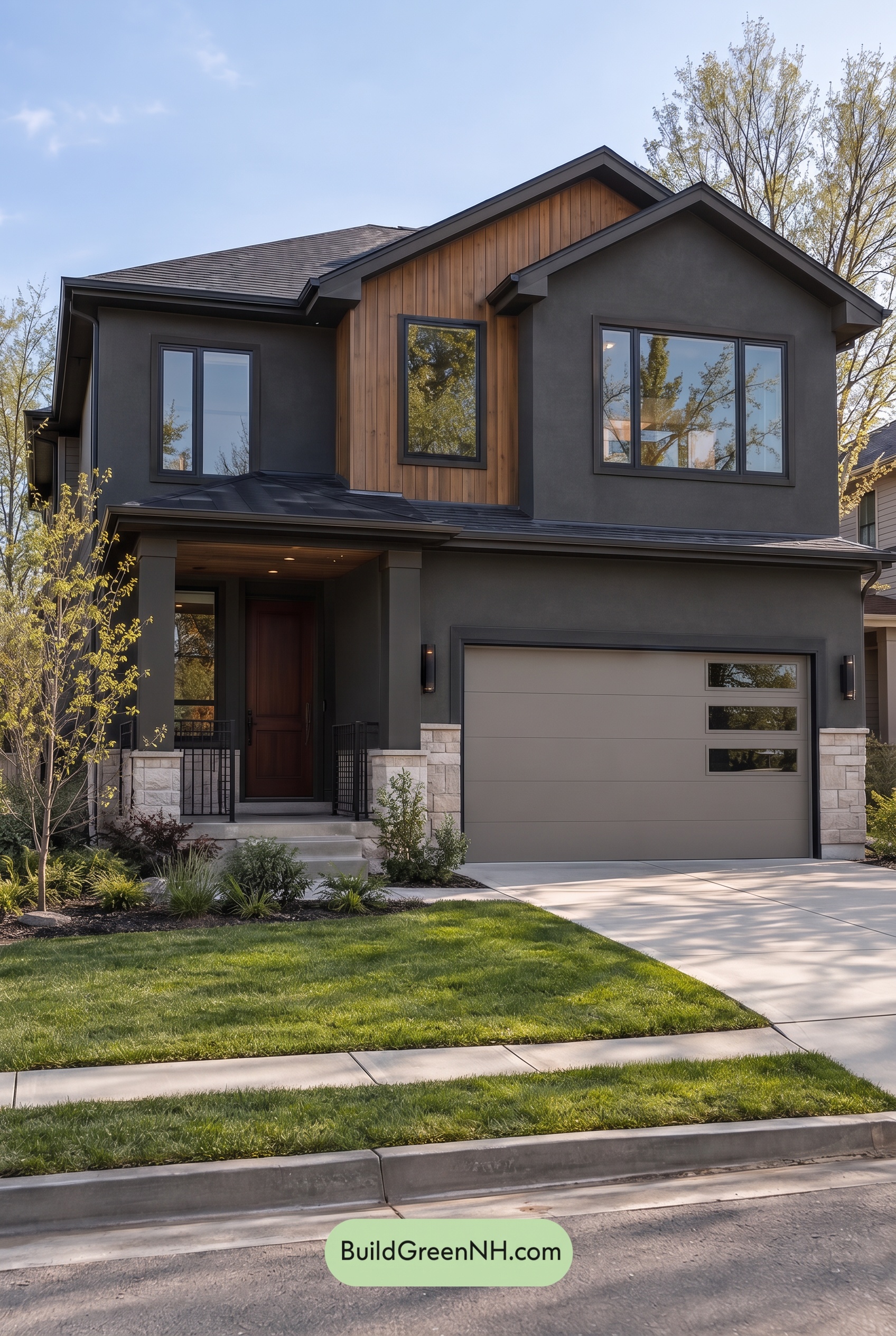 Dark Stucco House Exterior Color Scheme: Cedar Ember Calm
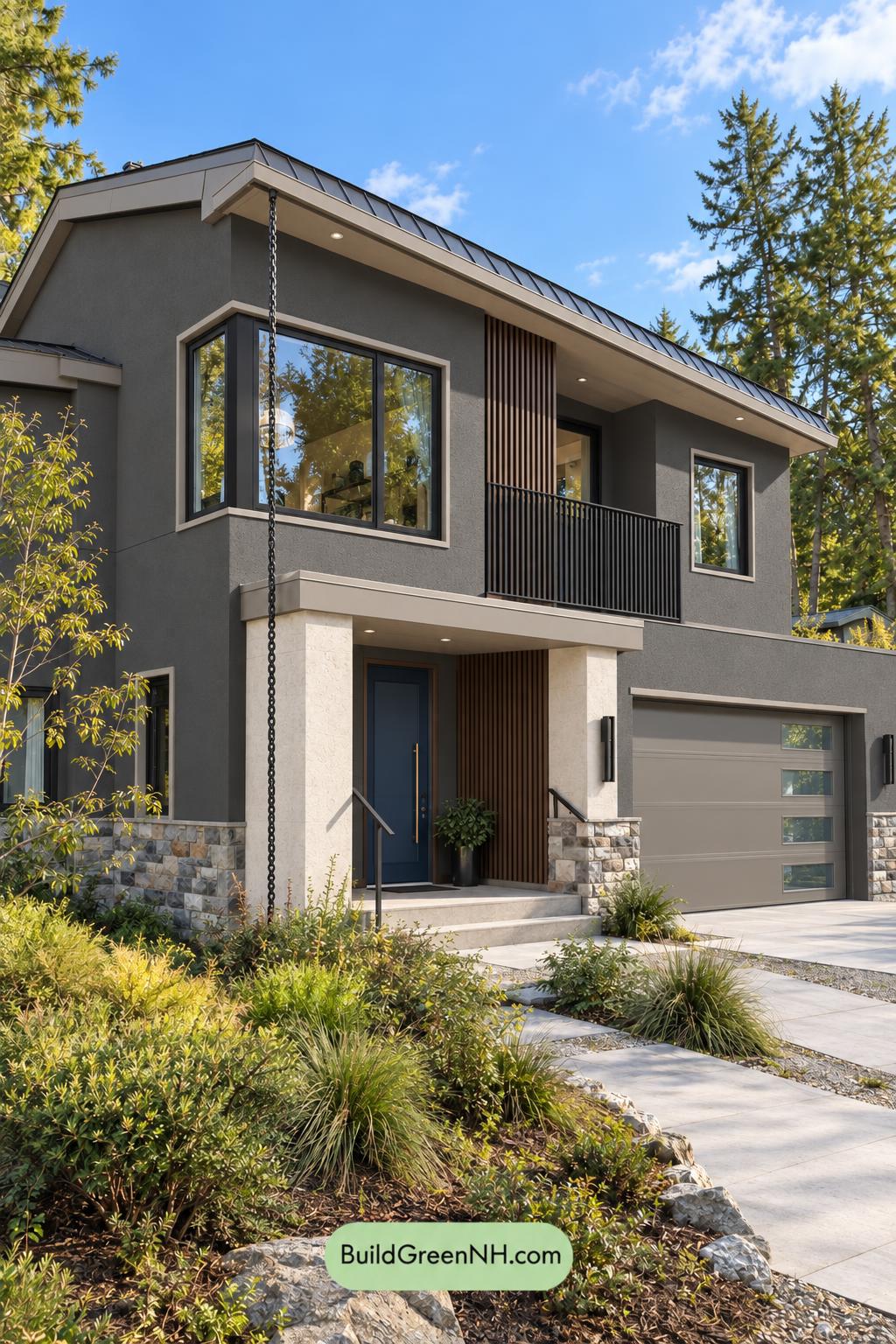 Dark Stucco House Exterior Color Scheme: Silver Pine Shelter
 Dark Stucco House Exterior Color Scheme: Copper Orchard House
Table of Contents