Last updated on
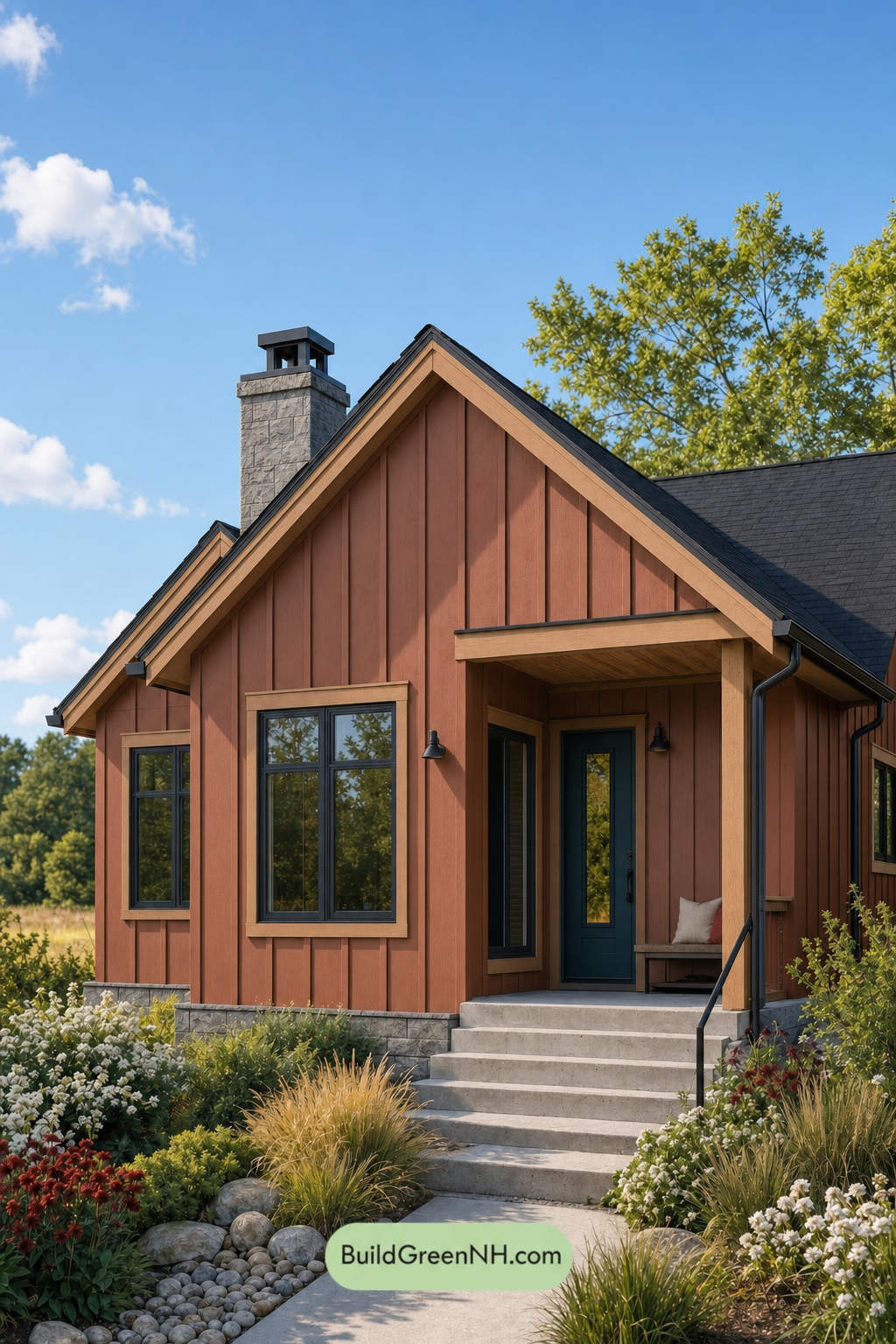

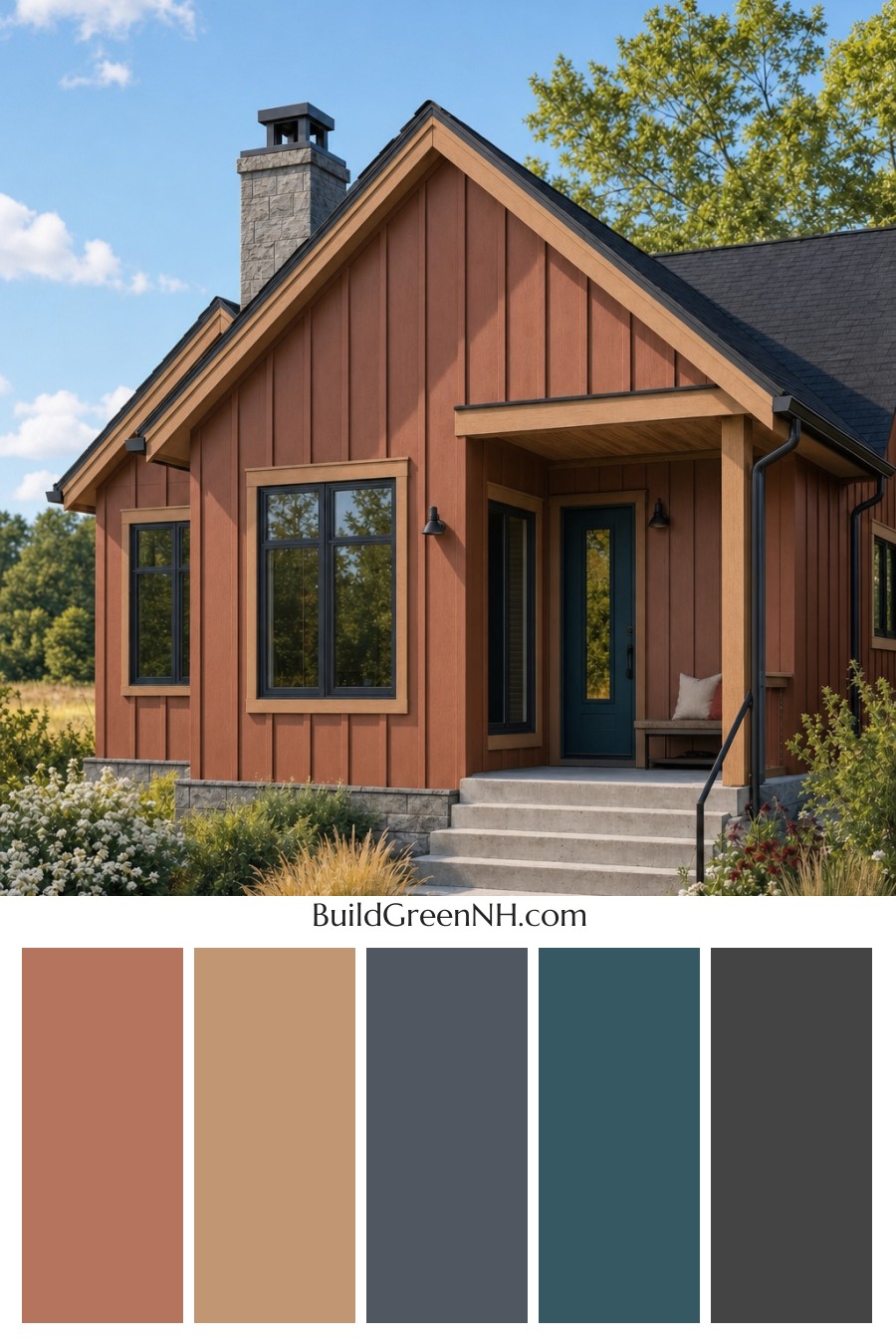
This earthy exterior palette feels instantly welcoming because its warm, grounded siding is sharpened by deep dark accents and softened by natural-looking trim.
Warm Siding Sets the Tone
The home’s main siding is finished in a rich, muted terracotta shade that gives the façade a cozy, handcrafted character. Its warm red-brown undertone feels especially fitting against the surrounding greenery, bringing a subtle warmth to the architecture without overwhelming the clean, simple lines of the home.
Vertical siding emphasizes the height of the front gable and adds gentle texture across the walls. This warm hue also complements the stone foundation and chimney, creating an exterior that feels connected to natural materials and the landscape around it.
Light Wood-Toned Trim Brings Definition
A soft golden-tan trim outlines the roof peaks, windows, porch structure, and entry details. This lighter warm neutral creates a pleasing contrast with the deeper siding while keeping the overall palette cohesive. Rather than looking stark, the trim adds a sun-washed, wood-inspired softness.
Along the gables, the trim draws attention to the roofline and gives the house a crisp silhouette. Around the windows, it frames the dark glazing beautifully and adds a polished finish to the façade.
Deep Accents Add Modern Contrast
Dark charcoal window frames, gutters, railings, and roof surfaces provide the scheme’s strongest contrast. These nearly black accents ground the warm exterior and give the home a modern edge. They also repeat across several architectural features, which makes the design feel intentional from top to bottom.
The front door introduces a deep blue-green shade that sits comfortably beside the charcoal details. It brings a quiet touch of cool color to the entry while still feeling moody, refined, and welcoming. Paired with dark exterior lighting, the doorway becomes a strong focal point without competing with the warm siding.
A Balanced, Nature-Inspired Mood
Together, the terracotta siding, golden-tan trim, charcoal accents, and deep blue-green door create a relaxed yet elevated look. Warm shades make the house feel inviting, while the darker details add structure and sophistication. The soft gray stone base and pale concrete steps offer a calm neutral transition between the home and its lush planting beds.
This is a color scheme with lasting appeal: earthy, tailored, and full of visual depth. It feels equally at home beneath bright summer skies, surrounded by autumn foliage, or set against quieter winter scenery.
Next, see how this color scheme looks under different lighting simulations throughout the day.
Overcast
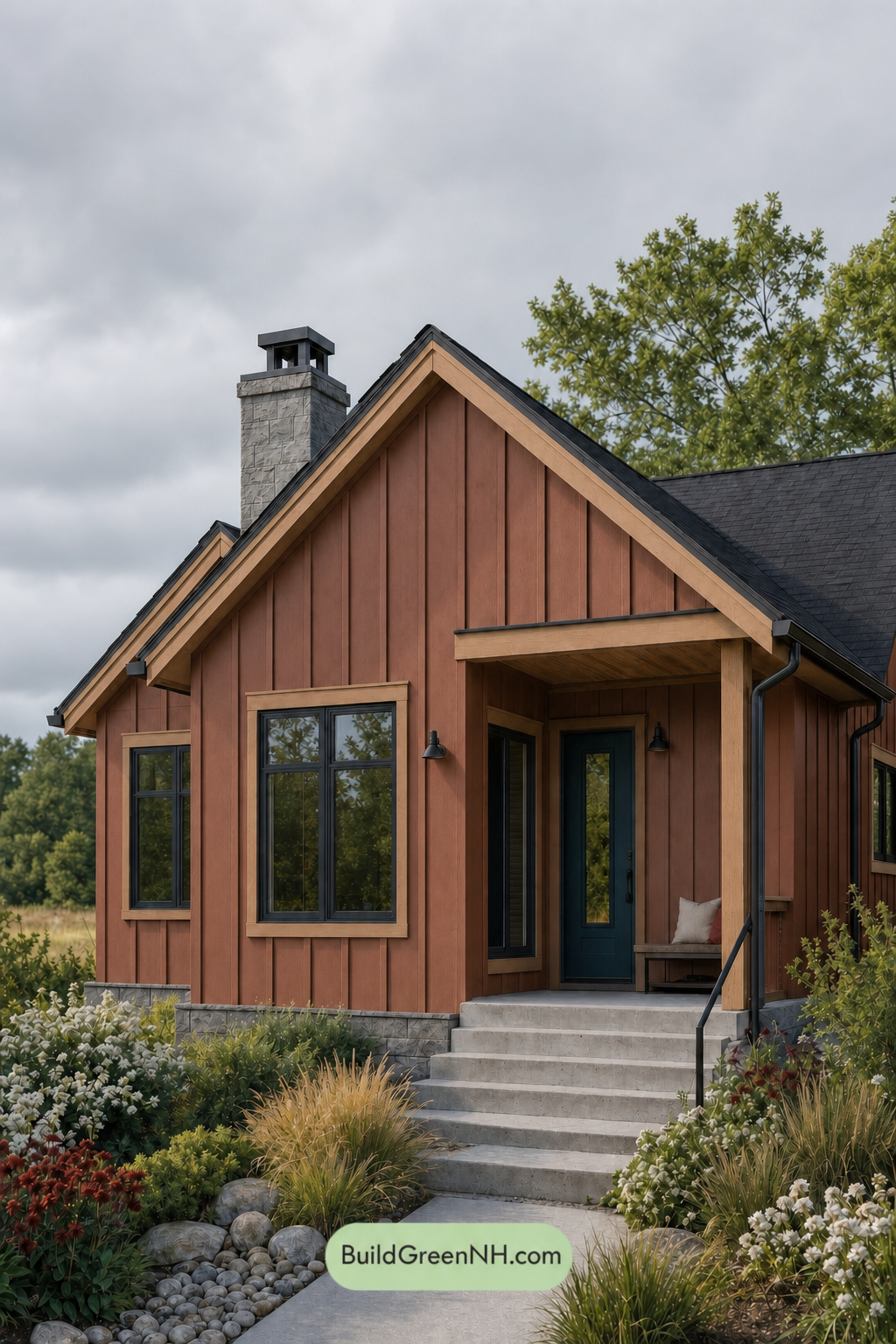
Under overcast skies, the muted terracotta-toned siding appears softer and slightly less saturated than it would in neutral daylight, with its warmth reading more grounded than sunlit. The light beige trim loses some of its golden lift, settling into a quieter natural neutral that keeps the facade inviting without feeling bright.
Cloud-filtered light minimizes sharp shadows across the vertical siding and porch, creating a more even, calm presentation. The charcoal-gray window frames, railings, and near-black door still provide definition, but their contrast feels smoother and more architectural, giving the home a moody, composed presence.
Golden Hour
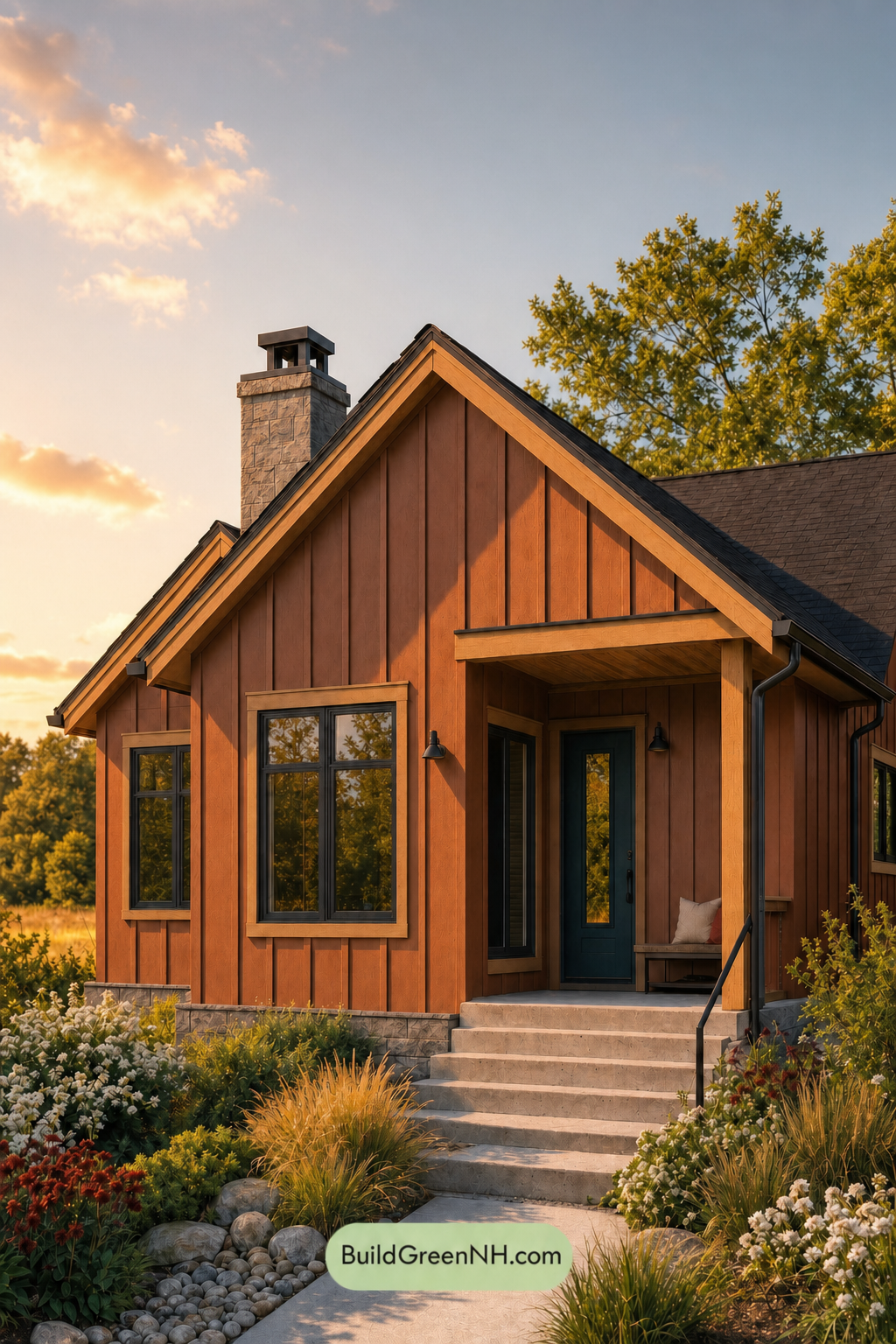
Under Golden Hour, the beige exterior takes on a richer, more sunlit warmth than it shows in neutral daylight, with its undertones appearing deeper and more saturated across the front-facing walls. The matching beige trim catches the low-angle light and feels brighter, creating a softly layered contrast rather than a stark outline.
As the light drops, the gray window frames and railings read darker and cooler by comparison, while the black front door becomes more dramatic within the shaded entry. Long shadows sharpen the architectural lines and add depth, giving the home a cozy, inviting mood that feels more dimensional and intimate than it does under even daylight.
Shade
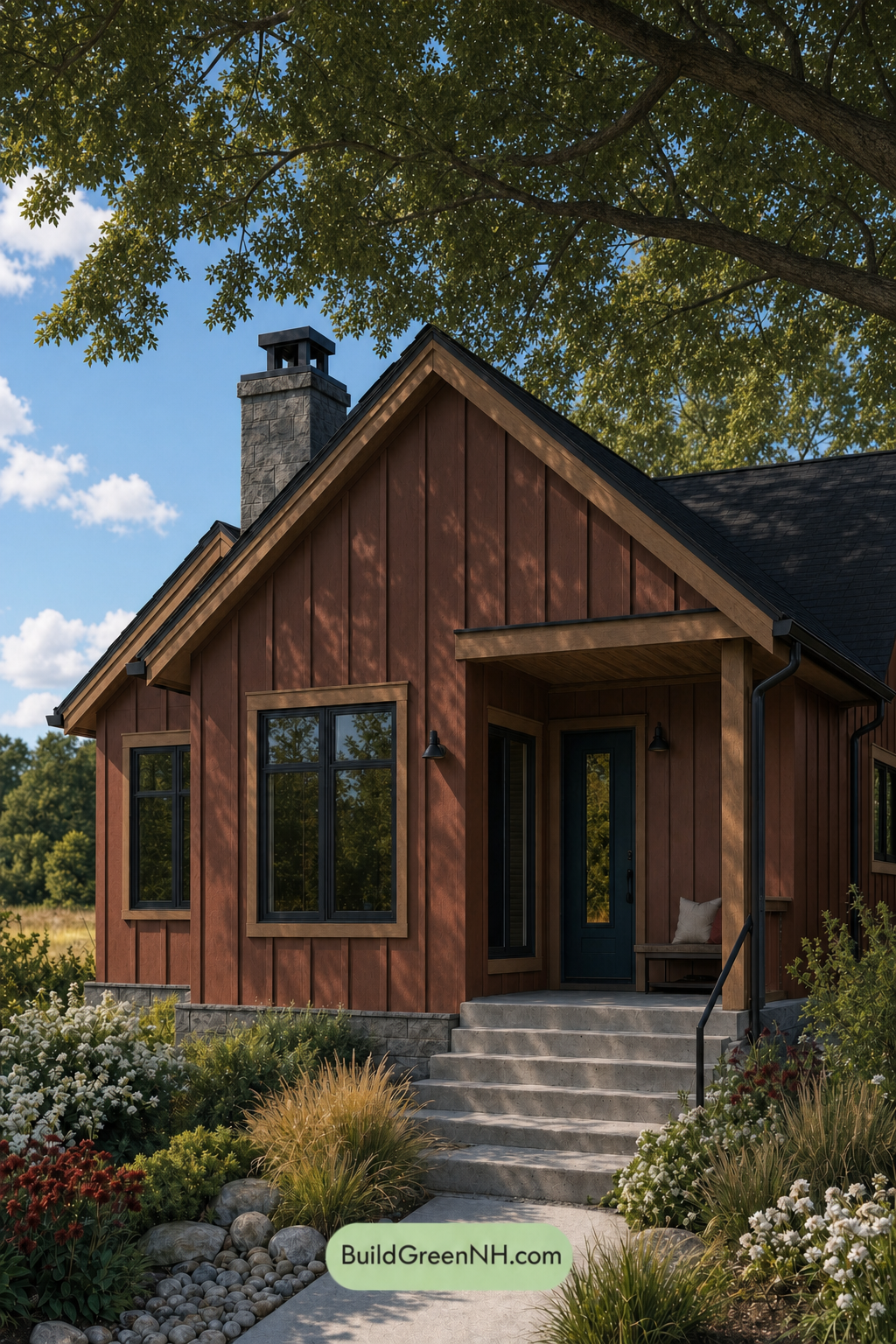
Under shade, the beige exterior takes on a deeper, more muted character than it would in neutral daylight. Its warmth softens and saturation recedes, allowing the wall and trim shades to feel calm, grounded, and gently earthy rather than bright or sun-washed. Dappled shadows add movement across the facade, creating subtle shifts between lighter and darker beige tones.
The gray window frames and railings appear more pronounced against the softened neutrals, while the black front door gains a richer, more dramatic presence. This cooler contrast gives the shaded entry a welcoming sense of depth and quiet sophistication, with the darker accents framing the home’s warm neutral palette.
Nighttime
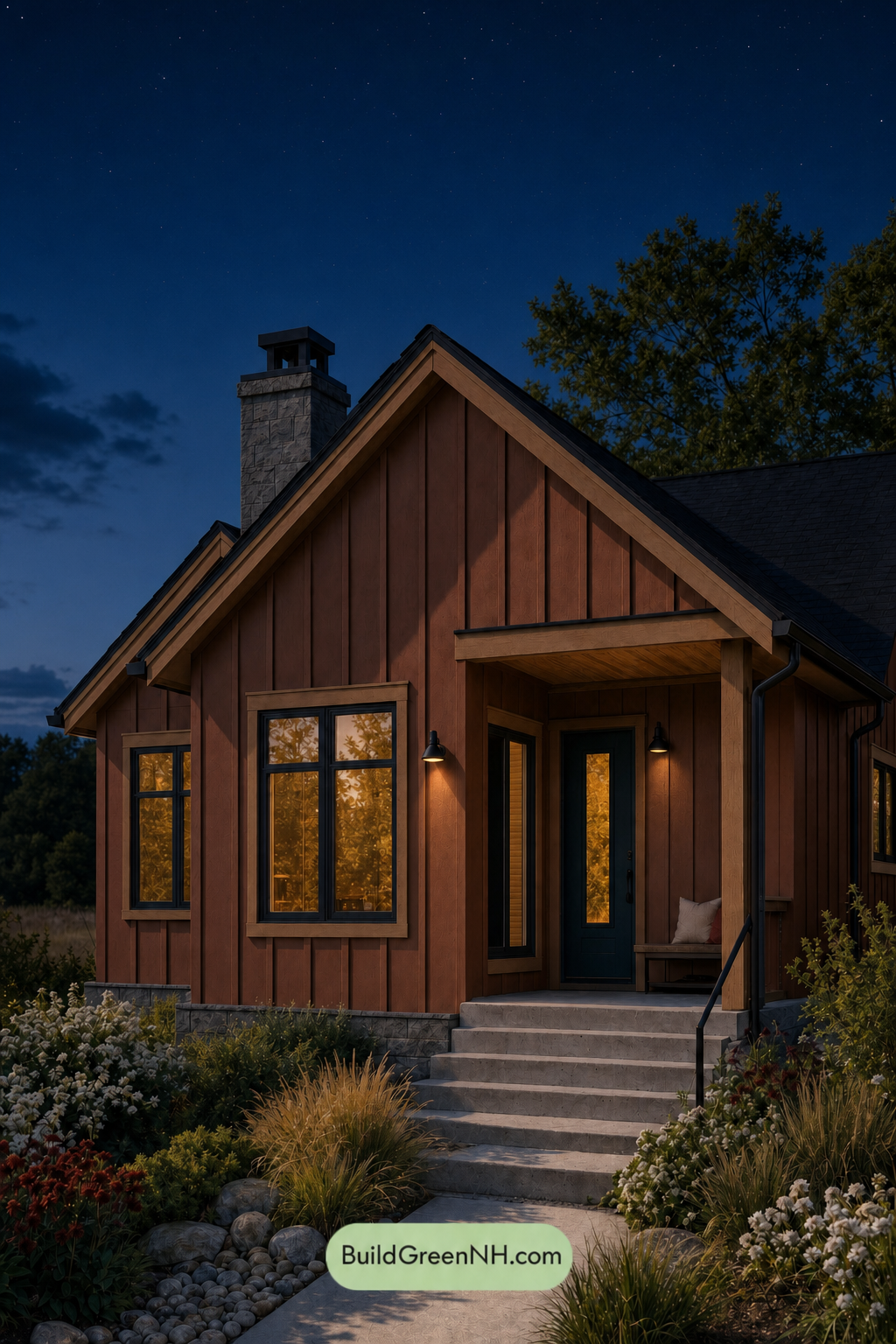
At nighttime, the beige exterior shifts away from its neutral daylight appearance, taking on a softer, warmer character wherever the porch and window lighting reaches it. In the unlit areas, its saturation recedes and the shade appears deeper, allowing the home to feel quieter and more grounded against the dark surroundings.
The gray window frames and railings become more subdued in shadow, while the black front door reads as a crisp, dramatic anchor. Pools of warm light sharpen the contrast around entries and architectural edges, creating a welcoming mood that feels richer and more intimate than the even, open look of neutral daylight.
Pin these for later:
Want More?
 Exterior Color Scheme with Stone Accents: Pine Brass Threshold
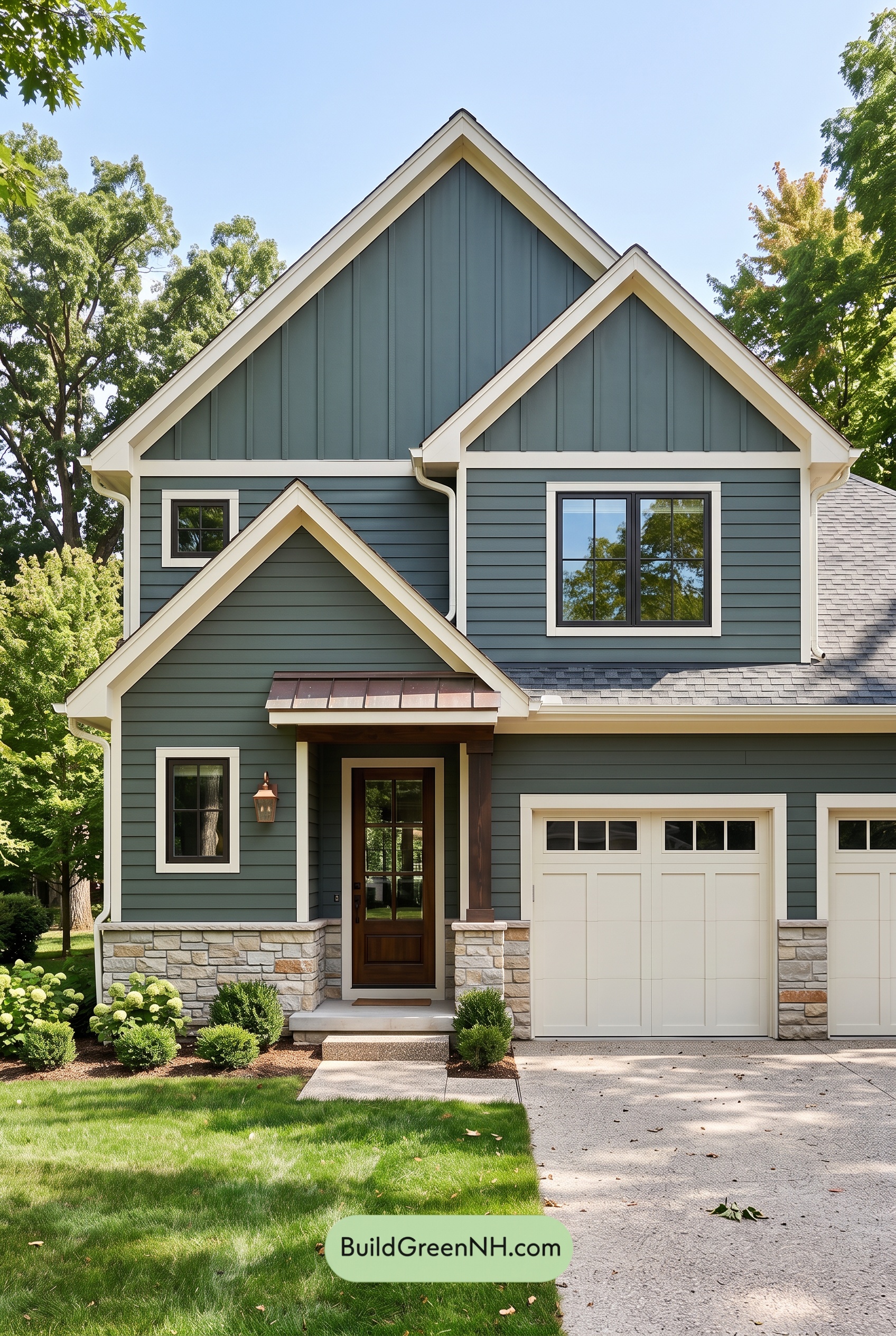 Exterior Color Scheme with Stone Accents: Evergreen Copper Welcome
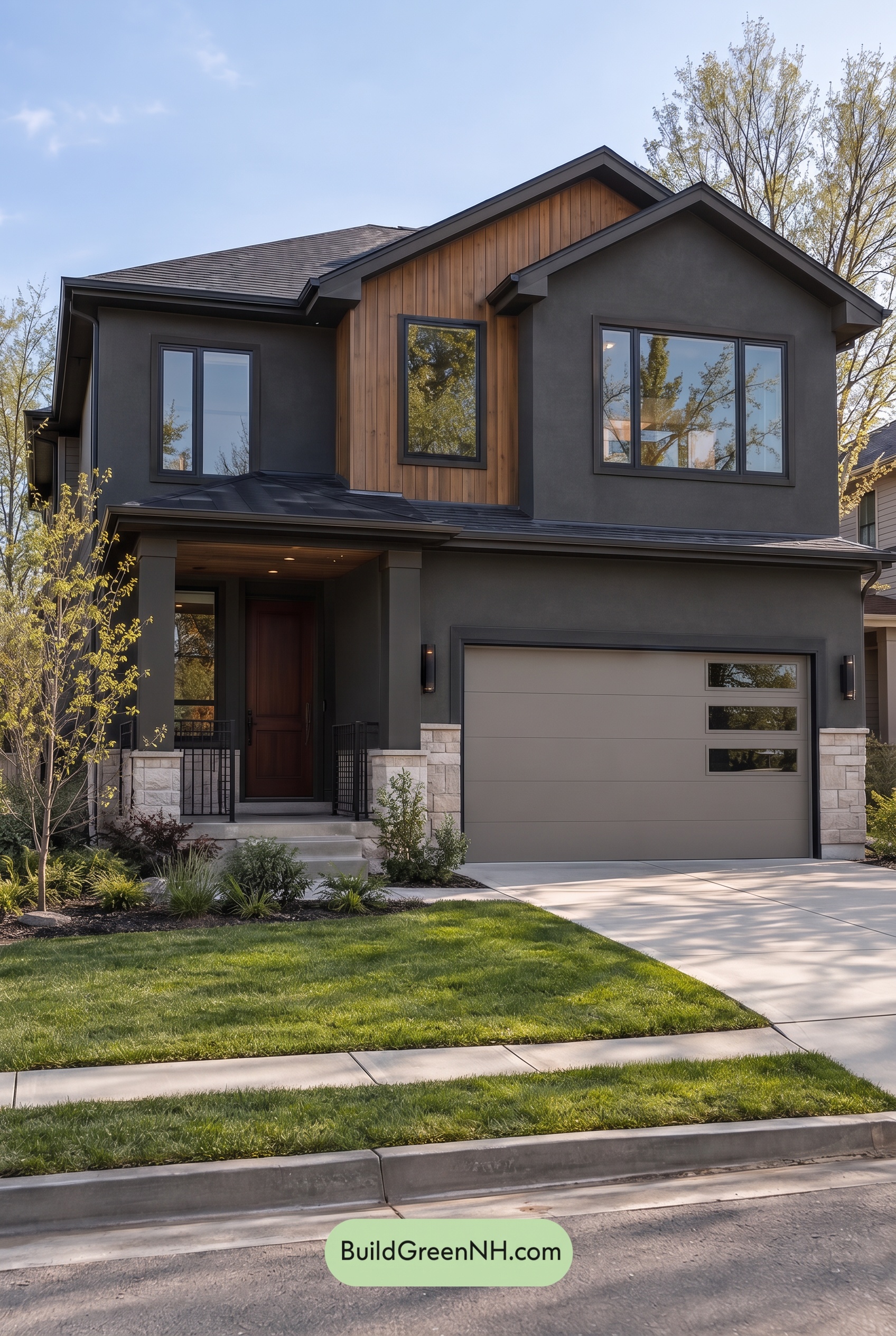 Dark Stucco House Exterior Color Scheme: Cedar Ember Calm
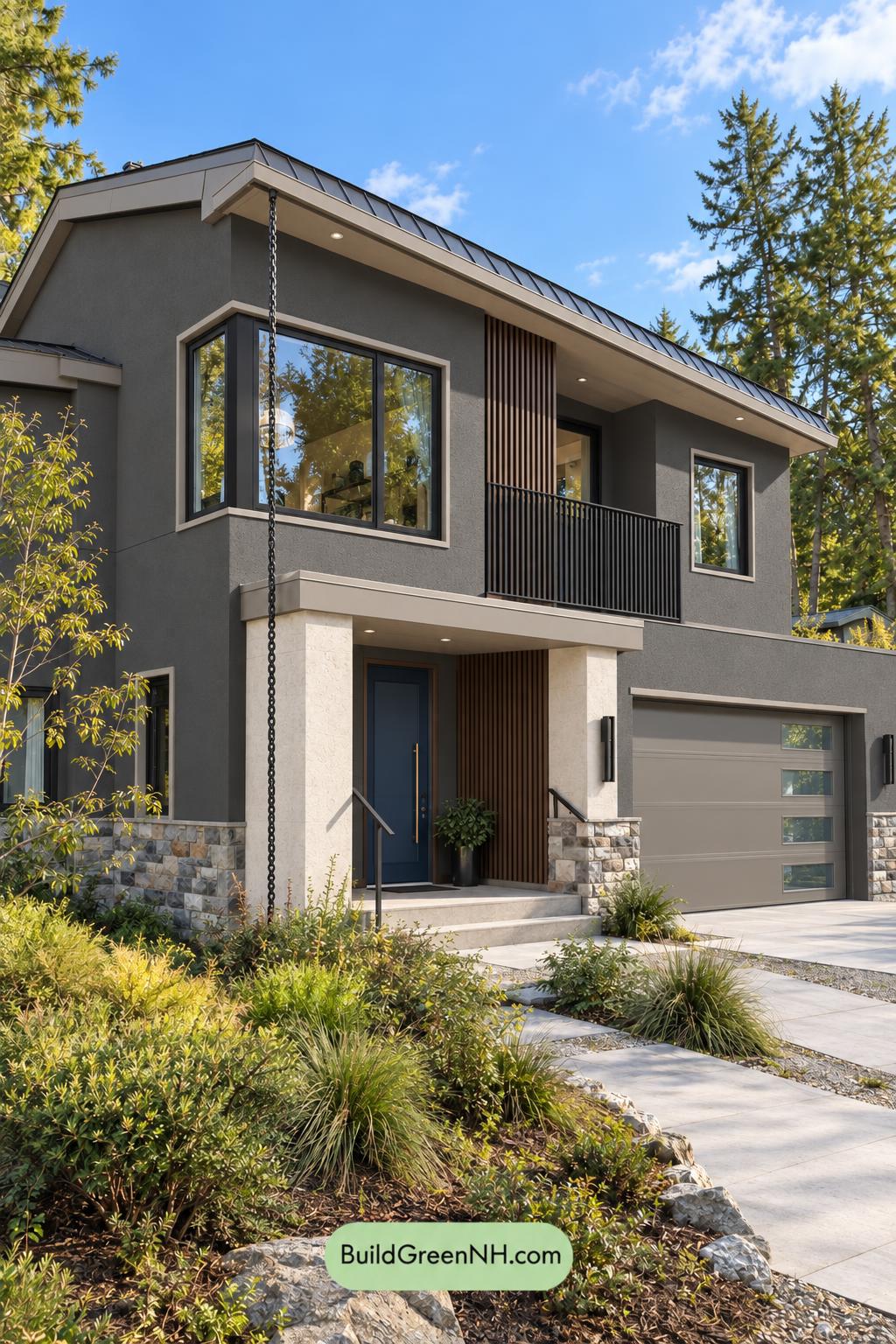 Dark Stucco House Exterior Color Scheme: Silver Pine Shelter
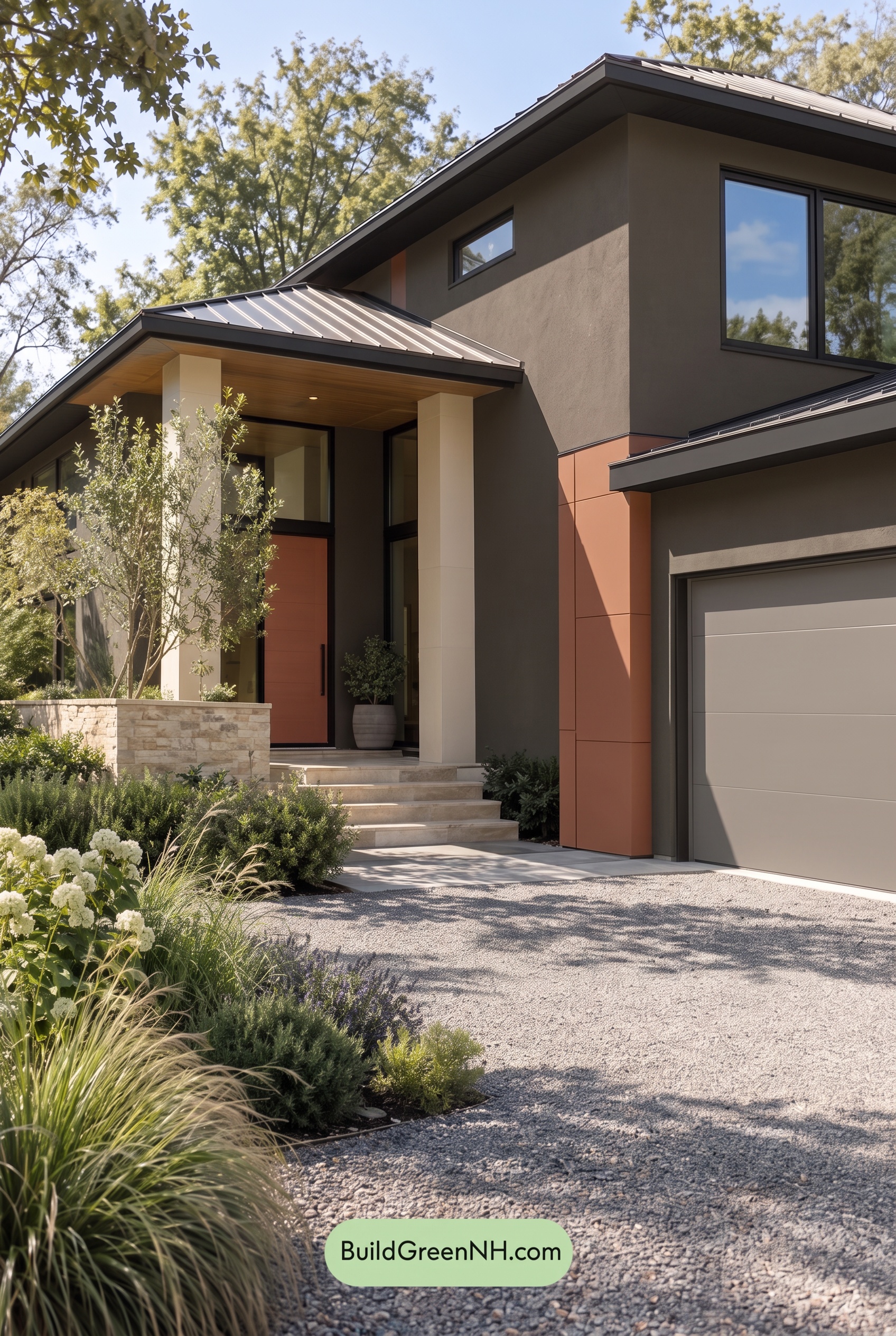 Dark Stucco House Exterior Color Scheme: Copper Orchard House
Table of Contents